Rainbow Six Siege Update--Test Server Patch Notes Make A Major Change To Ying
Rainbow Six Siege is testing out a major change for one of its operators with the latest test server patch. Ying, an operator introduced back in Year 2, is ditching her frag grenades in favor of a claymore.
The notes for this patch on Reddit explain the rationale behind this decision: "We still feel we want to emphasize her teamwork, and are making a few adjustments while she's on the TS to gather some more data." There's no guarantee that this change will make its way over into the game proper, but if it tests well, it just might.
Significant reworks that change weapons are rare in Rainbow Six Siege, although recently the developers announced that Tachanka would be ditching the turret in favor of a grenade launcher. Obviously Ubisoft is doing something right, because the game is more popular than ever.
Posted by: xSicKxBot - 02-27-2020, 05:36 AM - Forum: Python
- No Replies
Regex Special Characters – Examples in Python Re
Regular expressions are a strange animal. Many students find them difficult to understand – do you?
I realized that a major reason for this is simply that they don’t understand the special regex characters. To put it differently: understand the special characters and everything else in the regex space will come much easier to you.
Regular expressions are built from characters. There are two types of characters: literal characters and special characters.
Literal Characters
Let’s start with the absolute first thing you need to know with regular expressions: a regular expression (short: regex) searches for a given pattern in a given string.
What’s a pattern? In its most basic form, a pattern can be a literal character. So the literal characters 'a', 'b', and 'c' are all valid regex patterns.
For example, you can search for the regex pattern 'a' in the string 'hello world' but it won’t find a match. You can also search for the pattern 'a' in the string 'hello woman' and there is a match: the second last character in the string.
Based on the simple insight that a literal character is a valid regex pattern, you’ll find that a combination of literal characters is also a valid regex pattern. For example, the regex pattern 'an' matches the last two characters in the string 'hello woman'.
Summary: Regular expressions are built from characters. An important class of characters are the literal characters. In principle, you can use all Unicode literal characters in your regex pattern.
Special Characters
However, the power of regular expressions come from their abstraction capability. Instead of writing the character set[abcdefghijklmnopqrstuvwxyz], you’d write [a-z] or even \w. The latter is a special regex character—and pros know them by heart. In fact, regex experts seldomly match literal characters. In most cases, they use more advanced constructs or special characters for various reasons such as brevity, expressiveness, or generality.
So what are the special characters you can use in your regex patterns?
Let’s have a look at the following table that contains all special characters in Python’s re package for regular expression processing.
Special Character
Meaning
\n
The newline symbol is not a special symbol particular to regex only, it’s actually one of the most widely-used, standard characters. However, you’ll see the newline character so often that I just couldn’t write this list without including it. For example, the regex 'hello\nworld' matches a string where the string 'hello' is placed in one line and the string 'world' is placed into the second line.
\t
The tabular character is, like the newline character, not a “regex-specific” symbol. It just encodes the tabular space ' ' which is different to a sequence of whitespaces (even if it doesn’t look different over here). For example, the regex 'hello\n\tworld' matches the string that consists of 'hello' in the first line and ' world' in the second line (with a leading tab character).
\s
The whitespace character is, in contrast to the newline character, a special symbol of the regex libraries. You’ll find it in many other programming languages, too. The problem is that you often don’t know which type of whitespace is used: tabular characters, simple whitespaces, or even newlines. The whitespace character '\s' simply matches any of them. For example, the regex '\s*hello\s+world' matches the string ' \t \n hello \n \n \t world', as well as 'hello world'.
\S
The whitespace-negation character matches everything that does not match \s.
\w
The word character regex simplifies text processing significantly. It represents the class of all characters used in typical words (A-Z, a-z, 0-9, and '_'). This simplifies the writing of complex regular expressions significantly. For example, the regex '\w+' matches the strings 'hello', 'bye', 'Python', and 'Python_is_great'.
\W
The word-character-negation. It matches any character that is not a word character.
\b
The word boundary is also a special symbol used in many regex tools. You can use it to match, as the name suggests, the boundary between the a word character (\w) and a non-word (\W) character. But note that it matches only the empty string! You may ask: why does it exist if it doesn’t match any character? The reason is that it doesn’t “consume” the character right in front or right after a word. This way, you can search for whole words (or parts of words) and return only the word but not the delimiting characters that separate the word, e.g., from other words.
\d
The digit character matches all numeric symbols between 0 and 9. You can use it to match integers with an arbitrary number of digits: the regex '\d+' matches integer numbers '10', '1000', '942', and '99999999999'.
\D
Matches any non-digit character. This is the inverse of \d and it’s equivalent to [^0-9].
But these are not all characters you can use in a regular expression.
There are also meta characters for the regex engine that allow you to do much more powerful stuff.
A good example is the asterisk operator that matches “zero or more” occurrences of the preceding regex. For example, the pattern .*txt matches an arbitrary number of arbitrary characters followed by the suffix 'txt'. This pattern has two special regex meta characters: the dot . and the asterisk operator *. You’ll now learn about those meta characters:
Regex Meta Characters
Feel free to watch the short video about the most important regex meta characters:
Next, you’ll get a quick and dirty overview of the most important regex operations and how to use them in Python.
Here are the most important regex operators:
Meta Character
Meaning
.
The wild-card operator (dot) matches any character in a string except the newline character '\n'. For example, the regex '...' matches all words with three characters such as 'abc', 'cat', and 'dog'.
*
The zero-or-more asterisk operator matches an arbitrary number of occurrences (including zero occurrences) of the immediately preceding regex. For example, the regex ‘cat*’ matches the strings 'ca', 'cat', 'catt', 'cattt', and 'catttttttt'.
?
The zero-or-one operator matches (as the name suggests) either zero or one occurrences of the immediately preceding regex. For example, the regex ‘cat?’ matches both strings ‘ca’ and ‘cat’ — but not ‘catt’, ‘cattt’, and ‘catttttttt’.
+
The at-least-one operator matches one or more occurrences of the immediately preceding regex. For example, the regex ‘cat+’ does not match the string ‘ca’ but matches all strings with at least one trailing character ‘t’ such as ‘cat’, ‘catt’, and ‘cattt’.
^
The start-of-string operator matches the beginning of a string. For example, the regex ‘^p’ would match the strings ‘python’ and ‘programming’ but not ‘lisp’ and ‘spying’ where the character ‘p’ does not occur at the start of the string.
$
The end-of-string operator matches the end of a string. For example, the regex ‘py$’ would match the strings ‘main.py’ and ‘pypy’ but not the strings ‘python’ and ‘pypi’.
A|B
The OR operator matches either the regex A or the regex B. Note that the intuition is quite different from the standard interpretation of the or operator that can also satisfy both conditions. For example, the regex ‘(hello)|(hi)’ matches strings ‘hello world’ and ‘hi python’. It wouldn’t make sense to try to match both of them at the same time.
AB
The AND operator matches first the regex A and second the regex B, in this sequence. We’ve already seen it trivially in the regex ‘ca’ that matches first regex ‘c’ and second regex ‘a’.
Note that I gave the above operators some more meaningful names (in bold) so that you can immediately grasp the purpose of each regex. For example, the ‘^’ operator is usually denoted as the ‘caret’ operator. Those names are not descriptive so I came up with more kindergarten-like words such as the “start-of-string” operator.
Let’s dive into some examples!
Examples
import re text = ''' Ha! let me see her: out, alas! he's cold: Her blood is settled, and her joints are stiff; Life and these lips have long been separated: Death lies on her like an untimely frost Upon the sweetest flower of all the field. ''' print(re.findall('.a!', text)) '''

Finds all occurrences of an arbitrary character that is

followed by the character sequence 'a!'.

['Ha!'] ''' print(re.findall('is.*and', text)) '''

Finds all occurrences of the word 'is',

followed by an arbitrary number of characters

and the word 'and'.

['is settled, and'] ''' print(re.findall('her:?', text)) '''

Finds all occurrences of the word 'her',

followed by zero or one occurrences of the colon ':'.

['her:', 'her', 'her'] ''' print(re.findall('her:+', text)) '''

Finds all occurrences of the word 'her',

followed by one or more occurrences of the colon ':'.

['her:'] ''' print(re.findall('^Ha.*', text)) '''

Finds all occurrences where the string starts with

the character sequence 'Ha', followed by an arbitrary

number of characters except for the new-line character. Can you figure out why Python doesn't find any?

[] ''' print(re.findall('\n$', text)) '''

Finds all occurrences where the new-line character '\n'

occurs at the end of the string.

['\n'] ''' print(re.findall('(Life|Death)', text)) '''

Finds all occurrences of either the word 'Life' or the

word 'Death'.

['Life', 'Death'] '''
In these examples, you’ve already seen the special symbol \n which denotes the new-line character in Python (and most other languages). There are many special characters, specifically designed for regular expressions.
Where to Go From Here
You’ve learned all special characters of regular expressions, as well as meta characters. This will give you a strong basis for improving your regex skills.
If you want to accelerate your skills, you need a good foundation. Check out my brand-new Python book “Python One-Liners (Amazon Link)” which boosts your skills from zero to hero—in a single line of Python code!
The 140th GalaQuiz will be LIVE soon, win up to $50 in GalaCredit!
[www.indiegala.com] The GalaQuiz will take place in less than 25 minutes from this announcement Today's GalaQuiz[www.indiegala.com] hints are up. The theme will be Naruto. This is the final quiz before the leaderboard reset and rewards! The timer had a slight hiccup and it got stuck, so the quiz got delayed another half an hour than the usual time, apologies about that.
Humble are running a new bundle of interest to game developers, specifically artists, the HUMBLE SOFTWARE BUNDLE: NATURAL & DIGITAL PAINTING KIT bundle. This bundle is a collection of software and addons for creating digital art as well as replicating natural media. As with all bundles this one is organized into tiers, if you buy a higher dollar value tier you get all of the tiers below it.
1$ Tier
18$ Tier
Flame Painter 4
Amberlight 2
Several particle brushes for Flame Painter 4
20$ Tier
Rebelle 3
Flame Painter Connect Photoshop Plugin
Several Papers for Rebelle 3
More Brushes for Flame Painter 4
Rebelle is a natural media painting application, Flame Painter 4 is a particle system brush based painting application (that can be plugged into Photoshop), Amberlight is extremely interest but hard to describe, while Inspirit is basically just a toy.
As with all Humble bundles, you can decide how your money is allocated, between the publisher, humble, charity and if you so choose (and thanks if you do!) to support GFS if purchased using this link. You can learn more about the bundle and see the four main applications in action in the video below.
Posted by: xSicKxBot - 02-27-2020, 05:24 AM - Forum: Windows
- No Replies
Microsoft scholarship program fosters collaboration with academia
Cecily Morrison wants to build technology that enables people to live their lives the way they want and accomplish things they wouldn’t otherwise be able to.
“I am passionate about demonstrating in the real how AI can fundamentally change people’s lives,” says Morrison, who is collaborating on the work with Oussama Metatla of the University of Bristol in the United Kingdom.
Microsoft researchers are developing visual agent technology like the above system, which is designed to help people who are blind or have low vision find and identify people in their vicinity, as part of Project Tokyo. Principal Researcher Cecily Morrison will be collaborating with a PhD supervisor from the University of Bristol to build on that work through the Microsoft Research PhD Scholarship Programme in EMEA.
The value of collaboration
As part of the program selection process, Cambridge researchers invite a PhD supervisor at an EMEA institution to collaborate. Often, they have a preexisting relationship with the supervisor or an interest in working with them. Together, the pair writes and submits a proposal. Proposals are reviewed and selected by Microsoft researchers in a two-stage review process. The researchers and supervisors of the selected proposals then choose a PhD student to work on the project.
The collaborative nature of the program supports all parties involved in important ways. The program, for example, gives researchers a chance to conduct more exploratory research than they might normally be able to undertake in their day to day and to draw on the unique perspectives and knowledge of and students. PhD supervisors and students—encouraged to attend meetings at Cambridge’s lab, where they get to experience firsthand the breadth and depth of research at Microsoft—are introduced to such professional opportunities as visiting researcher positions for faculty and internships for students.
The program also allows for resource sharing. PhD supervisors and students can benefit from Microsoft technology and computational power such as cloud services while academia offers facilities and equipment researchers don’t have access to.
“I see this as a way to do longer-term research than we can do in Microsoft Research, but that couldn’t be done in academia because they don’t have access to the technology,” says Morrison.
“Being able to co-supervise brilliant young researchers is rewarding in many ways: being able to foster new research, mentor talent, develop new ideas, and learn new techniques,” she says. “It’s invaluable as a seasoned scientist.”
Dunn and Martello’s project, “The Pluripotency Program in Human Embryonic Stem Cells,” builds on the pair’s work in stem cell research. They’ll focus on how personalized stem cells are generated, a greater understanding of which could help inform new medical diagnostics and treatments.
Over the next several months, selected researchers and PhD supervisors will be recruiting students for their projects. For more information or to apply, visit the program home page. Positions will be posted as they become available.
EMEA PhD Award
As a complement to the EMEA PhD Scholarship Programme, Microsoft Research is excited to announce the Microsoft Research EMEA PhD Award, a new research grant for PhD students in computing-related fields who are in their third year or beyond at universities in EMEA.
Award recipients will receive the following:
$15,000 to put toward their doctoral thesis work for the upcoming academic year
an invitation, including travel and accommodations, to attend the two-day Microsoft Research PhD Summit workshop in North America, where they will present their work and be mentored by Microsoft researchers
an offer to intern at the Cambridge lab
Applications are due by 11:59 UTC on April 1. To find out more, including how to apply, visit the EMEA PhD Award home page.
Posted by: xSicKxBot - 02-27-2020, 05:24 AM - Forum: Windows
- No Replies
Microsoft update on Q3 FY20 guidance
REDMOND, Wash. — Feb. 26, 2020 — As Microsoft closely monitors the impact of the COVID-19 health emergency, our top priority remains the health and safety of our employees, customers, partners, and communities. Our global health response team is acting to help protect our employees in accordance with global health authorities’ guidance. Worldwide, Microsoft employees are working to support organizations addressing the challenges on the ground. Microsoft also continues to make donations to relief and containment efforts, including directly providing technology to help hospitals and medical workers.
On Jan. 29, as part of our second quarter of fiscal year 2020 earnings call, we issued quarterly revenue guidance for our More Personal Computing segment between $10.75 and $11.15 billion, which included a wider than usual range to reflect uncertainty related to the public health situation in China. Although we see strong Windows demand in line with our expectations, the supply chain is returning to normal operations at a slower pace than anticipated at the time of our Q2 earnings call. As a result, for the third quarter of fiscal year 2020, we do not expect to meet our More Personal Computing segment guidance as Windows OEM and Surface are more negatively impacted than previously anticipated. All other components of our Q3 guidance remain unchanged.
As the conditions evolve, Microsoft will act to ensure the health and safety of our employees, customers, and partners during this difficult period. We will also continue to partner with local and global health authorities to provide additional assistance. We deeply appreciate the commitment of the people and organizations that have united to address this health emergency; our thoughts are with all those affected across the world.
About Microsoft
Microsoft (Nasdaq “MSFT” @microsoft) enables digital transformation for the era of an intelligent cloud and an intelligent edge. Its mission is to empower every person and every organization on the planet to achieve more.
Forward-Looking Statements
Statements in this release are “forward-looking statements” based on current expectations and assumptions that are subject to risks and uncertainties. Actual results could differ materially because of factors described above as well as:
intense competition in all of our markets that may lead to lower revenue or operating margins;
increasing focus on cloud-based services presenting execution and competitive risks;
significant investments in products and services that may not achieve expected returns;
acquisitions, joint ventures, and strategic alliances that may have an adverse effect on our business;
impairment of goodwill or amortizable intangible assets causing a significant charge to earnings;
cyberattacks and security vulnerabilities that could lead to reduced revenue, increased costs, liability claims, or harm to our reputation or competitive position;
disclosure and misuse of personal data that could cause liability and harm to our reputation;
the possibility that we may not be able to protect information stored in our products and services from use by others;
abuse of our advertising or social platforms that may harm our reputation or user engagement;
the development of the internet of things presenting security, privacy, and execution risks;
issues about the use of AI in our offerings that may result in competitive harm, legal liability, or reputational harm;
excessive outages, data losses, and disruptions of our online services if we fail to maintain an adequate operations infrastructure;
quality or supply problems;
the possibility that we may fail to protect our source code;
legal changes, our evolving business model, piracy, and other factors may decrease the value of our intellectual property;
claims that Microsoft has infringed the intellectual property rights of others;
claims against us that may result in adverse outcomes in legal disputes;
government litigation and regulatory activity relating to competition rules that may limit how we design and market our products;
potential liability under trade protection, anti-corruption, and other laws resulting from our global operations;
laws and regulations relating to the handling of personal data that may impede the adoption of our services or result in increased costs, legal claims, fines, or reputational damage;
additional tax liabilities;
damage to our reputation or our brands that may harm our business and operating results;
exposure to increased economic and operational uncertainties from operating a global business, including the effects of foreign currency exchange;
uncertainties relating to our business with government customers;
adverse economic or market conditions that may harm our business;
catastrophic events or geopolitical conditions that may disrupt our business; and
the dependence of our business on our ability to attract and retain talented employees.
For more information about risks and uncertainties associated with Microsoft’s business, please refer to the “Management’s Discussion and Analysis of Financial Condition and Results of Operations” and “Risk Factors” sections of Microsoft’s SEC filings, including, but not limited to, its annual report on Form 10-K and quarterly reports on Form 10-Q, copies of which may be obtained by contacting Microsoft’s Investor Relations department at (800) 285-7772 or at Microsoft’s Investor Relations website at http://www.microsoft.com/en-us/investor.
All information in this release is as of Feb. 26, 2020. The company undertakes no duty to update any forward-looking statement to conform the statement to actual results or changes in the company’s expectations.
For more information, press only:
Microsoft Media Relations, WE Communications for Microsoft, (425) 638-7777, rrt@we-worldwide.com
For more information, financial analysts and investors only:
Michael Spencer, General Manager, Investor Relations, (425) 706-4400
Note to editors: For more information, news and perspectives from Microsoft, please visit the Microsoft News Center at http://www.microsoft.com/news.
Open source projects can use a variety of different models for deciding when to put out a release. Some projects release on a set schedule. Others decide on what the next release should contain and release whenever that is ready. Some just wake up one day and decide it’s time to release. And other projects go for a rolling release model, avoiding the question entirely.
For Fedora, we go with a schedule-based approach. Releasing twice a year means we can give our contributors time to implement large changes while still keeping on the leading edge. Targeting releases for the end of April and the end of October gives everyone predictability: contributors, users, upstreams, and downstreams.
But it’s not enough to release whatever’s ready on the scheduled date. We want to make sure that we’re releasing quality software. Over the years, the Fedora community has developed a set of processes to help ensure we can meet both our time and and quality targets.
Changes process
Meeting our goals starts months before the release. Contributors propose changes through our Changes process, which ensures that the community has a chance to provide input and be aware of impacts. For changes with a broad impact (called “system-wide changes”), we require a contingency plan that describes how to back out the change if it’s broken or won’t be ready in time. In addition, the change process includes providing steps for testing. This helps make sure we can properly verify the results of a change.
Change proposals are due 2-3 months before the beta release date. This gives the community time to evaluate the impact of the change and make adjustments necessary. For example, a new compiler release might require other package maintainers to fix bugs exposed by the new compiler or to make changes that take advantage of new capabilities.
A few weeks before the beta and final releases, we enter a code freeze. This ensures a stable target for testing. Bugs identified as blockers and non-blocking bugs that are granted a freeze exception are updated in the repo, but everything else must wait. The freeze lasts until the release.
Blocker and freeze exception process
In a project as large as Fedora, it’s impossible to test every possible combination of packages and configurations. So we have a set of test cases that we run to make sure the key features are covered.
As much as we’d like to ship with zero bugs, if we waited until we reached that state, there’d never be another Fedora release again. Instead, we’ve defined release criteria that define what bugs can block the release. We have basic release criteria that apply to all release milestones, and then separate, cumulative criteria for beta and final releases. With beta releases, we’re generally a little more forgiving of rough edges. For a final release, it needs to pass all of beta’s criteria, plus some more that help make it a better user experience.
The week before a scheduled release, we hold a “go/no go meeting“. During this meeting, the QA team, release engineering team, and the Fedora Engineering Steering Committee (FESCo) decide whether or not we will ship the release. As part of the decision process, we conduct a final review of blocker bugs. If any accepted blockers remain, we push the release back to a later date.
Some bugs aren’t severe enough to block the release, but we still would like to get them fixed before the release. This is particularly true of bugs that affect the live image experience. In that case, we grant an exception for updates that fix those bugs.
How you can help
In all my years as a Fedora contributor, I’ve never heard the QA team say “we don’t need any more help.” Contributing to the pre-release testing processes can be a great way to make your first Fedora contribution.
The Blocker Review meetings happen most Mondays in #fedora-blocker-review on IRC. All members of the Fedora community are welcome to participate in the discussion and voting. One particularly useful contribution is to look at the proposed blockers and see if you can reproduce them. Knowing if a bug is widespread or not is important to the blocker decision.
In addition, the QA team conducts test days and test weeks focused on various parts of the distribution: the kernel, GNOME, etc. Test days are announced on Fedora Magazine.
There are plenty of other ways to contribute to the QA process. The Fedora wiki has a list of tasks and how to contact the QA team. The Fedora 32 Beta release is a few weeks away, so now’s a great time to get started!
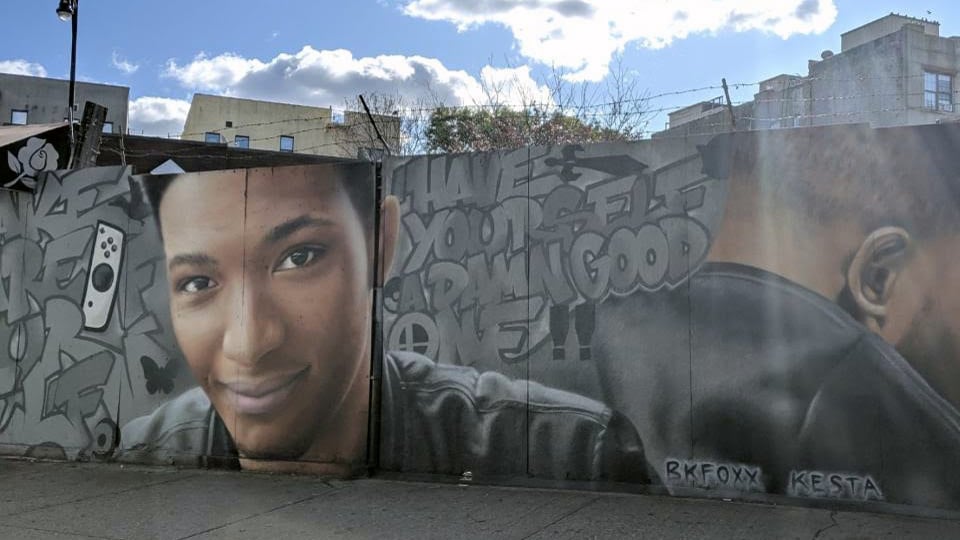
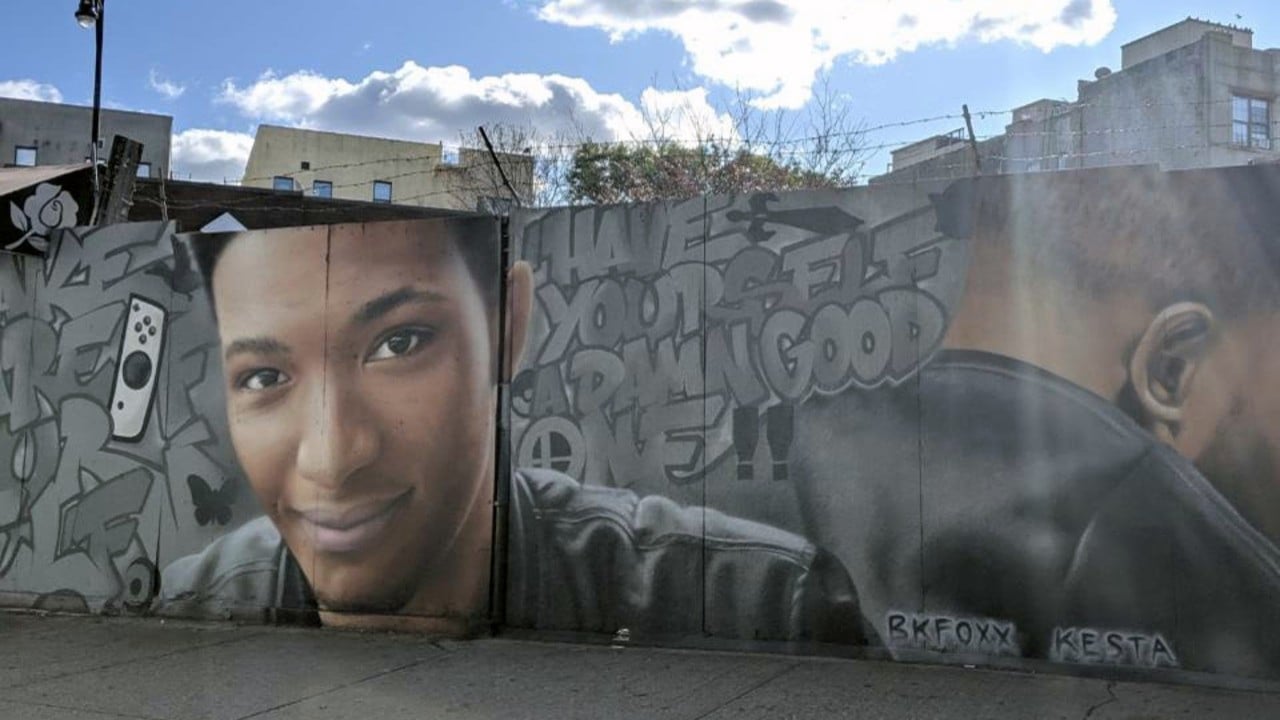
Not long after the video game YouTuber Desmond “Etika” Amofah was found deceased last year, his fans banded together and painted a large mural of him in Brooklyn. Now, to add to this, the same location has been transformed into a PokéStop within Niantic’s augmented reality mobile-hit, Pokémon GO.
This is all thanks to the company’s recently launched Wayfarer tool, which recruits “Niantic Wayfinders” who then nominate and review new points-of-interest for Pokémon GO and other Niantic games. The goal, as previously noted, is to “inspire others to discover new places and things” while highlighting “positive and unique qualities” of a location or community.
After a push from GO players at level 40 – including the YouTuber Reversal, who called on his audience of over 350,000 fans – Etika’s mural was approved as a PokéStop by Niantic. Below is the description (note: JoyconBoyz are the fans):
Remembering the passing of Etika, JoyconBoyz forever
Amofah was best-known on YouTube for his focus on all-things Nintendo, so it’s somewhat fitting to see him honored like this.
If you were as surprised as we were when Warframe was announced for the Nintendo Switch, you’ll probably be equally as surprised to hear Lotus – the mysterious figure from the popular free-to-play third-person title – has now been added to Super Smash Bros. Ultimate as a spirit.
It’s all for a new spirit event, which will start this Friday on the 28th of February and will run for a total of five days – meaning there’s plenty of time to collect all of the spirits, including this new one. Some of the other video game series represented in this event include Super Mario, Pokémon, and Sonic the Hedgehog.
Will you be booting up Smash Bros. Ultimate to grab this new spirit? Leave a comment below.
Posted by: xSicKxBot - 02-27-2020, 05:21 AM - Forum: Lounge
- No Replies
Steven Spielberg Is Out As Indiana Jones 5 Director
Longtime Indiana Jones director Steven Spielberg is no longer leading the upcoming Indy 5 installment, according to Variety.
While Disney has yet to comment on the matter and no one is confirmed to take Spielberg's place as director of Indiana Jones 5, James Mangold (Ford v Ferrari, Logan) is reportedly in talks to take the job. Spielberg, meanwhile, will remain as a hands-on producer of Indiana Jones 5. Variety's sources said Spielberg chose to step away from directing because he felt "a desire to pass along Indy 5’s whip to a new generation to bring their perspectives to the story."
This doesn't change Harrison Ford's attachment to the film, who earlier this month said Indiana Jones 5 was scheduled to start shooting in "about two months."



 in GalaCredit!