Posted by: xSicKxBot - 02-18-2020, 09:11 PM - Forum: Windows
- No Replies
Microsoft Connected Vehicle Platform: trends and investment areas
This post was co-authored by the extended Azure Mobility Team.
The past year has been eventful for a lot of reasons. At Microsoft, we’ve expanded our partnerships, including Volkswagen, LG Electronics, Faurecia, TomTom, and more, and taken the wraps off new thinking such as at CES, where we recently demonstrated our approach to in-vehicle compute and software architecture.
Looking ahead, areas that were once nominally related now come into sharper focus as the supporting technologies are deployed and the various industry verticals mature. The welcoming of a new year is a good time to pause and take in what is happening in our industry and in related ones with an aim to developing a view on where it’s all heading.
In this blog, we will talk about the trends that we see in connected vehicles and smart cities and describe how we see ourselves fitting in and contributing.
Trends
Mobility as a Service (Maas)
MaaS (sometimes referred to as Transportation as a Service, or TaaS) is about people getting to goods and services and getting those goods and services to people. Ride-hailing and ride-sharing come to mind, but so do many other forms of MaaS offerings such as air taxis, autonomous drone fleets, and last-mile delivery services. We inherently believe that completing a single trip—of a person or goods—will soon require a combination of passenger-owned vehicles, ride-sharing, ride-hailing, autonomous taxis, bicycle-and scooter-sharing services transporting people on land, sea, and in the air (what we refer to as “multi-modal routing”). Service offerings that link these different modes of transportation will be key to making this natural for users.
With Ford, we are exploring how quantum algorithms can help improve urban traffic congestion and develop a more balanced routing system. We’ve also built strong partnerships with TomTom for traffic-based routing as well as with AccuWeather for current and forecast weather reports to increase awareness of weather events that will occur along the route. In 2020, we will be integrating these routing methods together and making them available as part of the Azure Maps service and API. Because mobility constitutes experiences throughout the day across various modes of transportation, finding pickup locations, planning trips from home and work, and doing errands along the way, Azure Maps ties the mobility journey with cloud APIs and iOS and Android SDKs to deliver in-app mobility and mapping experiences. Coupled with the connected vehicle architecture of integration with federated user authentication, integration with the Microsoft Graph, and secure provisioning of vehicles, digital assistants can support mobility end-to-end. The same technologies can be used in moving goods and retail delivery systems.
The pressure to become profitable will force changes and consolidation among the MaaS providers and will keep their focus on approaches to reducing costs such as through autonomous driving. Incumbent original equipment manufacturers (OEMs) are expanding their businesses to include elements of car-sharing to continue evolving their businesses as private car ownership is likely to decline over time.
Connecting vehicles to the cloud
We refer holistically to these various signals that can inform vehicle routing (traffic, weather, available modalities, municipal infrastructure, and more) as “navigation intelligence.” Taking advantage of this navigation intelligence will require connected vehicles to become more sophisticated than just logging telematics to the cloud.
The reporting of basic telematics (car-to-cloud) is barely table-stakes; over-the-air updates (OTA, or cloud-to-car) will become key to delivering a market-competitive vehicle, as will command-and-control (more cloud-to-car, via phone apps). Forward-thinking car manufacturers deserve a lot of credit here for showing what’s possible and for creating in consumers the expectation that the appearance of new features in the car after it is purchased isn’t just cool, but normal.
Future steps include the integration of in-vehicle infotainment (IVI) with voice assistants that blend the in- and out-of-vehicle experiences, updating AI models for in-market vehicles for automated driving levels one through five, and of course pre-processing the telemetry at the edge in order to better enable reinforcement learning in the cloud as well as just generally improving services.
Delivering value from the cloud to vehicles and phones
As vehicles become more richly connected and deliver experiences that overlap with what we’ve come to expect from our phones, an emerging question is, what is the right way to make these work together? Projecting to the IVI system of the vehicle is one approach, but most agree that vehicles should have a great experience without a phone present.
Separately, phones are a great proxy for “a vehicle” in some contexts, such as bicycle sharing, providing speed, location, and various other probe data, as well as providing connectivity (as well as subsidizing the associated costs) for low-powered electronics on the vehicle.
This is probably a good time to mention 5G. The opportunity 5G brings will have a ripple effect across industries. It will be a critical foundation for the continued rise of smart devices, machines, and things. They can speak, listen, see, feel, and act using sensitive sensor technology as well as data analytics and machine learning algorithms without requiring “always on” connectivity. This is what we call the intelligent edge. Our strategy is to enable 5G at the edge through cloud partnerships, with a focus on security and developer experience.
Optimizations through a system-of-systems approach
Connecting things to the cloud, getting data into the cloud, and then bringing the insights gained through cloud-enabled analytics back to the things is how optimizations in one area can be brought to bear in another area. This is the essence of digital transformation. Vehicles gathering high-resolution imagery for improving HD maps can also inform municipalities about maintenance issues. Accident information coupled with vehicle telemetry data can inform better PHYD (pay how you drive) insurance plans as well as the deployment of first responder infrastructure to reduce incident response time.
As the vehicle fleet electrifies, the demand for charging stations will grow. The way in-car routing works for an electric car is based only on knowledge of existing charging stations along the route—regardless of the current or predicted wait-times at those stations. But what if that route could also be informed by historical use patterns and live use data of individual charging stations in order to avoid arriving and having three cars ahead of you? Suddenly, your 20-minute charge time is actually a 60-minute stop, and an alternate route would have made more sense, even if, on paper, it’s more miles driven.
Realizing these kinds of scenarios means tying together knowledge about the electrical grid, traffic patterns, vehicle types, and incident data. The opportunities here for brokering the relationships among these systems are immense, as are the challenges to do so in a way that encourages the interconnection and sharing while maintaining privacy, compliance, and security.
Laws, policies, and ethics
The past several years of data breaches and elections are evidence of a continuously evolving nature of the security threats that we face. That kind of environment requires platforms that continuously invest in security as a fundamental cost of doing business.
Laws, regulatory compliance, and ethics must figure into the design and implementation of our technologies to as great a degree as goals like performance and scalability do. Smart city initiatives, where having visibility into the movement of people, goods, and vehicles is key to doing the kinds of optimizations that increase the quality of life in these cities, will confront these issues head-on.
Routing today is informed by traffic conditions but is still fairly “selfish:” routing for “me” rather than for “we.” Cities would like a hand in shaping traffic, especially if they can factor in deeper insights such as the types of vehicles on the road (sending freight one way versus passenger traffic another way), whether or not there is an upcoming sporting event or road closure, weather, and so on.
Doing this in a way that is cognizant of local infrastructure and the environment is what smart cities initiatives are all about.
With the Microsoft Connected Vehicle Platform (MCVP) and an ecosystem of partners across the industry, Microsoft offers a consistent horizontal platform on top of which customer-facing solutions can be built. MCVP helps mobility companies accelerate the delivery of digital services across vehicle provisioning, two-way network connectivity, and continuous over-the-air updates of containerized functionality. MCVP provides support for command-and-control, hot/warm/cold path for telematics, and extension hooks for customer/third-party differentiation. Being built on Azure, MCVP then includes the hyperscale, global availability, and regulatory compliance that comes as part of Azure. OEMs and fleet operators leverage MCVP as a way to “move up the stack” and focus on their customers rather than spend resources on non-differentiating infrastructure.
Innovation in the automotive industry
At Microsoft, and within the Azure IoT organization specifically, we have a front-row seat on the transformative work that is being done in many different industries, using sensors to gather data and develop insights that inform better decision-making. We are excited to see these industries on paths that are trending to converging, mutually beneficial paths. Our colleague Sanjay Ravi shares his thoughts from an automotive industry perspective in this great article.
Turning our attention to our customer and partner ecosystem, the traction we’ve gotten across the industry has been overwhelming:
The Volkswagen Automotive Cloud will be one of the largest dedicated clouds of its kind in the automotive industry and will provide all future digital services and mobility offerings across its entire fleet. More than 5 million new Volkswagen-specific brand vehicles are to be fully connected on Microsoft’s Azure cloud and edge platform each year. The Automotive Cloud subsequently will be rolled out on all Group brands and models.
Cerence is working with us to integrate Cerence Drive products with MCVP. This new integration is part of Cerence’s ongoing commitment to delivering a superior user experience in the car through interoperability across voice-powered platforms and operating systems. Automakers developing their connected vehicle solutions on MCVP can now benefit from Cerence’s industry-leading conversational AI, in turn delivering a seamless, connected, voice-powered experience to their drivers.
Ericsson, whose Connected Vehicle Cloud connects more than 4 million vehicles across 180 countries, is integrating their Connected Vehicle Cloud with Microsoft’s Connected Vehicle Platform to accelerate the delivery of safe, comfortable, and personalized connected driving experiences with our cloud, AI, and IoT technologies.
LG Electronics is working with Microsoft to build its automotive infotainment systems, building management systems and other business-to-business collaborations. LG will leverage Microsoft Azure cloud and AI services to accelerate the digital transformation of LG’s B2B business growth engines, as well as Automotive Intelligent Edge, the in-vehicle runtime environment provided as part of MCVP.
Global technology company ZF Friedrichshafen is transforming into a provider of software-driven mobility solutions, leveraging Azure cloud services and developer tools to promote faster development and validation of connected vehicle functions on a global scale.
Faurecia is collaborating with Microsoft to develop services that improve comfort, wellness, and infotainment as well as bring digital continuity from home or the office to the car. At CES, Faurecia demonstrated how its cockpit integration will enable Microsoft Teams video conferencing. Using Microsoft Connected Vehicle Platform, Faurecia also showcased its vision of playing games on the go, using Microsoft’s new Project xCloud streaming game preview.
Bell has revealed AerOS, a digital mobility platform that will give operators a 360° view into their aircraft fleet. By leveraging technologies like artificial intelligence and IoT, AerOS provides powerful capabilities like fleet master scheduling and real-time aircraft monitoring, enhancing Bell’s Mobility-as-a-Service (MaaS) experience. Bell chose Microsoft Azure as the technology platform to manage fleet information, observe aircraft health, and manage the throughput of goods, products, predictive data, and maintenance.
Luxoft is expanding its collaboration with Microsoft to accelerate the delivery of connected vehicle solutions and mobility experiences. By leveraging MCVP, Luxoft will enable and accelerate the delivery of vehicle-centric solutions and services that will allow automakers to deliver unique features such as advanced vehicle diagnostics, remote access and repair, and preventive maintenance. Collecting real usage data will also support vehicle engineering to improve manufacturing quality.
We are incredibly excited to be a part of the connected vehicle space. With MCVP, our ecosystem partners and our partnerships with leading automotive players, both vehicle OEMs and automotive technology suppliers, we believe we have a uniquely capable offering enabling at global scale the next wave of innovation in the automotive industry as well as related verticals such as smart cities, smart infrastructure, insurance, transportation, and beyond.
The Corridors of Time have been charted. Guardians from around the world took on the monumental challenge of navigating time itself, some losing their minds in the process. We’d never shipped a puzzle of this size before, and watching the community engagement was a thrill in itself. We’ve seen a few requests for commentary on the creation and development of this puzzle. As always, we’re happy to invite you behind the scenes and share some of the thinking that goes into the experiences you play.
Destiny Dev Team: Over the past week, we’ve watched in awe as the community came together to solve one of Destiny’s most complex puzzles to date. Everyone who took the time to participate in the solution will be remembered for years to come – whether you submitted a screenshot, transcribed puzzle pieces, generated maps, wrote code, worked the data, or cat-wrangled this monumental team effort. Please take a moment to congratulate yourselves. Your efforts and accomplishments were truly inspiring. Watching the first players solve the puzzle in the early hours of Monday morning was a career highlight for many of us on the Development Team.
With the puzzle solved and the Corridors of Time closing next week, we wanted to take a moment to talk about our goals and early designs for this puzzle.
When we started planning the puzzle, we created a few goals to guide our development:
Create a time maze through which any player can dive to discover secrets and lore
Serve as a shared community puzzle that rewards the Exotic Fusion Rifle
Celebrate community achievement and invite all players to partake in the reward
With these goals in mind, we took inspiration from multiple sources in creating the early designs for the puzzle.
The bones originated several years ago with the discovery of the Sleeper Simulant and the ensuing quest to unlock it. At the time, we recognized that the moment of discovery was reserved for the few people that happened to be online at the time when that hidden content unlocked. Similarly, the secret missions for The Whisper and Zero Hour were also moments of discovery reserved for the few people online within a limited time window to experience first. By contrast, this puzzle was meant to be experienced by everybody who wanted to be included.
As is tradition at Bungie during our annual studio Pentathlon (which was held last Friday), many of us spend the entire day solving puzzles crafted by some of our brightest minds. This always culminates in a meta-puzzle that cannot be solved without the contribution of all of the smaller solutions. Similarly, the Corridors of Time puzzle was designed from the start to be very simple in nature, but also require that all of the little bits come together in harmony before revealing its solution.
The delivery of this puzzle came together as the team began exploring the concept and narrative for Season of Dawn. The puzzle seemed to fit well with the idea of the Corridors of Time, with players meandering and weaving through time to find a very specific reality. The early ideas for this space were roughly based on the idea of the cult-classic movie Cube, where you would leave one door and end up in another identical room with a new death trap waiting for you. As always, our artists delivered a mind-bending and stunning visual language that simply brought the whole experience together into something that inspires the imagination. Much like other classic movies, such as Alice in Wonderland or the Matrix, this space and the way it was connected together was done so to invoke questions like “Just how deep does this rabbit hole go? Can you just keep going on forever?”, and “Is there even an end to this?”
Again, we want to thank everyone who participated in this puzzle or cheered from the sidelines. We’re actively monitoring and collecting your feedback, from the puzzle itself to the rewards contained, to inform how we build experiences like this again in the future.
Now, we look ahead. We’ve got a rundown of performance issues that are currently under investigation, and another patch note preview for next week’s update!
Performance Pass
Over the last few months, we’ve been gathering feedback associated with game performance. This translates to moments when you may see framerate drops during activities or long load times when accessing a menu. The team has been deep in the code, looking for potential causes of these issues.
Next week, we’ll have a few performance issues addressed in Destiny 2 Update 2.7.1, including:
Improved some performance issues in the Chamber of Suffering encounter.
Fixed an issue where players could die when transitioning from the Necropolis encounter to the Tunnels of Despair.
Improved a performance issue that could occur when chunks of land return, or are removed during the Sanctified Mind encounter.
Improved performance when receiving certain investment related messages. This could be reward acquisition, placing tributes, or interacting with Obelisks.
The largest impact will be in the Tower, but this should help everywhere.
Players who load into Crucible matches faster than their peers will no longer be put in black screen. Rather, they will remain in spaceflight until all players have loaded into the match, as before.
Some proposed fixes are currently in development for the below items. These need to pass through rigorous testing before they’ll find their way to a future edition of patch notes:
UI stuttering and framerate drops when loading or applying mods
Framerate issues in Gambit and Gambit Prime
Framerate issues during the Sanctified Mind encounter of the Garden of Salvation Raid
Framerate issues in the Pit of Heresy Dungeon, specifically in tunnel encounters
General improvements to performance on PC when a lot of debris is on the ground
While our goal is to address these at the beginning of the next season, these fixes may be delayed if further issues arise. We’ll be sure to keep you updated as we approach Season of [Redacted]. There are also other performance issues we’re currently investigating that aren’t listed above. If you’ve been encountering framerate drops or stuttering issues during gameplay, please make sure to post a report to the #Help forum on Bungie.net. Please include which platform you were playing on, what activity you were in, and a video if possible.
Patch Note Preview, v2
Last week, we had a short and sweet preview of what’s coming in Destiny 2 Update 2.7.1. While Hard Light is creating some excitement, we have a few more patch notes addressing Quests, Seals, Exotic perks, and more.
Investment
Fixed an issue that is preventing Eris from granting her final Lore entry
Fixed an issue where the “Green with Envy” Quest was not progressing for some players
Fixed an issue where the “Playin’ the Odds” emblem was not unlocking correctly for players
This could prevent some players from fully unlocking the Dredgen title
Improved Black Armory Rare Bounty acquisition
Chances increase as you complete weekly and daily bounties
Guaranteed to drop from bounty completion after 5 days if completing all Ada-1 bounties
Sandbox
Fixed an issue where the Heavy Handed mod could trigger from Telesto bolts
Fixed an issue where players could retain buffs from Wormgod Caress, Winter’s Guile, and Synthoceps even after swapping armor
Equip restrictions on Wormgod Caress and Winter’s Guile will be lifted once this patch has shipped
We’ll have a few more notes to share; expect the full list on Tuesday when Update 2.7.1 becomes available.
A Memento in Time
Keeping track of every timetable in development could make your head spin. Luckily, you have Destiny Player Support at your service, and they don’t shy away from the task. Known issues, release timelines, and more can be found below.
This is their report.
PASSAGEWAY OF THE AGES
With the Destiny Community changing the timeline, the Corridors of Time have become unstable and will only be available until the weekly reset on Tuesday, January 28.
Players have until this time to collect the 19 “The Pigeon and the Phoenix” Lore pieces and the “Savior of the Past” emblem, along with a heartfelt message from Saint-14.
UNLOCKING BASTION
We have noticed that some players are having issues getting their Bastion Exotic Fusion Rifle quest from Saint-14. To claim the quest, players need to fully complete the Saint-14 storyline. This includes completing the following quests that can be claimed from Osiris:
Recovering the Past
An Impossible Task
Completing An Impossible Task
After completing these three quests and claiming their triumphs, players can visit Saint-14 in the Tower to pick up the “Memento” quest located in his inventory.
UPDATE 2.7.1 AND RESOLVED ISSUES
Next Tuesday, January 28, we will release Destiny 2 Update 2.7.1. This update will resolve some issues currently affecting players. Here is another preview of some of the issues that will be resolved:
Players who have the Leviathan’s Breath Exotic quest will now be able to access “The Arms Dealer” Strike. This quest will become available to all Season Pass owners, regardless of which Season Pass they own. Players can pick this quest up from Banshee-44 in the Tower Courtyard after reaching Power 800.
Progress will now count toward the Season 9: Challenges, Season 9: Rituals, and Season 9: Engagement Triumphs and the requirements for each one have been reduced so they can be completed during Season of Dawn.
8:00 AM PST (1600 UTC): Destiny 2 maintenance will begin. Players may experience sign-on issues during maintenance.
8:45 AM (1645 UTC): Players will be removed from activities and will be unable to log in until 9 AM.
9:00 AM (1700 UTC): Destiny 2 Update 2.7.1 will be released and players will be able to log in.
11:00 AM (1800 UTC): Destiny 2 maintenance will end.
CURRENT KNOWN ISSUES
Here is a list of the latest known issues that were reported to us in our #Help Forum:
The Efrideet’s Gift triumph isn’t unlocking for players who collect 50 Iron Banner packages from Lord Saladin.
When resetting Infamy rank, progress gets reset for the “Get Closer” step for the Green With Envy quest.
The Sundial Fractaline Extractor III, obtained from the Nessus Obelisk, incorrectly states an increased chance to find Polarized Fractaline when completing Vanguard Strikes. The enhancement actually increases the chance to find Polarized Fractaline when completing the Sundial and the Menagerie.
The three Dreaming Tokens given to players during the Wish-Ender quest, sometimes do not all go into a player’s inventory and cannot be reacquired on that character.
The Warlock’s Arc Web no longer chain-lightnings enemies.
For a full list of emergent issues in Destiny 2, players can review our Known Issues article. Players who observe other issues should report them to our #Help forum.
Precision and Focus
This week, our selections are keeping an eye on their respective battlegrounds. In one, the slightest movement can result in a headshot. For the other, coordinating flesh and metal to produce an amazing musical cover, something you could headbang to as you march to victory.
Winners will find a shiny new emblem in their collections within the next 365 business days! Really, I’ll get to it as soon as I can. If you’d also like a chance for the emblem, submit your video to the Community Creations page.
That’s a wrap for this week. As we near the end of the season, we’ve got a few final stops on the roadmap. Next week, Cozmo will bring some details concerning the Empyrian Foundation, which is just under two weeks away.
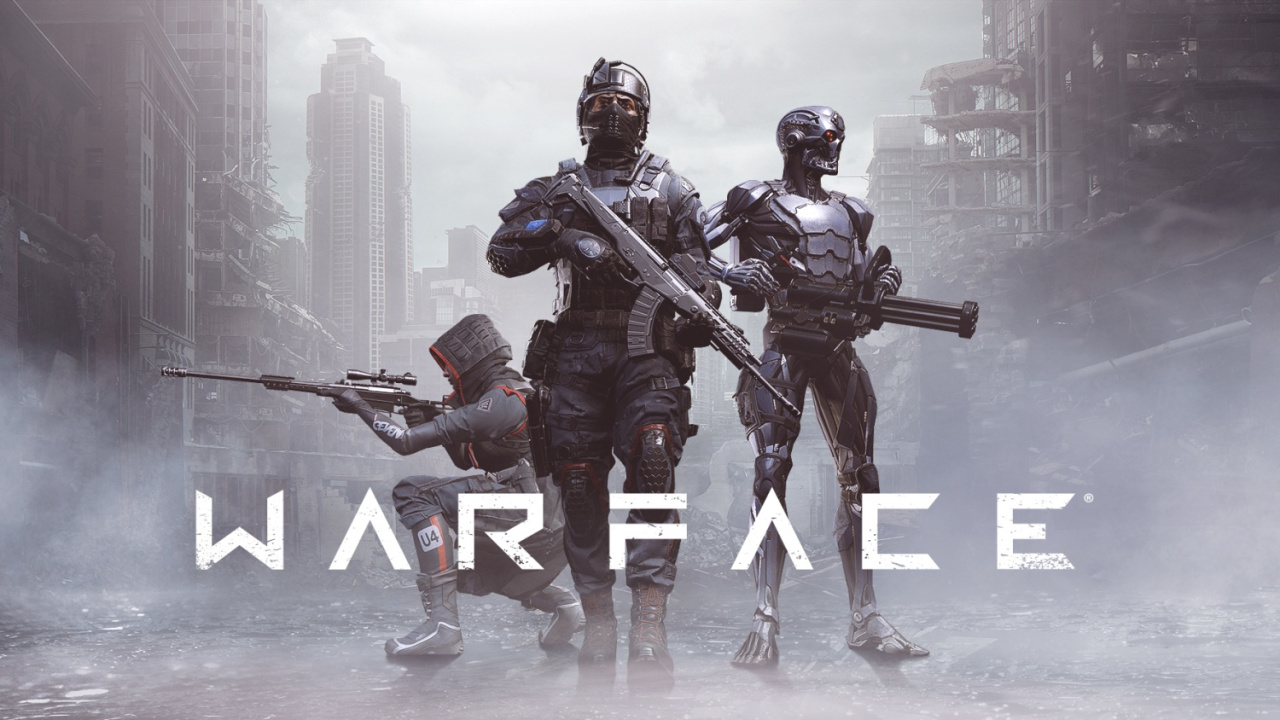
Surprise! First-Person Shooter Warface Is Now Available On Switch For Free
MY.GAMES’ popular first-person shooter game Warface has appeared on the Australian Nintendo Switch eShop, available to download as we speak.
The game is a free-to-play, tactical FPS title which has more than 80 million registered players across other platforms. In Australia, the game is now available to download for free; we expect it’ll start to roll out to other regions in due time. Here’s an official description:
Warface is an online first-person shooter like no other. Battle across 50+ multiplayer PvP maps, tackle tough PvE raids in co-op, and unleash a vast arsenal of 200+ realistic customizable weapons. Joint over 80 million players worldwide, and play for free now!
Experience multiple thrilling PvP game modes. Fight for glory across more than 50 multiplayer maps based on locations around the planet, and even beyond it.
Team up with friends to complete challenging story-based PvE raids. Stop the tyrannical megacorporation, eliminate a zombie threat in Chernobyl, and blast off to Mars to defeat a robot army!
If you want to check it out, make sure to keep an eye out for it appearing on the eShop in your region soon. We’ll make sure to update this article with more information as and when it arrives.
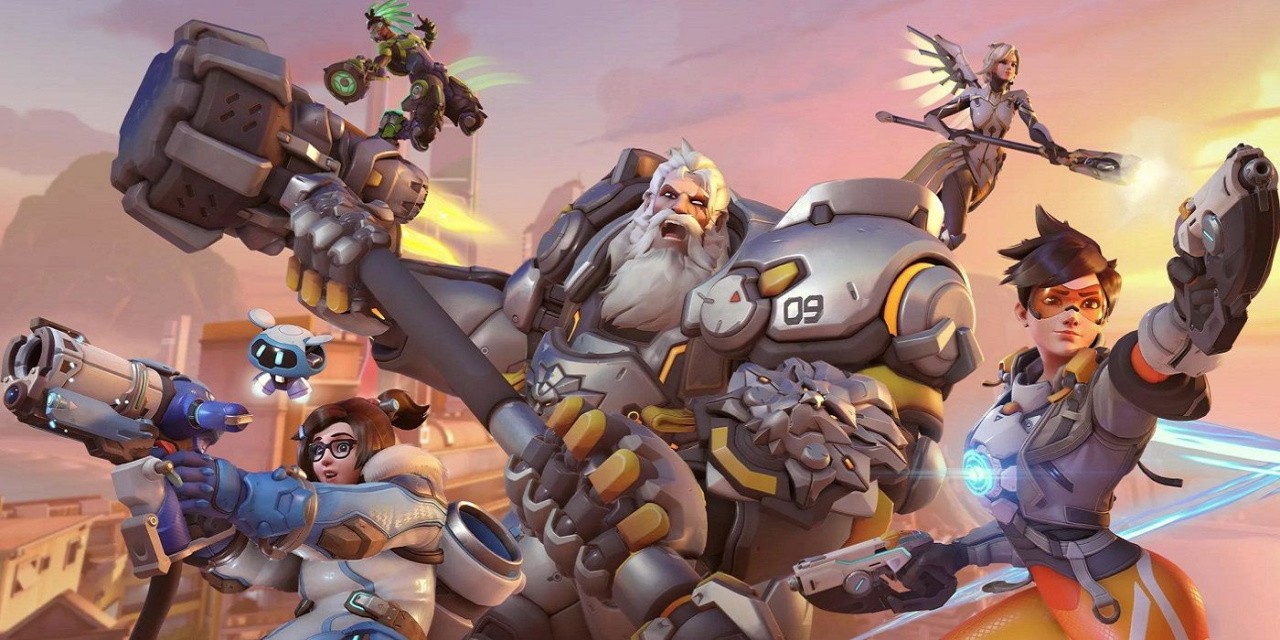
Following the success of series like Castlevania, it would seem that many video game publishers are looking for ways to leverage their catalogue of IP in the realm of streaming TV shows – and Blizzard appears to be the next in line.
Thanks to the LinkedIn profile of Nick van Dyk – co-president of Activision-Blizzard Studios – we can expect to see shows based on both Overwatch and Diablo in the not-too-distant future.
As part of his profile, van Dyk describes one of his roles as:
…executive producer of Diablo, a TV adaptation of Blizzard Entertainment’s IP, rendered in anime style. The show is currently in pre-production for distribution worldwide through Netflix.
This isn’t a confirmed project at the time of writing, but with Diablo 4 on the way, it would make for ideal timing. Elsewhere on his profile, van Dyk says that he has “developed and sold an animated series based [on] Blizzard’s Overwatch franchise,” but doesn’t mention a distributor for that project, which suggests it isn’t as well-developed as the Diablo series.
Would you be keen to see either of these properties turned into full series? Let us know with a comment.
Teaser Image Of Sword & Shield's New Mythical Pokemon Released
A brand-new Pokemon for Sword and Shield will soon be unveiled. The Pokemon Company had previously announced that it will reveal a new Mythical Pokemon this month on Pokemon Day (February 27), and now we've gotten our first glimpse at the monster.
The official Pokemon Twitter account recently shared a silhouette of the mysterious new Pokemon. The tweet doesn't provide any more details about the monster, but it does tell fans to "stay tuned," so more information will be revealed before long. You can take a look at the teaser image below.
All we know so far about the new Pokemon is that it will feature in the upcoming Pokemon film, Pokemon the Movie: Coco, which is set to premier in Japan on July 10. The Pokemon Company hasn't shared any details about the film's plot, but a brief teaser trailer shows Ash and Pikachu meeting a mysterious jungle boy, who seems to bear a strong resemblance to the above Pokemon.
Blog: A firsthand account of coronavirus’ impact on China’s game industry
The following blog post, unless otherwise noted, was written by a member of Gamasutras community. The thoughts and opinions expressed are those of the writer and not Gamasutra or its parent company.
Some of the info and pictures in this article are from game media: 17173, Chuapp, and Tencent news
This season, the Chinese people have an eventful Spring Festival Holiday, due to the outbreak of new coronavirus epidemic. Till now, China government is working hard to control the epidemics. Our studio is in Beijing, the affected area, I want to give you some first hand information regarding how the epidemic impacts the game industry in China, I would try my best to give a fuller and detailed story.
Background
The new coronavirus is air-borne and a bit more dangerous than common flu virus, it would attack people’s lungs, the symptoms include fever and pneumonia. Affected patients are first found in Wuhan city of Hubei province around Dec 2019, possibly transferred to humans from wild animals, the virus’ natural hosts. In short time it develops to national epidemic, this is the statistics up to the time of writing:
The situation in Wuhan is dire, large number of people are diagnosed. Newly increased cases are beyond the local hospitals’ ability to handle, and the nation is summoning all the available resources to construct new hospitals over nights there. To prevent further spread of the virus, the city is sealed. In general, life in Wuhan is very rough.
Out of Hubei province, the number of diagnosed is significantly lower. However, for the need of keeping the virus in check, nation wide people are advised to stay at home as much as possible before the matter is over, to reduce contact. To help improving the situation, most Chinese people have been staying at home from the start of the holiday (Jan 24) up to today, because of the emergency, the holiday is twice prolonged, first to Feb 10, Now to Feb 17. This creates a type of at-home consumption and gives some impact to businesses.
Beijing’s most busy commercial street Wangfujin Avenue in this year’s Lantern Festival evening, it’s quite empty.
Game Revenue Boom
It’s easy to imagine, while people are unable to go out for entertainments, for example, movies, parties, etc, a large portion of the amusement budget would be diverged to video games. In the mobile game sector, most top grossing tiles in China welcomes a phenomenon hike in revenue. On this year’s Spring Festival Eve, Tencent’s flagship MOBA Honor of Kings, reaches 2 billion Yuan (300M US dollars) daily revenue. This figure is only 1.3 billion on last year’s Spring Festival Eve.
And many MMO Steam games reaches historical high number of active online players. Below is the graph of a Chinese game on Steam.
And consoles also enjoy a sales mania. “Our consoles and discs are sold out in a week.” A Taobao store owner says. During this period, both PS4 and Switch become highly sought-after items. A typical example is, the Switch game Ring Fit Adventure, in US Amazon store its price is $124. And on Taobao, the price is steadily at rise, a few days ago around ¥1000 ($140), now around ¥1500.
Benefits for Gamers
For publishers, it’s the best time to harvest revenue. On the contrary, to cheer people up and help them combat long time indoor stress, many generously offer free to play plan. For example, Nishuihan, a MMO RPG game, regularly it goes with hourly/monthly billing plan. Now it declares free to play during the epidemic period. It also releases free in-game mouth mask, to encourage people to hold on.
And Blizzard’s Overwatch also extends its free trail period to the end of the holiday.
Donations
During the hard time, most local and international publishers/developers extend arms of help to Wuhan. Each of them donates millions of Yuan to the city through charity, helping them buying desperately needed mouth masks, medical equipment. Some companies even go to the great length by sending staffs abroad buying mouth masks-for they are out of stock everywhere in China, bring them back in suitcases and send to Wuhan.
And some MMO games sponsor in-game activities to raise donation among players. For example, Jianwang 3 by King Soft has raised 1.2M Yuan up to Jan 30.
I’m glad to learn that enterprises/people in our industry are so warm hearted, and stay firm with the nation.
E-Sport Events
Big gatherings is the scenario we are trying to avoid now, so E-Sports Events are affected. All events in China area are rescheduled, including League of Legends, Overwatch League, PCL 2020.
And some E-Sports teams send their regards to the public, encouraging people to keep hope and be strong.
Below: T1(SKT) Team sending regards to fans
Challenges to Developers
For all developers and service providers across China, the biggest challenge is to resume work in working places.
Big companies such as Tencent, Netease would reopen studio on Feb 17, following national emergency announcement. However, lots of small companies require employees to remote work from Feb 3. No doubt that by remote working, only limited jobs could be handled. The impact to different studios would vary according to their working natures. For example, for some 2D/3D art suppliers, the work is to make some 3D models, 2D graphics, they are not greatly affected; However some developers who need multiple departments working together, are not so lucky.
Wuhan city is the concentration zone of GAL game (Girl and Love) developers, these developers are the most heavily impacted.
A famous GAL producer reveals, the big issue of his studio is that, employees who go to their hometowns to spend the holiday with families, are unable to return to Wuhan; And native Wuhan employees are unable to go to working place, for the city is heavily infected area, Wuhan people go outdoors even the less than other cities.
Impact to Our Studio and Friends
I have many friends in different cities, Shenzhen, Xi’an, who run a company doing 2D/3D artwork for hire, just as our studio. They all tell me that their studios are not reopened, because by announcement it is still holiday now, and people fear to gather together. However, small companies can’t stay idle for very long, and their employees do as much work as possible at home. They suffer different degree of losses, we all hope the working order could be restored soon.
And it’s very lucky for our studio. We’re in Beijing, a less affected city, we have freedom to go out, albeit people aren’t willing. Our employees all live within half an hour distance, so work goes on just as normal, we are back to work on Feb 3. And I tell our clients the situation in China, and we could only go home and go to work. And they support us by sorting out all the outsource works and give us as much as they can. Here I sincerely express my gratitude to these dear friends!
The biggest impact is to our marketing. Now many countries limit Chinese citizens’ entry, and flights from-to China are canceled. That in the next few months, we can’t expect to do some self-promotions in game events. For example GDC and Game Connection in March, Pocket Gamer Connection in May. How big the loss is, it’s hard to estimate. The importance of going to events could be read from two stories. First is that we find a big client we now work for, indirectly through the Pocket Gamer Connection Helsinki last October; And in the last few years, whenever we go to San Francisco, we would visit our most important clients there, the visits are essential to maintain our long time collaboration.
Conclusion
To Chinese people, the epidemic is a grievous misfortune and suffering, all of us hope it could end soon. Some of us in game industry suffers losses too, nonetheless, the whole of the industry represents a positive force battling the plague, and we will help our country win out!
Don’t Miss: Turning love into a cooperative game mechanic in Haven
When you think about love in gaming, genres like dating sims and romancing options in role-playing games immediately come to mind. But that isn’t what The Game Bakers, the creators of the boss rush indie hit Furi, wanted to focus on when they set out to make Haven a game about a stable relationship.
“We did Furi which was a very challenging, hardcore experience and we wanted something different afterward. We wanted to tell a love story,” said The Game Bakers co-founder Audrey Leprince.
“There aren’t that many love stories in games right now, it’s all about dating, breaking up, or trying to avenge your dead wife. We wanted to portray a modern couple that has been together for a while. We know they are intimate.”
Haven is what The Game Bakers call a unique mixture of Persona and Journey. It follows a young couple who escape from a powerful group we don’t know much about yet, and combines floaty, exploration-driven gameplay where you glide across a lost planet and fight infected creatures with day-to-day activities like cooking and resting.
What’s interesting is that those day-to-day activities and combat sequences are split in half, with one player controlling each character (or a single player controlling both if they don’t have a second player, then that player has to handle the timing for two different prompts). Each player has different button prompts to attack, shield, and pacify corrupted enemies. Both players will need to coordinate and work together in combat, and in the daily activities, to get the most out of the game.
Haven originally started as a prototype that focused on the Journey-like floating exploration, but the split controls for other segments of the game were a decision made early in the process. “It was almost the first decision when we decided to do a game about a couple. If it was a game about love within a couple, we had to play both characters,” said creative director Emeric Thoa. “It helps to make the game unique. When we designed the combat system, it made sense input-wise. I always design mechanics based on inputs. Pressing and holding face buttons and the d-pad in rhythm feels good. “
Conveying love as an in-game system is about more than just splitting these different mechanics in two, it’s about making sure the entire game is about being together. That’s why both players have to agree on dialogue options before proceeding, a disagreement is tough to deal with since both players can select dialogue when the menu comes up.
Right now, the gliding mechanic is the only main element in the game that isn’t controlled by both players at the same time. Thoa and his team originally wanted everything in the game to be split, but it didn’t make sense for the game’s design.
“We initially tried to have both players control each character, but this becomes quickly unplayable because there’s only one camera,” he said. “I didn’t want split-screen, it’s a game about being together. Splitting the screen makes the experience less exciting visually and leads to tons of problems, and it does not help create the feeling I wanted to achieve: gliding together, like skiing together, in the trail of one another.”
“If you keep both characters on screen, your controls become relative to the character, pushing the stick on the left doesn’t necessarily mean going left and you don’t necessarily see what’s in front of your character,” Thoa added. “Unless both players go in the same direction, it’s not working. We tried many different systems, but eventually, the best for the experience was to have one lead and one follow, that you can swap anytime you want.”
A similar issue came up when deciding how each player would control their character when in the Nest, the couples spaceship home-away-from-home where they complete most of the Persona-esque activities.
“Walking in a tight space, the camera, everything felt clumsy,” Thoa, who thought he could display the theme of intimacy more clearly with a third, free-floating first-person camera, said. “There’s no fun in just moving a character in a small indoor location. There was no challenge, no game mechanic involved. We solved that by making the player be a kind of the third eye in their little cozy home. You see them in the kitchen in the living room, being there.”
While The Game Bakers couldn’t split everything in the game between two players and still make the gameplay enjoyable, they believe the current setup does convey the idea of living together as a couple. But these split mechanics, which also include resource management and crafting, only worked if the narrative supported it.
“The biggest challenge in this kind of game is on the story side,” Thoa said. “The game starts to feel like a complete experience only when the story elements are in, which is when the game is done basically. The gliding and combat can be working perfectly, but as long as they are not tied into the story, it feels incomplete.”
So Thoa and his team have to be content with everything not coming together and feeling complete until later in the development process. “At the moment, for instance, the beginning of the game is great as most story elements are in and complement the mechanics, but the second part is still very much in progress,” he added.
Of course, there is also the challenge of making sure the story and both protagonists are engaging and authentic. Several people on the team at The Game Bakers are in long term, stable relationships themselves and they’ve tried to apply what they know to the dialogue and plot.
“From what we have seen, players really relate with the characters. This is a fun thing to share with someone, the dialogue especially because it’s relatable and intimate, people feel really involved in otherwise quite mundane choices,” Thoa said of hands-on demos at events like PAX West. “If a king asks the heroes in a co-op RPG to save the world, even if the stakes are huge, players don’t care, they won’t discuss that choice on the couch. But if the question is ‘what should we have for dinner’, I can assure you that a conversation will start.”
Today we are checking out Voxelator, a free browser based Voxel painting application from the creator of the Pixelator application we covered earlier. In the video below we go hands-on with Voxelator.
There are some licensing limitations to be aware of for using Voxelator:
Voxelator is a free software and you can choose which license to attach to the models you produce with it, and use them for any purpose — commercially included (provided you did not use any external resources with limiting licenses). With that said, you may not do the following with Voxelator:
You may not attempt to download its source and use it locally from your computer.
You may not attempt to upload Voxelator to a different domain or site.
You may not attempt to embed Voxelator in an external domain, using an iframe or any other technology.
You may not attempt to redistribute Voxelator in any way, not commercially and not for free.
You may not reuse Voxelator’s code for any purpose.
You can run Voxelator on any browser supporting WebGL 2 and ECMAScript 6 support, although Chrome is the primary supported browser. You can learn more about using Voxelator here.
Tim Cook issues memo to staff regarding coronavirus outbreak
By Amber Neely Monday, February 17, 2020, 04:16 pm PT (07:16 pm ET)
Tim Cook has released a memo to Apple staff, discussing the impacts of the coronavirus has made Apple’s return to normal conditions somewhat slower than anticipated.
The memo, sent to staff by Tim Cook, comes hours after Apple released a public statement announcing that it will miss quarterly guidance and iPhone sales estimates because of of the outbreak.
Apple is revising its quarterly guidance downward not just a as a result of lowered sales in China because of the coronavirus, but also because of production problems in the country that are just now starting to be overcome.
The memo clarifies that Apple is working on returning to normal operations, but that the health and safety of Apple partners, employees, customers, and communities in which the company operates is the firstmost priority.
Bloomberg obtained a copy of the memo, which reads:
Team,
The response to COVID-19 has touched the lives of so many in the Apple family, and I want to thank everyone for their dedication, empathy, understanding, and care. Today, we more than doubled our donation to support the historic and global health response.
Our paramount concern is with the people who make up Apple’s community of employees, partners, customers, and suppliers in China. I also want to recognize the many people across our teams who have been working around the clock to manage Apple’s global COVID-19 response with diligence and thoughtfulness.
Corporate offices and contact centers have reopened across China, and our stores are starting to reopen, but we are experiencing a slower return to normal conditions than we had anticipated. This afternoon, I shared this update with our community of shareholders and investors to note that we do not expect to meet the revenue guidance we provided for the March quarter. Outside of China, customer demand across our product and service categories has been strong to date and in line with our expectations. Apple is fundamentally strong, and this disruption to our business is only temporary.
Our first priority – now and always – is the health and safety of our employees, supply chain partners, customers, and the communities in which we operate. Our profound gratitude is with those on the front lines of confronting this public health emergency.
Tim
The coronavirus is a major global issue, with many companies having to mitigate the effects of the spread for themselves as well as meeting the demands of government agencies, while simultaneously having to plan and implement alternative ways to manufacture goods. As one such major entity, Apple is keenly aware of the potential damage the virus can cause to its bottom line.
Posted by: xSicKxBot - 02-18-2020, 12:41 PM - Forum: Windows
- No Replies
CVP Rik van der Kooi on Black History Month: Leaning in
White, Dutch, male and writing about Black History Month?
As an executive at Microsoft, a resident of the United States and a human being, it is important to me to use my voice to support the many communities around me, to give back, to empower others and to be a catalyst for change. It was with that idea in mind that I reached out to Kathleen Hogan, our executive vice president of Human Resources some years ago and asked if I could be a sponsor for the Employee Resource Group that supports our black and African American community at Microsoft called Blacks at Microsoft (BAM).
Being part of BAM for the last three years as co-sponsor has been an absolute honor and a privilege. Thanks to the generosity of the BAM community, I have had the opportunity to listen and learn much more directly about what’s top of mind for the community and explore my own understandings and assumptions. I’ve learned things about black history in the United States that I knew embarrassingly little about. And I’ve been deeply impressed with the cohesion and support BAM members provide each other and the external community. For me, the opportunity to influence others by actively participating in events and tune in to learn from others, to speak up when I observe behaviors inconsistent with our values or beliefs on inclusion, and to amplify stories that need to be told to help address injustices in society is some of the most rewarding work I have done while at Microsoft.
Black History Month, in the U.S. and Canada, is an opportunity for all of us to “knock on the door” to increase our awareness and understanding – from African history to slavery to the Jim Crow South to the civil rights movement to present-day inequities. It is also an opportunity to recognize and honor more recent examples of achievement from the black community and to reflect on what it means to create a truly equitable society.
I encourage everyone – community member or ally – to set aside some time this month to better understand black history, to be intentionally inclusive and to get acquainted with those who are different, with the intention of deepening empathy and understanding. In doing so, we become aware of our own biases, get curious about other points of view and gain the courage to have challenging conversations. Let every Black History Month be an opportunity to understand a little more, to be more connected and to deepen our sense of community.