Available Today with Xbox Game Pass for Console: Grand Theft Auto V
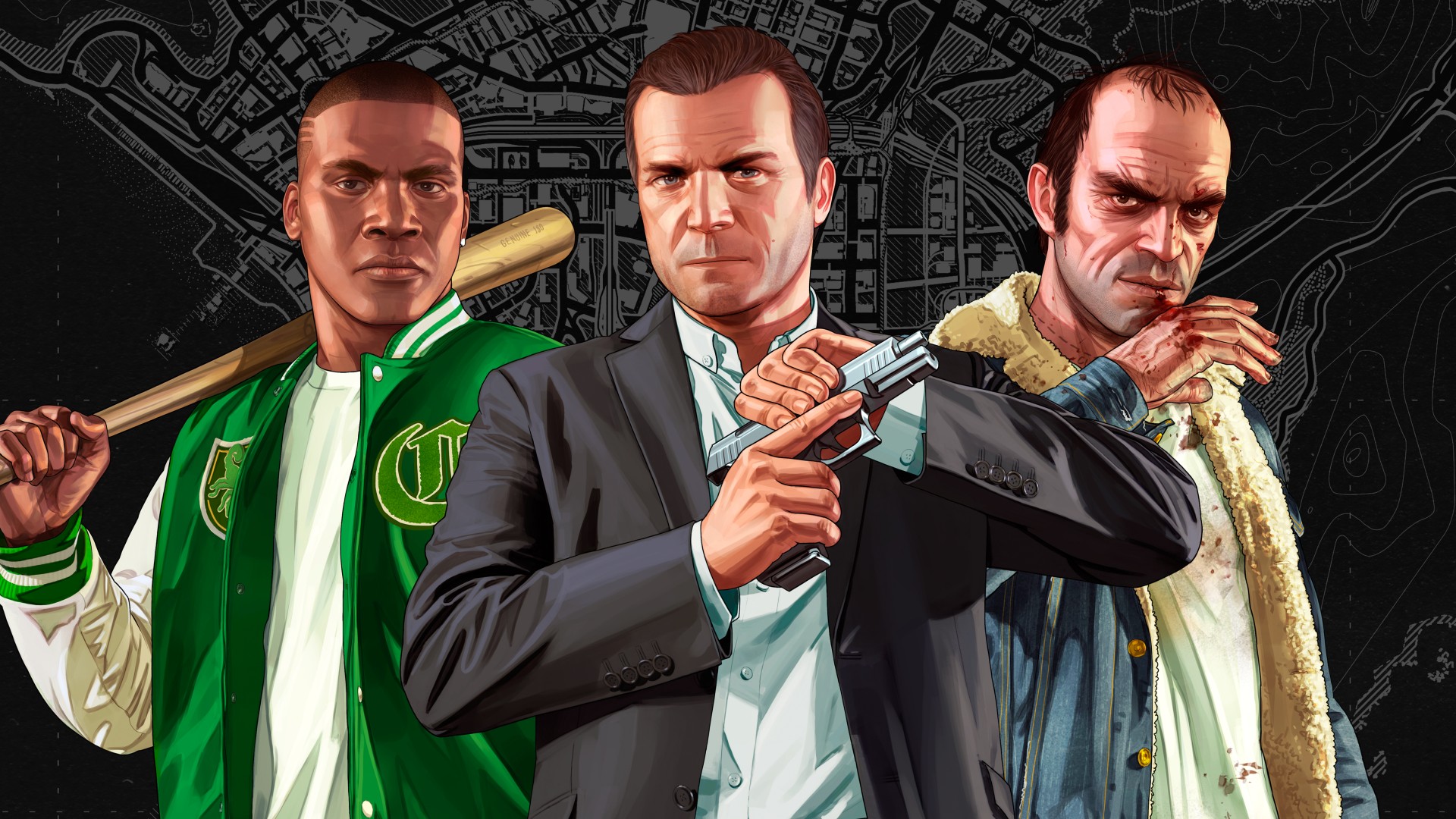
You know us at Xbox Game Pass, we like to make memes and jokes about our games. I am sitting here giggling to myself about something Trevor Phillips said in Grand Theft Auto V, and then realized that there is no possible way I could repeat that out loud without getting in trouble. I am productivity personified, and here to tell you that GTA V is available today with Xbox Game Pass for Console!
Welcome to Los Santos and Blaine County, where the great
outdoors meets shopping, glamour, and so much more… Jump in the lives of a
retired bank robber, a terrifying psychopath, and a young street hustler while
pulling off heists and essentially causing all sorts of mayhem.
For those of you with Xbox Game Pass Ultimate or Xbox Live
Gold, you’ll also have access to Grand Theft Auto Online, a dynamic and
persistent online world for up to 30 players. Since coming to Xbox One, GTA
Online has received 25 updates which allow players to become CEO of a
business, own a nightclub, or visit The Diamond Casino & Resort.
The latest update released on December 12 challenges players
to pull off the most sophisticated and daring robbery the city of Los Santos
has ever seen in The Diamond Casino Heist. This is all in addition to allowing
you to customize your appearance, change your stats, customize your cars, find
your friends and become scooter brothers, take part in jobs, missions, and
activities to earn reputation and cash. Rise through the criminal ranks and
pull off the heists of your life.
Don’t forget: with your Xbox Game Pass membership, you get up to 10% off on any purchase of the Criminal Enterprise Starter Pack or Shark Cash Cards to fancy-up your cars, buy new real estate, or even a helicopter! (Pro tip: Best way to get those high value targets trying to hide from you on top of a tall building.) You can also use your membership to save up to 20% on a purchase of the base game from the Microsoft Store.
Tune in to the brand new iFruit Radio Station that launched
with The Diamond Casino Heist update for Grand Theft Auto Online, and
follow us on Twitter and Instagram – we’ll share the
best that Los Santos has to offer. Don’t forget, if you want to start your own
crew with your friends in Grand Theft Auto Online, they can snag their
first three months of Xbox Game Pass
Ultimate for $1 right now! The deal ends on January 6, so jump on it now.
Posted by: xSicKxBot - 01-11-2020, 08:58 AM - Forum: Lounge
- No Replies
Don’t Miss: An in-depth breakdown of Dead Cells’ mobile port
Laura Saada is lead producer at Paris-based Playdigious.
First of all, before anyone asks: yes, Dead Cells will be a premium mobile game. It is a premium game on PC, on consoles and it is a premium game on mobile. No argument here.
One year ago, Motion Twin (Dead Cells’ developers) entrusted us to take on the challenge of bringing Dead Cells on mobile and granted us full latitude. It was a big day for Playdigious since Dead Cells won several prestigious awards, got some amazing coverage and of course a lot of players and us loved the game.
What a challenge! (And some pressure on our heads.)
When we started working on Dead Cells, we couldn’t even imagine what challenges were waiting for us around the corner. However, we’ve tackled challenging ports before. We previously worked on Shiro Games’ Evoland 2, a complex 20-hour-long RPG. Even its developers didn’t believe it was doable on mobile, due to this complexity.
But we did it!
Now that you’ve got the setup, here we go: how do you port the precise, frenetic, action-packed, controller-centric roguevania game that is Dead Cells to mobile and tablets devices that utilize a single touch screen?
The first thing we did before anything else, was to make sure the game could run on mobile devices. We made a very rough first build, without controls or anything, just to check performances and see if there were any technical blockers. Spoilers: there weren’t.
A Switch version was also in the pipeline, so we weren’t that worried about it. The thing to know about mobile nowadays is that mobile devices are way more powerful than what a lot of people expect. Obviously, there are some additional constraints on the technical side, such as the variety of devices to manage, specific texture optimization, RAM usage, not to mention various OS versions. We won’t talk about the Android platform with strong GPU disparity etc. However, generally speaking, high-end mobile devices nowadays are very close to a Nintendo Switch in terms of technical power. So, if you’re planning a Switch version, please have a look at mobile and see if it would fit. It’s an awesome platform with a huge reach and there’re already some awesome games on it and…Ok I’ll stop here, this is for another article (sorry, but I do love mobile).
Let’s get back to Dead Cells. So, there were no technical blockers (we won’t talk about the Haxe/Heaps engine here and that’s not my place to do so anyway). I’m not saying this was easy — on the contrary, it was a very difficult task, but not impossible. Porting a game, specifically on mobile, is not trivial. It does require some hard work and I’m still really impressed with the work our developers are doing. However, with a little experience it gets easier. Unfortunately, Dead Cells won’t be supported on “old” devices but (thanks to QA) we are confident that it can run smoothly on all supported devices.
2.1 Controller settings PC
2.2 Keyboard settings PC
We knew (and will always know) that a mobile port will never be the exact same experience as it was on the original platform (PC or console). For Dead Cells, the main challenge was to take all the controls and find a way to make them enjoyable on mobile.
Now that a first build is here and works, it is time to start thinking about the UX and do some mock-ups and tests.
Where should we start?
On Dead Cells, one of the key features is movement. The player needs to move the character easily, run to the left, the right, crouch, and jump. This is a question we knew well, thanks to our previous porting experiences.
Moving left and right was not too difficult to solve: let’s use a virtual floating pad. It is way more precise today than it was in the past and lot of action games on mobile are using it. Players are already used to it, and we can tweak and tune it as much as we want.
Jump and Dodge, not so much. Both are required in Dead Cells and used so many times.
How could we let players use them easily?
3. First Jump and Dodge drafts
My first mock-up was something like one button for both actions, and I wanted to let the player slide from one side of the button to another, to either jump or dodge without too much gesture. We tried a little.
That didn’t work. It was a nightmare to play, the precision was not here at all and players would mis-click every time. Big nope!
Let’s get back to basics, shall we? One button to jump and one button to dodge. With the right positioning, that could be it. We’re getting closer to the game feel we wanted. But still, this is a lot of buttons on screen, so we tried something else.
Get rid of the Dodge button and use a Swipe on the right part of the screen to dodge.
Yes! That works too!
“Swipe-to-Dodge” was a great idea but wasn’t the best for the whole team. It is a very different way of playing and we weren’t all happy with it. So, by default, we kept the basic two buttons idea.
Let’s talk about what came next: using skills, weapons, and potions; how to pass through a door without breaking it; how to talk to a character; how to pick up items or interact with stuff, etc.
Skills & Weapons: Jump and Dodge buttons worked well, ok let’s do the same! The challenge here was to find the right positioning for the virtual buttons. We checked other successful action games on mobile like Fortnite and Lineage 2 to have a better understanding of players’ habits when playing: How do they move? How do they jump, How do they manage an interface with a lot of buttons? Thanks to benchmarks set by other games, we figured we were good here.
4. Lineage 2
Menu and Potion buttons (and homunculus but shhh! That comes later in the game): On PC you just have to press “Esc” to open the Menu and Settings; on consoles, you press Start or Options. But on mobile, you need something on screen to open it. For a long time, the Menu was just on the HP bar and we were used to it. It wasn’t the first time this was used on a mobile game; I was confident that it would be enough.
Good lesson here: When doing UX design = NEVER EVER EVER assume too many things for players. And please, playtest. Because yes, playtests showed me how wrong I was. Putting the Menu on the HP bar wasn’t enough at all, we needed a Menu icon! So, we listened and added one.
Interaction: How should players control passing through doors, talking to characters, pick up items and weapons, etc.? How should all those different actions work on mobile? We didn’t want to add too many things or give players more controls to understand. One button would be enough, so we added exactly that: a new “Interact” button. Finding the right visual asset for this one was not an easy task but with the right icon and some visual signs and feedback, this button became very simple to understand and use.
For all of those buttons, a lot of mock-ups and tweaks were involved, but thanks to some playtests, we managed to get something nice. Additionally, right from the start, we had this idea of letting players choose how they wanted to play, so we integrated some nice features inspired by Evoland 2… But we’ll get back to that later. At that time, I still personally thought there were a lot of buttons in game, but when playing, I kind of just enjoyed the experience and forgot about that pretty quickly.
Ok let’s recap all the things we needed to fit on onesmall screen:
A floating pad (left of the screen — no discussion here as players are used to it, so let’s not change their habits)
Jump and Dodge
Skills and Weapons
Potion
Menu
Interaction
+ all the UI already there on other platforms: HP bar – Gold & Cells count – Map – Timer etc.
And we needed to adapt to small screens and a completely different way of playing: holding the device with two hands wrapped around it, sometimes on the go.
This required some harsh UI work.
We just couldn’t keep the existing UI; everything was at the bottom of the screen, and this doesn’t work well on mobile since players have their hands and fingers there. They wouldn’t see a thing.
We moved almost everything; the HP bar got a new spot on the top left corner of the screen, with both Gold and Cells as good company. The Map is moved to the top right corner, with the Timer, Keys etc.
That left us a lot of space at the bottom – and that’s where we placed controls. We put the pad zone on the left and other controls on the right, with the little exception for the Potion and Homunculus controls behind the HP bar.
5.1 Original PC UI
5.2 Mobile UI (WIP)
We never found the perfect fit for every player. And this, just within the office. We all had our own ways of playing, our little habits playing the game on PC or consoles, and our little habits when playing on mobile in general.
What could we do? Easy. We did what we did for Evoland 2 and what I expected we’d have to do from the start: Give the player freedom.
You can translate it as: let players customize their controls and experience to their needs and envy.
We did some playtests specifically for the mobile version, and one big thing that came up was that the right direction was to give players the freedom to customize their controls.
I already talked about it briefly, but as the button positioning was really tricky. We implemented what we call the custom controls: an interface in the Settings letting players move and resize the buttons as they want. We hope all our iterations on controls and positioning for the default settings will be enough but if not, that’s ok: controls can adapt a little to the players. We did limit it to positioning and size only, to make sure everything is still working nicely with those changes.
6. Custom controls (WIP)
Also, remember the test on Swipe to Dodge that we put aside? Surprise! It’s back! Not available by default but as an option. Players will just have to activate it et voilà!
Another option often asked is a fixed pad. This is something that came up with playtests and some past experience with mobile games. We can show it this way, 80 percent of players prefers a floating pad and 20 percent a fixed pad. So, just like with the Swipe to Dodge, it’s now an option the player can activate or not.
One last thing: at the beginning of this article I was talking about mobile not being exactly the same experience compared to other platforms. That’s ok. On the suggestion of Motion Twin, we actually added a nice new game mode to make sure the core experience won’t be affected too much by those new controls. At first, we weren’t really convinced. However in the end, it became by far the team’s favorite control option. (Thanks again Motion Twin for pointing this out.)
The idea was to help already on-board Dead Cells players to make the transition to the mobile version, and maybe attract new players to discover the game this way. Or maybe, it was just to have a cool new way to play Dead Cells with a focus on placement, dodging and long-range attack. We called it Auto-Hit. As its name suggests, primary attack (melee attack) will hit automatically nearby enemies. One weapon slot is dedicated to melee weapons only, and the second for the rest (long-range and shields).
8. Corgi jump
If we sum up, we now have:
A UI specifically thought for mobile (and tablet)
Two game modes: Original & Auto-Hit
A custom controls feature (positioning and size)
An option to Swipe to Dodge instead of a button
An option for a fixed pad
External controller support (MFi and Bluetooth)
All of that to make sure we’re as close as we could get to the original PC and console experience.
When porting a game on mobile (or console or anywhere), you do have to make some concessions. You do have to make the controls and interfaces fit the aimed platform. But you can also embrace it and add or modify some features to push it to its full potential on that particular platform.
For us and Dead Cells, the difficulty was to translate all the controls to a touch screen (and on mobile, the controls are often the UI). We knew there wasn’t a perfect solution for everyone, so we decided very early to let players decide for themselves. There are controls by default, and I personally hope this will be a good fit for them as it is. But if not, a lot of other options are available. Hopefully players will appreciate those options and will enjoy this new experience of taking one of their favorite games everywhere.
Porting a game, any game, is not an easy task. There is an infinite constraint from the original platform to work with and that’s why a lot of developers are often frightened when talking about it. But it is not impossible. I agree, some games won’t be right for it, but during the porting process, some devs might discover new ways of playing, and some might work so well you’ll ask yourself “why wasn’t it on this platform before?!”
Posted by: xSicKxBot - 01-11-2020, 08:58 AM - Forum: Lounge
- No Replies
Video: Valve’s perspective on brain-computer interfaces in games
In this 2019 GDC session Valve’s Mike Ambinder explores the world of brain-computer interface research, and how its applications might help developers today and in the future.
While current interaction patterns are restricted to interpretations of mouse, keyboard, gamepad, and gestural controls, future generations of interfaces may include the ability to interpret neurological signals in ways that promise quicker and more sensitive actions, much wider arrays of possible inputs, real-time adaptation of game state to a player’s internal state, and qualitatively different kinds of gameplay experiences.
This was an interesting talk because Ambinder discussed both the near-term and long-term outlook of BCI research for the game industry, with an emphasis on how technologies stemming from this research can benefit developers in the present day.
In addition to this presentation, the GDC Vault and its accompanying YouTube channel offers numerous other free videos, audio recordings, and slides from many of the recent Game Developers Conference events, and the service offers even more members-only content for GDC Vault subscribers.
Those who purchased All Access passes to recent events like GDC or VRDC already have full access to GDC Vault, and interested parties can apply for the individual subscription via a GDC Vault subscription page. Group subscriptions are also available: game-related schools and development studios who sign up for GDC Vault Studio Subscriptions can receive access for their entire office or company by contacting staff via the GDC Vault group subscription page.
Posted by: xSicKxBot - 01-11-2020, 08:58 AM - Forum: Lounge
- No Replies
FX's Trippy New Sci-Fi Show Devs Gets A First Trailer
Alex Garland, who wrote and directed both Ex Machina and Annihilation, has a brand-new project just around the corner. The mysterious Devs, an 8-episode limited series set to stream on Hulu as part of their new partnership with FX, has looming ominously on the horizon as a series of ambiguous teasers and images. We got our first good look and idea as to what the show might actually be about back at New York Comic-Con, and now we finally have a first full-length trailer to check out.
In the video, we get a Sonoya Mizuno (Maniac) starting her quest to uncover the truth of what happened to her boyfriend, Sergei, who entered the mysterious Devs department and then disappeared. At this point, Katie (Allison Pill) seems to easily explain that there is only one principal Lily needs to understand: Nothing ever happens without a reason, everything was determined by something prior. From there, the trailer becomes a rapid-fire sequence of different clips, ranging from the extremely surreal--like a giant statue of a toddler looming over a forest--to the downright horrifying, like someone being apparently suffocated with a plastic bag.
At the Television Critics Association panel for the show held in Los Angeles, Allison Pill elaborated a bit about where she believes the show to fit into the sci-fi genre, calling it "speculative fiction" rather than science fiction. "It doesn't lean so hard on the fiction, and the more you watch it, the more you'll see and understand that."
Devs premieres on Hulu March 5 with episodes streaming weekly.
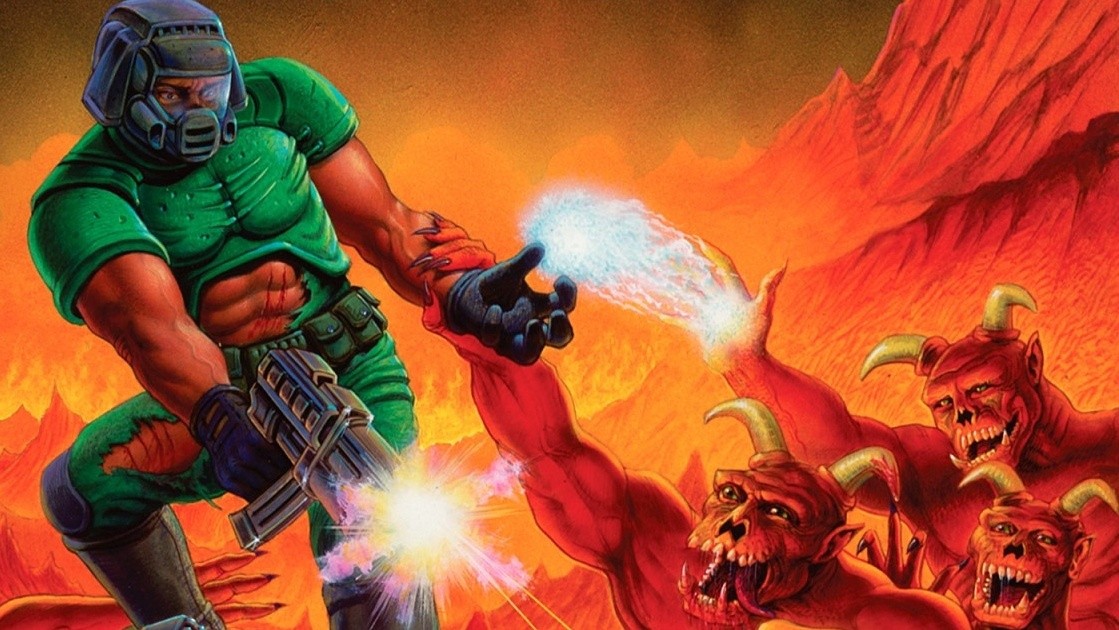
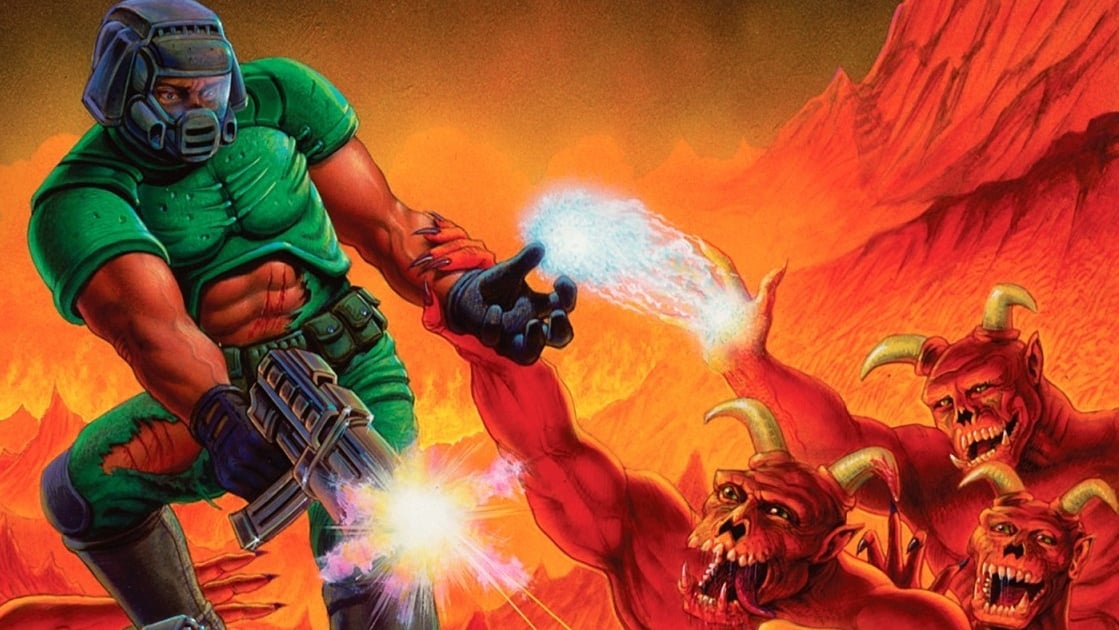
Bethesda’s Hellish Add-On Update For DOOM And DOOM II Is Now Available
Bethesda’s biggest update yet for DOOM and DOOM II across all platforms – including the Nintendo Switch – has officially gone live. It features add-on support – including John Romero’s unofficial fifth episode SIGIL, 60fps support, added aspect ratio options, quick save and load, level select, “plus a ton” of quality of life features and performance optimizations.
Below are the full patch notes from the Bethesda.net forum:
Patch Highlights:
Add-on Support: Add-ons can now be downloaded and played from the main menu. We will continue to add content that is a mixture of official DOOM and DOOM 2 add-ons, as well as some of the best community episodes and megawads released for the original DOOM games. We’ve curated the initial list and will be asking you guys for your picks for best community made wads soon! Check out the FAQ below for more info!
60 FPS Support: For the first time, DOOM and DOOM II now run at 60 FPS on all platforms, instead of 35 FPS as in the original releases.
Added Aspect Ratio Option: Stretches the display vertically to match the original 4:3 aspect ratio that the game was intended to be played in.
Added Quick Save and Load: Pause the game, and press R/R1/RB to immediately save where you are, and unpause the game. Load your quick save by pausing the game and then pressing L/L1/LB.
Added Level Select: Pick an episode, map, and difficulty of your choosing, and immediately play on it without having to clear the previous levels first.
Added Weapon Carousel: You no longer need to cycle through every weapon to get to the one you want. Press Previous or Next Weapon to highlight the weapon you want, and it will swap immediately to the selected gun.
Added Quick Weapon Select: The Directional Pad can now be used to quickly swap between weapons.
Up: Shotgun and Super Shotgun
Right: Chaingun
Down: Rocket Launcher
Left: Plasma Gun
Added Overall Brightness and Level Brightness: Turn up Overall Brightness to make the colors brighter, but if that isn’t enough, you can also raise Level Brightness to change the brightness of the lights in the world.
Added Random SFX Pitch Toggle: Turn off randomized sound pitches during playback, which was a feature present in early versions of the original DOOM release.
New split screen HUD: A minimal HUD will be used when playing split screen multiplayer. The bottom status bar is removed, allowing more room for the game to be displayed in.
Changes:
Changed Health Graphics: The pill has been changed into a green plus, making the graphics closer to their original appearance.
Changed Wolfenstein Secret Level: Enemies in the Wolfenstein level have been restored to the original DOS release. The original textures and enemy audio have been re-added to the level, but with [censored] references removed.
Performance Optimization:
Several optimizations to DOOM’s software renderer have been made in order to better support 60 FPS and increase battery life.
Game rendering resolution on Nintendo Switch version now displays at 640×400 to support 60 FPS and improved battery life.
Improved behavior when starting the game out of sleep mode. There still may be cases that cause the game to lock up after awakening.
Sped up various UI animations to make navigating through menus quicker.
Fixes:
Fixed an issue from the original DOS release where map objects would not correctly track the player after loading a saved game. This also fixes an occasional crash with loading a save game with an active BFG projectile.
Fixed an issue where the game would skip ahead several tics after unpausing.
Fixed an issue where attract mode demos would desync, causing demo playback to deviate from the original DOS release.
The trophy for “When I’m With You” for beating every level on Nightmare in co-operative mode has been fixed and will now be awarded properly.
The size of the patch in the Switch version of the game is said to be 378 MB. There’s also apparently a known issue with a DOOM II achievement:
The DOOM II Achievement/Trophy “The City” (Beat all the city levels – MAPS 12-20) does not unlock when taking the Secret Exit in MAP15: The Industrial Zone in the Single Player Campaign. Workaround – If you’re gunning for that trophy, please elect to skip the secret exit in MAP15: The Industrial Zone and you should have no problem getting it after completing MAP20.
Apart from this, there’s a full FAQ on the forum about add-ons, and Bethesda says it will release more of them on a “regular basis” over the next few months, so keep an eye out for even more hellish content. To get the rundown about add-ons, check out our existing post.
Will you be returning to Hell to try out this new update? Leave a comment down below.
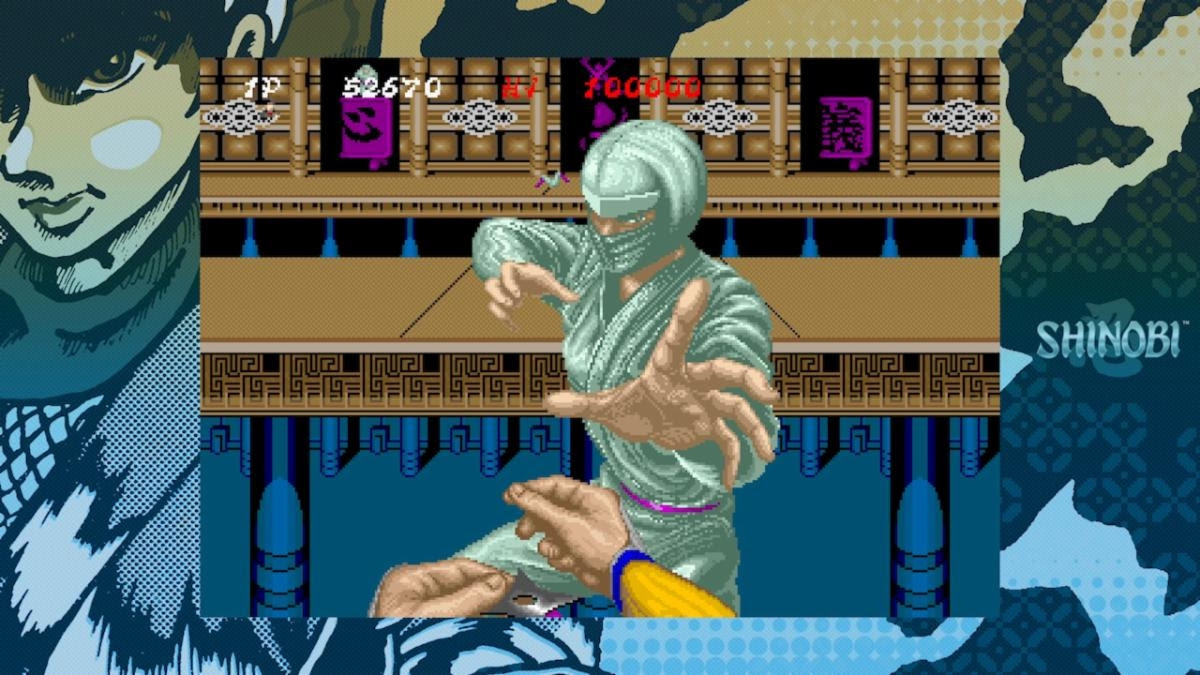
Shinobi And Fantasy Zone Join The Sega Ages Lineup On Switch This Month
Sega has announced the release date for the next two games in its Sega Ages range.
Shinobi and Fantasy Zone are two arcade classics which earned legions of fans back in the day and established two classic franchises. Both will come with the usual slate of enhancements, such as online leaderboards, replays and save states, but they’ll also have features exclusive to each title.
In Shinobi, a melee button has been added so you can use Joe Musashi’s blade independently from his throwing stars. You can also play in a special “Ages” mode which puts Musashi in a white outfit (like the one seen in Revenge of Shinobi) and benefit from extra health and increased damage. There are also difficulty options, a stage select feature and a time rewind aid so you can quickly amend mistakes.
For Fantasy Zone, a “coin stock” feature makes things easier for novices, while the Time Attack mode is perfect for those seeking a challenge. You’ll also be facing off against extra bosses and there’s the option to play as Opa-Opa’s sibling, Upa-Upa.
Both games launch on January 23rd at $7.99 each. Will you be picking them up?
Better Call Saul Season 5 Teaser Reveals Jimmy's Unusual New Office
While many TV spin-offs don't last more than a couple of seasons, the Breaking Bad prequel Better Call Saul has been a huge success. The show returns for Season 5 next month, and a new teaser has been released.
The latest Better Call Saul teaser is set in what seems to be some kind of nighttime carnival. A long line of people stretches towards a colorful tent, where shady lawyer Saul Goodman--real name Jimmy McGill--emerges, shouting for his next customer. It's a big change from the offices that Jimmy has worked out of in previous seasons and hints at his career shift to a more dubious type of legal work. Check it out below:
Better Call Saul stars Bob Odenkirk as Goodman. The cast also includes Rhea Seehorn, Jonathan Banks, Michael Mando, Giancarlo Esposito, and Patrick Fabian, and it premieres on February 23rd on AMC.
In a recent interview with Digital Spy, Odenkirk spoke about where the character goes from here. "He just needs to get the office and come up with the idea that, 'Who will be beneficiary of these particular skills? Who would value them the most?'," he said.
"I don't think it's a long journey to drug dealers and scumbags are gonna appreciate how fast and loose I play with the truth," Odenkirk continued. "They're gonna marvel at it and appreciate it and not in any way have any issue with being a con-job lawyer."
In related news, the Breaking Bad movie El Camino hit Netflix in October. Check out GameSpot's El Camino review here.
Posted by: xSicKxBot - 01-10-2020, 03:47 PM - Forum: Windows
- No Replies
Innovating to drive the future of intelligent retail
The last several years have brought massive change – and opportunity – for the retail industry. Gone are the days when retailers chose when, where and what to sell; now consumers are in the driver’s seat, and retailers are being challenged to figure how to best engage with them. Additionally, they’re juggling pressures driven by industry trends such as the drive for more sustainability in retail, the proliferation of data, increased energy around “anywhere commerce,” the need to better equip store associates with technology and much more. But change often accelerates innovation, and because of this I believe that there’s never been a more exciting time to be a retailer at the intersection of retail and technology.
Microsoft continues to innovate side by side with retailers to help them embrace their biggest opportunities and enable intelligent retail by empowering businesses to take control of their own digital evolution. Our solutions enable retailers to transform across all parts of their business – from how they better understand their customers and empower employees, to putting the right technology in place to deliver an intelligent supply chain and ultimately reimagine their businesses. In the last year and a half, we’ve established ourselves as a trusted partner to some of the world’s largest retailers such as Walmart, Kroger and Walgreens Boots Alliance, among others. And we’ve empowered their transformation by providing the platforms on which to build innovation for all parts of their businesses.
We’ve learned a lot along the way both through our retail customers as well as our own physical retail presence about how technology can help this industry both embrace its biggest opportunities as well as tackle its biggest challenges. And today we’re sharing how our first-party innovations are helping to drive the future of intelligent retail across all parts of a retailer’s business.
Gaining a better understanding of your customers
If customers are the heart of the retail industry, data is the oxygen. Data has the potential to profoundly impact every single aspect of retailers’ businesses, including – and perhaps most importantly – how they respond to customer demands with differentiated and unique experiences.
We’re helping retailers surface actionable customer insights with data solutions like Azure Synapse Analytics, which helps retailers not only analyze vast amounts of data, but also apply machine learning to quickly surface insights that can drive immediate impact for their businesses, and Dynamics 365 Customer Insights, which helps maximize customer lifetime value by surfacing a 360-degree view of the customer to drive personalized engagements at scale. This means that even the most complex retailers, with thousands of suppliers in their end-to-end supply chain and millions of item-store combinations, can quickly make the decisions needed to not only run their businesses most efficiently but also delight customers in the process.
And with Dynamics 365 Connected Store, retailers like Marks & Spencer – which is piloting the solution in a store in London – can generate data within its physical stores that produces the same kind of actionable business insights as it gets from its digital storefronts. M&S is achieving this by analyzing data from smart devices such as video cameras and IoT sensors to provide real-time and predictive insights on everything from the current length of the checkout line to the traffic around endcap product displays to help associates make better decisions. We’re welcoming new retail customers into our Connected Store preview every day, so sign up here to request access.
One of the customer demands becoming more and more evident as retailers reason over their data is the desire for a seamless shopping experience regardless of where, when and how they choose to buy. We’ve invested in helping retailers bridge embrace this concept of commerce anywhere (aCommerce) with Dynamics 365 Commerce, the evolution of Dynamics 365 Retail and a true multi-channel solution that transforms the customer experience by unifying retailers’ back-office, in-store, call center and e-commerce experiences. One experience across all channels – that’s what customers are demanding today. The result? More personalized engagement with customers, employees who are better equipped to provide the best customer experience possible and deep insights to empower advanced decision making across every piece of a retailer’s business. I’m excited to announce that Dynamics 365 Commerce, currently in preview, with become generally available to our retail customers on Feb. 3.
Empowering employees with the tools they need to better serve customers
Despite the rise of e-commerce over the past couple of decades, we know that most shopping – across generations even – still happens in person. Research from Forbes Insights shows us that 60 percent of consumers still prefer to shop in physical retail environments, and this number stays fairly consistent across generations. This means that first-line workers are still one of a retailer’s most valuable assets – many times, they are the first impression a shopper gets of your brand and they play a significant role in customer acquisition and retention.
Retail associates need modern tools and experiences in order to remain productive and deliver the best customer service possible while on the store floor. With Microsoft 365, the world’s productivity cloud, and new first-line capabilities coming to Microsoft Teams later this year, we are in a unique position to help this often-overlooked part of the workforce get their jobs done. Today I’m thrilled to announce that we’re adding even more productivity and collaboration value into Teams, including task targeting, publishing and reporting, new workforce management integrations to streamline shift management and a new Walkie Talkie feature. By building push-to-talk functionality into Teams, we’re helping our retail customers turn company-owned smartphones and tablets into a secure walkie talkie, extending the range of traditional walkie-talkie communication and streamlining licensing and provisioning for retailers’ IT staff.
Finally, as we extend modern tools and experiences across the first-line workforce, we know that we need to make it easy for IT to manage and help enable a secure and compliant experience for all employees. I’m excited to disclose enhanced identity and access management capabilities – such as shared device sign-out for Android and inbound provisioning from leading workforce management providers such as SAP SuccessFactors and Workday – that will make onboarding retail associates and operating shared devices more secure and scalable, something our retail customers have been asking us to add for some time now. And, later this quarter, retailers will be able to enable SMS sign-in to Microsoft 365 and custom applications for retail workers and empower their store managers with delegated user management capabilities, making it easier to reset passwords and manage workers’ identities without additional demand on IT staff.
Infusing more intelligence into the supply chain
A retailer’s supply chain can play a major role in customer satisfaction – outdated supply chain processes can mean delays, unfulfilled orders and more. By connecting devices and collecting data, retailers can analyze that information to create new insights and ultimately a truly intelligent supply chain that enables them to provide the best service possible to customers. This is the Internet of Things (IoT), and as IoT becomes more mainstream it continues to be a huge driver of data for retailers today. In fact, our IoT Signals for Retail study found that 92 percent of retailers have adopted IoT and are using it in various stages of trials and deployments, with the most common IoT scenarios being driving store analytics (57 percent), supply chain optimization (48 percent) and security and loss prevention (46 percent and 45 percent, respectively).
We’re making building and deploying IoT applications in retail environments easier than ever with new Azure IoT Central solution templates that help retailers simplify IoT deployments to start driving immediate impact. Today, the Azure IoT Central Micro Fulfilment Center template joins five existing retail-focused templates – including for scenarios across connected logistics, digital distribution centers, in-store analytics and smart inventory management – to help retailers more easily optimize their fulfilment processes through a managed service that includes everything a retailer needs to get started today.
Reimagining retail business models and customer experiences
The success of today’s retailers’ physical store environments rests on their ability to disrupt themselves and their own status quo by pushing into new business models and providing new experiences and formats that engage customers and keep them coming back for more.
We understand this better than most technology vendors, because we’re continuing to move through this same transformation journey with our own Microsoft retail stores. Over the past several years, we’ve digitally transformed and extended our physical retail store strategy from an exclusively consumer storefront to a commerce engine that connects with all customers – from commercial enterprises to small businesses and consumers. Partnering with enterprise sales, we’re offering new experiences in and through our stores targeted toward our enterprise customers such as J. Crew, Office Depot and Marks & Spencer. Our stores are also at the forefront of adopting new Microsoft technology across cloud, predictive analytics, machine learning, cognitive services and more to solve our most complex challenges – and we’re learning from those experiences to ultimately pass those lessons along to our customers. And of course, that’s a two-way street – we’re also learning from our retail customers to inform how we manage and operate our stores too, which is indicative of the true partnerships we strive to establish with every retailer we work with.
While reimagining retail can lead to the kind of business transformation we’ve seen in our own store, it can take different forms as well, such as how retailers are tapping into new revenue streams and digitizing their own physical stores to drive new customer and employee experiences.
Microsoft PromoteIQ is an end-to-end commerce marketing platform enabling retailers to create a new critical growth engine for their businesses through at-scale vendor marketing programs. With Microsoft PromoteIQ, retailers can empower their brand partners with powerful marketing technology to natively promote products to in-market shoppers, reaching them at the right time to increase digital sales – all supported by a deep analytics suite to deliver impactful audience insights. And now, thanks to the integration with Microsoft Advertising, we can offer our retailer partners a powerful new source of incremental demand for their programs. Take Home Depot, for example. While you may expect the world’s largest home improvement retailer to do most of its business in person, HomeDepot.com is the fifth largest e-commerce site in the U.S. Consequently, the company needed a solution to help it maximize the nearly 170 million visitors per month its site was seeing by integrating an end-to-end commerce marketing platform with capabilities to manage and scale its vendor-funded digital marketing. Since deploying PromoteIQ, Home Depot has seen very positive results, including double-digit sales growth for promoted products through this program.
Of course, reaching customers at the right time is only half the equation; a retailer must also be able to deliver on what that customer is looking for. In fact, 80 percent of shoppers will abandon a site that produces poor search results. And that’s why we’re investing in this critical piece of digital commerce – product search. Microsoft Bing for Commerce is an intelligent artificial intelligence-driven solution for product search, personalization and product recommendations that gives retailers the power to meet today’s shopper expectations and grow revenue through more relevant and customized results that drive conversion. We’re also enabling our retailers to meet customers where and how they want to shop through visual search innovation included in Bing for Commerce, to help capture sales from new, emerging shopping behaviors.
Connect with us at NRF
Microsoft will have a significant presence at NRF once again this year, headlined by our own CEO Satya Nadella’s keynote session to open the show. You won’t want to miss hearing his perspective on business and cultural transformation, and how our retail customers are putting our technology into action to reimagine their businesses. And if you’re attending the show, make sure you stop by our Microsoft booth (#4501) to see how we’re bringing intelligent retail to life across all parts of a retailer’s business and how you can achieve the same – we’re offering complimentary envisioning workshops, where retailers will have an opportunity to work directly with us to create a shared vision and digital road map to unlock a future of endless possibilities.
You’re also invited to attend one of our sessions on the show floor – I’m leading a Big Ideas session where I’ll share my thoughts on the increasing importance of sustainability to the industry and how technology can help accelerate retailers’ sustainability visions. In addition, my colleagues Alysa Taylor, corporate vice president for Microsoft Business Applications and Global Industry, and Emma Williams, corporate vice president of Microsoft Office Vertical Solutions, and I will participate in the FQ Lounge at NRF along with many other “women rocking retail” for panel discussions about diversity and inclusion in the retail industry (we’re proud to be a sponsor of this space as well). And of course, visit Microsoft’s NRF page to keep up to date on the latest developments.
Indie Darling To The Moon Gets New Switch Trailer Ahead Of Next Week’s Launch
The critically acclaimed and much adored To The Moon is just a week away from launching on Nintendo Switch, and we’ve just been treated to a new trailer to celebrate.
If you’re unaware, To the Moon is an adventure game that was actually originally developed on RPG Maker. Thanks in part to its emotional storytelling and soundtrack, the game went on to be quite the success, and now it’s headed to Switch in a fully remastered form. You see, X.D. Network has been working with Unity to recreate the original game with a fresh lick of paint while hoping to keep its retro charm.
Here’s the official blurb:
Dr. Rosalene and Dr. Watts have peculiar jobs: They give people another chance to live, all the way from the very beginning… but only in their patients’ heads. Due to the severity of the operation, the new life becomes the last thing the patients remember before drawing their last breath. Thus, the operation is only done to people on their deathbeds, to fulfill what they wish they had done with their lives, but didn’t.
This particular story follows their attempt to fulfill the dream of an elderly man, Johnny. With each step back in time, a new fragment of Johnny’s past is revealed. As the two doctors piece together the puzzled events that spanned a life time, they seek to find out just why the frail old man chose his dying wish to be what it is. And Johnny’s last wish is, of course… to go to the moon.
It’ll launch on Switch on 16th January for $11.99 / €11.99 / £10.79, although a two-week 20% off sale will be taking place at launch to celebrate the game’s arrival on a new platform. We’re looking forward to seeing this one on Nintendo’s machine – so much so we included it in the video below.
Will you be checking this one out next week? Tell us below.
Feature: Game Of The Decade Staff Picks – Mario Kart 8 Deluxe
Following on from our reader-voted Top 50 Games of the Decade, Nintendo Life staff members will be picking their personal favourite Nintendo games between the years 2010-2019. Today, Darren looks back at the golden age of the Wii U era in 2014 and beyond…
Ah, the good old Wii U. While it was a bit of a commercial flop, the much misunderstood dinky console did sure have some amazing games during its brief lifetime. Of course, since the days of the Super NES no Nintendo console generation can pass without a Mario Kart game and Mario Kart 8 sure was a belter.
While it’s possibly not the most exciting choice for my Game of the Decade, it is probably the game which I’ve had the most fun with over the years (mostly with the kids!). Of course with Mario Kart 8 Deluxe coming so soon after the Nintendo Switch launch, this has ensured that we always have a convenient way to enjoy this gem, whether at home or on our travels.
Back in May 2014, I remember eagerly looking forward to playing what would be the first Mario Kart in glorious HD in the comfort of my home. I’d played a bit in advance sessions at Nintendo’s headquarters, which convinced me that this one was going to be the best entry ever, what with its fancy anti-gravity sections and smooth 60 FPS gameplay. Having young kids at the time, it was a game which we could enjoy together, too. Sometimes we’d race each other with me feigning a complete inability to beat them in VS mode, other times they’d cheer me on as I worked through the 150cc mode and tried to get all the gold trophies and 3 stars.
It’s impossible to overstate how delighted I was when the Legend of Zelda and Animal Crossing DLC packs were announced for Mario Kart 8. The new courses were a welcome addition and being able to play as Tanooki Mario, Cat Peach and Link was a revelation. Of course, the jewel in the crown of these DLC packs was the F-Zero themed level which fit perfectly with the anti-gravity vibes. Such a nice surprise.
Something about the game made it feel more polished than ever. Perhaps it was the high-definition lick of paint it brought to the table, or the way it drew on the best elements from previous games and felt like a true culmination of series’ best bits. Maybe Luigi’s adorable death stare had something to do with it, but Mario Kart 8 had that special Nintendo sauce which kept me coming back time and again.
The Deluxe version on Switch bundled all that DLC goodness in and added a proper Battle Mode, the absence of which one of the only marks against the Wii U original. A dusting of the 200cc class, extra items and characters was the icing on an already delicious cake, with other additions like optional Smart Steering making the game even more accessible for novices than before.
With a whopping 19 million units of Mario Kart 8 Deluxe sold on the Switch, Nintendo’s kart racer has cemented itself as the most popular game on the Switch, way above even the excellent Super Smash Bros. Ultimate,Super Mario Odyssey and The Legend of Zelda: Breath of the Wild… that’s quite the achievement. Even in its original form, though, for me Mario Kart 8 was always ahead of the pack. Now while we wait for Mario Kart 9, let’s have some more lovely DLC please Nintendo!





 4. Lineage 2