Video: Let’s Take A Tour Of London’s Pop Up Pokémon Center, Shall We?
As you’ve probably already heard by now, London is currently enjoying its very own pop-up Pokémon Center. With exclusive merch items and even some new Pokémon Sword and Shield related goodies up for grabs, it’s certainly worth having a look for serious Poké-fans.
As it happens, our very own video wizard Alex did just that. Feel free to join him in the video above as he wanders around, messes up store displays, has his photo taken with his starter Pokémon of choice, throws Pikachus and far too many Switch Lites into a basket, and more. Oh, and actually shows you around the place, of course.
If you are planning on attending, it’s worth noting that the store has been experiencing ridiculous levels of demand during its opening few days. Queues have been closing hours ahead of the store’s closing time with many being left disappointed – you’ll want to keep an eye on Westfield London’s account for updates.
Are you wanting to go? Already been? Tell us which products you’d love to buy in the comments below.
MoviePass Reportedly Charging Bank Accounts Despite Closing Shop
After shutting down on September 14, the troubled movie subscription service MoviePass has allegedly risen from the grave to charge former subscribers unexpectedly.
The New York Post compiled various reports of users getting charged despite the MoviePass app canceling operation. A few users, subscribers up to the very day the service ended, reported charges from MoviePass on their cards. Some saw the $10 membership fee, while others experienced this plus additional charges.
CEO Mitch Lowe told the Post that reports of subscribers getting charged following Movie Pass's shuttering were false and misread. “One single subscriber, out of the many thousands of MoviePass subscribers, was charged $9.95 on September 15 and has been refunded that amount,” Lowe said. “We are aware that some of our subscribers have mistaken refunds appearing on their credit card statements for charges.”
Still, some users continue to report MoviePass charges appearing on their bank accounts. Many have taken to Twitter to voice frustration with an inoperable service that's still reportedly siphoning their money.
@MoviePass thanks for continuing to charge me for this month and no way to unsubscribe! #ScamAlert
A big middle finger to #moviepass, which despite having closed on 9/14, is still charging my card ($4.64 for no service). Canceling my card, but there's a reason why this company failed. #cancelled
Teaching People to Share Technology: Adafruit Founder Limor Fried
This story is based on our interview with Adafruit founder Limor Fried
When Adafruit founder Limor Fried was studying electrical engineering and computer science at MIT, she realized she was less interested in the electrical engineering part.
“What I really liked to do was build stuff,” she said.
Instead of working on her homework or thesis, Fried spent her time designing hardware projects in her dorm. She built an MP3 player way before Apple made iPods popular.
“With electronics, you could build anything from an MP3 player to a GPS tracker,” she said.
Fried started building different gadgets, including LED light toys for the annual Burning Man creative festival. She published these projects on her website at MIT, including the CAD schematics, firmware and instructions on how to build them.
“It was kind of open source hardware, but at the time it wasn’t a thing yet. People would say, ‘Oh, no, you just published everything and gave it away,’” she recalled.
She started getting queries from around the world from people interested in building the devices she posted about, but they were having trouble sourcing the components.
“They needed actual hardware that I used in my projects. It was really difficult to get different components from different places,” Fried said. “You would have to order PCB [printed circuit board] from one place, resistors and chips from another place. It was really complicated for most people.”
Soon she started getting emails asking if she could sell a whole kit. Initially, she wasn’t interested, but she relented and began a small side business.
“I started selling a couple of kits, which I would ship from the local post office,” Fried said.
That small business eventually became her full-time job: Adafruit. In the last 13 years, the venture has grown from a few kits to over 4,000 products.
Adafruit offers what it calls “open source hardware,” designing and manufacturing innovative yet affordable electronics products, components, tools and accessories. When this hardware gets into the hands of creative people, they build some incredible things with it.
What Fried loves about hardware is that you can actually touch it, pick it up and show it off.
“You can take it out and wear it at Burning Man or cosplay conventions,” she said.
In addition to being fun and creative, Adafruit’s hardware also helps people. In the last couple of years, Adafruit has been working on assistive technologies, developing adaptive and rehabilitative devices to assist people with disabilities.
“It changes their lives,” Fried said.
These types of devices are a great option for people because you can do only so much with proprietary technologies. Off-the-shelf devices are difficult to customize, and hiring someone to build just what you need could be very expensive and out of reach for most people.
“Open source hardware is a perfect middle ground. It’s inexpensive and allows you to customize the way you need it,” Fried said. “The code is there. Instructions are there. Anyone can do it. Since it’s open source, people can iterate, tweak, fine-tune to their needs. We are seeing a lot of interest in open source hardware for assistive technologies.”
Adafruit’s hardware is working for everyone from creative hobbyists to people interested in building things for their smartphones to developers inventing products for the next industrial revolution. Adafruit also worked with computer game company Nvidia to help build its Jetson Nano Developer Kit, which lets users run multiple neural networks for artificial intelligence, machine learning and edge computing.
Adafruit also sends its kits to schools to facilitate STEM programs, as kids tend to respond well to learning with physical objects. A project that started as just a fun activity for Fried now has a real purpose.
“I think the mission is to teach people to share technology and show people how much fun and exciting and creative it can be,” she said.
The Diligent Engine just released version 2.4. The Diligent Engine is an open source cross platform rendering library that abstracts away the details of working with underlying technologies such as Direct3D, OpenGL and Vulkan. The Diligent Engine is open source under the Apache 2.0 license and is available on GitHub.
You can get more details of the release in the release notes available here. We recently did a hands-on video of the Diligent Engine in action available below.
It’s been a bit of a mixed week – I’ve been trying to go back and look at some historically performing content and see what I can do with it, as well as testing the waters with things like the CoD Mobile guide, and skimming some stuff off reddit. The Mario Kart Tour Challenges article is still proving quite popular at the moment, so you may see that float to the top of the article list quite regularly.
Happy to say though that with most of that out of the way, I can start refocusing on some of our favoured topics. Quite a few games have been released recently that are more relevant to the core readership, so will be getting reviews sorted for them pronto.
Just as an FYI – I’m going to be at PDXCon next week from Thursday, so end of week posts might be a bit sporadic. It’s also unlikely that they’ll be a Weekender update next week, but if anything mobile focused comes out of the event I’ll be sure to write it up.
Out Now
There’s actually been a couple of new Apple Arcade games releases over the past week or so. We’ve updated our master list and added a ‘new’ tag to the newcomers, so check them out if you’re still looking for new games to try. We’re a little bit behind on our reviews, but we’re sticking with the batch-approach for now.
You know what? I’m really, really glad this game exists. I noticed the other day we’d only reviewed four games between August/September, but after some digging I realised that’s about right, because there’s been nothing in the premium space worth covering lately. Xenowerk reads like it was made for us, and from what we’ve tested so far it’s a pretty decent real-time tactics game. It’s single-player only, but you control a squad of mercenaries who work for a corporation, and it’s basically your job to clean up their messes. It involves squad development and base management and all that XCOM-like goodness.
It’s free to try on Android – you get to play the first part before paying the full price as an IAP to unlock the rest of the game. On iOS it’s premium up-front. We’re going to try and get a full review on the table ASAP for you.
Versus: Unfriendly Frenzy (iOS) – $3.99 – Review In Progress
It’s been a strangely good week for strategy gaming on mobile, with Versus: Unfriendly Friendly also releasing this week. We’ve already got Michael working on a review so hopefully that will drop next week. Versus is a real-time strategy game that boats outlandish factions and units and ‘fast-paced’ action. There’s a 29 level solo campaign, and you can play head-to-head against someone on the same device, which sounds interesting.
And yeah, there’s another free-to-play gacha battler game, this time based on the Digimon franchise. It’s called Digimon ReArise (iOS | Android) I’ll be honest guys, I’m kinda burned out on this stuff at the moment so we’re going to wait and see with this one. If it proves popular maybe we’ll look into it in more detail but I’m not in any rush. Here’s a trailer anyway:
Updates
A few things to update you one, some of which we accidentally forgot about:
MMO’s are an odd prospect on mobile – for the longest time, the term was appropriated by developers who made trashy F2P games, but as mobile tech improved it’s now quite possibly to put actual, ‘legit’ MMOs onto mobile devices. Black Desert Online is a fairly popular Free-to-Play MMO that’s been around for quite a few years now. It’s managed to walk that line between given players worthwhile content to engage in, and offering a business model that sustains them. Their freemium stuff is mainly cosmetics, although you can buy some shortcuts. I played it on PC for a spell and I actually had quite a lot of fun with it. The only thing was I didn’t think it facilitated party-play that well, but it may have improved since then.
We’ve known it was coming to mobile since E3, but what I forgot to mention a couple of weeks ago is that pre-registration is now available on iOS and Android. The mobile version is due to land in December 2019.
Playstation recently updated their core PS4 Firmware to Version 7.0 this week, and with that came an update to their Remote Play app. The nuts and bolts of this latest update means that Android users beyond Sony Xperia phones can now get in on the action, and iOS users can now use their Dualshock 4 controllers with the app.
For Android, you just need to be running Android 5.0 or higher although if you have Android 10 installed, you can also get in on the Dualshock action by connecting your controller to your phone via Bluetooth.
You’ll need to have iOS 13 to be able to use your controller on that end of things. You’ll also be able to choose whether or not the on-screen controls remain visible as well as choose whether or not to lock the orientation.
Ticket to Earth isn’t the only game to seemingly get a fourth episode update this week. The Trese Brothers have taken a break from constantly updating Star Traders: Frontiers to release the “final” episode for their Heroes of Steel RPG, the Siege of Sur-Relliar Glacier.
Here’s the full change-log, if you’re still interested in playing this game:
Epic end-game conclusion to the tale of the 4 Harbingers
Battle across 7 new brutally challenging dungeons and maps
Lock blades and magic with multiple major bosses across the climactic siege
Face 15+ new monster types — Ice & Fire Drakes, Orcin Ravagers, Thorn Shamans, Unrequited Blades and more
Loot 100+ new amazingly powerful weapons, armor and magical gear across the final dungeons
Once beaten, you may invoke a New Game+ mode to replay the final dungeon and bosses again! (and again!)
Fixed all issues with late-game bows named “FIX ME” and crafting out of Fierhold
Fixed crash with “Great Flats” level loading in some situations
Kingdom: New Lands is an intriguing side-scrolling management/strategy game where you must try to survive against hordes of enemies that only attack at night. It’s half price on iOS and Android.
Seen anything else you liked? Played any of the above? Let us know in the comments!
.NET Core 3.0 RC1 requires Visual Studio 2019 16.3 Preview 4 or later.
There is also a Blazor WebAssembly preview update available with this release. This update to Blazor WebAssembly still has a Preview 9 version, but carries an updated build number. This is not a release candidate for Blazor WebAssembly. Blazor WebAssembly isn’t expected to ship as a stable release until some time after .NET Core 3.0 ships (details coming soon!).
To install the latest Blazor WebAssembly template run the following command:
dotnet new -i Microsoft.AspNetCore.Blazor.Templates::3.0.0-preview9.19457.4
The release of Fedora 31 drops the 32-bit i686 kernel, and as a result bootable images. While there may be users out there who still have hardware which will not work with the 64-bit x86_64 kernel, there are very few. However, this article gives you the whole story behind the change, and what 32-bit material you’ll still find in Fedora 31.
What is happening?
The i686 architecture essentially entered community support with the Fedora 27 release. Unfortunately, there are not enough members of the community willing to do the work to maintain the architecture. Don’t worry, though — Fedora is not dropping all 32-bit packages. Many i686 packages are still being built to ensure things like multilib, wine, and Steam will continue to work.
While the repositories are no longer being composed and mirrored out, there is a koji i686 repository which works with mock for building 32-bit packages, and in a pinch to install 32-bit versions which are not part of the x86_64 multilib repository. Of course, maintainers expect this will see limited use. Users who simply need to run a 32-bit application should be able to do so with multilib on a 64-bit system.
What to do if you’re running 32-bit
If you still run 32-bit i686 installations, you’ll continue to receive supported Fedora updates through the Fedora 30 lifecycle. This is until roughly May or June of 2020. At that point, you can either reinstall as 64-bit x86_64 if your hardware supports it, or replace your hardware with 64-bit capable hardware if possible.
There is a user in the community who has done a successful “upgrade” from 32-bit Fedora to 64-bit x86 Fedora. While this is not an intended or supported upgrade path, it should work. The Project hopes to have some documentation for users who have 64-bit capable hardware to explain the process before the Fedora 30 end of life.
If you have a 64-bit capable CPU running 32-bit Fedora due to low memory, try one of the alternate desktop spins. LXDE and others tend to do fairly well in memory constrained environments. For users running simple servers on old 32-bit hardware that was just lying around, consider one of the newer ARM boards. The power savings alone can more than pay for the new hardware in many instances. And if none of these are on option, CentOS 7 offers a 32-bit image with longer term support for the platform.
Security and you
While some users may be tempted to keep running an older Fedora release past end of life, this is highly discouraged. People constantly research software for security issues. Often times, they find these issues which have been around for years.
Once Fedora maintainers know about such issues, they typically patch for them, and make updates available to supported releases — but not to end of life releases. And of course, once these vulnerabilities are public, there will be people trying to exploit them. If you run an older release past end of life, your security exposure increases over time as a result, putting your system at ever-growing risk.
Quite apart from the huge number of great games coming to the system every week, one result of Switch’s success that we’ve really enjoyed is how it has brought back a focus on local multiplayer gaming not seen since the N64 days. Online is still king, of course, but we’d argue there’s nothing quite like the rush of adrenaline you get from being in the same room as your rivals. Friendly rivalries balloon into personal vendettas, whether your mate stole victory from you with an unsportsmanlike Blue Shell last round, or perhaps somebody hasn’t done the washing up like they said they would and it’s time to unleash your fury.
The ability to snap off (read: carefully detach) the Joy-Con and enjoy some Mario Kart or Smash Bros. wherever you happen to be reminds us of a time long ago when we would coordinate multiplayer meetups that required a little more forethought than our impromptu rooftop parties these days. Indeed, it would often involve planning out months in advance the games and hardware you and your friends would buy to ensure multiplayer was even possible.
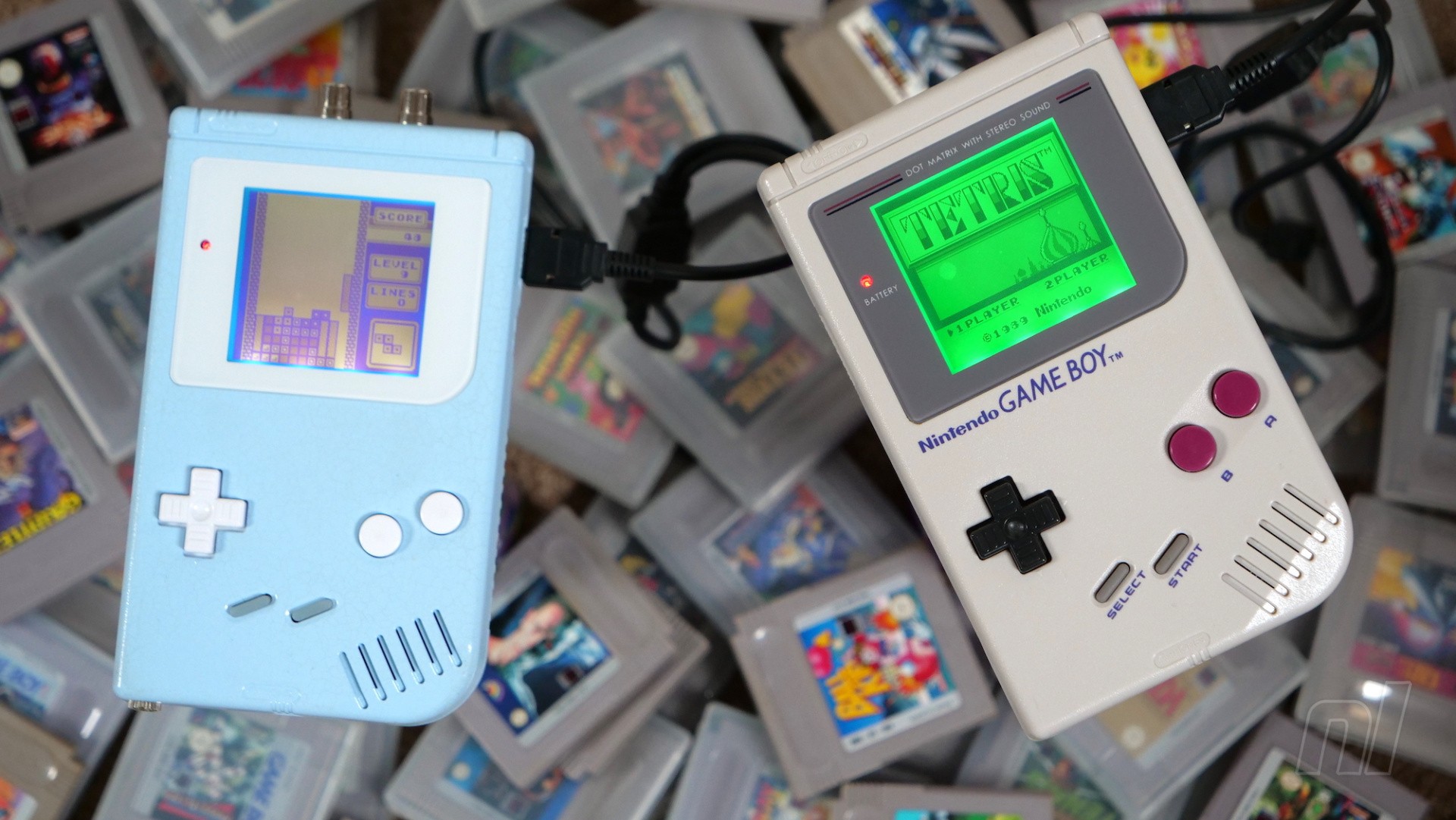
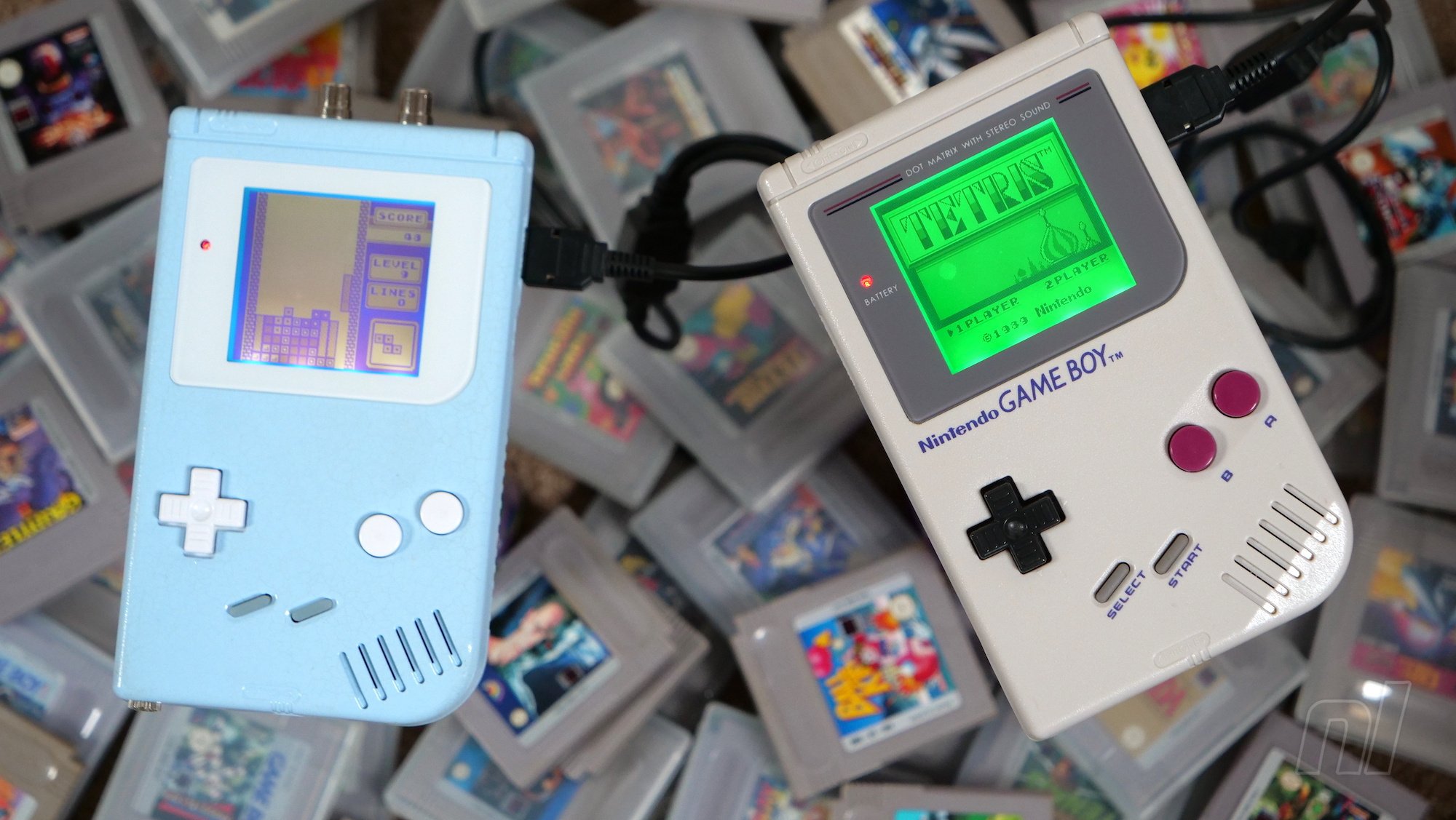
We’re talking, of course, about Nintendo’s first portable multiplayer-enabled system, the Game Boy. If Switch’s facility with local multiplayer hadn’t made us nostalgic enough, the recent 30th anniversary of the Game Boy (not to mention the 21st anniversary of the Game Boy Color) really got us pining for the times when head-to-head multiplayer was a much more literal affair. It may have primarily been a console for the solitary gamer, but those lovely link cables transformed it into a networking device that offered many lucky schoolboys and girls their first taste of multi-screen multiplayer gaming. Assuming you had the requisite gear, that is.
The most common form of Game Boy multiplayer was obviously a one-on-one bout using a standard Game Link Cable, but if you were fortunate enough to own (or have a mate who owned) the Four Player Adapter there were a choice handful of games that you could play with three friends on your own separate screens long before we’d ever heard the wondrous words ‘LAN party’.
Huddled in a group in the middle of the school field while footballs and other projectiles shot past our heads, the few four-way multiplayer sessions we remember having with Game Boy are special, probably made more so by the fact that finding four people with a Game Boy, the multiple copies of whatever game and the cables to link them all together was something of a rarity. Sure, it was distinctly lo-fi and anything except direct sunlight on a clear day made seeing the screen something of a challenge, but the magic of rigging this local multiplayer miracle together and actually playing against three mates made it well worth the rigmarole.
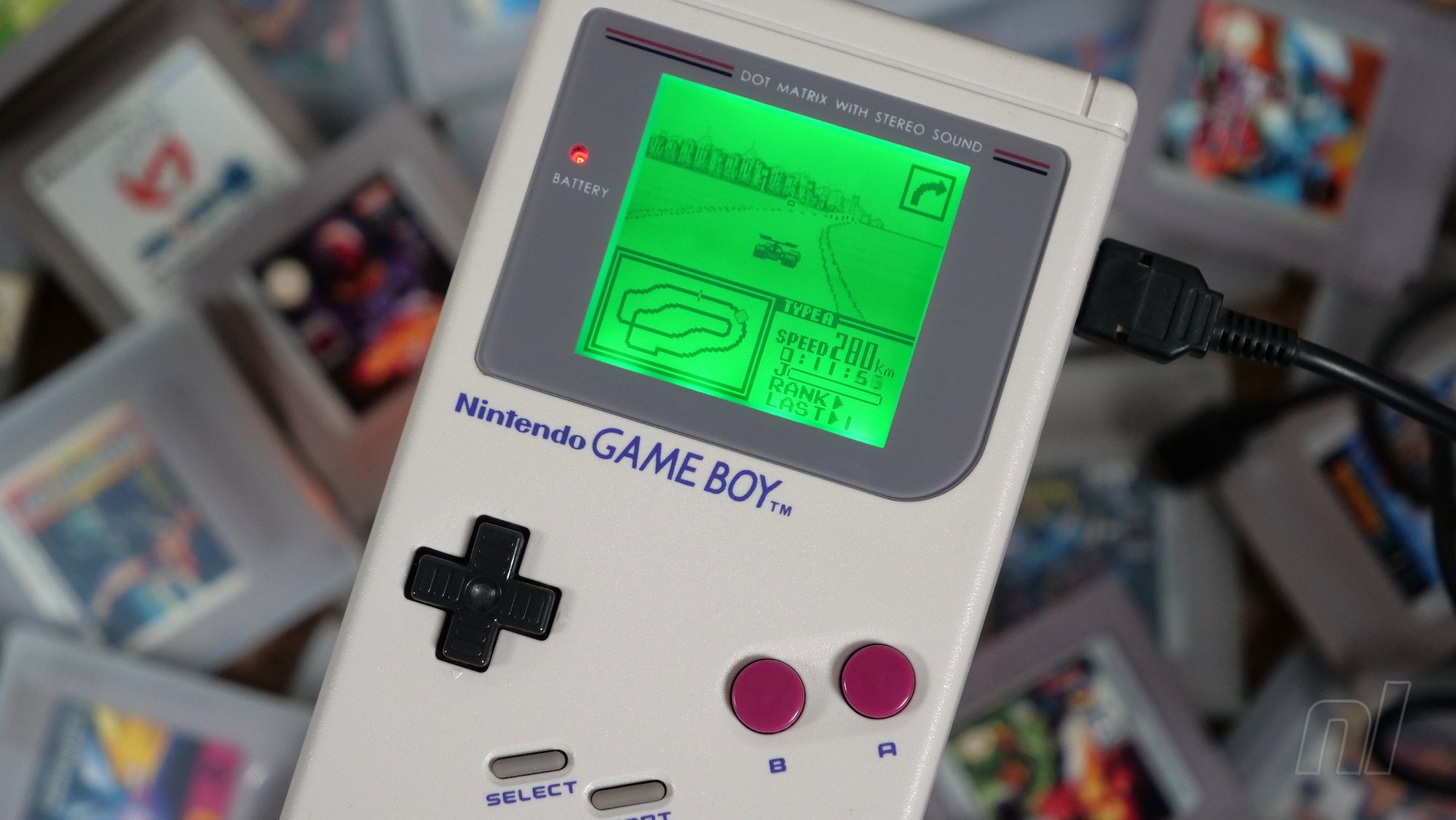
The Four Player Adapter worked most famously with F-1 Race, although Rareware’s Super RC Pro-AM also put it to use. Of course, there were perils to being in such close proximity when the contest got heated. The chances of four kids containing themselves enough in victory or defeat and not accidentally (or purposefully) yanking out their link cable was admittedly slim. Rage-quitting is nothing new, but kids these days with their fancy-pants Joy-Con and WiFi will never know the delicate negotiation, consideration and composure it took to set up and maintain a little local multiplayer back in the day.
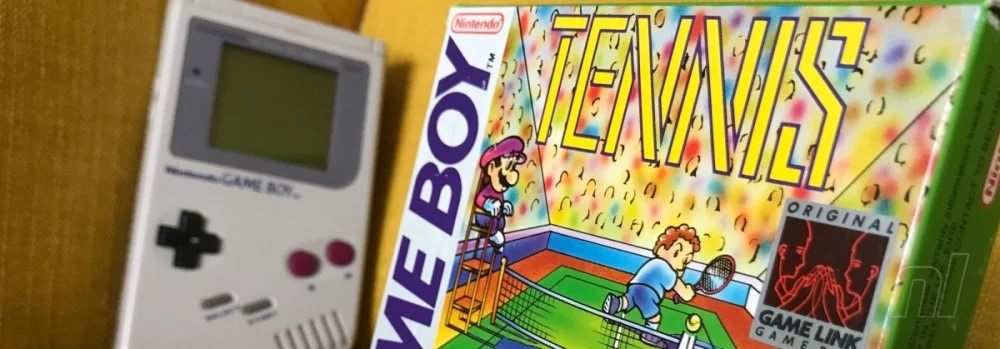
Two-player games using the regular old Game Link Cable with just one other person were a much more common occurrence. Many readers no doubt have memories of two-player Tetris, but for this writer, the ubiquitous Russian puzzler was more of a solitary palette-cleanser. In fact, the Game Boy version of Tennis was more often the two-player game of choice. The console’s green screen gave the grass courts a more authentic hue, and something about the controls always kept us coming back for another game-set-match against siblings. Underrated little game, that.
If you somehow never got around to picking up a link cable, or didn’t have friends with Game Boys, the arrival of Pokémon Red and Blue made the Game Link Cable utterly essential. Finding (or making) friends with Game Boys became an urgent priority, and we’re sure many an unlikely friendship was forged out of necessity. “Hmm, I’ve never even spoken to that kid in Science class before – he’s always seemed a bit weird. BUT! He’s got Pokémon Red and this could be my only chance to get a Magmar…” And that was the beginning of a beautiful friendship.
If we’re honest, we were always more into trading than battling. The grind to level up a watertight, competitive team of fighters never seemed worth the trouble, so we’d do our trading and then plug in whatever other multiplayer games we happened to both own. Invariably it was Tetris or Tennis. Why did nobody else have Wave Race!?
Compared to the multiplayer classics that would come on home consoles, the Game Boy’s 2-4 player offerings were rudimentary, but they had benefits which you didn’t get on the telly. There was no way to ‘cheat’ by looking at other players’ screens, for example, at least not without the risk of dislodging the link cable and causing an argument. Things got much simpler on Nintendo DS when wires were no-longer required (or with the GBA Wireless Adapter, if you had one of those).
By combining the strengths of portable and home console gaming into the mighty ‘homeheld’ Switch, Nintendo has brought local multiplayer back onto the stage where online gaming has arguably dominated for a decade and a half. Don’t get us wrong, online is fantastic, but there’s something about the communal connection of the local experience that makes every victory that bit sweeter.
Sliding off Joy-Con in tabletop mode forces players physically closer to each other and the energy is higher. No, you might not have a 65” screen all to yourself, but Game Boy proved long ago that a thrilling multiplayer experience needn’t involve bleeding-edge tech or acres of arm room. The same spirit which would go on to fuel epic four-player sessions of Bomberman and GoldenEye 007 is a part of Switch’s DNA, and the local multiplayer meetups we host today (on rooftops or otherwise) can trace their origins back to the middle of that school field with four kids blinking at tiny green screens.
Posted by: xSicKxBot - 10-22-2019, 02:26 AM - Forum: Lounge
- No Replies
Gory First Bloodshot Trailer Features Vin Diesel As A Cyborg Warrior
The first trailer for Bloodshot has been released. The movie is an adaptation of the comic book series, and stars Vin Diesel as a former soldier who is brought back from the dead via advanced nanotechnology.
The trailer suggests a mix of Robocop, Edge of Tomorrow, and last year's Upgrade. It sets up the basic plot, in which Diesel wakes up as an enhanced cyborg warrior and is sent on a variety of missions to blow things up and kill people. Guy Pearce (Iron Man 3) plays the shady doctor in control of his life, and there's plenty of outlandishly gory action, plus Pearce saying "initiate sequence" a lot. Check the trailer out below.
Bloodshot also stars Eiza Gonzalez (Baby Driver), Sam Heughan (Outlander), Lamorne Morris (New Girl), Toby Kebbell (Kong: Skull Island), and Talulah Riley (Westworld). It's directed by Dave Wilson, who worked on the acclaimed Netflix animated anthology Love Death + Robots, and releases on February 21, 2020.
Bloodshot was created by Kevin Van Hook, Don Perlin, and Bob Layton and first appeared in 1992. He was one of the main characters for Valiant comics, which was set up in 1989 by former Marvel editor Jim Shooter. The Bloodshot film is part of a five-movie deal with Sony to bring various Valiant characters to the screen.
In related news, Diesel will also star in the the currently-untitled ninth Fast & Furious movie, which releases in May next year. In August, it was announced that Guardians of the Galaxy star Michael Rooker has joined the cast.
NVIDIA is releasing freely-available hardware interface documentation to assist in the development of the open-source NVIDIA Linux driver (Nouveau). The documentation made public at this point primarily covers Maxwell, Pascal, Volta, and Kepler generations of NVIDIA graphics as more is being worked on — obviously the latest-generation Turing we’d certainly like to see sooner rather than later. When asking about open-source Turing documentation, I hear it’s a work-in-progress. (Source: Phoronix)