Sega Reveals Development Of Super Monkey Ball: Banana Blitz HD Is 70% Complete
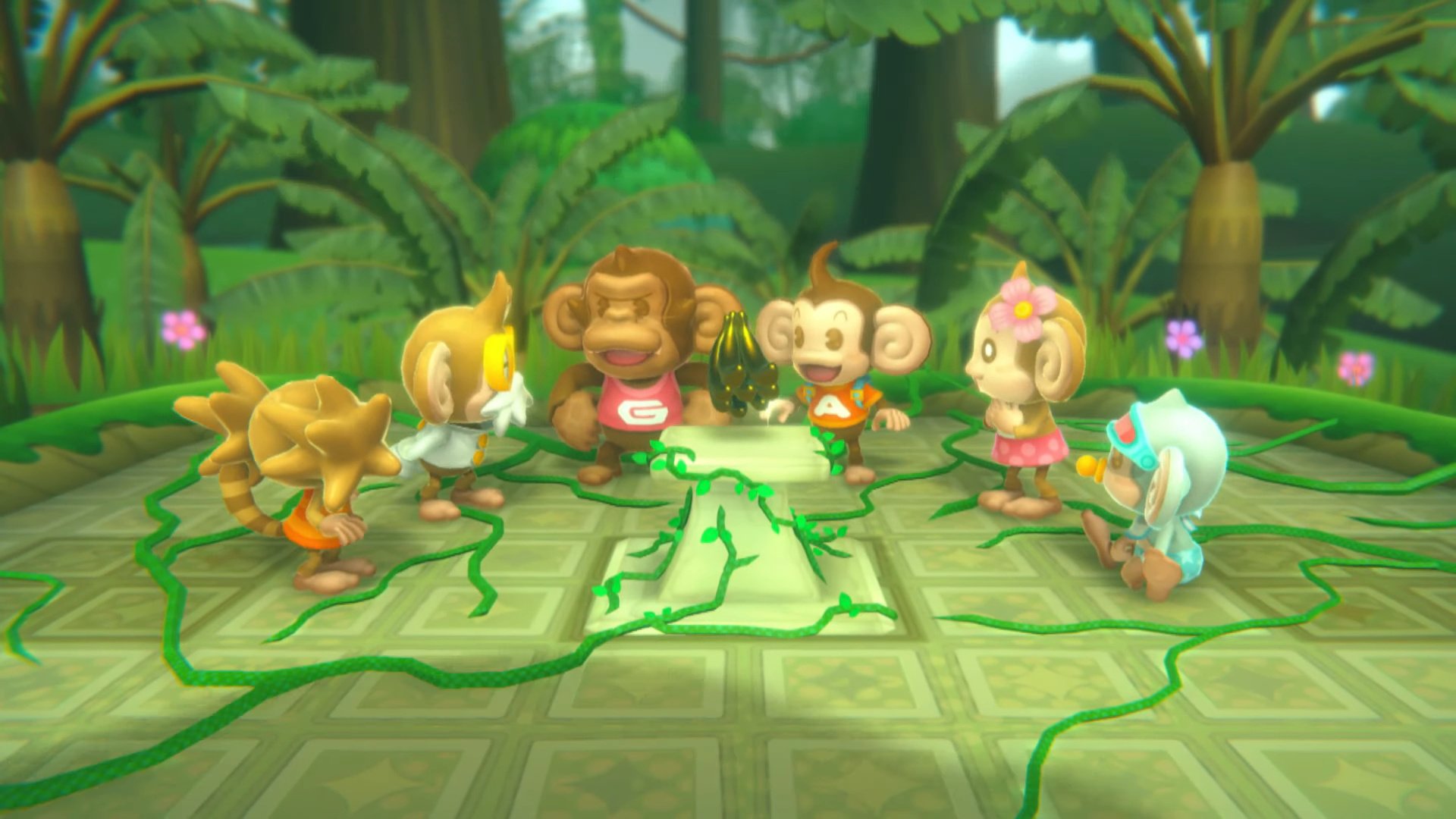
After months of trademarks and classifications, earlier this week Sega finally confirmed a high-definition version of Super Monkey Ball: Banana Blitz was on its way to the Nintendo Switch.
So, just how far into development is Super Monkey Ball: Banana Blitz HD? It’s reportedly 70% complete. The game is due out on 29th October, so we’re guessing it will be ready to roll on time.
If you missed the initial announcement, this version will feature updated visuals, all-new mini-game modes, and controls optimised for each platform. It’ll set you back $39.99/£34.99. For more information, check out the original post.
Are you ready to roll on 29th October? Tell us below.
Modifying Windows local accounts with Fedora and chntpw
I recently encountered a problem at work where a client’s Windows 10 PC lost trust to the domain. The user is an executive and the hindrance of his computer can affect real-time mission-critical tasks. He gave me 30 minutes to resolve the issue while he attended a meeting.
Needless to say, I’ve encountered this issue many times in my career. It’s an easy fix using the Windows 7/8/10 installation media to reset the Administrator password, remove the PC off the domain and rejoin it. Unfortunately it didn’t work this time. After 20 minutes of scouring the net and scanning through the Microsoft Docs with no success, I turned to my development machine running Fedora with hopes of finding a solution.
With dnf search I found a utility called chntpw:
$ dnf search windows | grep password
According to the summary, chntpw will “change passwords in Windows SAM files.”
Little did I know at the time there was more to this utility than explained in the summary. Hence, this article will go through the steps I used to successfully reset a Windows local user password using chntpw and a Fedora Workstation Live boot USB. The article will also cover some of the features of chntpw used for basic user administration.
Installation and setup
If the PC can connect to the internet after booting the live media, install chntpw from the official Fedora repository with:
$ sudo dnf install chntpw
If you’re unable to access the internet, no sweat! Fedora Workstation Live boot media has all the dependencies installed out-of-the-box, so all we need is the package. You can find the builds for your Fedora version from the Fedora Project’s Koji site. You can use another computer to download the utility and use a USB thumb drive, or other form of media to copy the package.
First and foremost we need to create the Fedora Live USB stick. If you need instructions, the article on How to make a Fedora USB stick is a great reference.
Once the key is created shut-down the Windows PC, insert the thumb drive if the USB key was created on another computer, and turn on the PC — be sure to boot from the USB drive. Once the live media boots, select “Try Fedora” and open the Terminal application.
Also, we need to mount the Windows drive to access the files. Enter the following command to view all drive partitions with an NTFS filesystem:
$ sudo blkid | grep ntfs
Most hard drives are assigned to /dev/sdaX where X is the partition number — virtual drives may be assigned to /dev/vdX, and some newer drives (like SSDs) use /dev/nvmeX. For this example the Windows C drive is assigned to /dev/sda2. To mount the drive enter:
$ sudo mount /dev/sda2 /mnt
Fedora Workstation contains the ntfs-3g and ntfsprogs packages out-of-the-box. If you’re using a spin that does not have NTFS working out of the box, you can install these two packages from the official Fedora repository with:
$ sudo dnf install ntfs-3g ntfsprogs
Once the drive is mounted, navigate to the location of the SAM file and verify that it’s there:
$ cd /mnt/Windows/System32/config
$ ls | grep SAM
 SAM
 SAM.LOG1
 SAM.LOG2
Clearing or resetting a password
Now it’s time to get to work. The help flag -h provides everything we need to know about this utility and how to use it:
$ chntpw -h
chntpw: change password of a user in a Windows SAM file,
or invoke registry editor. Should handle both 32 and 64 bit windows and
all version from NT3.x to Win8.1
chntpw [OPTIONS] [systemfile] [securityfile] [otherreghive] […]
 -h This message
 -u Username or RID (0x3e9 for example) to interactively edit
 -l list all users in SAM file and exit
 -i Interactive Menu system
 -e Registry editor. Now with full write support!
 -d Enter buffer debugger instead (hex editor),
 -v Be a little more verbose (for debuging)
 -L For scripts, write names of changed files to /tmp/changed
 -N No allocation mode. Only same length overwrites possible (very safe mode)
 -E No expand mode, do not expand hive file (safe mode)

Usernames can be given as name or RID (in hex with 0x first)
See readme file on how to get to the registry files, and what they are.
 Source/binary freely distributable under GPL v2 license. See README for details.
 NOTE: This program is somewhat hackish! You are on your own!
Use the -l parameter to display a list of users it reads from the SAM file:
Now that we have a list of Windows users we can edit the account. Use the -u parameter followed by the username and the name of the SAM file. For this example, edit the sysadm account:
Failed login count: 0, while max tries is: 0 Total login count: 0
- - - User Edit Menu: 1 - Clear (blank) user password (2 - Unlock and enable user account) [seems unlocked already] 3 - Promote user (make user an administrator) 4 - Add user to a group 5 - Remove user from a group q - Quit editing user, back to user select Select: [q] >
To clear the password press 1 and ENTER. If successful you will see the following message:
Failed login count: 0, while max tries is: 0 Total login count: 0 ** No NT MD4 hash found. This user probably has a BLANK password! ** No LANMAN hash found either. Try login with no password! ...
The “Lock?” column now shows BLANK for the sysadm user. Type q to exit and y to write the changes to the SAM file. Reboot the machine into Windows and login using the account (in this case sysadm) without a password.
Features
Furthermore, chntpw can perform basic Windows user administrative tasks. It has the ability to promote the user to the administrators group, unlock accounts, view and modify group memberships, and edit the registry.
The interactive menu
chntpw has an easy-to-use interactive menu to guide you through the process. Use the -i parameter to launch the interactive menu:
<>========<> chntpw Main Interactive Menu <>========<> Loaded hives: 1 - Edit user data and passwords 2 - List groups - - - 9 - Registry editor, now with full write support! q - Quit (you will be asked if there is something to save)
Groups and account membership
To display a list of groups and view its members, select option 2 from the interactive menu:
...
What to do? [1] -> 2
Also list group members? [n] y
=== Group # 220 : Administrators
 0 | 01f4 | Administrator |
 1 | 03ea | sysadm |
=== Group # 221 : Users
 0 | 0004 | NT AUTHORITY\INTERACTIVE |
 1 | 000b | NT AUTHORITY\Authenticated Users |
 2 | 03e8 | defaultuser0 |
 3 | 03e9 | WinUser |
=== Group # 222 : Guests
 0 | 01f5 | Guest |
=== Group # 223 : Power Users
...
=== Group # 247 : Device Owners
Adding the user to the administrators group
To elevate the user with administrative privileges press 1 to edit the account, then 3 to promote the user:
...
Select: [q] > 3

=== PROMOTE USER
Will add the user to the administrator group (0x220)
and to the users group (0x221). That should usually be
what is needed to log in and get administrator rights.
Also, remove the user from the guest group (0x222), since
it may forbid logins.

(To add or remove user from other groups, please other menu selections)

Note: You may get some errors if the user is already member of some
of these groups, but that is no problem.

Do it? (y/n) [n] : y

Adding to 0x220 (Administrators) …
sam_put_user_grpids: success exit
Adding to 0x221 (Users) …
sam_put_user_grpids: success exit
Removing from 0x222 (Guests) …
remove_user_from_grp: NOTE: group not in users list of groups, may mean user not member at all. Safe. Continuing.
remove_user_from_grp: NOTE: user not in groups list of users, may mean user was not member at all. Does not matter, continuing.
sam_put_user_grpids: success exit

Promotion DONE!
Editing the Windows registry
Certainly the most noteworthy, as well as the most powerful, feature of chntpw is the ability to edit the registry and write to it. Select 9 from the interactive menu:
...
What to do? [1] -> 9
Simple registry editor. ? for help.

> ?
 Simple registry editor:
 hive [] - list loaded hives or switch to hive number
 cd - change current key
 ls | dir [] - show subkeys & values,
 cat | type - show key value
 dpi - show decoded DigitalProductId value
 hex - hexdump of value data
 ck [] - Show keys class data, if it has any
 nk - add key
 dk - delete key (must be empty)
 ed - Edit value
 nv - Add value
 dv - Delete value
 delallv - Delete all values in current key
 rdel - Recursively delete key & subkeys
 ek - export key to (Windows .reg file format)
 debug - enter buffer hexeditor
 st [] - debug function: show struct info
 q - quit
Finding help
As we saw earlier, the -h parameter allows us to quickly access a reference guide to the options available with chntpw. The man page contains detailed information and can be accessed with:
$ man chntpw
Also, if you’re interested in a more hands-on approach, spin up a virtual machine. Windows Server 2019 has an evaluation period of 180 days, and Windows Hyper-V Server 2019 is unlimited. Creating a Windows guest VM will provide the basics to modify the Administrator account for testing and learning. For help with quickly creating a guest VM refer to the article Getting started with virtualization in Gnome Boxes.
Conclusion
chntpw is a hidden gem for Linux administrators and IT professionals alike. While a nifty tool to quickly reset Windows account passwords, it can also be used to troubleshoot and modify local Windows accounts with a no-nonsense feel that delivers. This is perhaps only one such tool for solving the problem, though. If you’ve experienced this issue and have an alternative solution, feel free to put it in the comments below.
This tool, like many other “hacking” tools, holds with it an ethical responsibility. Even chntpw states:
NOTE: This program is somewhat hackish! You are on your own!
When using such programs, we should remember the three edicts outlined in the message displayed when running sudo for the first time:
Galcon is a mobile strategy classic, boiling down real-time strategy to easy taps and simple numbers. One criminally underappreciated feature is that Galcon can be played anywhere you can turn your phone on, with the device held at any angle and for any length of time.
Cosmic Frontline takes the basic Galcon gameplay — a set of planets, one or two opponents, and swarms of ships that spawn as you successfully hold said planets — and lets you display those planets on a background generated from your camera. That is, the playing field appears to be floating above your desk in real life. It’s a cool effect, but how does it play?
I think most of us can agree that Galcon would not be greatly improved if it were only playable from certain angles and locations, with the phone held awkwardly static until the level could be completed. By adding AR elements to this basic design, Cosmic Frontline ensures that the player will spend half their gaming time searching for an appropriate flat surface to cast planets upon and the rest of the time holding still while trying to place orders.
That means the game is not playable in many situations. If you’re commuting, the play field will fly off into the distance when your vehicle starts moving. Even when I was waiting at the bus stop, the planets managed to attach themselves to a passing car and zoom away just as victory was in my grasp. There’s an option to reduce the appearance of AR, but all that does is paint the background with a very pretty starfield; you still have to hold the device steady to keep the camera on the planets. The one new interesting wrinkle to the addition of AR is that sometimes planets will spawn behind you or otherwise slightly out of frame, forcing you to change your perspective slightly in order to keep everything in view.
It would have been better to just go all in and make the game only playable in a giant field where you have to run from planet to planet to issue orders. At least then you could get some exercise beyond holding your arms very still. An option to play without AR at all would also be preferable; with a stationary camera you could play the game in bed and it would still be a really pretty-looking basic RTS, perfect for mobile.
Cosmic Frontline is a great-looking game, and fun too in limited doses. There’s a variety of planet designs, plus asteroids and space debris to keep it looking interesting. The swarms of ships move smoothly and realistically. The AI is smart enough to take advantage of any weaknesses, and the levels are set up in ways that provide different challenges each time. When the game is set up right, it’s pretty neat to see these spinning planets and whirring ships flying around your bedroom.
That means Cosmic Frontline is a great tech demo, or an A+ final project in a game development course. It’s even pretty fun when conditions are just right. Any other time, however, it’s not worth your money.
In addition to their already released 2D Gamekit (and the more advanced 3D Gamekit), Unity have released three new Gamekits to their Unity Learn portal. The new gamekits include:
Each Gamekit includes a complete project downloadable from the Unity Asset store as well as a full step by step tutorial that average around 1 hour in duration. They are designed to introduce users to Unity without requiring art or programming ability. Each Gamekit is designed to be extended or customized by the user. Learn more about the new gamekits in the video below.
Linux Foundation Energy member TenneT “open sources” their open source strategy
This post was written by Loek Bakker, Corporate Information Management Office Head at TenneT
TenneT is the first European cross-border electricity transmission system operator (TSO), with activities in the Netherlands and in Germany, providing uninterrupted electricity to over 41 million people. The security of our supply is among the best in Europe, with 99.99% grid availability. With the energy transition, TenneT is contributing to a future in which wind and solar energy are the most important primary sources to produce electricity.
As an LF Energy member, we recognize that open source is the commodity foundation upon which the entire IT industry rests. A recent Synopsis study indicated that 100% of the proprietary software our vendors are using in the energy and utility space have open source inside [1]. Yet, as an industry, we do not manage our software as a community, and we have relative ignorance about what exists within our “black boxes”. The open source model refers to the software development practice that encourages transparent governance and open collaboration to create software for which the original source code (design, code, ingredients) is made freely available and may be redistributed and modified. For TenneT, like many other utilities, open source is essential to our strategic success.
Posted by: xSicKxBot - 07-19-2019, 05:28 AM - Forum: Lounge
- No Replies
Pokemon Masters New Trailer Shows More Gameplay
Pokemon Masters is on the way this summer, and the Pokemon Company has rolled out a fresh look at the game in action while we wait for our chance to try it for ourselves. The latest trailer shows more of the 3v3 Pokemon battles, support from other Trainers, and sync attacks with your Pokemon.
The release date is still listed as "Summer 2019." It's bound to come relatively soon, but no firm release date has been set. It's coming to iOS and Android devices.
Pokemon Masters takes the familiar Pokemon battling throughout the series and changes it up by featuring sync pairs of renowned trainers and their Pokemon partners. As a result there are a lot of familiar faces littered throughout the trailers so far, and this one is no exception. Masters also takes place in a new region, the island of Pasio. A move gauge fills up over the course of battle, so the flow of combat is spent managing the various meters of trainers you have on your team.
Sega Ages Columns II “Coming Soon” To The Switch eShop In Japan
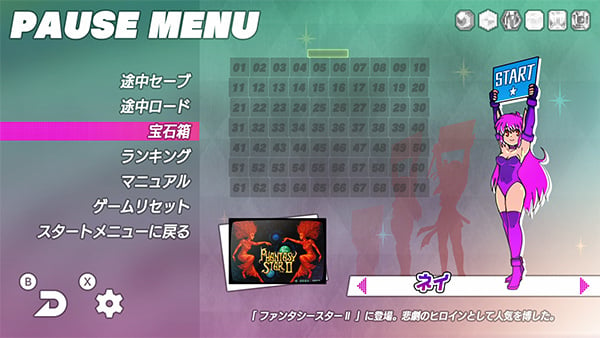
Following on from the local release of Wonder Boy: Monster Land and Virtua Racing, Sega has now revealed the next AGES on the way is Columns II: The Voyage Through Time. This classic puzzle game is priced at 999 yen and is “coming soon” to the Japanese Switch eShop.
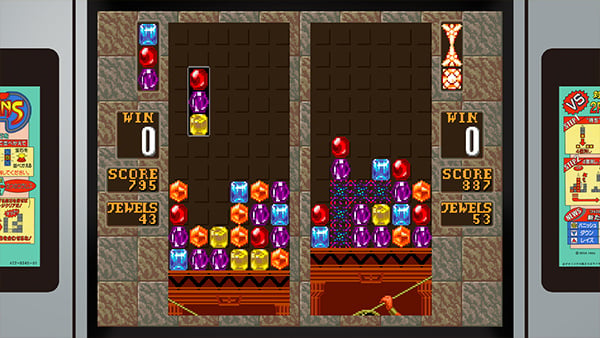
The game features an arcade mode, featuring two game types: Flash Columns and VS Columns. The first one requires you to match jewels and the second one is all about creating chains to reduce the size of your opponent’s field. Here are some additional features (thanks, Gematsu):
A stage select feature has been added to Flash Columns, allowing you start from any of the 70 stages.
A “Skull Cut” option has been added, which stops the appearance of skulls.
The second player’s field can be flipped 180 degrees to play VS Mode face-to-face when the Switch is placed on the floor / table.
A “Stage Design” option has been added, which allows you to set the design of the field and jewels to your liking—either “Random” or “Columns I.”
Infinite Columns is a new mode being added to the Switch version of Columns II. Its rules are the same as the Arcade Mode’s Flash Columns, except it’s an endless-style game. The floor will gradually rise after a certain amount of time, and by eliminating flashing jewels, all of the same-coloured jewels will be eliminated.
There’ll also be an option to play the Genesis/Sega Mega Drive version of the original Columns. Each time you boot the game up, you can select from one of three background songs.
*This is the same Columns included with the paid “Game Pack” add-on for the Yakuza 0 Companion App for PS Vita.
Lastly is the Network VS feature – allowing you to compete against players online in Arcade Mode VS Columns. There’s also a bonus feature titled Jewel Box. Here you can check the status of the stages you have cleared and view the following:
Depending on your level of achievement, you will be able to see brief profiles for Round Girl and Round Boy, the characters that appear in the opening movies of Sega Ages titles.
Are you looking forward to the release of this Sega Ages title? Leave a comment below.
Doug Bowser Says Nintendo Is “Closely Watching” Streaming Technologies
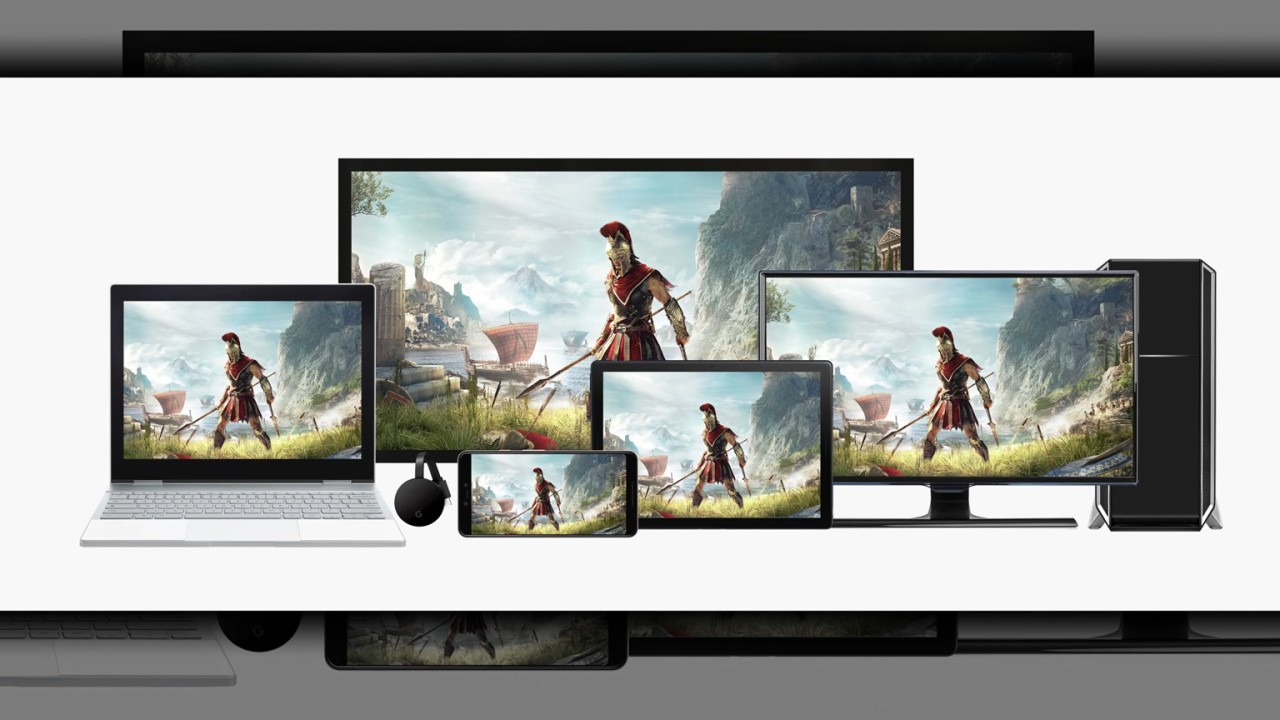
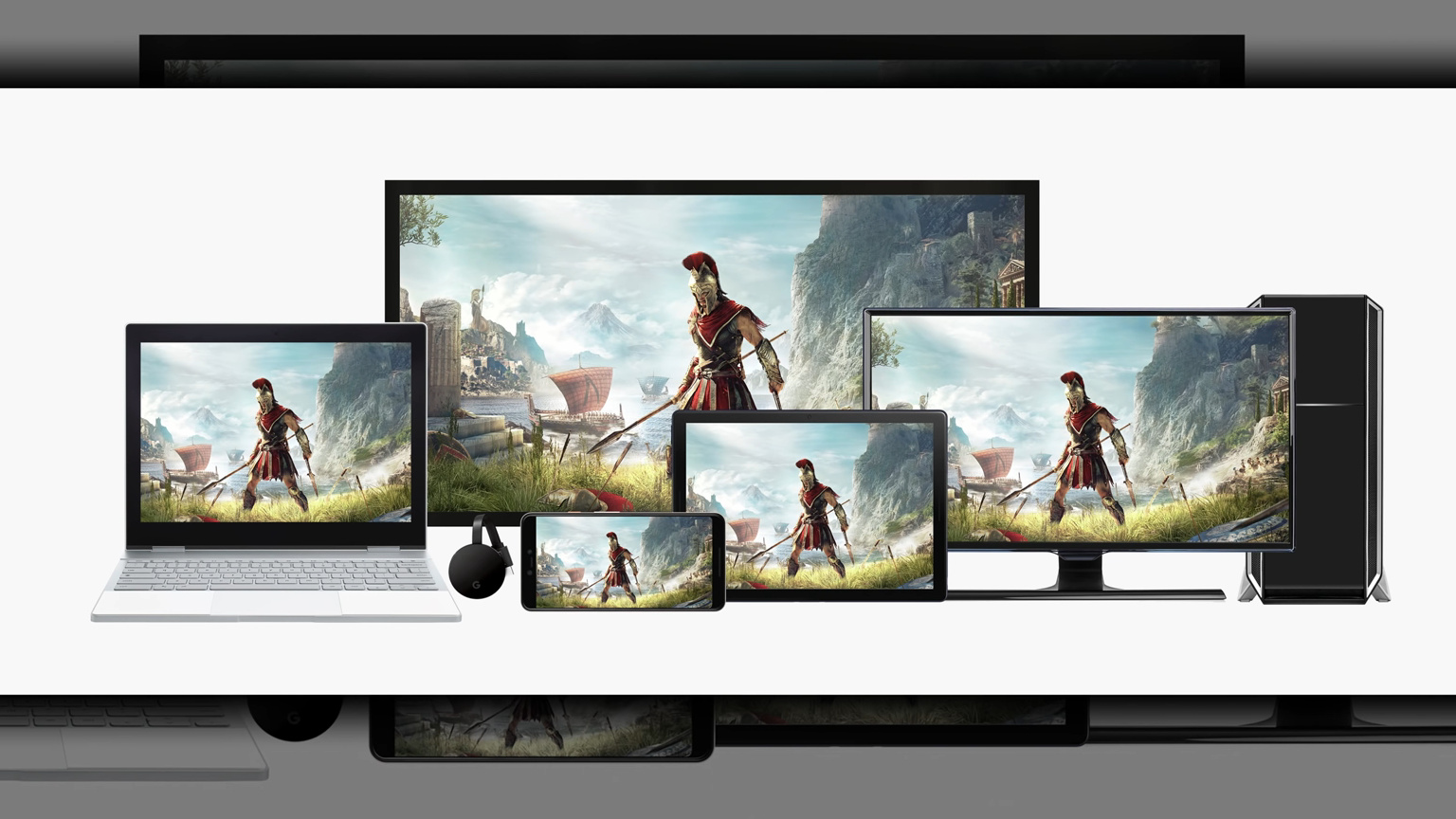
Streaming is being promoted by companies such as Google as the next big thing within the video game industry. The search-engine giant wants to make high-end gaming accessible across multiple devices and remove the current technical barriers and limitations in place with its new Stadia platform.
So, what does Nintendo think about this push to make streaming the norm within the video game industry? In an article published on Fortune yesterday, following an interview conducted at E3 2019, Nintendo of America President Doug Bowser said it’s something the video game giant is closely watching:
“The Switch delivers on a lot of the promises [of streaming]. It’s a device where you can play anywhere, at any time, with anyone. It’s obviously something that we’re closely watching, and looking at, and understanding.”
As Doug notes, the Switch is a promising device when considering its portable design. Obviously, the system has already played host to a number of streaming experiments in Japan. These include cloud versions of Assassin’s Creed Odyssey, Resident Evil 7 and Phantasy Star Online 2.
In a separate interview with TIME during the week of E3 2019, Nintendo of America’s president provided a similar response to the one above, saying how the company was “looking” at streaming, but was currently more focused on providing seamless game experiences:
We’re looking at those technologies and understanding their capabilities and how they may contribute to the gameplay experiences we desire with our IP and characters and environments.
However, we also believe that at this point in time Nintendo Switch also offers a very compelling and unique gameplay experience. It’s a very unique platform in that you can play it at home on your TV, and instantaneously pull it out of the dock and go to a portable mode, whether that’s a tabletop mode or a handheld mode, and continue playing that game seamlessly wherever you go.
Would you like to see Nintendo embrace streaming services in the future? What are your thoughts in general about streaming video games to play them? Tell us below.
Posted by: xSicKxBot - 07-19-2019, 02:05 AM - Forum: Lounge
- No Replies
The aggressive resource management of Doom Eternal
2016’s Doom remains one of the most satisfying first-person shooters in recent years. Designed with “push forward combat” in mind, players were rewarded for proactive, aggressive demon-slaying.
The upcoming Doom Eternal will unsurprisingly also forego passivity in favor of aggression. This time around id Software is turning up the aggression in surprising – and fun – ways.
“The solution to all the problems is to be aggressive,” said creative director Hugo Martin in a recent interview. “I think that’s at the core of all our design ethos – you just take what you need when you need it. So, aggressively managing your resources is kind of a new feature in the game, and working hard to make sure that everything in the game really counts, really means something to the player.”
This is how it works in Doom Eternal: if you find you need ammo, chainsaw a demon; if you need health, glory-kill (this is a special melee move); if you need armor, set a demon on fire with your “flame belch”; if you want the more powerful “blood punch” melee, glory kill more demons.
This “aggressive resource management” is a significant change from Doom, and judging from a short play session, it works. It keeps you on your toes and makes regular enemy encounters more interesting.
Martin said every gun, upgrade, and demon is meant to have a purpose. “They push the game forward, [they] keep you thinking, and the main thing is that you’re constantly engaged,” he said.
One recurring theme brought up by both Martin and executive producer Marty Stratton was the idea of teaching players through death. Players will learn fast, thanks to the fast pace of Doom Eternal.
“You’ll probably die. Death is an ok thing, it’s how you learn,” said Stratton. “But you’ll realize ‘I’m low on ammo, I’m low on health, I’m low on armor,’ and you’ll know there’s a demon right there from which I can absolutely get what I need…As long as there are demons on the battlefield, you’ve got the resources you need.”
There are other notable new designs in Doom Eternal. A climbing mechanic gives levels more verticality, and weak spots on bigger enemies lets players pick apart demons by the chunk, which offers up satisfying, frequent feedback when playing.
But combat is still at the heart of the game. Along with new weapons and new resource management, Martin and Stratton said the Doom Eternal team worked on tighter, more balanced AI and combat encounters.
“As [Stratton] said, ‘the guns are the tool and the AI is the problem’, and you gotta bring the right tools to the right situation,” said Martin. “Each AI will push you in different ways.”
He explained how one character called the “carcass” can spawn shields in front of the player, blocking them from “glory-killing” other enemies, or just in general blocking players’ paths. This essentially is the AI’s attempt to cut players off from resources, as other demons provide health, ammo, etc.
This AI behavior is also meant to force the player to choose the right tool for the job. Carcass enemies are in-your-face and their shields are close to players. That proximity limits the use of a powerful rocket launcher, because the blast would highly damage or kill the player. So, in this example, a player may instead choose to use a shotgun to kill the carcass first, as that enemy protects other AI and prevents players from using a more powerful weapon – the rocket launcher. With the carcass out of the way, players can finish the area with the rocket launcher.
“I wouldn’t say this is ‘combat chess’ so much as ‘speed chess,’ because this is all happening super fast,” said Martin. “It’s those types of metas, those types of split-second decisions, that keep the player engaged. It’s an over-used word for us, but that’s what we’re obsessed with; keeping the player engaged.”
He said this is important for a game like Doom Eternal, which has a long campaign. “When you’re bored, you’re not thinking,” he said. “When you’re thinking, you’re engaged.”
Playtesting has been an important part of iterating that engagement. Measuring such nebulous concepts as “engagement” and “fun” is difficult, but Martin said as a game developer, you can just tell if someone’s not having a great time with a game.
“You want to make sure people are really into it,” he said. “When they’re dying, and you can tell if they’re learning from their deaths – that every time they die, it’s not the game that screwed them over, it’s something they did wrong – you can just tell that they want to get back into it. You can just tell as a developer when people are having fun, or when they’re bored, or when they’re frustrated.”
Martin and Stratton agreed that teaching, learning, and reward are at the core of the Doom Eternal power fantasy. You can see this through playing games like Doom: teaching happens through enemy behavior, learning typically comes through death, reward is the satisfaction in taking what you learned and overcoming previously insurmountable obstacles.
Stratton said he played the E3 demo (which lasts about an hour) 30 times and was still having fun with it. “You’ve practiced, you learned, now you can go out and dominate,” he said. “That’s so rewarding, because I took the journey to get there. The game didn’t give it to me.”
“That second half or third act of the game should just be an expression of your mastery of the game,” said Martin.
“[A game with many combat options] is not the type of game we’re making,” said Martin. “There are many different tools at your disposal, many different ways to kill demons. Within our narrow path to success, there are opportunities for players to make choices. But the key thing is that the solution to every problem is to be aggressive, and there’s no way around that.”
For example, if players are playing “peek-a-boo” with an arachnotron instead of engaging combat, the AI will eventually move in and try to finish you off, because you’re refusing to be aggressive.
“[That happens] because you’re not playing the game the right way,” said Martin. “Each time [something like] that happens, you learn a lesson, learn a lesson, and you find that if you hang with the game, it’s like, ‘yeah, I have to be more aggressive than the demons, and that’s how I win.’”
Posted by: xSicKxBot - 07-19-2019, 02:05 AM - Forum: Lounge
- No Replies
Gearbox wants crossplay in Borderlands 3, but it won’t launch with it
Gearbox wants Borderlands 3 to be one of a growing number of games that have bridged the console gap for online multiplayer, but the feature won’t be offered when it launches in September.
Taking to Twitter, Gearbox CEO Randy Pitchford explained that the team at Gearbox is “committed to supporting crossplay for Borderlands 3” but that, when the game launches, multiplayer team-ups will be restricted by what platform people are playing on.
He says that Gearbox is working with its partners to support the feature “as soon as practicable after launch,” but cannot offer a timeframe or anything more concrete at this point in time. As other game devs can attest, the most difficult part of enabling cross-platform play across platforms like PC, Xbox One, and PlayStation 4 can sometimes be convincing the platform holders themselves to allow the feature.
That being said, cross-platform play is becoming more common in this day and age. Dauntless, for one, recently launched on consoles with day-one support for cross-platform multiplayer, and games like Fortnite and Rocket League have also opened up to multi-platform online play sessions.
In a follow-up tweet, Pitchford clarifies that it is currently working with Gearbox’s partners to “create a positive crossplay experience as soon as practicable. We are committed to crossplay on as many platforms as possible.”