Posted by: xSicKxBot - 05-30-2019, 07:51 AM - Forum: Lounge
- No Replies
Pokemon Sleep Is A New App To Make Sleeping Entertaining
As part of the Pokemon 2019 press conference on Tuesday night, a wacky-sounding new Pokemon app called Pokemon Sleep was announced. Seriously. Alongside the reveal of a new mobile game called Pokemon Masters, the Pokemon Company and Nintendo revealed they are working together to try to "turn sleep into entertainment."
Pokemon Sleep is launching in 2020, and The Pokemon Company joked that "several Snorlax were consulted on this."
We’re pleased to announce the development of Pokémon Sleep, a new app from @Pokemon_cojp that tracks a user’s time sleeping and brings a gameplay experience unlike any other! Several Snorlax were consulted on this, in case you were wondering. #PokemonSleep is coming in 2020. pic.twitter.com/nJ7mJY09Dl
"Pokemon Sleep aims to turn sleeping into entertainment by having a player's time spent sleeping, and the time they wake up, effect the gameplay," reads a line from the app's official description.
More details about the specific functionality of the app are being saved for a later date. Sony's Wake-Up Club for Vita comes to mind, however, as a gamified version of an alarm clock.
Pokemon Go Plus Plus
Nintendo is also working on a new peripheral called the Pokemon Go Plus Plus (not a typo). That is actually its name. The idea is that you'll sleep with the new peripheral and it'll monitor your sleep patterns, apparently. The device has an "embedded accelerometer" that can track how you sleep and then beam it to your phone.
"This new device also has the same functions as the original Pokemon Go Plus, so Trainers can use it with Pokemon Go during the day and with Pokemon Sleep at night," The Pokemon Company said.
While you have to wait a while longer to experience Pokemon Sleep, Pokemon Go is being updated to introduce some sleeping Snorlax for players to catch. Here is what the Plus Plus looks like:
For more on the Pokemon 2019 Press Conference, check out the stories linked below:
Review: TerraTech – The Meccano To Minecraft’s Lego
Kickstarted back in 2014, TerraTech is one of the more successful attempts to evolve the sandbox construction genre in a new direction. A sort of Meccano to Minecraft’s Lego, Terratech focuses largely on building vehicles (or ‘techs’) which can be driven or flown around a randomly generated world. You’ll get into fights, complete quests, mine resources and refine your creations as you explore, but not without some significant control frustration and some big questions about the long term appeal of the whole thing.
At the core of a TerraTech tech is a cab block which defines the direction of travel (hide it away as deep in your vehicle as you can for protection). Blocks attach to each other at points on a cubic grid along each face. Construction is easy to understand – anyone can stick a bunch of blocks together, slap some wheels on the sides, some guns on the top, a drill on the front and let the game’s physics engine handle the result in a believable way.
Blocks fall into four distinct mechanical themes, associated with the rival corporations of the game’s lore. These cover grey military hardware, yellow construction vehicles, colourful racing vehicles and black stealthy builds. There is a range of sizes, with diverse aesthetic and mechanical functions that allow imaginative players to make and enjoy in the game’s generated worlds.
TerraTech definitely provides an interesting construction set, but it can be difficult to discover and enjoy its nuances. Descriptions of blocks in your inventory feature no useful statistics to aid comparison – furthermore, whether you’re playing docked or undocked, the whole game is plagued by small fonts that make reading what text there is uncomfortable.
Overall, there is a sense that all aspects of control and user interface needed a more ambitious overhaul when transitioning from PC to console. The controller mapping is a valiant attempt at marshalling the complexity of the construction system, but it is all too easy to forget that you are in a certain editing mode or sub menu, and what that means for the function of each button.
Though the principles of construction are delightfully easy to understand, the actual process can become exhausting on a controller. A good chunk of the interface works under the assumption that dragging and dropping items into place is an easy and comfortable motion – true for a mouse, but something to be tolerated on a controller. Something like Banjo-Kazooie: Nuts & Bolts was far more successful in this regard. Tellingly, there is no touchscreen support in handheld mode.
The focus on player-controllable vehicles does mean that Terratech misses out one of the most interesting parts of that Minecraft formula: a world entirely composed of building blocks you can reshape into your own creations. The undulating hills of Terratech’s landscapes are obviously conceptually more true to reality than the Minecraft’s bizarre, blocky worlds (a hell of a lot easier to drive on too), but they’re also non-interactive and entirely unmalleable.
The game’s raw resource chunks are instead solely locked up inside the trees, rocks and mineral patches that pepper the land, ready to be bashed or mined out with various pieces of equipment. Once extracted, you could run these chunks through a complex manufacturing base to refine and fabricate the blocks you need for your creations, but this is an intimidating option in need of a more robust tutorial than the game provides, and unlikely to be the route most players take considering the campaign offers far simpler alternatives.
Building blocks can instead be more easily acquired by taking resource chunks to trading posts to earn gold, which can then be simply used to purchase new blocks. Alternatively, players can earn blocks (and gold) through completing the missions also dispensed at trading posts, or salvaging blocks from vehicles they defeat in combat (though you often destroy the best blocks in the process). Block and resource chunks each have their own corresponding collector devices, though you can always just stick interesting blocks to your vehicle to nail that classic “picked up furniture without measuring the car” aesthetic.
Combat in TerraTech is a mixed bag – there’s a definite joy in filling every surface of a large vehicle with small cannon and greeting roaming vehicles with a hail of bullets. However, early game survivability is low which leads to frustration – players will have to wait a fair while before they can obtain larger batteries to power their shield and healing bubbles, but stopping regularly to recharge batteries is unnecessarily arduous.
Wading into combat without shields isn’t advisable – dying means either paying a hefty sum in gold to get your vehicle back, or taking the option of a free starter vehicle and investing the not insignificant time it takes to re-build a creation capable of taking on larger opponents (though the free vehicle is at least scaled somewhat to your mission level). If you’re dying too often, you may be tempted to simply choose the free option repeatedly and wear down difficult enemies – the game is arguably full of these instances where the proper solution can be bypassed by something far less time consuming but also less interesting. Undisciplined players need not apply.
The missions dispensed by the trading posts do a better, though imperfect job of breaking things up. Missions are posted by the game’s corporations and the theming from their available blocks carries into the kinds of tasks they offer – the heavy duty, hazard yellow Geo Corp tasks you with resource harvesting whereas the colourful Venture Corp requires you to complete quests such as time trials, fitting their race car-like parts.
This theming injects some variety, but there are still too few mission types (expect a whole lot of “find the delivery crate, oh it’s an ambush” missions). Furthermore, by making them just another thing to pick up at a trading post, there’s a limit to how interesting the campaign can ever hope to be. The world overall feels quite empty, and the graphical presentation on Switch doesn’t help matters – textures are generally very blurry and effects such as shadows pop in only a few paces ahead of the player. Framerate and vehicle graphics are prioritised – the right choice, but in a way that calls into question whether the Switch version is itself ‘the right choice’.
Of course in the creative mode, much of the above is technically moot – but campaign mode really is the best way to experience the game. For starters, players will have difficulty working out what half of the blocks do without playing at least some of the campaign. Then there’s the sense that building for building’s sake is less fun overall when you’re building vehicles – why go anywhere, shoot anything or mine anything when there isn’t a reason to? TerraTech’s campaign (and to a lesser extent, the limited build and race ‘gauntlet’ mode) gets far enough towards answering that question to not be a total write-off.
Conclusion
At the core of TerraTech is an extensive mechanical construction kit that presents an interesting canvas for creative players. However, the Switch’s significant UI shortcomings, a cumbersome console control scheme, and a limited-feeling campaign will ensure that only persistent players stick around long enough to find the fun.
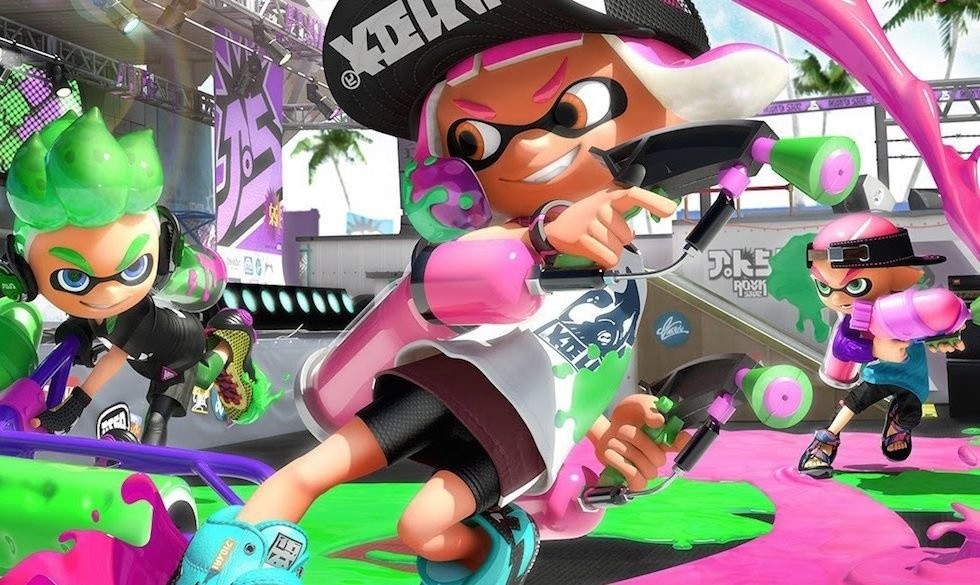
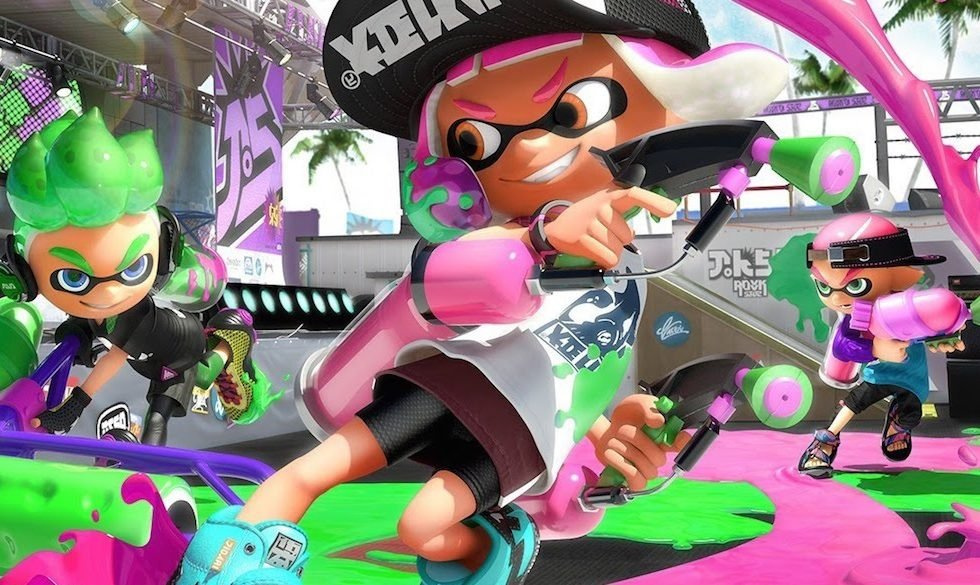
Nintendo have recently put out a brand new update for the rather lovely Splatoon 2 which brings plenty of tweaks and bug fixes, while not offering any new content as such.
We’ve included details for update v4.8.0 below for your edification – let us know if this has made the game even better in your experience with a comment below.
Changes to Multiplayer
Specifications for some of the main weapons have been changed.
Weapon
Change
Jet Squelcher
Custom Jet Squelcher
Increased inking radius of shots when they land by roughly 10%.
Carbon Roller
Carbon Roller Deco
Decreased ink consumption of horizontal and vertical swings by roughly 12%.
Splat Roller
Krak-On Splat Roller
Kensa Splat Roller
Hero Roller Replica
Extended forward inking range of vertical swing.
Dapple Dualies
Dapple Dualies Nouveau
Clear Dapple Dualies
Decreased ink consumption when firing a shot by roughly 7%.
Splat Dualies
Enperry Splat Dualies
Kensa Splat Dualies
Hero Dualie Replicas
Decreased ink consumption when firing a shot by roughly 5%.
Mini Splatling
Zink Mini Splatling
Kensa Mini Splatling
Increased ink consumption by roughly 15%.
Heavy Splatling
Heavy Splatling Deco
Heavy Splatling Remix
Hero Splatling Replica
Decreased damage from 32.0 to 30.0.
Ballpoint Splatling
Ballpoint Splatling Nouveau
Decreased inking radius of long range shots when they land by roughly 8%.
Tenta Brella
Tenta Sorella Brella
Tenta Camo Brella
Decreased damage of a single spread shot from 17.5 to 17.0.
Specifications for the following sub weapon have changed. `
Sub Weapon
Change
Splash Wall
Decreased time after placing the Splash Wall until it goes into effect by roughly 5/60 of a second.
Specifications for the following special weapons have been changed.
Special Weapon
Change
Increased damage dealt to the umbrella portion of the following Brellas by roughly 25%.
Splat Brella
Sorella Brella
Hero Brella Replica
Undercover Brella
Undercover Sorella Brella
Kensa Undercover Brella
Increased damage dealt to the umbrella portion of the following Brellas by roughly 75%.
Tenta Brella
Tenta Sorella Brella
Tenta Camo Brella
Booyah Bomb
Decreased durability of armor surrounding the player using the Booyah Bomb by roughly 6%.
Points required for using specials have been changed for certain main weapons.
Weapon
Before
After
Splattershot
Hero Shot Replica
190
180
Blaster
Hero Blaster Replica
190
180
Fresh Squiffer
190
180
Splat Charger
Hero Charger Replica
210
220
Splatterscope
210
220
Tenta Brella5
190
200
Tenta Camo Brella
190
200
Kensa Undercover Brella
190
200
Fixed an issue causing the aiming reticle to indicate shots fired at an opponent’s Splash Wall before it had fully deployed were being blocked, even though they actually weren’t.
Fixed an issue occurring while charging a Splatling weapon with almost no ink remaining, causing the “Low ink!” warning to not display briefly, and for the weapon to charge at normal speeds.
Fixed an issue occurring even with low amounts of network latency, where the “shot firing” animation near the muzzle of certain brellas would occur after the shot had been fired, or indicate the shot being fired in a mistaken direction.
Fixed an issue occurring when placing a Splash Wall on an uneven or pitted surface, causing the wall to additionally ink turf in a different direction than the one it had been placed.
Fixed an issue in Clam Blitz mode, where tossing a Sprinkler at the basket at just the right timing would cause it to stick to the barrier.
Fixed an issue occurring during Rainmaker matches in Gobi Arena, where moving the crates near the center of the stage just slightly would allow two players to collide with one another in mid air, sending one of them into the turf around the enemy Spawn Point.
Changes to Multiplayer
Fixed an issue occurring on Ruins of Ark Polaris allowing Steel Eel enemies to descend from heights they should not be able to.
Other Changes
Fixed an issue occurring when rolling into the targets on the test firing range with a Baller, where the target failed to react when hit, despite taking damage.
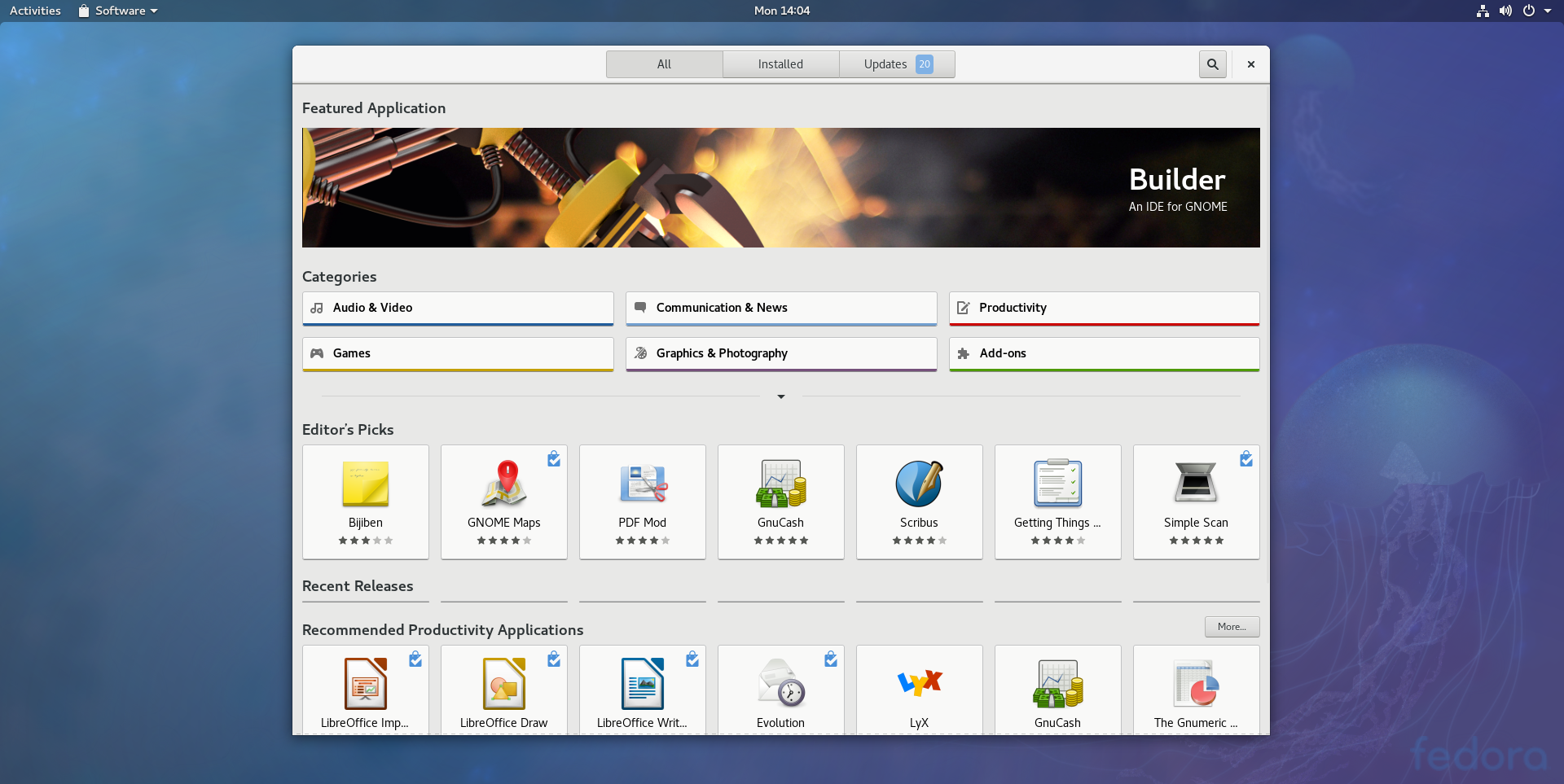
With the recent release of Fedora 30, Fedora 28 officially enters End Of Life (EOL) status effective May 28, 2019. This impacts any systems still on Fedora 28. If you’re not sure what that means to you, read more below.
At this point, packages in the Fedora 28 repositories no longer receive security, bugfix, or enhancement updates. Furthermore, the community adds no new packages to the Fedora 28 collection starting at End of Life. Essentially, the Fedora 28 release will not change again, meaning users no longer receive the normal benefits of this leading-edge operating system.
There’s an easy, free way to keep those benefits. If you’re still running an End of Life version such as Fedora 28, now is the perfect time to upgrade to Fedora 29 or to Fedora 30. Upgrading gives you access to all the community-provided software in Fedora.
Looking back at Fedora 28
Fedora 28 was released on May 1, 2018. As part of their commitment to users, Fedora community members released over 9,700 updates.
This release featured, among many other improvements and upgrades:
GNOME 3.28
Easier options for third-party repositories
Automatic updates for the Fedora Atomic Host
The new Modular repository, allowing you to select from different versions of software for your system
Of course, the Project also offered numerous alternative spins of Fedora, and support for multiple architectures.
About the Fedora release cycle
The Fedora Project offers updates for a Fedora release until a month after the second subsequent version releases. For example, updates for Fedora 29 continue until one month after the release of Fedora 31. Fedora 30 continues to be supported up until one month after the release of Fedora 32.
The Fedora Project wiki contains more detailed information about the entire Fedora Release Life Cycle. The lifecycle includes milestones from development to release, and the post-release support period.
Posted by: xSicKxBot - 05-30-2019, 07:51 AM - Forum: Windows
- No Replies
AI Business School launches curriculum for government agencies
More than 140,000 business leaders have immersed themselves in AI Business School since Microsoft introduced the online leadership series two months ago. Now, the school is adding materials designed specifically for government agencies.
The goal: To help government leaders, policy makers and administrators learn more about how technologies infused with artificial intelligence can help their constituents, particularly when it comes to the delivery of important services ranging from applying for a construction permit to getting access to health assistance.
On May 28, AI Business School will launch a new learning path that describes important considerations and potential opportunities for government organizations as they evaluate how AI can help governments become more agile, consistent and efficient, and also better deliver services to their citizens.
“Leaders in the public sector are often faced with unique challenges when considering how to apply AI to improve the speed and quality of the government services they offer their citizens,” says Mitra Azizirad, corporate vice president for Microsoft AI marketing. “The opportunities and scenarios for AI in the public sector are ever increasing, which can make deciding where and how to apply it quite daunting. This is precisely why we expanded Microsoft’s AI Business School to now include a specifically tailored and targeted public sector curriculum to help these leaders address their citizens’ unique needs.”
Anthony Salcito, Microsoft’s vice president for government, said the new government learning path is a win for both government agencies and the constituents they serve.
“Helping governments reach and serve people through cloud services is a key priority for us,” Salcito said. “Citizens want to be able to interact with governments in real time and from any device. AI enables a two-way conversation where citizens can contribute information and receive insights in return.”
“It’s really thinking about 21st century workforce skills,” he added. “The fact is that government workers across the board – and especially decision makers – don’t necessarily have that familiarity or depth on AI. This new learning path is a way to get them introduced to the concept and to understand why it’s important in the context of government work.”
A video lecture from Peter Zemsky, Eli Lilly chaired professor of innovation and strategy at INSEAD graduate business school, on why and how governments can identify the right opportunity to use AI.
A case study illustrating how the city of Espoo, Finland, is working to modernize life for its residents.
A demo showcasing how governments can use intelligent bots to help citizens access resources.
With the assistance of AI, experts say governments can do things like find ways to reduce the time people spend waiting in line for services or find ways to improve public safety.
AI tools also can help government organizations analyze data to find better ways of helping constituents. They also can be used to create intelligent assistants that get people answers to simple questions faster, freeing up government employees to handle more complex requests.
For example, the city of Espoo has been using AI to analyze how its citizens access services, with the goal of figuring out how to serve people more efficiently and effectively. Päivi Sutinen, Espoo’s director of city-as-a-service development, said the experimentation revealed that by using AI and customer data more effectively, they were able to allocate resources more efficiently. That’s helping put the city on a path towards a more sustainable future.
“We launched our experiment because we wanted to find out whether AI can help us target our services proactively,” Sutinen said. “The answer is a strong yes.”
Microsoft says governments of all sizes can benefit from the AI Business School’s new learning path.
“We believe this course is valuable for government decision makers at all levels — from small municipalities to large cities,” said Salcito. “The beauty of artificial intelligence technologies is their scalability.”
Jaime Pereña is a director of AI marketing at Microsoft.
League of Legends for mobile is in the works from Riot and Tencent
By Ian Boudreau29 May 2019
Reuters, of all places, broke the news last week that Riot Games is currently working with parent company Tencent on an official mobile version of their massively-popular MOBA League of Legends, although it’s as yet unclear when we’ll be able to get our hands on it.
As the Reuters story explains, the idea of creating a mobile version of Riot’s hit game has been a tendentious one between the two companies, with Riot initially resisting the idea of bringing League of Legends to phones and Tencent pushing the idea, based on its massive success with its similarly-structured mobile game Honour of Kings. However, the western version of Honour of Kings,Arena of Valor, has been a bit of a flop outside Asian markets and Tencent has given up promoting it in the west just two years after its launch, according to a report by Nintendo Life.
With revenues for League of Legends slipping – mind, it still cleared $1.4 billion last year alone – Riot is now more open to the idea, and one of Reuters’ sources says the project has been in the works for a year.
However, another source says not to expect a mobile League of Legends this year.
Krita is an open source painting application available for Windows, MacOS and Linux. It has improved massively over the last two years and continued that process today with the release of Krita 4.2. This release fixed over a thousand new bugs, adds HDR rendering support, improved tablet support and much more.
Posted by: xSicKxBot - 05-30-2019, 01:27 AM - Forum: Lounge
- No Replies
Detective Pikachu Game Coming To Nintendo Switch
A new version of the Nintendo 3DS game Detective Pikachu is coming to Nintendo Switch. The Pokemon Company announced this during its 2019 Press Conference today.
"The details of this game are still a mystery," reads a line from the company's announcement. It seems more details will be announced at a later date.
Announcement 1⃣ Can’t wait to keep sleuthing with #DetectivePikachu? Plans are under way to bring this crime-solving Pikachu to Nintendo Switch! The details of this game are still a mystery...so keep checking back here for more clues. ?⚡️ pic.twitter.com/286PFCGYaR
The Switch game will resolve the cliffhanger from the 3DS game, The Pokemon Company said. The ending to the Switch game will be different to the movie starring Ryan Reynolds.
The new Detective Pikachu game for Switch is being developed by Creatures Inc., the Japanese studio that has worked alongside The Pokemon Company on numerous Pokemon games over the years.
It sounds like it's early days for the new Detective Pikachu game for Switch, as The Pokemon Company said developer Creatures Inc. "has plans to create" the game but it is unclear if development has begun.
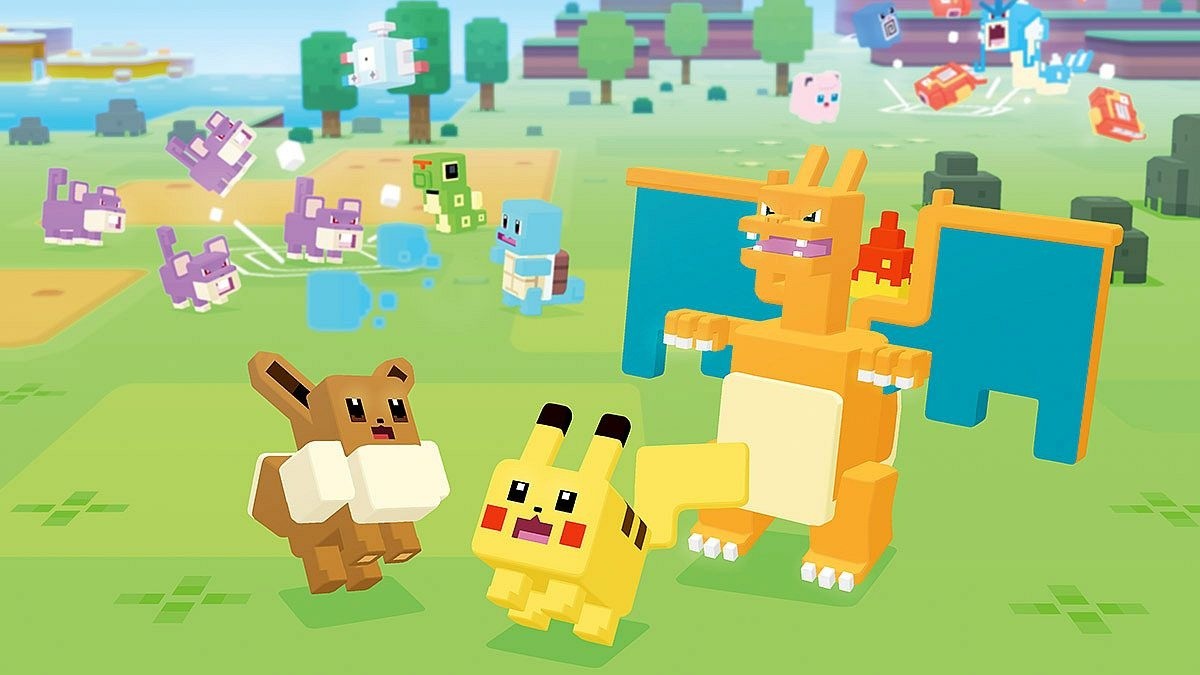
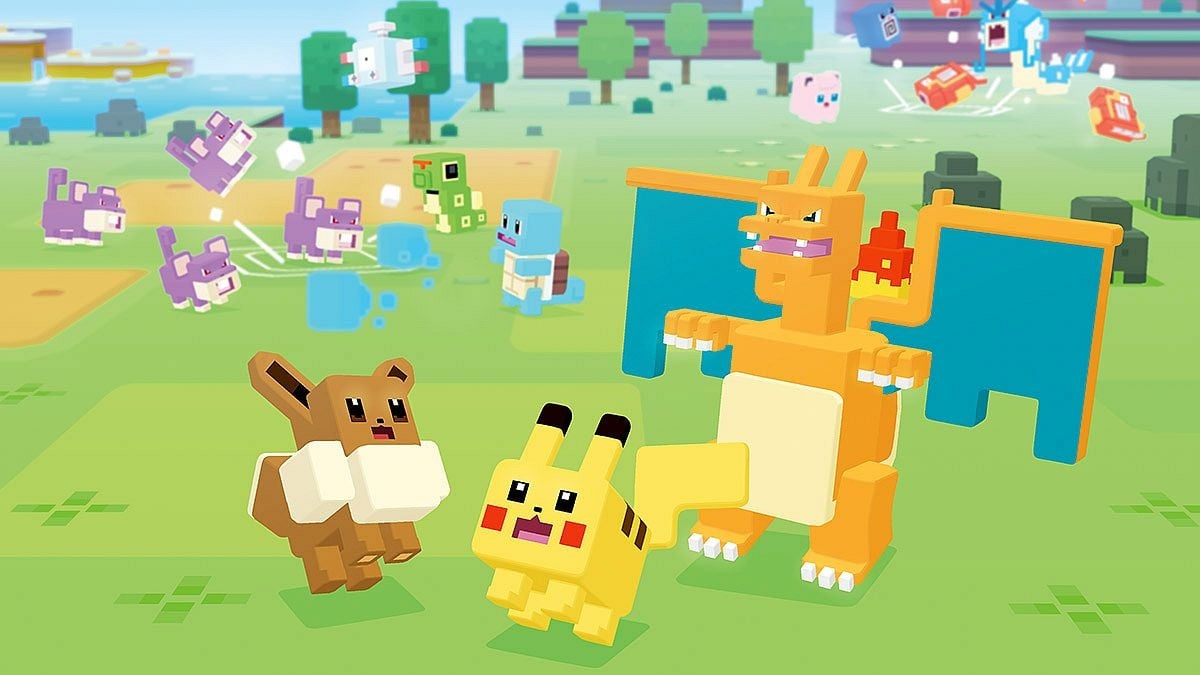
China Is Receiving An Enhanced Version Of Pokémon Quest
At last year’s 2018 Pokémon video game press conference, The Pokémon Company announced Pokémon Quest for Nintendo Switch and mobile devices. The game was released on the Switch on the same day and eventually rolled out on mobile devices in June.
Now, one year later, it’s been revealed the Chinese version of Pokémon Quest – handled by NetEase – will be an enhanced release. The game will include social features and a player verse player option. It was also revealed NetEase was working with The Pokémon Company to bring more Pokémon games to China in the future. Since Pokémon Quest was revealed for this location, more than 1.7 million players have pre-registered to play the game.
Have you downloaded Pokémon Quest on your Switch or mobile device yet? What did you think? Tell us below.