Unruly Heroes is an action-adventure game inspired by the famous chinese legend ?A journey to the west? better known as the Monkey King Legend. Through this epic adventure, the game will make you live a fantastic and unforgettable experience. The game can be played in coop up to 4 players, but you can decide to play online in fierce Player vs Player modes. Who will be your favorite character?
Your dogs have been dognapped by a beaked lunatic who stuffed them into his eye holes and is using their life essence to destroy the universe. You?re partnered with Trover, a little purple eye-hole monster who isn?t a huge fan of working or being put in the position of having to save the universe.
Battle an army of sycophantic cultists, zombies, gargoyles, hellhounds, and an insatiable host of horrors in your quest to defeat the evil Tchernobog. Squirm through 42 loathesome levels filled with more atmosphere than a Lovecraftian mausoleum.
Vambrace: Cold Soul is a roguelike fantasy-adventure set amidst a frozen landscape. Plan your expeditions underground, then journey to the cursed city surface with your team of heroes. Wield unique powers, avoid dangerous traps, brave strange encounters, and survive deadly combat.
New Battlefield 5 Map, Mercury, Releases This Week For Free
Battlefield V is adding a new map very soon, and now DICE has released a trailer for it. The new map, Mercury, is coming to Battlefield V on May 30 through a free update.
As you can see, the new map is called Mercury, and it's set in Greece in the Mediterranean. The map is part of Battlefield V's Chapter 3: Trial By Fire update. "Based on the events of Operation Mercury in 1941, this map lets you deploy on the coast of Crete where the British take on the invading German forces," reads a line from the map's official description.
In a blog post, DICE said the gameplay for Mercury is focused on "verticality, all-out war, and asymmetrical vehicle forces." The British side has tanks and only a small number of planes, with the German side commanding the skies with more planes.
DICE says Mercury has been designed for a number of different playstyles, and the map itself borrows characteristics from maps like Guadalcanal (Battlefield 1942), Altai Range (Battlefield 4), and Monte Grappa (Battlefield 1).
"Due to the size and verticality of the map, tempo will vary. Find holes in the defense to flank or engage in a hot firefight around one of the flags," DICE said. "There's a place in the map for SMGs to clash with shotguns, while Recon players can snipe at Support players, who in turn suppress enemies with their LMGs."
DICE has steadily supported Battlefield V with numerous free updates adding a variety of things like new maps and modes, including the uber-popular battle royale mode Firestorm.
Review: Death Mark – An Excellent Horror-Adventure Fusion
Death Mark‘s developer Experience has an odd history of creating games for what could charitably be called the “wrong” formats; putting out great dungeon crawlers (Stranger of Sword City and Operation Abyss: New Tokyo Legacy, for example) for relative underdogs like the Vita and Xbox One. Death Mark is something of a shift for the company in many ways; it’s their first horror game, their first adventure, and their first title to come to the Switch – but was it worth the wait?
Unlike the action-horror trappings of Resident Evil – a series that even at its most atmospheric still has you blowing a giant monster to smithereens with a rocket launcher – Death Mark is more concerned with enveloping you in a feeling of inescapable dread, a place where every shadow may hold hidden terrors and every sound could be the last thing you hear. Like the best examples of the genre, the game expertly fuses the mundane with the magical, taking dark but very human tragedies and twisting them into supernatural murder mysteries which you must solve before dawn – or die.
Death Mark’s mystical horror setting presents itself as an exploratory adventure game, and much of your time will be spent wandering around a single predetermined location trying to find clues and objects that will help solve the case and quell the spirit’s thirst for revenge without getting yourself killed in the process. Most of this interaction is done via your character’s flashlight beam, which handily also doubles up as your cursor. Unlike the point-and-click adventures of old, your light covers quite a large area and every interactive point gives a little glint as you move over it, avoiding tedious pixel hunting and time wasted trying to work out if an interesting background detail is there as window dressing or a crucial clue. To save you from another typical piece of adventure game frustration, if one of these spots only exists to bring up some deliciously unsettling flavour text or to highlight a point of interest, then the game won’t bring up the already streamlined Feel/Tool/Look interaction menu at all, saving you from that nagging feeling that maybe there’s more to that broken ceiling light or rattling window frame than you first realised.
Even when played docked through a large screen, Death Mark’s imagery perfectly balances the need for detailed visual clues and environments to support the mystery side of the game with the importance of that special sort of restraint that keeps something in the corner of your eye, effectively using things like floating dust particles and slight noise effects (think of the wonderful Silent Hill series) along with the unrelenting darkness to keep your nerves on edge. The game even goes as far as to ditch the artwork entirely at times, replacing it with nothing more than a black (or on some occasions, a disturbing blood-red) screen and a chilling description of the current situation printed in the text box at the bottom. In most adventure games this would be a cheap and often lazy way to convey information – there’s no artwork to pay for if there’s no art – but here it’s used to really twist the atmospheric knife, denying you the chance to see often when you want it the most. “Do-you-like-bees?” is far more terrifying when displayed alone in bright red text (All of the text in the game is colour-coded – red is usually reserved for ghosts, whereas yellow highlights important topics or significant items), your imagination forced into overdrive, guided only by the text and the sounds you can hear.
And for once the sounds you can hear really are as integral to the experience as anything else; Death Mark’s soundtrack is a wonderful thing that underlines key events very well, but the ambience thrives on the unease caused by gusts of wind, creaking ropes, and ghostly singing punctured by sudden laughter, bangs, and drilling as you explore the world around you.
Of course, no matter how high quality these haunted visuals and their accompanying sound effects are they would easily wear thin if over-used – which thankfully doesn’t happen here. The brief encounters with spectres as something passes under your flashlight’s beam and will never reappear again; the loud knocks on the door you just came through; the handprints on glass that fade almost too quickly for you to be sure you ever saw anything at all are all expertly handled, leaving you feeling uneasy when exploring without reducing the game to a series of cheap ‘house of horror’-style spooks. You are definitely being watched, but as the game reminds you on several occasions, these ghosts are patient, these ghosts can wait. And they don’t want you dead; they want to you suffer.
Being undead spirits from beyond the grave means you can’t tackle them the way you would a living adversary, which is why most of your night is spent gathering information about the spectre in question, solving puzzles, and collecting items that may assist you along the way so you can exorcise the being properly. It wouldn’t take much for the game to fall flat here, falling back on well-worn and always unwelcome horror game tropes – an endless supply of themed keys for an endless supply of elaborately themed doors, or tedious padlocks (rusted, of course) that can only be opened when you’ve found four scraps of paper scattered arbitrarily around the map. Unlike these groan-worthy examples, Death Mark’s puzzles are generally very well integrated into the setting itself, using everyday items in logical ways in slightly off-kilter scenarios – and even when the game does lean in on the supernatural side of things, it all still follows a consistent internal logic, assisted greatly by a helpful personal log that’s updated whenever anything of importance happens – as well as some occasional on-the-nose dialogue between your party of two to help keep things on track.
Other problems require a more old-school approach – the sort that relies on you, the player, to pay attention to things that you have seen but may not have explicitly been commented on by your character or written down as “A Thing I Have Noticed” in the log. As an example, at one point you have to give a partner a boost so they can reach an object hiding up high and your choice of potential helper is a rather chunky nerd, an unwilling adult woman, or a light and nimble child – the solution is obvious when you apply some common sense to it, but adjusting to the game’s “outside the box” expectations can take a while. The good news is that while you are restricted to bringing just one of these companions with you at a time (you are told that any more would attract the attention of the dead) you can swap between them without any penalty whenever you’re back at the mansion “hub” – and you can return there at any time and as often as you like during an investigation. The game’s “You’ll die at dawn!” warning may be true, but it thankfully isn’t tracked in real-time; the passage of the night in Death Mark – always accompanied by a violent pain in the amnesiac lead’s ghostly scar and the ominous tolling of the mansion’s grandfather clock – is instead used to mark serious turning points, helping to break up the puzzling into chunks and letting you know in the most unsettling way possible that you’re getting closer to unravelling the mystery.
No matter how careful you are, it’s only natural that at some point you’ll encounter a ghost during your investigations, and this is where the plainly-put “Live or Die” system comes in. These brushes with danger bring up a multiple-choice question-and-answer session on the situation at hand, the pressure coming not only from the dead threatening to end your existence in the most unpleasant ways imaginable but also by the rapid draining of your spiritual power as you think over the available options – no prizes for guessing what happens when it reaches zero.
Do you run, or stand your ground? Do you answer honestly, or lie? The responses offered to you are always the same and always complete, so the correct reply is definitely in there somewhere, but keeping a cool head and quickly recalling the relevant details of the investigation so far will make surviving these encounters much more likely. And if you do get it wrong? Often this gives a hefty but survivable 500 point deduction to your total spirit power, meaning that so long as you’ve been mostly right in these deadly gauntlets then you can still come out alive if a little worse for wear – but some poor responses can kill you outright regardless of your starting power level and should be avoided at all costs. Deaths that occur via these events resolve quickly and violently, and the ability to immediately restart them keeps these false ends feeling more like a self-contained horror experience than a time-wasting chore – as well as allowing you to brute-force your way through the questions if the correct solution just isn’t coming to mind.
After all of your efforts, there’s only one way each night can end, and that’s with a direct battle against the chapter’s most dangerous spirit – who’d have thought a tense horror adventure like this would have honest-to-goodness boss battles? These fights play out as turn-based puzzles, with the boss strictly following a set routine that you need to work out how to counter using the knowledge and items you found during your evening’s research. These are fittingly the most difficult parts of the game as they ask you to draw on every last detail you’ve encountered to come up with an effective strategy that will not only vanquish the boss but keep you and (optionally) your partner alive as well.
Everything matters here; you need the right items in the right order – and the right partner by your side too. Now failing because you have all of the right things but didn’t bring along the correct companion sounds like a terrible waste of time, but the clues are given to you beforehand if you’ve been paying attention. When the game takes the time to make an event out of a child-ghost hating adults and your choice of partner is an adult or a child… it might be a good idea to take the kid. Some of the more heavy-handed hints include a rattled companion going so far as to say “I can’t do this any more, I can’t fight ghosts, I’m sorry” – that was your warning to swap them out before the final battle. And if you carry on regardless… well, you can’t really blame the game for that one.
And if you do get it all completely wrong, all is still not lost; Death Mark has a fantastic checkpoint/restart system that can get you back on your feet even if you’ve decided to completely ignore the game’s thirty save slots while you’ve been playing. If you die during the normal investigative “Live or Die” parts of the game you can either reload any save you’ve created or head back to the last checkpoint, which will always be the most recent significant thing you’ve done before triggering a life-or-death scenario. If you lose during a boss battle you still have those two options available to you, but you can also quickly restart the battle from the beginning, allowing you to try out alternative strategies without any long setups to spoil the mood. Having such a thorough and helpful set of restart choices is a huge benefit to a game that wants you to investigate everything while still keeping the outcomes dangerous and unpredictable; this system means death is still the worst outcome and something you want to avoid, but it’s not such a huge setback that you feel you could end up worse off for doing the one thing the game wants you to do – poke around abandoned buildings trying to exorcise ghosts.
Sadly, even a game as stunningly scary as this does have two noticeable issues – one direct from the developers, and another introduced during the localisation process. The first is the odd way the vast majority of the spirits you face and the people who end up dead in Death Mark’s world are women, all unfailingly treated as some sort of eye-candy – even when they’re being brutally mutilated while tied down on an operating table or are corpses drilled full of holes.
Now some torn clothing or even full nudity can do a great job of highlighting the vicious and unforgiving nature of vengeful spirits from beyond the grave, but when in contrast every man in the story is without exception either a spooky spirit or a disgustingly dead human corpse, it does encourage you to roll your eyes rather than gasp in horror when the game wheels out yet another “disfigured but attractive” lady for you to… whatever you’re supposed to feel when presented with that sort of image. You’re told early on “The Mark doesn’t discriminate” – unless it’s a flimsy excuse to gawp at some decomposing boobies, apparently. On a more positive note, at least Experience had the guts to take this disturbing horror-sexy train of thought to its logical extreme, as best demonstrated by the woman-monster with a pig’s head filled with shark teeth (stay with us) who’s using one of her free snake arms to ‘intimately pleasure’ herself as she closes in on you, her exposed bright red satin bra thoughtfully pushing up her ample human breasts. In for a penny…?
The all new and English-exclusive issue unfortunately lies with the translation – or more accurately, the typos found within it. There are just a few per chapter but that’s far too many and too often for a game that relies so heavily on using the quality of the text to draw you into the experience. It’s especially disappointing to see that these are all really basic unforced errors that should have been caught before the game went to retail – from finger slips like an “of” instead of an “if” or “deptartment” to incorrect or missing words that make some sentences sound like hurried Tweets; “I pass down the familiar road to hotel” is one unfortunate example.
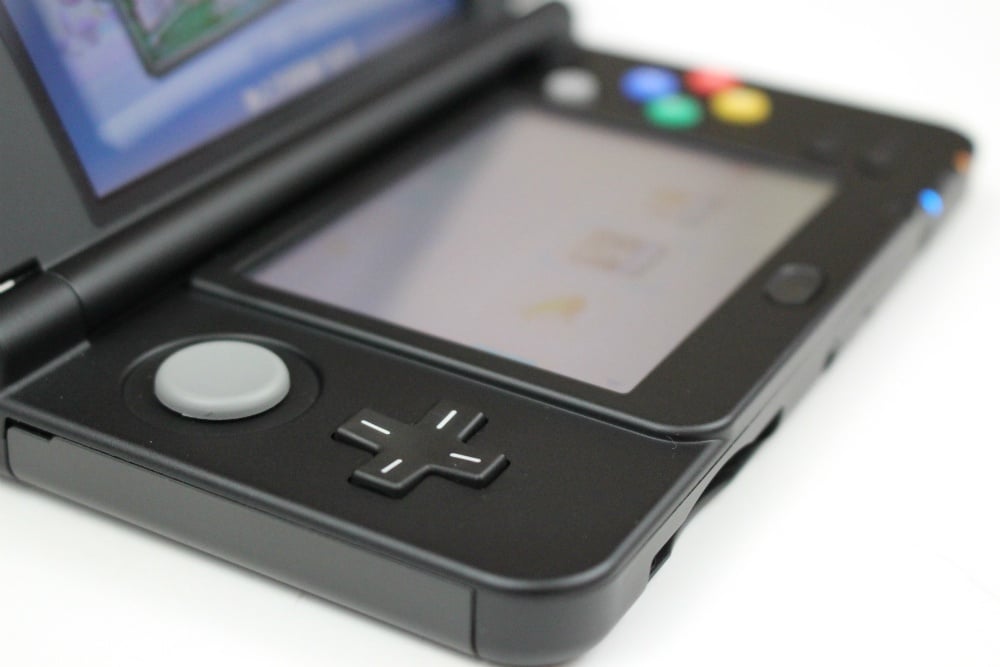
The 3DS might be on life support, but there are still a handful of quality titles on the way to the system. One of these is Persona Q2: New Cinema Labyrinth, due out early next month, on 4th June.
To help ensure the experience on this system continues to be as stable as possible, Nintendo has released a new firmware update. It’s the first one for 2019, following on from a previous update at the end of last year. Here’s what you can expect in Version 11.10.0-43:
Further improvements to overall system stability and other minor adjustments have been made to enhance the user experience
Are you still playing your 3DS on a regular basis? Have you downloaded this update? Sound off in the comments below.
Posted by: xSicKxBot - 05-28-2019, 05:51 PM - Forum: Windows
- No Replies
AI takes the pain out of car insurance in India
India’s drivers benefit as artificial intelligence transforms the business of policies and claims
Auto insurance is becoming a lot easier and quicker – with the help of artificial intelligence and smartphones.
India is one of the world’s largest and fastest-growing auto insurance markets – but until now, the sector has had to rely on traditional ways to renew lapsed policies or make repair claims. Both services have required inspectors to physically look over vehicles and make damage assessments.
In a country with more than 230 million vehicles and 1200 auto accidents every day, scheduling inspections and getting approvals can keep cars and policyholders off the road for days or longer. A more convenient way was needed.
To ease the pain, ICICI Lombard has partnered with Microsoft to develop India’s first AI-enabled car inspection feature in its mobile app, “Insure.” The app allows customers to buy or renew policies anytime, anywhere. And, soon it will also simplify the process of making a repair claim.
In case of lapsed policy instead of a physical inspection, customers can simply take images of their vehicle and upload them with Insure. The app then uses artificial intelligence (AI) and machine learning to divide the images into frames and identify the various parts of the car to look for damage. In most cases the AI module can make a judgement very quickly, reducing the time from days to mere minutes.
Proving it’s possible
“We had been envisioning something like this for a long period of time,” says Girish Nayak, Chief Customer Service, Operations & Technology, for ICICI Lombard. “We were not really successful working with some start-ups. Therefore, we approached Microsoft to see if we could do this together.”
The two companies started collaborating where software engineers from both companies met and worked on a prototype.
“The prototype gave us confidence that something like this is possible,” said Nayak.
Using the Azure platform, computer vision, and machine learning (ML) technologies, they refined the process until the accuracy was fit for purpose.
The feature was launched in December of 2018 and has worked as expected. Nayak said, “real time renewals of expired policies makes the customer experience consistent and convenient.”
Real time renewals of expired policies makes the customer experience consistent and convenient.
With the app, insurance personnel are more productive as they no longer have to be physically present to inspect vehicles and can focus on less repetitive tasks. With improved efficiency, customer satisfaction has also increased considerably.
According to a new study by IDC Asia/Pacific and Microsoft, “Future Ready Business: Assessing Asia’s Growth Potential Through AI”, organizations in India that have adopted AI have seen tangible improvements of 22% better customer engagement and 21% more productive employees. Further improvements of at least 2.1 times are forecasted over a three-year horizon.
Expanding AI in auto insurance
Renewing policies online has proven to be successful — the company is currently processing between 150 to 200 cars per day — but as Nayak pointed out, using AI for renewals is just a “stepping stone” for the company. AI is a major thrust for the company, and they are very near to using AI to process repair claims as well. The solution is currently in beta stage and is expected to be launched in 2019.
AI will soon assess images of damage uploaded by the customer and provide an estimated repair cost within seconds
When a customer’s vehicle is damaged in an accident, they must surrender it to a service center so a service engineer can assess the damage and provide an estimate for repair. Then, an insurance personnel examines both the car and the estimate, and either approves, rejects or modifies individual parts of the estimate.
Compare that to the new, AI-driven process; a customer will use the app to take photographs of car’s damage. Once uploaded, the system’s deep learning model and computer vision identifies in real time all the parts of the vehicle, like roof, window or bumper and then spots all the different types of damage – be it scratch, dent, crack, and so on. Most importantly, the app replies with an estimated cost quickly using historical data.
With AI, the company aims to complete simple claims in days, instead of weeks when the module is launched towards the end of 2019.
Improving customer experience and business outcomes
The advantages to the customer are clear. They can file claims whenever and wherever is convenient and will receive estimates much faster than before.
The app is also valuable to ICICI Lombard from a business perspective. Automating the process reduces the possibility of inaccurate assessments due to human error. And, increased efficiency and productivity improves the bottom line.
AI is expected to free up insurance inspectors’ time to focus on complex claims like head on collisions and spend quality time with vehicle owners to help reduce their stress
The role of the human insurance inspectors is changing as well. AI is good at quickly handing the routine claims. That allows insurance inspectors to attend to more complex claims where their experience really matters, like those that involve lot of interior damage, for instance.
Nayak said inspectors are being trained in new skills. “With AI coming in, it frees up their time to prioritize complex cases and personal customer interaction, as well as providing career paths in learning new techniques as well.”
With the launch of the app, the company aims to substantially increase employee productivity and customer satisfaction.
As AI remakes their auto insurance business, ICICI Lombard is keen to employ the technology wherever it aligns with their vision of increasing efficiency and improving customer experience. Currently, they are working towards launching similar AI-powered apps for their health and marine insurance customers.
Inspired by BioShock and System Shock 2, Void Bastards is a new strategy-shooter that will test your wits as well as exercise your aim. Can you lead the misfit prisoners of the Void Ark through the derelict spaceships and myriad dangers of the Sargasso Nebula?
Blog: Welcome to rabbit hell! Reliable AI locomotion with TDD
Evaluation: Is Test-Driven Development Right for You?
As developers it can be tempting to put a little too much work into testing scenes the player will never appreciate; I won’t deny that I had a lot of fun building Rabbit Hell. Internal features like this can be a big waste of time and jeopardize milestones, so we need to take a hard look at when & whether a given feature warrants a unit testing apparatus. Below I’ve identified a few criteria that, in my eyes, justified TDD for ElemenTerra’s creature locomotion.
1. Are your test cases time-consuming to produce manually?
Before spending time on automated testing, we need to check whether we can evaluate a feature with the regular game controls. If you want to make sure your keys unlock doors, spawn a key and unlock a door with it! Creating unit tests for this feature would be an irresponsible time sink because it takes only seconds to test manually.
2. Are your test cases difficult to produce manually?
Automated unit tests become justified when there are known, difficult-to-produce edge cases. Rabbit Hell course #7 tests creatures stepping off ledges, a circumstance their AI works very hard to avoid. Course #12 simulates the navmesh desyncing from the floor geometry, which only occurs during extreme lag. Such situations can be difficult or impossible to contrive with the game controls, while our tests produce them effortlessly.
3. Do you know the desired results won’t change?
Game design is all about iteration, and the goals of individual features may change as your game is redesigned. Even small changes in intent can invalidate the metrics by which you evaluate your features, and thus any unit tests along with them. While the creatures’ eating, sleeping, and player interaction behaviors underwent several redesigns, we always needed them to get from point A to point B. Thus, the locomotion code and its unit tests remained valid throughout development.
4. Are regressions likely to go unnoticed?
Maybe you’ve been in this situation: you’re wrapping up one of your final tasks before shipping a game, and suddenly you find a game-breaking bug in a feature you finished ages ago. Games are giant interconnected systems, and so it’s only natural that adding New Feature B might break Old Feature A.
This isn’t so bad when the broken feature is ubiquitous, like the player’s ability to jump. If your core mechanic breaks, you’re bound to notice immediately. But the bug might slip under the radar if the broken feature is less frequently observed, like what happens when the player steps into a narrow crevice. Bugs detected in late development can jeopardize your schedule, and post-launch they hurt your player experience. Thus, unit tests can be great tools for maintaining edge case behavior, but are often redundant for functionality which already gets a lot of incidental testing.
5. What’s the the worst-case cost of having tests, and what’s the worst-case cost of not having tests?
Setting up a testing apparatus is a form of risk management. Let’s imagine that you’re deciding whether to buy insurance for a vehicle. The three questions you need to answer are:
How much do the monthly premiums cost?
How likely is it the vehicle will be damaged?
How expensive would the worst-case scenario be if you were uninsured?
For TDD we can imagine the monthly premiums as the production cost of maintaining our unit tests, the likelihood of vehicle damage as the likelihood of our feature breaking, and the cost of fully replacing the vehicle as the worst-case scenario for a regression bug.
If a feature’s tests take a lot of time to create, the feature is uncomplicated and not likely to be changed, or it would be manageable if it broke in late development, then unit tests may be more trouble than they’re worth. If the tests are simple to put together, the feature is volatile and interconnected, or its bugs would cost a lot of production time, then tests can help keep us on schedule.
The limits of automation
Unit tests can be a great supplement to catching and reducing bugs, but I want to emphasize that they don’t replace the need for professional quality assurance on large-scale games. Proper QA is an art that requires creativity, subjective judgment, and excellent technical communication, which means that you need skilled and well-taken-care-of humans!
Testing the Waters
While not the right choice for every circumstance, Test-Driven Development is a powerful tool that can and should be applied to more game development contexts. Let’s expand the horizons of what and how we test!
If you have opinions on the points made in this article or have stories of using TDD in your own games, please shoot us an email. If you liked what you read and are looking for a skilled group of developers to build, improve, or help finish your game, you can get in touch with Freeform Labs here. Until next time!
Freeform Labs, Inc. is a games and software development team with a commitment to providing the highest quality of digital craftsmanship, and a mission to inspire learning and creativity through cutting-edge experience design. The team is centrally located in Los Angeles, and maintains a network of trusted partners across the globe. With specialized experience in VR, AR, Game AI, and more, Freeform Labs provides an array of services including consultation, work-for-hire software development, and on-site “ship it” assistance. The company’s portfolio includes work for Microsoft, Disney, and Starbreeze – as well as award-winning original content.