Switch Version Of Warhammer 40K: Deathwatch Gets Axed
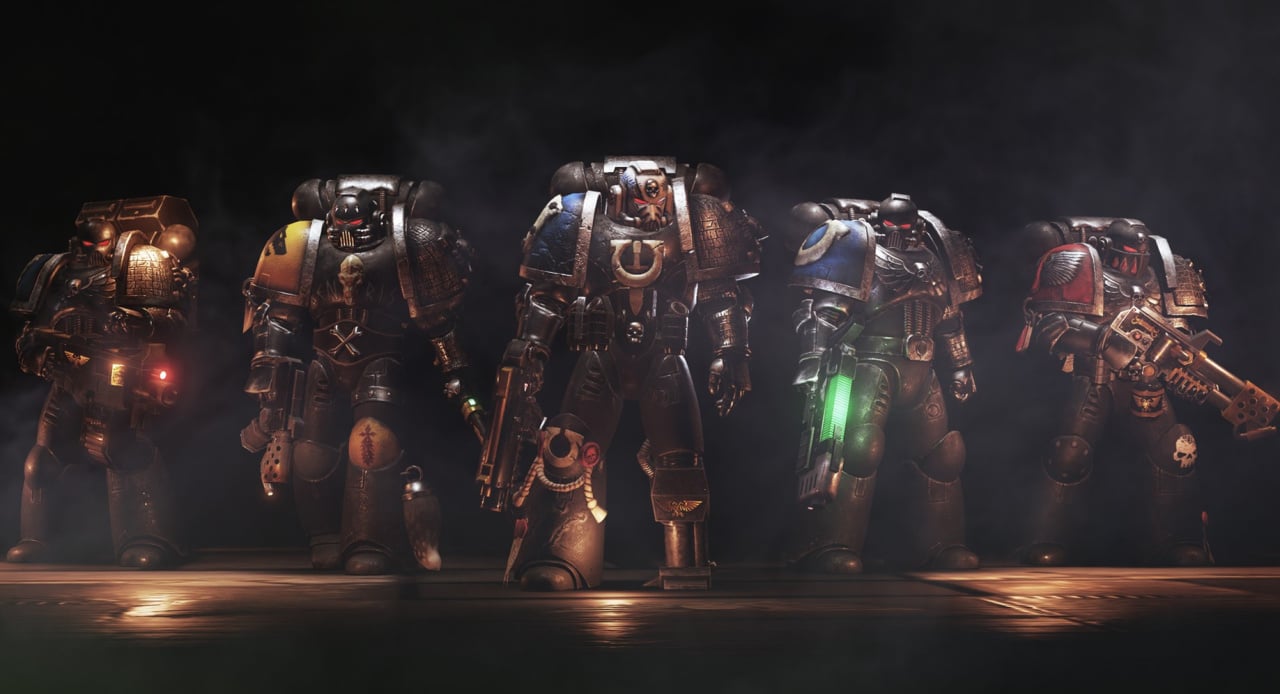
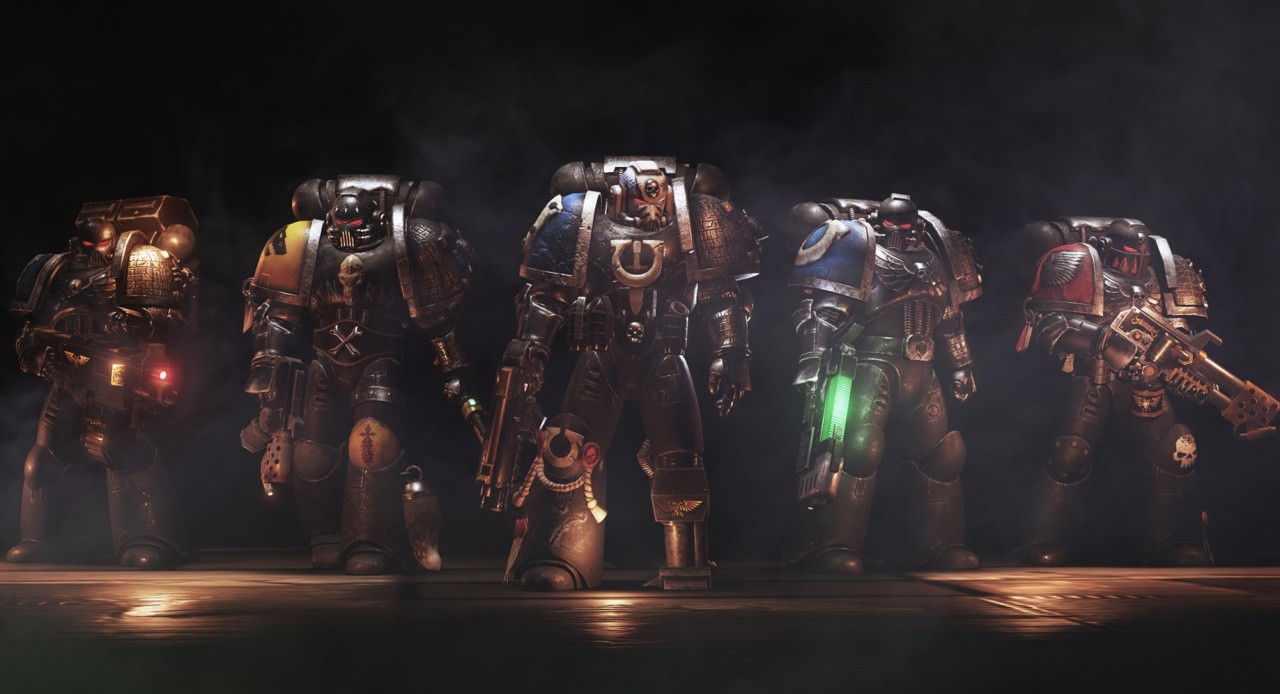
In April last year, a listing for Warhammer 40,000: Deathwatch Enhanced Edition on Nintendo Switch was discovered. At the time, Funbox had already released the turn-based strategy title on multiple other platforms.
If you happen to be a fan of 40K and were looking forward to playing this one on the go, unfortunately, it has been axed. JP’s Switchmania broke the news after receiving an email the game had been cancelled.
Not long after this, the UK publisher Funbox Media confirmed it:
“Yes, we’re afraid so. It’s out of our control I’m afraid. We really wanted to release the game, but higher powers made the decision.”
We’ve contacted Funbox ourselves, so keep an eye out for a more official statement soon.
Critical Patch For The Swords of Ditto: Mormo’s Curse Delayed Until Next Week
Right now in Japan, it’s Golden Week. If you’re wondering what this is, it’s a period between the end of April and beginning of May where multiple national holidays take place. This year it runs for 10-days as the new emperor is crowned.
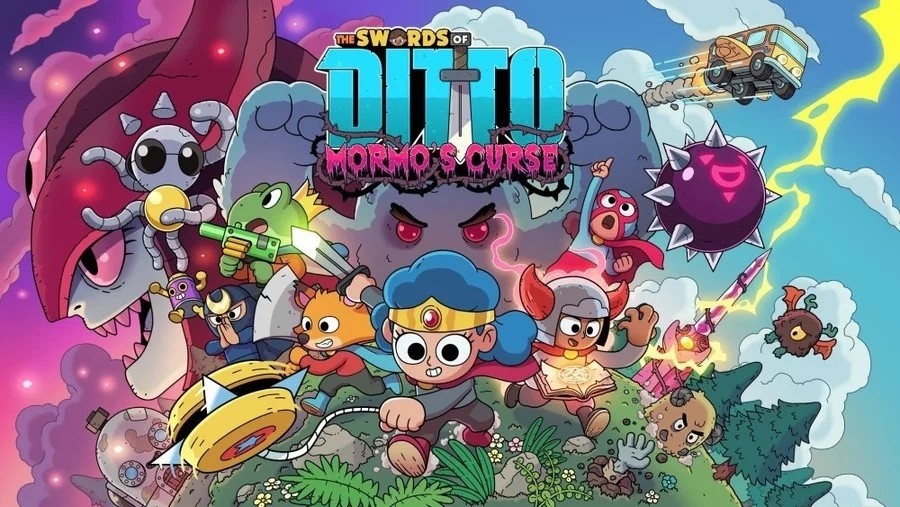
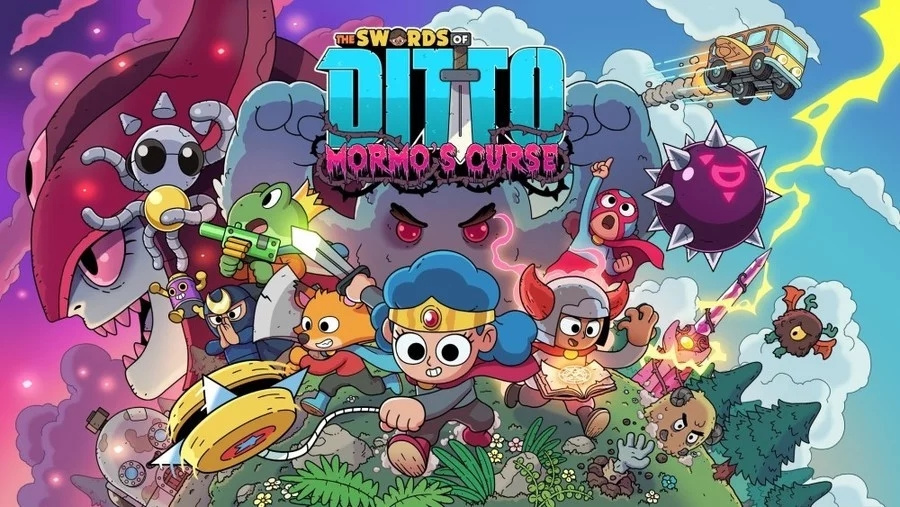
As with any public holiday, the business world typically shuts down. This has created a problem for the developer onebitbeyond as its “critical patch” for The Swords of Ditto: Mormo’s Curse has not yet been approved by Nintendo. Here’s the full explanation from the game’s publisher Devolver Digital via Twitter:
Technical note on Mormo’s Curse on Switch – we expected a critical patch to be applied to Switch at launch. Due to Golden Week in Japan, the patch is delayed a week so the game has some issues with player death.
The delay is expected to be “around” a week. In the meantime, you’ll just have to deal with “some issues” relating to in-game character deaths. To view the pending changes, click here. And if you haven’t already, be sure to check out our review.
Did you download this one on release? Have you encountered any issues yourself? Tell us below.
Nothing lasts forever. When it comes to the hardware in your PC, most of it can easily be replaced. There is, however, one special-case hardware component in your PC that is not as easy to replace as the rest — your hard disk drive.
Drive Mirroring
Your hard drive stores your personal data. Some of your data can be backed up automatically by scheduled backup jobs. But those jobs scan the files to be backed up for changes and trying to scan an entire drive would be very resource intensive. Also, anything that you’ve changed since your last backup will be lost if your drive fails. Drive mirroring is a better way to maintain a secondary copy of your entire hard drive. With drive mirroring, a secondary copy of all the data on your hard drive is maintained in real time.
An added benefit of live mirroring your hard drive to a secondary hard drive is that it can increase your computer’s performance. Because disk I/O is one of your computer’s main performance bottlenecks, the performance improvement can be quite significant.
Note that a mirror is not a backup. It only protects your data from being lost if one of your physical drives fail. Types of failures that drive mirroring, by itself, does not protect against include:
Simultaneous Failure of all Mirrored Drives (highly unlikely)
Some of the above can be addressed by other file system features that can be used in conjunction with drive mirroring. File system features that address the above types of failures include:
This guide will demonstrate one method of mirroring your system drive using the Multiple Disk and Device Administration (mdadm) toolset. Just for fun, this guide will show how to do the conversion without using any extra boot media (CDs, USB drives, etc). For more about the concepts and terminology related to the multiple device driver, you can skim the md man page:
$ man md
The Procedure
Use sgdisk to (re)partition the extra drive that you have added to your computer:
– If the drive that you will be using for the second half of the mirror in step 12 is smaller than this drive, then you will need to adjust down the size of the last partition so that the total size of all the partitions is not greater than the size of your second drive. – A few of the commands in this guide are prefixed with a test for the existence of an efivars directory. This is necessary because those commands are slightly different depending on whether your computer is BIOS-based or UEFI-based.
Use mdadm to create RAID devices that use the new partitions to store their data:
# cat << END > /etc/mdadm.conf

MAILADDR root

AUTO +all

DEVICE partitions

END
# mdadm --detail --scan >> /etc/mdadm.conf
– The missing parameter tells mdadm to create an array with a missing member. You will add the other half of the mirror in step 14. – You should configure sendmail so you will be notified if a drive fails. – You can configure Evolution to monitor a local mail spool.
– Dracut will include the /etc/mdadm.conf file you created in the previous section in your initramfs unless you build your initramfs with the hostonly option set to no. If you build your initramfs with the hostonly option set to no, then you should either manually include the /etc/mdadm.conf file, manually specify the UUID’s of the RAID arrays to assemble at boot time with the rd.md.uuid kernel parameter, or specify the rd.auto kernel parameter to have all RAID arrays automatically assembled and started at boot time. This guide will demonstrate the rd.auto option since it is the most generic.
– The new Boot Loader Specification states “if the OS is installed on a disk with GPT disk label, and no ESP partition exists yet, a new suitably sized (let’s say 500MB) ESP should be created and should be used as $BOOT” and “$BOOT must be a VFAT (16 or 32) file system”.
Reboot and set the rd.auto, rd.break and single kernel parameters:
# reboot
– You may need to set your root password before rebooting so that you can get into single-user mode in step 7. – See “Making Temporary Changes to a GRUB 2 Menu” for directions on how to set kernel parameters on compters that use the GRUB 2 boot loader.
– The dotglob flag is set for this bash session so that the wildcard character will match hidden files. – Files are removed from the boot directory because they will be copied to a separate partition in the next step. – This copy operation is being done from the dracut shell to insure that no processes are accessing the files while they are being copied.
Use single-user mode to copy the non-root file systems:
– It is OK to run these commands in the dracut shell shown in the previous section instead of doing it from single-user mode. I’ve demonstrated using single-user mode to avoid having to explain how to mount the non-root partitions from the dracut shell. – The parameters being past to the cp command for the boot directory are a little different because the VFAT file system doesn’t support symbolic links or Unix-style file permissions. – In rare cases, the rd.auto parameter is known to cause LVM to fail to assemble due to a race condition. If you see errors about your swap or home partition failing to mount when entering single-user mode, simply try again by repeating step 5 but omiting the rd.break paramenter so that you will go directly to single-user mode.
– You can re-enable selinux after this procedure is complete. But you will have to relabel your file system first.
Install the boot loader on the new drive:
# sed -i '/^GRUB_DISABLE_OS_PROBER=.*/d' /newroot/etc/default/grub

# echo "GRUB_DISABLE_OS_PROBER=true" >> /newroot/etc/default/grub

# MY_DISK_1=$(mdadm --detail /dev/md/boot | grep active | grep -m 1 -o "/dev/sd.")

# for i in dev dev/pts proc sys run; do mount -o bind /$i /newroot/$i; done

# chroot /newroot env MY_DISK_1=$MY_DISK_1 bash --login

# test -d /sys/firmware/efi/efivars || MY_GRUB_DIR=/boot/grub2

# test -d /sys/firmware/efi/efivars && MY_GRUB_DIR=$(find /boot/efi -type d -name 'fedora' -print -quit)

# test -e /usr/sbin/grub2-switch-to-blscfg && grub2-switch-to-blscfg --grub-directory=$MY_GRUB_DIR

# grub2-mkconfig -o $MY_GRUB_DIR/grub.cfg \;

# test -d /sys/firmware/efi/efivars && test /boot/grub2/grubenv -nt $MY_GRUB_DIR/grubenv && cp /boot/grub2/grubenv $MY_GRUB_DIR/grubenv

# test -d /sys/firmware/efi/efivars || grub2-install "$MY_DISK_1"

# logout

# for i in run sys proc dev/pts dev; do umount /newroot/$i; done

# test -d /sys/firmware/efi/efivars && efibootmgr -c -d "$MY_DISK_1" -p 1 -l "$(find /newroot/boot -name shimx64.efi -printf '/%P\n' -quit | sed 's!/!\\!g')" -L "Fedora RAID Disk 1"
– The grub2-switch-to-blscfg command is optional. It is only supported on Fedora 29+. – The cp command above should not be necessary, but there appears to be a bug in the current version of grub which causes it to write to $BOOT/grub2/grubenv instead of $BOOT/efi/fedora/grubenv on UEFI systems. – You can use the following command to verify the contents of the grub.cfg file right after running the grub2-mkconfig command above:
# sed -n '/BEGIN .*10_linux/,/END .*10_linux/ p' $MY_GRUB_DIR/grub.cfg
– You should see references to mdraid and mduuid in the output from the above command if the RAID array was detected properly.
Boot off of the new drive:
# reboot
– How to select the new drive is system-dependent. It usually requires pressing one of the F12, F10, Esc or Del keys when you hear the System OK BIOS beep code. – On UEFI systems the boot loader on the new drive should be labeled “Fedora RAID Disk 1”.
Remove all the volume groups and partitions from your old drive:
– WARNING: You want to make certain that everything is working properly on your new drive before you do this. A good way to verify that your old drive is no longer being used is to try booting your computer once without the old drive connected. – You can add another new drive to your computer instead of erasing your old one if you prefer.
Create new partitions on your old drive to match the ones on your new drive:
– It is important that the partitions match in size and type. I prefer to use the parted command to display the partition table because it supports setting the display unit:
# parted /dev/sda unit MiB print

# parted /dev/sdb unit MiB print
Use mdadm to add the new partitions to the RAID devices:
# test -d /sys/firmware/efi/efivars || grub2-install "$MY_DISK_2"

# test -d /sys/firmware/efi/efivars && efibootmgr -c -d "$MY_DISK_2" -p 1 -l "$(find /boot -name shimx64.efi -printf "/%P\n" -quit | sed 's!/!\\!g')" -L "Fedora RAID Disk 2"
Use mdadm to test that email notifications are working:
# mdadm --monitor --scan --oneshot --test
As soon as your drives have finished synchronizing, you should be able to select either drive when restarting your computer and you will receive the same live-mirrored operating system. If either drive fails, mdmonitor will send an email notification. Recovering from a drive failure is now simply a matter of swapping out the bad drive with a new one and running a few sgdisk and mdadm commands to re-create the mirrors (steps 13 through 15). You will no longer have to worry about losing any data if a drive fails!
Video Demonstrations
Converting a UEFI PC to RAID1
Converting a BIOS PC to RAID1
TIP: Set the the quality to 720p on the above videos for best viewing.
Game Of Thrones: How Cleganebowl Could Continue The Story Of The Lord Of Light
Game of Thrones' "Long Night" is over, for better or worse, and with the White Walkers defeated, what remains is what's always been there: the battle for the coveted Iron Throne.
But before Jon or Dany (or Jaime or Tyrion or Arya or basically every other character on the show) can shove a knife through Cersei's stupid face and plant a more deserving butt in that seat, Game of Thrones has to do something it's been building toward for many years: Cleganebowl, the battle between the Hound, Sandor Clegane, and the Mountain, Gregor Clegane.
Why does this matter? We'll get to that. But there's more than just the history of Game of Thrones to look at; the show's most recent events, including the Hound's visions in the flames and adventures with Thoros of Myr and Beric Dondarrion, may give us some new insight into how Cleganebowl might play out.
Let's get that context out of the way first, though.
What Is Cleganebowl?
"Cleganebowl" is the name Game of Thrones fans (and fans of the book series A Song of Ice and Fire before them) have given to the theorized clash between the Hound, Sandor Clegane, and his brother, the Mountain, Gregor Clegane.
This theory was born long ago for those who read the novels, and the reasoning behind it is the same in the show as it was in the books. But since the last book came out almost a decade ago and as far as the books are concerned, the Hound has retired to a religious commune and is out of the running, the most egregious and tantalizing foreshadowing for this fight has taken place in the show's recent seasons.
Admittedly, it's a pretty simple story: As Sandor has discussed at various points throughout both versions of Game of Thrones, his brother Gregor is a total dick. When they were kids, Gregor bullied Sandor incessantly, even burning the Hound's face in a hot brazier as they fought over a toy. That gave Sandor the distinctive scars on his face, an all-encompassing cynicism for the world in general, the fear of fire that has influenced the Hound's participation in at least two battles, and a burning hatred for his brother that's lasted their entire lives.
For his part, Gregor "The Mountain" Clegane has lumbered here and there throughout the books and the show, wreaking havoc and despair everywhere he went. He brutalized a horse at the tourney in Season 1, and he terrorized Arya during Season 2. In Season 4, he smashed Oberyn Martell's face even while succumbing to the Red Viper's deadly poison, and was later revived as an apparently unthinking, mute zombie to lead Cersei's personal Queensguard. He also has a history of being super terrible in the past; When Daenerys's father, the Mad King Aerys Targaryen, was overthrown, the Mountain reportedly raped and murdered Elia Martel, the wife of Prince Rhaegar Targaryen, and killed her children--including an infant. Just about everyone has a score to settle with the guy.
When Sandor and Gregor finally came face to face again for the first time since Season 1, it was in the show's Season 7 finale, during The Fateful Meeting of Named Characters in the dragon pit outside King's Landing. "Remember me? Yeah, you do," the Hound told his brother. "You're even uglier than I am now. What did they do to you? Doesn't matter. That's not how it ends for you, brother. You know who's coming for you. You've always known."
In other words, Sandor doesn't give a flying chicken whether his brother is a brainless zombie or there's still a glimmer of the old rotten son-of-a-gun in there somewhere behind those purple eyes. The Hound is going to kill the Mountain in the end, and we couldn't be more excited for their final throwdown.
How Could The Lord of Light, R'hllor, Fit In?
After Arya Stark casually slipped a dagger into the Night King's exposed belly fat like so many joking Reddit commenters and fandom s***-posters had accidentally correctly guessed she would over the years, a question arose: Is the story of R'hllor, the Lord of Light, the God of Flame and Shadow who the Red Priests worship, now finished?
Melisandre is dead, her mission to gently suggest that Arya do what Arya does complete. Beric is also dead, having protected Arya so she could reach said pep talk. Thoros died last season after getting mauled by a zombie bear, then being fine, then dying later for no reason. And the Red Priestess Kinvara, who you probably don't remember because she appeared in a single scene back in Meereen two seasons ago, might as well be dead, because there's no way she's ever appearing on this show again.
But R'hllor might have one follower left on the continent of Westeros: Sandor Clegane. With every other R'hllor-loving character dead, the Hound may be next to take up the Lord of Light's cause.
The narrative set-up is all there. The Hound witnessed Thoros bring Beric back to life many seasons ago (after being the one to land the killing blow, in fact), and seemed shaken. He saw visions in the fire that inspired his group of misfits to head north to the Edifice Formerly Known As The Wall, where they helped Jon on his extremely stupid mission to kidnap a zombie. He's been hanging around with these characters for seasons on end, and despite his projected cynicism, Sandor has seen the signs himself.
And there's plenty of thematic pay-off to be had in Sandor Clegane embracing the God of Fire. Fire is the tool his brother used to scar him for life, both physically and emotionally; fire is the source of Sandor's cynicism, and his greatest fear, producing a primal response in him that we've seen over and over, whether at the Battle of the Blackwater, his duel with Beric long ago, or the recent Battle of Winterfell. Fire is the Hound's greatest weakness, and overcoming that weakness could represent the growth of his character if he finally abandons his cynicism and finds inner calm.
Plus, Red Priests get to light their swords on fire. There's poetic justice in the idea of the Hound bashing his undead brother's big, stupid head in with a flaming blade, and more importantly--the reason I think the show may actually follow through on this one--it would look awesome.
There are three episodes left to go in Game of Thrones' final season, and more than anything else, Cleganebowl happening is just shy of certain. Here's hoping the show manages to do it in a way that has actual narrative and thematic pay-off, and looks cool too.
Posted by: xSicKxBot - 05-03-2019, 07:31 PM - Forum: Windows
- No Replies
Making AI adoption as simple as possible as it explodes in popularity
Just a few years ago, artificial intelligence was largely relegated to universities and research labs, a charming computer science concept with little use in mainstream business. Today, AI is being integrated into everything from your refrigerator to your favorite workout app.
Lance Olson, director of program management for applied AI at Microsoft. Photo by Microsoft.
“It’s really exciting, because there’s a new breakthrough every month, or every week,” said Lance Olson, director of program management for applied AI at Microsoft. “Increasingly, the conversations are switching from discussing the art of the possible to getting to the next level of implementation on a specific project.”
Still, many companies are struggling to achieve their AI goals, as the supply of data scientists and AI experts has failed to keep up with surging demand. Creating AI models is difficult work. And then comes a struggle to get them into production – and keep them running. Data ages, much more quickly than code, making models less accurate as the world changes around us.
At its 2019 Microsoft Build conference, the company says it’s focused on helping all developers – even those without an AI or data science background – use its tools and services to deliver the big benefits that more and more customers expect.
“AI and machine learning can turn developers into heroes, for their ability to deliver really personalized, super-immersive experiences to customers,” said Wisam Hirzalla, director of operational databases and Blockchain product marketing at Microsoft. “We want to make it easy for any company to use the technology.”
Simplified and automated machine learning
Toward that end, Microsoft is announcing new capabilities for its cloud-based Azure Machine Learning service, with a goal of enabling developers and data professionals of any skill level to build advanced machine learning models.
We can think of AI practitioners in three categories, according to Bharat Sandhu, director of artificial intelligence at Microsoft. First, we have developers and data scientists who like to write code. They want to build machine learning models using tools and processes they already know. For them, Azure Machine Learning offers a “code first model,” where they can use the development tools they like.
A second group, including business domain experts, may know a lot about data, but they don’t know much about machine learning or code. For those customers, Azure Machine Learning’s automated machine learning experience is a “no code” option, accessible without having to write any code.
“A third category of people, who are learning machine learning concepts, they want to make their own models, but they are not coders. This could be IT professionals, or folks with background in statistics or mathematics,” Sandhu said. “For those customers, we’re offering a drag-and-drop experience to make models visually.”
Sandhu noted that no matter which way the machine learning models are created, they all use the same back end, meaning all the models can easily be integrated together.
Bharat Sandhu, director of product marketing for Microsoft Azure, at Microsoft’s office in Bellevue, Washington. Photo by Dan DeLong for Microsoft.
Interoperability
Of course, developers and data scientists have a number of platforms to choose from when they build AI models. To make sure companies can adopt AI advances as quickly as possible, Microsoft says it’s important to overcome platform mismatches, which can delay the rollout of those models into production.
One way Microsoft promotes interoperability among the various AI frameworks is a standard called ONNX Runtime, or Open Neural Network Exchange. This joint effort with other tech companies creates deployment models that work across multiple platforms.
That frees up developers and data scientists to use whatever framework and hardware target is best for them. And it frees up the operational team to focus on deploying and getting results, instead of having to translate as they move from one to the other.
At Build, Microsoft is announcing support for ONNX integration with leading hardware accelerators.
The company also is announcing that it is now an active contributor to the MLflow project, an open source platform for managing the machine learning lifecycle.
Azure Cognitive Services updates
More than 1.3 million developers, many without specific AI or data science skills, currently use Azure Cognitive Services to build intelligent apps that can see, hear, speak, understand and even begin to reason.
At Build, Microsoft is announcing a new category of Azure Cognitive Services called Decision, which gives specific recommendations to help people make decisions. This new category includes Personalizer, which uses a branch of AI called reinforcement learning to help technology glean knowledge from its own experiences and then offer informed recommendations.
“We are able to take reinforcement learning and ship it in a way that’s accessible to developers and doesn’t require a data scientist,” Olson said. “That will be very impactful for customers.”
At Build, the company is announcing many other updates to Azure Cognitive Services, including Ink Recognizer, which can learn to read handwriting, Form Recognizer, which identifies forms, and other new conversation transcription capabilities and other speech, vision and language advances.
Mobile app maker Cheetah Mobile built its hand-held CM Translator using Azure Cognitive Services to develop a speech system that provides rapid, high quality translations. Photo by Cheetah Mobile.
Just getting started
To date, Microsoft’s customers have created almost 400,000 digital agents through its Azure bot service, and more than 3,000 come on line each week. Companies of all sizes are looking to AI to give them a competitive edge.
That includes Cheetah Mobile, a leading mobile app maker building AI-enhanced hardware, including the hand-held CM Translator. Rather than developing the entire speech system from scratch, the company used Azure Cognitive Services, leveraging its text-to-speech API to provide rapid, high quality translations.
MediaValet chief technology officer Jean Lozano. The digital asset management company relies on the security and privacy safeguards within Azure to reassure customers that the images it processes will be handled properly. Photo by MediaValet.
The development cost savings helped keep the device affordable, with no compromise in the natural speech flow.
Other companies say one of the chief benefits of using Azure data and AI tools is that they can take advantage of other attributes built into the tools. For example, the digital asset management company MediaValet relies on the security and privacy safeguards Azure provides to reassure customers that the images it processes will be handled properly.
“We’re not a big company, but we can actually play ball with big enterprise players, because we can leverage the information security and privacy attributes, the trust-ability of Azure,” said MediaValet chief technology officer Jean Lozano.
In the coming months and years, Microsoft expects more and more customers to start using AI, both because they see the business benefits and because the tools are more accessible.
“AI opens up so many possibilities. And the limits are very few, generally limited only by your imagination,” Olson said. “It doesn’t need to be overwhelming for people. We are getting to the point where we can now make AI accessible to a much broader set of customers.”
Assume the role of a bartender at VA-11 Hall-A, affectionately nicknamed ?Valhalla.? Although it is just a small bar in downtown Glitch City, it attracts the most fascinating people this side of dystopia. Keep your clients lubricated and you will be made privy to the most interesting stories.
New Trailer For Kotodama: The 7 Mysteries Of Fujisawa Reveals The Key Cast
A new trailer for the investigative visual novel Kotodama: The 7 Mysteries of Fujisawa has been released and it introduces you to the students of Fujisawa Academy who you’ll be getting to know as you work to uncover the mysteries of the title.
By confronting your classmates after discovering their secrets, Kotodama duels will apparently enable you to ‘literally strip away the lies and uncover the truth’. We think publisher PQube has confused the word ‘lies’ with ‘clothes’, and ‘truth’ with…, well… Ahem. Moving on!
The official blurb gives a run down of the eight students which we shall reproduce for you now:
Namani Kagura A real bundle of energy, endlessly optimistic and a real chatterbox. She’s the first friend you make at the Academy and is super-eager to give you the grand tour of the campus. She’s obsessed with ‘The Curse of Mikoto’.
Honoka Ichinose Super shy and timid, she’s a quiet girl that’s universally well liked. Honoka is a real animal lover, and likes nothing more than getting close to nature, but here’s the thing – Animals really don’t seem to love her back.
Shuji Toyama Fujisawa Academy’s track and field ace. He’s the most popular guy in school – so much so, he even has his own fan club. A decent and level headed guy, Shuji’s times have been slipping recently and these days he seems a little distracted…
Yukino Tsubaki Considered the spoilt rich kid by pretty much everyone at the Academy. She’s hard-nosed and frosty even at the best of times. Quick to temper and not one to suffer fools gladly – she also has a pretty big grudge against Nanami Kagura…
Wakaba Asagiri President of the Occult Research Club, or ORC, for short. Wakaba is smart, funny and responsible. There are a number of unsolved mysteries at the Academy and she’s made it her goal to uncover the truth – with your help.
Kujo Satsuki A stickler for the rules, and hands-down the smartest student at the Academy. He’s a pretty no-nonsense guy and a great source of information about the academy and its secrets – one of which he may just be a little bit too close to.
Chinatsu Hachisuka Always on patrol around the Academy, Chinatsu likes nothing more than letting students know they’ve stepped out of line. Bossy doesn’t even cover it – but is she really so perfect herself? Seems like she’s overcompensating for something…
Mikoto Sasaki Before Kujo Satsuki, Mikoto was Fujisawa’s brightest star. An incredible student and athlete, she was the real deal – that is, before she killed herself. Loved by everyone, her death now haunts the academy as the mysterious ‘Curse of Mikoto’.
Pre-orders are now open on the European eShop, with US pre-orders coming in two weeks. Included with the physical edition are five exclusive art cards and some sticker sheets with chibi versions of the eight characters.
What kinds of secrets could these college kids and the academy itself be hiding, do you suppose? Are you tempted to pre-order Kotodama? Let us know below.
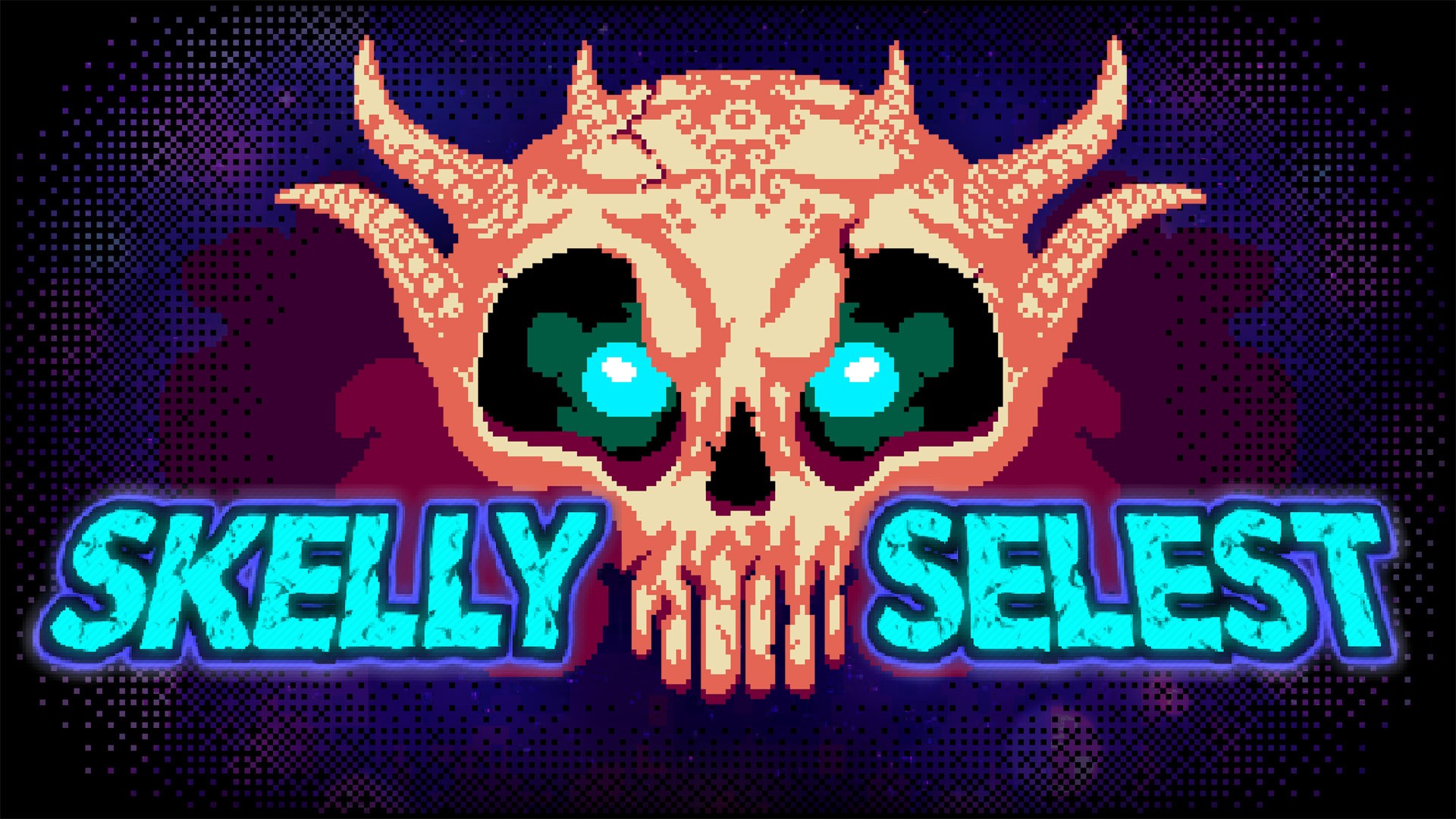
Skelly Selest Brings Fast-Paced Arena Battling To Switch This Month
Indie publisher Digerati and developer Caiysware have announced that Skelly Selest is headed to Nintendo Switch later this month.
The game has you taking on procedurally-generated gauntlets of hellspawn and bosses, all in the name of defeating the horrors that lurk in the depths of Hell. There’s a focus on highscore chasing here, with players taking on relentless waves of enemies, but there’s plenty more to get stuck into as well.
We have quick blurb and feature list for you below.
Prophecy foretells that one day Hell shall runneth over and the evil dead will spill onto thy Earth. Only the Selestial Order can halt the depraved Hellion tide. Skelly Selest is a score-attack slash dash run ‘n’ gun-athon that places players in the skeletal shoes of a Heavenly Keeper.
Key features – Fight furious battles across several modes, including a roguelite dungeon crawler, endless arena, Boss Rush, challenging Penitence Trials, and even a strategic collectable card game – Visit the Bone Plains, Flesh Gardens, and other charming locations across a vibrant pixel-art hellscape Make acquaintances with monstrous enemies and bosses – Wield blessed items, weapons, and armor to survive – Rescue a variety of unlockable character classes and spiffy hats
Skelly Selest will launch on Switch on 24th May, so make sure to keep an eye out in the coming weeks if you’re interested.
What do you think? Will you be keeping tabs on it? Let us know in the usual place.
Video: Digital Foundry Takes A Technical Look At Zelda And Mario Odyssey In VR
When we first heard about the possibility of reliving both The Legend of Zelda: Breath of the Wild and Super Mario Odyssey – two of our favourite Switch games – in VR, we were incredibly excited. Nintendo’s latest Labo kit has made it all possible, and for the price, the kit itself is pretty darn good, but Mario and Zelda in VR didn’t turn out quite as well as we’d hoped.
Mario’s first VR experience isn’t actually too bad at all, even if we wouldn’t exactly call it an essential one, but Breath of the Wild’s VR upgrade had us feeling physically sick. The likely reasoning for this was always down to the fact that the game can’t handle the necessary frame rate and resolution to run smoothly in VR, but tech wizards Digital Foundry have now explored those very statistics to see just how well (or not) it really performs.
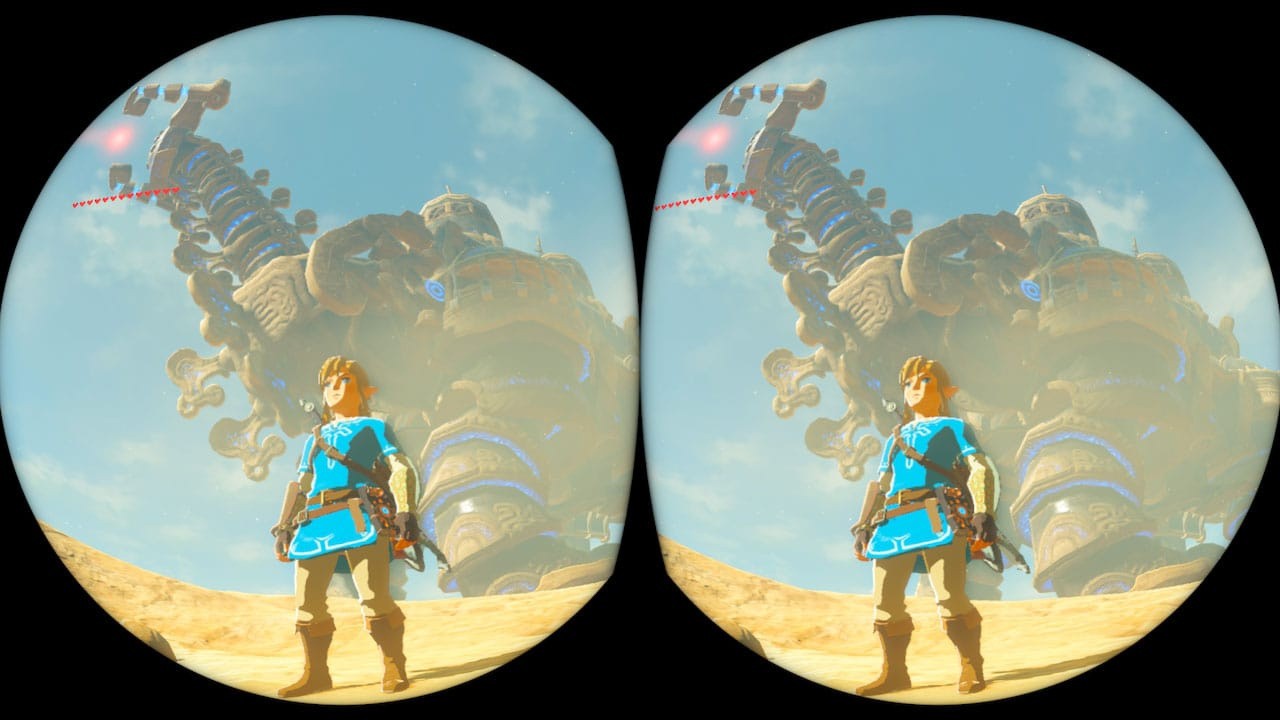
The compromises of Nintendo’s budget VR setup are pretty clear right from the off, and the boost in performance needed to run Zelda’s scenes twice (once for each eye) takes the base game’s usual 30 frames per second down to somewhere between 20 and 30fps, occasionally jumping around within that range and causing motion sickness issues.
The Switch’s native 720p display also causes some problems, especially when – again – Zelda’s VR version takes a bigger hit. Digital Foundry reports that the area directly in front of your eyes is being displayed at around 480p with resolution increasing along the periphery. You can see the full rundown for yourself via the video below.
How have you found your experiences with Mario and Zelda in VR? Have you had any issues, or have you enjoyed your time playing them? Let us know in the comments below.
Fedora 30 Workstation is the latest groundbreaking release of our free, leading-edge operating system. You can download it from the official website here right now. There are several new and noteworthy changes in Fedora Workstation. Read more details below.
GNOME 3.32
Fedora 30 Workstation includes the latest release of this simple, beautiful desktop environment for users of all types. There are numerous improvements throughout GNOME 3.32, including:
A refreshed visual style with buttons and switches that are easier to identify and use
Completely refreshed icons for applications
Consistent user icons across the desktop
Snappier performance thanks to fixes and enhancements in the core GNOME libraries
An Applications panel that controls permissions, to make use of Flatpak apps easier
…and much more!
Do you want the full details of everything in GNOME 3.32? Visit the release notes for even more community provided goodness.
Silverblue
You can also try Fedora Silverblue — it’s all the features of Workstation but combined with the rpm-ostree features of Fedora Atomic. Worry-free upgrades (with backouts) are just one of the benefits of this technology. You can also install your favorite Flatpak or RPM packaged apps on top.
Silverblue continues to develop now and in future releases. Learn how you can contribute by visiting the Silverblue team’s website.