More Tantalising Polymega Details Emerge From GDC 2019
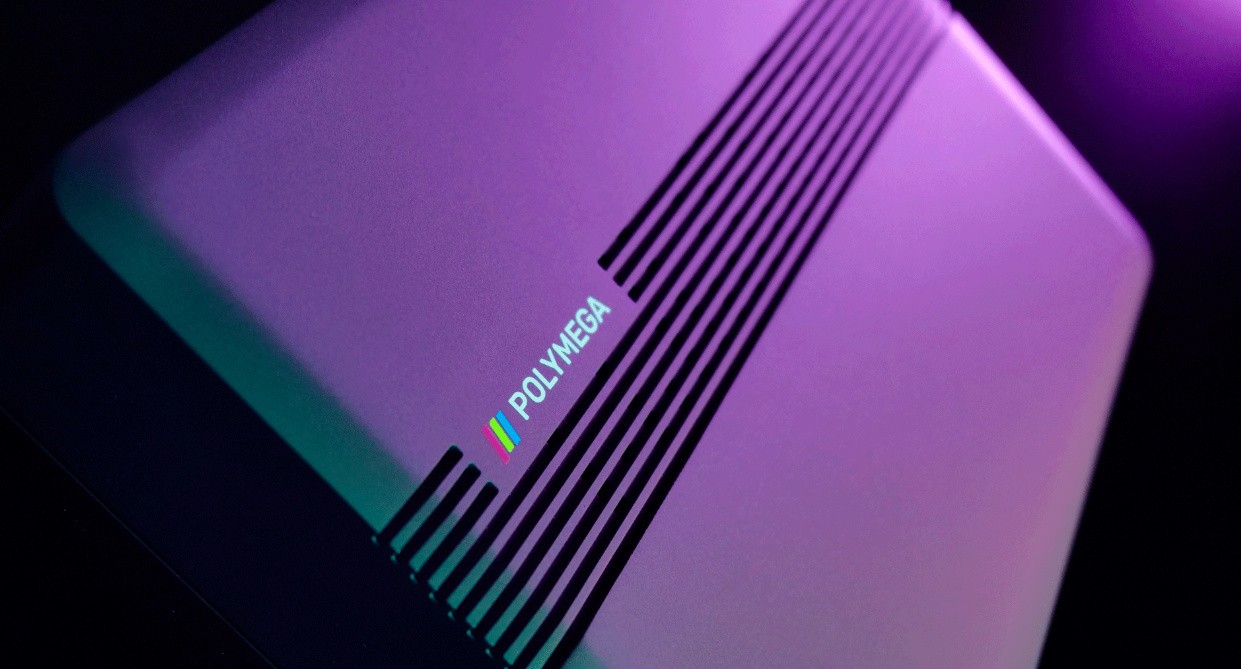
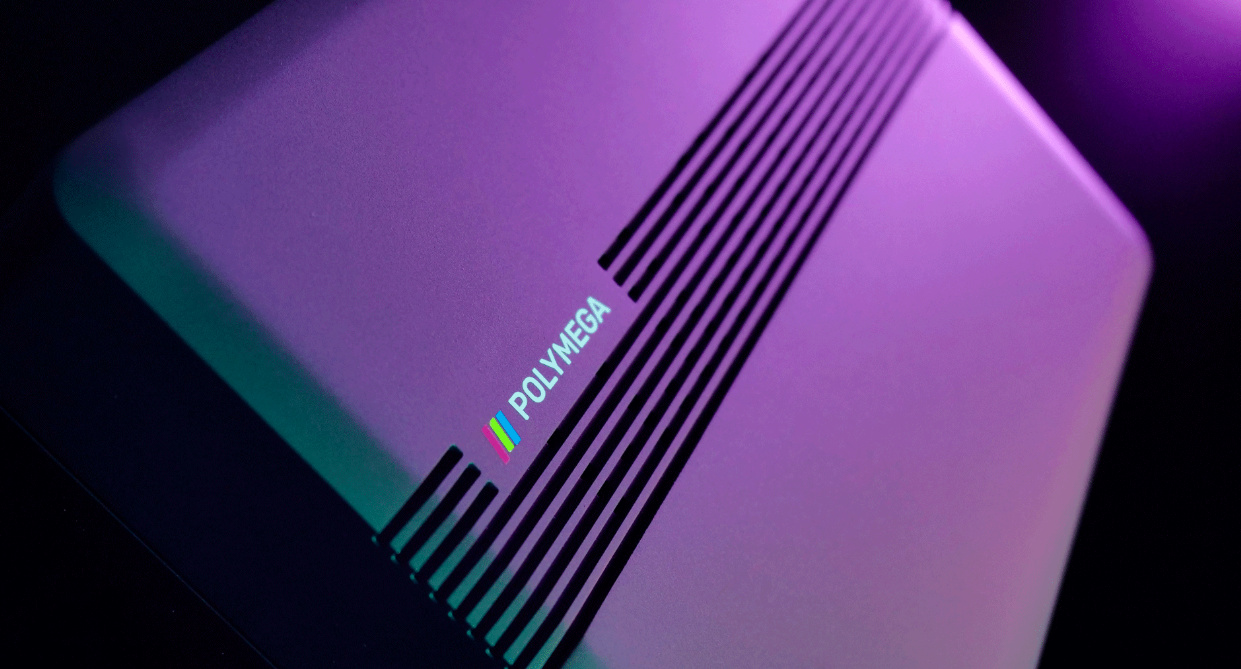
We’ve had our eyes on the modular Polymega console for quite some time now, and with good reason – if these guys can pull it off, it will be the ultimate one-stop retro system, covering consoles such as the NES, SNES, Mega Drive / Genesis, Mega CD and even Neo Geo CD.
The project hasn’t been without its controversies, though; revised specs and incorrectly sourced footage have led many to question if the Polymega will ever make it into full production. It’s wise to be cautious with this kind of thing, but after a long period of silence, the makers of the console have finally delivered a series of updates.
The Polymega hardware is finished, according to the team at Playmaji. It will run on a 35W Intel Coffee Lake S series Processor, which is upgradeable so Polymega can support other, more powerful retro systems in the future. The upgrade will need to be carried out by an authorised service outlet.
Polymega will also support NVMe M.2 2280 SSD’s via an expansion port on the base of the machine. SD card expansion remains in place and will support cards up to 1TB in capacity. If you wanted to max out the storage, you can install up to 3TB – that’s room for a lot of games.
Saturn support was one of the last big announcements for the Polymega, and the team is reporting that it has hit 99% game and 99% HLE BIOS compatibility for the entire Saturn library. Emulation is running at full speed, apparently. Meanwhile, PlayStation HLE BIOS is 90+% and will be improved over the next few months.
Emulation is one of the big question marks hanging over the project, but the team behind the console have revealed that it will only include in-house or legally-licensed emulators, which are considered to be “best in class”, with “only one of them” being able to run on a low-power ARM-based device. Gameplay samples of all emulators in action will be posted on YouTube next week.
Of particular interest to Nintendo fans is the news that the included SNES emulator will come with expansion chip support for SA1, SuperFX and CX-4, with DSP-1/2 (and variants) and S-DD1 “being implemented at the moment”. Again, gameplay samples “with lossless audio” will be made public soon.
It wasn’t all good news, however; due to 14nm chip supply shortages, the ship date for Polymega will most likely change. The company is “in line behind a few larger companies” but the aim is to get most of the chips by summer. Press units and pre-orders will be shipped as soon as they are in hand.
Finally, it was revealed that the second round of pre-orders will open in May, and retail pre-order info will also be forthcoming around the same time.
Polymega is being demoed at GDC as we speak, and we’ll update this post with any video footage that hits the web. In the meantime, let us know if all of this information has calmed your nerves or simply made you even more sceptical.
Despite GDC 2019 going on the background, it’s been a pretty vibrant time in mobile gaming this week. As someone who stands at the convergence of several different gaming spheres (mobile, war games, PC Strategy etc…), I’m always more open to visionary ideas that further merge several aspects of my life – that’s why Google’s Stadia announcement was so interesting.
I won’t re-hash what I’ve already said – while we wait to see how it ultimately turns out we’ll continue to review excellent games like Tides of Time, or Assembly. Maybe not Pirate Outlaws… Roguelikes seem to be the new ‘hot’ genre at the moment, and this week is no exception.
The original Crypt of the Necrodancer currently stands as one of our favourite roguelike games, so the fact that there’s now a prequel game is very good news indeed. Amplified features brand-new content, as well as all of the original content from the mobile version of Crypt of the Necrodancer, so be mindful if you already own that, there could be some repetition.
The new content features Nocturna, a shape-shifter, with a brand new story and a new zone complete with new levels, boss battles, enemies and rewards. Groove your way through the dungeon, slashing fools to the sick beat.
Speaking of Roguelikes, there’s another one that looks interesting as well. In Crossroads you create a character by choosing its race and class, and then you must go on a quest as an agent of the Adventurer’s Guild. You journey to your mission by revealing cards laid on a grid. Some cards will reveal loot, or spells, or powerful buffs, while others will present challenges. It’s all procedurally generated, and there are 5 different adventures to embark on.
A Sea of RPGs
Usually when I come to do this column, especially if I’m not able to get code for things in advance, I simply keep an eye on what’s ‘premium’ as a potential source of new games. Unfortunately, that doesn’t seem to be working as well as of late, as we’re starting to see more games release with a premium price point AS WELL as IAPs. As far this week goes, there’s been a few RPG releases like that, namely off-brand Pokémon-like Evertale (iOS | Android), and JRPG Legend of the Tetrarchs (iOS | Android).
Evertale’s seems more of a token fee, but both game’s IAPs seem to revolve around in-game currency. As we saw recently with Pirates Outlaws, grind can be bad, and it’s made all the more bitter if you have to pay for the privilege.
But then you’ve also got ThirdMiracle (iOS | Android) & Kings Hero 2 (iOS | Android) which have also released this week and don’t appear to be any more than what they are. The former is another JRPG, while the latter is a hex-based tactical RPG in the old-school fantasy façade.
We’ll try and get to all of these as/when we can, but as always – buyer beware.
The gift that keeps on giving, there’s been several updates to the game since we last checked. The main thing you need to know that the upcoming release of deployable fighters and Carrier-class ships has been pushed back till the 2.5 update, and the release of a new Era/Story season has been brought forward. Other than that, the Trese Brothers continue to tweak and adjust their magnum opus.
A firm favourite amongst PT readers, Sentinels has just received its final expansion along with the 3.0 updates. Season 2 pass holders get it for free, otherwise its available to purchase via IAP. It comes with five new heroes, five new environments, and the final boss battle scenario.
One of our favourite RTS games, DomiNations is celebrating its 4th Anniversary with a brand new content update focusing on space travel. Sally Ride, the first American woman to go into space, has been added as new leader, as well as the Space Shuttle and SETI Wonders. In addition, new events have been added that focus on key milestones surrounding mankind’s journey into space, from Yuri Gagarin, to Apollo 13.
We rather enjoyed this stylish turn-based strategy game, and now you can too as the game is once again down to half price.
Football Manager 2019 Mobile (iOS & Android): $5.99
FM Mobile is the streamlined version of Football Manager (you could almost call it ‘Lite’) as opposed to the near-direct port that is FM Touch. It’s currently enjoying a small discount, if you’re interested.
We didn’t like Alien Blackout, but it’s now on sale for the first time since launch, down a couple of bucks. It’s also recently been updated with a new mode called ‘Survive’, which is basically Ironman.
And just before we go, Android users can pick up the original Warhammer Quest for $1, if you’re interested.
Seen anything else you like? Played any of the above? Let us know in the comments!
Posted by: xSicKxBot - 03-23-2019, 02:36 AM - Forum: Lounge
- No Replies
Overwatch saw 40% less disruptive behavior with the endorsement system
Speaking at the Game Developers Conference in San Francisco this afternoon, research developer at Blizzard Natasha Miller shared how the studio implemented social features into Overwatch to promote positive behavior among players.
The two social features mentioned above include “endorsements”, designed to reward positive behavior (good sportsmanship, supportive teammate, etc.) conveyed through a level system.
“Looking for group” gave players the options to link up with players who had a similar play style.
Miller explains that one of the first steps Blizzard took in fostering positive behavior was adding a thank you message to players after they sent a report. On the flip side, they studio began sending out warning messages to players accumulating verified penalties.
“We wanted to give them a chance to change their behavior after we penalized them,” Miller said. Blizzard decided to focus on prevention first. “How do we go about preventing these behaviors? We did research in the form of focus groups and surveys.”
Miller mentioned two key areas that usually encourage disruptive behavior among Overwatch players, the first being a lack of social consequence. “By performing well within society’s expectations, you’re rewarded. In online communities there aren’t effective consequences,” she said. Thus, bad behavior.
She added that there also wasn’t a clear way to reward players either, and it was important to highlight those who did play nice. Implementing endorsements was a way to focus on the lack of social consequences.
In-game positive reinforcement rewarded players for good behavior, and can be given to the enemy team as well. The more endorsements a player acquires, the higher their level becomes. This feature uses positive reinforcement to be a good player, Miller said. It encouraged consistent, positive play and consequence for deviating from that.
“If you’re not consistently getting endorsements, if you slip up, you’re not going to get endorsements and your level is going to slip,” She added. If a player does slip up and their level falls, Miller said it was a form of loss aversion.
“This often causes players to want to get that level back and keep going, which offers a path to redemption.”
Miller also said that peer recognition was important and endorsements had a positive impact on players after a match. The decision to add loot boxes as a reward after a player’s endorsement level increased was something Blizzard hesitated with.
“It was a really big discussion for us. We didn’t want to encourage the wrong behavior either. We wanted most of the push to be good to come intrinsically.”
So loot boxes as reward operated under a more randomized schedule. “Even if you slipped you could come back. If players slipped during any randomized checks, they wouldn’t receive rewards.”
Miller then provided some data as to whether or not the social systems worked (endorsements in particular). There was a 40 percent reduction in matches that contained disruptive behaviors since implementation.
When asked if they saw it as a product of the system, players agreed. “The system makes people nicer.” Miller explained that players appreciated they were able to show thanks and support for their team. In addition, 50 to 70 percent of players have given endorsements.
Miller concluded by saying that the team was happy with the results so far, and planned on improving upon the systems and maybe implementing more in the future.
Posted by: xSicKxBot - 03-23-2019, 02:36 AM - Forum: Lounge
- No Replies
Boyfriend Dungeon dev examines why game fashion sucks, and what to do about it
How much thought have you put into the fashion options in your next game?
Today at GDC Victoria Tran of Kitfox Games (Boyfriend Dungeon) gave a great talk about why fashion in games often sucks, and why devs should put more time and effort into making it not suck.
Up front, she points out fashion isn’t just clothes, and it’s not just high-concept runway shows, either; it’s the art and science of communicating information through what we wear and how we carry ourselves.
“I’m not here to talk about what good fashion is,” said Tran. “I want to talk more about how we’ve ignored it as a serious mechanic and an information-rich piece of storytelling” in game development.
“The first reason we should care about fashion is that fashion really increases our understanding,” she continued. “It can put you in a certain time or era…it can convey a certain mood without walls and walls of text, and it can say where your character came from.”
Fashion is weakest when it’s meaningless, so Tran encourages game makers to look at what characters are wearing as a vital communication channel. Players will instantly make a judgment about your characters based on their outfits, so make sure they mean something.
As an example of an outfit that’s “information poor”, Tran pulled up a shot of Xenoblade Chronicles 2 protagonist Rex, noting that his flashy “Diver” armor is striking but conveys almost nothing about what a Diver is or does.
Some players may feel strongly about Rex’s outfit because they have deep ties to the series, for example, or the game’s artist, but if they’re just seeing him for the first time, it’s hard to read him as a character.
Fashion is a useful tool for evoking strong emotions in general, said Tran, pointing out that many people pick outfits for their in-game characters (when they have the option) for the same reasons they pick their own outfits: to feel strong, or attractive, or powerful, or just comfy.
“For me, when I was too afraid to wear sexy outfits, I would wear them in games to explore how they made me feel,” said Tran. “Did I actually like this? Did I want to dress more cute? Did i want to dress more masculine, to feel more comfortable? Fashion can give you powerful feelings.”
Games have been using fashion to elicit powerful feelings in customers for a long time, of course, but its almost always by putting women characters in ridiculously skimpy outfits. Tran says it can be powerful to give players room to express their characters’ sexuality, but that power is quashed when devs don’t give players room to chose their own outfits.
“Of course I have to talk about sexualized fashion. I’ve come to have very complicated feelings about it right now,” Tran said, recommending everyone read Maddy Myers’ Kotaku article on the fashion of Soul Calibur’s Ivy Valentie. “She does champion reclaiming sexiness for ourselves, though I find it hard to feel empowered when [women characters don’t have non-sexy clothing options].”
She also cautions game makers about putting fashion and iconography from other countries and cultures in your game without doing serious research first. Putting every American video game character into an outfit sporting an American flag gets old fast, she argues; the same goes for characters from other parts of the world.
“Get sensitivity readers, hire diverse people to work on your project,” she suggested calling out The Geeky Baju Project as a great example of how game artists can work a variety of “information-rich” fashion into their game’s assets.
The Geeky Baju Project is an effort by artist Charis Loke to explore the intersection of popular culture with traditional garments and fan art, but what’s so special about it is the way Loke weaves real history in with creative designs that convey a game’s essence through fashion.
“These designs are not only fun, they’re a way of learning about the history of traditional outfits,” said Tran. “Especially from somewhere like Southeast Asia, which isn’t well-represented in games.”
Good fashion isn’t just a useful, vibrant medium for communicating information about your game’s design and narrative; it’s also just cool, and in a modern game market where it seems like every dev is fighting to get their game noticed, having a cool-looking game is a big plus.
“As a community manager, I’m always looking for things to hook in players,” Tran explained. “Players want to embody their ideal selves, online and offline, and fashion is a great way to help them do that.”
So where are all the fashion games these days? Mostly in the indie and mobile spaces, says Tran, which is an opportunity for canny devs who are interested in making more fashion-centric games to carve out space for themselves on PC and console storefronts.
“This is a whole market out there that someone can get in on,” Tran said, pointing to a fruitless search she did recently for a “fashion game” genre on Steam.
Bottom line? “Fashion is fun,” concluded Tran. “And games are fun, so it’s an ideal marriage.”
For those who may not have had the chance to check it out, Bomber Crew is a strategy simulation game where you control every aspect of a WWII bomber; you tag enemy fighters, you manage the oxygen supplies of your crew, you choose whether to dive or climb higher to avoid enemy fire, you mark your objectives and most importantly, push the big red button that says Drop Bombs!
You name it you control it in this fast-paced bomber adventure.
For all Xbox Game Pass members, it’s available now to download and if you don’t own Xbox Game Pass, you can also fly on over to the Microsoft Store to see what it’s all about!
Since the day Bomber Crew launched, a lot of fans have asked when they’ll be able to pilot a new bomber, and we’re excited to tell you that with the launch of the USAAF DLC, you’ll be able to pilot the B-17 Flying Fortress, the iconic American bomber, on new missions against new enemy types, with more crew than ever, and more gun turrets than ever! Seven gun turrets in total.
For those who already own Bomber Crew, either via the Microsoft Store or via Xbox Game Pass, the USAAF DLC will be available for purchase; Bomber Crew: American Edition includes both the base game and the USAAF DLC.
Over and out for now. Feel free to find Curve Digital on your favorite social media channels for further updates, and always pack your trusty pigeon!
“We must be ready for San Francisco on March 21st. 300 Tender users will be invited to a party, some of them flown from around the world. This will be the biggest announcement in the history of my company.” – Tender Internal Memo
Now you just need to click on Flathub repository file. Open the downloaded file with the Software Install application.
Flathub repository file button on flatpak.org/setup/Fedora
The GNOME Software application opens. Next, click on the Install button. This action needs sudo permissions, because it installs the Flathub repository for use by the whole system.
Install button in GNOME Software
Install the Steam flatpak
You can now search for the Steam flatpak in GNOME Software. If you can’t find it, try rebooting — or logout and login — in case GNOME Software didn’t read the metadata. That happens automatically when you next login.
Searching for Steam
Click on the Steam row and the Steam page opens in GNOME Software. Next, click on Install.
Steam page in GNOME Software
And now you have installed Steam flatpak on your system.
Enable Steam Play in Steam
Now that you have Steam installed, launch it and log in. To play Windows games too, you need to enable Steam Play in Steam. To enable it, choose Steam > Settings from the menu in the main window.
Settings button in Steam
Navigate to the Steam Play section. You should see the option Enable Steam Play for supported titles is already ticked, but it’s recommended you also tick the Enable Steam Play option for all other titles. There are plenty of games that are actually playable, but not whitelisted yet on Steam. To see which games are playable, visit ProtonDB and search for your favorite game. Or just look for the games with the most platinum reports.
Steam Play settings menu on Steam
If you want to know more about Steam Play, you can read the article about it here on Fedora Magazine:
You’re now ready to play plenty of games on Linux. Please remember to share your experience with others using the Contribute button on ProtonDB and report bugs you find on GitHub, because sharing is nice.
Mortal Kombat 11 Beta Time, Characters, And Modes Detailed
NetherRealm has detailed the upcoming beta for Mortal Kombat 11, including when it's coming and how much meat will be on its proverbial bones. The beta will begin on Wednesday, March 27 at 8 AM PT, and run through Sunday, March 31 at 11:59 PM PT. It will be open to anyone who pre-ordered a copy of the game on PS4 or Xbox One.
The beta will include five playable characters: Baraka, Jade, Kabal, Scarlet, and Scorpion. That's just a taste of the much more expansive character roster, some of which has yet to be officially announced. Most recently the studio confirmed Kotal Kahn. You can check out a new trailer dedicated to the beta below.
The beta will include online multiplayer matches and the single-player Towers of Time mode, along with an exclusive preview of the Custom Character Variation System. That system will let you choose from various cosmetic options for your character, including their skins, gear, special abilities, taunts, brutalities, and intro and victory cinematics. You'll need a Gold or PS Plus membership to play online, but you can play with the Towers of Time or Character Variation offline.
Pre-ordering not only gets you the beta access, but also Shao Kahn as a playable character. That bonus will be across all platforms, including PC and Nintendo Switch, while the beta is limited to PS4 and Xbox One. The game releases on April 23.