In Avengers: Endgame's New Trailer, Captain Marvel Joins In
Not long after the release of Captain Marvel, the new trailer for Avengers: Endgame is here. The hugely anticipated follow-up to last year's blockbuster Avengers: Infinity War hits theaters next month, and it's directed once more by Joe and Anthony Russo.
The trailer starts much the same as the last one, with Tony Stark floating in space, feeling lonely and regretful. It then shows us a black-and-white montage of shots from earlier MCU movies (such as Iron Man and Thor) and the remaining Avengers all mourning the loss of their colleagues following the shocking climax of Infinity War. But our heroes aren't going to stand by and let Thanos claim victory, so set about forming a plan to bring their friends back. It also features an appearance from Captain Marvel, some cool Avengers spacesuits, new hairdos, and more. Check it out above--and see the latest poster at the end of this story and a breakdown of the latest trailer. There's a lot of takeaways to be had regarding what we've learned, although there are suspicions that the trailer could be attempting to mislead us about some of the film's events.
Avengers: Endgame releases on April 26, 2019. Virtually all the major actors from the MCU are set to return, so that means Robert Downey Jr., Chris Hemsworth, Chris Evans, Benedict Cumberbatch, Mark Ruffalo, Elizabeth Olsen, Sebastian Stan, Scarlett Johansson, and so on. It had been rumored that this might be the last Marvel movie for some of the MCU's longest-running stars--in particular Evans--but nothing has been confirmed about their future in the franchise. We do know Endgame will be followed by Spider-Man: Far From Home in July, with Tom Holland's Spider-Man and Samuel L. Jackson's Nick Fury both returning.
In related news, Captain Marvel hits theaters last week. It has proved to be another huge success for the studio--for more, check out the biggest questions we have after seeing Captain Marvel. We've also got a roundup of Captain Marvel Easter eggs and a breakdown of the post-credits scenes.
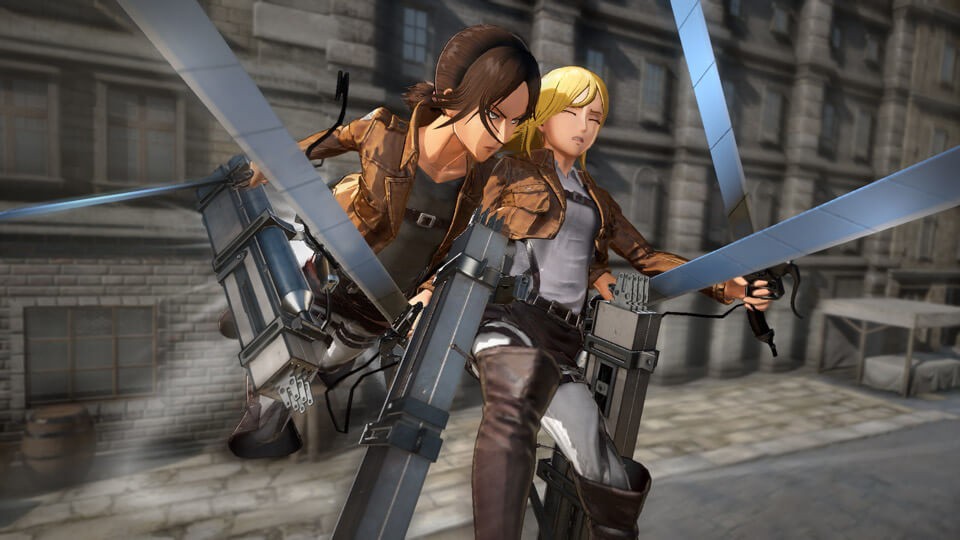
Attack On Titan 2: Final Battle Officially Confirmed For Nintendo Switch
Following the Taiwanese game rating reveal last week, it has now been officially confirmed that Attack On Titan 2: Final Battle is headed to Nintendo Switch.
The game follows the third season of the Attack on Titan anime adventure, with its story mode playing through selected characters’ points of view with major heroes active in Season 3 (who are playable for the first time). This boosts the total number of playable characters to more than 40.
If you fancy learning more, check out this description provided in a press release today:
“Attack on Titan 2: Final Battle will feature two new gameplay experiences: A frenetic anti-personnel combat feature using anti-personnel omni directional mobility gear and an all-new wall reclamation mode focused on recovering outside territories. Here, players will have an ability to choose a leader of their squad, pick out the members they want to include – even members who were never together in the original work, and set out to reclaim the lands from the Titans. Thunder Spears will also be equipped for battle for the first time, allowing the take down of the Armored Titan when a normal blade just won’t cut it.”
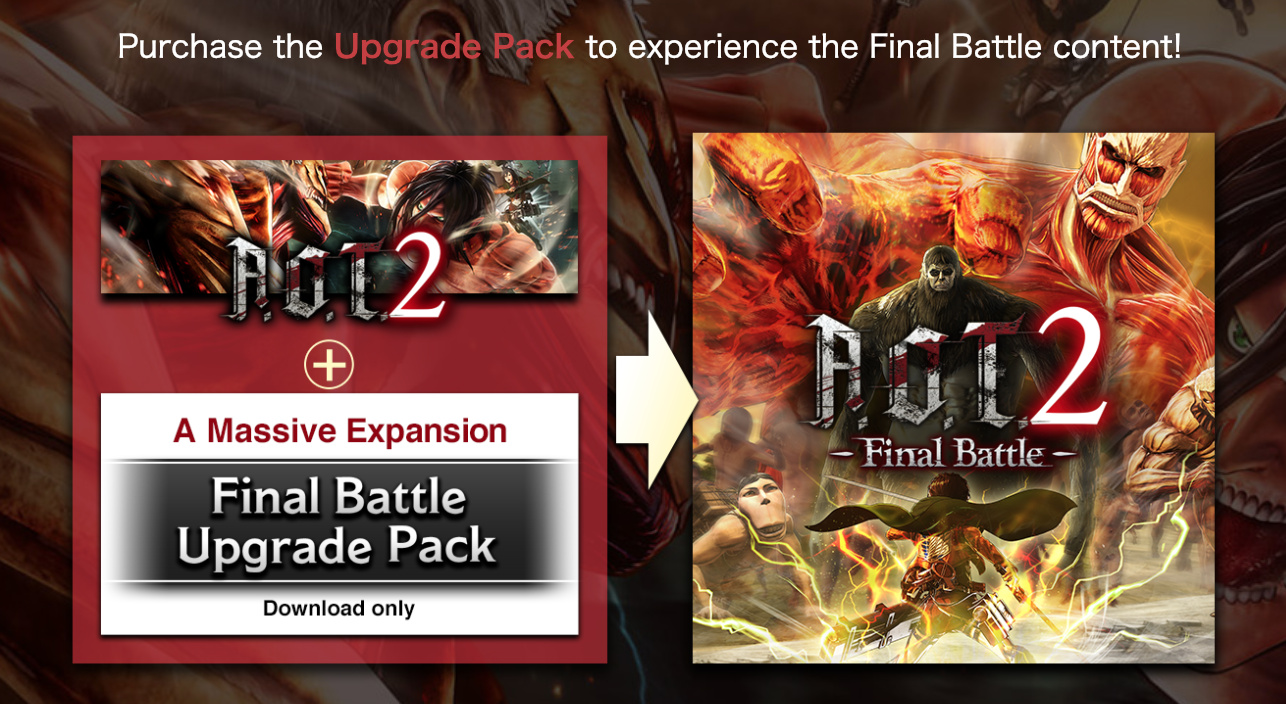
Final Battle will be made available for digital purchase as an Upgrade Pack to fans who already own Attack on Titan 2, and it will also be available for purchase as a special digital or physical bundle. You’ll be able to check out the action for yourself from 5th July.
Did you enjoy Attack on Titan 2 on Switch? Will you be checking out this new content? Tell us below.
Flatlandia is a miniaturized Heroes of Might & Magic, and that may be the first and only thing you need to know about it. What, still here? Fiiinnneeee: The Heroes formula of fantasy strategy combines a fixed, board-game-like strategic layer in which the player builds and customizes armies, and a tactical layer with powerful heroes that’s heavy on magic and special abilities. It’s a design that for some reason hasn’t really been duplicated, although the original series has spawned seven sequels.
Heroes of Flatlandia is a great homage to (or clone of, depending on your point of view) those games, simplified for mobile, for better or worse.
One way Flatlandia distinguishes itself is through its goofy chibi-by-way-of-Warcraft artistic style that is colorful and communicative. It’s a great game to look at, and the only thing I would change is to add the option to overlay a visible hex grid for those times when you need to be a little more precise.
There’s a fair variety of units, but more importantly, all units are quite distinct. Each one has its own special ability or two that make it a unique threat on the battlefield, all the way down to your basic starter units. The Elf faction’s cheap wolves are great blitz attackers to pick off weaker units since they always attack first and get bonus movement for the first two turns. The Undead’s basic gargoyles are great at blocking units in, since they turn to stone and get extra armor during the opponent’s turn. On top of the units you have two distinct heroes for each faction to choose, and they gain special abilities as they level up. You also gain spells that let you attack or buff/debuff.
The most important tactic is taken directly from Heroes of Might & Magic: stacking units. Your armies are limited to six distinct units, but you can stack up as many identical units as you like, making units that move as one but hit harder and last longer. An army with a lot of stacked units has a big advantage, and may be better avoided.
The number of tactical-level maps is quite limited, and furthermore the terrain doesn’t really affect tactics. Unit positioning doesn’t have a strong impact, except when assaulting walled cities. There are no zones of control around units, so you are free to waltz in between the front lines and take out less well-armored magic users. Cover is similarly of little effect since it is easy to walk around.
The AI is quite good, and puts up a significant challenge, especially on the tactical battlefield. It will zero in on your weakest units and exploit holes in your defenses ruthlessly. You will have to play carefully if you’re pitting two evenly-matched armies against one another and can expect heavy casualties. The AI is also quite efficient strategically: on three-player maps I found one of the AI players quickly eliminated the other and was often still strong enough to take me on. Unfortunately there is no online play, which is a big hole in a turn-based strategy game. There is however pass-and-play local multiplayer available as some consolation.
The biggest disappointment at the strategic level is how long it takes to contact the enemy. I think this is a consequence of the oversized maps, which give each player enough room to grow to full strength before they necessarily encounter each other, even on “small” maps. There are also only a couple three-player maps. This sort of slow-paced strategy game would be far more entertaining with three or even more players bumping into one another, racing to snag resources, and forming ad hoc alliances before stabbing each other in the back.
Instead, at the strategic level, you only have a few key decisions to make: the first is which resource to pursue next, based on the strength of the neutral units protecting it. Then you have to decide how to spend those resources to upgrade your army as fast as possible. Should you buy all the available units from your city? Or ignore them in favor of upgrading the city to produce stronger units? Essentially, the game is a race to see who can build a strong army the fastest, and then send it rampaging through their opponent’s territory. That said, the AI is good at doing this, which means the game is still quite a challenge, even if you spend most of it fighting neutral units.
Controls generally work well, although since everything is controlled with single taps you can sometimes send an army marching to join another army when all you meant to do was select the other army. A quick undo button on the main map and tactical screen would be a big help here.
In the end, Flatlandia is a limited, mobile-focused clone of Heroes of Might & Magic. It doesn’t have PC-level depth, but what is there is worth playing, especially with the challenging AI. The developer is active, and I would expect more maps, heroes and factions in the future, so this may be one to watch if ‘mobile HoMM’ isn’t an insta-buy.
The Division 2 -- Early Review, Release Date, And Everything You Need To Know
The Division 2 is here, now available for Xbox One, PS4, and PC if you've bought one of the game's special editions. An online action role-playing game, The Division 2 places an emphasis on squad-based combat, with teammates firing from cover and working together to take down groups of enemies. Which isn't to say, you can't tackle The Division 2's world alone. If you want to be a lone wolf who traverses the violent streets of Washington DC, you can.
Taking place seven months after the events of the first game, The Division 2 reworks its predecessor's loot-focused shooter gameplay. Enemies still take more bullets to go down than what's believable, but they're not the bullet sponges found in The Division. Ubisoft has also crafted The Division 2 to have a greater focus on endgame play, incorporating more than one Dark Zone, powerful late-game loot, and raids--which can be tackled with up to eight players. From what we've seen so far, The Division 2 seems to improve upon its predecessor's format in every way. So if you missed 2016's The Division, you might want to consider picking up its sequel.
What You Need To Know
The Division 2 is the follow-up to 2016's The Division, continuing the story of a broken US after a smallpox epidemic struck the country on Black Friday 2015. With the country falling apart, the US government activates the sleeper agents that work for the Strategic Homeland Division, who have been secretly living amongst the populace for years. Division agents are ordered to aid humanitarian efforts and emergency responders, as well as respond to emerging criminal groups with highly advanced military grade hardware and weaponry. The first game took place in New York City in the winter following the outbreak, while The Division 2 moves the setting to the country's capital, Washington DC, in the spring.
Release Date And Price
The Division 2's official release date is March 15, but the game has technically already come out via its staggered launch schedule. Pre-ordering the standard edition of The Division 2 gets you the game on March 15. It's also the cheapest version of the game, with a retail price of $60 USD. You can play the game right now by buying the Gold and Ultimate editions of the game--the former has a retail cost of $110 while the latter goes for $120. There are also Dark Zone Definitive and Phoenix Shield editions of the game as well, which are the Ultimate edition plus physical collectibles. The Dark Zone Definitive Edition has a retail price of $190 and Phoenix Shield goes for $250.
Review
We don't have a full review of The Division 2 yet, but GameSpot editor and senior video producer Edmond Tran has compiled his initial impressions of the game before publishing a full review. "But it's only been a day, and I've only played for about ten hours," Edmond writes. "I've finished 27% of the primary missions and my character is level 12 out of a possible 30. A lot of my observations here might not be particularly groundbreaking if you spent a large amount of time with the original The Division or The Division 2 beta, but there's still a lot of the campaign left to see, and an allegedly enormous endgame. It's important that I take the time to get to that point and see everything for myself, and I'm eager to see whether The Division 2 will still have the chops to keep me hooked when I hit the level cap and stop having a story to chase. Back to sightseeing, for now."
Our Impressions
We've kept an eye on The Division 2 since its announcement, and had our first opportunity to publish impressions for the game during E3 2018. Below, you'll find the list of some features we've done for The Division 2.
If you just want a taste of The Division 2, watch the first eight minutes of the game below. We've also captured gameplay for what it's like to hunt other players in The Division 2's Dark Zones.
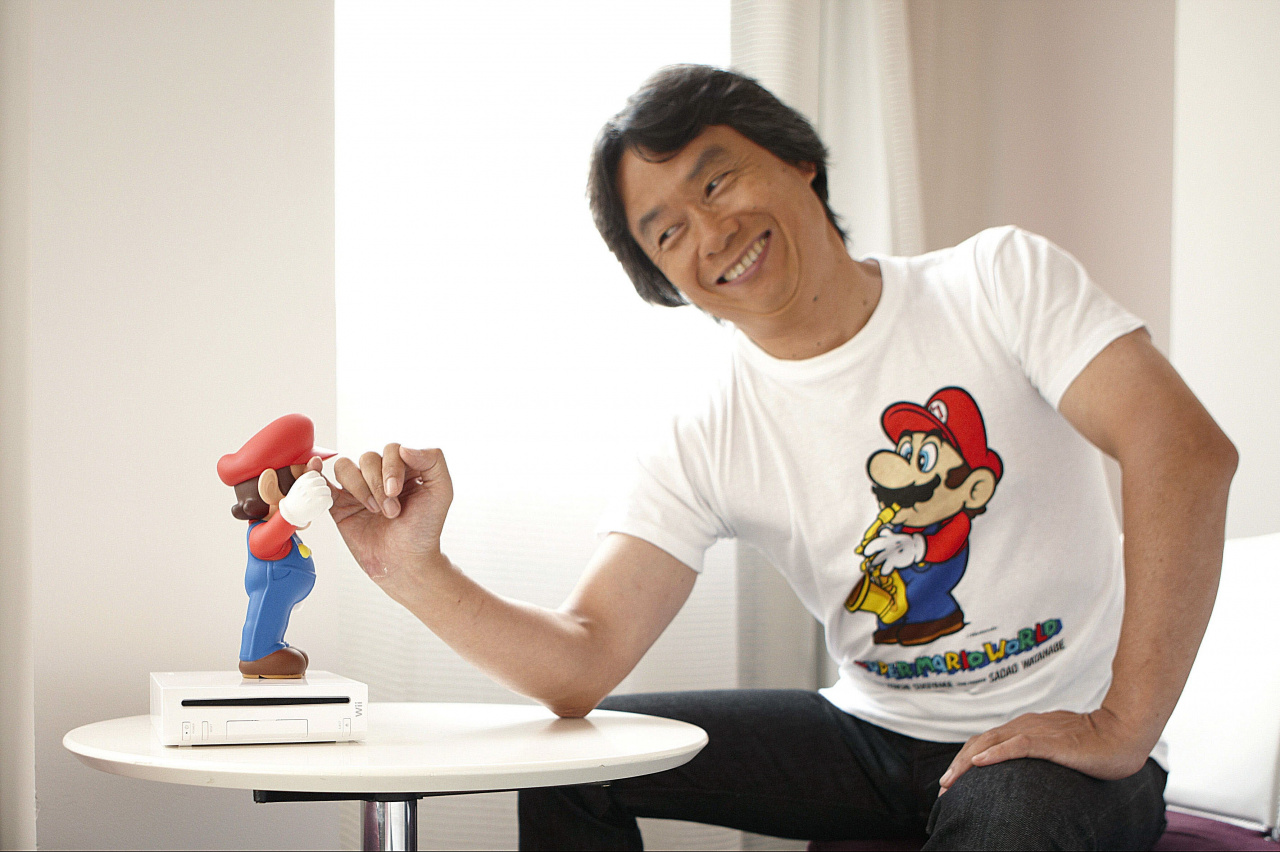
Nintendo Veterans Discuss What It’s Like Working With Shigeru Miyamoto
Shigeru Miyamoto is right up there as one of Nintendo’s most famous and adored talents (likely sitting comfortably at the top of that list for many), and is arguably one of the most important and influential game developers of all time. The creator of Mario, Donkey Kong, Zelda, and plenty more besides hardly needs any introduction, though, so let’s get to the good stuff.
Working alongside such an industry legend sounds like it would be exciting, inspiring, and probably a little bit terrifying, as expressed by Nintendo’s Shinya Takahashi and Hisashi Nogami in an interview with The Guardian. Miyamoto’s role at Nintendo has shifted in recent years – it’s been well documented that he now acts more as an advisor, rather than getting stuck in himself – and Takahashi provides an insight into how that plays out at Nintendo HQ.
“He is not involved in the minute details of development, but does oversee entire projects and identifies major issues: this part is bad, this part is bad, THIS part is bad … ” laughs Takahashi. “If he says something’s good, it’s rare, and you know it is. Although he’s been saying quite a few things are good, I should say. He’s actually a shy person – even when he thinks something is well done, he would not often say that to someone directly.”
If someone we respected to such a level told us that something we had been working on was “bad”, we’d probably break down in tears on the spot; while these Nintendo veterans are clearly much stronger than us, Miyamoto’s opinion still clearly means a lot to those working under his watchful eye. The interview goes on:
“I have never once been praised by Mr Miyamoto,” Nogami chimes in, deadpan.
“Perhaps not to your face, but behind your back he’s very pleased with you,” Takahashi laughs.
If you’re interested in hearing more, you can read the full interview right here.
Is Miyamoto one of your gaming industry idols? Imagine how different things would be without his work…
Retro Recoil-Shooter Neon Caves Blasts Onto Switch Later This Month
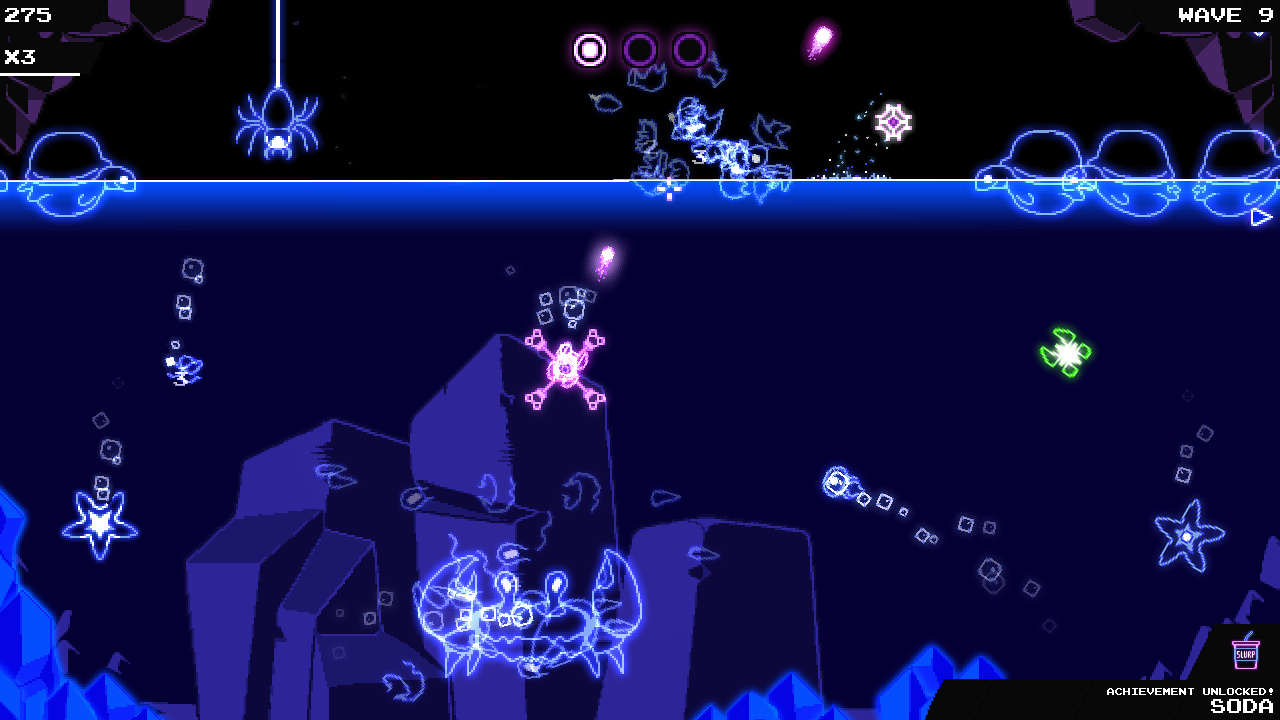
One-man developer Force Of Habit has revealed its latest project destined for Switch: a retro-style shooter called Neon Caves.
This one’s press release describes it as “an experimental offshoot” of Toast Time: Smash Up!, a multiplayer brawler which launched on Switch towards the end of last year. This new release (we say ‘new’ – it actually launched on the OUYA back in 2014) is designed using the same movement mechanics that were present in that game, but changes things up to use them in a brand new, arcade-action twitch gameplay environment.
The game has you exploring the titular Neon Caves, a fragile ecosystem lost to the world for centuries. Recently rediscovered by your research team, you’ll need to use your ship’s anchor ability and elite implements to stabilise the cave while keeping the hostile inhabitants at bay.
Game Features: – Endless arcade-action gameplay. How long can you survive? – 9 unique enemy types: including historically accurate giant crustaceans! – 4 awesome power-ups: rapid fre, bombs, invincibility and ghost ship! – 28 Achievements – Nintendo Switch exclusive Online Leaderboards
Neon Caves will be available to pre-purchase on the Switch eShop from 15th March in Europe and 20th March in North America, with its final release date scheduled for just a week later on the 27th. You can pick it up for just $3.99 / £3.99 / €3.99, and this price will actually be discounted by 25% during the pre-purchase period.
What do you think? Will this be going on your Switch wishlist? Let us know your thoughts in the comments below.
Posted by: xSicKxBot - 03-14-2019, 04:30 PM - Forum: Windows
- No Replies
Announcing Microsoft Game Stack for developers and studios
Microsoft is built on the belief of empowering people and organizations to achieve more – it is the DNA of our company. Today we are announcing a new initiative, Microsoft Game Stack, in which we commit to bringing together Microsoft tools and services that will empower game developers like yourself, whether you’re an indie developer just starting out or a AAA studio, to achieve more.
This is the start of a new journey, and today we are only taking the first steps. We believe Microsoft is uniquely suited to deliver on that commitment. Our company has a long legacy in games – and in building developer-focused platforms.
There are 2 billion gamers in the world today, playing a broad range of games, on a broad range of devices. There is as much focus on video streaming, watching, and sharing within a community as there is on playing or competing. As game creators, you strive every day to continuously engage your players, to spark their imaginations, and inspire them, regardless of where they are, or what device they’re using. Today, we’re introducing Microsoft Game Stack, to help you do exactly that.
What Exactly is Microsoft Game Stack?
Game Stack brings together all of our game-development platforms, tools, and services—such as Azure, PlayFab, DirectX, Visual Studio, Xbox Live, App Center, and Havok—into a robust ecosystem that any game developer can use. The goal of Game Stack is to help you easily discover the tools and services you need to create and operate your game.
The cloud plays a critical role in Game Stack, and Azure fills this vital need. Azure provides the building blocks like compute and storage, as well as cloud-native services from machine learning and AI, to push notifications and mixed reality spatial anchors. Azure is already available in 54 regions globally, including China, and continues to invest in building highly secure and sustainable cloud infrastructure and additional services for game developers. Azure’s global scale is what will give Project xCloud streaming technology the scale to deliver a great gaming experience for players worldwide, regardless of their device and location.
Already with Azure, companies like Rare, Ubisoft and Wizards of the Coast are hosting multiplayer game servers, safely and securely storing player data, analyzing game telemetry, protecting their games from DDOS attacks, and training AI to create more immersive gameplay.
While Azure is part of Game Stack, it’s important to call out that Game Stack is cloud, network, and device agnostic. And we’re not stopping here.
What’s New?
The next piece of Game Stack is PlayFab, a complete backend service for building and operating live games. A year ago, we welcomed PlayFab into Microsoft through an acquisition. Today we’re excited to announce we are bringing PlayFab into the Azure family. Together, Azure and PlayFab are a powerful combination: Azure brings reliability, global scale, and enterprise-level security; PlayFab provides Game Stack with managed game-development services, real-time analytics, and LiveOps capabilities. Last fall, we saw what these two platforms can do together with PlayFab Multiplayer Servers, which allows you to safely launch and scale up multiplayer games by dynamically hosting your servers with Azure cloud compute.
To quote PlayFab’s co-founder James Gwertzman, “Modern game creators are less like movie directors, and more like cruise directors. Long-term success requires engaging players in a continuous cycle of creation, experimentation, and operation. It’s no longer possible to just ship your game and move on.” This is why a year ago, we welcomed PlayFab into Microsoft through an acquisition. PlayFab supports all major devices, from iOS and Android, to PC and Web, to Xbox, Sony PlayStation, and Nintendo Switch; and all major game engines, including Unity and Unreal. PlayFab will also continue to support all major clouds going forward.
Powerful matchmaking for multiplayer games, adapted from Xbox Live matchmaking, but now available to all games and all devices.
In public preview today:
PlayFab Party
Voice and chat services, adapted from Xbox Party Chat, but now available to all games and for all devices. Party leverages Azure Cognitive Services for real-time translation and transcription to make games accessible to more players.
PlayFab Game Insights
Combines robust real-time game telemetry with game data from multiple other sources to measure your game’s performance and create actionable insights. Powered by Azure Data Explorer, Game Insights will offer connectors to existing first- and third-party data sources including Xbox Live.
PlayFab Pub Sub
Subscribe your game client to messages pushed from PlayFab’s servers via a persistent connection, powered by Azure SignalR. This enables scenarios such as real-time content updates, matchmaking notifications, and simple multiplayer gameplay.
PlayFab User Generated Content
Engage your community by allowing players to create and safely share user generated content with other players. This technology was originally built to support the Minecraft marketplace.
Growing the Xbox Live Community
Another major component of Game Stack is Xbox Live. Over the past 16 years, Xbox Live has become one of the most vibrant and engaged gaming communities in the world. It is also a safe and inclusive network that has broken down boundaries in how gamers connect across devices.
Today, we’re excited for Xbox Live to become part of Microsoft Game Stack, providing identity and community services. Under Game Stack, Xbox Live will expand its cross-platform capabilities, as we introduce a new SDK that brings this community to iOS and Android devices.
Mobile developers will now be able to reach some of the most highly engaged and passionate gamers on the planet with Xbox Live. These are just a few of the benefits for mobile developers:
Trusted Game Identity
With the new Xbox Live SDK, developers can focus on creating great games and leverage Microsoft‘s trusted identity network to support log-in, privacy, online safety and child accounts.
Frictionless Integration
New a la carte service offerings and no Xbox Live certification pass give mobile developers flexibility in how they build and update their games. Developers just use the services that best fit their needs.
Vibrant Gaming Community
Reach Xbox Live’s growing community and connect gamers across a multitude of platforms. Find creative ways to enable achievements, Gamerscore, and “hero” stats, which have their own out-of-game experience, to keep gamers engaged.
Other Game Stack Components
Other components of Game Stack include Visual Studio, Mixer, DirectX, Azure App Center, Visual Studio, and Visual Studio Code, and Havok. In the coming months, as we work to improve and grow Game Stack, you’ll see deeper connections between these services as we unify them to work more seamlessly together.
As an example of how this integration is already underway, today we’re bringing together PlayFab and these Game Stack components:
App Center
Crash log data from App Center is now connected to PlayFab, allowing you to better understand and respond to problems in your game in real-time by tying crash logs back to individual player profiles.
Visual Studio Code
With PlayFab’s new plug-in for Visual Studio Code, editing and updating Cloud Script just got a lot easier.
Create Your World Today & Achieve More
As we expand our focus to the cloud, the nature of the platform may be changing, but our commitment to empower game developers like yourself is unwavering, and we’re looking forward to the journey ahead with Microsoft Game Stack. Our teams are inspired and excited by the possibilities as we start to pull together all these great services and technologies. Please be sure to share your feedback with us as we go, so we can help you achieve more. If you’re at GDC, stop by the Microsoft booth in the South Hall of the Moscone Center to try out many of the new services, and to learn more about the exciting opportunities ahead.
Posted by: xSicKxBot - 03-14-2019, 07:23 AM - Forum: Lounge
- No Replies
Former EA, Assassin's Creed Boss Joins Google Ahead Of Big Gaming Reveal
Video game industry veteran Jade Raymond, who produced the original Assassin's Creed before joining EA where she worked on Star Wars, has landed a new job at Google.
Raymond announced on Twitter today that she's working at Google as a vice president. That's all she had to say on the matter, so it's unclear exactly what she's doing at Google.
Google operates a gaming business with its Project Stream technology that is set to be formally unveiled next during the Game Developers Conference. Raymond would be at least Google's second high-profile gaming hire, following former PlayStation and Xbox boss Phil Harrison who joined Google as a VP in January 2018.
I’m excited to finally be able to share that I have joined Google as VP!
In her most recent position at EA, Raymond served as senior vice president group general manager of Motive Studios. In that role, Raymond was responsible for leading a new business unit and studio team centered on making new IP and action games. She was also responsible for leading the strategy around EA's new Star Wars games. She left EA in October 2018.
As for Google's GDC event, the company plans to unveil its "vision for the future of gaming"--and it could be related to streaming. In 2018, Google partnered with Ubisoft to test its Project Stream technology that made Assassin's Creed Odyssey playable straight through a Google Chrome browser.
In other news, recent rumors have circulated regarding Google's so-called "Project Yeti," which is said to be its own take on the home console. It would focus on streaming, and may even have its own exclusive games, but the price and details are unknown.
CHIPS Alliance to Create Open Chip Design Tools for RISC-V and Beyond
The Linux Foundation and several major RISC-V development firms have launched an LF-hosted CHIPS Alliance with a mission “to host and curate high-quality open source code relevant to the design of silicon devices.” The founding members — Esperanto Technologies, Google, SiFive, and Western Digital — are all involved in RISC-V projects.
On the same day that the CHIPS Alliance was announced, Intel and other companies, including Google launched a Compute Express Link (CXL) consortium that will open source and develop Intel’s CXL interconnect. CXL shares many traits and goals of the OmniXtend protocol that Western Digital is contributing to CHIPS (see farther below).
The CHIPS Alliance aims to “foster a collaborative environment that will enable accelerated creation and deployment of more efficient and flexible chip designs for use in mobile, computing, consumer electronics, and Internet of Things (IoT) applications.” This “independent entity” will enable “companies and individuals to collaborate and contribute resources to make open source CPU chip and system-on-a-chip (SoC) design more accessible to the market,” says the project.
This announcement follows a collaboration between RISC-V and Linux Foundation formed last November to accelerate development for the open source RISC-V ISA, starting with RISC-V starter guides for Linux and Zephyr. The CHIPS Alliance is more focused on developing open source VLSI chip design building blocks for semiconductor vendors.
The CHIPS Alliance will follow Linux Foundation style governance practices and include the usual Board of Directors, Technical Steering Committee, and community contributors “who will work collectively to manage the project.” Initial plans call for establishing a curation process aimed at providing the chip community with access to high-quality, enterprise grade hardware.”
A testimonial quote by Zvonimir Bandic, senior director of next-generation platforms architecture at Western Digital, offers a few clues about the project’s plans: “The CHIPS Alliance will provide access to an open source silicon solution that can democratize key memory and storage interfaces and enable revolutionary new data-centric architectures. It paves the way for a new generation of compute devices and intelligent accelerators that are close to the memory and can transform how data is moved, shared, and consumed across a wide range of applications.”
Both the AI-focused Esperanto and SiFive, which has led the charge on Linux-driven RISC-V devices with its Freedom U540 SoC and upcoming U74 and U74-MC designs, are exclusively focused on RISC-V. Western Digital, which is contributing its RISC-V based SweRV core to the project, has pledged to produce 1 billion of SiFive’s RISC-V cores. All but Esperanto have committed to contribute specific technology to the project (see farther below).
Notably missing from the CHIPS founders list is Microchip, whose Microsemi unit announced a Linux-friendly PolarFire SoC, based in part on SiFive’s U54-MC cores. The PolarFire SoC is billed as the world’s first RISC-V FPGA SOC.
Although not included as a founding member, the RISC-V Foundation appears to behind the CHIPS Alliance, as evident from this quote from Martin Fink, interim CEO of RISC-V Foundation and VP and CTO of Western Digital: “With the creation of the CHIPS Alliance, we are expecting to fast-track silicon innovation through the open source community.”
With the exploding popularity of RISC-V, the RISC-V Foundation may have decided it has too much on its plate right now to tackle the projects the CHIPS Alliance is planning. For example, the Foundation is attempting to crack down on the growing fragmentation of RISC-V designs. A recent article in Semiconductor Engineering reports on the topic and RISC-V’s RISC-V Compliance Task Group.
Although the official CHIPS Alliance mission statements do not mention RISC-V, the initiative appears to be an extension of the RISC-V ecosystem. So far, there have been few open-ISA alternatives to RISC-V. In December, however, Wave Computing announced plans to follow in RISC-V’s path by offering its MIPS ISA as open source code without royalties or proprietary licensing. As noted in a Bit-Tech.net report on the CHIPS Alliance, there are also various open source chip projects that cover somewhat similar ground, including the FOSSi (Free and Open Source Silicon) Foundation, LibreCores, and OpenCores.
Contributions from Google, SiFive, and Western Digital
Google plans to contribute to the CHIPS Alliance a Universal Verification Methodology (UVM) based instruction stream generator environment for RISC-V cores. The configurable UVM environment will provide “highly stressful instruction sequences that can verify architectural and micro-architectural corner-cases of designs,” says the CHIPS Alliance.
SiFive will contribute and continue to improve its RocketChip (or Rocket-Chip) SoC generator, including the initial version of the TileLink coherent interconnect fabric. SiFive will also continue to contribute to the SCALA-based Chisel open-source hardware construction language and the FIRRTL “intermediate representation specification and transformation toolkit” for writing circuit-level transformations. SiFive will also continue to contribute to and maintain the Diplomacy SoC parameter negotiation framework.
As noted, Western Digital will contribute its 9-stage, dual issue, 32-bit SweRV Core, which recently appeared on GitHub. It will also contribute a SWERV test bench and SweRV instruction set simulator. Additional contributions will include specification and early implementations of the OmniXtend cache coherence protocol.
Intel launches CXL interconnect consortium
Western Digital’s OmniXtend is similar to the high-speed Compute Express Link (CXL) CPU interconnect that Intel is open sourcing. On Monday, Intel, Alibaba, Cisco, Dell EMC, Facebook, Google, Hewlett Packard Enterprise, Huawei, and Microsoft announced a CXL consortium to help develop the PCIe Gen 5 -based CXL into an industry standard. Intel intends to incorporate CXL into its processors starting in 2021 to link the CPU with memory and various accelerator chips.
The CXL group competes with a Cache Coherent Interconnect for Accelerators (CCIX) consortium founded in 2016 by AMD, Arm, IBM, and Xilinx. It similarly adds cache coherency atop a PCIe foundation to improve interconnect performance. By contrast, OmniXtend is based on Ethernet PHY technology. While the CXL and CCIX groups are focused only on interconnects, the CHIPS Alliance has a far more ambitious agenda, according to an interesting EETimes story on the CHIPS Alliance, CXL, and CCIX.
Black Desert is a living-world MMORPG. Experience fast-paced, action-packed combat, hunt monsters and huge bosses, fight with friends in a guild to siege nodes and region castles, train your life skills such as fishing, trading, crafting, cooking, and much more.