Posted by: xSicKxBot - 01-16-2019, 11:49 AM - Forum: Lounge
- No Replies
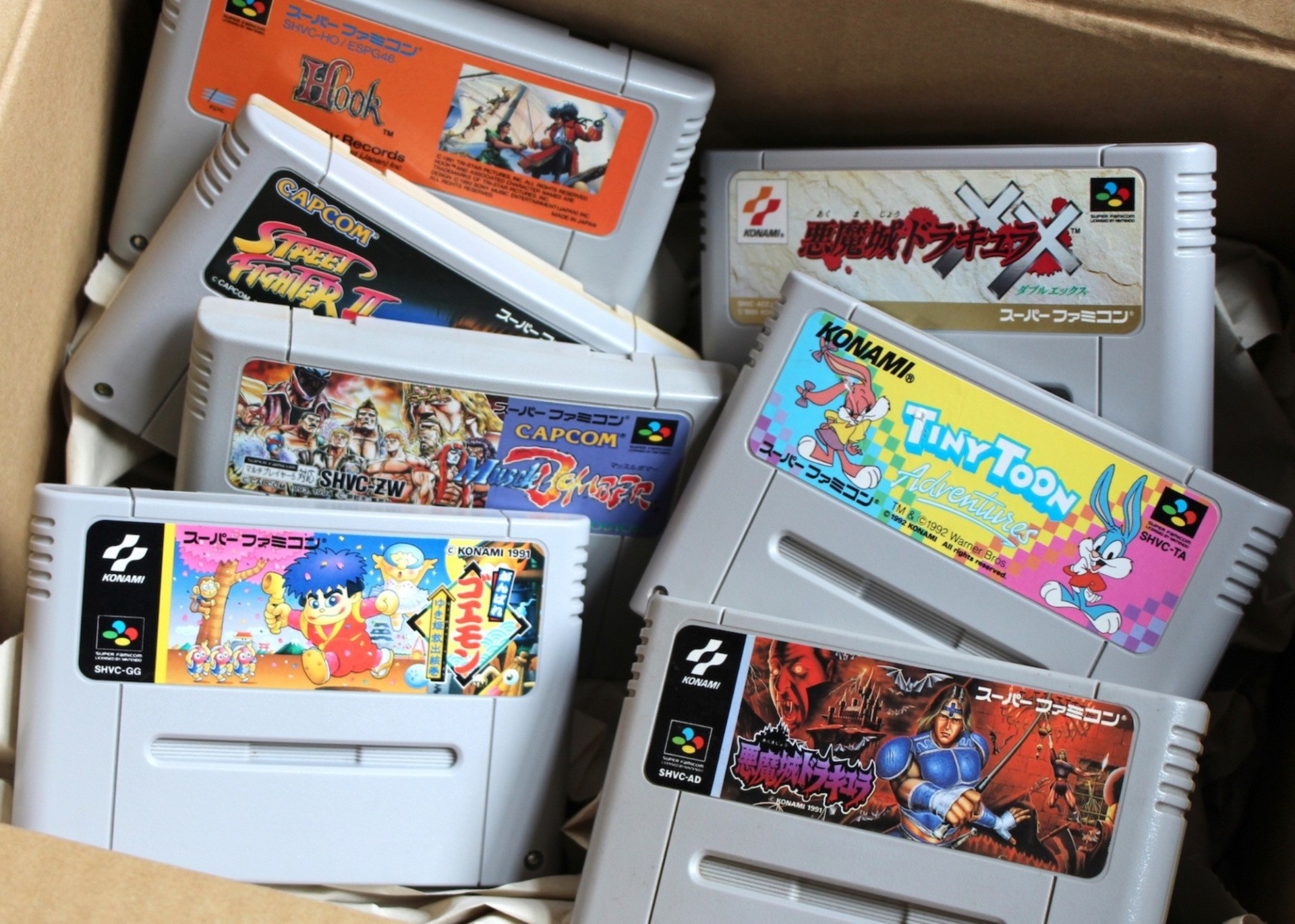
Was classic JRPG grind that bad?: An in-depth analysis
The following blog post, unless otherwise noted, was written by a member of Gamasutras community. The thoughts and opinions expressed are those of the writer and not Gamasutra or its parent company.
The full article with screenshots was originally posted on the game design blog Significant-Bits. Unfortunately Gamasutra no longer allows hotlinking of non-https images, so only the charts are included here.
Introduction
Having grown up with JRPGs, it’s somewhat surprising how rarely I play them these days. That desire for a wondrous epic is still there, but pursuing new titles usually results in a feeling of slogging through manufactured bloat. The introductory segments are often filled with painfully-gated progression, overenthusiastic tutorials, and a juvenile narrative. In the limited instances where the opening is great, the overall game-loop tends to sputter out into protracted tedium. In either case, I quickly lose interest.
This general reaction to modern JPRGs must have a lot to do with growing up and having less free time, a lower tolerance for anime tropes, and no emotional attachment to the new series. But hasn’t the genre improved overall? Weren’t the older games just grind-fests burdened with copious amounts of random battles?
To help answer that question, I thought it would be interesting to quantify some of the less subjectives elements of JRPGs, starting with the 4th generation of consoles.
Methodology
My approach was to replay the first 2 hours of the more renowned JRPGs released in North America and measure the amount of time it took to reach various gameplay-milestones in each one. To avoid the more contentious titles occasionally placed under the JRPG umbrealla, I only included games with multiple controllable party members, a turn-based battle system, and a character-driven narrative.
Despite having played many of these games in the past, I only had a vague recollection of most and attempted to emulate a first-time, completionist experience. I talked to every NPC, entered every building, brought up every menu, and skipped no cutscenes or dialogue. I did, however, increase text-display and walking speeds wherever possible.
My main goal was to measure two elements, Time to Freedom (TTF), and Time to Comfort (TTC). I define Time to Freedom as the first time the player gets to interact with the game in any way beyond simply advancing cutscenes, and Time to Comfort as the amount of time it takes to experience all applicable gameplay-milestones within a 2 hour limit. These two metrics are meant to show how quickly the player can start experimenting with the game, and how long it takes to experience its main mechanics and gain a certain sense of mastery over them. Additionally, I noted each game’s Freedom to Comfort (FTC), defined as the difference between TTC and TTF.
The common gameplay milestones consisted of the following:
Mobility – first time the player gains control over their avatar.
Save – first time the player is allowed to save their game. If an auto-save feature with an indicator is included, I will attempt to note its first use.
Item – first time the player manually obtains a usable item.
Rest – first time the player can manually and repeatedly recover all HP/MP/etc., typically by staying at an inn.
Combat – first time the player enters an interactive battle.
Travel – first time the player gains access to the overworld map or reaches a hub area that can transition to multiple other nodes.
Level-Up – first time a character’s statistic increases, typically through leveling up.
Dungeon – first time the player enters a geographically-distinct area that focuses on traversal and combat.
Ability – first time a character gains a new spell or ability (meant to be used in or out of combat).
Gear – first time the player manually obtains an equipment upgrade.
Companion – first time the player encounters a character who joins the party and can participate in battles, level up, etc. (i.e., not a temporary companion).
Boss – first time the player encounters a unique and powerful enemy.
A few other elements such as vehicles and minigames were not included as they were either not common enough or typically appeared in the mid to late stages of a game. In addition, I provided a bit of context for each title, highlighting what made it stand out from other JRPGs, and contributed a bit of analysis on the milestone results.
Finally, I am limiting each console cycle to 10 games and sorting them chronologically by original release date (usually in Japan) in order to give a better idea of the genre’s progression.
Final Fantasy IV – July 19, 1991
My first JRPG and a landmark title in the genre. It injected a bit of dynamism to turn-based combat via the Active Time Battle system, and managed to take a narrative step forward by creating plot-related story arcs for all party members. It’s also known for having a fairly brisk pace, partially credited to lots of content being cut.
Further cuts were made to the North American release removing various items and characters skills, but even this eroded version was ultimately deemed as too complex by SquareSoft. Consequently this led to the development of the much-maligned Final Fantasy: Mystic Quest in order to introduce JRPGs to the West. Mystic Quest fared even worse, but eventually Final Fantasy IV gained enough popularity to warrant various re-releases, a remake, and even an episodic (albeit not as fondly received) sequel.
I remembered Final Fantasy IV’s intro as rather long, but apparently it didn’t even last 5 minutes. Part of this might be the fact that dialogue popups (unusually located at the top of the screen, not the bottom) appear without any delays, and multiple characters’ lines can be displayed in the box at one time. The TTF is still a bit deceptive as once the mobility milestone is hit, the player has to sit through various cutscenes and expository sequences before being deposited on the overworld map.
Once the restraints are fully off, FFIV hits an excellent pace in terms of both gameplay and narrative. Random battles are fairly frequent, but running away is always an option — with the additional risk of losing money — and level-grinding is not required. Party members come and go very quickly, and the plot continuously unfolds at each turn.
The only outlier is the first equipment upgrade that comes unusually late as the weapons/armour shop is closed in the first town, and there’s no gear to collect in the first dungeon.
FTC:32:43
Miscellaneous Points:
Hidden paths and out-of-the-way areas on the borders of maps have always been present in JRPGs, but they reached a crescendo in FF IV. They continued to pop up in JRPGs afterwards, but never quite to the same extent.
As with all Final Fantasy games, the battle system is more complex than most other JRPGS: back/front row formations affect damage and defense attributes as well as weapon efficiency (and are flipped when an enemy group surprise-attacks the party), elemental resistances vary all the way to some attacks actually healing instead of damaging, items not only serve as restoratives and a way buff/debuff but also duplicate spell functionality, spells can be toggled to target all enemies/allies instead of single individuals, character classes come with unique abilities such as stealing items from opponents or temporarily summoning giant monsters, unique reactions are coded into certain enemies such as life-reviving items/spells insta-killing undead creatures, etc.
There are no random battles on the world-map when riding in a vehicle or on a Chocobo, speeding up some of the exploration and backtracking.
Lunar: The Silver Star – June 26, 1992
I was a little surprised to see the original Lunar appear so early on the list, but in retrospect it makes sense. By 1991, various “multimedia” heavy games such as Cosmic Fantasy were coming out on Japanese PCs and the CD-ROM² System.
Lunar: TSS was the Mega CD’s flagship JRPG, and its North American publisher, Working Designs, created a port known for a fair amount of changes. Extra humour and pop culture references were sprinkled in, and the packaging itself included various extras to position it as a premium title. The Silver Star was successful enough to turn Lunar into a franchise, spawning a sequel, various spinoffs, and multiple ports and remakes.
Despite the multimedia experience being a large selling point, Lunar: TSS started off fairly quickly, mainly due to its voiced and animated intro playing before the title screen. From there, it took very little time to get some items, a few companions, and go out exploring. Menus and dialogues displayed instantly so there were no unnecessary delays, although movement was a bit tricky as the game auto-pathed whenever the party ran into a collidable obstacle. Keeping a direction pressed down made the party hug the wall and keep going, making it at times difficult to properly line up with interactive elements such as NPCs and treasure chests, especially when they were close together.
Combat included movement and attack animations so it was a bit slower than its contemporaries, but it didn’t drag on with overly involved spell sequences. Random encounters were truly random in terms of frequency, but the overworld was littered with HP/MP restoring statues so I was never in any real danger.
Lunar: TSS’ only outlier was its first boss battle, which came fairly late into the game. It was also quite difficult and required a bit of grinding as the boss was only susceptible to magic and the protagonist unlocked his spell-potential right before the boss’ dungeon. The remakes of the game changed this up quite a bit, adding more boss battles and altering the narrative-driven party composition.
FTC:1:51:16
Miscellaneous Points:
Extra XP is awarded for completing story segments, which is a nice CRPG-like touch that never makes it to any of the sequels/remakes.
Another small CRPG-like element is that each character has their own limited inventory, which includes all the equipment items. This means that restoratives need to be placed here in order to use them in combat.
The AI command in combat usually makes a character attack the closest enemy, and each character has two toggles for whether AI can also include casting magic and using items. However, it needs to be selected for each character individually once per combat round, so it’s not quite an auto-battle toggle.
There’s actually a hidden checkpoint system in the game which I discovered upon dying to the first boss. The game didn’t restart me in the battle, or even the boss’ dungeon, but rather in the town above it, so I’m not sure what governs its behaviour. Either way, it was still a nice, forward-thinking element that became much more prevalent in future games.
Phantasy Star IV: The End of the Millennium – December 17, 1993
Phantasy Star was Sega’s main JRPG for their other console, the Mega Drive, and The End of the Millenium was the final entry in the series. Despite not relying on a CD-ROM for storage, it featured lots of animated characters and enemies, and copious amounts of pixel art stills for its manga-esque cinematic sequences.
The high production values and epic scope did a lot to wash away the negative reception of Phantasy Star III, but it wasn’t enough to keep the series going. The Phantasy Star IP was eventually used again, but this time for a series of real-time, squad-based online games rather than a traditional JRPG.
PS IV’s dialogues were printed out one letter at a time in a text box that was only two lines high, its menus popped up one above the other and all closed individually when dismissed, and much of the environment could be investigated for flavour-text that bogged down a completionist playthrough. Despite all these elements, PS IV was the second fastest game to hit all the milestones, and it could’ve easily taken first spot if I had played the games slightly differently.
The intro was brisk and started the player off in a town with an inn, an item shop, and a short dungeon with a boss at the end. Saving could be done anywhere, and another character joined the cast before the first dungeon was entered.
Combat was filled with animations, but there was no need for movement like in Lunar and all attacks played out very quickly. In addition, there was an option to use “macros” in battles, pre-defined actions for each character that played out automatically.
Once the local problems were dealt with, the overworld map became available and a trek to a nearby optional town provided gear upgrades. Random battles seemed more rare on the overworld map than in dungeons, and they never happened in quick succession. Combined with a quick walking speed, PS IV feels like a very rapid JRPG, and my milestone measurements seemed to back that up.
FTC:18:38
Miscellaneous Points:
The main menu has a “mumbl” option that has a party member speak a line or two about the current goals of the party. This sort in-game reminder for what to do next is common these days, but was quite forward-thinking at the time.
In addition to spells, dubbed “techniques,” some characters also possess “skills” that don’t rely on a points system but instead can be used a limited amount of times before resting is required to refill them.
Secret combination attacks are executed when using certain skills/techniques in a single combat round, but these rely on a pretty strict action-order that is often outside the player’s control.
Movement has some auto-pathing like in Lunar, but unlike that game, it only activates when bumping against the corners of collidable objects.
Unusual for top-down JPRGs of the era, entering buildings tends to show a “zoomed-in” version of their surroundings instead of just a black colour fill.
Final Fantasy VI – April 2, 1994
One of most renowned JPRGs of all time, Final Fantasy VI continues to vie for the top spot in the series and the console generation as as whole. Unlike Lunar and Phantasy Star, Final Fantasy continued to avoid combat animations and pixel art stills for its presentation, instead relying on complex backdrops, larger sprites with a fair amount of custom animations, and all sorts of Mode 7 trickery.
The complexity of the narrative and gameplay also increased to levels much beyond its contemporaries, with a large cast of characters, loads of optional content, and numerous cinematic set-pieces.
FF VI continued the new trend of starting off with a short dungeon crawl that covers a variety of gameplay elements without overwhelming the player. The first segment introduced movement, combat, saving, leveling up, items (the first one I got was actually a random drop following a battle), and ended with a relatively easy boss fight.
Once the boss was defeated, the game switched to a different playable character, a motif unique to FF VI as the game deemphasized the singular protagonist. The overall experience was also a lot more scripted than other JRPGs as there wasn’t as hard a line between cutscene and freedom; some of the enemies were present on the map and quickly yelled out before attacking, the camera briefly panned to show forces pursuing the player, party members were given short barks in combat to hint at a tactic against the boss, etc.
A party-splitting minigame was up next with a band of Moogles forming three distinct player-groups. Switching between these could be used to cut off slowly moving enemy parties, while the combat itself previewed various weapon attacks as the Moogles were all equipped with a variery of armaments. This sequence also provided an early gear upgrade as I managed to use the Steal ability to obtain a MithrilKnife.
After the starting characters both joined up, the overworld map opened up (with a handy restorative bucket nearby) and the game-proper began.
FTC:28:26
Miscellaneous Points:
The intro has the party storming a snowy town in Steampunk mechs. A neat element of this is that various parts of the town are organically inaccessible to the player due to the bulky frame of the mechs.
In addition to surprising the enemy or being attacked from the back, FF VI adds two more battle orientations: having the enemy surrounded, and being pincered attacked where each character alternates which direction they’re facing.
An “Optimum” option is present on the equip menu that attempts to suit up the current character with the highest stat-boosting gear currently available. Conveniently, this does not include artefacts with custom behaviour that might not include stat boosts; those are segregated into their own “Relic” menu.
Earthbound – August 27, 1994
Nintendo’s own shot at an in-house JRPG was typically atypical. Instead of a vaguely medieval setting with the occasional firearm or spaceship, Earthbound elected for modern-day quirkiness. The game was like a funhouse mirror version of America steeped in references to Western media that were woefully outdated for its target audience, e.g., the Beatles and Blues Brothers, 50’s sci-fi flicks, the Little Rascals, etc.
The premise was a bit of a hard sale, and the odd marketing campaign didn’t seem to help, but eventually Earthbound gained a fan base that — while not the largest — has to be one of most dedicated out there.
Earthbound was the first and only title on the list not to hit all the gameplay milestones within the 2 hour limit. It started off quite briskly, coming in at or below the median for TTF, item and equipment acquisition, combat, leveling up, and gaining a new ability. However, overall progression had a slower pace than its contemporaries.
Text in Earthbound is printed out in small comic book balloons, and while it was generally fun and charming, there was also quite a bit of it. Combat used a lot of printed descriptions as well, and the higher frequency for missing attacks (both by the player and the enemies) extended the average battle duration. Walking speed was also fairly slow, and combined with large maps filled with NPCs, exploration had a bit of a languid feel to it. It was quite fitting for the happy-go-lucky setting, but it did put the game on the slower side of things.
Enemies were visible on the map and could be largely avoided — and they even started running away from me once I reached a high enough level — so replaying the game could go much faster if one simply made a beeline for the next plot point. The only caveat here is that I actually had to do some grinding to defeat the second boss; it wasn’t strictly necessary, but I died on my first attempt and didn’t want to rely on luck to continue.
FTC:NA
Miscellaneous Points:
There are lots of funky sound effects for combat, menu navigation, etc., that help to give off a quirky vibe.
Part of the game’s unique look is due to its cabinet projection for regular maps and a charming little diorama-esque view for indoor locations.
Enemies can be surprised by running into them from behind, and they can get a free combat round as well if they pursue and catch up to the protagonist. When a battle is initiated, other enemies that were visible on-screen can also rush in to join the fight before transitioning to the combat screen.
The rolling-metre system in combat only actualizes damage when the HP counter hits its target value. While the metre scrolls quite quickly. making it at best a minor factor, there was at least once occasion where I managed to defeat an opponent following what should’ve been a lethal blow to the protagonist.
Following a fight, the protagonist briefly flashes to indicate invincibility. While in this mode combat cannot be initiated, giving enough time to access the menu and prepare for any subsequent battles.
Lunar: Eternal Blue – December 22, 1994
A rarity amongst JRPGs: a direct sequel that retains the same setting and links to the previous game’s events and characters. Eternal Blue also upped the ante on the multimedia content with more cinematics and voiced content, and much like The Silver Star, received various remake-ports. Despite this, it was the last main entry in the series and only received side-story sequels of dubious quality.
In many ways, Lunar: EB was a preview of the next generation’s JRPGs. There was more text — with NPCs often rambling on for a while, and having different things to say a second time around or when the plot advanced — more cinematics, more voice overs, etc., and a lot of it unskipable.
The game began with a lengthy intro that was more than twice as long as any other game on the list. Things picked up right after, though, with the ability to save and rest, access to the overworld map, random combat, a gear upgrade, and a new companion. This whole segment would’ve gone even faster if it wasn’t for one relatively big problem: loading times. Every instance of combat, which was already on the slower side, was preceded and followed by a noticeable load time. The unusually low success rate for running away from battles exacerbated this issue.
Since the party started off with a fair amount of items, it actually took a while to reach the first dungeon and obtain new ones. Following some more lengthy cinematics and traversal, the first boss appeared leaving only one more milestone on the list: gaining a new ability.
In Lunar: EB, there actually is no automatic unlocking of any new spells. Instead, magic experience points are gained following each battle (which in the North American port are also used to save), and these are used to upgrade individual abilities. I started off by strengthening a few characters’ spells, but refrained from using MXP until I got close to the 2 hour limit. At that point, I focused on upgrading the protagonists abilities, and had just enough points to morph one of the old spells into a new one, and gain a brand new spell as well.
FTC:1:48:35
Miscellaneous Points:
More so than any other JRPG of the era, Lunar: EB’s narrative is character driven. The plot focuses not so much on saving the world as helping out a mysterious character the protagonist encounters while avoiding an NPC that pursues them. The world saving element is still there, but more as a backdrop for the characters’ individual goals.
Enemies often assume certain stances in between combat rounds that work as tells for what ability they’ll do when their turn comes up. This adds an extra wrinkle to combat, hinting at which foes should be focused on by the party. e.g., the Sand Sharks do more damage and target an area when their heads are sticking out of the sand, Althena’s Guards block all basic physical damage when their shields are up, etc.
There’s some interesting interactivity between some of enemy groups that add further consideration to combat, e.g., Bandage Boys all perish when their Mummy leader is destroyed, while a pointing Cave Rat will cause all other rats to rush and attack a single character.
Unlike the original Lunar, AI is a proper auto-battle toggle that lasts round after round until manually turned off. In addition, the game has three “tactic” slots that work like macros in PS IV and allow the player to assign specific commands to be executed for one round.
Party HP/MP appear in a different outline/fill colour based on whether they’re at maximum values, below them, or close to running out.
Lufia II: Rise of the Sinistrals – February 24, 1995
Neverland is best known for its Rune Factory series, but Lufia II is by far my favourite game from the developer. It also filled a bit of a niche as Dragon Quest titles never made it out to the West during the 4th generation and the two series shared many similarities: the art style, the combat, the almost-episodic nature to the narrative, the gambling minigames, churches being used for saving and curing ailments, the ability to recruit certain monsters into the party, etc.
However, Lufia II built on top of those elements with a bit of a kitchen-sink approach, adding a roguelike step-turn system to its Zelda-inspired dungeons, providing equipment that granted unique abilities, and even included an optional but giant randomly-generated maze.
Aside from the last two gameplay milestones, Lufia II was the quickest game to get going. The protagonist walked into a shop, exchanged a few words with a girl, and we were off!
Text was shown in comic book balloons — with characters’ inner thoughts displayed using a different border and notch — but plenty of it could fit in these balloons as the number of lines adjusted to the dialogue itself. The text display speed was also set to fastest by default; the only time I recall ever seeing that in a JRPG. Walking speed was quick as well, and enemies could be seen and often avoided in dungeons (random encounters existed on the overworld map, but didn’t happen too).
The starting town provided items, equipment, and spells for purchase, as well as an inn. Stepping outside brought me to the overworld map, and an introductory dungeon just to the south granted the first level up. It took a few more towns and dungeons to fight the first boss and gain the first companion, but Lufia II generally progressed at a very fast pace.
FTC:54:34
Miscellaneous Points:
The dungeons are very compartmentalized, and despite a lot of reused mechanics, each room feels like a unique puzzle: drop through the floor in the right place to hit a switch on the floor below, stun an enemy with an arrow to keep it positioned over a trigger that opens the exit, hit the musical chime columns with the right attack to unlock the next room, etc. It’s a lot of complexity, but areas with new mechanics often have notes pinned to the wall that explain the new gameplay.
Pressing “X” when highlighting a spell or item brings up a short description along with any special attributes. These sorts of interface niceties are fairly common in Lufia II, e.g., there are options for equipping the strongest gear available removing all items, toggling spell-targeting to all, instantly buying and equipping gear in stores or just purchasing it, etc.
Many pieces of equipment provide additional abilities such as elemental attacks and healing. These rely on an IP metre, a third resource for all characters that fills up as they’re damaged.
Enemies have a small chance of dropping “rocks,” equipable items that somewhat represent the essence of the creature and provide new IP abilities in addition to significant stat boosts.
Recruitable monsters can’t be controlled or healed in combat. However, they do automatically recover after every encounter and level up along with the party. In addition, monsters can be fed items and equipment to “evolve” into a new class, but this takes a long while and filling the evolution metre works best when the monsters is given their requested treat. This changes after most feedings and provides a further use for old weapons and armour (so much so that I rarely had enough gold to purchase all the available spells and gear).
Chrono Trigger – March 11, 1995
SquareSoft and Enix were the two largest JRPG competitors during the 4th generation, so it was quite a boon for SquareSoft to welcome Yuji Horri (Dragon Quest’s creator who was apparently freelancing at the time) and Akira Toriyama (the concept artist for Dragon Quest and creator of Dragon Ball) into the fold. Expectations for the Dream Team‘s project were quite high, but considering Chrono Trigger is often cited as the bestJRPGof alltime, it’s safe to say they were more than met.
In some ways, Chrono Trigger felt like the streamlined JRPG that FF: Mystic Quest always wanted to be. The party was limited to 3 characters, the overworld map was visually compressed and had no random encounters, equipment was reduced to 4 slots, only restorative and stat-upgrading items were available, and the dungeons tended to be fairly small. Despite this, the game didn’t start railroaded to an excessively linear path.
Chrono Trigger’s short opening let the player instantly visit two different towns, rest & save, purchase items and equipment, visit a small forest to fight enemies and level up, and partake in various minigames. To move the plot forward, a new companion was met at the fair, and one optional boss battle later all the gameplay milestones were hit in just under 20 minutes; perhaps the streamlining of the game also helped to remove a lot of common filler?
FTC:18:28
Miscellaneous Points:
Holding the “cancel” button causes the character to run, something that became a common convention for JRPGs.
Enemies are not only visible on maps, but also fought there instead of transitioning to a separate screen. Like in Lunar, abilities also include certain specifications for which enemies or party members they can target, but there’s still no manual movement in combat so it plays out at a quick pace.
Enemies don’t just stand or randomly wander around the environment: some can be caught sleeping, others hide in bushes and won’t appear unless their sanctuary is investigated, while others still are busy playing games or patrolling a specific area.
Items are can be hidden in pots or other environmental objects, but these are usually accompanied by a sparkle effect that makes their presence quite obvious.
Text boxes are not modal so it’s possible to simply walk away from talking NPCs instead of clicking through their whole speech. The text box can also be toggled on the fly to either appear at the top or bottom of the screen.
Special combination attacks are selected from the menu when all the necessary characters are able to act. This removes the guessing work in discovering them like in PS IV, and prevents them from not working due to timing issues.
Chrono Trigger dubbed the concept of a New Game+ which was required to obtain all of the game’s various endings.
Super Mario RPG: Legend of the Seven Stars – March 9, 1996
Despite the Mother series’ relative success, Nintendo reached out to SquareSoft to make a JRPG starring their flagship mascot (perhaps wanting to avoid further conflict with Miyamoto who scoffed at using CG graphics following Donkey Kong Country’s success). The relationship between the two companies soon soured, but Super Mario RPG itself was both a critical and commercial hit, and managed to morph into twoindividual sub-series for Nintendo.
Just like FF VI, Super Mario RPG started off with a short, railroaded dungeon that set up the main premise of the game while letting the player get comfortable with basic combat and exploration. A few tutorials then followed introducing resting, saving, items, and overworld exploration; further milestones were a bit more spread out.
Perhaps wanting to avoid overwhelming newcomers to the genre, all numerics in Super Mario RPG were on the smaller side. This included max character levels, which were restricted to 30 rather than the more typical 99. This meant that leveling up, and by extension gaining new abilities, was a bit more spread out. Despite this, Super Mario RPG still hit all its milestones in well under 45 minutes.
FTC:38:52
Miscellaneous Points:
There’s a lot of charm and humour in the game, including Mario being the silent protagonist who pantomimes events via custom animations and temporary transformations into enemies to get his point across.
The isometric maps require some rudimentary platforming and make good use of interactive elements common to Mario platformers.
Enemies are visible on maps and there’s a lot of scripted behaviour to them: Goombas rush from behind bushes to ambush the player, Koopa Paratroopas fly around with a kidnapped Toad, K-9s swarm the screen for easy dispatching when a Super Star is collected, etc.
The party shares a Flower Points pool for all ability use.
Timed button presses allow the player to power up attacks and abilities, and reduce incoming damage. The timing for these isn’t always obvious, but all ability descriptions provide a hint as to when the appropriate button should be pressed.
Combat menus are mapped to the four face buttons, creating a slightly more reactive experience when choosing to attack, use abilities, use items, or defend/run away.
Enemies typically drop coins when defeated, but occasionally they’ll relinquish an HP-restoring item or provide the attacking character with an extra turn.
Pokémon Yellow – September 12, 1998
Despite its humble roots, Pokémon went on to become the most successful JRPG series of all time. In fact, a whole separate company was spun out to manage the IP, and it’s still hailed as the highest grossing media franchise in the world beating out such juggernauts as Star Wars, Mickey Mouse, Harry Potter, and the entire Marvel Cinematic Universe. A trend with the series has always been to split each entry into two slightly different titles, and eventually put out a combined version. That’s what I decided to cover here: Pokémon Yellow, the merging of the original Red/Green releases.
Pokémon started off very quickly, coming in at or below the median for mobility, resting & saving, obtaining an item, combat, traveling, leveling up, gaining a new ability, and having a companion join the party. However, Pokémon didn’t map onto all these milestones as directly as other JPRGs.
I considered the first companion to be the first Pokémon I was given. These pocket-monsters can be swapped in and out at will and can’t be equipped with any gear, so they don’t function quite like your typical party member. The protagonist has no equipment either, so I waited until the first stat-boosting badge was obtained before toggling that milestone. The game also lacked typical bosses, so in this category I substituted in the first encounter with a Pokémon Trainer who had multiple creatures to dispatch. However, because their minions are not completely unique and there are so many Pokémon Trainers in the game, it might be more accurate to describe them as minibosses.
It could also be argued that the wilderness areas between towns all constitute individual dungeons. They’re certainly deliberate from a level design point of view, and contain their own groups of Pokémon, Pokémon Trainers, and treasures. The main reason I didn’t count them as dungeons, though, was that much like Super Mario RPG, they served as common transitions between distinct locations rather than being unique destinations in and of themselves.
The “Gotta catch ’em all!” slogan of Pokémon also led to an interesting dynamic when it came to grinding. An experienced player can easily capture and upgrade the Pokémon most suited for exploiting the weaknesses of the upcoming enemies and bosses. However, a new player or a completionist will spend vast amounts of time trying to encounter, capture, and level up all the available creatures, slowing down overall progression quite a bit.
FTC:1:53:09
Miscellaneous Points:
Despite not being as action oriented as Super Mario RPG, general traversal is still more interesting than in a typical JRPG. One-way ledges make backtracking easier, random battles can be avoided by limited exposure to tall grasses, and careful navigation can skip past Pokémon Trainers who rush forward to fight if the player walks in front of them.
Pokémon don’t use MP for their abilities, instead relying on Power Points that work similarly to skills in PS IV. Each ability costs one PP to use, but unlike PS IV, these are usually quite numerous, e.g., 30-40 uses.
Each Pokémon is limited to 4 abilities, but can learn many more. When a Pokémon obtains a fifth ability via leveling up or using a TM item, the player can decide to not learn it or replace one of the old abilities with the new one.
At certain level ups — or through the use of special items or trading — Pokémon can evolve into new forms, complete with a new spriteset and a different progression path for statistics and abilities.
The Pokémon themselves are well integrated into the game world, often appearing in people’s houses and generally being intertwined with the setting rather than being a standalone element within it.
Conclusion
10 games make for an extremely small sample size, but timing these titles still proved quite eye-opening. I generally suspected that combat, items, and equipment milestones would come first, followed by overworld travel, resting, and saving. Once this initial loop was established — giving the player freedom to upgrade and recover as needed — I figured the next steps would involve delving into a dungeon and fighting the first boss. Some plot exposition would then follow, a new companion would join the group, and the old character(s) would learn a few new tricks in combat.
Things didn’t quite go that way.
Resting & Saving was already an early-game staple, while most titles either began in a dungeon where a boss awaited, or took a long way to build up to those encounters. Acquisition of equipment was something I just flat out got wrong; getting new gear was a lengthy process, often coming in after new abilities were obtained.
The most shocking aspect of the timing, though, was the TTF itself. I thought that some openings would last up to 30 minutes, but the longest one wasn’t even half of that. In fact, 9 games started off in under 5 minutes, with most only taking a minute or so to get going. Part of the reason for this was an interesting trend to play an opening cinematic before the title screen, or via an attract-mode. These would often set up the setting itself, leaving only character introductions once the game itself began.
Grinding proved to be mostly a non-issue, at least in the first 2 hours of each game. Even more surprisingly, random encounters themselves were already being diminished. Not only was combat not as obnoxiously frequent as I had feared, many games were either showing enemies on the maps or experimenting with the approach, e.g., the Pokémon Trainers in Pokémon Yellow and the guards aboard Leo’s ship in Lunar: Eternal Blue.
Another unexpected element was the proliferation of minigames. I thought these mostly started appearing 5th generation, but they often popped up in this one as well, e.g., the slots in Lufia II, the carnival games in Chrono Trigger, the collection-races of Super Mario RPG, etc.
Considering combat wasn’t quite as unavoidable as some might think, I expect things to slow down a bit in the next console generation. There will be more cinematics, more voice overs, and more text; as odd as it might sound, a game’s script was one of the many things limited by cartridge size. I already have a rough list of which JRPGs to cover next, but feel free to let me know if you have any suggestions!
Posted by: xSicKxBot - 01-16-2019, 10:27 AM - Forum: Lounge
- No Replies
Can Captain Marvel Time Travel?
Now that it is officially 2019, speculation about Avengers: Endgame has started to ramp up considerably. The countdown to April is ticking down day by day and the Captain Marvel movie is just around the corner, so the clues are pouring in from all sides--including this interesting detail shared by Samuel L. Jackson as reported by Entertainment Tonight.
When asked about Carol's position within the MCU's power hierarchy, he said, "She's pretty much the strongest character -- in terms of someone with powers are able to do things -- in the Marvel universe. So, for Carol Danvers to be that person and for Brie to become that person, it's gonna be a dynamite thing. I mean, [the Avengers] are up against some really, really tough odds right now--we saw throughout Infinity War--so now we know that we need something that's as powerful as Thanos." We've known Carol's status as one of--if not the most--powerful heroes in the MCU for some time, but Jackson continued, adding this juicy fact. "And at some point, we'll find out how powerful she is and all the things that she's capable of. She's one of the few people in the Marvel universe that can time travel, so…"
Now that is very interesting. Over in the comics, there's no real precedent for Carol to have the ability to travel through time--at least, not without some sort of outside force--but time travel has certainly factored into her stories more than once. In fact, at the start of the now iconic Kelly Sue DeConnick run, from which the movie version takes direct inspiration, Carol was sent back in time to her own origin story via a temporal anomaly supercharged by her abilities. So, while she may not literally be able to focus and send herself through the timeline, the energy contained within her has shown that, under the right circumstances, it may have that capacity.
However, there is also the lack of clarity regarding Carol's MCU origin that must be considered. Her comics counterpart can get away with a lot, considering the bulk of her abilities boil down to the extremely comic book-y handwave of a sci-fi machine exploding and messing with her DNA--or, at least it did, until her origin story was revised yet again late last year. The MCU version seems to be taking yet another angle on the situation, giving Carol a healthy dose of amnesia and stripping away the ambiguously magical explosion in favor of something a little more medical. If that's the case, it wouldn't be too far a reach to look at the MCU's version of things with a bit more "realism" anchoring things--making the whole time travel angle a bit of a head scratcher.
It's certainly possible that Jackson simply misspoke in the interview, or was deliberately planting false information to lead speculators astray. However, giving Carol the ability to time travel would certainly explain why Fury thought to page her at the end of Infinity War in the first place. After all, it's one thing for Carol to be the most physically powerful hero in the universe, but punching things and shooting energy blasts can only do so much when half of said universe has been disintegrated.
The other logical explanation, assuming that Jackson wasn't trying to lead fans on a wild goose chase, is that Carol somehow comes into possession of the Time Stone--which may or may not be a bit of a stretch, considering its own set of wildly undefined rules and laws. Is it possible that, somehow, during the events of Infinity War, Doctor Strange sent a copy of the Time Stone back to the 1990s for Carol to find? Or, was the Time Stone in the hands of the Kree Empire at one point or another during Carol's tenure with them? Maybe Ronan the Accuser's quest for Thanos started way before Guardians of the Galaxy vol. 1 and the Time Stone has been in play for much longer than we'd all originally thought.
We've only got three more months to speculate before Captain Marvel officially hits theaters--so fold up those tinfoil hats and start guessing.
Posted by: xSicKxBot - 01-16-2019, 04:10 AM - Forum: Lounge
- No Replies
Red Dead 2 Facing Legal Action From The Real Pinkertons
In Red Dead Redemption 2's world, the Pinkerton Detective Agency, a team of detectives hunting down Arthur Morgan and the rest of the Van der Linde gang, is the main antagonist organisation. Now, the real-life Pinkerton company is taking action against Rockstar Games over the way in which Red Dead Redemption 2 uses its name. For its part, Take-Two is claiming fair use with respect to the Pinkerton name.
Court documents discovered by The Blast reveal that Pinkerton Consulting & Investigations--the real detective agency founded in 1850--has issued a cease and desist letter to Rockstar Games and Take-Two Interactive in December.
Pinkerton Consulting said Rockstar had a "clear affection" for Pinkerton by using the name in Red Dead Redemption 2. However, the consulting company took issue with its use in the title because it might have led people to believe the real Pinkerton was involved in the game's development. Pinkerton is demanding that Take-Two pay an unspecified lump sum fee or a share of royalties in the future.
On the other side, Take-Two says in response that its the use of Pinkertons in Red Dead Redemption 2 is protected under the First Amendment in the United States. "Put simply, [Pinkerton] cannot use trademark law to own the past and prevent creators from including historical references to Pinkerton agents in depictions of the American West," Take-Two said.
Take-Two fully acknowledges borrowing the Pinkerton name for Red Dead Redemption 2, but says it does is just one of the "myriad of ways that Red Dead 2 accurately portrays the historical Nineteenth Century American landscape."
The Pinkerton National Detective Agency was a real group that played a major role in American law enforcement in the Wild West in the late 1800s. The US government hired Pinkerton agents to track down people like Jesse James, Butch Cassidy, and the Sundance Kid. Take-Two also reminded Pinkerton that Red Dead Redemption 2 was not the first piece of new media to reference Pinkerton, as the movie The Long Riders, the TV show Deadwood, and the Elton John song "Ballad of a Well-Known Gun" all reference Pinkertons. In the 2013 game BioShock Infinite, the protagonist is a former Pinkerton agent.
Take-Two also points out that the Pinkertons, while a central part of Red Dead Redemption 2's story, only appear in 10 of the game's 106 missions. "The inclusion of Pinkertons in the Red Dead 2 story is neither excessive not exceptional," Take-Two argues.
"Creative works about the American West are permitted as a matter of law to include such real historical events, figures, and businesses," the company goes on to say. "Particularly where there is no likelihood that consumers will be confused about the source of the creative work, trademark owners should not be permitted to use trademark law to harass authors, chill speech, and diminish the historical tenor of works like Red Dead 2. Historical fiction--television, movies, plays, books, and games--would suffer greatly if trademark claims like [Pinkerton's] could even possibly succeed."
Additionally, Take-Two pointed out that Red Dead Redemption 2 uses Pinkerton's original name, Pinkerton Detective Agency, and not the company's current name, Pinkerton Consulting & Investigations Inc." Further still, Take-Two mentioned that Red Dead Redemption 2 uses Pinkerton's historical badge, not the current one.
Take-Two said Pinkerton filed its complaint in part because it was trying to profit from Red Dead Redemption 2's enormous success. Indeed, the game is a huge hit; by Take-Two's latest count, it had shipped 17 million copies.
Take-Two requests that a judge knock down Pinkerton's request and deny a trial by jury. What's more, the video game company wants Pinkerton to pay Take-Two's legal fees and other expenses related to this case.
Approached for comment, Take-Two told GameSpot, "As a practice, we do not comment on legal matters." A representative for Pinkerton could not be reached at press time.
Posted by: xSicKxBot - 01-16-2019, 04:10 AM - Forum: Windows
- No Replies
Walgreens Boots Alliance and Microsoft to transform health care delivery
Companies aim to improve health outcomes and lower overall costs with enhanced digital and retail experiences and an R&D commitment to build health care solutions through seven-year agreement
Stefano Pessina, executive vice chairman and chief executive officer of WBA (left), and Microsoft CEO Satya Nadella.
DEERFIELD, Ill., and REDMOND, Wash. — Jan. 15, 2019— Walgreens Boots Alliance Inc. (WBA) and Microsoft Corp. have joined forces to develop new health care delivery models, technology and retail innovations to advance and improve the future of health care. The companies will combine the power of Microsoft Azure, Microsoft’s cloud and AI platform, health care investments, and new retail solutions with WBA’s customer reach, convenient locations, outpatient health care services and industry expertise to make health care delivery more personal, affordable and accessible for people around the world.
Current health care systems are a complex combination of public- and private-sector organizations, providers, payors, pharmaceutical companies and other adjacent players. While there has been innovation in pockets of health care, there is both a need and an opportunity to fully integrate the system, ultimately making health care more convenient to people through data-driven insights. This is what brought WBA and Microsoft together. Through this strategic partnership, the companies will deliver innovative platforms that enable next-generation health networks, integrated digital-physical experiences and care management solutions.
“Improving health outcomes while lowering the cost of care is a complex challenge that requires broad collaboration and strong partnership between the health care and tech industries,” said Satya Nadella, CEO, Microsoft. “Together with Walgreens Boots Alliance, we aim to deliver on this promise by putting people at the center of their health and wellness, combining the power of the Azure cloud and AI technology and Microsoft 365 with Walgreens Boots Alliance’s deep expertise and commitment to helping communities around the world lead healthier and happier lives.”
As part of the strategic partnership, the companies have committed to a multiyear research and development (R&D) investment to build health care solutions, improve health outcomes and lower the cost of care. This investment will include funding, subject-matter experts, technology and tools. The companies will also explore the potential to establish joint innovation centers in key markets. Additionally, in 2019 WBA will pilot up to 12 store-in-store “digital health corners” aimed at the merchandising and sale of select health care-related hardware and devices.
“Our strategic partnership with Microsoft demonstrates our strong commitment to creating integrated, next-generation, digitally enabled health care delivery solutions for our customers, transforming our stores into modern neighborhood health destinations and expanding customer offerings,” said Stefano Pessina, executive vice chairman and chief executive officer of WBA. “WBA will work with Microsoft to harness the information that exists between payors and health care providers to leverage, in the interest of patients and with their consent, our extraordinary network of accessible and convenient locations to deliver new innovations, greater value and better health outcomes in health care systems across the world.”
Connected, consumer-centric health care delivery and management platform
The companies will focus on connecting WBA stores and health information systems to people wherever they are through their digital devices. This will allow people to access health care services, such as virtual care — when, where and how they need it.
The integration of information will enable valuable insights based on data science and artificial intelligence (AI) that can allow for fundamental improvements such as supporting the transition of health care data into more community-based locations and sustainable transformation in health care delivery.
Working with patients’ health care providers, the companies will proactively engage their patients to improve medication adherence, reduce emergency room visits and decrease hospital readmissions. Core to this model is data privacy, security and consent, which will be fundamental design principles, underscored by Microsoft’s investments in building a trusted cloud platform.
By better connecting people, providers and the systems in which they work, the industry will be able to provide better quality patient care.
Personalized health care services
WBA and Microsoft will also focus on enabling more personalized health care experiences from preventative self-care to chronic disease management. WBA will pursue lifestyle management solutions in areas such as nutrition and wellness via customers’ delivery method of choice, including digital devices and digital applications or in-store expert advice.
Through a combination of dedicated R&D and external partnerships, a suite of chronic disease management and patient engagement applications are planned for development, alongside a portfolio of connected Internet of Things (IoT) devices for nonacute chronic care management, delivered by Microsoft’s cloud, AI and IoT technologies.
Collaborating with payors, providers and pharmaceutical manufacturers to implement solutions to improve health outcomes at lower cost
Additionally, the companies will work to build a seamless ecosystem of participating organizations to better connect consumers, providers — including Walgreens and Boots pharmacists — pharmaceutical manufacturers and payors. Microsoft and WBA will leverage each other’s market research and identify the right partners to develop solutions.
For example, major health care delivery network participation will provide the opportunity for people to seamlessly engage in WBA health care solutions and acute care providers all within a single platform.
WBA to transition its IT platforms to Microsoft
Through this agreement, Microsoft becomes WBA’s strategic cloud provider, and WBA plans to migrate the majority of the company’s IT infrastructure onto Microsoft Azure. This will include new transformational platforms in retail, pharmacy and business services, new capability in data and analytics, as well as certain legacy applications and systems. The company also plans to roll out Microsoft 365 to more than 380,000 employees and stores globally, empowering them with the tools for increased productivity, advanced security, internal collaboration and customer engagement.
WBA’s transition to Microsoft’s platform will enable WBA to accelerate its speed to market, gain deeper customer understanding and insights, and ultimately provide better and more personalized care, products and services to its customers and communities. In addition, the move to Microsoft Azure accelerates the modernization and cost effectiveness of technology across WBA.
About Walgreens Boots Alliance
Walgreens Boots Alliance (Nasdaq: WBA) is the first global pharmacy-led, health and wellbeing enterprise and the largest retail pharmacy, health and daily living destination across the U.S. and Europe. Walgreens Boots Alliance and the companies in which it has equity method investments together have a presence in more than 25 countries and employ more than 415,000 people.
The company’s portfolio of retail and business brands includes Walgreens, Duane Reade, Boots and Alliance Healthcare, as well as increasingly global health and beauty product brands, such as No7, Soap & Glory, Liz Earle, Sleek MakeUP and Botanics.
Walgreens Boots Alliance is proud to be a force for good, leveraging many decades of experience and its international scale, to care for people and the planet through numerous social responsibility and sustainability initiatives that have an impact on the health and wellbeing of millions of people.
Microsoft (Nasdaq “MSFT” @microsoft) enables digital transformation for the era of an intelligent cloud and an intelligent edge. Its mission is to empower every person and every organization on the planet to achieve more.
All statements in this release that are not historical are forward-looking statements made pursuant to the safe harbor provisions of the Private Securities Litigation Reform Act of 1995. These forward-looking statements are not guarantees of future performance and involve risks, assumptions and uncertainties, including, but not limited to, those related to the timing and effectiveness of collaboration plans, the ability to realize the anticipated benefits of the collaboration, competitive actions in the marketplace, and the ability to achieve anticipated financial and operating results in the amounts and at the times anticipated, as well as those described in Item 1A (Risk Factors) of Walgreens Boots Alliance, Inc.’s Form 10-K for its fiscal year ended August 31, 2018, Microsoft Corporation’s Form 10-K for its fiscal year ended June 30, 2018 and subsequent documents that Walgreens Boots Alliance, Inc. and Microsoft Corporation file or furnish with the Securities and Exchange Commission. Should one or more of these risks or uncertainties materialize, or should underlying assumptions prove incorrect, actual results may vary materially. These forward-looking statements speak only as of the date they are made. Except to the extent required by law, each of Walgreens Boots Alliance, Inc. and Microsoft Corporation does not undertake, and expressly disclaims, any duty or obligation to update publicly any forward-looking statement after the date of this release, whether as a result of new information, future events, changes in assumptions or otherwise.
For more information, press only:
Microsoft Media Relations, WE Communications for Microsoft, (425) 638-7777 rrt@we-worldwide.com
Walgreens Boots Alliance Media Relations, Jim Cohn, (224) 565-1967, jim.cohn@walgreens.com
Walgreens Boots Alliance Investors: Gerald Gradwell, Jay Spitzer, (847) 315-2922
Note to editors: For more information, news and perspectives from Microsoft, please visit the Microsoft News Center at http://news.microsoft.com. Web links, telephone numbers and titles were correct at time of publication, but may have changed. For additional assistance, journalists and analysts may contact Microsoft’s Rapid Response Team or other appropriate contacts listed at http://news.microsoft.com/microsoft-public-relations-contacts.
Start a new life in the enchanting town of Portia! Restore your Pa's neglected workshop to its former glory, grow crops, raise animals, befriend the towns quirky inhabitants and uncover the mysteries this charming post-apocalyptic land has forgotten!
Let’s face it: writing one-liners and scripts using shell commands can be confusing. Many of the names of the tools at your disposal are far from obvious in terms of what they do (grep, tee and awk, anyone?) and, when you combine two or more, the resulting “sentence” looks like some kind of alien gobbledygook.
None of the above is helped by the fact that many of the symbols you use to build a chain of instructions can mean different things depending on their context.
Location, location, location
Take the humble dot (.) for example. Used with instructions that are expecting the name of a directory, it means “this directory” so this:
find . -name "*.jpg"
translates to “find in this directory (and all its subdirectories) files that have names that end in .jpg“.
Both ls . and cd . act as expected, so they list and “change” to the current directory, respectively, although including the dot in these two cases is not necessary.
Two dots, one after the other, in the same context (i.e., when your instruction is expecting a directory path) means “the directory immediately above the current one“. If you are in /home/your_directory and run
cd ..
you will be taken to /home. So, you may think this still kind of fits into the “dots represent nearby directories” narrative and is not complicated at all, right?
How about this, then? If you use a dot at the beginning of a directory or file, it means the directory or file will be hidden:
$ touch somedir/file01.txt somedir/file02.txt somedir/.secretfile.txt

$ ls -l somedir/

total 0 -rw-r--r-- 1 paul paul 0 Jan 13 19:57 file01.txt -rw-r--r-- 1 paul paul 0 Jan 13 19:57 file02.txt $ # Note how there is no .secretfile.txt in the listing above

$ ls -la somedir/

total 8 drwxr-xr-x 2 paul paul 4096 Jan 13 19:57 . drwx------ 48 paul paul 4096 Jan 13 19:57 .. -rw-r--r-- 1 paul paul 0 Jan 13 19:57 file01.txt -rw-r--r-- 1 paul paul 0 Jan 13 19:57 file02.txt -rw-r--r-- 1 paul paul 0 Jan 13 19:57 .secretfile.txt

$ # The -a option tells ls to show "all" files, including the hidden ones
And then there’s when you use . as a command. Yep! You heard me: . is a full-fledged command. It is a synonym of source and you use that to execute a file in the current shell, as opposed to running a script some other way (which usually mean Bash will spawn a new shell in which to run it).
Confused? Don’t worry — try this: Create a script called myscript that contains the line
myvar="Hello"
and execute it the regular way, that is, with sh myscript (or by making the script executable with chmod a+x myscript and then running ./myscript). Now try and see the contents of myvar with echo $myvar (spoiler: You will get nothing). This is because, when your script plunks “Hello” into myvar, it does so in a separate bash shell instance. When the script ends, the spawned instance disappears and control returns to the original shell, where myvar never even existed.
However, if you run myscript like this:
. myscript
echo $myvar will print Hello to the command line.
You will often use the . (or source) command after making changes to your .bashrc file, like when you need to expand your PATH variable. You use . to make the changes available immediately in your current shell instance.
Double Trouble
Just like the seemingly insignificant single dot has more than one meaning, so has the double dot. Apart from pointing to the parent of the current directory, the double dot (..) is also used to build sequences.
Try this:
echo {1..10}
It will print out the list of numbers from 1 to 10. In this context, .. means “starting with the value on my left, count up to the value on my right“.
Now try this:
echo {1..10..2}
You’ll get 1 3 5 7 9. The ..2 part of the command tells Bash to print the sequence, but not one by one, but two by two. In other words, you’ll get all the odd numbers from 1 to 10.
It works backwards, too:
echo {10..1..2}
You can also pad your numbers with 0s. Doing:
echo {000..121..2}
will print out every even number from 0 to 121 like this:
000 002 004 006 ... 050 052 054 ... 116 118 120
But how is this sequence-generating construct useful? Well, suppose one of your New Year’s resolutions is to be more careful with your accounts. As part of that, you want to create directories in which to classify your digital invoices of the last 10 years:
mkdir {2009..2019}_Invoices
Job done.
Or maybe you have a hundreds of numbered files, say, frames extracted from a video clip, and, for whatever reason, you want to remove only every third frame between the frames 43 and 61:
rm frame_{043..61..3}
It is likely that, if you have more than 100 frames, they will be named with padded 0s and look like this:
frame_000 frame_001 frame_002 ...
That’s why you will use 043 in your command instead of just 43.
Curly~Wurly
Truth be told, the magic of sequences lies not so much in the double dot as in the sorcery of the curly braces ({}). Look how it works for letters, too. Doing:
touch file_{a..z}.txt
creates the files file_a.txt through file_z.txt.
You must be careful, however. Using a sequence like {Z..a} will run through a bunch of non-alphanumeric characters (glyphs that are neither numbers or letters) that live between the uppercase alphabet and the lowercase one. Some of these glyphs are unprintable or have a special meaning of their own. Using them to generate names of files could lead to a whole bevy of unexpected and potentially unpleasant effects.
One final thing worth pointing out about sequences encased between {...} is that they can also contain lists of strings:
touch {blahg, splurg, mmmf}_file.txt
Creates blahg_file.txt, splurg_file.txt and mmmf_file.txt.
Of course, in other contexts, the curly braces have different meanings (surprise!). But that is the stuff of another article.
Conclusion
Bash and the utilities you can run within it have been shaped over decades by system administrators looking for ways to solve very particular problems. To say that sysadmins and their ways are their own breed of special would be an understatement. Consequently, as opposed to other languages, Bash was not designed to be user-friendly, easy or even logical.
That doesn’t mean it is not powerful — quite the contrary. Bash’s grammar and shell tools may be inconsistent and sprawling, but they also provide a dizzying range of ways to do everything you can possibly imagine. It is like having a toolbox where you can find everything from a power drill to a spoon, as well as a rubber duck, a roll of duct tape, and some nail clippers.
Apart from fascinating, it is also fun to discover all you can achieve directly from within the shell, so next time we will delve ever deeper into how you can build bigger and better Bash command lines.
Capcom has announced that the remake of Resident Evil 2 will see the return of both The 4th Survivor and The Tofu Survivor bonus modes. Both come included in the game at launch, but you'll need to unlock them.
The 4th Survivor mode allows you to play as Umbrella Security Service special Agent HUNK, the fourth person to survive the events of Raccoon City, in a standalone canon story. Meanwhile, The Tofu Survivor puts you in control of a person-sized piece of tofu. This story, unfortunately, is not canon. It is, however, much harder to complete, as the piece of tofu can only carry and use a combat knife, two green herbs, and one blue herb.
Survive Raccoon City as the Grim Reaper and… a block of tofu? Unlockable bonus modes make their return in Resident Evil 2 with The 4th Survivor and The Tofu Survivor, included with #RE2 at launch on January 25! pic.twitter.com/NR75CQlECX
Both modes existed in the original 1998 Resident Evil 2, but Capcom has not announced if you'll unlock them in the remake via the same method used in the original game. Previously, you unlocked The 4th Survivor by completing both of Leon and Claire's scenarios with an A rank. For The Tofu Survivor, you just had to get six A ranks, but they needed to be achieved consecutively and in under two and a half hours.
If you want to try the new Resident Evil 2 before buying it, there's a "1-Shot" demo now available. The demo only lasts 30 minutes, whether you beat it or not. So don't take too much time being horrified by the disgusting sights and sounds. The demo will expire on January 31, a few days after the launch of the game.
The remake of Resident Evil 2 is one of our most anticipated games of 2019. Capcom's reimagining of the original game follows the same story beats, but additional elements have been added to surprise players with new scares. A modernized control scheme has been implemented as well, allowing players who are unfamiliar with the original game to more easily pick up this remake.
Resident Evil 2 launches on January 25 for Xbox One, PS4, and PC. You can pre-order the game now.
Talking Point: Which SNES Games Do You Want To See On Nintendo Switch Online?
While it’s by no means written in stone, a recent datamine suggests that we may soon be playing SNES games on our beloved Switch consoles via the wonder of Nintendo Switch Online.
That list reads like the usual suspects; most of those games have already been available elsewhere, and even Star Fox 2 – the only real shock on the list – was previously made available via the SNES Classic Edition.
Of course, whenever news like this breaks, the natural thing to ask is which games you’d personally like to see come to the service; those 22 titles are a solid start without a shadow of a doubt, but given the amazing library of the SNES, there are bound to be some essential picks that aren’t included – as was the case with the aforementioned SNES Classic Edition.
For example, why has Super Castlevania IV been left off the list? Where’s ActRaiser, one of the most unique early SNES releases? Why is there no love for Axelay, one of the best 16-bit shooters of all time? We also notice that other gems like Secret of Mana, EarthBound, Chrono Trigger, Super Mario RPG and Final Fantasy III are conspicuous by their absence. And, as we’ve maintained from day one, any SNES game list that is missing the utterly sublime Super Tennis isn’t complete, if you ask us.
Assuming SNES games are on the way for Nintendo Switch Online – and assuming that Nintendo adopts the same approach of releasing three new games per month – there’s ample time to rectify these (and many more) omissions. But which games do you absolutely want to see on the service, without fail? Let us know by posting a comment below.
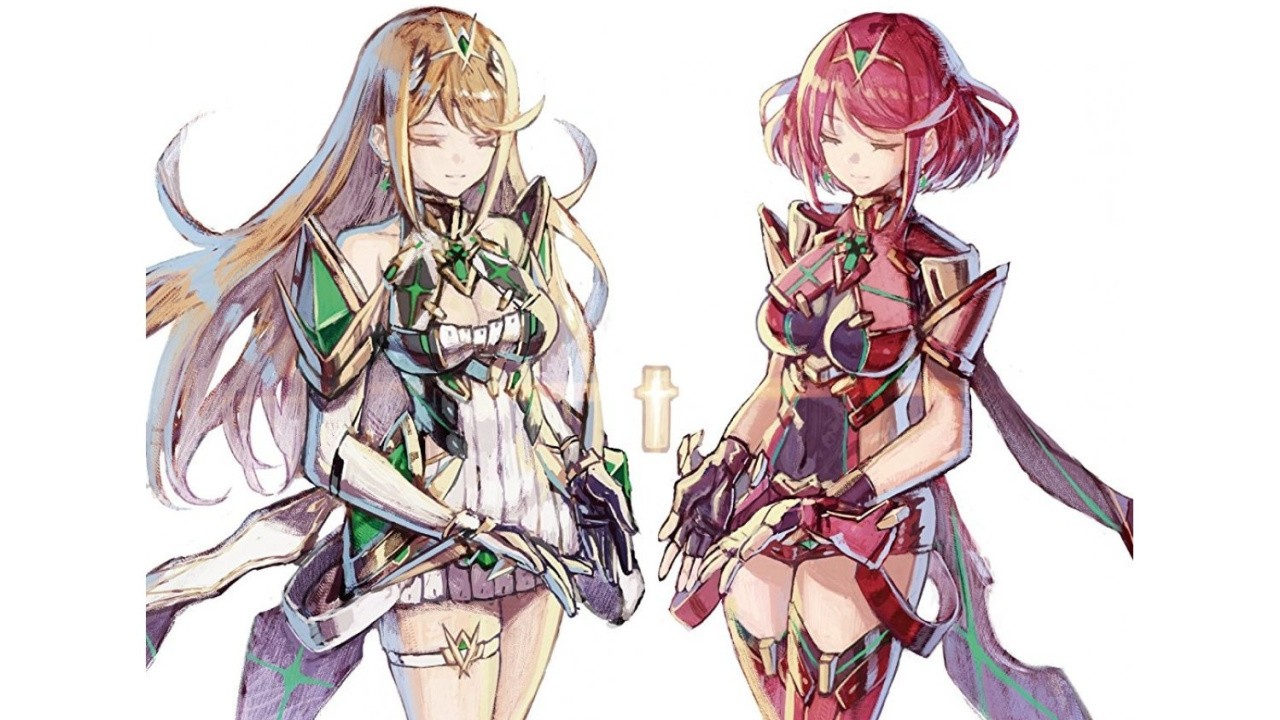
Xenoblade Chronicles 2 Is Getting A Gorgeous New Art Book
Nintendo and Kadokawa are set to release a brand new Xenoblade Chronicles 2 art book called ‘Xenoblade Chronicles 2 Official Artworks Alrest Record’.
The book will feature illustrations from the game’s main character designer Masatsugu Saito, four special illustrations by rare blade designer CHOCO, and contains art from both Xenoblade Chronicles 2 and Xenoblade Chronicles 2: Torna – The Golden Country. Characters, weapons, rare blades, titans, monsters, objects, and more will all appear.
It also includes lines from the game’s most memorable moments as part of a ‘story playback’ feature, and all of this content is wrapped up inside the gorgeous, 352-page book shown below. It’s A4 in size and is available in paperback.
Pre-orders have now gone live on Amazon Japan (the book is scheduled to launch on 2nd February) and costs ¥ 3,132 (approx. £22 / $29). While no western release has been confirmed, Amazon Japan does offer international shipping to most areas so importing shouldn’t be an issue.
Are you a Xenoblade fan? Would you like an official art book for your collection? Let us know if you’re considering buying a copy in the comments.
Top 10 UK Games Chart: New Super Mario Bros. U Deluxe Debuts At No.1 [Updated]
Update: UKIE, the suppliers of the UK games chart, has stated the charts it and GfK Chart-Track issued earlier today were "missing a significant number of sales, across multiple retailers." This data has since been amended and the list of top 10 games below has been updated to reflect this. There was one change resulting from the new information, with Bandai Namco's Tales of Vesperia: Definitive Edition debuting at No.9, instead of Crash Bandicoot N. Sane Trilogy. Original story follows.
New Super Mario Bros. U Deluxe for Nintendo Switch has debuted at the top of the UK physical sales chart, according to sales monitor GfK Chart-Track. The Switch exclusive was the best-selling boxed game for the week ending January 12, superseding FIFA 19, which drops to No.2.
Aside from Mario's remastered outing, there was only one new release last week. Tales of Vesperia: Definitive Edition came to Switch, PS4, and Xbox One, debuting at No.11.
Mario's latest adventure reviewed well and was awarded a 7/10 in GameSpot's New Super Mario Bros. U Deluxe review. "Despite its aging formula, New Super Mario Bros. U Deluxe is still a great entry in the series, with its typically tight platforming and both accessibility and depth to spare," we wrote. "While it can feel a bit stale for those who have been round the Mushroom Kingdom one too many times before, Deluxe is well worth playing, especially if you didn't get a chance to play NSMBU on Wii U."
You can read the full top 10 sales chart for this week below, courtesy of UKIE and GfK Chart-Track. Note this table does not include digital sales data, and so should not be considered representative of all UK game sales.