| Welcome, Guest |
You have to register before you can post on our site.
|
| Forum Statistics |
» Members: 19,864
» Latest member: Syduk01
» Forum threads: 21,593
» Forum posts: 22,430
Full Statistics
|
| Online Users |
There are currently 1206 online users.
» 0 Member(s) | 1201 Guest(s)
Applebot, Baidu, Bing, Google, Yandex
|
|
|
| AppleInsider - 22 hours only: LG’s 27″ 4K UHD monitor on sale for $289 ($210 off) |
|
Posted by: xSicKxBot - 11-18-2018, 08:55 AM - Forum: Apples Mac and OS X
- No Replies
|
 |
22 hours only: LG’s 27″ 4K UHD monitor on sale for $289 ($210 off)

By Christine McKee
Saturday, November 17, 2018, 10:44 pm PT (01:44 am ET)
LG’s 27-inch 4K display is on sale for $289.00 today only during B&H’s DealZone Event. A discount of $210 off retail, this deal delivers the lowest price anywhere on the UHD monitor.
For one day only, save $210 on LG’s 27-inch 4K UHD display (27UD68-P) during B&H’s DealZone Event. Priced at $289.00 after the instant discount, this offer provides shoppers with the lowest price anywhere, with third-party sellers on Amazon charging at least $100 more.
This monitor has HDMI 2.0 and DisplayPort 1.2 connectivity, so current MacBook Pro users will need a cable like this to benefit from the additional screen real estate. However, it’s a great way to get an abundance of screen space without breaking the bank.
In addition to the cash savings, B&H is also throwing in free expedited shipping on orders shipped within the contiguous U.S., putting the display in your hands in a matter of days. B&H also will not collect sales tax on orders shipped outside AL, HI, IL, IN, KY, MD, ME, MI, MN, MS, NJ, NY, ND, OK, VT, WA and WI.
This deal is valid today only while supplies last.
Apple Deals
AppleInsider and Apple authorized resellers are also running a handful of additional exclusive promotions this month on Apple hardware that will not only deliver the lowest prices on many of the items, but also throw in discounts on AppleCare, software and accessories. These deals are as follows:
|

|
|
| News - Forza Horizon 4 Black Friday 2018 Deals (Xbox One/PC) |
|
Posted by: xSicKxBot - 11-17-2018, 01:37 PM - Forum: Lounge
- No Replies
|
|
Forza Horizon 4 Black Friday 2018 Deals (Xbox One/PC)
Playground Games' Forza Horizon series has made a name for itself in the genre by offering tight and satisfying racing gameplay while setting it all in real-world locations that are picturesque and provide a variety of activities to engage in. The latest entry, Forza Horizon 4, will no doubt be a hot property when it comes to Black Friday deals, and although the event is still a few weeks away, ads for various retailers have confirmed discounts on the title. For those on the hunt for a good discount, there's a few options to consider, and most of them knock around $20 off the full price. First up, Best Buy has it priced at $30, which is currently the biggest discount that we've seen. Walmart, meanwhile, is offering the game for $35, and Target also has it for $35. It's worth noting that these are all physical versions of the game, as opposed to digital codes. The Xbox Store sale is now live for Xbox Live Gold members, discounting a digital copy to $39. While pricier than its physical counterpart, this does come with the benefit of Play Anywhere, allowing you to access the game on both Xbox One and PC. Forza Horizon 4 is also available through Xbox Game Pass, which is the Microsoft service that gives subscribers access to a selection of games for as long as they're a member. Although you won't outright own Forza Horizon 4, this is a way to play the game--alongside a bunch of others--for fairly cheap. Forza Horizon 4 launched on October 2, and has held up the series' high standards, earning a 9/10 from GameSpot. "There's such a diverse range of activities stuffed into every corner of Horizon 4, and meaningful changes contribute to smart driving dynamics and a more consistent sense of achievement," said Edmond Tran in his Forza Horizon 4 review. "Everything you do in Horizon feels valuable, no matter how big or small--from the basic thrills of speeding a fast car down a gorgeous mountain highway to spending time tinkering with your favorite ride to manage seasonal road conditions to just hanging out with friends and strangers online and goofing off in friendly games. The charm of the Horizon series is as palpable as ever, a winning, all-inclusive recipe that celebrates the joy of driving above all else." Forza Horizon 4 Black Friday Deals
|
|
|
|
| News - Your exciting Pokémon adventure through the Kanto region begins today |
|
Posted by: xSicKxBot - 11-17-2018, 01:37 PM - Forum: Lounge
- No Replies
|
|
Your exciting Pokémon adventure through the Kanto region begins today
Your exciting Pokémon adventure through the Kanto region begins today
Pokémon Trainers of all ages have a very important question to answer today: “Team Pikachu or Team Eevee?” That’s because the Pokémon: Let’s Go, Pikachu! and Pokémon: Let’s Go, Eevee! games for the Nintendo Switch system are now available in stores, on Nintendo.com and in Nintendo eShop on Nintendo Switch. No matter which version of the game you choose, you will embark on a fun journey through the vibrant Kanto region, catching and training Pokémon and battling Pokémon Trainers, Gym Leaders and the sinister Team Rocket – all with your partner Pikachu or Eevee by your side.
Feel like a true Pokémon Trainer when playing with the Poké Ball Plus accessory – also available today – which replicates the look and feel of a real-life Poké Ball. Control your entire adventure using just Poké Ball Plus and make a gentle throwing motion to capture Pokémon. You can even put a Pokémon from Pokémon: Let’s Go, Pikachu! and Pokémon: Let’s Go, Eevee! into the Poké Ball Plus accessory and take it on a stroll in the real world to level it up and receive in-game rewards. In addition, every Poké Ball Plus contains the Mythical Pokémon Mew.
“For newer Pokémon fans, these games offer a great entry point to the Kanto region with a rich story full of memorable characters and RPG gameplay, while longtime fans can revisit the place where it all began to compete in tough new challenges and earn the title of Pokémon Master,” said Doug Bowser, Nintendo of America’s Senior Vice President of Sales and Marketing. “With the ability to play the games anytime, anywhere on Nintendo Switch, Pikachu and Eevee are the perfect travel companions this holiday season.”
Last night, Nintendo threw an epic midnight launch party at Nintendo NY in Rockefeller Plaza to celebrate the release of these two new Nintendo Switch games. The store was decorated top to bottom with Pokémon décor, transporting visitors to their own mini Kanto region. Fans who came to the event got to meet the stars of the game, Pikachu and Eevee, and snap photos with other notable characters like Professor Oak, Brock and Erika. Pikachu and Eevee even posed for a photo with the first person in line to purchase the game.
In Pokémon: Let’s Go, Pikachu! and Pokémon: Let’s Go, Eevee!, you take on the role of a female or male Pokémon Trainer as you set off on an adventure with Pikachu or Eevee, depending on which version you play. On your journey to become the best Pokémon Trainer, you will visit multiple areas throughout the Kanto region, meet up with iconic characters and encounter various types of Pokémon – the true-to-size versions of these Pokémon even roam around the world. Seeing some of the larger Pokémon, like Onix, is quite the sight!
You can even share your journey with a friend as you capture Pokémon and battle Pokémon Trainers together on one Nintendo Switch system in TV mode or Tabletop mode using two Joy-Con controllers or two Poké Ball Plus accessories – or one of each! If your friends or family members also own one of the games and a Nintendo Switch system, you can battle and trade Pokémon directly with them via local wireless or online*.
Pokémon: Let’s Go, Pikachu!, Pokémon: Let’s Go, Eevee! and Poké Ball Plus are also compatible with the Pokémon GO app**. By connecting with Pokémon GO, you can transfer Pokémon originally discovered in the Kanto region into the game, including Alolan and Shiny forms, as well as the newly discovered Mythical Pokémon, Meltan and Melmetal. You can also use the Poké Ball Plus accessory with Pokémon GO to catch Pokémon and gather items from Poké Stops without looking at your smartphone.
Starting today, Pokémon: Let’s Go, Pikachu! and Pokémon: Let’s Go, Eevee! can each be purchased in a bundle with the Poké Ball Plus accessory at a suggested retail price of $99.99, or separately at a suggested retail price of $59.99 each. For those who don’t yet have a Nintendo Switch, there’s also a special-edition bundle featuring a Nintendo Switch system with themed Joy-Con controllers, a download code for either Pokémon: Let’s Go, Pikachu! or Pokémon: Let’s Go, Eevee!, and the Poké Ball Plus accessory, available at a suggested retail price of $399.99. Quantities of this adorable hardware bundle are extremely limited, so make sure you shop early. For more information about Pokémon: Let’s Go, Pikachu! and Pokémon: Let’s Go, Eevee!, visit https://www.pokemon.com/PokemonLetsGo.
And for more Pokémon excitement, Fathom Events and The Pokémon Company International invite fans to experience “Pokémon the Movie: The Power of Us” on the big screen, with U.S. screenings on November 24, 26, 28 and December 1, plus additional events in select territories. For more information and to purchase tickets, visit www.fathomevents.com/.
Remember that Nintendo Switch features parental controls that let adults manage the content their children can access. For more information about other features, visit https://www.nintendo.com/switch/.
*Nintendo Switch Online membership (sold separately) and Nintendo Account required for online play. Not available in all countries. Internet access required for online features. Terms apply. nintendo.com/switch-online
**Pokémon GO application, compatible smartphone and persistent Internet access required. Data charges may apply.

Mild Cartoon Violence
|
|
|
|
| News - Postmortem: Shiny Shoe’s streaming-only game Death†s Door: Aftermath |
|
Posted by: xSicKxBot - 11-17-2018, 01:37 PM - Forum: Lounge
- No Replies
|
|
Postmortem: Shiny Shoe’s streaming-only game Death†s Door: Aftermath
 The following blog post, unless otherwise noted, was written by a member of Gamasutras community.
The thoughts and opinions expressed are those of the writer and not Gamasutra or its parent company.
We at Shiny Shoe knew when we started working on our streaming-only game, Death’s Door, that we would be taking a risk. Creating a game that is only available to play on streaming platforms like Mixer and Twitch through viewer interaction had not been met with huge success. But rising popularity of game streaming platforms and the appeal of community-driven experiences like Twitch Plays Pokémon helped convince us that we were making the right bet. When Microsoft’s Mixer service asked if they could help us publish a sequel on their platform as a torchbearer for their unique interactive streaming content, we knew that bet had paid off. That sequel, Death’s Door: Aftermath is available to play (Fo’ free! Right now!) only on Mixer: https://mixer.com/deathsdoorgame.
Founded in 2011, Shiny Shoe is a group of 15 developers in San Francisco. In the past six years, we have shipped 5 original games and have helped clients ship many other games on a wide variety of platforms. Our cross-functional team contains a mix of experienced game industry veterans and new entrants to the industry. While Death’s Door was our first foray into the world of community-driven games, we’ve since used our experience to work on similar kinds of experiences such as our original games shown at Madison Square Garden in New York City.
We’ve recently announced that our stream of Deaths Door: Aftermath will be ending on November 30th with no current plans to continue (we’re still live right now!), but the two projects that we’ve published on this platform have been successful, constructive experiments in streaming-only, community driven experiences that have helped us to better understand the landscape of interactive streaming games and the possible future for new content developed on Mixer.
The Concept
Our back of the box description: “Death’s Door: Aftermath is a roguelike adventure inspired by classic RPGs and choose-your-own-adventure books, with one big twist: the whole community plays together via a live stream. Your vote helps guide The Revenant through a post-apocalyptic wasteland dotted with interesting encounters and tough enemies. Can you survive and defeat the ancient evil that destroyed the world?”
Death’s’ Door: Aftermath and its predecessor, Death’s Door, were conceived as streaming-only games where a community of people would adventure through our world together. We could scatter secrets throughout the game knowing that the audience couldn’t brute force or data mine the game for its secrets but would uncover them together. In both games, viewers come to our channel and watch the game unfold like any other stream. However, our channel presents the viewers (who are also players!) with choices to engage with directly as its sole input mechanic. Players can vote for one of the options presented and the majority vote will be picked to continue the game with the consequences shared amongst everyone watching.
Because there is only a single instance of the game running, all player state and progression are experienced by everyone at the same time. Secrets can be more deeply embedded into the game’s narrative with the assumption that players will crowdsource the solution and everyone will reap the reward once these mysteries have been cracked. Death’s Door and Death’s Door: Aftermath pull from different areas of design ranging from tabletop RPGs to large-scale social experiences and ARGs. And even with this weird combination of ideas, players have latched on to each game with a steadfast following and a hunger for more.
The original Death’s Door launched on October 31st, 2017 followed by sequel Aftermath launching on June 25th, 2018, exclusively on Mixer, and we’ve streamed consistently every Tuesday through Sunday from 9AM-10PM PDT since then. From the conception of the original to the sequel now in the twilight of its run, here are some of the things that we think went well… and some things that went a little less so.
[embedded content]
The Good
-
Choices are more engaging when lots of people suffer the consequences together.
With voting for options as our sole input mechanic, we put a premium on engaging decisions in Death’s Door: Aftermath. Each choice needed to feel meaty and consequential with any decision feeling valid given the current context of the game. Because the game would be streaming almost 80 hours a week and replayed constantly, it was only natural that we present these choices in a procedurally generated fashion, so we built the game with that in mind. We authored individual pieces of the game — one-off events, battles, longer “dungeon” sequences — and would remix and recombine the pieces in new ways with every run. While we tried to make each individual choice compelling on its own, it was the interaction within the context of all these other choices that provided the replayability that we needed and another layer of engagement to the game.
With our simple democratic approach to making decisions in the game, the audience could (hopefully) take responsibility for the choices and consequences made throughout their adventure. Different decisions would lead to lots of arguing in chat (inventory management is a particularly sensitive topic), but the aftermath of each decision was shared amongst everyone and added to the collective achievement, or disappointment, of the players.
This communal engagement added even another layer to decision-making with an organic system of social reputation and cachet now playing into which audience members could be trusted when offering advice (“Do they really know what they’re talking about or are they just trying to troll?”).
Misery loves company, but so does accomplishment!
-
Real Time Dungeon Master allowed for on the fly, in-game reaction.
We knew we couldn’t develop an homage to old-school dungeon crawlers and tabletop RPGs without a Dungeon Master! But we also knew players would be able to smell an automated Dungeon Master (DM) from miles away. So, we built functionality to send content to the game in real time allowing us to change the game on the fly or respond directly to chat memes under the guise on an in-game NPC. With some light intervention and clever writing, we were able to give players the sense that the DM was always watching, though players were sometimes unsure if this DM character was an in-game NPC intelligently responding to their actions or if there was a real human pulling the strings behind the curtain.
Regardless, this gave us the opportunity to create more reactive and dynamic experiences in real-time and create unique stories that would only ever play out one time. We doubled down on the Dungeon Master by building a web tool to submit content remotely and gave access to that tool to some of our trusted channel moderators. We also began to advertise a “DM Happy Hour” during weekdays to try and create some type of schedule-based programming. All of this led to players hoping (or not!) for a DM appearance in the game, whether that be to bless them with an OP run or scold them for cheating the system too much.
The Dungeon Master, when present, was also our stand-in “Streamer Personality” and provided some much-needed context and character to the game when large audiences were watching and playing. It was also a common “wow” factor for the game, adding another layer of mystery to what could be hiding behind different interactions.

-
Mixer!
Mixer’s focus on interactive experiences meant that our game was in line with several other new and experimental channels on the platform. We were one of a few other developers that were pushing the limits of their technology and finding new ways to use and break their tools. This community and the tools provided by the platform made the development of this game all the more seamless. At the time we launched both Death’s Door and Death’s Door:Aftermath, Mixer Interactive was live, an API and collection of web tools that allowed us to surface the game’s voting options as buttons below the stream.

Old Mixer Interactive Design
Our game offers a generous window of time to vote on a decision, but high-latency video playback meant that button updates in the web browser (updated by the Mixer Interactive web API) and information in the stream (updated via the stream output signal from OBS Studio) could sometimes get wildly out of sync creating a confusing play experience. Thankfully, the incredibly low-latency stream playback on Mixer meant that user input into the game felt responsive and easy to understand.
We also integrated use of Mixer’s passively earned currency, “Sparks”. Players can spend their sparks on fireworks that display in game (classified in-game as “Yay” and “Big Yay”). Each buy sends a single firework event to the game, allowing multiple players to send this event at once and celebrate boss wins or funny failures. The release of this feature immediately increased the engagement of players in the game, giving them another avenue for interaction and expression. Mixer has recently released collective sparks tracking on channels, allowing audience members to contribute their sparks to a weekly bucket that pays out cash to the streamer based on the number of sparks received (100,000 sparks for $15, 300,000 for $35, etc.) further cementing this feature as one of the more successful for engagement and returns.
Just recently, Mixer released a new set of tools to expand the kinds of experiences possible through stream interaction with Mixplay. Mixplay is a tool developed by Mixer for creating interactive stream overlays that can be personalized for each individual viewer. While the old API was easy enough to interact with from a desktop web browser, this setup could sometimes prove difficult to interact with from the Xbox and mobile apps. Our switch to Mixplay meant that we could surface voting options directly on the stream for more intuitive interaction and streamline the entire experience across all platforms, including mobile and console. It also led to…
-
Increased player engagement with individual progression
Death’s Door and Death’s Door: Aftermath were both developed as communal-only games and finding ways to improve player retention without the existence of individual progression was always a tough challenge. Early on we played with different ideas of individual player state, (e.g., players could gain levels that would give them more weight in votes). Because of the hard constraint that we could not show players’ personalized information, we never landed on anything that could be communicated succinctly in the stream video and would scale as players popped in and out of the channel.
With the advent of Mixplay we were able to push individual, personalized content to each individual player as a stream overlay. This led us to create the aptly named – if not that sexy – Individual Player Experience (IPE). We focused on existing Free-to-Play models by adding the ability to collect “Minis” (8-bit, chibi-style renderings of existing Death’s Door characters) and integrate a collection mechanic into the main game. By voting and playing through the main game, you could gain coins and occasionally be rewarded a chest for winning a fight or completing a run. In that chest would be a Mini card which would allow you to unlock that Mini or level them up, with some additional coins, for use in a separate combat loop.
With the launch of the IPE we saw an almost immediate uptick in viewer retention and engagement with many viewers engaging more with the new IPE than the main game’s voting. This solidified our thinking that a larger focus on individual progression is needed to make a community-driven game successful.

Individual Player Experience (IPE)
-
Great Community!
With the launch of Aftermath, we developed an automation pipeline to startup our stream on time every day, report us of outages, and handle shutdown every evening at a set time. This freed us up to develop more content for the game, but it also meant that we were sometimes less present in the channel itself. Thanks to our amazing channel moderators (shoutout to ssg_roguey and AdjectiveBeaver) and an incredibly supportive community, the channel was able to sustain itself with relative autonomy.
We frequently heard from players how they keep coming back to the game to play with their new friends in chat or how supportive and helpful the longstanding members of the audiences have been or how uncharacteristically friendly (for the internet) the mainstay audience members were to newcomers. Through the patience of our chosen moderators and our attempt at good-natured attitude when interacting with players, we were able to foster the welcoming community that exists now. Our game brought people into the channel, but our community helped keep the hardcore fans coming back.
The Not So Good
-
Onboarding new players.
Being on the forefront of stream interactive games meant that not many people understood that what they were watching was actually a game they could play right there. New players, who can arrive in the game at any moment, need to be able to understand what is going on at a glance. With Mixplay we were able to present a more targeted “tutorial,” instructing players on the basics of voting interaction and how choices are made in the game. But the multitude of different systems, RPG status effects and interactions, story events and consequences create a steep learning curve for new players.
Veteran players in chat could sometimes help mitigate this by explaining newcomers the rules but depending on the state of the game when those newbies first arrive, they could be completely confused by what they’re seeing and fall out of the stream as a result. New players could arrive in the middle of a final boss fight with a fully-loaded out player character, bombarded with all the different icons and stats they’re seeing on screen, and that can be, understandably, frustrating.
Some of the solutions we’ve discussed, but never got around to implementing, were mouse-over tooltips surfaced through Mixplay or more involved tutorial sequences for each individual user. Mixplay completely changed the playing field with what we’re able to do for an individual player and we’ve only scratched the surface in terms of delivering information succinctly and effectively.
-
Experienced players dominate.
Just like players in any MMO game, those with more experience have more power, and because there is little individual progress in Aftermath, experience is power. Experienced players know the consequences of different story decisions and they know how to optimize inventory loadouts for certain bosses. Experienced players want to find the hard-to-find secrets and beat the hard-to-beat enemies using their hard-earned knowledge. But that can be directly at odds with less-experienced players not knowing the optimal approach to a situation and keeping more experienced players from getting there. Or, less experienced players know the correct approach but want to see the suboptimal one since they’ve not experienced it personally.
The stratification between experienced players, newcomers, and everyone in between also means that there’s an inherent mixture of personal goals. Since everyone is playing the same instance of the game, creating opportunities for everyone to achieve their own, specific goals becomes difficult in our current game structure and is an ongoing problem that we’ve made attempts at solving. The IPE, for example, has improved each player’s sense of personal achievement, giving them something to focus on when the main game may not be creating their desired opportunities. So, continuing to invest in individual progression seems to be a strong solution for managing these different levels of experience.

-
High development cost with a (currently) low return business model.
Our lengthy streaming schedule means that players churn through new content quickly and we’ve consistently added new content to keep players satisfied, but the cost for this content creation can be high with returns hard to measure. Our primary monetization sources in Aftermath are channel subscriptions and donations. We received some return from each source with some in-game recognition for either action, but the IPE allowed for direct rewards for donating such as high-level minis and chests. Even though the IPE introduced more incentive for these actions the return rate is still low. Pair that with expensive content creation and you get a difficult-to-justify cost for a content treadmill that is demanding to keep running.
In Aftermath we added character class levels and objectives to try and gate content throughout the game behind game-specific goals (e.g. Kill 3 of a certain enemy, Do 1000 damage, etc.). This automatically lengthened the amount of time it takes for players to experience all of the content we have to offer but makes the game more “grindy” as a result.
As it stands right now, the business model for Aftermath is unsustainable given the cost of development. However, with the recent release of Mixer’s Season 2, monetization is more ingrained with stream interaction on a platform that’s continuing to grow rapidly, and we believe successful models can be found to not only make a sustainable game, but one that thrives.
-
No constant streamer.
Most streams distinguish themselves through the streamer’s personal brand and audience members keep coming back to those channels because of that streamer. Being a unique kind of game, Aftermath had no problem pulling people in to check out this new idea, but without a constant streaming personality on top of the experience, there wasn’t that constant human connection with the player to keep them coming back.
We automated many common streamer callouts (e.g. acknowledging followers, subscribers, and donations) and added specific “Subs-Only” and “Follower-Only” votes to encourage subscriptions and follows, but the lack of a constant personality made it hard to compete with the more “traditional” streams. Our Dungeon Master provided helpful character, but DM appearances aren’t consistent and interrupt the flow of the game. Combined with added audience confusion over the true existence of the DM as human intervenor or super-smart AI system, our DM character wasn’t the right solution for this problem.
Aftermath and other interactive stream experiences aren’t meant to replace streamers, but to provide a new sort of streaming content for people to engage with. But that hasn’t stopped us from incorporating more “streamer personality” into our channel. More recently, we’ve tried streaming ourselves on top of the game which has resulted in increased engagement with the channel and another scheduled time for players to return and engage with a real human being.
-
The Challenge of UBER-replayability.
At the time of this writing, the same instance of Aftermath has been streaming for over 1500 hours. Players have hopped in and out of the stream, but we’ve still designed Aftermath with the idea in mind that it’s possible for individual players to continue to play this game for 1000s of hours more. The roguelike structure of the game provides inherent replayability to the game, but the degree to which this game is replayed is far beyond anything we’ve created before. Add 1000s of individual people playing at once, and you have a game that needs to provide new experiences to a large audience who’s already played many hours all in one, single running instance of the game.
There was a definite learning curve for the development team to create meaningful content that could be replayed over and over and over again. Specifically, in trying to shy away from too much authored content and let the engaging experiences come together naturally through systematic collision. In Aftermath we began to add more player character items that were affected by your actions (e.g. an Axe that would do damage relative to the number of throwing axes you’ve used in a fight or a Relic that would give your player a base defense stat equivalent to the number of times you’ve attacked enemies’ weaknesses). This more systematic approach allowed players more opportunity to “break” the game, but that’s where some of the true fun of Aftermath lies.
But, being a narrative-heavy RPG, the need for authored content still exists and reading through the same boss dialogue for the 100th time isn’t exactly the most engaging. Trying to pivot towards an even more systems-heavy game or one with more procedurally-generated narrative could help to extend the replayability of the game, but each carries its own cost as well.

The Conclusion
Death’s Door: Aftermath is unlike anything we’ve built before. We set out to build a community-driven game that presented interesting decisions and consequences wrapped in a compelling and mysterious world. We wanted to create something that seemed bigger than the box with something else always hiding just a little farther ahead. And, in those ways, we achieved what we set out to do. The game is compelling and grew a dedicated, engaged audience that uncovered the lore and secrets we created for them.
The business case for interactive streaming-only games may not have supported sustainable development at the time of our release. But with more ingrained monetization within the platform and extended support for interactive controls, Mixer’s Season 2 paves the way forward for the next generations of these experiences and shows a promise towards even more development. By taking advantage of this new technology, leaning in to the unique interactions capable on streaming platforms, and providing a clear focus on personal player progression the next wave of streaming-only experiences can break the mold and become a viable new way to do game development.
In anything we create, there’s always something to be learned; something to be improved upon for the next go around. Hopefully, you can learn from our successes and failures so that we can be playing your game on Mixer soon enough. In the meantime, our stream is running until November 30 so why don’t you hop over to Mixer and give it a go while you still can!
Death’s Door: Aftermath: https://mixer.com/deathsdoorgame

|
|
|
|
| Xbox Wire - November 8th : New Preview Alpha 1811 Update (1811.181107-1810) |
|
Posted by: xSicKxBot - 11-17-2018, 01:37 PM - Forum: Xbox Discussion
- No Replies
|
|
November 8th : New Preview Alpha 1811 Update (1811.181107-1810)
HOW TO GET IT:
- If your console is in Instant-On mode and you have been selected to receive the update, it will download and install the update and reboot to standby.
- NOTE: Once the update is available to you, you can manually begin the update by launching the Guide and navigating to All Settings > System > Updates.
- If your console hasn’t downloaded and installed the update by 3:00 AM PDT 11/9/2018 (10:00AM GMT 11/8/18), you will be prompted to do so at that time.
DETAILS:
OS version released: rs5_release_xbox_dev_1811.181107-1810
Available: 6:00PM PST 11/8/18
Mandatory Date/Time: 3:00 AM PST 11/9/18
Starting at 6:00 p.m. PST today, members of the Xbox One Preview Alpha ring will begin receiving a new 1811 Xbox One system update (181107-1810). Read on for more about the fixes and known issues in the latest 1811 system update.
New Features:
Family Settings
- Children signing up for new accounts will now be asked to add a parent only if required to by local privacy regulations (e.g., GDPR or COPPA). This means that some minors, like teens in the U.S., will no longer have to add a parent and join a Microsoft family during signup. Xbox privacy and online safety defaults will still be applied based on age, and in order to change those, the minor would need to add a parent on Xbox who can then change their settings. Minors not in a family can add a parent anytime in Settings > Account > Family settings > Add a parent. Joining a family would also allow the parent and child to use other family features like content restrictions, screen time, activity reporting, and spending.
- Children that are subject to local privacy regulations will still be required to add a parent during signup. While this will create a Microsoft family through which the parent can use family features like content restrictions, screen time, activity reporting, and spending, the parent will no longer be required to sign in on Xbox. If a parent wants to change their child’s Xbox privacy and online safety settings, the parent can sign in separately on Xbox and manage their family in Settings > Account > Family settings.
- Existing child accounts are not affected by this change and will remain with their parents in their current Microsoft family.
Mouse & Keyboard Support
- We have enabled mouse support in this release. Please check out the Quest in the Xbox Insider Hub to experience mouse and keyboard support in Warframe.
Search Enhancements
- The search function has been enhanced across the console and will now return responses from the Xbox Assist application for example to help with help, support and troubleshooting. Please check out the Quest in the Xbox Insider Hub to help us gather feedback.
Fixes:
Unhide titles in My Games and Apps
- The sequence of keys to press to unhide titles from My Games and Apps has been changed:
- To Unhide items in you collection, press down on the left stick and hit ‘X’
System – Localization
- Fixed localization issues throughout the OS.
System – General
Known Issues:
Audio
- We are tracking audio issues in which some games have audio that cuts in and out.
Controllers
- We are aware of an issue where controllers may need to be re-synced after taking an update.
|
|
|
|
| News - Competition: Come And Join Us For Smash Battles Live! |
|
Posted by: xSicKxBot - 11-17-2018, 01:37 PM - Forum: Nintendo Discussion
- No Replies
|
|
Competition: Come And Join Us For Smash Battles Live!
In the run-up to the release of Super Smash Bros. Ultimate on Nintendo Switch next month, we’ve teamed up with Nintendo UK to bring you Smash Battles Live!
Smash Battles will take the form of a short series of videos, the first of which can be seen above. Together with the wonderful Arekkz Gaming, we’ll be bringing you up to speed with all things Super Smash Bros. Ultimate-related.
Super Smash Bros. has come a very long way from the original on the N64, moving on to Super Smash Bros. Melee which was a revolution for the series. This evolved into Super Smash Bros. Brawl on the Wii, and we finally got our first portable taste of Smash Bros. with the lovely Super Smash Bros. for Nintendo 3DS. At the same time as the 3DS version, Super Smash Bros. for Wii U brought the iconic series into glorious HD – soon we’ll get our grubby mitts on Super Smash Bros. Ultimate for the Nintendo Switch, which as the title suggests promises to be the ULTIMATE Smash game.
Every fighter from the classic Super Smash Bros. series of games is returning for Ultimate, as well as some new characters, such as Ridley. In the next three episodes of Smash Battles Live, we’ll be getting really in-depth about all things Smash and finding out the nitty-gritty details about everything which you could possibly want to know.
But that’s not all; we want you to get involved too and vote on who your favourite Smash characters are over on the Nintendo Life Instagram page. We’ll be posting new polls each day on Instagram, so you can tell us who your favourite Smash fighter is.
The final 8 characters that you have chosen will be the characters involved in a lovely live-streamed tournament. We’d love for you to join us there also, so if you head over to www.smashbattleslive.com you could be in with a chance to join us on the live stream battle.
From all of the entrants, four random people will be selected to join Alex, Arekkz and two yet-to-be-revealed special guests. The four people who join us will get to walk away with a special limited edition version of the Super Smash Bros. Ultimate game which includes a GameCube controller and adaptor. The overall winner will also walk away with a Super Smash Bros. Ultimate Nintendo Switch console too; this console has limited edition Joy-Con and a Smash Bros. themed dock. Fancy!
The big tournament will be happening at the Loading Bar which is located in Shepard’s Bush, London on 7th December in the evening – this just happens to be the launch day of a rather special Nintendo game of course.
So start voting for your favourite characters now over on Instagram. We’ll be pitting 4 characters against each other every day in the run-up to the big tournament. The entire roster of Super Smash Bros. Ultimate will be posted to our Instagram account, so every character will have a fighting chance. See you there!
Please note this tournament is open to entrants in the United Kingdom only.
|
|
|
|
| Steam - Daily Deal – Blendo Games Complete Collection, 73% Off |
|
Posted by: xSicKxBot - 11-17-2018, 01:37 PM - Forum: PC Discussion
- No Replies
|
|
Daily Deal – Blendo Games Complete Collection, 73% Off
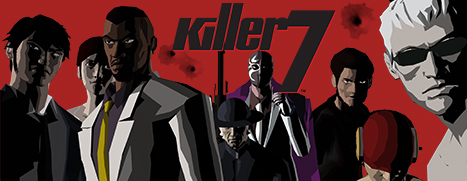
killer7 is Now Available on Steam and is 10% off!*
Step into the stylish and sinister world of killer7, the cult classic from Grasshopper Manufacture, Ltd., available for the first time in 13 years. Renowned for its unique gameplay and legendary storytelling from SUDA51, Hiroyuki Kobayashi, and Shinji Mikami, arrives on Steam for the first time.
*Offer ends November 22 at 10AM Pacific Time
|
|
|
|
| Microsoft - SMITE and Paladins esports return to Mixer |
|
Posted by: xSicKxBot - 11-17-2018, 01:37 PM - Forum: Windows
- No Replies
|
|
SMITE and Paladins esports return to Mixer

Mixer has a long-standing partnership with Hi-Rez, starting with the Paladins Console Series announced in October of last year, and then the announcement of the SMITE Pro League last February. Earlier today at Hi-Rez Expo (HRX), we announced a continued partnership with Hi-Rez Studios and Skillshot Media, which includes the expansion of SMITE and Paladins esports exclusively on Mixer!
We’re excited to share that the 2019 season of the SMITE Pro League and SMITE Console League will continue to be exclusive on Mixer, building on the success of both leagues during Season 5. In addition, the other premium league from Hi-Rez, Paladins Premier League, featuring the top esports organizations from around the world, will also be coming exclusively to Mixer in 2019!
Earlier this year, Mixer implemented interactive stats dashboards for SMITE esports broadcasts using MixPlay custom controls. We will continue to introduce innovative Mixer features, such as MixPlay integrations and custom Skill packs, for all future SMITE and Paladins esports broadcasts.
The latest integration, MixPlay Rewards, where you can earn in-game items just by linking your Mixer and Hi-Rez accounts and watching official Hi-Rez broadcasts, will debut at HRX this weekend for both SMITE and Paladins broadcasts. Tune-in to official Hi-Rez Expo broadcasts for SMITE and Paladins on Mixer to earn HRX Loki and Convention Furia!
We’ll be announcing more exciting news about the 2019 season of SMITE and Paladins esports over the next few days at HRX – follow @WatchMixer, @SmitePro, and @PaladinsPro on Twitter for all the latest updates!
|
|
|
|
| Microsoft - Meeting the tech demand for security-cleared veteran talent |
|
Posted by: xSicKxBot - 11-17-2018, 01:37 PM - Forum: Windows
- No Replies
|
|
Meeting the tech demand for security-cleared veteran talent

This post was originally published on LinkedIn and written by U.S. Marine Corps Major General (Ret.) Chris Cortez, vice president of Microsoft Military Affairs, on November 15, 2018.
Today the United States government faces an unprecedented range of threats—from both traditional foes to modern menaces in the digital realm. And as our country faces these new challenges, it is also in the midst of a digital transformation of its services and operations. Equipping people on the front lines of national security with modern skills and technological awareness is paramount, and we’re committed as industry partners to helping along that journey.
Yet, the work of modernizing and protecting the US government is not just a technology story, it is a people story. Our ability to safeguard our people and institutions relies on a highly specialized and skilled workforce to build, code, and innovate for the future. What we’re seeing now though is a gap between the demand for capabilities and the supply of this much-needed talent.
Many of us have heard about the technology skills gap. We know that technology jobs are growing at a faster rate than the average for all other occupations, and that the demand greatly outpaces the supply. The Brookings Institution suggested last year that digitization of the US economy will require significant investment in education and training both to broaden the pipeline of talent and also to ensure that underrepresented groups aren’t left behind in the new digital economy.
In government though, there is an even more specific gap—that of “cleared talent”—those with security clearances that can be applied to tackle problems that require access to highly sensitive information. And within this pool of talent, there is a very small population of cleared talent with the background in technology that is required to help our government modernize at levels needed. Despite the need to expand this workforce, we’ve seen the population of cleared talent decrease by 30 percent since 2013, with wait times for security clearance approvals now at their highest level ever. Last year, the US was sitting on a security clearance backlog of more than 700,000 applicants.
New data we obtained in partnership with LinkedIn shows the demand for cleared software engineers is very high—with the Washington, D.C., area as the highest demand in the country—and that only 5 percent of professionals with a security clearance hold a degree in computer science. The top two industries hiring cleared talent are also expected to grow even more in the next year: The defense and space industry by 53 percent, and the information technology industry by 49 percent.
The stunted pipeline for cleared talent is not just an HR problem. It is a matter of national security and a threat to progress and innovation.
One population that is critical to help close this gap is our country’s talented veteran workforce. We know that 200,000 military members transition out of the service every year, and, of those with security clearances, many are active duty military, according to a 2018 ClearanceJobs.com report.
At Microsoft, we pioneered Microsoft Software & Systems Academy (MSSA), which trains transitioning service members and veterans over the course of an 18-week program for careers in the IT industry. Since MSSA started five years ago, nearly 400 companies and organizations have hired our graduates. For us, it’s proof not only that veterans are an incredible talent pool, but that programs like MSSA are essential to addressing critical skills gaps in the tech industry outside the traditional four-year degree. Companies like Microsoft are better for having these phenomenal veterans working for us and helping advance our mission.
That’s why I am excited to announce that Microsoft will launch a new, dedicated MSSA-cleared talent cohort at Washington state’s Joint Base Lewis-McChord this spring. The program will cater to service members and veterans with active clearances who are interested in learning cloud application development, which is in high demand in the technology industry. As with every MSSA cohort, these students will be mentored by current Microsoft employees and upon completion of the course will be guaranteed an interview with Microsoft or one of our hiring partners, including the US government.

National security depends on private and public institutions working together to prevent and address emerging threats. And being a trusted partner for government transformation means that we are just as committed to investing in our own talent pipeline as we are in theirs. Innovative training programs like MSSA, which benefit both veterans and the industry as a whole, are critical.
There is much more that can be done to address both the technology skills gap and the cleared talent gap, but we must seek new and innovative ways to both build our pipeline of workers and support those who are being left out of the digital economy. Empowering active duty service members and veterans to transition to careers in technology is a win-win for helping to sustain a vital population of our workforce while building a critical, diverse pipeline for in-demand talent. By prioritizing IT and technology training for veterans to operate in the private sector, we can transform our collective capabilities to keep our country safe and moving forward.
Visit military.microsoft.com/MSSA to learn more.
|
|
|
|
|
|
|