Amid Its Major Success, Crazy Rich Asians Sequel Is On The Way
There's a saying that the rich get richer. And in the case of Crazy Rich Asians, it seems the adage rings true. It's been confirmed that the Jon M. Chu-directed romcom will get a sequel, with Chu returning to lead the project.
According to the Hollywood Reporter, Warner Bros. Pictures has given the OK to continue development on the Crazy Rich Asians sequel, "with plans to reunite the first movie's original team, including producers Nina Jacobson and Brad Simpson." Although Chu is occupied with a few other projects--including Lin-Manuel Miranda's first musical--sources told the Hollywood Reporter he'd possibly direct the sequel after completing Miranda's In the Heights adaptation, which is scheduled for a June 2020 release.
While Warner Bros. hasn't officially greenlit the project, development on the sequel is still moving forward. It's not uncommon for film studios to monitor the performance of a new franchise before going all in, but Crazy Rich Asians has been exceeding expectations since its opening, grossing an approximate combined total of $40 million dollars worldwide and knocking The Meg out of the water this past weekend. Fans and analysts alike have been impressed with Crazy Rich Asians, especially considering it's the first Hollywood movie since 1993’s The Joy Luck Club to star an all-Western Asian cast.
Crazy Rich Asians is based on the 2013 novel of the same name written by Singaporean-American author Kevin Kwan. As noted by the Hollywood Reporter, Warner Bros. has access to Kwan's entire trilogy, including 2015's China Rich Girlfriend and 2017's Rich People Problems. "We have a plan with Kevin for the next two films," producer Brad Simpson said.
ASP.NET Core 2.20-preview1: Open API Analyzers & Conventions
What is it?
Open API (alternatively known as Swagger) is a language-agnostic specification for describing REST APIs. The Open API ecosystem has tools that allows for discovering, testing and producing client code using the specification. Support for generating and visualizing Open API documents in ASP.NET Core MVC is provided via community driven projects such as NSwag, and Swashbuckle.AspNetCore. Visit https://docs.microsoft.com/en-us/aspnet/core/tutorials/web-api-help-pages-using-swagger?view=aspnetcore-2.1 to learn more about Open API Swagger and for details on configuring your applications to use it.
For 2.2, we’re investing in tooling and runtime experiences to to allow developers to produce better Open API documents. This work ties in with ongoing work to perform client code SDK generation during build.
How to use it?
Analyzer
For 2.2, we’re introducing a new API-specific analyzers NuGet package – Microsoft.AspNetCore.Mvc.Api.Analyzers. These analyzers work with controllers annotated with ApiController introduced in 2.1, while building on API conventions that we’re also introducing in this release. To start using this, install the package:
Open API documents contain each status code and response type an operation may return. In MVC, you use attributes such as ProducesResponseType and Produces to document these. The analyzer inspects controllers annotated with ApiController and identifies actions that do not entirely document their responses. You should see this as warnings (squiggly lines) highlighting return types that aren’t documented as well as warnings in the output. In Visual Studio, this should additionally appear under the “Warnings” tab in the “Error List” dialog. You now have the opportunity to address these warnings using code fixes.
Let’s look at the analyzer in action:
The analyzer identified that the action returned a 404 but did not document it using a ProducesResponseTypeAttribute. We used a code fix to document this. The added attributes would now become available for Swagger / Open API tools to consume. It’s a great way to identify areas of your application that are lacking swagger documentation and correct it.
Conventions
If your controllers follows some common patterns, e.g. they are all primarily CRUD endpoints, and you aren’t already using ProducesResponseType or Produces to document them, you could consider using API conventions. Conventions let you define the most common “conventional” return types and status codes that you return from your action, and apply them to individual actions or controllers, or all controllers in an assembly. Conventions are a substitute to decorating individual actions with ProducesResponseType attributes.
By default, ASP.NET Core MVC 2.2 ships with a set of default conventions – DefaultApiConventions – that’s based on the controller that ASP.NET Core scaffolds. If your actions follow the pattern that scaffolding produces, you should be successful using the default conventions.
At runtime, ApiExplorer understand conventions. ApiExplorer is MVC’s abstraction to communicate with Open API document generators. Attributes from the applied convention get associated with an action and will be included in action’s Swagger documentation. API analyzers also understand conventions. If your action is unconventional i.e. it returns a status code that is not documented by the applied convention, it will produce a warning, encouraging you to document it.
There are 3 ways to apply a convention to a controller action:
Applying the ApiConventionType attribute as an assembly level attribute. This applies the specified convention to all controllers in an assembly.
Using ApiConventionMethod. This attributes accepts both the type and the convention method.
// PUT: api/Pets/5

[ApiConventionMethod(typeof(DefaultApiConventions), nameof(DefaultApiConventions.Put))]

[HttpPut("{id}")]

public async Task<ActionResult<Pet>> PutPet(long id, Pet pet)

{
 ...

}
Like many other features in MVC, more specific attributes will supersede less specific ones. An API metadata attribute such as ProducesResponseType or Produces applied to an action will stop applying any convention atributes. The ApiConventionMethod will supersede a ApiConventionType attribute applied to the method’s controller or the assembly; and an ApiConventionType attribute applied to a controller will supersede ones applied to the assembly.
Authoring conventions
A convention is a static type with methods. These methods are annotated with ProducesResponseType or ProducesDefaultResponseType attributes.
Applying this convention to an assembly would result in the convention method applying to any action with the name Find and having exactly one parameter named id, as long as they do not have other more specific metadata attributes.
In addition to ProducesResponseType and ProducesDefaultResponseType, two additional attributes – ApiConventionNameMatch and ApiConventionTypeMatch – can be applied to the convention method that determines the methods they apply to.
[ProducesResponseType(200)]
[ProducesResponseType(404)]
[ApiConventionNameMatch(ApiConventionNameMatchBehavior.Prefix)]
publicstaticvoidFind(
[ApiConventionNameMatch(ApiConventionNameMatchBehavior.Suffix)]
int id)
{ }
The ApiConventionNameMatchBehavior.Prefix applied to the method, indicates that the convention can match any action as long as it starts with the prefix “Find”. This will include methods such as Find, FindPet or FindById. The ApiConventionNameMatchBehavior.Suffix applied to the parameter, indicates that the convention can match methods with exactly one parameter that terminate in the suffix id. This will include parameters such as id, or petId. ApiConventionTypeMatch can be similarly applied to types to constrain the type of the parameter. A params[] arguments can be used to indicate remaining parameters that do not need not be explicitly matched.
This is one on our earliest forays in trying to use tooling to enhance runtime experiences. We’re interested in any thoughts you have about this as well as your experiences using this in your applications. The best place to provide feedback is by opening issues at https://github.com/aspnet/Mvc.
Kazuma Kiryu thought his Tojo Clan days were behind him. He and his young ward, Haruka Sawamura, have built a peaceful life from the ashes of conflict. All it took was a single gunshot to shatter that peace. Yukio Terada, the fifth chairman of the Tojo Clan, has been assassinated. With war on the horizon, the legendary Dragon of Dojima is pulled back into the world he wanted to leave behind.
Build and manage a medieval graveyard while facing ethical dilemmas and making questionable decisions. Welcome to Graveyard Keeper, the most inaccurate medieval cemetery sim of the year.
The Happytime Murders Review: It's A Dirty Muppet Movie
When the first trailer for The Happytime Murders arrived, it was clear what kind of movie this was going to be. It's a dirty version of the Muppets. What's more, it's from director Brian Henson, son of Muppets creator Jim Henson. The potential for something cool and different was obvious. The only question is whether the movie would hit the mark or not.
As it turns out, for the most part, it lands pretty well. The Happytime Murders is set in a world where humans and puppets coexist. When the former stars of a 1980s TV show get murdered, disgraced former puppet cop Phil Phillips (Bill Barretta) and human detective Connie Edwards (Melissa McCarthy) are forced to work together to find the killer. It's a pretty straightforward murder mystery that just so happens to be loaded with foul-mouthed puppets, lots of violence, and one wildly awkward sex scene.
Still, the story actually works. While it's not hard to figure out who the villain of the film is, figuring out their motivations is a different story. The plot also opens up a world that would be very interesting to visit again in future movies, should that be in the cards.
As simple and interesting as the story is, though, there is one major problem with The Happytime Murders. This adult puppet movie is simply too adult. There is a certain novelty to the idea of puppets that curse, have sex, and do horrible things. In practice, though, it's very easy to take the joke too far. Throughout the film, puppets and humans let the cursing fly so gratuitously and frequently that the impact of it simply wears off. It happens so often that it ceases being funny and instead seems like the movie is trying too hard to be edgy. How many times can a character drop an F-bomb in the span of two minutes before it means absolutely nothing? That's something The Happytime Murders is keen to explore.
Likewise, with graphic content, this movie doesn't seem to know when to stop. In the red band trailer, there is a sequence where one of the puppets has an orgasm that lasts so long it overstays its welcome a bit. Somehow, though, it's even longer in the movie. There's an audience for gross-out humor that will undoubtedly find themselves giggling at these moments in the film, but just a bit of restraint would have greatly improved the movie.
There's still plenty to like about The Happytime Murders, though. Strangely, building this odd world where humans and puppets live together in something far less than harmony is where The Happytime Murders excels most. From the beginning of the film, it's explained that puppets are seen as less than, and often subservient to, humans. They're the target of verbal and physical abuse, and some of them spend their time and money in an attempt to transform their looks to appear more human, while others have bought into the idea that they exist only to entertain humans.
Chances are you're not expecting the dirty puppet movie to examine racism in America at all. However imperfect a comparison it may be, though, it's one of the things The Happytime Murders does well. What's more, setting the film in Los Angeles, a city with a massive immigrant population, goes a long way in illustrating the divide.
The cast is another piece of the puzzle that fits well. While Melissa McCarthy is mostly doing the same thing she always does--yelling and falling down, while cursing--she somehow manages to have chemistry with a puppet. However, there is an odd running joke throughout the film that everyone thinks she's a man. It might have been funny once or twice, but by the third, fourth, or fifth time that particular joke is revisited, it's just tired.
The biggest standout of the of the movie is Maya Rudolph, who plays Phillips' secretary Bubbles. She serves as a potential love interest for the former cop and manages to have many of the movie's funniest moments, whether at her desk in Phillips' office or out in the field helping to solve the mystery.
If you're expecting to see some of your favorite Muppets in the film, you'll be disappointed. None of them make cameo appearances. After all, the Muppets are owned by Disney. Still, it will be impossible to look at the puppets in this film without knowing they were designed by The Jim Henson Company. Likewise, Muppet veterans Barretta, Julianne Buescher, Kevin Klash, and Alice Dinnean make up the puppet voice cast.
In all, The Happytime Murders is a fun and very interesting film to watch. It's as close as you'll ever get to a Rated-R Muppet movie and sets up what could become a potential franchise that would be exciting to revisit--just maybe with a little restraint next time.
The Good
The Bad
A simple, easy-to-follow plot
There's so much cursing that it makes the foul language mean nothing
The use of notable Los Angeles locations helps ground the movie
It's not hard to figure out who the killer is
Its examination of racism was very unexpected
The puppet sex scene lasts way too long
Maya Rudolph blows the rest of the cast out of the water
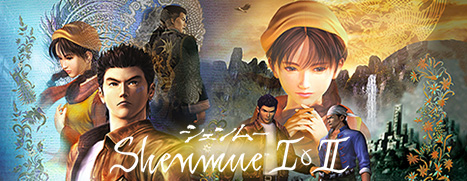
SEGA®’s most requested re-release of all time finally comes to a new generation. Shenmue delivers an epic story of revenge within a unique open world that is still unrivalled in depth and detail. Return to the epic saga that defined modern gaming. The saga begins…again.
Scammers are still trying to snag free games from indie devs
“I have the benefit of working for a lot of different indie devs, so I notice patterns that a developer who’s only putting out their one game wouldn’t seeAU.”
– Emily Morganti speaking to Kotaku about key scammers trying to take advantage of independent developers.
Before a game is launched, it’s likely that a strange email address requesting a free copy for review purposes will show up in the inbox of an unsuspecting indie dev.
Key scammers utilize this method constantly, and it’s no secret that it’s an issue within the industry.
In a recent interview with Kotaku, Emily Morganti, who handles PR for adventure games, discusses how key scammers continue to be a problem for indie devs trying to market their titles without being conned.
Morganti explains the subtleties that lie in every odd request, which takes the form of misleading email addresses and copy that seems off.
“Some of these people email about every game that comes out, using the same copy-and-paste email. Some people do a blanket request for multiple games on the same day—so multiple developers are getting the exact same email about how excited someone is to stream their game,” she explains.
“There was one guy a few years ago with a long sob story about how he’d lost his job and had a big tax bill to pay and couldn’t afford games but a free copy of [insert game name here] would make his life complete.”
Despite sharing a few similarities, every scammer works differently when it comes to execution. The last notable scammer Morganti encountered made waves, as he reached out to many devs for free codes.
Going by the name Dmitry Tseptsov, he sent several emails to Morganti asking for codes, explaining that he operated a coffee shop in Ukraine where he’d give out video games as prizes for trivia. Unsurprisingly, the request turned out to be a ploy for free codes despite the cafe being a legitimate business.
Morganti admits that its becoming difficult to parse which review requests are honest and which ones are malicious. She recalls an instance where an editor for a publication reached out for a code the same time a scammer (who was impersonating the editor) did as well.
“I heard from the editor first and added him to my list for a review copy, and then I heard from the scammer on the day we got keys, and I sent it to him thinking it was the same person,” she says. “A few days after that, the real editor emailed me to ask where his key was, and we pieced it together.”
“I’ve been doing PR since 2006 and always had a policy of sending a key to anyone who asked for one, no matter how small the site, but I’m a lot more suspicious now,” Morganti continues.
“The work involved in vetting people to figure out if they’re legit or not isn’t worth the effort and I think writers from smaller sites and freelancers are paying the price.”
She was speaking as part of a longer discussion around scammers trying to take advantage of independent developers and how it affects smaller contet creators, so be sure to read the entire piece over at Kotaku.
A Patch For Morphies Law Has Been Submitted To Nintendo To Fix Online Issues
Cosmoscope, the studio behind Switch newcomer Morphies Law, has submitted a patch to Nintendo in order to fix some of the issues experienced by early players.
If you missed the news, Morphies Law recently ‘did a Fortnite‘, surprising everyone by launching on the system without any real warning; the game was shown off during the 2018 Indies Showcase, and was available on the console just hours later.
The premise is incredibly creative, and the game offers up an interesting twist on the shooter genre with its changing body mass mechanic. Players have noticed some frustrating issues early on, however – a fact that we confirmed in our review.
If you’ve been playing the game and faced the odd issue or two, here are the full patch notes currently under review by Nintendo. Assuming it’s approved, these changes should soon be implemented to improve the game’s performance:
– Changed online settings to enforce geographical proximity – this should alleviate the lag while we continue working on setting up dedicated servers, please let us know your feedback. – Fixed spawn protection – now you’ll be invincible for 5 seconds or until you leave your base. – Fixed gunshot sounds looping infinitely sometimes on death. – Fixed loud sounds that would sometimes play before the map intro. – Fixed XP gains for private games – it is now 75% of the regular online XP instead of 25%. – Increased the daily cap on XP and Nuts that can be gained from offline/private/local games to 5000XP and 500Nuts. – Fixed bug in Tanker Town where exiting tunnels at certain inclinations would sometimes kill you. – Fixed the recharge time of weapon part “Sonic Punch” – it is no longer spammable. – Disabled the ability to “unready” in private/LAN matches to avoid potential 5v3 scenarios.
Did you grab a copy of the game on day one? How have you found the experience? Let us know how you’ve been getting on in the comments below.
Miyamoto Doesn’t Want To Make An MMORPG Because It Would Be Boring
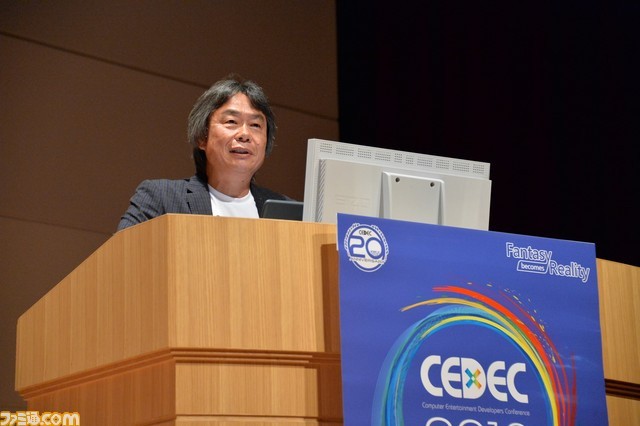
Shigeru Miyamoto – the creator of many of Nintendo’s most successful franchises and all-round lovable guy – recently delivered a keynote speech for the 2018 Computer Entertainment Developers Conference held in Yokohama, Japan. We actually covered the news not that long ago, but some new information regarding his speech has since come to light.
Alongside talk of smartphone gaming culture, praise towards Minecraft – which he apparently wishes he had created himself, and general words of wisdom, Miyamoto-san shared his thoughts on the genre of MMORPGs. If you’re unfamiliar, massively multiplayer online role-playing games – to give them their full title – take an awful lot of work to develop and maintain. Titles such as World of Warcraft – which now has over 100 million user accounts attached to it – need constant monitoring, updates, and more to stay relevant as the game continues to evolve online.
Here’s a snippet of what he had to say:
“A few years ago, when MMORPGs were coming into fashion, I didn’t want to make one. Since I get tired of things easily, I don’t want to keep making one game.”
He went on to explain that, while the free-to-play business model is something that he’s not particularly keen on – and would put him off creating an MMORPG regardless – it’s actually his personal working style that causes the bigger issue. He said that once a game has been developed, he wants to instantly move on to the next project rather than being stuck on the same title; having to push out new updates and keep on top of maintenance doesn’t suit his personality.
So there you have it – if you were hoping for a new, Miyamoto-created take on the MMORPG genre, you’re probably out of luck. Still, the Nintendo legend has mastered so many other genres in his lifetime that we can definitely let him off on this one.
The year is 1983. The world teeters on the verge of destruction as the Cold War tightens its icy grip. East or West: trust no one, question everything. The fate of humanity rests in your hands as you pit spy versus spy in tactical Phantom Doctrine.