Posted by: xSicKxBot - 07-12-2018, 02:24 PM - Forum: Windows
- No Replies
Minecraft Update Aquatic Phase Two available now
A whole new wave of features has drifted into Minecraft! Players on Windows 10, VR, mobile devices, Xbox One and Nintendo Switch will find the second Phase of Update Aquatic pouring into their game today, including adorable turtles, bubble columns that punish careless swimmers and a sinister new mob. Yay/yikes!
Java players, we haven’t forgotten you – the incredibly hard-working Java team are almost done putting together the Update Aquatic for your version – why not try the latest Java pre-release to experience some of the Aquatic features right now?
Here’s what’s new for Phase Two!
FULL LIST OF PHASE TWO FEATURES
Realms are now available on Nintendo Switch
The Drowned – These dangerous, underwater zombies lurk in dark, deep water and will come up to the shore at night
Sea Turtles – These gentle creatures can be found swimming in oceans and tanning on beaches. Protect their eggs so more can hatch!
Turtle Shell and Scute items
Potion of the Turtle Master
Nautilus Shells – Can be found while fishing or held by the Drowned
Conduits can now be constructed underwater and give players the Conduit Power effect. Craft them with Nautilus Shells & Heart of the Sea
Bubble Columns – Magma Blocks create downward flowing columns and Soul Sand creates upward flowing bubbles
New Achievements!
Added new commands that only affect worlds with Education Edition enabled: 1. /ability – Sets a player’s ability 2. /immutableworld – Sets the immutable state of the world 3. /worldbuilder – Toggle World Builder status of caller
CHANGES
Changed the menu background to be themed for Update Aquatic
Undead mobs will now sink in water and can walk on the bottom
Improved the steering of Boats when using keyboard and mouse by pressing W to move forward and S to reverse
Dolphins can now be given Raw Fish or Raw Salmon and will swim towards the nearest Ocean Ruins or Shipwreck
Husks that have sunk in water will now transform into Zombies and Zombies will transform into Drowned
Skeleton Horses can now be ridden underwater
Skeletons and Strays will switch from ranged to melee attacks while underwater and switch back when out of water
Coral blocks will no longer die as long as one side is touching water
Improved player swimming at the surface of water
Tridents can now be enchanted with Mending and Unbreaking
Added an animation when using Riptide in first person perspective
Slightly decreased the friction of Blue Ice
Updated the texture of the top of Kelp
Updated the texture of Cooked Fish
Updated the Riptide spin texture
Default Field of View has been reduced from 70 to 60 and can be adjusted in Video Settings
Tridents will no longer break blocks in Creative mode
The Inventory button has been moved to the top of the Store page
5 Reasons Open Source Certification Matters More Than Ever
In today’s technology landscape, open source is the new normal, with open source components and platforms driving mission-critical processes and everyday tasks at organizations of all sizes. As open source has become more pervasive, it has also profoundly impacted the job market. Across industries the skills gap is widening, making it ever more difficult to hire people with much needed job skills. In response, the demand for training and certification is growing.
In a recent webinar, Clyde Seepersad, General Manager of Training and Certification at The Linux Foundation, discussed the growing need for certification and some of the benefits of obtaining open source credentials. “As open source has become the new normal in everything from startups to Fortune 2000 companies, it is important to start thinking about the career road map, the paths that you can take and how Linux and open source in general can help you reach your career goals,” Seepersad said.
With all this in mind, this is the first article in a weekly series that will cover: why it is important to obtain certification; what to expect from training options that lead to certification; and how to prepare for exams and understand what your options are if you don’t initially pass them.
Seepersad pointed to these five reasons for pursuing certification:
Demand for Linux and open source talent. “Year after year, we do the Linux jobs report, and year after year we see the same story, which is that the demand for Linux professionals exceeds the supply. This is true for the open source market in general,” Seepersad said. For example, certifications such as the LFCE, LFCS, and OpenStack administrator exam have made a difference for many people.
Getting the interview. “One of the challenges that recruiters always reference, especially in the age of open source, is that it can be hard to decide who you want to have come in to the interview,” Seepersad said. “Not everybody has the time to do reference checks. One of the beautiful things about certification is that it independently verifies your skillset.”
Confirming your skills. “Certification programs allow you to step back, look across what we call the domains and topics, and find those areas where you might be a little bit rusty,” Seepersad said. “Going through that process and then being able to demonstrate skills on the exam shows that you have a very broad skillset, not just a deep skillset in certain areas.”
Confidence. This is the beauty of performance-based exams,” Seepersad said. “You’re working on our live system. You’re being monitored and recorded. Your timer is counting down. This really puts you on the spot to demonstrate that you can troubleshoot.” The inevitable result of successfully navigating the process is confidence.
When you’re the hiring manager, you will appreciate certification. “As you become more senior in your career, you’re going to find the tables turned and you are in the role of making a hiring decision,” Seepersad said. “You’re going to want to have candidates who are certified, because you recognize what that means in terms of the skillsets.”
Although Linux has been around for more than 25 years, “it’s really only in the past few years that certification has become a more prominent feature,” Seepersad noted. As a matter of fact, 87 percent of hiring managers surveyed for the 2018 Open Source Jobs Report cite difficulty in finding the right open source skills and expertise. The Jobs Report also found that hiring open source talent is a priority for 83 percent of hiring managers, and half are looking for candidates holding certifications.
With certification playing a more important role in securing a rewarding long-term career, are you interested in learning about options for gaining credentials? If so, stay tuned for more information in this series.
Posted by: xSicKxBot - 07-12-2018, 07:36 AM - Forum: Lounge
- No Replies
PS4's Huge Mid-Year Sale Has Hundreds Of Game Discounts In The US
Good news for deal hunters: Sony is running a massive Mid-Year Sale on the US PlayStation Store, with discounts on over 800 items between now and July 17. That's a seriously big sale, significantly larger than most weekly PlayStation Store sales. So if you're looking to save money on digital PS4, PS3, PS Vita, and PSVR games, now's the time to do it. And if you're a PS Plus member, you get a bonus 10% off. Let's take a look at some of the biggest and best games that are on sale right now. [Update: In addition to what's available through the Mid-Year Sale, we've also gotten some additional PSN discounts, including a nice $20 offer on GTA V.]
To kick things off, you can grab last year's Egypt-set Assassin's Creed Origins for $36 ($30 with PS Plus). For the same price, you can get Diablo III: Eternal Collection, which comes with all the expansions that acclaimed dungeon crawler has gotten since release. Or you can kick it in the apocalypse with Fallout 4 for $18 ($15).
If you're looking for games that cost less than lunch, you can find plenty of them during the sale as well. The Zelda-like game Darksiders: Warmastered Edition is down to $6 ($2). The side-scrolling shooter Sine Mora EX is the same price. And if you haven't saved (or killed) a group of teenagers in Until Dawn yet, you can add it to your collection for $6 ($5).
Those are some of our picks for the best games in the PlayStation Store's Mid-Year Sale. You can find more below, or you can scroll through the whole big sale here.
This unique action adventure game lets you become Haimrik, a young scribe trying to make a living in a medieval town full of warriors, sorcerers, dragons and dragon-riding sorcerer-warriors. But one book changes his whole life. With the help of Masamba, a hungry lioness who will protect him while constantly trying to eat him, he?ll venture out to take on the evil king and his elite generals, the Word Warriors.
Whether you’re just starting out, looking for something new, or just seeing what’s out there, the Gamasutra Job Board is the place where game developers move ahead in their careers.
Gamasutra’s Job Board is the most diverse, most active, and most established board of its kind in the video game industry, serving companies of all sizes, from indie to triple-A.
Posted by: xSicKxBot - 07-12-2018, 01:18 AM - Forum: Lounge
- No Replies
The sound design behind Bethesda’s Oblivion and Fallout 3
“The real fun in the sound design is everything is, for the most part, natural. You know, it’s all footsteps in the dirt. It’s wooden and metal weapons. There are no electronics to speak of. ”
– Audio director at Bethesda Game Studios Mark Lampert speaking to Noclip about sound design in The Elder Scrolls.
A lot of detail goes into goes into designing the soundscape of a game, and in a recent video interview with Noclip, audio director Mark Lampert goes over the music and sound behind classic Bethesda titles from Fallout to The Elder Scrolls series.
Lampert discusses how the real fun in sound design on The Elder Scrolls came from taking audio samples from nature. Every chirp from a cricket, clash of metal, or spark of fire (with the exception of the magical kind) came directly from the environment. Everything, except for the UI.
“There are no electronics to speak of, and so for UI that’s a hard one to because UI doesn’t exist,” Avellone explains. “There’s no menu, you know? So what is a menu supposed to sound like?”
Lampert prefers sticking to natural sources as much as possible. In The Elder Scrolls, scrolling through inventory is accompanied by the sound of paper unrolling as a player goes through to equip or unequip items.
“Try to make it something that’s related to everything else in the game, but still gives you that little bit of feedback you can feel yourself move through the menu,” he says.
He then switches gears to Fallout 3, noting the shift in design approach from natural sources to electronic.
“Sound-wise, I’ve got this whole new palette of options open[ing] up,” Lampert explains. “Now I can use straight up electronic sounds, things that are fuzzing out. I like the sound of old school stuff.”
“Old school stuff not in the sense of an analog purist sound, but electronics that get hot when they’ve been on a while. Something that might shock you, because it wasn’t built well or the wires had frayed through.”
So how does he go from translating UI sounds from natural to electronic? In this case with the Pip-Boy, it’s all about narrowing down. “Start with what’s there. It looks like, in a nutshell, it’s an old computer or an old television,” he says. “There’s a lot of good material out there for that kind of stuff.”
He was speaking as part of a longer interview around sound design and his role as an audio director on multiple Bethesda titles, so be sure to watch the entire video over at Noclip.
New Preview Alpha Skip Ahead 1810 System Update – 7/2/18
Starting at 6:00 p.m. PDT today, members of the Xbox One Preview Alpha Skip Ahead Ring will begin receiving the latest Xbox One system update (1810.180629-1900). Read on for more about the fixes and known issues in the latest 1810 system update. This build has the same features as 1806 plus more to be announced over the coming weeks!
Fixes:
Groups
Renamed pins group now changes without the need for a reboot.
My Games and Apps
Fixes for titles using the FastStart technology.
Narrator
Various fixes for the new Narrator languages.
System Performance
Misc. performance fixes in the platform.
Known Issues:
Game Pass Tab
Preview Alpha – Skip Ahead users will notice that the Entertainment tab has been replaced on the dashboard with Game Pass content. This new tab allows for easy access to the Game Pass catalog and is only available in the US region at this time, so Preview Alpha Skip Ahead Insiders in regions outside of the US will continue to see the Entertainment tab.
Groups
You may see issues with Groups if you frequently switch between your non-Preview console and your Preview console. Workaround: Reset your Groups locally on the Preview console through “My games & apps” > Groups, then using the “Delete all groups” button at the bottom of the page to resync from the service.
Profile Color
Sometimes users may encounter an incorrect Profile color when powering on the console.
Networking
When the console wakes from Instant on/connected standby with a wired connection, the console may not recognize that the Ethernet cable is plugged in. Workaround: Please reboot the console via Guide -> reboot.
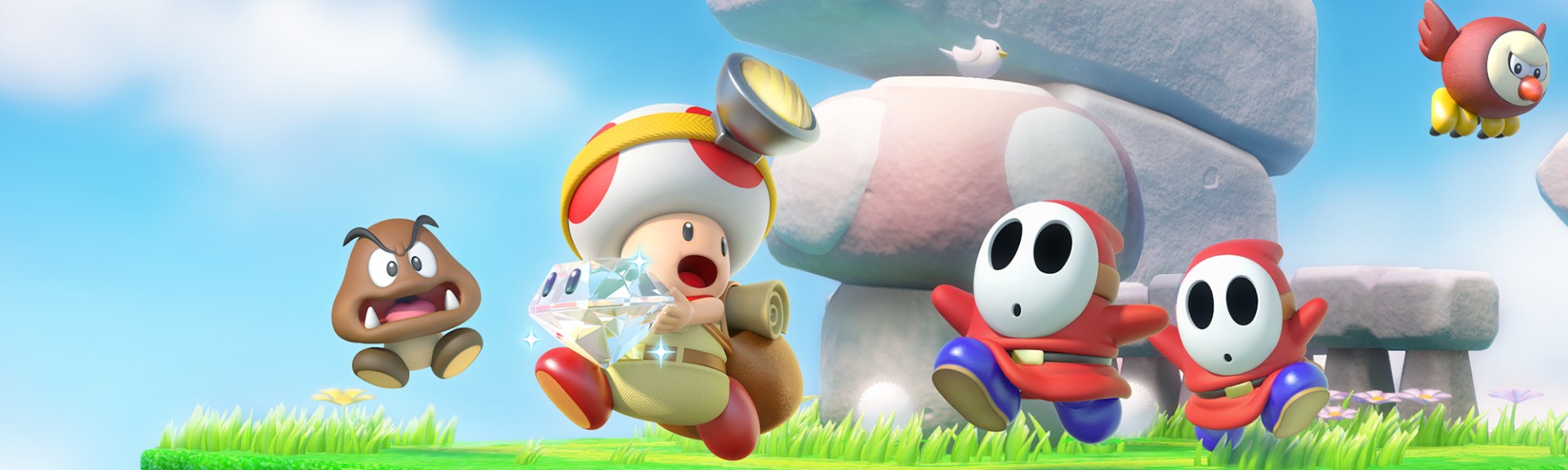
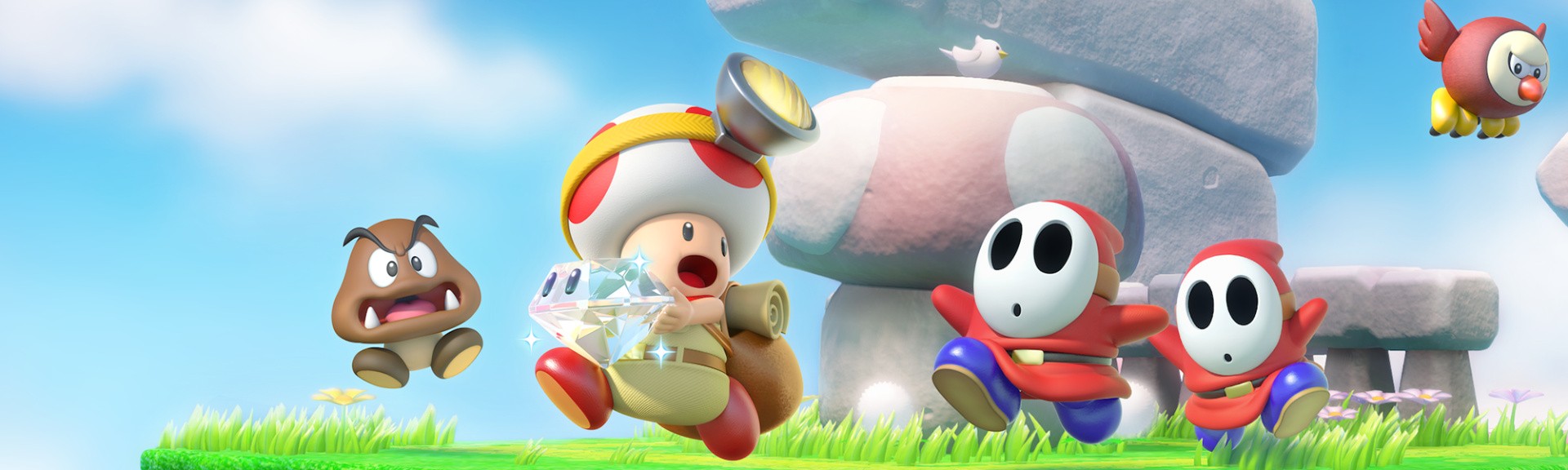
Captain Toad: Treasure Tracker was a real hidden gem of the Wii U era, which is amazing when you consider that it was almost created by accident. The original concept for Captain Toad existed inside Super Mario 3D World, which featured a few minigame-like levels in which you had to help Captain Toad navigate a bunch of tiny cube-shaped levels, avoiding enemies and collecting stars and coins.
These levels were a nice change of pace from the frenzied chaos of a typical Mario level, and that’s largely down to the fact that Captain Toad is the antithesis to Mario. He can’t jump, you see. Instead, you can only waddle around the environment, forging your own path around enemies, to the tops of platforms, and past various different traps.
Nintendo clearly saw the genius of this design, and how well it captured and made use of the Wii U gamepad, that it was turned into its very own game: Captain Toad: Treasure Tracker. The design remained largely intact – why fix what isn’t broken? – but was expanded on. Toad would now simply have to reach a single star to end the level, with hidden gems to find and extra challenges to pass for those that wanted more out of the leisurely difficulty.
It’s most notable for making excellent use of the oft-maligned and misunderstood Wii U Gamepad, allowing you to perform basic actions, like tapping to interact with the environment, to the unique, like blowing on the Gamepad’s mic to keep platforms afloat. The innovative ideas flowed thick and fast. The icing on the cake has to be its beauty. Make the case that this is one of the most gorgeous titles on the Wii U, and it’s unlikely anyone that had the pleasure of playing it will disagree with you.
So you could consider it criminal then that many of us never had the chance to play. Until now, that is, because Nintendo has dusted off the intrepid explorer and relaunched him on Nintendo Switch. And thankfully, the experience remains mostly intact. It’s clearly designed for play in handheld mode due to the amount of tapping and touching involved, but Nintendo has included gyro controls to allow for TV play. It’s definitely a far better experience in handheld, but the gyro controls more than suffice if you want to check it out on the big screen.
Either way you play is a trade-off though. It plays best in handheld mode but looks far better on your TV, where the higher definition visuals get to shine on the bigger screen. It’s amazing how well it holds up as well; though it launched on the Wii U back in 2014, it’s easily one of the best looking Switch games currently available. The amount of visual polish on show is remarkable, which is even more amazing when you consider that back in 2014 the Wii U was considered underpowered for a home console.
There’s new content as well, which is never a given where Nintendo is concerned. The best of these is the introduction of four new levels, themed on the Metro, Cascade, Sand, and Luncheon worlds from Super Mario Odyssey.
Curiously though, these new levels were included at the expense of levels themed on Super Mario 3D World. It’s not clear why Nintendo has made this decision – perhaps they’re holding them back for a Super Mario 3D World re-release on Nintendo Switch? – but it’s an odd omission. We can hardly complain due to the inclusion of new levels, but we can still shake our heads in confusion.
Given that it’s a Nintendo Switch title, room has obviously been made for multiplayer. You can each play with a single Joy-Con too, so it’s ideal for keeping the kids quiet during a long drive. The least interesting piece of extra content is the Pixel Toad challenges. These simply require you to scour each level with your eyes to find Pixel Toad somewhere and tap on him to complete the challenge. It’s cute, but rarely challenging and barely interesting. These were present in the Wii U version as well, but as they were gated behind the illustrious Toad amiibo before, they now unlock as standard without any plastic figurines.
Ultimately, there’s not an awful lot of new content, so you might not be persuaded if you’ve already played and own the Wii U version. But, if you’ve never experienced Captain Toad: Treasure Tracker before, you owe it to yourself to check it out. It’s found a great new home on Switch, and the added co-op feature breathes new life into it as you take on challenges with a friend.
Conclusion
Captain Toad: Treasure Tracker is a hidden gem from the Wii U era that’s been given a new lease of life on the Nintendo Switch, and rightly so. New levels and fresh multiplayer are welcome inclusions but it’s a bit of a shame that we’ve lost four levels as a result – and for no apparent reason. Still, all being said, this is a wonderful and gorgeous puzzler fit for all ages, and one which you should definitely experience if you’re yet to.
The Switch version of Captain Toad is a no-brainer. Given that Nintendo’s latest home console (of sorts) is massively more popular than the Wii U was, it’s only logical that Captain Toad would be the latest in a long line of ports aimed at giving some of the Wii U’s brilliant library a second chance at success.
For many, then, it’s the 3DS port – due for release on the same day as the Switch one – that’s raised a little more curiosity. After all, some question whether it’s necessary to keep committing resources to a system enjoying its twilight years, but the likes of WarioWare Gold and the upcoming Luigi’s Mansion remake prove that Nintendo’s still keen on ensuring those 70+ million 3DS systems out in the wild keep getting new games, at least for now. It’s just as well, really, because the 3DS version of Captain Toad is a fascinating demonstration of just how much it’s possible to squeeze out of this now seven-year-old device.
What’s initially impressive when playing the 3DS version is just how faithful everything is to the Wii U game. Like Hyrule Warriors Legends and Poochy & Yoshi’s Woolly World before it, it’s clear that sacrifices in visual detail have been made but the overall package is still the same. Most notable (especially when playing the Switch version then jumping over to the 3DS one) are the jaggier visuals, something which is pretty much inescapable given the 3DS’s humble resolution. Everything looks significantly rougher here, but that’s what you get when you’re dealing with a 400×240 output. When zoomed out the game’s levels can become a tad too low-res for comfort, though never to the extent that you can’t identify specific parts of the stage and figure out where to go next.
The frame rate also takes an understandable knock, from the stable 60 frames per second of the Wii U and Switch versions to (a similarly stable) 30fps. It’s certainly noticeable and does make things feel a little less slick and polished as a result, but given the slow pace of the game, it doesn’t really affect the way it’s played. One area in which it does achieve parity with the Wii U version is the controls. Since the Wii U technically used two screens, the 3DS version directly imitates them: the top screen is essentially the ‘TV’ while the touch screen stands in for the Wii U GamePad.
This means that, as in the initial release, you can use the touch screen to manipulate elements of the game world: moving blocks, spinning wheels, stunning enemies and the like. The Switch version obviously does this too in handheld mode, but while docked players instead have to make do with a less intuitive motion-controlled pointer. Since 3DS is handheld-only, no such concessions are necessary and it’s touch-based goodness for all.
This does, however, make for a curious situation in which both the top and bottom screen show similar action. In fact, they pretty much show exactly the same thing, albeit with the top screen obviously showing a little more of the sides due to its widescreen aspect ratio. Since both screens are rendering the same detailed 3D environments, it would be interesting to know how much processing power could have been freed had only one screen been showing the game instead. Maybe if the top screen had only shown information like level details and your life counter, improvements could have been made to, say, the frame rate.
That said, it’s still useful to have the action replicated on the top screen too, if only because it lets you play the game in 3D. Yes, it’s fair to say the 3DS’s stereoscopic 3D feature no longer drops jaws in the ways it did back in 2011, but there are still occasional new releases that remind you just how impressive it can be when used properly (take a bow, Metroid: Samus Returns).
This is very much the case here: Captain Toad’s self-contained floating 3D stages and its general concept of rotating and zooming around them works perfectly in three dimensions, and genuinely gives the 3DS version an edge over the Wii U one, even despite its lack of oomph in other visual aspects. This is easily one of the better uses of 3D in recent years, and it’s nice to see Nintendo still supporting it when it fits as well as it does here.
The 3DS version also gets the new Super Mario Odyssey-themed stages that have been added to the Switch port. Unlocked through general gameplay or instantly using the Mario wedding amiibo, these lovely new stages perfectly capture the feel of Odyssey and are clear highlights in this new release. It’s a bit of a shame, however, that these stages replace the four Super Mario 3D World–themed stages that were in the Wii U version. It would’ve been nice to have had those too, making the new ports the definitive versions of the game, but as it is you’re still going to want to keep hold of your old Wii U copy if you want to have access to every single stage.
Ultimately though, we’re only talking about four levels being substituted for new ones, and if you can live with that then you’re otherwise still getting the full experience here. While it could be argued that the Switch version is now the definitive one – its docked and handheld modes bettering both the Wii U and 3DS versions in terms of visual fidelity – that doesn’t mean the 3DS port should be ruled out entirely as a waste of time.
Indeed, given the relative lack of power in Nintendo’s little 3D wonder, it’s fair to say the 3DS version of Captain Toad is the most impressive: not only in terms of what it manages to pull off, but how it actually manages to improve things in a way with its effective use of 3D.
Conclusion
If you own a Switch then there’s no real decision to be made here: Captain Toad is still far and away better on Nintendo’s latest system. That’s not to say the 3DS version is a write-off, though, because that’s far from the case. As seemingly one of the final few big-name releases for the system, Captain Toad pushes it to its limits to produce easily one of the best-looking 3DS games ever made. The 3DS may be preparing for retirement, but games like this are ensuring it’s going out in a blaze of glory.
Today we are rolling out a bunch of improvements in how we show you upcoming games on Steam.
In the past, the Steam homepage included an Upcoming tab that showed customers a complete list of everything that was coming to Steam. This was a pretty simple feature — it was literally just a chronological list of upcoming titles. It didn’t do anything to build a list of games suited to anyone’s interests and just wasn’t doing its job. Hundreds of new games are coming to Steam every month, but customers weren’t using this list to find new things to play. It was a feature that needed work.
Therefore, as of today the Upcoming tab will be a smarter, more tailored list called Popular Upcoming. This list will take into account the pre-release interest in a game — that is to say, data we gather through wishlists, pre-purchase, and a developer’s or publisher’s past titles. We believe Steam does a good job of taking early customer interest (even if that interest isn’t enormous) and helps a game amplify that interest through connection to quality customers. This smarter list on the front page aims to do just that.
Furthermore, when you click on “see more Upcoming Releases” at the bottom of that tab you’ll be taken to a dedicated Upcoming Releases page. This page will make suggestions based on your unique interests and show you what’s coming to Steam in a much more digestible format.
If you follow a developer or publisher with a new game coming out, the Upcoming Releases page will feature those games. If you’ve wishlisted a game, it will appear here as well. If you’ve shown Steam some of your interests, we’ll be taking that into account as you browse through games that are coming to Steam. Conversely, we won’t be populating this page with things you’ve willfully said you’re not interested in or with DLC for games you don’t own.
We also recognize that some of you do want to see the complete list of releases in one place — you don’t want us or our silly computers doing any work for you; you prefer a raw, unrefined deluge of new games. Well, on the Upcoming Releases page you can view a totally unfiltered list of everything that is coming to Steam, and while looking through that list you’ll know that as you add games to your wishlist or share them with friends, you’ll be helping Steam make it discoverable for everyone else.
We think these changes are going to help connect you towards games you’re excited about and make browsing all the new games coming to Steam a more enjoyable and productive experience. Making Steam more useful is never an exact science so we’ll be maintaining and adjusting these new features as more and more of you use them to find games you want to play.
Upcoming Games on Steam Q&A
Q: Can’t you replace this tab with something else? I have an idea about that, actually. A: We spend a lot of time listening to customer feedback on improvements to the store, so please, let ’em fly. This change is in direct response to feedback and data from both customers and partners on the usefulness of Steam’s front page.
Q: I’m a developer and in the past I knew that my game would be in that unfiltered list on the front page, at least for a little while. Doesn’t this make my new game even harder to find? A: We’ve spent a lot of time looking at data about how folks find and buy games and are certain that isn’t the case. The previous iteration of Upcoming was just too unfiltered for most customers to use it effectively. A piece of data for you: the old Upcoming list was only clicked on by less than half of one percent of customers whereas Top Sellers is clicked on by almost four percent. It’s clear to us that a brief (and sometimes very brief) spot on Steam’s front page isn’t useful if your game is shown to a random set of customers — what’s best for everyone is if your game is shown to the right customers, ones who have shown that they might like your game. If you’re building a great, entertaining product with a store page to match, these improvements will facilitate connections to those customers in a higher quality way.
Q:So let me get this straight, if me and all of my pals wishlist a game, we can help it get to the front page of Steam via the Popular Upcoming tab? A: Yes but probably no. We spend a lot of time writing code and monitoring these systems so they aren’t manipulated. Now, if you love an upcoming game and wishlist it or even pre-purchase it and we identify that this is a natural trend across Steam’s diverse customer set, we will start suggesting it to other folks who may feel the same way.
Q: I have another question, you can’t predict me with your flimsy Q&A. A: Please share it below and we’ll try to address it if it’s thoughtful and well-meaning.