Hey, Xbox gamers! The Mixer Tips & Tricks team is back with five tips for Owlboy.
Owlboy is a platform adventure game with RPG elements which took nearly a decade to develop, from concept to the final polish. You play as Otus, an owl who was born mute. He trains under his verbally abusive mentor, Asio, who doesn’t see much potential in Otus’ skills.
However, when their floating island town of Vellie gets attacked by pirates, it’s up to Otus and his pal Geddy to hunt down the culprits and get back the Ancient Owl Relics that the pirates are after. Watch the video above to check out the 5 tips and tricks to help you show Otus his true potential as an underowl!
For even more strategies and tactics on today’s hottest games, plus plenty of other gaming-related fun, be sure to watch Tips and Tricks live on Mixer every Tuesday at 3 p.m. PT.
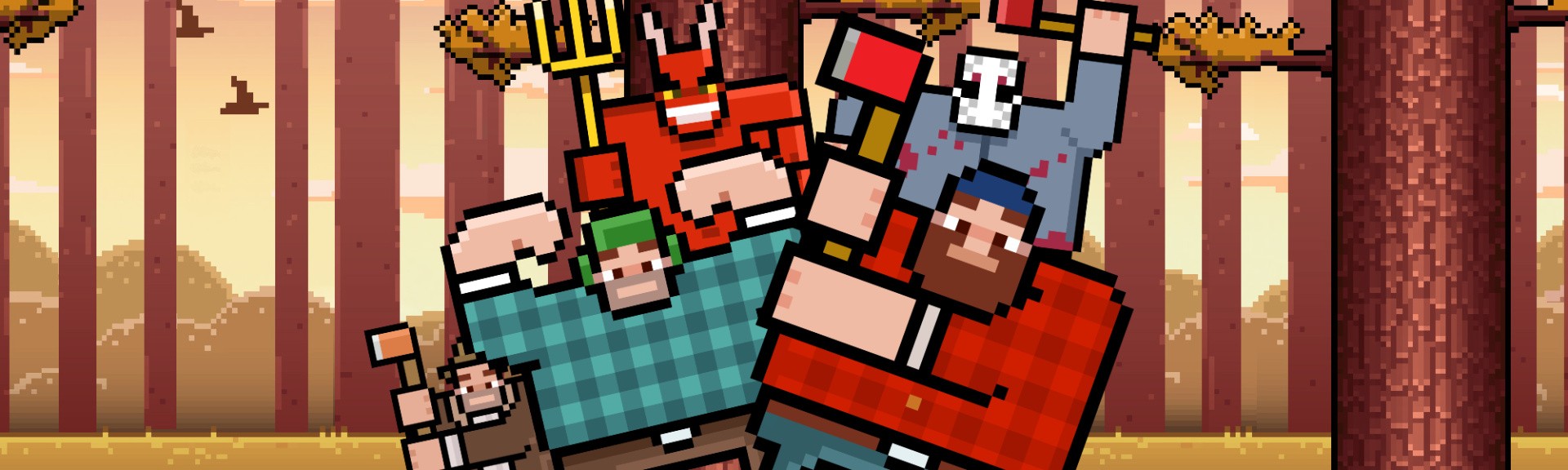
Timberman VS is Digital Melody’s Switch enhancement of its free-to-play arcade title first released on Android and iOS devices in 2014 (and eventually ported across to Steam in 2015). If the name wasn’t already enough of an indication, it’s a game about chopping trees as fast as you can until your hands hurt.
Given its mobile roots, the concept here is quite simple. You must chop down a tree while avoiding its branches at the same time. To chop, you press a button on the left or right side of your controller (which varies depending on your specific controller setup) and your character will move from side to side while avoiding any incoming branches. If you don’t maintain a certain speed while chopping, it’s game over. As a result, you must maintain a relatively consistent pace – which adds to the intensity and overall frustration of the exercise.
To motivate you to be the best lumberjack you can be, there are three different game modes. The classic mode is the most standard affair with an inbuilt XP levelling system. Each time you chop a tree you’re rewarded with XP, unlocking new avatars such as princesses and hockey players. You can also play this mode alongside three others. In hero mode you must save a nest of birds at the top of a burning tree and in the race mode you compete against three other players or AI opponents by reaching the finish line first.
Regardless of the mode, essentially the task is to chop as fast as you can at all times. The multiplayer will likely offer the more memorable moments, with the competitiveness between friends and family fuelling the fun. As a solo player, it’s hard to embrace – especially with the fact no online multiplayer or leaderboards are present at the time of review.
Given how basic the concept here is, the sound and visuals do a good job at offering a sense of variety. The pixel presentation is rather generic, but the selection of backdrops ranging from circuses, deserts and even an area strikingly similar to the Mushroom Kingdom is enough to keep each woodcutting session feeling fresh. The sound should also keep you on edge with satisfying wood chopping noises and music that maintains the intensity.
What makes Timberman VS more bearable than you might expect is its accessible design. This is amplified on Switch, mainly due to its own quick, responsive and adaptable traits. The game modes on offer means it can be played in short sessions when you’re out with friends or at home taking a break from more prominent titles. The performance is also steady whether you’re playing on the couch or in tabletop mode. Sure, this isn’t necessarily the definitive iteration, but it does offer its own unique advantages, yet again courtesy of the smart design of Switch. Still, all of this doesn’t necessarily hide just how basic the offering is.
Conclusion
The trailer for Timberman VS describes it as ‘the most intense multiplayer rage game ever’ which is a pretty accurate summary. As infuriating as it may be at times, it’s mysteriously satisfying when you are victorious against friends and family. By yourself, there’s less reason to get excited when there’s no online play or leaderboards to spur you on. In saying this, by yourself Timberman VS still offers the same frustratingly addictive gameplay and with 50 humourous characters to unlock, there’s at least some incentive to keep playing. Ultimately, whether you play within the company of others or not, what’s on offer is a well-presented but simple and highly repetitive package.
A first-person action adventure, inspired by Arabian Nights, from senior BioShock developers.
Become a daring thief in City of Brass, a first-person action adventure from senior BioShock developers. Armed with scimitar and a versatile whip, you’ll lash and slash, bait and trap your way to the heart of an opulent, Arabian Nights-themed metropolis – or face certain death as time runs out.
The reboot of the 1980s sci-fi tank shooter for a new generation. Battlezone Gold Edition features all additional content ever released for Battlezone, including all tank skins, bobbleheads and horns, as well as the Classic Mode that recreates the look of the arcade original.
Posted by: xSicKxBot - 05-09-2018, 02:49 AM - Forum: Lounge
- No Replies
Chrome update kills audio on many web-based games
A recent update to Google Chrome had the unfortunate side effect of muting audio for a vast array of web-based games and interactive projects.
Developers have taken to Twitter to call Google out for the sudden and unprompted change, noting in some cases that their HTML-5 based projects are essentially dead in the water with audio forcibly muted.
While it’s unlikely that Google will let these changes remain in the face of such backlash, the fact that a major web browser has all at once muted audio for the many, many projects that fall outside of top websites that feature audio elements understandably has many developers concerned.
Developers like VVVVV and Super Hexagon creator Terry Cavanagh and Stephen’s Sausage Roll creator Stephen Lavelle are some of the people that have already noticed that their content has been affected by the change, while numerous other web developers and artists have spoken out against the ill effects of the new policy as well.
The issue itself looks to be rooted in a policy change that came with the most recent update to Google Chrome. Earlier this year, Google rolled out a Chrome update that allowed users to mute audio based on individual websites, aiming to counteract the minor annoyance of unwanted, auto-playing videos. The latest policy update takes that one step further by automatically blocking audio and video from being played on most websites, save for those on Google’s list of 1,000 or so sites where a high percentage of videos opt to play media with sound.
Chrome additionally doesn’t display any sort of notification to a user that the page they’re viewing has had its audio muted, something developers have also taken issue with in the wake of this change.
Ah fuuck sake. I had just in the last year started to begin to trust that I could reliably use audio in the browser (after years of reticence). So much for that…looks like the chrome update broke all of the audio in my html5 games as well. https://t.co/gT6n9pz0VT
I tend to do a major iteration on the overall scene composition in SteelHuntersevery month or two and since the public trailer is now approaching, I decided to just did one six-seven hour block fo sitting at my computer until I was happy with the results. It should be obvious that this iteration started like most: “just a few quick tweaks.”
The Problems
I wanted heavier atmospheric haze/fog. The reasoning for which is two-fold:
The general feel of this area is a barren “post-apocalyptic” wasteland. And I don’t mean that in the traditional post-apocalyptic Mad Max sort of way; the world of Steel Hunters wasn’t ever decimated by nuclear war but, rather, the slow depletion of natural resources (unrelated) and the onset of, basically, the worst possible nightmare version of climate change that could be imagined (and is almost certainly scientifically… non-scientific). In short: every environment has a unique feel/setting and the goal of each of these sandboxes is to fully embrace a worst-case scenario of what that environment in the game’s world.
More practically, it’s way easier to handle the blend for the unbelievably intense sand storms (literally, they can not be believed because it’s not also, likely, scientifically non-scientific) that can crop up mid-mission — requiring players to adjust their approach entirely.
Along that same line of thinking, there is entirely too much blue sky if you catch a glimpse of the sky through the clouds — and just adding more cloud-cover would obscure the actual sun vector all the time (instead of 75–85% now).
To adjust this, I have to modify the rayleigh calculation coefficients just enough to reduce the blue of the end result without blowing out the scene’s lighting and composition in the other direction (trump-orange).
There is a lovely issue with the volumetrics rendering light blue light shafts if you happen to end up in an along the edge of an occluded area (this is unrelated to the sky color, as I discovered).
This gets worse if the directional light is completely obscured, at which point the resulting composition ends up with a light blue screen area where the light would normally be (not super obvious/ugly, but it annoyed me. A lot).
I don’t tend to update time-of-day during gameplay, but I still ran into an issue with the volumetrics and sky/cloud/light settings getting out of sync at night (meaning the moon ended up with red/brown-ish volumetrics despite a component white light color) — and time of day can make for a nice demo sometimes (and I may eventually have a very, very subtle progression of time in a mission at some point).
The eye adaptation has issues maintaining a consistent exposure level as you go through the map.
The Nevada Scene Composition (Before)
The Iteration Process
I’ve done iterations on all of these various systems/components in the past, but generally I’ve focused on one or two aspects of the composition at a time. I wanted this iteration to focus on the entire gamut of influencing factors.
Ideally, I’d tackle each problem in that list one at a time. And, for the most part, that’s what I did. The issue is how all of these various systems exist in relation to each other. Which brings me to:
The World Simulation
The entire world state is managed by my “world simulation” — anything that related to or occurs within the environment is in some way or another related to this system. In the case of lighting, volumetrics, atmospherics, and relevantpost-processing data, the relation to the world simulation is direct: the simulation manages each of these explicitly.
The Plus Side of This: I don’t have to jump back and forth between all sorts of entities to tweak properties.
The Down Side of This: The world simulation is a simulation in every sense of the word. Simply changing one value can have a ripple effect that affects any number of other data that influences the final scene composition.
I make this sound bad, but it’s actually a great thing. This design and implementation ensures internal environment consistency and, for lack of a better word, “synergy” between what could be setup as disparate entities. This will also be helpful for ensuring future environments are bound to the same rules.
The Iteration Process (Remix)
The process, basically, goes like this: start a problem (almost in the order described above, except the sky simulation and resulting coloring was the first problem I took on), work towards an acceptable result, and move on to the next problem.
By the time I started on the second problem, that process was pretty much gone. Changing the sky simulation data resulted in some dramatic composition changes that affected the overall scene exposure, the lighting intensity/colors, and the look and intensity of the haze. Really, the only thing that wasn’t affected by this was my volumetrics solution (based heavily on NVIDIA’s Volumetric Lighting research/implementation advice) as I was previously manually managing the volumetric light color/intensity.
So, obviously, I updated the world simulation’s code to ensure that the volumetric light color/intensity to also be managed by the world simulation in respect to its various light entities (a directional light and sky light). THERE. Now a single change affects ALL THE THINGS. I sure showed that what’s what. Admittedly: this also addressed the problem I was having with the volumetrics being out of sync with a dynamic time-of-day (especially at night), so that’s neat at least.
Note: Unfortunately, I didn’t properly create screenshots of each specific step along the way, but I do have a few iterations that I used to compare each tweak round. So those will appear shortly.
First Pass
With the exception of the odd issue with the “sun” showing as a large blue halo when obscured (and the volumetrics coloring when in an obscured location relative to the sun), I ended up with this first-pass result:
This is definitely a step in the right direction compared to the starting point. And I remember this first iteration being worse than it actually is (in retrospect), but looking at it now, I remember my issues with it:
The lighting and shading is fairly flat and trends far closer to orangey-orange than I want (even the mech shading was fairly flat).
The “sun” (which I use in quotations constantly because it’s just a directional light that is treated as an atmospheric body) is somewhat non-existent. There is a somewhat brighter spot in its place, but it’s far more understated than I want.
The haze is over-saturated and really drowns out the shading of distant buildings more than I’d like.
Finally, though it’s not obvious here, but if any view other than the composition I’m using throughout this post, the eye adaptation was… Not happy. The histogram for the composition shot is fairly even, but anywhere else the overall exposure trends lower (which, since the composition I’m showing is potentially in the brightest areas in the environment).
Second Pass
I really should have written this post yesterday after doing all this work because, looking at this pass’s screen shot looks, basically, like “… why did I just make everything worse?”
This pass’s goal:
Start addressing the auto exposure so if I turned around I wasn’t blinded by the adjusted exposure for darker areas.
This entailed lighting color/intensity (and volumetrics color/intenstiy which has its own modifiers based on the light color/intensity it gets from the directional light) adjustments. This succeeded in evening out the overall composition exposure throughout the environment, but it also made the lighting even more flat (and the composition somewhat darker).
An attempt to change the haze distribution so it wouldn’t affect ground-level areas as intensely as it did in the first pass (also attempted, and failed, to fix the coloring).
Third Pass
I call this pass “lighting, volumetrics, and composition exposure adjustments that made everything worse”.
Which is mostly true; I can’t remember the specifics of what I did in this pass, but I was focused primarily on getting the lighting in the final composition to be more complex (not flat).
AND I SUCCEEDED. If you ignore the fact that the entire scene is now grim-dark and the mech details are basically completely lost.
Fourth Pass
I focused primarily on light intensity values, the brightness of the trueSKYbrightness levels (which were pushing the composition’s exposure histogram far outside the range of the rest of the scene), and getting the haze to cooperate.
Problems now:
The composition’s contrast was way too heavy — even for me (and that’s saying something. I knew this wasn’t an issue with the post-processing stack, so I blamed the auto exposure. And turning off auto-exposure confirmed that… To some extent.
The lighting intensity adjustments worked for most of the scene, but the smaller-scale details of the mech (which, by the way, is why I like this composition; it has foliage, large-scale meshes, and detailed smaller-scale meshes) weren’t benefitting from any changes to the intensity. Meaning that while most of the scene benefitted, shadowed areas were still suffering a bit.
The haze was getting even more exaggerated from adjustments to the auto exposure. Which is neat.
The “sun” still had an underwhelming compositional presence (and you can see the out-of-place blue halo here more clearly than in other images, despite not being occluded).
Fifth Pass
I did another round of light intensity modifications in conjunction with the trueSKY light wavelengths and yet-again-more haze tweaks. AND THIS TIME: THEY WORKED.
Oh, and I changed the entire volumetrics simulation settings from being Mie-based scattering to using a Henyey-Greenstein phase function for scattering. This iteration, in particular, took the most time to really get right-ish because it so dramatically impacted the entire composition
Note: I’ll show some debug shots of what the volumetrics themselves look like in the final composition later.
The overall composition still hasn’t quite hit the overall exposure level I’d like and the “sun” still had no strong presence in the composition. And so I decided: unacceptable. The “sun” must bend to my will.
The End Result
After more volumetrics, eye adaptation, color grading, and light intensity passes, I ended up at a result that I’m pretty happy with. It’s still leaning a bit too close to orangey-orangyness-orannnnge, but at the moment I’m not entirely convinced that’s a bit thing for this environment (especially since, once I started adding VFX to the scene, that will have a pretty dramatic effect on color variation).
AND THE SUN BENT TO MY WILL.
And since I promised some debug screen shots, here is the resulting composition exposure:
And a debug visualization of what the volumetrics look like on their own (you can probably tell where I went to give the “sun” a bit of help in the prominence department):
Conclusion
I really enjoy doing iterations like this. And this was fun enough to help me maintain sanity in the twelve hours of camera system work that followed.
Fun Fact: The Steel Hunters “announce” trailer release date is not too far away.
Addendum
By reader demand, here’s a quick-and-dirty slideshow GIF of the progress (it loops so the beginning/end are, uh, hopefully recognizable):
Welcome to Next Week on Xbox, where we cover all the new games coming soon to Xbox One! Every week, the team at Xbox aims to deliver quality gaming content for you to enjoy on your favorite gaming console. This coming week we’ll have the first-person action adventure game City of Brass, the arcade baseball greatness of Super Mega Baseball 2, and the return of an iconic sci-fi tank shooter in Battlezone: Gold Edition — and these are just a few of the excellent games coming to Xbox One next week! Read more below and click on each of the profiles for pre-order details.
Xbox Games with Gold / Xbox One X Enhanced – One of the most fun baseball games on Xbox returns with Super Mega Baseball 2. With improved visuals, deeper league customization, and online multiplayer modes, this arcade baseball sim has a lot to offer the fan and non-fan alike. SMB2 is also available for Xbox Live Gold members from May 1 to May 31.
The reboot of the iconic 1980s sci-fi tank shooter for a new generation is here! Battlezone Gold Edition features all additional content ever released for Battlezone, including all tank skins, bobbleheads and horns, as well as the Classic Mode that recreates the look of the arcade original.
Journey deep into the forest in this third-person psychological horror game about a mother and her missing son. Playing as the parent, you will experience her retelling of the events surrounding her missing child in a setting influenced by Norse mythology and Norwegian folk tales.
In this challenging survival horror game inspired by classics of the genre, monstrous beasts and a city engulfed in flames have forced you to seek refuge inside a large manor estate. Now its up to you to survive and seek out supplies to make your way through this nightmare alive.
Xbox One X Enhanced – Become a daring thief in City of Brass, a first-person action adventure from senior BioShock developers. Armed with a scimitar and a versatile whip, you’ll lash and slash, bait and trap your way to the heart of an Arabian Nights-themed metropolis.
In this jet ski racing game that combines extreme speed, stunts, and state-of-the-art water simulation, speed above waves big and small across 10 different environments in this fun-filled racer with split-screen and online support.
From the makers of Battle of the Bulge comes another tactical turn-based strategy game where you can choose to defend the homeland as the Soviets or lead a push on the Soviet capital as the Axis. Features online or local competitive play, as well as a challenging AI opponent.
In this challenging side-scroller full of action-packed gameplay and puzzles, you will be a member of the skillful Bounce Rescue team as you take on the Evil Devil and his minions to stop them from taking over the world. Featuring 50 challenging levels across a variety of worlds and modes with local co-op and competitive play.
Nintendo Hints That Not All Switch Games Will Support Cloud Saves
The news that Nintendo’s new online service for Switch will include cloud save support has been met with plenty of praise, as with the current system, all game data is tied with the console on a hardware level. If you lose or damage your Switch, you lose your save data, too.
It’s great that Nintendo is finally adding this much-requested feature to the Switch, but there are hints that not every game will showcase cloud save support – very much like not every Switch game currently supports video recording.
The official Japanese Nintendo Switch Online website states that “some software” will not use cloud saves. It’s worth noting that this text has been obtained using Google Translate, so some of the meaning may have been lost.
It’s also worth stating that “software” on Switch can mean a range of different things; Nintendo may not be referring to games in this case, but apps. The worst case scenario is that cloud saves have to be enabled at a software rather then system level in each game, and that some developers may choose to restrict this feature to avoid anyone altering save data and cheating in certain games.
Hopefully, this won’t be a massive issue and the vast majority of games on Switch will support cloud saves – we’ll no doubt find out more as that September launch approaches. In the meantime, let us know your thoughts with a comment below.







 Games
Games


