Create an account


Welcome, Guest
You have to register before you can post on our site.

Username
  

Password


Search Forums

(Advanced Search)

Forum Statistics
» Members: 19,724
» Latest member: DavidKomine
» Forum threads: 21,417
» Forum posts: 22,185

Full Statistics

Online Users
There are currently 632 online users.
» 1 Member(s) | 627 Guest(s)
Applebot, Bing, Google, Yandex, LarryBah

 
  News - Random: This Could Well Be The Silliest Nintendo Switch Accessory Yet
Posted by: xSicKxBot - 01-03-2018, 08:20 PM - Forum: Nintendo Discussion - No Replies

Random: This Could Well Be The Silliest Nintendo Switch Accessory Yet


We’ve seen some crazy third party accessories for the Nintendo Switch so far, with ‘The Switch Visor’ being one of our favourites for lazy players. 

However, the ‘Comfortable Hands Free Stand’ as spotted by eagle eyed game developer Jake Kazdal in Japan might take the biscuit.

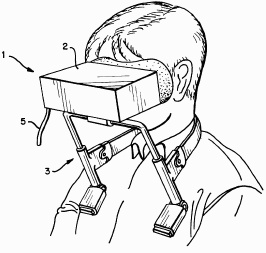
Judging from the photo, the stand is suspended on a metal band which sits comfortably on the player’s neck. The stand offers between 7 to 14cm of movement and can be rotated in 360°. What more could you ask for?


If you could get over the sheer embarrassment of using it on a crowded tube, it might actually be quite practical when you think about it, but no, this is just plain ridiculous. It also reminds us of the equally silly mount for the Virtual Boy. Shudder.

Let us know if you’d give this Switch accessory a try in public with a comment below.

Print this item

  Steam - Now Available on Steam – TINY METAL
Posted by: xSicKxBot - 01-03-2018, 08:20 PM - Forum: PC Discussion - No Replies

Now Available on Steam – TINY METAL

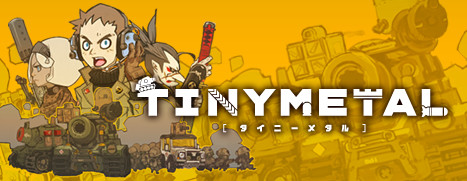
TINY METAL is Now Available on Steam!

A turn-based strategy game of intrigue with a distinct Japanese flavor that takes place in the aftermath of your king’s assassination. Roll out the tanks, create more troops, expand your squad, and struggle for territory with war-room levels of control!

Print this item

  PC - Purrfect Date
Posted by: xSicKxBot - 01-02-2018, 11:23 PM - Forum: New Game Releases - No Replies

Purrfect Date


Purrfect Date is a cross between a Visual Novel, a Dating Sim, and a dark British comedy. You, a human, will get to date cats and uncover the dark secrets of the mysterious Cat Island.

Publisher: Bossa Studios

Release Date: Dec 15, 2017

Print this item

  XONE - Fearful Symmetry & The Cursed Prince
Posted by: xSicKxBot - 01-02-2018, 06:54 PM - Forum: New Game Releases - No Replies

Fearful Symmetry & The Cursed Prince


Publisher: Soedesco

Release Date: Dec 12, 2017

Print this item

  News - Report: Nintendo expects to sell 20M Switch consoles in the next fiscal year
Posted by: xSicKxBot - 01-02-2018, 06:54 PM - Forum: Lounge - No Replies

Report: Nintendo expects to sell 20M Switch consoles in the next fiscal year

Nintendo president Tatsumi Kimishima believes the company can sell over 20 million Switch consoles during the next financial year. 

Kimishima laid out his expectations during an interview with Japanese paper the Kyoto Shimbun (translated by Wccftech), and explained Nintendo will attempt to maintain the Switch’s momentum by releasing new software that “enables new ways of playing.” 

The hybrid system has already sold over 10 million units since launching on March 3, and Nintendo expects to see that figure top 14 million before the end of this fiscal year on March 31, 2018. 

All of the above suggests Nintendo is confident of seeing the Switch break the 30 million sales mark in its first two years on shelves. 

Time will tell whether that prediction proves to be accurate, but as it stands the nimble console is proving to be a hot commodity.

Print this item

  News - Blog: How we turned Orwell into an episodic game
Posted by: xSicKxBot - 01-02-2018, 06:54 PM - Forum: Lounge - No Replies

Blog: How we turned Orwell into an episodic game

The following blog post, unless otherwise noted, was written by a member of Gamasutra’s community.
The thoughts and opinions expressed are those of the writer and not Gamasutra or its parent company.


The decision to turn Orwell into a TV-style episodic serial was a bold, risky move. It had the potential to get people talking and elevate the game experience to greater heights, or create the indie game equivalent of a black hole.

In this, the second in a series of posts about the development of Orwell, we talk about going episodic: what went right, what went wrong, and why we’ve decided to do it all again and release Orwell: Ignorance is Strength episodically.

– – –

On October 20th, 2016, with our hearts in our mouths, we released the first episode of Orwell via Steam. Over the following four weeks, we continued to release a new episode every Thursday, creating a five week season (“Season One”). As far as we know, Orwell was the first game to release this way on Steam, and the second game ever to attempt this release structure.

When it was first conceived, Orwell was intended to be a single date release. But as development progressed and our publisher–Surprise Attack Games–came on board, meetings about what Orwell was trying to achieve led to numerous discussions about the game’s structure, how it was broken into “days”. Orwell felt like a Netflix series, or an old-school radio play. And we talked a lot about the influence that This American Life’s audio show, Serial, had on podcasts.

When viewed in those terms, creatively, Orwell really suited an episodic release.

Orwell is a thriller with suspense and plot twists being a critical part of the game. By forcing players to wait between episodes, we hoped to accentuate that feeling of suspense and encourage players to really savour the content in each episode rather than rushing through. We wanted players to think about the game’s theme and how we balance privacy, connection, security and freedom in the age of the internet and social media. 

Commercially, the decision was riskier.

On the positive side, indie games doing something different help them to stand out in a crowded market. It makes the game more remarkable, more likely to get talked about. Given that we were launching in October when the AAA season was in full swing, we needed every bit of remarkability we could get.

The episodic release would give us a launch window of five weeks instead of one, and five launch announcements instead of two. Most games live and die in the week of launch. We had five weeks of “being relevant” with a steady flow of information to deliver to players. By creating a unique experience that only the “early adopters” would get, we also hoped to create a stronger reason to purchase and generate a sense of being in a special club, similar to those that see a band before they get famous.

But, as good as the positives were, the risks were also there. 

When you do anything new, you run the risk that people just won’t understand it. Releasing episodically–with the demo for week one, commercial launch for week two and five “days” of content across four weeks–had the potential to over-complicate an already unusual approach and it was hard to explain clearly.

Reviews, too, were going to be a problem. There was the chance we wouldn’t get reviews of the full game until the end of the season because the media wouldn’t be able to play the whole game. Or worse, reviews were going to be based on only the first couple of episodes, which would miss a huge amount of what was in the game and might be overly critical.

But… as history records, we went for it!

With no real previous example to refer to (we didn’t uncover the fact that Resident Evil Revelations 2 had taken this approach until a week or two into the season), we were pretty much “making shit up” as we went.

The development schedule was tight. We finished each episode while already being in the middle of the release period, which was very stressful, but also exciting and strangely motivating, too. Mel (our Art and Business Manager) remembers listening to YouTube videos of let’s players playing one episode, while she was working on the next one. While this reduced feedback loop was great because it gave us the chance to see people react to important moments in the game, and helped us get a better idea of how to improve things, it was also distracting. For example, if someone found a minor bug, we knew we wouldn’t have any time to fix it before the final release.

Towards the end, time got more and more scarce. We ended up finishing Episode Four just on time and being several hours late with Episode Five, discovering a game breaking bug right before release. As the release time passed, people began to ask what was wrong and when the final episode would be available. This was a rather scary and extremely stressful situation for us.

But what could have been quite the game dev nightmare, turned out to become an engaging chat between our Orwell fans and our wonderful producer and community manager Steve. He informed the fans about our status and why we were late, and they were surprisingly kind about it. We even got late-night emails from people telling us to take our time to fix the bug, as they wanted us to have enough time to ensure the quality they’d come to expect.

At one point there was a person on a ship who really hoped that we would be able to launch the final episode while he still had internet available. We were absolutely amazed at the number of people waiting for the final episode to drop, but also by the fact that they were so friendly about us being late. We’d built an audience of fans who cared about the game and appreciated that we were updating them in real time about the delay.

In the following weeks and months after release we received numerous emails, Facebook and Twitter messages from fans telling us how engaging and meaningful they found the game and how much they loved the overall experience. This was incredibly rewarding, and, despite of all the stress, it was a very exciting and wonderful experience.

For our publisher, the ride was a wild one.

Surprise Attack Games had been hoping that the episodic approach would give them an extra way to cut through the noise and get media to pay attention to the game. And there was reason to be confident. They’d had really solid coverage of the game reveal in August with Polygon, Rock Paper Shotgun, PC Gamer and Kill Screen, in particular, and the angle of the weekly serial seemed like it would get a good reception based on the media they’d been talking to about it. 

Then, two days before we launched episode one, Rockstar made the official reveal of Red Dead Redemption 2 and announced they were going to drop the first trailer that week. The internet went crazy. We were all less thrilled—the trailer was going to drop an hour before we were set to announce episode one of Orwell. 

As if that wasn’t enough oxygen sucked out of the media landscape, Nintendo then announced that they would give the first look at the Switch console on the very same day. It was a nightmare week for any indie game to get noticed or talked about, let alone a small game from an unknown German studio and an Aussie-based games label.

Thankfully, the marketing plan worked. Polygon, Destructoid and PC Gamer all ran pieces on the day of the announcement and Rock Paper Shotgun, Gamespot and Killscreen ran pieces a few days later. The weekly approach was the headline lead for most of the stories, validating their hope that this would give it the extra push to be newsworthy enough to cut through.

One negative issue the publisher had anticipated turned out to be true. Many reviews ran very late with most appearing in December. While reviews were overall extremely positive, one Australian magazine chose to review the first two episodes in their print edition giving it a 4/10. Later, a different journalist gave the whole game a 9/10 in a review on the magazine’s website but Metacritic only lists the print score and that pulled down our average score significantly.

Throughout the season we continued to get coverage from smaller sites, YouTubers and Streamers, and some even ran weekly reviews of each episode. The larger sites didn’t end up covering it each week, but most came back for the final episode with a review or the news that the season had wrapped up. Unfortunately, we didn’t see journalists talking about it en masse each week on twitter, which we hoped might have happened for those that had got really into the game concept, but the weekly drop caused more general buzz with players.

Engagement in the forums started slow but grew each week. Fans were discussing other aspects in their own threads and responding positively to our weekly updates about each episode. Most rewarding for us was to hang out in the forums in the hours before a new episode launched and watch as fans would start to gather ready to play and discuss it.

One unexpected result with players was that we found they would replay each episode multiple times while they waited for the next episode to release. They’d try to get all the various outcomes in the episode and find all the achievements, helping each other to find the trickier combinations of choices.

During that time, we got plenty of steam reviews and players that didn’t wait until the whole season was out before reviewing it. The rating remained around or above the magic 95% positive rating for a number of weeks and still remains at 91% positive.

Sales were strong across the five weeks, spiking around episodes 1, 3 and 5. And now, more than a year later, Orwell: Keeping an Eye on You continues to be one of Surprise Attack Games’ strongest performing titles.

All of it proved to be a wonderful experience and we learnt a great deal about the episodic structure.

With Orwell: Ignorance is Strength (‘Season Two’) deep in development, it should come as no surprise that we’ve decided to do it all again.

Orwell Season Two will release across three complex episodes: Each episode will offer more choice on how to advance than before. The story will also feel more personal than the original, focusing in particular on three individuals and the complicated relationships they have with each other–and the truth. Return players should expect a more dynamic environment: based on the newly added “time of the day” characters may act on their own behalf and events unfold independently from the players‘ actions.

The player will be granted access to a more advanced build of Orwell. The old tools are all still there, useful in their own right. But the player will be invited to join “The Office”, a secret department of Orwell that has been equipped with tools that not only allow investigators to research individuals, but to also take that information and influence the way events are reported and perceived by the public. This gives the player more agency, not just in the way the story branches and consequences play out, but in the narrative itself–the story of Orwell: Ignorance is Strength.

When written out like this, it’s an exciting and daunting proposition. We had hoped to have the game out by now, but because of all this extra content–the story, the ideas, the narrative branches, the new tools–and, ironically, the way that episodic content comes together, we’ve focused on getting it all just the way we want it and delivering to our wonderful fans the very best game we can.

With an even stronger emphasis on narrative, decisions that alter the course of the investigation, tools that allows players to pry deeper into people’s lives and manipulate that information, and a thematic search for truth in a post-truth world, the opportunity for thrilling cliff-hangers and deep philosophical debate is plentiful. 

So, as this year comes to an end, we look forward to the next. We can’t wait to give our fans–and hopefully many new Orwell players–the opportunity to experience another unique surveillance thriller set in the world of Orwell. Week by week.

– Team Osmotic

The familiar seen from a new perspective. An early screenshot from Orwell: Ignorance is Strength.

Print this item

  News - Review: Hiragana Pixel Party (Switch eShop)
Posted by: xSicKxBot - 01-02-2018, 06:54 PM - Forum: Nintendo Discussion - No Replies

Review: Hiragana Pixel Party (Switch eShop)


If you spend much time playing games, watching anime, or reading manga, Japanese is certainly an appealing second language option, and if you want to try your hand at learning, Hiragana Pixel Party — originally a mobile title — aims to kickstart that process. While it won’t help you with words or phrases, it will teach you how to read two of Japanese’s several scripts, and in that regard it’s a real success. Combining fun, simple rhythm gameplay with catchy chiptunes and character-learning, Hiragana Pixel Party is both a great way to get started reading Japanese and an enjoyable game in its own right.


First up: a bit of background. Japanese is written primarily using three systems: hiragana (ひらがな), katakana (カタカナ), and kanji (漢字), all of which are ultimately derived from Chinese characters. ‘Nintendo’, for instance, could be written in hiragana as にんてんどう, in katakana as ニンテンドー, and in kanji as 任天堂. While kanji are logographic characters — meaning you generally need to already be familiar with a certain kanji to know how it’s pronounced — hiragana and katakana are syllabaries, which means you can read them phonetically, much like an alphabet.

Just as in an alphabet, each symbol in hiragana or katakana represents a certain sound. But instead of a single consonant or vowel, each hiragana or katakana symbol represents a particular mora, a linguistic unit similar to a syllable. The Japanese word for cat, ‘neko’, for example, is written in hiragana as ねこ (ね ‘ne’ + こ ‘ko’). The same word in katakana is written as ネコ (ネ ‘ne’ + コ ‘ko’). Hiragana and katakana each consist of around 45 symbols, and while that sounds like a high number if you’re used to a 20-odd-character alphabet, since you don’t have to worry about combinations and irregularities (think of the ‘gh’ in English ‘cough’ vs. ‘gherkin’!) they’re actually much easier to learn quickly — and that’s exactly what Hiragana Pixel Party sets out to help you do.


Hiragana Pixel Party is a rhythm-based runner that uses these Japanese symbols as button-prompts over several hundred individual levels (or lessons) split over two distinct paths: hiragana and katakana. You can choose either syllabary to start with, and bounce back and forth between the two, but the gameplay remains the same in both: in each discrete, thirty-second-or-so stage, you’ll control a girl who runs steadily to the right in-time to chiptune soundtrack, and need to press the correct face button (or touchscreen version of the same) to jump over boxes as they come up on the beat. The kicker is in how you’ll know which face button to use, and that comes down to repeating a pattern of either hiragana or katakana.

These patterns are delivered PaRappa-style; you’ll first see the girl run through a riff for one bar of music, and then have to copy it yourself in the next measure. The cues can be either visual, audio, or a combination of the two, and can involve up to four symbols, each of which are mapped to a face button in an on-screen diagram. You might see and hear a pattern of ‘ne ne ko ko’, for example, and noting that ‘ne’ is assigned to the ‘B’ button and ‘ko’ to the ‘A’ button, tap out ‘B B A A’ when your turn comes around.

The rhythm side of the gameplay is fun and forgiving, with relatively lenient timing on both sides of the beat, which lets Pixel Party focus on its main goal of teaching you how to read. Each level concentrates on a few characters at a time, and the game introduces new ones carefully and slowly. The first time you see a symbol, it will usually be the only one in that verse: you’ll hear ’ko’, see ’こ’, and learn to associate the two by repeated on-beat button presses. In later verses or levels, these cues are switched up: you might see ‘ko’ (written in the Roman alphabet) and have to pick out ‘こ’ from among a few other familiar hiragana symbols, hear ‘ko’ without any visual and have to do the same, or see ‘こ’ with no associated sound and have to press the button marked with ‘ko’, as opposed to ‘ka’ or ‘ke’.


By varying your cues between these several different mission types, Pixel Party does an excellent job scaffolding your learning, ensuring you get plenty of repetition and practice at matching sound and symbol in different ways. It also smartly peppers in characters you’ve yet to learn as red herring choices, ensuring you’ll have at least a passing familiarity with new symbols even before you’ve learned their sounds.

The game’s structure of short, focused levels also fits in very well with its educational aspirations; working through a few a day is a great way to get the continuous practise that really helps with language learning, and each stage is quick enough that knocking out two or three is easy on even the briefest of morning commutes. Our only real complaint with this pacing is that it feels restrictively linear; you’ll unlock new levels in groups of three at a time, by scoring well in the prior group of three, so it’s a bit of a slow grind working your way through the lot. Again, the approach works well for language learning, but we would have appreciated more flexibility in choosing what to tackle when.


Similarly, Pixel Party’s overall structure sees it working its way down the hiragana or katakana chart in a relatively linear fashion by consonant group, and while that certainly works, we would have loved to see levels based around themed groupings as well. Who wouldn’t want to challenge a lightning round with the four horsemen of the katakana apocalypse, ツ (‘tsu’), シ (‘shi’), ソ (‘so’), and ン (’n’)?

Still, these are minor quibbles, and Hiragana Pixel Party is absolutely an effective learning tool. Stick with it, and you’ll learn how to read hiragana, katakana, or both. Just as important, however, is that it’s also genuinely fun to play. The rhythm base is simple but addictive fun, and it’s gamified in a way that’s enjoyable even if you already happen to know hiragana: the specific face-button mapping changes not just in each level but also with each verse, so being able to register the cues in time while also reaching for the right buttons can be a satisfying challenge in and of itself.


The soundtrack helps elevates all that button pressing to joyous musical purpose, too; it’s Anamanaguchi-style chiptune synths accompanied by noise channel percussion and acoustic guitar, flitting comfortably between rousing footstompers and calmer, more introspective tunes. And while there’s not a unique track for each level — at almost 400 it would be quite a feat! — there’s enough musical variety that we only ever noticed repetition in extended play sessions.

This is also a surprisingly good-looking little pixel party; it uses a simple, retro-inspired graphical style, but adds in a generous helping of colour and dramatic lighting effects to create an appealingly oversaturated aesthetic. The backgrounds are also thematically intriguing and diverse, jumping from giant robots and abandoned urbanity to green grass, butterflies, and titanic turtles acting as walking biospheres.

Hiragana Pixel Party is a great time, and a great way to learn to read hiragana or katakana; if you’re planning on learning Japanese, it makes for a perfect head-start. It won’t teach you any of the actual language, but you’ll be able to hit the ground running in hiragana the moment you crack open your textbook or attend your first class, rather than having to spend the first few lessons struggling with the symbols.


We’d argue, however, that there’s real merit to learning these syllabaries even if you aren’t actually planning on learning Japanese. If you’re an import gamer, for instance — or if you aspire to be one — learning hiragana and katakana will change your life. Especially in retro titles, so much of Japanese game menus is made up of either direct loans from English (i.e. ロード/セーブ ’rōdo/sēbu’ — ‘load/save’) or a relatively stable set of terms (like ふたり ‘futari’ — ‘two-player’), and being able to sound out these words will make a treasure trove of incredible games instantly more accessible. Likewise, if you’re planning a visit to Japan, learning at least katakana (the syllabary used for most foreign loanwords) will open up a world of sign-reading; you’d be amazed how much is interpretable with English fluency and basic katakana literacy.

Print this item

  News - Retro-Bit Announces R-Type Returns For Super Nintendo
Posted by: xSicKxBot - 01-02-2018, 06:54 PM - Forum: Nintendo Discussion - No Replies

Retro-Bit Announces R-Type Returns For Super Nintendo


Looks like Retro-Bit is once again targeting retro gamer’s wallets in early 2018 with a couple of exclusive physical re-releases. 

R-Typepe Returns will bring both excellent entries of the series exclusive to the Super Nintendo (Super R-Type and R-Type III: The Third Lightning) in a single multicart. This limited edition includes box, instruction manual, stickers, lithographs, a pin and a certificate of authenticity. The first run which is limited to one thousand units is currently letting costumers choose the desired cartridge colour.


NES fans need not feel left out because Retro-Bit is giving a similar treatment to another Irem retro game a new chance at the spotlight: the rather impressive Castlevania-like Holy Diver. The same exclusive thousand run physical treatment will be given to this challenging platformer, along with all the same extras you will get with the previous R-Type bundle.


Price points have not yet been disclosed or a solid release date other than “2018”. Yet considering the amount of money currently a complete-in-the-box copy of R-Type III will set any SNES collector these are certainly enticing. You will be able to pick these two from Castlemania Games while Switch owners will look forward to further Irem games showing up on the system courtesy of Hamster’s Arcade Archives.

Tempted by these two? Tell us in the comments.

Print this item

  Steam - Now Available on Steam – PLAYERUNKNOWN’S BATTLEGROUNDS
Posted by: xSicKxBot - 01-02-2018, 06:54 PM - Forum: PC Discussion - No Replies

Now Available on Steam – PLAYERUNKNOWN’S BATTLEGROUNDS

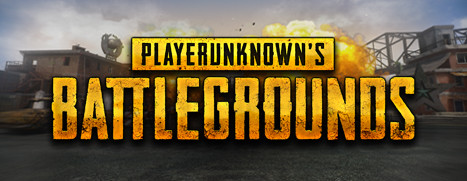
PLAYERUNKNOWN’S BATTLEGROUNDS is Now Available on Steam!

PLAYERUNKNOWN’S BATTLEGROUNDS is a last-man-standing shooter being developed with community feedback. Players must fight to locate weapons and supplies in a massive 8×8 km island to be the lone survivor. This is BATTLE ROYALE.

Print this item

  News - Platinum Games to self-publish original titles in the future
Posted by: xSicKxBot - 01-01-2018, 06:30 PM - Forum: Lounge - No Replies

Platinum Games to self-publish original titles in the future

“We want to motivate the people that work here. We want to give them an opportunity to make their own game.”

– Platinum Games’ Atsushi Inaba on why he wants to work on self-publishing original IPs

During an interview with Game Informer, Platinum Games’ head of development Atsushi Inaba expressed his interest in making a completely original game, saying, “We’re becoming more and more interested in the idea of self-publishing and doing our own title.” Inaba mentions how up until recently, the team had worked on properties for a variety of different publishers. 

When asked what the process of self-publishing would look like Inaba described how over the past year, “We’ve pretty much opened the company up to ‘Anybody can pitch a game,’ and so over the last year we’ve gotten about 70 design documents from different people.”

“So this year has been about us basically diluting which stuff we wanted to focus on and not focus on, and drilling down to the point where we now have two designs that we’re genuinely focused on,” Inaba explains.

With the desire to create a game the entire team is motivated to work on comes with its challenges, especially when opening up the floor for pitches.

“That being said, if you’re going to put 20 people on the development, it has to be something that’s on brand and on topic, and obviously when people think of the Platinum Games brand, they expect crazy hardcore action, right,” Inaba says. “We have to be reticent of that. We want to surprise them by the fact that we’re doing this independent title and hopefully get support from the fanbase.”

According to Inaba, Platinum will continue to work on triple-A games with publishers because there would be too much financial risk to to do only self-published games without a major source of income.

“Doing something on our own, self-publishing it, releasing it, all of that is a challenge for us, but right now everybody is incredibly motivated and working on that.” 

Check out the full interview available at Game Informer. 

Print this item

 
Latest Threads
(Free Game Key) Steam | O...
Last Post: xSicKxBot
Today, 06:30 AM
MMOexp COD BO7 a clear pa...
Last Post: JeansKeyzhu
Today, 03:29 AM
MMoexp MLB 26 to swing in...
Last Post: JeansKeyzhu
Today, 03:28 AM
MMoexp FC26 to cater to d...
Last Post: JeansKeyzhu
Today, 03:26 AM
Confess or Clown? The Ult...
Last Post: DavidKomine
Today, 01:38 AM
Black Ops (BO1, T5) DLC's...
Last Post: Iproxy
Yesterday, 11:42 PM
(Indie Deal) FREE Brave L...
Last Post: xSicKxBot
Yesterday, 01:56 PM
(Free Game Key) Steam | N...
Last Post: xSicKxBot
Yesterday, 01:56 PM
(Free Game Key) 3 FREE St...
Last Post: xSicKxBot
05-11-2026, 09:35 PM
(Free Game Key) Steam | S...
Last Post: xSicKxBot
05-11-2026, 05:06 AM

Forum software by © MyBB Theme © iAndrew 2016