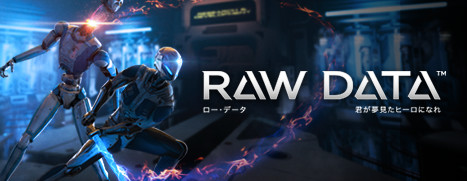
Built from the ground up for VR, Raw Data?s action combat gameplay, intuitive controls, challenging enemies, and sci-fi atmosphere will completely immerse you within the game world. Go solo?or team up with a friend?and become the adrenaline-charged heroes of your own futuristic technothriller.
The upgrades played a big role in the original Dig. This time they?re bigger, better and and will take you to places you?ve never been before. Besides carving your way through the earth with your trusty pickaxe, you will literally fly through caves with the Jet Engine and grab faraway treasure with the new Hookshot. Expect even more awesome gear as the game progresses. [Image & Form Games]
Expand is a single player video game in which players explore a circular labyrinth constructed in a monochromatic geometric landscape. Players must avoid getting squashed as the labyrinth twists, stretches and reveals itself in response to the player's movements.
Posted by: xSicKxBot - 10-11-2017, 01:52 AM - Forum: Lounge
- No Replies
Video: Game career advice from women who have been there and done that
Getting started in the game industry is hard! Luckily, there are lots of people who have done it and are passionate about helping others do the same.
A number of those people took the stage at the Career Seminar during GDC 2017 to offer would-be game devs — especially women — some advice gleaned from their own experiences entering the game industry and working at companies like Hangar 13 (Mafia III), Microsoft/343 Industries (Halo 5) and more.
It was a great set of microtalks, packed with advice meant to help anyone who has felt marginalized, pushed aside, or lacking in confidence.
It’s well worth watching, as you’ll probably walk away with practical tips and tricks you can use on your path to a meaningful career in game development. Now, you can do so completely free via the official GDC Vault YouTube channel!
In addition to this presentation, the GDC Vault and its new YouTube channel offers numerous other free videos, audio recordings, and slides from many of the recent Game Developers Conference events, and the service offers even more members-only content for GDC Vault subscribers.
Those who purchased All Access passes to recent events like GDC, GDC Europe, and GDC Next already have full access to GDC Vault, and interested parties can apply for the individual subscription via a GDC Vault subscription page. Group subscriptions are also available: game-related schools and development studios who sign up for GDC Vault Studio Subscriptions can receive access for their entire office or company by contacting staff via the GDC Vault group subscription page. Finally, current subscribers with access issues can contact GDC Vault technical support.
Gamasutra and GDC are sibling organizations under parent UBM Americas
Posted by: xSicKxBot - 10-11-2017, 01:52 AM - Forum: Lounge
- No Replies
Gamasutra plays the Star Wars Battlefront II multiplayer beta
We do love Star Wars here at Gamasutra. And since now we’re actually getting new Star Wars games (and not just updates to the first Battlefront from EA), we were excited today to play the multiplayer beta for Star Wars Battlefront II on the Gamasutra Twitch channel.
Now that our space adventures have concluded (with many explosions but few lightsabers), we’ve done the due diligence of uploading them for your viewing convenience. If you’re curious about the multiplayer beta (and what our thoughts are on the broader design of the Battlefront series), you should watch!
And while you’re at it, be sure to follow the Gamasutra Twitch channel for more gameplay commentary, editor roundtables and developer interviews.
Sharing collective experience with other game developers is a hallmark trait for Turn 10 Studios, developers of the recently released Forza Motorsport 7. Having now worked with the Xbox platform for more than a decade, the studio’s vast experience in working on Microsoft consoles has extended to the PC gaming space in the past couple of years with the award-winning Forza Horizon 3, and Forza Motorsport 6: Apex, a free proof of concept demo on Windows 10 developed to help test drive (no pun intended) on a scalable, powerful platform like PC.
Thanks to that experience, the team was able to effectively prepare for gaming in 4K, 60 frames-a-second with a framework in place for development on Project Scorpio (later Xbox One X) once specs started to come into focus. Thanks to these years of development, Turn 10 has developed a very close working relationship with the console platform team.
“As a first party studio, a lot of our job is to make sure that the platform we’re developing games on is also a great platform for other game studios to make games on,” explains Chris Tector, Studio Software Architect at Turn 10. “We really believe that, at our core, that’s what we’re trying to do — enable other studios to make great games. Because that means we’ll have great games to play, and we’ll also be shipping great games in an incredible ecosystem. It’ll be, everybody making the best Xbox game they could possibly make, and that’s something we take pride in.”
The first time the studio showcased this working relationship was at GDC in 2014. At that conference they showed off ForzaTech running on PC with an alpha version of Direct 3D 12. With that demo, they proved out that it was possible to get more of a console programming model on the PC.
“We really felt like that was going to move things forward for developers on the PC, but also be able to bring a lot of console titles over to the PC,” says Tector. “It was something that we could do that would really help again with that whole platform, and really help all developers along.”
Turn 10 also worked closely with the hardware teams, helping push improvements over to the console platform, and helping them understand what requirements they needed as developers.
“We told them if you want to prove out things, or stress test, or push the limits what the hardware can do or what the new hardware ought to be able to do,” explains Tector. “We’re able to provide our titles as a way of stressing that.”
It was at this point when the studio began to scope out what that next generation of gaming could be like, and found themselves in a great position to help influence the hardware requirements they needed to develop games at a very high frame rate and at exceptionally high resolution.
“The goal from the beginning was to be able to deliver the Xbox One era of games, but at 4K,” explains Tector. “And that didn’t mean just us (Turn 10). We were already at 1080 (resolution), we had been since the beginning of the generation and not a lot of developers were able to get there for whatever reason. They may have had other kinds of features they were going after, but for us, native resolution, 60 frames-a-second; it’s always been really important for us.”
That performance high-water mark is a lofty one, one that Turn 10 doesn’t balk from. Proving out 4K gaming was an important goal for the studio — and they wanted to make sure other developers could get there too. So, they worked on proving out ways they could capture what was going on the console (graphically), and let them scale out the graphics processing unit (GPU), which components to use, memory bandwidth… Creating a model that simply says, “Hey, we got this game running on an Xbox One. Will it be able to get to 4K on an Xbox One X?”
The team began to build out and provide gameplay on Forza that covered a wide spectrum of settings, from 720p all the way up to 4K, looking at different levels of texture filtering, geometric complexity, and tweaking a variety of features like anti-aliasing. Anything that would let them prove out their model to those looking at Scorpio in the early days, that 4K console gaming is an achievable reality and one that can be here soon. And Turn 10 can be here to help make it happen. The real proof came to Turn 10 earlier this year when the base model of the Scorpio was delivered to them.
“We had one of the platform graphics guys comes over and he had a box full of parts,” Tector says. “And he dumps them out on the desk, a motherboard, and hard drives, all hooked up with random cables and loose on the desk. But it’s a Scorpio… and it’s running! And then we get the title ported to it in literally two days.”
The team had prepared a special room in-house at the studio, planning for their guest to stay with them for weeks. But it turned out it was not needed since they were done in just a few days to get the whole game up and running. Not only was it running, it was running fast.
“Not like the first time we ran it on an Xbox One which was not too pretty, and not running fast,” explains Tector. “This was running like, the full of ForzaTech and it was running at 60 (fps), and it was running at 4k. We were just like… we were stunned. We were surprised. But it was an awesome feeling as well because we could then go out to our team, ‘Look, we had done all this work, we proved out this model, it’s going to have this level of performance, we’re going to be able to deliver this as a title.’”
It was there, it was real, and Turn 10 could show people how to get it done.
“That reality sank in for the team, and it just created this wave of like, ‘Well that means we can do this, and we can do this…’ and that was all open because not only were we running at 4k and at 60, and you know, all of those things that we wanted…. and we had headroom left over.”
Xbox One X is slated for retail release later this year on November 7, and we can’t wait to play this next generation of games thanks to the shared, collective wealth of experience that Turn 10 has provided to both developers and hardware engineers alike.
Suda51 Has Considered Remaking GameCube Cult Classic Killer7
Killer7 was one of the more unique games in the GameCube’s library. Developed for Capcom by Suda51 and Grasshopper, it was the last of the “Capcom Five” games for the GameCube (well technically the fourth, as Dead Phoenix got cancelled).
Killer7 was certainly quite intriguing and had a strong adult theme. The gameplay took the form of a first-person shooter which was on-rails. The character you played was limited to predetermined paths and the controls felt very clunky, even back in 2005 when it was released. Despite this, it gained a cult following.
In a recent interview with Suda51, he was asked if he’d like to remake any of his old Grasshopper games and on the topic of Killer7 he said:
The thing about Killer7 is that, right now, it’s not easy to play that game anymore right now. That’s definitely something I’d like to maybe revisit and update.
We’d love to see a remake of this unique game with improved controls. Let us know if you have fond memories of this one from the GameCube days or if you think Suda51 should leave this in the past and concentrate his efforts on the upcoming Travis Strikes Again: No More Heroes for Switch with a comment below.
Oxenfree is one of gaming’s greatest ghost stories. Granted, they’re a rare breed, the genuinely spooky video game, experiences that aren’t so much played as permitted to crawl across your skin, cooling the blood and yet quickening its flow. But Californian indie studio Night School’s debut production, originally released in 2016, is deserving of investigation by anyone delighting in disquiet. It’s mesmerising while it plays, and memorable long after it’s finished.
Not that you’ll see the real ending if you go around Oxenfree’s relatively brief running time of about five hours only the once. The game’s uncommonly palpable eeriness is filtered through a story of possessed teens and glitches in time, loops in reality that see a group of high-schoolers try to survive a night stranded on an island that isn’t quite as deserted as they believed. To dive into the particulars is to spoil a wealth of surprises, a raft of compelling beats that resonate with genre originality, that keep coming on a second playthrough – and even then, you might meet the credits with unanswered questions.
The mystery of Edwards Island – home to a decommissioned military installation and, until recently, a sole elderly recluse – can be unpicked to some extent by simply following the main story. This takes in a series of branches, directed by an excellent dialogue system that allows for player interruptions and very natural-feeling exchanges (and is made all the better by impressive voice acting), permitting the player’s character, Alex, a pronounced sense of agency in proceedings. Ultimately, the divergent plot narrows to a linear path for a high-stakes subterranean climax, at which point your earlier choices are going to have consequences.
Greater detail as to the island’s past, and how that’s impacting the night’s events, can be gleaned from discovering letters, scattered around the island during the game’s later stages – they go some way to describing a pertinent disaster that occurred not far from the island’s shores. There are also a number of photographs taken across the course of the night, by different characters, that contain clues; and audio anomalies, snatches of conversations from a time before now, that can be tuned into. Look, listen and learn carefully enough, and it all might just come together – but probably not on a single playthrough.
It’s through the use of a handheld radio that Alex – and by extension the friends, family and associates that accompany her to the island – can listen to strange signals. Some of these are songs, crackling and creaking as if weighted down by decades of dust. There are voices, some acting lines, others just groaning, screaming almost, in the static. Turn the dial slowly, and there’s often something that’ll stand out, like a lighthouse in the blackest night – except the feeling here is that the beacon is only ever drawing you closer to the rocks, and destruction.
The radio – which is later upgraded to one able to pick up many more frequencies – gives Alex and company a way to communicate with whatever else is on the island alongside them, a force that’s apparently all around them at all times, and yet unseen. A very clear malevolence can be felt, however, as the game delights in showing us, great detail and personality rippling through the diminutive avatars of the affair as their bodies are tested in ways that daren’t be spoiled. Nobody who took the last ferry the night before will return to the mainland quite the same.
But it’s not the visuals that really shake the player up – it’s the sound, and the music. The work of Andrew Rohrmann, aka scntfc, the Oxenfree OST is a cornucopia of uneasy avant-ambience, constantly getting under the skin of the player and forcing the hairs atop it to stand to attention. There’s a worn fuzziness to much of it, like its edges have blurred, its seams frayed; but there’s no warmth, even the more bucolic passages undercut by a distinct vein of dread. The resulting atmosphere is thick and sticky, then, and impossible to shake once you’ve set your Switch down to sleep. The compulsion to return, again and again, to the trials of these five souls is great indeed.
And you really should take a second trip to Edwards Island, to see those trials find a semblance of finality – and what with Oxenfree now on Switch, you can do that anywhere. It’s a game that neatly divides itself into explorable scrolling screens and set-piece situations, (admittedly somewhat lengthy) loading screens acting as markers between chapters. Portability is a great plus for a game that operates splendidly as a short-sessions experience – which isn’t to say you can’t binge on it, like the latest must-see Netflix show. The Switch lets you play it either way – and you can even use touchscreen controls, changing stick control for a point-and-click system, if you really must grease up your console like that.
Any Switch owners seeking supernatural encounters of the interactive kind should look no further that this otherworldly adventure. It’s not one you can “lose” at, whatever your decisions, and wherever the characters end up – but to miss out on it is to do your Switch a disservice.
Conclusion
A genuinely creepy creation, Oxenfree combines a clever story and smart dialogue mechanics with superbly sinister music to leave a deep and lasting impression on the player, one that should encourage an all-important second playthrough. Fans of Stranger Things and Poltergeist will love the direction this game takes – if not to hell and back, exactly, then absolutely to some other place where horrors abound, just waiting for an invitation into our world. It’s yet another Switch essential.
Raw Data is Now Available on Steam and is 25% off!*
Built from the ground up for VR, Raw Data’s action gameplay, intuitive controls, challenging enemies, and sci-fi atmosphere will completely immerse you within the surreal world of Eden Corp. Go solo or team up and become the adrenaline-charged heroes of your own futuristic technothriller.
Marvel's Guardians of the Galaxy - Episode 4: Who Needs You
In the wake of an epic battle, the Guardians discover an artifact of unspeakable power. Each of the Guardians has a reason to desire this relic, as does a ruthless enemy who will stop at nothing to tear it from their hands. From Earth to the Milano to Knowhere and beyond, this five-part episodic series puts you in the rocket-powered boots of Star-Lord in an original Guardians adventure.