Doom Eternal finally launches December 8 on Nintendo Switch
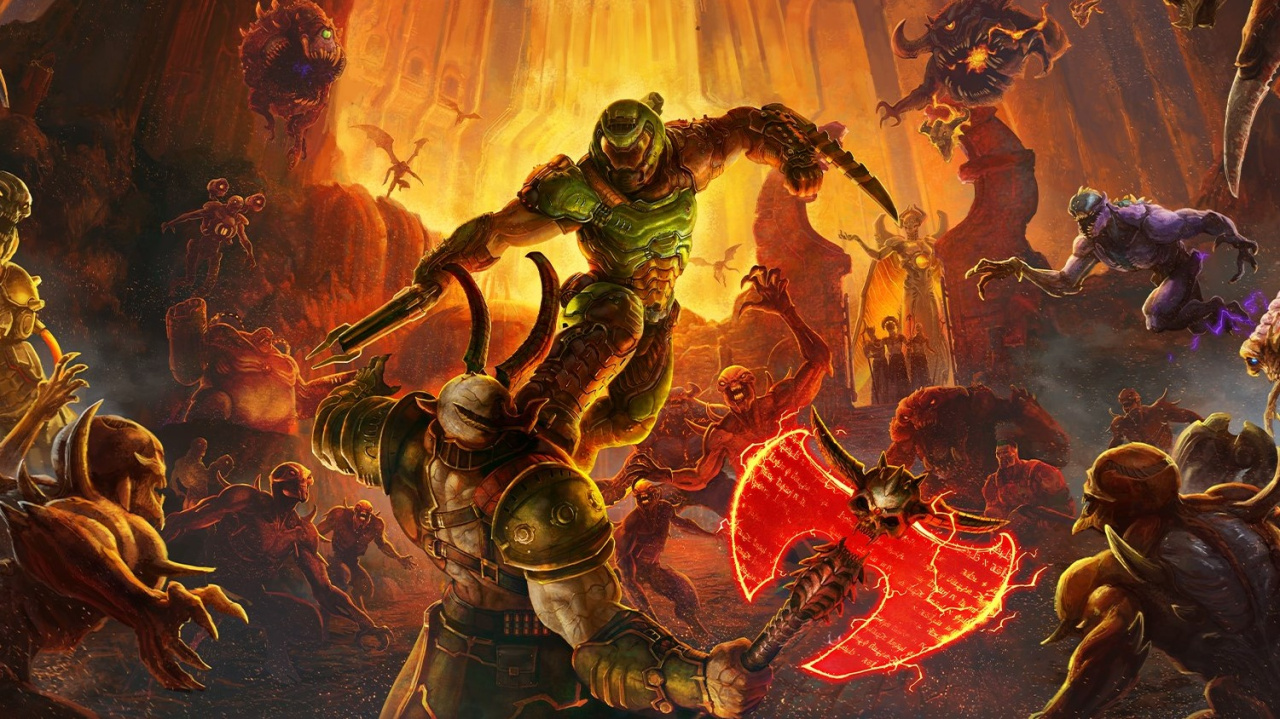
Bethesda has announced that it’s finally bringing Doom Eternal to Nintendo Switch on December 8, and it’s about bloody time (get it?). The critically acclaimed shooter arrives courtesy of Panic Button, the creator of many impossible Switch ports, including the original Doom, both Wolfensteins, and Warframe. Suffice to say, it should prove suitably impressive.
As you can expect, it also arrives with motion aiming, allowing you to use gyro controls to fine-tune your aim. Aside from that, this is the true Doom Eternal experience, complete with the lengthy single player experience, wide variety of weapons (including the Assassin’s Creed-style wrist-mounted blade) and abilities, and that sweet multiplayer experience.
This time around, the latter features the new Battlemode, err, mode, which pits one player, as a fully-armed Doom Slayer, against two demons, which you, the players, control. It’s a best-of-five battle to the death. And you can do all of the above a lot sooner than you might have first thought, when Doom Eternal arrives on Nintendo Switch as both a physical and digital release on December 8.
Here’s a taste of the shooter in action:
You can also learn more about the upcoming Switch port by reading this post on the official site.
If you’re sold, you can pre-order Doom Eternal on Amazon UK (US is not live as of yet) via the link below. Happy slaying.
Posted by: xSicKxBot - 12-01-2020, 06:14 AM - Forum: Windows
- No Replies
Minecraft: Education Edition at this week’s ISTE20 Live
ISTE20 Live is fully virtual this year, and we’ll be right there to help educators explore ways to use Minecraft: Education Edition to support student learning across the curriculum—whether you’re teaching online or in person. We’ll be joining the Microsoft Education team to beam onto your screen with tips, tricks, and advice for game-based learning.
All of our sessions are 15 minutes long, and they’ll be taking place in the Microsoft Content Room, so all you need to do is tune into the stream when there’s a session that interests you. You’ll find sessions on topics from remote learning and inclusive teaching to computer science and digital citizenship. We’ll have moderators from our team in each of the sessions to make sure we’re answering any questions you might have. We’re excited to connect!
To make things easy for you, here’s an at-a-glance schedule of the sessions featuring Minecraft: Education Edition.
Sunday, November 29
10:45 AM PT: Nathan Richards, Remote learning with Minecraft: Education Edition With learning models changing in ways we’ve never seen before, teachers are adapting to how students learn, connect, and collaborate with one another. Discover ways that Minecraft: Education Edition can help students explore, build, and learn together online when they can’t share the same physical classroom.
Thursday, December 3
11:30 AM PT:Felisa Ford, Good Trouble – Teaching Social Justice in Minecraft: Education Edition Take a trip through time and across the globe with civil rights activist and Congressman John Lewis to learn about people who changed the world by leading social justice movements. Students embark on a journey that includes Black Lives Matter, the US Civil Rights movement, Gandhi’s struggle for Indian independence, and more. This session unpacks the ways that the Good Troublelesson can help students understand the impact of these movements and their leaders, and explores how learners can contribute to building a better world.
11:45 AM PT: Becky Keene, Experiencing History and Deep-thinking Skills with Minecraft: Education Edition See how students engage in learning about history, coding, engineering, and more through the immersive experience of the World War I Toybox in Minecraft: Education Edition.
12:00 PM PT: Suzannah Calvery, Mindful Mining – Infusing Social-emotional Learning with Minecraft We all need to build our social-emotional intelligence, and the tools available through Minecraft: Education Edition provide opportunities to build mindfulness, communication, and collaboration skills. See how the Mindful Knight lesson teaches mindfulness, empathy, self-regulation, and resilience, then discover more lessons that foster creativity and collaboration.
12:15 PM PT: Bob Irving, Promoting Digital Citizenship – Immersive Roleplay in Minecraft: Education Edition Learn about how Minecraft: Education Edition’s new Digital Citizenship world provides an immersive tool for teaching students about digital theft, media literacy, sharing, and harassment, preparing them to collaborate successfully with peers online.
12:30 PM PT: Sarah Red-Laird, Build with Bees! STEM Lessons in Minecraft: Education Edition Turn students’ fear of bees into feelings of fascination and fun with the founder and director of the Bee Girl nonprofit. Explore 11 NGSS-aligned STEM lessons designed to help students understand the importance of bees in our ecosystem, their biology, and how we can contribute to bee health!
1:30 PM PT: Felisa Ford, Good Trouble – Teaching Social Justice in Minecraft: Education Edition Take a trip through time and across the globe with civil rights activist and Congressman John Lewis to learn about people who changed the world by leading social justice movements. Students embark on a journey that includes Black Lives Matter, the US Civil Rights movement, Gandhi’s struggle for Indian independence, and more. This session unpacks the ways that the Good Troublelesson can help students understand the impact of these movements and their leaders, and explores how learners can contribute to building a better world.
2:15 PM PT: James Protheroe, Minecraft Hour of Code for Elementary Students: Block-based Coding The world of computer science can be an intimidating place for those of us who come from non-STEM backgrounds, but bringing code and computational thinking into your classroom doesn’t have to be overwhelming. Join this session to learn more about fostering your own understanding while also introducing computer science principles at a beginner level through this year’s Minecraft Hour of Code block-based coding tutorial.
2:30 PM PT: Andrew Balzer, Minecraft Hour of Code for Intermediate Coders: Text-based Python Coding The world of computer science can be an intimidating place for those of us who come from non-STEM backgrounds, but bringing code and computational thinking into your classroom doesn’t have to be overwhelming. Join this session to learn more about fostering your own understanding while also introducing computer science principles at an intermediate level through this year’s Minecraft Hour of Code Python activities.
2:45 PM PT: Peter Doherty, Coding in Minecraft: Fun Computer Science for Middle School Coding in Minecraft is a remote-ready computer science credential and CSTA-aligned curriculum program delivered through Minecraft: Education Edition. This curriculum immerses students in a Minecraft world to develop and demonstrate their coding skills using MakeCode and JavaScript or Python. In this session, you’ll hear from educators who are seeing success with this content.
Friday, December 4
12:15 PM PT: Steve Isaacs, Learning Through Creative Competition with eSports in Minecraft: Education Edition With the number of eSports spectators now eclipsing that of the NFL in the US, how can educators harness students’ passion for competitive gaming to drive learning outcomes in classrooms and after-school clubs? In this session, learn about ways that Minecraft: Education Edition is entering this exciting new arena.
Saturday, December 5
10:45 AM PT: Nathan Richards, Remote Learning with Minecraft: Education Edition With learning models changing in ways we’ve never seen before, teachers are adapting to how students learn, connect, and collaborate with one another. Discover ways that Minecraft: Education Edition can help students explore, build, and learn together online when they can’t share the same physical classroom.
You can find all of these sessions and more in the Microsoft ISTE20 Live schedule. Come connect with us, bring your questions, and enjoy the virtual conference experience with our team! If you’re curious about Minecraft: Education Edition and want to come to the table with a few questions, explore this powerful tool for game-based learning at education.minecraft.net.
Posted by: xSicKxBot - 12-01-2020, 06:14 AM - Forum: Windows
- No Replies
Medical imaging, AI and the cloud: what’s next?
Today marks the start of RSNA 2020, the annual meeting of the Radiological Society of North America. I participated in my first RSNA 35 years ago and I am super excited—as I am every year—to reconnect with my radiology colleagues and friendsand learn about the latest medical and scientific advances in our field. Of course, RSNA will be very different this year. Instead of traveling to Chicago to attend sessions and presentations, and wander the exhibits, I’ll experience it all online. While I will miss the fun, excitement, and opportunities to connect that come with being there in person, I am amazed by what a rich and comprehensive conference the organizers of RSNA 2020 have put together using the advanced digital tools that we have at hand now.
It would be an understatement to say that this has been a year in which nearly everything is very different. From the tragic loss of life and rampant sickness to the economic disruption and the impact on our professions and our children’s education, so much of what we have been through because of COVID-19 has been extremely difficult. But the resilience of the response that so many people and institutions have shown in the face of all these challenges has been remarkable. And if it is possible to say there has been some good in all this, it would have to be the unprecedented transformation of the global healthcare ecosystem as hospitals, clinicians, and researchers have embraced a new generation of advanced digital health technologies that have helped them respond to the coronavirus crisis and laid the foundation for a more effective, affordable, and equitable future for healthcare.
Trends
As we move forward and the digital transformation of healthcare continues to accelerate, I see three significant trends that will influence the future of health and wellness.
One is the rapid emergence of virtual care through digital tools such as telehealth and remote monitoring that have made it safer and more convenient for patients to connect with their doctors during the pandemic, and that is empowering individuals to take charge of their health in entirely new ways. Virtual care has the capacity to personalize, accelerate, and augment treatment and prevention, saving time and money while improving outcomes. The ability to engage patients without requiring an in-person visit to a clinic will help ensure that they receive the right level of care and enable healthcare facilities to better manage the flow of patients into clinics and emergency rooms.
The second trend is the growing clarity of the promise of AI-driven precision medicine to serve as a major catalyst for improving health outcomes. As platforms for precision medicine and real-world evidence mature, we’ll see exciting opportunities to improve treatment and prevention as we personalize patient care and transform how we diagnose infectious disease, cancer, and autoimmune disorders.
And, finally, where healthcare organizations have long been reluctant to move data offsite due to security, trust, and privacy concerns, we have seen a historic shift to the cloud over the last nine months. Now, driven by regulatory changes, the massive increase in medical data, and the critical need to access and analyze all that data by providers, payers, public health agencies, and researchers, it’s clear to everyone that moving to the cloud is both essential and hugely beneficial, both to providers and to patients.
Microsoft Cloud for Healthcare
As part of Microsoft’s ongoing commitment to help healthcare customers and partners continue to make progress toward recovery and build more resilient and effective systems of care, in late October we announced the general availability of Microsoft Cloud for Healthcare. This powerful industry-specific solution provides integrated capabilities for automated and efficient high-value workflows, and advanced data analysis functionally for structured and unstructured data so that healthcare organizations can truly transform information into insight and insight into action.
Built on the trusted capabilities of Microsoft 365, Microsoft Azure, Microsoft Dynamics 365, and Microsoft Power Platform, Microsoft Cloud for Healthcare is designed to enhance patient engagement to make it easier for patients to interact with caregivers, empower health team collaboration to facilitate more efficient and rich real-time communication and collaboration across the care continuum, and improve clinical and operational data insights with the ability of healthcare organizations to connect data from across their systems to predict risk and help improve patient care and operational efficiencies. Our robust partner ecosystem extends the power of Microsoft Cloud for Healthcare by building and extending advanced health solutions to meet the most demanding challenges in healthcare.
Radiology
All of this makes it a particularly exciting time to be a radiologist. In many ways, our field has always been at the forefront of advances in the technologies that improve the movement, management, and analysis of large amounts of health data. This shouldn’t really be a surprise, given that medical imaging accounts for nearly three-quarters of all health data, and analyzing 3D medical images can require up to 50 GB of bandwidth a day.
At Microsoft, streamlining the flow of health data, including medical imaging data, has been a significant focus of our work over the past few years. With the release of the Medical Imaging Server for DICOM (Digital Imaging and Communications in Medicine) in September, we offer developers powerful tools to ingest and persist medical imaging data in the cloud. Elevating interoperability, this is the first cloud technology to bring together DICOM data standard and FHIR (Fast Healthcare Interoperability Resources) which allows for persisting medical imaging metadata alongside other clinical data and sets the stage for multiple scenarios in research and diagnosis which may be too difficult or expensive to execute today.
Now, with Project InnerEye and the open-source InnerEye Deep Learning Toolkit, we’re making machine learning techniques available to developers, researchers, and partners that they can use to pioneer new approaches by training their own ML models, with the aim of augmenting clinician productivity, helping to improve patient outcomes, and refining our understanding of how medical imaging can be combined with other types of data to advance personalized medicine.
Learn more about our latest medical imaging offerings at the RSNA industry hour lunch and learn on December 3, 12:30 PM – 1:30 PM Central Time.
Partners
Reimagining an industry that is as complex and touches as many lives as healthcare is a massive undertaking and at Microsoft, we have the privilege of working with amazing partners who stand at the forefront of innovation and progress in medical imaging technology.
Our partners are building transformative solutions to address some of the most difficult challenges in medical imaging. The amount of data generated by medical diagnostic imaging and connected devices is growing exponentially. Healthcare stakeholders, therefore, need effective ways of handling these data at scale.
This prompted Siemens Healthineers to build a dedicated cloud environment for Healthcare: The teamplay digital health platform. Through a certified gateway, the teamplay receiver, health data from connected medical devices can be aggregated. The teamplay cloud infrastructure is based on Azure, allowing secured processing of data within or outside a hospital’s network.
GE Healthcare’s Centricity™ Universal Viewer Zero Footprint (ZFP) connects advanced diagnostic tools and system-wide image management platforms across the care continuum to help healthcare organizations improve diagnostic speed and confidence. ZFP users can now open Microsoft Teams with one click and share studies with other clinicians via the secure and compliant channels.1
SOPHiA GENETICS, the company pioneering the Data-Driven Medicine movement—trusted by over 1000 healthcare institutions in 85 countries—is highlighting their radiomics capabilities through the universal SOPHiA Platform for oncology and COVID CT imaging. Radiomics transforms standard medical imaging into mineable data assets that can be analyzed and combined with genomic data for improved decision support of precision medicine. SOPHiA Radiomics Solutions offer comprehensive workflows for multiple research and disease indication needs. SOPHiA multimodal platform is deployed on Microsoft Azure Cloud.
Microsoft and Sectra are partnering on cloud-based enterprise imaging and AI. In our joint RSNA webinar, Reap the benefits of enterprise imaging in the cloud with Microsoft & Sectra on December 3, we will introduce the brand new all-Azure and hybrid Microsoft Azure Stack offering as well as a demo of how Teams integration will help radiologists to cope in the new virtual world. We will hear Judy Bartlett from our joint customer John Muir share her experiences about moving from on-prem to running the Sectra Enterprise Imaging Solution as a Service on Azure.
With the imminent release of a new version of iConnect Enterprise Archive, IBM Watson Health will start to bring to market solutions that support a containerized deployment, in addition to VMWare, on both the IBM Cloud and Azure. The containerization of this portfolio is one of IBM Watson Health’s key initiatives, starting with their VNA foundation and leveraging IBM’s Red Hat OpenShift technology to ensure build once and deploy anywhere to be cloud native and agnostic.
With NVIDIA Clara Imaging, developers and researchers have the ability to accelerate data annotation, build domain-specialized AI models, and deploy intelligent imaging workflows with state-of-the-art pre-trained models and reference applications. Working closely with Azure, these innovators can jumpstart their development in the cloud and also address tough medical imaging challenges faster with Project InnerEye. During the current pandemic, our partnership is heavily accelerating progress Research in drug discovery (UC, Riverside; UCB Covid Moonshot) using GPUs on Azure for quantum mechanics model as well as using AI for SARS COVID-19 risk evaluation in Italy (Hospital San Raffaele, Milan). This partnership also enables the development and deployment of smart hospital solutions, running on NVIDIA Clara Guardian and Azure.
And finally, Flywheel is a cloud-scale informatics platform for biomedical research and collaboration. What is exciting about our differentiated work is the ability to securely leverage cloud at the edge with Microsoft Azure Stack Hub and transform these image analytics with Microsoft AI enabling tools and Flywheel’s depth in medical imaging data management and automated workflows.
Microsoft is the only cloud that extends to the edge from Microsoft Azure Edge Zone for 5G to Microsoft Azure Sphere for security. We’re removing all barriers by covering all security and data sovereignty concerns in the cloud. With over 168,000 partners around the world, the network for innovation and collaboration runs deep. We cannot wait to see how together we will build solutions that transform healthcare around the world.
For more information on Microsoft Cloud for Healthcare, AI imaging tools, or to learn more about partnership visit the Microsoft virtual booth at RSNA or connect with us at our featured demo on November 29, 2:00 PM – 2:30 PM Central Time.
[1] Technology in development that represents ongoing research and development efforts. These technologies are not products and may never become products. Not for sale. Not cleared or approved by the U.S. FDA or any other global regulator for commercial availability.
Posted by: xSicKxBot - 12-01-2020, 06:13 AM - Forum: Lounge
- No Replies
SoulCalibur 6 Ends Its Season 2 DLC With The Return Of Hwang
SoulCalibur VI is closing out its Season Pass 2 DLC with the return of fan-favorite Korean swordsman Hwang Seong-gyeong. Much like the August reveal of Setsuka, Hwang has also been missing in action for some time.
Originally appearing in 1995's Soul Edge, Hwang also appeared in SoulCalibur and SoulCalibur 3, and was then relegated to the sidelines for 15 years.
Armed with his trademark Dark Thunder longsword and Six Heavenly Arts fighting style, Hwang will arrive on December 2 on PS4, PS5, Xbox One, Xbox Series X/S, and PC via Steam alongside a new update that adds the Motien Pass Ruins stage, classic costume parts for Seong Mi-Na, new Tekken-themed parts, and new Mitsurugi and Nightmare episodes.
[freebies.indiegala.com] Match the pieces and unlock new stages, each with less clothing.
Store Top Picks
This Black Friday Sale isn't limited to only to the day of Friday! Receive a BONUS BLACKHOLE Steam Key for any individual Store Cart of $5/€4/£3 or more (while stocks last). Check out some of our ongoing deals on our store:
The 239th GalaQuiz will be LIVE soon, win up to $50 in GalaCredit!
[www.indiegala.com] The GalaQuiz will take place in less than 30 minutes from this announcement Today's GalaQuiz[www.indiegala.com] hints are up. The theme will be Movie Protagonists #3 Redux.
We first looked at the GDevelop game engine back in 2017 in our Closer Look Game Engine series. In the intervening years, GDevelop 5 has come a long way, bringing more and more features to this impressive open source cross platform 2D game engine. In the past year there have been over a dozen new beta releases to the engine including several community contributions. There have also been some updates as a result of the 2020 Google Summer of Code. While many of these releases aren’t large enough to justify a video, taken as a whole it is certainly time to revisit this game engine and the improvements it has seen.
add support for a new asset store with hundreds of ready made game objects
new analytics system without requiring a third party solution
better support for right to left languages
support for dynamic 2D lights
customizable keyboard shortcuts
peer to peer communication extension
live preview (hot reloading) support
command palette for quickly launching editors
new editor themes
These are just a few highlights of the dozens of releases over the last few months. If you are interested in checking out GDevelop it’s available for Windows, Mac, Linux and Online. It is also an open source project with the source code available on GitHub under the MIT open source license. If you want to learn more or run into problems, be sure to check out their Discord server. You can learn more about GDevelop and see it in action in the video below.
Posted by: xSicKxBot - 12-01-2020, 12:11 AM - Forum: Windows
- No Replies
How tech can support secure, safe and equitable vaccine distribution
How technology can help meet the challenge of our lifetime
As several COVID-19 vaccines near regulatory approval in the U.S., the E.U., Japan, and other countries, governments around the world must establish systems to ensure effective and equitable distribution within their countries. At Microsoft, we have been working with public and private sector organizations around the world to help support this monumental task.
In some ways, the challenges related to the distribution and administration of the COVID-19 vaccine are similar to other vaccines. There are logistical challenges of supply procurement and demand forecasting, distribution, adverse reaction tracking and reporting, and integration with immunization records. But there are unique challenges as well: fair allocation, prioritization and phased eligibility, registration, tracking, as needed cold-chain storage supply, and the need to vaccinate a critical mass of the world’s population of over seven billion people in short order during a global pandemic.
This is a complex and multifaceted challenge. Government and public health officials will need to track multi-dose vaccinations, assess how public skepticism may impact demand, and coordinate with hospitals, clinics, nursing homes, pharmacies, and other vaccination sources to ensure public safety. This is on top of all the other challenges health workers are grappling with during the pandemic which includes overloaded hospitals, lack of Personal Protective Equipment (PPE), staff suffering from burnout, and much more.
The World Economic Forum states that logistics around the COVID-19 vaccines are “The challenge of a lifetime” and that to achieve global distribution, “technology will play a vital role in ensuring the smooth execution along every step of the supply chain … currently, no platform exists that covers all those visibility needs.”¹
“The goal is to enable a fair, equitable, and efficient distribution of the COVID-19 vaccine,” remarks Dr. David Rhew, Microsoft’s Worldwide Chief Medical Officer. “In response to this urgent need, we need a secure and interoperable platform that balances the complexities of the registration, scheduling, and supply chain distribution, with the broader public health mission to deliver a safe and effective vaccine in a prioritized manner.”
How technology can support this global challenge
In our discussions with public health officials and customers, we have identified several imperatives that any vaccine management offering should include:
Purpose-driven solutions designed for a fair, equitable, and efficient procurement and distribution of the vaccine.
Comprehensive use cases that support cold chain supply chain management, patient/provider/clinic registration followed by a phased vaccination scheduling and management with forecasting tools. The platform also needs to enable automated reporting to local, regional, and national agencies related to vaccination progress and capture of potential side effects from the vaccine.
Leverage existing data systems and interoperability standards to facilitate rapid implementation at the lowest cost. By leveraging interoperability standards such as HL7/FHIR, clinical data can be shared in a scalable manner.
Security, privacy, and compliance are non-negotiable characteristics of any platform used by public sector and health entities.
Partnerships are essential to meet the challenges ahead
Given the scale and complexity, no single government or organization can solve this vaccine distribution challenge on its own. It will take strategic alliances, an ecosystem of delivery partners, and interoperable technology offerings that are secure, transparent, and can scale to meet global demand. Data and artificial intelligence (AI) solutions will be especially important to provide insights and enable public health and government officials to make informed decisions about the virus and facilitate cross-agency collaboration, enable remote work, and deliver trusted services without interruption.
At Microsoft, we have a proven track record of partnering with governments, public health agencies, healthcare organizations, pharmaceutical companies, logistics providers, and other key stakeholders to tackle tough challenges. In the early part of the COVID-19 pandemic, we observed a massive influx of inquiries related to concerns about COVID-19 flooding health care agencies. This led to subsequent overloading of call centers and the crowding of urgent care clinics and hospital emergency rooms, which further increased the risk of spreading the infection. To address these urgent issues, we partnered with governments, public health agencies, and healthcare organizations across the globe to develop and deploy AI-based chatbot technology that could deliver individualized COVID-19 guidance. Today, over 680 million individualized COVID-19 messages have been delivered worldwide since March. The U.S. Centers for Disease Control and Prevention has adopted Microsoft technology and delivered over 37 million messages in October alone.
This same bot technology has been adopted by pharmaceutical companies and researchers to enable large-scale recruitment of donors for clinical trials. With the “The Fight is In Us” campaign, Microsoft in collaboration with the Bill and Melinda Gates Foundation is partnering with academic medical centers, plasma companies, national blood donor organizations, and several other stakeholders to advance the study of convalescent plasma to improve outcomes for patients with COVID-19 infection.² Microsoft is also partnering with Adaptive Biotechnologies to facilitate the evaluation of the immune response in patients exposed to COVID-19 as part of the Immune Race clinical trial.³
Through a collaboration with the American Hospital Association, Kaiser Permanente, Kearney, Merit Solutions, and UPS, we are facilitating the equitable donation and distribution of PPE and other medical supplies to places that have the greatest need.⁴
For decades, Microsoft has cultivated a robust ecosystem of technology partners from global system integrators to local independent software vendors. These partners build industry-specific solutions using Microsoft cloud services and other technologies. Microsoft’s Data and AI technologies, Business Applications, and Modern Workplace offerings can provide powerful analytics, relevant applications, and collaboration tools—and those capabilities are amplified when they are customized by Microsoft’s partners. Today, Microsoft Consulting Services along with several of Microsoft’s partners are helping public health customers address aspects of COVID-19 such as contact tracing, testing, return to work, return to school, and most recently the planning and preparation for vaccination distribution and administration.
Microsoft’s commitment
Microsoft CEO Satya Nadella says “We are adopting a first responder mindset across the company, working with so many customers on the front lines, including governments, health providers, schools, food suppliers, and other commercial customers critical to the continuity and stability of services in every country.” Let us work together during this pandemic to embrace the power of digital, and the power of human innovation to move global vaccination further forward so not only are COVID-19 vaccines available and accessible to all but come when people truly need them most.
We will continue to do our part to help our customers and the global community address this historic challenge.
Microsoft is committed to supporting public health and safety by equipping governments with the resources they need. For further information, use these resources:
When adding storage to a Linux server, system administrators often use commands like pvcreate, vgcreate, lvcreate, and mkfs to integrate the new storage into the system. Stratis is a command-line tool designed to make managing storage much simpler. It creates, modifies, and destroys pools of storage. It also allocates and deallocates filesystems from the storage pools.
Instead of an entirely in-kernel approach like ZFS or Btrfs, Stratis uses a hybrid approach with components in both user space and kernel land. It builds on existing block device managers like device mapper and existing filesystems like XFS. Monitoring and control is performed by a user space daemon.
Stratis tries to avoid some ZFS characteristics like restrictions on adding new hard drives or replacing existing drives with bigger ones. One of its main design goals is to achieve a positive command-line experience.
Install Stratis
Begin by installing the required packages. Several Python-related dependencies will be automatically pulled in. The stratisd package provides the stratisd daemon which creates, manages, and monitors local storage pools. The stratis-cli package provides the stratis command along with several Python libraries.
# yum install -y stratisd stratis-cli
Next, enable the stratisd service.
# systemctl enable --now stratisd
Note that the “enable –now” syntax shown above both permanently enables and immediately starts the service.
After determining what disks/block devices are present and available, the three basic steps to using Stratis are:
Create a pool of the desired disks.
Create a filesystem in the pool.
Mount the filesystem.
In the following example, four virtual disks are available in a virtual machine. Be sure not to use the root/system disk (/dev/vda in this example)!
# stratis pool create testpool /dev/vdb /dev/vdc

# stratis pool list

Name Total Physical Size  Total Physical Used

testpool 10 GiB 56 MiB
After creating the pool, check the status of its block devices:
# stratis blockdev list

Pool Name   Device Node Physical Size   State  Tier

testpool  /dev/vdb            5 GiB  In-use  Data

testpool  /dev/vdc            5 GiB  In-use  Data
Create a filesystem using Stratis
Next, create a filesystem. As mentioned earlier, Stratis uses the existing DM (device mapper) and XFS filesystem technologies to create thinly-provisioned filesystems. By building on these existing technologies, large filesystems can be created and it is possible to add physical storage as storage needs grow.
# stratis fs create testpool testfs

# stratis fs list

Pool Name  Name  Used Created        Device            UUID

testpool  testfs 546 MiB  Apr 18 2020 09:15 /stratis/testpool/testfs  095fb4891a5743d0a589217071ff71dc
Note that “fs” in the example above can optionally be written out as “filesystem”.
Mount the filesystem
Next, create a mount point and mount the filesystem.
# mkdir /testdir

# mount /stratis/testpool/testfs /testdir

# df -h | egrep 'stratis|Filesystem'

Filesystem Size Used Avail Use% Mounted on

/dev/mapper/stratis-1-3e8e[truncated]71dc  1.0T  7.2G 1017G   1% /testdir
The actual space used by a filesystem is shown using the stratis fs list command demonstrated previously. Notice how the testdir filesystem has a virtual size of 1.0T. If the data in a filesystem approaches its virtual size, and there is available space in the storage pool, Stratis will automatically grow the filesystem. Note that beginning with Fedora 34, the form of device path will be /dev/stratis/<pool-name>/<filesystem-name>.
Add the filesystem to fstab
To configure automatic mounting of the filesystem at boot time, run following commands:
After updating fstab, verify that the entry is correct by unmounting and mounting the filesystem:
# umount /testdir

# mount /testdir

# df -h | egrep 'stratis|Filesystem'

Filesystem Size Used Avail Use% Mounted on

/dev/mapper/stratis-1-3e8e[truncated]71dc  1.0T  7.2G 1017G   1% /testdir
Adding cache devices with Stratis
Suppose /dev/vdd is an available SSD (solid state disk). To configure it as a cache device and check its status, use the following commands:
# stratis pool add-cache testpool  /dev/vdd

# stratis blockdev

Pool Name   Device Node Physical Size  State   Tier

testpool   /dev/vdb            5 GiB  In-use   Data

testpool   /dev/vdc            5 GiB  In-use   Data

testpool   /dev/vdd            5 GiB  In-use  Cache
Growing the storage pool
Suppose the testfs filesystem is close to using all the storage capacity of testpool. You could add an additional disk/block device to the pool with commands similar to the following:
# stratis pool add-data testpool /dev/vde

# stratis blockdev

Pool Name Device Node Physical Size   State   Tier

testpool   /dev/vdb           5 GiB  In-use   Data

testpool   /dev/vdc           5 GiB  In-use   Data

testpool   /dev/vdd           5 GiB  In-use  Cache

testpool   /dev/vde           5 GiB  In-use   Data
After adding the device, verify that the pool shows the added capacity:
# stratis pool

Name      Total Physical Size   Total Physical Used

testpool             15 GiB           606 MiB
Conclusion
Stratis is a tool designed to make managing storage much simpler. Creating a filesystem with enterprise functionalities like thin-provisioning, snapshots, volume management, and caching can be accomplished quickly and easily with just a few basic commands.
A “Premium” Set Of Poké Ball Replicas Launches Next Year
The Pokémon Company International is set to launch a new set of collectable Poké Ball merchandise next year.
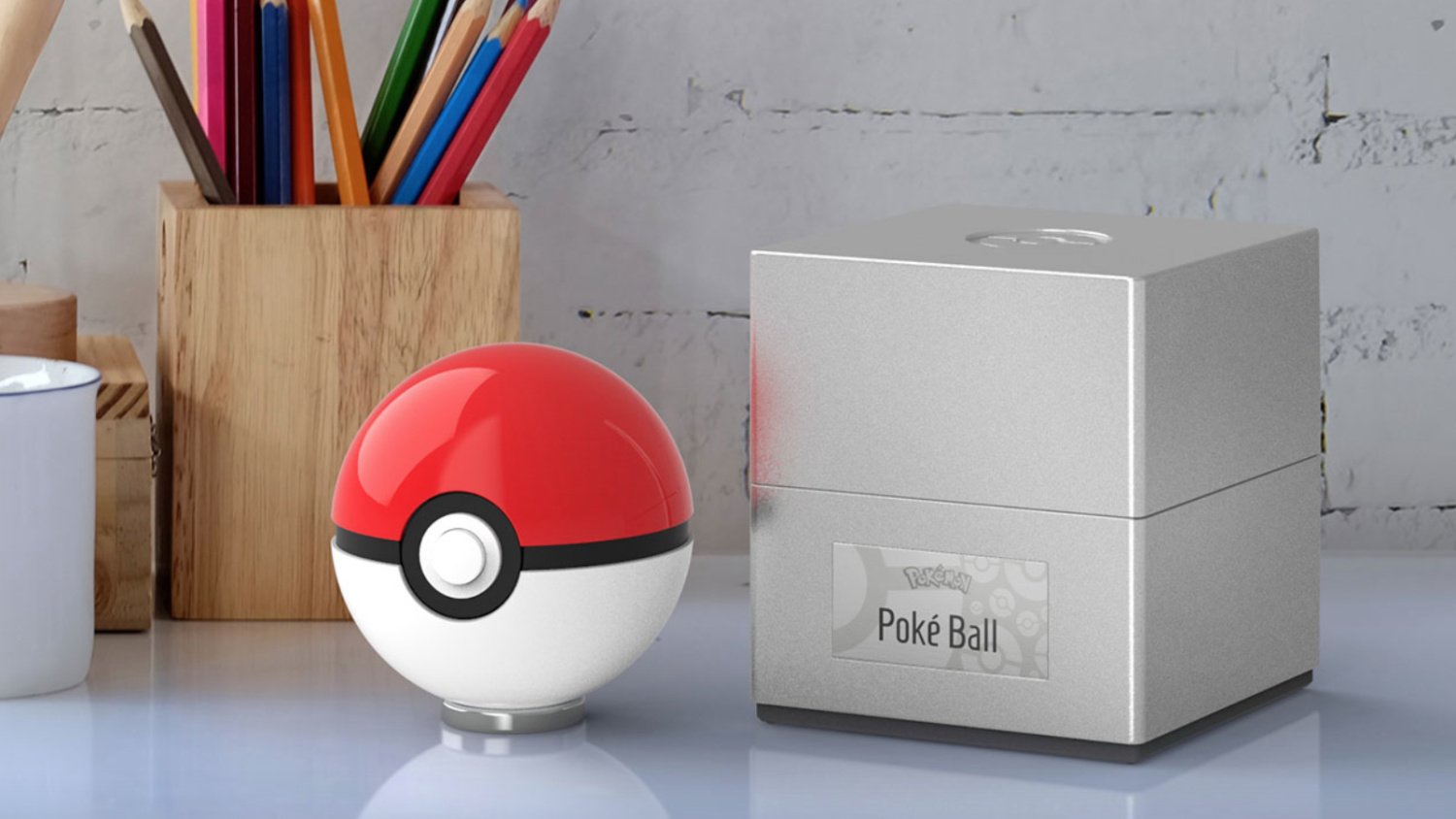
Called the ‘Die-Cast Poké Ball Replica Series’, the range will include “premium replicas” of the iconic Poké Ball, Great Ball, Ultra Ball, and Premier Ball. They’re being made in partnership with The Wand Company and will launch throughout 2021.
The Poké Ball is available to pre-order as we speak and will launch on next year’s Pokémon Day, 27th February. It’s a pretty pricey little beast, coming in at a spicy £99.99 (other retailers available here), but if you order from Zavvi, you’ll also get a free t-shirt thrown in.
Please note that some external links on this page are affiliate links, which means if you click them and make a purchase we may receive a small percentage of the sale. Please read our FTC Disclosure for more information.
Here’s the free t-shirt you can claim from Zavvi when you order the Poké Ball:
“Equipped with proximity-sensing technology, the Die-Cast Replica’s button glows when it senses motion; pressing the button changes the light color or starts a Pokémon-catching illumination sequence. Ideal for collectors, each replica comes with a presentation case—authenticated by a uniquely-numbered hologram—and a polished stainless steel ring that provide multiple ways to properly protect and display the product. Fans will also enjoy multi-colored lights when opening the lid of the case, which can be controlled through a touch-sensitive metal plaque on the front of the case.”
– Quality materials: Display-grade replica with a finely detailed metal shell and a deeply coloured, high-gloss lacquer finish – Engaging: Beautifully brought to life with touch and proximity sensing – Immersive: Brightly glowing button and animated, multicolour case illumination – Display grade: Opening the presentation case lifts the Poké Ball for display – Seriously collectible: The first of a range of premium collectible Poké Balls, each one uniquely numbered and officially licensed by The Pokémon Company International – Hidden accessory: Highly polished stainless steel display ring
In addition to the four designs mentioned above, another “special” Poké Ball replica will also arrive exclusively at the Pokémon Center in the US and Canada later down the line. Intriguing…
It sure does look lovely, but that’s quite the price tag. Let us know if you’re planning on treating yourself to one of these with a comment below.
DOOM Eternal Blasts To Switch In December – Check Out The New Trailer
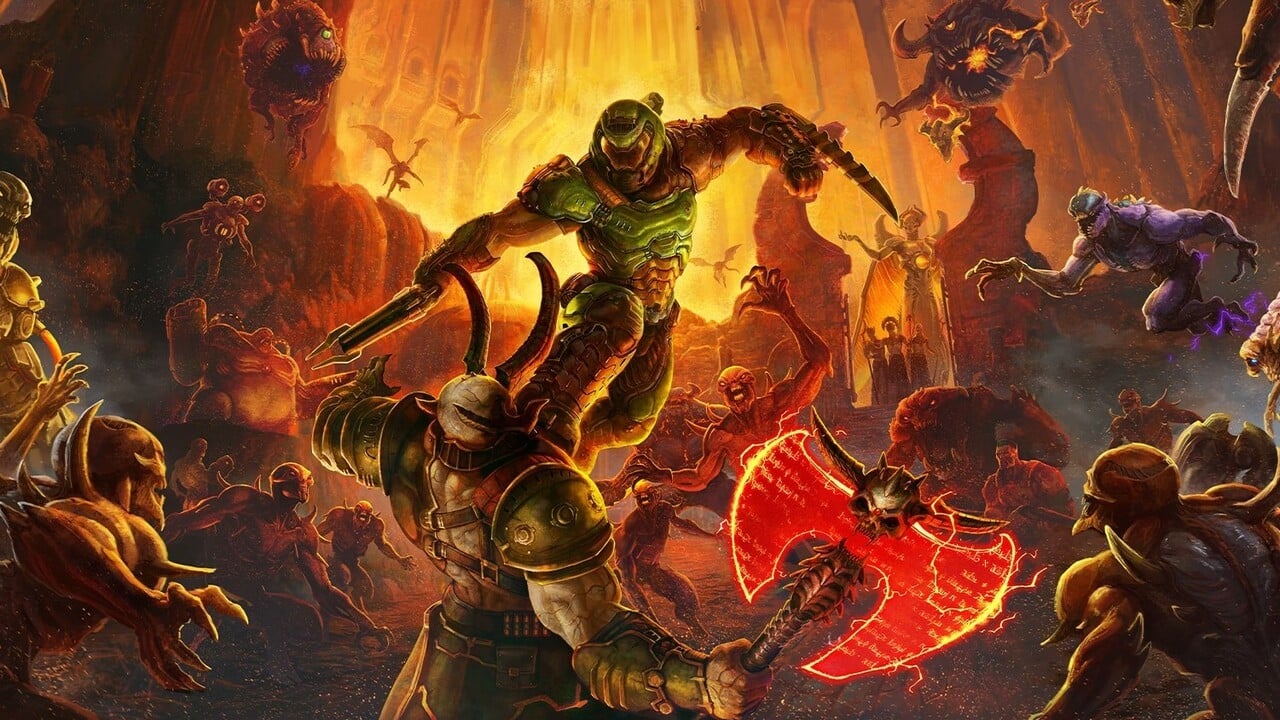
Many months after the game’s launch on other platforms, Bethesda has put a date on the long-awaited Switch version of id Software’s DOOM Eternal: it’s finally coming to Switch on 8th December.
Following a difficult year for the industry and its audience, there were fears that id Software’s ambitious follow up to DOOM 2016 might have been canned on Nintendo’s console, and the publisher recently stated that the Switch release will now be digital-only. However, it seems you can’t stop the Doom Slayer from coming back, and Switch owners don’t have long to wait. Check out the release announcement trailer above for an idea of what to expect if you missed it on other platforms back in March.
Even if you have access to one of those platforms, you may remember that the game released on the same day as Animal Crossing: New Horizons and were likely busy moving to your deserted island at the time, so perhaps now is the perfect time for that return trip to Hell. Our friends over at Push Square were big fans of the game, so we’ve got our trigger fingers crossed for the Switch version.
Nintendo’s game page says DOOM Eternal will take up 17.5 GB of your hard drive (or Micro SD card). The game is coming to Switch courtesy of Panic Button, the same team that ported the previous entry and several other remarkable Switch ports besides. We spoke to the team recently about this upcoming game — keep an eye out for our exclusive interview very soon.
Excited to finally get your hands on the Doom Slayer on Switch again? Let us know your thoughts below.