Posted by: xSicKxBot - 11-18-2020, 08:45 PM - Forum: Windows
- No Replies
Federal agencies advancing government and our nation
Note: In Part 1 of a two-part series, Rick Wagner shines a spotlight on federal agencies demonstrating resiliency to respond and rebound from 2020 challenges and reimagine a future of innovation and transformation.
As we look ahead to the close of 2020 and the beginning of a new year and administration, I’m more excited than ever to be leading our 3,000-member Microsoft Federal team. Formed in July – the same time I came aboard – this new organization reflects Microsoft’s commitment to, and investment in, federal government agencies and the specialized partners who join us in supporting their mission-critical work.
In this year of unprecedented challenges, we’ve seen U.S. government agencies respond to the health and economic crisis posed by a global pandemic, civil unrest over policing and racial justice issues, raging wildfires, catastrophic hurricanes and more. Unlike the private sector, the business of government is always open, especially during times of uncertainty, adversity and disruption. I’m inspired by the speed of federal agencies to address evolving demands while advancing government and our nation. I’m also proud that Microsoft Federal kept pace with our customers in using technology as a core enabler for innovations that serve everyone.
Leadership, resiliency, momentum
Federal agencies are demonstrating leadership, resiliency and momentum in building solutions for some of the most pressing issues of 2020. That’s why our Microsoft Government Leaders Summit digital broadcast on Dec. 7 is focused on empowering mission and leadership resiliency. With our trusted cloud, AI and other leading-edge capabilities, federal organizations are quickly tackling coronavirus issues to ensure seamless delivery of important services and continuity of operations. For example:
Roll Call and FedScoop reported on the DOD’s Joint Artificial Intelligence Center integrating supply-chain data to better inform the military’s response to the pandemic. In weeks, Project Salus produced an Azure- and AI-powered prototype with data from 150-plus sources to quickly assess national supply chains and identify potential shortages of water, medicines, food and other essentials.
Meeting diverse missions
While the pandemic requires great agility and resiliency, federal agencies also moved forward across several fronts to better meet their diverse missions, such as:
Veterans Affairs, Microsoft, Medivis and Verizon joined forces in February as Project Convergence to establish the nation’s first 5G-enabled hospital at the VA Palo Alto Health Care System. Not only will this public-private partnership result in 5G-based innovations, but it will create opportunities to improve veteran healthcare by leveraging the power of Microsoft HoloLens 2 and our Azure cloud. USA Today recently highlighted this initiative, with Susie Adams capturing its impact: “Doctors will be empowered to plan and perform live surgeries, see ultrasounds in 3D, and train doctors, surgeons and nurses to learn and understand human anatomy in new ways.”
Microsoft is partnering with the U.S. Air Force to support its mission through more modern IT solutions, including Microsoft 365, Teams and Azure. The move is allowing the Air Force to scale more easily, improve cloud performance, and empower better cross-agency collaboration and communication while complying with strict DOD requirements.
With two tropical storms headed for the Gulf Coast, we partnered with a U.S. Navy team over the Aug. 22–23 weekend to successfully deploy an enhanced weather model in a production-like Microsoft Azure environment. Capable of rapidly scaling weather and ocean pattern predictions on demand, the system confirmed the potential of using our secure cloud to deliver faster, real-time tropical cyclone forecasts.
We’re working with the federal government to accelerate progress in other ways, such as The First Five Consortium with the Department of Energy to develop disaster-response AI tools that help first responders quickly address floods, wildfires and windstorms. The Wall Street Journal explained the name as a reference to “the importance of the first five minutes in responding to a natural disaster,” and Susie Adams noted our Azure cloud and AI models will be used to analyze massive and disparate data sets in real time to help first responders better allocate resources or inform the public.
Microsoft Federal and our industry team are pleased to collaborate with the DOD in advancing microelectronics technology and strengthening the American microelectronics industrial base through the Rapid Assured Microelectronics Prototypes (RAMP) using Advanced Commercial Capabilities Project. We believe RAMP is vital to protecting national security, maintaining U.S. technological leadership and strengthening the economy.
We also hope the path is soon cleared to begin the essential work on the DOD’s Joint Enterprise Defense Infrastructure (JEDI), providing fast, responsive, flexible and adaptive cloud services to users at all classification levels. Originally announced Oct. 25, 2019 but stymied by litigation, we remain committed to delivering the best technology, the greatest value to our women and men in uniform, and the highest speed to adoption, innovation, capability and scale.
Respond, recover, reimagine
Microsoft CEO Satya Nadella has been widely attributed with seeing the world going through three pandemic phases: respond, recover and reimagine. As evidenced by the above examples, federal agencies have successfully responded to initial COVID-19 impacts and are now rebounding through collaboration and modernization with secure cloud and AI solutions. We’re also seeing great strides to shape a future of economic growth, transformation, and increased public trust and confidence.
For more than 40 years, Microsoft has supported federal agencies as they fulfill missions and create more efficient, effective government. Microsoft Federal is fully dedicated to continuing our company’s history of serving as the trusted partner to government customers as they digitally transform, reimagine tomorrow and achieve more for all of us.
Microsoft’s Satya Nadella, Brad Smith, Toni Townes-Whitley, myself and others discussing the government landscape and what’s needed to address the most pressing issues for federal agencies.
Federal leaders who are responding to change and recovering through collaboration and modernization.
Author and historian Walter Isaacson, sharing insights on the leadership and resiliency strategies that powered great historic transformations during challenging times – and how these lessons can provide a roadmap for leaders in times of extreme disruption.
This Powerful Portable Console Has Us Dreaming Of A Nintendo Switch Pro
Nintendo hasn’t confirmed that a Switch Pro is happening, but we’ve certainly heard enough rumours and the company’s previous track record would suggest it will inject more power into its portable line in the fullness of time.
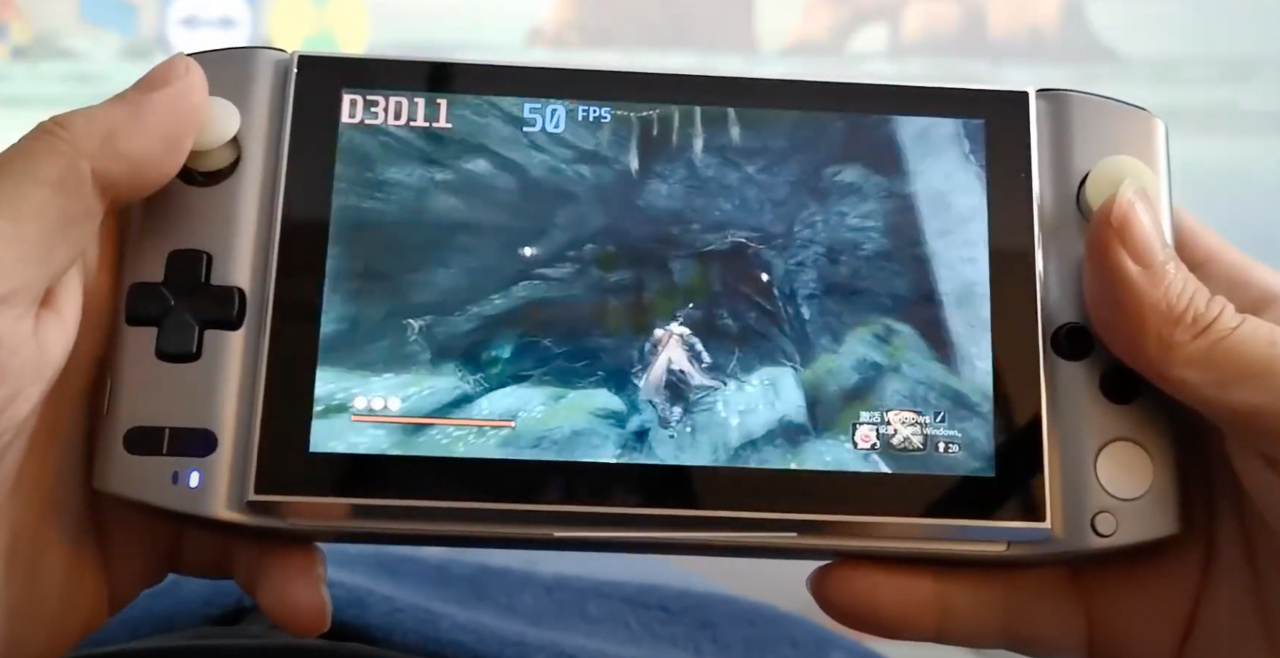
With a “Pro” model likely to include incremental improvements over the current version, the latest handheld from Chinese firm GPD – which is famous for its Windows-based handheld games machines – has us dreaming of could be possible if Nintendo really pushed the idea of a meatier, more potent Switch.
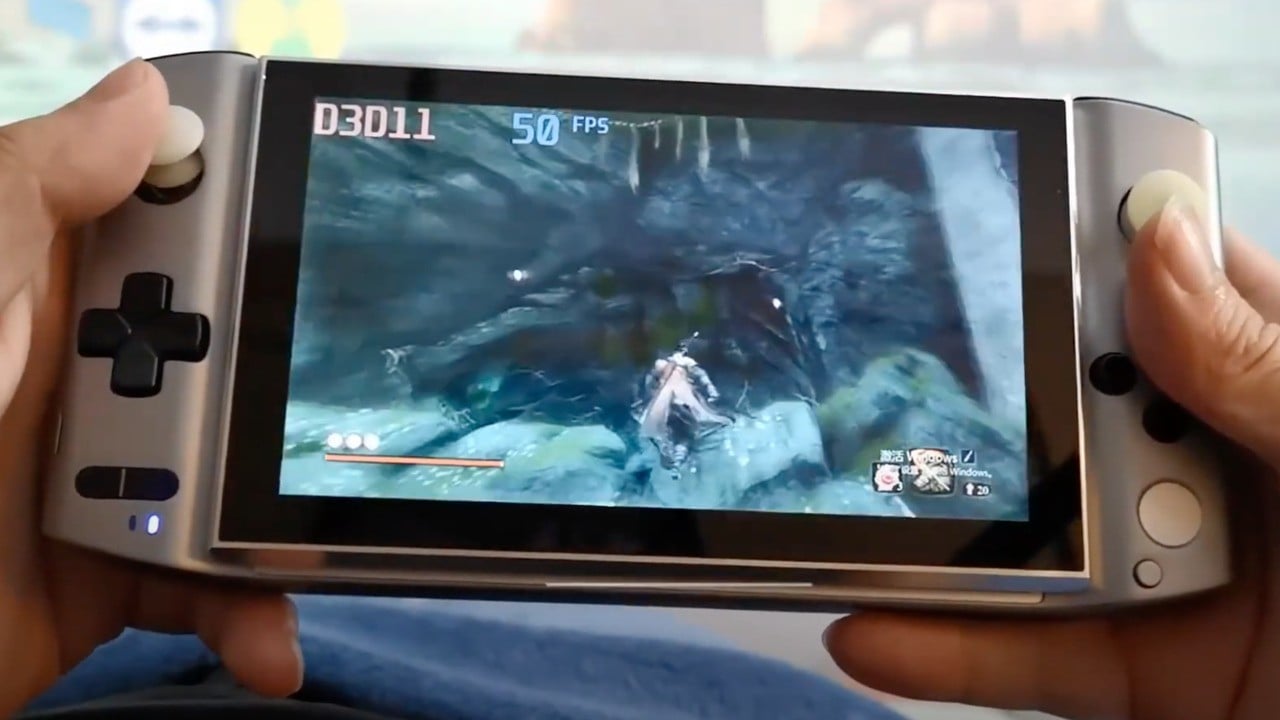
The GPD Win 3 looks a lot like a Switch – especially with that button and stick layout – but has some key cosmetic differences. The controls don’t detach from the main unit and the console’s screen slides up to reveal a keyboard – an essential feature when you consider that this is basically a tiny PC.
The company has released footage of the Win 3 running FromSoftware’s Sekiro: Shadows Die Twice, which, it’s fair to say, appears to be running with some graphical detail toned down.
Even so, it’s an impressive showing, and indicates that there’s a lot more scope in pushing portable hardware with a new Switch model – as some have suggested, Nintendo will hopefully keep the Switch alive for years (if not decades) thanks to regular iPhone-style hardware refreshes. Who knows? We may even be playing next-gen games on the move in 2025.
Cute Zelda-Style 2D Adventure Ocean’s Heart Looks Like It’s Switch-Bound
We love a good Zelda-style adventure, so it’s easy to see why Ocean’s Heart caught our eye – the game’s visuals call to mind the likes of Link to the Past and Minish Cap, and the lead character has another connection with the series thanks to her clothing, which looks a lot like Link’s outfit in Breath of the Wild.
Currently confirmed for release on Steam, Ocean’s Heart is described as “an action RPG featuring detailed pixel art with a heavy focus on exploration” which takes place “in a lively world teeming with secrets and mysteries.” You assume the role of Tilia, who is determined to find her missing father.
Ocean’s Heart is an action RPG featuring detailed pixel art with a heavy focus on exploration. In a lively world teeming with secrets and mysteries, Tilia sets out in search of her missing father. Follow the trail through the ruins of a flooded kingdom, shape the future of the current world, or keep your head down and focus on your own mission in this epic retro-inspired adventure!
Explore a detailed and beautiful world, brimming with secrets hidden in misty forests, isolated mountain peaks, or saltwater marshes. Every area is filled with unique and meaningful sidequests, ancient mysteries, and dangers.
Battle fearsome monsters and wield various weapons and ancient magic to defeat or outmaneuver them. Search for special materials to upgrade your weapons until you’re demolishing monsters who once put up a fierce fight.
Gather various items throughout the world to craft potions, upgrade weapons, and expand your ever-growing arsenal.
+ Retro-inspired action RPG with modern trimmings. +A lively and gorgeously pixeled world full of secrets free to explore at your own pace.+Menacing enemies and tense boss fights that’ll keep you on your toes. + An exciting array of weapons, spells, and abilities. Experiment to find your favorites for every situation and foe. + Unique, character-driven sidequests with heartwarming or twisted stories that expand upon the world’s lore. + Foraging and crafting elements to increase your chances of survival in a nasty fight. + Quirky charm and humor to keep you smiling on your extraordinary adventure!
Early Xbox launch numbers have been released for the UK via a VGC report, and it appears the console is performing slightly ahead of what the Xbox One managed back in 2013. This makes it the largest Xbox launch ever for the region. It was also the biggest Xbox launch of all time, with a global release instead of a region-stagged launch like Microsoft has done in the past.
The difference between the two generations isn't enormous, with the Xbox Series X and Series S managing to sell 155,000 units in its first two days compared to 150,000 for the Xbox One. However, when considering the supply shortages likely caused by the ongoing pandemic--and customers' tightened budgets because of it--it's promising news for Microsoft.
Industry analyst Daniel Ahmad corroborated the news on November 18, adding that this puts the systems ahead of the launch sales for the 3DS, Wii, DS, and Nintendo Switch. It puts them about 90,000 under the PS4's launch sales in the UK.
FREE Kill 'Em All, Bullied Bride Crackerjack, GalaQuiz
Kill 'Em All FREEbie
[freebies.indiegala.com] Use vehicles and explosive barrels to show the monsters how tough you are.
?Bullied Bride - Protect Her Smile & Make Her Happy
[www.indiegala.com] A tale of devotion between a gloomy girl and her protective lover.
The 233rd GalaQuiz will be LIVE soon, win up to $50 in GalaCredit!
[www.indiegala.com] The GalaQuiz will take place in less than 15 minutes from this announcement Today's GalaQuiz[www.indiegala.com] hints are up. The theme will be British Culture Redux.
Apple’s M1 Macs deliver world’s first support for USB4
The first Apple Silicon chip used in the Mac, the M1, implements Apple’s first custom controller for USB4 and Thunderbolt 3 and delivers the world’s first systems meeting the new USB4 specification. Notably, Apple has bought this to market ahead of Intel’s own 11th Gen Tiger Lake processors for PC notebooks.
Apple Silicon’s first with USB4 is a sign of things to come
M1’s support for USB4 isn’t exactly an earthshaking leap on the same level as Apple’s custom GPU, Neural Engine, or the Unified Memory Architecture of its new M1 System on a Chip. But it is noteworthy that Apple has been able to quickly implement and deliver a new emerging standard on its own custom Apple Silicon— a rapidly expanding advantage the Mac maker now holds over Windows PC and Android licensees.
The USB4 specification is largely an attempt to simplify and streamline the confusing array of definitions related to USB 3.x and other protocols that can work over USB-C cables, including HDMI and DisplayPort.
USB4 also represents the shift of Intel’s proprietary Thunderbolt protocol from a paid licensing scheme that required an Intel controller chip to an openly licensed standard now under the control of the USB standards body. In fact, most of the technical improvement in USB4 is effectively a copy of Thunderbolt 3’s high-speed connectivity features, now available from the nonprofit group that promotes USB as an industry standard.
Apple’s ability to develop its own custom controller supplying Thunderbolt 3 speed and compatibility, right on the M1, comes directly from Intel’s move to share the technology as part of USB4. The fact that Apple’s M1 hit the market before Intel could even finish its own chips supporting the new standard is eye-opening.
M1 MacBook Pro connected via 40Gbps Thunderbolt 3 to an Intel Mac in Target Disk Mode
Thunderbolt was initially developed by Intel in partnership with Apple, originally under the name “Light Peak.” It was intended to be a modern, optical replacement for FireWire— a standard Apple had developed on its own in the early 90s but failed to gain broad PC industry adoption.
But a decade later, Intel’s Thunderbolt has seemingly suffered the same fate as FireWire: enthusiastic adoption by Apple on its Macs but with limited penetration on generic PCs with less appetite for pushing state of the art. Adoption of Thunderbolt has mostly been stymied by PC makers’ cost-cutting efforts to settle on the cheaper to implement but much more limited USB as “good enough” for most users.
USB4 standard mandates USB-C ports and cables
Last year, Intel announced plans with Apple, Microsoft, HP, and chipmakers Renesas, STMicroelectronics, and Texas Instruments to define a unified USB4 standard. It would offer the same ultra-fast 40Gpbs bandwidth of Thunderbolt 3 along with improved support for tunneling USB 3.2, DisplayPort, and PCIe protocols across USB-C cables.
In addition to mandating USB-C, USB4 also requires support for the USB-PD (Power Distribution) specification for charging devices over the same cable that delivers data.
Defining USB-C as a requisite part of USB4 should help to broaden the use of the modern, omnidirectional, and more robust USB-C hardware standard for cables and ports that Apple has exclusively standardized on in its recent Macs. This is happening even as some critics have bemoaned the loss of the legacy USB-A connectors that have been in widespread use since they were first popularized by the original iMac back 1998.
Apple added USB-C to its iPad Pro and now ships its newest iPhones with a Lighting to USB-C charging cable. Apple has also shifted to USB-C across its charging adapters for MacBooks.
Thunderbolt 3 strikes again
The USB4 standard also offers the potential, but not the requirement, to support existing Thunderbolt 3 peripherals, which involves supporting some unique differences from the core definition of USB4. For the first time, that means that other companies apart from Intel could build their own silicon controllers delivering Thunderbolt 3 speeds and even compatibility without needing to buy a component from Intel.
This agreement was ideal for Apple— and was necessary for the company to deliver its new M1 Macs with support for both the refreshed new USB4 and compatibility with existing the Thunderbolt 3 devices that Mac users already have. Previous Apple Silicon chips— including the A-series SoCs used to power iPhones and iPad— never could support Thunderbolt.
That’s why Apple’s WWDC20 Developer Transition Kit, basically a Mac mini case outfitted with an iPad Pro-class A12Z Bionic chip, could only deliver the same USB 3 support as the iPads that chip was initially designed for.
The Developer Transition Kit specs reflected a souped up A12Z iPad Pro
PC makers who wait for Intel to deliver chips for them are expected to gain support for USB4 early next year with Intel’s Tiger Lake processors. However, there isn’t much urgency elsewhere because those PC makers can already license Intels’ existing Thunderbolt 3 chips if they want to deliver ultra-fast connectivity.
No other PC makers have shown any ambition to develop their own custom silicon in the model of Apple’s M1, and few have been that enthusiastic about Thunderbolt. USB4 should help drive the adoption of cost-effective USB disks that can achieve Thunderbolt 3 speeds faster than the more typical 5Gbps of USB 3.x devices. That should benefit everyone, including Mac users.
Effectively, USB4 as a wide standard should help make the technology used by Thunderbolt 3 more broadly available. In supporting both existing Thunderbolt 3 devices and new devices appearing under the revised standard branded as USB4, M1 Macs will be ready for the peripherals of the future as well as the high-performance devices existing Macs can already use.
Posted by: xSicKxBot - 11-18-2020, 02:32 PM - Forum: Windows
- No Replies
How tech opportunities are energizing towns across the US
In the combined TechSpark region of El Paso, Texas, and Ciudad Juárez, Mexico, manufacturing dominates the economy through assembly plants and low-wage jobs. The region’s distance from tech-rich cities and the global headquarters of companies that own the plants makes it tough for startups to claim a larger part of the massive manufacturing market.
But the Bridge Accelerator, a partnership between TechSpark and Technology HUB, a binational business incubator, is making inroads. More than 20 companies have gone through the program and learned how to think globally.
Ricardo Mora (photo courtesy of Mora)
“A lot of them are doing amazing work, but they’re only selling locally,” says Ricardo Mora, CEO of Technology HUB, which is based in both Juárez and El Paso. “We’re saying, ‘Listen guys, we’re going to train you, and you’re going to learn how to sell to global companies.’”
The region’s cross-border identity is a source of strength, with a young, largely Hispanic population of people who understand cultural differences, are often dual citizens and “want to make better opportunities for themselves every day,” says J.J. Childress, Microsoft TechSpark manager in El Paso.
“This is truly a binational effort,” he says of the Bridge Accelerator. “How do we create a soft landing for companies that want to access Latin American markets? How do we take the innovation from Mexican companies and give them access to North America?”
The training helped Rene Pons, an entrepreneur in Chihuahua, Mexico, meet a community of like-minded businesspeople and learn how to approach global companies.
“For a startup, a really huge problem is connecting with a big corporation and having them trust you,” says Pons, who co-founded PPAP Manager, maker of a digital solution that helps streamline automotive supply chains. He says establishing trust with global customers is even harder for companies in Mexico, which isn’t known for digital innovation.
“The Bridge Accelerator is opening the door to start conversations and getting an opportunity to be trusted,” Pons says.
Southern Virginia
South Boston, Virginia (photo by Brian Smale)
The tiny town of South Boston, Virginia, hasn’t seen new construction in nearly 40 years, so the rise of a new building where tobacco warehouses once stood is exciting news.
Even better is that it will house the SOVA Innovation Hub, a partnership between TechSpark and Mid-Atlantic Broadband Communities, whose open-access fiber networks have provided broadband access to help bridge the digital divide in southern Virginia. The building will house the nonprofit’s headquarters, a Microsoft experience center and space to help digital skilling nonprofits. That’s good news for an economy built on manufacturing and still struggling with the loss of tobacco and textile industries.
“Job stability is very difficult. Internet access is difficult. There’s a tremendous amount of poverty,” says Paul Nichols, superintendent of Mecklenburg County Public Schools.
The majority of his students qualify for a free or reduced lunch, and while fiber networks have changed the commercial landscape, many residents still don’t have broadband.
Krystal Patton teaches programming and Microsoft Office Specialist (MOS) certification courses in Mecklenburg County with the support of TEALS. (Photo courtesy of Paul Nichols)
“It’s like years ago when we had the same issue with electricity in rural areas,” Nichols says.
He’s looking forward to the economic investment and is grateful he’s been able to offer high school computer science classes with the support of Microsoft’s TEALS program. The classes help students think creatively to solve problems in all subjects, not just computer science.
“It’s challenged students to think and learn in a new way,” Nichols says. “With technology being foundational for all careers, we’re now looking at how to make computational thinking a part of all of our classes.”
Try Fitness Boxing 2: Rhythm & Exercise For Free With New Switch eShop Demo
A free demo has launched on the Switch eShop for Fitness Boxing 2: Rhythm & Exercise, an upcoming fitness title from Nintendo and developer Imagineer.
The demo will give players the chance to try out the Daily Exercise and Free Training modes available in the full game. You can play these alone or with a friend to see how you get on before the main course launches on 4th December.
Earlier today, we shared our early hands-on impressions with the full game, noting that it’s essentially a case of ‘more of the same’ after the original game‘s release almost two years ago. If you’re interested in learning more about it, we’d urge you to check that out.
For now, though, we’ll leave you with this official description. You’ll find the demo available on the Switch eShop as we speak.
Jab, uppercut, and dodge along with the rhythm of three original songs to score as many points as possible. Players can start their daily boxing routine in Daily Exercise mode for a guided workout, or build their own session from scratch in Free Training mode. The six original instructors from the first Fitness Boxing game are back, and three new instructors are joining the ring: Karen, Hiro and Janice. These personal trainers will be here to support and encourage players during their workout sessions. Friends and family members can each use one Joy-Con for a two-player training session, working out together.
Review: Sniper Elite 4 – The Nazi-Slaying Series’ Best Entry Comes To Switch
Rebellion’s Sniper Elite 4 was released to some high praise back in February of 2017, and is widely regarded as the best entry in the long-running series to date; it’s a fun and flexible sniper’s paradise with ten lengthy campaign missions set across the largest, most varied and vertical levels that crack Nazi skull-exploder Karl Fairburne has ever had to contend with. There’s plenty for ace-assassins to chew on in this one, with a hefty fifteen-hour story that’s fully playable in both solo or co-op and a variety of multiplayer modes, all of which arrives here on Switch in fine form. This is a port that is easily equal to its predecessor with nary a bug or framerate drop in sight, leaving you free and unfettered to get right down to the very important business of slo-mo smashing fascist’s jaws through their lungs in glorious X-Ray vision.
Sniper Elite 4 picks up in the immediate aftermath of the events of the third game in the series, with gruff central protagonist Fairburne landing in Italy to investigate a mysterious Nazi weapon. No sooner have Karl’s leaden boots landed on the soft sand of San Celini than a plot involving desperate resistance groups, giant railguns, the Sicilian Mafia, backstabbing, double-crossing and enormous Nazi facilities begins to unfurl. This is easily the biggest Sniper Elite to date, with impressively large levels in which to get down to the rather worryingly addictive business of making an absolute mess out of your fascist foes.
The core gameplay remains much the same as previous efforts in the franchise, with Fairburne’s main party piece – the slow motion, X-ray destruction of heads, hearts, lungs and other quite delicate areas of anatomy – still very much the centre of proceedings. Choosing to stealth as much of these enormous, enemy-infested environments as possible, you’ll employ a multitude of tricks and traps; teller mines, tripwires, grenades, TNT, booby-trapped corpses, satchel charges and so on to bend your surroundings to your advantage. Beyond lining yourself up for plenty of the game’s signature slo-mo sniper shots, you can rig objects to explode, quietly shoot large crates down upon the enemy and trigger glorious chains of explosions that take out multiple Nazi troops by targeting a munitions cache or the gas tank of a large convoy vehicle.
Passing planes and loud machinery will drown out the sounds of your gunfire, enabling you time your shots and move through areas undetected, and a new addition here also sees you provided with very limited stocks of suppressed ammo for your rifle – a precious resource that enables you silently despatch the enemy as you please. If you’ve played any previous Sniper Elite game you’ll know the drill well enough, but here the fun has been added to with smarter and more reactive enemy AI and a more versatile Fairburne who can now hang out of windows or off ledges and clamber around walls and up pipes in order to get a better vantage point from which to scope out and tag enemies with his trusty binoculars. There’s a fresh level of flexibility that has the positive knock-on effect of making being discovered and “going loud” a much more viable alternative than it ever was in previous entries in the franchise.
Indeed, where once we’d stick resolutely to keeping ourselves hidden at all times, save-scumming our way through tough assignments, being spotted in Sniper Elite 4 isn’t as frustrating as it was in the past. Karl has a bevvy of new moves that allow for quick and nasty CQC kills when up close and personal, and the AI is such that you can toy with your opponent, making a real ruckus, taking out a bunch of baddies with your Thompson and then quite easily – at least on medium difficulty settings – vanishing into thin air again. In fact, making a big bunch of noise here – something we were once so terrified of doing in these games – is a tactic we started to use to our advantage, drawing the enemy into our pre-planned death mazes of tripwires and traps, giving them a little tease with some automatic fire before going ghost again to mop up the scene from long-range. It’s good fun.
There are now also night time missions which allow you to snipe out light sources and, overall, this fourth entry in the franchise does a cracking job of providing plenty of opportunity for experimentation throughout its great big meaty levels. And these really are some meaty levels. You can easily spend upwards of an hour on each scenario – much more if you decide to attempt to ghost the whole thing or complete the laundry list of side objectives and collectable-gathering that’s available in each and every area. As you play you’ll rank up, earning XP for pulling off outrageous kills – there’s nothing quite like the glory of a very long range, slow-motion double headshot to make you feel like a proper hero – and giving you points to use towards locking more an more pistols, machine guns and beautiful great big sniper rifles.
Sniper Elite 4 also gives you plenty of options with regards to fine-tuning its difficulty to suit your needs. You can make things as simple and automatic as you choose with your shots finding their targets easily, or you can have wind-speed, velocity and distance all play a huge role. The red indicator that helps you line up a shot as you hold R to empty your lungs and focus can be switched off entirely – something that really does up the ante – and the game even provides you with a shooting range where you can get to practising some completely unaided, super long-range ball-blasters.
Of course, true to series form, there are a few rough edges here and there – it really wouldn’t feel like a Sniper Elite game without some, if we’re honest – and enemies, smarter though they are, are still quite easy to manipulate into doing your bidding if you plan well in advance. The writing and characters are also still dull and forgettable, and the whole thing lacks the level polish and pizzazz of comparative titles such as Metal Gear V. This is also a supremely one-note affair that doesn’t really switch up its agenda for the entirety of its campaign, and what you’ll be doing in the first mission, you’ll be doing in the tenth in terms of gameplay mechanics. However, when those gameplay mechanics revolve around something so consistently satisfying, grotesque and hilarious as watching a Nazi’s internal organs contort and rupture in glorious X-Ray vision as he’s hurled into the air via a large explosion, it’s genuinely quite hard to complain.
With an entire campaign playable in glorious co-op mode and a pretty hefty multiplayer suite (that we sadly couldn’t access for this review) there’s certainly plenty for eager sharpshooters to sink their teeth into here and, as we mentioned, this is a Switch port that’s every bit as successful as that of Sniper Elite 3. Those all-important gyro-controls are present, correct and perfectly implemented and performance is strong across both handheld and docked modes. Graphically there’s been a downgrade, as expected, but it’s not a particularly harsh one. This is still a very pleasant game to look at, especially in portable mode, with every single lung puncturing, skull-shattering, testicle twisting slo-mo moment perfectly preserved for your delectation.
Conclusion
Sniper Elite 4 is the best entry yet in this long-running franchise with great big meaty missions stuffed to bursting point with Nazis to snipe and stab in glorious slo-mo X-ray vision. There’s a new-found flexibility to the gameplay, with Karl now able to shimmy and scurry vertically around levels and enemy AI that’s much more up to the task than in previous iterations. There may be some slightly rough edges, with duff writing, naff characters and gameplay that doesn’t change much from start to finish but, overall, this is playful sniper’s paradise that lands on Switch in a truly impressive port. It’s time to dust off that M1903 Springfield, find a nice vantage point and get to blowing great big bloody holes in fascist heads. The perfect antidote to 2020.
This past N7 day, BioWare VP and Studio GM Casey Hudson announced that the next installment of the Mass Effect series is in the works in a blog post. Today, three new images from the upcoming game were posted online.
The images originated from the newly-released Bioware: Stories and Secrets from 25 Years of Game Development coffee table book, and were subsequently posted on Tumblr.
Today's images saw the first image of the new game presented in the N7 Day blog post make a return: a ship on a shiny planet surface with four crew members walking beside it while two suns hang above them. The outline of one crew member appears to be an Angaran, the alien species native to Andromeda. This stoked ever-present speculation that the new Mass Effect will possibly be continuing its story in the Andromeda galaxy, and the newly posted images have added a bit of fuel to those speculations.