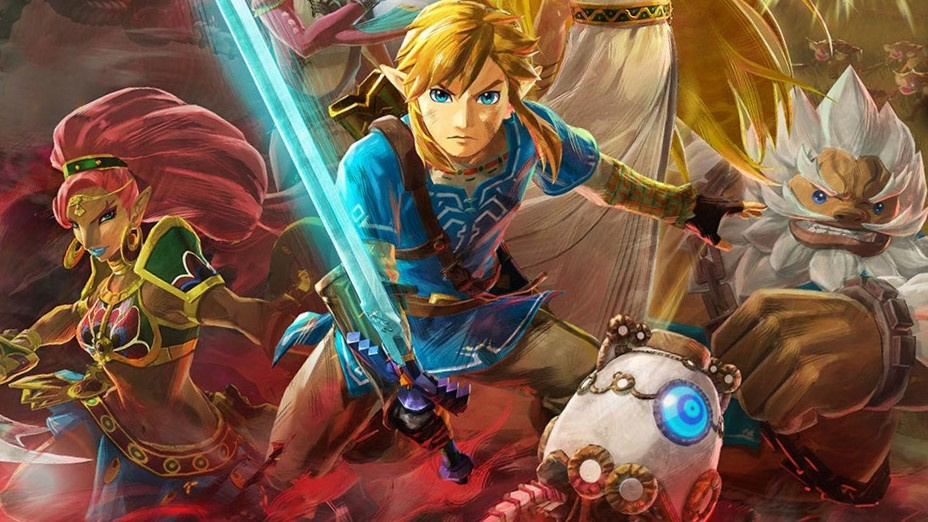
The latest Nintendo Download update for North America has arrived, and it’s bringing new games galore to the eShop in your region. As always, be sure to drop a vote in our poll and comment down below with your potential picks for the week. Enjoy!
Switch eShop – Highlights
Hyrule Warriors: Age of Calamity(Nintendo, 20th Nov, $59.99) – Visit Hyrule 100 years before The Legend of Zelda: Breath of the Wild and experience the untold story of the Great Calamity. In addition to Link and Zelda, take control of characters like the four Champions, a young Impa and more. Use their distinct abilities to carve through hundreds of enemies to save Hyrule from the impending Calamity. Featuring wild combos and over-the-top special abilities, make your mark on the battles raging through Hyrule. A free demo is now available in Nintendo eShop on Nintendo Switch and on Nintendo.com. Save data from the demo carries over to the full version of the game, once purchased, so you can begin the first leg of your journey today! Hyrule Warriors: Age of Calamity will be available on Nov. 20. – Read our Hyrule Warriors: Age of Calamity review
Sniper Elite 4(RebellionInteract, 17th Nov, $39.99) – Experience tactical third-person combat, gameplay choice and epic action across gigantic levels as you liberate World War II Italy. With unrivaled freedom, complete the campaign your way. Team up or go head-to-head with local and online multiplayer. Feel every moment with HD Rumble and pan the battlefield with gyroscopic controls. One shot can change history. – Read our Sniper Elite 4 review
Serious Sam Collection(17th Nov, $29.99) – Experience one of the most explosive game series of all time as you save the world from a merciless alien invasion. Visit the ruins of ancient Egypt and roam through the vivid arenas of South America fighting seemingly never-ending hordes of enemies using an extremely destructive arsenal, including heavy lasers, rocket launchers, a huge cannon and an iconic minigun. Serious Sam Collection includes all content from Serious Sam HD: The First Encounter, Serious Sam HD: The Second Encounter and Serious Sam 3: BFE, including The Legend of the Beast and Jewel of the Nile expansions.
Switch eShop – New Releases
Eldrador Creatures(Wild River Games, 19th Nov, $29.99) – Plunge into the world of Eldrador® Creatures in this turnbased strategy game. Go into combat together with your favorite Eldrador Creatures in the Battle for the 4 Worlds and defeat the other teams so that you can call the mighty Superweapon your own and rule over Eldrador!
2URVIVE(2BAD GAMES, 24th Nov, $6.99) – In 2URVIVE, the world is devastated by a virus. Your only goal is to defend yourself against hordes of Infected attacking you. Infected are too numerous and sooner or later, your time will come ! If you’re gonna die, fight till the end ! 2URVIVE is a top-down zombie shooter with tactical and strategic elements. Prepare yourself before every wave. Buy weapons and ammo, set up turrets and stay alive as long as you can. Each wave becomes more dangerous than the previous one and the Infected are more and more numerous.
Arcade Archives GRADIUS II(HAMSTER, 12th Nov, $7.99) – Battle resumes! Shatter GOFER’s ambitions!! ‘GRADIUS II’ is a shooting game released by KONAMI in 1988. Players will control the super dimension fighter ‘Vic Viper’ in order to protect planet Gradius from the Gofer special forces. This is the best title from the GRADIUS series and a title of fame in the shooting game history having won multiple awards!
Art Sqool(RedDeerGames, 19th Nov, $9.99) – In ART SQOOL you are Froshmin, and it’s your freshman year. Create art, explore the beautiful, mysterious, sprawling campus, and complete tasks given to you by the professor. The professor is a neural network, an art-trained A.I., as well as your faculty advisor. He uses his high-tech capabilities to objectively grade your work. The campus is spread over a number of floating islands and filled with bizarrely shaped objects and bizarre plants. In addition to that, you can fly around.
Azurebreak Heroes(Silesia Games, 19th Nov, $6.99) – Escape the Prison-World! Through the bizarre, colorful, yet dark areas of Heldia, Heroes look for a way to escape a demonic grasp. Azurebreak Heroes is a 2D RPG with roguelite elements. Battle otherworldly creatures, enhance your skills, unlock new heroes and choose the upgrades you want while looking for a way to escape a prison-world of Heldia.
Brawl Chess(RedDeerGames, 19th Nov, $9.99) – Are you ready to become a champion? Choose your hero and challenge other players in this family-friendly game with a lively cartoon style. Train your brain and bond with your loved ones at the same time. In this fantasy world, one of brave heroes leads your chess army to victory. Cartoon visuals make the game accessible to everyone. What’s going on there! Arrows fly above heads and swords break in the heat of battle. Or maybe you prefer classic chess?
Bridge Constructor: The Walking Dead(Headup Games, 19th Nov, $14.99) – Experience the fun of KILLING WALKERS using the POWER of your BRAIN! Prepare for the ultimate mashup experience! Bridge Constructor: The Walking Dead combines the legendary and challenging puzzle gameplay of Bridge Constructor™ with the post-apocalyptic zombie universe of AMC’s The Walking Dead. Join a group of survivors as they fight against hordes of undead walkers and a hostile human community.
Cake Bash(19th Nov, $19.99) – Fight to be the tastiest cake in Cake Bash! A frantic four player party game where adorable drawn-to-life cakes beat the crumbs out of each other. Pick your favorite cake and battle in a variety of lifelike arenas with unique goals – cover yourself in sweeties or hurl fruit into a pie, there’s plenty for everyone!
Cape’s escape game(19th Nov, $3.00) – The main character recently moved to the apartment. Because the rent was quite cheap, he was pleased with himself. He did not seem to have any doubts concerning the cheap rent. One day, just a few days after moving in, when he twisted the doorknob, thinking of going out, it would not open. Cape, a mischievous ghost, suddenly appeared in front of the main character who was left wondering. Of course, there was the reason why the rent was cheap.
Captain Sabertooth and the Magic Diamond(Zordix, 20th Nov, $34.99) – Play as either Pinky or Sunniva, and join the legendary pirate Captain Sabertooth’s crew on the hunt for a mysterious magic diamond. Traverse a dangerous yet gorgeous world as you sail between islands and explore pirate harbours, exotic beaches and ancient ruins. Search for treasure, collect upgrades and new abilities, and fight against the evil Maga Khan and his army!
DREAMO(Pineapple Works, 19th Nov, $14.99) – DREAMO is a puzzle-solving journey through a shifting landscape of recollections. In DREAMO, you wake up on an island as Jack Winslow. Guided by the voice of Tara Moreau, an inventor/therapist, you set out to piece together your missing memories. These fragments are locked in “Artifacts”, which manifest in your mind as cubes with misplaced gears. As you delve deeper into your mind, the puzzles grow more complex in an effort to keep your memories locked away. Can you decipher them and unlock the secrets of your mind?
Educational Games for Kids(Crazysoft, 19th Nov, $12.95) – You are a parent and you are trying to relax a little by playing your favorite game. Your child keeps asking you to let them try it… But this game is not suitable for children (because it’s a little scary and not educational at all). Does this situation sound familiar? At last: a well thought-out, smart, polished, ‘console quality’ educational game pack is out for your kids. Suitable for boys and girls from ages 3 to 18. A pack of 21 different games with 51 variations that educate in various ways like: reflexes, logic, math, memory and knowledge.
Fall Gummies(Prison Games, 20th Nov, $7.99) – Fall Gummies is a relaxing, colorful 3D puzzle game. The story takes place in a fantastic world of happy jellies. Unfortunately one day a huge meteorite hit the planet pushing it towards the black hole. It sucked all the emotions out of the planet and then collapsed. Help our little friends to regain their happiness by collecting the magical essence through the labyrinth!
Family Feud(Ubisoft, 12th Nov, $29.99) – Experience the exciting classic gameplay of one of America’s hottest gameshows at home now! Customize your character, then challenge your friends, family, and even other players online for a chance to bring the big prize home.
Fantasy Friends(JUST FOR GAMES, 20th Nov, $29.99) – Fantasy Friends takes place in a gorgeous fantasy forest where anything is possible! With the help of Aurea, the magic fairy, you will care for 12 adorable new pet friends! Take care of them and make sure you give them all the love they need. If you do, your pets will grow up and play with you! The more you care for them, keeping them happy and healthy, the more mana you will earn. Use your mana to get new creatures, buy them new clothes or even cooler toys to play with, and decorate the forest with incredible fun items!
Flatland: Prologue(QUByte Interactive, 17th Nov, $1.99) – Run as fast and precise as you can through Flatland, a minimalist neon-style world that is about to change forever. This is a fast-paced hardcore platformer with hand-crafted levels and challenges. Key features: Challenging, fast and fun gameplay; Ramping up in difficulty from not-so-easy to soul crushing, Flatland: Prologue features hand-crafted levels with increasing challenges; Lightning-fast respawns keep you in the flow even in more difficult levels; Controls are simple and accessible but with several layers of depth to master. Run, jump, die, learn, repeat.
GRISAIA PHANTOM TRIGGER 05(PROTOTYPE, 19th Nov, $14.99) – Several years after Yuuji Kazami and his friends fought for their lives in a fierce battle, a new generation of heroines gather at Mihama Academy, which has been reinstated as a ‘specialist training school’. Taking place in the same world as The Fruit of Grisaia, new characters bring an exciting fresh take in the fifth story of this brand new series! This thrilling story, which unfolds at the reborn Mihama Academy, will undoubtedly excite not only those who have played previous releases, but those who are new to the series as well!
Karma Knight(UltramarineSoft, 19th Nov, $8.99) – Karma Knight is a fast paced 2D side-scrolling platform action game with stylish combat. Find hidden items in the stages, collect different spells, defeat the enemies as you gain more experience and enjoy the overall platform action game style.
Max Reloaded II(Max Interactive Studio, 16th Nov, $9.90) – The city is under siege as the full force of enemy combatant ravaging what remains of a broken and beaten law enforcements. Responding to S. O. S, Max travels through time to confront all of them. . . In a world where Bionic man meets fantasy-fiction and advanced technology is mixed with psycho-powers.
Micetopia(Ratalaika Games, 20th Nov, $4.99) – Welcome to the medieval, magical kingdom of Micetopia, where mice live in freely an idyllic country village. Unfortunately as the story begins forces of evil have taken away all the mice except for the one elder remaining. Can you become the hero of Micetopia and save your villagers from the dark minions? In Micetopia you play as a brave mouse who must fight, jump, and explore its way through a world of mystery.
Monster Truck Championship(Nacon, 24th Nov, $39.99) – From Las Vegas to Orlando, go head-to-head against experienced drivers in drag races and freestyle competitions! But before you can pull off doughnuts, wheelies and bicycles, you must first tune your truck to perfection. These machines are spectacular and impressive yet highly technical to drive.
Outbreak(Dead Drop Studios, 19th Nov, $12.99) – Explore a nightmarish environment, scrounge for supplies, and battle the undead in Outbreak — a hardcore survival horror game. The clock never stops as you attempt to manage an extremely limited inventory with a murderous horde on the hunt. Choose between acquiring additional weapons, healing items, or necessary tools for progression. Play through the Campaign and Onslaught Modes alone or with a friend in local co-op, including the option for AI teammates. Also experience small survivor horror vignettes in the Nightmares mode. You have only one life. Make it count!
Party Games: 15 in 1(Piotr Skalski, 19th Nov, $4.99) – Party games features 15 fun-packed party games for up to 4 players! It’s the ultimate MUST-HAVE game for family and friends of all ages. Everything from action, to puzzle, to sports. . . it’s all here in Party Games! It wouldn’t be a party without friends! Up to 4 players can join in the fun for some friendly competitive play. Party anytime, anywhere! Enjoy single-player or local multiplayer gaming from just about anywhere on the planet with just one system and one game.
Ramp Car Jumping(BoomBit Games, 20th Nov, $14.99) – Flip – spin – careen – and barrel roll! The faster you go, the further you fly and the more stuff gets demolished!
SENTRY(Rising Sun Studios, 13th Nov, $2.49) – Become a SENTRY. SENTRY is a stylish minimalistic twin-stick shooter with silky smooth controls where your only goal is to eliminate the hostile invaders.
S.N.I.P.E.R. – Hunter Scope(Baltoro Games, 20th Nov, $14.99) – In S. N. I. P. E. R. : Hunter Scope you will shoot, you will fight, and you will win! Play S. N. I. P. E. R. , the latest sniping game where you aim, fight and destroy virtual enemies. Try different types of missions, inspired both by classic rail shooters and modern cover shooters. Fight your way out during day and night, destroy evil forces and unlock new weapons and power-ups.
Star Renegades(Raw Fury, 19th Nov, $24.99) – Fight for survival across a procedurally generated and emergent mission-based campaign through reactive, tactical turn-based battle system that emphasizes interrupts and counters. Standing in your way is an intelligent Adversary system with enemy officers that evolve and move up in the ranks.
Stencil Art(QubicGames, 13th Nov, $3.99) – Ever wonder how it would feel to be artistic and paint an epic masterpiece? Now you can experience it all with ease! Fill in hundreds of different objects – just place the stencil and spray. Get the next stencil and color it in. Finally, remove them all and reveal your work of art. Creating your collage never has felt more satisfying. Relax, illustrate, and create images. So many satisfying graphics to explore! Fun and easy to pick up and without the mess with a spray! Will you be the first one to color them all?
Super Punch(Piotr Skalski, 13th Nov, $1.99) – Super Punch is a cool fighting game with a beautiful retro theme and an exciting gameplay. You will need to choose one out of the 6 available fighters and eliminate the competitor. There are 9 scenes included, and you need to do everything you can in order to come on top during every fight. If you love arcade, action-packed fighting games, give Super Punch a shot and immerse yourself into one of the coolest isometric boxing games available.
Tracks – Toybox Edition(Excalibur Games, 24th Nov, $29.99) – Tracks is a toy train set builder which gives you the tools to play without limits. Jump into an extensive sandbox and lay down tracks, create bridges and build worlds, then hop into the driver’s seat of your train in first person view. Play with boosters, create firework displays, compose tunes and so much more. Jump into the Ultimate Toy Sandbox Start with a pre-made environment, be it a modern lounge or a night time Winter wonderland, or jump into an entirely blank world canvas.
Travel Mosaics 6: Christmas Around the World(JetDogs, 16th Nov, $7.99) – The festive season is here, and the Walkers have prepared the most adventurous celebration imaginable! Do you know where Santa’s residence is? What is the most common Czech Chistmas treat? Where can you find the largest floating Christmas tree? Learn these fun facts and more in Travel Mosaics 6: Christmas Around the World! The holiday special edition of Travel Mosaics features your favorite nonogram puzzles mixed together with the festive spirit!
Truck Driver(Soedesco, 17th Nov, $49.99) – When you inherit a truck from your father, you decide to take your chance and move to a new city. Here, it’s up to you to make a name for yourself and earn the respect of the local community. Drive through a seamless open world, work with all kinds of people ranging from a constructor to a lumberjack and honor your father by making it as a Truck Driver!
WARTILE(Deck 13, 22nd Oct, $24.99) – Experience a living, breathing tabletop video game that invites the player into a miniature universe full of small adventures set in beautifully handcrafted diorama battle boards inspired by Norse mythology to honor the Vikings! Wartile is a cool-down based game that keeps the action flowing, with ample opportunities to plan your moves. Although it contains the strategic elements from turn-based games, a mixture of slow down features and cool-down based gameplay maintains the tension of battle while allowing for breathing room to make tactical decisions.
So that’s your lot for this week’s North American Nintendo Download. Go on, be a sport and drop a vote in the poll above, and comment below with your hot picks!
Posted by: xSicKxBot - 11-20-2020, 09:48 AM - Forum: Lounge
- No Replies
New On Hulu December 2020: My Hero Academia, Lord Of The Rings, And More
The holiday season may be a bit odd this year, thanks to the ongoing COVID-19 pandemic. Big family gatherings and festive parties may be impossible, but some traditions are here to stay--like spending plenty of time inside, safe from the elements, watching a completely irresponsible amount of TV while you've got some time off work. And speaking of watching way too much TV, here’s what you can expect to watch on Hulu in December 2020.
December 1 is going to see movies like Nic Cage's cult classic Con Air hit the platform, which follows Cage as an Army Ranger--with a suspect accent. The hands of fate turn him into an accidental felon, and he’s trapped on a flight with a bunch of dangerous convicts during a transfer between prisons. Also arriving that day are Sunshine, Danny Boyle's 2007 sci-fi thriller about restarting the sun with a nuclear bomb, Eyes Wide Shut, Stanley Kubrick's last film, and the iconic Fifth Element.
Della Rocca’s a giving kind of guy, and wants developers everywhere to arm themselves as best they can when going into the pitch room. That’s why he worked with us this week to prepare a short lesson for you on how you can improve your pitching prowess.
For your benefit here is a brief Q&A with Della Rocca about improving your pitch, asked from the perspective of a developer who may be in the same position you find yourself in: being confident in the game you’re making, but trying to make sure you can sell it to prospective business partners.
Hey Jason! I’m the studio head at a small developer prepping our pitch for publishers for our next game. We had some success with a small indie title, and now we’re excited to be partnering with a veteran animator to create a unique look for our next game.
We think we’ve done a good job arranging our pitch materials and figuring out the sellable aspects of our game (your GDC talks have been super helpful), but we’re still trying to anticipate what other goals our prospective publishers would be looking out for.
What do you think we can do to better understand the folks we’re going out to pitches with in the next few months?
Fundamentally, publishers are trying to assess three major things from your pitch: 1) Is this game “awesome” and what is its commercial potential? 2) Is this the right team to create this game roughly on time and on budget? 3) Does this game align with our “style” as a publisher and our ability to be a good partner (ie, will our existing fans enjoy it, does it match our budget range, etc)?
When most developers build their pitch, they seem to only ever focus on the “is my game awesome” part. While you most definitely need to accomplish that, you need to cover the marketability and the competitive landscape in the pitch. For the pragmatics around execution, your pitch deck needs to include timeline, high level budget info, and info around the team. This gives confidence to publishers that you know what you are doing and can deliver.
For the last part around style and partnership suitability, that’s where research will pay off. Don’t pitch a kid’s game to Devolver. Only pitch strategy games to Paradox. Don’t bother mobile publishers with your Steam game pitch. And so on. You should start a spreadsheet to track all your publisher targets. Look at the portfolio of games on their website and imagine if your game belongs on the list (or not). Dig around on Steam and look up games with a similar theme/genre as you, and see who is publishing those games.. then check the “more games like this” section and look up those games.
The more targeted you are with your pitch, the more it will resonate.
Thanks Jason, that helps us out a lot. I wanted to ask, when we’re looking at some publisher’s portfolio’s (like Annapurna, for instance), we see some games that don’t quite fit the mold of the rest of their titles.
At what point do you think it’s worth it for a developer to “break the rules” in pitching, and take a chance on what may seem like an unconventional relationship?
Ok, ok, sure, there are always exceptions. Does Fall Guys look like a typical Devolver game? Still not sure I’d bother pitching anything other than a strategy game to Paradox, or a racing game to Codemasters. Of course, not all publishers have such a narrow curation on their portfolio.
But, part of targeting a specific publisher with a distinct style/genre/category is to leverage audience alignment. And, a big part of the justification for working with a publisher is that they can bring eyeballs to your game. This is much more of an obvious win if Paradox is bringing your cool new strategy game to their fans, who are ravenous for strategy games.
So, fine, maybe you convince a publisher to take a gamble on your game even though it is way outside their wheelhouse. I’d view the risk you take in working with a publisher that doesn’t have the “right” fans for your game as the much bigger gamble!
In the end, it doesn’t hurt to add everyone to your tracking sheet and prioritize them based on “perceived fit potential”.
Posted by: xSicKxBot - 11-20-2020, 07:28 AM - Forum: Lounge
- No Replies
Video: Lessons in developing functional artificial intelligence using VR
In this 2019 XRDC session, NVIDIA’s Omer Shapira discusses lessons learned in three years of developing human-robot collaboration using virtual reality.
In addition to this presentation, the GDC Vault and its accompanying YouTube channel offers numerous other free videos, audio recordings, and slides from many of the recent Game Developers Conference events, and the service offers even more members-only content for GDC Vault subscribers.
Those who purchased All Access passes to recent events like GDC already have full access to GDC Vault, and interested parties can apply for the individual subscription via a GDC Vault subscription page. Group subscriptions are also available: game-related schools and development studios who sign up for GDC Vault Studio Subscriptions can receive access for their entire office or company by contacting staff via the GDC Vault group subscription page. Finally, current subscribers with access issues can contact GDC Vault technical support.
The latest Nintendo Download update for Europe has arrived, and it’s bringing new games galore to the eShop in your region.As always, be sure to drop a vote in our poll and comment down below with your potential picks for the week. Enjoy!
Switch Retail – New Releases
Hyrule Warriors: Age of Calamity(£49.99 / €59.99) – See Hyrule 100 years before the Legend of Zelda: Breath of the Wild game and experience the events of the Great Calamity Join the struggle that brought Hyrule to its knees. Learn more about Zelda, the four Champions, the King of Hyrule and more through dramatic cutscenes as they try to save the kingdom from Calamity. The Hyrule Warriors: Age of Calamity game is the only way to see firsthand what happened 100 years ago. – Read our Hyrule Warriors: Age of Calamity review
Eldrador Creatures(Wild River Games, 19th Nov, £31.49 / €34.99) – Plunge into the world of Eldrador Creatures in this turn-based strategy game. Go into combat together with your favourite Eldrador Creatures in the Battle for the 4 Worlds and defeat the other teams so that you can call the mighty Superweapon your own and rule over Eldrador! 20 playable original Eldrador Creatures, including new figures like the Rock Beast and the Shadow Panther, as well as the exclusive Eldrador Mini Creatures. Use the special abilities of your chosen creatures to defeat your opponents in tactical combat. Battle in all 4 gameworld settings: Lava, Ice, Stone and JungleDynamic worlds due to toppling elements like walls and bridges
Monster Truck Championship(Nacon, 19th Nov, £34.99 / €39.99) – From Las Vegas to Orlando, go head-to-head against experienced drivers in drag races and freestyle competitions! But before you can pull off doughnuts, wheelies and bicycles, you must first tune your truck to perfection. These machines are spectacular and impressive yet highly technical to drive. The game faithfully reproduces all the unique demands of mastering these powerful trucks, including independent front and rear wheel management, mass transfer anticipation in bends, and predicting bounces after jumps. But what’s performance without style? Customise your Monster Truck to reflect your style and show it off to your 7 opponents in online mode.
Sakuna: Of Rice and Ruin(£34.99 / €39.99) – Sakuna: Of Rice and Ruin is the forthcoming title from Edelweiss, the two-man team behind acclaimed indie darlings such as Astebreed (2015), an anime-styled mech shoot-‘em-up. Sakuna: Of Rice and Ruin combines side-scrolling action with deep crafting and farming simulation. Players take on the role of Sakuna, a spoiled harvest goddess banished to a dangerous island with a group of outcast humans. As she explores the beautiful, forbidding environments of the island, she will also find a home in a mountain village, proving herself worthy of her title by harvesting rice and bettering the lives of humans. – Read our Sakuna: Of Rice and Ruin review
Sniper Elite 4(RebellionInteract, 17th Nov, £34.99 / €39.99) – Experience tactical third-person combat, gameplay choice and epic sharpshooting across gigantic levels as you liberate World War 2 Italy from the grip of fascism. Unrivalled sniping freedom. Complete the campaign your way Epic longshots with bone-crushing X-ray kill cam Team-up or go head-to-head with local & online multiplayer Feel every shot with HD rumble & pan the battlefield with gyroscopic controls – Read our Sniper Elite 4 review
Truck Driver(Soedesco, 17th Nov, £44.99 / €49.99) – When you inherit a truck from your father, you decide to take your chance and move to a new city. Here, it’s up to you to make a name for yourself and earn the respect of the local community. Drive through a seamless open world, work with all kinds of people ranging from a constructor to a lumberjack and honour your father by making it as a Truck Driver!
Switch eShop – New Releases
Art Sqool(RedDeerGames, 19th Nov, £8.99 / €9.99) – MYSTERIOUS WORLD In ART SQOOL you are Froshmin, and it’s your freshman year. Create art, explore the beautiful, mysterious, sprawling campus, and complete tasks given to you by the professor. The professor is a neural network, an art-trained A.I., as well as your faculty advisor. He uses his high-tech capabilities to objectively grade your work. The campus is spread over a number of floating islands and filled with bizarrely shaped objects and bizarre plants.
Azurebreak Heroes(Silesia Games, 19th Nov, £4.39 / €4.89) – Escape the Prison-World! Through the bizarre, colourful, yet dark areas of Heldia, Heroes look for a way to escape a demonic grasp. Azurebreak Heroes is a 2D RPG with roguelite elements. Battle otherworldly creatures, enhance your skills, unlock new heroes and choose the upgrades you want while looking for a way to escape a prison-world of Heldia.
Brawl Chess(RedDeerGames, 19th Nov, £8.99 / €9.99) – Are you ready to become a champion? Choose your hero and challenge other players in this family-friendly game with a lively cartoon style. Train your brain and bond with your loved ones at the same time. In this fantasy world, one of brave heroes leads your chess army to victory. Cartoon visuals make the game accessible to everyone. What’s going on there! Arrows fly above heads and swords break in the heat of battle. Or maybe you prefer classic chess? You can always change your pieces to traditional ones. Brawl Chess connects generations in a multiplayer, but a single player will also appeal to players of all ages.
Bridge Constructor: The Walking Dead(Headup Games, 19th Nov, £10.79 / €13.49) – Experience the fun of KILLING WALKERS using the POWER of your BRAIN! Prepare for the ultimate mashup experience! Bridge Constructor: The Walking Dead combines the legendary and challenging puzzle gameplay of Bridge Constructor with the post-apocalyptic zombie universe of AMC’s The Walking Dead. Join a group of survivors as they fight against hordes of undead walkers and a hostile human community. Build bridges and other constructions through bleak landscapes and ruined structures. Team up with fan-favourite characters like Daryl, Michonne and Eugene, and create safe passage for iconic vehicles from the series.
Cake Bash(£17.99 / €19.99) – Fight to be the tastiest cake in Cake Bash! A frantic four-player party game where adorable drawn-to-life cakes beat the crumbs out of each other. Pick your favourite cake and battle in a variety of lifelike arenas with unique goals – cover yourself in sweeties or hurl fruit into a pie, there’s plenty for everyone! To cool down, try an assortment of minigame treats – roast perfect marshmallows, pipe the finest frosting, or be the last flan standing in Fork Knife.
Dreamo(Pineapple Works, 19th Nov, £12.14 / €13.49) – DREAMO is a puzzle-solving journey through a shifting landscape of recollections. In DREAMO, you wake up on an island as Jack Winslow. Guided by the voice of Tara Moreau, an inventor/therapist, you set out to piece together your missing memories. These fragments are locked in “Artifacts”, which manifest in your mind as cubes with misplaced gears. As you delve deeper into your mind, the puzzles grow more complex in an effort to keep your memories locked away. Can you decipher them and unlock the secrets of your mind?
Educational Games for Kids(Crazysoft, 19th Nov, £11.95 / €12.95) – You are a parent and you are trying to relax a little by playing your favourite game. Your child keeps asking you to let them try it… But this game is not suitable for children (because it’s a little scary and not educational at all). Does this situation sound familiar? At last: a well-thought-out, smart, polished, ‘console-quality’ educational game pack is out for your kids. Suitable for boys and girls from ages 3 to 18. A pack of 21 different games with 51 variations that educate in various ways like: reflexes, logic, math, memory and knowledge.
Fall Gummies(£4.89 / €5.59) – Fall Gummies is a relaxing, colourful 3D puzzle game. The story takes place in a fantastic world of happy jellies. Unfortunately one day a huge meteorite hit the planet pushing it towards the black hole. It sucked all the emotions out of the planet and then collapsed. Help our little friends to regain their happiness by collecting the magical essence through the labyrinth!
Fire & Water(£1.79 / €1.99) – Fire & Water is a game where you use the power of fire and water in order to solve various puzzles. Both Water Girl and Fire boy are working together to solve a vast range of different, exciting puzzles all the time. Controlling the two characters is very simple, and you must help Fire boy avoid water, while Water girl needs to avoid fire.
Five Dates(Wales Interactive, 17th Nov, £9.99 / €12.99) – Five Dates is an interactive rom-com about the unpredictable world of digital dating. With five potential female matches, Vinny explores whether compatibility, chemistry and connection is still possible in a world where physical touch is no longer an option. Vinny, a millennial from London, joins a dating app for the first time while living in lockdown during the coronavirus pandemic. With five potential female matches, Vinny must pluck up courage to video date with wildly different personalities, starring Mandip Gill and Georgia Hirst. The viewer’s choices will define Vinny’s interactions with each date and their interest in seeing him again. – Read our Five Dates review
Flatland: Prologue(QUByte Interactive, 17th Nov, £1.79 / €1.99) – Run as fast and precise as you can through Flatland, a minimalist neon-style world that is about to change forever. This is a fast-paced hardcore platformer with hand-crafted levels and challenges.
GRISAIA PHANTOM TRIGGER 05(PROTOTYPE, 19th Nov, £13.49 / €14.99) – Several years after Yuuji Kazami and his friends fought for their lives in a fierce battle, a new generation of heroines gather at Mihama Academy, which has been reinstated as a ‘specialist training school’. Taking place in the same world as The Fruit of Grisaia, new characters bring an exciting fresh take in the fifth story of this brand new series! This thrilling story, which unfolds at the reborn Mihama Academy, will undoubtedly excite not only those who have played previous releases, but those who are new to the series as well! Available in three languages!
Karma Knight(UltramarineSoft, 19th Nov, £6.89 / €7.7) – Karma Knight is a fast-paced 2D side-scrolling platform action game with stylish combat. Find hidden items in the stages, collect different spells, defeat the enemies as you gain more experience and enjoy the overall platform action game style.
Mars Horizon(The Irregular Corporation, 17th Nov, £13.49 / €16.19) – In Mars Horizon, you take control of a major space agency, leading it from the dawn of the space age through to landing astronauts on Mars. Guide your agency through the space race and write your alternate history of space travel – any of the agencies can be the first to land on The Moon if you make the right choices.
Micetopia(£4.99 / €4.99) – Welcome to the medieval, magical kingdom of Micetopia, where mice live in freely an idyllic country village. Unfortunately, as the story begins forces of evil have taken away all the mice except for the one elder remaining. Can you become the hero of Micetopia and save your villagers from the dark minions? In Micetopia you play as a brave mouse who must fight, jump, and explore its way through a world of mystery. Overcome enemies, gain new powers and rescue your compatriots from the clutches of their captors. Do you have what it takes for the elder to bestow upon you the title “Hero of Micetopia? ”
Nexoria: Dungeon Rogue Heroes(TERNOX, 18th Nov, £3.81 / €4.24) – Battles This game is a unique mix of rogue-like with dungeon exploration, RPG, turn-based tactics and collectible card game. At the base of the turn-based system are not turns, but time. Find and improve new heroes and get coins to buy new spells. But remember, a hero’s death will be fatal. Heroes Every hero has a special perk and a spell, in addition to the three stats (strength, dexterity, endurance). Gather your team of heroes, come up with unique tactics for battles.
Outbreak(Dead Drop Studios, 19th Nov, £9.93 / €11.04) – Explore a nightmarish environment, scrounge for supplies, and battle the undead in Outbreak — a hardcore survival horror game. The clock never stops as you attempt to manage an extremely limited inventory with a murderous horde on the hunt. Choose between acquiring additional weapons, healing items, or necessary tools for progression. Play through the Campaign and Onslaught Modes alone or with a friend in local co-op, including the option for AI teammates. Also experience small survivor horror vignettes in the Nightmares mode. You have only one life. Make it count!
Pure Pool(Ripstone Publishing, 17th Nov, £12.49 / €13.99) – Enjoy the most realistic and immersive simulation of cue sports on Nintendo Switch, with stunning 1080p visuals and more ways than ever to play pool and snooker! Immerse yourself in the stunningly realistic and endlessly enjoyable world of Pure Pool and rack up your favourite games of pool and snooker anywhere, with absolutely no load times getting in your way. Play hundreds of pool and snooker events across a wide range of competitive modes including American 8-Ball, 9-Ball, Blackball and Killer. Then challenge yourself in fast-paced modes like Speed Pot, Checkpoint and Royal Rumble to rise up the global leaderboards and unlock new rewards! – Read our Pure Pool review
Ramp Car Jumping(£10.11 / €11.24) – Flip – spin – careen – and barrel roll! The faster you go, the further you fly and the more stuff gets demolished! GAME FEATURES: – Easy to play. . . anyone can do it! – 20+ Cars, Trucks and Busses to unlock and customise! – Over a dozen worlds to explore, such as Downtown, The Stadium, Mountain Peaks, Vertical World and even the Moon! – Draw Mode: Design your own ramps to pass the puzzle-style levels! A totally different experience in this separate game mode.
S.N.I.P.E.R. – Hunter Scope(£13.49 / €14.99) – In S. N. I. P. E. R.: Hunter Scope you will shoot, you will fight, and you will win! Play S. N. I. P. E. R., the latest sniping game where you aim, fight and destroy virtual enemies. Try different types of missions, inspired both by classic rail shooters and modern cover shooters. Fight your way out during day and night, destroy evil forces and unlock new weapons and power-ups.
Star Renegades(Raw Fury, 19th Nov, £19.99 / €24.99) – A service robot named J5T-1N has arrived in your dimension to warn of impending doom from an overwhelming force known as the Imperium. Fight for survival across a procedurally generated and emergent mission-based campaign through reactive, tactical turn-based battle system that emphasizes interrupts and counters. Standing in your way is an intelligent Adversary system with enemy officers that evolve and move up in the ranks. As your band of heroes fall in the fight against invading Imperium and hope is all but lost, J5T-1N must be sent to the next dimension with everything you’ve learned to give the next group of heroes a chance to prevail. Each dimension, and each playthrough is unique, challenging, and never the same.
Tengam(£2.29 / €2.50) – Tengam is a warehouse robot with one problem — her magnets won’t turn off. But she’s not going to let that stop her from getting the job done.
The Casino -Roulette, Video Poker, Slot Machines, Craps, Baccarat-(D3 Publisher, 19th Nov, £8.99 / €9.99) – Play Roulette, Video Poker, Slot Machines, Craps, and Baccarat all in one collection! Experience the thrill of earning coins at an affordable price! Built-in ranking system! You can compete against users around the country to see who wins the most coins in one game. The more coins you get, the bigger and more thrilling the bets you can make! Built-in achievements! Play the game and collect backgrounds and card designs. You can customize games, backgrounds, and card designs. Enjoy the casino how you like it!
Travel Mosaics 6: Christmas Around the World(JetDogs, 16th Nov, £7.19 / €7.99) – The festive season is here, and the Walkers have prepared the most adventurous celebration imaginable! Do you know where Santa’s residence is? What is the most common Czech Christmas treat? Where can you find the largest floating Christmas tree? Learn these fun facts and more in Travel Mosaics 6: Christmas Around the World!
WARTILE(£14.39 / €15.99) – Experience a living, breathing tabletop video game that invites the player into a miniature universe full of small adventures set in beautifully handcrafted diorama battle boards inspired by Norse mythology to honour the Vikings! Wartile is a cool-down based game that keeps the action flowing, with ample opportunities to plan your moves. Although it contains the strategic elements from turn-based games, a mixture of slow down features and cool-down based gameplay maintains the tension of battle while allowing for breathing room to make tactical decisions.
Switch eShop – Demos
Fitness Boxing 2: Rhythm & Exercise
Gravity Heroes
Regina & Mac
DLC / Add-On Content
Nintendo Switch
So that’s your lot for this week’s Nintendo Download. Go on, be a sport and drop a vote in the poll above, and comment below with your hot picks!
Posted by: xSicKxBot - 11-20-2020, 03:45 AM - Forum: Lounge
- No Replies
Nintendo Shares Its Own Animal Crossing: New Horizons Island
Animal Crossing: New Horizons' big winter update has arrived, introducing not only Thanksgiving and Christmas events to the game, but also the option to visit a random Dream Island--and one dream destination you can now travel to is Nintendo's own Animal Crossing island.
The company has shared the Dream Address for its official island on the Animal Crossing Twitter account. To visit it, simply lay down on any bed in your house, select Search by Dream Address when prompted by Luna, then input 6382-1459-4417. If you'd rather visit a random dream, choose Surprise Me instead and you'll be whisked to a randomly selected player's Dream Island.
[Announcement] The official Nintendo island in #AnimalCrossing: New Horizons is available to visit! Sleep on any bed in your home and enter the Dream Address below when speaking to Luna. [DA-6382-1459-4417] pic.twitter.com/6cnycZomgI
That's not all that Animal Crossing: New Horizons' winter update added to the game. The patch also introduced a variety of new reactions and hairstyles, which can be purchased with Nook Miles through the NookStop terminal in your Resident Services building. Every player will also receive a free in-game Yule log from Nintendo in the mail after downloading the update.
Posted by: xSicKxBot - 11-20-2020, 03:10 AM - Forum: Python
- No Replies
Minimum Viable Product (MVP) in Software Development — Why Stealth Sucks
This chapter from my upcoming book “From One to Zero” (to appear with NoStarch 2021) teaches you a well-known but still undervalued idea. The idea is to build a minimum viable product (in short: MVP) to test and validate your hypotheses quickly without losing a lot of time in implementation. In particular, you’ll learn how to apply the idea of radically reducing complexity in the software development cycle when creating value through software.
Stealth Mode of Programming
If you’re like me, you know what may be called the “stealth mode” of programming (see Figure 4-1). Many programmers fall victim to it, and it goes as follows: you come up with a wonderful idea of a computer program that will change the world—with the potential to become the next Google. Say you discovered that more and more people start coding, and you want to serve those by creating a machine-learning-enhanced search engine for code discovery. Sounds great? You think so—and you start coding enthusiastically on your idea a few nights in a row.
Figure 4-1: The stealth mode of programming.
But does this strategy work? Here’s a likely outcome of following the stealth mode of programming:
You quickly develop the prototype, but it doesn’t look right. So, you dive into design and optimize the design. Then, you try the search engine, and the recommendation results are not relevant for many search terms. For example, when searching for “Quicksort”, you obtain a “MergeSort” code snippet with a comment "# This quickly sorts the list". So, you keep tweaking the models. But each time you improve the results for one keyword, you create new problems for other search results. You’re never quite happy with the result, and you don’t feel like you can present your crappy code search engine to the world for three reasons. First, nobody will find it useful. Second, the first users will create negative publicity around your website because it doesn’t feel professional and polished. And third, if competitors see your poorly implemented concept, they’ll steal it and implement it in a better way. These depressing thoughts cause you to lose faith and motivation, and your progress on the app drops significantly.
Let’s analyze what can and will go wrong in the stealth mode of programming shown in Figure 4-2.
Figure 4-2: Common pitfalls in the stealth mode of programming
Pitfalls
There are many common pitfalls in the stealth mode of programming. Here are four of the more common ones:
Losing Motivation: As long as you’re in stealth mode, nobody can see you. Nobody knows about the great tool you’re implementing. You’re alone with your idea, and doubts will pop up regularly. Maybe you’re strong enough to resist the doubts initially—while your initial enthusiasm for the project is big enough. But the longer you’ll work on your project the more doubts will come into your mind. Your subconsciousness is lazy and seeks reasons not to do the work. You may find a similar tool. Or you may even doubt that your tool will be useful in the first place. You may start to believe that it cannot be done. If only one early adopter of your tool would have provided you some encouraging words, you’d probably stayed motivated. But, as you’re in stealth mode, nobody is going to encourage you to keep working. And, yes, nobody is paying you for your work. You have to steal time from your friends, your kids, your wife. Only a minority of people will sustain such a psychological drain. Most will simply lose motivation—the longer the stealth mode, the smaller the motivation to work on the project.
Getting Distracted: Even if you manage to stay motivated to work on the project for an extended period without any real-world feedback—there’s another powerful enemy: your daily distractions. You don’t live in a vacuum. You work in your day job, you spend time with family and friends, and other ideas will pop into your mind. Today, your attention is a rare good sought by many devices and services. While you work on one project, you’ll have ideas for other projects, and the grass-is-greener effect will kick in: many other projects seem to be so much more attractive! It takes a very disciplined person to manage these distractions, protect their working time, and stay focused on one project until they reach completion.
Taking Longer: Another powerful enemy is wrong planning. Say you initially plan that the project takes one month if you work on it for two hours every day. That’s 60 hours of estimated working time. Lost motivation and distractions will probably cause you to average only one hour every day, so it already doubles the project’s duration. However, other factors are responsible for underestimating the project duration: unexpected events and bugs take much more time than anticipated. You must learn new things to finish the project—and learning takes time. Especially when you mix learning time with answering Smartphone messages and notifications, emails, and phone calls. It’s tough to estimate how much learning time you need correctly. And even if you already know everything you need to know to finish the project, you likely run into unforeseen problems or bugs in your code. Or other features may pop into your mind that demand to be implemented. An infinite number of factors will increase your anticipated project duration—and hardly any will reduce it. But it is getting worse: if your project takes longer than anticipated, you’ll lose even more motivation, and you’ll face even more distractions causing a negative spiral towards project failure.
Delivering Too Little Value: Say you manage to overcome the phases of low motivation. You learn what you need, stay focused, and avoid any distraction for as long as it takes to finish the code. You finally launch your project, and—nothing happens. Only a handful of users even check out your project, and they’re not enthusiastic about it. The most likely outcome of any software project is silence—an absence of positive or negative feedback. You’ll wonder why nobody writing in with some constructive or even destructive feedback. Nobody seems to care. There are many reasons for this. A common reason is that your product doesn’t deliver the specific value the users demand. It’s almost impossible to find the so-called product-market-fit in the first shot. Well, even if you’d have found product-market-fit and users would generally value your software, you don’t yet have a marketing machine to sell it. If 5% of your visitors would buy the product, you could consider it a huge success. However, a 5% conversion rate means that 19 out of 20 people won’t buy the product! Did you expect a million-dollar launch? Hardly so; your software sells to one person in the first 20 days leading to an ultimate income of $97. And you’ve spent hundreds of hours implementing it. Discouraged by the results, you quickly give up the idea of creating your own software and keep working for your boss.
The likelihood of failure is high in the stealth mode of programming. There’s a negative feedback loop in place: if you stumble because of any of the discussed reasons, the code project will take you longer to finish—and you’ll lose even more motivation, which increases your chances of stumbling. Don’t underestimate the power of this negative feedback loop. Every programmer knows it very well, and it is why so many code projects never see the light of the day. So much time, effort, value is lost because of it. Individual and even teams of programmers may spend years of their lives working in the stealth mode of programming—only to fail early or find out that nobody wants their software product.
Reality Distortion
You would think that if programmers spend so much time working on a software project, they’d at least know that their users will find the end product valuable. But this is not the case. When they are sunk in the stealth mode of programming, programmers don’t get any feedback from the real world—a dangerous situation. They start to drift away from reality, working on features nobody asked for, or nobody will use.
You may ask: how can that happen? The reason is simple: your assumptions make it so. If you work on any project, you have a bunch of assumptions such as who the users will be, what they do for a living, what problems they face, or how often they will use your product. Years ago, when I was creating my Finxter.com app to help users learn Python by solving rated code puzzles, I assumed that most users are computer science students because I was one (reality: most users are not computer scientists). I assumed that people would come when I released the app (reality: nobody came initially). I assumed that people would share their successes on Finxter via their social media accounts (reality: only a tiny minority of people shared their coding ranks). I assumed that people would submit their own code puzzles (reality: from hundreds of thousands of users, only a handful submitted code puzzles). I assumed that people wanted a fancy design with colors and images (reality: a simple geeky design lead to improved usage behavior). All those assumptions lead to concrete implementation decisions. Implementing each feature—even the ones nobody wanted—had cost me tens, sometimes hundreds of hours. If I knew better, I could have tested these assumptions before spending lots of time working on them. I could have asked for feedback and prioritized implementing the features valued by the highly engaged users. Instead, I spent one year in stealth mode to develop a prototype with way too many features to test some of those hypotheses or assumptions.
Complexity — A Productivity Killer
There’s another problem with the stealth mode of programming: unnecessary complexity. Say you implement a software product consisting of four features (see Figure 4-3). You’ve been lucky—the market accepted it. You’ve spent considerable time implementing those four features, and you take the positive feedback as a reinforcement for all four features. All future releases of the software product will contain those four features—in addition to the future features you’ll add to the software product.
Figure 4-3: A valuable software product consisting of four features
However, by releasing the package of four features at once, you don’t know whether the market would’ve accepted any subset of features (see Figure 4-4).
Figure 4-4: Which subsets of features would have been accepted by the market?
Feature 1 may be completely irrelevant—even though it took you the most time to implement. At the same time, Feature 4 may be a highly valuable feature that the market demands. There are 2n different combinations of software product packages out of n features. How can you possibly know which is value and which is waste if you release them as feature bundles?
The costs of implementing the wrong features are already high. However, releasing feature bundles leads to cumulative costs of maintaining unnecessary features for all future versions of the product. Why? There are many reasons:
Every line of code slows down your understanding of the complete project. You need more time to “load” the whole project in your mind, the more features you implement.
Each feature may introduce a new bug in your project. Think of it this way: a given feature will crash your whole code base with a certain likelihood.
Each line of code causes the project to open, load, and compile more slowly. It’s a small but certain cost that comes with each new line of code.
When implementing Feature n, you must go over all previous Features 1, 2, …, n-1 and ensure that Feature n doesn’t interfere with their functionality.
Every new feature results in new (unit) tests that must compile and run before you can release the next version of the code.
Every added feature makes it more complicated for a new coder to understand the codebase, which increases learning time for new coders that join the growing project.
This is not an exhaustive list, but you get the point. If each feature increases your future implementation costs by X percent, maintaining unnecessary features can result in orders of magnitude difference in coding productivity. You cannot afford to systematically keep unnecessary features in your code projects!
So, you may ask: How do you overcome all these problems? If the stealth mode of programming is unlikely to succeed—then what is?
Minimum Viable Product — Release Early and Often
The solution is simple—quite literally. Think about how you can simplify the software, how you can get rid of all features but one, and how you can build a minimum viable product that accomplishes the same validation of your hypotheses as the “full” implementation of your ideas would have accomplished. Only if you know what features the marketplace accepts—and which hypotheses are true—should you add more features and more complexity. But at all costs, avoid complexity. Formulate an explicit hypothesis—such as users enjoy solving Python puzzles—and create a product that validates only this hypothesis. Remove all features that don’t help you validate this hypothesis. After all, if users don’t enjoy solving Python puzzles, why even proceed with implementing the Finxter.com website? What would have been the minimum viable product for Finxter? Well, I’ve thought about this, and I’d say it would have been a simple Instagram account that shares code puzzles and checks if the Python community enjoys solving them. Instead of spending one year writing the Finxter app without validation, I should’ve spent a few weeks or even months sharing puzzles on a social network. Then, I should’ve taken the learnings from interacting with the community and build a second MVP (the first one being the social media account) with slightly more functionality. Gradually, I’d built the Finxter app in a fraction of the time and with a fraction of the unnecessary features I’ve implemented and removed again in a painful process of figuring out which features are valuable and which are waste. The lesson of building a minimum viable product stripped from all unnecessary features is one I’ve learned the hard way.
Figure 4-5 sketches this gold standard of software development and product creation. First, you find product-market-fit through iteratively launching minimum viable products until users love it. The chained launches of MVPs build interest over time and allow you to incorporate user feedback to gradually improve the core idea of your software. As soon as you’ve reached product-market fit, you add new features—one at a time. Only if a feature can prove that it improves key user metrics, it remains in the product.
Figure 4-5: Two phases of software development: (1) Find product-market-fit through iterative MVP creation & build interest over time. (2) Scale-up by adding and validating new features through carefully designed split tests.
The term minimum viable product (MVP) was coined by Frank Robinson in 2001. Eric Ries popularized the term in his best-selling book Lean Startup. Since then, the concept has been tested by thousands of very successful companies in the software industry (and beyond). A famous example is the billion-dollar company Dropbox. Instead of spending lots of time and effort on an untested idea to implement the complicated Dropbox functionality of synchronizing folder structures into the cloud—that requires a tight integration in different operating systems and a thorough implementation of burdersome distributed systems concepts such as replica synchronization—the founders validated the idea with a simple product video even though the product they made a video about didn’t even exist at the time. Countless iterations followed on top of the validated Dropbox MVP to add more helpful features to the core project that simplify the lives of their users.
MVP Concept
Let’s have a more in-depth look at the MVP concept next, shall we?
A minimum viable product in the software sense is code that is stripped from all features to focus on the core functionality. For Finxter, it would have been a social media account centered around code puzzles. After that validation was successful, the next MVP would have been a simple app that does nothing but present code puzzles. You’d successively add new features such as videos and puzzle selection techniques extending the MVP functionality based on user need and early adopters’ feedback. For Dropbox, the first MVP was the video—and after successful validation, the second MVP was created building on the customer insight from the first MVP (e.g., a cloud storage folder for Windows but no more). For our code search engine example, the MVP could be a video shared via paid advertisement channels. I know you want to start coding right away on the search engine—but don’t do it until you have a clear concept that differentiates itself from other code search engines and you have a clear plan on how to focus. By working on your MVP concept before you dive into the code, you’ll not only save lots of time, but you stay nimble enough to find product-market-fit. Even the minimal form of your software will already satisfy your market’s needs and desires if you find product-market-fit. The market signals that they love and value your product, and people tell each other about your software product. Yes, you can achieve product-market-fit with a simple, well-crafted MVP—and by iteratively building and refining your MVPs. The term to describe this strategy of searching for the right product via a series of MVPs is called rapid prototyping. Instead of spending one year to prepare your big one-time launch, you launch 12 prototypes in 12 months. Each prototype builds on the learnings from the previous launches, and each is designed to bring you maximal learning in minimal time and with minimum effort. You release early and often!
Product-Market-Fit
One idea of building your MVPs to find product-market-fit is based on the theory that your product’s early adopters are more forgiving than the general market. Those people love new and unfinished products because it makes them feel special—they’re part of a new and emerging technology. They value products more based on their potential than the actual implementation. After all, they identify with being early adopters, so they must accept half-baked products. This is what you’re providing them with: rough, sketchy products with a great story on what this product could be. You reduce functionality, sometimes even fake the existence of a specific feature. Jeff Bezos, the founder of Amazon, initially faked to have individual books in stock to satisfy his customers and start the learning loop. When people ordered these books, he bought them manually from his local book publisher and forwarded them to his customers. True MVP-thinking!
Pillars MVP
If you’re building your first software based on MVP thinking, consider these four pillars: functionality, design, reliability, and usability.[1]
Functionality: The product provides a clearly-formulated function to the user, and it does it well. The function doesn’t have to be provided with great economic efficiency. If you sold a chat bot that was really you chatting with the user yourself, you’d still provide the functionality of high-quality chatting to the user—even though you haven’t figured out how to provide this functionality in an economically feasible way.
Design: The product is well-designed and focused, and it supports the value proposition of the product. This is one of the common mistakes in MVP generation—you create a poorly-designed MVP website and wonder why you never achieve product-market-fit. The design can be straightforward, but it must support the value proposition. Think Google search—they certainly didn’t spend lots of effort on design when releasing their first version of the search engine. Yet, the design was well-suited for the product they offered: distraction-free search.
Reliability: Only because the product is supposed to be minimal; this doesn’t mean it can be unreliable. Make sure to write test cases and test all functions in your code rigorously. Otherwise, your learnings from the MVP will be diluted by the negative user experience that comes from bad reliability. Remember: you want to maximize learning with minimal effort. But if your software product is full of bugs—how can you learn anything from the user feedback? The negative emotions could’ve all come from the error messages popping up in their web browsers.
Usability: The MVP is easy to use. The functionality is clearly articulated, and the design supports it. Users don’t need a lot of time figuring out what to do or on which buttons to click. The MVP is responsive and fast enough to allow fluent interactions. It is usually simpler to achieve superb usability with a focused, minimalistic product because a page with one button and one input field is easy to use. Again, the Google search engine’s initial prototype is so usable that it lasted for more than two decades.
A great MVP is well-designed, has great functionality (from the user’s perspective), is reliable and well-tested, and provides good usability. It’s not a crappy product that doesn’t communicate and provide unique value. Many people frequently misunderstand this characteristic of MVPs: they wrongly assume that an MVP provides little value, bad usability, or a lazy design. However, the minimalist knows that the reduced effort comes from a rigorous focus on one core functionality rather than from lazy product creation. For Dropbox, it was easier to create a stunning video than to implement the stunning service. The MVP was a high-quality product with great functionality, design, reliability, and usability nonetheless. It was only easier to accomplish these pillars in a video than in a software product!
Advantages
Advantages of MVP-driven software design are manifold. You can test your hypotheses as cheaply as possible. Sometimes, you can avoid writing code for a long time—and even if you do have to write code, you minimize the amount of work before gathering real-world feedback. This not only gives you clues on which features provide the best value for your users, but it also reduces waste and provides you with fast learning and a clear strategy for continuous improvement. You need much less time writing code and finding bugs—and if you do, you’ll know that this activity is highly valuable for your users. Any new feature you ship to users provides instant feedback, and the continuous progress keeps you and your team motivated to crank out feature after feature. This dramatically minimizes the risks you’re exposed to in the stealth mode of programming. Furthermore, you reduce the maintenance costs in the future because it reduces the complexity of your code base by a long shot—and all future features will be easier and less error prone. You’ll make faster progress, and implementation will be easier throughout the life of your software—which keeps you in a motivated state and on the road to success. Last but not least, you’ll ship products faster, earn money from your software faster, and build your brand in a more predictable, more reliable manner.
Split Testing
The final step of the software creation process is split testing: you not simply launch a product to the user base and hope that it delivers the value. Instead, you launch the new product with the new feature to a fraction of your users (e.g., 50%) and observe the implicit and explicit response. Only if you like what you see—for example, the average time spent on your website increases—you keep the feature. Otherwise, you reject it and stay with the simpler product without the feature. This is a sacrifice because you spend much time and energy developing the feature. However, it’s for the greater good because your product will remain as simple as possible, and you remain agile, flexible, and efficient when developing new features in the future—without the baggage of older features that nobody needs. By using split tests, you engage in data-driven software development. If your test is successful, you’ll ship more value to more people. You add one feature at a time if adding this feature leads to your vision—You’re on a path to progress with incremental improvements by doing less.
Low-Hanging Fruits & Rapid Greedy Progress
Figure 4-6: Two different ways of creating a software project by implementing a set of features: (Good) High-value low-effort features first; (Bad) Low-value, high-effort features first
Figure 4-6 shows two different ways of approaching a software project. Given is a fixed set of features—the horizontal length of a feature defines the time duration of implementing the feature, and the vertical length defines the value the feature delivers to the user. You can now either prioritize the high-value, low-effort features or prioritize the low-value, high-effort features. The former leads to rapid progress at the beginning of the project phase. The latter leads to rapid progress towards the end of the project phase. Theoretically, both lead to the same resulting software product delivering the same value to users. However, life is what happens if you plan—it’ll play out differently: the team that prioritizes the low-value, high-effort features won’t get any encouragement or feedback from the real world for an extended period. Motivation drops, progress comes to a halt, the project will likely die. The team that prioritizes high-value, low-effort features develops a significant momentum towards more value, gets user feedback quickly, and is far more likely to push the project to completion. They may also decide to skip the low-value, high-effort features altogether, replacing them with new high-value features obtained from the feedback of early adopters. It is surprising how far you can go by reaping only the low-hanging fruits!
Is Your Idea Special? You May Not Like The Truth
A common counterarguments against rapid prototyping and for the stealth mode of programming is that people assume their idea is so special and unique that if they release it in the raw form, as a minimum viable product, it will get stolen by larger and more powerful companies—that implement it in a better way. Frankly, this is such a poor way of thinking. Ideas are cheap; execution is king. Any given idea is unlikely to be unique. There are billions of people with trillions of ideas in their collective minds. And you can be quite sure that your idea has already been thought of by some other person. The ideas are out there, and nobody can stop their spread. Instead of reducing competition, the fact that you engage in the stealth mode of programming may even encourage others to work on the idea as well—because they assume like you that nobody else has already thought of it. For an idea to succeed, it takes a person to push it into reality. If you fast forward a few years, the person that will have succeeded will be the one who took quick and decisive action, who released early and often, incorporated feedback from real users and gradually improved their software by building on the momentum of previous releases. Keeping the idea “secret”—even if you could accomplish this in the first place—would simply restrict its growth potential and reduces its chances for success because it cannot be polished by dynamic execution and real-world feedback.
Summary
Envision your end product and think about the need of your users before you write any line of code. Work on your MVP and make it valuable, well-designed, responsive, and usable. Remove all features but the ones that are absolutely necessary to maximize your learnings. Focus on one thing at a time. Then, release an MVP quickly and often—improve it over time by gradually testing and adding more features. Less is more! Spend more time thinking about the next feature to implement than actually implementing each feature. Every feature incurs not only direct but also indirect implementation costs for all features to come in the future. Use split testing to test the response to two product variants at a time and quickly discard features that don’t lead to an improvement in your key user metrics such as retention, time on page, or activity. This leads to a more holistic approach to business—acknowledging that software development is only one step in the whole product creation and value delivery process.
In the next chapter, you’ll learn why and how to write clean and simple code—but remember: not writing unnecessary code is the surest way to clean and simple code!
Do you want to develop the skills of a well-rounded Python professional—while getting paid in the process? Become a Python freelancer and order your book Leaving the Rat Race with Python on Amazon (Kindle/Print)!
Warhammer: Vermintide 2 Deal, Fruitbat Sale & more
? Warhammer: Vermintide 2 at 77% OFF!?
[www.indiegala.com] The time has arrived to revisit the fierce first-person co-op slaughter-fest featuring visceral and ground breaking melee action, set in the apocalyptic End Times of the war-ravaged Warhammer Fantasy Battles world . [www.indiegala.com]
Today Blender announced that Facebook would be joining the Blender Development Fund as a Corporate Sponsor. A corporate sponsor is the highest tier of sponsorship and means at least 120K euro per year in financial support, which generally gets translated as two full time developers on the project. Facebook will be joining the likes of Unity, Epic Games, AMD and NVIDIA in the corporate supporter tier.
Details from the Blender announcement:
To support these artists and the countless other animators, researchers, engineers, designers and content creators who depend on open source tools, Facebook wishes to contribute to the development of Blender. Which is why we’re proud to announce that Facebook will join the Blender Foundation’s Development Fund as a Corporate Patron as of Q4, 2020.
We at Blender see this as another important signal of the industry’s willingness to migrate to open source, and contribute to open source’s continual improvement.
Ton Roosendaal, Chairman Blender Foundation
Facebook currently use Blender in their AR product Spark AR Studio in addition to their ownership of Oculus. If you are worried about the corporate influence on Blender, don’t worry about it, for reasons described in this video. If you want to learn more about Facebooks support for Blender be sure to check out the video below.
Posted by: xSicKxBot - 11-19-2020, 09:22 PM - Forum: Windows
- No Replies
New commitments to defend our customers’ data
Our public sector and enterprise customers regularly need to move their data between countries, regions and continents. Today, we’re announcing new protections for our public sector and enterprise customers who need to move their data from the European Union, including a contractual commitment to challenge government requests for data and a monetary commitment to show our conviction. Microsoft is the first company to provide these commitments in response to last week’s clear guidance from data protection regulators in the European Union.
Every day, our customers move data through their global networks to serve their clients, work with suppliers or partners, and manage payroll for their global workforce. These cross-border data transfers have been the subject of recent litigation and regulatory action including a ruling earlier this year from the Court of Justice for the European Union and draft recommendations issued last week by the European Data Protection Board (EDPB) about how companies can comply with this ruling.
With today’s announcement, we are moving to be the first company to respond to the EDPB’s guidance with new commitments that demonstrate the strength of our conviction to defend our customers’ data. Microsoft has already demonstrated that we provide strong protections for our customers’ data, we are transparent about our practices and we defend our customers’ data. We believe the new steps we’re announcing today go beyond the law and the EDPB draft recommendations, and we hope these additional steps will give our customers added confidence about their data.
First, we are committing that we will challenge every government request for public sector or enterprise customer data – from any government – where there is a lawful basis for doing so. This strong commitment goes beyond the proposed recommendations of the EDPB.
Second, we will provide monetary compensation to these customers’ users if we disclose their data in response to a government request in violation of the EU’s General Data Protection Regulation (GDPR). This commitment also exceeds the EDPB’s recommendations. It shows Microsoft is confident that we will protect our public sector and enterprise customers’ data and not expose it to inappropriate disclosure.
We call these protections Defending Your Data, and we will begin adding them to our contracts with public sector and enterprise customers immediately.
Defending Your Data makes a substantial addition to our foundational privacy promises, and builds on the strong protections we already offer customers.
We use strong encryption: We encrypt customer data with a high standard of encryption both when it is in transit and at rest. Encryption is a critical point in the draft EDPB recommendations. We do not provide any government with our encryption keys or any other way to break our encryption.
We stand up for customer rights: We do not provide any government with direct, unfettered access to customer data. If a government demands customer data from us, it must follow applicable legal process. We will only comply with demands when we are clearly compelled to do so. Our first step is always to attempt to re-direct such orders to customers or to inform them, and we routinely deny or challenge orders when we believe they are not legal.
We are transparent: We have, for many years, published information about government demands for customer data. We sued the U.S. government over the ability to disclose more data about the national security orders we receive seeking customer data and reached a settlement enabling us to do so. As a result, twice a year, we disclose more detailed information about these national security orders across all our businesses (consumer, enterprise, and public sector), in addition to our regular Law Enforcement Request Report.
We have a track record of legal success. We have more experience than any other company going to court to establish the limits of government surveillance orders, and we have even taken one case to the U.S. Supreme Court. Our efforts have provided customers with greater transparency and stronger protections. No commitment to challenge access orders can assure victory, but we feel good about our record of success to date.
Some of the public discussion about the impact of U.S. government data demands focuses on U.S.-headquartered companies. But it is clear that U.S. laws regarding government access to data apply to companies that do business in the U.S., even if they are headquartered in Europe or elsewhere.
Privacy is a core value for us at Microsoft because we believe people will only use technology if they can trust it. That’s why we were the first cloud provider to work with European data protection authorities for approval of Europe’s model clauses, the first to adopt new technical standards for cloud privacy, and enthusiastic supporters of the GDPR since it was first proposed in 2012. We have extended core rights under the GDPR to consumers around the world, and we have honored core rights of the California Consumer Privacy Act for all our consumers in the United States. In addition, we have launched the Tech Fit for Europe initiative to develop digital solutions based on European values and rules.
We hope the steps we have announced today demonstrate to our enterprise and public sector customers that we will go above and beyond the law to defend their data, and the data of their users.