Posted by: xSicKxBot - 05-20-2020, 07:07 AM - Forum: Windows
- No Replies
New AI-powered knowledge hub to fuel social innovation
One of the defining aspects of COVID-19 is its disproportionate impact on underserved communities and the harsh spotlight it shines on existing social equity issues around the world. From access to quality education, jobs or affordable healthcare, COVID-19 is magnifying virtually every inequality in our communities.
Never has there been a more important time to capture the moment to create the solutions the world needs to make a positive and lasting contribution to the social inequity issues of our generation. Solutions will come from all corners and technology innovators will need to play their part.
Building on Microsoft’s long-standing efforts to ensure technology fulfills its promise to address the world’s biggest challenges, Microsoft joined efforts with Giving Tech Labs to unleash the power of public interest technology. This week, at Build 2020, we are offering developers a preview of X4Impact, the innovation hub spawned by this collaboration, and the opportunity to demo this powerful tool. Built on Azure, X4Impact is an AI-powered market intelligence platform for social innovation where people can define social challenges, contribute ideas, access solutions and identify funding.
YouTube Video
Clearly the challenges are complex and will require strong vision and collaboration across governments, nonprofits, donors and the private sector. The power of AI, data science and high-performance cloud computing have created an unprecedented ability to produce insights and solutions for critical issues.
Take, for example, our work with the COVID-19 High Performance Computing Consortium led by the White House. Bringing together the Federal government, industry and academics, Microsoft is providing researchers in computer science, biology, medicine and public health access to the world’s most powerful computing resources. This collaboration is helping speed the pace of scientific discovery of treatments and a potential vaccine for COVID-19.
While this is a powerful scenario, it’s only one example. The world needs thousands of these solutions to meet the wide-ranging issues that we’re facing today.
Part of the answer lies in unlocking the power of technology for the public interest – a field dedicated to deploying advanced technology, data science, AI and sustainability models to address urgent issues in society. It is about building solutions that work because they reflect the needs of the communities they serve. To achieve this, technology for public interest encompasses important principles such as:
Bringing nonprofits, government, the private sector and donors together to drive change through a focus on empathy and inclusion in the design of solutions
Using ethical AI to transform data into knowledge with a relentless focus on measurable impact for the communities needing help
Recognizing that, because technology alone does not solve problems, building long-lasting, sustainable processes and capacity is essential
What does technology for public interest mean for those working on the front lines? Let’s take clean drinking water as an example. Fighting cholera is one of the world’s most pressing needs. Five million cholera cases are recorded across the globe each year and $3 billion is spent annually in treatments and lost productivity that could be avoidable through early detection. Having lost family members of her own to cholera, Dr. Katherine Clayton, an engineer by training, founded a startup called OmniVis, which has now developed a cloud-based platform that uses a smartphone and mobile, affordable hardware to test water in the field and produce cholera analysis and insights. The relative affordability and speed at which results are returned will allow NGOs to alert nearby communities before an outbreak spreads. This will help save lives.
At Microsoft, we are committed to being a catalyst to help thousands of organizations like OmniVis pursue their technology for public interest ideas. That’s why, in February, we launched a new Global Social Entrepreneurship program to offer qualified startups access to technology, education, customers and grants. Our global initiative is designed to help social entrepreneurs build and scale their organizations to do good globally. The program is available in 140 countries and will actively seek to support underrepresented founders with diverse perspectives and backgrounds.
In this environment of collective problem-solving, we need an easy way for developers to identify the greatest unmet needs, whether through cholera detection or COVID-19 treatments, where technology can play a critical role in helping address these challenges. Similarly, we need to map these social challenges to available funding sources and collaborators to fully understand the opportunities for solution creation.
X4Impact will help social entrepreneurs, nonprofits, citizen developers, funders and foundations identify where they can deploy their time and talent to collectively build a better world. Leveraging the power of AI, X4Impact aggregates content from hundreds of thousands of IRS 990 and 990-PF filings, private investing filings with the SEC and active grants from the federal government, foundations and private companies, in addition to content from over 5,000 trusted sources. The result is over 30 million units of knowledge indexed under the 17 United Nations Sustainable Development Goals and 231 impact indicators. With access to this market intelligence, we can collectively build much-needed solutions at a new level of scale and impact.
While the platform will launch this July, we call on tech trailblazers to join the public interest movement now by registering at x4i.org to receive an invitation to demo the platform. This work builds on our current offers for all nonprofits and we recommend reviewing our COVID-19 Resource Guide for Nonprofits to learn about additional support. At Microsoft, we are committed to learning how to better drive social innovation each day while evolving our social business model to help move nonprofit missions forward and drive social good.
Review: What The Golf? – A Gloriously Inventive Title That’s Full Of Surprises
It’s a strange phenomenon, but golf has always translated rather well to the noble medium of video games. Possibly because it is, in itself, a noble sport; swing a stick at things, go for a nice walk on some cool grass. Nothing to lose but your balls. It’s a pursuit in which you aren’t really encouraged to expect the unexpected – physics are your only real enemy. Besides your actual enemies, of course.
What the Golf?, though, is not really golf. It’s barely golf. Or, alternatively, it is the most golf ever to be golfed. After hours spent in its bizarre thrall, we’re still not really sure what to make of it. Where do you even start? It’s one of those comedy games, the sort that often aren’t particularly funny and don’t include much gameplay to make up for it. But What the Golf? is above par (sorry), thanks to a real surplus of enjoyable content.
There’s very little to the game in terms of mechanics. You hold A and move the left stick to set the power and angle of your pitch, then release to strike the ball. Get the ball to the flag, win the hole. At least, that’s how it is at first – for literally one level. Immediately following this, What the Golf? starts to get silly. It would be churlish to give away too many of its gags, but rest assured you’ll be knocking more than just golf balls around.
Every one of the many, many “holes” has some sort of new gimmick or new take on an existing gimmick. This is the major strength of What the Golf? – variety, and plenty of it. There’s not a huge amount in the way of challenge on a basic playthrough – even the trickier holes can generally be conquered quickly – but it’s compelling on a very primal level. You’ll want to see what new twist they can possibly think of next. To the developer’s credit, they keep you guessing all the way through.
The structure of the game takes the form of an overhead map which you navigate using the same standard control scheme as the rest of the game; a sort of “Golf lab” in which many, many different holes can be accessed. As you progress you’ll open up more and more different sectors of the lab, each one populated with a number of holes to play. Gradually, you’ll also unlock warp points that make getting around a lot easier. It’s a nice, immersive system and adds to the coherence of the whole enterprise; while there are plenty of different, wild takes on golf here, everything is ultimately filtered through that same set of mechanics. It’s pleasingly consistent.
It would be an impressive clutch of levels even without the extras that What the Golf? is packing; every single hole has a variation, usually offering some sort of restriction such as a par score to beat (generally you’re allowed as many attempts as you want), though some are effectively completely separate holes to clear. Beating this challenge stage will grant a third and final take on the hole you’re playing – usually another completely different idea – and beating this grants you a crown and a fully-cleared hole. What this boils down to is a suite of many, many ideas that all work together neatly and build on the concepts that they introduce. It’s effective, addicting stuff.
Graphically, it’s a fittingly minimalist experience, with its fairly flat low-poly-ish look calling to mind similar comical indie titles such as Donut County and Untitled Goose Game. In fact, it’s so similar-looking that it’s arguably a little bit derivative in its style, though it certainly works – especially at its smooth 60 frames per second. It’s a little bit of a shame that the visuals don’t really change along with the gameplay, but it’s function over form, here; the aforementioned consistency that keeps things from being overwhelming is on display in What the Golf?’s visuals as well as its controls. There’s not a lot of music here, but when it does kick in it’s in a sort of acapella style, which is just a little bit too twee for our tastes.
Besides the extensive campaign, there’s a wonderful new Party Mode which brings the same level of creativity to split-screen multiplayer for two players – it’s brilliant fun, but a shame that more golfers couldn’t be accommodated. What kind of party only has two attendees? Don’t answer that, we need to keep it family-friendly around here.
Conclusion
What the Golf? is a sterling effort for Switch that has clearly had enormous amounts of love poured into it. Its aesthetic is a little bit indie-by-numbers but there’s so much to see and do here that’ll have you (and a friend) laughing out loud. It may not be the most difficult game in the world, but it’s damn good fun, even if you don’t like golf. Especially if you don’t like golf, in fact.
Posted by: xSicKxBot - 05-20-2020, 03:51 AM - Forum: Lounge
- No Replies
Oculus Quest Is Back In Stock, But Supplies Are Limited
Half-Life: Alyx has taken the VR world by storm, and if you want to get in on it, the Oculus Quest is a great, versatile VR headset that's compatible with Valve's latest game and a bunch of other great titles. Oculus's supply of both the 64GB and 128GB model has been restocked. Canadians can also snag either model from Best Buy--unfortunately, Best Buy USA does not currently have any in stock.
The Defold game engine is now open sourced under the Apache open source license. The source code is now available on GitHub and Defold development is now controlled by the newly created Defold Foundation.
EDIT – The above contained an error. The license is not Apache, it’s Apache derived. This is unfortunate as Godot creator @reduzio points out:
The alteration from the Apache licenses appears to be this limitation:
a) You do not sell or otherwise commercialise the Work or Derivative Works as a Game Engine Product
I can understand the desire for this limitation, but I do not think it is worth it. Edit over, back to the announcement!
We are happy to announce that as of May 2020 Defold, the ultimate cross platform game engine, has been transferred to the Defold Foundation and made available as a free and open project with a permissive license! We believe this move will bring transparency to the development process and we invite our community members to get involved.
We have covered Defold extensively in the past, including this more recent step by step tutorial using Defold 2.x as well as this older more comprehensive tutorial series. You can learn more about the Defold Engine and the Defold Foundation in the video below.
I’m thrilled to announce that Blazor WebAssembly is now officially released. This is a fully-featured and supported release of Blazor WebAssembly that is ready for production use. Full stack web development with .NET is now here!
Get started
Getting started with Blazor WebAssembly is easy: simply go to https://blazor.net and install the latest .NET Core SDK (3.1.300 or later), which includes everything you need to build and run Blazor WebAssembly apps.
You can then create and run your first Blazor WebAssembly app by running:
dotnet new blazorwasm -o BlazorApp1
cd BlazorApp1
dotnet run
Browse to https://localhost:5001 and voilà! You’ve just built and run your first Blazor WebAssembly app!
To maximize your Blazor productivity, be sure to install a supported version of Visual Studio for your platform of choice:
If you already have an existing Blazor WebAssembly project, you can upgrade it from the 3.2.0 Release Candidate to the official 3.2.0 release by doing the following:
Update all Microsoft.AspNetCore.Components.WebAssembly.* and System.Net.Http.Json package references to version 3.2.0.
That’s it, you’re all set!
What is Blazor WebAssembly?
In case this is your first time learning about Blazor, let me introduce you to what Blazor WebAssembly is all about.
Blazor is an open source and cross-platform web UI framework for building single-page apps using .NET and C# instead of JavaScript. Blazor is based on a powerful and flexible component model for building rich interactive web UI. You implement Blazor UI components using a combination of .NET code and Razor syntax: an elegant melding of HTML and C#. Blazor components can seamlessly handle UI events, bind to user input, and efficiently render UI updates.
Blazor components can then be hosted in different ways to create your web app. The first supported way is called Blazor Server. In a Blazor Server app, the components run on the server using .NET Core. All UI interactions and updates are handled using a real-time WebSocket connection with the browser. Blazor Server apps are fast to load and simple to implement. Support for Blazor Server is available with .NET Core 3.1 LTS.
Blazor WebAssembly is now the second supported way to host your Blazor components: client-side in the browser using a WebAssembly-based .NET runtime. Blazor WebAssembly includes a proper .NET runtime implemented in WebAssembly, a standardized bytecode for the web. This .NET runtime is downloaded with your Blazor WebAssembly app and enables running normal .NET code directly in the browser. No plugins or code transpilation are required. Blazor WebAssembly works with all modern web browsers, both desktop and mobile. Similar to JavaScript, Blazor WebAssembly apps run securely on the user’s device from within the browser’s security sandbox. These apps can be deployed as completely standalone static sites without any .NET server component at all, or they can be paired with ASP.NET Core to enable full stack web development with .NET, where code can be effortlessly shared with the client and server.
Fully-featured
Blazor WebAssembly comes packed with features to keep you productive on your next web app project:
Blazor in action
Blazor WebAssembly has everything you need to build fully-featured production web apps. To see all these Blazor WebAssembly features in action, checkout Steve Sanderson’s on-demand BUILD session (link should be live after 12pm PT): Modern Web UI with Blazor WebAssembly.
Ready-made components
Of course, any web app is going to need beautiful and feature rich components. A variety of Blazor UI components are available from our fantastic partners that work great in any Blazor app, including Blazor WebAssembly apps:
Open-source community
Blazor also has a thriving open-source community and ecosystem. Members of the community, (folks just like you!) have built lots of great component libraries, interop libraries, test frameworks, and more, and then made them freely available for you to use. Some great examples include:
Blazor WebAssembly 3.2.0 is a fully supported release under the .NET Core Support Policy. Since this is the first release of Blazor WebAssembly, it is a Current release, not an LTS release; it does not the inherit LTS status of .NET Core 3.1. This means that once Blazor WebAssembly ships with .NET 5 later this year, you will need to upgrade to .NET 5 to stay in support. We expect Blazor in .NET 5 to be a highly compatible release.
What’s next?
Now that we have shipped Blazor WebAssembly, we are shifting our attention to .NET 5. Work has already started on making Blazor WebAssembly available with .NET 5, which we expect to complete for preview next month.
We also have a number of Blazor features and improvements that we are investigating for the .NET 5 & 6 wave. You can see the list of core deliverables that we are considering in the Blazor Roadmap for .NET 5 issue on GitHub. Please note that we consider this list to be highly aspirational. While we hope to deliver all of the improvements listed, there are still many unknown and plans will certainly change as we go. We also expect that there will be plenty of smaller improvements that we will deliver as well.
We are also continuing to collaborate with our friends on the Xamarin team on experimental support for building native UI using Blazor through the Mobile Blazor Bindings project. This includes some early efforts to explore building hybrid UI for native apps, which we hope to share more about soon.
Thank you
We sincerely appreciate all the enthusiastic support we have received from the Blazor community as we’ve worked to make the release a reality. The number of Blazor articles, blog posts, docs, sample apps, libraries, books, videos, presentations, workshops, courses, meetups, feature suggestions, and feedback issues that have been contributed by the community to the Blazor ecosystem even while it was still in preview has been truly outstanding. To everyone who helped make this release possible, thank you! We couldn’t have done it without you.
Try Blazor today
We hope you enjoy this release of Blazor WebAssembly. Give Blazor a try today by going to https://blazor.net. We look forward to seeing what you create with it.
As always, if you have any questions of feedback about Blazor please let us know by filing an issue on GitHub.
Google Fi introduces eSIM support for existing iPhone customers
Google Fi is this week began to roll out eSIM support for current iPhone subscribers, allowing them to use the dual-SIM capabilities of select Apple handsets.
In April, the mobile virtual network operator (MVNO) began letting new users sign up for Google Fi using the eSIM embedded in iPhone XR, XS, XS Max, 11, 11 Pro, 11 Pro Max and 2020 iPhone SE. With Google Fi version 2.5, which was released on Monday, Google is starting to slowly introduce eSIM support so that its MVNO members can free up the physical SIM slot on their dual-SIM iPhones.
Officially, the feature hasn’t rolled out completely, but several of the aforementioned Redditors have made it work by uninstalling and reinstalling the Google Fi app. After reinstallation, Google Fi will prompt the users about switching to eSIM.
To complete the process, users must then head to Google Fi’s quick setup webpage to scan a QR code, and then set up wireless data and MMS.
In addition to leaving the physical SIM slot open, the feature will also speed up the process of subscribing to Google Fi for future customers.
Google’s official documentation still says that eSIM is only available for new users, but that text is likely to change as the support for existing users completes its rollout.
Random: Check Out SEGA’s Out Run Recreated In Animal Crossing: New Horizons
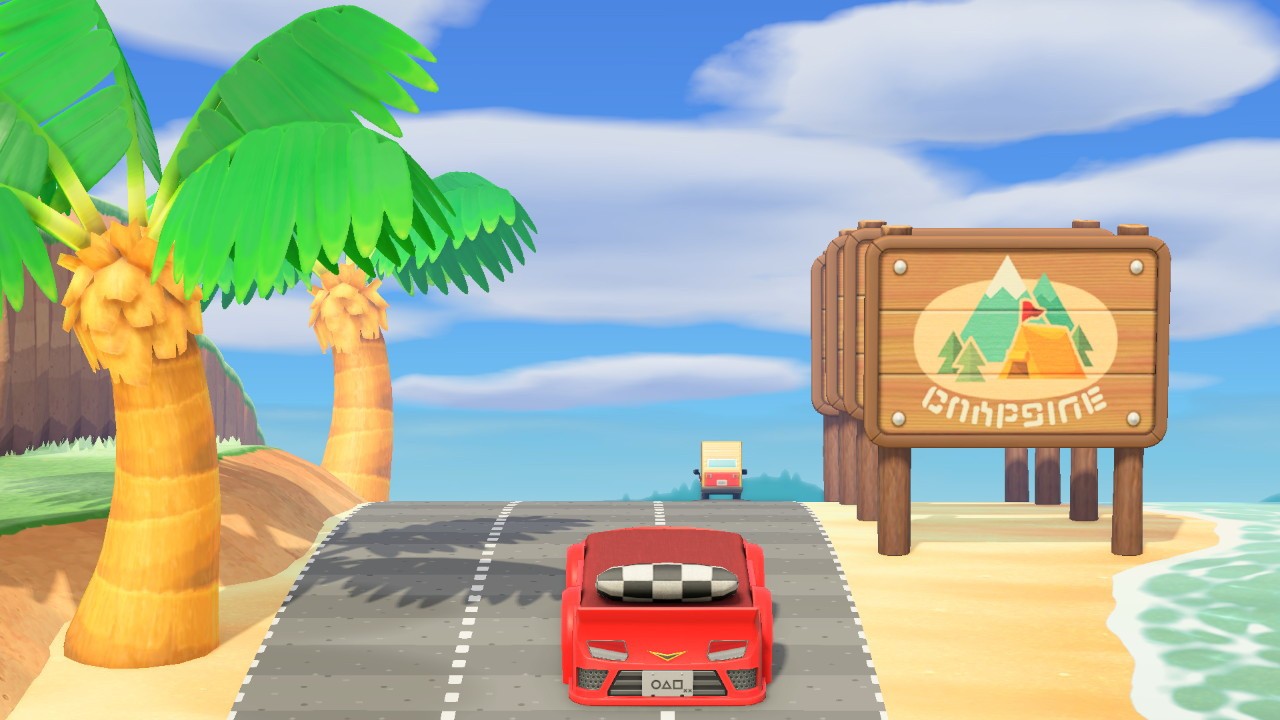
And welcome back to your daily dose of Animal Crossing: New Horizons goodness, brought to you by the insanely talented community that has built up around the game since launch back in March which continues to deliver incredible custom content on a daily basis.
Yep, the latest addition to the catalogue of custom design crossovers is from Twitter user @uma73 who has used the red toy race car bed and copies of various scenic items to recreate the look of SEGA’s feel-good arcade racer Out Run on their island, complete with coastal roads and those all-important blue skies. We particularly love the repeating items used to simulate the effect of Out Run’s Super-Scaler sprites:
Be warned, though, that returning to your plain old island might be tough after witnessing what you could be doing on yours if you had the time and the talent.
In other news, we crafted a table recently. Absolutely chuffed with it, we were. What’s that? Someone meticulously recreated Panzer Dragoon with a bunch of fossils and custom art designs?…
This means the "rebuilt-from-the-ground-up remake" of the original 2002 Mafia title will make its way to most platforms later this August, as it's one of the games bundled in the triple-pack. Those who pre-order the Mafia: Trilogy collection will get immediate access to the Definitive Editions of Mafia II and Mafia III. (It's worth noting that both of these are currently available as standalone purchases, retailing for $30 on the Microsoft and PlayStation stores and $40 on Steam.)
Mafia: Definitive Edition is the centerpiece of the Mafia: Trilogy. It's a complete remake of the critically acclaimed titled, replete with an updated script of new dialogue, expanded backstories, and additional cutscenes. Further, the Definitive Edition of Mafia also includes all-new gameplay sequences, features, and other enhancements, while using the same game engine that powered Mafia III's cinematics.
If You Love Doodle God…Embrace Your Dark Side with Doodle Devil!
[freebies.indiegala.com] The same addictive, puzzle game play that made Doodle God a hit is back but with an evil twist. Being bad has never been so much fun & free!
11 Years of Minecraft! Mojang’s Stylish New Rebrand
Where has the time gone? How long have you been playing Minecraft? I may not have been there from the beginning but I have fallen in love with this game and it has opened up a new genre of survival crafting games that range all age ranges. Did you start out playing creative? What are some of your favorite builds?
As 11 years have gone by Minecraft has hit some record highs in terms of sales. No one could ever expect this game would grow to what it has become today. 11 years of updates, 11 years of development, 11 years of belonging to a great and creative community! Over 200 million, yes over 200 MILLION copies have sold for Minecraft across all platforms and I can’t see that slowing down any time soon.
With over a decade under the belt, Moajng also announced their rebranding. Say hello to Mojang Studios!
What are your thoughts? What are your fondest memories over the last year or Minecraft? What made you start playing Minecraft? Share in the comments below!