Blog: How monster design influences player behavior and level design
The following blog post, unless otherwise noted, was written by a member of Gamasutras community. The thoughts and opinions expressed are those of the writer and not Gamasutra or its parent company.
Level design is a broad discipline. It not only covers laying down geometry or setting up events and enemies in script, it is also responsible for composition, intensity and storytelling. In this article I will focus on another department that is more tied to the core game design. This article will focus on monster behaviors, weapon design and level geometry and how they combined influence player behavior and force decision making and variation in gameplay.
Let’s begin!
Every game needs enemies and the less restricted in reality the game is the more freedom can you have in the enemy diversity. A fantasy or sci-fi game can have enemies that disregard physical laws without it breaking the suspension of disbelief while a more realistic type of game will have to be confined reality. Flying tanks in a world-war 2 game would not be successful for players wanting to enjoy the more authentic WW2 experience.
Since there is a big gap between well-designed enemies and mere enemies lets start with the well designed ones. The reasons there is a gap is because well designed enemies are often unique or at least distinct enough to be recognized. In this article I will mention some enemies from Doom, Quake and Half-Life 2 when talking about well-designed enemies.
Now, just because an enemy is not distinct or unique doesn’t necessarily mean that it’s not well made or fitting for its appropriate setting. However, there is a higher risk for that enemy to become blurry, bland and boring after a while, both from a player perspective facing the same thing over and over again but also from the designer’s perspective since it’s not as multifaceted to use.
Enemy Types
Most of the time there are three types of enemies. These are:
Hitscan enemies. Hitscan means that they shoot an invisible line from their weapon against the player and if it connects with the player you are instantly hit.
Projectile enemies. Enemies that fire a rocket, a fireball or throws something at you are normally regarded as projectile enemies. The projectile can often be dodged by moving thus making it harder to hit but more punishing if it connects by dealing heavy damage.
Melee enemies. Enemies that will have to touch you. They need to get in next to you and hit you with their claws,teeth, arms or weapons.
With these three you have many possibilities to craft interesting encounters. Normally as a balance aspect hitscan enemies are weaker due to their natural talent of hitting you more often while projectile enemies are stronger but can be out-maneuvered. Melee enemies are in the middle-class on dealing damage while they are tougher when it comes to taking damage.
Enemy Behavior
Enemy behavior is a tough topic since it encapsulates so much. But it can be narrowed down to a few primary attributes that will influence most of it. These are:
The looks of the enemy. The looks are crucial since humans are visually-oriented by nature, this is the attribute that will provide the player with the most information at a first glance. This is also heavily tying in to “the tell” which I will explain later. The first thing that comes to mind when talking about visuals is the silhouette of the enemy. Human enemies even with variation in bodyarmor or size, will suffer from a distinction problem although it can be reduced by having color coded uniforms or different weaponry.
Similar silhouette but different in color and weaponry
The sounds the enemy make. Sounds comes in second since sound will alert the player of the presence of an enemy or the next move of the enemy. When it’s monsters the sounds will alert the player of an ambush or the next coming attack, also tying in to “the tell”. When players face human enemies, developers have ingeniously figured out that having soldiers call out for reinforcements, flanking routes or other tactical moves provide both the believability of a working unit while at the same time providing the player with essential information.
The behavior itself or normally called “the tell”. The tell is a combination of attributes both visually and audibly. The tell is the identifier of what the enemy is currently doing or going to do. Most enemies have some kind of tell but there are a often few enemies that are relying on this more heavily. Those enemies are often special in how they work and how the player must interact with them. The tell in this case will lead to prioritization for the player, whether it is to eliminate the highest treat or seek cover.
In this gif the Quake 1 enemy called the Shambler is properly distinctive in its tells. First it charges up a ranged lightning-attack by putting its hands above its head and charging lightning, clearly shown, between its hands. Second it shoots it out in the direction of the player. The second tell is the melee attack. As it did previously it raises both its hands above its head to strike down, now however there is no lightning, the space between the hands is now greater, signaling that this will be a melee attack since it’s now closer to the player as well. This in combination with sound cues like roaring or electricity will provide for the full spectrum of tells for the player.
Understanding the concept
These tells in combination will become the behavior of the monster and behaviors must be learned by the player. The player will easily learn the behaviors if they are exposed to them by repetition. However, there are more requirements. The behaviors must be easily recognized, meaning that they should be distinct enough for the player to tell one monster from another in the blink of an eye. There should be no hesitation in what the monster is going to do thus the behavior must be consistent, the monster should do the same thing every time, which will lead to player expectation. If the monster is doing the same move for different attacks the player will have a hard time learning and figuring out what to do since they don’t know what to expect.
When these behaviors are learned and understood by the player, the player can begin to adapt. Adaptation basically means proper decision making. Now, I won’t bother writing “tactical, meaningful choices blah blah blah” buzzwords that are so commonly thrown around and overused these days. In general it comes down to the player making a decision based on input, nothing more, nothing less. In a shooter game you basically have two choices, move, shoot or both, nothing else is a decision.
Let me provide an example. If I as a player now understand that this Shambler enemy hits hard and the lightning attack is ranged, I ought to properly check for cover when facing it. I will not rush up to it hoping to take it down quick since it has such a high amount of health. The adaption, or decisions I make, are based on knowledge through experience. I must have seen this monster in action or faced it previously to be able to understand it. When I understand it I can conquer it. It would not be wise to rush when I can take cover and deny the attack.
The target prioritizationlist
This knowledge leads to what I call the target prioritization list which is a great tool for the level designer. You can construct combat scenarios with multiple enemy types and you can more or less expect the player to focus down enemies in a certain pattern. The prioritization list is basically a threat meter constructed in the players head. This threat meter is not based on raw damage and health alone, meaning that the toughest foe is not necessarily the highest threat in the mix. Enemies that are annoying are more often than not the highest threats. A perfect example of this is the black headcrab in Half-Life 2.
The crab alone can never kill you, however its poison puts you at one health away from death. Your health is not set to one permanently, instead you regenerate health back fairly quickly, so it’s not damage per se, instead it acts as a pretty decent debuff. The danger arise when you put other enemies in the same encounter.
In this gif the player is facing a poison crab zombie who throws crabs at you form a distance and basically spawns them to be independent entities. In this encounter however, I’ve added a zombie. Zombies are normally slow, weak and do low to moderate damage. In normal scenarios the zombie wouldn’t pose much of a threat. However, in combination with the poison crab and the tight movement space this combination proves lethal. This is where geometry can increase or decrease the threat level.
After having this experience where the player is weakened to one health, they will automatically prioritize this headcrab first in the coming battles. As soon as the player hears the distinct noise of this particular headcrab the player will go in to a state of high alert and search for the headcrab since all the other enemies are of lower threat. This “threatlist” updates in our minds automatically all the time. This creates an interesting dynamic because if the player fails in locating the crab and gets hit by it, the power balance changes and the other enemies are now of highest threat since they are the ones able to kill the player, forcing the players decision to go from shooting to moving.
Geometry
The geometry or layout of the level should play to the enemy’s strengths, but also to its weaknesses. If you have a melee enemy with speed and mobility as its main strength, you will have to provide routes without obstruction for the enemy to use it. Otherwise there is no point having it in the first place.
And if you have a ranged enemy it will need clear sightlines to be able to hit the player. Distance is also important, particularly with projectile-based enemies since the projectile will have traveltime before it reaches the player. If you have an environment with too much cover and line-of-sight blockers the ranged enemy will become totally obsolete. The same thing will happen if the player has no distance and no cover which only will lead to frustration.
Summary
Requirements for successful enemies and their use, are strong silhouettes, unique identifiable sounds and distinctive, consistent behaviors with support from a well-designed environment that play to the enemy’s strengths while also covering its weaknesses, will teach the player how to understand, adapt and conquer the encounter.
PlayStation’s previous global second party games head and noted PS Vita advocate Gio Corsi has joined up with Predator: Hunting Grounds IllFonic as the studio’s new product chief.
Corsi announced his departure from PlayStation a few months back, and said at the time he was taking some time for himself before announcing what his next path would be.
Corsi’s new role tasks him with chasing new business opportunities for IllFonic, in addition to overseeing the lifecycles and expectations for the company’s games. The position also sees him overseeing both the production department as well as marketing and communication teams.
“To me, most importantly, it’s the people, and [CEO] Chuck [Brungardt]’s built an incredible team here across all disciplines,” says Corsi in a statement. “They love what they do and they are fans of playing their games as much as they are developers working on them and to see that firsthand is great. They also have some exciting goals for the future, not only with their projects but with the company, it’s made my decision to join them an easy one.”
“I really feel like I will complement the IllFonic crew while at the same time push them towards new ideas and avenues,” he continues. “I can tell there are some big exciting times ahead for us, but first I have to find a new ramen spot to call home!”
Return To Skyrim In The Next Elder Scrolls Online Annual Event
In its nearly six years of activity, Elder Scrolls Online has grown from yet another online game that struggled to find its footing to a satisfying, content-rich MMO that offers immense freedom in exploring the expanding universe of Bethesda's long-running RPG franchise. With more updates opening up the familiar locales of the land of Tamriel, such as Morrowind and Elsweyr, developer ZeniMax Online Studios is preparing the next major expansion that seeks to rekindle a sense of nostalgia for a certain northern region from Elder Scrolls lore.
Revealed during Bethesda's ESO 2020 livestream, Bethesda VP of Marketing Pete Hines and creative director Rich Lambert detailed the upcoming season of content known as the Dark Heart of Skyrim. Launching on May 18 for PC (consoles will get the update on June 2), the land of Skyrim, quests, and loot will be open for players to uncover. Like last year's Season of the Dragon, new events will be added throughout 2020, expanding the new region and its lore. During the livestream, the creative director stated this about the resivit to Skyrim: "We felt it was important to offer something familiar, but we very much wanted to forge our own path with Skyrim."
Set 900 years before the events of Elder Scrolls V, the Skyrim of ESO isn't exactly the same as it was in the previous game. While familiar places like Solitude, Dragon Bridge, and Morthal are back, the entire region has been corrupted by the influence of vampires, werewolves, and other supernatural forces, which gives it more of a gothic and macabre aesthetic. Closing out the cinematic trailer was a brief glimpse of a massive underground fortress home to the coven of vampires--the dark heart of Skyrim. Starting off the season will be a special prologue quest that's available to all players, setting the stage for the new adventures in Skyrim.
Encompassing the Dark Heart of Skyrim season are four substantial updates. The first two, Harrowstorm and Greymoor, will be available at launch. Harrowstorm focuses on new dungeons and world events to take part in, tasking you and your party to face off against hordes of vampires other monsters. The Greymoor questline is the most substantial form of content to take part in, which is the main questline in Skyrim. According to Bethesda, the narrative in Greymoor will be the darkest one of the series, revealing the grimmer aspects of the land of Skyrim, why it attracts such supernatural forces. Later in 2020, two more updates focusing on additional story and dungeons will close out the Dark Heart of Skyrim season.
A returning location that players will be able to explore is Blackreach, the massive underground cavern from The Elder Scrolls V. According to the developers, the subterranean networks makes up over 40% of Skyrim's size in ESO. In addition to the new land to explore and quests to follow, the Dark Heart of Skyrim season will also introduce a suite of new quality-of-life updates, activities, and new features. For instance, one new side-activity is the Antiquities system, allowing players to hunt for lost relics from around the world to buff their characters and party with new mythic items that have unique properties. While exploring Skyrim, you can also take part in Harrowstorm world events, which has you and your group battle waves of foes.
No doubt, the big standout with this upcoming season is the prospect of returning to Skyrim. Released almost nine years ago, the Elder Scrolls V still remains one of Bethesda's most well-loved games, so getting to explore the region in an MMO presents an interesting way to re-experience the lore and iconography of the region. In the years following ESO's initial release, the MMO was updated to allow for more open-ended exploration of the world that will scale to your level and party-size. For players looking to jump into ESO for the first time, you can even start a new character in the region of Skyrim, letting you explore the land right from the outset.
For more info on what's new with Elder Scrolls Online, including what to expect in Skyrim and the larger season of content in Dark Heart of Skyrim, be sure to check back with GameSpot.
Storytelling games have found quite the home on mobile devices. Beyond the deep well of generic choose-your-own adventure games you have a lot of options, like the mobile versions of well-regarded gamebooks like the Fighting Fantasy series. Other developers have transformed those books with elaborate new digital mechanics a-la the Sorcery! series. Then there’s the return of classic adventures like King of Dragon Pass and its sequel Six Ages, fresh takes on the genre like 80 Days and Over the Alps, and cool made-for-mobile experiences like Reigns. With that cornucopia of interactive adventures, it’s hard to whole-heartedly recommend Silmaris.
Silmaris is a game made up of two fairly distinct parts. Firstly, you have various procedurally-generated segments of story that present you with challenging choices with no clear ‘right’ answer. Here, you determine whether your king is a conqueror or negotiator, or something else entirely. Then you have a dice game of resource management where you try to accumulate and hold on to the weapons, grain, spies, etc, that you need to accomplish your goals. You can do a lot with those dice, including invading other nations, building treaties, establishing smuggling routes, slaying monsters, and developing your own city.
The game’s central mechanic is simply opposed dice rolls. Dice (six-sided, but with only two different faces) are accumulated to represent military strength, diplomatic clout, accumulated grain, and so on, with five different colors of resources in total. Each one allows you to take different actions in the world: conquer cities, establish treaties, go on adventures, etc. You choose how many dice you want to spend and roll them against your opponent. A sixth resource lets you reroll when you fail. The game helpfully points out the odds of each roll as you commit more dice to it, so you get a good idea of what your chances are. On the other hand, failure can come quite suddenly: run out of rerolls on an invasion of your capital city and you’re out of the game.
Between the do-or-die moments when your dice are helping you accomplish something, for the rest of the time you’re pretty much just deciding how to best accumulate dice so that you have the right ones when you need them. Accumulating dice using your strongest adviser is generally your best option – so much so that the quick roll option on the home screen just makes all five of those rolls for you. If you’re low on a certain type, however, you may need to make suboptimal rolls or trade dice between pools. This especially happens when you are under attack from the other kings and you desperately need all hands on deck to recruit enough soldiers that you can fight another day.
Your choices in the resource management game come down to maximizing your pools and available rerolls. Is it better to hold on to your reroll tokens, or spend them on a more expensive adviser that will give you a permanent one or two dice bonus? Can you afford to go after an artefact, or do you need your army at home? Will you pull in more dice by conquering or allying with another state?
The dice game takes a fair amount of management, but it’s so abstract it can feel more like busywork than really commanding a giant army or managing an elaborate spy network, each of which are resolved with identical opposed rolls. Since much of the fun of the game is based on choose-your-own-adventure storylines, it’s fine for the resource management side to be less detailed. In a game like Reigns, you have just four resources that react exclusively to choices made in the story, and the game milks a lot of tension out of that balance.
In Silmaris however, between sections of text you spend a lot of time watching rows of dice spin and moving different colors of dice into different pools. The dice management game would probably benefit from moving more in one of two directions. It could either become more simplified and abstract by eliminating some dice pools and reducing the number of rolls that come in between pages of the story. Or it could become more detailed and thematic, adding, for instance, various military units, buildings and a more complex economy.
But that’s only half of the game, and the meat of why you would want to play Silmarils is in the story sections. These bits of fantasy are well-written and include some really nice and evocative art. A lot of the story bits play out over multiple turns and they can be influenced by the state of the board as well. Angering another power in the story mode doesn’t just result in penalties there, but may make dice rolls against them more difficult.
Unlike King of Dragon Pass, Silmaris‘s fantasy world is fairly straightforward stuff in the Tolkein/Dungeons & Dragons mold. The consequences for your actions can be surprising, but they are never mystifying like in Dragon Pass. There are no weird cults or warrior duck tribes, no fantastic rituals or inscrutable offerings. The style is also more straight-faced than Reigns, which had dark, weird humor and stronger characterizations for its advisers. Silmaris‘s story is compelling enough, but not as surprising as those games that have come before.
Ultimately, though, the two sections of the game don’t mesh very well. The story does have an impact on the dice rolling, but it’s hard to say how much. It definitely sets up problems that need to be solved with dice, and will often reward you with one of the key re-roll tokens as a prize. More often, though, you’ll win only one or a handful of dice of a certain color — the same thing you get just for going through the standard rolls every turn. It makes the story decisions seem a bit weightless.
Silmaris is a pretty interesting lightweight kingdom simulator with some fun storylines. It should take quite some time to dig through all the written content of the game, and once you get the hang of it, the dice part becomes less tedious. There are better options for story games on mobile, but you could also do much worse.
Alphabet, parent company of Google, Verily, Waymo and other firms, became the fourth U.S. company to reach a $1 trillion market capitalization on Thursday, just over a month after former Google CEO Sundar Pichai took the reins.
Alphabet CEO Sundar Pichai.
Shares of Alphabet hit $1,450.16 at the bell, with intra-day trading up as much as 0.8%, granting the tech giant a market cap of almost exactly $1 trillion.
Alphabet is the fourth U.S. company — and fourth tech sector stock — to hit the milestone after Apple first breached the $1 trillion threshold in August 2018. Amazon followed suit a month later, while Microsoft achieved the lofty valuation in April 2019.
Currently, Apple and Microsoft sit above the $1 trillion mark, while Amazon has since fallen below that line.
Alphabet derives most of its revenue from Google, which acts as an umbrella company for the firm’s bread-and-butter advertising and search income, as well as gains from Android and YouTube. It is fitting, then, that the conglomerate reached today’s high-water mark with former Google CEO Pichai at the helm.
According to CNBC, market analysts are bullish on Pichai, who was minted Alphabet CEO in December after co-founders Larry Page and Sergey Brin formally announced to step down from their respective corporate positions. Page was serving as Alphabet’s CEO at the time.
Alphabet’s efforts in the cloud are also beginning to pay off, with the company doubling its revenue run rate from $1 billion to $2 billion per quarter between February 2018 and July 2019, the report said. While not a segment leader, the firm is investing heavily in the space and expects similar revenue growth in 2020.
The company is due to report fourth quarter 2019 earnings on Feb. 3.
Posted by: xSicKxBot - 01-17-2020, 06:13 AM - Forum: Windows
- No Replies
Microsoft announces it will be carbon negative by 2030
REDMOND, Wash. — Jan. 16, 2020 — Microsoft Corp. on Thursday announced an ambitious goal and a new plan to reduce and ultimately remove its carbon footprint. By 2030 Microsoft will be carbon negative, and by 2050 Microsoft will remove from the environment all the carbon the company has emitted either directly or by electrical consumption since it was founded in 1975.
At an event at its Redmond campus, Microsoft Chief Executive Officer Satya Nadella, President Brad Smith, Chief Financial Officer Amy Hood, and Chief Environmental Officer Lucas Joppa announced the company’s new goals and a detailed plan to become carbon negative.
“While the world will need to reach net zero, those of us who can afford to move faster and go further should do so. That’s why today we are announcing an ambitious goal and a new plan to reduce and ultimately remove Microsoft’s carbon footprint,” said Microsoft President Brad Smith. “By 2030 Microsoft will be carbon negative, and by 2050 Microsoft will remove from the environment all the carbon the company has emitted either directly or by electrical consumption since it was founded in 1975.”
The Official Microsoft Blog has more information about the company’s bold goal and detailed plan to remove its carbon footprint: https://blogs.microsoft.com/?p=52558785.
The company announced an aggressive program to cut carbon emissions by more than half by 2030, both for our direct emissions and for our entire supply and value chain. This includes driving down our own direct emissions and emissions related to the energy we use to near zero by the middle of this decade. It also announced a new initiative to use Microsoft technology to help our suppliers and customers around the world reduce their own carbon footprints and a new $1 billion climate innovation fund to accelerate the global development of carbon reduction, capture and removal technologies. Beginning next year, the company will also make carbon reduction an explicit aspect of our procurement processes for our supply chain. A new annual Environmental Sustainability Report will detail Microsoft’s carbon impact and reduction journey. And lastly, the company will use its voice and advocacy to support public policy that will accelerate carbon reduction and removal opportunities.
Microsoft (Nasdaq “MSFT” @microsoft) enables digital transformation for the era of an intelligent cloud and an intelligent edge. Its mission is to empower every person and every organization on the planet to achieve more.
For more information, press only:
Microsoft Media Relations, WE Communications, (425) 638-7777, rrt@we-worldwide.com
Note to editors: For more information, news and perspectives from Microsoft, please visit the Microsoft News Center at http://news.microsoft.com. Web links, telephone numbers and titles were correct at time of publication, but may have changed. For additional assistance, journalists and analysts may contact Microsoft’s Rapid Response Team or other appropriate contacts listed at https://news.microsoft.com/microsoft-public-relations-contacts.
Switch Sales Rose By 29% In Japan In 2019, PS4 Sales Dropped By 29%
If you follow our regular Japanese chart updates, you’ll probably already be aware that the Nintendo Switch had a fantastic 2019 in its home country. The console was consistently on top in terms of both hardware and software, and we can now start to analyse its performance in comparison to previous years.
Rounding up Famitsu’s yearly chart information, MCV reports that the Switch and Switch Lite managed to sell an estimated 4,494,000 combined units in Japan alone last year. What’s particularly impressive here is that the Switch Lite managed to break the one million mark despite only launching in September.
Comparing this to Switch’s sales in 2018 reveals a 29% leap; interestingly, Nintendo’s biggest rival in the region, Sony, saw its year-on-year estimated sales fall by the very same 29% – or 29.5% to be more precise. The PS4 sold an estimated 773,773 units with the PS4 Pro selling 422,380 units, giving Nintendo a 75% share of all hardware sales for the year.
Similarly successful was Pokémon Sword and Shield, the biggest release of the year in Japan for both Nintendo and the entire industry. The two titles sold an estimated 2,988,134 units despite launching in November, comfortably beating the second-best performer – Super Smash Bros. Ultimate – by almost 2 million copies.
Can we expect a similarly strong 2020? Let’s hope so!
Posted by: xSicKxBot - 01-17-2020, 06:13 AM - Forum: Lounge
- No Replies
What's New To Hulu In February 2020? Movies, TV Shows, And Originals
Hulu offers more than original series, movies, and TV shows. For many networks, you can watch new episodes of your favorite television series the day after they air on their respective networks. In February, there is a lot to look forward to on Hulu, and you can see the full list of releases below.
The majority of Hulu's movie selections arrive on February 1. And on that day, five National Lampoon movies arrive--three of which you'll want to watch. Vacation, European Vacation, and Christmas Vacation come to Hulu that day, and you can watch the misadventures of the Griswold family, as patriarch Clark tries to plan fun adventures for his family, only to have them all go wrong.
On February 7, Brooklyn Nine-Nine returns for Season 7 mid-season premiere. Follow the comedic adventures of Jake Peralta, Amy Santiago, and company as they solve crimes in the city and get themselves into wacky situations. Here's to hoping Charles Boyle goes back to being a pretentious pizza blogger.
Finally, coming to Hulu on February 14 is the Hulu original High Fidelity. This new series is a reimagining of the classic book and 2000 movie of the same name. Zoë Kravitz (who is also executive producting) stars as Rob, an owner of a record store in Crown Heights, Brooklyn--and an area going through gentrification. Much like the original book and movie, she'll be revisiting her past relationships and connecting them to music and pop culture.
Below, you'll find the full list for everything coming to and leaving Hulu in January. If you're interest in more Hulu news, you can find out what FX and FXX shows are coming to the streaming service in the near future.
What's coming to Hulu in February?
Available February 1
300 (2007)
28 Days Later (2003)
Adam (2019)
All About E (2005)
Bridget Jones Diary (2001)
Bridget Jones: The Edge of Reason (2004)
Bridget Jones’s Baby (2016)
Buffalo 66 (1998)
Captain Kronos: Vampire Hunter (1974)
Cheech & Chong’s Still Smokin’ (1983)
Cherry Pop (2017)
Earth Girls are Easy (1988)
For Colored Girls (2010)
The Fugitive (1993)
Getting Go: The Doc Project (2013)
Ghost (1990)
The Girl King (2015)
Hitch (2005)
Henry Gamble’s Birthday Party (2015)
Hot Guys with Guns (2013)
John Q (2002)
Judgement Day (1999)
The Last Stand (2013)
The Last Warrior (2000)
Liz in September (2014)
Lord of War (2005)
The Man Who Could Cheat Death (1959)
Margarita with a Straw (2014)
Ms. Purple (2019)
Menace II Society (1993)
Mimic (1997)
National Lampoon’s Christmas Vacation (1989)
National Lampoon’s Dirty Movie (2011)
National Lampoon’s Dorm Daze 2: College @ Sea (2006)
National Lampoon’s European Vacation (1985)
National Lampoon’s Vacation (1983)
Naz and Maalik (2015)
The Phantom of the Opera (2004)
Precious (2009)
Robin Hood (1991)
Say Anything (1989)
Southie (1999)
The Spy Next Door (2010)
Those People (2015)
Touched with Fire (2016)
Vegas Vacation (1997)
When Harry Met Sally (1989)
Where We Go From Here (2019)
Available February 2
A Madea Family Funeral (2019)
Available February 3
The Masked Singer: Season 3 Premiere (FOX)
The Cabin in the Woods (2012)
Available February 5
Warrior (2011)
Available February 6
Lego Masters: Series Premiere (FOX)
Angel of Mine (2019)
David Crosby: Remember My Name (2019)
Disaster Movie (2008)
Wrinkles the Clown (2019)
Available February 7
Into The Dark: My Valentine: Episode Premiere (Hulu Original)
Brooklyn Nine-Nine: Season 7 Mid-Season Premiere (NBC)
Indebted: Season 1 Mid-Season Premiere (NBC)
Available February 9
Alive (2019)
Available February 10
The Oscars: Special (ABC)
Available February 12
The Real Housewives of Beverly Hills: Complete Season 9 (Bravo)
For Life: Series Premiere (ABC)
Where’d You Go, Bernadette (2019)
Available February 13
Mister America (2019)
Available February 14
High Fidelity: Complete Season 1 Premiere (Hulu Original)
Random: Food Network Challenge’s Pokémon Cakes Episode Sure Was Something
Food Network, via Kotaku
One of the more spectacular, but still slightly terrifying entries…
Pokémon seems to be doing the rounds in popular TV shows in the US at the moment, starring in its very own episode of Jeopardy! and now appearing on Food Network Challenge. As you might expect, this one has resulted in some excellent images that will never leave the internet. Ever.
The show had its competitors attempting to create cakes based on the catchable characters we all know and love, but the now-iconic monsters weren’t always represented with 100% accuracy. If you happen to live in the US you can catch up on the show here, but for everyone else, here are some standout moments (with thanks to Kotaku for the images).
We’ll kick things off with a good one: Sobble. The shape is mostly right, you can instantly tell what it is, and the creation even has Sobble’s signature sad face. Not a bad effort.
Food Network, via Kotaku
Next up, a different-looking Litten. We’re not sure why it’s standing on two legs – as we imagine that’s why we feel strangely put off when looking at it – but there’s something about that body that’s giving us the heebie-jeebies.
Food Network, via Kotaku
Next, the most creative of the bunch. Sure, the two-legged nature of thing is just as creepy as Litten before it, but look at that Water Gun. Excellent.
Food Network, via Kotaku
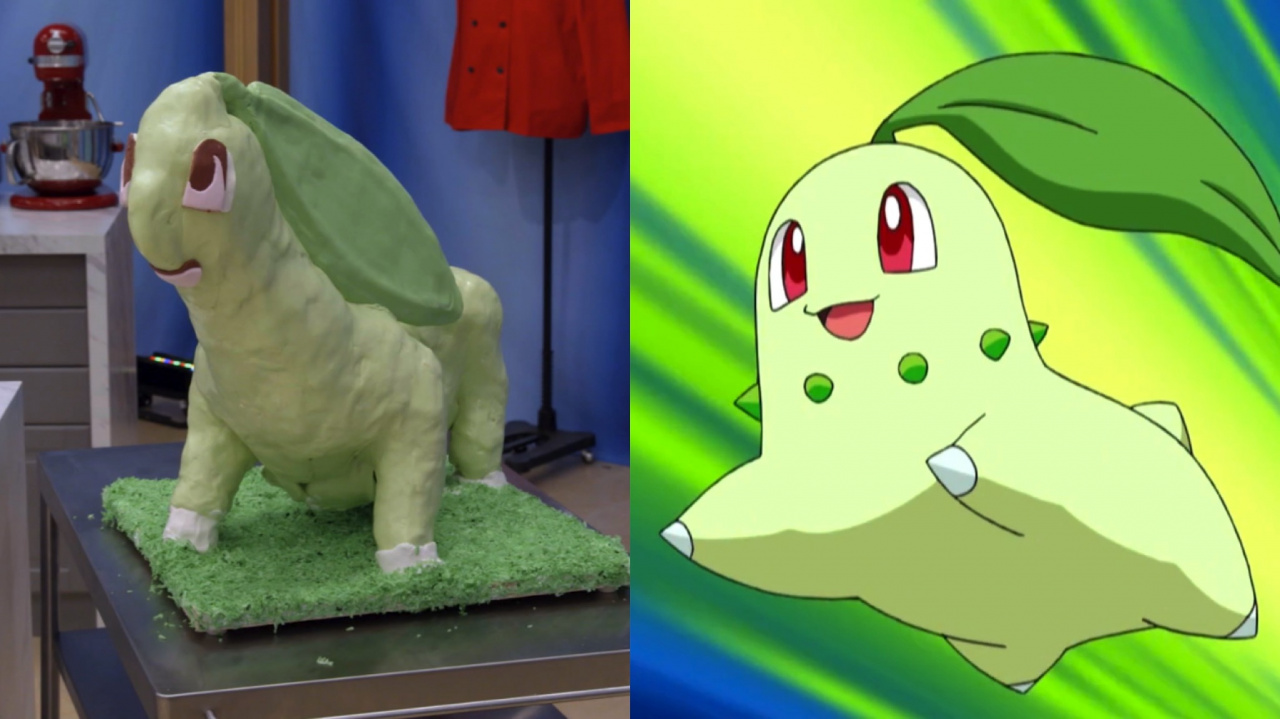
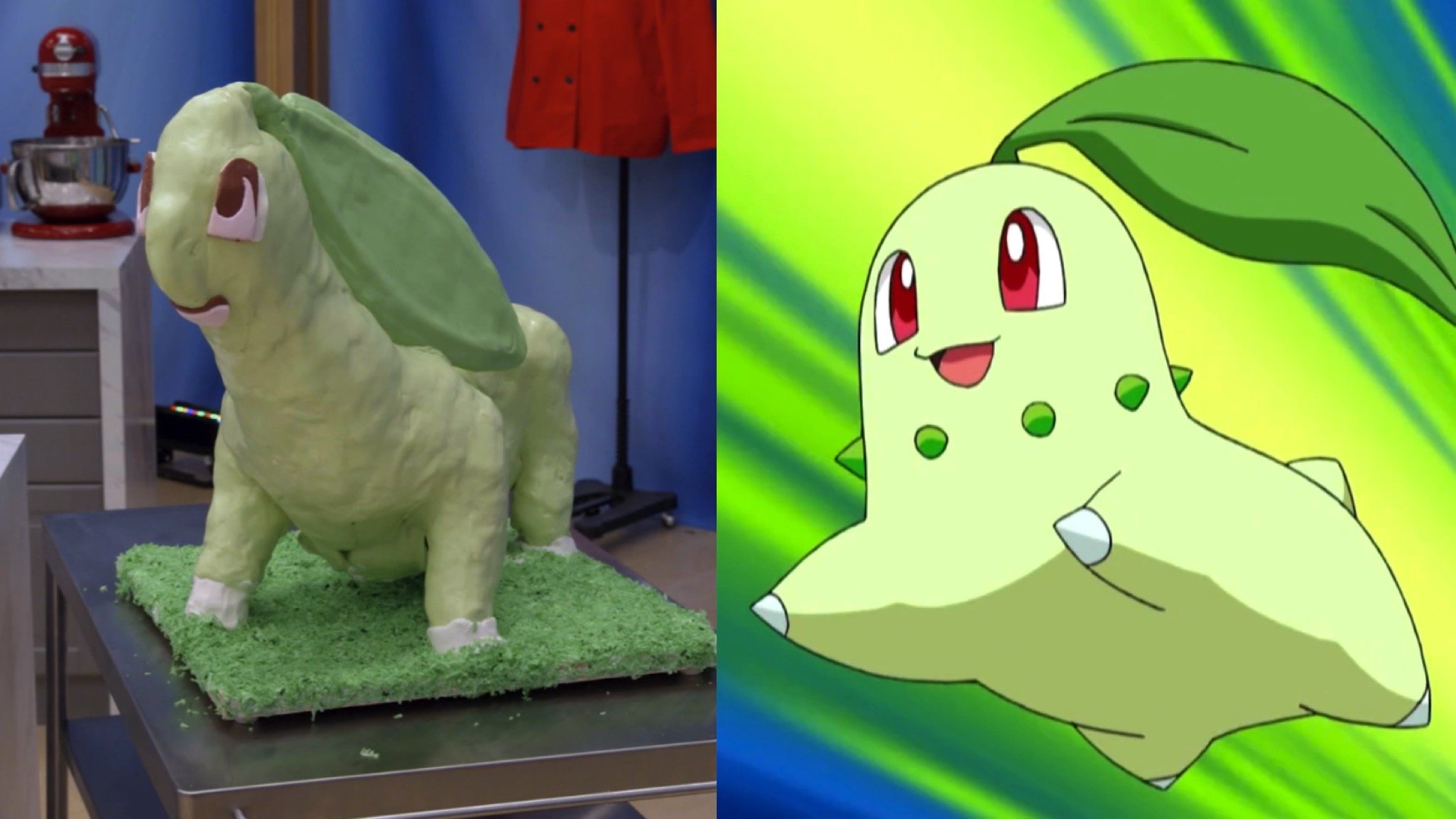
And finally, our pick of the bunch. Remember Chikorita? The cute little grass-type starter introduced in Pokémon Gold and Silver? Well, forget it. Because we’ve no idea what this is.
Food Network, via Kotaku
Sadly, the Chikorita wasn’t deemed good enough to make it through to the next round of the competition.
The show also featured a giant Squirtle, a leaf-dispensing Bulbasaur and a sparking Pikachu (seen above). Television at its finest.
Feature: Game Of The Decade Staff Picks – Xenoblade Chronicles
Following on from our reader-voted Top 50 Games of the Decade, Nintendo Life staff members will be picking their personal favourite Nintendo games between the years 2010-2019. Today, Mitch argues his case for one of the Wii’s final big releases…
The year was 2011. After a long and successful run, Nintendo’s Wii console was finally winding down and fans turned their hopeful eyes to the horizon, just over which rested a promising new platform called the Wii U. Nintendo’s E3 2011 presentation received plenty of hype due to the unveiling of the new hardware, but the company also had millions of fans to please that still weren’t quite ready to retire their Wii consoles yet. They, of course, had Zelda: Skyward Sword to look forward to in the fall, but aside from that and Kirby’s Return to Dream Land, the Wii’s upcoming lineup was looking rather disappointing considering that third-party support had all but vanished and Nintendo itself was clearly moving on. Nintendo fans in Europe, however, had one more notable release to look forward to that would be coming later that summer: Xenoblade Chronicles.
In the wake of considerable doubt that it would ever leave Japan’s shores, the sprawling JRPG from Monolith Soft had been confirmed for Europe in March, with Nintendo of Europe picking up the tab for publishing duties. Though it was rather niche at the time, the universal acclaim, ambitious scope, and developmental talent around Xenoblade elevated it to an almost mythical status in the gaming community, and pairing this perception with the light release schedule for the year ensured that there was a lot of buzz around a game that – perhaps only a year prior – would’ve come and gone with hardly much fanfare.
European fans were understandably excited, but then there were the North American fans. They, too, were pumped by the March news, because certainly it had to mean that Nintendo of America would be making a similar announcement. Nintendo had gone to all the trouble of translating this huge RPG into English, so it stood to reason that the company would want to make back as much on the investment as possible.
And yet Nintendo’s silence was deafening. Any mentions of Xenoblade would be either ignored or met with the ol’ “no comment”. Not only did Nintendo of America seem wholly uninterested in bringing Xenoblade over, but it even went to the extent of actively suppressing awareness of the release, as evidenced by one Nintendo of Europe marketing manager remarking how they wanted to show the game off at E3, but were specifically asked not to by Nintendo of America.
At this point, the fans had a choice: they could either do nothing and allow their window of opportunity to pass, or they could try to do something about the decision that had evidently been made. Enough of them went with the latter option. Challenged by Nintendo’s dismissal of the release and eager to play it for themselves, North American fans banded together in a grassroots effort to get the company’s attention in a movement that came to be called Operation Rainfall.
The movement was centred around three titles, with the other two being The Last Story and Pandora’s Tower, and it was impressively organized. Thousands of fans came out of the woodwork to participate in a series of letter-writing campaigns and online demonstrations – such as getting Xenoblade to the number one spot on Amazon’s multiplatform pre-order list – designed to make it all but impossible for Nintendo to simply ignore the issue any further. This went on for months. Even as the movement gained some substantial attention from gaming media, Nintendo continued to stonewall in the hopes that the fans would let it go. They didn’t. And though it seemed unlikely, Nintendo finally caved about six months after the formation of Operation Rainfall. Xenoblade then came to North America early in 2012 as a limited run, GameStop exclusive, and the rest is history.
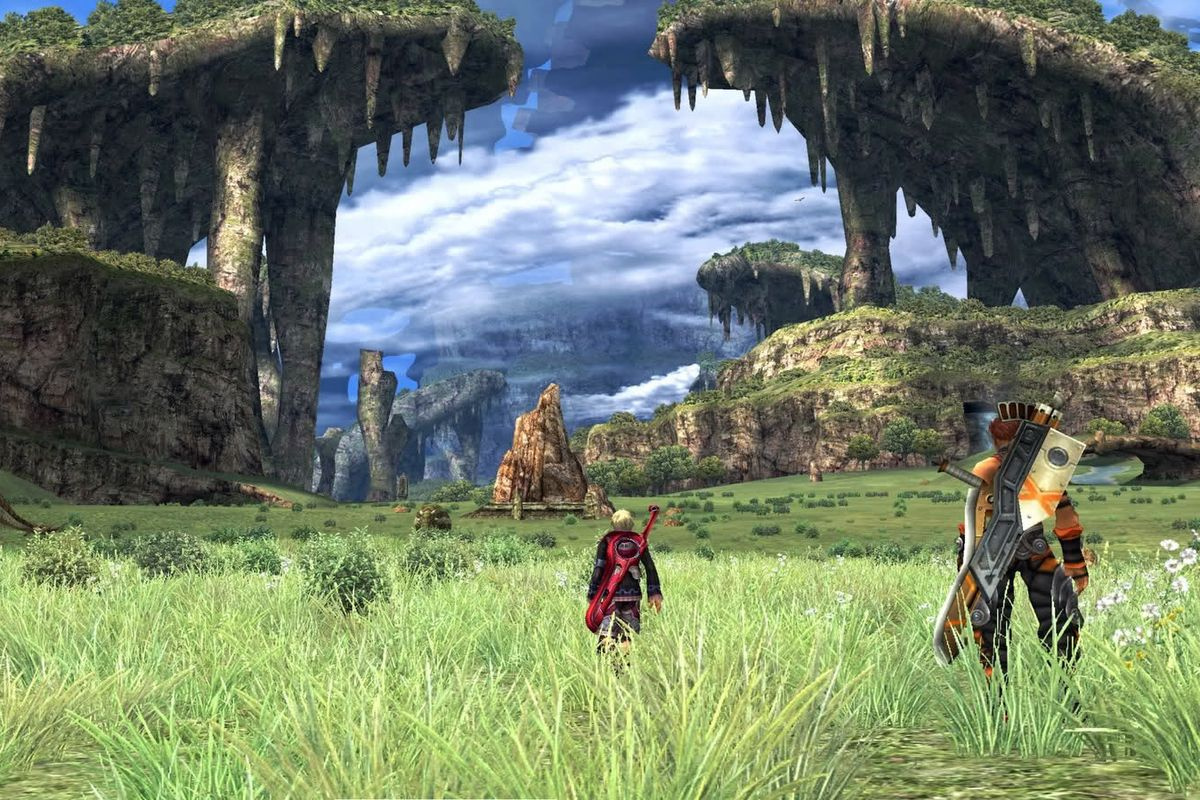
And you know what? The fans were right to fight for this game. Even now, Xenoblade Chronicles still stands as one of my favourite RPGs, simply because of how effectively it modernized the JRPG formula while still keeping things relatively traditional. You still had the tired ‘chosen one’ plotline, but the premise of everything taking place on the back of two gigantic, dead titans led to some truly fascinating plot points. The massive open-world environments that it encouraged players to explore and the hundreds of quests contained within gave it an MMO-like feel, but the tedium was drastically cut back with small quality of life features that streamlined progression. The Final Fantasy XII-esque battle system proved to be both challenging and deep, while Shulk’s future sight abilities added some interesting wrinkles to the pacing.
And though the graphics certainly appeared a bit, ahem, simple if you took a closer look, it’s tough to argue that Xenoblade didn’t have quite a few awe-inspiring moments as more of its surreal, wide-open environments were shown off. Truth be told, I wasn’t this awestruck by a game’s world until I first got my hands on The Legend of Zelda: Breath of the Wild which, surprise surprise, owes much of its overworld map design to none other than Monolith Soft.
Today, the Xenoblade franchise has essentially become a staple of Nintendo’s ongoing release schedule. Not only did the original Xenoblade Chronicles receive a re-release as a New 3DS exclusive, but it’s also getting an HD remaster that’s due out for the Switch this year. The series is important enough that Nintendo decided to greenlight and release a second game, Xenoblade Chronicles X, on the Wii U in an attempt to turn around the narrative surrounding the then-rapidly declining platform. It’s important enough that Nintendo then decided to release another sequel, Xenoblade Chronicles 2, two years later as the final release from the company for the Switch’s inaugural year. It’s important enough that Sakurai decided to give Shulk a spot on the roster for Super Smash Bros., with the character appearing in both Smash 4andUltimate.
What used to be a series that Nintendo thought nobody would be interested in has now become something that’s carved out a passionate and, most importantly, growing fanbase. Xenoblade Chronicles 2 ended up selling 1.7 million copies as of last June, making it the best-selling release so far, and sales of the later released Torna: The Golden Country DLC expansion also exceeded Monolith Soft’s expectations. Sure, Xenoblade may never be posting Mario Kart numbers on the sales charts, but it’s more than proven that it has something to offer that fans all over the globe want more of. Aside from Splatoon, I’d contend that Xenoblade has shown itself to be the next most significant new IP from Nintendo this decade.
The key thing to take away from all of this, however, is that it demonstrates the power of the fan community when they can all agree on something. If Operation Rainfall had never been formed and North American fans never made as much noise as they did, Xenoblade Chronicles likely would’ve become little more than a footnote in Nintendo’s long and storied history. It wouldn’t have been forgotten, but it would always be that weird ‘hidden gem’ that some (European) people would talk fondly of when remembering the Wii. It is because of that initial fan campaign that the original Xenoblade went on to become the influential success that it did, and as a result, any subsequent wins for this series in the years to come will also be a direct result of that dedication. I think it’s critical that we remember this, because it’s easy to fall into the mindset that the voices of the fanbase fall on deaf ears. Believe it or not, they don’t.
I suppose that’s what makes Xenoblade Chronicles (arguably) my favourite game of this past decade. Not only was it an utterly stellar game based purely on its own merits, but the grassroots campaign that sprung up around it was something that I had never seen before and still haven’t seen since. Xenoblade Chronicles was a once-in-a-decade game for many reasons, then, and it has me wondering if such a thing will occur again in these next few years. At the very least, I know I’ll be there on day one when Xenoblade Chronicles: Definitive Edition launches later this year, and my hope is that Monolith Soft will continue to nurture this series as the years roll by.