Every major older version of Dead Cells is now preserved and playable on Steam
Motion Twin’s latest update to the Steam version of Dead Cells gives its players the option to roll back their game to any major iteration of Dead Cells, all the way back to its early access days.
It’s an interesting feature to build into an ever evolving game, and one that likely took no small amount of effort on Motion Twin’s part. While updates bring improvements and new content, the version of any live game that exists years after launch is often quite different from the one offered on day one.
The decision to add access to older versions, the dev team explains on Steam, was driven by their awareness of how much each patch could alter Dead Cells as a game, and a desire to preserve older versions for players and devs curious about the game’s earlier days.
“We always wondered whether it would be possible to dig up the old versions of the game and store them somewhere, so that interested players and future generations of developers could look back at how our little game developed and grew into the Action Game of the Year 2018,” writes Motion Twin. “So, now you can load up every major iteration of the game from the first build of early access right up to present, and we will of course make sure that we stock all of our future major updates in there too.”
The actual option isn’t something baked into Dead Cells’ in-game menus. Rather, players are able to access Dead Cells’ properties from their Steam Library and find older versions of the game now stored under the ‘Betas ‘tab.
Other developers have undertaken a similar endeavor in the past as well, with games like The Long Dark similarly using Steam’s ‘Betas’ tab to give players the ability to roll back and play earlier versions.
“This way, the nostalgic, the ragers and the ‘it was better before’ crowd will always have the option of playing the version of the game that they loved,” writes the Dead Cells team.
Move Aside Baby Yoda, Baby Sonic Is Much More Adorable
The best way to sell something is by making it cute. Sega and Paramount seem to know this because it turns out the upcoming movie Sonic the Hedgehog – due out on Valentine’s Day next year – will feature a much younger blue blur.
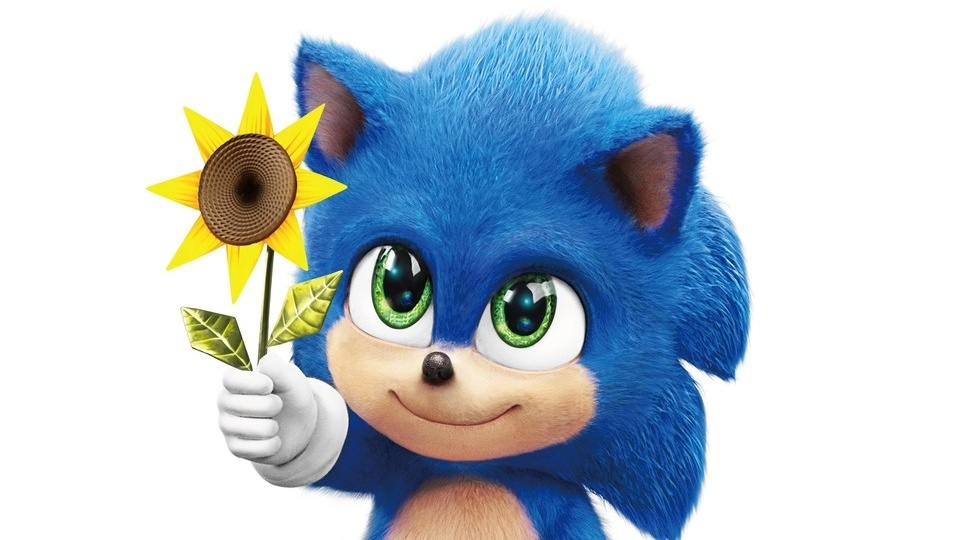
In a Japanese promotional trailer for his silver screen debut (above), you can see baby Sonic holding a sunflower for a few seconds. This same clip seems to include music from Sonic Mania.
We’ve also got a look at a new poster for the movie (via Famitsu), which gives us a better look at Sonic in his younger years:
Are you excited for the Sonic movie? What do you think of baby Sonic? Comment down below.
Little Nightmares 2 - Jenae Sitzes’ Most Anticipated Game Of 2020
2020 is almost here, so we've asked GameSpot's staff to share which games they're looking forward to most in the new year. New consoles are going to dominate the headlines, but at the end of the day it's all about the games, and there are a ton of exciting ones to look forward to. When you're done reading this entry, follow along with all of our other end-of-the-year coverage collected in our Best of 2019 hub and our Most Anticipated of 2020 hub.
Announced at Gamescom 2019, Little Nightmares 2 was a sequel I never saw coming, but I'm absolutely delighted that it's happening. The upcoming horror puzzle-platformer from Tarsier Studios is confirmed to be released in 2020, although no exact date has been revealed.
I still remember the exact moment I first caught a glimpse of Little Nightmares at a convention in late 2016--the cute-but-creepy, Tim Burton-esque style immediately grabbed my attention. If you're a fan of horror, Little Nightmares does not disappoint. The game follows Six, a hungry little girl in a yellow raincoat, as she makes her escape from a terrifying vessel known as the Maw. Six encounters a host of gruesome residents aboard the vessel, including a dreadful long-armed Janitor, the grotesque Twin Chefs, and blood-sucking leeches.
Little Nightmares is similar to games like Limbo or Journey in that the story is communicated through the environment and silent encounters rather than dialogue. Even without her speaking or even revealing her face, you grow attached to Six and emotionally invested in her escape as she makes her way through the dangerous Maw. And while the end may leave you with questions, Little Nightmares offers up a unique and unforgettable world that sets the stage perfectly for a sequel.
We know that Little Nightmares 2 will introduce a new character, a little boy named Mono, who teams up with Six after her escape from the Maw. In the sequel, you'll play as Mono, and Six will be your guide as you set out to explore a mysterious humming transmission from a distant Signal Tower. Of course, there will be new monstrous residents after them, including a sadistic Teacher, and stealth and puzzle-solving will be a major aspect of the gameplay. The trailer even shows some light combat, a new addition to the series.
I'm incredibly excited to see how the sequel expands on the story started in Little Nightmares and its mobile prequel, Very Little Nightmares. In the first game, we caught a glimpse of the monstrous Guests boarding the Maw, and now we'll finally learn what horrors lie in the world outside. We know Little Nightmares 2 will mostly take place outside of the Maw, introducing new settings like a creepy forest and an ominous cabin occupied by the bloodthirsty Hunter.
Even more intriguing are the retro-style TVs that appear to be scattered throughout the game, which are likely connected to the Signal Tower and seem to hold hypnotic powers over the residents. There's also the question of that shadowy figure on the cover, who also appears in the TV at the end of the trailer. Is he our big bad in Little Nightmares 2?
It's a testament to the first game's incredible worldbuilding that there's so much ground to cover in the sequel. The world of Little Nightmares is about to get a lot bigger in 2020, and I can't wait to be absolutely terrified by it.
The years just blur by, folks, so if you’ll indulge me I’d like to mark the occasion by noting some high and lows 2019 has sprung on mobile gaming, as well as some trends. We’ve had a banner year for perfect-scoring games, with thirteen diverse games snagging full points from our picky reviewers here at Pocket Tactics. Roughly speaking most of these fivers are strictly in our wheelhouse: tactical and strategic games, many of them adaptations of tabletop games. Water is wet, Pocket Tactics loves tactics, and the genre continues to produce many strong and notable entries.
On the board game adaptation front, we have Santorini, Evolution, Aeon’s End and Castles of Burgundy. Some of these apps are so good they legit spoilt the ‘IRL’ tabletop versions, especially games which shine in two-player like Castles of Burgundy or Santotrini. Santorini in particular has been my jam for most of the year. Just like with a fighting game or a MOBA, playing with the same god or hero on Santorini feels like learning a whole new skillset. I have grown to loathe the slogan ‘easy to learn, hard to master’ but must grudgingly admit Santorini fulfills this phrase to a T.
To summarize, the usual suspects are wonderful, we love the stuff we expect to love, by and large. As the resident narrative weirdo, though, I simply must pipe up and plug once again the merits of games like Astrologaster, whichwas an immaculate experience I would soon repeat, mainly for its wry sing-song sensibility. It’s difficult to manage the flood of game releases, even when you winnow out the so-so entries, and even more so when you look at the cream of the crop. No bad options here, though I suspect the annual awards are gonna be a bloodbath this year.
Aside from individual releases, we’ve seen a few forays into innovative monetisation and platform options. It’s hard to escape the shadow of Apple Arcade, which I still believe is in an incredible value and has a decent chance of fully growing into a Netflix-but-for-games type service. Many of the games there feel like true passion projects, wherein the creator has tried to create something as interesting as possible without sacrificing broad appeal. Some of them already feel classic, despite being only a few months old. The only question is whether it will continue to serve up surprise hits or whether everyone’s high esteem of Apple Arcade settles down into the opinion that it is a safe, enjoyable time sink. Reliable, good value, sure, these qualities Apple Arcade will have for the foreseeable future. Whether it’s a trailblazer for anything other than budgets remains to be proven. It has a mixture of offerings, a killer value, a free trial and huge discoverability problems.
The landing page is such a pain to navigate, constantly shunting you towards its own clusters of games. I suppose it’s ‘curated’ but a simple search function is often all you need. Google Play Game’s Pass is also a good showing, but its star appeal is more about resurrecting old standards and rallying gamers around the nostalgia factor of bygones. If I had to pick three single standout entries, I would choose Card of Darkness which reignited my dormant solitaire passion; NeoCab for its humorous and humanistic take on techno-precarity; and finally Cat Quest II for being cattier and good standard RPG fare.
Speaking of innovation, the expansion of the Steam Link app’s functionality and the launch of Stadia mean that the line between mobile and console (or desktop) gaming continues to blur.
These services get more accessible and less finicky with each passing year, though they continue to be relatively niche. Still, the continued dominance of the Nintendo Switch means that flexibility and versatility are just as important as raw gaming power to consumers. There’s a constant refrain amongst gamers: when will X game come to Y platform, and it remains as relevant as ever. But it bears noting that both in terms of raw creative output and flexibility, modern gamers are spoilt for choice. Fortunately, between the constant influx of quality ports and the aforementioned cloud gaming/streaming services, people can mostly play what they want, when the want.
Mostly. Apple Arcade’s exclusivity has echoes of the console and now PC store-front exclusives that are run-of-the-mill. I don’t see mobile gaming fragmenting to the extent that PC and consoles have, mostly because Apple is still the majority player by a much larger margin than other markets. The only possible friction which might generate different release windows and exclusives is the Nintendo Switch. Mobile gaming has shifted from a stable binary: iOS or Android to something a little wonkier. The Switch is its own hybrid thing and will continue to be a popular way to play games on the go.
2019 trends can be broken down into genre and franchise. AR games have proliferated, what with Minecraft Earth and Howards: Wizards Unite both launching, as well as Pokemon Go deepening its appeal with seasonal events and and fresh ‘mons. Their popularity is no longer explosive, but this category of games is pretty much part of the establishment, for good or ill. Gameplay systems grow more sophisticated, many alternatives crop up.
The other big genre trend is auto-battlers, which sprung up much more rapidly overnight and might have been a flash in the pan. They’re conceived as zen strategic battlers but surprisingly chancy to play. Since the original Dota Auto Chess spawned a host of similar games, the hype has died down significantly. Franchises and branded games continue to go strong, though, with new games pairing established IPs (Mario Kart, Harry Potter) with conventional gameplay and monetisation options. Truly these represent the lowest common denominator of gaming, but not objectionable per se. It’s rather like staring at one of those computer-generated ‘pretty faces’ which is an eerie average of a thousand photos. Nice but a little empty. Analogies aside, Mario Kart Tour has been undeniably fun.
Nothing earth-shattering to boast of in 2019, but nothing to sniff at, either. Personally I would still champion Apple Arcade as the single most important development of the year. While the mobile platform gets plenty of good games, period, many of these quality games are secondhand goods, passed to iOS and Android from other platforms. Apple Arcade showcases quite a few games natively designed and implemented just for its own hardware, and it shows.
For 2020, I predict a slight refocusing on quality and innovation in smaller releases alongside the continuing trend of the largest, splashiest franchises churning out the most staid and worn-out gameplay tropes. ‘Spire-likes’ will become more of a thing, surely. We’ll be seeing Diablo Immortal, hopefully. I can only dream of what Pokemon Sleep will do to make shut-eye playful. New things will disappoint or eke by on mediocre expectations, but the very best things will come like a bolt from the blue. As always, watch this space. Games are good and getting better once you sort through the drek. Come here to find the best.
Features: Nintendo Life’s Alternative Game Awards 2019
It’s Game of the Year season everyone! Take a cursory glance around the internet and you’ll be sure to find huge goaty lists of games ranked according to their relative qualities. It’s fun – and hey, what else are you going to do while you’re sat at home with the family watching the telly over the holiday period?
Of course, not all awards warrant their own huge list, so we here at Nintendo Life have corralled some of our smaller honours (as well as a few silly gongs) into one discreet article for your festive enjoyment. Below you will find a selection of awards for deserving candidates which have stood out in very specific areas of Switch gaming over the past year. Some are celebratory, while other ‘honours’ are more dubious.
Come with us, then, on a journey through the smaller and ‘alternative’ Nintendo Life GOTY awards. We start off with 2019’s biggest mouthful…
Writing for a gaming website, you’ll find yourself typing out the same titles again and again – the number of times we’ve punched out ‘Pokémon Sword and Shield‘ into our laptops over the past couple of months has left us with an RSI. Indeed, some games seem to take pleasure in torturing writers, and we’re not just talking about the visual novels that go crazy with semi-colons, or the confusion similarly named games can cause (how the heck The Outer Worlds and Outer Wilds ended up releasing in the same year is beyond us).
To complicate matters Switch versions frequently have an extra addendum like ‘Deluxe’, ‘Definitive’ or ‘Enhanced Edition’, too. But for some reason it was Cadence of Hyrule: Crypt of the NecroDancer Featuring The Legend of Zelda’s needlessly prevaricating title which vexed us most this year. Cadence of Hyrule would have been just fine.
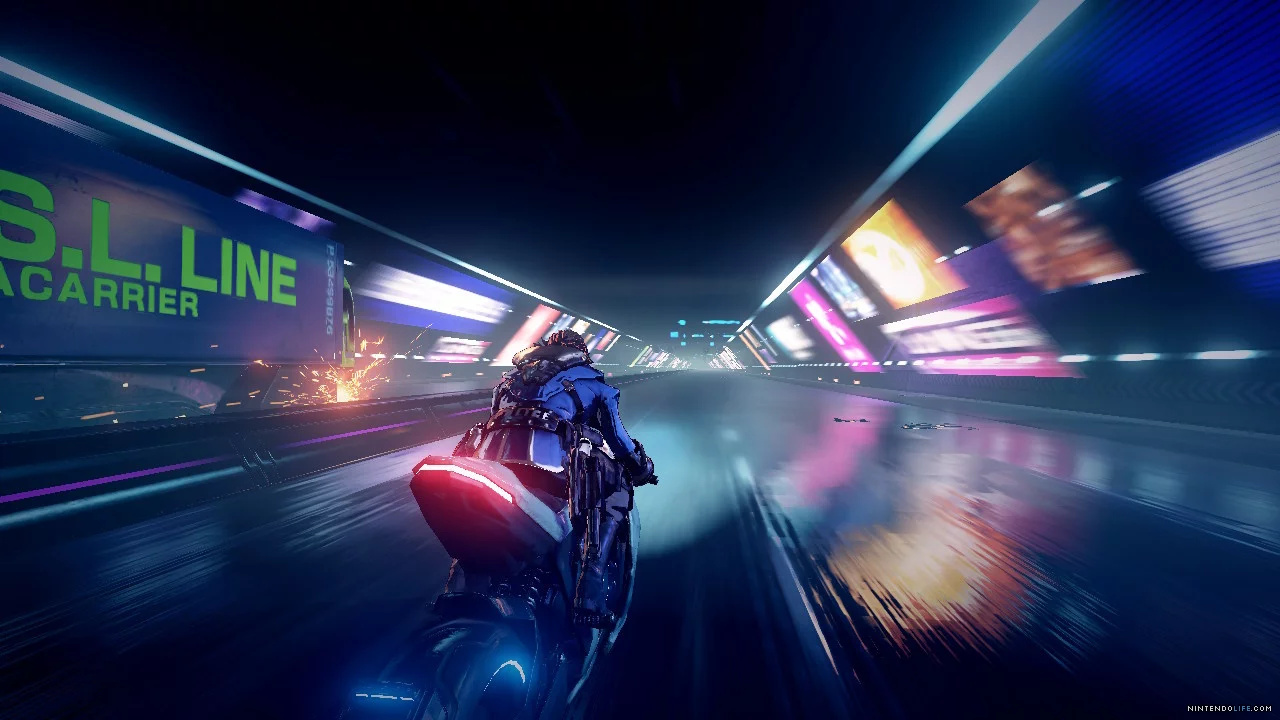
Motorcycles are cool and it’s a well-known fact that putting one in your game immediately increase its appeal by 36%. Platinum Games knows this and decided to start strong with a two-wheeled intro to Astral Chain, throwing you into a thrilling chase in its opening moments before quickly introducing you to your chained combat beast and getting you immediately into the game’s meaty combat. Why dwell on the questionable relationship between you and the enslaved Legion tethered to your wrist, hmm? Let’s just get stuck in with a breakneck intro. Perfect.
Also worthy of a mention are the beautifully balletic beat-based bike sections of Sayonara Wild Hearts. And Trials Rising stretches its ‘motorcycle section’ into an entire game. Cheeky, but – hey – it works.
Best Britishism In Pokémon Sword and Shield
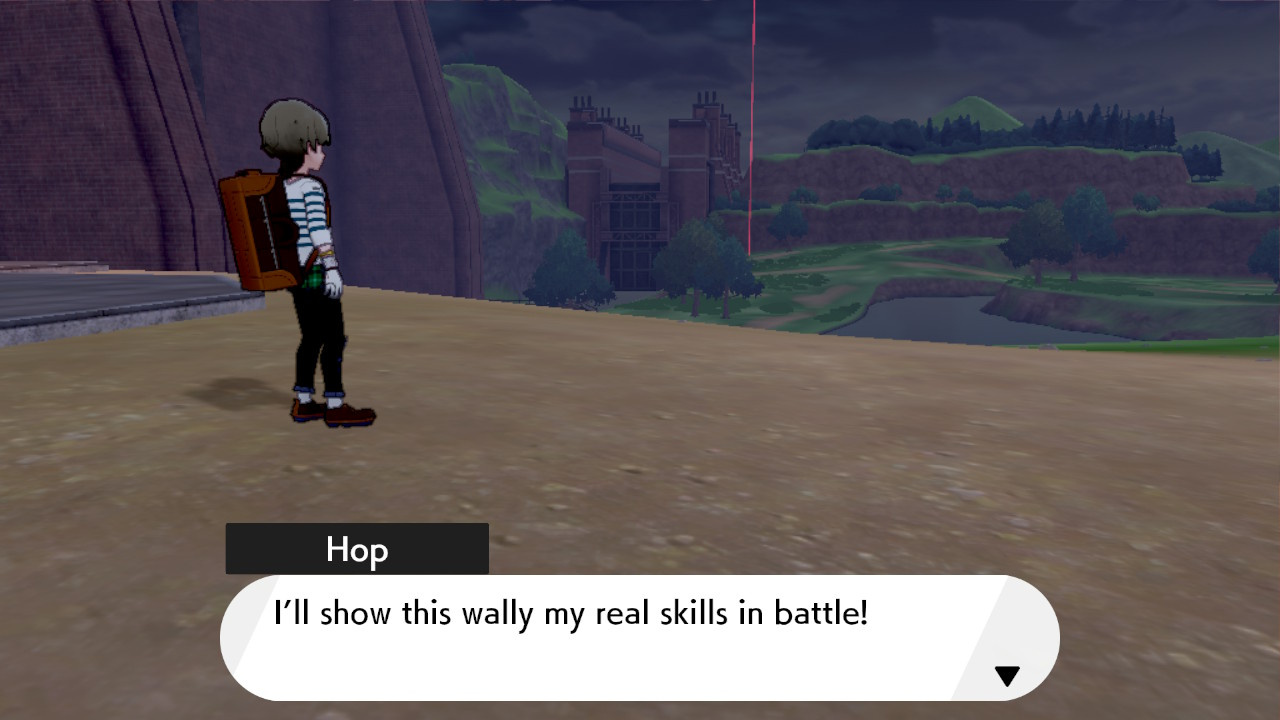
Winner: Hop: “I’ll show this wally my real skills in battle!”
Runners-up: Hop: “Now, I’m cream-crackered!”; Grunt A: “Oi, jog on, mate!”
The fact that the Galar region in Pokémon Sword and Shield is based on the UK has made exploring it a particular pleasure for our UK-based staff. As well as eyeing recognisable architecture, it was also a treat to read the dialogue coming out of the mouths of Galar residents. While it was a slight disappointment to not have that dialogue spoken – something we think it’s time for the Pokémon franchise to embrace, especially now that it’s on home systems – the localisation team did a fantastic job of cramming in plenty of British dialect phrases into the game. Sure, it gets a little Dick Van Dyke at times and we don’t use the word ‘mate’ quite that frequently, but on the whole it was fun to see the world introduced to some classic British lingo.
While discussing rival Bede, Hop’s use of the word ‘wally‘ (a childish, softer version of ‘idiot’) was particularly grin-inducing, as was his Cockney rhyming slang (he says he’s ‘cream-crackered’, meaning ‘knackered’, meaning very tired) and the various utterances from the Team Yell grunts we encountered on our travels. We were well chuffed to see some of these absolute belters, mate.
The ‘Great Game That Doesn’t Really Fit In Any Category’ Award 2019
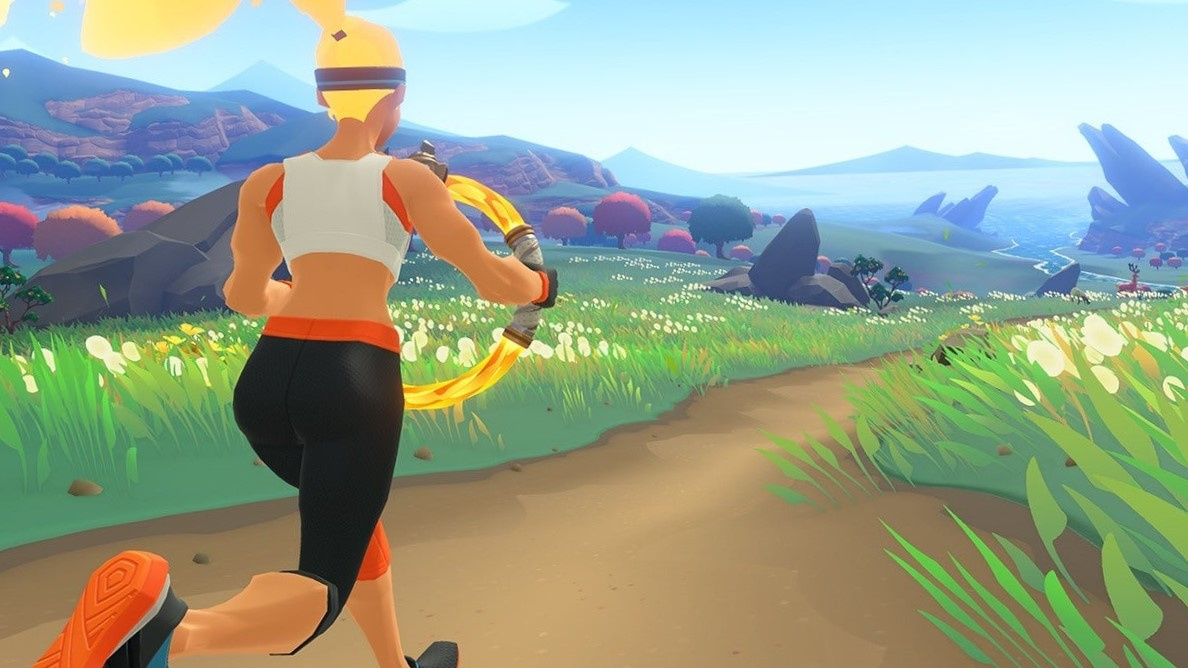
Well, who-da-thunk-it? A Wii Fit-alike, but with more ‘game’ which actually makes exercise fun? Having done more than our fair share of ‘exer-tainment’ (shudder) with plastic peripherals strapped to our limbs, we were sceptical at first, but Ring Fit Adventure was a real winner with the team. Battling body-building nemesis Dragaux (alongside the bulge) turned out to be the most fun we’d had exercising since running down the street to catch the ice cream van man.
What with this and Fitness Boxing, we must say that Team NL is heading into 2020 in spectacular shape. From our rippling forms alone you’d never guess we spend ten hours every day sat staring at a monitor. We’d daresay we could start up some sort of relay triathlon training – how does that take your fancy, team? Team? Hello?
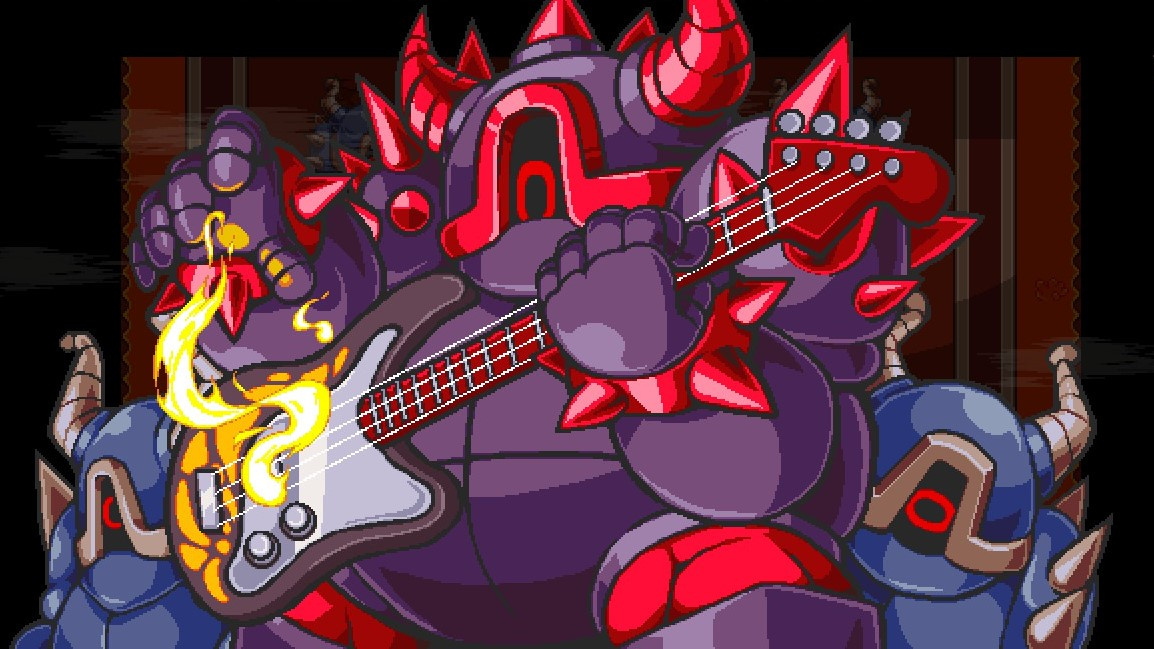
There are few game series with such a treasured back catalogue of tracks in the vault than The Legend of Zelda, and we imagine that Danny Baranowsky must have felt a little daunted when tasked with remixing a large chunk of gaming’s best loved melodies for Cadence of Hyrule. If he did, you sure can’t tell from the music! Every track takes the original by the horns and puts a frantic, pulsing beat into it that not only marries with the gameplay beautifully, but also reminds you just how brilliant those original tunes were in the first place.
Hearing those Zelda melodies now is often akin to listening to an old rock standard like ‘Satisfaction’ – a classic that’s soaked into the culture to the point where you don’t really ‘hear’ the song anymore. Cadence of Hyrule made us re-hear and re-appreciate those classics while injecting a freshness entirely its own. A hell of a feat.
Best Of 2019: How Pirate Television Helped Sega Beat Nintendo In The UK
From now until the end of 2019 we’ll be celebrating the coming year by looking back and republishing some of our finest features from the past twelve months, in addition to our regular output. This article first appeared on the site back in October. Enjoy!
The year is 1992. In a typical British household a typical British family is huddled around the television, still unsure about what has just transpired during the ad break of their typical British soap opera. Nestled among the traditional commercials for washing powder and breakfast cereal is a blistering whirlwind of fast editing and bizarre imagery; a smoke-filled barber’s shop, a handsome hero with bionic implants and a generous helping of slickly-edited footage from a series of video games, punctuated by an infectiously catchy slogan: To be this good takes Sega. The effect is mesmerising. This is the family’s first taste of an advertising campaign that will change the way video games are promoted in the UK forever. This is the birth of ‘Pirate’ TV.
We could see the NES was exploding in North America so it seemed like the right deal at the right time
The road to this pivotal point in UK televisual marketing history is one that has been documented widely over the past few decades, but bears repeating. While Sega and Nintendo may be pretty cosy bedfellows today, thirtysomething players will vividly recall an era when these two giants fought tooth and nail, marking a dividing line in school playgrounds all over the world long before Sony and Microsoft came along and assumed the same roles. While there are subtle differences in the tale depending on whether you’re based in North America or Europe, in the UK, Sega’s ascendancy came out of a steadfast desire to swim against the tide and buck trends whenever possible, and the man who oversaw this gleefully disruptive approach was Nick Alexander.
Alexander’s entry into the video game arena occurred in 1983, when he became Managing Director at Virgin, aged just 27. His relationship with Sega began when Virgin purchased British budget label Mastertronic, the firm responsible for Sega’s European distribution, towards the end of the decade. “Sega had delivered its shipment of Master Systems to Mastertronic too late for Christmas, so furious retailers understandably cancelled their orders,” Alexander explains. “Mastertronic was plunged into a financial crisis which was only solved by our acquisition of the company and the merger with Virgin Games to become Virgin Mastertronic, with myself once again in the role of Managing Director. As it happened, Sega had also failed to deliver on time to their distributors in France and Germany, and asked us if we would take on those two regions as well as the UK. We could see the NES was exploding in North America so it seemed like the right deal at the right time, so we agreed, laying down the foundations for Sega Europe – which Virgin Mastertronic would become in 1991 when Sega purchased the firm outright and I became Sega Europe CEO.”
Sega’s ‘To be this good takes ages’ campaign marked the beginning of something truly special
The feisty attitude which seemed to infuse all of Richard Branson’s business ventures was present and correct in both Virgin Mastertronic and Sega Europe, and this directly influenced Alexander’s stance when it came to promoting Sega’s products. “In the early years of the ’90s, Nintendo’s marketing position was always kids playing with mum and dad, being happy families,” continues Alexander. “We, being a Virgin company, it just seemed obvious to me that kids didn’t want to be playing with their parents. They wanted to be a bit more rebellious, they wanted to have a bit more attitude; this wasn’t about being part of a happy family – this was about killing things, fighting things and driving very fast. So very naturally our positioning was much more about the individual player; it was pitched at an older player as well – the thinking was that if you get the older teenager then the younger children who aspire to be like their elder siblings will naturally follow. In truth, our marketing never really shifted from that core ideal. This is about being cool, and above all else not being like your parents.”
In Japan, Sega as a company measured itself against Nintendo, and they used to think that if Nintendo did it, we should do it too
Alexander’s bold vision was to be executed by the crack marketing duo of Phil Ley and Simon Morris. The latter had attracted Alexander’s attention after his sterling agency work on some of Virgin Mastertronic’s very early Master System campaigns. “I was responsible for the first ads that were done, like the ones with the talking TV set and the first use of the ‘To be this good takes ages’ slogan,” he explains. “They were very functional and moderately creative – it was standard category launch advertising, really. Following this, I was then given the role of marketing director of Sega UK. Nick was my boss, Phil was running marketing for Europe and I was responsible for the ads.”
Alexander and his fledgeling team found themselves in a unique position when compared to Sega’s other regional offices. “In Japan, Sega as a company measured itself against Nintendo, and they used to think that if Nintendo did it, we should do it too,” he says. However, this approach hadn’t resulted in any significant gains, with Sega’s brand new 16-bit Mega Drive system seemingly unable to break the cast-iron stranglehold of the ageing Famicom. “The Japanese market was something like 85 percent Nintendo, 15 percent Sega. In North America, the story was largely the same as Japan, with the NES enjoying almost complete control of the 8-bit market. But in Europe things were totally different; from the get-go, we were the market leader. We were helped enormously by Nintendo changing their distribution arrangements in the UK pretty much every year because they hadn’t got it right and kept trying to do something else.” This allowed Sega to establish an early lead by tempting existing ZX Spectrum and Commodore 64 owners to ditch their underpowered home micros in favour of the Master System, a console which offered generally faithful replications of the Sega classics they’d played in their local amusement arcades.
Steve O’Donnell would become the focal point of the increasingly bizarre Pirate TV commercials
Despite its early European success, Morris felt at the time that Sega remained the outside bet. “The tectonic plates were still forming,” he explains. “There were two big players and we were very much the underdog, in spite of our larger market share. In the early days we were the arcade business which was trying to become the living room business, and Nintendo – which was distributed by Mattel at the time – was very much the ‘safe’ family value business and had an amazing track record in Japan and North America. Nintendo was building awareness around its family-friendly image and around Super Mario, and our guess was that kids would ultimately reject that. We essentially set out to claim the space with our marketing, and the reference point I always give was that we were The Rolling Stones to Nintendo’s Beatles.”
Nintendo was building awareness around its family-friendly image and around Super Mario, and our guess was that kids would ultimately reject that
It was clear from the outset that to capture the hearts and minds of the nation’s youth a fresh marketing stance was required which disregarded all that had gone before. Nintendo had played it safe and tended to show families encamped around the TV screen with rictus grins etched onto their faces – a tried-and-tested approach intended to appeal to the doting parents who ultimately controlled the pursestrings – but Morris knew instinctively that connecting with the real audience, the players themselves, was the true route to cracking the market. “It was all about being rock and roll, it was all about being anti-establishment, it was all about being something that your parents wouldn’t endorse in a million years,” he says. “I used to have a picture on my desk of a what I called a ‘disco vicar’ – a vicar trying to get down with the kids at a church disco and failing miserably. We always held that up as a litmus test to our creative work. Does it look like we’re trying to be a disco vicar? If it did, we wouldn’t do it.”
Which leads us back to the striking scene recounted earlier; the bemused family wondering what the hell they’d just witnessed during their previously sacred ad break. The 1992 commercial that really kicked off Sega’s UK revolution was dubbed ‘The Cyber Razor Cut’ and its timing couldn’t have been more perfect. Nintendo’s 16-bit Super NES made its European debut in the same year, giving Sega its first true test in that region, and the company’s weapon in the face of this technically superior rival was the impossibly slick Jimmy. Played by Welsh actor Peter Wingfield – who would go on to find global fame in Highlander: The Series and has recently retired from acting to become a doctor in the United States – Jimmy was the epitome of cool. The commercial opens with our hero entering a steam-filled barbershop, sitting in the chair and asking for the titular cut from the deranged barber, brilliantly brought to life by Steve O’Donnell – perhaps best known for his portrayal of Spud Gun in Rik Mayall and Ade Edmondson’s farcical British sitcom Bottom. This request prompts a sequence where Jimmy’s arms and eyeballs are ‘upgraded’ robotically, allowing him to master the blistering stream of Mega Drive games – of which there are over 100, Jimmy kindly informs us – that flood the screen.
This groundbreaking TV spot was filmed by award-winning cinematographer Geoff Boyle, who has been working in this arena since 1985 and can count Ford, Pepsi, Lego, BMW and Fosters as some of his past clients. “I remember having really great storyboards that were more like comics rather than ‘ordinary’ storyboards,” Boyle recalls. “Storyboards for commercials are usually a series of images in the same format as TV and are intended to be a fairly strict guide. What we got with this was a great comic book with frame shapes all over the place; the intention was to give us the feel of the piece and to encourage us to explore and play with images.”
The huge steam boiler just outside the studio door was terrifying; I spent the entire shoot expecting it to explode
Cyber Razor Cut pushed technical boundaries as well as creative ones, affording Boyle the opportunity to experiment with new gear and techniques.”This was a time when cameras were evolving and speed changes in shots were becoming easier,” he remembers. The shoot wasn’t without its difficulties, however. “We had to raise the entire set up off the ground so that we could pump steam through and have it coming up through the floor – this tended to turn the set into a swamp! The huge steam boiler just outside the studio door was terrifying; I spent the entire shoot expecting it to explode.”
Cyber Razor Cut was just the beginning. More commercials followed, showcasing the dynamic between the seasoned gamer and his young ninja sidekick. “We made those ads with John Lloyd – the director of Blackadder – and they really set us off in the UK,” Morris says. “The backdrop was early London docklands scenery, which again was ahead of its time; when I see The Long Good Friday or Blackadder I think of how we brought those two disparate elements together with the Jimmy campaign.” Sega’s approach was thoroughly ‘in your face’ and certainly had an impact, yet it explored core themes which are almost timeless – it’s just that they hadn’t been applied effectively in the world of video game advertising before. “Jimmy was an expression of how we thought players saw themselves,” explains Morris. “I worked with Amazon recently on the TV series Mr. Robot, and that’s basically the same idea; over 20 years later and someone’s turned it into a TV show! Jimmy was an ultra-cool tech kid living under the radar in a custom-built truck packed with cool gear and the latest games.”
Peter Wingfield would go on to star as Methos in the Highlander TV series, and now works as a fully-qualified doctor in California
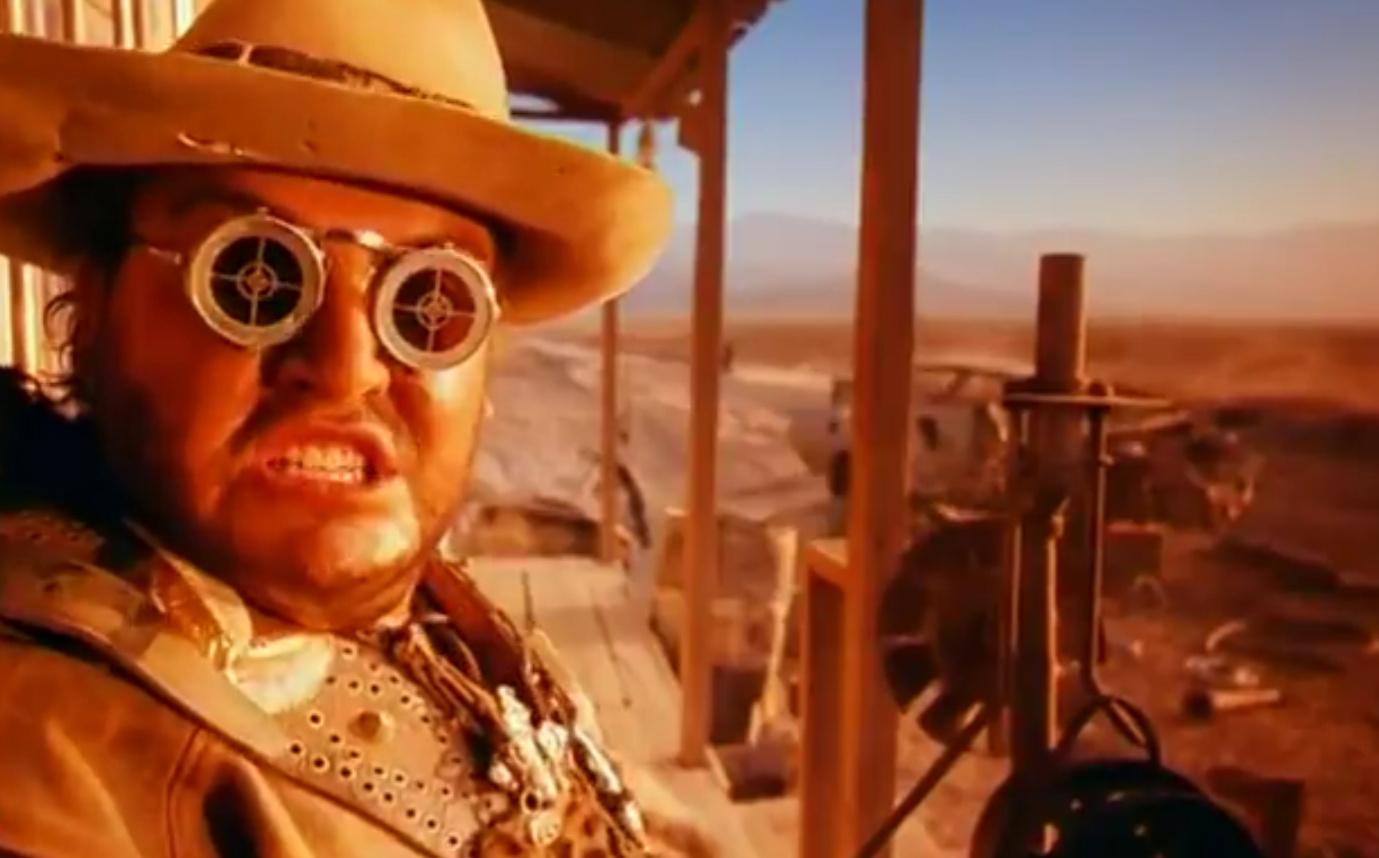
The Jimmy campaign continued with ‘Howdedodat’, a commercial set in a Mad Max-style desert environment that was focused on selling Sega’s full-colour portable Game Gear console. “It was lit entirely with mirrors that had to be continually adjusted to compensate for the moving sun,” explains Boyle, who returned to direct this iconic ad. “The dust was just incredible. At one stage I complimented makeup on how good – or perhaps ‘bad’ is the right word – Steve [O’Donnell] was looking; he had a really dirty, greasy look. They replied that they hadn’t done anything, and asked if I had tried sitting in his place. I duly obliged and discovered that the effect of all my mirrors was to create a ferocious oven far, far hotter than the already baking heat. No wonder he was sweaty!” Filmed just outside Guadix in Spain, the logistics of Howdedodat’s production ensured that Boyle and his team faced some interesting questions at the customs desk. “We had to explain to officers that the huge bag of sand we had with us was in fact just a huge bag of sand – we did the close-up in a studio back in London and wanted to make sure that the sand matched.”
We actually launched with a series of spoof adverts for fictional products – the one I remember really well was a detergent called Ecco
However, even Sega’s ice-cool hero was eventually seen as too obvious and predictable, and Jimmy would be put out to pasture as the company shifted onto the next phase of its anarchic marketing blitz. “We carried on the revolutionary theme with Sega Pirate TV, which was a vehicle that gave us much more flexibility,” Morris says. “We actually launched with a series of spoof adverts for fictional products – the one I remember really well was a detergent called Ecco.” These short-burst commercials were supported by a billboard campaign which carried what appeared to be legitimate posters for these fake products, but when the corners were torn off after a few days the Pirate TV logo would be revealed, along with the day and time of the ‘proper’ commercial – something that, in the days before the internet, was quite a unique undertaking. “This was viral marketing before the idea of viral marketing was even a thing,” chuckles Morris. “People didn’t have a clue what they were about and that was fine, it got them talking.”
While Peter Wingfield’s wisecracking Jimmy had been unceremoniously jettisoned, O’Donnell’s hyperactive character was retained as a spokesperson of sorts for the Pirate TV run, which was about to take off in the grandest fashion imaginable. “We launched the Mega-CD in 1993 with a two-and-half minute commercial, which was an entire ad break – I don’t think that had been done in the UK before,” Morris recalls. The spot is essentially a parody of the Francis Ford Coppola movie Apocalypse Now and was filmed on location in Thailand at great expense. O’Donnell assumed the role of the insane Colonel Walter E. Kurtz – only in this version, he’s gone AWOL to play video games.
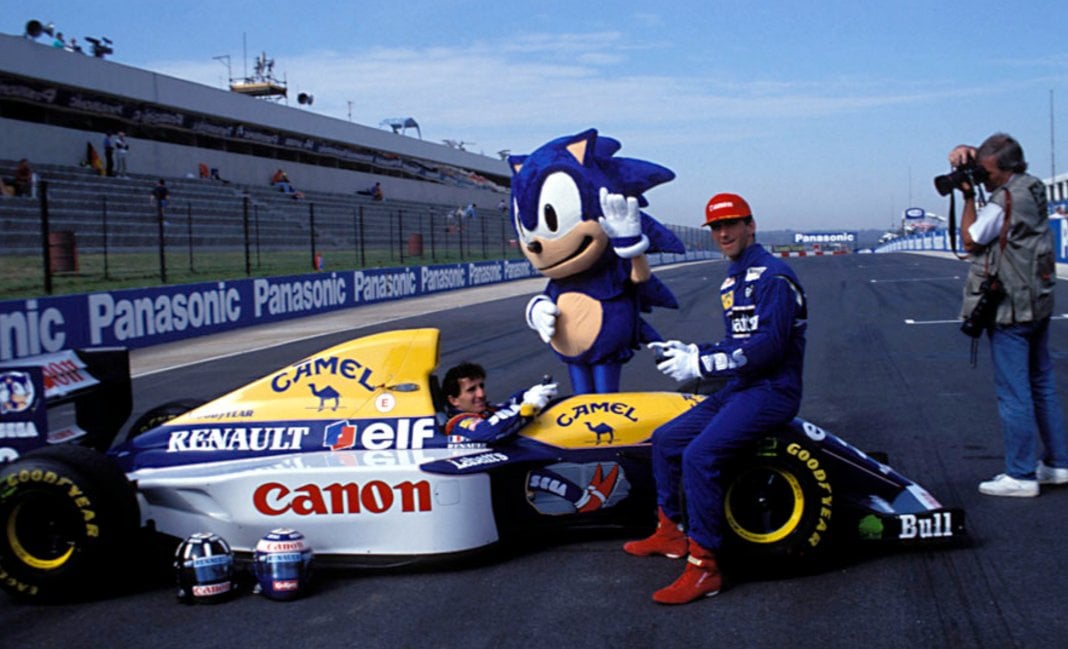
Sega would go as far as to sponsor the Williams F1 team in the early ’90s
“We’d actually acquired the boat used in the footage from the Thai army and we had the use of government resources to help us with our shoot,” explains Morris. “We took a normal bridge, stuck bamboo all over it and blew it up. Then we set fire to a field to get the right backdrop for the shoot, only realising later that we had actually crossed the border into neighbouring Burma, potentially triggering a diplomatic incident. Naturally, we were asked to explain ourselves afterwards, but we always seemed to be asking for forgiveness rather than permission – that would be the best way to summarise the whole approach of that period.” Slapped wrists aside, it’s impossible to ignore the astounding impact this commercial had. “I’m pretty sure that the spot only ran 11 times, but in later life when I meet people, they all recall seeing it,” Morris continues. “I like to refer to this as ‘The Woodstock Effect’ – the number of people who say they went to Woodstock and the number of people who actually went are wildly different, and that commercial achieved the same kind of notoriety and cachet.”
We set fire to a field to get the right backdrop for the shoot, only realising later that we had actually crossed the border into neighbouring Burma, potentially triggering a diplomatic incident
The later ‘Planet of the Pigs’ commercial was even more bizarre than its predecessors, boasting a dystopian setting, hordes of evil porkies and a vengeful O’Donnell brandishing remodelled Mega Drive II and Mega CD II consoles. On the other side of the pond Sega of America, under the sterling leadership of former Mattel boss Tom Kalinske, had also achieved success by targeting older players with edgy marketing, but even so, Alexander admits that it was often difficult to get his Japanese bosses to grasp precisely what Sega Europe was trying to achieve with its campaign. “I think it would be fair to say they were completely bewildered,” he says. “They’d look at the sales and see we were getting results, but they really didn’t get it at all. I remember having a meeting with Sega president Hayao Nakayama in London and him suggesting we should use the Japanese ads in Europe to save money – ads which aired in a market where Sega had a 15 percent share. I politely explained that it would make more sense for them to use the European ads in Japan!”
It can’t have been easy to convince Sega of Japan that demonic barbers, spoof commercials and imperialistic pigs were required to sell the brand to the UK masses, and Morris feels that Alexander doesn’t get enough credit for the protection he afforded his marketing team at the time. “We really pushed things,” he admits. “We had outrageous print ads in Viz [a comic aimed at adults which continues to run to this day] which made allusions to masturbation and featured slogans like ‘The more you play with it, the harder it gets’ at a time when our biggest rival was trying to be whiter-than-white and was focusing on families as its target audience. Nick, to his credit, protected us from Sega of Japan superbly, until one day someone happened to see one of the Viz adverts on a flight back to Tokyo and went absolutely tonto! Nick was an amazing leader who allowed his lucky generals – myself and Phil Ley – to go and create merry havoc, and it worked.”
It was around this time that Nintendo finally tried to fight back with its own campaign, enlisting comedian Rik Mayall to front a series of irreverent TV commercials – also directed by John ‘Blackadder’ Lloyd, coincidentally – which aimed to appeal to the same audience that Sega had so successfully courted. Morris is just as unimpressed now as he was when they originally aired. “We had already taken that space and it was very difficult to oust us from that position from that point on,” he says. “If I had been Nintendo at that time I would have thought about how this makes the company look in the eyes of the consumer – trying to take a space that isn’t rightfully yours. But still, in some ways imitation is the sincerest form of flattery – it proved that we had got it absolutely right, at least.”
If I had been Nintendo at that time I would have thought about how this makes the company look in the eyes of the consumer
As Sega’s standing in the UK grew, so too did the promotional opportunities available to the company. In 1993 the firm became a lead sponsor for the Williams F1 team, and in doing so, unwittingly helped forge motorsport history. “We knew one of Damon Hill’s oldest friends and via this contact we committed to giving him the money which was instrumental in getting a drive with Williams that year,” Morris explains. “Bringing sponsorship into Williams meant that he got his seat confirmed, which meant he was in a position to do what he later did, which was to win the world championship in 1996 and become the first second-generation driver to do so.”
Sega’s 1993 adventure in Formula One didn’t end there; that season it purchased the naming rights for the European Grand Prix, which took place in soaking conditions at the Donington Park racing circuit in the East Midlands. “It was a ‘floating’ Grand Prix and no one else wanted to sponsor it,” Morris recalls. The venture cost a considerable sum of money and Morris admits that at the time he and his team received quite a bit of flack from the higher-ups at Sega as a result, but in hindsight, it was nothing short of a marketing masterstroke. “If you ever watch Asif Kapadia’s excellent documentary film Senna or indeed anything to do with F1, you’ll know that the opening lap that Ayrton Senna recorded during that race – in which he overtook four drivers in the driving rain – is acclaimed as the best lap ever by fans of the sport,” explains Morris. “It’s impossible to show that lap without showing Sega branding.”
As well as having its logo emblazoned on practically every advertising hoarding on the circuit, Sega commissioned a special Sonic the Hedgehog trophy that was held aloft by the triumphant Senna on the podium. No promotional option was left untouched. “We got them to draw Sonic’s feet on the side of the Williams FW15C so it would look like he was driving and we were even trying to sponsor the underside of Damon Hill’s car in case he ever turned it over,” laughs Morris, though it’s obvious that he’s not joking. “I was recently at McLaren and some of the guys there reminded me that we used to put a Pirate TV insignia on the car for every race Damon won, so they, in turn, started putting a squashed hedgehog on the front of Senna’s car when he won! Can you imagine that happening in the sport today, with the incredible sharing power of the internet and social media? It would go wild! Like so much of our promotional activity at the time, it was one of those things that simply came together.” The irony of this friendly rivalry between Sega-backed Williams and McLaren was that Super Monaco GP II, the 1992 Mega Drive sequel to the famous arcade title, carried Senna’s endorsement and had been developed with his input.
We turned a very small market share into a dominant share at the end of the 16-bit era… We had 75 percent of the market at one point and we were the first to do a million units in a single day
While there are other elements which were instrumental to Sega’s success at the time – such as excellent games, robust third-party support and decent pricing – it’s impossible to underestimate the contribution of the firm’s marketing, the tool which allowed Sega to enter countless homes around the UK and turn apathetic teens into loyal, almost fanatical recruits to the cause. “We turned a very small market share into a dominant share at the end of the 16-bit era,” says Morris.
“We had 75 percent of the market at one point and we were the first to do a million units in a single day. The release of Sonic 2 was record-breaking; you think about that launch in the days before digital, that was utterly phenomenal to ship over 750,000 units through retail. But even then, we only spent what we made so we were never being ridiculously profligate; we were paying our marketing bills out of our revenue – it was old school, the pre-dot-com days where the means justified the ends and the ends justified the next means. There was effective control in that sense.”
Sega’s TV campaign would even be referenced in the UK version of the Sonic the Hedgehog comic
However, nothing lasts forever and as the 16-bit glory days drew to a close Alexander became disenchanted in his role. “The lack of understanding between Europe and Japan was a large reason why I decided I should move on,” he laments. “We had realised at the beginning of 1993 that the 16-bit market was going to decline and that it would be some time before 32-bit machines would be at a price that made them mass-market, so there was a summit at the beginning of the year and we decided that what we needed to do was diversify in some way, to secure another revenue stream. I came up with the idea of acquiring Thames TV, which had a huge library of programmes and good animation studios but had just lost its broadcast rights. We had the Mega CD and it seemed to me that Thames offered unique programming that could help us push the video playback aspect of our hardware and give us media franchises – a lot of which had international appeal – that would give us a whole host of options for the console. There would be video game crossover of course, but in the meantime, there would be enough revenue to keep us ticking over. Sega of Japan passed on the idea and that was that, so I decided to move on.”
When you’ve got a very clear vision for something, it’s easy to know if something is right or wrong… That fed into our retail advertising and all of the other promotional activity that we did as well
Morris would also part company with Sega following the launch of the Mega CD, and cites his keenness to shake things up as the key reason for his move. “I like creating revolutions and get restless easy,” he says. “I wanted a fresh task. Myself and Phil moved on to Sky, challenging the status quo of British television. Then, in a later life, I was running Ginger Productions with Chris Evans when we were doing stuff like TFI Friday and the Radio One Breakfast Show, then it was onto Football365, one of the big dot-coms in the first wave. Later I co-founded LoveFilm, which has since been bought by Amazon, which leads me to my present role of Vice President Global Creative at Amazon. There’s a pattern as far as my career is concerned – once I get to the point where I feel comfortable, I move on.”
Despite his enviable and glittering CV, Morris is keen to stress that his tenure at Sega was perhaps the most important of his entire career. “The signature of that style of marketing and the lessons learned from those campaigns have been directly responsible for the success of Sky, my contribution to Ginger and my ten-year contribution to LoveFilm,” he states. “They all owe a debt to what I learned and what I was allowed to execute in the Sega days. When you’ve got a very clear vision for something, it’s easy to know if something is right or wrong, and I always used to say if everyone in the business instinctively understood what our position was then it would all fall into place. That fed into our retail advertising and all of the other promotional activity that we did as well; it was ‘360-degree’ and ‘CRM’ marketing before those terms even existed.”
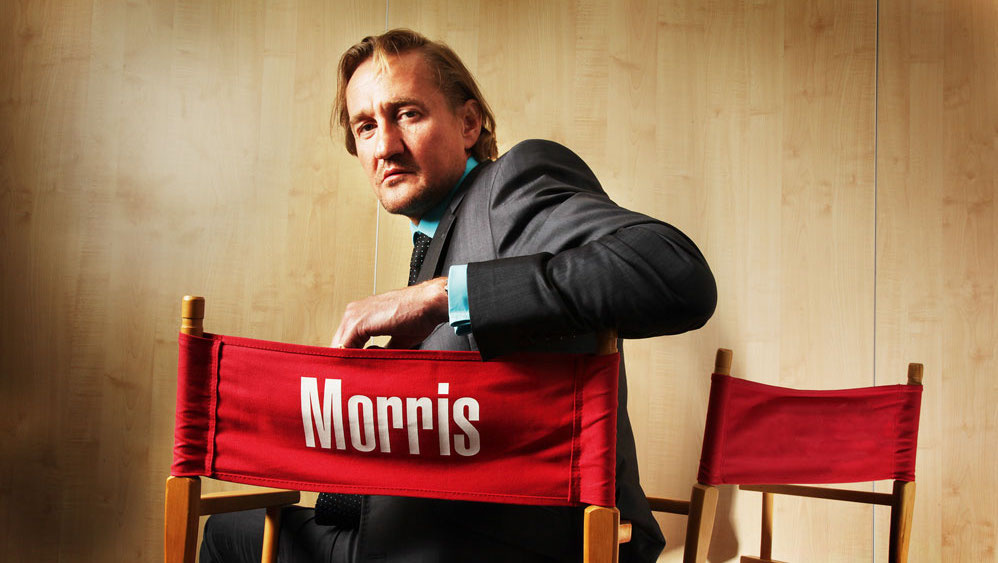
Simon Morris has more recently been involved with LoveFilm and Amazon
Since the end of the 16-bit era, the video game arena has changed almost beyond recognition. Sega and Nintendo, two forces so committed to overtaking each other, have since reconciled, while Sony – the company which swept in during the 32-bit period to thoroughly embarrass the old guard – remains a dominant power. Morris sees familiar elements in Sony’s mid-’90s marketing, which was resolutely focused on popular culture and rebelliousness.
Sony directly picked up from where we left off. Their marketing guy was unashamedly a student of what we’d done at Sega
“Sony directly picked up from where we left off,” he asserts. “Their marketing guy was unashamedly a student of what we’d done at Sega. People talk about Sony working with musical acts and famous dance clubs to gain credibility, but we were doing stuff at the Ministry of Sound in 1993 – we were in that space long before they arrived on the scene.” However, while Sega may have laid down the foundations, Sony has built an empire on them which, more or less, has remained solid for the past 20 years, For Alexander, this shows just how far the industry has come since the early ’90s; gleeful chaos has given way to stability. “I look at the business now and it’s much more professional,” he says. “At times we were making things up as we went along, but it was a great period to be involved in.”
Morris agrees. “It’s a great legacy to have. Brands exist in people’s minds – they don’t just exist on the side of a bus or in a TV ad. We made sure that – and I hate to use the word – we were seen as the ‘cool’ brand and that ran through everything we did. It’s something I’ve tried to replicate at all the other roles I’ve been in. I say this with the utmost humility, but I feel it was a defining campaign in the video game category.”
This feature originally appeared on Eurogamer in 2016 and is republished here with kind permission.
Posted by: xSicKxBot - 12-27-2019, 10:52 AM - Forum: Lounge
- No Replies
Watch Loadout Episode 3: How Warhammer 40k's Bolter Was Created
Whether it's video games, movies, or TV shows, entertainment is filled with iconic tools of warfare, and much of the stories we love are defined by them; the Pulse Rifle is synonymous with the Aliens franchise; the Man With No Name's mystique and effortless cool is heightened by the revolver he whips out in the squint of an eye; and the sound of a bullet from the Intervention hitting an enemy immediately conjures up Call of Duty-flavoured nostalgia.
These weapons are the focus of Loadout, a new show that will identify some of pop culture's most influential armaments and explore them in-depth. Each week, host Dave Jewitt will tackle a different weapon, delve into its origins, examine how it has been used, and lay out the impact it has had on pop culture.
In Episode 1, Loadout takes hold of the revolver, a legendary weapon that has been present from the earliest days of cinema to the current era of video games. Why is it so popular? For Episode 2, Dave takes a look at The Intervention, a weapon that Call of Duty players will be intimately familiar with and, given its status as arguably the most meme-able video game weapon, you may know it even if you haven't played the shooter series. For Episode 3, Dave delves into the world of Warhammer 40k to explore the history of an iconic sci-fi weapon.
New episodes of Loadout will air every Saturday and you can find them on GameSpot's YouTube channel--make sure to subscribe so you don't miss an episode.
The Hottest Switch Indie Games Of 2019 Are On Sale Right Now (North America)
Damien has over a decade of professional writing experience under his belt, as well as a repulsively hairy belly. Rumours that he turned down a role in The Hobbit to work on Nintendo Life are, to the best of our knowledge, completely and utterly unfounded.
Posted by: xSicKxBot - 12-27-2019, 02:26 AM - Forum: Lounge
- No Replies
Watch Dogs Legion - Phil Hornshaw's Most Anticipated Game Of 2020
2020 is almost here, so we've asked GameSpot's staff to share which games they're looking forward to most in the new year. New consoles are going to dominate the headlines, but at the end of the day it's all about the games, and there are a ton of exciting ones to look forward to. When you're done reading this entry, follow along with all of our other end-of-the-year coverage collected in our Best of 2019 hub and our Most Anticipated of 2020 hub.
Though the first Watch Dogs never grabbed me, I was delighted by Ubisoft's tack with the second. It centers on a young, diverse, and mostly well-drawn group of characters, it's a smart send-up of tech culture, and it has a lot of interesting things to say--while being a fun open-world game that utilizes Watch Dogs' interesting hacking gameplay ideas in a story that's actually engaging. After playing Watch Dogs Legion at E3 2019, I'm even more excited for the third entry in the series, which appears to be expanding on all the good things of its predecessor, while adding some truly engaging and innovative gameplay mechanics and story conceits.
The crux of Watch Dogs Legion is that you can play as any character in the game: all the NPCs are recruitable to your ever-growing underground hacker insurgency, and each character has a unique backstory and set of perks and drawbacks. It sounds like a pie-in-the-sky idea about the capabilities of procedural generation that will immediately collapse under close scrutiny, but after playing Legion, I was blown away by how well the game actually does integrate the idea of pulling characters from its future London into your group, and how well-realized they feel. You add characters to your group by helping them deal with the problems in their lives, almost all of which are caused by the draconian, fascist surveillance state (one that's an outgrowth of our real-world political climate) in which they find themselves. So Watch Dogs Legion feels like you're completing a series of loyalty missions specific to the characters.
Once they're on your team, you can switch between your characters on the fly, making use of different people's particular skills to complete your missions. When you get into trouble and the authorities are closing in on you, it's the other characters you've recruited that come to your aid with special passive abilities, like setting up roadblocks to divert police that give you time to escape. While "any NPC is playable" sounds like a gimmick, the complex systems at work in Legion do well to make all those characters feel distinct, rather than just a series of random attributes attached to a random character model. Legion sees the return of Watch Dogs' long-running scanning ability that lets you see into the lives of people on the street, but for the first time in the series, that ability is essential to the game as you recruit characters, and helps create a London that feels populous and alive.
The character recruiting system goes beyond gameplay, though. Legion's random NPCs actually feel like bespoke characters created for the story as you play through its campaign, and each has their own voice actors and dialogue pieces that slot seamlessly into cutscenes. Ubisoft didn't hire thousands of actors, obviously, but there are enough that, at least in our preview and in gameplay footage, we haven't yet heard the same voice repeated on two characters. It all works together to create a feeling that you're creating a unique take on the game's story through the people you choose to bring into Ded Sec, and who you choose to take on missions. What's more, you find yourself caring about these characters because of the history you have with them and the time you've put into them--which makes it all the more devastating when they're arrested or killed.
Though we got hands-on with Watch Dogs Legion at E3, Ubisoft recently delayed the game from its original March 6, 2020 release date. As of now, Ubisoft is expecting to launch Watch Dogs Legion in the second half of the year. Given the level of complexity in the game (not to mention its politically charged story, which deals with the repercussions of Brexit), the development team using that extra time is probably for the best. We also know that Legion will be one of the first Ubisoft games to appear on the PS5 and Xbox Scarlett, so it'll be interesting to see how Legion will leverage the capabilities of new hardware.
For a brief rundown on everything you need to know about Watch Dogs Legion, be on the lookout for our explainer highlighting all the essential details.
Overcooked! 2 – Winter Wonderland Update Available Today on Xbox One
Summary
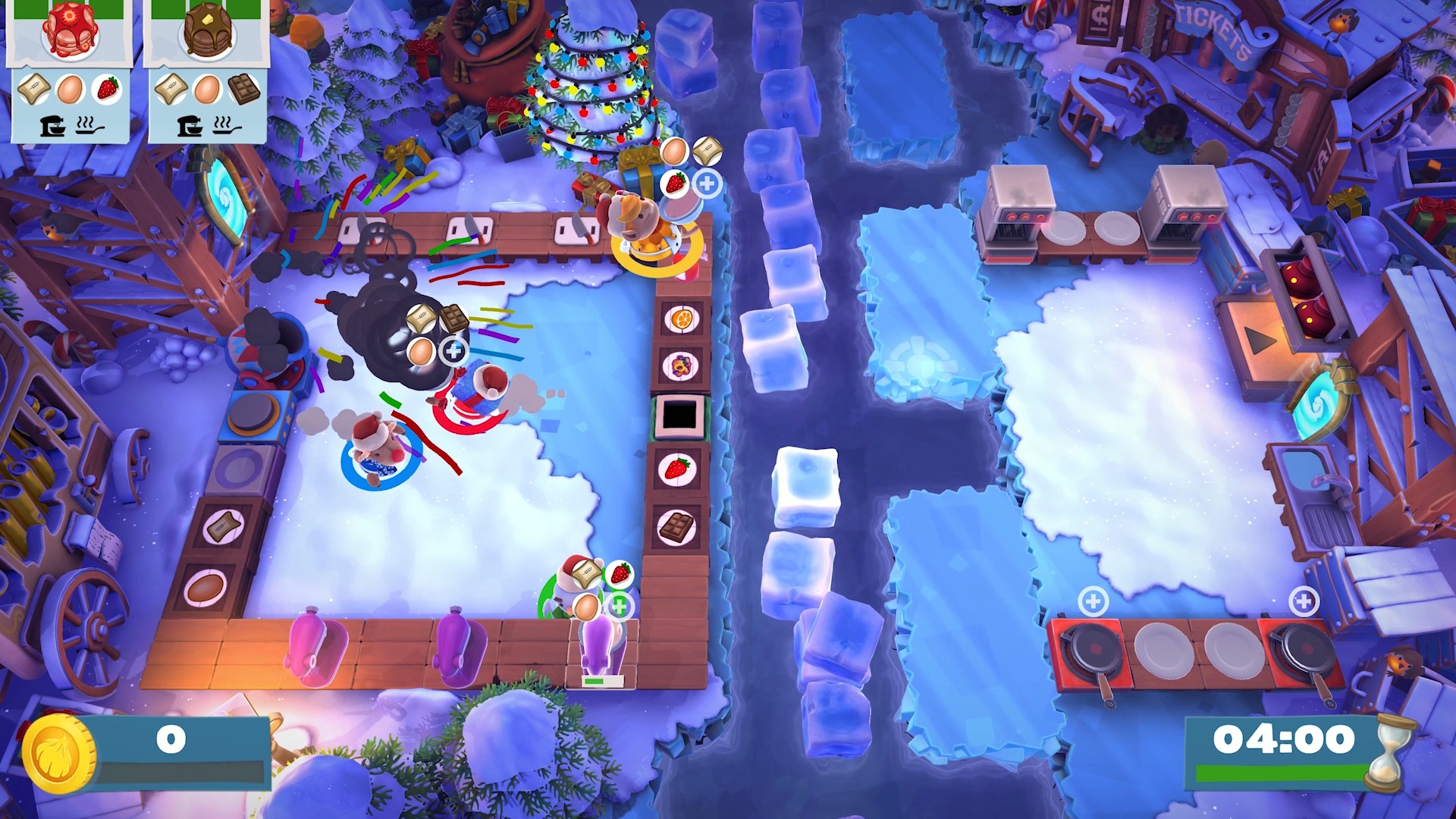
Winter Wonderland is our final free update for 2019, and it’s a fun one!
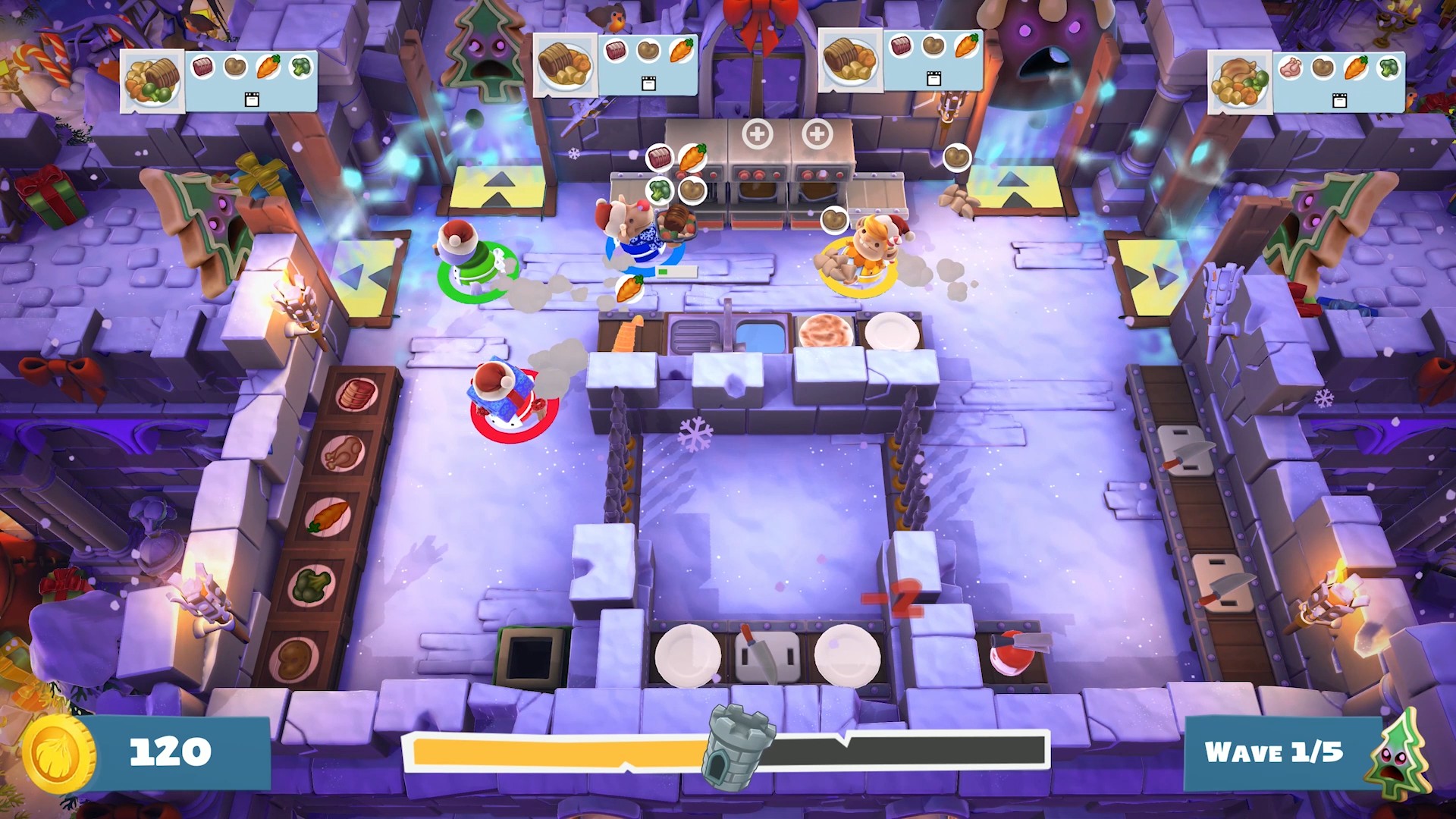
There’s a Hangry Horde in a nearby castle that you’ll need to fend off with tasty treats.
This update delivers five brand new levels, all in a wintery setting, with lots of fun, comforting dishes, and two new chefs!
Feliz Navidad cooking fans! It’s time for the final Overcooked! 2 update of 2019, and it’s a very Christmassy one!
We’ve had a
jam-packed year of exciting content, which has been great to work on. I want to
thank the fantastic team who’ve worked hard to create great content since
launch over the last year and a half, and you the fans, for your continued
support – thank you!
Winter Wonderland is our final free update for 2019, and it’s a fun one! I’ll set the scene: You’re on a wintery trip around The Onion Kingdom, and of course you decide to go camping; but there’s a Hangry Horde in a nearby castle that you’ll need to fend off with tasty treats. Also, the Carnival has left behind their cannon, and you can use it (responsibly of course!) to get to those hard to reach places. It’s snowing, the decorations are up, and it’s time to cook! There’s not much more you could ask for at this time of year.
When the team were cooking up Winter Wonderland, we decided we wanted to celebrate some of our previous updates, pay homage to the game and the levels we’ve most enjoyed since launch. It’s great to go back to previous levels themes and tweak them to see what twists you can add. It really felt like the perfect chance for Winter Wonderland to share some more of those great levels with you. We’ve got themes taken from Campfire Cookoff, Night of The Hangry Horde, and Carnival of Chaos. This update delivers five brand new levels, all in a wintery setting, with lots of fun, comforting dishes, and of course – we can’t forget the two brand new chefs!
I think this update really does show off our favorite bits of Overcooked! 2 and what we’ve managed to do since we released in 2018. Overcooked! 2 has grown, and now has over 130 varied levels that we really love, and it’s great for us to see players still enjoy the game and hunger for more!
We decided early on that we wanted to follow Overcooked! 2 with a large schedule of updates that really kept pushing the title forward and kept things interesting. It’s so important to us to support our titles in the long term, as we want the fans to have as much fun as possible!
So, with that, it’s time to cook and be merry. Enjoy
the update, and Merry Christmas! (Disclaimer: Cooking poorly may cause tension,
please cook responsibly).