Linux clothes specialist HELLOTUX from Europe recently signed an agreement with Red Hat to make embroidered Fedora t-shirts, polo shirts and sweatshirts. They have been making Debian, Ubuntu, openSUSE, and other Linux shirts for more than a decade and now the collection is extended to Fedora.
Embroidered Fedora polo shirt.
Instead of printing, they use programmable embroidery machines to make the Fedora embroidery. All of the design work is made exclusively with Linux; this is a matter of principle.
Some photos of the embroidering process for a Fedora sweatshirt:
Oh, “just one more thing,” as Columbo used to say: Now, HELLOTUX pays the shipping fee for the purchase of two or more items, worldwide, if you order within a week from now. Order on the HELLOTUX website.
Japanese magazine Famitsu is holding a special ‘corporate’ Super Smash Bros. Ultimate tournament on November 22nd which involves some pretty notable companies – and the list of firms featured has thrown up a rather big surprise.
Contesting the tournament alongside companies such as Sun-Star, Sugiko and Plaza is… PlayStation. That’s right, Nintendo’s big rival in the gaming sphere will be joining the tournament (we’re assuming Famitsu isn’t inviting Nintendo to a PlayStation All-Stars Battle Royale event any time soon, but you never know).
It’s not known which members of the PlayStation team will attend, but we do know they will be pulled from Sony Interactive Entertainment. How far do you think they’ll make it in the tournament? Could Team PlayStation go all the way? Let us know your thoughts with a comment.
A Sonic Mania-Style ‘Drop Dash’ Almost Made It Into Sonic 3
One of Sonic Mania’s most unique gameplay features was the addition of a ‘drop dash’ move which allows characters to roll into a wrecking ball the moment they hit the ground – but it turns out we almost had this move in Sonic 3, which was released decades earlier.
A prototype version of the third Sonic game has appeared online and appears to come from a time just before the title was split in two to create Sonic 3 and Sonic & Knuckles.
Originally planned to be a much grander 3D title that used the same chip that powered the Mega Drive / Genesis port of Virtua Racing, Sonic 3 would endure a difficult development before eventually making it to market. Back in the day, very little was shown off of the game before release; it is believed this prototype was a preview copy sent out to the official Sega magazine in the UK.
Let us know what you think of this discovery by posting a comment below.
Bungie raises $1.6 million for charity through Game2give pledge drive
The Bungie Foundation’s first Game2give pledge drive raised $1.6 million for charity, funds that MCV says the organization plans to use to support Children’s Miracle Network and its own iPads for Kids program.
Starting on October 24, members of the Destiny community could donate for the Game2give drive and unlock in-game rewards, with some donation tiers offering a chance at receiving physical goods for participating.
Streamers that opted to participate in the drive likewise could earn in-game and physical rewards for how much they were able to raise between that start date and November 10.
“At Bungie, our purpose is to create worlds that inspire friendship, and we are so very grateful for our community to embrace this so strongly,” said Bungie Foundation senior manager Christine Edwards in a comment shared by MCV.
“We see this play out each and every day as lifelong friendships are forged, Guardians support their fellow Guardians both inside and outside of our game, and when our community rallies together for incredible causes such as supporting kids in hospitals.”
Report: BioWare planning revitalizing overhaul for Anthem
Sources speaking to Kotaku say that BioWare and parent company EA haven’t given up on Anthem, the studio’s ambitious online shooter that launched with little fanfare earlier this year.
If those sources are to be believed, the company is looking to revitalize interest in its live game through a hefty update down the line, a potentially risky stunt but one that other studios like Ubisoft and Hello Games have pulled off to breathe new life into their own games after tepid launches.
Kotaku notes that there’s no official timeline for what’s internally being called Anthem 2.0 or Anthem Next, and EA declined to comment on any of the rumored plans. In fact, beyond tentative plans to overhaul the game, nothing about Anthem 2.0 is set in stone. Kotaku’s sources teams know the game’s core systems will see significant change, but the exact form those will take is unknown.
Electronic Arts CEO Andrew Wilson said as recently as June that the company had no plans to cut its losses on Anthem after its rocky launch and, while these reports are yet unconfirmed, tentative talk of Anthem 2.0 would mean that EA plans to back up those earlier claims.
ASP.NET Core now enables developers to build gRPC services. gRPC is an opinionated contract-first remote procedure call framework, with a focus on performance and developer productivity. gRPC integrates with ASP.NET Core 3.0, so you can use your existing ASP.NET Core logging, configuration, authentication patterns to build new gRPC services.
This blog post compares gRPC to JSON HTTP APIs, discusses gRPC’s strengths and weaknesses, and when you could use gRPC to build your apps.
gRPC strengths
Developer productivity
With gRPC services, a client application can directly call methods on a server app on a different machine as if it was a local object. gRPC is based around the idea of defining a service, specifying the methods that can be called remotely with their parameters and return types. The server implements this interface and runs a gRPC server to handle client calls. On the client, a strongly-typed gRPC client is available that provides the same methods as the server.
gRPC is able to achieve this through first-class support for code generation. A core file to gRPC development is the .proto file, which defines the contract of gRPC services and messages using Protobuf interface definition language (IDL):
Greet.proto
// The greeting service definition.

service Greeter { // Sends a greeting rpc SayHello (HelloRequest) returns (HelloReply);

} // The request message containing the user's name.

message HelloRequest { string name = 1;

} // The response message containing the greetings

message HelloReply { string message = 1;

}
Protobuf IDL is a language neutral syntax, so it can be shared between gRPC services and clients implemented in different languages. gRPC frameworks use the .proto file to code generate a service base class, messages, and a complete client. Using the generated strongly-typed Greeter client to call the service:
Program.cs
var channel = GrpcChannel.ForAddress("https://localhost:5001")

var client = new Greeter.GreeterClient(channel); var reply = await client.SayHelloAsync(new HelloRequest { Name = "World" });

Console.WriteLine("Greeting: " + reply.Message);
By sharing the .proto file between the server and client, messages and client code can be generated from end to end. Code generation of the client eliminates duplication of messages on the client and server, and creates a strongly-typed client for you. Not having to write a client saves significant development time in applications with many services.
Performance
gRPC messages are serialized using Protobuf, an efficient binary message format. Protobuf serializes very quickly on the server and client. Protobuf serialization results in small message payloads, important in limited bandwidth scenarios like mobile apps.
gRPC requires HTTP/2, a major revision of HTTP that provides significant performance benefits over HTTP 1.x:
Binary framing and compression. HTTP/2 protocol is compact and efficient both in sending and receiving.
Multiplexing of multiple HTTP/2 calls over a single TCP connection. Multiplexing eliminates head-of-line blocking at the application layer.
Real-time services
HTTP/2 provides a foundation for long-lived, real-time communication streams. gRPC provides first-class support for streaming through HTTP/2.
A gRPC service supports all streaming combinations:
Unary (no streaming)
Server to client streaming
Client to server streaming
Bidirectional streaming
Note that the concept of broadcasting a message out to multiple connections doesn’t exist natively in gRPC. For example, in a chat room where new chat messages should be sent to all clients in the chat room, each gRPC call is required to individually stream new chat messages to the client. SignalR is a useful framework for this scenario. SignalR has the concept of persistent connections and built-in support for broadcasting messages.
Deadline/timeouts and cancellation
gRPC allows clients to specify how long they are willing to wait for an RPC to complete. The deadline is sent to the server, and the server can decide what action to take if it exceeds the deadline. For example, the server might cancel in-progress gRPC/HTTP/database requests on timeout.
Propagating the deadline and cancellation through child gRPC calls helps enforce resource usage limits.
gRPC weaknesses
Limited browser support
gRPC has excellent cross-platform support! gRPC implementations are available for every programming language in common usage today. However one place you can’t call a gRPC service from is a browser. gRPC heavily uses HTTP/2 features and no browser provides the level of control required over web requests to support a gRPC client. For example, browsers do not allow a caller to require that HTTP/2 be used, or provide access to underlying HTTP/2 frames.
gRPC-Web is an additional technology from the gRPC team that provides limited gRPC support in the browser. gRPC-Web consists of two parts: a JavaScript client that supports all modern browsers, and a gRPC-Web proxy on the server. The gRPC-Web client calls the proxy and the proxy will forward on the gRPC requests to the gRPC server.
Not all of gRPC’s features are supported by gRPC-Web. Client and bidirectional streaming isn’t supported, and there is limited support for server streaming.
Not human readable
HTTP API requests using JSON are sent as text and can be read and created by humans.
gRPC messages are encoded with Protobuf by default. While Protobuf is efficient to send and receive, its binary format isn’t human readable. Protobuf requires the message’s interface description specified in the .proto file to properly deserialize. Additional tooling is required to analyze Protobuf payloads on the wire and to compose requests by hand.
Features such as server reflection and the gRPC command line tool exist to assist with binary Protobuf messages. Also, Protobuf messages support conversion to and from JSON. The built-in JSON conversion provides an efficient way to convert Protobuf messages to and from human readable form when debugging.
gRPC recommended scenarios
gRPC is well suited to the following scenarios:
Microservices – gRPC is designed for low latency and high throughput communication. gRPC is great for lightweight microservices where efficiency is critical.
Point-to-point real-time communication – gRPC has excellent support for bidirectional streaming. gRPC services can push messages in real-time without polling.
Polyglot environments – gRPC tooling supports all popular development languages, making gRPC a good choice for multi-language environments.
Network constrained environments – gRPC messages are serialized with Protobuf, a lightweight message format. A gRPC message is always smaller than an equivalent JSON message.
Conclusion
gRPC is a powerful new tool for ASP.NET Core developers. While gRPC is not a complete replacement for HTTP APIs, it offers improved productivity and performance benefits in some scenarios.
gRPC on ASP.NET Core is available now! If you are interested in learning more about gRPC, check out these resources:
Posted by: xSicKxBot - 11-18-2019, 07:00 PM - Forum: Windows
- No Replies
Lenovo’s smarter devices stoke professional passions
In Philadelphia, Juan Dimida, 40, creates graphic art and electronic music on touchscreen devices, working them into beats with other songs or multimedia pieces.
He recently created an album of electronic music on his Motorola G3 over the summer and has been performing it on his Lenovo Yoga PC, connected to drum machines and synthesizers. He’s playing this music live in November.
His artistic background began with graffiti art as a teen, but then he joined a city-run art program in his 20s that channeled his creative energy into colorful murals that covered up graffiti through community-based commissions. These collaborative projects usually involved four to five people and would include elaborate scenery, characters and animation. While each had a theme, the artists also improvised.
Dimida used Photoshop to get designs together and make alterations. While he was working on these murals, an event planner stopped by with a Lenovo ThinkPad tablet, and gave it to him to draw on. He hired Dimida to create art for a 2012 event, where Dimida connected different devices, such as a Lenovo IdeaCentre AIO, to projectors. Dimida drew mosaics on that screen that projected onto 80-foot walls.
After that event, he gained traction to host his own events, showing his original projections at art shows and parties.
Sound visualizations are something he particularly enjoys. Dimida uses a Lenovo ThinkPad X220t to record different sounds, so he’s able to set up different scenes, music effects and visuals, using multiple projectors. He has a separate Lenovo Yoga feed into that, where he draws on its screen. The ThinkPad X220t adds sounds and projects that out.
Posted by: xSicKxBot - 11-18-2019, 07:00 PM - Forum: Windows
- No Replies
Introducing more privacy transparency for our commercial cloud customers
At Microsoft, we listen to our customers and strive to address their questions and feedback, because one of our foundational principles is to help our customers succeed. Today Microsoft is announcing an update to the privacy provisions in the Microsoft Online Services Terms (OST) in our commercial cloud contracts that stems from additional feedback we’ve heard from our customers.
Our updated OST will reflect contractual changes we have developed with one of our public sector customers, the Dutch Ministry of Justice and Security (Dutch MoJ). The changes we are making will provide more transparency for our customers over data processing in the Microsoft cloud.
Microsoft is currently the only major cloud provider to offer such terms in the European Economic Area (EEA) and beyond.
We are also announcing that we will offer the new contractual terms to all our commercial customers – public sector and private sector, large enterprises and small and medium businesses – globally. At Microsoft we consider privacy a fundamental right, and we believe stronger privacy protections through greater transparency and accountability should benefit our customers everywhere.
Clarifying Microsoft’s responsibilities for cloud services under the OST update
In anticipation of the General Data Protection Regulation (GDPR), Microsoft designed most of its enterprise services as services where we are a data processor for our customers, taking the necessary steps to comply with the new data protection laws in Europe. At a basic level, this means Microsoft collects and uses personal data from its enterprise services to provide the online services requested by our customers and for the purposes instructed by our customers. As a processor, Microsoft ensures the integrity and safety of customer data, but that data itself is owned, managed and controlled by the customer.
Through the OST update we are announcing today we will increase our data protection responsibilities for a subset of processing that Microsoft engages in when we provide enterprise services. In the OST update, we will clarify that Microsoft assumes the role of data controller when we process data for specified administrative and operational purposes incident to providing the cloud services covered by this contractual framework, such as Azure, Office 365, Dynamics and Intune. This subset of data processing serves administrative or operational purposes such as account management; financial reporting; combatting cyberattacks on any Microsoft product or service; and complying with our legal obligations.
The change to assert Microsoft as the controller for this specific set of data uses will serve our customers by providing further clarity about how we use data, and about our commitment to be accountable under GDPR to ensure that the data is handled in a compliant way.
Meanwhile, Microsoft will remain the data processor for providing the services, improving and addressing bugs or other issues related to the service, ensuring security of the services, and keeping the services up to date.
As noted above, the updated OST reflects the contractual changes we developed with the Dutch MOJ. The only substantive differences in the updated terms relate to customer-specific changes requested by the Dutch MOJ, which had to be adapted for the broader global customer base.
The work to provide our updated OST has already begun. We anticipate being able to offer the new contract provisions to all public sector and enterprise customers globally at the beginning of 2020.
Working with our customers to strengthen privacy
Before and after GDPR became law in the EU, Microsoft has taken steps to ensure that we protect the privacy of all who use our products and services. We continue to work on behalf of customers to remain aligned with the evolving legal interpretations of GDPR. For example, customer feedback from the Dutch MoJ and others has led to the global roll out of a number of new privacy tools across our major services, specific changes to Office 365 ProPlus as well as increased transparency regarding use of diagnostic data.
We remain committed to listening closely to our customers’ needs and concerns regarding privacy. Whenever customer questions arise, we stand ready to focus our engineering, legal and business resources on implementing measures that our customers require. At Microsoft, this is part of our mission to empower every individual and organization on the planet to achieve more.
A New Paid Membership Service Is Being Added To Animal Crossing: Pocket Camp
When Mario Kart Tour made its debut on mobile back in September, fans of the long-running series got quite the shock when it was discovered the free-to-play game contained a Gold Pass subscription system.
Now, a few months later, Nintendo has announced a new paid membership service for its two-year-old game, Animal Crossing: Pocket Camp. This information was revealed via an in-game news update. The service itself will begin later this month on 21st November.
Here’s a screenshot, courtesy of ResetEra user ZeoVGM:
There’ll be two different plans within this service to choose from:
In one plan, you’ll be able to appoint one lucky animal as your camp caretaker and get some extra help around the campsite.
In the other plan, you’ll be able to receive fortune cookies and store your furniture and clothing items in warehouses.
More details about the new paid membership service will be provided in videos due out on 20th November.
Are you still playing Pocket Camp? Have you spent any money on this game? Comment below.
Roll up, roll up for Box Art Brawl, the contest where regionally different covers of the same game battle each other to see which one stands up to the scrutiny and discerning eyes of the modern era.
Last week 49% of you decreed that the Japanese cover of Banjo-Tooie was better than the rest, with the North American version coming in second with 29% and the European variant mopping up the remaining 21%. Congratulations to Banjo and Kazooie’s Great Adventure 2, as it was known to our friends in the east.
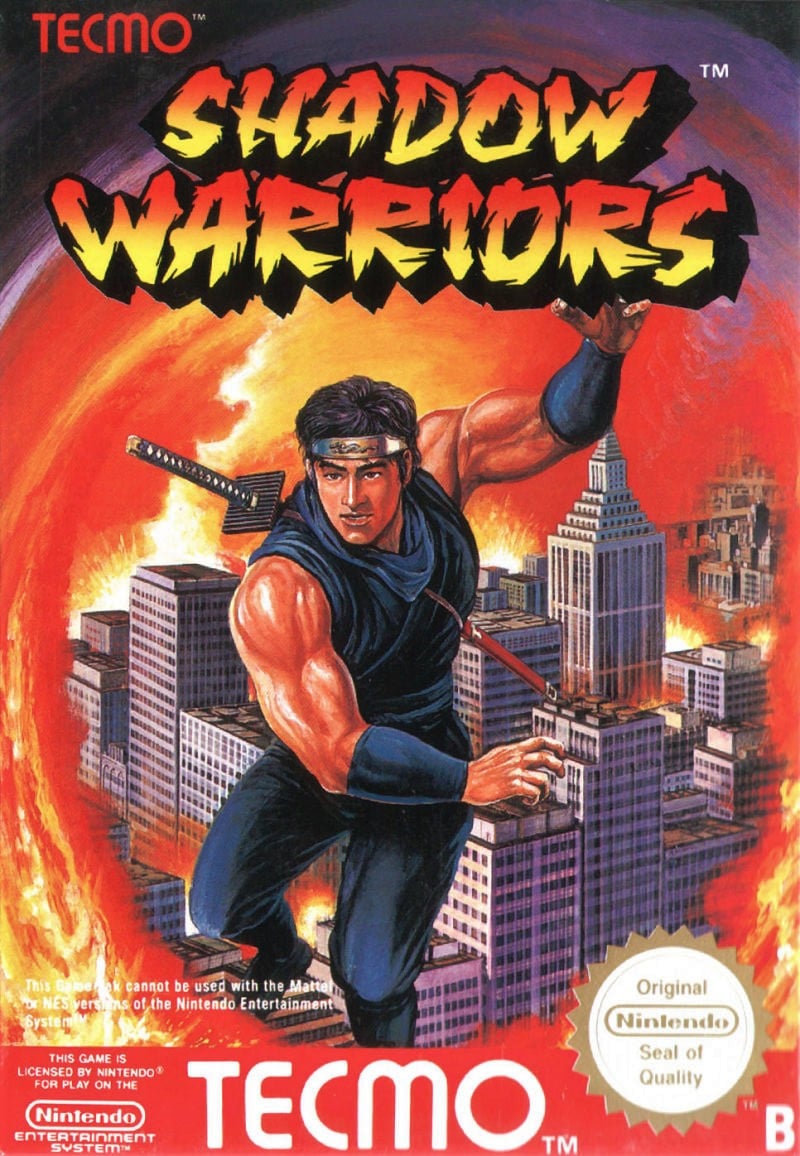
This week we’re heading back to the NES/Famicom days with Ninja Gaiden, or Shadow Warriors in Europe. That’s right, just as the Teenage Mutant Ninja Turtles were renamed Teenage Mutant Hero Turtles over here, ninjas were deemed too violent or something so we originally knew Ryu Hayabusa’s first outing by a different name. Don’t worry, we call it Ninja Gaiden now.
But which one of these covers can stealthily deliver a killer blow to the others? Take a look at the Ryus below…
Japan
Kicking things off with the Famicom version, we get a rather fetching portrait cover with Ryu walking towards us away from the stone golem-y thing with the tribal tats behind him.
With his bulging blue… thighs, not to mention arms that may as well be made from the same material as the rock monster, you certainly wouldn’t want to mess with this character.
Still, it’s not exactly clear what the green stuff surrounding the figures is. Some sort of mossy spider’s web? Overgrown ivy? A big pile of green silly string? It’s ambiguous and although it makes the ninja himself stand out, it’s arguably a bit too noisy. The rock thing and the title break out of the box into the surrounding black border, but for some reason the whole thing puts us in mind of a book cover. A pretty good book cover, but it’s not screaming ‘action’.
Perhaps that’s the point. Let’s see what the others have to offer…
North America
Hello! What the North American version lacks in subtlety it makes up for with knives, swords and flaming buildings. Our ninja is sporting similarly dangerous arms to his Japanese brethren but the only ambiguity here is exactly how the hell he’s suspended above this flaming metropolis. We like to think he had been enjoying lunch while sitting on a construction beam like those chaps in that famous photo of New York when he suddenly realised something wasn’t quite right.
Hardly the understated way of the ninja, then, but effective nonetheless.
Europe
Ah yes. While PAL A got a cover pretty much identical to the NA version, we’ve gone with the PAL B variant, nobly falling on our sword for the sake of variety. It takes the North American cover and turns everything down a notch. Taken in isolation, perhaps it wouldn’t seem so muted, but after the biceps-out in-your-face-ness of the previous cover, this seems a little too soft, a little too safe, and unmasking the protagonist means this cover loses an air of mystery, too. The guy’s still suspended over a flaming city with only a katana to fight the fire, but we’re not 100% certain this ninja (sorry, shadow warrior) will make it out alive.
Gotta be honest – we don’t hold out much hope for this. Still, you never know. Shadows are cool?
Those are the combatants this week – now it’s time to choose your favourite and click the ‘Vote’ button below:
That’s all folks! Join us next week when we’ll be returning with a fresh batch of fighters for another round of Box Art Brawl.