Why Clint Hocking wanted every NPC in Watch Dogs: Legion to be playable
At Ubisoft’s E3 conference this year, the company announced its latest entry in the Watch Dogs series would be a significant leap forward for the series—instead of creating a game centered around one central hero, Watch Dogs: Legion will let players recruit any NPC in the game to the hacking revolutionary group DeadSec.
Legion’s announcement also came with the revelation that this has been Far Cry 2 creative director, Clint Hocking’s latest project since he rejoined Ubisoft in 2015. Hocking’s penchant for game systems that respond to one another and interact with artificial intelligence is on clear display in Legion, where NPCs are given a backstory and set of behaviors that respond to player choices and decisions.
In one jaw-dropping instance, a low-level NPC goon began hitting on another NPC on the street as the player character passed. After an Ubisoft attendant advised us to check their backstories, we both shouted in surprise when the second NPC yanked the first over her shoulder and kicked him right in the throat, ending his life.
According to the demo attendant (a member of the game design team), though she knew that particular interaction was built into the game, she hadn’t seen it in action yet. Were this particular demo to continue, that character’s surprise death would mean he wouldn’t be present at another setpiece, and anyone he had any relationship with would respond in kind.
After the demo, we were lucky enough to sit with Clint Hocking for a quick chat about what it’s been like designing a near-infinite NPC ecosystem that turns the NPCs’ various micro-backstories into an emergent, responsive system.
Could you really quickly start off explaining how you got started working on Watch Dogs?
About four years ago Alex Parizeau the managing director of the studio reached out to me. They wanted to work with Montreal, who made Watch Dogs 1 and 2, to move the lead team to Toronto for this game, give the Toronto team a chance to lead it.
Most of the guys who made Watch Dogs 1 and 2 were part of my team when we made Far Cry 2 back in the day in Montreal. So it was a good way for me to come back to Ubisoft from Montreal, to be able to give up ownership of their baby to one of their partners and for us to be able to sort of have good relationships and learn from each other while we did that.
What was the first sort of structure that you approach when building a game full of playable NPCs?
Right, so when we first had the idea that you’d be able to play as anyone in the game, we had to of course bring in a bunch of major stakeholders, you know the lead animators, the lead programmers, the lead sort of engine architects…the lead audio guys, sound guys, and the lead writers and start talking about you know, breaking the problem down.
Like how are we gonna cover all the pieces that we need to cover and make them all work together. I think the most important think that we started working on pretty early was something we call “census”, which is a massive relational database that lives at the heart of the simulation.
The most important thing about census is that it allows us to spawn NPCs in the world just like you do in many other games, but then when you profile those NPCs the relational database is able to fill in the blanks on who they are and sort of generate them in real time and then make them persistent and keep them in the world.
So if you see a groundskeeper trimming hedges in a park, and he has a certain ethnicity, when you lock on to that person and profile them, he’s going to have a name that reflects the ethnicity that you saw and he’s going to have an animation set based on how he was animating, he’s gonna have a job that says groundskeeper and it’s going to be at a certain time.
And then because he’s a groundskeeper, he’s going to make a certain amount of money which means he’s gonna be allowed to live in certain neighborhoods, and because of his ethnicity will navigate to a different part of those neighborhoods depending on where the different communities live within London. Then he’s going to have certain friends and activities maybe he’s an outdoorsy guy. He has an outdoor job so he may be more fit and have a gameplay trait that reflects higher health or higher agility or something like that.
All of these things are internally in sync and coherent so that every NPC feels real and credible. Then when you recruit them, they get their own narrative persona, their own voice, their own animations, their own fighting style if they do melee…all of those things are again, coherent with that guy that you first saw trimming a hedge in the park when you were walking by and caught your eye for whatever reason.
What is a way to work in a procedural design space without finding yourself deep in the weeds trimming each individual procedural experience? What lets you work at the core of it and intentionally design things for the player to see?
So…that’s a great question and difficult. It’s a couple of things. Because it took a long time to develop this innovation, there were a lot of iterations and a lot of experiments and a lot of ways of making things work and so we kind of…I guess probably accidentally created interesting things that tend to be emerging from the simulations in previous iterations.
As we took major decisions or made different pivots in order to move forward we were persistent in trying to keep those interesting pieces alive. And so it got more robust through the natural process of iteration. I think that was an important part of it. And now, especially now that it’s in the hands of real players we’re starting to see, fortunately, that we made a lot of good choices it looks like.
And also it’s also inspiring us now that we’re getting feedback on the game of like “OK, what are the things we need to focus on and really polish and really bring up to that highest level for everyone.”
One interesting overarching thing that designers can do when making these layered systems that makes them like— layered procedural systems can either feel great or sort of feel like nothing is happening.
Hocking: Sure, yeah.
There’s a bunch of data being spewed out and you’re like “OK, I did something I really don’t understand what happened there.” What do you think is something interesting that another designer might benefit from?
An actual, practical tip? Here’s a good practical tip for other designers. I was working on this game for 4 years and about a year and a half ago— so I’m the creative director, but about a year and a half ago we brought in Kent Hudson, Kent’s the game design director. Obviously, when you bring one big creative powerhouse into another thing where there’s another creative guy who’s been owning a thing with this team for a long time it’s a bit rocky.
But the good thing was you know, Kent’s super smart. Great designer. He was able to take ownership of a lot of the design from me so that I could focus on other things. My practical advice here is…know when you need to hand the thing off for someone else to tell you what’s good and not good, and polish it and close it because you can very easily get blinded by all of the systems.
Kent actually talks about making design nerd games. We don’t want to make a design nerd game, we want to make a game for players, and he was really helpful in helping me cut the branches off that were just too design nerd-y and weren’t meaningful. Cause he could see the game with fresh eyes and understand it as a working designer what we needed to do better and help us make the right calls to focus the thing.
So, get help. That’s the two-word answer. Get help.
Procedural systems can be a great way to let players get super expressive about who they are, what kind of philosophy they want to see in the world.
Is there anything you particularly think you’ve enjoyed about making Watch Dogs an expression-filled game?
Absolutely, I think one of the most powerful things that I experience when I play the game, I’m not talking about something theoretical…when I play the game myself, I see emergent things happening at a different level than they happen in most games, so I worked on Far Cry and Far Cry 2 and uh…the kinds of emergent behaviors and actions that you see tend to be in the moment to moment.
We have that as well, but now we’re seeing emergent behaviors happening across the timeline of like a story of a character arc of someone’s life. You’ll see— just a really great example you know, one of my favorite operatives in the build that I’m currently playing the last 30-40 hours, is named Lionel Galant.
I made him an infiltrator, he’s really cool, but I recruited him by rescuing his dad where he was being held by Albion in a cage somewhere and they were gonna disappear. I rescued his dad, and then you know Lionel leveled up and he’s one of my favorite guys and have done a bunch of great missions with him and I love him.
And then 12 hours later I was playing a different character walking down the street and I see two people in the street that are lit up and I know them and I go “that’s Lionel, who’s that that he’s with? Oh that’s Andrew Galant, Lionel’s father. Shopping with his son, Lionel. That’s Lionel shopping with his dad, Andrew Galant.”
And I was like “Awh, shit.” And then they stopped their conversation and they walked into a store, like a clothing store. And I was like “That’s that guy. That guy just came to life because the reason he joined DedSec is because we saved his dad, and there’s his relationship proof that it’s real. And that’s why he cares about us.”
And you just get these— you get feels that you don’t get in other games, right? It’s amazing, and this is just one example. There are dozens of them. People come out of these demos all day every day and they tell us amazing stories about what happened to the person they were demoing to. It’s super, super, awesome.
The complicated process of porting Graveyard Keeper to consoles and mobile
The following blog post, unless otherwise noted, was written by a member of Gamasutras community. The thoughts and opinions expressed are those of the writer and not Gamasutra or its parent company.
In this article, I want to talk about our experience of porting our game “Graveyard Keeper” to mobiles and consoles.
Some basic information: Graveyard Keeper was developed by our team (Lazy Bear Games) in Unity and then ported to XBox One / PS4 / Nintendo Switch by our publisher, tinyBuild. The mobile ports (iOS and Android) were made in-house, by us. Also, a few months after the initial game release, we made a DLC “Breaking Dead” which was also ported to all platforms. In addition to this, the game was constantly being patched and improved.
As you can see, the setup containing two dev teams is not an easy one. Mix it up with the project in the phase of dynamic development that needs to be deeply optimized for some platforms and you’ll get a pretty challenging process.
Time to get technical.
Looking at our game you can probably think that it is a simple game to port, as it is 2D with pixel art. And if consoles are powerful enough to process 4K/60fps, the pixel 2D graphics wouldn’t be a problem. Theoretically, that’s true. But practically we used a lot of very complex solutions that were not optimized for consoles and totally unoptimized for mobiles.
Think of HDD speed.
You probably heard that the current gen consoles architecture is very similar to the PC. That’s true, but technically the hardware differs from the PC. First of all, Xbox One and PS4 use hard disk drives while most of modern PCs use SSD or hybrid drives. So, you have to keep in mind the loading times.
Imagine our surprise, when the first build was loading for during almost 5 minutes.
So, we had to rethink the whole loading and asset storage systems. For example, we began storing not the whole game objects on the scene, but only the information about them in simple (fake) objects. And after the loading is complete we started replacing these fake objects with the real ones on the fly.
Think of multi-core.
Also, in our experience writing for the consoles requires using all CPU cores at maximum making the code to work in parallel. By default, Unity games are very dependent on a single core performance. And running the game “as is” could give you very sensitive performance bottleneck when all other cores are idle while the only single core is under load.
We had to move different math and calculations to a different thread running in a parallel to free as much core-#1 power as we can. Basically, that’s a good point to keep in mind if you’re not planning to port to consoles also as it will give you a better performance anyway.
So, next time we will plan everything we can to run in a separate thread/job. Luckily, Unity had improved multi-threading a lot during the last year implementing job system and ECS.
Think of graphics optimization (even for 2D games!).
Another heavy issue for us was the graphics. We had no previous experience optimizing anything for consoles or mobiles. Therefore we were OK to make a tree combined of 20 separate sprites just to make it easier to design. There was no need for such amount of sprites for a single tree in the game itself.
Of course, we needed to merge sprites to reduce the amount of layers. You can see the amount of initial geometry on the scene here:
The rightmost picture shows the “overdraw amount”. That means each time one sprite is drawn over another, the color on that picture becomes brighter. So, you can see that despite the simplicity of the look, there are really a lot of polygons drawn over each other.
Also, all sprites of the game are lit by a complex shader that not only uses the normal-maps, but calculates the pseudo 3D-depth of the picture.
We had to make different versions of visual optimization for different platforms. For example, we had to completely change the lighting shader and its behavior for mobiles.
Think of platform-specific issues.
Also, there is a lot of platform-specific work (especially for consoles). For example, you not only need to support the gamepad, but need to deal with different uncommon situations like when a user plays the game, the gamepad turns off, user connects another controller and logs in to a different profile. And that’s in the middle of the game. There are different large lists of such cases that your game needs to deal with.
Another issue you have to think about is the saving system. Your game had to work with asynchronous saving routines and treat any file corruption could happen.
Patches and DLCs.
As mentioned above, we worked with an external porting team on the side of our publisher and pushing all new content, fixes and patches became a difficult task. You need to plan everything ahead. You can’t just tell the guys to push your last fix to Xbox if they are making a Switch port and everybody is busy with that.
And keeping in mind that we’re a small team that likes to develop games with a high passion, that doesn’t go well with planning ahead. That’s the reason we couldn’t easily port the first “Breaking Dead” DLC to the Xbox. We didn’t plan it very well. One day we just woke up and decided to make zombies and put them in the first DLC. But guys at tinyBuild were busy deeply optimizing and porting the game to Nintendo Switch. They couldn’t drop that process and begin to port this DLC right away. They needed to finish their port first.
That was the downside of the idea of making a simultaneous release on PC and Xbox. Ideally we should release a PC build, fix all bugs were found and only then start porting it to consoles — or spend months in isolated QA beforehand, without real player feedback. And only after the port is done, start making a DLC. But we couldn’t afford spending so much time on that. We had to do everything right away.
That’s the reason we couldn’t release the first Breaking Dead DLC for free on other platforms (as it was on the PC). When you develop on multiple platforms, the costs and timelines ramp up pretty quickly. Even porting and releasing a patch eats up a lot of resources.
Releasing titles, DLCs and updates always require passing platform compliance requirements, which means certification by platform holders. The more complicated your game mechanics and the bigger the amount of the APIs you are using the more requirements you will need to surpass. This means that you need to test your content against these requirements before submitting it for certification to make sure that the chances of passing it are good. Otherwise you may encounter a big list of issues to fix and might not pass it (probably you just won’t) within first submission. Additional submissions might also lead to additional costs. But the most risky thing about not passing the certification in time is delaying the announced release dates.
This is extremely difficult with fast iteration cycles we had on PC. It would be impossible to real-time merge new content into the console builds, as shown in the diagram in the beginning of the article. Having in-house resources will require at least one programmer dedicated to each platform and a proficient QA team that is constantly testing the title being ported and report the issues that fail the requirements so the porting developers can fix them before being found by the certification team on the platform holder side. It requires building the whole porting structure within the studio. And this is not only the resources, but the specific knowledge and skill set involved in it.
Long story short it’s very easy to release DLC on PC and keep on iterating on it in real time, while launching the same content on consoles adds a lot of overhead costs and complexity to the whole process.
E3 2019: Scavengers is a Tornado of Compelling Competitive Survival
Scavengers is a 4-player team-based survival shooter that is billed by developer Midwinter Entertainment as “co-opetition.” That’s a made-up term that actually captures the spirit of the game, even if it doesn’t begin to hint at what makes it unique. Scavengers imagines an Earth that has been plunged into frigid cold thanks to the destruction of the Moon. Much of humanity has taken refuge on a space station, run by a less-than-reliable AI, orbiting our old planet. You’re one of a four-person crew sent down to the surface, with orders to collect materials that might help build a future for humanity.
Sounds easy, right? Unfortunately, there are feral settlers on the planet, and hungry animals, and mutated beasts. Oh, and giant storms whirl through the map. They’ll freeze you to death within a minute. While some competitive shooters allow players to camp in a safe spot for long stretches, that’s not an option in Scavengers. This game is about moving quickly and quick thinking on the run, with a reliance on communication and flexible teamwork.
Scrounge to Survive
Matches progress in three rough phases. While the phases aren’t actually hard-wired into gameplay, they do help communicate how it all works. You arrive on planet with no survival supplies of any kind. So phase one is scavenging and, if possible, leveling up to unlock new crafting options. Phase two occupies the time to scope out the nearby area and seek the supplies that are your specific mission goals.
Along the way, you may encounter local resistance, and/or other teams. Those teams have the same objectives you do. While the developers note that teams could elect to work together to reach their goals more quickly, in practice… that might not be how it will work out. So, you’ve got multiple teams scrambling for limited resources, facing quite a few obstacles. On top of it all, there’s a ticking clock. Matches end with a dropship arriving to carry players and materials back to the station, and you need to be on it. That’s phase three. Maybe you’ll get that far; the dropship arrival zone becomes a chaotic endgame as teams and mobs converge.
Cooperate or Die
Scavengers features several character classes. The E3 demo featured only four — melee, sniper, shotgunner, and healing support — but many more will be available at launch. Each can build a unique weapon, and each has a special with a couple of activation criteria and a cooldown timer. Strategic use of specials can compound their benefits. The shotgunner, for example, can project a dome shield, which protects against incoming fire and offers safety from storms. The healer can project a large healing aura. Together, they create a refuge from many of the game’s dangers, which saved my team more than once.
All the perks specific to each character require crafting. You’ll scrounge basic weapons, break them down for parts, and build new stuff. After leveling up you’ll be able to craft your class-specific weapon. The crafting system is fairly robust, but primarily handled through one well laid-out screen. Since building stuff is technically handled by a small drone that accompanies each player, you can even craft while on the run. Items can be given to teammates from within the inventory screen, even over distance.
Above All Else, Stay Warm
You’ll pretty much always be on the run, too. Between the time limit, the demands of objectives — which generate the points you’ll need to win — and the storms, there’s no chance to just sit around and let most players in the match kill one another. Those storms, by the way, aren’t a simple PUBG or Fortnite concept, where a single dervish shrinks around the players. There can be three or four on the map at once. I got squeezed by two powerful tornados at one point, and with few supplies to fend off the cold, I was a popsicle. But with enough supplies you could also dash right into the storm, to use it as cover or to mask an escape.
Scavengers throws a lot of detail at players very quickly, and very little of it is optional. For every danger, there’s a counter. You’ll need to eat but can stave off hunger by consuming meat scavenged from animals. But that meat might be infected. Cook it first, at one of the fires placed around the map, or inject a craftable remedy to kill the infection. The amount of options is imposing at first, but none of it feels like filler.
The E3 build is still very early, and full launch details are still being determined. The game’s potential is huge, however. My playthrough felt like I barely scratched the surface of the game’s tactical and strategic options.
Posted by: xSicKxBot - 06-30-2019, 08:49 AM - Forum: Lounge
- No Replies
Hellboy Probably Won't Get A Sequel, Actor Says
The Hellboy reboot starring David Harbour is unlikely to get a sequel, according to actor David Harbour who plays the title character. Speaking to GameSpot sister site ComicBook, Harbour said he's heard from a lot of people who really enjoyed the film. However, the "culture at large" did not seem to generally enjoy the action movie, he said.
"I don't think there'll be much of a light," Harbour said about a potential sequel.
Not only that, but Harbour remarked that Hellboy didn't make a lot of money. The movie, which was reportedly developed on a $50 million budget, bombed in the US/Canada, where it opened to only $12 million. Worldwide, the film made $46 million.
"I don't think it made a lot of money," Harbour said. "I don't really keep up with those things too much to be honest, but I don't think the perception was that it was a hit, and so in that way, I don't know that the risk is worth it [for a sequel]. I think the idea is to move on. The producers spoke to me just saying, 'Great job,' they really liked what I did, but I haven't heard anything about a sequel, and I'm not hanging my hat on anything like that."
2019's Hellboy was a reboot of sorts for the series that began in 2004. The first movie was directed by Guillermo del Toro and starred Ron Perlman as Hellboy. A sequel, The Golden Army, was released in 2008, also starring Perlman and directed by del Toro.
There were reports that Hellboy suffered from a number of behind-the-scenes problems, including fights between producers and director Neil Marshall, and Harbour not being cooperative.
Hellboy also stars Milla Jovovich, Ian McShane, Daniel Dae Kim, Sasha Lane, and Thomas Haden Church.
Talking Point: What Are You Playing This Weekend? (June 29th)
Ah, yet another week down and yet another huge game to get stuck into on Switch. As well as Mario’s latest outing, this week brought with it a brand new Nintendo retail store and even a Wii U firmware update of all things, but now it’s time to sit back and chat about our weekend plans. The NL team have done just that below, and we’d love for you to join in via our comment and poll sections. Enjoy!
SEGA AGES: Virtua Racing is my game of the week. Wish I could time travel back to 1992, show my younger self a Switch running the game and say, “See? One day you will be able to take that arcade anywhere in the palm of your hand, plus you will write all about it at Nintendo Life!”. TIME PARADOX!
Austin Voigt, contributing writer
This weekend I’m going to hunker down and actually dig into my backlog for once. I’ve purchased many games that I have only put about an hour into so far – Xenoblade Chronicles 2 and My Time at Portia are the two most glaring offenses, and also two very large games in need of attention.
I’m a bit grudging about it, because there are all of these shiny new games on the horizon that I’d rather be playing… but I must be responsible. No way will I just be adding another game to the mix with Super Mario Maker 2 and making my problems even bigger, no way! That would be so irresponsible of me… *fingers twitch in anticipation of playing Mario Maker all weekend*.
Ollie Reynolds, reviewer
Gaming may take a bit of a backseat this weekend thanks to the glorious weather we’re currently enjoying, but knowing me, I’ll end up in the back garden with a pint and a bit of Contra Anniversary Collection. I’m absolutely hooked at the moment!
In the event that the British weather decides to take a bit of a heel turn, I’ll likely boot up Bloodstained: Ritual of the Night (on PS4… sorry!). I’m obsessed with Metroidvania games, and this new masterpiece from Koji Igarashi is right up my street. But enough talk… Have at you!
Gavin Lane, staff writer
This weekend I’m going away for a couple of days and I’ve got my fingers crossed that I’ll have some time to dive into the game of the moment, Super Mario Maker 2, for a couple of hours. Despite having spent loads of time with the original, I really want to go through the tutorial of the Switch version and get comfortable with the interface and controls before attempting anything ambitious.
I’m also eager to jump into the Story Mode to see how that mixes with the rest of the game. There seems to be plenty of new stuff to sink my teeth into, so hopefully by the end of the weekend I should be ready to roll my sleeves up and start hammering out a few works of art.
Dom Reseigh-Lincoln, reviewer
This weekend I’ll be trying out a game I only briefly touched in 2009, Red Faction: Guerrilla. I loved the original Red Faction back on PS2 with its brilliant destruction physics, but its distant sequel mostly passed me by. Now in its Re-Mars-Stered Edition (a pun that both makes me laugh and weep for humanity), I’m finally going to blow up all the Martian infrastructure I can find for our official review on Nintendo Life. I’m sure I’ll be on Paladins again as well, just to keep myself on brand. Have a good one!
Ryan Craddock, staff writer
Whilst I imagine pretty much everyone and their Undodog will be playing Super Mario Maker 2 this weekend, I’ll sadly be left out of the fun. To be fair, it’s my own fault; all of the Zelda amiibo being restocked at the Nintendo UK Store the other day resulted in a spur-of-the-moment order with a price total I’m almost ashamed to share. It also brought confirmation that I now won’t be buying another video game – or anything else, for that matter – for approximately 487 years.
Combining that with the fact that I’m currently in the process of packing to move house (meaning some consoles are safely tucked away in boxes) I’m not really sure what to play this weekend. As such, I might just chill out and see what Mario Maker levels my colleagues end up sharing on Twitter while crying into my scarily empty wallet. Help.
Which games are you playing this weekend? (68 votes)
Experience a gripping psychological crime thriller filled with innumerable twists and turns, where even the smallest actions and choices can cause dramatic consequences. The hunt is on for the Origami Killer, named after his calling card of leaving folded paper shapes on victims. Four characters, each with their own motives, take part in a desperate attempt to stop the killer from claiming a new victim.
Posted by: xSicKxBot - 06-30-2019, 02:02 AM - Forum: Lounge
- No Replies
Jake Gyllenhaal Talks About Joining MCU In Spider-Man: Far From Home
Actor Jake Gyllenhaal makes his Marvel Cinematic Universe debut with Spider-Man: Far From Home, and now the Oscar nominated actor has spoken more about joining the MCU.
Gyllenhaal plays Quentin Beck/Mysterio in Far From Home. He told GQ that he feels the pressure of joining such a massive connected superhero franchise.
"Walking into the MCU ... it's huge; there's a lot that's expected of you in the process of making the movie but also the character," he said.
Gyllenhaal went on to say that Mytserio in Far From Home will be "so different" from who he is in the comics. "It feels like a pressure when you're making it. People love that character; and it's so different from the character in the comics," he said. "When you're doing something as different from the comics as we did in this; you kind of go like [makes scared/uneasy face]."
Also in the interview, Gyllenhaal said he enjoyed working with Spider-Man actor Tom Holland, who he said is a "genuinely lovely" person.
And finally, Gyllenhaal said it was exciting being involved with the MCU because he got to know about how Endgame wrapped up before everyone else. "It's fun knowing everything that happens; I knew the events of Endgame before Endgame came out. I love the speculation," he said.
The 23rd film in the Marvel Cinematic Universe and a direct sequel to 2017's Homecoming, Far From Home sees Peter Parker and friends off on a school trip to Europe while baddies from another dimension show up to do some serious harm. With Tony Stark (played by Robert Downey Jr.) gone and Mysterio handling the brunt of the elemental threats, Parker must step up to save Europe.
GameSpot's Far From Home review states, "The parts that work, work very, very well. But the parts that don't tend to feel like stubbed toes or irritating splinters--not life-threatening by any means, but distracting at best and annoying at worst; like someone pulled the curtain back on the MCU's systemic shortcomings a little too far."
Review: Citizens of Space – Fans Of The Super Mario RPGs, Take Note
Four years ago, the 3DS and Wii U were graced with a JRPG from Eden Industries called Citizens of Earth, which emulated the offbeat style of Nintendo’s cult-classic EarthBound to wonderful effect. Still, it was a bit of an uneven experience at times, with a series of niggling little issues that a sequel would likely rectify, and now we’ve been fortunate enough to receive that sequel in the form of Citizens of Space. Rather surprisingly, this new release eschews the EarthBound trappings in favour of another popular Nintendo RPG franchise, and while it still hasn’t outgrown all the little missteps of its predecessor, Citizens of Space proves to be a massively satisfying experience.
The story kicks off with you assuming the role of the Ambassador of Earth, a naïve and frustratingly optimistic man who’s comically narcissistic. After being invited into the Galactic Federation, our hero goes to give a speech to our new alien allies only to realize that the Earth itself has somehow gone missing. Realizing that he can’t be an ambassador if he has no planet to be “ambassing”, he then sets out on a journey across the stars to uncover where the Earth has gone and return it to its rightful place.
Although the story isn’t exactly riveting, it’s made compelling in large part due to the stellar cast of larger-than-life characters that populate all the planets you visit. Voice acting is consistently excellent through the incredibly diverse and hammy performances, and it goes a long way towards making each of these characters memorable in their own way. Through it all, there’s a sort of Saturday morning cartoon kind of humour at play, with plenty of pop culture references and fourth-wall-breaking moments keeping the tone lighthearted. We especially appreciated the back-and-forth that often arises between the Ambassador and his assistant (named “Assistant” by default), who acts as the straight man and voice of reason to the often overly idealistic musings of his superior. Those of you looking for an in-depth JRPG narrative packed full of complex relationships and thought-provoking moments won’t find a whole lot to love here, but the silly and irreverent tone packs Citizens of Space with loads of charm.
Though your primary objective in Citizens of Space is to find the Earth, that goal arguably becomes sidelined a few hours in as the real focus comes into play: your party members. Nearly every NPC with more than a few lines of dialogue can be recruited to join your party, but each of them will first issue you a quest to complete in the meantime. This can be as simple as a fetch quest or as complex as a multi-step treasure hunt, and while nothing here gets overly complicated in the bigger picture, we still appreciated and were sometimes surprised by the amount of diversity in the quests being offered. There’s an almost Pokémon-like quality to collecting all the party members and completely filling out your roster, and it keeps you motivated to run to just about every corner of the universe and plumb the depths of planets that you otherwise may not have had much reason to spend much time with.
This does, however, raise one of our biggest complaints with Citizens of Space, which is the rather poor setup of the map. To its credit, Citizens of Space has fixed some of the navigational issues of its predecessor – namely by offering you a compass that will point you towards where you need to go next – but it has also created some new issues in the wake of this. The problem is that the map itself isn’t very good at making it clear which quest objectives can be reached, and from where. We found ourselves a few too many times at a point that the map told us would lead to a quest objective, only to be faced with a dead end.
Poking and prodding around is sure to eventually lead to answers, but given the maze-like design of most planets and the lack of fast travel, it can often become tedious to have to constantly be walking around in search of a way forward when the map has failed you. This issue is only further exacerbated by the prevalence of loading screens. Every time you enter or exit a building or walk from one area to a next, you’re faced with a loading screen that takes about ten seconds to pass. In isolation, ten seconds isn’t bad at all, but Citizens of Space finds a way to cram tons of these screens throughout a typical planet, enough to the point that it does negatively affect the experience. It’s not deal-breaking, but just be sure you’re coming into this one with a patient mindset, as the loading screens and hit-or-miss navigation are sure to pad out your experience and make it much longer than it could be.
When in combat, you’ll quickly see that the EarthBound trappings of the last game have been tossed out in favour of a style that apes the combat system of the Paper Mario or Mario & Luigi games; a move that we feel has worked enormously to the game’s benefit. Battles are still turn-based affairs, with the order of the next several turns being shown in the corner, and your actions are all governed by a simple energy system in which some attacks will either add or subtract from that character’s energy. Things are made a bit more interesting with the mini-games, however, in which well-timed button presses will cause your attacks to do more damage or cause enemy attacks to do less. These are simple enough affairs, often just asking you to have reasonably quick reaction times, but they keep you engaged in the moment-to-moment action of battle in a way that few other JRPGs can manage.
Combat is seldom difficult, especially given how easy it is to power-level characters and hugely buff up their stats while unlocking powerful new skills, but the mini-games provide just the right amount of player input to make even common battles against fodder enemies interesting. A nice feature, too, is the ability to ‘chain’ together enemy encounters in exchange for an experience bonus. Upon completing a battle, you can choose to take on a few more waves of enemies, and if you manage to clear them, you can then rest on your laurels or you can take on even more waves of enemies for more experience. It’s a nice risk/reward system that challenges you to push your team to its limit, and while the overall easy difficulty seldom necessitates that you make heavy usage of this feature, it’s still nice to take advantage of every now and then.
You can have up to three party members on the frontlines at once, while the Ambassador (a true politician) cowers behind them and only gets involved if an item or summon needs to be used. See, not all party members you recruit are usable as active battle participants. Some of them are usable on the overworld, in which you can use special abilities like fishing or breaking rocks, and some of them are usable in battle as rare summons that can hugely shift the balance of a tough fight. Many can also be equipped to active party members as a sort of support item, granting the active members boosted stats and extra moves.
Each party member has a passive “Talent” as well, each of which can have interesting effects, such as the ability to adjust the random encounter rate or to change up the in-game music. These Talents can then be upgraded through passive usage, such as letting you set the encounter rates to absurd levels or allowing a certain character to break heavier rocks and create new pathways. It’s not a terribly deep system, to be honest, but it seems a lot more sprawling due to the wide cast of characters you can be upgrading at any given point of time, and we appreciate the gameplay diversity that this offers.
From a presentation standpoint, Citizens of Space manages to satisfy; the art style and music make it clear that Eden Industries is a little more confident this time around. Characters are defined by their bulbous features and often wacky designs, but all of it comes together to make for a cohesive and eye-catching art style that’s easy on the eyes. Our only complaint is that the imaginative and colourful look of the worlds isn’t always matched by the animation, which often comes off as being subpar. It’s not terrible by any means, but it feels unfinished in many ways, with characters and enemies often coming off as being overly stilted and stiff in how they move. You grow used to it over time, but we would’ve liked to have seen a little more attention paid to this, especially in how it would’ve given the already enjoyable battles that extra ‘oomph’ to give them some real visual flair.
Conclusion
As of the time of writing, it’s unknown when Nintendo is going to get around to releasing a new Mario RPG in either of the franchises that it’s been developing over the last several years. In the meantime, Citizens of Space proves itself to be an excellent title to scratch that particular itch and fill the gap while we wait, offering up a humorous RPG experience with a memorable cast of colourful characters and an extremely fun battle system that rewards both tenacious dexterity and careful planning. It may be frustrating in terms of navigating the map and overworld, but the diverse and plentiful sidequests help to make any moments of irritation bearable. We’d give this a recommendation to any fans of the Mario RPG series’ – as this hits most of the same notes – or anybody looking for a good RPG to introduce them to the genre. Citizens of Space is a measured step up over its predecessor, and we hope that Eden Industries will continue this upward momentum with whatever project is coming up next.
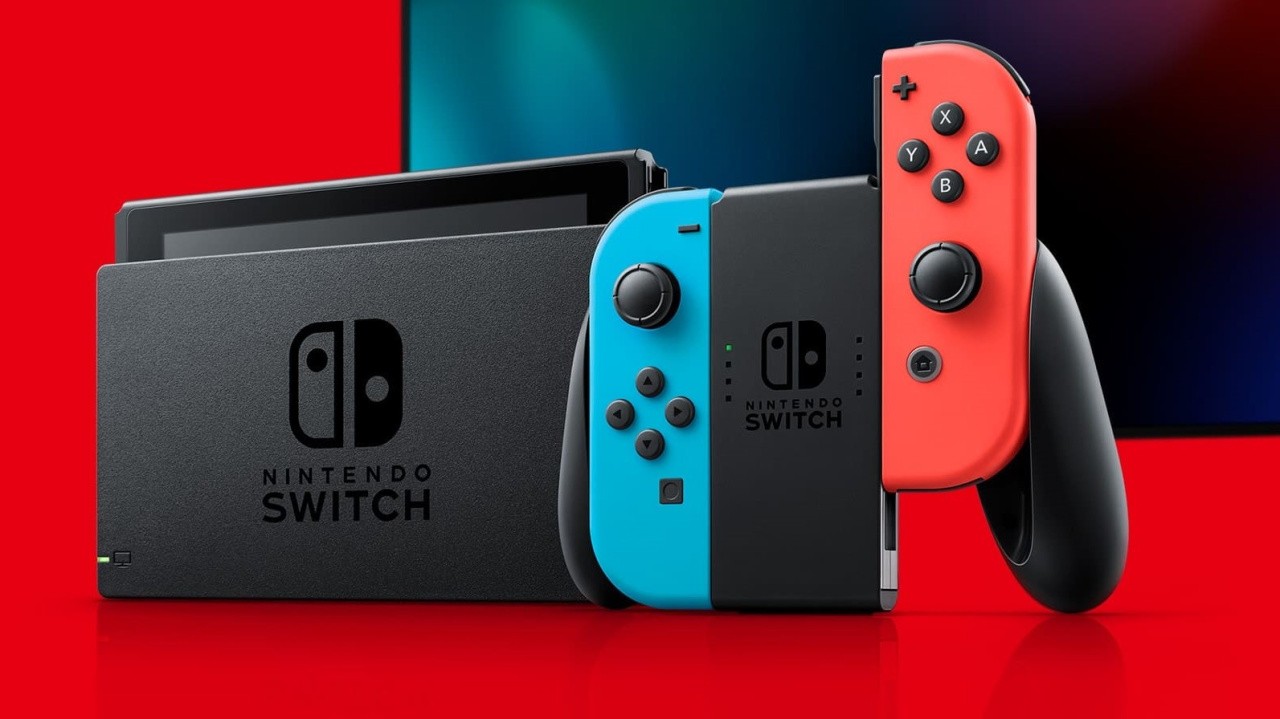
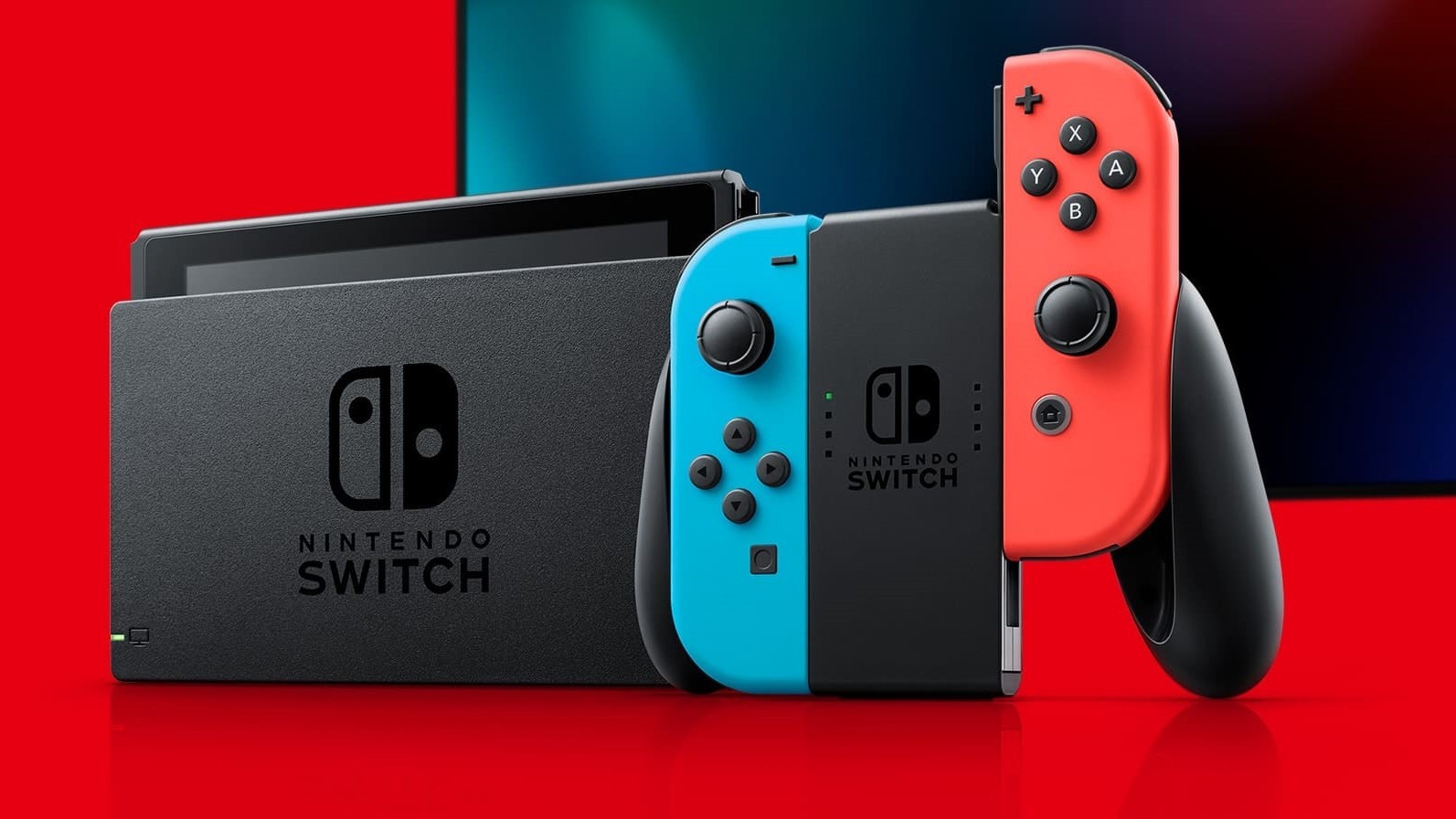
Guide: Switch Pro And Switch Mini: Everything We Know So Far
Nintendo is no stranger to updating and iterating its hardware. Ever since the days of the NES, the company has seen the value in refreshing its consoles to maintain consumer interest, introduce new features and bring down the cost of manufacture, and that approach hasn’t changed in over 30 years.
Therefore, reports that Nintendo is working on two new Switch models should come as absolutely no surprise, but given that the Kyoto veteran is yet to formally announce these systems, there’s obviously a lot of speculation and rumour floating around right now – and we plan to cover all of the solid leads here.
Wishful thinking aside, hints that Nintendo was working on revised Switch hardware came as early as October 2018, with The Wall Street Journal claiming that a new Switch SKU was on the way. At the time, it was said that Nintendo was still “undecided” on how it would upgrade the new model, but the plans were clearly already in place.
Then, in January, analysts predicted that we’d see not one but two new models – a Switch Pro and a Switch Lite – would be going into production. Of course, these were just predictions made by people who closely watch the industry, but given Nintendo’s track record of updating its systems, it was a fair assessment of the situation – although Nintendo President Shuntaro Furukawa was quick to dismiss any rumours.
Then, a month later, Japanese business publication Nikkei added more weight to reports that a smaller, cheaper version of the Switch was in development. The aim, according to one source, is to reduce costs by removing certain functions and focus on the portability aspect of the machine – which would hint that any new ‘Lite’ model would be seen as a potential replacement for the outgoing 3DS.
In June 2019, The Wall Street Journal reported that Nintendo was moving production out of China “to limit the impact of possible U.S. tariffs on Chinese-made electronics”, according to “people who work on Nintendo’s supply chain”. As part of this report, it was revealed that three Switch models will be produced at the new site in Southeast Asia – which would suggest that the current model, a Lite version and a Pro version are all being made.
Out of the two models, it’s the Switch Mini which has perhaps gained the most traction in terms of rumours and speculation so far.
From the evidence, we have so far, the machine will have a smaller, 5-inch screen and won’t have removable Joy-Con – although it will naturally still work with Joy-Con purchased separately. It will still apparently be compatible with the existing dock, but won’t ship with one in the box. Also, it is expected to have a ‘proper’ D-Pad, rather than a cluster of four buttons on the left of the console.
In June 2019, we got what appeared to be our first look at the Switch Mini thanks to a host of accessories from Chinese company HonSon. The company created its own render of the system based on “secret information”; the design backs up other reports that the machine has built-in controls and a D-Pad, and that it will be smaller than the existing Switch model. This was seemingly backed up by the fact that the Spanish arm of retailer GAME posted Switch Mini accessories a week later (these were quickly removed).
Shortly after this, Nintendo responded by saying that “answering to rumours and speculations would end up stealing surprises from our customers and also be unprofitable to all of our shareholders, so we have no answer to that. As a general theory, we are always performing development of new hardware.”
Nintendo Switch Mini – Release Date
If Nintendo is ramping up production of its new consoles then it would be realistic to expect a release before Christmas, but sources we’ve spoken to have admitted they are doubtful it will launch in 2019; it could be early 2020 before we see any new hardware.
However, realistically, we’d expect Nintendo to at least have the Switch Mini on store shelves before Christmas, as the 3DS will be all but dead by that point and a gap in the market will exist for a low-cost Switch entry point.
There’s less info floating around about the Nintendo Switch Pro, but we do know that Nvidia is working on a new version of the Tegra X1 which is found inside the Switch. This could end up in both the Pro and the Mini, according to reports.
Nvidia has already stated that it expects to have a bumper year, and some have joined the dots and connected this positivity with increased demand for components from Nintendo for Switch Mini and Switch Pro.
As for what improvements the Pro will offer over the existing machine, an improved Tegra X1 should mean better power efficiency and less energy consumption, which should mean better battery life. Those expecting a massive leap in performance between this model and the existing Switch may be disappointed; even a comparison with the 3DS / New 3DS might be off the mark, as Digital Foundry believe that the ‘Pro’ revision is more about making the chip more efficient and not about boosting power, as we’ve seen with the Xbox One X and PS4 Pro.
Nintendo Switch Pro – Release Date
Given that we’ve heard less about the Pro then the Mini, it’s tempting to speculate that it will be coming later on – perhaps even as late as next year. This is pure speculation, however; it’s entirely possible that Nintendo will announce both at the same time.
Battlefield 5's Next Free Map Is Out Now, And It Might Look Familiar
It's a big day for Battlefield V, as the World War II shooter's next free map has arrived. The map Al Sundan came to Battlefield V today through the Chapter 4: Defying the Odds update.
Al Sundan is set in the North Africa desert, and players may note that it looks familiar. That's because it is pulled from the single-player mission, Behind Enemy Lines, from the Under No Flag chapter of the campaign.
Al Sundan is described as a "versatile map" that supports numerous different play-styles. The map features a number of different vehicles and planes, while there are six different capture points. The map contains big, open areas, so DICE advise players to never run in straight lines and use smoke screens to stay hidden.
The map supports two modes--Squad Conquest and Team Deathmatch. However, developer DICE said it encountered some "stability issues" with the map, so "not every game mode intended for Al Sundan" will be available. It's not immediately clear what other modes might be planned for it, but looking at the servers in-game right now, only Squad Contest and Team Deathmatch are available.
Battlefield V's next free map is Marita, which is set in Greece; it arrives in July. After that is Operation Underground, which takes place in an underground subway system and releases in October. Following that, Battlefield V heads to the Pacific theatre with a new Iwo Jima map later in the year. All post-release DLC maps for Battlefield V are free.