Games like Pokémon GO aren’t for anyone, but I’ve always quietly admired Niantic’s marriage of a popular IP, AR tech and incentive design. Sure, its grindy in the way the worst F2P games could often be, but I explored so many parks and places I’d never seen before when I dabbled in Pokémon GO a few years ago, and the game in general never made me feel pressured into spending money. Plus, you know, Pokémon!
Niantic’s latest foray into IP-based AR will be Harry Potter: Wizards Unite. You get to rock around being a wizard, basically, which I imagine is going to make some people unreasonably happy come the end of the week as the developer have just announced that the magic will start on Friday, June 21st, 2019. For US and UK-based gamers, that is.
We will be joining the ranks of the Australians and New Zealanders who’ve already been enjoying a soft-launch period for a while, and more regions are due to come online although we don’t have any details on the timetable.
Harry Potter is not my favourite IP – I think I’m actually a bit more excited about the Minecraft one – but I’ll probably jump into this for some tinkering on my shiny new Pixel 3XL, and you can expect more coverage from us going forward as this is something we want to keep on top of, at least for the short-term.
Harry Potter is due for release at the end of this week on iOS & Android.
Posted by: xSicKxBot - 06-19-2019, 06:51 AM - Forum: Lounge
- No Replies
Monster Hunter World: Iceborne PS4 Beta Dates Announced
Get ready for a cold snap. Monster Hunter World is preparing to kick off beta sessions for Iceborne on PlayStation 4, in preparation for the expansion launch later this year.
The beta will let you try out three quests. A Great Jagras hunt will be welcoming for newcomers to get your feet wet. The wyvern Banbaro offers a mid-level challenge, and Tigrex will challenge the most seasoned hunters. You'll also have access to all 14 weapon types across all three challenges and the training area. Weapons will include new features along with the Clutch Claw grapple and Slinger tools. Completing each challenge will earn you an item pack of consumables that will be waiting for you in the full version of Iceborne, when it launches.
The first Iceborne beta will be exclusive to PlayStation Plus users and begin on Friday, June 21. The second will be available or all PS4 owners and begin on Friday, June 28. You'll be able to pre-load in advance, and you won't need the base game to participate in the beta.
Monster Hunter World: Iceborne is coming on September 6 to PS4 and Xbox One, with a PC release following in the winter. You will need Monster Hunter World to place the full Iceborne expansion, and you'll need to have finished the main story through Hunter Rank 16 to play the Iceborne content.
Posted by: xSicKxBot - 06-19-2019, 06:51 AM - Forum: Lounge
- No Replies
Video Game Deep Cuts: E3, E3, E3 (and some Non-E3!)
The following blog post, unless otherwise noted, was written by a member of Gamasutras community. The thoughts and opinions expressed are those of the writer and not Gamasutra or its parent company.
[Video Game Deep Cuts is a weekly newsletter from video game industry ‘watcher’ Simon Carless (GDC, Gamasutra co-runner), rounding up the best longread & standout articles & videos about games, every weekend.
This week’s roundup includes all kinds of E3 neatness from Los Angeles, including discussion of Nintendo’s announcements, the PC Gaming Show, Microsoft’s xCloud vs Google Stadia (or not!), as well as another 10+ links that aren’t about E3 at all. (Just in case you got a bit overloaded.)
Hope this helps you understand the week a little bit!
Building a Pirate’s Paradise in Sea of Thieves(AI and Games / YouTube – VIDEO) “In this first episode I interview three developers – Andy Bastable, Rob Masella and Stuart Holland – about the early days of the games development, the underlying AI architectures and the procedural mission generation and balancing systems.”
E3 proved that video game publishers want to become Netflix(Julia Alexander / The Verge – ARTICLE) “With the first details coming out around the next Xbox and PlayStation, you might expect those upcoming consoles to be the buzz of this year’s E3. But instead, subscription services have become the talk of the show, as seemingly every console maker and game publisher looks to shift the way that games are sold.”
EverQuest’s long, strange 20-year trip still has no end in sight(Andy Patrizio / Ars Technica – ARTICLE) “Twenty years ago, a company in Southern California launched an online game that would go on to serve as the model for many more titles to come in the massively multiplayer online RPG (MMORPG) space. And unlike many games that sought to replace it over the years, this one is still going today.”
Nintendo’s off-kilter approach to the generation game just let it storm E3(Martin Robinson / Eurogamer – ARTICLE) “Nintendo’s always marched to its own beat – it’s what makes the company so fascinating, and just as often so frustrating. Sometimes that approach falters, sometimes it soars, and this week’s E3 was a prime example of the latter.”
The Real Life Landscapes of Fallout 1, Fallout 2, and Fallout: New Vegas(Noah Caldwell-Gervais / YouTube – VIDEO) “This is an experimental travel project where I tried to follow in real life the maps and landscapes I’d digitally journeyed down in the original Fallout games and New Vegas. [SIMON’S NOTE: a little late on this, but it’s 90 minutes long and the landscapes are gorgeous.]”
Dota 2 Majors are not guaranteed profitable events(Michael Cohen / Torte De Lini – ARTICLE) “With that said, the public discussion about tournament brands earning a profit on their events has been troubling in recent years. This article seeks to reveal the range of costs and revenue for tournament brands as well as the challenges they face.”
The best games, demos, and tech of E3 2019(Sam Machkovech & Kyle Orland / Ars Technica – ARTICLE) “This year’s E3 was the most thinly attended iteration we’ve seen in years—but that was by no means the fault of the games on offer. We left E3 2019 impressed by a variety of games old and new. While we’re still working through a backlog of hands-on impressions, the Ars gaming braintrust is already ready to name its favorite games of the show—all of which were games shown with real, live gameplay.”
For Men Who Hate Talking On The Phone, Games Keep Friendships Alive(Cecilia D’Anastasio / Kotaku – ARTICLE) “It’s a little heartwarming, then, that the men we spoke to said they rely on online games and voice chat to achieve the interpersonal closeness that can feel contrived or heavy-handed in a prearranged phone call. There isn’t a one-size-fits-all answer to the apparent paradox—phone, bad; game, good—but the men who took a stab at answering it had some interesting explanations.”
The PC Gaming Show Is the Best E3 Press Conference(Cameron Kunzelman / VICE – ARTICLE) “This isn’t a single company sharing its vision for the next few years through the single-minded alignment of projects from internal studios and external partners. This is hosts Sean Plott and Frankie Ward wrangling independent developers onto the stage and talking to them about their weird creations as an ad-hoc, freewheeling survey of what’s to come.”
‘Alt-Frequencies,’ a radio drama for the social media era(Todd Martens / LA Times – ARTICLE) ““Alt-Frequencies” plays with this timeless tension, having players vacillate between amplifying the drama or searching for truth. It’s a critique not just of media but of what we the people want from our news sources. Each radio station in the game — players on mobile phones will swipe rather than turn a dial — brings us to another opinionated viewpoint.”
How Top Gamers Earn Up to $15,000 an Hour(Patrick Shanley / The Hollywood Reporter – ARTICLE) “A decade ago, Benjamin Lupo’s hobby of playing video games was just that. Today, a gamer like Lupo could earn as much as $15,000 an hour broadcasting his gaming to the nearly 3 â¯million people who follow him on live-streaming platform Twitch. Lupo, who goes by the online avatar DrLupo, says it took him “two full years of streaming 40-plus hours a week” while working a regular job before he felt comfortable gaming “full time.””
Why Fashion in (Most) Games Sucks, and Why You Should Care(Victoria Tran / GDC / YouTube – VIDEO) “In this 2019 GDC talk, Kitfox Games’ Victoria Tran explores the recent history of fashion in games and provides multiple tips for making your own character design runway-worthy.”
Xbox boss Phil Spencer on the future of gaming: ‘The business isn’t how many consoles you sell’(Andrew Webster / The Verge – ARTICLE) “The head of Xbox just unveiled a new console, but Phil Spencer isn’t too worried about selling you one. “I don’t need to sell any specific version of the console in order for us to reach our business goals,” he told me in an interview yesterday, the day after Microsoft held its annual E3 keynote. [SIMON’S NOTE: also see this Matt Booty interview via Eurogamer on Microsoft’s strategy.]”
Watch Dogs Legion is the most impressive E3 demo I’ve played in years(Samuel Roberts / PC Gamer – ARTICLE) “Watch Dogs Legion has no default protagonist. Those rumours about being able to play as any ‘NPC’ in the game were true—while it takes a little work to recruit each individual to Dedsec, you build up a pool of swappable playable characters. [SIMON’S NOTE: here’s more on this from Kotaku – and congrats to GDC board member Clint Hocking, who looks on track to ship his first game since Far Cry 2, and in style!]”
Meet the angry gaming YouTubers who turn outrage into views(Ian Sherr / Cnet – ARTICLE) “Starting last year, a new cadre of negative YouTube gaming commentators came to prominence. Almost in unison, they each enjoyed spikes in audience and view counts, attracting hundreds of thousands of subscribers. That translated into millions of views a week as they dissected the video game industry’s missteps, misadventures and controversies.”
The economics of making indie games are wack(Jake Birkett / Grey Alien Games / Patreon – ARTICLE) “I’ve been doing this since 2005, so 14 years, and I’d love to continue for a long time because I enjoy the lifestyle and I love making games, but… wow, it is hard to make a living from this. So anyway, I wanted to explore some numbers so you can see why I think the economics of making indie games and selling them on Steam is wack. [SIMON’S NOTE: you can quibble elements of this, but it’s true that it’s tough out there.]”
Stardock and Star Control creators settle lawsuits—with mead and honey(Lee Hutchinson / Ars Technica – ARTICLE) “”We solved this problem like most problems—with booze and bees,” joked Stardock’s Brad Wardell in a phone interview earlier today with Ars (he was joined by Reiche & Ford on the line, as all three are in Los Angeles for E3 at the moment). [SIMON’S NOTE: this is mainly a news story, so I wouldn’t normally include – but those settlement stipulations!]”
Stop worrying about timed exclusives and worry more about games industry consolidation(Graham Smith / RockPaperShotgun – ARTICLE) “Microsoft might be a changed company since those days, but some of these pressures seem like the inevitable consequence of having been purchased for a lot of money by a much bigger company. Even if everything goes perfectly, what are the chances of more niche games like Pillars Of Eternity, Wasteland and Hellblade continuing to emerge from these larger structures?”
Cyberpunk 2077’s E3 demo: the good and the bad(Charlie Hall / Polygon – ARTICLE) “This year’s demo of Cyberpunk 2077, the highly-anticipated role-playing game from CD Projekt Red, looked both better and worse than the demo shown last year. The scope and scale of the game world on display was extraordinary, but the team is clearly still finding its way with the game’s combat. [SIMON’S NOTE: more here from Eurogamer.]”
Against Gravity is building a VR world that won’t stop growing(Lucas Matney / TechCrunch – ARTICLE) “The quest to create a social auditorium in virtual reality has eaten many VC dollars over the years. While plenty of contenders have emerged, it’s likely Against Gravity’s Rec Room has been the most creative in its approach to capturing a niche market while plotting how to build a sustainable business based on users in VR headsets talking to one another.”
Developers don’t want to show gameplay at E3 anymore, and who can blame them?(Jeremy Peel / VG247 – ARTICLE) “Game developers try to show, not tell, when teaching you about how a game works. But on the stages of E3 this year, they haven’t been showing very much either. Some conference reveals were short films… others were sizzle reels… But far rarer was the seamless gameplay footage that purported to show off exactly how a game would play, moment by moment.”
Microsoft’s xCloud can’t and shouldn’t be compared with Google Stadia right now(Nick Statt / The Verge – ARTICLE) “I do have hands-on impressions with both Stadia and xCloud: They both work, they’re both impressive, and I’ll share more below. But you can’t properly compare xCloud with Stadia right now, and trying to do so is unfair to both Microsoft and Google. Here’s why.”
——————
[REMINDER: you can sign up to receive this newsletter every weekend at tinyletter.com/vgdeepcuts – we crosspost to Gamasutra later, but get it first via newsletter! Story tips and comments can be emailed to [email protected]. MINI-DISCLOSURE: Simon is one of the organizers of GDC and Gamasutra & an advisor to indie publisher No More Robots, so you may sometimes see links from those entities in his picks. Or not!]
Posted by: xSicKxBot - 06-19-2019, 06:51 AM - Forum: Lounge
- No Replies
How Media Molecule designed a fun and robust toolset for Dreams
Media Molecule’s hugely ambitious creation engine Dreams is unlike anything else you’ll find on console. Not content with simply letting players use a database of pre-existing templates and assets, the studio wanted to give individuals the tools to record and remix their own audio, sculpt their own models, and animate their own characters, among other features typical of a standard game engine.
This proved to be a significant undertaking for the studio, though, in part due to the PlayStation 4’s limitations and the difficulty of making a fun and intuitive toolset. Yet, it is a challenge the studio has managed to overcome, arguably through its culture of jamming, combined with years of iteration and playtesting.
In Dreams, individuals are able to play through a ton of user-generated content in the Dreamiverse or make their own creations. Dropped into a new project, players have access to everything they’ll need from a menu at the top of the screen, including tools for creating animations, smearing or stamping down shapes, and retexturing and recoloring items.
Recently, we spoke to Media Molecule’s senior principal artist Jon Eckersley and communications manager Abbie Heppe to find out more about the process of how the studio designed tools for Dreams and how they plan to improve upon them following feedback.
Dreams initially began life as a sculpting tool, created by the programmer Anton Kirkczenow, and was born out of one of the studio’s many game jams. The sculpting tool uses a technique called CSG (constructive solid geometry) to piece together a collection of very simple shapes and edits to create more complex sculptures. This forms the basis of how objects are created in Dreams. But Media Molecule initially struggled to find the ‘painterly’ art style that they have today.
“For a long time, when we first announced Dreams, all we could do was the tight end of sculpture,” explains Eckersley. “Kareem Ettouney, the art director, was always wanting to push and push the fact that the concept art that we were painting in-house and the concept art that you often see for games is usually marginally more compelling than the actual game. And he was like, ’I want it to look like that.’ And we tried and tried and tried to do that with our original sculpting engine and we had many tests.”
Alex Evans, one of the technical directors at Media Molecule refers to this tighter engine as the Brick Engine in an Umbra Ignite 2015 talk, named ‘Learning from Failure.’ In the talk, he recounts in great detail the numerous modifications that the sculpting engine went through, and how it seemed better fit for artists than the average player.
To solve this, Evans and the team tried a number of different solutions, before finally coming up with a splats-based engine — later renamed to the BubbleBath Engine. This new engine allows players to easily achieve Dreams’ smoky, impressionistic art style, regardless of their experience with the tools and gives the game an identity distinct from other more technical engines, like Unity or Unreal.
Dreams pretty much developed outwards from this sculpting tool. A notable example of this in the game is that players are able to use the same primitive shapes to paint objects as they do to sculpt them, providing players with straightforward manuevers to memorize.
“It kind of holistically grew out of that,” says Eckersley. “Things that we’d used in one tool ceded another tool. And there was kind of a back and forth between the different suites.
“The MO from the very beginning was we wanted to create a suite…where absolutely everything was made using Dreams,” he adds. “Which was obviously vastly ambitious for such a small team of people to work on. And I guess in a way the sculpting tools were the first kind of hitback. And after we realized it was entirely possible to create all of our art with our own thumbprint. It was always the plan to do it with audio. Always the plan to do it with animation. Always the plan to do it with logic, but they certainly did come after.”
This back and forth between the tools was possible for a number of reasons, with the main one being that members of the team would often shift across to other departments, bringing with them their own expertise and ideas. Alex Evans, for instance, who worked on the graphics engine for the game, also contributed ideas to the audio engine, working alongside the rest of the audio team at Media Molecule.
A big consideration that weighed heavily upon the team while creating Dreams was accessibility for newcomers. With Dreams, Media Molecule wanted to try and demystify the idea of creation, encouraging those who don’t usually create to pick up the tools and make something new. What this meant was designing a toolset that didn’t require a technical background to use.
“It was about how can we empower people that are creative to make things that aren’t necessarily technical,” says Jon Eckersley. “For the longest time, you’ve had to be quite technical to use tools. And we were really pitching it as something where we don’t want that at all. So, we’ve had some people that had very little experience with 3D tools and that kind of packaged suite thing that historically has been in the industry for twenty/thirty years and they have made some of the best things that you can see in Dreams. And that was, again, always the ambition.”
To achieve this, the team strayed away from excessive menus or sliders, opting for a more gesture-based control scheme. As an example, players can press both move buttons simultaneously and then move the controllers apart in order to zoom in or press both move buttons while an object is positioned between their two imps (the game’s equivalent of mouse cursors) to increase or decrease their reach within the 3D environment.
“We want to empower people,” he says. “You want to give them the options. The things that, for me, make traditional tools really intimidating are endless menus, and endless sliders, and endless settings…That does make it very powerful, but it shrinks the amount of people who can use it. Because most people will open that up and immediately balk at it.”
Another philosophy at the heart of Dreams is the idea of “Stealth Create”, as Eckersley calls it. It’s a concept the team at Media Molecule originated for games like Tearaway, and is all about encouraging players to go deeper with the creation tools.
Eckersley points to a particular challenge from Tearaway as an example of this. In this challenge, players are tasked with customizing a pumpkin, only for that design to then reappear later in the world on different items. The idea is to present players with a relatively simple task, to then subvert their expectations and show them that — contrary to their own beliefs — they’re capable of creating some great art. The hope is they will then become more confident in their abilities as a result and be more willing to create.
How this represents itself in Dreams is that the game and its tools are all designed to lead players down a path towards creation. To give an example, a novice at the game may simply create a scene with items they find in the Dreamiverse, to begin with, before moving on to alter and transform those pre-fabs and models using the tools. This will then hopefully encourage them to have a go at making own models and sculptures over time.
“Audio is [another] great one,” says Eckersley. “At the very highest level, you can find a track that someone else has made and place it in your game, your film, or whatever. The next part of that is finding individual stems and putting them together in the sequencer. Then you can go down a level and perform that instrument. And you can go down a level and you can create the instrument. And you can go down a level and make that instrument, you know, procedural or hook it into hardware. And we tried to approach that for absolutely [everything].”
Sculpting wasn’t the only idea that came out of a game jam. The studio continued to jam throughout the development of the game, producing features like the clone repeat function that lets players quickly copy and paste objects in an environment to build platforms and staircases.
“It was to make fractals, I think,” explains Eckersley. “I can’t remember who suggested it. They said, ‘Why don’t we actually clone it to a point?’ So if you start with the top stair, then repeat it, you can create a perfect staircase every time. And that just came out of one of those little game jams. And it was a constant, ‘Oh, that feels really good. That feels really fun that it always goes to the right height.’”
A lot of these ideas were implemented in order to add some fun into the toolset and give players tactile ways of creating. The color tumbler, for instance, was another idea to emerge from a game jam and lets players select a bunch of different colors from a menu to then cycle through them as they paint.
“Rather than just picking a color…we were trying to think of a way to make that more playful,” says Eckersley. “So a way we did that was our color tumbler…and that was a way of being able to manipulate color in an interesting way for people. Because a lot of the time color can be kind of intimidating.”
With the game having been released in early access, the team have also had the benefit of community feedback in order to shape the tools. Already, they have received tons of suggestions for features, alongside tweaks to make the game easier to access.
“It’s been really interesting,” says Heppe. “Because there’s like a lot of things that we wanted to add in support to Dreams and it’s really helping us prioritize what some of those things are.” She continues, “So, on one hand, you have very very specific instances of tools or feature tweaks like for the most hardcore of creators. You know, the people who have like really gotten into the tools you know deeply. And then, some of it is for people who are coming in probably from more of an angle that I came into it, where [it is] helping to onboard them and helping them find their pathway in.”
As an example, one important piece of feedback they’ve received, particularly around accessibility, is the game’s reliance on motion controls. According to Heppe, the team are already working on a motion-free alternative for players in order to address this problem. However, there is no timeframe currently available on when this will be released.
To close the interview, I asked Eckersley what advice he would offer to developers planning on making their own creation tools. Here’s what he had to say to those daring enough to take on the challenge.
“It’s really hard is probably the first bit of feedback,” he says. “But it is incredibly satisfying to empower people. You’ve got to iterate a lot. You’ve got to get people to try it out, try it hands-on. Get feedback and listen to it, and have confidence in what you’re doing. But it is really hard and it’s just – I can’t say anything more than that.” He continues, “I admire anyone who tries to do something in a similar way. And I think we all do it for the same reasons. That we all love creating and the idea that we can allow people that didn’t think they could create to create, especially on the PlayStation 4. That is the bit that makes it worth it.”
E3 2019: Final Fantasy VIII Remastered Comes to Xbox One This Year
At long last, we’re excited to celebrate with fans of Final Fantasy VIII! For the first time in its 20-year history, the beloved adventure of Squall Leonhart comes to Xbox One with a visual overhaul as Final Fantasy VIII Remastered.
A widely embraced franchise favorite, Final Fantasy VIII has always stood out for its realistic art style and authentic storytelling – fans have been clamoring for this title to receive the same remastered love and attention as its peers. We heard you!
The uniqueness of Final Fantasy VIII’s design, characters, and gameplay mechanics differentiate the game from its predecessors. For the first time in the franchise’s history, characters are modelled to be realistic and true-to-life, moving away from the established high fantasy feel in favor of a grounded, modern story.
Final Fantasy VIII also introduced Guardian Forces, providing a new level of customization to battle strategy. Like our fans, we believe this title’s uniqueness is not to be overlooked, a testament to the series tradition of innovating with each new title. We wanted to give more players a chance to discover Final Fantasy VIII with a newly refreshed look!
For new fans, the story of Final Fantasy VIII casts unlikely heroes in a war to save the world. The setting: military nation Galbadia has declared war on the Dukedom of Dollet, left with no choice but to hire a mercenary force for their defense. Enter SeeD and its newest member: Squall Leonhart. Together with his friends, Squall joins Rinoa Heartilly, a member of the resistance, on a journey that holds the fate of their world in its balance.
In Final Fantasy VIII Remastered, we aimed to revitalize these beloved characters without compromising the feel of the original game. We hope players and fans alike will enjoy seeing them come to life like never before!
Hands On: Creature In The Well Is The Most Beautiful Game We Played At E3
You read that title right. Creature In The Well is indeed the most beautiful game we played at E3.
Yes, we’re aware of the shiny, toy-box wonderland that is the Link’s Awakening remake. We all know Cyberpunk 2077 is next level. Mosaic, the upcoming, multi-platform indie game that transforms pure banality into hypnotizing symmetry still ain’t as pretty. Even Luigi’s Mansion 3, the cartoonish ghost game that is ironically alive with detail, isn’t as downright fun to gawk at as Creature In The Well.
Led by two developers from Flight School Studio, Creature In The Well is an isometric adventure game that somewhat defies genre. Sure, it’s an action-adventure title at heart, but is it actually a little bit of a Metroidvania? There are multiple paths with secrets to be had, after all. Is it a dungeon-crawler? The dev told us that, in fact, there are eight dungeons to explore. But how do you ignore the fact that everyone who plays this game immediately remarks that it’s a pinball title? Yet you combine that pinballing with all the ducking and dodging you’ll be doing and what you’re left with is a bullet-hell, “shmup” sort of experience.
Whatever. Here’s what we do know: this game is super freaking cool.
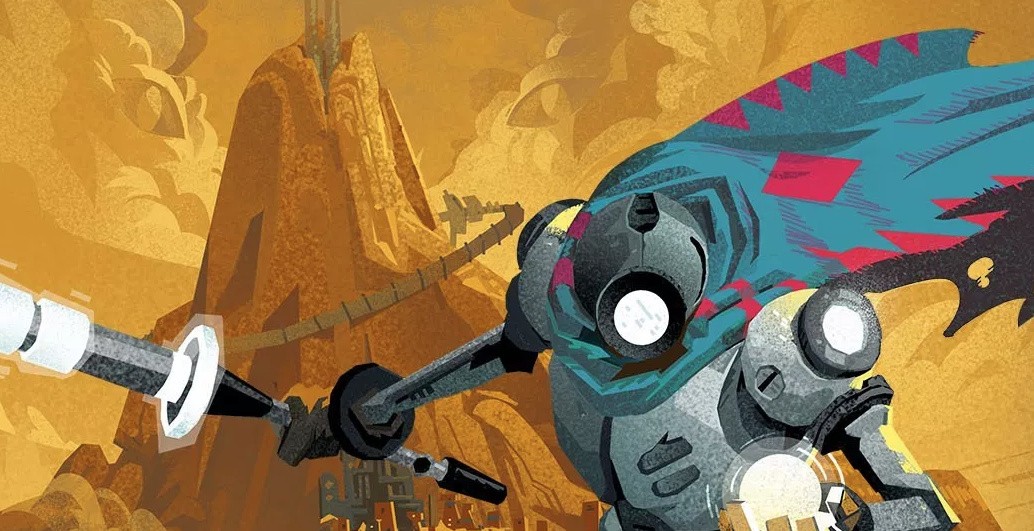
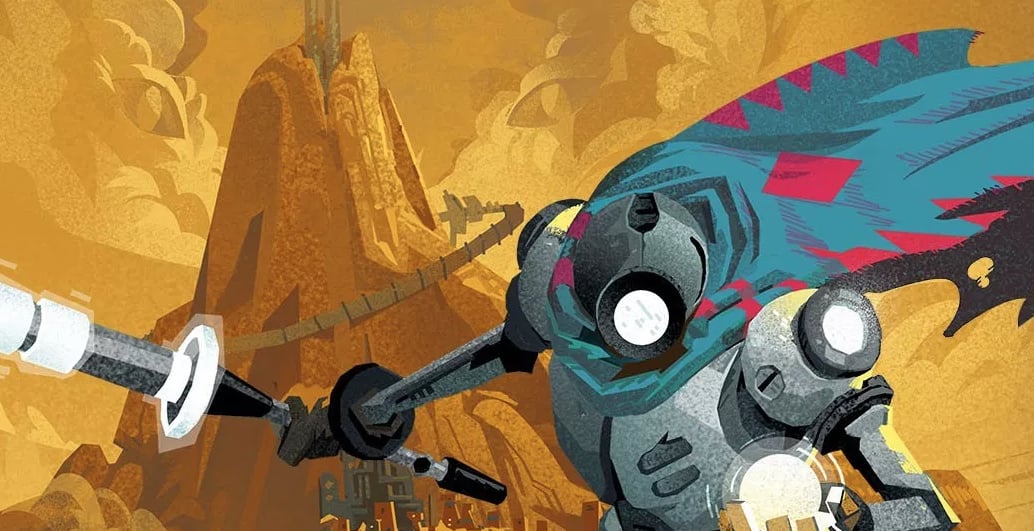
In Creature In The Well, you play as “the last remaining BOT-C unit” that’s spelunking into an ancient, unpowered facility. You’re swinging – literally – to restore power to this left-for-dead place, all the while a massive, shadowy creature the size of half your television screen sneaks ominous peaks at you. It will also occasionally reach down and grab at you or the ground you walk on. Watch out, by the way.
There’s a story in there somewhere. What we could play at E3 instead focused on the gameplay. Let’s elaborate on the graphics to start because they’re worth talking about; we asked Adam Volker, the title’s art director, who or what his inspiration was. It turns out to be heavily inspired by Mike Mignola, iconic illustrator of the Hellboy comics, and that comparison makes sense. Every part of this game is drawn with thick, black lines and alternating colour palettes stacked around or on top of each other, producing this sort of flat-but-deep, comic book effect. Take a look at the screenshots if you don’t get it. It’s going to look gorgeous on the Switch’s handheld mode, but do yourself a favour and play this game at least once on the nicest, largest TV screen you’ve got.
What exactly do you do in this game, though? Well, you’ve got a sword, and it sucks up projectiles from enemies and turns them into little orbs of white – or – you walk into a room and find the white orbs where you can get them and shoot them towards objects in the room that need triggering. The gameplay lies in the interplay between the energy your weapon charges and your ability to bounce it back and forth towards enemies, bumpers, or stuff needing hit in the correct order. With every successful enemy and bumper flattened, you gain (electrical?) energy, which allows you to open doors. Hold down “R” until at every doorway and a bar fills up. Collect enough energy to open it, and on you go.
It sounds a little bit confusing. It plays a little bit confusing, at first. “Why not just let me hack-and-slash pinballs everywhere without all this charging stuff?”, we thought, to which the developers keenly explained that in that scenario, the levels would play themselves with you sitting in the corner.
But once you sharpen your skills a little bit, you begin to morph into a running-and-gunning conductor, your symphony the pinball mayhem you reign down on the world. Every room is just a little bit different than the last, and the camera often shifts enough to give new perspectives on similar layouts. The sound effects are also neat, growling, clanking, and reverbing along with the buzz of your sword. The game is still a touch unpolished yet, but the overall experience is very fresh and satisfying. Did we mention it’s fun to look at?
No word on how long (or short) this game is. Again, by the numbers: there are eight dungeons with 20 weapons and various secret paths. In the demo, dying just meant you tried again from where you stood, but we were told the final version will force you to use your in-game currency to maintain your hard-earned progression, which is probably where the pinball analogy is most apt; you’ll probably spend the most time just trying to survive, then starting over and over again.
Creature In The Well comes out on Nintendo Switch, PC, and XBox One this summer. Keep an eye on Nintendo Life for our final review.
Apple chief Tim Cook on Tuesday was once again named to job website Glassdoor’s list of the top 100 CEOs in America, marking his seventh consecutive appearance on the annual employee rankings chart.
Cook achieved an average 92% approval rating to take the No. 69 spot on Glassdoor’s Employees’ Choice Awards, up significantly from last year’s 96th place finish. He was ranked 17th in Canada with a 94% approval in that country.
Cook’s best result came in 2016 when the executive reached the No. 8 spot with a 96% approval rating.
As noted by CNET, Cook is among a total of 27 tech sector executives to make the top 100 CEOs list for the U.S. in 2019.
VMware’s Pat Gelsinger took first position with an impressive 99% approval, while T-Mobile’s John Legere, Adobe’s Shantanu Narayen and Microsoft’s Satya Nadella landed in the No. 4, No. 5 and No. 6 spots, respectively. Facebook’s Mark Zuckerberg, the only other tech executive aside from Cook to make the list since its inception, fell from No. 16 in 2018 to No. 55 this year.
Glassdoor forms its list by calculating results from anonymous employee reviews collected over the past year, according to a press release. More specifically, employees are asked whether they approve, disapprove or have no opinion about their CEO’s performance.
The Employees’ Choice Awards ranks 100 top CEOs in the U.S., 50 in the UK, 25 in Canada and 10 each for France and Germany.
Under Cook, Apple has become one of the world’s most valuable companies, though much of its success is derived from a single product: iPhone. The executive is an outspoken proponent of human rights, often leveraging his station to forward not only business-related initiatives like consumer privacy, but also wedge issues like LGBT equality.
The nCine Engine is a C++ powered, open source MIT licensed 2D game engine that has been under development for over 7 years. It is a lower level code based framework, although it does support Lua scripting out of the box. The engine also integrates the ImGui framework making creating tools and UIs a breeze. The nCine engine works on Windows, Linux, Mac and Android.
With so many game engines on the market, you may be wondering… why another one? Well the author explains exactly that right here. The cCine project is hosted on GitHub and provides a Pong demo to get you started, implemented in both C++ and Lua.
Earn Exclusive Skins And Gear In Mortal Kombat 11’s Brand New Seasonal Mode
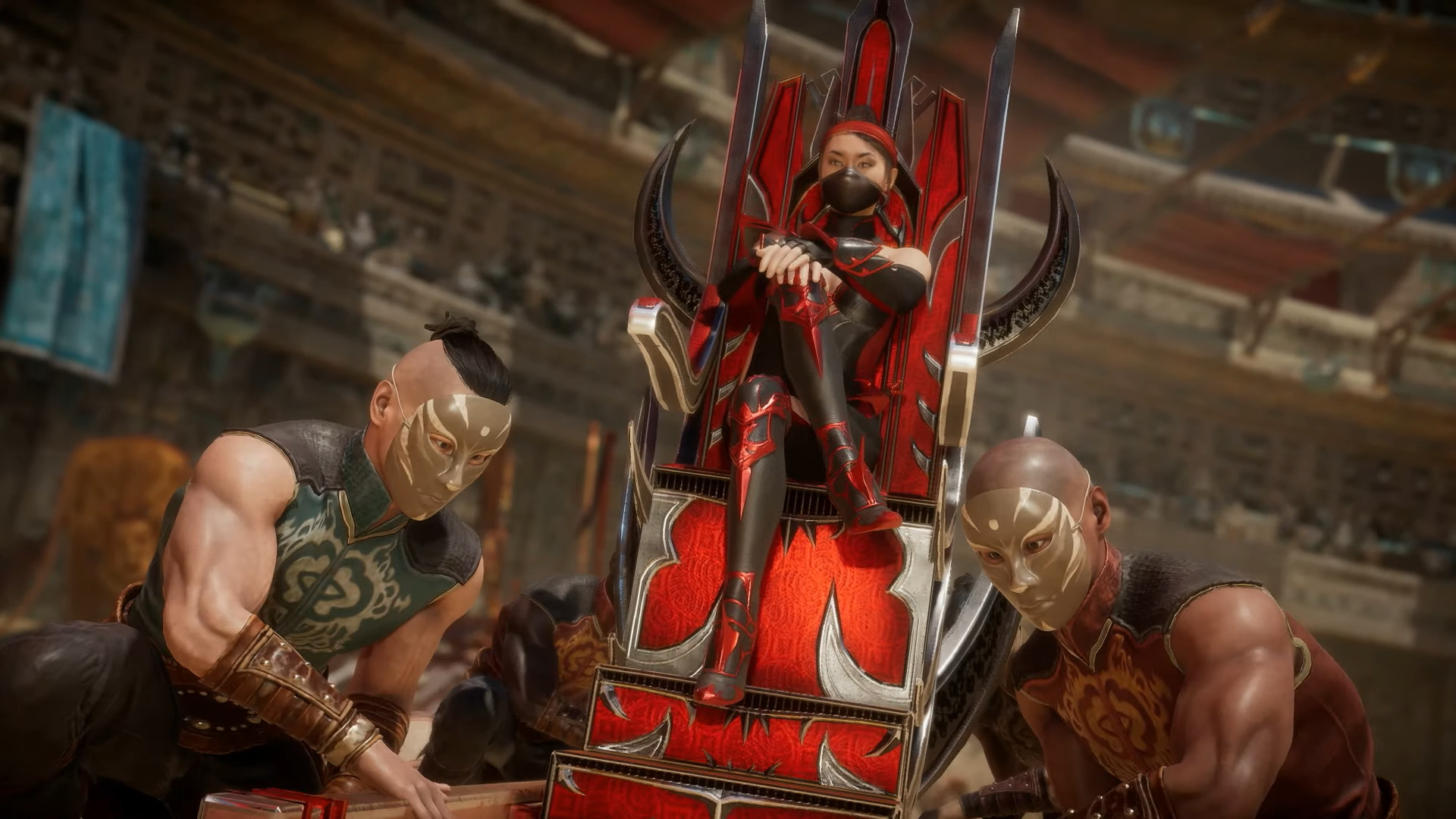
Originally announced within the game’s news section, the Mortal Kombat 11 Kombat League is at last upon us. The first season has been (unsurprisingly) branded “The Season of Blood“.
Starting from 18th June and running for the next four weeks, all players will be able to climb from Apprentice to Elder God rank. Levelling up will depend on how well you fare against online opponents and moving up ranks will reward participating “kombatants” with exclusive event armour and equipment. So, if you like to stand out among your friends, this might be a better way to achieve your desired look, rather than spend hours on end in the Krypt.
Coincidently, if you have purchased the complete Season Pass, 18th June is also the date Shang Tsung will become available for early access. There’s also the option to buy Shang Tsung as standalone DLC next week on 25th June. Update: Early access to Shang Tsung does not include the Switch version.
Will you be participating in the Kombat League? Will you uphold the values of Earthrealm against the tyranny of lag and packet loss? Let us know down in the comments.