Humble are currently running a new bundle absolutely loaded with programming books and videos by Packt Press. The Humble Book Bundle: Programming by Packt. The bundle includes books on C++, C#, Java, JavaScript and Go programming.
As always, Humble Bundles are split into different tiers. The tiers of this bundle are:
1$
Understanding Software
C# 7 and .NET Core Cookbook
C++ Programming by Example
Go Cookbook
Learning JavaScript Data Structures and Algorithms
8$
Modern C++ Programming Cookbook
Advanced Go Programming in 7 Days (VIDEO)
Java 11 Cookbook
Modern JavaScript From the Beginning (VIDEO)
Python Programming Blueprints
Functional Python Programming
Python 3 Object-Oriented Programming
15$
Software Architect’s Handbook
Learning C# 8 and .NET Core 3.0 (VIDEO)
C++ High Performance
The Modern C++ Challenge
Mastering Go
Java 11 in 7 Days
Learning Java By Building Android Games
Hands-On Object Oriented Programming with Java 11 (VIDEO)
Learn Java 12 Programming
Python for Beginners (VIDEO)
Clean Code in Python
Expert Python Programming
C# 7.1 and .NET Core 2.0 – Modern Cross Platform Development
Purchasing using this link give you the opportunity to support this site, which if you do, thank you very much!
Trapped in the city subway system due to a sudden disaster, you explore the depths of the tunnels to find your way out. The further you explore, the more you realize there is more to this disaster...and the lurking shadows are following your every move.
Posted by: xSicKxBot - 06-18-2019, 06:27 AM - Forum: Lounge
- No Replies
Amazon Game Studios lays off ‘dozens’ of staff
Amazon Game Studios has laid off an undisclosed number of developers, though a source speaking to Kotaku says that dozens of employees have been affected by the cut.
In a statement given to the publication, Amazon called the layoffs “the result of regular business planning cycles” and part of a reorganization effort to prioritize the development of New World, Crucible, and an unannounced project.
Amazon notes that it is working with affected employees to find them alternate positions within the company. Kotaku’s source elaborates, saying that those hit by the layoffs have 60 days to find new positions within Amazon, after which they’ll receive severance packages if no new employment is found.
If you or someone you know has been affected by these layoffs, you can email Gamasutra to share your story confidentially.
Amazon Games Studios was founded in 2012 and has seen a number of veteran developers join and depart the company in the years since. Those titles mentioned previously, New World and Crucible, were two of the three first projects announced by the company. The third, Breakaway, was canceled last year and Kotaku’s sources say some additional unannounced games were canceled alongside today’s layoffs.
Posted by: xSicKxBot - 06-18-2019, 06:27 AM - Forum: Lounge
- No Replies
Blog: Creating the the AI of Sea of Thieves – Part 2
The following blog post, unless otherwise noted, was written by a member of Gamasutras community. The thoughts and opinions expressed are those of the writer and not Gamasutra or its parent company.
[embedded content]
AI and Games is a crowdfunded series about research and applications of artificial intelligence in video games. If you like my work please consider supporting the show over on Patreon for early-access and behind-the-scenes updates.
‘The AI of Sea of Thieves’ is released in association with the UKIE’s ’30 Years of Play’ programme: celebrating the past, present and future of the UK interactive entertainment industry. Visit their website for links to interviews, videos, podcasts and events.
In part 1 on my series looking at Rare’s Sea of Thieves, I explored the range of AI systems at play, how missions are generated for players at each of the three quest givers and how all of this is subsequently managed at server level to suit. Having been invited to Rare’s offices there was so much to talk about and in this entry, we’re going to hear first-hand from the developers themselves about the AI in the game at launch. First we’ll explore the pigs, snakes and skeletons roaming the treasure-laden islands; how they work and the surprising secret that powers the skeleton AI behaviour. Plus we dig deep into the completely distinct navigation system built into Unreal Engine 4 by Rare that allows for navigation in open waters and just how difficult it is to stop AI sharks from swimming onto land.
Land AI Architectures
So lets’ begin by examining the land-based creatures. As explained in part 1, one of the main mission types in Sea of Thieves is the Order of Souls: where you must visit one or more specific islands in the world to kill high-ranking skeletons and sell their skulls for treasure. This requires skeletons to spawn in the world when necessary, but they can also just appear throughout your time on a given island if you’re in the midst of retrieving items for a gold hoarders or merchant alliance quest.
Skeleton AI
So how do they work? Well they’re reliant on a commonly used AI paradigm called behaviour trees, which is the default AI tool built into Unreal Engine 4. As explained in my recent AI 101 episode on the topic, behaviour trees allow for branching of logic so that in certain situations, the AI will make one or more decisions that reflect the scenario. Plus they can react to changes in the world quickly and update their chosen behaviour to suit. Now as mentioned in part 1, many of the land-based AI characters such as the skeletons and the animals on the islands – which I’ll come to in a minute – are all using the original built-in AI toolchain. But there’s something special going on in the skeletons that I wanted to talk about, something unique that during my time working on AI and Games, I’ve simply never came across before.
Y’see, when an AI character in game, while you might want to ensure they’re using some of the same mechanics and features as human players – especially if they’re humanoid – when building the AI you’re thinking about the behaviour you want the character to execute often in a completely distinct way from how you would as a player. You’ll have the logic that dictates when a certain action or behaviour is going to be executed and in Unreal you’ll write specific tasks in the behaviour tree in blueprint that handle the execution on a minute level often calling existing functions in the code that players may call to do a similar thing. Say for example in Sea of Thieves you want to heal yourself after being injured, then you would open the inventory, grab a banana then hit the right-trigger or left mouse button to eat it, which triggers the Heal() function in the codebase for human players. Typically if you want an AI character – such as a skeleton – to do the same thing, the logic would be to simply run either the same Heal() function or a similar one for that non0player character and ensure the appropriate banana-chomping animation is used to enable players to understand what is happening. Ultimately, it looks like it’s doing the same thing, but under the hood they’re completely distinct.
So imagine my surprise when – having sat down with developers Rob Massella and Sarah Noonan – that the skeletons are mimicking player input. So instead of simply triggering specific code behaviours, they’re pressing virtual equivalents of the controller/keyboard inputs and effectively ‘playing’ the game like humans are. Plus, the skeletons use the same base controller (or in UE4 terms, the same actor) as a human player, meaning they not only shares some of the players animations but also the input interface. So returning to the banana example, for a skeleton to heal itself, it’s actually pressing virtual buttons that enable it to grab a banana from its inventory and subsequently eat it.
Though it’s worth mentioning that movement on the ground isn’t using virtual representations of the sticks, they’re just using the navigation meshes baked onto the islands to walk around. What’s amazing about this is that by doing the extra legwork to parse a given interaction or behaviour for the AI into the appropriate player inputs, it ensures that skeletons can only execute actions if a player can do it as well. This kinda makes sense, given they’re… well… undead humans, but more imporantly it helps streamline testing of the skeleton AI, since if you can see them doing something that a player can not, then you know somethings gone wrong. But also, in theory it means that if new gameplay mechanics are added for the player then – once a bit of extra coding has been completed – the skeletons will be able to do it as well!
Given this can take a bit of getting used to, Andy Bastable explained to me that the gameplay team had a little ‘assignment’ that they would give to new developers to help them get to grips with the toolchain. Developers are tasked with creating a ‘Mariachi band’, whereby a group of skeletons must come together on a piece of land, pull out their instruments and start playing a song together.
Now all of the AI behaviours are managed server-side – much like what we saw in my case study on Tom Clancy’s The Division – given it ensures players on each device have the same experience as they interact with them. But there’s still the issue of balance, which as I mentioned in part 1 is addressed by having systems in place that makes sure skeletons scale in difficulty in accordance with the experience. Not only can the behaviours and base gameplay parameters such as hit points and available weapons change, but the types of skeletons are fairly broad with Overgrown, Shadow and Gold skeletons forcing players to mix up their play styles to defeat them. On starting playing for the first time, skeletons are quite slow, not particularly aggressive and can only use claws to attack or maybe a sword. As players increase their ranking in the order of souls, skeletons are given access to abilities they didn’t have before: they can strafe faster, hunt you more efficiently, back off if under attack, heal themselves with bananas and even start to use the pistol and blunderbus to attack. This is all achieved through use of data assets that can plugged into the character AI at runtime that defines how this specific skeleton will operate, with over 50 unique parameters that help diversify their attributes and behaviour.
Animal Behaviours
So while the game needs to provide threats to players on any given island, there’s also all of the ambient wildlife: the pigs, chickens and snakes. They can either prove a pain in the ass while you’re avoiding a hoard of skeletons, be a resource you need to gather for Merchant Alliance quests or just add a bit of life to the surrounding environment.
In any case, they too use behaviour trees and while their architectures is largely similar to the skeletons, it is much more reduced in scale: with snakes attacking the player if in proximity and pigs and chickens just running away from you. The architecture is consistent across each type, with the data assets assigned to them helping to dictate how that specific animal will operate with the behaviour tree.
As mentioned in part 1, these are treated in much the same way as skeletons for load management and can be disabled or despawned when necessary if they’re consuming resource on the server that could be put to better use elsewhere.
Sharks & Navigation
Now having explored all the AI characters on land, what about at sea? So let’s check out the first real threat players are faced with in the murkey depths, sharks. Lots and lots of sharks.
From a design perspective, the sharks are intended to add a new layer of challenge for players by ensuring you don’t sit idle in the water. They only operate within a short range and spawn in when necessary. Meaning you won’t just stumble into a shark swimming the seas in the open world, instead you will effectively cause a shark to teleport into the game near your position then stalk you if the game feels like you’re sitting in the water for too long.
So while the shark behaviour trees is relatively straightforward – they only really cricle their prey or attack it – there are two distinct problems that needed to be addressed. The first big problem is navigation: how do you ensure an AI shark knows how to move through a volume of water. We typically use a navigation mesh to support movement on a static surface. This works OK on land in for characters such as the skeletons given the nav mesh is a two-dimensional surface that models movement on a three-dimensional space. However, this doesn’t scale to surfaces that are constantly changing shape or for volumes of space such as water and air – meaning you need to create a custom solution to resolve it. This isn’t a unique problem for Sea of Thieves, as we saw in my recent case study on Horizon Zero Dawn, where Guerilla Games had to build a separate navigation system for the flying enemy characters.
Rare challenged the problem head-on by building a navigation system that would integrate into the existing navigation framework in Unreal Engine but catered specifically for underwater movement. But before they could do that, there was a second design problem that needed to be addressed; a shark can’t stop moving. Whilst it varies between species, the majority of real-life sharks need to maintain movement in order to breathe. So the AI equivalent needs to replicate this behaviour: making lots of small corrective changes in direction at varying speeds. So the movement systems needed to ensure not only could the AI navigation through water like a shark, it had to move actually move like a shark would too.
So first things first, unless the sharks are instructed to attack a player, they typically swim in arcs. These is achieved by effectively calculating the arc of a circle of a given diameter, this impacts the turning rate of the shark as it’s moving and the designers can tweak the speed with which it moves along it – with that speed value also being sent to the movement components such that the animation reflects the current movement speed. The navigation systems give the sharks location in either 2D or 3D space to move towards, then create a natural arc that will fit that location.
A lot of effort is put into the turning rate of the sharks. The turn rates are constrained in such a way, that it prevents sharks from turning too sharply at high speed. If a shark needs to make a tight corrective turn, given it’s about to attack the player, it will slow down – but never to the point it stops of course – and ensure it’s lined up with the player before speeding up again. But also there’s a small window of acceptable error for shark movement, they can sometimes overshoot a target they’re arcing towards, but provided they’re not going to collide with any obstacles – which I’ll come back to in a second, then that’s fine, given it makes the sharks move more naturally.
This is all largely assuming movement in 2D space, meaning that the player and the shark are at the same depth in the water. In the event they don’t line up, the shark will plot the same paths as usual, but generate a simple besier curve to allow it to swim up or down to the same depth.
Now this is pretty cool, but there’s still one big problem left to deal with: collisions. Sharks need to avoid both ships and islands and are reliant on the environmental query systems in Unreal to spot obstacles in proximity, but they also have short range whisker-like sensors just in case they’re going to swim face-first into a boat. This is pretty important given that there’s still a small chance as it swims an arc that it runs risk of beaching onto an island…. which was apparently a much bigger issue during development!
To keep the codebase maintained, the source code for shark navigation is an extension of existing navigation, movement and AI controller code built into Unreal Engine. As such, it made life easier for the developers given it was designed to behave in much the same way as land-based navigation when called to execute and streamlined it for testing purposes, which is something that you can expect to hear more about later in this series.
Closing
Even the simplest of AI characters needed for AAA titles can prove to be a challenge, and even more so once they deviate from the expected formats in games. Even having AI that swim can prove to be a problem and it was exciting to see how these water-based threats were put together. But our journey through the Sea of Thieves on AI and Games is far from over. There are still some monstrous AI enemies that threaten to drag us down to Davy Jones Locker and in part three of the AI of Sea of Thieves we’re going to tackle them face on:
The kraken, the mighty beast that has haunted players since launch.
The mighty Megalodon released during the Hungering Deep expansion.
And the Skeleton Ships first seen thrashing the waves in the Cursed Sails, that now more aggressively seek players to plunder!
Dragon Ball Z: Kakarot brings the beloved story to life like never before. In this all-new Action RPG, fans will step into the shoes of one of the greatest warriors to ever walk the planet, Kakarot, who we all know by his Earth name, Goku.
Before he was known as a great hero, Goku had to overcome some monumental odds. Fans will get to relive Goku’s most epic battles such as his showdowns with Raditz and Frieza, to name a few. These battles for the fate of the planets will test the limits of your combat abilities, pushing you to grow stronger and rise to the challenge!
Beyond these iconic battles, you will also get to experience everything in between as you fly, fish, eat, train with friends, strengthen bonds and build relationships. Complete unique side quests to unlock never-before-seen stories and dialogue that answer burning questions of Dragon Ball Z lore for the first time.
With its unique blend of humor, heart-warming moments, and unforgettable battles, Dragon Ball Z: Kakarot stays true to the anime that has captured the hearts of fans around the world. Get ready to relive the epic tale of Goku when Dragon Ball Z: Kakarot comes to Xbox One early 2020.
Some people got upset about this because the studio, Ys Net, had originally said the game would be available on Steam. The game is still coming to Steam, but not until 12 months after its release on the Epic Games Store. Now, developer Ys Net has responded to the outcry, but only in a preliminary way.
In a post to the game's Kickstarter page, Ys Net said it hears the concerns of fans. Representatives from the studio were in Los Angeles for E3 where they showing off the game, but when they return to home base they'll look into how to "find a way forward" as it relates to explaining to fans that their faith in the studio can be upheld.
"We want to make sure that the Backers are aware that we are listening to their concerns," reads a line from the update. "We kindly ask all our fans to have some patience, we are currently at E3 demoing the game and need to get back to our respective offices to assess the situation and together find a way forward to justify the trust you placed in us."
Shenmue III is also coming to PlayStation 4. The Shenmue III release date is set for November 19. A new trailer was released during E3; check it out in the video embed above.
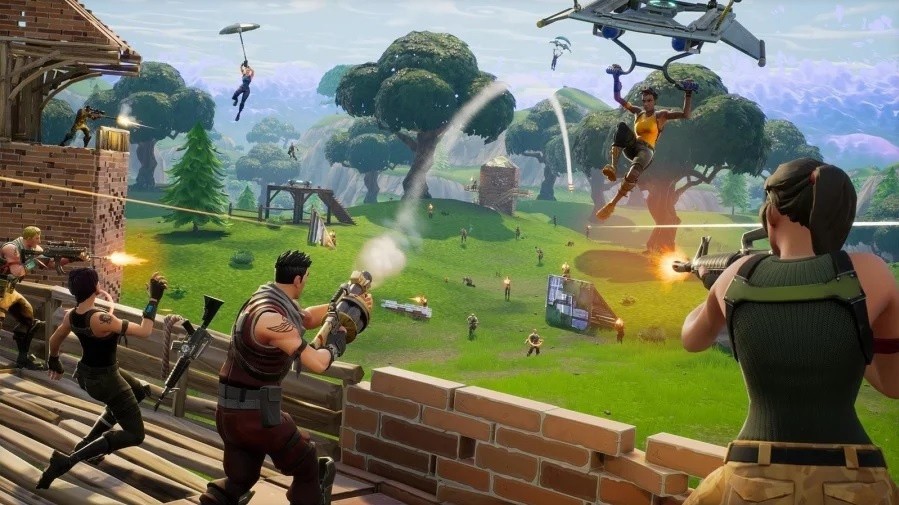
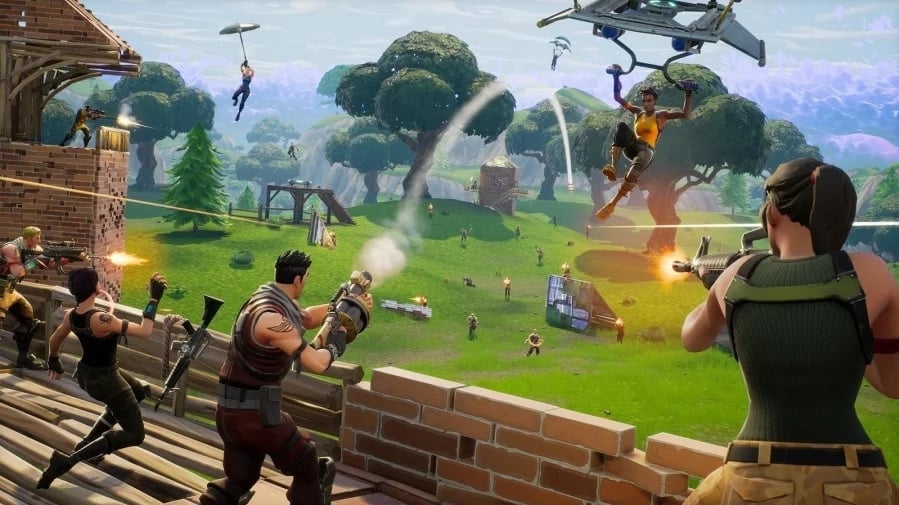
Former Epic Games Director Says He Tried To Axe Fortnite
What would gaming be like right now if the insanely popular title Fortnite didn’t exist? It’s obviously something we’ll never know, but if the former Epic Games production director Rod Fergusson had got his way, we might have found out.
In a recent interview on the Game Informer Show podcast at E3 2019, Fergusson – who is now the head at The Coalition (the developer behind the Gears of War series) – explained how he “tried to cancel” Fortnite before he departed Epic and revealed the game didn’t pass his own standards.
If I stayed at Epic, I would have canceled Fortnite. Before I left, I tried to cancel Fortnite. When it was Save the World, that was a project that had some challenges.
As the director of production at the time, that game would not have passed my bar for something we should have continued to keep going.
Fergusson claims to have not lost any sleep over the game’s success and also reassured Game Informer he was “super happy” for Epic.
Do you play Fortnite? Are you glad to hear it didn’t get axed? Tell us in the comments.
When thinking about IT security, one area that may not readily come to mind is the physical security of an enterprise’s servers. It’s often thought that because the servers are behind lock and key and/or in a data center, and because the data is in continuous use, encrypting the server drives isn’t needed since the data is never at-rest.
Posted by: xSicKxBot - 06-18-2019, 12:37 AM - Forum: Windows
- No Replies
Microsoft To-Do now available in the Mac App Store
Today, we’d like to announce the arrival of a new family member—that’s right, the moment many of you have been waiting for is here—say hello to the Mac app. Can’t wait to get started? Download it from the Mac App Storenow, and then read on to find out more.
The Mac app joins iOS, Android, Windows and web.
The To-Do app you know and love
If you’ve already been using our app on Android, iOS, Windows, or web, then the Mac app will feel very familiar. Sign in and all your tasks will be waiting for you, ready to be checked off. You can work offline, add tasks to My Day, see your flagged email in your Flagged email list, and share your lists with colleagues or friends and family. The Planner integration isn’t available yet, but we’re already working on bringing the Assigned to Me list to you.
Keep your tasks in focus while you work with minimized view
It’s all in the details
Let’s get to the fun bits. Press ⌘2 and To-Do will move into the minimizedview so that all you see is the list view. Keep it on My Day to always have your tasks for the day on view. With To-Do on the side of the screen you can work on that budget in Excel or that essay in Word while checkingoff each step you complete. Turn the sound up loud, because of course that oh-so-satisfying ding is also in our Mac app. Want to go back to seeing all your lists? ⌘1 will get you there.
Want to edit a task? You don’t need to go into the detail view to do that in the Macapp—you can do it straight from your list view. Select the task you want to edit and then click on the text in order to edit the task name.
See all the tags that you’ve previously used
If you use tags then you’ll be very happy to know that we have a tag menu that will pop up whenever you type # in a list name. Using a productivity system like GTD (Getting Things Done)? You can add tags like #home #computer #work or #waiting to your task names and usethe menu to quickly add these tags to future tasks. Click on the tag and you’ll see all the tasks with that tag name across all your lists.
It’s all in the tech details
If, like us, you like to look under the hood of the app, then you might love to know that we built a native Mac app using 100% AppKit.
So, that’s it from us. We’ll leave you to get acquainted with our newest family member. We’d love to hear your feedback in the comments below, or over on Twitter or Facebook. Have an issue? Send us a message in-app and our To-Do support team will be ready to help.
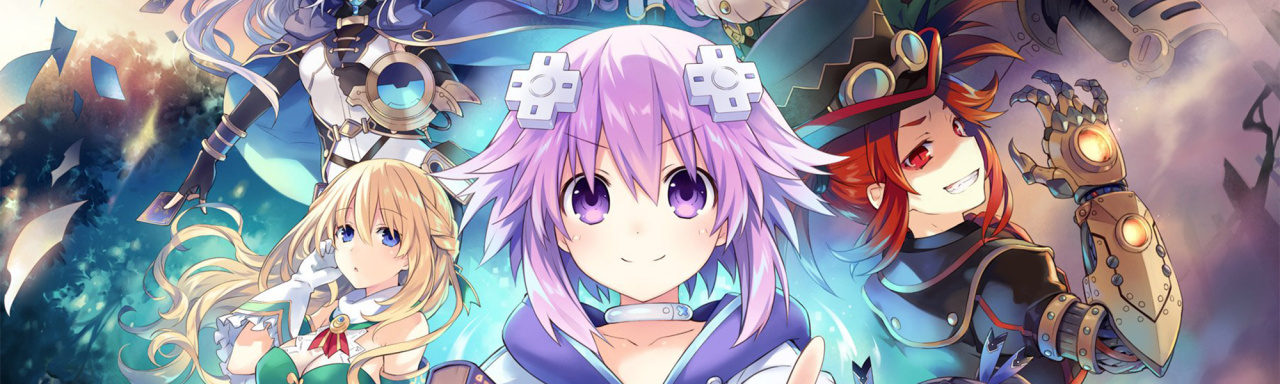
Review: Super Neptunia RPG – An Easygoing Take On A Cult JRPG Series
For those that haven’t stumbled across this side-scrolling RPG series, the Neptunia games have been knocking around since 2010. Originally created by Compile Heart, Idea Factory and various other Japanese studios since, the adventures of chirpy goddess Neptune and the ongoing Console War have been a PlayStation console exclusive for years until now. And Super Neptunia RPG isn’t just the first instalment to appear on Nintendo hardware, but also the first one to be developed by a Western studio. While not completely unheard of, it is quite unusual for a very Japanese-centric franchise to be handed over to a non-native outfit – even if this is just a spin-off.
To its credit, Canadian outfit Artisan Games clearly knows the series its drawing from, taking cues from both the mainline Neptunia series and from a number of other much-loved JRPGs. While other spin-offs have spun into everything from CCGs to dating sims, Super Neptunia RPG instead opts for something a little more in-line with the series’ roots. There are still plenty of those visual novel-style cutscenes, with long-winded conversations between various atypical anime characters with giant weapons and questionable fashion choices, only now there’s a greater focus on side-scrolling movement and platforming rather than 3D exploration.
Set within the same colourful universe as the main series – a humorous meta-world where nations in the land of Gamindustri are divided by their allegiance to certain fictional consoles – Artisan has moved away from the 3D models of old and opted for a more pleasing 2D art style. It’s a great choice, and everything from the gorgeous background vistas to monster and character designs look and feel instantly more timeless than the 3D models found elsewhere in the franchise. The entire mythos might be a pastiche on games as a tribalistic battleground – and the use of an amnesia-stricken hero is beyond dull at this point – but that cute aesthetic helps lend a storybook quality that’s reminiscent of Octopath Traveler and Legrand Legacy: Tale of the Fatebounds.
When synced up with a poppy and energetic soundtrack and a surprisingly decent amount of voiceover work (which you can play in English or Japanese, with support for English subtitles as well), Super Neptunia RPG is both faithful and refreshingly different in its presentation. However, identifying usable platforms and knowing exactly how to walk up multiple pathways when in a city (you have to jump, rather than pushing up on the analog stick) can sometimes be far less intuitive than it should be thanks to this colourful visual take.
As with previous games, the bulk of your time with Super Neptunia RPG will be split between exploring the 2D dungeons and cities of Gamindustri and taking part in battles. Platforming isn’t particularly challenging, although Neptune’s movement can sometimes be a little too slippery as she moves from standing to sprinting in seconds. While exploring, you can converse with NPCs to gain new quests, open treasure chests for new items and gear and explore forests, cities, towns and labyrinthine caves. You can initiate battles by approaching an enemy or by slashing them with your equipped weapon to begin an encounter with a temporary stat boost.
Combat is semi-active, with your squad of teammates positioned in a diamond formation on the right of the screen, in a similar fashion to Valkyrie Profile. You’ll start off solo for a while, but eventually you’ll be reunited with your fellow deities, with each character represented by one of the four buttons above their respective head. You can’t attack in real-time, but you can once a small meter in the bottom right-hand corner of the screen begins refilling segments. Enemies will also attack periodically, so you’re left with deciding between using a small amount of AP to perform a light attack or hold off, soak up some hits then unleash a much more powerful strike as a result.
Switching formations will place different characters in the position of squad leader, which will enable you to adjust the kind of attacks and support moves each one can pull off, but these subsystems aren’t explained particularly well so don’t expect to utilise this relatively key feature straight away. And while it does throw quite a few pages of tutorial text at you, it soon becomes apparent that there isn’t very much to combat. In fact, you can even hold ‘ZL’ to speed up and automate the process. It’s clearly a decision to make battles more appealing to new or casual players, but it leaves Super Neptunia RPG feeling a little hollow as a result.
Conclusion
Super Neptunia RPG actually has more in common with South Park: The Fractured But Whole than it does more traditional RPGs, simply because it takes systems that can often be a little too complicated and makes them far more palatable for players hoping for a more casual experience. Combat can often drift a little too far into the casual zone – especially with the ability to speed up battles – but the strength of its environmental design and the light-hearted nature of its quests helps this spin-off hold a lot more weight than some of the throwaway cash-ins that have graced PS Vita in recent years.