Ghostbusters Ecto-1 Car Pack And More Coming To Rocket League
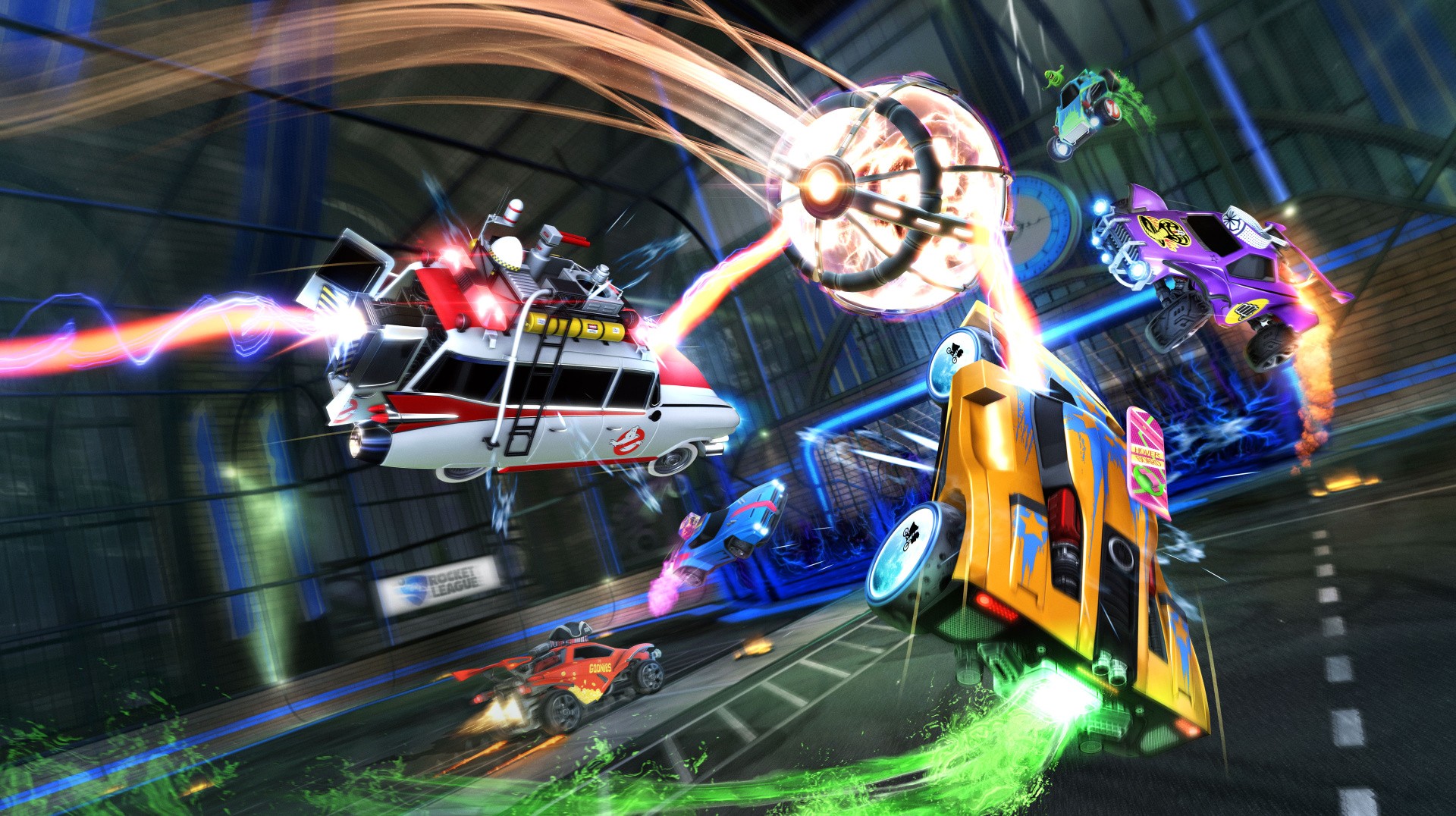
Coming to Rocket League this summer is a 9-week-long event named Radical Summer and it’s celebrating the season ’80s style.
That’s right, if you’ve had your fill of ’80s nostalgia you should look away now because Psyonix will be pumping its motorised soccer game full of the stuff starting from 10th June. Celebrating iconic movies, TV and ‘culture’ from the decade of big hair and shoulder pads, players will be able to earn ‘Cassettes’ (google it, kids) through online matches which you can cash in for a bunch of neon ’80s swag for your ride.
Most excitingly of all, Ecto-1 – trusty ride of the Peter, Ray, Egon and Winston themselves – is making its long-awaited debut. We’ve already got the DeLorean from Back to the Future and K.I.T.T from Knight Rider will also be joining them, along with gear from ET, The Goonies, Karate Kid and more.
The event is split into three parts, with the limited-time game modes and content outlined in the official blurb below:
’80s Blockbusters –June 10to July 1
– The Blockbusters celebration kicks off Radical Summer with the launch of the Ghostbusters Ecto-1 Car Pack on June 10. The pack will include the GhostbustersEcto-1 Battle-Car, Ecto-1 Wheels, Proton Pack Boost, Slimer Topper, Ghostbusters Player Banner, Ghostbusters Avatar Border, and the Stay Puft Goal Explosion for $1.99 (or regional equivalent).
– The first limited-time game mode for Radical Summer is Ghost Hunt. In this spooky 3v3 mode players must fire a proton stream to capture the ball and carry it to the opposing team’s Containment Zone to score a goal.
– Additional ‘80s franchises featured in the Blockbusters phase — as in-game items in the Radical Summer Event Store — are Back to the Future, E.T. the Extra-Terrestrial, The Goonies and Karate Kid. Additional details on the landing page.
’80s Culture –July 1to July 22
– The action-packed Spike Rush Game Mode will start the Radical Summer Culture celebration on July 1. Spike Rush is a 3v3 mode where each player has the Spike power-up from Rumble Mode that can be activated to carry the ball up field.
– New in-game items highlighting the iconic culture of the ‘80s will be available in Radical Summer’s Event Store.
’80s Television –July 22to August 12
–The Knight Rider Car Pack kicks off the last celebration of Radical Summer dedicated to television. The pack will feature K.I.T.T., the high-speed, talking futuristic car outfitted with high-tech gadgets and personality of its own from the hit ‘80s show, alongside Knight Rider themed items. More information will be revealed later.
– Beach Ball Game Mode is the final limited-time game mode in Radical Summer. It is a 2v2 mode inspired by beach volleyball with a larger ball, low ball gravity and Curveball mutator activated.
– Additional ‘80s franchises featured in the Television phase as in-game items in the Radical Summer Event Store are DreamWorks Voltron Legendary Defender and WWE. Additional info to follow later this summer.
Fans have been calling for the addition of Ecto-1 ever since the game released and we’re going to find it very hard to resist this particular piece of DLC. Time to get bustin’.
Had enough of all this regurgitated ’80s nostalgia? Still going to get Ecto-1 and KITT despite yourself? Let us know below.
Solomon’s Key Joins Hamster’s Arcade Archives Series On The Nintendo Switch
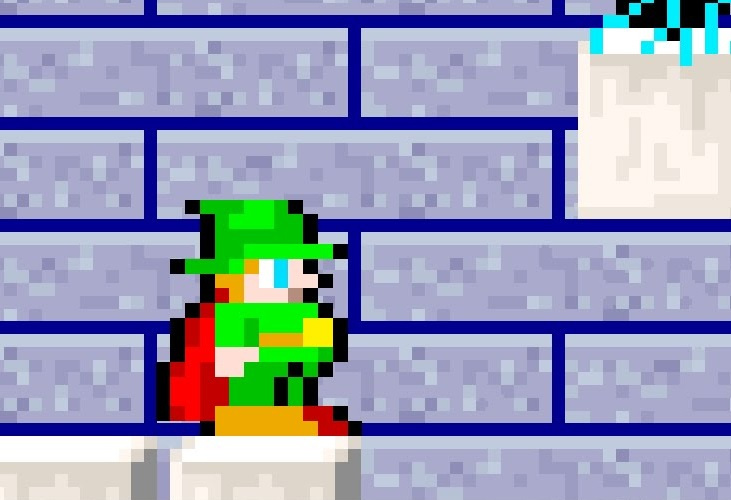
Hamster is adding Tecmo’s 1986 release Solomon’s Key to its Arcade Archives line on the Nintendo Switch. The title supports 1-2 players and will set you back $7.99 / €6.99 / £6.29.
From June 6th, 2019, Arcade Archives Solomon’s Key will be available digitally for Arcade Archives, the downloadable series by HAMSTER for Nintendo Switch
If you haven’t experienced this arcade classic before, it’s described as an action game where you “make full use of the ‘magic’ of the main character Dana” to acquire items and get the book known as Solomon’s Key.
Like existing releases in Hamster’s series, this one will allow you to alter various settings such as the difficulty and you can even “reproduce the atmosphere” of the original arcade display. Other modern features allow you to compete against online high scores from around the world.
If you are interested, but don’t necessarily feel like forking out for another retro release, you can always consider the NES version of Solomon’s Key, which is currently available on the Nintendo Switch Online service.
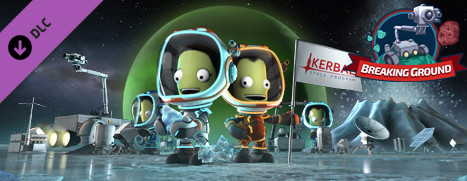
Kerbal Space Program: Breaking Ground Expansion is the second expansion for the PC version of the critically acclaimed space flight simulator, Kerbal Space Program. This feature-rich expansion is focused on increasing the objective possibilities once celestial bodies have been reached by adding more interesting scientific endeavors and expanding the toolset.
Posted by: xSicKxBot - 06-06-2019, 06:55 PM - Forum: Windows
- No Replies
Where to watch this Sunday’s Xbox E3 2019 Briefing
With E3 coming up on Sunday, we’ve got some final details on what Xbox has got going on for the biggest gaming event of the year!
We’ll be kicking things off with our annual Xbox E3 2019 Briefing, which you can watch live beginning on Sunday, June 9 at 1:00 p.m. PDT. During the briefing, you’ll have a chance to check out everything from trailers for unannounced titles coming in 2019 and beyond to in-depth looks at previously announced games. You can watch the Xbox E3 2019 Briefing live beginning at 1 p.m. PDT on June 9 on the official Xbox Channel on Mixer, or on the Mixer app for Xbox One and mobile. Once again, we will plan to have a MixPot (the Mixer feature that drops free content for logged-in viewers on certain streams) for our briefing, so be sure to log in to Mixer to get your free MixPot content!
As with last year, the Xbox E3 2019 Briefing on Mixer will be offered in six languages: English, German, French, Italian, Spanish (LATAM), Portuguese (LATAM), and includes support for English Closed Captions. To select an alternate language, click the “cog” button within Mixer to view the available list. We’re excited for fans all around the world to join in on the Xbox E3 2019 Briefing festivities.
We’re also very happy to announce that we’re partnering with Fuse Media to bring the Xbox E3 2019 Briefing to Fuse viewers at 1:00 p.m. PDT (or 4:00 p.m. EDT for you east coast dwellers!). Encore presentations will air on Fuse at 3 p.m. PDT (6:00 p.m. EDT) and be available on the Fuse VOD platforms the week of 6/10. Be sure to hit up Fuse.tv to find out where you can watch Fuse.
As we announced a few weeks ago, we’re also bringing Inside Xbox back to E3 this year! Inside Xbox will air Monday, June 10 at 3 p.m. PDT and will feature a livestream full of exclusive announcements, game demos, interviews, giveaways and more.
Be sure to head on over to the Xbox E3 Online Experience for more information and details on what we’ve got going on for the week.
Todd Howard On Elder Scrolls Horse Armor: "People Will Buy Anything"
Apart from being remembered as an amazing open-world RPG, Bethesda's The Elder Scrolls IV: Oblivion is also known for being one of the first console games with microtransactions. Specifically, horse armor. Bethesda boss Todd Howard has now reflected on the horse armor controversy.
Speaking to IGN, Howard said, "People will buy anything." He added: "That doesn't mean you should do it. [But] they will buy anything. That sounds terrible."
Howard went on to say that there is nothing wrong in practice with horse armor, but the issue with it is how pricey it was. He said someone at Microsoft--he wouldn't say who--told the team at Bethesda to charge more, so they did.
At the time, themes--or wallpaper for your Xbox 360--were a big deal. The price point Bethesda proposed for horse armor was below the price of a theme. So Microsoft asked Bethesda to increase the price; it was sold at the time for $2.50 USD.
"Horse armor is not bad. I think horse armor is fine. The price point, at the time, was the issue. We felt, it's probably worth this," he said. "I won't say who at Microsoft said, 'Well, that's less than we sell a theme for; a wallpaper is more than that. You should charge this; you can always lower it.' We were like, 'Okay!' It's a price-to-value proposition at the time, not do I want armor for my horse. And looking back now, it's quite cheap."
In the ensuring years, Bethesda sold Oblivion's horse armor for twice the normal price as an April Fool's joke, and it sold well because people were in on the joke and wanted to participate, Howard said.
Random: Bandai Namco Thinks Pokémon’s New Legendary Looks Pretty Familiar
Unless you somehow missed the bombardment of Pokémon news today, you’re probably already pretty familiar with the newly revealed Legendaries. As it turns out, it seems that Bandai Namco is pretty familiar with one of them, too.
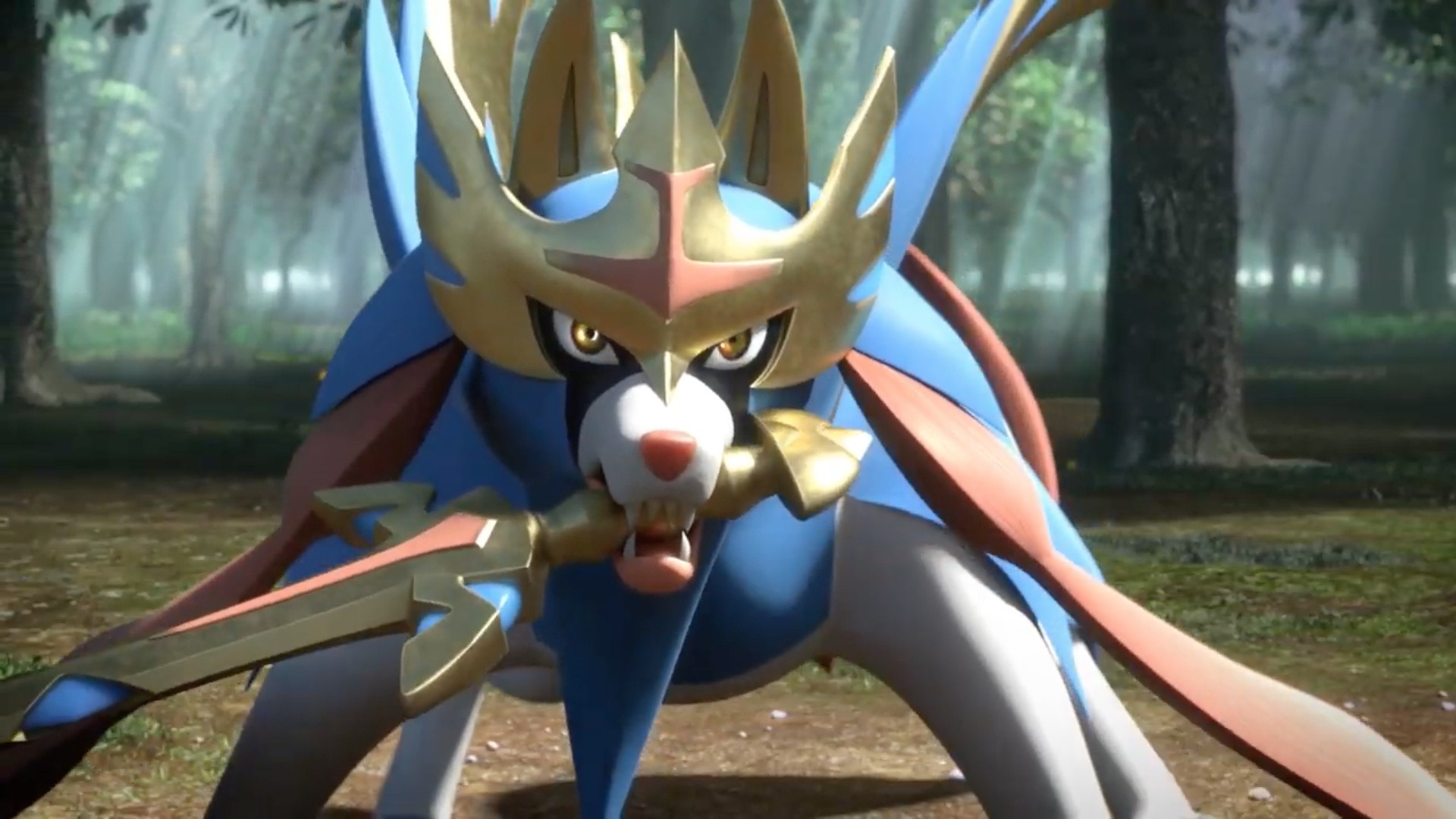
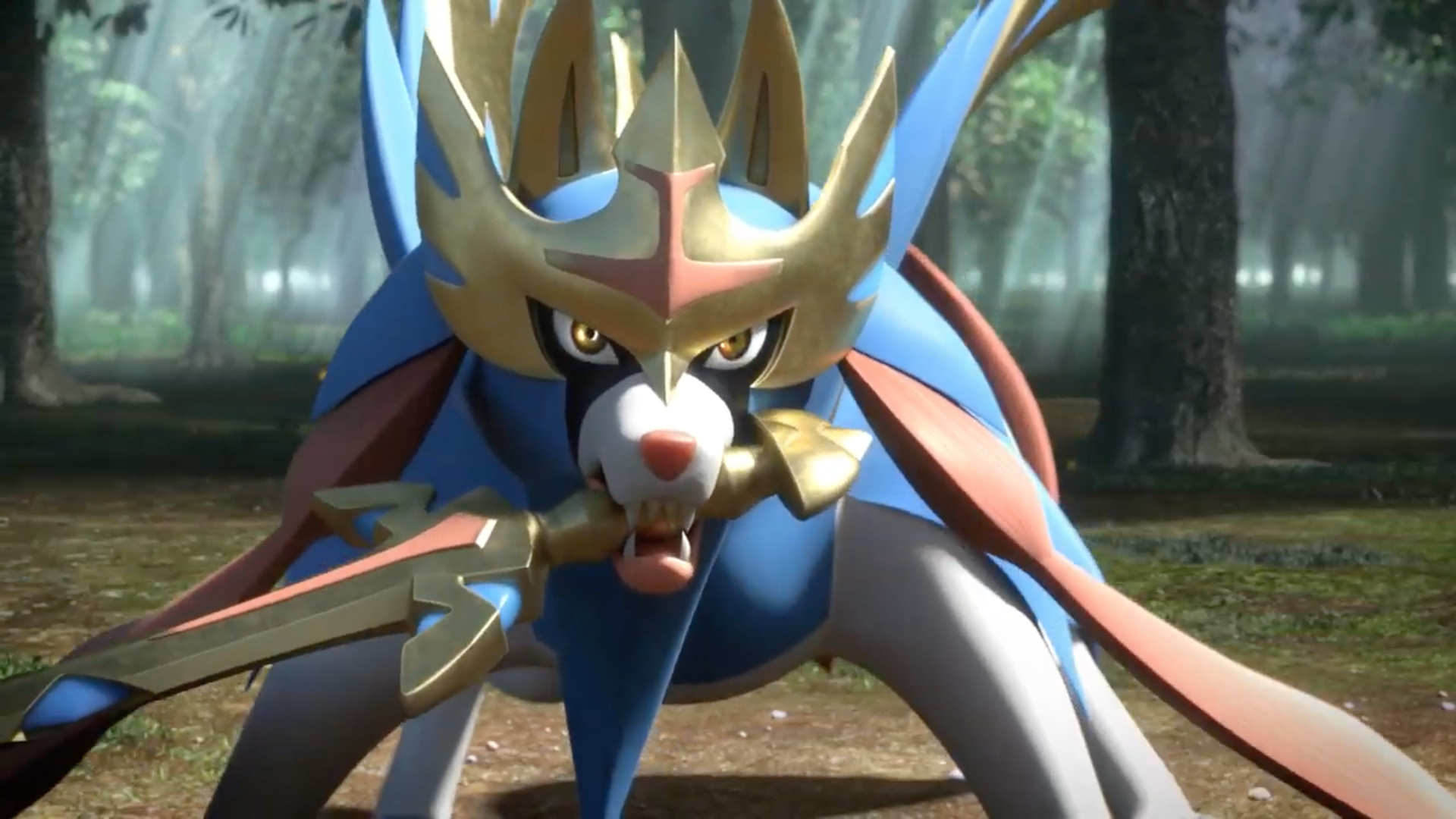
The new Pokémon Sword star, Zacian, appears to resemble a giant wolf which holds a sword in its mouth. It’s had quite a mixed reaction from those we’ve seen talking about it online, but we think it looks pretty cool overall (you can see all of today’s newly revealed Pokémon here).
Now then, those of you familiar with the painful experience that is Dark Souls may remember Great Grey Wolf Sif, a boss who appears in Dark Souls Remastered (and the original release, of course). The resemblance is there for all to see, but we particularly like Bandai’s use of the shield, too.
We very much doubt that Game Freak copied the idea from Dark Souls – we imagine creating a monster design based around a sword can only present so many options – but perhaps the memory of Sif’s fight will make any battles with the legendary Pokémon just that little bit more epic. Can you imagine if Pokémon battles were like Dark Souls bosses? Good grief.
Review: PixARK – A True Survival Horror, And Not In A Good Way
In 2009, the gaming industry was forever changed when a humble indie game called Minecraft was first made available to the public, introducing the world to a new genre of sandbox gaming that would go on to be cloned and mimicked to death in the ensuing decade. One of the most recent offshoots of this concept is PixARK, a Minecraft-esque take on the cult survival hit Ark: Survival Evolved that eschews the pseudo-realistic dino-hunting aesthetics of the original in favour of a blockier and more colourful style that appeals to a wider audience. Unfortunately, this new mashup of styles simply isn’t very enjoyable to play, and though it may look rather pretty, PixARK proves to be a weak and unmemorable attempt at riding on the coattails of much better games.
As a survival-first experience, PixARK doesn’t have a story to speak of, just a simple ‘you vs. the world’ setup that demands you examine the ins and outs of the environment around you and learn to subdue it, bending it to your will to accomplish your goals. Worlds are randomly generated, filled with a diverse array of biomes and geographical features teeming with animal life, and your goal is to explore as much of it as you can, harvest what natural resources you wish, and ultimately eke out a satisfying existence. When it’s done right, this kind of setting can prove to be a wonderfully enjoyable challenge, as you constantly set a series of small goals to fulfill on your endless journey for self-improvement. In PixARK, however, this survival focus feels more like a chore than an enjoyable challenge, largely due to the sloppily thrown together nature of the controls and design.
Right from the get-go, you know you’re in for a ‘treat’ when you’re faced with a character customizer that gives you a taste of the abundantly deplorable menus that plague the entire experience. It’s clear that the developers put no serious time into playtesting these menus, as the tiny text and hokey navigation show that it was obviously designed for a PC interface; switching between options with a controller is about as fun as trying to navigate a webpage using only the TAB button to move between links. It’s possible, sure, but it’s the farthest thing from intuitive that a menu design could be, and given how much of the PixARK experience is spent sifting through crafting and inventory menus, this oversight is simply unforgivable. The poor menu design is softened (thankfully) by the inclusion of touch screen support when in portable mode, but nonetheless, it makes a terrible first impression that proves to be more or less accurate of the whole game.
Once you drop into the world, sometimes inexplicably dragged up in the air several yards because of a loading error, what you do next is entirely up to you. Or, at least it will be if the RNG doesn’t laugh in your face. Upon our first experience dropping into our fresh, new world, our character spawned in the middle of an ocean and was promptly savaged by a level 60 Megalodon Shark that appeared to have been waiting for us to descend from the heavens. After a few more attempts that all ended with the same Megalodon spawn-killing us, we opted for one of the other spawn locations – something far on the other end of the map that was blessedly on land. Spawning there, we were instead greeted by an equally high-level werewolf which also seemed to have been waiting for our arrival.
This should tell you about all that you need to know about PixARK; it’s a game that’s entirely and bafflingly oblivious to the actual end user experience. Once we finally did manage to find a spawn location that wasn’t closely monitored by voracious apex predators, we were greeted with imprecise and input-lag laden controls that make the very act of simple movement a chore. There’s no reticle indicating what your character is targeting, so if you want to, say, dig up the dirt around you to build yourself a simple hut, it’s anybody guess whether the block your character is pointed at will actually be the one that gets destroyed. Strangely enough, a reticle appears when you have certain weapons equipped, but then disappears if you switch to anything else. It’s obvious from the mountain of minor annoyances like this that PixARK simply doesn’t care about things like whether or not you’re having fun.
There are some RPG-lite mechanics included, too, but these prove to be uninteresting at best and downright tedious at worst. Your character has standard stats like health and stamina, but others, like temperature or hunger, ensure that you constantly have to be on the lookout for things like food and favorable shelter. Randomized post boxes are scattered about the world offering up side quests that ask you to perform asinine activities like killing a certain number of woodland creatures or taming one with a certain berry, and completing these will grant you a meager amount of XP. Or, if you don’t feel like doing the busy work, you can sit around and do literally nothing, as your character gains XP every second. When you level up, your character can then spend a certain amount of Skill Points on new, craftable recipes, many of which only feel cosmetically different from earlier equipment. Then there’s the issue of how the message “LEVEL UP IS AVAILABLE! Access Inventory To Apply Skill Points!” will, no joke, permanently plaster itself across the top of your screen after your first level up, covering up previously readable portions of the menu in the process. Spending said skill points down to zero does nothing to get rid of this message, it sticks around like a bad rash whether you’re in the menus or playing around in the overworld.
Those of you that prefer to play your survival games with friends will be pleased to know that there’s both local and online multiplayer, but this comes with the caveat that performance may vary. Also, the local support requires your friend(s) to have their own Switch with a copy of the game; there’s no split-screen multiplayer to speak of here. Servers can hold up to 64 players at once, though most of the ones we encountered only had about a dozen people playing at most, and if you’d like to, you can create clans with these people or choose to fight them instead. Those of you who are somehow enamoured by the gameplay offered in PixARK will no doubt be pleased with the opportunities that multiplayer affords you, but the omission of split-screen is another of many disappointments with this release that’s tough to overlook any way you cut it.
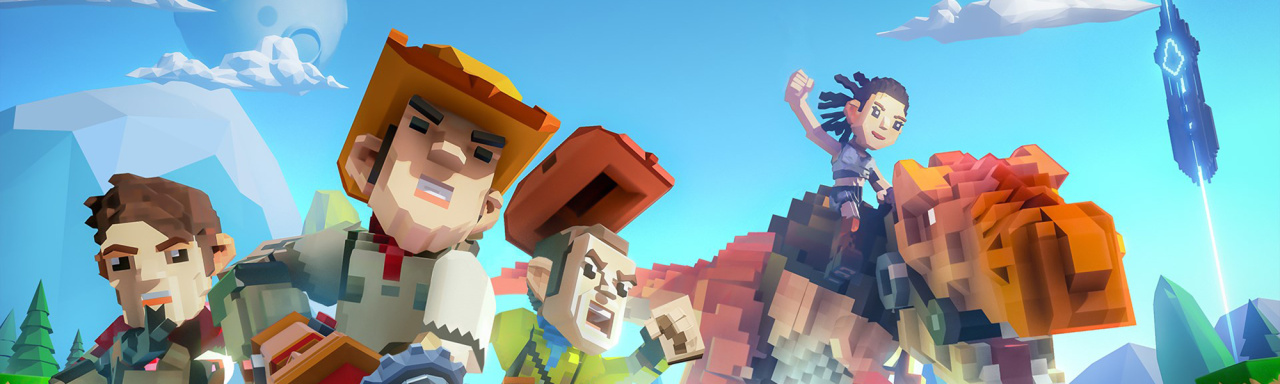
From a performance standpoint, you can probably already guess how PixARK fares. The framerate, which appears to be trying its best to reach 30 FPS, hovers in the 20 FPS range and oscillates wildly depending on what’s happening on screen. Meanwhile, the draw distance remains disappointingly short – you’re always encircled by a mildly distant cloud of bluish-grey fog – and pop-in is rampant, with things like animals and whole mountains seemingly emerging out of nowhere on a relatively frequent basis. The real shame of this is that PixArk actually possess a fairly eye-catching art style; the voxel-based dinosaurs are a real treat to see, and even if the blockish aesthetic has been done to death already, it’s executed here in a brightly-coloured way that possesses a sort of otherworldly beauty that, in a better game, could prove to be effective. It doesn’t help, either, that the low resolution – whether docked or portable – gives the visuals a furry, unfocused look that’s noticeably lower than most software on the Switch.
A critical talking point that we feel needs to be reiterated is how much PixARK feels like an unfinished game. The original PixARK launched for the PC on Steam’s Early Access program in early 2018 and this version on the Switch feels equally like a rough framework for what could eventually become a respectable retail release. Presumably, the developers have a plan in place for how they’re going to keep incrementally updating the game into a more complete product, because the product currently available is not a completed, quality-tested experience. Those of you that don’t have enough faith in the developers to eventually make good on this potential will want to steer clear, as there’s really no way of knowing whether PixARK will ever become much more than the hastily made effort we see here.
Conclusion
In its current state, PixARK on the Switch is a poorly optimized, unenjoyable, and otherwise weak approximation of the Minecraft experience that in no way delivers value equivalent to the money you’re paying for it. Considering it comes with a $40 price tag at the time of writing, this unfinished and unpolished game is borderline robbing you of your hard-earned money and time that could be so much better spent on just about anything else you can think of. We would strongly urge you to take a hard pass on PixARK, as it offers a lacklustre survival experience that’s not even worth the memory it’ll take up on your SD Card; life’s much too short to be wasted on poorly made games such as this.
Posted by: xSicKxBot - 06-06-2019, 12:28 PM - Forum: Windows
- No Replies
Microsoft and Oracle to interconnect Microsoft Azure and Oracle Cloud
REDMOND, Wash., and REDWOOD SHORES, Calif. — June 5, 2019 — Microsoft Corp. and Oracle Corp. on Wednesday announced a cloud interoperability partnership enabling customers to migrate and run mission-critical enterprise workloads across Microsoft Azure and Oracle Cloud. Enterprises can now seamlessly connect Azure services, like Analytics and AI, to Oracle Cloud services, like Autonomous Database. By enabling customers to run one part of a workload within Azure and another part of the same workload within the Oracle Cloud, the partnership delivers a highly optimized, best-of-both-clouds experience. Taken together, Azure and Oracle Cloud offer customers a one-stop shop for all the cloud services and applications they need to run their entire business.
Connecting Azure and Oracle Cloud through network and identity interoperability makes lift-and-improve migrations seamless. This partnership delivers direct, fast and highly reliable network connectivity between two clouds, while continuing to provide first-class customer service and support that enterprises have come to expect from the two companies. In addition to providing interoperability for customers running Oracle software on Oracle Cloud and Microsoft software on Azure, it enables new and innovative scenarios like running Oracle E-Business Suite or Oracle JD Edwards on Azure against an Oracle Autonomous Database running on Exadata infrastructure in the Oracle Cloud.
“As the cloud of choice for the enterprise, with over 95% of the Fortune 500 using Azure, we have always been first and foremost focused on helping our customers thrive on their digital transformation journeys,” said Scott Guthrie, executive vice president of Microsoft’s Cloud and AI division. “With Oracle’s enterprise expertise, this alliance is a natural choice for us as we help our joint customers accelerate the migration of enterprise applications and databases to the public cloud.”
“The Oracle Cloud offers a complete suite of integrated applications for sales, service, marketing, human resources, finance, supply chain and manufacturing, plus highly automated and secure Generation 2 infrastructure featuring the Oracle Autonomous Database,” said Don Johnson, executive vice president, Oracle Cloud Infrastructure (OCI). “Oracle and Microsoft have served enterprise customer needs for decades. With this partnership, our joint customers can migrate their entire set of existing applications to the cloud without having to re-architect anything, preserving the large investments they have already made.”
As a result of this expanded partnership, the companies are today making available a new set of capabilities:
Connect Azure and Oracle Cloud seamlessly, allowing customers to extend their on-premises datacenters to both clouds. This direct interconnect is available starting today in Ashburn (North America) and Azure US East, with plans to expand additional regions in the future.
Unified identity and access management, via a unified single sign-on experience and automated user provisioning, to manage resources across Azure and Oracle Cloud. Also available in early preview today, Oracle applications can use Azure Active Directory as the identity provider and for conditional access.
Supported deployment of custom applications and packaged Oracle applications (JD Edwards EnterpriseOne, E-Business Suite, PeopleSoft, Oracle Retail, Hyperion) on Azure with Oracle databases (RAC, Exadata, Autonomous Database) deployed in Oracle Cloud. The same Oracle applications will also be certified to run on Azure with Oracle databases in Oracle Cloud.
A collaborative support model to help IT organizations deploy these new capabilities while enabling them to leverage existing customer support relationships and processes.
Oracle Database will continue to be certified to run in Azure on various operating systems, including Windows Server and Oracle Linux.
“The alliance between Microsoft and Oracle is welcome news as we accelerate Albertsons’ digital transformation and leverage the full value of the public cloud,” said Anuj Dhanda, executive vice president and chief information officer at Albertsons Companies. “This will allow us to create cross-cloud solutions that optimize many of our current investments while maximizing the agility, scalability and efficiency of the public cloud.”
“As we look to bring our omnichannel experience closer together and transform the technology platform that powers the Gap Inc. brands, the collaboration between Oracle and Microsoft will make it easier for us to scale and deliver capabilities across channels,” said Sally Gilligan, chief information officer at Gap. “The interoperability between Azure and Oracle Cloud allows us to deploy Oracle or custom-built applications on Azure and Oracle databases on Oracle Cloud.”
“At Halliburton, we have a long history of running both Oracle and Microsoft technologies for our most critical applications. Our deep experience with these two strategic vendors has yielded consistently stable and performant application deployments,” said Ken Braud, senior vice president and CIO at Halliburton. “This alliance gives us the flexibility and ongoing support to continue leveraging our standard architectures, while allowing us to focus on generating business outcomes that maximize returns for our shareholders.”
The Oracle Cloud offers a complete suite of integrated applications for Sales, Service, Marketing, Human Resources, Finance, Supply Chain and Manufacturing, plus Highly Automated and Secure Generation 2 Infrastructure featuring the Oracle Autonomous Database. For more information about Oracle (NYSE: ORCL), please visit us at www.oracle.com.
Future Product Disclaimer
The preceding is intended to outline our general product direction. It is intended for information purposes only, and may not be incorporated into any contract. It is not a commitment to deliver any material, code or functionality, and should not be relied upon in making purchasing decisions. The development, release, timing and pricing of any features or functionality described for Oracle’s products may change and remains at the sole discretion of Oracle Corporation.
About Microsoft
Microsoft (Nasdaq “MSFT” @microsoft) enables digital transformation for the era of an intelligent cloud and an intelligent edge. Its mission is to empower every person and every organization on the planet to achieve more.
For more information, press only:
Microsoft Media Relations, WE Communications for Microsoft, (425) 638-7777, rrt@we-worldwide.com
Note to editors: For more information, news and perspectives from Microsoft, please visit the Microsoft News Center at http://news.microsoft.com. Web links, telephone numbers and titles were correct at time of publication, but may have changed. For additional assistance, journalists and analysts may contact Microsoft’s Rapid Response Team or other appropriate contacts listed at http://news.microsoft.com/microsoft-public-relations-contacts.
Posted by: xSicKxBot - 06-06-2019, 05:46 AM - Forum: Lounge
- No Replies
Surge 2 Release Date Leaks Prior To E3 2019; Coming This September
It's been almost a year since we saw The Surge 2's reveal trailer at Gamescom in August 2018. The 50-second gameplay trailer, above, shows more slashy, Souls-like action in a lush forest but little in the way of a release window. However, a new leak suggests The Surge 2 could arrive in a few months.
The Surge 2's release date was uncovered via an Australian Microsoft Store listing. The listing states that The Surge 2 will launch on September 24, 2019. It is, of course, possible this date will prove to be inaccurate; Nintendo's website recently led us to believe Cadence of Hyrule would be out at the end of May, but it now looks as if it's instead launching this month. But given this Surge 2 date is listed directly on the page, it seems as if it could be real.
According to the list, The Surge 2 will retail for approximately $60 USD / £50 GBP / $90 AUD. Pre-orders are available now, and doing so secures you the exclusive URBN Gear Pack, which comes with the following items:
The well-used Cutter from The Surge
The full-body URBN armor set
The URBN Judgement Axe
The URBN Skimmer Drone
The Lootscan.exe Radar Module
A unique online message icon
The Surge launched in May 2017. Developed by Deck 13 Interactive and published by Focus Home Interactive, The Surge brought Souls-like combat to a mechanical wasteland with a twist: you can dismember enemies and use their parts against them. In our The Surge review, we said, "It bucks the trend towards creative bankruptcy, adopting some fresh ideas and layering those together with aesthetics, tone, and play to create an inspired adventure."
Based on the gameplay trailer, The Surge 2 looks to feature a similar gameplay loop to its predecessor. However, according to a Deck 13 statement, this sequel will feature "a sprawling, devastated city with larger and more ambitious level design, made possible by Deck13’s upgraded and improved engine."
If you're interested in pre-ordering The Surge 2 already, several retailers have listings up for the standard edition now. In addition to the general pre-order bonuses listed above, GameStop is offering a limited-edition exclusive, which comes with an exclusive sleeve and cover, an eight-page comic book, a double poster with artwork and the game's map, and three lithographs.
Tweaking the look of Fedora Workstation with themes
Changing the theme of a desktop environment is a common way to customize your daily experience with Fedora Workstation. This article discusses the 4 different types of visual themes you can change and how to change to a new theme. Additionally, this article will cover how to install new themes from both the Fedora repositories and 3rd party theme sources.
Theme Types
When changing the theme of Fedora Workstation, there are 4 different themes that can be changed independently of each other. This allows a user to mix and match the theme types to customize their desktop in a multitude of combinations. The 4 theme types are the Application (GTK) theme, the shell theme, the icon theme, and the cursor theme.
Application (GTK) themes
As the name suggests, Application themes change the styling of the applications that are displayed on a user’s desktop. Application themes control the style of the window borders and the window titlebar. Additionally, they also control the style of the widgets in the windows — like dropdowns, text inputs, and buttons. One point to note is that an application theme does not change the icons that are displayed in an application — this is achieved using the icon theme.
Two application windows with two different application themes. The default Adwaita theme on the left, the Adapta theme on the right.
Application themes are also known as GTK themes, as GTK (GIMP Toolkit) is the underlying technology that is used to render the windows and user interface widgets in those windows on Fedora Workstation.
Shell Themes
Shell themes change the appearance of the GNOME Shell. The GNOME Shell is the technology that displays the top bar (and the associated widgets like drop downs), as well as the overview screen and the applications list it contains.
Comparison of two Shell themes, with the Fedora Workstation default on top, and the Adapta shell theme on the bottom.
Icon Themes
As the name suggests, icon themes change the icons used in the desktop. Changing the icon theme will change the icons displayed both in the Shell, and in applications.
Comparison of two icon themes, with the Fedora 30 Workstation default Adwaita on the left, and the Yaru icon theme on the right
One important item to note with icon themes is that all icon themes will not have customized icons for all application icons. Consequently, changing the icon theme will not change all the icons in the applications list in the overview.
Comparison of two icon themes, with the Fedora 30 Workstation default Adwaita on the top, and the Yaru icon theme on the bottom
Cursor Theme
The cursor theme allows a user to change how the mouse pointer is displayed. Most cursor themes change all the common cursors, including the pointer, drag handles and the loading cursor.
Comparison of multiple cursors of two different cursor themes. Fedora 30 default is on the left, the Breeze Snow theme on the right.
Changing the themes
Changing themes on Fedora Workstation is a simple process. To change all 4 types of themes, use the Tweaks application. Tweaks is a tool used to change a range of different options in Fedora Workstation. It is not installed by default, and is installed using the Software application:
Alternatively, install Tweaks from the command line with the command:
Next, launch Tweaks, and switch to the Appearance pane. The Themes section in the Appearance pane allows the changing of the multiple theme types. Simply choose the theme from the dropdown, and the new theme will apply automatically.
Installing themes
Armed with the knowledge of the types of themes, and how to change themes, it is time to install some themes. Broadly speaking, there are two ways to install new themes to your Fedora Workstation — installing theme packages from the Fedora repositories, or manually installing a theme. One point to note when installing themes, is that you may need to close and re-open the Tweaks application to make a newly installed theme appear in the dropdowns.
Installing from the Fedora repositories
The Fedora repositories contain a small selection of additional themes that once installed are available to we chosen in Tweaks. Theme packages are not available in the Software application, and have to be searched for and installed via the command line. Most theme packages have a consistent naming structure, so listing available themes is pretty easy.
To find Application (GTK) themes use the command:
dnf search gtk | grep theme
To find Shell themes:
dnf search shell-theme
Icon themes:
dnf search icon-theme
Cursor themes:
dnf search cursor-theme
Once you have found a theme to install, install the theme using dnf. For example:
sudo dnf install numix-gtk-theme
Installing themes manually
For a wider range of themes, there are a plethora of places on the internet to find new themes to use on Fedora Workstation. Two popular places to find themes are OpenDesktop and GNOMELook.
Typically when downloading themes from these sites, the themes are encapsulated in an archive like a tar.gz or zip file. In most cases, to install these themes, simply extract the contents into the correct directory, and the theme will appear in Tweaks. Note too, that themes can be installed either globally (must be done using sudo) so all users on the system can use them, or can be installed just for the current user.
For Application (GTK) themes, and GNOME Shell themes, extract the archive to the .themes/ directory in your home directory. To install for all users, extract to /usr/share/themes/
For Icon and Cursor themes, extract the archive to the .icons/ directory in your home directory. To install for all users, extract to /usr/share/icons/