Today we are announcing that we have made the difficult decision to transition the Minecraft Forum from an active website to a read-only archive. This decision has been made after careful consideration about how we can best serve the Minecraft community with the resources we have available. A read-only archive of the website will ensure that the valuable content contributed over many years is safe-guarded, remaining available for visitors to explore.
From everyone at the Minecraft Forum we are deeply grateful for our communities contributions to the forum over the last decade, big and small. Millions of members have shared tens of millions of posts that have been viewed billions of times, and everyone contributed something to make this forum great. Minecraft Mod creators helped expand the world of Minecraft, support volunteers worked tirelessly to provide access to that world and everyone together turned that world into a community.
Read only mode will be enabled on June 16th, 2019. From this date you will no longer be able to login to the Minecraft Forum and no new content will be created, however all links to the Minecraft Forum will continue to work as-is, all content will remain accessible. This change does not impact the Minecraft Wiki. The Minecraft Wiki will continue as an active website, we have no plans to archive the Minecraft Wiki.
We appreciate that this is a big change and that there will be many questions. I am available in the comments of this news post to answer any questions you may have, and you are welcome to reach out via Private Message if you have any questions you would like to ask privately.
Please use the comments as an opportunity to share your story about what this community has meant to you. We would love to hear about how the forum has impacted you, whether it inspired a passion for creating, helped build friendships or simply provided you somewhere to share your love of the game — any thoughts you may have are welcome.
Step on to the course like never before in the most immersive Everybody?s Golf experience yet! Swing for the flag with your PS Move motion controller or DualShock 4 wireless controller. Play through three incredible courses, practice your putting on the green, or tee off at the driving range to perfect your swing.
Step into a galaxy far, far away and experience the first Star Wars story designed exclusively for virtual reality. Descend into Darth Vader's mysterious fortress alongside new allies and encounter fearsome enemies, including the Sith Lord himself. Be at the center of a story in which you hold the key to the galaxy's salvation... or destruction.
Posted by: xSicKxBot - 05-21-2019, 08:08 AM - Forum: Lounge
- No Replies
Minecraft Reaches Massive New Sales Milestone
Minecraft is one of the most popular and commercially successful games in history. Microsoft has now shared a new sales update for the entire franchise--and it's huge.
Minecraft creative director Saxs Persson said in a blog post that the franchise--which debuted on PC 10 years ago in 2009--has now crossed 176 million copies sold. This counts copies sold across all platforms. The game has sold a copy in nearly every country in the world, Persson added. This includes at least four copies sold in Antarctica.
The game launched on PC, but now it's available pretty much everywhere you can play games, including console, mobile, and more.
Less than three years ago, in June 2016, developer Mojang announced that Minecraft lifetime sales stood at 106.85 million copies, so sales have continued steadily since then.
Given the huge success of Minecraft, you might think Microsoft would want to release Minecraft 2, but that's not going to happen soon--or ever. If Microsoft were to make Minecraft 2, the player base might get fractured as some move to the sequel and others stay with the original. While Microsoft could theoretically do that and still make a lot of money, it makes more sense to keep the community together, according to Minecraft boss Helen Chiang.
"We're trying to keep our community together," she explained. "That's why our updates our free. We don't want to ask [players] to move from Minecraft 1 to Minecraft 2. We want them to just enjoy Minecraft. And there's other ways that we can expand that are more meaningful and authentic to what we want to be, rather than just releasing another iteration in the way that most other franchises do."
Review: For The King – A Roguelike RPG That’s Best Played With A Friend
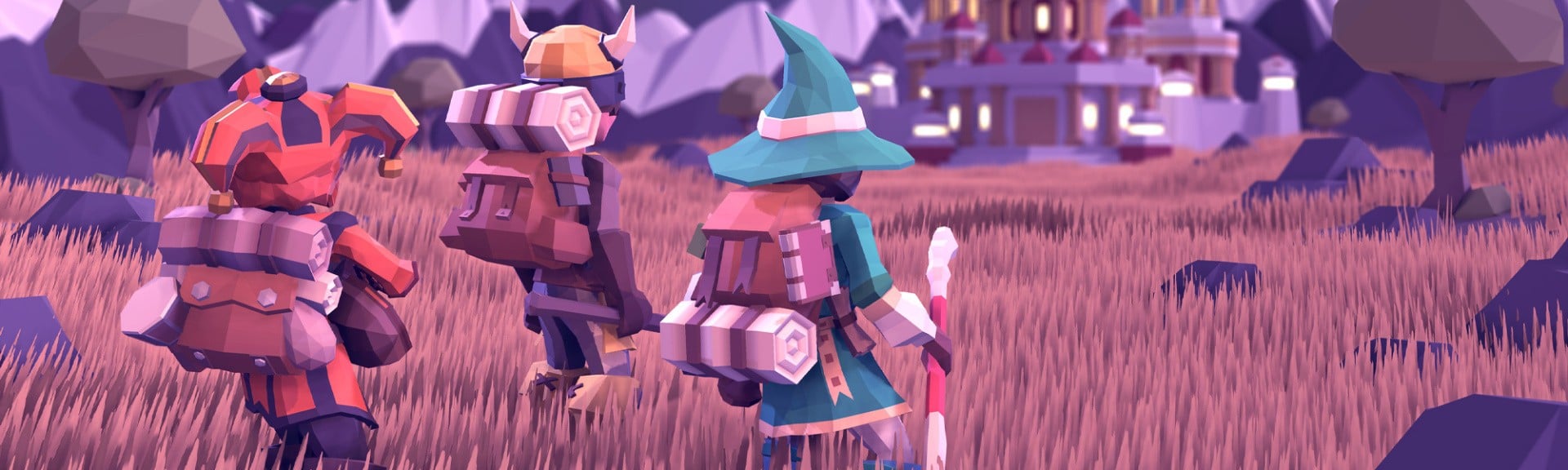
Don’t let the beguiling art style of For The King fool you. It might look like a children’s book that’s been conjured to life, bathed in the soft autumnal light of a European fairy tale, but beneath the funny hats and cute character designs sits a roguelike RPG with teeth. Underestimate the challenge of its procedural maps and the turn-based battles contained therein, and you’ll get bitten, hard and often. But take the time to understand its co-operative charms and nuance of overworld exploration and the rewards are often great, satisfying and well earned.
Each new adventure starts with three adventurers, randomly-generated from a raft of potential classes and looks, who must head out into a kingdom where an evil primordial force known as Chaos is taking root. With the most famous wizard in the land conspicuously missing and the king himself slain, the queen tasks you with halting the spread of Chaos and seeking out the identity of the kingslayer. As a premise, it’s a little rote, but it’s how you embark on this adventure that really helps set this procedural RPG apart from its contemporaries on Switch.
Following a living tabletop aesthetic similar to the one employed in Armello (another great example of turn-based battles and tactical placement elevated by creative new ideas), For The King’s trio of would-be heroes traverse the map independently of one another. With plenty of random timed events appearing across the land, the idea is to split up and reform your squad periodically during their own turn, dealing with pockets of Chaos and battling all manner of monsters and bandits. Each character has a series of turns to move around the hexagonal grid, but so does ‘the enemy’ so being sure of your team’s positioning at the end of a turn is key. However, the shadow of permadeath looms over your party. Depending on the difficulty you choose, you could lose everything on a run if Lady Luck decides she doesn’t favour you.
Splitting character turns up might seem like an odd choice, but it plays directly into one of the best ways to enjoy For The King: cooperative play. While you don’t have to play any of its campaign and myriad DLC expansions – including a total of six full campaigns – with anyone else if you don’t want to, the entire game is playable solo, where you control each party member one after another. It’s in co-op that For The King really comes together as an RPG; whether you’re playing locally on the same screen or online, every aspect of the game becomes intrinsically tied to effective teamwork and communication.
As a group, one player can head off to a local town or village and collect some side-quests (which often net you new gear, weapons and gold), tasking you with reducing the local Chaos level, killing a certain enemy or simply finding and returning a certain item. Another might choose to visit a local statue or temple, imbuing your party with refilled focus. However, how far you might diverge, the world of For The King is a dangerous place and every battle is better when fought together. When combat is initiated – either through proximity to an enemy or through an ambush – only the party members present within a certain distance will be eligible to fight, so wayward players might scupper the entire team’s wider efforts. Chaos gradually increases in the region, so you’re always having to seek out the nearest sources in order to stem its tide. This time pressure adds some welcome pace and removes any chance of complacency creeping in.
Combat itself really embraces some of the quirks of a tabletop game, with the effectiveness of each character’s action defined by a roll of dice. Each move can also be increased in its potential accuracy by adding focus, your constant source of additional energy. It’s a finite resource, but it can often help bolster a final attack when you need to wrap up a battle quickly. This mixture of player agency and chance makes each skirmish a tantalising prospect, as does swapping out weapon cards with your characters to find out how best to increase or decrease your stats. However, that reliance on chance and the ‘roll of the dice’ can often make battles more unpredictable than we’d like, which can be a potentially difficult element to include in a game built around the finality of permadeath.
The Nintendo Switch port benefits from all the DLC content released since the game first entered Early Access on Steam many years ago, which is a generous chunk when you consider how much of it is procedurally generated on each new run. The game is nicely optimised on Switch with no signs of slowdown or other technical issues. Moving characters across the hexagonal grid is quite clunky with an analog stick, and it seems strange that developer IronOak Games didn’t take full advantage of Switch’s touchscreen functionality. Being able to drag characters, or tap on-screen elements, would have made far more sense for a game such as this.
Conclusion
Turn-based RPGs of yesteryear and today owe a lot of their fine-tuned tactics to the legacy of tabletop board games, and For The King pays tribute to this legacy with a digital adventure where anything can happen. The fast-paced nature of its exploration and combat keeps everything feeling fresh and lively, but the considerable reliance on chance does take the shine of its otherwise competent combat. However, with adjustable difficulties (which amend the severity of each death) and a sizeable amount of expansive DLC, this is one roguelike RPG that really shines in co-op.
If you were one of those people who were intrigued by the epic two-player card driven game Twilight Struggle but found it all a bit too complex and longwinded, then Playdek’s latest release may be more to your liking. Fort Sumter shifts the action from the Cold War to the American secession crisis of 1860. The bombardment of Fort Sumter and the ensuing surrender of US army forces was a key event in the nation’s history and led to the outbreak of the American Civil War. Somehow, the designer has managed to condense these dramatic events into a fifteen-minute game, in which each player only ever gets the opportunity to play a grand total of twelve cards.
Do not, however, entertain the idea that the quick playing time means that Fort Sumter is just another in a long line of microgames in the mould of Love Letter. There is definitely a lot more going on here, with one player taking control of the Unionists and the other playing as the Secessionists. Players compete to exert political influence in an attempt to manoeuvre their way into the strongest position in preparation for the inevitable outbreak of war. The action is played out on a small map that shows four spheres of influence, namely, political, secession, public opinion and armaments. Each sphere is made up of three spaces, the most influential of which will be denoted as pivotal. For instance, in the sphere of public opinion, the pivotal spot is newspapers. Throughout the game, players will use cards to place political influence cubes in the various spaces in an attempt to wrestle overall control of as many spheres as possible.
Players begin each of the three rounds with a hand of six cards. Two of these cards will depict a secret objective, which usually means having the most influence cubes in a particular area. Each player then elects to keep one objective and to discard the other. Next, players take it in turns to play their remaining cards, whilst setting one aside until the final round. These cards represent a notable person or historical event and are colour coded to denote which of the two sides they are aligned to, although there are also some neutral cards. Players are not limited to only using the cards that match their side.
Each card has a number in the top corner that shows how many influence cubes that it allows you to place. This isn’t usually as strong a move as the special action but it is more flexible since it allows you to exert influence anywhere on the board instead of being tied to particular spaces. If the Secessionists side plays the ‘Plantation Class’ card for example, then they will either be able to use the card’s basic action to place one cube on any space or use the special action to place two cubes on any of the three secession spaces. If the unionist player plays the same card then their only option is to place a single cube by using the basic action.
It is pretty obvious to explain this thematically, as rich plantation owners with their invested interest in slave labour and their political influence, were the driving force behind the secessionist movement. However, unless you are a real American history buff you are not going to know the background behind many of the cards, and without latching on to this context, the game can become a very abstract exercise in cube pushing. There is a card gallery that provides the necessary historical relevance of the various cards, but this cannot be accessed without returning to the main menu. On the subject of abstract design, the map of the USA is also just window-dressing. Indeed there is an option to use an alternative map that completely does away with the whole pretence and so just groups the locations by type. This actually makes it easier to assess the current state of affairs.
Fort Sumter has a few more nuances up its sleeve; there is a peacekeeper who prevents cubes from being added or removed from a particular space. He can be brought into play by playing the appropriate card or by escalating the crisis. As players bring more influence into effect, tensions mount and the crisis level increases. The first player to trigger the highest crisis level will earn a larger political influence bonus, however, they are also perceived as the chief aggressor, costing them a victory point and possibly bringing about a premature ending to the game.
At the end of the first three stages, players that control the vital pivotal spaces will be able to add or remove cubes in that particular sphere. If a player has managed to secure a majority of cubes in all three of a sphere’s spaces, they earn a victory point. Extra points are awarded for completing that turn’s secret objectives. To add a tense climax to proceedings, the fourth and final round plays out a little differently. Both players secretly select the order in which they want to play the three cards that they have kept aside. The effects will then be determined by simultaneously revealing both players cards one at a time to determine if they have matching influence spheres.
The first thing that is likely to impress is an extremely comprehensive tutorial, which guides you through an entire game. This not only teaches the rules but also gives some useful strategic insights. It also introduces the player to the faultless interface, which creates an authentic representation of the board game in which all of the essential information can be taken in at a glance. The graphics are a mix of old photographs and illustrations and give proceedings a strong historical flavour, as does the patriotic piano tunes and spoken quotes. Unfortunately, the range of play options is a little limited, you can play online or offline but there is only one level of AI, which will not take many games to overcome. He is not the smartest; in one game he placed the peace commissioner on a space that actually served to protect my control of an area.
This game is easy to learn and contains plenty of interesting decisions. It manages to create some very tight pressure points, often feeling like a game of chicken as you try to force your opponent’s hand. The trailing player has the considerable advantage of having the final say at the end of each round, which means that it can be prudent to hang back until you are ready to strike. My main concern is that the luck of the draw can leave one player with a bunch of cards tailored for the opposing side. Also, in spite of the rich background, with a cast of strong characters and notable events, players are essentially just pushing cubes, which means that the historical significance of what they are doing can struggle to make an impression.
Fort Sumter may sound like a war game but it actually turns out to be more of a euro style board game. The slimming down of the mechanics hasn’t been without sacrifice and some may feel that the abstraction has gone a little too far. Yet, it still manages to be a fine, quick-playing political simulation that can give you a Twilight Struggle style fix in a fraction of the time.
Fort Sumter will be releasing on iOS & Android tomorrow. Because our review is early, we don’t have the store links yet but will update this review when we do.
In what may be my favourite Humble Bundle by far, the folks over at Humble just launched the Humble Book Bundle: Computer Graphics by CRC Press. This is a collection of e-books on a huge number of computer graphics topics, including shaders, OpenGL, GPUS, VR, Volumetrics and much much more. Humble Bundles are broken into tiers, if you buy a certain tier, you get all tiers lower than that one in price.
The tiers of this bundle are:
1$
3D Engine Design for Virtual Globes
The Uncanny Valley in Games and Animation
Production Volume Rendering
Real-Time Volume Graphics
8$
Essential Skills in Character Rigging
Ray Tracing from the Ground Up
OpenGL Insights
Real-Time Shadows
Multithreading for Visual Effects
Graphics Shaders
Fluid Simulation for Computer Graphics
Digital Representations of the Real World
15$
3D Math Primer for Graphics and Game Development
GPGPU Programming for Games and Science
Mobile Crowd Sensing
Interaction Design for 3D User Interfaces
Digital Character Development
The Art of Fluid Animation
Ultra-Realistic Imaging
When you buy a Humble bundle, you get to decide how your money is allocated, between the publisher, humble, charity and if you choose (and thanks if you do!) GFS. The Bundle is available here until June 5th.
Great news for shoot ’em up aficionado as Beep has officially confirmed it is working on a brand new Cotton franchise reboot – heading to multiple platforms including the Nintendo Switch. While there isn’t much information about this new entry at the moment, the company has revealed it will be based on the X68000 Japanese computer home conversion of the first game in the series, Cotton: Fantastic Night Dreams.
For those unfamiliar with the Success-developed series, it consists of horizontal shmups (with the exception of the technically impressive Sega Mega Drive outing, Panorama Cotton) and has the player controlling a titular witch named Cotton and her fairy companion Silk, while navigating colourful yet increasingly difficult levels that usually end with huge boss fights.
Are you a fan of the Cotton series? Are you looking forward to once again taking control of Cotton and mowing down wave after wave of cute enemies with your lethal magic? Cast your incantations in the comments section below.
In addition to providing an operating system, the Fedora Project provides numerous services for users and developers. Services such as Ask Fedora, the Fedora Project Wiki and the Fedora Project Mailing Lists provide users with valuable resources for learning how to best take advantage of Fedora. For developers of Fedora, there are many other services such as dist-git, Pagure, Bodhi, COPR and Bugzilla that are involved with the packaging and release process.
These services are available for use with a free account from the Fedora Accounts System (FAS). This account is the passport to all things Fedora! This article covers how to get set up with an account and configure Fedora Workstation for browser single sign-on.
Signing up for a Fedora account
To create a FAS account, browse to the account creation page. Here, you will fill out your basic identity data:
Account creation page
Once you enter your data, an email will be sent to the email address provided, with a temporary password. Pick a strong password and use it.
Password reset page
Next, the account details page appears. If you intend to become a contributor to the Fedora Project, you should complete the Contributor Agreement now. Otherwise, you are done and your account can now be used to log into the various Fedora services.
Account details page
Configuring Fedora Workstation for single sign-On
Now that you have your account, you can sign into any of the Fedora Project services. Most of these services support single sign-on (SSO), allowing you to sign in without re-entering your username and password.
Fedora Workstation provides an easy workflow to add SSO credentials. The GNOME Online Accounts tool helps you quickly set up your system to access many popular services. To access it, go to the Settings menu.
GNOME Online Accounts
Click on the ⋮ button and select Enterprise Login (Kerberos), which provides a single text prompt for a principal. Enter fasname@FEDORAPROJECT.ORG (being sure to capitalize FEDORAPROJECT.ORG) and click Connect.
Kerberos principal dialog
GNOME prompts you to enter your password for FAS and given the option to save it. If you choose to save it, it is stored in GNOME Keyring and unlocked automatically at login. If you choose not to save it, you will need to open GNOME Online Accounts and enter your password each time you want to enable single sign-on.
Single sign-on with a web browser
Today, Fedora Workstation supports two web browsers “out of the box” with support for single sign-on with the Fedora Project services. These are Mozilla Firefox and Google Chrome. Due to a bug in Chromium, single sign-on does not currently work properly in many cases. As a result, this has not been enabled for Chromium in Fedora.
To sign on to a service, browse to it and select the “login” option for that service. For most Fedora services, this is the only thing you need to do and the browser handles the rest. Some services such as the Fedora Mailing Lists and Bugzilla support multiple login types. For them, you need to select the “Fedora” or “Fedora Account System” login type.
That’s it! You can now log into any of the Fedora Project services without re-entering your password.
Special consideration for Google Chrome
In order to enable single sign-on out of the box for Google Chrome, Fedora needed to take advantage of certain features in Chrome that are intended for use in “managed” environments. A managed environment is traditionally a corporate or other organization that sets certain security and/or monitoring requirements on the browser.
Recently, Google Chrome changed its behavior and it now reports “Managed by your organization” under the ⋮ menu in Google Chrome. That link leads to a page that states “If your Chrome browser is managed, your administrator can set up or restrict certain features, install extensions, monitor activity, and control how you use Chrome.” Fedora will never monitor your browser activity or restrict your actions.
Enter chrome://policy in the address bar to see exactly what settings Fedora has enabled in the browser. The AuthNegotiateDelegateWhitelist and AuthServerWhitelist options will be set to *.fedoraproject.org. These are the only changes Fedora makes.
Posted by: xSicKxBot - 05-21-2019, 02:08 AM - Forum: Windows
- No Replies
GDPR’s first anniversary: A year of progress in privacy protection
May 25 marks one year since the European Union’s General Data Protection Regulation officially went into effect. GDPR is a groundbreaking privacy framework that empowers residents of the EU to control their personal information so they can use digital technologies to engage freely and safely with each other and with the world.
A lot has happened on the global privacy front since GDPR went into force. Overall, companies that collect and process personal information for people living in the EU have adapted, putting new systems and processes in place to ensure that individuals understand what data is collected about them and can correct it if it is inaccurate and delete it or move it somewhere else if they choose.
This has improved how companies handle their customers’ personal data. And it has inspired a global movement that has seen countries around the world adopt new privacy laws that are modeled on GDPR. Brazil, China, India, Japan, South Korea and Thailand are among the nations that have passed new laws, proposed new legislation, or are considering changes to existing laws that will bring their privacy regulations into closer alignment with GDPR.
Empowering people to manage their information through our privacy dashboard
The driving force behind the global movement to modernize privacy laws is the new understanding people have of their right to privacy as technology changes how people create and share information. Around the world, there is a growing expectation that everyone should benefit from digital technology without losing control of their personal information. This is why Microsoft was the first company to provide the data control rights at the heart of GDPR to our customers around the globe, not just in Europe.
One year later, the ever-growing number of people using our privacy dashboard is a clear sign that people want to be empowered to control their data. Since GDPR went into effect, more than 18 million people from around the world have used our tool to manage their personal information. The highest level of engagement, both on a per capita basis and in absolute numbers, continues to come from the United States where about 6.7 million people have used the dashboard. Not surprisingly, residents of European countries covered under GDPR also account for a significant percentage of people who have visited the privacy dashboard—to date more than 4 million of our customers in the EU have logged on to manage their data.
But the demand is truly global. Japan ranks No. 2 in using the privacy dashboard and Canada is fifth. Other countries in the top 10 included Brazil, China, Mexico and Australia.
Transforming culture and advancing privacy throughout the digital economy
To elevate the importance of privacy and embed it in their operational systems, companies like Microsoft that have fully embraced GDPR have undergone a profound cultural shift that begins at the executive level and reaches across the entire organization. Today, at Microsoft our responsibility to protect our customers’ privacy is the starting point for everything we do. Our commitment to greater user control and empowerment is stronger than ever.
You can see the results of this cultural transformation across our products and services. Last month, for example, we announced new steps to increase transparency about the data we collect when people use our products and to provide them with greater control over how their data is used. Those steps include describing the data we collect in clear and simple language; and making it easier for people to control their personal information. To enhance transparency, we are improving documentation and introducing a new biannual report about our data collection procedures.
We are also providing tools to help our customers meet their own privacy obligations under GDPR. To make it easier for game developers to comply with GDPR, we developed tools so they can allow players to view or delete data that is stored about them. We’re delivering features that improve how businesses secure sensitive data and protect the privacy of their employees and customers. We offer encryption to enable companies to protect sensitive data including credit cards and national IDs such as U.S. Social Security numbers. To help companies safeguard sensitive information on mobile devices, we announced a set of advanced privacy and security capabilities that enable companies’ IT administrators to better enforce privacy and security protection policies. And in April, we released new privacy tools for Office365 ProPlus that provide greater control over diagnostic data that is sent to Microsoft, and over optional cloud-based features in Office that enhance functionality.
Toward a framework for new privacy laws in the U.S. and interoperability around the globe
No matter how much work companies like Microsoft do to help organizations secure sensitive data and empower individuals to manage their own data, preserving a strong right to privacy will always fundamentally be a matter of law that falls to governments. Despite the high level of interest in exercising control over personal data from U.S. consumers, the United States has yet to join the EU and other nations around the world in passing national legislation that accounts for how people use technology in their lives today.
In the absence of federal action, California took an important first step forward in advancing privacy protection with the passage of the California Consumer Privacy Act (CCPA), which goes into effect on January 1, 2020. A watershed for U.S. privacy law, CCPA was the first law in the United States to include rights inspired by GDPR.
Now, it’s Congress’s turn to adopt a new framework that reflects the changing understanding of the right to privacy in the United States and around the world. Like GDPR, this framework should uphold the fundamental right to privacy through rules that give people control over their data and require greater accountability and transparency in how companies use the personal information they collect.
California’s law is a good starting point. But federal legislation should go further and ensure that companies act as responsible stewards of consumers’ personal data. One way to achieve this is by requiring assessments that weigh the benefits of data processing against potential privacy risks to those whose data is processed.
This is important because the prevailing opt-in/opt-out privacy model in the United States forces consumers to make a decision for every website and online service they visit. This places an unreasonable—and unworkable—burden on individuals. Strong federal privacy should not only empower consumers to control their data, it also should place accountability obligations on the companies that collect and use sensitive personal information.
Federal law must also include strong enforcement provisions. As I saw first-hand when I served on the Federal Trade Commission, laws currently on the books are simply not strong enough to enable the FTC to protect privacy effectively in today’s complex digital economy.
Finally, while federal privacy legislation should reflect U.S. legal precedent—and the cultural values and norms of American society—it should also work with GDPR. For American businesses, interoperability between U.S. law and GDPR will reduce the cost and complexity of compliance by ensuring that companies don’t have to build separate systems to meet differing—and even conflicting—requirements for privacy protection in the countries where they do business.
In the year since it went into effect, GDPR has been an important catalyst for progress in privacy protection. Countries around the world have implemented new laws that reflect the new understanding people have for privacy in our digital era. Some companies are doing a better job of handling sensitive personal data and they have delivered new tools that make it easier for people to manage and control their personal information.
Now it is time for Congress to take inspiration from the rest of the world and enact federal legislation that extends the privacy protections in GDPR to citizens in the United States.