Last Of Us 2 Dev Looking To "Close Out" Development
It looks like The Last of Us: Part II might be almost finished. Co-game director Anthony Newman said on Twitter that developer Naughty Dog is looking to hire people to help "close out" the long-awaited PlayStation 4 game. That wording suggests that development might be nearing an end.
That being said, the "close out" period for The Last of Us: Part II might not necessarily happen quickly. Still, the fact that the game's co-director is using that terminology suggests the title is indeed at least entering the final phase of development.
It's also worth mentioning that Newman never even mentions The Last of Us: Part II in his tweet, though his reference to closing out a project is no doubt related to that title. Naughty Dog has no other announced projects in the works.
Naughty Dog vice president Neil Druckmann said back in April that Troy Baker and Ashley Johnson completed their shoots for Joel and Ellie, respectively. He said The Last of Us: Part II contains the "most ambitious cinematic shoot we've ever done."
No release date, or even a release window, has been announced yet for The Last of Us: Part II. The parody website The Onion recently posted a silly story that said the game would launch in 2019, but Naughty Dog responded by saying it would share more information when it's ready. For more on the much-awaited PS4 game, check out everything we know about The Last of Us: Part II.
Ordinarily, this would be an exciting time of year for PlayStation fans eager to learn more about what's coming next. However, Sony is not attending E3 2019 in June, so if the company has any news to announced about The Last of Us: Part II or any other projects, it will come elsewhere.
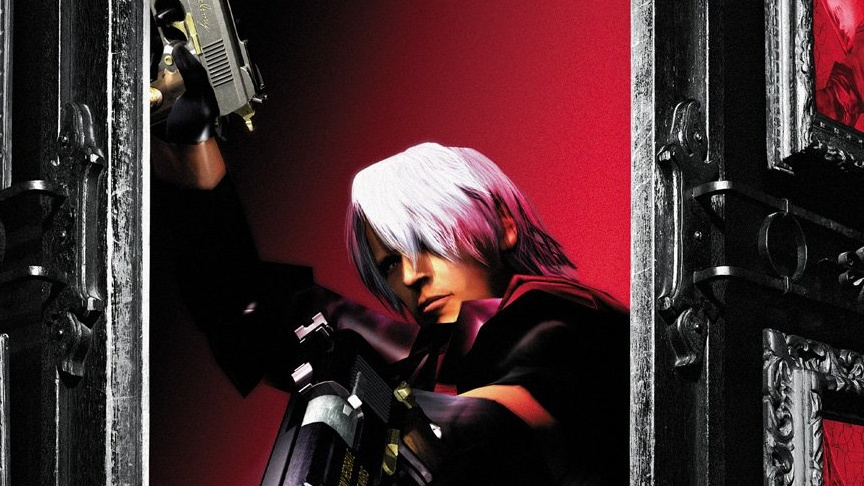
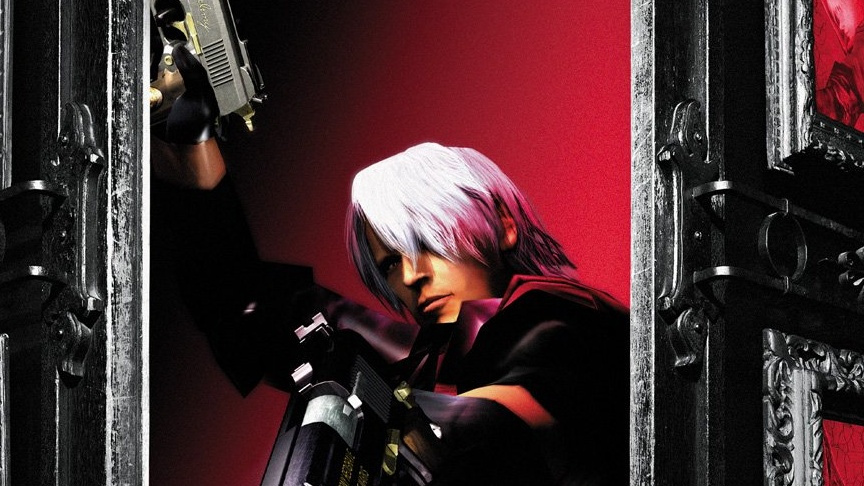
Devil May Cry For Switch Is The Same Game Featured In The 2018 HD Collection
It’s been roughly a week since Capcom announced the original Devil May Cry game was coming to the Switch this summer.
Since then, we’ve heard how the Japanese company has “no plans” to release a standalone physical edition of the game on the eShop and have also seen the very first batch of screenshots for the Nintendo version.
The latest morsel of information about this upcoming release comes from US Gamer. After much speculation about which version of the game the Switch would receive, Capcom has now confirmed this specific release is part of the Devil May Cry HD Collection released on multiple platforms in 2018. For now, though, the company is focused exclusively on the original experience:
“Capcom is focused on bringing the original Devil May Cry experience for the first time to a Nintendo system. No other titles have been announced.”
The other two games in the HD Collection include Devil May Cry 2 and Devil May Cry 3: Dante’s Awakening.
Are you glad to hear Dante’s first outing on the Switch is part of the HD Collection? Would you like to play the second and third game as well? Leave your thoughts below.
Follow and on occasion help to define art direction through collaboration with the Layout Lead and the Art Director
Work closely with the Art Director and the Layout Lead while collaborating with the Level Design team to understand and balance the artistic and gameplay direction of the project to ensure the successful execution of the game’s visual and technical design on a level by level basis
Use analytical thinking and the defined art sets, props, visual FX and lighting techniques to design visually stunning, dynamic and technically efficient environments that support the narrative and game play goals of the level.
Use traditional 2D and 3D art skills in the production of environments, including the construction of high level compositions and proxy models from which final assets will be built.
Work closely with the Level Design team to fulfill the primary feature requirements of the game as it relates to layout, and contribute to the team’s goal of reaching the project’s vision. Ensure the visual quality of each environment through tuning, bug fixing, and play-testing
Collaborate with artists, engineers and designers to ensure effective integration of art, game design, and technology
Work as a team member with production and development, promoting creative thinking processes within the team and integrating their input to translate the game vision into gameplay reality
Review levels for visual integrity, playability, and fun factor while considering the creative direction, game play, and the target platforms
Contribute innovative and original ideas toward all aspects of the game’s production and development
Deliver work on time and according to schedule as prepared by the Art Director and Producer
Engage with the entire production team to stay current on the scope and understanding of the project
Actively participate in the feedback loop including accepting feedback from and providing feedback within the art and level design team as required
Each Layout Artist is expected to multitask effectively, prioritize competing demands, and trouble-shoot any issues relative to the Layout role that may arise
Qualifications:
A portfolio that demonstrates excellent concepting skills and range of style
A minimum of 2 years’ experience in game engine fundamentals such as performance optimization, game engine tools, shaders and scripting
The ability to learn new software quickly, including our proprietary game engine
Exemplary oral and written communication skills
A genuine enthusiasm and interest in video games
Willing to relocate to Canada
Preferred Extras:
Experience with Maya, Photoshop and ZBrush or Mudbox highly beneficial
Strong 3d modeling, texturing and UV-mapping skills
Whether you’re just starting out, looking for something new, or just seeing what’s out there, the Gamasutra Job Board is the place where game developers move ahead in their careers.
Gamasutra’s Job Board is the most diverse, most active, and most established board of its kind in the video game industry, serving companies of all sizes, from indie to triple-A.
The best-selling franchise takes a giant leap forward with a complete overhaul of the graphics engine, offering the most striking and immersive visuals and effects, along with the deepest and most complete farming experience ever.
Plus, save big on Farming Simulator 17 and Farming Simulator 15!
May 4th : New Preview Alpha Ring 1905 Update (1905.190502-1940)
Starting at 2:00 p.m. PST today, members of the Xbox One Preview Alpha Ring will begin receiving the latest 1905 Xbox One system update (19H1_RELEASE_XBOX_DEV_1905\18362.3046.190502-1940) Read on for more about the new features, fixes and known issues in the latest 1905 system update.
DETAILS:
OS version released: 19H1_RELEASE_XBOX_DEV_1905\18362.3046.190502-1940
Available: 2:00PM PDT 5/4/19
Mandatory Date/Time: 3:00 AM PDT 5/5/19
Fixes:
Audio:
Fixes addressing the audio streams when Atmos is used for Stereo Speakers and Mono-mix mode.
Home:
Fixes to the Controller Icon on home – “Unknown” battery should will not be shown as “plugged in” icon
Additional fixes to a memory leak to address overall system performance.
Fixes to UI and workflow when Signing in and out for some users.
UI fixes to the Game Pass Quests in the Game pass twist.
Fixes to address Legacy 360 gamerpics in the Settings app showing up too small.
System
Fixes to complete Kinect setup when it crashed at audio setup.
Additional fixes to a memory leak to address overall system performance.
Fixes to narrator bugs on the Updates Page and Xbox Privacy page.
UI fixes to light and dark themes to make text easier to read.
Localization fixes.
Known Issues:
Audio
We are tracking the issue in which your ATMOS setting switches back to DD 7.1 after taking an update. You can change it back after an update however we are working towards resolving.
Headsets are not being assigned to the users profiles and not working correctly.
Some users are encountering no audio on their Xbox console after boot (no shell audio, no game audio, no app audio), then have CSS ask them to perform the following steps:
Cold reboot the console
OR
Go to Audio settings on console
Change their HDMI audio settings to the highest supported uncompressed channel count for their equipment
Switch back to the desired format
Audio should be restored
My Games and Apps
We are tracking the video corruption issue with Youtube and Netflix 4k playback.
Profile Color
Sometimes users may encounter the incorrect Profile color when powering on the console.
Posted by: xSicKxBot - 05-15-2019, 10:41 AM - Forum: Lounge
- No Replies
World Of Warcraft Classic Aims To Make Azeroth Feel Dangerous Again
Over the 15 years since the launch of World of Warcraft, Blizzard has slowly sanded off some of Azeroth's rough edges. The world is still bustling with dangerous dungeons and harrowing raids, but these days it's a kinder, friendlier world. World of Warcraft Classic aims to fix that, to make Azeroth dangerous again--although it retains a few of the modern niceties.
Blizzard has announced a release date for World of Warcraft Classic, along with a closed beta and a series of stress tests leading up to its August launch. Recent hands-on time with WoW Classic showed a recognizably sparse version of the game, with even basic quest-tracking a little less clearly signposted. This is a WoW meant for fans who have been with the game since the beginning, and who want to recapture that feeling.
Production director Patrick Dawson and WoW Classic lead engineer Brian Birmingham explained the motivations behind this ambitious retrofitting of the popular MMORPG, and what they hope it brings to the fans.
"The community said, we want Classic WoW. And when we looked at it, it looked like a world with crashes, with teleport hacks. It didn't meet the quality bar that Blizzard has today," Dawson told GameSpot. "Well, what if we used our modern infrastructure? Can we retrofit that? So we embarked on a few weeks journey to explore what that world was."
The decision to recreate the classic feeling within the new infrastructure led to some decision points. For some players, the rough edges are part of the original authenticity. Blizzard was left to make determinations on what belonged and what didn't, and the question came down to tough judgment calls.
"Anything that would affect gameplay we want to make sure that we deliver something that is authentic." Birmingham said. "Where we feel like quality-of-life improvements are okay are things like, tabbing to complete a name in in-game mail. That's not a core part of the gameplay experience of leveling, and questing, and trying to explore the world.
"Challenge is part of it," Birmingham continued. "The world feels dangerous. There are difficult group quests out in the world, elite quests that you can't do by yourself, or you would have to over-level if you wanted to do them by yourself. Where they really push you to find somebody else to help you out, or out level them and come back later, or you can just leave them and go on. You don't have to complete every quest in every zone. You can choose your path through the world. So I think that is exactly the classic gameplay that people are looking for."
A different brand of challenge is presented by the PVP, which has undergone multiple phases and metas throughout the game's long lifespan. As in any competitive live game, some classes will be a fan favorite criticized as overpowered in one era only to be left behind in the next. The team says this is one of the main reasons it chose this specific iteration of WoW.
"The 1.12 system is what we're starting with, that's the one target that we aimed at," Birmingham said. "We said, '1.12 was where the game was the most patched, the most complete, and the most balanced.' That's what we wanted to set the systems at for WoW Classic."
That isn't to say that the game will be completely static, however. While the plan is to retain the game as it was in the 1.12 update in perpetuity, players will still find some content unlocking over time, recreating the feeling of being an active player as the game was first rolling out with updates.
"People are asking to be able to go back and play WoW Classic as it was," Birmingham said. "We wanted to create this, almost like a snapshot in time, but we do want have these progressive content unlocks. So things like, Blackwind Lair, and Ahn'Qiraj, and Naxxramas. We want those to unlock over time, as the community is ready for them, as they progress through those various pieces of content. At the same time the systems overall we want to lock in at 1.12, where we feel like they were the most complete and balanced."
The notion of ongoing updates as they originally appeared, though, raises the question of expansions. Blizzard has released seven expansions in all. And while later ones like Legion or Battle for Azeroth would feel out-of-place within the Classic framework, it stands to reason that some players may want to experience earlier expansions--such as The Burning Crusade or Wrath of the Lich King--in the context of World of Warcraft Classic. Blizzard isn't committing to this, but also hasn't ruled it out.
"The community's demand for WoW Classic is why we did WoW Classic," said Birmingham. "So we are certainly open to hearing what people think about it. At the same time what we are focused on right now is WoW Classic. That's what we are committed to delivering. We don't have any plans to announce anything past that."
Review: Venture Kid – A Workmanlike And Forgettable Mega Man Clone
They say that imitation is the sincerest form of flattery; if that is indeed the case, then few games are more overtly flattering to the classic Mega Man series than Venture Kid. This new release from FDG Entertainment isn’t shy when it apes the concept of Capcom’s legendary series, and while it does a reasonably satisfactory job of cornering what makes Mega Man games so enjoyable, it ultimately amounts to little more than a game-length equivalent of a playful elbow jab to the ribs as someone grins and says, “Hey, remember those old Mega Man games?”
The story follows Andy, a generic dude meaninglessly picking up orbs off the ground with an unnamed girl on a “distant island far away”. Just when the two have nearly wrapped up with their orb-collection duties, a nearby factory suddenly explodes, injuring the girl as Andy curses the name of someone named Teklov. Later that night, Andy reads in the paper that Teklov has built a space fortress as a ‘peacekeeping weapon’, and after using the power of baseless guesswork, Andy and the anonymous girl arrive at the conclusion that surely Teklov is up to no good. Another unnamed character enters the room – this time a burly, bearded man with an eyepatch – who hands Andy a gun and promises that more armaments are on the way, and Andy quickly leaves with murder on his heart.
As one would expect for an 8-bit game of this variety, the story isn’t enormously important, but the plot of Venture Kid is laughable even by retro standards. The nameless main characters and paper-thin setup seem to suggest that very little attention was paid to the narrative, and this is further driven home by how most levels in the game seem to have absolutely no connection to this evil Teklov figure; Andy just runs through different areas of the island and kills whatever gets in his way, Teklov’s sinister plans be damned. Still, as nonsensical as it may be, the plot isn’t really important to this primarily gameplay-focused title; as long as you don’t come into this one expecting much, you won’t be disappointed.
Gameplay takes the shape of a standard Mega Man platformer, right down to the three ‘on-screen projectile’ limit on your standard pea-shooter and the occasionally infuriating obstacle placement. Each stage sees you running ‘n’ gunning your way through a collection of easily-dispatched enemies and mildly difficult stage hazards, culminating in a boss fight that, once cleared, grants you a new weapon which will be particularly effective against one of the other bosses. Along the way, you can also pick up orbs scattered around each stage to spend on a shop in the pause menu, offering various boons like health upgrades and weapon energy refills. It’s a tried-and-tested formula that’s been done to death already, but to give credit where credit is due, Venture Kid does a decent job of using this formula; the game isn’t innovative by any stretch of the word, but it at least executes what it sets out to do with a reasonable degree of skill.
Generally speaking, Venture Kid is hardly what we’d describe as a difficult game, but it does every now and then throw a mean difficulty spike at you that simply feels unearned, such as a leap across a gap with a length that only barely falls short of your maximum jump length. These moments, infrequent as they may be, show up just a little bit too often for our liking, and kill any momentum or enjoyment you might be having in a stage – especially if they cause a Game Over and force you to replay an entire stage again. The stages are short enough that you’re not completely discouraged from trying again, but our issue also rests in how the other parts of the levels are simply uninspired; the stage design is mediocre at best and rage-inducing at worst.
As far as replayability is concerned, there are a few different game modes at the start to keep you in the loop, but all of them recycle the same basic content. The default mode, “Classic”, has you run through the levels in a linear fashion, which removes the guesswork in figuring out the weapon order – perfect if you just want to burn through the campaign as fast as possible. Next up is the “Adventure” mode, which plays more like a classic Mega Man game in how you can select any of the initial eight levels and create your own path of progression. Finally, there’s the “Survival” mode, which randomly runs you through segments of stages until you inevitably die, with the number of cleared segments becoming your score for that run. Beneath all of this, there’s an underlying achievement system that rewards you for pulling off certain feats, such as beating a boss with only one health heart left, and while it proves to be rather bog-standard achievement filler, completionists will no doubt be pleased at what’s on offer.
As for the presentation, Venture Kid makes no effort to differentiate itself from its inspiration or its peers, this is about as standard an 8-bit game as it gets. Levels are themed around tired concepts like ‘Desert’ and ‘Jungle’, and though what’s here for the spritework and animation is solid, it all feels a little too simple. There’s no pizzazz, no effort made at wowing the player; just a straightforward art direction that makes no effort at pushing the boundaries of the medium. Similarly, the soundtrack lacks the anthemic presence of many of the Mega Man games, instead consisting of a forgettable collection of chiptune tracks that satisfy, even if they fail to impress.
Conclusion
Venture Kid is the sort of game that understands how blatantly it borrows from previous genre luminaries yet makes no effort at even attempting to surpass them; this is very much a ‘what you see is what you get’ sort of experience. Bearing that in mind, it’s inevitably the kind of game that you’ll spend a few hours on, think “Well, that was… fun”, then move on and never return to it. Still, it does what it sets out to do – copying the Mega Man formula – and, when viewed as the sum of its parts, it does a reasonable job. If you’ve played all the Mega Man games to death and simply must have more, you could do a lot worse than playing through Venture Kid. If you don’t fall in this camp but are still looking to scratch that retro action platformer itch, then we’d suggest you pick up one of the numerous Mega Man collections already available on the eShop instead. Why play the imitation when you can have the original?
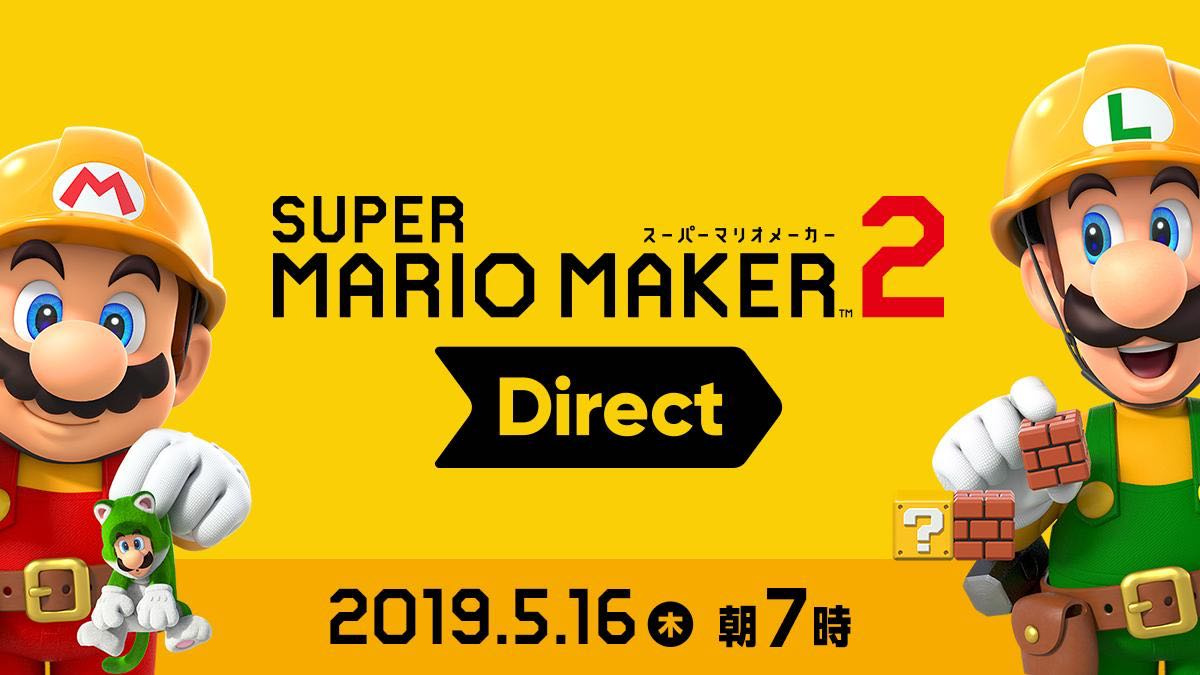
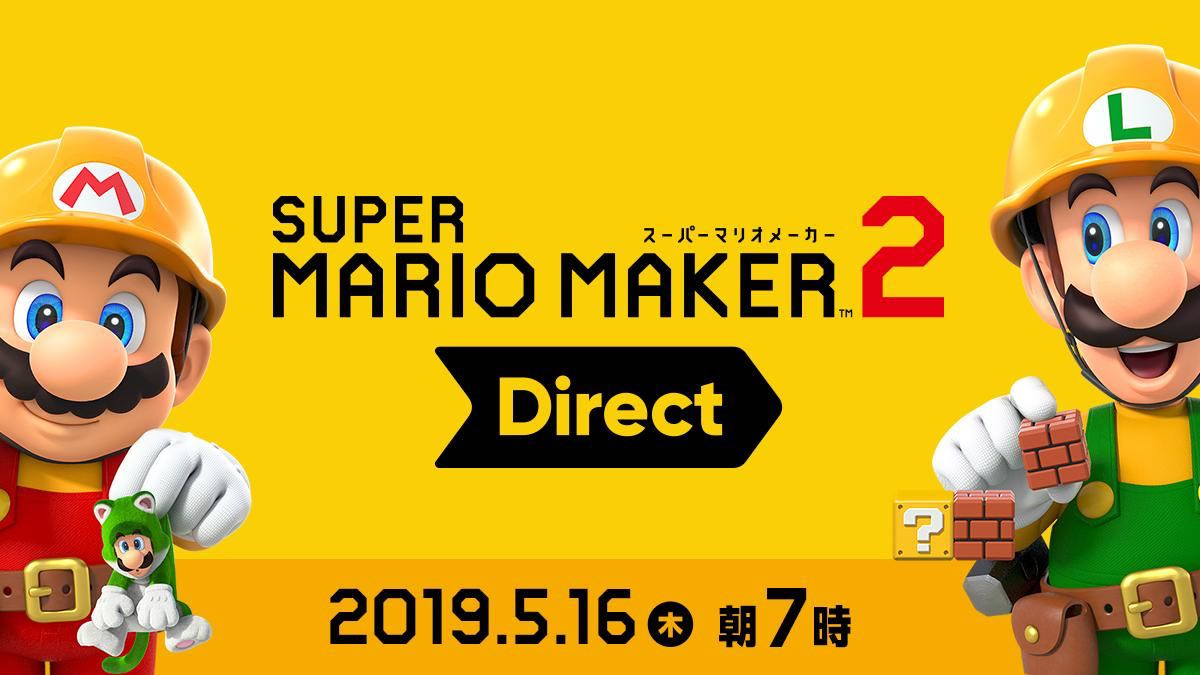
Super Mario Maker 2 Nintendo Direct Airing Tomorrow, 15th May
Completely out of the blue, a Super Mario Maker 2 Nintendo Direct has been announced to air tomorrow, 15th May.
The show will be 15 minutes long and “packed” with info about the upcoming release. The following description for the Direct has just been shared in a press release.
“Tune in on Wednesday, May 15 at 3 p.m. PT / 6 p.m. ET for a roughly 15-minute presentation packed with information all about Super Mario Maker 2 for Nintendo Switch.”
Times: 3pm PT / 6pm ET / 11pm BST
As always, we’ll be hosting the video right here on Nintendo Life, so make sure to check back with us tomorrow. As a reminder, the game launches on 28th June, just a couple of weeks after E3.
Excited? Ready to learn more about the game? Let us know what you hope to see in the video with a comment below.
Posted by: xSicKxBot - 05-15-2019, 10:41 AM - Forum: Windows
- No Replies
Electronic voting: What Europe can learn from Estonia
The May 23-26 European Parliament elections are fast approaching, and in the run up to these critical elections, many questions have been raised over security, foreign election interference and the role of technology in the process. Canada’s cyber security agency recently found that half of all developed countries holding elections in 2018 reported some form of cyber threat to their democratic processes, a threefold increase since 2015.
Such threats have created concerns around the targeting of digital components of elections, as detailed in previous Microsoft blogs. As a result, some governments have scaled back the use of technology in their election systems, even though many of the high-profile digital attacks have focused on the spread of disinformation on social media rather than targeting the actual election infrastructure.
Governments can respond to election-related cyber threats in a way that embraces technology and creates a system which commands public trust. Estonia implemented the EU’s first country-wide internet voting (i-voting) system in 2005. Two years later, a denial-of-service cyberattack targeted both private and public sector websites. It happened after a Soviet-era statue was relocated, and hit media outlets, banks and government bodies. Estonians could not use cash machines or online banking. Newspapers and broadcasters were unable to reach their audiences.
The scare could have prompted Estonia to roll back on its electronic innovations, but instead it chose to, apply lessons learned, lean into technology, opting for good cybersecurity and technological advancement as the best defense.
Estonia’s i-voting success story is now world renown, with hundreds of foreign delegations visiting to see the system in practice. It serves as a model for governments on how online voting can be done securely and increase trust in the election process. Estonia also demonstrated leadership on election security by co-chairing the group that prepared the Compendium on the Cybersecurity of Election technology that set baseline for the European Commission’s package on Securing Free and Fair European Elections. Tarvi Martens, Chairman of the Estonian Electronic Voting Committee, spoke to Microsoft about the benefits of their system, challenges for the future, and advice to other EU countries.
When and why did Estonia introduce internet voting?
The government began the legislative process in 2001 and introduced the new voting system in 2005. By 2002, Estonia had also introduced an ID card system and by 2005 almost 80% of the electorate had this ID card. At the time, Estonians were saying they did everything with their computer – their banking, taxes, signing documents – and asked: “why not voting?”
Could you talk us through the process of casting a vote online?
The process is actually pretty simple. The voter goes to the elections webpage and downloads an application to cast their vote. Next, the voter identifies his or herself using their ID card inserted into smart card reader or their mobile phone. Once the voter is authenticated with a PIN code it would say “welcome, here is your candidate list.” The voter can then cast their vote for their preferred candidate. The whole process takes around 40 seconds – unless you take more time to decide which candidate to vote for!
How is the internet voting process secured?
Securing the internet voting process is similar to the way we secure other high importance information systems such as banking and critical infrastructure. The trick is to guarantee the secrecy of the votes.
To do this, the ballots are immediately encrypted on the computer when you vote, and they are decrypted centrally by the election commission only once they are anonymized. There is no tag of who voted how, so that’s how we can maintain secrecy and privacy. Our system is like using a double envelope system for a ballot, where we can only count – or decrypt – anonymous votes.
The voter can also check whether his or her vote has arrived at the election commission server properly using a secondary device. After the voter casts their vote online, they can then use an application on their smartphone to scan a QR code from the computer. The QR code enables your device to communicate to the state election servers to show the voter how he or she voted without compromising the privacy of the vote cast.
Finally, there are additional mechanisms to preserve the integrity of the electronic ballot box. Votes are registered with a third party –an accredited trust service provider who issues a timestamp. These timestamps, collected from the trust service provider logs, are later compared with the electronic ballot box to make sure they coincide. That ensures that the administrator of the electronic ballot box cannot delete votes at random or produce extra votes.
What about people’s sense of the integrity of the election? Do people feel safe in Estonia voting on the internet?
Trust in the system is rising continuously. Before this year we had three elections with around 31% of people voting on the internet. During the last elections in March we had a significant increase to 44% of voters using the online system. That is the highest proportion yet of people using i-voting in Estonia.
The further away a voter lives, the more likely they are to vote from home. Also, if you are between the ages of 25 and 45, you are more likely to vote online because young people are more familiar with technology.
Who benefits most from an i-voting system?
There is a correlation between i-voting and how far a voter lives from a polling station. The further away a voter lives, the more likely they are to vote from home. Also, if you are between the ages of 25 and 45, you are more likely to vote online because young people are more familiar with technology. I-voting is also helpful for people with disabilities. While Estonia has long supported making the voting process accessible for people with disabilities through paper-based voting from home, they can now also vote online. And of course, i-voting is pretty much the only option for people travelling or residing out of the country for a longer period.
What about cost? Is an i-voting system cheaper than a paper voting system?
Initially, there are additional costs. For example, as we introduced this additional voting method, we still had to maintain the paper-based voting infrastructure. But once it is set up, it is significantly cheaper. After the fourth election using i-voting, we calculated the costs and found out that the electronic vote is about half the price of a paper vote.
Is the i-voting process easier to manage?
Yes, because it is centralized. We can do things very fast and conveniently.
Have many government delegations come to Estonia to learn about your system?
There is a map of the world in our office, and we have put a pin in every country which has sent a delegation to visit. It’s hard to find a country without a pin in it! During the last election in March, we had over 100 foreign officials visiting Estonia from 30 countries around the world.
Flags representing foreign missions to the Estonian state electoral office.
Among these government delegations, what are the most common concerns about online voting?
We see a general fear of the unknown. It takes two things to introduce internet voting in a country: First, a kind of ID card or mobile ID – an electronic identity infrastructure.
Second, it takes political will. Politicians are most interested in getting re-elected. They don’t want to mess with the electoral system and the average politician doesn’t know much about the internet and security, so they would say, “let’s not mess with that.” So, it takes courage to start the process.
What advice would you give other EU countries regarding the adoption of technology?
You just have to make a start, at least at a research level. Introducing a new voting method is a wide, society-embracing topic and might take long time. Just have in mind that at some point internet voting will be inevitable.
Has there been interference or targeting of the online platforms in Estonia?
The elections have never been targeted specifically. The cyberattack of 2007 thankfully happened two months after the elections. That attack was regarded as the first countrywide cyberattack targeting all the sectors, both private sector and public sector. But I think our information security was high and we handled it well. There was one and a half days of disturbance and then it was contained.
What did you learn from that experience?
It was a very good exercise. Now we can teach others how to defend against those kinds of attacks. Those attacks and our ability to counter them led to the opening of the NATO Cooperative Cyber Defence Centre of Excellence in Estonia which has been one of the preeminent organizations leading the world’s discussions on the application of international law in cyberspace.
Are there any more technological innovations that you’re planning to implement in future elections?
There have been discussions about introducing voting on mobile devices, but we currently use the mobile device to verify the computer-based vote. If we move to voting from mobile devices, what do we use as second device for verification of the correct behavior of the mobile device? That’s the main challenge that we are thinking through right now. We are analyzing this, and after the European Parliament elections we will systematically research this issue. Overall, I would say that so far, we are proud of what we have achieved.