Inspired by classic action movies, The Hong Kong Massacre places you at the centre of a hard-boiled revenge story, filled with brutal, cinematic shootouts and vivid underworld locations. Take on the role of a former police detective bent on exacting vengeance for his partner's murder and use of a mixture of raw firepower, slow-motion and dive/dodge mechanics to tear your way through the criminal ranks.
The two brothers continue their journey into the winter months & struggle against the cold. As Daniel gradually falls ill, Sean decides they must make their way to their distant grandparent?s house to recover. During their stay, they encounter next-door neighbor Chris, a young boy who believes he is a superhero by the name of Captain Spirit.
The two brothers continue their journey into the winter months & struggle against the cold. As Daniel gradually falls ill, Sean decides they must make their way to their distant grandparent?s house to recover. During their stay, they encounter next-door neighbor Chris, a young boy who believes he is a superhero by the name of Captain Spirit.
Fantastic Beasts 3 Production Delayed, But Not Very Long
The third of five planned Fantastic Beasts movies has hit a bit of a speedbump. Production on the film was expected to begin this July, but now cameras are set to start rolling in the Fall, according to a new report from Deadline. Why the production delay?
According to the site, Warner Bros. simply wants more time in pre-production, which sounds like a good thing. The move is supposedly part of management's belief that giving the creative teams more time will lead to a better end result, and again, that sounds like a good thing.
Previous Warner Bros. administrations had the tendency to rush event films to meet release dates, and in this case Fantastic Beasts 3 was rumored to be 2020. Warner Bros. executives now have a new approach of allowing big productions to brew as needed," Deadline said.
According to the report, Fantastic Beasts actors are now being told about the production delay so they can adjust their own schedules accordingly.
2016's Fantastic Beasts And Where To Find Them made $814 million worldwide, with 2018's sequel Fantastic Beasts: The Crimes of Grindelwald taking in $648.8 million globally. Together they have made around $1.4 billion.
Both films were directed by David Yates, and he's expected to direct the third one as well. The series stars Eddie Redmayne as magizoologist Newt Scamander in a story written by J.K. Rowling and set before the events of the Harry Potter series.
Bandai Namco’s SD Gundam G Generation Cross Rays Confirmed For Switch
Bandai Namco has announced that its recently revealed title SD Gundam G Generation Cross Rays will be headed to Nintendo Switch this year.
The game was seemingly revealed slightly ahead of time earlier this week via a teaser trailer, although no specific platforms had been mentioned at that time. Now, though, those platforms have been fully confirmed and we have an official, six-minute trailer for you up above. If that’s not enough, Bandai Namco Entertainment Southeast Asia has released the following information to get you up to speed:
“The G Generation series saw its 20th anniversary in 2018. The latest work, SD Gundam G Generation Cross Rays, features characters and Mobile Suits from the Mobile Suit Gundam Wing, Mobile Suit Gundam SEED, Mobile Suit Gundam 00, and Mobile Suit Gundam Iron-Blooded Orphans series. The game is slated for release in 2019 for PlayStation 4, Nintendo Switch, and Steam in Southeast Asia (Singapore, Malaysia, Thailand, the Philippines, and Indonesia).”
The game will have you gathering characters and Suits from various Mobile Suit Gundam series in order to train, develop, and form groups. You can create your very own team through this system and experience the stories of various Gundam series in the process. A full list of the included series has also been released:
☆ = Featured in Scenarios
☆ Mobile Suit Gundam Wing
☆ New Mobile Report Gundam Wing: Dual Story -G-Unit-
Mobile Suit Gundam Wing: Battlefield of Pacifists
Mobile Suit Gundam Wing: Endless Waltz -Glory of the Losers-
☆ Mobile Suit Gundam Wing: Endless Waltz
☆ Mobile Suit Gundam SEED
Mobile Suit Gundam SEED MSV
☆ Mobile Suit Gundam SEED Astray
Mobile Suit Gundam SEED Astray R
Mobile Suit Gundam SEED Astray B
☆ Mobile Suit Gundam SEED X Astray
☆ Mobile Suit Gundam SEED Destiny
Mobile Suit Gundam SEED Destiny MSV
Mobile Suit Gundam SEED Destiny Astray
☆ Mobile Suit Gundam SEED C.E. 73 -Stargazer-
Mobile Suit Gundam SEED C.E. 73 Astray
Mobile Suit Gundam SEED Frame Astrays
Mobile Suit Gundam SEED VS Astray
Mobile Suit Gundam SEED Destiny Astray R
Mobile Suit Gundam SEED Destiny Astray B
☆ Mobile Suit Gundam 00
Mobile Suit Gundam 00P
☆ Mobile Suit Gundam 00F
Mobile Suit Gundam 00I
Mobile Suit Gundam 00V
Mobile Suit Gundam 00V Senki
☆ Mobile Suit Gundam 00 the Movie: A Wakening of the Trailblazer
Mobile Suit Gundam 00I 2314
☆ Mobile Suit Gundam: Iron-Blooded Orphans
☆ Mobile Suit Gundam: Iron-Blooded Orphans Gekko
SD Gundam GX
G Generation Series
As noted above, the game will launch on Switch (and PlayStation 4 and PC) in 2019 in Japan; a Southeast Asia release will also launch with English text. Gematsu reports that more information is expected to be announced at Taipei Game Show 2019 from 25th – 27th January via a livestream on YouTube.
Do you like what you see in the trailer? Will you be checking out the livestream to learn more about this one? Tell us below.
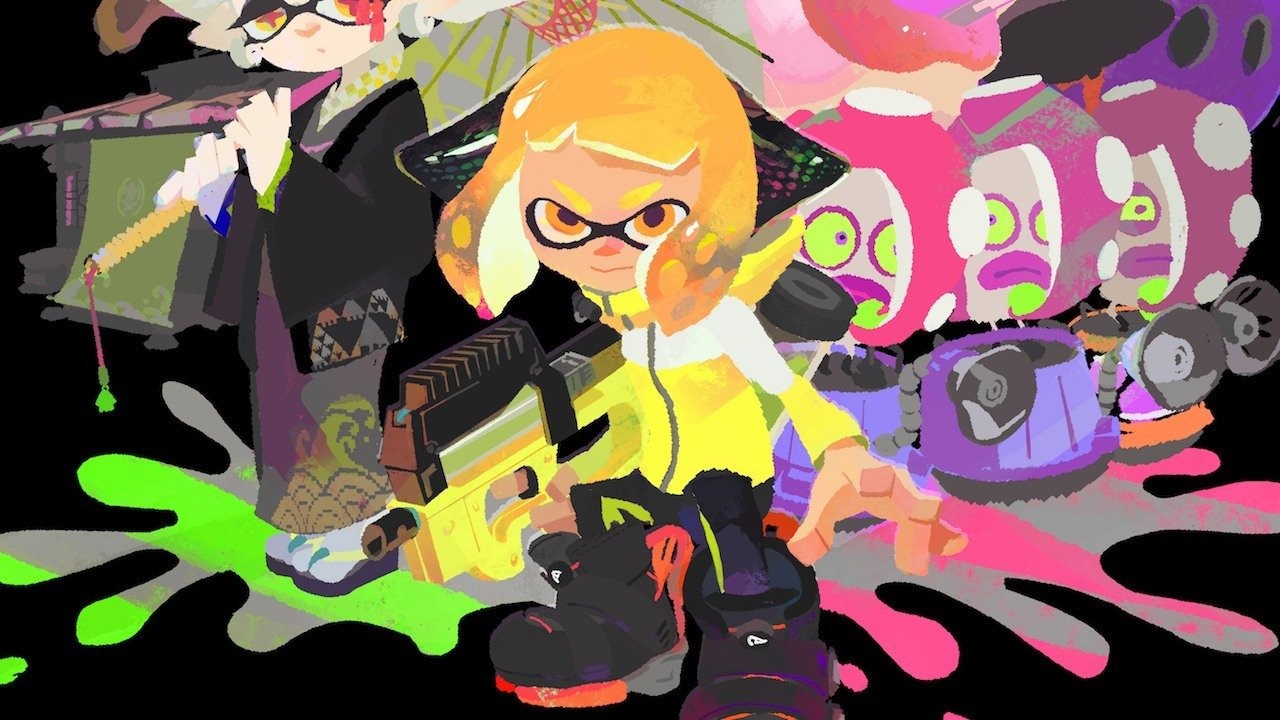
Video: Hisashi Nogami And Shinya Takahashi Discuss The Making Of Splatoon
Back in September last year, we shared the news that Splatoon 2 was set to be featured in a new exhibition in London, UK. Four months in, the exhibition is nearing its end, but Nintendo UK has invited a very special pair of guests to check it out and talk all things Splatoon.
Yes, the game’s producer, Hisashi Nogami, and Head of Software Development at Nintendo, Shinya Takahashi, have joined forces to discuss the title’s development. The pair talk about how the game came into being and why they chose to include it in the new exhibit, all while giving us a little tour of some of the things you can expect to see should you visit.
The exhibition is titled ‘Videogames: Design/Play/Disrupt’, exploring modern gaming and the ways in which games are designed, discussed and played. It’s currently being held at the Victoria and Albert Museum and will be available to visit until 24th February. If you’re interested in attending, tickets are available right here for £18; Nintendo UK is also hosting a competition on Twitter to win tickets for yourself and a friend.
Would you like to check it out? Have you already been lucky enough to go? Let us know in the comments.
Learn how to get network information using the ss command in this tutorial from the archives.
Linux includes a fairly massive array of tools available to meet almost every need. From development to security to productivity to administration…if you have to get it done, Linux is there to serve. One of the many tools that admins frequently turned to was netstat. However, the netstat command has been deprecated in favor of the faster, more human-readable ss command.
Thess command is a tool used to dump socket statistics and displays information in similar fashion (although simpler and faster) to netstat. The ss command can also display even more TCP and state information than most other tools. Because ss is the new netstat, we’re going to take a look at how to make use of this tool so that you can more easily gain information about your Linux machine and what’s going on with network connections.
The ss command-line utility can display stats for the likes of PACKET, TCP, UDP, DCCP, RAW, and Unix domain sockets. The replacement for netstat is easier to use (compare the man pages to get an immediate idea of how much easier ss is). With ss, you get very detailed information about how your Linux machine is communicating with other machines, networks, and services; details about network connections, networking protocol statistics, and Linux socket connections. With this information in hand, you can much more easily troubleshoot various networking issues.
Let’s get up to speed with ss, so you can consider it a new tool in your administrator kit.
Basic usage
The ss command works like any command on the Linux platform: Issue the command executable and follow it with any combination of the available options. If you glance at the ss man page (issue the command man ss), you will notice there aren’t nearly the options found for the netstat command; however, that doesn’t equate to a lack of functionality. In fact, ss is quite powerful.
If you issue the ss command without any arguments or options, it will return a complete list of TCP sockets with established connections (Figure 1).
Because the ss command (without options) will display a significant amount of information (all tcp, udp, and unix socket connection details), you could also send that command output to a file for later viewing like so:
ss > ss_output
Of course, a very basic command isn’t all that useful for every situation. What if we only want to view current listening sockets? Simple, tack on the -l option like so:
ss -l
The above command will only output a list of current listening sockets.
To make it a bit more specific, think of it this way: ss can be used to view TCP connections by using the -t option, UDP connections by using the -u option, or UNIX connections by using the -x option; so ss -t, ss -u, or ss -x. Running any of those commands will list out plenty of information for you to comb through (Figure 2).
By default, using either the -t, the -u, or the -x options alone will only list out those connections that are established (or connected). If we want to pick up connections that are listening, we have to add the -a option like:
ss -t -a
The output of the above command will include all TCP sockets (Figure 3).
In the above example, you can see that UDP connections (in varying states) are being made from the IP address of my machine, from various ports, to various IP addresses, through various ports. Unlike the netstat version of this command, ss doesn’t display PID and command name responsible for these connections. Even so, you still have plenty of information to begin troubleshooting. Should any of those ports or URLs be suspect, you now know what IP address/Port is making the connection. With this, you now have the information that can help you in the early stages of troubleshooting an issue.
Filtering ss with TCP States
One very handy option available to the ss command is the ability to filter using TCP states (the the “life stages” of a connection). With states, you can more easily filter your ss command results. The ss tool can be used in conjunction with all standard TCP states:
established
syn-sent
syn-recv
fin-wait-1
fin-wait-2
time-wait
closed
close-wait
last-ack
listening
closing
Other available state identifiers ss recognizes are:
all (all of the above states)
connected (all the states with the exception of listen and closed)
synchronized (all of the connected states with the exception of syn-sent)
bucket (states which are maintained as minisockets, for example time-wait and
syn-recv)
big (Opposite to bucket state)
The syntax for working with states is simple.
For tcp ipv4:

ss -4 state FILTER

For tcp ipv6: ss -6 state FILTER
Where FILTER is the name of the state you want to use.
Say you want to view all listening IPv4 sockets on your machine. For this, the command would be:
ss -4 state listening
The results of that command would look similar to Figure 4.
Show connected sockets from specific address
One handy task you can assign to ss is to have it report connections made by another IP address. Say you want to find out if/how a machine at IP address 192.168.1.139 has connected to your server. For this, you could issue the command:
ss dst 192.168.1.139
The resulting information (Figure 5) will inform you the Netid, the state, the local IP:port, and the remote IP:port of the socket.
Make it work for you
The ss command can do quite a bit to help you troubleshoot issues with your Linux server or your network. It would behoove you to take the time to read through the ss man page (issue the command man ss). But, at this point, you should at least have a fundamental understanding of how to make use of this must-know command.
Learn more about Linux through the free “Introduction to Linux” course from The Linux Foundation and edX.
A lot of people choose Android for the freedom to customize their mobile experience, with many more unique tricks, themes and features available for Google’s platform than Apple’s walled garden. However, for gaming it seems the ubiquity of iDevices has led to Android becoming a second son to developers, with android ports coming late if at all (Fortnite‘s brief exclusivity notwithstanding.) But there’s good news. The same anything-goes attitude that leads to a panoply of unique apps for Android also leads to unusual and exciting mobile games – you just have to look a little harder to find them.
Don’t forget that Android apps can be distributed outside of official Google channels! One great place to find new and exciting .apk files is itch.io, a repository for indie games, experiments, and early-access titles. A lot of interesting games in early-access have also been ported to Android as they undergo development, with many feature-complete and just getting polished up. A lot of great web games have also made their way over to Android.
So here are some of the best android-exclusive games that you won’t find on iOS:
Red Rogue is a roguelike platformer with a traditional twist: it can be played turn-based, where monsters only move when you do. What’s more, Red Rogue lives up to its title with a grim grayscale palate that is livened only by splashes of red blood. Please enjoy kicking the heads of defeated enemies into other monsters and eating their beating hearts for health. Try it on the web for free, then pick it up on the Play store for a song.
Caves is a more traditional Roguelike streamlined for mobile in the Pixel Dungeons style. But don’t let its simple appearance fool you. Caves is a brutally difficult dungeon crawl with the freedom to dig your own passages through the earth. The game is ad-supported with a single IAP to remove the ads.
If you can tempt adventurers into the ‘pitch dark’ then they will likely be eaten by you, the Grue, in this fun reversal of normal RPG roles. Since Grues are allergic to light, this roguish game becomes more of a puzzler as you try to get the dumb adventurers to get too close to the dark patches on the map.
Undervault breaks down the roguelike formula by reducing movement to room-to-room. Your character moves left to right and up and down through individual rooms of the map, including kitchens, bedrooms, and shops, using keys, switches and skills to unlock doors. Hunger and fatigue add some survival elements, but a random spinner and room cards let you put some control on what room shows up next. A challenging and unique take on dungeon-crawling.
This PC port has a bit of Pokémon DNA since it features a minor god who recruits a team of monsters to fight its battles. In this version, you set your monsters into formation and let them duke it out in real-time 6 vs 6 battles while you watch from above and unleash the occasional lightning strike. It’s got a cute 16-bit style and some pretty decent length.
SFD brings a tactical layer to the roguish formula, putting not a single adventurer in the dungeon but a whole squad. With its cool 16-bit graphics it’s like if Final Fantasy Tactics got mixed in with your Nethack. Or maybe fantasy XCOM on ironman mode. Plus, you can use environmental damage to take out your opponents!
This is a homage to early 90s space adventure sims, mashing up trading, management, space shooter and even primitive 2.5-D FPS gameplay. It’s chock full of weirdo aliens rendered in garish purples, oranges, and blues. This gem is totally fun even in early access, and the price gets you both the desktop and Android versions.
If you’ve ever wanted to play StarCraft using only the mini-map, this is the game for you. Mini RTS shrinks basic RTS gameplay down to single pixels. It’s designed to play in only a few minutes but has a surprisingly challenging AI.
Halfling Tycoon is a basic management game where you build up a fantasy village and earn enough to fight the monsters out of new territory. It’s surprisingly well-featured for what started as a web flash game. This one is available with ads on Android or in a pay-what-you-want scheme, with a $1 minimum, for all platforms, including Android.
This tower defense title was fairly well received on release, but it appears its iOS version has fallen victim to the Appocalypse. The game is a basic two-dimensional tower defense game with a fun Dungeon Keeper-esque theme. Not a game for serious tacticians, but a fun diversion. It’s a free download with a single IAP for the whole game.
One more thing…
Additionally, Android is notorious for letting you install emulators that provide the engine behind your legally acquired collection of vintage console ROMs. RetroArch is the most full-featured, but arcane, whereas Robert Broglia’s inexpensive paid iterations are the most polished.
Don’t forget ScummVM, which can play a surprisingly large number of classic adventure games, including those you can buy or receive gratis from GOG.com, like Beneath a Steel Sky.
What are your favourite Android exclusive games? Let us know in the comments!
Starbreeze delays console release of Overkill’s The Walking Dead
Starbreeze has announced that it is holding off on bringing Overkill’s The Walking Dead to consoles, at least for now. Both the PlayStation 4 and Xbox One versions of the games were due to launch on February 6, but have now been delayed indefinitely, with more details to be released at a later date.
For Starbreeze, the decision to delay the console launch of Overkill’s The Walking Dead comes during a rough patch in the company’s history. Prior to its release, company leadership had previously toted the game as its biggest release since Payday 2, a game that, despite releasing 5 years ago, is still a top earner for Starbreeze.
The studio had been banking on the success of Overkill’s The Walking Dead to bring it back into the profitable range, but sales of the PC version fell short of expectations. Following the game’s release, Starbreeze announced that it had initiated a program to “reduce costs and sharpen focus on core business,” including internal and external development, in order to keep what CFO Sebastian Ahlskog described as the “company’s important games” alive and headed toward release.
Don’t Miss: A postmortem of DrinkBox Studios’ Guacamelee!
In the fall of 2010 as our first game, Tales From Space: About a Blob, neared completion, we started talking about new game ideas. Prior to creating About a Blob, DrinkBox Studios did primarily contract game development work to get the company up and running. Nearly three years later we were finishing our first internally developed game and while there was a lot to be proud of, there were some mistakes we didn’t want to repeat. With that in mind we had a number of high-level goals for our next project:
A game with immediate appeal. People must “get it” right away and be excited about the concept
A setting and style more grown-up and hardcore gamer-centric, but that still stood out as unique
A clear vision for the gameplay and overall game design that was well-defined before we entered full production
Fast-forwarding to April 2013, we believe we accomplished our goals with Guacamelee!. When Guacamelee! was released on PSN it became the top downloaded game for both PlayStation 3 and PlayStation Vita for the month of April, including both retail and download-only games in both the Americas and Europe. Along the way Guacamelee! was nominated at IndieCade and the IGF, and received recognition at PAX East, PAX Prime, and E3.
This success was a huge relief at the end of a long road, but while the results were great the development wasn’t without its hiccups.
1. Game Design Vision
During development of our first game, Tales From Space: About a Blob, we struggled to define a clear vision for the gameplay. Was it a platformer or a puzzle game? What was the game really about and how should levels be structured around that? We thought we’d figured out answers by the end of development, but that process took the duration of the project and as a result wasn’t fully reflected in the final game. For our next project, we didn’t want to repeat that mistake.
Guacamelee! was born out of team pitch sessions that started taking place in the fall of 2010. We spent a lot of time talking about the kind of project we thought would work well for the team and discussed the high-level mistakes we felt we’d made with our first game.
Early concept images for Guacamelee!
Once we developed a sense of the kind of game we wanted to create, we asked everyone to put together single-page pitches for each of their own ideas. Guacamelee! was initially proposed as a pure brawler by our concept artist Augusto Quijano, who was originally from Mexico. We gradually combined other gameplay mechanics, including attack moves doubling as locomotion, overlapping parallel worlds and a Metroidvaniastructure.
Adding these elements to the brawler concept created a debate about whether too much was being combined. We wanted to ensure the game stood out, but at the same time we were concerned about spreading ourselves too thin over multiple ideas, or possibly basing the game around a mechanic that didn’t work. We spent a lot of time on our previous title trying to get the basic mechanics to work together, and that struggle hurt the final product because it limited the time we had for refinement and polish.
In this case we concluded that the different mechanics for Guacamelee! were interesting and complemented each other within the Mexican theme, so we tentatively decided to use them all. However, in light of our concerns we decided to be cautious and avoid committing to making the game until we knew it would really work. One of the first things we did was create a concept video in Flash.
Concept video
This concept video was one of the most useful things we did for the project. It helped us quickly visualize the world and let us develop a concept for the combat system. We came up with the basic attacks (dash, uppercut, slam and throw) through this process and explored how they would be used for both combat and platforming. It’s striking to look back at the video and see how closely it matches the final gameplay, but with a few key differences.
We followed up the video with two incremental demos. The first was a combat demo that let us explore how combat would work, how wrestling moves might fit in, and let us experience the special moves as both attacks and locomotion.
First combat demo
Our next demo added in a free form, dimension-swapping mechanic, simplified the basic combat moves, and was built as a vertical slice. By this point, all the key mechanics of the game had been developed and proven to work.
Trailer after vertical slice
Although questions remained, the game was well defined. This was accomplished using a small group and rapid prototyping, with the freedom for people to try different things. We considered this a major accomplishment in the context of our previous title and it gave us the confidence to move into the full production of the game.