During the ‘Kinda Funny Video Game Showcase’ the developer Sabotage Games and publisher Devolver Digital lifted the lid on the next outing for The Messenger.
The 2D side-scroller inspired by the original Ninja Gaiden game will receive an entirely free DLC pack titled ‘Picnic Panic’ in 2019 that takes players on a trip to tropical paradise to defeat three bosses. Right now, there’s no other information about this upcoming content pack other than the above trailer. Below is the confirmation tweet:
Not long ago, a quality of life patch was released for The Messenger. This added New Game Plus, a jukebox mode and the ability to remap controls. You can see it all in action in this video.
Are you excited about free DLC arriving for The Messenger at some point in 2019? Have you downloaded this game yet? Leave a comment below.
Try the Dash to Dock extension for Fedora Workstation
The default desktop of Fedora Workstation — GNOME Shell — is known and loved by many users for its minimal, clutter-free user interface. However, one thing that many users want is an always-visible view of open applications. One simple and effective way to get this is with the awesome Dash to Dock GNOME Shell extension.
Dash to Dock takes the dock that is visible in the GNOME Shell Overview, and places it on the main desktop. This provides a view of open applications at a glance, and provides a quick way to switch windows using the mouse. Additionally, Dash to Dock adds a plethora of additional features and options over the built-in Overview dock, including autohide, panel mode, and window previews.
Features
Dash to Dock adds a bunch of additional features over the dock that usually shows in the GNOME Shell overview.
The extension has an intelligent autohide feature, that hides the dock when it obscures windows. To bring the dock back up, simply move the mouse to the bottom of the screen.
Additionally, panel mode stretches the dock to take up the entire width of the screen. This is a good option for users that want to always have the dock showing, without autohiding it.
Dash to Dock also cleanly handles multiple windows of the same application. It shows small dots under each application icon to show how many windows are open. Additionally, it can be configured to show previews of each window when clicking the icon, allowing the user to choose the window they want.
Installing Dash to Dock
The quickest and easiest way to install the extension is with the Software Application. Check out the previous post here on the Magazine for more details:
Note, however, that Dash to Dock is available in both the Fedora repositories, and via the GNOME Shell extensions repository. Consequently, it will show up twice when browsing for extensions in the Software application:
Typically, the version from GNOME Shell Extensions is kept up-to-date more frequently by the developer, so that version may be the safer bet.
Configuring Dash to Dock
The Dash to Dock extension has a wide range of optional features and tweaks that users can enable and change. Some of the tweakable items include: icon size, where to position the dock (including on multiple monitors), opacity of the dock, and themes.
Accessing the settings dialog for the extension is easy. Simply right-click on the applications icon in the dock, and choose Dash to Dock settings.
Note, however, that the extension allows you to remove the applications icon from the dock. In this case, access the settings dialog via the Software Application:
The Outer Worlds Looks A Lot Like Fallout, But That's Only Half The Story
You know how, when playing any of the 3D Fallout games, the camera will sometimes kick out during combat for a slow-motion cinematic view of a killshot? Count that as one of the many reasons why Obsidian's new game, The Outer Worlds, looks a lot like Bethesda's now contentious post-apocalyptic series. It's a sporadic and superficial detail, but if you're familiar with Fallout it's an unmistakable flourish that will immediately catch your eye and cause memories of exploring irradiated wastelands to come rushing back--especially when you catch a glimpse of the attacker's deadpan expression.
This example is merely scratching the surface. Fallout was in the air during a recent visit to Obsidian Entertainment before the announcement at The Game Awards; many of the people we met had worked on the early games in the series, and the gameplay we saw of The Outer Worlds led from one familiar moment to the next. Obsidian isn't making a game that lives under the Fallout banner, but if you look at branding as a formality, you could say Obsidian is making the most informal Fallout game to date.
At the front of the room presenting the game, Fallout co-creators Tim Cain and Leonard Boyarsky were poised, seemingly confident in what they were about to show the group. This was their first game together since their studio, Troika Games (Arcanum, Vampire: The Masquerade - Bloodlines), shut down in 2005. Leonard had gone on to Blizzard to work on Diablo III; Cain spent some time at Carbine Studios before landing at Obsidian in 2011 as senior programmer on Pillars of Eternity. The duo were instrumental to the creation of the first two Fallout games before the ailing Interplay Entertainment licensed the rights for Fallout 3 to Bethesda. At the time Cain had already formulated a piece of what he wanted the next sequel to be, and he's quoted in 2002 as saying: "My idea is to explore more of the world and more of the ethics of a post-nuclear world, not to make a better plasma gun." Is this the chance he's been waiting for?
The Outer Worlds is set in a distant solar system where corporations are king, so much so that people practically define themselves by the brand they represent--it's just a fact of life for them. Because it's second nature, the overall tone is more casual than sinister, which is the perfect canvas for Obsidian's brand of subtle humor to seep through.
Neither Cain nor Boyarsky would say why the colonists in The Outer Worlds left Earth, but with their previous games in mind it's not difficult to imagine a plausible scenario. Regardless, the jumping off point was suspiciously familiar. At the start of the game, you are woken up from a multi-year slumber in a human-sized capsule--your own personal vault, if you will. The crazed scientist who jolted you out of hypersleep has a mission for you, but we were told you could freely ignore his wishes and embark on a questline of your choosing.
The Outer Worlds is being designed around freedom of choice, which often manifests during verbal exchanges. You have free agency to lie, play dumb, betray allies, or align with would-be enemies. These concepts aren't limited to Fallout games, but it's--again--hard to deny the similarities at play when even the amount of camera zoom during dialogue brings Fallout 3 to mind.
Whether The Outer Worlds is intentionally built to remind us of Fallout is a question we'll likely never get answered by Obsidian, but odds are it's not a coincidence. Obsidian's work on Fallout: New Vegas is cited by many fans to be the best thing to happen to the series in recent years. You could argue that any similarities between The Outer Worlds and Fallout are due to the fact that there are so many ex-Fallout devs working on the game, but there are elements that go beyond mere creative tendencies.
You dictate your characters' growth by investing in a stat system with categories dictated by a six-letter acronym, not unlike Fallout's S.P.E.C.I.A.L. system. Despite these and the many other similarities, The Outer Worlds isn't devoid of originality. Cain smirked before saying that he couldn't tell us what the stat acronym in The Outer Worlds is, but he was amped to share the other side of character customization, which sounds like it will usher in a brand-new form of player choice.
The Outer Worlds, we're told, keeps track of your interactions, mistakes, and tendencies. When the background computations identify that you've experienced a specific event repeatedly, it will give you a chance to incorporate that experience into your character's mental state. If, for example, you are attacked five times by a specific type of wild animal, the game will ask you if you'd like to accept a phobia of said creature. This opportunity is two-fold: accepting the phobia will result in a debuff of specific stats when you come near that species in the future, but by accepting it, you will get the chance to pick up an extra advantage too.
"If people have liked our previous RPGs they're going to like this one in terms of how we make reactive worlds and especially our style of humor."
- Tim Cain
In the example we saw, signing up for a fear of Raptidons afforded you an extra perk. While it was confirmed that you will be able to respec your character at any time, flaws are permanent. You could decide to take on a fear of the dark, fear of ledges, and a fear of fire, and wind up in an unexpectedly sticky situation further down the road. It's the sort of thing you want to think twice about before making a call, but the potential for personal playthroughs feeds into the role-playing experience and may be difficult to ignore.
Thankfully, your companions are able to support you when the going gets tough. It looks as though you'll have half a dozen companions to choose from during your adventures, but you are only allowed to explore and fight with two by your side at any time. Party members relieved of duty will reside on your spaceship, which acts like more of a small base of operations, rather than a vehicle you can actually control--it moves on fixed paths when you pick your next destination. Also on board is Ada, the ship's AI represented by a female avatar on a monitor in the control room. Ada is supposed to grow and change depending on your actions, though we didn't get a look at this firsthand.
Back on terra firma, your companions will fight according to their AI and the class you've assigned to them. Each character in your party can carry a small selection of both melee and ranged weaponry, of which we're told there's a great variety to discover during your adventures. If there's one aspect of The Outer Worlds that looks a bit underwhelming, it's combat. Enemies and allies alike lack energy, exhibiting basic and straightforward animations. I got the sense that victory has more to do with how you craft your party rather than how you handle them during a fight.
While Fallout's V.A.T.S. system isn't replicated in an immediate and obvious fashion like other aspects of The Outer Worlds, there is a time-dilation mechanic that serves a similar purpose. Triggering this ability slows down time and lets you target specific body parts. Whether to maintain a stealthy run or slow down a hectic fight in order to gain an advantage, this system still feels like it serves a similar purpose to V.A.T.S. in the long run--just without the damage and success percentages guiding your aim.
Cain told us that he writes a post-mortem on every Fallout game, including those he had no part in. He also posited that "If people have liked our previous RPGs they're going to like this one in terms of how we make reactive worlds and especially our style of humor." After watching nearly 45 minutes of The Outer Worlds play out in front of me, I recognized both the ideals of Cain and Boyarsky and the habits of Obsidian on screen.
Regardless of what The Outer Worlds is called, the pedigree behind it and the apparent results of the team's vision feels like it's aimed squarely at the Fallout fanbase. Obsidian never could have predicted Fallout 76 nor the reaction to it, but for this game to arrive at this time feels like serendipity. Cain and Boyarsky never got their chance to make their version of Fallout 3, but more than a decade after they left their most famous work behind, they have reunited for their "dream project." For the disenchanted fans of older Fallout games, they may finally get the game they've been asking for all along.
Editor's note: GameSpot was flown to Obsidian Entertainment at Private Division's expense.
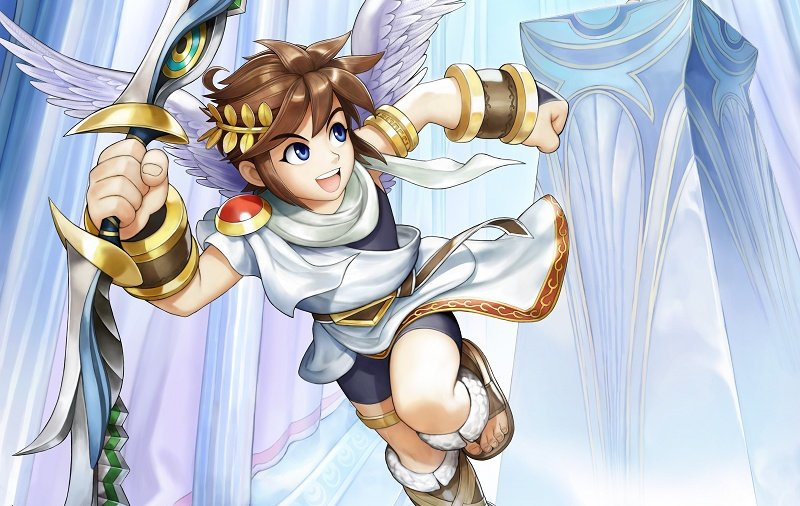
Masahiro Sakurai Rules Out A Modern Port Of Kid Icarus: Uprising
Earlier this week when Nintendo was counting down the days until the release of Super Smash Bros. Ultimate on the Switch, it revealed a previously unpublished augmented reality card for the 2012 3DS release, Kid Icarus: Uprising.
If it got you wondering about a potential comeback, think again. During an interview with Edge Magazine (as transcribed by Nintendo Everything), the game’s creator Masahiro Sakurai touched on the revival of this classic Nintendo series and said a modern port of the 3DS entry would likely not be possible:
“As a game in general, it’s rich in content and enjoyable, and people have even asked for a modern port. However I don’t think this will be possible.”
Sakurai reflected on the development cycle of the 3DS title, explaining how difficult he found the entire experience to be:
“I could say that this was close to becoming the most difficult project in my entire career, both in terms of the team and the hardware. The team I had gathered differed greatly in culture and ways of thinking, so there was always confrontation. In addition, back when we were developing the game, we still couldn’t make full use of the power of Nintendo 3DS. Some improvements in aspects such as the middleware were made later on, but since the game was being made in the initial stages of Nintendo 3DS development, we had a really hard time doing what we wanted to.”
Way back in 2012, a few months after the release of Uprising on the 3DS, Sakurai ruled out a sequel to this game. When IGN asked if the now disbanded Project Sora had created a “lasting universe” the team could return to, the creator of the Super Smash Bros. series replied with the following comment:
“If by ‘lasting universe’ you mean to ask if there’s a sequel, the answer is no.”
The reason behind this was because Sakurai felt the novelty of the experience would likely “grow thin” in future entries. This was his final thought:
“For now, my thought is that perhaps we’ll see someone else besides me make another Kid Icarus in another 25 years.”
Are you disappointed to hear Uprising likely won’t be revived for the modern hardware generation? Would you like to see a future entry in the Kid Icarus series? Did you enjoy Sakurai’s 3DS revival? Tell us below.
Warframe Now Has One Million Players On Nintendo Switch
The free-to-play third-person shooter Warframe has already reached the one million player mark on Nintendo Switch in less than a month. Digital Extremes – the Canadian publisher behind the title – celebrated this epic milestone by sharing the following tweet:
If you haven’t tried out Warframe yet, it’s a game that’s been ported across to the Switch with the help of the specialist team at Panic Button. The title was originally released on PC in 2013 and has steadily improved over time.
Games Industry notes how the sci-fi experience saw its best concurrent user peak on Steam last month, with 132,000 Tenno logged in at once. Prior to the Switch release, the game had 38 million registered players across all platforms. Considering 22.86 million Switch have now been sold worldwide as of September this year, there’s still a sizeable audience to attract.
Are you one of the players who has downloaded Warframe on the Switch? Tell us below.
Avengers 4 Endgame Trailer Released With Confirmed Title
The first trailer for the fourth Avengers movie is here. The sequel to this year's hugely successful Avengers: Infinity War has been shrouded in secrecy--the movie's title hadn't even been revealed until now. But we now know the movie is titled Avengers: Endgame and this first teaser gives us a hint of what to expect when it hits theaters in April next year.
The trailer opens with a voiceover from Tony Stark, who is stranded in space with oxygen about to run out. Back on Earth, we see various desolate shots of the Avengers building, while Steve, Natasha, Bruce, and Thor mourn the loss of their friends after Thanos snapped his fingers. But it seems that Steve has a plan. There's also the return of two big characters who were absent from Infinity War--check it about above, and then head over to our Endgame trailer breakdown.
Avengers: Endgame releases on April 26, 2019 and is directed once more by Joe and Anthony Russo. Unsurprisingly, virtually all the major actors from the MCU are set to return, so that means Robert Downey Jr., Chris Hemsworth, Chris Evans, Benedict Cumberbatch, Mark Ruffalo, Elizabeth Olsen, Sebastian Stan, Scarlett Johansson, and so on. It had been rumored that this might be the last Marvel movie for some of the MCU's longest-running stars--in particular Evans--but nothing has been confirmed about their future in the franchise.
In related news, the second trailer for Captain Marvel was also released this week. This is the first MCU movie to arrive in 2019, and it releases on March 8. It stars Brie Larson, Samuel L. Jackson, and Jude Law, and is the first Marvel movie with a female superhero as the central character.
The following blog post, unless otherwise noted, was written by a member of Gamasutras community. The thoughts and opinions expressed are those of the writer and not Gamasutra or its parent company.
Hey all! For the past month or so, I’ve been tackling one of the biggest technical problems in my new game, Dicey Dungeons – improving the enemy AI enough for the final release of the game. It’s been pretty interesting, and lots of it was new to me, so I thought I’d write a little bit about it.
First up, a sort of disclaimer: I’m not a computer scientist – I’m just one of those people who learned enough about programming to make video games, and then stopped learning anything I didn’t have to learn. I can usually muddle through, but a real programmer probably wouldn’t have approached all this the way I did.
I tried to write all this in a fairly high level approach in mind, so that hopefully the basic ideas all make sense to other non-programmers. But I’m for sure no expert on all this stuff, and if I’ve gotten any of the details wrong in explaining the theory, let me know in the comments – happy to make corrections!
Let’s start by explaining the problem!
The problem
If you’ve not played Dicey Dungeons, here’s a crash course: it’s a deckbuilding RPG, where each enemy has a selection of equipment cards that do different things. Also, they roll dice! They then place those dice on the equipment to do damage, or cause various status effects, or heal, or shield themselves from damage, or lots of other things. Here’s a simple example of a tiny frog using a big sword and a little shield:
A more complicated example: this Handyman has a spanner, which allows it to add two dice together (so 3 + 2 would give you a single 5, and a 4 + 5 would give you a 6 and a 3). It also has a Hammer, which “shocks” the player if they use a six on it, and a Pea Shooter, which doesn’t do much damage, but which has a “countdown” which persists across turns.
One more important complication: there are status effects which change what you can do. The most important of these are “Shock”, which disables equipment at random until you unshock it by using an extra dice on it, or “Burn”, which sets your dice on fire. When your dice are on fire, you can still use them – but it’ll cost you 2 health points. Here’s what a clever Handyman does when I shock and burn all his equipment and dice:
There’s more to it than that, of course, but that’s basically the gist of it!
So, the problem: how do you make an AI that can figure out the best thing to do on it’s turn? How does it know which burning dice to extinguish, which dice to use for unshocking and which dice to save for important equipment?
What it used to do
For a long time, my AI in Dicey Dungeons just had one rule: It looked at all the equipment from left to right, figured out the best dice to use on it, and used it. This worked great, until it didn’t. So, I added more rules.
For example, I dealt with shocking by looking at the unshocked equipment, and deciding what dice I would want to use on it when it was unshocked, then marking that dice as “reserved” for later. I dealt with burning dice by just checking if I had enough health to extinguish them, and choosing whether or not to do it by random chance.
Rule after rule after rule to deal with everything I could think of, and ended up with an AI that sorta kinda worked! Actually, it’s amazing how well this hodge-podge of rules held together – the AI in Dicey Dungeons might not have always done the right thing, but it was definitely passable. At least, for a game that’s still a work in progress.
But over time, this system of adding more and more rules to the AI really started to break at the seams. People discovered consistent exploits to get the AI to do stupid things. With the right setup, one of the bosses could be tricked into never actually attacking you, for example. The more rules I added to try to fix things, the more weird things would happen, as rules started to conflict with other rules, and edge cases started to crop up.
Of course, one way to fix this was to just apply more rules – work through each problem one by one, and add a new if statement to catch it. But I think that would have just been kicking the problem further down the road. The limitation this system had was that it was only ever concerned with this question: “What is my next move?”. It could never look ahead, and figure out what might happen from a particular clever combination.
So, I decided to start over.
The classic solution
Look up AI stuff for games, and likely the first solution you’ll come across is a classic decision making algorithm called Minimax. Here’s a video that explains how it’s applied to designing a Chess AI:
Implementing Minimax works like this:
First, you create a lightweight, abstract version of your game, which has all the relevant information for a particular moment in time of the game. We’ll call this the Board. For Chess, this would be the current position of all the pieces. For Dicey Dungeons, it’s a list of dice, equipment, and status effects.
Next, you come up with a value function – a way to measure how well the game is going for a particular configuration of the game – i.e. for a particular board. For Chess, maybe a board where all the pieces are in their initial positions is worth 0 points. A board where you have captured an enemy Pawn is maybe worth 1 point – and maybe a board where you’ve lost one of your own Pawns is worth -1 points. A board where you have your opponent in checkmate is worth infinity points. Or something like that!
Then, from this abstract board. you simulate playing all the possible moves you can make, which gives you a new abstract board. Then, you simulate playing all the possible moves from those boards, and so on, for as many steps as you want. Here’s an excellent illustration of that from freecodecamp.org:
What we’re doing is creating a graph of all the possible moves both players can make, and using our value function to measure how the game is going.
Here’s where Dicey Dungeons splits from Minimax: Minimax comes from mathematical game theory, and it’s designed to figure out the best series of moves in a world where your opponent is trying to maximise their score. It’s so named because it’s about trying to minimise your loss when your opponent plays so to as to maximise their gain.
But for Dicey Dungeons? I actually don’t care what my opponent is doing. For the game to be fun, you just want the AI do make moves that make sense – to figure out the best way to play their dice on their equipment to make it a fair fight. In other words, all I care about is the Max, not the Min.
Which means: for the Dicey Dungeons AI to make a good move, all I need to do is create this graph of possible moves, and look for the board which has the best score – then make the moves that lead to that point.
A simple enemy turn
Ok, examples! Let’s look at this frog again! How does it decide what to do? How does it know that it’s chosen action is the best one?
It basically just has has two options. Place the 1 on the broadsword and the 3 on the shield, or do it the other way around. It obviously decides that it’s better off putting that 3 on the sword than the 1. But why? Well, because it looked at all the outcomes:
Place the 1 on the sword and you end up with a score of 438. Place the 3 on it, and you end up with a score of 558. Great, ok! Then, I get a better score by placing the 3 on the Sword, done.
Where’s that score coming from? Well, the Dicey Dungeons scoring system currently considers:
Damage: The most important case – 100 points for every point of damage dealt.
Poison: An important status effect that the AI considers almost as important as damage – 90 points for each poison.
Inflicting other Status effects: Like Shock, Burn, Weaken, etc. Each one of these is worth 50 points.
Bonus status effects: Inflicting yourself with positive status effects like Shield, etc, is worth 40 points each.
Using equipment: Using any piece of equipment is worth 10 points – because if all else fails, the AI should just try to use everything.
Reducing countdowns: Some equipment (like the Pea Shooter) just needs a total value of dice to activate. So, the AI gets 10 points for every countdown point it reduces.
Dice Pips: The AI gets 5 points for every unused Dice Pip – so a 1 is worth 5, and a 6 is worth 30. This is intended to make the AI prefer not to use dice it doesn’t need to use, and does a lot to make its moves look more human like.
Length: The AI loses 1 point per move, making it so that long moves have very slightly lower scores than short ones. This is so that if there are two moves that would otherwise have the same score, the AI will pick the shorter one.
Healing: Worth just 1 point per health point healed, because while I want the AI to consider it in a tie break, I don’t want it to be preoccupied with it. Other things are always more important!
Bonus score: Bonus score can be applied to any move, to trick the AI into doing something they might not otherwise decide to do. Used very sparingly.
Finally, there’s also two special cases – if the target of the attack is out of health, that’s worth a million points. If the AI is out of health, that’s worth minus a million points. These mean that the AI will never accidentally kill themselves (by extinguishing a dice when they have very low health, say), or never pass up a move that would kill the player.
These numbers aren’t perfect, for sure – take, for example, these currently open issues: #640, #642, #649 – but it actually doesn’t matter that much. Even roughly accurate numbers are enough to incentivise the AI to more or less do the right thing.
Harder enemy turns
The frog case is simple enough that even my shoddy code can figure out every single possibility in 0.017 seconds. But, then things get a bit more complicated. Let’s look at that Handyman again.
It’s decision tree is, uh, a little more complicated:
Unfortunately, even relatively simple cases explode in complexity pretty quickly. In this case, we end up with 2,670 nodes on our decision graph to explore, which takes quite a bit longer to figure out than the frog did – maybe as much as a second or two.
A lot of this is combinatorial complexity – for example, it doesn’t matter which of the 2s we use to unshock the equipment initially, this algorithm considers them as two separate decisions, and creates a whole tree of branching decisions for both. This ends up with a branch that’s a totally unnecessary duplicate. The are similar combination problems with deciding which dice to extinguish, which equipment to unshock, what dice to use in what order.
But even spotting unnecessary branches like this and optimising them (which I’ve been doing to some extent), there is always going to be a point where the complexity of the possible permutations of decisions leads to huge, slow decision trees that take forever to figure out. So, that’s one major problem with this approach. Here’s another:
This important piece of equipment (and things like it) cause a problem for the AI, because they have an uncertain outcome. If I put a six in this, maybe I’ll get a five and a one, or I might get a four and two, or maybe I’ll get two threes. I won’t know until I do it, so it’s really hard to make a plan that takes this into account.
Thankfully, there is a good solution to both of these problems that Dicey Dungeons uses!
The modern solution
Monte Carlo Tree Search (or MCTS, for short) is a probabilistic decision making algorithm. Here is a, uh, slightly odd video which nevertheless explains the idea behind Monte Carlo based decision making really well:
Basically, instead of graphing out every single possible move we can make, MCTS works by trying out sequences of random moves, and then keeping track of the ones that went the best. It can magically decide which branches of our decision tree are the “most promising” thanks to a formula called the Upper Confidence Bound algorithm:
The wonderful thing about MCTS is that it can usually find the best decision without having to brute force everything, and you can apply it to the same abstract board/move simulation system as minimax. So, you can kinda do both. Which is what I’ve ended up doing for Dicey Dungeons. First, it tries to do an exhaustive expansion of the decision tree, which usually doesn’t take very long and leads to the best outcome – but if that’s looking too big, it falls back to using MCTS.
MCTS has two really cool properties that make it great for Dicey Dungeons:
One – it’s great at dealing with uncertainty. Because it’s running over and over again, aggregating data from each run, I just let it simulate uncertain moves like using a lockpick naturally, and over repeated runs, it’ll come up with a pretty good range of scores of how well that move will work out.
Two – it can give me a partial solution. You can basically do as many simulations as you like with MCTS. In fact, in theory, if you let it run forever, it should converge on exactly the same result as Minimax. More to the point for me, though – I can use MCTS to generally get a good decision out of a limited amount of thinking time. The more searches you do, the better the “decision” you’ll find – but for Dicey Dungeons, it’s often good enough to just do a few hundred searches, which only takes a fraction of a second.
Some cool tangents
So, that’s how the enemies in Dicey Dungeons decide how to kill you! I look forward to introducing this in the upcoming version v0.15 of the game!
Here are some tangential thoughts that I don’t really know where to put:
Those graphs I’ve been showing gifs of? Including this one on twitter:
Sure, the neighbours seem to be really enjoying their party, but the REAL fun is going on here: spent the evening hacking together a GraphML exporter for Dicey Dungeons’ new AI! Now I can explore enemy moves and actually see what’s going on step-by-step! #screenshotsaturdaypic.twitter.com/EeCwUz2NBK
I created these by writing an exporter for GraphML, which is an open source graph file format that can be read with many different tools. (I’ve been using yEd, which is great and which I can recommend a lot.)
Also! Part of making this all work was figuring out how to let the AI simulate moves, which was a big puzzle in and of itself. So, I ended up implementing an action scripting system. Now, when you use a piece of equipment, it runs these tiny little scripts that look like this:
These little scripts are executed by hscript, a haxe based expression parser and interpreter. This was definitely kind of a pain to implement, but the payoff is great: it makes the game super, super modable. I’m hoping that when this game finally comes out, people will be able to use this system to design their own equipment that can do basically any cool thing they can think up. And, even better, because the AI is smart enough to evaluate any action you give it, enemies will be able to figure out how to do whatever weird modded equipment you give it!
Thanks for reading! Happy to answer any questions or to clarify any of this in the comments below!
(And, finally, if you’re interested in playing Dicey Dungeons, you can get alpha access on itch.io right now, or if you prefer, wishlist us on steam, which will send you a little reminder when the game comes out.)
The Epic Journey of Floor Kids, Available Now on Xbox One
It’s been quite the journey, and now it’s time for Floor Kids to launch on Xbox One. And to mark this occasion I wanted to write a personal note about this amazing experience and everyone I got to work with and learn from.
I’m JonJon, the animator and creator of the eight original characters in the game. To me, these characters represent me and my friends from a time when this world was my entire life. But they can also easily represent yourself and your friends in this current era, or from an era long ago. These characters shout out to the legends of the break scene that created all these movements as part of a rich and storied culture. The Floor Kids characters can come off as regular kids, but also possess the strength and stamina of super hero dance warriors of a funky animated world.
So, I want to share what I enjoyed most about this project and the people I’ve been collaborating with:
Ryhna Thompson
Our lead producer. The glue. She stood up for Floor Kids as a brand, from the inception, and at every turn, and protected our potential to go far. We were able to stay confident in ourselves, and patient, and kept Floor Kids as an artist-driven project for many, many years. She’s been the glue and stabilizing energy on the team. For something like a super long-term project like ours, even dating back to the first animated promo clip from over 10 years ago, keeping steady is no easy task.
Mike Wozniewski
Leader of Hololabs. My favorite part was watching him connect the sprites of my b-boy drawings manually, frame by frame, and getting involved in the decision making of what inputs would be needed at every branch in the animation system. Because in our philosophy, we opted to not have a generic transition system that makes use of an idle state or idle animation, because in breaking, that’s bad. True to the nature of this dance, I wanted to animate each transition uniquely between each move, between each step. Because that’s how it is in real life.
It was fun to see him really try to wrap his mind around break dance logic, which is vast and intricate, and understand the body physics taking place in each drawing, and figuring out programmable models and playback systems to describe attributes like momentum, flow, acceleration and slow motion strobing. Together we broke things down into categories that made sense to both the break logic and the coder logic. Programs and systems like to do things the same way every time. B-boys and B-girls want to do things differently every time.
Inherent in this, is a great challenge. How to program a game that represents an artform that is steeped in creativity, and originality. Seeing him ask questions like, “Can this frame stop?” Or, “Does this movement go continuously?” “Is this reversible or not reversible?” It was a thing of magic to see it gradually take form. There were so many fun tests and prototypes that we did, to see what controls would work and be fun. I’m proud of what we accomplished together.
Phil Rostaing
Our game designer for things like unlocking, progression, and figuring out a points system. He tackled the huge challenge of scoring. The challenge was that games need to present a clear goal. But in our case, there are multiple goals, and you get to choose which ones to tackle at any time. There’s freedom and skill required. He designed a fantastic and in-depth scoring system based off the real international five-point judging standard for break competitions.
The real-life system has five strategies to pay attention to and we flipped it for our game to make it Funk, Flavor, Flow, Fire, and Flyness. Each points system is simple enough to pick up on its own but factoring them all together requires mastery. I also traveled a lot with Phil to the game conventions. He was always down for road trips in a rental car, throwing the gear in the back seat. Spreading the game at every development stage to each new person one by one.
JoDee Allen
Our game designer for controls and rhythm. She tackled the controls originally slated for touch and then adapted for buttons and joysticks. Her controls were always tied to rhythm but also incorporating directionality. Finding the metaphors between the finger movements and the animation on screen. She was also a b-girl under the name of Feisty, with years of teaching under her belt. It was so fun working with her on this because the subject matter is so personal to us, and it was a way to revisit those memories.
Six Ascher
An early developer at Hololabs, taught me to open my mind to the concept of variable frame rates. As an animator from film my mind kept thinking in 24fps, but for this project we had to think in BPM (beats per minute). So, they taught me to let go of a rigid frame rate approach and to open myself up to a system that would tie my animation to the beat, whatever speed that would end up being. And it was really liberating to my animating process to be able to think this way.
Amesh Narsing
Our lead engineer. Respect to the architect! He came up with a super powerful idea. Rather than connecting the frames by hand, he laid the foundation for an animation fetch and play system that would locate the quickest path into a move. This was an exciting development which allowed me to decide many intricate things through the animation, on how moves would transition into one another, how many frames each move needed to be, where the hold poses were, where the in and out points would be.
The programmers and designers could focus on other important things, trusting me to deliver an animation move tree for each character that would leave room for player creativity, and wouldn’t crash the system. And so I opted to make as many unique transitions as possible, and to have enough of them in and out of each move to allow for player response time to feel right… bringing the drawing count up to the tens of thousands. Which nearly broke the system many times. By the end of the project, Amesh was learning to get down in the studio and six-step.
Roger Braunstein
Our junior engineer and programming spark plug. When he writes code, he talks out loud. So, we could all hear him play-by-play commentate on himself catching and zapping bugs in the system. I also witnessed Roger perfect the rhythm section at the Peace Summit, the hardest level in the game, on a first try – when we thought that would be impossible.
Eric San
Last but not least, DJ Kid Koala. Through his music and shows around the world, he’s kept the dream of Floor Kids alive all these years until the right opportunities hit. His brilliance is not just in the music and sound, but his vision, his jokes, and his wit. One of my favorite things in the game is the story — it’s a poem. Eric wrote something to be funny, and it came in at the last minute, in a flash of inspiration. It was written with cadence and wit. It speaks in a legendary yet playful tone but is also dropping hints about how the scoring system works. Each chapter of the story incorporates the theme of the location and describes a lesson for one of Funk, Flavor, Flow, Fire, and Flyness. Funny thing is that these lessons could also apply to our real lives.
He read it out loud and everyone was laughing, but what I heard, was something deeply meaningful, as I realized his story touched on the sentiment of everything I had drawn and tried to create.
So, he sends me all the story music tracks, and they were so goofy and silly, I laughed so hard because they sounded hilarious, and I knew what he was thinking… but I was like “A’ight. I’m going to try this other idea that I have.”
So, I came back with story panels for a huge journey traveler adventure drama, a serious quest through the city. Eric laughed at how epic the story panels had become. And he changed the whole music of the story sequence to make it super vast and intense. In the end, we laughed our heads off at the combination.
And so that’s a glimpse into our story as a team. Floor Kids is now on Xbox One. Now go build your crew and we hope you have fun!
Talking Point: What Are You Playing This Weekend? (December 8th)
As regular readers will know, every weekend we post a write-up of the games Team Nintendo Life will be playing in our spare time. As you’ll also likely know, this week saw the release of a pretty major Nintendo game, and you can probably guess where this week’s entries are headed. So, please accept our apologies for the incredibly obvious games we’ve picked this time around, and feel free to join in with our poll and comment sections below. Enjoy!
Jon Cousins, Japan correspondent
All gathered ’round the TV, a brisk winter evening. Tournaments. brackets. You all know the setup. Choose your character, strength and weakness. No do-overs, second chances and definitely no Johns. Snatching victory from the jaws of defeat, last-second heroics or one silly mistake. The victor, the spoils, the should have, could have, or would have been. On the outside its all for fun but deep down we yearn, crave and long for glory. There’s no use hiding it. This weekend I will be playing… Wii Sports Tennis.
Ryan Craddock, staff writer
This weekend – as I’m sure we’ll all agree – is an utterly glorious one, and one that I’ll be using to finally scratch an itch I’ve had for the last few months. As gaming fans, most of us will be familiar with that excited feeling of waiting for the post to arrive, or that moment when cash exchanges hands at the store checkout, and you can finally hold that precious game you’ve been waiting for.
From its incredible collection of characters to its gorgeous design, and from its multiplayer perfection to its amazing amiibo implementation, this game really has it all and I can’t wait to get stuck in. That’s right folks, the game I’ll be playing all weekend – and for weeks to come, I’m sure – is Animal Crossing: Amiibo Festival.
Gavin Lane, contributing writer
With so many fantastic options, picking what to play should be a toughie, but this weekend there’s really no competition. The mere whisper of the title is sure to evoke strong emotions and unforgettable memories in any loyal Nintendo fan. The multiplayer fun it’s given gamers over the years is incalculable; it’s one of those rare games that absolutely anyone can pick up and play, and it’s been an internet favourite ever since that E3 reveal set tongues wagging. Yep, apologies to be ‘Captain Obvious’ but this weekend I’ll be firing up an absolute doozy – you guessed it! – Wii Music. Whaddagame!
Austin Voigt, contributing writer
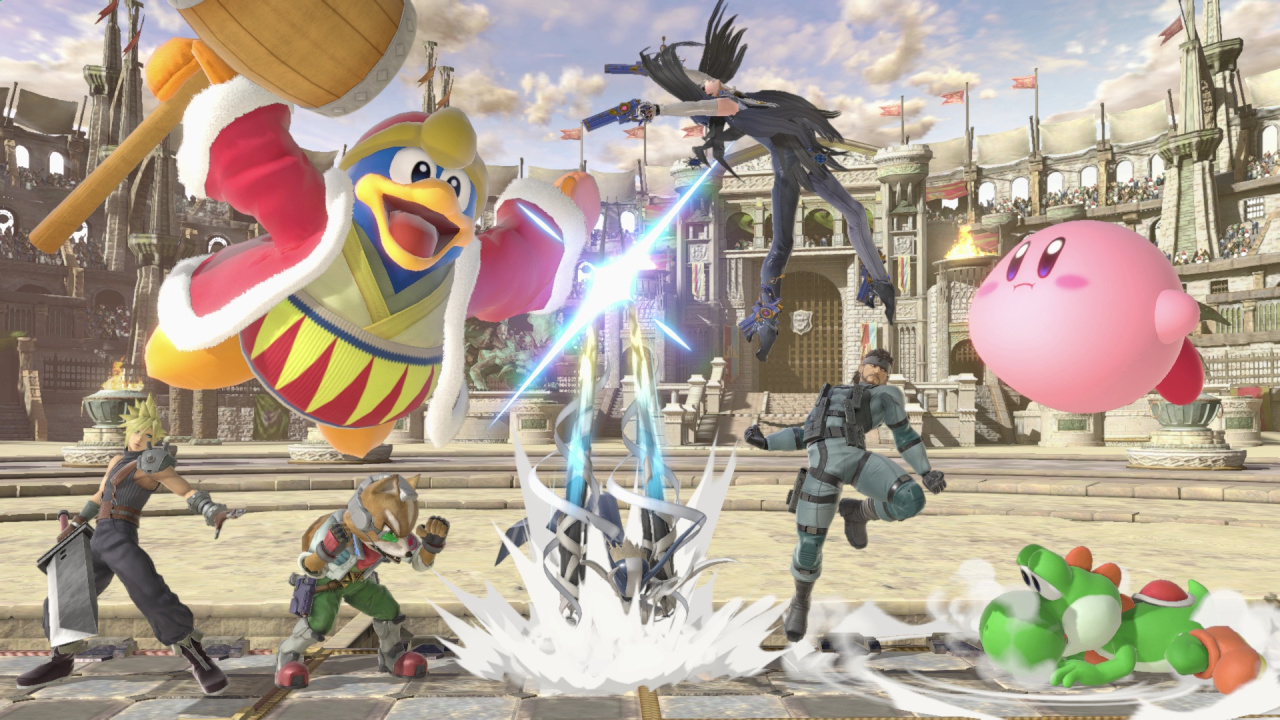
This weekend, I’ll be getting my Nintendo Versus gaming ON with one of the Switch’s biggest crossovers! The only other version of this game that I’ve experienced was on 3DS, so I am pumped to get back into this series with HD graphics & new stages to battle it out on. The most exciting thing I’m looking forward to is the competitive multiplayer action, so I can knock all of my friends around a bit as well. The improved graphics and technical performance are just icing on the cake. I honestly don’t think I’ll need any other games on the Switch, ever. This one completes me. Well, see ya on the Aqua Moto Racing Utopia leaderboards, suckers!
Liam Doolan, news reporter
My main for many years now has been Link. Out of all the Nintendo characters, in my opinion, he’s always been the most all-round fighter there is. That trademark spin-attack, the unlimited bombs he has at his disposal and his trusty bow and arrows always deliver the final blow – not to mention the fact he’s saved the land of Hyrule on multiple occasions over the past few decades. How could you not be impressed? That’s why this weekend, I’ll be defeating evil in The Legend of Zelda: Breath of the Wild – Link’s grandest adventure yet. He’s my hero of all-time and always will be.
Steve Bowling, US editor
What am I playing? Same thing as everyone else, obviously! I’ll be grabbing some friends, gathering around the screen for the same intense, pulse-pounding experience as the rest of you. My heart races just thinking of the crazy, chaotic rounds I’ll be running this weekend. I’ve been waiting so long for this moment. I just hope nobody snags my main since I’m a little possessive. I can’t wait to take it to the competition with Bishnu in Astro Bears Party!
…What?
Gonçalo Lopes, contributing writer
Since there are no major Switch game releases this week (ahem) I have decided to put mine away and hook up my trusty Nintendo 64 instead. I’ve had this craving for some smashing action for a while now so I dug up one of my all-time favourite fighting games on the system. That’s right, you probably have already guessed which game I’m talking about since there weren’t that many to begin with: Flying Dragon!
Developed by Culture Brain and part of the Hiryū no Ken series, this little gem was rightfully described by N64 Magazine as “our very own Tekken”. It was no easy feat to keep the charming nature of the super-deformed 2D sprites but they pulled it off. And if someone is giving you lip because the SD characters look too immature, just switch to ‘Virtual’ mode and the roster turns into realistically proportioned humans. It has aged rather well and this is how I will blissfully be spending this weekend.
Alan Lopez, contributing writer
When I originally read that they were adding even more models to an already robust lineup, I had to stop and ask myself how any one video game could ever get this big. Honestly, how do they fit it all inside that cartridge?
I mean, sure, the Pasaat line is a given, and the Jettas were a strong likelihood, but the attention to detail to surprise announce both the Scirocco and Golf Mk lines of Volkswagens displays such a love for fan sentiment, there’s no doubt in my mind Beetle Adventure Racing! is the greatest franchise-based video game ever made. Finding all the branching paths and crashing into each crate will definitely be taking up my entire weekend. There’s no guarantees the weekend after that is safe either.
And did I mention my friend let me borrow his rumble pack? I’m stoked. “Das Auto” is now DAS game.
Which games are you playing this weekend? (110 votes)
As always, thanks for reading! Normal Talking Point service will resume next weekend – we hope you enjoyed our silly ramblings for this one-off special!
Make sure to leave a vote in the poll above and a comment below with your gaming choices over the next few days…