| Welcome, Guest |
You have to register before you can post on our site.
|
| Online Users |
There are currently 839 online users.
» 0 Member(s) | 834 Guest(s)
Applebot, Baidu, Bing, Google, Yandex
|
|
|
| News - Weekly Jobs Roundup: Rabbit, Digital Extremes, and more are hiring now! |
|
Posted by: xSicKxBot - 06-18-2018, 07:39 PM - Forum: Lounge
- No Replies
|
 |
Weekly Jobs Roundup: Rabbit, Digital Extremes, and more are hiring now!
 Whether you’re just starting out, looking for something new, or just seeing what’s out there, the Gamasutra Job Board is the place where game developers move ahead in their careers.
Gamasutra’s Job Board is the most diverse, most active, and most established board of its kind in the video game industry, serving companies of all sizes, from indie to triple-A.
Here are just some of the many, many positions being advertised right now. If you’re a recruiter looking for talent, you can also post jobs here.
Location: Champaign, Illinois
Deep Silver Volition is seeking an experienced UI Artist to help own and drive the style of its interface as it start its next exciting project. Using compelling motion graphics, 2D, and 3D designs you will work with the studio’s UI team to create innovative interfaces. The team is looking for someone passionate about UI and player experience.
Location: Burbank, California
The Game Art & Design program at Woodbury University in Burbank is looking to expand its faculty for the Fall 2018 semester. The University is looking to hire part-time instructors for a number of courses in game design and game art, including game level design, user interface design, story development for interactive media, Maya: 3D art fundamentals, 3D character design and modeling, and more.
Location: San Mateo, California
Rabbit is looking for a contract Lead Game Designer to join the studio on creating a social trivia title. Ideally, this role requires five years of game design experience, knowledge of designing game systems and economies, and in-depth knowledge of both mobile and PC games.
Location: London, Ontario, Canada
Digital Extremes is looking to add a Weapons Artist to its team. The position seeks a developer with exceptional knowledge of the asset creation process and flexible skills to work along with other team members and create hi and low poly models, textures, and materials for use as real-time game assets.
Location: Burbank, California
Insomniac Games is looking for someone to work closely with the design and animation departments to build the gameplay systems and features that define its games. In this role, you would help the studio realize the creative vision for the game by using established codebase and your own skills and abilities, building its next gameplay experience.
|

|
|
| Xbox Wire - E3 2018: Anthem, Battlefield, Star Wars, and More at EA Play |
|
Posted by: xSicKxBot - 06-18-2018, 07:39 PM - Forum: Xbox Discussion
- No Replies
|
|
E3 2018: Anthem, Battlefield, Star Wars, and More at EA Play
EA officially kicked off their annual EA Play 2018 FanFest Saturday with a slew of announcements, reveals, and deep dives into a handful of highly-anticipated, upcoming games.
Battlefield V kicked off the festivities. The big news? Battlefield V will have a confirmed battle royale mode coming post-launch. A short trailer showcasing Battlefield’s classic destructibility gave us a glimpse at the Grand Operations multiplayer, though a deeper look at the War Stories single-player content is being held back for Microsoft’s E3 2018 Media Briefing. The game comes to Xbox One on October 19.
The next entry in the best-selling soccer franchise, FIFA 19, will feature UEFA Champions League integration. The game launches on September 28, but in the meantime, current FIFA 18 players can download a free World Cup update, taking their country of choice through the biggest tournament on the planet. A free trial of the full game is available now for a limited time on Xbox One.
Respawn Entertainment’s Vince Zampella gave us the show’s big first reveal, confirming that the developer is working on a new Star Wars game called Star Wars: Jedi Fallen Order. Set between “Star Wars: Episode III – Revenge of the Sith” and “Star Wars: Episode IV – A New Hope,” it’s a dark tale about the Jedi being hunted after the order was disbanded at the end of “Revenge of the Sith.” It’s due out Holiday 2019.
Star Wars fans won’t have to wait that long to scratch their itch – new content is coming to Star Wars: Battlefront II, with a new squad system, a new Starfighter mode, a new large sandbox mode, and fresh content from the Clone Wars — that means playable heroes like General Grievous, General Obi-Wan Kenobi, Count Dooku, and Anakin Skywalker. It’s all coming later this year.
On a slightly smaller scale, Coldwood’s Martin Sahlin returned to the EA stage to reveal Unravel Two. Yarny returns to action, this time joined by a friend. The upcoming puzzle-platformer features solo or drop-in, drop-out co-op play, demonstrated live during a tense two-player escape from an aggressive grouse. And you don’t have to wait to play – Unravel Two is available right now for the Xbox One.
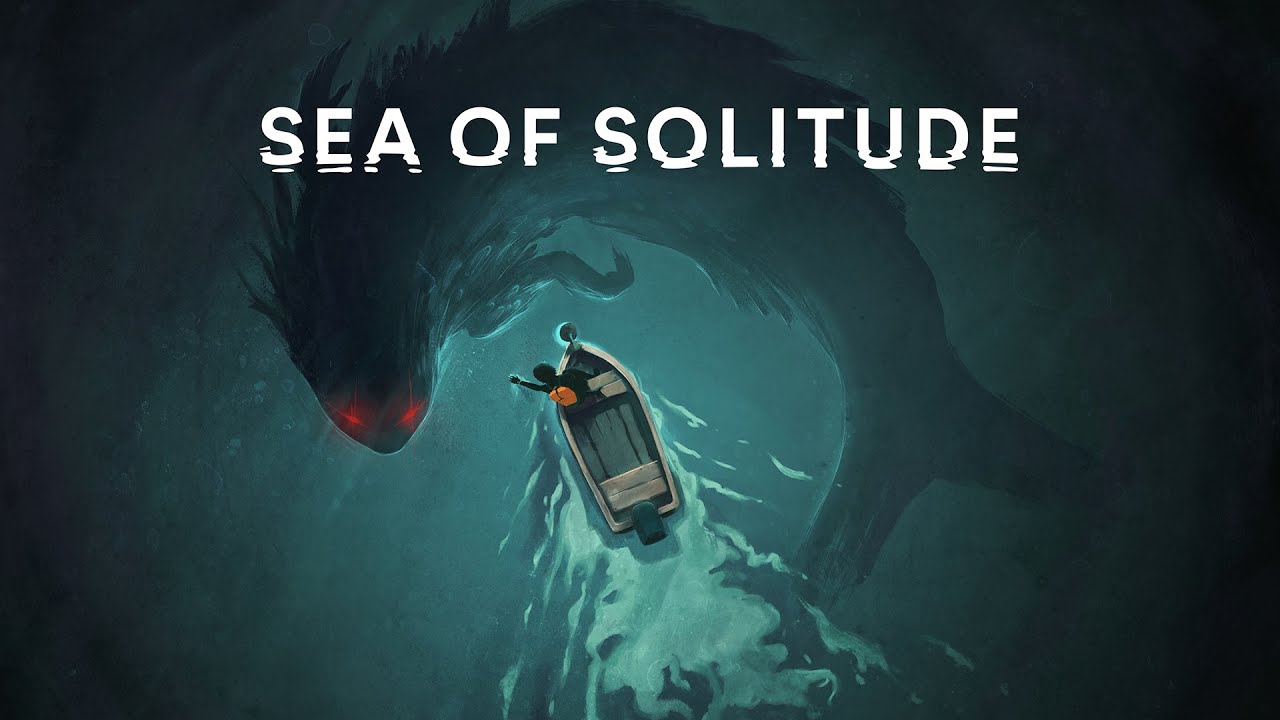
A second EA Originals title, Sea of Solitude from independent developer Jo-Mei Studios, was announced next. A touching journey about the nature of depression, it stars a lonely girl whose inner fears and emotions transform her into a monster. It’s your task to help her find solace in a beautiful, waterlogged world.
Trailers for NBA Live 19 and Madden 19 offered a glimpse into the next entries in the EA Sports vaunted franchises, but the biggest reveal was for the game everyone came to see: Anthem.
Developers from BioWare took viewers on a deep dive through their anticipated, action-packed shooter. Players will take on the role of a freelancer, tasked to explore a dangerous, storm-ravaged environment using a powerful, rocket-powered exosuit called a Javelin. Four types of Javelins will give players different ways to play – the Colossus is a big, heavy suit suitable for tanking, while the Ranger is a more nimble, generalized suit built for longer-range battles, for example.
A dynamic, shared world can be enjoyed with multiple players, but when returning to home base, the game shifts into a single-player experience, letting players chat with other characters, develop relationships, and gear up for their next mission. BioWare also confirmed while cosmetic items will be available for purchase, Anthem will not feature loot boxes. A gameplay trailer brought it all together, highlighting Anthem’s high-flying action, Javelin abilities, enormous enemies, and expansive, colorful world. We also got a release date: February 22, 2019.
We’ll have much more to share on Anthem and several other games throughout the week as Xbox Wire is on-site here at E3 2018. For all the latest news on these and other upcoming games, keep it dialed to Xbox Wire and don’t forget to tune in Sunday, June 10 at 1:00 p.m. PDT for the annual Xbox E3 2018 Briefing.
|
|
|
|
| News - Runbow Sprints Towards A New Release Date On Switch, Now Available 3rd July |
|
Posted by: xSicKxBot - 06-18-2018, 07:39 PM - Forum: Nintendo Discussion
- No Replies
|
|
Runbow Sprints Towards A New Release Date On Switch, Now Available 3rd July
Headup Games has announced that Runbow’s delay woes are now over, with a 3rd July release date finally secured for the title on Switch.
If you missed the game when it first arrived on Wii U, Runbow is all about multiplayer madness, with changes in the background resulting in more chaos than you’ll ever be ready to deal with. Players race and fight their way through courses and arenas, keeping an eye on the platforms and obstacles as they unforgivingly disappear. It’s fast, it’s frantic, and we loved it in our review of the Wii U version.
Here’s a handy list of features should you want to know a little more:
Features:
– Go head to head with your friends, locally or online, in Run, Arena, or King of the Hill, for a colourful, crazy competition. Host a Private Game for you or your friends, or hop into an Open Party and take on the world!
– Tons of costumes and indie guest characters are waiting for you to unlock, including Shovel Knight, CommanderVideo, Shantae, Lilac, and many more.
– Save Poster District from the evil Satura in Adventure, and choose your own path through a massive map of over 140 single player levels.
– Take on The Bowhemoth, a single, ultra-difficult challenge in the belly of a colossal beast. On your own or with friends, it’s sure to test the skills of even the toughest platforming veterans.
– Hundreds of pieces of unlockable Gallery content await you, from concept art to characters, and even some hidden secrets…
A retail ‘Deluxe Version’ including all DLCs and some collectable stickers was also promised before the game’s delay, and this edition should now be arriving in “Q3 2018”.
Let us know if you’ve been waiting for this one on Switch in the comments below.
|
|
|
|
| Steam - Daily Deal – Little Nightmares, 60% Off |
|
Posted by: xSicKxBot - 06-18-2018, 07:39 PM - Forum: PC Discussion
- No Replies
|
|
Daily Deal – Little Nightmares, 60% Off
Underhollow changes;
* When defeated, heroes now drop the 3 highest net worth items they are carrying. The remaining items are converted and dropped as gold for their sale cost.
* Significantly increased the amount of experience awarded for player eliminations.
* Fixed invisible Roshan killing players.
* Adjusted difficulty of a few combat encounters.
* Added an initial stock time to dynamite of 60s.
* Fixed heart being purchasable via its recipe.
* Added localization.
|
|
|
|
| How SUSE Is Bringing Open Source Projects and Communities Together |
|
Posted by: xSicKxBot - 06-18-2018, 05:59 PM - Forum: Linux, FreeBSD, and Unix types
- No Replies
|
|
How SUSE Is Bringing Open Source Projects and Communities Together

The modern IT infrastructure is diverse by design. People are mixing different open source components that are coming from not only different vendors, but also from different ecosystems. In this article, we talk with Thomas Di Giacomo, CTO of SUSE, about the need for better collaboration between open source projects that are being used across industries as we are move toward a cloud native world.
Linux.com: Does the mix of different open source components create a challenge in terms of a seamless experience for customers? How can these projects work more closely with each other?
Thomas Di Giacomo: Totally, more and more, and it’s unlikely to slow down. It can be because of past investments and decisions, with existing pieces of IT and new ones needed to be added to the mix. Or, it might be because of different teams or different parts of an organization working on their own projects with different timelines etc. Or, again, because companies work with partners coming with their own stacks. But maybe even more importantly, it is also because no single one project can be the only answer on its own to what needs to be done.
An OS needs additional modules and applications on top of it to address use cases. To address use cases, IaaS needs to handle specific networking and storage components that are provided by relevant projects. Infrastructure on its own is pretty useless if it’s not paired with application delivery elements, not only to manage the compute part but to tie in software development and application lifecycle.
Linux.com: Can you point out some industry wide efforts in that direction?
Thomas Di Giacomo: There’s a lot of more or less structured initiatives and approaches to that. On one hand, open source is de facto facilitating cross-project work, not only because the code is visible but with a focus on (open) APIs for instance, but it is also indirectly making it sometimes challenging as more and more open source projects are being started. That’s definitely a great thing for innovation, for people to contribute their ideas, for new ideas to grow, etc., but it requires specific attention and focus on helping users with putting together cross-project solutions they need for achieving their plans. Making sure cross-project solutions are easy to install and maintain, for example, and can co-exist with what’s already there.
What starts to happen is cross-project development, integration, and testing with, for instance, shared CI/CD flows and tools between different project. A good example is what OPNFV has initiated a while ago now, with cross CI/CD between OPNFV, OpenStack, OpenDaylight, and others.
Linux.com: At the same time, certain technologies like Kubernetes cut through many different landscapes — whether it be cloud, IoT, Paas, IaaS, containers, etc. That also means the expectations from traditional OS change. Can you talk about how SUSE Linux Enterprise (SLE) is evolving to handle containerized workloads and transactions/atomic updates?
Thomas Di Giacomo: Yes, indeed. Cutting through many different landscapes is also something Linux did (and still does) — from different CPU architectures, form factors, physical and virtualized, on-prem and public clouds, embedded to mainframes, etc.
But you’re right, although the abstractions are improving — getting to higher levels and better at making the underlying layers become less visible (that’s the whole point of abstracting) — the infrastructure components and even the OS, are still there and foundational for the abstracted layers to work. Hence, they have to evolve to meet today’s needs for portability, agility, stability.
We’ve constantly worked on evolving Linux in the past 26 years now, including some specific directions and optimizations to make SUSE Linux both a great container host OS or container base OS, so that container based technologies and use cases would run as smoothly, securely and infrastructure agnostically as possible. Technically, the snapshotting and transactional upgrade/rollback capabilities coming from btrfs as a filesystem, as well as having different possible container engines, keeping the certification, stability and maintainability of an enterprise-grade OS really makes it uniquely appropriate for running container clusters.
Linux.com: While we are talking about OSes, SUSE has both platforms — traditional SLE and atomic/transactional Kubic/SUSE CaaSP. How do these two projects work together, while making life easier for customers?
Thomas Di Giacomo: There are two angles of “together” here. The first one is our usual community/upstream first philosophy, where Kubic/openSUSE Tumbleweed are the core upstream projects for SUSE CaaS Platform and SUSE Linux Enterprise.
The other “together” is about bringing traditional and container-optimized OS closer together. FIrst, the operating system is required to be super modular, where not just a particular functionality is a module but where everything is a module. Second, the OS needs to be multi-modal. By that we mean it should be designed to take care of requirements for both traditional infrastructure and software-defined/cloud-native container-based infrastructure. This is what the community is putting together with Leap15, and what we’re doing for SUSE Linux Enterprise 15 coming out very soon.
Linux.com: SUSE is known for working with partners, instead of building its own stack. How do you cross-pollinate ideas, talent, and technologies as you (SUSE) work across platforms and projects like SLE, Kubic, Cloud Foundry, and Kubernetes?
Thomas Di Giacomo: We work upstream in the respective open source projects as much as we can. Sometimes some open source components are in different projects or outside upstream, and here again we try to bring them back as much as possible. Let me give just a couple of examples to illustrate that.
We’ve been initiating and contributing to a project called openATTIC, aiming at providing a management tool for storage, software-defined storage solutions, and especially for Ceph. openATTIC is obviously open source like everything we do, but it was sitting outside of Ceph. Working with the Ceph community, we’ve started contributing openATTIC code and features to the upstream ceph dashboard/ceph manager, speeding it up with fueling more existing capabilities rather than re-developing the whole from scratch. And then together with the Ceph partners/community and with other Ceph components, we’re facilitating cross-projects by somehow merging them.
Another example is a SUSE project called Stratos. It is a UI for Cloud Foundry distributions (any one of them, upstream and vendors), which we contributed to Cloud Foundry upstream.
Linux.com: Thanks to Cloud Foundry Container Runtime (CFCR), Cloud Foundry and Kubernetes are working closely, can you tell us about the work SUSE is doing with these two communities?
Thomas Di Giacomo: There are lots of container-related initiatives within the Cloud Foundry Foundation, for instance. Some of them we’re leading, some of them we are involved with, and in any case working together with the community and partner companies on those topics. We, for instance, focus on the containerization of Cloud Foundry itself, so that it is lightweight, portable, easily deployable, upgradable on any type of Kubernetes infrastructure (via Helm), so that containers and services are available to both Kubernetes and Cloud Foundry applications on there, and that actually simply containerized applications and Cloud Foundry developed ones co-exist easily.
So today such a containerized Cloud Foundry is available on top of AKS or EKS, on top of SUSE CaaS Platform obviously as well, as possibly any Kubernetes. This was started a while ago and now part of Cloud Foundry upstream, used by our solutions obviously but also by others to provide the CF developer experience on Kubernetes in the most straightforward and native way as possible. There are other activities focused on providing a pluggable container scheduler for CFCR, as well as improving the cross-interoperable service capabilities.
Now this is currently mostly happening in the CF upstream and CF community, and we’re also working to start a workgroup within CNCF on the same topic (especially the containerization of Cloud Foundry), to bring the projects and their communities closer together.
This article was sponsored by SUSE and written by The Linux Foundation.
Sign up to receive updates:
|
|
|
|
| PS4 - Jurassic World Evolution |
|
Posted by: xSicKxBot - 06-18-2018, 05:25 PM - Forum: New Game Releases
- No Replies
|
|
Jurassic World Evolution
Place yourself at the heart of the Jurassic franchise and build your own Jurassic World.
Take charge of operations on the legendary islands of the Muertes archipelago and bring the wonder, majesty and danger of dinosaurs to life. Build for Science, Entertainment or Security interests in an uncertain world where life always finds a way.
Bioengineer dinosaurs that think, feel and react intelligently to the world around them. Play with life itself to give your dinosaurs unique behaviours, traits and appearances, then contain and profit from them to fund your global search for lost dinosaur DNA.
Control the big picture with deep management tools or go hands-on to confront challenges on the ground or in the air. Expand your islands and choose your own journey in an all-new narrative featuring iconic characters from across the franchise and decades of Jurassic lore at your fingertips. Publisher: Frontier Developments Release Date: Jun 12, 2018
|
|
|
|
| Fedora - Anaconda improvements in Fedora 28 |
|
Posted by: xSicKxBot - 06-18-2018, 05:25 PM - Forum: Linux, FreeBSD, and Unix types
- No Replies
|
|
Anaconda improvements in Fedora 28
 Fedora 28 was released last month, and the major update brought with it a raft of new features for the Fedora Installer (Anaconda). Like Fedora, Anaconda is a dynamic software project with new features and updates every release. Some changes are user visible, while others happen under the hood — making Anaconda more robust and prepared for future improvements.
User & Root configuration on Fedora Workstation
When installing Fedora Workstation from the Live media, the user and root configuration screens are no longer in the installer. Setting up users is now only done in the Initial Setup screens after installation.
The progress hub on a Fedora 28 Workstation live installation.
The back story is that the Fedora Workstation working group aimed to reduce the number of screens users see during installation. Primarily, this included screens that let a user set option twice: both Anaconda and the Gnome Initial Setup tool upon first boot. The working group considered various options, such as Anaconda reporting which screens have been visited by the user and then hiding them in Gnome Initial Setup. In the end they opted for just always skipping the user and root configuration screens in Anaconda and just configuring a user with sudo rights in Gnome Initial Setup.
Because of this the respective screen (user creation) shows up just once (in Gnome Initial Setup), making the installation experience more consistent.
It’s also worth noting that this change only affects the Fedora Workstation live image. All other images, including the Fedora Workstation netinst image and other live images, are unaffected.
Anaconda on DBus
Last year we announced the commencement of our next major initiative — modularizing Anaconda. The main idea is to split the code into several modules that will communicate over DBus. This will provide better stability, extensibility and testability of Anaconda.
Fedora 28 is the first release where Anaconda operates via DBus. At startup, Anaconda starts its private message bus and ten simple modules. For now, the modules just hold data that are provided by a kickstart file and modified by the UI. The UI uses the data to drive installation. This means that you can use DBus to monitor current settings, but you should use the UI to change them.
You can easily explore the current Anaconda DBus API with the live version of Fedora Workstation 28. Just keep in mind that the API is still unstable, so it might change in the future.
To do so, boot the live image and install the D-Feet application:
sudo dnf install d-feet
Start the installer and get an address of the Anaconda message bus:
cat /var/run/anaconda/bus.address
Start D-Feet, choose the option ‘Connect to other Bus’ and copy the first part of the Anaconda bus address to the text field (see the picture below). Click on the ‘Connect’ button. The application will open a new tab and show you a list of available DBus services. Now you can view the interfaces, methods, signals and properties of Anaconda DBus modules and interact with them.

Connecting to the Anaconda DBUS session.

The Anaconda DBUS API as visible in D-Feet.
Blivet 3.0 and Pykickstart 3.0
Fedora 28 provides version 3 of blivet and Pykickstart, and Anaconda uses the updated versions too. While this is not really visible from end user perspective, changes like this are important to assure a robust and maintainable future for the Anaconda installer.
The main change in Pykickstart 3 is the switch from the deprecated optparse module to argparse for kickstart parsing. This not only brings all the features argparse has, it was also one of the prerequisites for having automatically generated kickstart documentation on Read the Docs.
Blivet 3 is less radical update, but includes significant API improvements and cleanups. Some installer-related code still sitting in Blivet was finally moved to Anaconda.
Migrating from authconfig to authselect
The authconfig tool is deprecated and replaced with authselect in Fedora 28, so Anaconda deprecated the kickstart command authconfig and introduced a new command: authselect. You can still use the authconfig command, but Anaconda will install and run the authselect-compat tool instead.
Enabled hibernation
Previously, Hibernation didn’t work after installation because of a missing kernel option, so it had to be set up manually. Starting with Fedora 28, Anaconda adds the kernel option ‘resume’ with a path to the largest available swap device by default on x86 architectures.
Reducing Initial Setup dependencies
The Initial Setup tool is basically a lightweight launcher for arbitrary configuration screens from Anaconda. And while Anaconda often runs from a dedicated installation image, Initial Setup always runs directly on the installed system. This also means all the dependencies of Initial Setup will end up on users system, and unless they are uninstalled, they will take up space more or less forever.
The situation is even more dire on ARM, where users generally just dd a Fedora image to memory card or internal storage on the ARM board and Initial Setup basically acts as the installer, customizing the otherwise identical image for the given user. In this case Initial Setup dependencies directly dictate how small the Fedora image can be.
In Fedora 28, the new anaconda-install-env-deps metapackage depends on all installation-time-only dependencies. The anaconda-install-env-deps package is always installed on installation images (netinst, live), but is not an Initial Setup dependency and should thus prevent all the unnecessary packages from being pulled in to the installed system. There is also a nice side effect of finally consolidating all the install-time-only dependencies in the Anaconda spec file.
|
|
|
|
| Microsoft - E3 2018: Gaming for everyone, a conversation with Phil Spencer |
|
Posted by: xSicKxBot - 06-18-2018, 05:25 PM - Forum: Windows
- No Replies
|
|
E3 2018: Gaming for everyone, a conversation with Phil Spencer

E3 is always an incredible time to come together to appreciate the breadth of creative energy that abounds in our industry and to celebrate what’s ahead for gamers. At this year’s E3 Coliseum series, Phil Spencer, Head of Xbox sat down with Tina Summerford, Head of Programming at Xbox, to discuss Microsoft’s approach to gaming, his perspective on E3 and to hear why the industry has a responsibility to make gaming for everyone.
Other topics discussed during the panel were the unique games Xbox is looking to bring to the ID@Xbox program, insight into the creation of the Xbox E3 2018 Briefing, from matching thematic elements to creating an engaging experience, and the creation of the Xbox Adaptive Controller. The discussion also included insights from Phil on his conversations about gaming with CEO of Microsoft, Satya Nadella, his appreciation of and participation in the gaming community. Spencer also took a variety of questions from the audience, ranging on bringing more games to Xbox created by Japanese developers and growing the Women and Gaming initiative.
You can watch the full interview with Phil Spencer above from the E3 Coliseum.
|
|
|
|
| AppleInsider - 25 years ago, Apple’s board of directors pushed out CEO John Sculley |
|
Posted by: xSicKxBot - 06-18-2018, 05:25 PM - Forum: Apples Mac and OS X
- No Replies
|
|
25 years ago, Apple’s board of directors pushed out CEO John Sculley
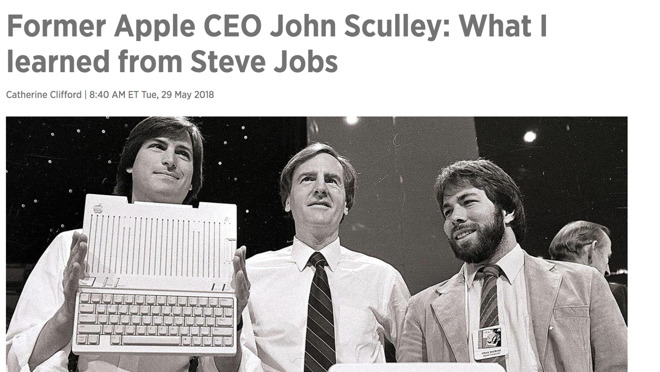
 The CEO who famously won a power struggle with Steve Jobs in 1985 surrendered the chief executive position a quarter-century ago, placing the executive in a unique, strange purgatory.
The CEO of PepsiCo during the “Cola wars” of the early 1980s, Sculley was famously lured to Apple in 1983 with Steve Jobs’ pitch “do you want to sell sugared water for the rest of your life? Or do you want to come with me and change the world?” Unlike many Jobs quotes that frequently circulate, that one was real and not apocryphal.
Scully’s initial hiring was an early example of what’s known in Silicon Valley as “adult supervision”- an upstart company bringing in a veteran CEO to oversee its young, inexperienced founders.
Despite a positive start, Jobs and Sculley soon clashed over everything from the fate of the Macintosh division, to how much to focus on education, through Jobs’ supposed insubordination. In 1985, Jobs attempted a coup against Sculley, which failed, leading to Jobs’ banishment and resignation later that year.
Sculley and Jobs never reconciled prior to Jobs’ death in 2011.
“He never forgave me for that,” Sculley told Business Insider in a 2015 interview. “No. [The friendship was] never repaired. And it’s really a shame because if I look back, I say what a big mistake on my part.”
Sculley remained CEO of Apple for another eight years after the battle and for ten years altogether, a pretty long tenure by most standards. But, Sculley has long been defined in the public imagination by his clash with Jobs, with his departure mostly seen as an event that started a chain of events that led to the co-founder’s eventual return.
That, at least, comprises an outsized percentage of what Sculley has been asked about over the years in interviews.
The CEO years
John Sculley came to Apple in order to apply his “Pepsi Challenge”-era marketing wizardry to the computer business, while also giving the company some experience and veteran expertise. At the time that Sculley became CEO of Apple, Steve Jobs was 28 years old, and Sculley was 44.
Sculley’s tenure spans the introduction of the Macintosh in early 1984, including its legendary marketing push that included the 1984-inspired Super Bowl commercial. Other successes included the launch of the PowerBook and the addition of color to the MacOS operating system interface, both in 1991, which is remembered as a period of significant innovation in Mac history. Sculley emphasized desktop publishing and other new functions of the Macintosh.
As for Sculley’s failures, he was present for the introduction of numerous failed products, most notably the Newton personal digital assistant, and a switch to the PowerPC microprocessor which Sculley later acknowledged as a mistake. By early 1993, things had clearly gotten ugly for Sculley at Apple.
Endgame
As a result of PC price wars that hurt Apple significantly, the company made only $86 million in profit in fiscal 1993, as opposed to $530 million the year before. The drop in profits led to significant layoffs inside Apple.
Sculley resigned at CEO of Apple on June 18, 1993 with Michael Spindler stepping in as his replacement. Sculley, however, remained the company’s chairman for an additional four months.
During that time he took a sabbatical and began spending more time with his wife in Connecticut, with Fortune reporting that Sculley had lobbied the incoming Clinton Administration for a nomination as Secretary of Commerce.
Sculley would resign from the board in October of that year, following another terrible quarter. Mike Markkula would replace him as chairman.
A lawsuit at the time from ousted board member Albert A. Eisenstat, The Los Angeles Times reported, alleged that the Apple board had misrepresented the circumstances of Sculley’s deparature as CEO. The suit was dismissed in late 1993.
Things for Apple would get much worse in the ensuring years, under Spindler and his successor Gil Amelio, leading up to Jobs’ return to the company in 1997.
Sculley after Apple
Sculley’s first position after Apple was as CEO of Spectrum Technologies, an early wireless telecommunications firm. That was a job that ended in acrimony within a year.
In the last two decades Sculley has mostly been known as a serial entrepreneur. He founded or invested in a wide variety of companies in the years since, including MetroPCS, NFO Research, Hotwire.com, PopTech, and even a wine accessory called The Wine Clip, which he had enjoyed as a customer and later decided to invest in the company.
His most recent ventures are the data company Zeta Global, the emerging market smartphone company Obi Worldphone and the healthcare firm RxAdvance.
A strange purgatory
Despite all of his other ventures, the now 79-year-old John Sculley is in a position different from just about any other executive in the history of American business. Despite a long and relatively distinguished career, nearly all of the frequent interviews Sculley gives are about a job he had three decades ago that didn’t ultimately work out, and his clash with the man who is seen as a legendary figure.
A 2013 piece in Forbes stated that “after years of silence, former Apple CEO John Sculley has recently been moving more into retrospective mode,” citing a talk Sculley had given at a conference in Indonesia, although Sculley had been giving interviews about Jobs as early as CES in January 2012. In 2010, in fact, Sculley called it a “big mistake” that he was even hired at Apple.
The timing of Sculley’s media tour wasn’t exactly coincidental; Jobs had passed away in late 2011, and a wide variety of books and movies, most notably Walter Isaacson’s bestselling authorized biography of Jobs, had brought the late CEO’s legacy and the details of his biography to the forefront of public attention. In the Ashton Kutcher Steve Jobs movie, Sculley was portrayed by Matthew Modine; in the Michael Fassbender version, he was played by Jeff Daniels, as he and Jobs had an intense confrontation that very much did not actually take place:
[embedded content]
More recently, however, there’s been a new interview with Sculley on a seemingly monthly basis, and the main topic of nearly all of them is Sculley’s relationship with, and history with, Steve Jobs.
Sculley talked about Jobs with C-Suite TV Insights in late 2017, with Forbes last October and then again the following month, and with CNBC in May of this year.
Sculley is also sometimes asked in interviews about present-day goings-on at Apple, general business topics, or even his current ventures. Sculley also made news earlier this year for purchasing a home in Palm Beach for nearly $15 million, indicating that whatever else you can see about the man, his career has made him fantastically wealthy.
It must be odd for Sculley to constantly have to answer questions about a not-very-comfortable period in his professional life more than 30 years ago.
|
|
|
|
| Mobile - Review: Bardbarian |
|
Posted by: xSicKxBot - 06-18-2018, 05:25 PM - Forum: New Game Releases
- No Replies
|
|
Review: Bardbarian
 This is the story of a brad named Bard who became a … no, sorry, it’s a bard named Bradbarian who … wait, a barbarian named Brad who became a bard. That’s it. He hung up his steel axe for a golden six-stringed axe and has an axe to grind with the monsters trying to destroy his home’s precious Town Crystal, which, as we all know, was the centrepiece of any medieval municipality.
Bardbarian is a really cool mix of tower defense, action RPG, and bullet-hell shooter. Since Brad the Bradbar… Bardbarian has tired of busting skulls over shredding riffs, he doesn’t do any fighting himself, preferring to summon a party from the town to support him. Each party member has a slightly different ability, from pure DPS to area-effect to healing, which makes up the strategy part of the game. More important, though, is the action.
All the baddies shoot projectiles, so that’s where the bullet-hell shooter gameplay comes in. You’ve got to dodge the incoming fire, not only to stay alive but also to build up your stun ability that only charges after five untouched kills in a row and is vital to bring down the larger groups later in the game. Overall, the bullets are slower than in your average space-shooter, and they start pretty well spaced. However, in Bardbarian, you also have to drag along your party of warriors and keep them from getting hit too, which can be an impossible task when a half-dozen goblins are shooting death-flowers at you. Weaving your party through incoming fire is a major part of the gameplay, so much so that one upgrade (it’s Body spray, hah!) helps you tighten up the group to make them harder targets. The controls are a solid swipe-anywhere control stick that is precise and easy to use even as the gameplay becomes more frantic. There are also two bonus modes that get rid of any strategy elements whatsoever and go pure arcade.
The game has a great cartoony art style with floating limbs like Rayman that may have been chosen only because they are easier to animate but are still working really well in this game. Enemies and bullets are easy to spot and distinguish, even on tiny devices. The music is good fun too: pounding heavy metal riffs that will pump you up but won’t bother you when they repeat or get stuck in your head later in the day. Each of Brad’s buffs and summons will let loose a squeal of a solo, but even those are varied and fun enough to not be a drag after the hundredth time you hear them. The sense of humor is goofy in that very online sort of way (strips of delicious bacon are your healing pickups, for example) but never obnoxious.

You make progress by collecting gold each run through the campaign and upgrading Brad’s abilities, the troops, or the town itself. Some of them make bigger change in the gameplay than others, like the pet that will snag pickups for you. Most of them are just iterative numerical upgrades that make your party faster or stronger, without changing the fundamentals is a big way.
Despite all the loot and upgrades, it’s difficult to feel like you are making real progress in Bardbarian, mostly because the playing field is identical every game. Once you finally do beat a boss and unlock the next chapter, you can feel free to start your new game from the checkpoint. However, you’ll be at a major disadvantage, because your troops will start at their base level (admittedly, this base level can be upgraded) and your stockpile of notes will start at zero too. It’s very difficult to make any more progress from that point, so a better idea is to start your new game all the way over from the beginning. Of course, your higher-level allies and buffs will (albeit slowly) make mincemeat of the initial waves of enemies but putting up with the boredom will net you piles and piles of gold and notes that you can use to push forward once you reach a level that’s challenging. That leaves the game feeling very grindy, because your best strategy is just to take it easy until you can upgrade your stuff enough to survive the higher-level enemies. It’s just a slow race to make your numbers bigger than the bad guys.

Whether you enjoy the game will depend on how much the core bullet-dodging gameplay sinks its hooks into you. If you have a blast weaving your party around the slow but soon overwhelming bullets you won’t mind facing the same enemies over and over to make a little progress. If you’re looking for a deeper strategic tower defense or RPG experience, this is not your game. There’s a free-to-play version of the game for Android, so if that’s your platform, you’re lucky to be able to try before you buy. It’s actually too bad that the iOS version is premium only because the real test of a game like this is whether it’s genre-bending scratches your itch or not, because the rest of the design just isn’t that compelling.
|
|
|
|
|
|
|