| Welcome, Guest |
You have to register before you can post on our site.
|
| Forum Statistics |
» Members: 19,819
» Latest member: Taizy
» Forum threads: 21,460
» Forum posts: 22,281
Full Statistics
|
| Online Users |
There are currently 578 online users.
» 1 Member(s) | 572 Guest(s)
Applebot, Baidu, Bing, Google, Yandex, SickProdigy
|
|
|
| Microsoft - Watch the Xbox E3 Briefing live this Sunday at 1 p.m. PT |
|
Posted by: xSicKxBot - 06-08-2018, 11:37 PM - Forum: Windows
- No Replies
|
 |
Watch the Xbox E3 Briefing live this Sunday at 1 p.m. PT

With E3 less than two weeks away, we’ve got some new details on what Xbox has got going on for the biggest gaming event of the year!
We’ll be kicking things off with our annual Xbox E3 2018 Briefing, which you can watch live beginning on Sunday, June 10 at 1:00 p.m. PDT. During the briefing, you’ll have a chance to check out everything from in-depth looks at previously-announced games to trailers for our unannounced titles coming in 2018 and beyond. You can watch the Xbox E3 2018 Briefing live beginning at 1 p.m. PDT on June 10 on the official Xbox Channel on Mixer, or on the Mixer app for Xbox One and mobile. Viewers logged into Mixer will be eligible for a special MixPot full of digital content – stay tuned for more details.
As was the case last year, the Xbox E3 2018 Briefing on Mixer will be offered in six languages: English, German, French, Italian, Spanish (LATAM), Portuguese (LATAM), and includes support for English Closed Captions. To select an alternate language, click the “cog” button within Mixer to view the available list. We’re excited for fans all around the world to join in on the Xbox E3 2018 Briefing festivities.
You’ll also be able to catch a live stream of the briefing on the Xbox Twitch Channel, YouTube, Twitter, Facebook Live or on the big screen at your local Microsoft Store.
We’re also very happy to announce that we’re partnering with cross-platform entertainment media brands Fuse and FM to bring the Xbox E3 2018 Briefing to cable and satellite subscribers in the U.S. and Canada at 1:00 p.m. PDT (or 4:00 p.m. EDT for you east coast dwellers!). The Briefing will also livestream on Fuse.tv and an encore presentation will air on FM at 9:00 p.m. PDT (12:00 a.m. EDT).
Be sure to hit up Fuse.tv to find out where you can watch Fuse.
This year will mark the first year that Inside Xbox will be airing during E3. Inside Xbox will air Monday, June 11 at 3 p.m. PDT and will feature a livestream full of exclusive announcements, game demos, interviews, giveaways and more.
Mixer at E3 2018
Mixer is the best place to catch all of the action from this year’s E3. From Saturday, June 9 to Friday, June 15, tune in at www.mixer.com for the latest news, gameplay, exclusive interviews and more. For fans attending E3 in person this year, we’ll have a dedicated Mixer booth located in the South Hall of the LACC, where you can get hands-on with new titles, watch the live broadcast each day, and catch your favorite Mixer Partners streaming live from the show floor. We’re also happy to announce a special showing of HypeZone Live featuring a new battle royale experience. Players can compete to see if they can make it into the HypeZone and walk away with some sweet swag.
Enjoy the Xbox Experience at the Microsoft Theater
This year, we’re excited to call the Microsoft Theater our Xbox home base for the week of E3.
On Tuesday, June 12 and Wednesday, June 13, E3 Expo Badge holders will have the opportunity to experience our brand new Xbox Experience at the Microsoft Theater during expo hours. Featuring a diverse lineup of blockbuster games and experiences, including many of the titles shown in our briefing, attendees will have an opportunity to experience hands-on why Xbox is the best place to play.
Whether you love first-person shooters, action-adventure games or the latest independent darling, the Xbox Experience is the place to be this E3.
Visit the Xbox Official Gear Shop
For the first time, come and visit the Xbox Official Gear Shop by Microsoft Stores in the Xbox Experience at E3. Fly your gaming colors and show off your fandom for Xbox and award-winning franchises like Halo, Forza Motorsport, and Gears of War as well as limited edition designer collaborations. We will have more information on this exciting new initiative over the coming weeks.
Celebrate E3 at Microsoft Store
Check out your local Microsoft Store on timing and details to watch the Xbox E3 2018 briefing taking place on Sunday, June 10, and participate in Forza Motorsport 7 tournaments for a chance to win Xbox One themed prizes.
If you are in Los Angeles, we’ve also got a special event taking place at the Microsoft Store at Westfield Century City where we are celebrating E3 with USC Alum and now Tennessee Titans cornerback Adoree’ Jackson on Sunday, June 10. Visit Microsoft Store for more information and timing.
Finally, for fans planning to attend in person, we recommend you take a look at E3’s updated security protocols to ensure you have an optimal experience.
Be sure to head on over to the Xbox E3 Online Experience for more information and details on what we’ve got going on for the week.
Here’s to a great E3!
|

|
|
| Blazor 0.4.0 experimental release now available |
|
Posted by: xSicKxBot - 06-08-2018, 11:37 PM - Forum: C#, Visual Basic, & .Net Frameworks
- No Replies
|
|
Blazor 0.4.0 experimental release now available
 Blazor 0.4.0 is now available! This release includes important bug fixes and several new feature enhancements.
New features in Blazor 0.4.0 (details below):
- Add event payloads for common event types
- Use camelCase for JSON handling
- Automatic import of core Blazor namespaces in Razor
- Send and receive binary HTTP content using HttpClient
- Templates run on IIS Express by default with autobuild enabled
- Bind to numeric types
- JavaScript interop improvements
A full list of the changes in this release can be found in the Blazor 0.4.0 release notes.
Get Blazor 0.4.0
To get setup with Blazor 0.4.0:
- Install the .NET Core 2.1 SDK (2.1.300 or later).
- Install Visual Studio 2017 (15.7) with the ASP.NET and web development workload selected.
- Note: The Blazor tooling isn’t currently compatible with the VS2017 preview channel (15.8). This will be addressed in a future Blazor release.
- Install the latest Blazor Language Services extension from the Visual Studio Marketplace.
To install the Blazor templates on the command-line:
dotnet new -i Microsoft.AspNetCore.Blazor.Templates
You can find getting started instructions, docs, and tutorials for Blazor at https://blazor.net.
Upgrade an existing project to Blazor 0.4.0
To upgrade an existing Blazor project from 0.3.0 to 0.4.0:
- Install all of the required bits listed above.
- Update your Blazor package and .NET CLI tool references to 0.4.0.
Your upgraded Blazor project file should look like this:
<Project Sdk="Microsoft.NET.Sdk.Web"> <PropertyGroup> <TargetFramework>netstandard2.0</TargetFramework> <RunCommand>dotnet</RunCommand> <RunArguments>blazor serve</RunArguments> <LangVersion>7.3</LangVersion> </PropertyGroup> <ItemGroup> <PackageReference Include="Microsoft.AspNetCore.Blazor.Browser" Version="0.4.0" /> <PackageReference Include="Microsoft.AspNetCore.Blazor.Build" Version="0.4.0" /> <DotNetCliToolReference Include="Microsoft.AspNetCore.Blazor.Cli" Version="0.4.0" /> </ItemGroup> </Project>
Event payloads for common event types
This release adds payloads for the following event types:
| Event arguments |
Events |
| UIMouseEventArgs |
onmouseover, onmouseout, onmousemove, onmousedown, onmouseup, oncontextmenu |
| UIDragEventArgs |
ondrag, ondragend, ondragenter, ondragleave, ondragover, ondragstart, ondrop |
| UIPointerEventArgs |
gotpointercapture, lostpointercapture, pointercancel, pointerdown, pointerenter, pointerleave, pointermove, pointerout, pointerover, pointerup |
| UITouchEventArgs |
ontouchcancel, ontouchend, ontouchmove, ontouchstart, ontouchenter, ontouchleave |
| UIWheelEventArgs |
onwheel, onmousewheel |
| UIKeyboardEventArgs |
onkeydown, onkeyup |
| UIKeyboardEventArgs |
onkeydown, onkeyup, onkeypress |
| UIProgressEventArgs |
onloadstart, ontimeout, onabort, onload, onloadend, onprogress, onerror |
Thank you to Gutemberg Ribeiro (galvesribeiro) for this contribution! If you haven’t checked out Gutemberg’s handy collection of Blazor extensions they are definitely worth a look.
Use camelCase for JSON handling
The Blazor JSON helpers and utilities now use camelCase by default. .NET objects serialized to JSON are serialized using camelCase for the member names. On deserialization a case-insensitive match is used. The casing of dictionary keys is preserved.
Automatic import of core for Blazor namespaces in Razor
Blazor now automatically imports the Microsoft.AspNetCore.Blazor and Microsoft.AspNetCore.Blazor.Components namespaces in Razor files, so you don’t need to add @using statements for them. One less thing for you to do!
Send and receive binary HTTP content using HttpClient
You can now use HttpClient to send and receive binary data from a Blazor app (previously you could only handle text content). Thank you Robin Sue (Suchiman) for this contribution!
Bind to numeric types
Binding now works with numeric types: long, float, double, decimal. Thanks again to Robin Sue (Suchiman) for this contribution!
Templates run on IIS Express by default with autobuild enabled
The Blazor project templates are now setup to run on IIS Express by default, while still preserving autobuild support.
JavaScript interop improvements
Call async JavaScript functions from .NET
With Blazor 0.4.0 you can now call and await registered JavaScript async functions like you would an async .NET method using the new RegisteredFunction.InvokeAsync method. For example, you can register an async JavaScript function so it can be invoked from your Blazor app like this:
Blazor.registerFunction('BlazorLib1.DelayedText', function (text) { return new Promise((resolve, reject) => { setTimeout(() => { resolve(text); }, 1000); });
});
You then invoke this async JavaScript function using InvokeAsync like this:
public static class ExampleJSInterop

{ public static Task<string> DelayedText(string text) { return RegisteredFunction.InvokeAsync<string>("BlazorLib1.DelayedText", text); }

}
Now you can await the async JavaScript function like you would any normal C# async method:
var text = await ExampleJSInterop.DelayedText("See ya in 1 sec!");
Call .NET methods from JavaScript
Blazor 0.4.0 makes it easy to call sync and async .NET methods from JavaScript. For example, you might call back into .NET when a JavaScript callback is triggered. While calling into .NET from JavaScript was possible with earlier Blazor releases the pattern was low-level and difficult to use. Blazor 0.4.0 provides simpler pattern with the new Blazor.invokeDotNetMethod and Blazor.invokeDotNetMethodAsync functions.
To invoke a .NET method from JavaScript the target .NET method must meet the following criteria:
- Static
- Non-generic
- No overloads
- Concrete JSON serializable parameter types
For example, let’s say you wanted to invoke the following .NET method when a timeout is triggered:
namespace Alerts

{ public class Timeout { public static void TimeoutCallback() { Console.WriteLine('Timeout triggered!'); } }

}
You can call this .NET method from JavaScript using Blazor.invokeDotNetMethod like this:
Blazor.invokeDotNetMethod({ type: { assembly: 'MyTimeoutAssembly', name: 'Alerts.Timeout' }, method: { name: 'TimeoutCallback' }

})
When invoking an async .NET method from JavaScript if the .NET method returns a task, then the JavaScript invokeDotNetMethodAsync function will return a Promise that completes with the task result (so JavaScript/TypeScript can also use await on it).
Summary
We hope you enjoy this latest preview of Blazor. Your feedback is especially important to us during this experimental phase for Blazor. If you run into issues or have questions while trying out Blazor please file issues on GitHub. You can also chat with us and the Blazor community on Gitter if you get stuck or to share how Blazor is working for you. After you’ve tried out Blazor for a while please also let us know what you think by taking our in-product survey. Just click the survey link shown on the app home page when running one of the Blazor project templates:
Thanks for trying out Blazor!
|
|
|
|
| Mobile - Six Ages (finally) comes to iOS June 28th |
|
Posted by: xSicKxBot - 06-08-2018, 11:37 PM - Forum: New Game Releases
- No Replies
|
|
Six Ages (finally) comes to iOS June 28th

After nearly 19 years, we’re finally going to be getting that successor to King of Dragon Pass. A-Sharp’s Six Ages: Ride like the Wind has been on our radar for a while, but progress has been slow going up. Finally, we can see the light at the end of the tunnel.
[embedded content]
A press release that dropped last night informed us that Six Ages will be launching on iOS on 28th June for $9.99. Pre-orders will be available from June 21st.
Six Ages: Ride Like the Wind takes the elements that made KoDP unique (the mythic setting where you can visit the gods, multiple-choice decisions with consequences, advisors with personality, a generation-spanning story, story elements that recombine for replayability) and remixes them. Play is both simpler and richer (for example, you’ll get to make more decisions in combat), and the UI was designed with attention to mobile devices (the menu puts more information at your fingertips, and all artwork is high resolution).
Your device will need to have iOS 9 or later running, and A-sharp mentioned that the game is being developed for “other platforms”, which will materialise later in the year.
|
|
|
|
| Get Essential Git, Linux, and Open Source Skills with New Training Course |
|
Posted by: xSicKxBot - 06-08-2018, 02:59 PM - Forum: Linux, FreeBSD, and Unix types
- No Replies
|
|
Get Essential Git, Linux, and Open Source Skills with New Training Course

Git, the version control system originally created by Linus Torvalds, has become the standard for collaborative software development and is used by tens of millions of open source projects. To help you master this tool as well as gain essential knowledge of Linux and open source software development practices, The Linux Foundation is offering an Introduction to Open Source Development, Git, and Linux (LFD201), a new training course focused on Linux and Git.
“Open source software development practices lead to better code and faster development, which is why open source has become the dominant model for how the world’s technology infrastructure is built and operates,” said Linux Foundation General Manager, Training & Certification Clyde Seepersad. Thus, it is imperative to understand the fundamental systems and tools involved.
Course Objectives
In this course, you will:
-
Gain a strong foundation of skills for working in open source development communities
-
Learn to work comfortably and productively in a Linux environment
-
Master important Linux methods and tools
You will also learn how to use Git to:
-
Create new repositories or clone existing ones
-
Commit new changes, review revision histories, and view differences from older versions
-
Work with different branches, merge repositories, and work with a distributed development team
This course is aimed at experienced computer users and developers who have little or no experience in a Linux environment, as well as those with some Linux experience who want to gain a good working knowledge of Git.
It provides an introduction to open source software, including an overview of methodology, licensing, and governance. It also provides details of working with Linux systems and examines an array of basic topics, including installation, desktop environments, important commands and utilities, file systems, and compiling software. The final section provides a practical introduction to Git, the source control system that allows efficient and verified software development to occur among widely distributed contributors.
Available Anywhere
The online course is accessible from anywhere in the world; it requires only a physical or virtual Linux environment — running any Linux distribution. It contains 43 hands-on lab exercises, more than 20 videos demonstrating important tasks, and quizzes to check your understanding of the material.
Take your open source journey to the next level with the essential skills offered in an Introduction to Open Source Development, Git, and Linux. The course is available now for $299. Register now.
|
|
|
|
| Microsoft - Podcast: Dr. Chris White talks about the democratization of data science |
|
Posted by: xSicKxBot - 06-08-2018, 02:59 PM - Forum: Windows
- No Replies
|
|
Podcast: Dr. Chris White talks about the democratization of data science

Dr. Chris White, Principal Researcher. Photo courtesy of Maryatt Photography
Episode 27, June 6, 2018
When we think of medals, we usually picture them over the pocket of a military hero, not over the pocket protector of a computer scientist. That may be because not many academics end up working with the Department of Defense. But Dr. Chris White, now a Principal Researcher at Microsoft Research, has, and he’s received several awards for his efforts in fighting terrorism and crime with big data, statistics and machine learning.
Today, Dr. White talks about his “problem-first” approach to research, explains the vital importance of making data understandable for everyone, and shares the story of how a one-week detour from academia turned into an extended tour in Afghanistan, a stint at DARPA, and, eventually, a career at Microsoft Research.
Related:
Transcript
Chris White: I got approached to work on this very short-term project in Washington, D.C. And I said, “No thanks.” I got asked a second time. I said, “That’s great, but no thanks.” And then the third time, as kind of a personal favor, and so I said, “Yes, of course.” Turns out I went down for one week. One week turned into two weeks. Two weeks turned into three months. And instead of going back to Harvard, I went to Afghanistan.
(music plays)
Host: You’re listening to the Microsoft Research Podcast, a show that brings you closer to the cutting-edge of technology research and the scientists behind it. I’m your host, Gretchen Huizinga.
Host: When we think of medals, we usually picture them over the pocket of a military hero, not over the pocket protector of a computer scientist. That may be because not many academics end up working with the Department of Defense. But Dr. Chris White, now a Principal Researcher at Microsoft Research, has, and he’s received several awards for his efforts in fighting terrorism and crime with big data, statistics and machine learning.
Today, Dr. White talks about his “problem-first” approach to research, explains the vital importance of making data understandable for everyone, and shares the story of how a one-week detour from academia turned into an extended tour in Afghanistan, a stint at DARPA, and, eventually, a career at Microsoft Research. That and much more on this episode of the Microsoft Research Podcast.
(music plays)
Host: Chris White, welcome to the podcast.
Chris White: Hi, Gretchen, thanks.
Host: So, you’re a principal researcher at MSR, and you work on special projects. We’ll talk about that in a second, what that means. But for now, let’s talk in general about what gets you up in the morning. What are the big problems you’re working on and the big questions that you’re asking?
Chris White: Well, there’s a bunch of questions and problems worth looking at. And from my point of view, I looked at problems that were happening in society, problems that technology companies could build technology to address, technology that could also have a business purpose. And it sort of inspires me in lots of ways. One way to think about it is, you know, what does terrorist financing, human trafficking, propaganda, ransomware – what do those have in common? Well, those are all things that appear online. They appear in the vastness of big data and the darkness of usernames. And so, if one were trying to address those problems, technology would be a helpful aid, and a company like Microsoft, who has a huge technology platform and has the responsibility to maintain trust worldwide, would be a great place to work on it.
Host: So, the term “research” covers a broad range of approaches to discovery, finding stuff out for, more colloquially. And the special projects approach you bring to the mix here, by way of the Defense Advanced Research Project Agency, or DARPA, is a little different from traditional academic research. Can you talk about that? How is this approach different? What advantages does it offer for specific kinds of research questions?
Chris White: Sure. One way to think about research is not knowing what you’re doing. That’s why it’s called research, right? And given that, there are many ways to approach solving problems that you don’t know how to solve. Sometimes the question depends on the scope of the problem. Sometimes it depends on the maturity of the approaches to solve the problem. Sometimes it depends on the state of society and its ability to adopt and use and afford solutions to problems. And so, at DARPA, the way it’s approached is by identifying the problem first. And then understanding how to organize money, technology, talent, people, organizations… to best execute against solving that problem. And that usually means that you assemble lots of different kinds of people, as opposed to a classical view of research from the academic point of view where you study a problem, you write papers that are reviewed by your peers, and you advance the field by that kind of approach. In the projects kind of approach, you bring together people with different skills, and then you organize them to approach a problem with larger scope than you could address as a single person. And the hope is that you can do something impactful.
Host: Yeah. Do you find purchase with that method, as they say in the academic world?
Chris White: Well, for sure. In my world, we work on data analytics. We work on how to enable people to interact with computers to make decisions from information. We want them to have help from AI. And we focus on how to help them organize and structure information, and how to help them interact and visualize that to make decisions. To do that, requires people with different backgrounds. It requires user interface application developers. It requires big data distributed computing developers. It requires people familiar with machine learning and artificial intelligence techniques. Any one of those people can address part of the problem, but to address it end-to-end requires organizing them together. And so, that’s the projects approach we take here.
Host: OK. Let’s talk about data science, write large, for a minute. The massive amounts and multiple sources of data that we have, today, have prompted a need for big data analytics and data visualization tools. So, what are the specific challenges of big data problems, and how are you tackling them?
Chris White: Well, “big data,” much like “artificial intelligence,” are terms that are vague. In fact, they don’t mean anything. Neither big nor data. They’re not qualified. Just like artificial intelligence. And so that’s good and bad. You know, it’s good because there’s a movement. That movement has funding and interest from policymakers. It has the need for understanding implications. But that movement is still very large and very vague. And so, I think about big data, really, in terms of publicly accessible information, as a starting point, because that’s something that people are familiar with. They’ve all gone to a search bar. They’ve all issued a bunch of queries. They’ve all had a bunch of browser tabs open and had that familiar feeling of, gah, there’s just like a lot of information out there. How do I find what I need? How do I organize it? And when that problem is a business problem, it’s even bigger. And so, I think of it like that. Sometimes there’s images, like an iceberg, where what you see from a search bar, what you see if you did a Bing search for a product or a celebrity or an event, and you get a list of links and an answer card, they think of that as data interaction. And it’s true, but behind that there’s a lot more. There are databases. There are APIs with streams like Twitter and Facebook. There are public records from FOIA results. There are all kinds of things that you have to have a different kind of skill to access. And a lot of the big data approaches are how to use technology to access that information, and how to present it to people so they can make use of it. One way I think about it, sometimes, is I go all the way back to the beginning of computers. 1830s. Charles Babbage is envisioning a computational machine of some kind. In the end, one gets built. He calls it “difference engine.” And really, that was an engine that let you compare numbers. But what is happening now is the same fundamental operation of comparison, but it’s not zeros and ones. People want to compare concept-like entities. They want to compare events. They want to understand the reaction to things, and those are the kinds of questions you can answer with big data. It’s not a fact. It’s more understanding the situation, understanding what’s happening, who’s involved, how to do the analysis. And those are the empowered abilities we want our users to have.
Host: What’s your particular focus in the machine learning space?
Chris White: Right, so. I view the process as one where people are more or less doing the same thing they’ve always been doing in the world. But what’s changed is now we have lots more partial and noisy observations about behavior. And with that, we can start to infer what was going on and what to do about it, what’s changing. And so, we view that process through the lens of data analysis. How do we take in lots of partial, noisy observations from streams of sensors like social media, like news, like webpages and documents, internal reports, measurements of various kinds, to organize them in a way that lets people understand what might have been going on and to understand what might be related, and what they might be able to do about it? And so, employ methods of graph analysis and graph statistics to posit a data-generating process that we can measure, and then to evaluate that as a good representation. And then to bridge to the user, we find that that’s not enough. So, we need ways to visualize and explain it. Those require advances and inventions in that visual space of representation and in the space of interaction. And so, we have focused in that space as well. So, I say that in a way my home is in machine learning and information theory. And I’m a tourist in the HCI space. But really now, there’s like a second home. When I went overseas, I was there to do a machine learning problem. It turned out that I needed to do visualization and HCI, because people wouldn’t use the results if they didn’t understand them. People wouldn’t take advantage and take action on information if they couldn’t interrogate it. And so, very quickly, that process of visualization, of interaction, of application development, became as important, if not more, than the machine learning algorithms to transform data into a data structure for use. And so, we continue focusing on advances in modeling that are more realistic, that are more efficient, that are more expressive, as well as advances in HCI that are more representative, that have more points of view for interaction, that allow for different kinds of users to understand things more quickly, to have less training material and tutorial. And those are the basis for our research.
(music plays)
Host: Let’s go back a little bit. You have a fascinating background. Talk about that for a minute.
Chris White: Well, I grew up in the Midwest, in Oklahoma, and focused on electrical engineering, and over time became more and more academic and got a PhD and did a postdoctoral fellowship, was planning to be faculty. That’s kind of what you get taught to do when you’re in that kind of schooling. And I got approached to work on this very short-term project in Washington, D.C. And I said, “No thanks.” I was really enjoying the summer in Cambridge. I got asked a second time, said it was good for my professional development. I said, “That’s great, but no thanks.” And then the third time as kind of a personal favor, and so I said, “Yes, of course.” Turns out I went down for one week. One week turned into two weeks. Two weeks turned into three months. And instead of going back to Harvard, I went to Afghanistan. And that began a very odd detour into fieldwork, where the reality of people using technology to understand information and make decisions really dramatically affected me and the way that I think about problem solving and the way I think about research. That led to several years of understanding and fielding technology for use in the Middle East, understanding how people adopt technology, what they need, how they prioritize their problems. And then all of those lessons got to come back with me and be part of major investments for DARPA. That included XDATA, which is a program that was part of President Obama’s Big Data initiative. It was the lead project for DARPA. And Memex, which is titled after Vannevar Bush’s famous article, As We May Think, where he anticipated Wikipedia and hyperlinks, and he describes this machine called a Memex that lets you dig into information and make sense of it. And the Open Catalog, which lets us publish and share the results from research funded by taxpayers at DARPA.
Host: Nice.
Chris White: In all of these, my view is that if we’re investing taxpayer dollars, unless there’s a compelling security reason to keep something secret, we should make it free and easy to access. And those projects – those were opportunities to invest in small companies, large companies, universities, to bring both general purpose technology, but then to bring it together to solve important problems like human trafficking and terrorism financing.
Host: Let’s talk about that for a minute. You went from doing military work in Afghanistan to digital crime fighting. Can you talk about that era of your life for a minute?
Chris White: Sure. Many of these technologies, data analysis technologies, machine learning technologies, human computer interfaces – these are very general. Again, they’re almost like utilities from my point of view. That’s why having them as open source projects makes a lot of sense to me, or having them as low-cost products makes a lot of sense to me. And the observation coming back from Afghanistan was that many parts of the government had similar problems. And there were many law enforcement and related organizations that had similar problems. And so, we decided to pick a few of those and focus on them as applications, knowing that if we could address those as well as build general purpose technology, then other people might help apply them to other problems. And coming from the government to Microsoft, there was a real opportunity. And therefore, we thought, this a great place to work on that problem. We have a digital crimes unit. We have the ability to apply those techniques we’ve learned. And we have the technology platforms that Microsoft has. So, we took a shot at it.
Host: And?
Chris White: Well, the first problem we worked on with the digital crimes unit was a cousin problem to ransomware. There’s a version of that problem called tech scams. And it works like this: you’re on your computer, and either you click on something or you get an email or somehow your computer gets into a state where there’s a popup that says, whoa, hey, you have a virus. You need to call tech support. And here’s the number. Call it. Now, first of all, none of you should ever do that, ever call tech support if you’re prompted to from a computer. It doesn’t work that way, and you’re going to get in trouble. We get tens of thousands of complaints, in writing, a month where people say, there was this thing that popped up on my computer. Popups, popups, popups, popups, wouldn’t go away, wouldn’t go away, wouldn’t go away, couldn’t delete it, couldn’t get rid of it. And then what happens? Have to buy security software, have to give credentials, have to lose control of the computer, someone using it remotely. All these kinds of things. And it’s just a difficult situation. And so, this problem, it’s pervasive. It’s something like, you know, one in twelve people that were interviewed had this problem happen to them, and of those, many of them were ensnared. And so, we took on this problem and the way we approached it was by building a web-scale crawling architecture to find where all of these scams are happening on webpages anywhere.
Host: And this is not easy?
Chris White: No, this is at the same scale as crawling the web to build a search index. It doesn’t have the same difficulties in one sense because you’re not enabling millions or billions of people to access that simultaneously, which is a very hard operational problem. You’re talking about, instead, the analysts at the digital crimes unit or the Federal Trade Commission that we cooperate with, or other internal groups. So, it’s a smaller number of users, but the size of data are still very large…
Host: More needle in the haystack kind of problem?
Chris White: Yeah, it’s… exactly. It’s more targeted. And so, with this problem, it’s a crime problem, but we need something that people can use. How can they understand the vastness of this tech scam problem? How big is the problem? Where is it occurring? How many scams? How organized are the scams? These are the kinds of analysis questions that one can answer with big data access and these kinds of tools. But we have to build them. And so, we built a web crawling, distributed, back-end infrastructure that would find where these scams were happening online. One of the challenges was to find them as they were happening and to capture that, because one detail around law enforcement and digital crime is you have to have evidence. By building the ability for people to organize this kind of content, organize it with provenance, with comparability, with the ability to query and reason, we were able to then start to build tools that analysts could use. The second half of that problem was, okay, now we maybe have found all of this content. Maybe we’ve started to use machine learning and artificial intelligence to structure it. How do we make that available to people? How do we make that artificial intelligence visible and useable? Well, we have to build a bridge. And that bridge is through user interfaces or through HCI approaches in general. And so, we had to build many of those and organize them into an application and make that available to these analysts. The outcome, though, was satisfying. The outcome was that we worked with the Federal Trade Commission on Operation Tech Trap last year. We were able to supply them with the appropriate and relevant information to contribute to indictments. And they levied several indictments and raids. One of them involved a group in Ohio that had been defrauding 25,000 people of $40 million dollars. So, the ability to go end-to-end, to identify the problem, to organize the technologies to find relevant information, to make it accessible to an analyst, and then to matriculate those results into action, that, to me, is the real challenge of the modern era of computing using data and evidence-based decision-making. And so that’s why our research focuses on both that organizational aspect, but then also, how do you present it? How do you make it navigable? How do you make it understandable and cheap?
Host: It seems like it would be satisfying as well. I mean, you’ve got all of it, this huge problem, and then the outcome is good. People were able to catch the bigger fish using those kinds of tools.
Chris White: Absolutely. With those tools, those are the kinds of questions you can ask. What is the biggest fish? What is the most recent fish? Using that to stay ahead, and work at the speed and scale of those that are doing exploitation, that’s the opportunity. And we’re in a good position to do it.
Host: So, let me ask you this, because it sounds like you’re matching wits. I mean, the people that are doing these scams, do they employ guys like you, to do the bad stuff, and then you’ve got this cat and mouse game of who’s going to stay ahead of whom in the big tech picture?
Chris White: One of the lessons I learned in Afghanistan was that people are capable of a lot. People see movies, they read books, but very few people really are exposed to what humans are capable of doing to each other and for money. And so, the problem you mentioned, this problem of keeping up with the adversary, is also one of the limitations of the work that we’ve done with the digital crimes unit, is that it still has a little bit of a whack-a-mole kind of approach for trying to fight crime and catch bad people. And that is useful, for example, it’s useful for deterrence. It’s useful for characterizing the problem. But it has limitation in terms of the long-term-ness of its impact. And so, from my point of view, the other reason we focus on the general purpose-ness of the technology is because the real impact in those problems is likely to be won through economics, through understanding how people are making money doing this stuff, and how to then use that as a way to approach a more systematic way to deal with the problem. And so, given all of that, to me, it allows us to talk about beyond the whack-a-mole approach, beyond the case-by-case approach, because if we think about how spheres of influence, like cyber and information, are being used systematically, then we can start to approach them with tactics and understanding. For example, if we now see that there are organizations that are trying to influence groups of people, we can ask questions like, how long does that take? What kind of measurement system would we need to understand that? And if we had such a system, such as big data and technology measurement system, how might we use it to protect ourselves?
Host: It sounds like new fronts and new frontiers.
Chris White: Well, I think what we’re seeing with the rise of the cloud, and with the pervasive increase in sensors collecting and storing information, is we’re seeing how people are starting to use that. And in the end, a lot of this really is about people, and the way they’re using it to make money and exploit each other is something that’s really happening. Just like people are also using it for business purposes, for normal everyday life, for just getting their work done. And so, we so have to acknowledge that and make sure that we can protect our platforms as a company built on trust. As the “designated driver” of the IT industry, as being recently reported. And then, at the same time, when we do see these things happening, how can we make sure to empower the people that are protecting us with the tools they need to make decisions using information.
(music plays)
Host: You’ve been called “The Man Who Lit the Dark Web.” Despite the sensationalism of that headline, how did you do that? How did you light the dark web? I mean, what was the context of why they said that, is a better question?
Chris White: Well, as I mentioned, with big data in general, and the rise of publicly accessible information, and the way it’s being used now for both exploitive purposes as well as constructive purposes, we were trying to understand the right place to start applying the technology we were investing in from DARPA’s point of view. And we looked around, and we found, to our surprise, that there was a tremendous use of the internet, and communication networks on the internet, as a mechanism for connecting buyers to their products, where the products were people. And that’s the way I talk about it, because in the end, it does seem to be a function of economics, that there is a demand for products, and they’re willing to pay for them. And there is a supply, and those are people who are willing to take risk from law enforcement in order to make money meeting demand, and the way that the internet is used for advertising and connecting the buyer and the product is where there’s both an opportunity, as well as a use that seems suspicious. And so, when people are going online, and they’re doing these searches, some of them are not looking for anything in particular, and then those that are trying to look for something a little bit more risky, or a little bit more dangerous, start to find places online where they are sought out. And so, our view is that these places that are before them, a place where you could operate with relative impunity, because no one could see what you were doing… If we could start to make it available for people to see what you’re doing, even without judging exactly whether what you’re doing is good or not – because that’s what our, you know, legal system is for is to help us make arbitrary distinctions – that at least then people could have the evidence to know what you were doing and then decide whether it’s worth prosecuting under our legal system or not. And that was the big opportunity, it was that this darkness of different types of networks of web pages, of usernames and large databases of FOIA documents and leaks, this darkness was something, where if we could make the information within it visible to regular people, subject matter experts, then maybe they would do something about it. And so, we took on the worst of the worst: people who were abusing children and who were abusing women and men in labor and sex situations. And they were doing it a lot. And without really much consequence. And so, that was why we picked that problem, and I think that we had a good impact, although there’s still a lot of work to do.
Host: I really like the framework of illuminating. Simply by putting a light on something, and then allowing people to discern and follow up if they can. Right?
Chris White: Oh, for sure. Well, and when things are dark and when things are vague or unknown, they can be scary because you don’t know their qualities. And once you start to make something visible, then you can operate on it. You can ask questions like, okay, we’re in, you know, New York and we have a special victims bureau, and there are 500,000 ads for sex in a year in this jurisdiction…
Host: Unreal.
Chris White: How do we prioritize who to go after? How do we complement that work with work in domestic violence? How do we understand what hospital staff are needed, what victim outreach services? These are analysis questions. Analysis questions require the granularity to answer them, and from our point of view, a lot of that was available online. And so, if we could enable people to have access to it in an understandable way, then they wouldn’t have to make those decisions by gut instinct or by precedent or by highest paid opinion. They could put it into a framework that let them evaluate it. And that way it wasn’t even forever. They could make a decision. They would then have a measurement system to see the effect of their decision. And then they could decide to keep doing it or not. That, to me, was a much more maintainable, workable situation.
Host: Yeah, and this is a distinctly digital problem. I mean, the ways that people communicated about exploiting people or themselves for money in the past were much more, you know, seeable. And so now what you’ve done is transfer that into this digital realm and you’re doing fingerprint analysis in cyberspace.
Chris White: Absolutely. If we look at parts of the world where physical security is still an issue, you’ll see tall walls and razor wire. You’ll see bars. You’ll see people with machine guns. In the information space, in the cyber space, no such protections really exist, even here. I mean, very few. There’s a large burden placed on platform companies to protect our customers and their data. And for now, if we want to proceed with business, if we want to have a market where people have value assigned to the services we offer, including the trust of our platform, then we have to protect it well. It’s often the case, especially in the research community, that people think of users in terms of “novice” and “advanced.” I just think that’s the wrong approach. There are not novice and advanced users. There’s really technical experts and domain experts. And domain experts know a lot about what they’re doing. They know the patrol. They know their patients. They know their company. They know the issues. They may not be comfortable with random variables, or different AI techniques, but they certainly have been doing something well for a while. And those are the kind of people that we have to enable, that we have to protect, we have to provide information to. And understanding that, then, also affects research, because you then design and build for those people, not just based on what the literature says is an innovation.
(music plays)
Host: Let’s talk specifically about how the background you brought, the same fundamental technological thinking but applied in different areas. And so, it’s been useful in law enforcement, useful in the military, useful in digital crime. How is it playing out now?
Chris White: Well, our approach to applied research is to take a look at organizing data on one side, creating data structures, using graph modeling, graph analytics, graph statistics, using natural language processing and computer vision… basically turning streaming access points of unstructured information into a data structure that one can work with, and at the same time, bridging the gap to the user through user interfaces, through HCI that has AI enabling it. That combination is possible partly because of our cloud, but also because of Power BI. Power BI is an Excel-like took for business intelligence, ostensibly, but it’s grown, and growing, into more of a platform for data analysis. The business intelligence community was one that had a “dashboard approach” to looking at graphs of numbers and status updates. But it also was a marketplace where people were going to be doing more complicated kinds of analytics. And so, we used that as our approach to organizing our research. And so, we decided that we could take that business intelligence market and expand what that meant, so that it didn’t just mean tables of numbers, but it meant metadata and graphs and steams of content. To do that, we took the two areas of our research, streaming graph analytics and visual analytics with user interfaces, and we built them into Power BI. We built them by enabling end-to-end processes that would transform data using AI techniques, and we built them using new visual representations for interacting with content. That was something that allowed us to bridge the gap between the abstract notion of AI, the API notion of AI, the algorithmic notion of AI, in more like a real application experience. And the outcomes were quite useful. It was a way that we found to take the abstract notion of AI and make it approachable and workable with something that you can download and see and start to work with. But one part of the impact was, to me, very important: if the thing you’re building in research can only be used by a Fortune 10, and costs millions of dollars, and requires a PhD in computer science, then there will be limited impact by definition, almost. If, instead, we want to enable a billion people, how do we get a billion people to understand how to use data? It’s got to be cheap and it doesn’t require a PhD in computer science. And so, to me, that outcome, while it seems like an economic or a business issue, is actually to me a research issue because it helps confirm that, as a priority, we can still build useful things, but have the constraint of low cost and ease of use.
Host: I’ve heard Microsoft Research described as a values-forward organization, and I hear that over and over when I talk to the researchers in this booth. It’s interesting where you can marry business interests with global good interests. How could we move toward making sure those two stay married?
Chris White: Well, my dad always tells me that our goal is to do well by doing good. And with Microsoft, there’s the opportunity, because of its position in the marketplace, because of its size, where things like trust, things like responsibility, those things are core to our business interests. They’re not just company values. But for me, you know, on the research side, I often ask researchers, you know, what’s a high-risk project for you? Like, how do you think about risk? Because to me, research is where you should take risk. Which means that you should do things that product groups can’t do, can’t afford, is not on their roadmap. If we take research, what we can do is we can take risk and then we can, if successful, make sure that the rest of the company benefits. And so, this problem of, how do we do well in the world, how do we address impacts to society, how do we approach problems that may have a non-market value at first – well, research is a great place to take that risk, because, when successful, it helps the company in many ways. And there’s room for all kinds of people. Sometimes I think about complicated research as like baseball pitching, where, with baseball, occasionally, one person can pitch nine innings and succeed, but often, you need three pitchers: a starter, a middle reliever, and a closer. And they often have to have different skills. And so, in research, the starter, these are people that have really original ideas that are groundbreaking. You know, people like Yoshua Bengio, who works with us on deep learning. They set the field for everyone else to work in. Middle relievers, they take work and then they advance it to a usable degree, maybe. And then closers, they have to have the patience to deal with the tediousness of deployment and fielding, and the reality of operations, right? All those skills are very necessary to stay innovative and so, we need those different people. And so, to me, having a large research organization, almost an institution, comprised of these different kinds of people, is the best chance we have to stay innovative, to stay on the edge of what’s relevant of society, and to make sure that Microsoft has businesses in the future.
Host: Proving once again that there’s a baseball analogy for everything. Listen, I ask all the researchers that come in this booth, what keeps you up at night? I’m not even going to ask you that question because most of the stuff you said at the beginning keeps me up at night. But I do want to ask you, as we close, I wonder if you could give some advice to aspiring researchers who might look at you and say, “What should I be thinking as I plunge into what I’m going to do after my PhD?”
Chris White: Right! My point of view is that being flexible, being relaxed, having an open mind, that those are really important characteristics. Right before I went over to Afghanistan, there was this former 3 Star General, and he told me a piece of advice. He said that when I was in charge, if I were organized, if I was on top of the situation, then I could really see an opportunity walk in the door. I could see it, I could take advantage of it, and I could execute on it. But if I was too concerned with my position, with my career, with what I thought of myself, with my identity, then I would miss them. And I really took that to heart. And it’s not that there’s one way to approach any of these things. But I do think that, given the pace of technology change in computer science, and given the role that’s changing between companies, governments, and academic institutions, that it’s very important to have that kind of flexible attitude, because the thing that you studied for a long time might be irrelevant in three years, and the locus of action might change for one kind of institution to another. And so, my point of view is to roll with that and to take advantage of those opportunities, and then to try to make it about the work. Because when I make it about the work, then it’s not about me, and we can debate about the work in ways we can measure. And then other people can contribute things, and if no one cares where that comes from, then the work can proceed. And that’s, to me, also why I left DARPA. I wanted to make sure I could leave in time for the work to survive my own point of view, because if it were good enough, then it should. And if it requires a single person’s personality or oversight, then it’s fragile. And so, I would encourage any perspective researcher to take a broad view of research and to avoid getting stuck too much on how they think of themselves and their career.
(music plays)
Host: And to say yes on that third ask.
Chris White: Yeah, “Yes and!”
Host: Yes-and. Chris White, it’s been a delight. Thank you so much for coming in and talking to us today.
Chris White: Happy to. Thanks for having me.
Host: To learn more about Dr. Chris White, and how data science, AI and the cloud are solving big data problems at scale, visit Microsoft.com/research
|
|
|
|
| News - Muddledash Brings Octopus-Related Hijinks To Switch On 10th July |
|
Posted by: xSicKxBot - 06-08-2018, 12:59 PM - Forum: Nintendo Discussion
- No Replies
|
|
Muddledash Brings Octopus-Related Hijinks To Switch On 10th July
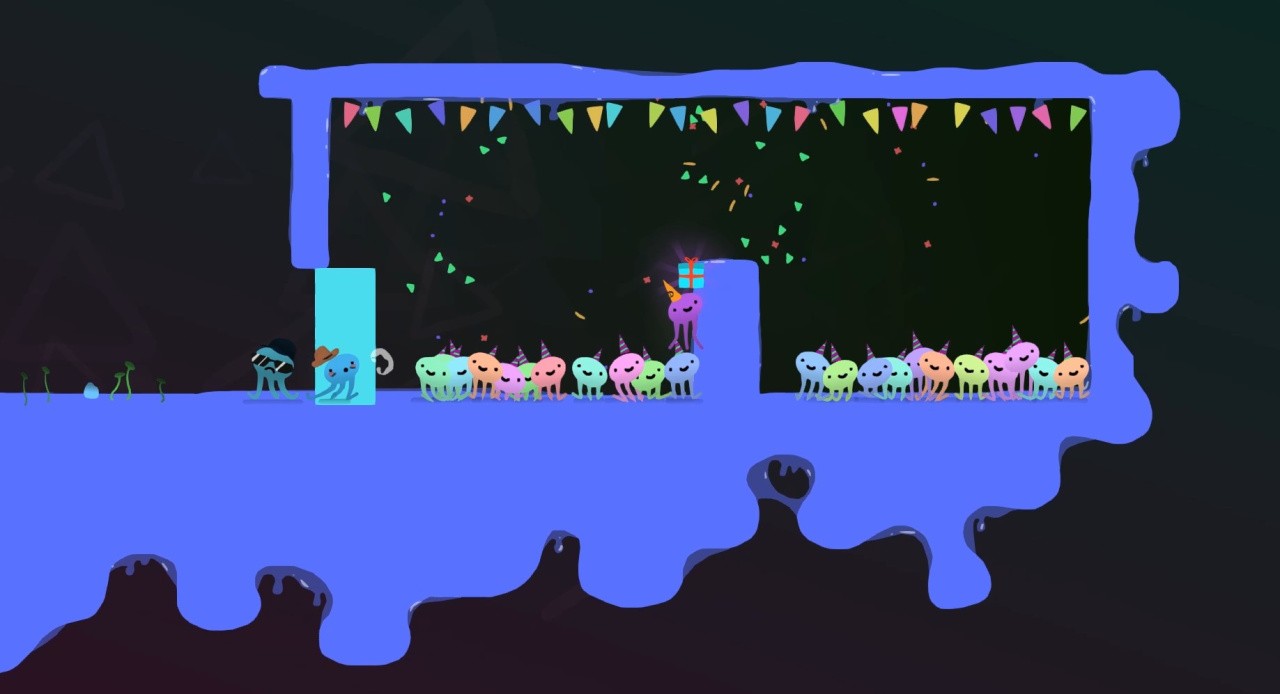
Publisher PQube has confirmed Muddledash, the fun-filled couch co-op party game where four octopuses try and grab a present and carry it over a finish line, is still coming to Nintendo Switch and will arrive on the eShop on 10th July.
It’ll launch at the price of £4.79/$5.39/€4.99 with a pre-order available on 12th June from 14:00 BST/15:00 CEST offering 10% off! With its levels that dynamically change with each round and all manner of ways to slap, grab and fling your fellow eight-legged friends in pursuit of that glorious present, Muddledash aims to bring some silly, party-friendly counchplay to Nintendo’s hybrid hardware. Check out the new trailer below.
What do you make of Muddledash? What do you think of its friendly take on competitive co-op? Share your thoughts below…
|
|
|
|
| News - This Week At Bungie – 6/07/2018 |
|
Posted by: xSicKxBot - 06-08-2018, 12:59 PM - Forum: Lounge
- No Replies
|
|
This Week At Bungie – 6/07/2018
 This week at Bungie, we revealed Forsaken.
On September 4, we’re kicking off the second year of Destiny 2 with a brand new story. We have some bold plans to take you to new places and change the way you play. If you haven’t seen it yet, check out the ViDoc that revealed Destiny 2: Forsaken.
[embedded content]
We’re committed to reinforcing the hobby for every player of Destiny 2, and we have a lot of changes coming in Year 2 that do just that. The ViDoc was followed by a live conversation on what we have planned for September. Didn’t get to tune in to watch it live? We’ve got an archive for you to watch at your leisure.
[embedded content]
Too long, didn’t watch?
- Forsaken tells a new story with a darker tone in a lawless frontier.
- Tangled Shore is a new destination made of a web of asteroids and mysteries.
- The Dreaming City is our first endgame destination, home to the biggest challenges.
- The Scorn are a new enemy, led by a group of eight barons you will hunt down.
- Our new weapon system gives you more control over how you configure your fighting style.
- We’re adding random rolls and improving the mod system for better weapon customization.
- New Masterwork style system allows you to level weapons up over time.
- Your Guardian discovers new ways to fight with new Supers.
- The Bow joins your arsenal as a new weapon type.
- Gambit is a new activity that combines PvE and PvP in a competitive co-op experience.
- There is a brand new raid located in the Dreaming City.
- The new Collections feature lets you track all the items you can acquire.
- The new Triumphs feature lets you track your achievements and lore.
You’ll learn a lot more about this new story we’re telling at E3. Gambit will be playable at both E3 and GuardianCon.
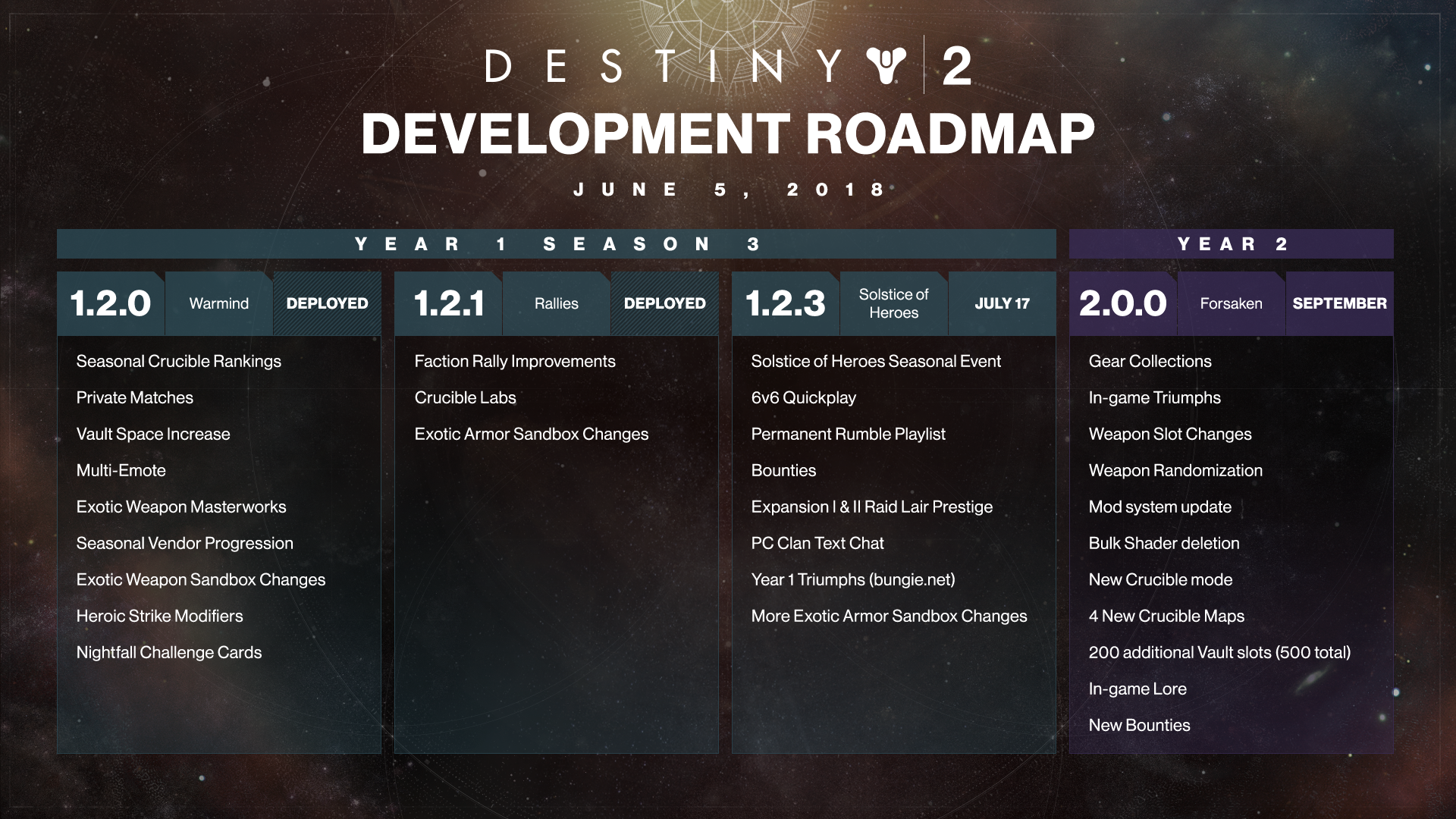
We also updated the Roadmap this week to give you details on what all players of Destiny 2 can enjoy this September. There were also some additions to the summer update, including 6v6 Quickplay and a permanent Rumble playlist. Prestige Raid Lairs are also coming in 1.2.3 and do require ownership of the expansion they were delivered in. Annual Pass
Another topic of the stream was the new Annual Pass. As the evolution of the Expansion Pass that delivered content like Curse of Osiris and Warmind, the Annual Pass is a new plan for how we’ll give hardcore players more ways to fight their enemies, collect new loot, and customize their characters. Here is Game Director Christopher Barrett to tell you more about our goals.
Christopher: Destiny 2 Year 2 begins with Forsaken, and throughout that year we’re going to be focusing our teams on delivering content that gives players reasons to come back to Destiny. This means new activities, endgame challenges, progression systems, and awesome rewards. With the Annual Pass, we want to deliver content more frequently throughout the entirety of Year 2, with three releases in Winter, Spring, and Summer.
In addition to everything new in Forsaken and the Annual Pass, we’re continuing to fully support Seasons and deliver updates to all players of Destiny 2. During each Season, all players can expect new rewards to earn, new Crucible maps and modes, improvements to gameplay features, recurring activities, special events, and more.
This graphic puts everything we have planned for year two on the map:
We’re excited for the second year of Destiny 2. You’ll soon learn more about what to expect in the coming weeks and months leading up to September when Forsaken and the Annual pass officially launch.
Lab Report
Last week, we rolled out Crucible Labs to give you a first glimpse of Crucible content still under development. This was our first experiment in the lab, but definitely won’t be our last. Senior Crucible Designer Andrew Weldon is here to debrief you on our conclusions.
Andrew: Hello everyone!
Thank you to everyone who participated in our debut Crucible Labs playlist last week!
Understandably, many of you are curious about the decision-making process behind developing Showdown and deploying it with Labs. I wanted to take some time to talk briefly about these decisions, what they mean for the first reveal of Labs, and how this first Labs run will help shape our future.
Every mode you’ve ever played in Destiny has been the product of design, iteration, playtesting, more iteration, more playtesting, polish, and final bug fixing. This takes a lot of time and effort across multiple departments within the studio, and as players, you don’t get to see it until it’s finished and in the game or featured in a press event or public beta.
Labs gives us an opportunity to open up some of this development process to the community, so you can be there with us earlier. But rolling out a feature like Labs is not without risk—we’re showing you unfinished work that is below our shipping bar, and we expect there to be issues that need addressing.
It was important for our first Labs to be measured and cautious. Our primary focus for this first round was to make sure that Labs itself worked, and Showdown made for a great simple test case that we already have some familiarity with shipping through Crimson Days and Doubles. Now that we’ve successfully launched Labs, we’ll be able to consider more options over time, ranging from new competitive experiences to more silly and just-for-fun experiments.
In general, expect that any mode that deploys in Labs:
- Has no concrete timeline or schedule
- Must not interfere with must-ship features and updates (i.e., the Summer Update and Forsaken—Labs modes are in addition to features you’re already scheduled to receive!)
- Can be iterated on in a semi-public setting
- Can succeed and be polished for a full release in a playlist or rotator
- Can fail and never be seen again
The broad feedback to Showdown in this setting has shown us there is a lot of room for improvement, and that’s OK! Some of your favorite modes in Destiny have had terrible playtests where we’re left wondering if we can even save them. Some modes that showed promise never came together the way we hoped and had to be left behind. This is a normal part of the development process that we’re inviting you to join, and we welcome your feedback and criticism as we make decisions not only in this mode, but in the future as well.
You may very well see Showdown again in the future with changes based on feedback from this week, and we have some additional Labs experiences in the pipe in our Summer update. Over time, we’ll continue to get into the zone and lock down the best process and path to deploying new experiences for you. We’re glad to have you along for the ride!
The Night Is Dark
Destiny Player Support keep the trains running on time. We don’t have a lot of trains, but they do keep you up to date on game-impacting issues and when fixes are on the way.
This is their report.
Nightfall Unique Rewards
This week, Destiny Hotfix 1.2.1.1 was released. Issues preventing Nightfall Unique Rewards from dropping have been resolved. We are currently planning to reschedule the Tree of Probabilities Strike to be featured as the Nightfall for the week of June 19, 2018. Stay tuned to @Bungie for future updates. Faction Rallies
With the release of Update 1.2.0, Faction Rallies now feature the Renown system. After pledging to a faction, players may earn Renown by completing a public event or patrol, or by defeating high-value targets on destinations. Players may earn additional Renown if they are wearing a full armor set for the faction they’ve pledged to. There are ways in which players can lose stacks of renown:
- Being defeated by an enemy
- Fast traveling
- Going to Orbit
- Logging out of the game
For more information regarding Renown and the changes to Faction Rallies, players may visit the Faction Rallies Guide on help.bungie.net. The following issues have been identified, and are currently under investigation:
- Some Faction Rallies ornaments cannot progress when completing the Lost Sector on Mercury.
- Ornaments requiring players to defeat Hive with melee abilities sometimes don’t progress.
-
- This most commonly occurs on the Arcstrider Subclass “Way of the Wind.”
If you encounter issues impacting Renown or Faction Rallies ornament progress, please report to the #Help forum on bungie.net.
Extra Butter
Let’s get to the movies shall we? Every week, we pick our favorites from the Creations page and show them off to the world. Here are this week’s winners.
Movie of the Week: Ra Ra Rasputin
[embedded content]
It’s been a fun week. We love getting to finally reveal the exciting things we’ve been working on. And we are not done yet. E3 is next week and we will have our away team ready to give you some more details about Forsaken. After that, we have all summer to fill in the blanks as we know you have a lot of questions.
Get out there and support the faction of your choice. We’ll let you know who came up on top after the reset on Tuesday .<3 Cozmo
|
|
|
|
| PC - Total War: WARHAMMER II - The Queen & the Crone |
|
Posted by: xSicKxBot - 06-08-2018, 07:34 AM - Forum: New Game Releases
- No Replies
|
|
Total War: WARHAMMER II - The Queen & the Crone
The Queen & the Crone is the first Lords Pack for Total War: WARHAMMER II. Bolstering the forces of the High Elves and the Dark Elves, it introduces famous rival characters and new iconic units from the world of Warhammer Fantasy Battles to your campaigns and battles. The content in this pack is available in both the Eye of the Vortex and Mortal Empires campaigns. Publisher: Sega Release Date: May 31, 2018
|
|
|
|
| Vote for Your Favorite Linux SBC and Be Entered to Win a Free Board |
|
Posted by: xSicKxBot - 06-08-2018, 07:34 AM - Forum: Linux, FreeBSD, and Unix types
- No Replies
|
|
Vote for Your Favorite Linux SBC and Be Entered to Win a Free Board

Vote for your favorite open-spec, Linux- or Android-ready single board computers priced under $200.
It’s time again for LinuxGizmos’ annual reader survey of single board computers. They’ve identified 116 SBCs that fit their requirements — up from 98 boards in the June 2017 survey. Make your picks from the new list of under $200, hacker-friendly SBCs that run Linux or Android, and you could win one of 15 prizes.
Take the survey!
15 hacker SBC prizes
In the brief survey, you can select up to three boards and answer a few questions about buying criteria and intended applications. By completing the survey, you will earn a chance to be among 15 randomly selected winners who will receive free boards donated by Aaeon UP, Qualcomm and Gumstix.
The prizes this time around include five Qualcomm DragonBoard 410c development boards and five Chatterbox Raspberry Pi Expansion boards from Gumstix (Rasp Pi not included). There are also five different Aaeon UP board models including an UP, an UP Squared, and an UP Core, as well as the new UP Core Plus and AI Core module with a Myriad 2 VPU. See more details at LinuxGizmos.
More Raspberry Pi?
Last year’s results saw an overwhelming taste for Pi, with the Raspberry Pi 3 in the top spot, the Raspberry Pi Zero W in second, and the Cortex-A53 based Raspberry Pi 2 in third. Vote now for your favorites and stay tuned for the results.
|
|
|
|
|
|
|