The following blog post, unless otherwise noted, was written by a member of Gamasutra’s community. The thoughts and opinions expressed are those of the writer and not Gamasutra or its parent company.
[Video Game Deep Cuts is a weekly newsletter from curator/video game industry veteran Simon Carless, rounding up the best longread & standout articles & videos about games, every weekend.
This week’s highlights include a video profile of SOS creators Outpost Games, an analysis of Bubsy’s Japanese translation and a longform Tetris documentary, among others.
One thing I’m noticing in today’s video picks – some of these high-quality interviews and documentaries are getting low numbers of views, sometimes less than 1,000. This is mainly due to the sheer amount of videos available nowadays, of course.
But some vids are tricky to find because they’re posted on ‘Let’s Play’ channels that are otherwise high-volume & low-subscriber. Conversely, that great Tetris doc has >100,000 views already. Intriguing differences…
I was a video game sceptic, but now I’m a fan(Jessica Furseth / The Guardian – ARTICLE) “Luke, how do I get this power moon? Luke!” I’m playing Super Mario Odyssey while my partner, Luke, is trying to work. “You’ll figure it out,” he says patiently. Luke has been playing video games since he was a child, but this is my first ever game, and he’s thrilled that I’m invested in Mario’s quest to save Princess Peach.”
Outpost Games and SOS Documentary(Gameumentary / Destructoid – YouTube – VIDEO) “Gameumentary recently traveled to South San Francisco to tell the story of a new game development studio called Outpost Games. The studio is working on their first title, SOS, which is a battle royale-like game, but with a focus on players as live performers. Think of it like an episode of Survivor. [SIMON’S NOTE: Outpost is super-interesting, being a VC-backed studio making a ‘made for Twitch’-style game – a rarity!]”
The Xbox One has a serious exclusive games problem(Colin Campbell / Polygon – ARTICLE) “Microsoft has given Xbox head Phil Spencer a vote of confidence, promoting him to executive vice president of gaming. In return, Spencer will be expected to solve the company’s immediate problem: The Xbox One doesn’t have enough big-name exclusives.”
Getting Over It (Spoilers?)(Errant Signal / YouTube – VIDEO) “I managed to make a Getting Over It video on YouTube without screaming or losing my cool even once! Do I get a cookie? Also, we talk about boring game design things and the concept of failure in videogames and frustration and pain as express aesthetic goals.”
Xbox Live Indie Games – A 2D Retrospective(AJ Johnson / 8 Bit Horse – ARTICLE) “Still, it was a wild ride while it lasted, and there were a handful of developers who made the service worthwhile, some of whom used this as a springboard toward a full-time career in game development. To that end, we’re taking a chronological look at the notable developers of 2D video games who found their place on Xbox Live Indie Games…”
How They Translated Bubsy into Japanese(Clyde Mandelin / Legends Of Localization – ARTICLE) “Several years back, a reader asked about how the Super NES version of Bubsy had been translated into Japanese. The game is filled with 90s American “attitude”, movie references, and bad cat puns – many of which are presented as voice clips. So how did the Japanese version handle all of these translation challenges?”
Fairlight an Interview – A talk with Bo Jangeborg – ZX Spectrum(Gears Of Games / YouTube – VIDEO) “An interview with the creator of Fairlight I and II (ZX Spectrum) : Bo Jangeborg. [SIMON’S NOTE: Very worthy and historically important, for those who remember this spectrum isometric classic.]”
How The Room devs succeeded on mobile, ‘the only option left to us’(Jennifer Allen / Gamasutra – ARTICLE) “At this point, Fireproof Games’ Room games seem so entrenched as to almost be part of the foundation of the mobile game market. But when we caught up with Fireproof cofounder Barry Meade last week, he confessed to something many devs may empathize with: a sense of optimistic nervousness.”
In Praise Of Video Game Castles(Philip Boyes / Eurogamer – ARTICLE) “I can’t help feeling that in their own 80s and 90s childhood, video games shared something of my infatuation. In those days – that early flush of creativity when everything was bright and cartoonish and simple – it seems like games were filled with castles.”
What Works And Why: Emergence(Tom Francis / RockPaperShotgun – ARTICLE) “I love Deus Ex, System Shock 2, and Dishonored 2, and the name for these games is dumb: they’re ‘immersive sims’. If you asked me what I liked about them, my answer would be a phrase almost as dumb: ’emergent gameplay!’”
4-2: The History of Super Mario Bros.’ Most Infamous Level(Summoning Salt / YouTube – VIDEO) “[SIMON’S NOTE: Almost 1 million views already! This is a spectacularly entertaining retrospective of how speedrunners have morphed approaches to a Super Mario Bros level over a decade plus!]”
AIAS Game Maker’s Notebook: Nathan Vella(Ted Price / Libsyn – PODCAST) “Capy’s Nathan Vella stops by to chat with Ted Price of Insomniac Games about his journey from film into game development, leading a multi-project studio, comedy in games, and the future of indie development.”
The (still) uncertain state of video game streaming online(Willie Clark / Ars Technica – ARTICLE) “As these streamers and personalities have grown in popularity, so too has the discussion over the rights of streamers and developers in regards to said content. Are streams covered under fair use with content creators allowed to make money off of them? Or should the original creators of the games have a say in how their products are used in the public eye, not to mention a chance to generate profit?”
The Sierra Network(Jimmy Maher / The Digital Antiquarian – ARTICLE) “Ken Williams got the online religion early or late, depending on how you look at it. Despite running a company whose official name was Sierra On-Line — admittedly, the second part of the name was already being de-emphasized by the end of the 1980s, and would eventually be dropped entirely — he had paid no more attention than most of his peers to the rise of commercial online services like CompuServe.”
Roadside To The IGF 2018(Gulmer / Medium – ARTICLE) “I would like to honor some of the more unique and interesting games I’ve had a chance to play during the judging phase – focusing on the ones that didn’t become finalists in any award category. [SIMON’S NOTE: this is a really amazing piece, picking things outside of the also-great finalists.]”
Huddle up! Making the [SPOILER] of INSIDE(Playdead / YouTube – VIDEO) “In this 2017 GDC talk, Playdead’s Andreas, Normand Grntved, Sren Trautner Madsen, Lasse Jon Fuglsang Pedersen and Mikkel Bogeskov Svendsen peel apart the layers woven together to make INSIDE’s horrific [SPOILER], showing how its dynamic arms are imposed on a sack of physics bodies, moved by physics and animation as one unit, and glued together by specialized shading.”
The story of The Crossing, Arkane’s lost game(Blake Hester / Polygon – ARTICLE) “When asked about The Crossing, Raphael Colantonio and Viktor Antonov, two of the game’s leads, liken it to an ex-girlfriend. They were passionate about the project. They still have love for it. When they walked away, it was painful. But they’d never go back.”
How Human: Fall Flat has kept its head held high(John Walker / RockPaperShotgun – ARTICLE) “Human: Fall Flat is a sweet physics puzzle game that, well, was fine when it came out. A cute, entertaining little thing, but not something that was going to covet awards or expect breakthrough success. However, since a reasonably successful launch, Tomas Sakalauskas has been persistently smart.”
The Story of Tetris(Gaming Historian / YouTube – VIDEO) “In 1984, during the Cold War, a Russian programmer named Alexey Pajitnov created something special: A puzzle game called Tetris. It soon gained a cult following within the Soviet Union. A battle for the rights to publish Tetris erupted when the game crossed the Iron Curtain.”
Plants vs. Zombies creator George Fan on past success, future risks, and drafts with Edmund McMillen(Chris Carter / Destructoid – ARTICLE) “George Fan is pretty modest for someone who created Insaniquarium and Plants vs. Zombies, two of the most memorable and replayable games ever released. His career has spanned almost two decades, from freaky Flash games to creating a major franchise in Zombies, which is endlessly iterated upon by industry behemoth Electronic Arts.”
——————
[REMINDER: you can sign up to receive this newsletter every weekend at tinyletter.com/vgdeepcuts – we crosspost to Gamasutra later on Sunday, but get it first via newsletter! Story tips and comments can be emailed to vgdeepcuts@simoncarless.com. MINI-DISCLOSURE: Simon is one of the organizers of GDC and Gamasutra & an advisor to indie publisher No More Robots, so you may sometimes see links from those entities in his picks. Or not!]
Q& A: Translating the humor & tone of Yakuza games for the West
Each of Sega’s Yakuza games contains multitudes.
For example, Yakuza 0(the series prequel released outside of Japan early last year) sets itself up as a playable crime serial set in ’80s Japan.
But it can also be a cabaret management game, a blind date sim, a 3D beat-’em-up, an emulator of old Sega arcade classics, a rhythm game, a light-hearted RPG about solving stranger’s problems, a real estate management game, and a surprisingly good place to learn the basics of tabletop games like shogi and mahjong.
From a developer’s perspective, the scope of such a project seems daunting. From a player’s perspective, it can be overwhelming — my partner and I recently completed Yakuza 0, and saw that our 87 hours of combined play merited a “completion” score of roughly 33 percent.
The hook that holds together all these disparate game design elements, that pulled us and scores of Western players like us through the game, is the writing. For all its focus on cold-hearted criminals and petty evil, Yakuza 0 is a remarkably funny game; it affords players the freedom to quickly jump from incredibly serious, macabre scenes (a criminal is tortured in a warehouse) to (teach a shy punk band to act like Cool Rude Dudes in public).
That writing is translated and localized for the West by Atlus, starting with Yakuza 0 and continuing on through Yakuza Kiwami (a remake of the original 2005 game) and Yakuza 6. The localization of all three games has been overseen by Scott Strichart, who recently sat down to chat about the ins and outs of adapting these games’ humor and gravity for Western players.
It was an interesting conversation that went beyond the localization process (Atlus uses a translator/editor tag-team approach, rather than relying on translators alone) to touch on how, exactly, you translate humor, and how players in different regions can view a game or its characters completely differently. What follows is a version of that conversation we’ve edited for clarity.
The Yakuza games have a winning sense of humor. How do you translate that for a Western audience?
Strichart: The humor of a Yakuza game is a fine line to walk. It’s very clear when the developers want to be funny. It’s very clear to us when the writing that exists in the game is supposed to be like, “ha ha here’s a joke.” So we just want to make sure that if they intended for it to be funny, it also has to be funny to our audience. Whether or not that means changing the dialogue a little bit, changing the style in which it’s delivered, making dialogue options a little bit more punchy, that kind of thing.
One of the perfect examples is, [in Yakuza 0] Majima encounters this…did you play the substory where he goes to infiltrate a cult? In that substory, one of the options he has is to crack a pun, in order to get this girl to snap out of her cult tendencies. So in Japanese, that pun is “futon ga futon da”, which means “a futon is a futon” or, “a futon flies.” It’s a pun on words. It’s basically a “why did the chicken cross the road” kind of joke.
If we literally translated that, it wouldn’t work. If we put in “why did the chicken cross the road?” it’s not much of a pun; it doesn’t feel in line with Majima’s character.
So that’s where we had to come up with this pun that we ultimately went with, which was “how do you avoid dangerous cults? Practice safe sects!”
Okay, let’s drill into that localization process — how, exactly, did you go from a flying futon joke to a safe sex joke?
Well it wasn’t just me — we have a team of translators and editors who approach these games. These games are massive; if they were left to just me, i’d be buried under each of these games for years! Most of these Yakuza games actually are on par or greater than your average JRPG, in terms of volume of text.
How many lines of text were you working with in Yakuza 0?
Yakuza 0 is 1.8 million JPC (Japanese characters), and the average JRPG is, I think, 1 million to 1.2. So we were well above the average there.
So anyway, how our process works is, the scripts come in from Japan, and we divvy them up to certain translators and editors to make sure there’s consistency among the sections that they’re doing.
“We just want to make sure that if [the devs] intended for it to be funny, it also has to be funny to our audience. Whether or not that means changing the dialogue a little bit, changing the style in which it’s delivered, making dialogue options a little bit more punchy, that kind of thing.”
So that particular pun was in a substory, for instance, so the translation team who was on that was one of our outsourced translators, who was doing most of the Majima substories. Because they were familiar with Majima as a character, they were familiar with the substory content, and all that kind of stuff.
These kinds of localization issues, we don’t know about them until we hit them. We’re doing it line by line, and suddenly we’re like “oh shit, here’s a pun.” And when you hit that, you have to take a step back and say okay, this isn’t going to be a direct translation. We have to deal with it — sometimes that comes down to a discussion amongst editors and translators, or sometimes a translator will flag it for the editor to say “I didn’t know what to do with this, man. Let’s talk about this.”
So when that gets to the editor, the editor’s job might be to come up with a way to make that pun palatable to the Western audience. That’s generally the Atlus approach, is we use editors to refine the translated English text to make sure it makes sense to Western players.
A lot of companies don’t do it this way. And it’s not right or wrong, but a lot of companies dedicate a single translator who has the ability to translate Japanese to English, and make it good English. Whereas we use a method where the translators give an editor, not a literal translation, but translated words off the page that don’t necessarily scream “this is great English.” That allows an editor to come in and refine that text to make it palatable to a Western audience, whether or not that editor even speaks Japanese.
I really enjoy that style, actually. Back when I was the first localization employee at Level-5, it was kind of up to me to establish that style. I could have just thrown the work at a translation agency and let them go, but I thought it was a good idea to give it a more personal touch.
So we brought in a translator and, you know, when an editor meets a translator and they learn their style through working with them on a game or two, and you can almost feel their style through the text, you develop this like, symbiotic relationship with that translator. And that’s kind of how I felt about that translator who was working onAttack of the Friday Monsters with me. It worked out really well.
So why do you think it’s a good idea to use an editor/translator team, rather than just a single translator?
Well, it’s not right or wrong. I think that both ways of doing localization have advantages and disadvantages. The advantages of this method are that it’s a little more collaborative.
A translator gets to talk to an editor, and if you hit a line you’re gonna stumble on, you can actually get a lot of insight into what that character is about, what they’re saying, and kind of hash it out between you. If the editor kind of strays too far, the translator can kind of rein them back in and say “well, it’s a little closer to the Japanese this way”, and you end up refining a line to the point where it’s a bit more accurate, or more true to what a Japanese developer was trying to convey. And that’s something you can’t get if you’re just a single translator, a single mind trying to parse a game’s text as best you can. There’s no dialogue.
The second advantage is that, when editors are working on something, and they have less or no Japanese fluency — I don’t claim to have Japanese fluency — we bring a creative writing aspect to these texts that might otherwise be just a direct translation. And a direct translation, that’s not a localization. Not if you just translate something directly, that’s often not enjoyable to read. It leaves humor behind, it ends up dry, it ends up boring to read.
What do you lose by using this tag-team method? Besides the extra costs, of course.
Here’s the disadvantages: we’re slower. When a game is translated, that’s work that could be finalized, but then it then goes to an editor, who is then tasked with finalizing it. We try to mitigate that by making sure translators are going when editors roll onto a project, so you end up with this kind of lock-step process. But at the end of the day, it is a bit slower than if a single mind just translated the text and delivered it.
Is that why the Yakuza games seem to take a year or more, on average, to come to the West?
No, that is not why! [Laughs] We are closing the gap. That is my directive from management: “close the gap.” Yakuza 5 was two years in the process, and that was because Sega literally closed their office up here [in San Francisco] and the project sort of stumbled out the door. 0 came back into our hands, once we’d established operation out of Atlus, and that took us, I want to say, a year and a half?
Kiwami was a little bit less, a year and two months. And Yakuza 6 was….a year? A year and three months? If you look at the past 6 months, where we’ve released essentially 3 titles, a Yakuza game every 6 months, no one else is accomplishing this. This is practically impossible. The fact that we’re getting it done, with the quality level tht we’re held to for this series, is a marvel for my team. I’m nothing but impressed with everyone’s hard work on this.
Fair enough! What challenges have you faced along the way towards closing that gap?
To go back to that other disadvantage, on the translator/editor route. It’s consistency. The more people you bring onto a team, the more people who touch it, the more likely you are to create inconsistencies. Amongst terms, amongst the way characters talk, amongst spellings, all of that stuff has to be mitigated. You have to have a strategy for that.
“The more people you bring onto a team, the more people who touch it, the more likely you are to create inconsistencies…You have to have a strategy for that.”
What I’m talking about is like, this person is capitalizing the word patriarch. Or this person is using “jeez” with j instead of “geez” with a g. And you end up with a character that seems to speak in two different ways, or worse, you end up with literally different interpretations of a character.
When we didRadiant Historia, I decided that a character was going to have a little bit of a British lean in his voice. And I talked to the other editor about it, and even with that understanding…we ended up with completely different British leans! Because one of us understood cockney and one of us didn’t.
And that’s something that’s now actually getting fixed. And you can mitigate some of that in QA, but those little miscommunications, if you don’t have very strong communication amongst your group, especially as it grows beyond a couple editors and translators, these consistency problems balloon, and it has to be mitigated by a producer and/or a consistency pass on the text.
What advice would you give others trying to do something similar with their own games?
Focus on consistency and clarity. As a producer, I am the consistency pass. I am the voice on how characters should sound. I’m very upfront with my teams; we have daily standing meetings about our challenges that we’re hitting, and we discuss these things upfront in terms-less meetings.
We try to frontload the localization as much as possible, with these meetings, with regular discussions to hammer out the fine details. And at the end, you know text goes through a translator, it goes through an editor, and then I act as a consistency pass.
With Yakuza 6, for instance, we rolled a new editor into writing the main story, and he didn’t have a strong grasp of Kiryu’s character. Until probably, halfway through the game. So in going back through his text, I end up tweaking probably 80 percent of the text. Because I’m a perfectionist. I shouldn’t be doing it that much, but I do. And I told him, you know, your Kiryu’s way stronger in the latter half than in the beginning. So I’m going to go back and kind of rewrite your beginning. And he was totally onboard with that.
Do you have any sense of how Japanese players perceive the Yakuza protagonists?
In Japanese, I feel like Kiryu is a little bit more of an avatar for the player. He uses a lot more ellipses than we do in the English version, because we actually want our audience to identify with Kiryu as a character. Whereas in Japanese, you might want to be like, I can put myself in Kiryu’s shoes. I can be this Japanese badass.
It’s a bigger leap to expect a Western audience to be like “ah, I can be this Japanese badass.” So we give Kiryu a little bit more of his own characterization, that is very much in line with the Japanese when they do characterize him. So there’s no gap there; it’s just a matter of trying to bridge that gap Western audiences might face in trying to fully identify with a Japanese character.
How do you decide when to write in an original response, one that’s not in the Japanese version?
When a Japanese person would know what he’s thinking, because they’re able to put himself in his shoes, or they might have a better idea of what’s going through Kiryu’s head, that’s when we bridge the gap. When we decide okay, the player needs to understand a little bit more of what’s going through Kiryu’s head, because this isn’t an immediately known quantity to them.
And Japanese storytelling can be very subtle, at times. And we don’t want to be blunt and hammer players over the head with “hey this is what they’re trying to say”, but sometimes we do have to lead them a bit. We have to look at the text and be like, this is clearly trying to convey this subtle aspect of masculinity, or honor, because this is what these cultural signifiers mean. And then we have to present something to the player that makes it clear hey, this is a Japanese concept of honor, so please understand that through this thought process that Kiryu is having in the middle of it all.
What’s a good example of that?
So, Majima’s whole transformation from Yakuza 0 to Yakuza Kiwami. Longtime Yakuza fans know Majima is this class clown, kind of joker-esque personality. And when 0 [a prequel] came along, they decided to completely flip the script on this character [and present him very differently]. So you might get the idea that in playing through 0, Majima is going to be going kind of insane.
But that’s not really the Japanese take on that. The whole point of 0 is not to show that he goes insane, but to show that he makes a conscious choice to…let loose. And it is subtle in the game, even despite our best efforts to be a bit more blunt about it, especially in the scenes with Nishitani [a loud, brash character] where it’s clear Majima is gaining insight into how someone like that would live.
We brought that out a little bit more, specifically asking the devs “did you mean to communicate this?” Because even we were like, this is really, really subtle, guys. Were you trying to communicate a direct kind of correlation between Nishitani and Majima? And they were like, “yes. If you feel like you can bring that a little more obviously, without adjusting the text to the point that it doesn’t make sense or it’s not in line with the original, then go for it.” And we did! And it’s still very subtle. People, at the end of the game, they say well, Majima went insane. And it’s like well, heh, let me show you the scenes where he didn’t go insane, where it’s supposed to be clear he made a deliberate choice.
Preview Alpha Insiders can expect another new update today, complete with brand new fixes. This update (1802.180131-1450) will begin rolling out at 6.00 p.m. PST and will become mandatory shortly after that. Read on to learn more about the fixes and known issues related to this build.
Fixes:
Mixer
Fixed an issue which caused the Mixer app to crash when connecting a headset while the app is in use.
General
Resolved an issue which sometimes caused degraded console performance in games, apps, and on the dashboard.
Party Chat
Miscellaneous performance improvements for party chat.
Dynamic Theming
Additional fixes to address an issue which caused switching between Light and Dark themes to occur at incorrect times.
Known Issues:
Games Installation
Games that are installed fail to launch. Workaround: If the games are installed to an external drive please copy the game to the internal drive or attempt to delete the title and redownload to fix the launch error.
Display
We are investigating the inaccurate RGB colors that have been reported when displaying in 4K HDR mode when playing a UHD disc.
Tournaments
The left and right navigation for selecting date and time during Tournament creation is currently reversed when the console language is set to Arabic or Hebrew.
Left and right navigation in Tournament twists is reversed when the console language is set to Arabic or Hebrew.
Left and right navigation in the bracket view of Tournaments is reversed when the console language is set to Arabic or Hebrew.
Avatars on Home
Users wishing to represent themselves as an avatar can do so by changing their settings under My profile > Customize profile > Show my avatar.
Nintendo Life shmup heads rejoice as Brazilian metal band and inventors of the game metal genre Megadriver have just released their latest album. For Great Justice is a twenty track metal cover album with some very iconic tunes from several classic shmups, including songs from Thunder Force IV, After Burner, Gradius III, U.N Squadron, R-Type and (of course!) the infamous Zero Wing. The album is dedicated in memory of Spanish artist Daniel Vendrell who designed the above artwork used for the album cover and sadly passed away early last year.
You can buy and stream the album from Bandcamp or listen to it on Spotify. Just make sure you play it very loud indeed. Any memorable tracks from your favourite shmups covered on the album? Hit us up in the comments below. In case anyone is wondering: No, they are not called “Genesider” in the USA.
The Longest Five Minutes has one of the most interesting concepts we’ve seen from an RPG in some time. Starting immediately at the final boss battle, the game’s almost cringefully named protagonist ‘Flash Back’ has no memory of why he is suddenly fighting the Demon King, or even who any of his friends and allies are. During this battle Flash Back has lots of – well, flash backs – which play out as small chapters leading you up to this final moment.
Essentially, this boss battle is made up entirely of dialogue; there’s a timer in the corner indicating how long the fight has been going on in the present, and you’ll occasionally make key decisions that affect how your memories will play back to you. Certain moments in the battle or specific words that are said will trigger one of these memories, sending you back in time to play through a chapter of RPG action. You’ll be going back and forth from the present to past, learning all about how and why your heroes are in this fight to the death.
The RPG side of the game is actually very light. Each chapter has you playing through random parts of the story, not necessarily in the order in which they happened, and this creates a strange situation where you don’t really need to focus on the usual aspects of games of the genre. There is very little need to spend too much attention on levelling up your party or collecting every last item as you’ll soon be playing an entirely new chapter where your characters might be much more advanced, or weaker, than they are currently.
Instead, each chapter is all about ticking off objectives – usually one that is essential, and two that are optional, to progress the story. Objectives usually task you with the sort of things you might expect such as fulfilling side quests for NPCs, travelling to new destinations via the world map, and combat. Most chapters will lead up to a dungeon that plays out over several floors; you’ll need to make your way to the end, taking on enemies that spawn and fight in a very similar way to games in the Pokémon series, until you reach, and essentially defeat, the dungeon’s boss.
Just like before, the combat within these dungeons (which can also sometimes take place when travelling between key locations) is a very watered down affair when compared to your usual RPG. You play with a typical party of four that each have their own specialist areas such as physical combat, magical combat, and healing, but for the first half of the game you’ll get by without using the majority of these skills at all. You’ll likely be able to clear most battles by simply using each member’s most standard attack, and there is a mechanic available that lets you heal your entire party whenever you like outside of battle for a very small mana cost.
Things do start to get a little tougher towards the end, but if you experiment with your party’s different abilities, you’ll likely be absolutely fine. This easier approach might sound slightly disappointing on paper but it actually suits the style of the game really well; this isn’t your typical, hardcore, life-consuming RPG, but instead is perhaps best appreciated when played in short bursts and looked at as a story-telling adventure with some easily accessible RPG-style gameplay at its centre.
There are actually only a couple of places in which the game falls a little short. Firstly, the narrative can sometimes take strange and unnecessary directions; the more you engage in conversation with the locals, the more you’ll get from the game (and add on to the already 10+ hour campaign), but having an entire chapter that revolves around men ‘peeping’ on women in baths seems completely out of place.
Secondly, the lack of challenge from the game’s combat system effectively makes your in-game currency, and the weapon shops, resting inns, and supply stores, almost entirely useless. We never once bought any additional equipment for battle during our entire run-through – you’d only end up losing your items when you get sent off to the next chapter anyway.
Back to more positive aspects of the game, though, it is also worth mentioning the inclusion of the three optional mini-games. Often used to fill an objective task in various chapters, these mini-games offer a very welcome break from the dramatic storyline and are actually great fun in their own right. A particular highlight was Haunted Run, a simple auto-runner that has you jumping over ghosts and collecting coins. These games offer more of a challenge than the main quest and you are free to play them for as long as you like while in a relevant chapter.
All in all, this is a game that puts a heavy focus on its storytelling and, if you allow yourself to completely dive in to this and fully explore the world around you, you’ll likely enjoy the adventure. There are plot twists with multiple potential story arcs, a lovable cast of characters (apart from possibly Regent who we could happily fire from a cannon), and the whole aesthetic of the game is to die for. The visuals suit the vibe perfectly with artwork that will drench you in nostalgic wonder, and there are two or three musical themes playing throughout that are so beautiful we almost ended up sharing poetic love songs around the office.
Conclusion
The Longest Five Minutes uses a truly gripping concept, throwing the classic RPG formula on its head by having you put the pieces of an already existing story together as you go. While the combat and general gameplay are almost too easy-going, the story, characters, and overall aesthetic had us always wanting more, never wanting to put the game down. The asking price is perhaps a little steep for the amount of content available, and the strange take on a usually well-understood genre may throw some players off, but there is an indescribable charm that is worth exploring here.
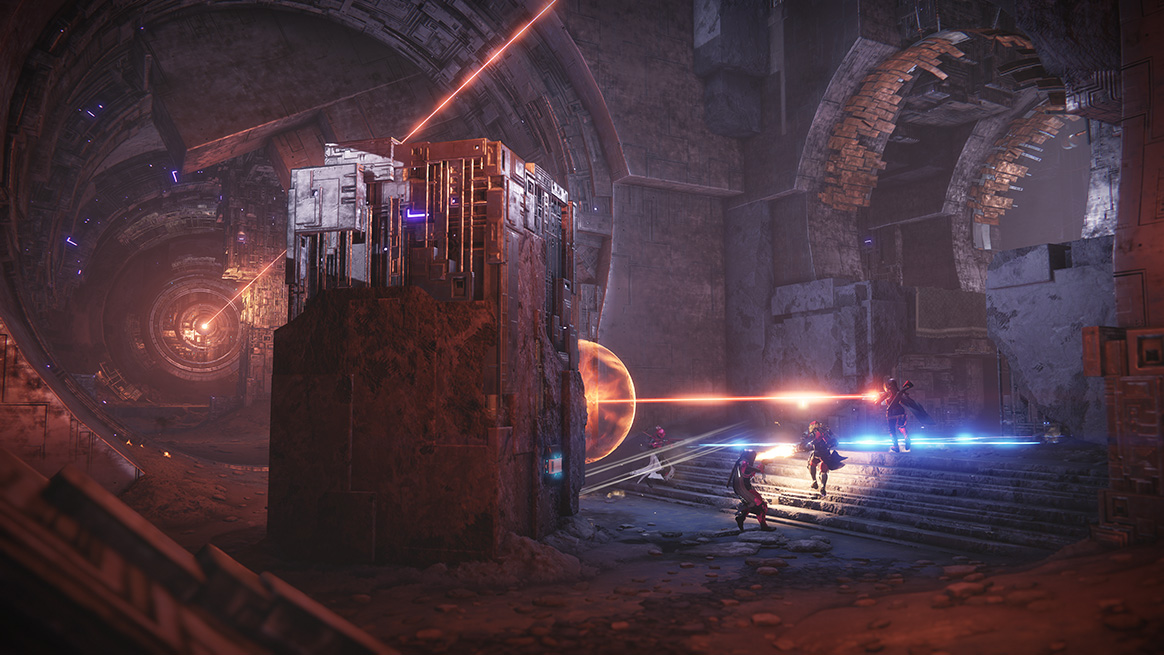
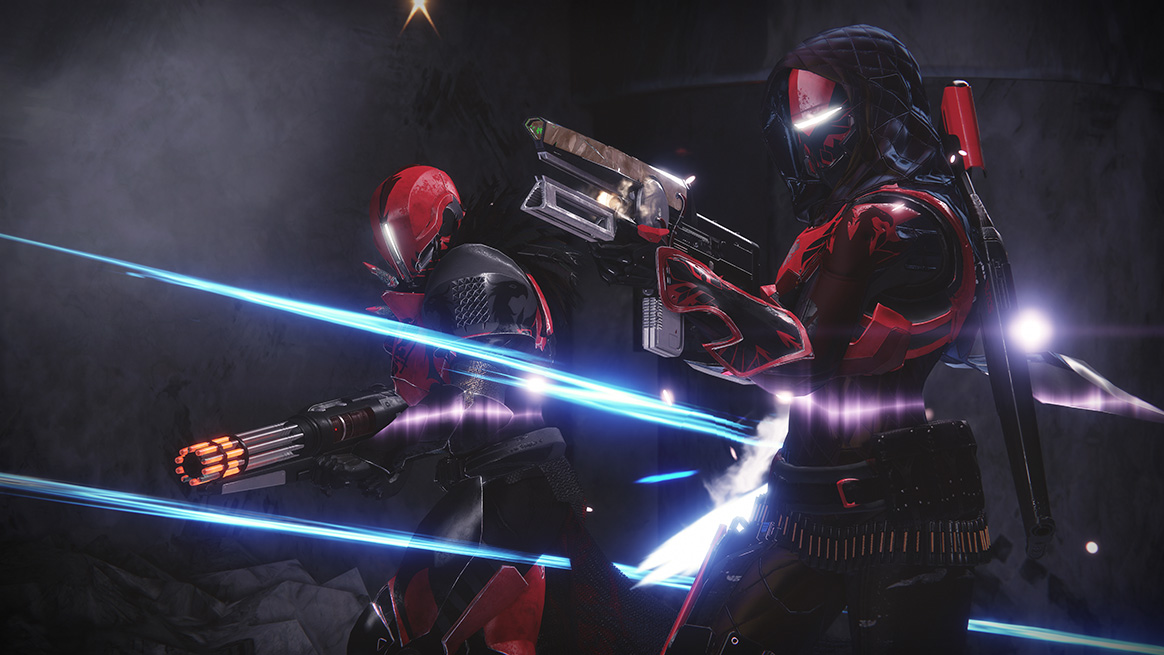
Crimson Days begins in Destiny 2 on Tuesday, February 13. At the heart of the weeklong event is a 2v2 Crucible playlist intended to get your blood pumping as you and a friend test your bonds to the breaking point. This celebration of teamwork will last one week!
The combat scenario is 2v2 Clash with a round-based twist. We will also be debuting The Burnout, a new take on The Burning Shrine set in a future timeline where the Vex have succeeded in altering our reality.
The sun is darkened and the only Light to be found comes from you and your partner fighting as one. Stay in close proximity to your partner and your abilities recharge at a faster rate. Stray too far, and your enemies will be given a waypoint leading to your location. If you can’t find a partner, don’t worry. We’ll play matchmaker and find one for you.
The Rewards
The best way to earn rewards during Crimson Days is to compete in the Crimson Days Crucible playlist, and we’ve tuned the experience to focus on rewarding single-character play. Most rewards are found within a new Crimson Engram, with all contents on a “knock-out” list, preventing you from receiving duplicate items until you’ve earned all of the new gear.
No matter which activity you play in Destiny 2 during Crimson Days, every player will receive both an Illuminated Engram and a Crimson Engram when they level up. Crimson Engrams are only earnable through gameplay, and are not capped or limited during the event. To qualify, you need only to reach the level cap for your Guardian (that’s 25 if you’ve acquired Expansion 1; 20 if you haven’t).
There are also five new rewards found exclusively for players who complete the following:
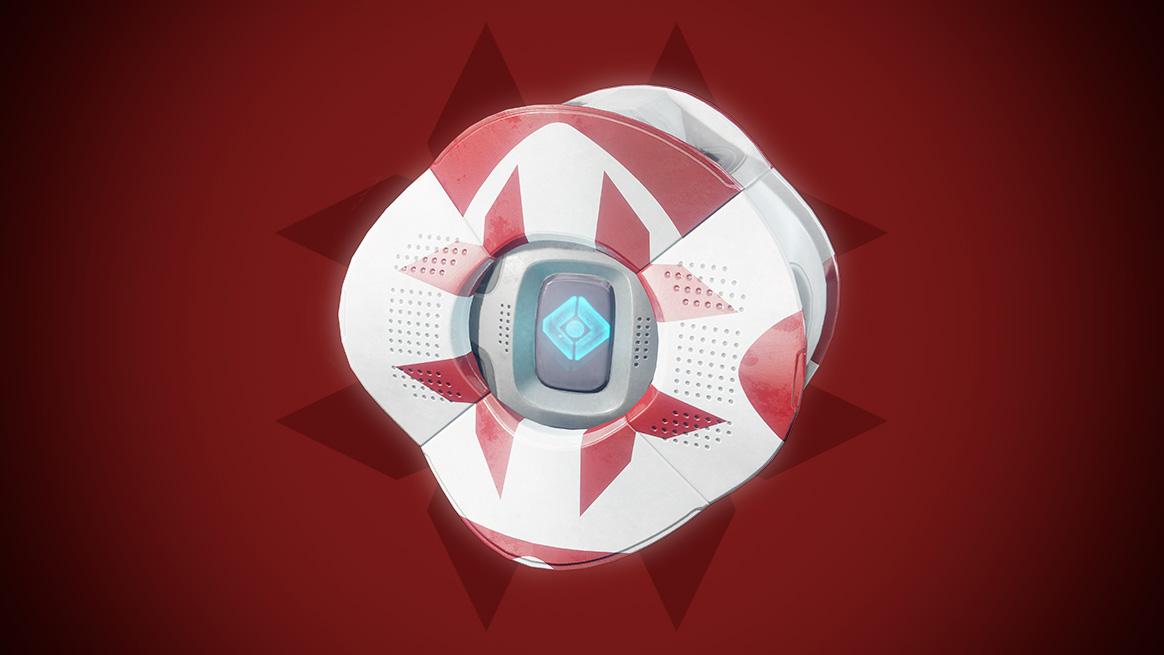
Complete the milestone “Welcome to Crimson Days” by finishing five Crimson Days matches and visiting Lord Shaxx in the Tower to earn the Fire of the Crimson Days Emblem and the Tirastrella Ghost Shell.
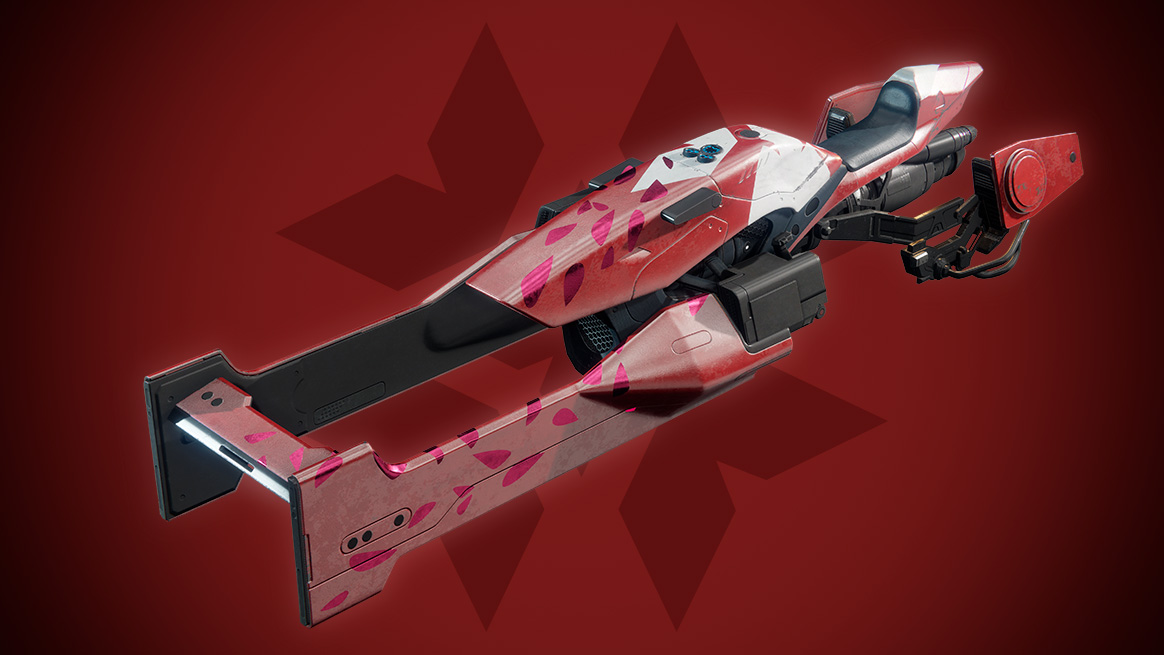
Complete matches in the Crimson Days Crucible playlist for a chance to earn the Undeterred Exotic Sparrow.
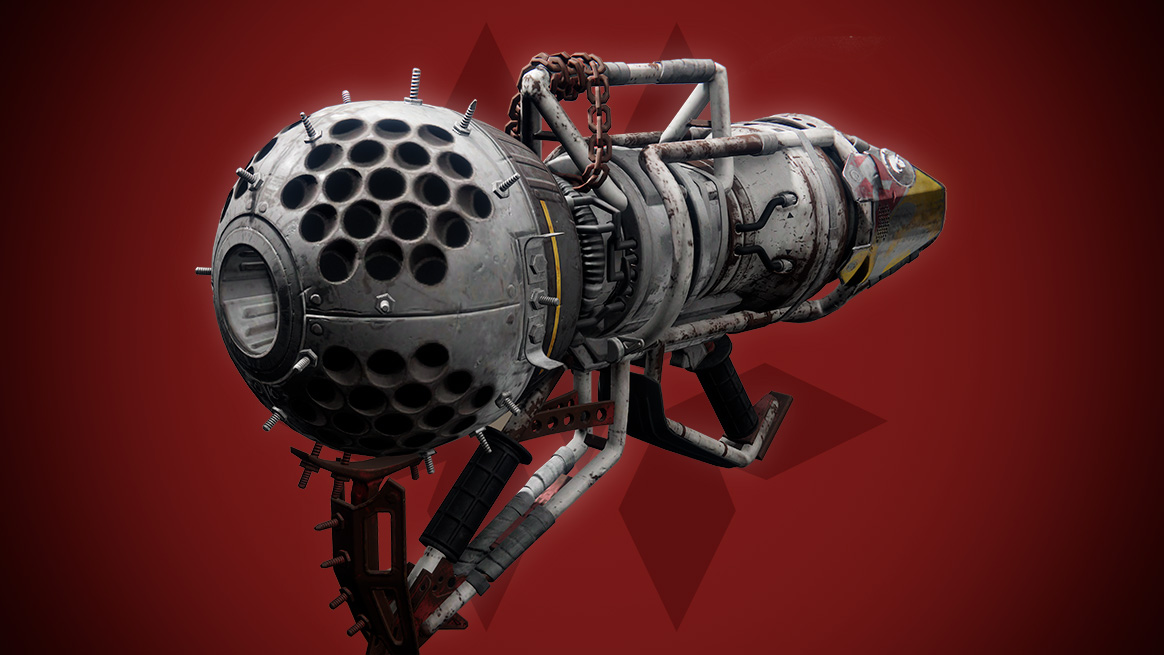
Complete either the Leviathan Raid or the Raid Lair: Eater of Worlds to claim the Dieselpunk Exotic Ornament for Wardcliff Coil from the final chest.
Complete the Nightfall Strike during the Crimson Days event to earn the Flaunting Dance Emote.
Tirastrella Ghost Shell
Undeterred Exotic Sparrow
Dieselpunk Exotic Ornament
Flaunting Dance Emote
Crimson Engrams will only be earnable through gameplay, but if you’re looking to directly purchase a specific item, Tess will also offer a selection of the Crimson Engram contents in exchange for the Bright Dust you are holding. Gear purchased with Bright Dust will also count towards the “knock-out” list mechanic described above, preventing duplicate items unless you have already earned all the rewards.
Every reward item obtained from a Crimson Engram can also be dismantled for Bright Dust, including event-specific shaders.
Crimson Days will begin next Tuesday, February 13, and conclude on the weekly reset at 9 AM PST on Tuesday, February 20. If you’ve yet to find a dance partner, now is the time. We’ll see you in the arena.
Help Britannia defeat the Romans in Wulverblade ? a hardcore side-scrolling beat ?em up inspired by classics such as Golden Axe, Sengoku, and Knights of the Round.
Strikers Edge is a medieval dodgeball with weapons, ancient warriors, and special powers. Challenge your opponents in online and local multiplayer, ascend to the top of the ladder and become the best striker.
In a bizarre universe in which the oppressed are on the verge of oblivion, Dandara has awoken to reshape the world. The world of Salt hangs on the brink of collapse. The citizens, once free spirits, now stand oppressed and isolated. But not all is lost, for out of this aether of fear arises a heroine, a ray of hope. Her name is Dandara.