Traverse a haunting world set in 1939 Germany in search of a mysterious girl with rabbit ears. Utilize a little bunny in creative ways to solve puzzles. Levitate sheep, use them as torches or wolf bait and make your way through a land that seems to not fancy you being alive.
Experienced video game historian Norman Caruso has published a new video to his Gaming Historian YouTube channel which breaks down the story of Tetris.
The video covers the history of its creator Alexey Pajitnov and contextualizing the political and social climate in which the game’s was developed under.
What follows is an interesting look into how Tetris eventually came to America, and how it was marketed and published for a Western audience.
In 1984 the Communist Soviet Union struggles with a stagnant economy, the decision to boycott the Summer Olympics, and rising tensions with America from the Cold War.
While the two nations were divided, Russian programmer Alexey Pajitnov works diligently on what will later be Tetris.
Originally developed during his spare time at work, Pajitnov creates a prototype of the game using an IBM PC and sennds free copies to friends and colleagues.
From there, it spread across the Soviet Union and eventually made its way to the United States. But how was it discovered?
Night in the Woods’ co-creator explains improv game design
Night in the Woods, 2017’s cult classic cat-punk adventure, landed on Nintendo Switch not with a bang, but with the sounds of a sweet jam band on an autumn night. Nevertheless, we at Gamasutra were interested in digging into the creative process behind this evocative title, so today on the Gamasutra Twitch channel, we were lucky enough to be joined by co-creator Scott Benson for a conversation about the game’s design and development.
Since we didn’t get to chat with Benson last year (he told us he needed to take a long nap after the game shipped), we were excited to discuss the personal touches and weird inspirations that make Night in the Woods so unique. In particular, we had a lot of fun talking about ‘improv’ game design, where pre-planned, thought out moments would be tossed aside in favor of spur-of-the-moment ideas that came to the game’s development team.
You can watch the full conversation up above, but in case you’re off doing crimes, you can read a few key takeaways for other developers down below.
Improv game design
There’s a lot of great moments in Night in the Woods that, according to Benson, didn’t come out of some pre-planned meeting about making the most creative game ever. A lot of design choices, like the game’s weird interactive moments with Mae’s paw, came from spur-of-the moment inspiration whose only “test” was making sure someone else on the team thought it was cool.
In particular, Benson pointed out that those weird grabbing bits with Mae’s paw were inspired by he and fellow Night in the Woods developer Bethany Hockenberry (Benson’s wife) being so amused by the fake animal limbs used in commercials, which is why they’re so stick-like in the actual game. It’s a way to make content and systems for your game that relies more on instinct than data (and leads to a lot of cut content, says Benson), but it’s one that can create rewarding moments for your players in the long run.
Storytelling on the Switch
While Benson himself didn’t do much technical work on the new Nintendo Switch port, he talked about the response he’s seen from players and his thoughts about portable storytelling. What he thinks is notable about the Switch’s potential for narrative games is that it opens doors to players who play games for narrative design, but struggled with the time commitment they often asked for. Since the Switch’s portability allows for playtime on the bus, plane, or train, or just lets them make progress while someone else in the family uses the TV.
Crunch sucks and it’s bad for your health
To get more real (and a bit sad) for a moment, it’s important to call out Benson’s reflection on the amount of hours he and his colleagues put into Night in the Woods, and how that severely impacted his own health. After pulling many 16-hour days to make the game, he says his doctor advised him that if he were to do that again, he might not be able to recover.
Benson’s still proud of the game he helped make, but for the next game he and his colleagues work on, he says he wants to do a better job managing his time and his health. So if you yourself are marching down the indie path in hopes of making a cult-classic game, be advised of the health risks and do your best to not bring them on yourself.
Preview Alpha Insiders can expect another new update today, complete with brand new fixes. This update (1802.180130-1610) will begin rolling out at 7.00 p.m. PST and will become mandatory shortly after that. Read on to learn more about the fixes and known issues related to this build.
Fixes:
Games and Apps
Fixed an issue which sometimes caused certain Games & Apps content to be missing.
Twitch
When opening settings while a Twitch stream is in progress, a black bar should no longer appear in the stream.
Dynamic Theming
Fixed an issue which caused switching between Light and Dark themes to occur at incorrect times.
Known Issues:
Games Installation
Games that are installed fail to launch. Workaround: If the games are installed to an external drive please copy the game to the internal drive or attempt to delete the title and redownload to fix the launch error.
Display
We are investigating the inaccurate RGB colors that have been reported when displaying in 4K HDR mode when playing a UHD disc.
Tournaments
The left and right navigation for selecting date and time during Tournament creation is currently reversed when the console language is set to Arabic or Hebrew.
Left and right navigation in Tournament twists is reversed when the console language is set to Arabic or Hebrew.
Left and right navigation in the bracket view of Tournaments is reversed when the console language is set to Arabic or Hebrew.
Avatars on Home
Users wishing to represent themselves as an avatar can do so by changing their settings under My profile > Customize profile > Show my avatar.
Kid Niki: Radical Ninja is a bright cartoony platformer that has you run and jump through levels, dispatching a range of foes with your spinning sword attack before a showdown against a boss character. This Arcade Archives release also offers those thrills and adds in HAMSTER’s usual options and extra modes, but the interesting thing about Arcade Archives Kid Niki Radical Ninja is that the game included is actually Kaiketsu Yanchamaru – the original Japanese version of the game. There’s even a warning screen informing us that “if you are playing this video game outside the country of Japan, you are involved in a crime”. Cheers HAMSTER!
Arcade Archives Traverse USA included Japanese and English versions of that game (as do HAMSTER’s ACA Neo Geo releases), so it’s a little unusual that hasn’t happened here where the regional differences are more than just a different title screen. Yanchamaru’s sprite has a tidy topknot compared to Niki’s ruffled hair look and the brief text explaining the setup for the adventure with our, “totally rad ninja swordsman,” is absent from this release.
There’s not much text in the game and although it’s in English there’s a different tone to that of the western release. For example title cards appear before each stage, but while here you are informed the first stage is, “VS Otafuku Tarou,” the Radical Ninja version tells you it is the, “land of the trees,” and that you should, “kill Death Breath.” One gameplay alteration of note is that the western release featured checkpoints in its stages, but here failure sends you all the way back to the beginning; disheartening if you struggle your way through to the boss before things go pearshaped.
Essentially though, this is the same fun game. With only a few pits to get across, it’s mostly focused on combat and it’s short, too (just eight stages). However, it can get tough so it’s not something that can be breezed through with ease. There are a number of different enemy types in the game and while some you dispatch and then they’re gone, others are replaced by new foes running on screen. New arrivals will continue to take the place of fallen comrades until you move on, but moving on can be tricky when you are being attacked on both sides.
There are a couple of time-limited special items that can be collected (spinning ball, large shuriken), but for the most part combat involves the spinning sword. Yanchamaru’s sword attack is very effective (able to take out foes above and below as well as directly in front), but he is glued to the spot when performing it and having defeated one group you often find you have to turn around and take out some running at you from the other direction. There are trees you can climb to avoid dangers, but as they often contain further enemies it’s usually easier to just run past.
The bulk of the enemies encountered are masked assassins (dressed in various colours), some of whom just run at you but others have weapons such as shuriken or small explosives. One type has a jump that can catch you off-guard and if there are several of them they can climb atop each other’s shoulders, requiring you to dismantle this tower from the top if you hope to get past.
Other bad guys include the likes of insects, small rock-pushing foes (hit repeatedly to smash this shield), aggressive kites and fire-breathing frogs. All of these behave differently, so you’ll need to learn how best to deal with them. Even then, the various combinations they appear in (plus the fact there’s a lot of them) means quick thinking is required to successfully navigate the levels.
There are some basic sound effects used such as for your sword attack, it’s impact noise and your springy-jump. The music is also simple, a little beepy and repetitive, but actually quite catchy. Visually it looks fairly good for its time (1986), with multiple shades of colour on scenery and some depth added by items placed in front of the sprites. Stage design includes uneven terrain and there are large sprites used for the bosses.
Boss battles are fun and see you trying to survive while looking to find an opening for an attack. For example, one stage ends with a guard advancing on you and only when his weapon is not blocking can you get in a strike of your own. Another attacks you with speech bubbles and there’s a large caterpillar-like boss who burrows through ground and ceiling. You sword can be lost during these encounters and there’s then a scramble to get it, while also being careful not to get hit.
There’s a lot that can go wrong during a playthrough, but once you’ve got the hang of the game, the biggest difficulty is the timer. It drops rapidly and you may find you reach the boss, but do not have enough time to defeat them. You then have to go back and do the level again, but figure out how to do it quicker.
In the options menu you can increase your lives from three to five, which would be welcome if playing in an arcade, but here is pointless if you are just looking to beat the game as you have unlimited credits. For a tougher challenge the difficulty can be increased to ‘hard’ or you could play the Hi Score mode which challenges you to beat the game on a single credit, while also trying to score as high as possible to move up the online leaderboard.
The online leaderboards (also available in the arcade and five-minute Caravan modes) work well with this game as there are a number of factors that determine your score such as enemies defeated and time left at the end of the stage. There are also a few non-aggressive birds that can be dispatched for a points bonus, but which are easily run past. Alternating two-player is also available on the arcade mode if you’d like to compare your scoring to a friend.
Conclusion
There’s only eight levels, but there’s enjoyment to be had from Arcade Archives Kid Niki Radical Ninja as you hop about and avoid attacks, take some enemies out on the left, then the right, jump to move forwards and smack some in midair too. The game can be challenging, but satisfying when you up your pace sufficiently to stop that timer hitting zero and the boss battles are fun too. If you are just looking to finish the game there’s not much replay value once cleared, but there’s a few ways to improve your score which adds to the replayability when combined with the online leaderboards.
Both of the respective developers behind each franchise are considering bringing one or more of their games to the handheld console, if a set of tweets in response to fan questions are to be believed. Amnesia and SOMA developer Frictional Games says it, “can’t make any solid promises right now,” but that it promises, “to keep everyone on Twitter updated with further developments.” The Room developer Fireproof Games says it’s, “definitely something we’re considering!” So nothing set in stone, but considering the momentum Switch continues to build, it’s hardly a hollow hope.
What do you guys think? Would The Room and the Amnesia games make a good fit on Switch? Let us know in the comments section below…
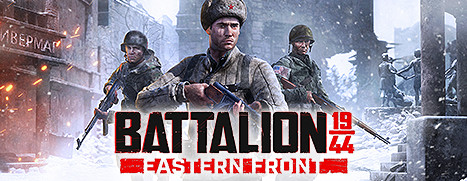
Battalion recaptures the core of classic competitive shooters & refines the ‘classic’ FPS feel for the next generation. Focusing on 5v5 infantry combat, where precise flick shots with your Kar98, covering fire with your Thompson and fluid movement are key to clutching every round for your team.
In Railway Empire, you will create an elaborate and wide-ranging rail network, purchase over 40 different trains modelled in extraordinary detail, and buy or build railway stations, maintenance buildings, factories and tourist attractions to keep your travel network ahead of the competition. You'll also need to hire and manage your workforce if you want to ensure an efficient train service, whilst also develop over 300 technologies ranging from mechanical improvements to the trains themselves to workplace infrastructures and advanced amenities as you progress through five eras of technological innovations.
Sairento VR is a mission-driven, VR action role-playing game set in a reimagined Japan in the near future. In Sairento, you play as a member of the Silent Ones - a righteous but covert organization of seemingly ordinary people who practice the long forsaken code and martial arts of the ancient samurais and ninjas. You are tasked with uncovering the sinister secret behind other members of the Silent Ones turning into crazed nano-infected shells of their former self and in the process, fight your way through multitudes of your past comrades.