Posted by: xSicKxBot - 12-13-2020, 05:21 AM - Forum: Windows
- No Replies
Microsoft designs a campus with the evolution of work in mind
It goes without saying that the pandemic has upended work life in 2020. But rather than seeing this period of compulsory remote work as a one-off byproduct of COVID-19, it can be understood as an inflection point in a long-coming technology-driven reckoning on the nature of office work.
Will employees be looking for more ways to connect in person after the pandemic? How about in a decade or 20 years, for that matter? It might seem an odd moment to celebrate the opening of Microsoft’s new state-of-the-art 46,000 square meter campus in Herzliya, Israel, except for that fact that questions around different and creative ways of working were already deliberated when the campus was designed – four years ago.
“This was a once-in-a-lifetime project,” said Tel Aviv-based Lead Architect Vered Gindi of Vered Gindi Architects, who designed the campus as a joint venture with the Israeli and French firm, GSArch. “We started with fundamental questions like ‘Why does a person actually want to come into an office?’ and ‘Why do they need an office at all?’ We aimed to create a space that would continue to be relevant for decades; no matter what comes next.”
Microsoft Israel and the design team landed on a few guiding principles for the development of the new campus. The first principle was to lessen the campus’ long-term impact on the environment, making it as sustainable as possible. The second was to aspire to the dynamic creativity of urban environments over the traditional grids or open-floor plans of most office spaces. And the third was to offer a flexible, inclusive workspace that can be endlessly customized to fit employee needs.
A workplace of the future must justify its existence by mitigating its impact on the environment. Michal Braverman-Blumenstyk, CVP and general manager of Microsoft Israel R&D, said, “Microsoft’s sustainability value has been incorporated into every aspect of the campus, and a great deal of thought was put into every detail, from convenient transportation, through accessibility and integration of diverse populations, to wellbeing in food, fitness and leisure.”
We aimed to create a space that would continue to be relevant for decades; no matter what comes next.
In a location that registers temperatures around 27 C (80 F) for some seven months out of the year with almost no precipitation, there is also a concerted effort to reduce energy and water consumption. The Herzliya campus is the first LEED (Leadership in Energy and Environmental Design) V4 Building Design and Construction Gold certified building in Israel, making it one of the most sustainable building in the country.
The campus uses atmospheric generators that pull moisture from the air to produce drinking water. The system will create some 237,000 liters of fresh water per year. The air filtration system not only cleans indoor air, including inside of the elevators, but it also collects and repurposes condensed water. Rosenbaum said, “All of the air conditioning condensate water is reused for irrigation and to reduce energy needs for cooling. This is an additional estimated saving of over 3 million liters of water per year.”
The campus has 800 square meters of photovoltaic cells, which will provide 100% of the power needed to run the campus dining facilities and the exterior lighting. The buildings are also equipped with an advanced double-skin curtain wall with integrated automatic interior blinds, which both help deflect sunlight and keep the buildings from overheating in the first place.
As for the decision to model the campus off of an urban environment, Gindi explained, “A city is a place of intersection, it provides private residential moments alongside frequent public moments. You are surrounded by people, activities and culture. You are part of something bigger than yourself. And, in this case, you are not just going to work; you are experiencing a lifestyle.”
Work and walk outdoors on the campus bridge
The “city” is divided into four hubs: Downtown, the industrial zone; Midtown, the eclectic, playful mainstream area; The Garden, the green outdoor level; and Uptown, which is made to feel like a boutique hotel. “Boulevards” tie together the different zones.
This innovative design helps to bind together the dynamic roles within the campus which range from sales and marketing to the Israel Development Center, Microsoft’s first R&D site outside the United States, established in 1991 and now a major force in cybersecurity and AI.
Casual meeting room
The Herzliya campus utilizes Microsoft’s existing yet nascent concept of team-based “neighborhoods” that are big enough to offer public interaction but small enough to give privacy when needed. Each neighborhood in Herzliya is also equipped with its own “zone room” (also known as “code room”) and every two neighborhoods share a four-person “focus room” that is only available to those teams.
The campus is meant to be part of employees’ social and cultural life. It contains all of the elements of a daily routine, from a café with baristas who can make your coffee just like you desire to a yoga room, dog playground, sports facilities, community gardens and a variety of indoor and outdoor food pavilions.
1 of 7
Ecological pool (one of five campus gardens)
2 of 7
Outdoor basketball and volleyball court
3 of 7
Yoga room
4 of 7
Gym
5 of 7
Music room
6 of 7
Family playroom
7 of 7
Food court & café breakout area
“This variety allows people to design a routine that works best for them,” said Oren Yerushalmi Rosenbaum, senior portfolio manager for Microsoft Real Estate & Facilities in Israel & Serbia. “This is what it is all about: flexibility and choice. And that extends to equal opportunity for how people access and use their work spaces.”
Inclusivity is not just a concept but is put into practice through hiring. Numerous people who operate the campus are deaf, blind or have mobility or mental disabilities. Upon arrival at the campus, visitors are greeted at sit and stand arrival desks in the lobby, offering abundant options to receive service.
There is Braille throughout the campus, from welcoming pamphlets to descriptions of all artwork from local artists that adorns the public spaces to a tactile floor that supports people with blindness to navigate the buildings. There is also an app to assist those with mobility challenges to use the elevators.
This is what it is all about: flexibility and choice. And that extends to equal opportunity for how people access and use their work spaces.
The campus features accessible parking spaces, automatic doors, gender-inclusive bathroom facilities, as well as special audio systems for those with hearing impairment. Among the features that can be height-adjusted for access are the kitchenettes, touch screens for campus directions, work surfaces and sitting areas.
“While the campus is raising the bar for accessibility in Israel,” Rosenbaum said, “the goal was to think beyond our borders and raise the diversity and inclusion bar globally.”
“The campus brings a new experience to all of Microsoft’s employees in Israel, and I’m happy for this personal and professional union,” said Ronit Atad, general manager, Microsoft Israel. “It will empower us and improve our service to our customers and partners.”
Neighborhood workplace
Operational flexibility is of the upmost importance. Employees have autonomy over how they work. Desks are on rolling castors and have over 2 meters of cables, so they can be relocated without having to call building services. Rosenbaum said, “Over your 100 square meters, you can have flexibility to organize and personalize your space: put your desks face-to-face or back-to-back, far apart or whatever is right for you. This makes social distancing easier.”
Employees can always find a change of scenery without having to leave the building. All areas offer window views. Acoustic partitions can be added as necessary and shelving systems between groups can be removed so that two teams can combine into one or divide into two sub-teams. This is called the “flexible grid.”
MTC innovation theater: Customer Innovation Center
There are no traditional auditoriums. Instead, there are multipurpose rooms that can hold different sized events or trainings. Many of these rooms are also on the flexible grid and can be reorganized, split and merged to fit the desires of meeting organizers.
“We want to support everyone to have a better, more efficient and more vibrant work life,” said Rosenbaum. “We also have prayer rooms, playrooms and space to shoot hoops both inside and outside the building.”
With all of these approaches, Microsoft aimed to build a campus that is relevant both now and decades into the future. COVID-19 is giving the campus a stress test sooner than expected, but its design has prepared it not only for a pandemic but for a much longer-term changing nature of work.
Designed for lifestyle
Coming out of the most recent national lockdown, the Israel campus has slowly started to welcome back employees. There is widespread instructional signage for COVID-19 protocols, 2 meters of social distancing, no sharing of keyboards or mice at common desks and the cleaning team disinfects the spaces every night. “But, in reality, it looks pretty much the same as it would have without COVID-19,” said Rosenbaum. “Due to the thought that went into this campus, we were already most of the way to where we needed to be.”
Beyond all of the flexibility and sustainability, Microsoft was adamant that people not view the campus as an office building on the far end of a commute but, instead, a place where they connect with others in a meaningful and positive way, Gindi said. “Our ultimate goal was to create a place that people will actually miss when they’re not there.”
Whenever a new fighter is revealed, part of the experience is seeing them added to the ever-expanding Smash Bros. mural. Sephiroth has fittingly found a spot right next to his old pal Cloud on the mural.
Sephiroth will be released later this month. Before then, game director Masahiro Sakurai will host a special presentation on 17th December, revealing more information about this new fighter. He’ll also be sharing an official release date.
Posted by: xSicKxBot - 12-13-2020, 05:21 AM - Forum: Lounge
- No Replies
FX's Shogun, Greenlit In 2018, Back In Active Development
FX's Shogun is finally back on track--as announced at Disney Investor Day on December 10--after being greenlit way back in summer 2018, and then almost immediately subsequently delayed in pre-production to build in extra time to polish scripts and figure out logistics for filming the 10-episode series. In 2018, the network was hailing the show as its largest international scale production, with filming in the U.K. and Japan.
Two years later, FX has not lost any bravado or enthusiasm for the series. John Landgraf, CEO of FX Networks and FX Productions said that the adaptation of James Clavell's beloved epic saga, Shogun, is back on track and set to be "one of the most sweeping, sophisticated, and adult series FX has ever created." Although not set in italics, "adult" is a key word here--FX describes the show's world as being "set within the riveting and real Game of Thrones that was feudal Japan."
The Game of Thrones gauntlet being thrown down is not just aspirational thinking. Adapted by Justin Marks and Rachel Kondo, the show's creative staff also includes Tim Van Patten, an award-winning producer of The Sopranos and Boardwalk Empire, and also the director of Game of Thrones' pilot and many early episodes.
Posted by: xSicKxBot - 12-13-2020, 03:09 AM - Forum: Lounge
- No Replies
Destiny 2 Dev Update – Rewards
Hey everybody,
My name is Joe Blackburn, and I’m the Assistant Game Director on Destiny 2. If your free time looks anything like mine, you’ve been spending a lot of it on Europa over the past few weeks. Some of you may know me from my previous Bungie life when I worked with the raid team and on Season of Opulence. I’m back thanks to a revive from Luke and team as we work together to create a Destiny 2 future that we’re all excited about. Today I want to spend some time with you on a subject that is near and dear to every Destiny 2 player’s heart: rewards.
There’s a thing I ask a lot around the virtual office, “How are we making every Season the best time to jump back into Destiny?” Destiny is a very large and complex game, and while this is what also makes it a game we love, we want Destiny 2 to continue to evolve, to be a world with momentum.
Introducing Infusion Caps is part of addressing this, a way to make sure that the overall number of rewards Guardians need to care about in order to be competitive in Destiny isn’t prohibitive. It is also a way to continue evolving each season’s meta, while at the same time making sure players still have a ton of options when choosing what they want to bring into the next challenge. Our goal from the beginning with Infusion Caps is to improve and keep Destiny 2 fresh over time – what we’re most looking forward to is how this system will introduce innovation to the season-over-season meta, how creative builds from the community will shine, and how we can continue to deliver more unique hand-crafted gear that aligns with the world narrative and where the universe is going.
While we still are hard at work on improvements to how we rotate gear out of the Destiny Power ecosystem (what gear you can infuse to max Power), there were a few clear-cut misses with our first rollout.
The initial reward pool with this release was just too small.
It’s frustrating to be playing Destiny and see another player use a weapon that is no longer obtainable in game.
I’m going to spend a lot of time talking rewards, but before we deep dive, let’s get the TL;DR out there. These are the big commitments we’re making today.
With each season in Year 4, Destiny 2 will grow the overall Power ecosystem for weapons.
With very few exceptions, all weapons you can take to the Power cap should still be earnable in game.
Future annual releases will contain more new weapons to collect than Beyond Light or Shadowkeep.
Growing the Power Ecosystem
With Beyond Light we took on the huge challenge of rebuilding our technology from the ground up. One of the benefits of this was improving the speeds with which we could make and update Destiny. You’ve already seen some of those gains since launch, with updates such as buffing the Legendary engram coming in much faster than we’ve been able to do in the past. But Season 13 will be here in just a couple of months (very soon in the world of Destiny development), so let’s talk about how we are continuing to leverage our technology to act with agility.
Season 13 is the first chance for us to prove our commitment to growing the overall Power ecosystem with each release in Year 4. We want to make sure that, with each new season, there are more weapons to take with you to tackle that Nightfall Ordeal or Master Bunker E15 than there were before.
While I won’t be spoiling what new stuff you’ll be able to chase in our next season, I did want to touch on a few changes we’ve made to the reward offering specifically based on what we’ve seen in Beyond Light.
In Season 13, we’re adding six new Legendary weapons to our ritual activities, two each for strikes, Gambit, and Crucible.
In addition to the weapons above, Nightfall strikes are getting three unique weapons, with The Palindrome, The Swarm, and Shadow Price all making their Destiny 2 debuts. If you’re brave enough to take on Grandmaster Nightfalls, you will be also able to earn Adept versions of these weapons.
Keeping Current
Season 13 not only represents the start of our commitment to growing the Power ecosystem, but it also is an opportunity for us to improve how we can keep Destiny accessible to new players. New Guardians are essential to the health of our community and, as with our investment in features like the “New Light” introduction on the Cosmodrome, we must also invest in making sure the reward structure of Destiny is approachable to everyone.
In a recent patch, we added the Season 10 and 11 weapons to the world drop pool and we removed the Season 9 weapons. This was important for a few reasons.
We want to make sure that players have a way to earn all Power-relevant weaponry in the live game. If a group of new Guardians is just getting into Grandmaster Nightfalls and they see guides on YouTube involving Warmind Cells, we need to provide a path for them to participate.
At the same time, we don’t want to be clogging up the reward streams with weapons that are about to exit the Power ecosystem. So anything that’s only going to be around for a few more months shouldn’t be something a player can accidentally obtain.
In Season 13 we will continue to allow all players to gain Season 11 and Season 12 weapons in the world drop pool while Season 10 weapons will be obtainable through a more prescriptive source. This means that Legendary engrams will no longer reward these soon-to-expire weapons. If you want to chase a specific piece of soon-to-be-capped loot, you’ll find it with the Gunsmith. This is all part of our larger commitment to making sure that players can always earn anything they might need to take on challenging activities. That said, this will require a few exceptions and some updates to the live game.
As far as exceptions, we don’t plan on adding methods for players to acquire holiday weapons like the Braytech Werewolf outside of participating in those yearly celebrations. For updates, this does mean in Season 13 we will be adding limited time quest weapons like Felwinter’s Lie, Whisper of the Worm, and Outbreak Perfected to the Exotic Kiosk in the Tower.
Quality and Quantity
After covering things we’d like to change, I want to spend some time talking about what must stay the same. Destiny is a game built on exciting rewards. From Bastion to IKELOS_SMG_V1.0.2 to Falling Guillotine, the rewards over the last twelve months have continued to evolve the way Guardians play the game. In Beyond Light, I believe the Rewards Team nailed it again with incredible new Legendary perks like Recombination, Thresh, Chain Reaction, and Reconstruction. Alongside these perks came what I believe is one of the best lineups of Exotic weapons and armor in Destiny history.
But where we succeeded in quality, we failed in quantity. Even as Season 12, the Deep Stone Crypt, and the full breadth of Europa weapons came online, the total count of weapons in Beyond Light is lower than we want. So, we’re making the commitment now that our future annual releases will have more weapon rewards than Beyond Light or Shadowkeep.
There’s no way for us to make more rewards at Destiny’s standards and still maintain the health of our current team, therefore we’re going to reinforce the Rewards Team with more talent that will allow us to deliver quality and quantity in the future. Molding someone new into a master Destiny gunsmith takes time. This isn’t going to be a change that the community will feel next week, but it does put our best foot forward as we step towards The Witch Queen and Lightfall.
Preheating the Oven
Increasing the Reward Team’s size is one of our long-term initiatives, but it is not the only upgrade to our gear rotation plan that we want to get into the oven. We envision a better solution for how armor intersects with Infusion Caps. The personality of armor comes from mods right now, so gaining a new piece of armor often means just trying to find a piece of armor that replicates the stat allocation you already have on a piece in your vault. While we are not ready to talk concretely about armor plans right now, we do want to get more gameplay novelty on armor itself so that looting a piece of armor in a new season has the potential to change the way you play.
Expect to hear more about armor and other holistic upgrades to the way gear rotates in and out of the Power ecosystem as we harden plans in the new year.
And that new year will be here before you know it. A big chunk of the team will be taking some hard-earned time off to rest and relax ahead of coming back to the studio and diving into 2021. We have a lot of work to do and, while I’m looking forward to the break, I also can’t wait to get to work on some of the huge stuff we’ve got coming in the new year. Without spoiling too much, here’s a brief teaser of some of the things that are on their way in Destiny 2, Year 4:
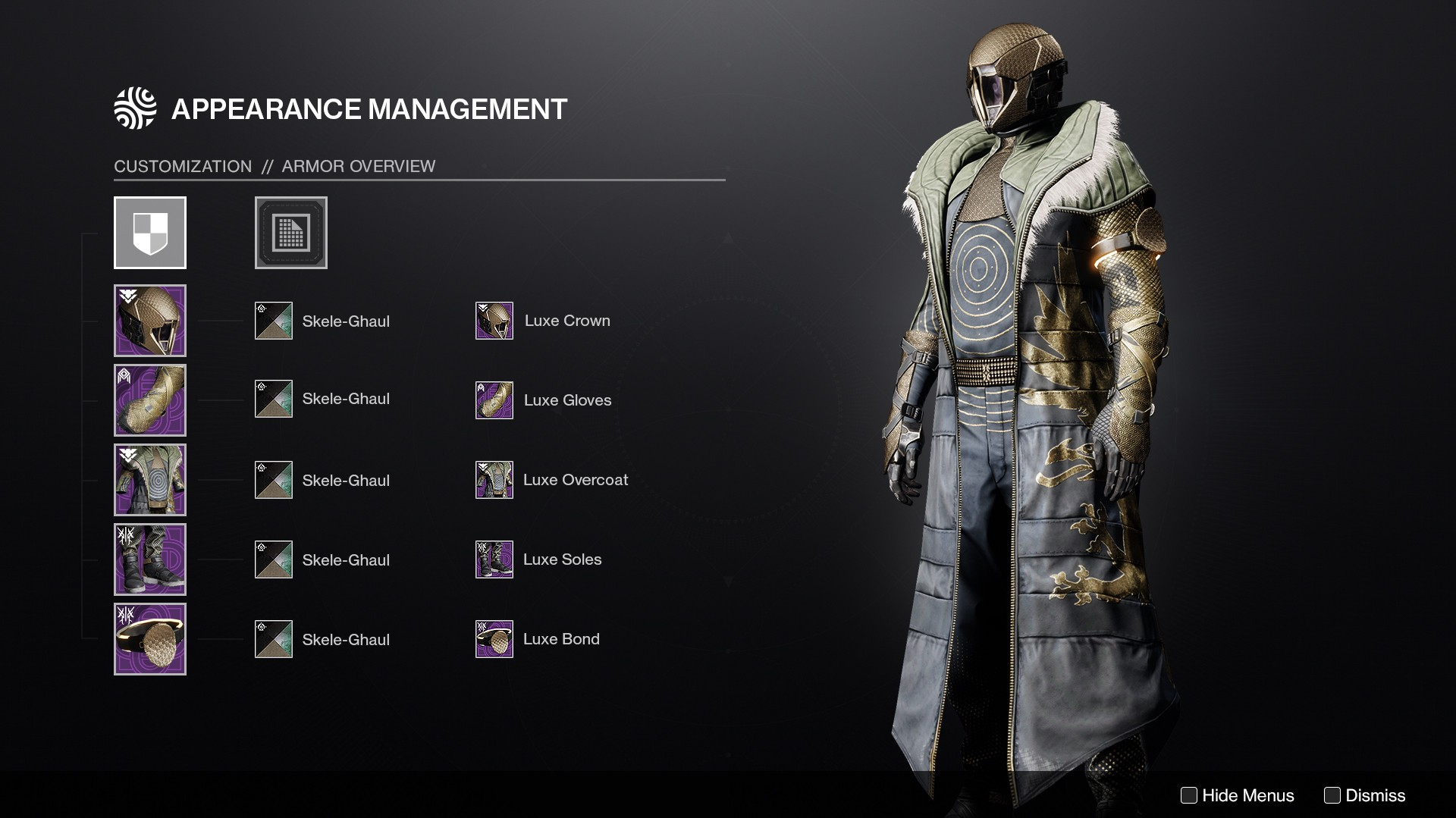
Transmog will be coming with Season 14. More details to come. (See work-in-progress screen captures, below. Not final, may change!)
DDOS protection for Destiny 2 players on all consoles will be coming in Season 13.
The Vault of Glass raid returns.
Crossplay is coming in 2021.
Two strikes (Fallen S.A.B.E.R. and Devil’s Lair) are coming to Destiny 2 in Season 13.
Legendary and Master Lost Sector rotation will be expanded to include the Lost Sectors on the Moon in Season 13, and there will be new three new pieces of Exotic armor to chase.
Returning to Orbit
Now that I’ve ranted longer than a raid leader on Val Ca’uor, let’s wrap this thing up. 2020 has been a hard year for so many folks out there, and I hope that Beyond Light has been able to be a bright spot over the past couple of weeks. Playing Destiny 2 alongside you helps keep us going. We’re going to keep our ears and eyes open for more feedback as we continue towards 2021. I hope your holiday treats you well and can’t wait to share more Destiny with you in the new year.
Python range() Function — A Helpful Illustrated Guide
The Python range() function creates an iterable of subsequent integers within a given range of values. You can pass either only a stop argument in which case the range object will include all integers from 0 to stop (excluded). Or you can pass start, stop, and step arguments in which case the range object will go from start to step using the given step size. For example, range(3) results in 0, 1, 2 and range(2, 7, 2) results in 2, 4, 6.
Note that in any case, a range object is returned. The range object is an iterable of values—but the values are only generated as they’re actually needed. You can use the asterisk operator to unpack all values into the print function with print(*range(10)). Python waits as long as possible to generate the values of the iterable.
Syntax Range Function
You can use the range() function with three different argument lists: (i) with the stop argument only, (ii) with the start and stop arguments, or (iii) with the start, stop, and step arguments.
An integer defining the first element of the range iterable
stop
An integer defining the last element. However, this element is not included in the range iterable.
step
An integer defining the difference between two subsequent elements in the range iterable.
Return Value
range
Returns an iterable range object that allows you to iterate over all values from start to step using the step size.
Interesting fact: the range() “function” is technically not a normal function but a constructor method of the range class. Thus, it creates a new range object.
How Math Genius Gauss Hacked His Teacher’s Exercise With the Range Function
Do you know the following story of the brilliant mathematician Carl Friedrich Gauss? When 8-year old Gauss went to school, his math teacher sought a few minutes of breathing pause. He told his class to solve the problem of adding all subsequent numbers from 1-100: 1+2+3+...+100.
But as little Gauss promptly reported the solution, the short pause was over before it began.
Surprised (and a bit grumpy as the story goes), the teacher asked the boy how he had come up with a solution so quickly. Gauss explained his simple solution. He organized the sequence into pairs of numbers each summing up to 101: 1+100,2+99,3+98,...,50+51. There are 50 such pairs, so the total result was 50*101=5050.
Yet, the modern-time little Gauss would be even lazier. He would type the following one-liner into his mobile Python app: sum(range(1,101)).
The range() function returns a sequence starting from the first value (inclusive) and ending in the second value (exclusive). The sum function sums up the values of this sequence. Combining both functions sums up the sequence from 1-100—faster than the brilliant Carl Friedrich Gauss.
Python range() With One Argument Stop
You can use the range() function with one argument stop. In this case, the range object goes from start=0 to the stop argument (excluded) by using the default step size of one.
Here’s the example:
for i in range(5): print(i)
The output is:
0

1

2

3

4
Python range() With Two Arguments Start + Stop
You can use the range() function with two arguments start and stop. In this case, the range object goes from start to the stop integer value (excluded) by using the default step size of one.
Here’s the example:
for i in range(1, 5): print(i)
The output is:
1

2

3

4
Python range() With Three Arguments Start + Stop + Step
You can use the range() function with three arguments start, stop, and step. In this case, the range object goes from start to the stop integer value (excluded) by using the default step size of step.
Here’s the example:
for i in range(1, 5, 2): print(i)
The output is:
1

3
Interactive Shell Exercise About The Range Function
The following code snippet matches men with women—the idea is to match the i-th man with the i-th woman, assuming that both lists have the same size. How to change the code to accomplish this task?
Exercise: Replace the XXXX placeholder in the code to match the i-th man with the i-th woman!
You’ll find the solution… after the advertisement!
But before we move on, I’m excited to present you my brand-new Python book Python One-Liners (Amazon Link).
If you like one-liners, you’ll LOVE the book. It’ll teach you everything there is to know about a single line of Python code. But it’s also an introduction to computer science, data science, machine learning, and algorithms. The universe in a single line of Python!
The book is released in 2020 with the world-class programming book publisher NoStarch Press (San Francisco).
men = ['Bob', 'Carl', 'Frank']

women = ['Ann', 'Alice', 'Liz'] for i in range(len(men)): print(men[i] + ' dances with ' + women[i])
The idea is to use the len() function to determine the stop argument automatically with range(len(men)). Note that range(len(women)), range(3), and range(0, 3), and range(0, 3, 1) would all solve the problem equally well.
Python range() With Negative Step Size
You can also use the range() function with negative step size. The meaning is “move from right to the left using the negative step size as the difference between two subsequent values. In this case, the start argument should be larger than the stop argument.
Here’s an example:
for i in range(4,0,-2): print(i)
The output is:
4

2
Note that the stop argument is still not included in the range object.
Range Puzzle
Puzzles are a great and effective way to improve your Python skills. Can you solve this range puzzle?
# Python Puzzle

print(sum(range(0,7)))
What is the output of this code snippet?
You can check whether you solved this puzzle correctly, and determine whether you’re a master coder on our Puzzle app Finxter.com:
The Python range() function creates an iterable of subsequent integers within a given range of values.
You can pass either only a stop argument in which case the range object will include all integers from 0 to stop (excluded). For example, range(3) results in 0, 1, 2:
for i in range(3): print(i) '''

OUTPUT:

0

1

2 '''
As an alternative, you can pass start, stop, and step arguments in which case the range object will go from start to step using the given step size. For example, range(2, 7, 2) results in 2, 4, 6:
for i in range(2, 7, 2): print(i) '''

OUTPUT:

2

4

6 '''
I hope you enjoyed the article! To improve your Python education, you may want to join the popular free Finxter Email Academy:
Do you want to boost your Python skills in a fun and easy-to-consume way? Consider the following resources and become a master coder!
Where to Go From Here?
Enough theory, let’s get some practice!
To become successful in coding, you need to get out there and solve real problems for real people. That’s how you can become a six-figure earner easily. And that’s how you polish the skills you really need in practice. After all, what’s the use of learning theory that nobody ever needs?
Practice projects is how you sharpen your saw in coding!
Do you want to become a code master by focusing on practical code projects that actually earn you money and solve problems for people?
Then become a Python freelance developer! It’s the best way of approaching the task of improving your Python skills—even if you are a complete beginner.
The open source UnrealCLR project was just awarded an Epic MegaGrant. The Epic MegaGrant program was first announced back at GDC 2019 and consists of a $100M fund for supporting game and media development. Previous recipients have included Blender, Godot, RayLib, Laighter, ArmorPaint, Krita and more.
The UnrealCLR project (we previously covered including a small getting started tutorial) brings CLR or Common Language Runtime support to Unreal Engine. In a nutshell this enables C# and F# developers to develop in those languages in Unreal and even gives debugging and blueprint integration support. Even better it is implemented as a plugin so you do not have to build UE4 from source code. In their own words, UnrealCLR is described as:
UnrealCLR is a plugin which natively integrates .NET host into the Unreal Engine with the Common Language Runtime for direct execution of managed code to build a game/application logic using the full power of C# 9.0, F# 5.0, and .NET facilities with engine API. The project is aimed at stability, performance, and maintainability.
Congratulations to the UnrealCLR team! UnrealCLR is an open source project that is available here on GitHub under the LGPL license. You can learn more about UnrealCLR and the Epic MegaGrant program in the video below. If you want to get started with UnrealCLR we recommend you start here for more details.
Tim Cook urges world to move to a ‘carbon-neutral economy’
Thank you to all of the advocates and leaders joining us today.
This is an important gathering, and we at Apple don’t take our presence in this group lightly. We wear it as a badge of duty. At this moment of historic urgency, every leader of nations, of companies, and of communities has a particular burden to act.
This year, Apple has accelerated our progress. We became carbon neutral for our worldwide corporate emissions. Already, we’re helping 95 of our suppliers transition to 100% renewable energy, a number we continue to grow.
We’ve unveiled a plan, unrivaled in its ambition, to achieve carbon neutrality for our entire supply chain and product usage by 2030 — 20 years before the goal set by the United Nations. We see every part of our device lifecycle, from design, to manufacturing, to durability and repair, to recycling, as an opportunity for environmental innovation, moving us towards our goal of a closed-loop supply chain.
The choice between the bottom line and the future of our planet is a false one, and each new green innovation offers the proof.
This is no time for changes of the margins. Together, we can transition to a carbon-neutral economy and usher in a new era of inclusive opportunity.
This is a moment for ambition, cooperation, and leadership. We at Apple are proud to be your partner, and we call on companies and governments around the world to do all we can to make 2021 the year we turn the corner for good.
Posted by: xSicKxBot - 12-12-2020, 10:22 PM - Forum: Windows
- No Replies
New features on Xbox Family Settings App help manage children’s gaming
Gaming has long been a significant source of joy, inspiration, and social connection for players around the world, and social distancing has made this truer now than ever before. With the holiday break on the horizon, many parents and caregivers may be looking for ways to help balance screen time and family time. We know achieving this balance is important to families. That is why earlier this fall, we launched the Xbox Family Settings app for free on iOS and Android. Today, we are taking the next step on our journey to support families by introducing two new app features for child accounts on Xbox Live.
Pause Screen Time
The ability to pause screen time has been our number-one requested feature from parents and caregivers. Today, we are happy to add the Pause Screen Time feature to the app, which empowers parents to temporarily pause screen time for their children’s accounts – even if they have more screen time available for the day.
Whether the feature is used to reinforce asks to set the table for dinner or to make sure homework is completed, this feature will block children from their account until parents decide it’s time to play again, or until the block expires at the end of the day. Children will see the standard “Your screen time is up” notification on their screen when parents press pause, and once parents decide play can resume, the preestablished rules for game time will take effect.
Pause your children’s game time by temporarily blocking their screen time. When paused, your child will see the “your screen time is up” message until you decide they can play again.
Ask to Buy
As we head into the holidays, it makes sense that children might want to purchase new games to play. We saw that our Ask to Buy feature – which is currently available via family settings on Xbox via console and PC – helps parents manage their children’s spending. So, we brought the feature to the Xbox Family Settings App so parents can manage from their phone.
Pause your children’s game time by temporarily blocking their screen time. When paused, your child will see the “your screen time is up” message until you decide they can play again.
If the setting is on, when children choose a game they would like to purchase, a request will be sent to the parent’s phone. This notification will include a link to where they can learn more about the game before approving or declining the purchase. The app will also list approved purchases so parents can keep track of recent purchases.
We hope that this feature helps take one more thing off the plates of busy parents everywhere.
When “Ask to buy” is activated for your children, you can get a notification in the app.
These two features join the existing app’s functionality, which helps to tailor each child’s access to Xbox:
Screen time limits – set limits for each day of the week; for example, you can allow for more game time on the weekends or reduce it during the school week. And a new feature available today allows parents to proactively grant additional screen time – a great option if they did well on a test or completed their homework!
Content filters – set filters based on the age of each child; for example, an 8-year-old can only access games that are rated E and will be blocked from accessing titles that are intended for more mature players.
Play and communication settings – choose the option to block all access to play and communication with other players, limit access to “friends only” or grant permission for older children to play and chat with “everyone.”
Friends list – new with the app is the ability to approve or decline friend requests your child has made to add friends; parents can also view their friends list.
Activity reports – view daily and weekly activity reports for each child to understand how they are spending their time on Xbox.
Gaming is a great way to keep in touch with friends and family and have fun throughout the year, but it should also be part of a balanced lifestyle. We hope the Xbox Family Settings app will empower parents to have conversations about the right amount of gaming and appropriate content with their children. We’ll continue to update the Xbox Family Settings app to ensure that it meets the needs of today’s families and help everyone to enjoy fun and age-appropriate gaming.
Download the Xbox Family Settings app today for free for iOS and Android to jump in and easily manage your family’s gaming on-the-go.
For more information about the Xbox Family Settings app, visit Xbox.com/family-app.
Microsoft is committed to empowering families to set boundaries and encourage responsible technology use by offering choices on the tools that are right for each family’s unique needs – learn morehere.
Everything You Need to Know About the Amazing World of Phogs!
Summary
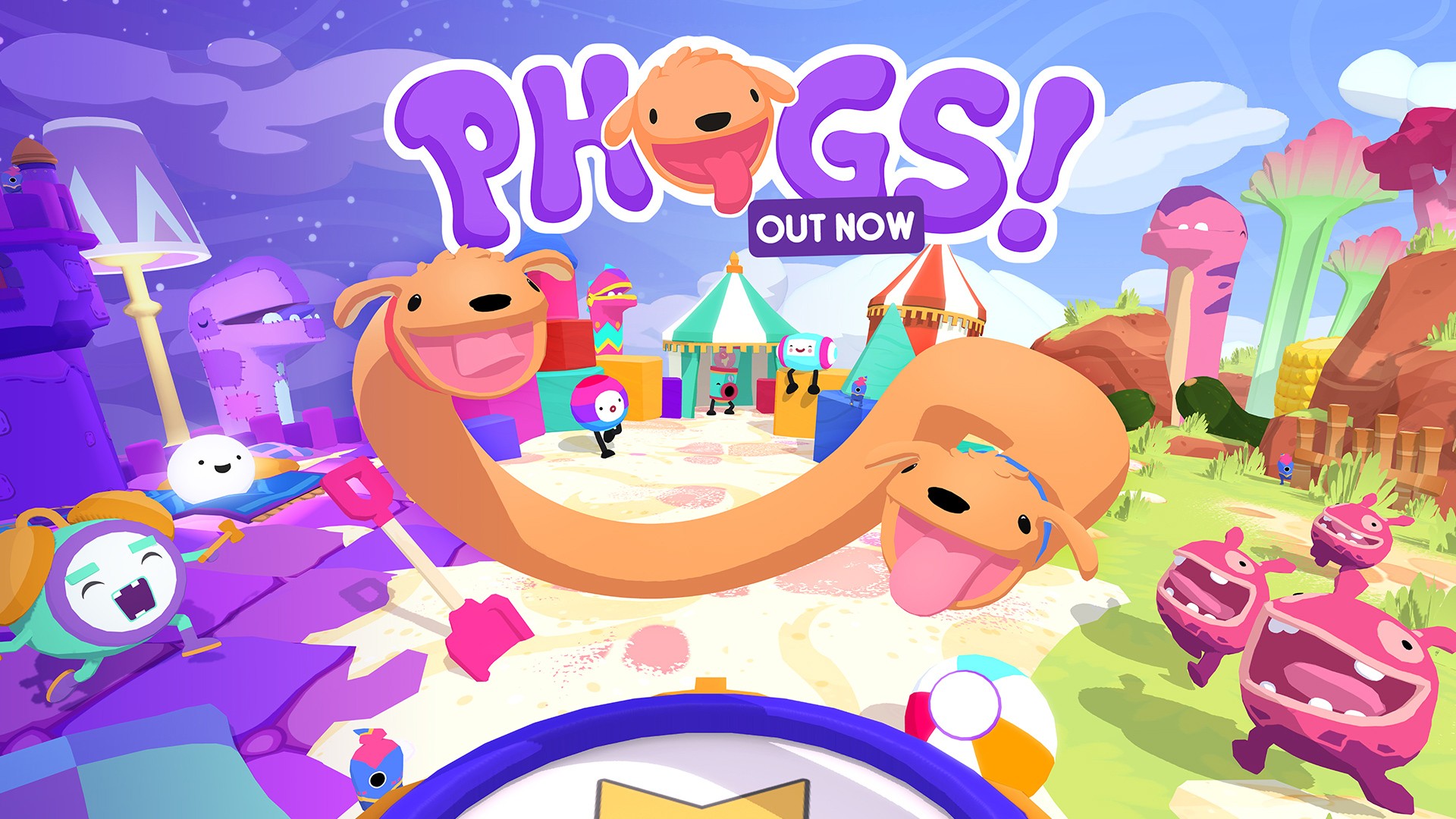
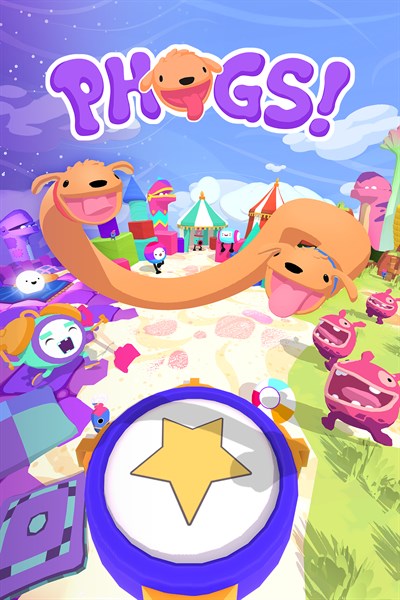
Phogs! is out now with Xbox Game Pass so what better time to learn more about the fantastical worlds they live in?
Aside from the adorably resourceful and stretchy doggos, Red and Blue, there are some wonderful things to explore across the three themed worlds of Food, Sleep, and Play.
Here are just a few things we think you’ll really love…
Phogs! is here just in time for the holidays! What better way to spend the festive break than grabbing, borking, and stretching your way through this delightfully whimsical yet challenging puzzle game? Thanks to local and online multiplayer, you can even play together with your bestie, whether they are on the couch next to you, or miles apart.
So, what can you expect to find in the wonderful world of Phogs? Aside from the adorably resourceful and stretchy doggos, Red and Blue, there are some wonderful things to explore across the three themed worlds of Food, Sleep, and Play. Here’s a few we really love…
Hold up… What the heck is a Phog anyway?
Ah yes, the Phogs! Well, Red and Blue are an adorable two-headed doggo linked by a stretchy belly. Although they share a body, they are very different personalities if you ask us. You could say Blue is the genius whereas Red is insane, but they both share a love of solving puzzles, barking at birds, and devouring pizza of course.
Food World
Food world is heaven for Phogs (and most humans too). It’s a place where you will never go hungry. You won’t just be eating in this tasty world, though, there are lots of pesky ‘muchlets’ to herd up or chase away, vegetables to be picked and ‘Wallermelons’ to be watered.
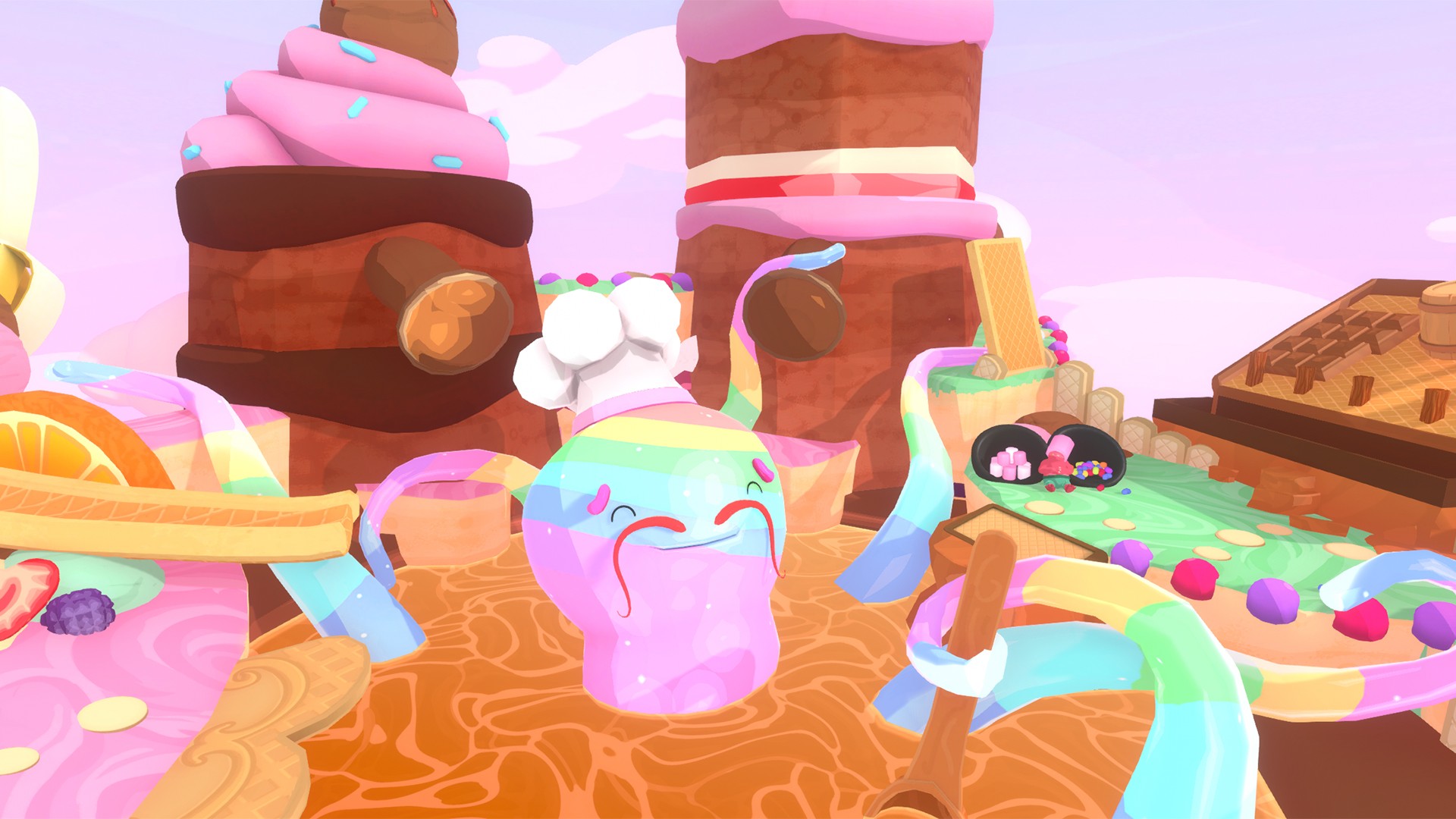
Along the way you’ll meet some of the other Food World residents like the lovable Farmers who will pet you if you’re a good doggo. You might even find yourself whipping up a meal with an eight-legged chef named Choctopus. Oh, and have we mentioned the spas? Being a Phog is a pretty good life.
Play World
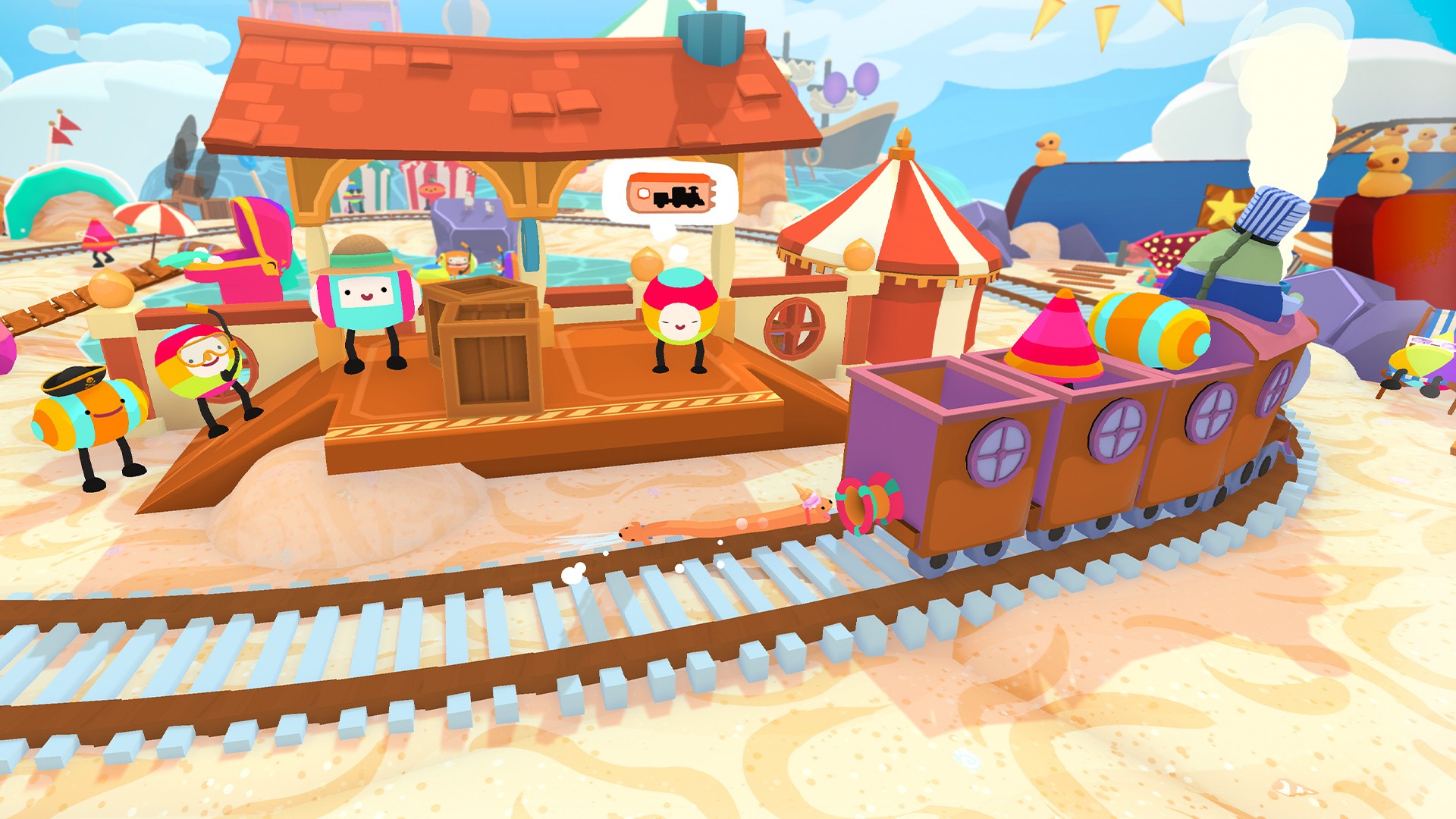
Play World is what you get when you mix all the best things about a carnival and arcade, then add even more wacky colors, magical minigames, and two very excited doggos. Sounds good, right? If you thought a stretchy dog without opposable thumbs couldn’t play mini-golf, zorb, or operate a claw machine, you’d be wrong!
Oh look – a train set to chase!
Sleep World
As you work your way through a sleepy land of mattress forts and bouncy pillows, you, Red and Blue will be met by a whole host of dreamy creatures that need your help to either wake up or fall asleep, which is more difficult that it might sound. Use the friendly Glorbs to help light your way and say hello to Granny Spider as she knits, while helping a wise old owl read her book.
We hope you’ll agree, Phogs! might just be the whimsical fun we all need and deserve this year. These are just some of the wonderful things you’ll find across the game’s three worlds, so be sure to take a trip to the Phoggyverse. Red & Blue can’t wait to meet you!
PHOGS!
Coatsink
☆☆☆☆☆
★★★★★
Xbox Game Pass
In PHOGS! you play as a duo of dogs on a captivating, puzzle-filled adventure. Linked by a stretchy belly, you’ll need to bark, bite and bounce your way through obstacles set across the themed worlds of Food, Sleep and Play, in co-op or single-player. Forage through Food World, teeming with tasty treats. From hot buttered toast to chopped celery… even a river of chocolate! Stroll through Sleep World, complete with teddy bears, cushions and quilts, all nestled in the glow of the soothing night-light. Pounce through the crazy toybox of Play World, exploring a beach amusement park, a retro arcade, and everything in between. Woof! Supporting single-player and shared-controller gameplay, plus local and online co-op, Red and Blue are always ready to play!
Blog: A postmortem of asynchronous 1v1 horror title Antithesis
<!– –>
Gamasutra: Samuel Liberty’s Blog – Post-Mortem: Antithesis
Gamasutra is part of the Informa Tech Division of Informa PLC
This site is operated by a business or businesses owned by Informa PLC and all copyright resides with them. Informa PLC’s registered office is 5 Howick Place, London SW1P 1WG. Registered in England and Wales. Number 8860726.
If you enjoy reading this site, you might also want to check out these UBM Tech sites:
The following blog post, unless otherwise noted, was written by a member of Gamasutras community. The thoughts and opinions expressed are those of the writer and not Gamasutra or its parent company.
Antithesis is an asynchronous 1v1 horror multiplayer game involving a player on PC and a player in VR. In Brigham Township, a former townsfolk turned caster has placed the entire spell under his control. The caster character is controlled by a PC player, who may lay minions and other traps around the map to prevent the hero from gathering the materials needed to break the spell. The hero, who plays in VR, must make their way around the map in order to collect the supplies necessary to break the spell and free the town while avoiding the minions that the caster has placed. It’s a game of prediction, mindgames, and resource collection.
This game was designed at Northeastern University as a part of its Game Studio class during the Fall of 2020 and was led by Professor Sam Liberty and lead producer Kieran Sheldon. Students were broken up into their respective teams, each with a team lead. These teams included design, art, development, marketing, narrative, production, sound, and UI/UX. These teams collaborated with each other to meet deadlines and coordinate when their tasks overlapped. Teams worked within their own groups to create what was necessary for that discipline of the game. The project was designed in Unity for the Oculus Quest (for the VR player) and PC.
What went right
After some initial brainstorming everyone had a clear idea of what we wanted the game to be in the end, that being an Asymmetric 1v1 VR Horror experience. With that as the end goal we started work on a variety of prototypes. The first two prototypes were done through the website Roll20 in order to simulate a paper prototype. The third and final prototype was done in Minecraft in order to more accurately simulate the final product. All the prototypes had different goals and things we wanted to test and accomplish. The first paper prototype was done to iron out the mechanics of both players, determining what monsters would be used, and determining if the gameplay loop of placing down monsters in response to a player’s actions was enjoyable. The second prototype had the goal of finalizing the map and aspects of the game which included the monster list, the map, and the traps a VR player could use. The final prototype was done to get an idea of how the game as we designed would play in real time.
What went wrong
We were guilty of over scoping the project as we initially planned to include seven monsters total, on top of other elements that just weren’t feasible. Additionally, when it came to balancing the prototypes, especially in the first one, we weren’t great at getting it right in terms of the power ratio for both sides. As a result, there were a few iterations of the game where certain monsters were incredibly dominant while others were essentially worthless. Additionally, some iterations of the game didn’t convey any of the feelings we wanted them to but this was amended in future iterations.
Adaptations
Because of the COVID-19 things didn’t play out as we expected. Making a paper prototype was impossible since we could not all meet up in the same place as some of us were remote while others were not, but we were able to adapt as we used Roll20 to simulate a more conventional paper prototype but online. Additionally, we needed to cut down on the number of monsters we had and condense their functions into a new list of monsters.
What went right
We were able to create asymmetrical gameplay between VR and non-VR players. Additionally, player movement and interaction in the VR space worked efficiently and smoothly. When it came to implementing the monsters, they were all implemented in a timely fashion. The Gremlin and Tank were easy to implement and worked effectively with previously written code for enemy AI behavior on top of the tank being a tweaked Gremlin, there was a homing effect that made the implementation of the Caster monster more streamlined, and the floating effect of the Wraith was done with the use of a nav mesh. As a result of decisions made early in development many items, such as potions and traps were easy to implement reducing hassle and creating a much more streamlined programming environment. Another thing that helped was the code being very organized throughout the project, which helped make every script simpler to debug. Communication within the dev team was consistent and frequent thanks to our Discord chat, allowing us to understand the progress that other teammates had made. As far as version control can go, frequent communication and the use of Unity Teams kept the collaboration process fluid and kept us from butting heads too often.
What went wrong
When implementing the monsters, we did run into a few different issues with various aspects of different monsters. The Caster had issues with not updating between shooting and chasing states, as well as not pulling its dexterity from the correct source which made changes to dexterity via traps impossible. The Gremlin stats had to be refined as it was too slow to be effective, on top of needing to be modified so that the player experience was more balanced. The tank’s dimensions were not large enough to scale to the model provided by art. We had trouble understanding the function of the Wraith as we originally thought the wraith was the same as the caster, but in actuality was similar to the tank with added “fog” attack. We failed in establishing good connections between different teams led to inconsistencies in ideas of how the game should be created, what the final product would be, and what resources were available to implement into the game. Testing was also hindered by the availability of a VR headset in general. We could’ve used more documentation which might have helped unify the development team more. Sometimes, code was added to places that broke code in other places. Such events could’ve been avoided had the code been set up as was originally documented in the code bible. Additionally, describing how certain systems within the game are programmed would have saved lots of time and work.
Adaptations
Because access to VR headsets was limited, we created a way of playing and testing the game without VR, so that those without access to headsets could work on the game more efficiently. We made various changes to the monsters as they were required after consulting the appropriate parties. The Caster code was rewritten such that the dexterity/speed was returned via enemy script, the Gremlin’s dexterity was increased by 2, the Tank’s collider was modified to be larger to fit with the given art model, and the Wraith was given a unique script for handling instantiations of fog objects at its given location. Finally, a temporary select-and-click system was implemented for monster spawning.
[embedded content]
[embedded content]
What Went Right
We were able to go through the stages of 3d animation, including starting from a concept and then moving forward into modeling and then animating successfully. Some of the members of the team were more experienced than others in this process, yet everyone contributed well in this regard to some capacity. The feedback process for the concept designs was a smooth process, yielding improved iterations of designs and models the more we presented to the group. These fit the mold of the concept of the game well at the end of the day. Other teams were very communicative and collaborative when it came time to import these assets, resulting in a smooth process from the beginning of the cycle to their implementation in the game. The team stuck to the mood board and atmosphere of the game’s design well, especially when it came to monster designs.
What Went Wrong
Communication wasn’t all there toward the beginning of the game’s development when it came time to work with other teams, leading to overscoping within the discipline. This cut down the amount of assets that could be made by the team in comparison to the amount that were imported free assets. This overscope also caused delays on a couple of models. This miscommunication also resulted in some wasted work during the first couple weeks of production, as some assets were made that design didn’t want or wasn’t going to use in the game.
Adaptations
We had to learn 3d modeling and animation fundamentals through Blender, with almost no one on the team having prior experience with this. As stated earlier, a few designs and ideas had to be scrapped in order to meet deadlines. This led to the idea of implementing pre-designed, free assets accessible on the internet.
What Went Right
We were able to create a general overview of the way the lore of the game works early in the semester. This was made in collaboration with design in order to shape the way the game functions, balancing narrative and design so that they coexist with each other effectively. We were also able to keep a document with this information in it for easy access, which we updated as things changed within the world. Narrative worked well with other teams to provide narrative-based explanations for world happenings, including plot, monsters, and the world. Towards the end of the project, we were able to create a system, called The Secret Pages, a collectible item in-game that can be accessed in the menu with information on the game’s lore, to effectively give the game’s backstory to the player without overwhelming them in a way that entices the player to learn more.
What Went Wrong
A lot of the work we did felt like it was busy work, as the game was not very narrative based in the first place. The creation of a backstory in the first place felt unnecessary since the game is a 1v1, non-story based competitive game. We had some issues communicating with other teams about the world bible we had created, as we and other teams were sometimes on different pages about what was going on in the world due to different documents used by different teams internally. The world bible was never fully converted into paragraph form as well, which was a failure on our part.
Adaptations
We had to figure out how to create an effective world bible in a short time, as none of us had done one before. We needed to change the story up a bit after speaking with someone of Wiccan religion in order to keep the game as socially sound as possible, as to not misrepresent any group of people. In addition, due to the creation of it, we had to figure out a way for this information to be conveyed to the player, which became the Secret Pages. Later in the semester, we were tasked with assisting the art team with finding assets to implement.
What Went Right
We managed to keep collaborators to a manageable workload despite everyone else’s other class obligations. Trello was used well by all teams and we did a good job getting all teams to use it and update it as they go along. Weekly check-ins (via standup or otherwise) helped to give us time to fix issues and eliminated the need for constant connection. These check-ins also allowed us to fix any issues with workload. Overall, the agile framework benefitted us overall.
What Went Wrong
Maintaining a work-life balance among teams was difficult given a pandemic as well as each student having a full course load. Without a set “working time” (like nine-to-five), this work life balance became difficult to manage when assigning work.
Adaptations
Nobody really had production experience going in, so a lot of what we did was learning on the spot. Navigating this new role while also dealing with a pandemic was a challenge. We had to adjust the workload for teams on several occasions depending on over-assignments or other issues. We needed to be as flexible as possible due to this game being produced inside of a class instead of a standard workday.
What Went Right
Given that none of the team had any previous knowledge or experience with sound production, all of the team members learned a considerable amount of information and understanding regarding sound implementation in games. Our final audio files that we acquired from the Unity sound packages fit well with the theme of the game. Also, the team was very cohesive in general.
What Went Wrong
With everything being remote, it was difficult to share our progress with the other teams. It is difficult to share your computer’s audio over Zoom, so we had to rely on the design and narrative teams checking the audio files on their own.
Adaptations
As stated before, none of the team had prior experience with sound production, so everyone had to learn new software, concepts, and approaches to properly find and implement sound files. This included creating mood boards through mediums such as Pinterest, research into spatial audio, utilization of sound to signal threats, and extensive experimentation in Unity sound packages.
What Went Right
In general, the UI/UX team proved to be a very cohesive team with a high amount of teamwork and positivity present throughout the entire timespan of the project. From the very beginning, we had a clear plan on what goals we had for each coming week, and the vast majority of those plans translated to real progress. In our execution of this, we effectively utilized golden paths to clarify what the team had to do and the workload that would be delegated to each specific team member. Additionally, the conduction of the user testing went smoothly and proved to be a very helpful source of constructive feedback.
What Went Wrong
Some of the UI/UX applications to the menus and the screen for the player acting as the caster was difficult to implement as a result of lack of clear vision. Also, as a result of team members being quite new to UI/UX in general, the team leader was responsible for answering questions and explaining concepts very often, and the work for each week took longer as a result.
Adaptability
In order to construct the UI/UX necessary for the game, the team leader had to introduce Figma software to the rest of the team. This software allows for the creation of wireframes and other essential components for the game. The creation of a detailed plan/schedule also helped plan out weeks where team members would be required to dedicate significant amounts of time to learning software or where team members would be very busy with other work. This facilitated incorporating lots of iteration throughout the project timeline.