Create an account


Welcome, Guest
You have to register before you can post on our site.

Username
  

Password


Search Forums

(Advanced Search)

Forum Statistics
» Members: 20,169
» Latest member: crabber45
» Forum threads: 21,792
» Forum posts: 22,676

Full Statistics

Online Users
There are currently 421 online users.
» 0 Member(s) | 416 Guest(s)
Applebot, Baidu, Bing, DuckDuckGo, Google

 
  News - Random: Super-Clever AR Hacks Make Mario Kart Live: Home Circuit Really Shine
Posted by: xSicKxBot - 11-24-2020, 05:17 PM - Forum: Nintendo Discussion - No Replies

Random: Super-Clever AR Hacks Make Mario Kart Live: Home Circuit Really Shine


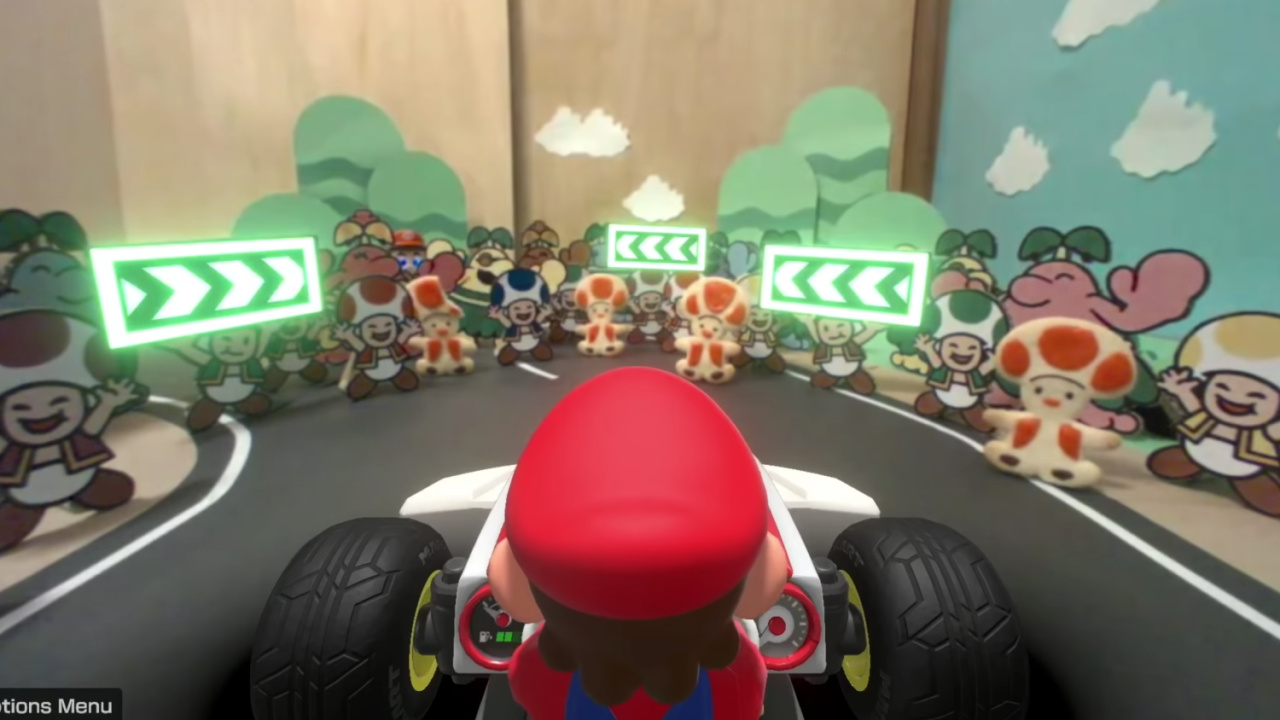
With the right setup, Mario Kart Live: Home Circuit can be a real blast. If you’ve got the imagination – and perhaps more importantly, the space – it can offer a Mario Kart experience truly unlike any other.

Of course, some creative folk are taking things well beyond the norm, including the annoyingly imaginative people behind YouTube channel Playfool. In the video above, we get to see just how far Mario Kart Live can go if you push the game’s AR abilities to the limits.

We’re talking handmade gates of different sizes, more cardboard cutouts than one could ever hope to cut out, and some super-clever tricks that cause the Mario Kart Live camera to pick up things it ordinarily wouldn’t. Make sure to give it a watch – we’re confident you’ll come away with some new ideas to spice up your Mario Kart Live gameplay at home.

If you want more of this sort of thing, we actually featured Playfool on the site earlier in the year. Back then, the team discovered new ways to play with the LEGO Mario figure without buying lots of different sets.


https://www.sickgaming.net/blog/2020/11/...lly-shine/

Print this item

  News - GTA 6: Fans Believe They've Found A Clue About The Game
Posted by: xSicKxBot - 11-24-2020, 05:17 PM - Forum: Lounge - No Replies

GTA 6: Fans Believe They've Found A Clue About The Game

The new teaser trailer for Grand Theft Auto Online's big new expansion contains a clue that might point to Grand Theft Auto 6, or so fans want to believe.

The teaser trailer for GTA Online's biggest update ever, which adds a new location and the Cayo Perico heist, noticed that the video contains GPC coordinates. Plugging the coordinates into Google Maps leads to a dirt road in the woods of Virginia, USA.

Looking at the land from the eagle eye terrain view, you can clearly see a windy road that bears a strong resemblance to VI, the Roman number for 6. As such, Kotaku reported that people are suggesting that this is some kind of tease or reference to the next GTA game.

Continue Reading at GameSpot

https://www.gamespot.com/articles/gta-6-...01-10abi2f

Print this item

  Xbox Wire - Inside Xbox Series X|S Optimized: The Touryst
Posted by: xSicKxBot - 11-24-2020, 12:26 PM - Forum: Xbox Discussion - No Replies

Inside Xbox Series X|S Optimized: The Touryst

One of the biggest benefits of all that power is giving developers the ability to make games that are Xbox Series X|S Optimized. This means that they’ve taken full advantage of the unique capabilities of Xbox Series X|S, both for new titles built natively using the Xbox Series X|S development environment as well as previously released titles that have been rebuilt specifically for the console. In our Inside Xbox Series X|S Optimized series, these creators will share the behind-the-scenes accounts of how they’re optimizing their titles for Xbox Series X and what that means for the future of gaming. Today, we’ll be chatting with Manfred Lizner, CEO at Shin’en about optimizing The Touryst for Xbox Series X|S.

Q: What excites you most about developing and bringing The Touryst to life on next-generation hardware?

A: The Touryst uses a very stylized and fresh art style for its game world. The increased hardware power allowed us to refine this look to a “perfect pixel” level. It now feels very much like playing a fun CGI movie.

Q: How will these enhancements impact a player’s experience with The Touryst?

A: We hope the perfect image and presentation draws everyone deeper into the gameplay.

Q: Why did you choose to focus on increased resolution and 120 fps, as enhancement areas for The Touryst?

A: We felt our game already had a near perfect look with its stylized environments and lush colors. So improving overall quality with much higher resolution and twice the frame rate was the right decision. As we created only console and handheld games in the last 20 years we supported with our in-house engine only 60fps. Quite a lot of work went into achieving 120 fps, but with the immense hardware power in back we had little difficulties to achieve that.

Q: How do you expect fans of The Touryst will respond to playing it on Xbox Series X|S with these enhancements?

A: We tried to make The Touryst a very fresh experience. And a console launch is perfect to try out something new and unique. So we hope a lot of players will enjoy this adventure.

Q: What is it like developing on Xbox Series X|S?

A: As a developer, it’s cool to tap into so much hardware potential!

Q: What does Xbox Series X|S development enable in current or future projects that you could not have achieved with the previous generation of consoles?

A: I hope loading screens become a thing of the past. The Touryst has none! ?


https://www.sickgaming.net/blog/2020/11/...e-touryst/

Print this item

  News - Desert Bus for Hope raises $986k for charity over 164 hours of play
Posted by: xSicKxBot - 11-24-2020, 12:26 PM - Forum: Lounge - No Replies

Desert Bus for Hope raises $986k for charity over 164 hours of play

The annual variety show fundraiser Desert Bus for Hope has wrapped up its 2020 run with record funds raised for the charity Child’s Play. This year’s event saw the Desert Bus crew raise  $986,793 for charity and also tip the event’s lifetime raised over the $7 million mark.

The annual variety show fundraiser revolves around one particular minigame from the unreleased 1995 Sega CD game Penn & Teller’s Smoke and Mirrors where players drive a bus between Tuscon, Arizona and Las Vegas, Nevada for eight actual real-world hours.

Desert Bus for Hope builds its yearly charity event on that framework, hosing guests, giveaways, and other surprises all while driving the desert bus to and from its destinations. The event keeps running for as long as donations keep coming in. This year, the Desert Bus team kept things rolling for a total of 164 hours, two hours more than the year prior.


https://www.sickgaming.net/blog/2020/11/...s-of-play/

Print this item

  News - Don’t Miss: Defining direction, writing, art and music on Yakuza 4
Posted by: xSicKxBot - 11-24-2020, 12:26 PM - Forum: Lounge - No Replies

Don’t Miss: Defining direction, writing, art and music on Yakuza 4

[In this interview, the developers behind Yakuza 4‘s art, music, and story talk with Gamasutra contributor and Nobuooo editor Jeriaska about crafting the acclaimed game’s ensemble cast, dangerous but exciting environments, and more.]

Composer Hidenori Shoji, music director of Sega’s Yakuza series, has previously spoken on his role in the development of Yakuza 3 in an installment of GameSetWatch’s Sound Current column. For this discussion, he is joined by three designers at Sega in a conversation centering on direction, writing, art and music for Yakuza 4.

Jun Orihara is the director of the latest PlayStation 3 exclusive title in the Yakuza game series and has offered significant contributions to earlier releases in the franchise. Masayoshi Yokoyama has written scenarios for every installment in the Yakuza series, including the period piece Ryu ga Gotoku Kenzan!, which took place in early 17th century Kyoto. Kazuki Hosokawa was responsible for art direction on Yakuza 3 and Yakuza 4.

The most significant departure of the open-world action game from its predecessors has been the inclusion of four playable characters, each with their own dedicated storylines. This discussion provides insights into the challenges surrounding this and other design decisions on the development of Yakuza 4.

Yakuza 4 is said to present a different experience of the fictional Kamurocho district than has been the case previously. How has expanding terrain to include new areas such as rooftops sought to change the feel of the in-game environment?

Director Jun Orihara: Before Yakuza 4, Kamurocho had little in the way of elevation. There were no above ground areas for the player to explore. Over the course of development on Yakuza 4, one objective was to add an extra dimension to the landscape, and I would say we succeeded in that aim.

You can now view Kamurocho from up above, as well as from underground. These latter areas offer a somewhat fantastical perspective that’s not previously been explored. The underground environments developed for the game were intended to defy imagination, giving you the sense of being beneath a bustling urban district, providing added enjoyment for those already familiar with Kamurocho’s surroundings.

Art Director Kazuki Hosokawa: Opening up the playing field to rooftops and underground areas was a significant art design challenge. Simply creating a look for Kamurocho that took full advantage of the PlayStation 3’s hardware capabilities put the design team’s abilities to the test. When compared against Yakuza 3, I think players will find that there are many new discoveries to be made while exploring Kamurocho.

Scenario Writer Masayoshi Yokoyama: Compared with regular old Kabukicho, Kamurocho is a magical place. Every time you visit there, some transformation has taken place. It’s a place that tends to catch you off guard, because it’s always changing.

No matter how many times you visit there, you’ll never form a comprehensive mental map of the city. In the five years between Yakuza 1 and Yakuza 4, the district has changed its shape many times. To keep that feeling fresh, researching actual shops and other locations on which the game is based has been key.

KH: Luckily, in a nation as peaceful as Japan there are no existing locations that pose the kinds of danger you encounter routinely in Yakuza 4. As part of my research, I went to several locations, exploring alleyways behind stores. Straightaway I felt uneasy imagining the kinds of things that could take place in such out-of-the-way locations.


Masayoshi Yokoyama, Hidenori Shoji, Jun Orihara and Kazuki Hosokawa at Sega headquarters

How would you describe the differences between the four protagonists? Has having four playable characters instead of one allowed for new opportunities in terms of the sound design and scenario?

JO: Up until this title, Kazuma Kiryu was the only playable character. Together, we as a team had a sturdy understanding of his personality. Introducing three new protagonists, we were tasked with forming strong new archetypes from the ground up, from their battle styles to their character arcs. Based on the scenarios written by Yokoyama, we branched out into developing multiple side stories. We investigated questions like, “What would this character say in this situation? Would this be a likely response from this person?”

Starting out, none of us could say for sure how these newly introduced characters would behave in certain situations. It was among the elements of greatest uncertainty surrounding the game’s development.

Music Director Hidenori Shoji: Throughout development, emphasis was placed on differentiating each of these characters in a variety of ways. Sound design was one of those aspects. As Orihara mentioned earlier, the game introduces individualized battle techniques, so the background tracks called for varied styles crafted by assorted music composers.

On this game, individual composers were assigned to the Tanimura, Akiyama, Kiryu and Saejima scenarios and scored those characters’ specific cutscenes. For instance, I was the one writing for Saejima’s storyline. Dividing up the protagonists between composers created a very natural feeling of contrast between the various plotlines.

Was there any concern that in diverting attention away from the character of Kazuma Kiryu that the game would lose the feel of a Yakuza series installment?

KH: Because all previous titles have had Kazuma as the sole playable character, a lot of effort has gone into making him attractive to our audience. Attending to four playable characters, we didn’t want our attention to detail to be divided, so we resolved to put forth 400% of our effort so that the potential for each character could be fully realized.

Kiryu’s likability has been important for players to relate to the series, so it was certainly a tall order for the character artists to create additional protagonists that were every bit as interesting in their own right.


JO: Kazuma, having persisted throughout the series, has come to be seen as indestructible. By now we know he can do just about anything. The other three characters each have distinguishing play styles: Akiyama brings speed. Saejima, capable of lifting a motobike above his head, brings strength. Tanimura, a detective who has mastered the ancient martial art of “Ko-budo,” brings gracefulness. Kazuma appears playable last, reinforcing his status as the central character of the series.

Tanimura’s abilities have been designed to appeal to hardcore gamers. His passive battle style is activated upon being attacked by opponents. You probably won’t be able to fully utilize all of his techniques in the beginning, but the more you play around with Tanimura’s passive battle system, the more enjoyable it becomes.

KH: You might be thrown at first to find that Akiyama can score dash combos so easily, or that Saejima has such advantages in strength. However, once you’ve become accustomed to the particularities of each play style, these distinctions become more enjoyable.

MY: Certainly there are examples of games that have successfully introduced ensemble casts, like for instance Heavy Rain. Even in titles that have an emphasis on storyline, it’s no small task to elicit sympathy for a game character. It really comes down to how comfortable the player is with putting themselves in the shoes of your characters. Taking on that challenge was actually a little nerve-wracking.

Nonetheless, now that some time has gone by, it seems to me the structure of the story was developed in such a way that it unfolds smoothly. The narrative is kicked off with Akiyama, loaning funds to clients who have no credit elsewhere. Then the retired yakuza Saejima is introduced, followed by the detective Tanimura, and finally Kazuma. Witnessing those character arcs defined with a degree of nuance boosted my confidence in the overall presentation of the storyline.

JO: Kamurocho is accessible to a different degree by each of the central characters. Tanimura grew up in an area called Little Asia and therefore has full access to it. Meanwhile, as a fugitive, Saejima must stick to the underground passages and rooftops to avoid capture by the police. An important element of Yakuza 4 is that both the play styles and the backstories of the protagonists impact the way they relate to their surroundings.

In your observation, how has the Yakuza game series changed over time?

MY: I think the biggest change has been that the motivation of our development team and staff has increased over time. For one, as the series has grown in popularity in Japan, we’ve faced increasingly higher expectations. Initially Yakuza was compared with other domestic titles, but more recently a greater number of direct comparisons have been made with international phenomena like the Grand Theft Auto series. It’s not a shift that has compelled us to compete with GTA. Our emphasis has been on preserving our vision for the franchise while upping the quality.

The world of Yakuza is inhabited by outlaws. It’s natural to assume that these games glorify a mafioso mentality. In actuality, Kazuma’s personality and his image of Kamurocho paints a different kind of picture. Take for instance that the character will never assault someone randomly or engage in violence unless directly provoked. The game invites players to choose from among actions that Kazuma’s sense of fairness will tolerate.

JO: That’s a good point. In the first Yakuza, the tagline here in Japan was “Anyone can become a man who fights with strength.” The phrase was left a bit ambiguous because it could either be taken to mean “a man who fights” or “a man with strength.” The former emphasized the kinds of lawless street fights that occur in the game. However, “a man with strength” would never stoop to exercising violence against an ordinary bystander, which is the strength of Kazuma as a character. That philosophy has always been at the heart of the game design.

KH: From the standpoint of the art design, the biggest shift has been in transitioning from the PlayStation 2 to PlayStation 3 hardware. Shifting from a locked camera angle to tracking shots during cutscenes has led to higher development costs, but it has also invited a broader range of possibilities for visual expression.

HS: As you might expect, hardware changes have had a profound impact on the sound design as well. While 5.1 surround sound was an option on the PlayStation 2, it became the standard format for the PlayStation 3.

As far as preserving a style for the series is concerned, as Yokoyama mentioned earlier it’s important that there is a like-minded design philosophy shared among members of the team. For instance, it would be jarring were the sound department to decide that in the heat of battle Kazuma should shout, “Die, scum!” It’s already been established that the character would never allow himself to utter such a thing. If in every subtle detail of the game’s design you can protect those principles, then it’s possible to preserve the essence of a series even while it’s undergoing phenomenal changes.

How does the design of Yakuza 4 attempt to maintain a balance between realism and fantasy in a way that creates engaging gameplay?

MY: This might be difficult to understand for those outside of the Japanese fanbase, but taking on the persona of Kazuma Kiryu is alluring to many players. Playing as Kazuma is fun because you don’t get to behave that way in real life.

In developing the new protagonists, they all can be described as strong, but they also have some fallible qualities that are foreign to a superstar like Kiryu. They are more susceptible to vices or run-of-the-mill behavior. A thought experiment that inspired several episodes of the game was to ask what would happen if ordinary individuals like us here in this room were thrown into the world of Kamurocho.

On the surface, there are elements of the storyline that might appear obscure. Not everyone is familiar with the structure of yakuza organizations, like what it means to be second or third tier. But in the end, even if you happen to be from the United States or Europe, the way people think is not so different. “What if you happened upon a million dollars in unmarked bills?” You take a scenario like that and the emotions resulting from that thought experiment are accessible to all of us. An exploration of these kinds of universal themes is certainly something I am interested in sharing with an overseas audience.

KH: The art design of the Yakuza series is rooted in the endeavor to anchor Kamurocho in a sense of reality. This is trickier than it sounds. For instance, lending objects a feeling of authenticity isn’t as simple as replicating naturally occurring things exactly as they appear. It’s not so much about recreating reality as lending a sense of verisimilitude to the illusion.

Allow me to explain by taking the mundane example of an ashtray. There is a design of an ashtray that’s so common that people within Japan can easily recognize it as an ashtray. However, the truth of the matter is that all the real ashtrays out there have more distinguishing features than our prototypical ashtray. So if you fail to take into account certain motif choices that give your objects some character, they’ll lack a sense of authenticity.

MH: Isn’t it often mentioned that Kamurocho is attempting to replicate the real world? For instance, through promotional tie-ins there are actual stores that exist in reality that appear in the game.

However, producing a carbon copy of what’s out there already wouldn’t be as interesting. There isn’t a Millenium Tower located in the heart of the city, and would it realistically be possible to construct an underground city like the one teaming beneath Kamurocho? We stretch our imaginations and exaggerate existing phenomena because that’s going to be more interesting to players who are already accustomed to daily life in Tokyo. We have no idea whether real yakuza think the game is accurate or completely absurd, but we definitely want to steer clear of creating something so real it’s bland.

[Yakuza 3 was fact-checked by real yakuza by way of Boing Boing in April 2010. The game received a largely favorable review, though the fight scenes were said to be unrealistic.]

KH: In researching alleyways for the art design, I was often seized with the thought that as soon as I turned this next corner I would be met with some foreboding sense of danger. Then I’d round the bend and be let down to find just a pleasant, ordinary street. (laughs) In those instances, what’s important is not to recreate that sense of disappointment for the player but to realize the imagined possibility within the reality of the game.

MH: This has a lot of relevance to story as well. For instance, we’re dealing with a fantasy depiction of the yakuza, so to speak. Sometimes we’re alluding to problems, concerns or troubles that I’m sure real members of yakuza organizations must face. On the other hand, the story allows itself to be unpredictable, such as when you’re being pitted against power brokers and government agencies. Here it’s entertainment, where stories are allowed to be made larger than life. The important thing is to maintain a balance.

What visual elements make the design of Kamurocho unique?

KH: When building a virtual city, it’s useful to check the colors and shapes of individual structures against the broader outline of the city as a whole. For Yakuza 4, an actual location served as our model. We have an advantage over the city itself because, for instance, when shops open they concern themselves with their own design, not with that of their surroundings. The results are streets characterized by a mishmash of structural sizes and hues like a random assortment of candy wrappers.

However, the design of each element considered in relation to the city as a whole is a central characteristic of Kamurocho. While the design begins in chaos, we can gradually begin tweaking the overall balance through adjustments to each layer of design. Inconsistencies can even be smoothed over through the application of color filters and the rearrangement of light sources. I’m willing to bet that there are few games out there that place as much care in lighting their cutscenes.

We’ve been meeting regularly with Shoji-san since the publication of Yakuza 2 to hear about his work as music director. How has music influenced your role in the making of the game series?

MH: Before I begin a new scenario, I often listen to music and think of a story to match. If I’m hearing Yes in Buffalo ’66, then Vincent Gallo pops up in the scenario. Often I’ll listen to the Yakuza soundtrack while warming up.

HS: That’s news to me. I do think gaming has a lot of potential as a medium. Just to share a surprising anecdote, a short time after I had written the music for Super Monkey Ball, I noticed something on Christina Aguilera’s website where she had written: “My favorite game is Super Monkey Ball.” It kind of amazed me to realize that Aguilera-san had heard my music! (laughs) The potential for games as a medium is rather extraordinary.

Please allow me to thank each of you for offering your time to this discussion on the direction, writing, art and music of Yakuza 4. Four of your music tracks from the game have been posted to the downloads section of the Sega website. Let us conclude with the liner notes for these tracks that Shoji-san has been generous enough to bring with him today.

【Receive and Bite You】
It has become an enduring tradition to arrange the Yakuza theme “Receive You” to appear during battles with Majima. The novelty of self-arrangement with each new game has worn a bit thin, so to mix things up for Yakuza 4 I invited Yuichi Kanatani to lend his interpretation.

The acclaimed composer from AM1, who has been working with us since the previous title, created this arrangement of the song. Seeing as our musical interests match more closely than most, it was easy to foresee what might result following our preliminary discussions. When I finally heard the finished piece, it was so close to what I had imagined that it brought a smile to my face. The high tension of Majima’s acrobatic attacks is well served by this trendy European sound. The music track brings to mind the involved discussions we’ve shared on how best to capture the heavy roundness of the drum sounds found here and on prior collaborations. That explains my personal attachment to this arrangement.

【Speed Star】
A prominent theme of Yakuza 4 is the contrast between the four central characters. Key features of each protagonist are mirrored in their associated music themes. Early on, “Speed Star” began reflecting various elements of Akiyama’s character, so there were few hurdles to realizing this composition. In terms of my own predispositions, I might have preferred more of a jazzy, dignified quality to the arrangement, but that was counter to its utility as a battle track. It took some effort to arrive upon a solution that reconciled these opposing directions.

【Smile Venomously】
This is the background music for the fights against other playable characters, which brought with it an unusual number of concerns. Initially my focus was on immediately raising intensity and impact. However, viewing the results in sequence, it soon became clear that this approach was undermining the dramatic intensity of the scene. It made the confrontation feel more frivolous than it should, as if this fateful encounter were a sort of festive celebration.

From there, it became clear that a more serious treatment was needed, stemming from the fearful implications of the battle. Because the situation emerges several times with the same music track playing in the background, it was important that the uneasy atmosphere work each time. It might be the influence of the music cue or the subtlety of the AI, but when I face off against Kazuma, the tension is palpable. Even for an experienced player like me, I find myself caught off guard when a Tiger-Killer (Tora’otoshi) move is executed.

【For Faith】
This is another example of a theme that has customarily returned throughout the series. I wrote this song with a request from executive producer Toshihiro Nagoshi in mind. The idea was to include both sorrow and hopefulness in this arrangement, which was to be featured in a montage for the Tokyo Game Show. (The piece was never intended to appear in the game.) Toward the end of production, we were missing background music for the installation screen. We had tried looping the one-minute training track “My Hero” over and over, but the director had second thoughts. “I feel like I’m being hypnotized,” he said. “Take it out.”

It turned out that the longer running time and serious atmosphere of “For Faith” made it appropriate for that spot. The results have been very positive, especially considering it’s the piece most frequently downloaded from the iTunes Store on the soundtrack album. There have not been many mid-tempo rock songs previously in the series, which may be why this arrangement came out feeling particularly fresh. For the lyrics I went with what sounded immediately appealing to me, but the pronunciation might be off. Nevertheless, I’ll be glad if listeners outside Japan can get something out of it.

[This article is available in Japanese on Game Design Current. Translation by Yoko Wyatt. Images courtesy of Sega. Photo by Jeriaska.]


https://www.sickgaming.net/blog/2020/11/...-yakuza-4/

Print this item

  News - Cyberpunk 2077 Dev Has Played For Over 175 Hours And Still Hasn't Finished It
Posted by: xSicKxBot - 11-24-2020, 10:47 AM - Forum: Lounge - No Replies

Cyberpunk 2077 Dev Has Played For Over 175 Hours And Still Hasn't Finished It

A CD Projekt Red QA tester has apparently not finished Cyberpunk 2077 after playing for 175 hours on one of his many playthroughs.

Lukasz Babiel, the quality assurance lead at CDPR, posted a screenshot on Twitter of his total playtime over the weekend. According to the figure shared, Babiel, who started Cyberpunk 2077 as a Nomad, has put in a little more than 175 hours and still hasn't seen the credits roll.

When asked if he was going for a completionist playthrough, Babiel said he's taking his time looting and seeing everything on the hardest difficulty.

Continue Reading at GameSpot

https://www.gamespot.com/articles/cyberp...01-10abi2f

Print this item

  (Indie Deal) FREE Mindhunters Incident, Ni no Kuni II & GOD EATER 3 Deals
Posted by: xSicKxBot - 11-24-2020, 08:53 AM - Forum: Deals or Specials - No Replies

FREE Mindhunters Incident, Ni no Kuni II & GOD EATER 3 Deals

Showing Tonight: Mindhunters Incident FREEbie
[freebies.indiegala.com]
Use your detective skills to solve the mystery of the missing film crew and finish the movie.

Ni no Kuni II: Revenant Kingdom The Prince's Edition at -85%
[www.indiegala.com]
Lose yourself in the ultimate Ni no Kuni experience with the Prince's edition!

GOD EATER 3 has devoured the godlike price
[www.indiegala.com]
With an epic story, unique characters, and all new God Arcs and Aragami, the latest evolution in ACTION is here!

The 235th GalaQuiz will be LIVE soon, win up to $50:dollars: in GalaCredit!
[www.indiegala.com]
The GalaQuiz will take place in less than 15 minutes from this announcement
Today's GalaQuiz[www.indiegala.com] hints are up. The theme will be Movie Protagonists Redux.

Happy Hour on Spooky Bloodlines Bundle
[www.indiegala.com]

Stay Inside, Stay Safe and Enjoy Good Games.
Check out IndieGala on Twitter, YouTube & Facebook[www.facebook.com]


https://steamcommunity.com/groups/indieg...3761235831

Print this item

  Microsoft - Microsoft Federal delivering solutions for secure digital transformation
Posted by: xSicKxBot - 11-24-2020, 03:52 AM - Forum: Windows - No Replies

Microsoft Federal delivering solutions for secure digital transformation

Note: In Part 2 of a two-part series, Rick Wagner shares Microsoft Federal’s 2020 progress in delivering solutions and tools for digital transformation and efficient mission-focused operations. Please see Part 1 for examples of federal agencies achieving success in addressing pandemic impacts and meeting diverse missions.  

In Microsoft CEO Satya Nadella’s 2020 letter to shareholders, he reflects on the past year and the opportunity ahead. I was struck by one of his statements, which captures why I’m honored to lead Microsoft Federal: “I’m proud of how our ecosystem of customers and partners has stepped up over the past year to help people and organizations in every country use technology to be resilient and transform during the most trying of circumstances.” This is especially true in the United States, where our Microsoft Federal team and partners provide trusted leading-edge cloud and AI solutions to empower federal agencies in addressing extraordinary challenges, fulfilling demanding requirements and enabling secure, agile digital transformation. It’s also why our first-ever digital Government Leaders Summit on Dec. 7 will focus on mission and leadership resiliency.

Best-in-class technology

Looking back over the year, Microsoft has made significant progress in providing best-in-class technology for our federal customers to quickly achieve commercial parity while meeting the highest levels of government security and compliance. We’re delivering the latest cloud and AI innovation directly to U.S. federal agencies. For example:

  • We’re excited to join other companies in supporting the Advanced Battle Management System (ABMS), the U.S. Air Force’s top modernization priority. Our technologies will help integrate the Air Force ABMS capabilities into the larger Joint All-Domain Command and Control, the Department of Defense concept to connect sensors from all military branches into a single network.
  • FedScoop recently reported that the U.S. Navy is working to integrate all telework capabilities into a long-term solution powered by Microsoft 365. According to the article: “The goal is to be able to sync up more features, including a link between email and calendars,” and “by 2021 to have as many services as possible be digital and cloud-native to support both teleworking and in-person needs once more workers can come back to bases and the Pentagon.” Microsoft 365 is a great example of a product that enables remote government access, empowers cross-agency collaboration and complies with stringent security requirements.
  • Last month, Microsoft took the next giant leap in cloud computing – to space. Azure Space is aimed at making Azure the platform and ecosystem of choice for the mission needs of the space community – on or off the planet. By combining a new set of offerings, a partner ecosystem and a global strategy focused on innovation, Azure Space will offer an integrated cloud and satellite experience connecting to almost any device anywhere. It also will serve as the bridge between the Pentagon and satellite providers.
  • Another recent blog showcased our Power Platform return to the workplace solution, which enables enterprises and government agencies to prepare facilities and employees when a return to the physical workplace makes sense. We partnered with CBRE, the world’s largest commercial real estate services and investment firm, to develop this comprehensive, end-to-end solution for location readinessworkplace care managementemployee health and safety management, and location management.
  • In late March, we confirmed that Azure Government Secret achieved provisional authorization to host government data classified as secret, meeting Department of Defense (DOD) Impact Level 6, Intelligence Community Directive (ICD) 503 and facility accreditation ICD 705. We also announced:
    • A new third secret region to provide increased availability for national security missions to stay ahead of unique threats.
    • The release of 48 new Azure Government services, bringing our total FedRAMP High services to 101.

It’s worth noting that this most recent Azure Government news comes after a three-year series of news highlighting significant advancements to meet government and DOD requirements:

Embracing technology

As the world around us continues to evolve in unpredictable ways, we’re seeing dramatic shifts in how the federal government is embracing technology with speed and agility to achieve objectives, better serve citizens, and further efficiency and effectiveness. The government customers I talk with are focused on digital transformation and seizing opportunities at the accelerated pace required to deliver modern mission outcomes. Microsoft Federal and our partners are committed to supporting the success of U.S. government agencies by continuously investing in our trusted cloud and AI capabilities.

You’re invited: Microsoft Government Leaders Summit

Another part of our investment is the Microsoft Government Leaders Summit,10 a.m. to noon ET, Dec. 7. On behalf of our Microsoft Federal team, it’s my pleasure to invite you to a digital event dedicated to helping federal government leaders reimagine a future of innovation and transformation to advance our nation.

Tags: , ,


https://www.sickgaming.net/blog/2020/11/...formation/

Print this item

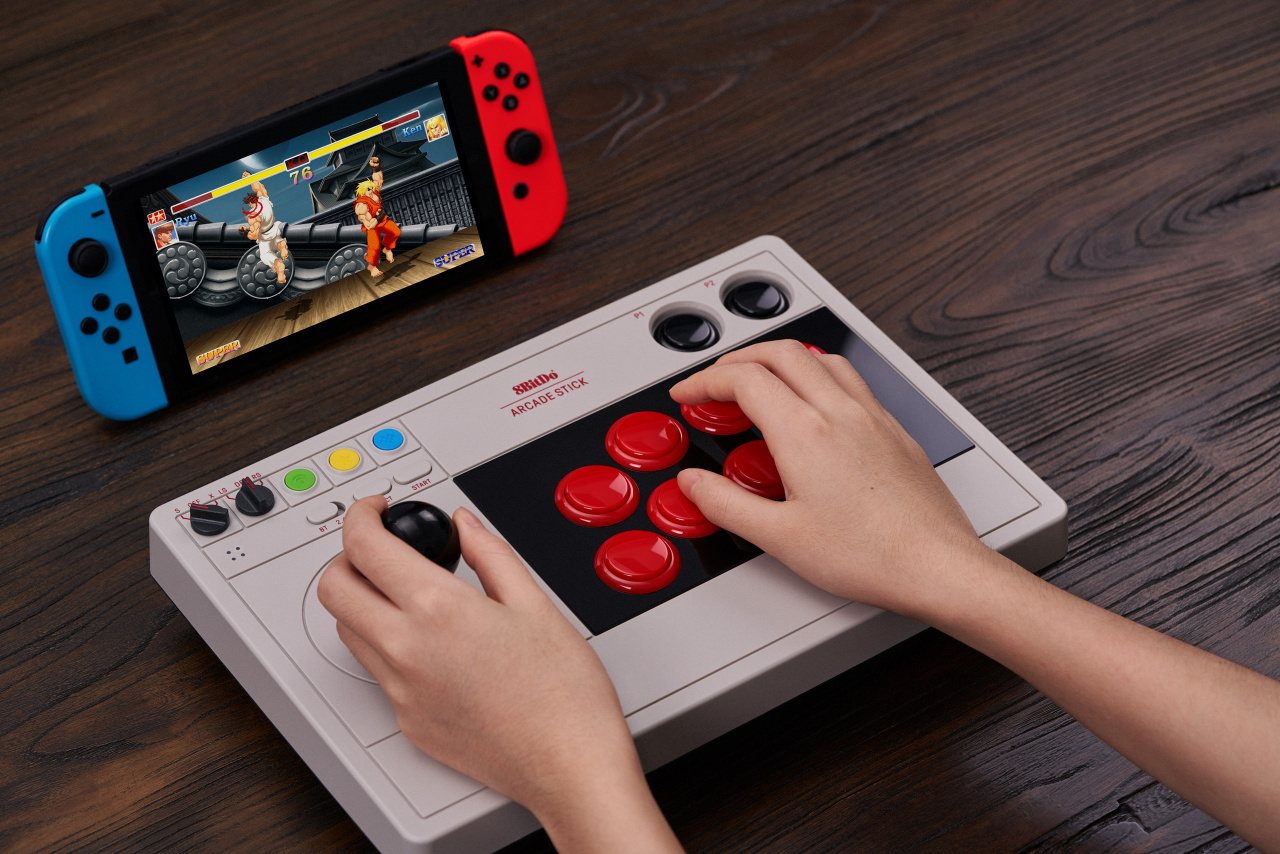
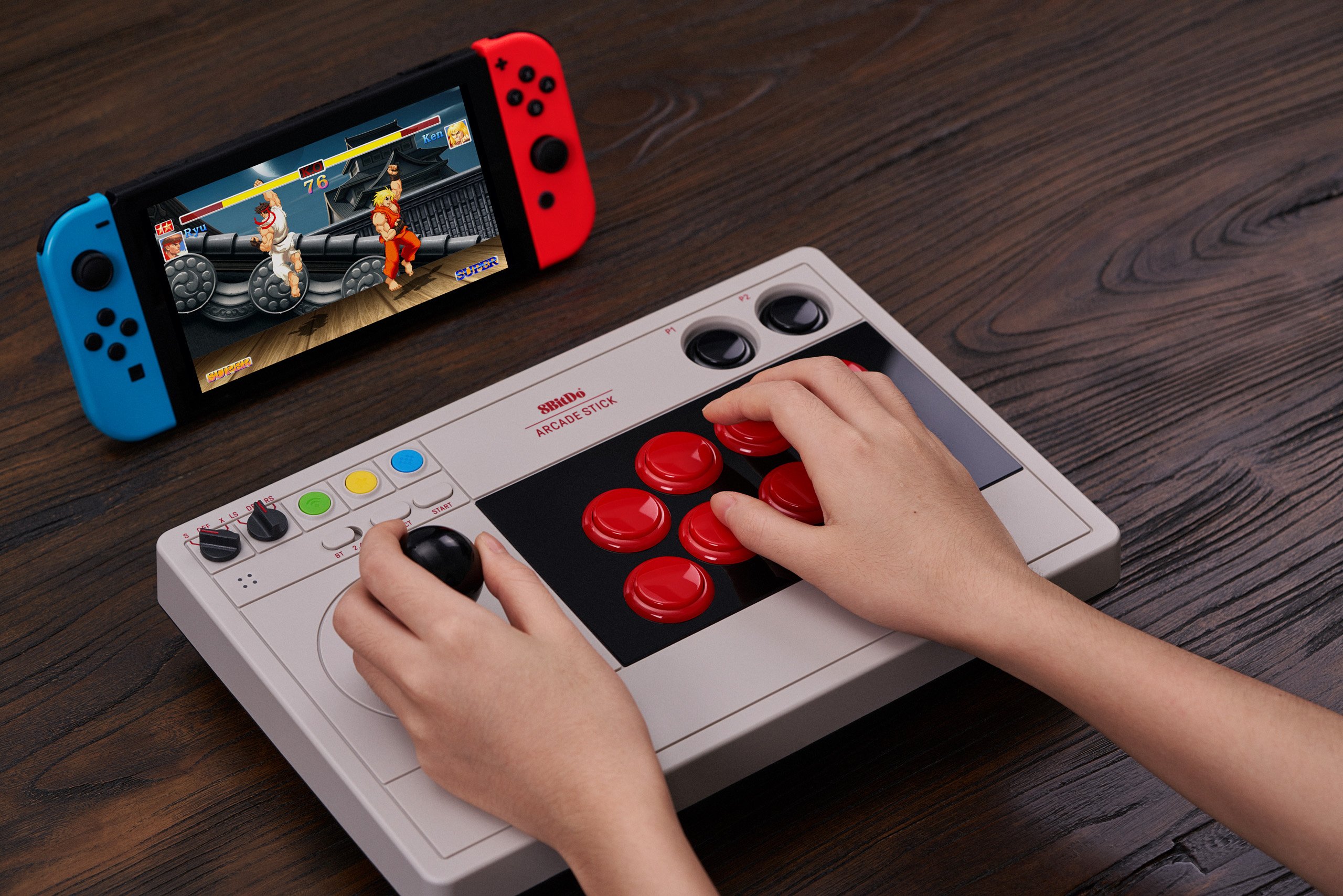
  News - Hardware Review: 8BitDo’s Arcade Stick Grants That Coin-Op Feel To Your Switch
Posted by: xSicKxBot - 11-24-2020, 03:52 AM - Forum: Nintendo Discussion - No Replies

Hardware Review: 8BitDo’s Arcade Stick Grants That Coin-Op Feel To Your Switch


8BitDo Arcade Stick© 8BitDo

While analogue control is the preferred means of interacting with console games in 2020, there are many cases where good, old-fashioned digital input is still best. Whether it’s a game like Tetris which requires responsive control in the four cardinal directions or a title like Street Fighter II which simply calls for a nice big stick, there’s definitely a market for controllers which deliver the kind of interface you’d normally associate with coin-ops of the ’80s and ’90s – and 8BitDo, that talented purveyor of quality third-party accessories, has come up with one of its most accomplished products yet to scratch that very itch.

8BitDo already services the needs of retro-savvy players with its exhaustive range of wireless pads, many of which take inspiration from the classic controllers of yesterday, like the SNES pad and Mega Drive six-button controller. The 8BitDo Arcade Stick is a somewhat different proposition, aimed at the more discerning player who thinks nothing of dropping over $100 on a premium digital controller for use with fighters, shmups and other classic arcade genres.

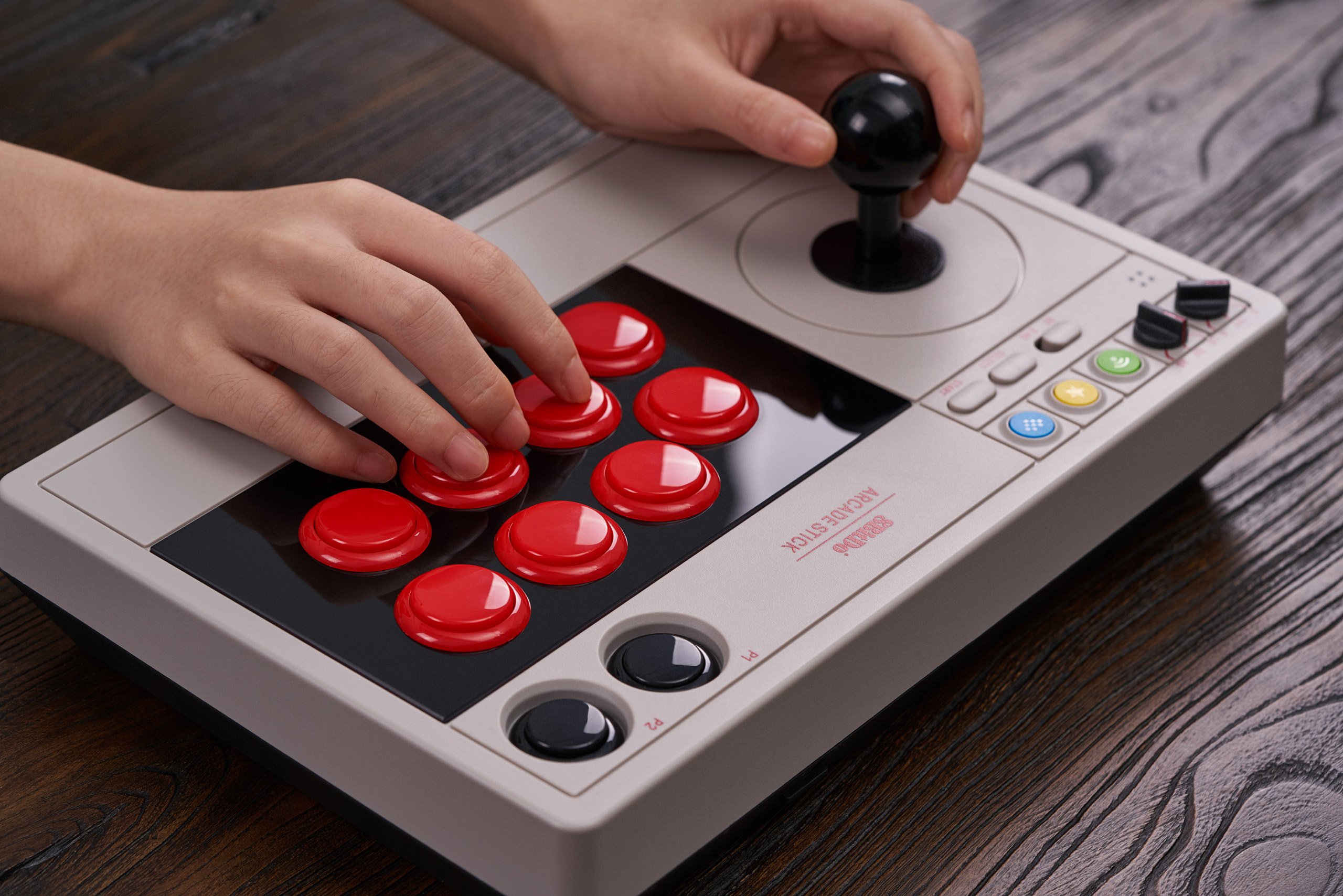
With that in mind, the 8BitDo Arcade Stick is more expensive than its typical products, costing a whopping $90 / £80. However, in terms of design and build quality, it’s arguably a step above what the company normally produces. It’s a heavy beast, which means it stays put during frantic play (the big rubber pads on the base certainly help in this regard, too). The microswitched stick is lovely and responsive, too, while the big, chunky buttons feel great – even under rapid load, they perform admirably.


8BitDo Arcade Stick© 8BitDo

In short, the 8BitDo Arcade Stick feels just as good as any other stick we’ve used over the years (it compares very favourably to the official Dreamcast arcade stick, a perennial favourite of ours), but if you have any issue whatsoever with the parts used here, the good news is that you can swap them out easily for other components that are more to your personal taste. The stick’s moddable nature means it can, in the words of 8BitDo, support “virtually every arcade stick ever made”, including those manufactured by the legendary firm Sanwa, whose products are considered by many to be the gold standard when it comes to this kind of thing. Don’t like the fact that the stick has square gating for directional input? You can change the joystick mounting plate for a different shape, such as a hexagonal gate, which gives you more distinction between directional inputs (although we have to admit, the square gate the stick ships with is perfect for fighting games that call for smooth, flowing directional inputs).

The 8BitDo Arcade Stick is positively festooned with switches and buttons, and comes with a bunch of cool features which really make it stand out. Support for X-Input and Switch is included, and you can toggle between the two using the mode switch found in the top-left corner of the stick. In a neat touch, switching between the two causes the red light-up symbols next to each button to change, as the layouts are different on Switch and X-Input (which typically mimics an Xbox 360 controller button configuration).

Another switch allows you to tell the stick to act as a left-hand analogue stick or the D-Pad, which is handy for those Switch titles which map directional control to one or the other, but not both at the same time. You can also tell the stick to map the control of the right-hand analogue stick, too, although this is something we’d imagine you’ll use very rarely, if at all. There’s also a rapid-fire option for all of the buttons – which, we should note, can be totally re-mapped using 8BitDo’s “Ultimate” computer-based software program. You can even create special macros which combine button and directional inputs and map these to two special buttons for easy access. Out of the box, there’s no screenshot button for grabbing screens and video on Switch, but you can use the aforementioned Ultimate application to add that function to the Turbo button, if you so wish.


The stick supports both wired and wireless connections, with the latter coming in both Bluetooth and 2.4g varieties. Bluetooth is supported without the need for any additional gear, but is subject to a higher degree of input latency. Having said that, we didn’t notice any real difference between the latency of this stick and that exhibited by the Switch Pro Controller, so you’re already happy with the kind of responsiveness you get from that product, you’ll be pleased with how the 8BitDo Arcade Stick performs. However, if you’re especially picky about this kind of thing – and plenty of people are – you can use the bundled 2.4g USB wireless dongle, which is stowed away in a handy compartment located on the top edge of the stick. Plug this into your system of choice and you’ll be able to enjoy what should be, on paper, a ‘faster’ connection than standard Bluetooth.

If you’re a real stickler for avoiding latency, then you can, of course, use the USB wired connection, which is supported by the bundled USB to USB-C cable, which is impressively long – certainly long enough for us to sit on the other side of the room, some way away from our TV and console. When using this method, you obviously benefit from endless battery life (well, duh), but if you choose to play wirelessly then you’ll be reliant on the stick’s 1000mAh Li-on rechargeable battery, which is good for around 40 hours of play time when using the 2.4g dongle, and 30 hours when using Bluetooth. To fully charge the battery, you’re looking at around 4 hours.

It goes without saying that the 8BitDo Arcade Stick isn’t going to suit every game; without any form of analogue input, it’s hopeless for many of the most notable titles on Switch – but if you’re a fan of the multitude of one-on-one arcade fighters, belt-scrolling brawlers, shmups or old-school 2D platformers which are currently available on the platform, then we honestly don’t think you’ll find a better (or more versatile) option on the market right now. This is a controller which is serving a niche, for sure, but we can imagine it becoming utterly essential for old-school gaming fans regardless.

The 8BitDo Arcade Stick was supplied by 8BitDo for the purposes of this review.

Please note that some external links on this page are affiliate links, which means if you click them and make a purchase we may receive a small percentage of the sale. Please read our FTC Disclosure for more information.


https://www.sickgaming.net/blog/2020/11/...ur-switch/

Print this item

  News - Valorant Won't Get Community-Made Maps For A Long Time
Posted by: xSicKxBot - 11-24-2020, 03:51 AM - Forum: Lounge - No Replies

Valorant Won't Get Community-Made Maps For A Long Time

Valorant got its second new map a little while ago, but fans are already asking what the timeline of upcoming content will look like over the coming months. In the latest video from the game's development team at Riot, game director Joe Ziegler revealed some new details about the design process and theory behind Valorant's maps, including the fact that support for community-made maps will take a long time to implement.

In the video, Ziegler says that while the team appreciates the "incredible value" that community-made maps would bring to the game, building map-making tools and a platform to host the maps would take years. Knowing this, Riot has decided to focus on official content for the time being, i.e. designing new agents and maps.

Continue Reading at GameSpot

https://www.gamespot.com/articles/valora...01-10abi2f

Print this item

 
Latest Threads
Black Ops (BO1, T5) DLC's...
Last Post: crabber45
1 hour ago
Thank you
Last Post: cschir10
2 hours ago
The Best Apollo Neuro [AP...
Last Post: ScorpioxYaduvanshi
5 hours ago
Save Today with Apollo Ne...
Last Post: ScorpioxYaduvanshi
5 hours ago
Claim Your Apollo Neuro [...
Last Post: ScorpioxYaduvanshi
5 hours ago
Get Apollo Neuro [APOLLOZ...
Last Post: ScorpioxYaduvanshi
5 hours ago
Apollo Neuro Promo Code $...
Last Post: ScorpioxYaduvanshi
5 hours ago
Apollo Neuro Discount Cod...
Last Post: ScorpioxYaduvanshi
5 hours ago
Apollo Neuro Coupon Code ...
Last Post: ScorpioxYaduvanshi
5 hours ago
Apollo Neuro Promo Code $...
Last Post: ScorpioxYaduvanshi
5 hours ago

Forum software by © MyBB Theme © iAndrew 2016