We are welcoming everyone to join our discord[discord.gg]. We are more active there on finding giveaways, small or large, and there are daily raffles you can participate.
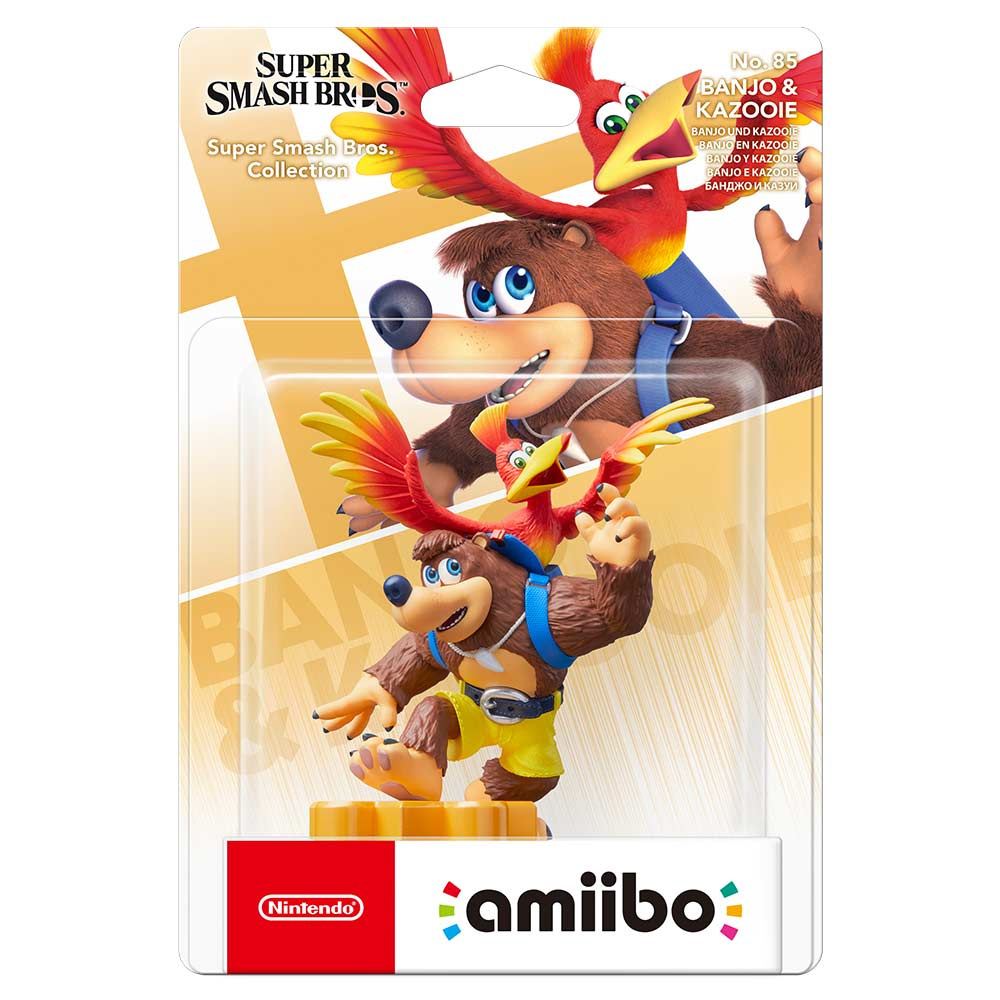
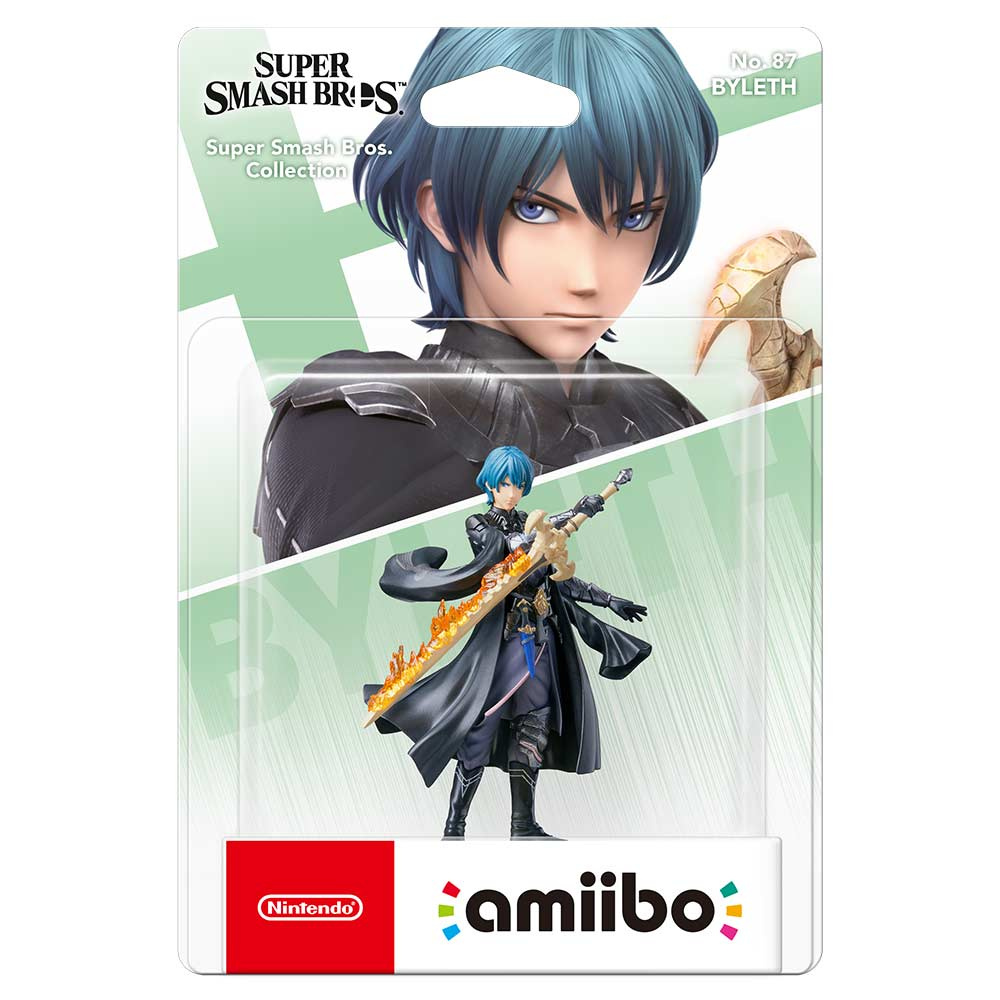
A week on and we’ve now got a look at each of these amiibo in their official packaging. If you like to keep your amiibo boxed for display purposes, you’ll no doubt be interested in seeing what each one looks like.
So without further ado, here they are:
Each one of these Smash Bros. amiibo will be arriving in 2021, but there’s no word on the exact release date just yet. In saying this, earlier in the week, Nintendo of America tweeted (and then deleted) the amiibo would be arriving in “Fall” 2021.
Will you be adding any of these amiibo to your collection when they arrive next year? Are you one of those collectors who keep their amiibo in the original packaging? Tell us down below.
Members of Nintendo Life have done just that below, and we’d love for you to join in via our poll and comment sections. Enjoy!
Ryan Craddock, news editor
You know what, I’m probably going to just have a breather this weekend… During the week, I wrapped up Super Mario Galaxy with a full 120 stars under my belt. I’d forgotten just how wonderful the game was, and with its new coat of HD paint boosting its appeal, it genuinely feels like it could have launched as a brand new Mario platformer this year and no one would have questioned it.
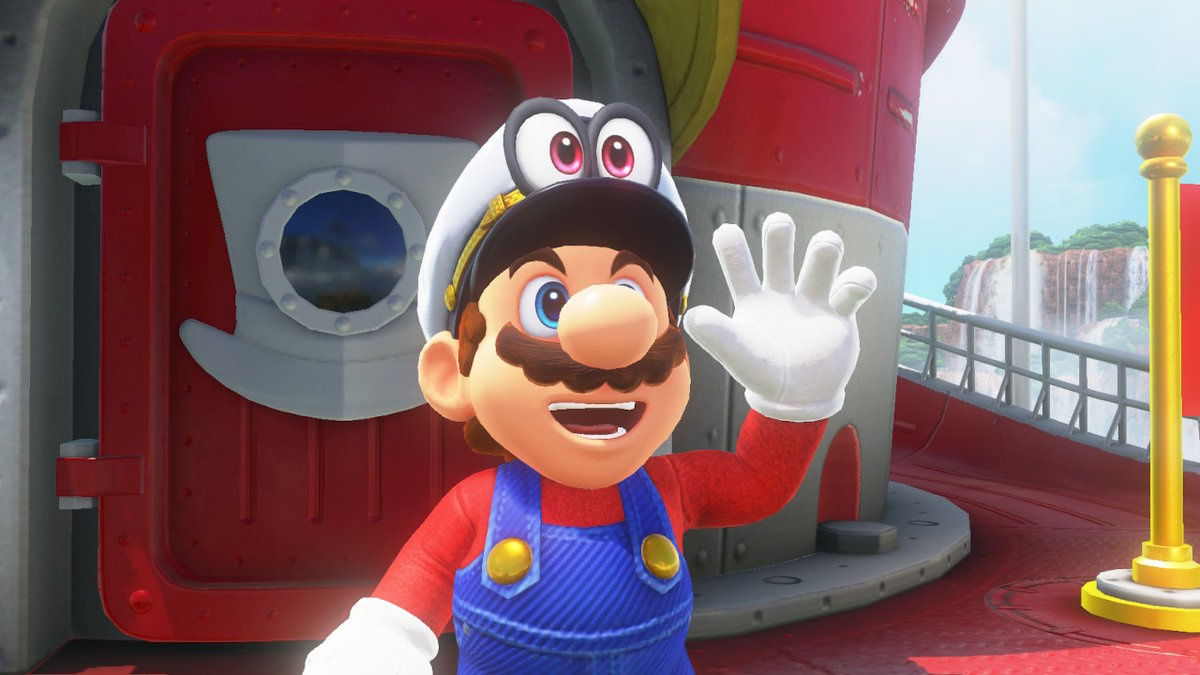
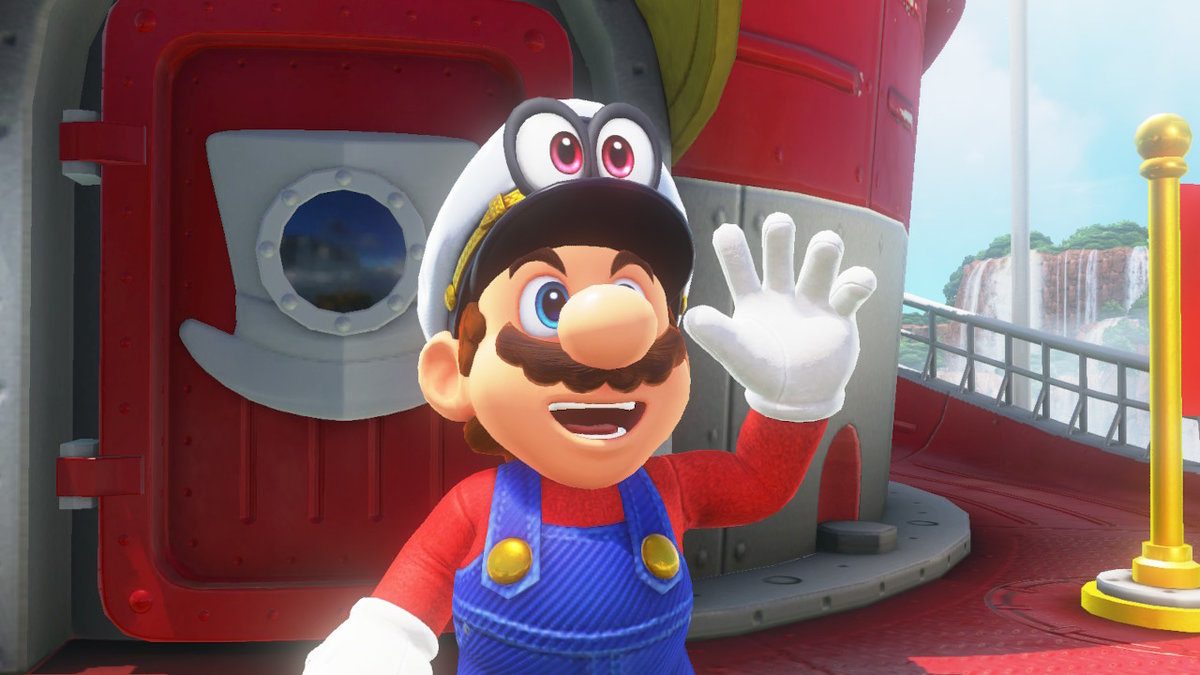
Perhaps it’s partly down to the fact that I played the entire game docked with a Joy-Con in either hand, but it really reminded me of Super Mario Odyssey and made me want to revisit all of that game’s glorious kingdoms. Or, Nintendo could put out an Odyssey 2? Couldn’t you, Nintendo? I dare you.
PJ O’Reilly, reviewer
Hello. This weekend I’m going to spend the vast majority of my gaming time blasting through Ikenfell for review, I’m just a few hours in right now and am really enjoying it so far so look out for that verdict sometime soon. I’ve also yet to get a go on Super Mario Bros. 35 so I’ll be trying to squeeze a bit of a session in on that somewhere too.
Elsewhere, I’ve been busy honing my skills with a few of my favourite fighters in the rather sublime Rivals of Aether, sneaking in a run here and there on the magnificent Hades and am still working my way slowly through the mystery at the heart of the fantastic Paradise Killer. There are, quite literally, too many good games to play right now. I hope you all have a good weekend, whatever you’re playing, stay safe out there and wear a mask!
Stuart Gipp, reviewer
Sorry, too busy with reviews to write anything here. Busy busy busy. Well, I supposed I’ve had time to revisit the DS and start a replay of the excellent, unknown Sgt Frog tie-in game Keroro Gunso the Super Movie: Gekishin Dragon Warriors de Arimasu! It’s an Inti Creates-developed platformer that takes its cues from Klonoa, of all things, with the same enemy manipulation and platforming mechanics as that MIA Namco series. It’s one of my favourite DS games, full stop, and nobody ever talks about it. Bah.
Oh, I’ve also been wondering forlornly if Destiny 2 will ever hit the Switch, thus signalling the end of my life. But yes! Many reviews! Keep an eye out for them!
Gavin Lane, features editor
This weekend I’ll be doing my darnedest to put Rogue Legacy to bed before jumping fully onboard with Hades. I didn’t want to have two roguelikes on the go and I’ve been having such a great time catching up with the former, but the latter is staring at me from the Switch home screen and I’m itching to spend some real time with it. I’ve also been lucky enough to get a preview code for an upcoming indie release that’s proven to be a total delight, so I’d like to spend a bit more time with that – look out for more news next week.
Gonçalo Lopes, contributing writer
I have taken a new ship, converting it into a sort of miner/cargo hauler thingy and am now merrily making ends meet by flying trough asteroid fields in search of gold, diamonds, pure water and even the odd alien artefact. Yep, Rebel Galaxy Outlaw continues to rule my weekends in a welcome fashion.
The unexpected stealth release of Super Arcade Racing along with the delightful Falcon Age and the upcoming Foregone make up the rest of the schedule. Above all else, I need to wrap up my music album release for next week.
Insomniac's original game, Marvel's Spider-Man, has been making headlines lately due to its confusing messaging around save data transfer and upgrade eligibility. Similar to Remedy Entertainment's Control, Spider-Man: Remastered is not a free upgrade for PS4 owners. Players will have to buy the $70 Miles Morales Ultimate Edition if they want the enhanced Spider-Man: Remastered on PS5. Furthermore, save files will not transfer between systems.
Posted by: xSicKxBot - 10-10-2020, 09:22 PM - Forum: Windows
- No Replies
Forza Motorsport 7 now available for Xbox Game Pass members
Today, we welcome Forza Motorsport 7 to the Xbox Game Pass library. Xbox Game Pass members can now experience the thrill of motorsport at the limit with the most comprehensive, beautiful, and authentic racing game ever made.
Forza Motorsport 7 is where racers, drifters, drag racers, tuners, and creators come together in a community devoted to everything automotive. Drive the cars of your dreams, with more than 700 amazing vehicles to choose from including the largest collection of Ferraris, Porsches, and Lamborghinis ever. Challenge yourself across 30 famous destinations and 200 ribbons, where race conditions change every time you return to the track.
With Xbox Game Pass, players on Xbox One X and Windows 10 PC can now experience all this in gorgeous 60fps and native 4K resolution in HDR. And with the upcoming launch of Xbox Series X|S, Forza Motorsport 7 is completely transformed by fast loading via the Xbox Velocity Architecture. Moving from race-to-race will feel almost instantaneous – there’s barely enough time to catch your breath as you traverse the globe.
Through cloud gaming with Xbox Game Pass Ultimate, members have even more choice in how they play, and can discover the freedom and flexibility the cloud brings while playing Forza Motorsport 7. Because your Xbox profile resides in the cloud, you can easily continue the racing career that you began on your living-room Xbox console on your Android phone or tablet. Xbox Game Pass Ultimate members playing on Android can also race with (or against) players on PC and console. If you’re not an Xbox Game Pass member but are intrigued to join and play Forza Motorsport 7 and a library of over 100 high-quality games, new members canjoin Xbox Game Pass Ultimate today for $1 for the first month, then $14.99 per month after that.
Stay tuned to Xbox Wire for more on the Forza franchise.
Forza Motorsport 7 Standard Edition
Microsoft Studios
☆☆☆☆☆96985
★★★★★
Xbox One X Enhanced
PC Game Pass
Xbox Game Pass
Experience the thrill of motorsport at the limit with the most comprehensive, beautiful and authentic racing game ever made. Forza Motorsport 7 is where Racers, Drifters, Drag Racers, Tuners, and Creators come together in a community devoted to everything automotive. Drive the cars of your dreams, with more than 700 amazing vehicles to choose from including the largest collection of Ferraris, Porsches, and Lamborghinis ever. Challenge yourself across 30 famous destinations and 200 Tracks, where race conditions change every time you return to the Track. Experience it all in gorgeous 60fps and native 4K resolution in HDR! New features include:
• Improved Drift, Drag, & Time Attack
• New modes: Tag, Virus & Pass the IT
• Improved Lighting, Graphics & Shadows
• Drift Steering Angle Upgrade and Scoring
• New Race Shop
• Upgraded Multiplayer
• Improved Force Feedback
• New Multiplayer Meetups
• New Track Limits Xbox Play Anywhere requires digital purchase. Features may vary between Xbox One and Windows 10 versions of game. Xbox One game disc for use only with Xbox One systems. Xbox Live Gold membership (sold separately) required for online multiplayer on Xbox One. Cross-device play only in Xbox Live-supported countries; see http://www.xbox.com/live/countries. Some music features may not be available in some countries. Visit http://forzamotorsport.net for additional information. PHOTOSENSITIVITY SEIZURE WARNING: A very small percentage of people may experience a seizure when exposed to certain visual images, including flashing lights or patterns that may appear in video games. Visit Xbox.com for more information.
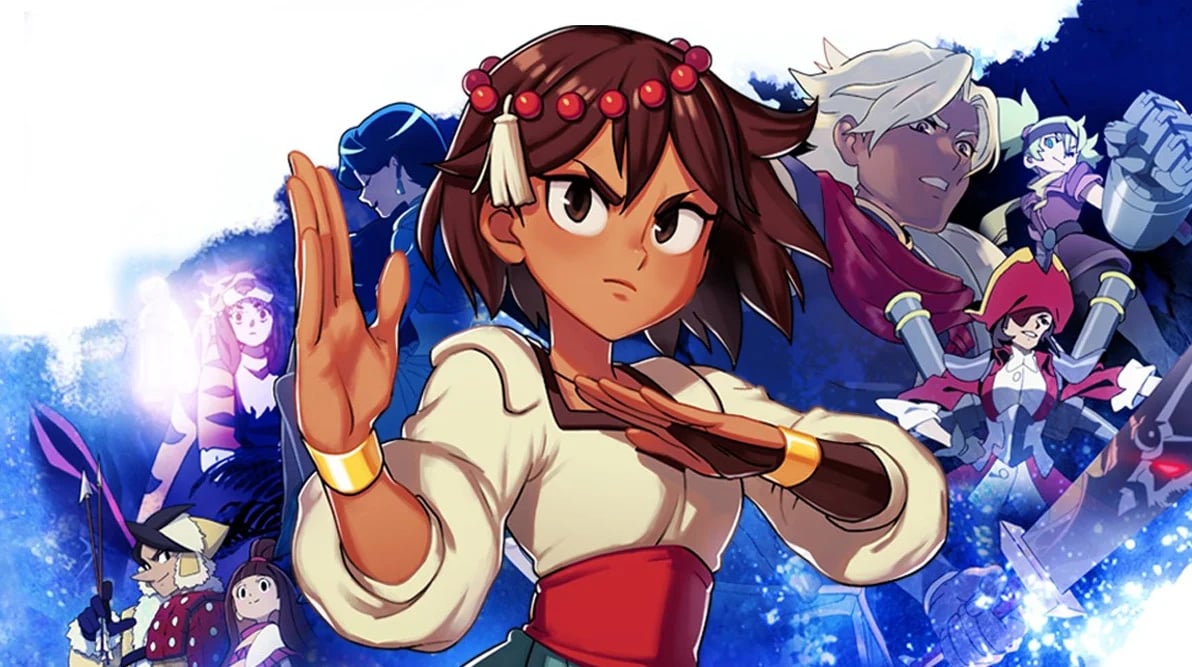
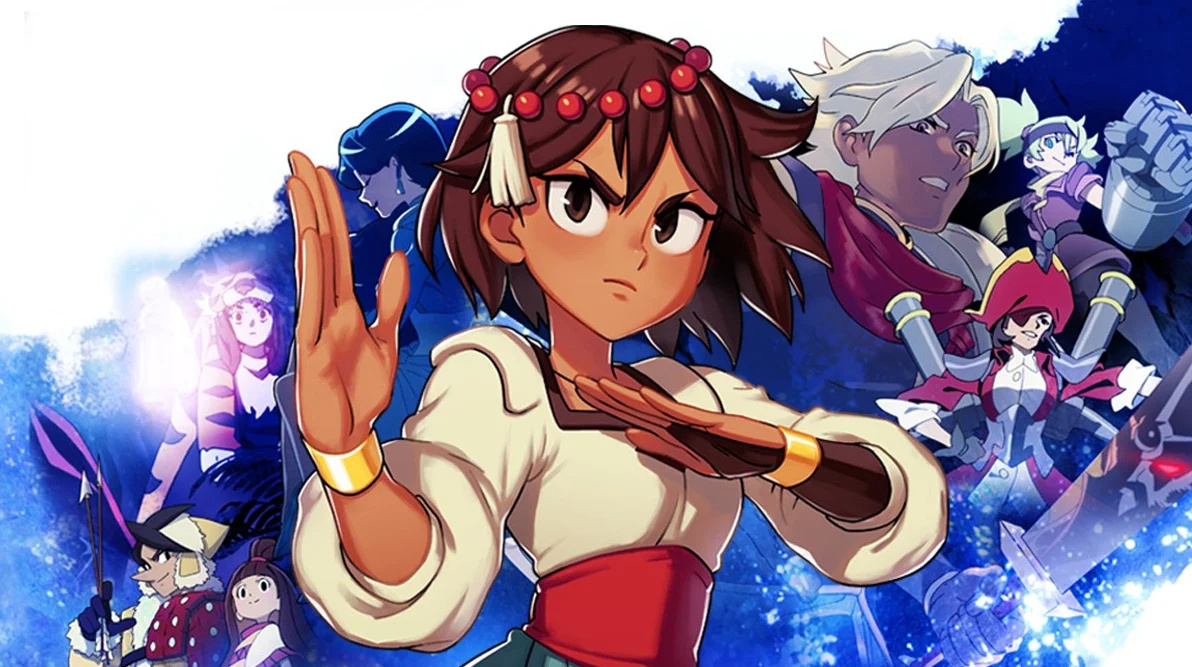
So, what does it means for the future of Indivisible? A statement from its publisher 505 Games reveals there will be no more production on the game. Guest characters and Backer characters will also no longer be added to the game.
On the Switch front, there’ll be one more update to put this version in line with other platforms:
There is an update for Nintendo Switch that is already in submission. It will add Razmi’s Challenges, New Game+ and Couch Co-Op to the Nintendo Switch. That update will bring all platforms to the same level of development and offer a complete game experience to all current and future players. This is expected to release later this month starting on October 13 and rolling out to other regions afterwards.
505 is also expecting a “small batch” of North American physical Switch cartridges to be made available at select retailers in November and will share more information about this soon.
In the second half of September, a group of former Lab Zero developers formed a new employee-owned co-op studio called Future Club.
You can read 505 Games’ full statement over on its official website and find out more information regarding Indivisible in an FAQ. How do you feel about this news? Tell us down below.
Our focus this week is one of the spectacular artists from our community. His work is iconic and his style is instantly recognizable. We wanted to hear more about how he creates these unique depictions of Destiny characters and gear.
Please meet Pesty.
Hi! Ok, why don’t you start by sharing a little about yourself?
Pesty: Hey! My names Ian, but most people know me as Pesty or by my online handle IanPesty. Art and Gaming has always been a constant in my life. From a childhood full of drawings and playing on the earliest versions of home computers and gaming consoles, to studying Visual Art at University, then on to a career in the games industry as a Concept Artist and Art Director.
I first got into Destiny when I purchased my PlayStation 3, around the same time as The Dark Below [was released], but it wasn’t until the lead up to the release of Rise of Iron that I began creating Destiny-themed artwork, when I sketched and painted an Iron Banner Titan with Flaming Axe (which was a Destiny T-shirt contest winner) and I have never stopped painting Destiny themed art since then!
Tell us more about how you create these beautiful pieces. Take us through your process from inspiration to finishing touches.
Pesty: I find the experience of playing Destiny stays with me even when I am not playing it; I feel this is one of the reasons I am inspired to translate it to my own personal artwork. Typically [when] I see an aspect of Destiny that really speaks to my particular taste, I like to look for a way to represent it in my art but with the addition of my own personal twist – the face grill of the OEM torn free to reveal a grinning skull, Trials armour immortalised in the form of a sarcophagus, ‘Guardian Down’ reflected in reverse on a bullet-cracked visor, the aspects of Saint-14 summarised as a heraldic coat of arms…
My process varies but typically I collect a series of ideas and sketches that steadily grow and evolve into a clearer image; those which I feel compelled to translate to the page are the ones that make the cut. I really enjoy working in the evenings whilst listening to atmospheric soundtracks and podcasts to get me in the mood; with copious mugs of tea – most of which I forget to drink and go cold.
Over the past four years of creating Destiny-themed art my approach has varied, though stylisation has remained a theme. This past couple of years I have settled on a more consistent style, at its core it’s tonal – black and white, I utilise colour sparingly and purposefully where it complements the character of the piece. Lighting, composition and mood is a major component, I like to work close in on a subject and at high detail.
Most notable is the mark making, as it’s expressed through etch-like hatching and texture — the amount of brushstrokes used to create a piece is possibly insane, but there’s a Zen to it I enjoy.
Overall it’s important to me to produce a piece that excites and challenges me in terms of style and subject, something that is visually arresting and inspires conversation, something I enjoy and feel would look cool framed on a wall.
Wow! That sounds both relaxing and exhausting. Tell us about you as a Guardian — what has been your favorite Subclass and weapons?
Pesty: I’m die-hard Hunter. Nightstalker, Way of the Trapper, everything set to max mobility/invisibility. I love being able to play out the fantasy of a highly agile invisible assassin — I do miss the Sealed Ahamkara Grasps’ “double smoke grenades” evilness of Destiny 1 though… With regards to weapons I have a few that I never get tired of: Quickfang for its speed, clean visual style, and that run animation obviously; a particular Trust “Dragonfly, Rampage” roll whose pyrotechnics always makes me smile; and a collection of Pulses ([Claws of the Wolf] and Vigilance Wing) and Scouts ([Randy’s Throwing Knife] and Jade Rabbit) are my poison of choice for the Crucible.
Nightstalker, I see you are a man of culture as well. Do you have upcoming project ideas or works in progress you want to give a peek at?
Pesty: I’m currently working on the third and final (Titan) piece in the series of Sarcophagus of the Exile artworks I’ve been creating. I’ve also began chewing on an idea for a Festival of the Lost themed piece which I’m keen to sink my teeth into.
Can’t wait to see them. Tell us about your favorite Destiny memory, either in-game or outside of it with the community.
Pesty: I feel that any time I get the opportunity to play alongside my community friends/artists are my favourites. I recently raided with fellow Destiny artists Kob, Brian Moncus, Pherian, Emily Megan with hilarious results. I also completed the Prophecy Dungeon with Mekki and Plain Ben and my first experience of Trials was with Jake Myler and Mekki carrying my ass if I remember rightly…
Outside the game, my favourite aspect of Destiny is how welcoming and supportive the Destiny community and Bungie community and dev teams have been. Travelling from the UK to GuardianCon/GCX and having a table in artist alley was truly an unforgettable experience — one I look forward to repeating every year now. The Destiny community has a wealth of creative and supportive individuals who I am lucky to call friends – the content they create and the interaction we have is amazing — it motivates and inspires me. I also have to call out being chosen to be in the first wave of artists featured by Bungie in the Community Artists Series – that was a definite highlight!
It’s always great getting to see you and the community at events. Where can others go to admire your art online?
This has been fun. Anything else you would like to add before we let you get back to your art?
Pesty: I feel I’ve kept you long enough with my answers, but if I could, I’d like to give a shout-out to my longstanding fireteam partner Brynfinity for suffering through every time I bounced off a ledge, fired my tether into the back of his head, or subjected him to my ‘opinions’ on Titan shoulder charges. ?
Finally, a big thank you for having me on the Community Focus, it’s an honour — another great Destiny memory!
Let’s all send Pesty some thanks for taking the time to share more about his artwork here. Drop by his Twitter and say hi. We have a ton of great artists in the Destiny 2 community. Follow @Bungie on Instagram to see more fantastic community created artwork.
If you have any suggestions on who we should focus on next let us know us on Twitter or our forums.
It is hard to believe that it has been less than a year since we announced that Yakuza was finally coming to Xbox. We here at Sega have been absolutely thrilled to see how receptive the Xbox community has been for the releases of Yakuza 0, Yakuza Kiwami, and Yakuza Kiwami 2.
Now, if for some reason you stillhaven’t jumped into this absolutely wild, genre-defying, over the top, yet heart-wrenchingly-dramatic series… I don’t blame you. It’s a lot to try and take in. Where do you even begin? Do you start with Yakuza 0 or Yakuza Kiwami? What’s a Baka Mitai, why is it all over my Twitter feed, and why does it sound so good?
That’s why we’re happy to be completely taking over this weekend’s Free Play Days! Yakuza 0, Yakuza Kiwami, and Yakuza Kiwami 2 will all be free to play for all Xbox Live Gold members from October 1 to October 4, so it’s the perfect time to jump in and try Yakuza for yourself. It’s also a great way to prepare yourself for the upcoming launch of the newest installment in the series, and a brand new entry point for new players, Yakuza: Like a Dragon, which is launching Day 1 with Xbox Series X | S (as well as on Xbox One and Windows 10) on November 10!
Now, if you have never even heard of Yakuza before, here’s what you need to know:
What’s Yakuza?
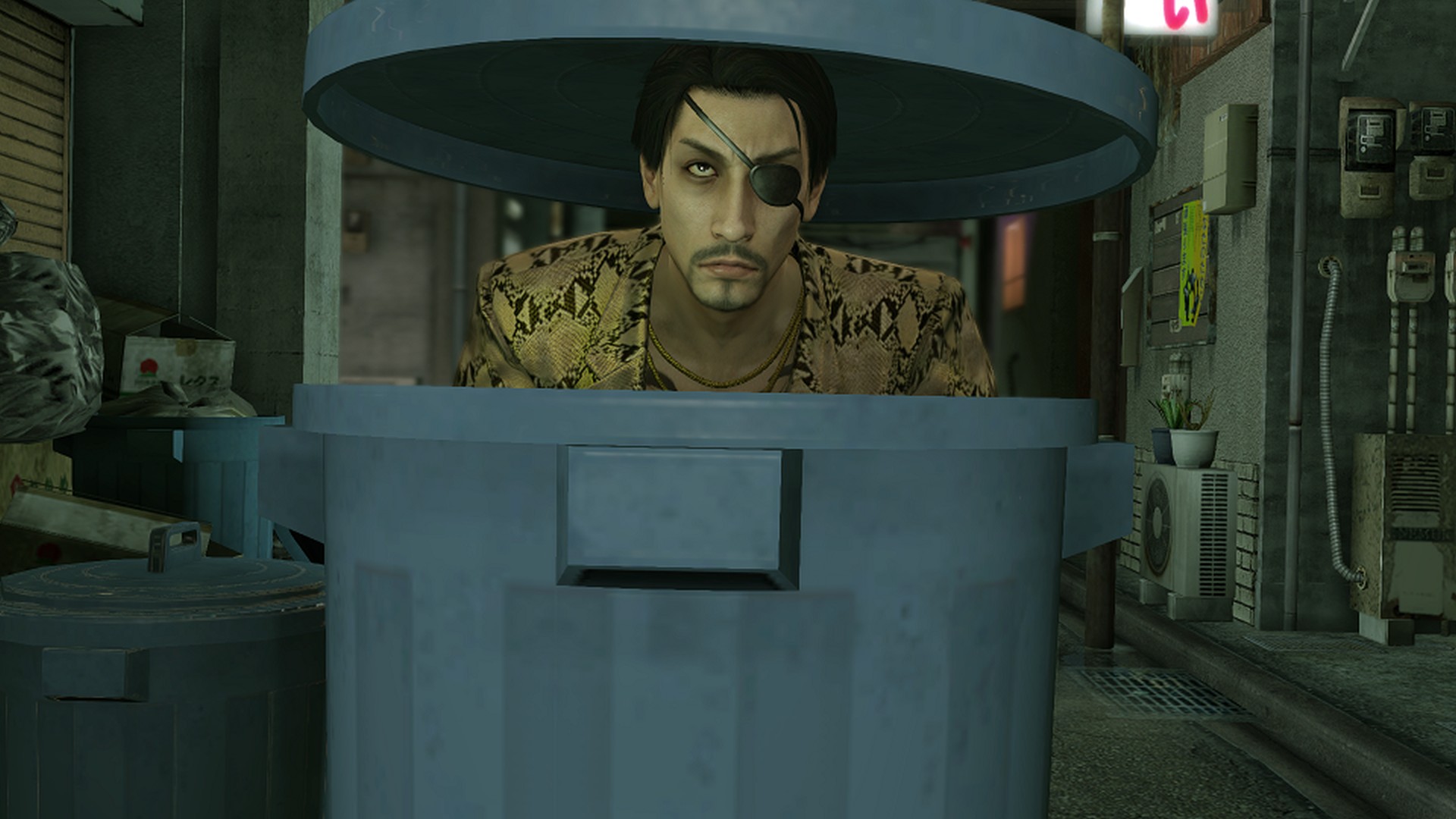
Yakuza is, at its core, a series about a bunch of very serious men doing very silly things. There’s no shortage of drama, intrigue, and genuinely emotional moments to keep you hooked. but you can also take a break with some of the most hilarious minigames and substories you’ll ever experience – build tiny cars and race in the Pocket Circuit Stadium, manage a Cabaret, compete in dance fights at the disco, and so many more. Each game also takes place in a painstakingly detailed recreation of a real Japanese city. Consider it the perfect virtual tourism experience.
We can’t not mention the combat though – you can also beat the absolute heck out of a lot of people, all deserving of a good beatdown. If you’ve never seen a Yakuza Heat Action before, you’re in for a treat.
Say no more, I’m in – where do I start?
It’s my personal recommendation that you start with Yakuza 0, which is a prequel to the series that came out later in its life. However, starting with Yakuza 0orYakuza Kiwami, a remake of the very first installment, are both valid choices.
That’s rad, can I finish all three of these games during Free Play Days?
No.
Well, maybe. If you don’t sleep or take any breaks at all, or rush as fast as possible through each of the games’ critical paths while skipping every cutscene. But that’s not what Yakuza is about. Each game is dense with things to do, and you can easily spend over a hundred hours in a single game without realizing it. Take your time, see the sights, and enjoy everything the games have to offer – we guarantee you’ll have a good time.
An in-depth analysis of IAP pack design in free-to-play mobile games
<!– –>
Gamasutra: Javier Barnes’s Blog – IAP Packs in Mobile F2P: Analysis and Design
Gamasutra is part of the Informa Tech Division of Informa PLC
This site is operated by a business or businesses owned by Informa PLC and all copyright resides with them. Informa PLC’s registered office is 5 Howick Place, London SW1P 1WG. Registered in England and Wales. Number 8860726.
If you enjoy reading this site, you might also want to check out these UBM Tech sites:
The following blog post, unless otherwise noted, was written by a member of Gamasutras community. The thoughts and opinions expressed are those of the writer and not Gamasutra or its parent company.
Most of the revenue of mobile F2P games comes from selling hard currency IAP packs. The release of new content, liveops and other features may be the trigger of those purchases. But ultimately, players go and buy one of your main six IAP packs.
So its kind of paradoxical that designing and balancing them is a topic that gets little attention overall. This article aims to share a few key concepts, techniques and some ferengi tricks that I deal with when setting up or analyzing currency IAPs.
While both following the six-pack model, note how Asphalt 9 IAP packs have different pricings, order and tags, while COD Mobile puts extra space on a dolphin-oriented pack and shows the Battle Pass. These differences aim to adapt to the purchasing habits of their specific audiences, and generate upsells.
Disclaimer: It’s all about learning faster
It’s wrong to assume that the exact same IAP balancing and insights will work on any game, since the audience, their budgets and their purchasing habits might be completely different.
Even in the same genre (car racing), there can be different answers to which should be the lowest IAP price. The more arcade-ish racing games are aiming for the lowest pricepoints.
So when balancing IAPs (as well as any other element of the monetization), the key is not to have a set of secrets of the trade, but to have a methodology that allows you to build up new game specific knowledge fast.
During my career I’ve been involved with the economy for +10 free-to-play mobile titles, some targetting widely different genres and audiences. And whenever I entered in a new project, I would apply the following 3 steps to build knowledge:
1/ When in doubt, copy. Replicating your competitors will greatly limit your risk of making mistakes, at the cost of discarding the chance for radical improvement.
This may sound bad, but it’s a great early trade-off when dealing with something that you’re not familiar with. And specially when it comes to currency packs, where players are unlikely to value innovation…
IAP screens on several top grossing match3 games, all following the same UX design. The PRICES are all different, though. Focus innovation on the areas that add actual value for the user.
2/ Benchmark and understand the decisions. Looking at the decisions that your competitors took and their history, if available, will help you understanding the key factors of the sector. I also endorse talking to the fans directly and getting to know them. Their feedback is a necessary requirement to complement and fully understand any data.
3/ Always iterate and test things as fast as you can. Start ASAP to test stuff, aiming to solve problems or tackle opportunities. Or maybe challenge some of the assumptions to confirm that they’re still true — the rules may have changed!
There are methods to perform these expertiments without taking risks. Presenting new user cohorts with different balancings or using ABtest will limit any negative effects and make the analysis more reliable by allowing control groups.
The challenge is to choose which tests to prioritize, since each test may take some time to gather enough population to be conclusive, specially if it targets new game users. Sometimes it’s easier to set on the change for a couple of weeks and see what happens…
During the article I’ll talk about several concepts and general rules I’ve found based on my experience. And to be concise I won’t be saying “at least that’s what I think” all the time. But nothing is sacred. Let me know in the comments section if you think different : )
THE PSYCHOLOGY OF IN-APP PURCHASES
Same as with any other purchase, an IAP happens when the customer wants what is offered, and has the money to buy it. The specific characteristics of the customer will determine where the two bubbles below intersect, or if they do at all:
Who pays on a free game? The most engaged players
The Black Lotus is the most expensive card in Magic: The Gathering. It’s has reached a price of +$150,000 on eBay. But my dad would never pay that much for it. He woudn’t even pay $1. It’s just a worthless piece of paper for him. He doesn’t even like MTG. This goes to show how extreme the distortion of the value of the same thing can be between two different people.
And when it comes to mobile games, it’s even worse: Because at least a Magic card is physical. You can keep it on a showcase and even trade it for real cash. But buying an item that exists only inside a videogame? That sounds like the ultimate waste of money. This goes to show why humans are generally highly biased against virtual items.
So this means that the people that buy on a F2P gameare the ones that love the game the most. They love it so much that they overcome this natural bias and they believe that a virtual item is worth real money. Even if it’s only cosmetic change.
The segmentation between Time-Rich versus Money-Rich players is a hoax. While engaged users may pay for time skips, the fact is that the paying users are the ones that play the most (more time spent ingame).
Since paying users are those are the most interested about the game, it also means that they will be proficient at identifying good and bad deals (specially if they’ve been playing for a while). So paying users will choose the course of action that grants them the most value for their money, rather than making irrational impulsive purchases.
Behavioral economists have explained for a long time that the bigger the spending, the more we’re likely to use our System 2 of decision making thought (slow, efforful, logical, calculating, conscious…). Which means that your big spenders are even more unlikely to act by impulses.
An example of non-impulse behavior: If your game runs monetization liveops or aggressive discounts in a predictable pattern, players will tend to cut down their spending temporarily, and wait to get a better deal.
Factors related to marketing and UX do boost slightly the purchases, but they’re secondary factors (i.e: anchor prices, decoys, adding a time limit on the purchase to foster the fear of loss, using red colors and several other stuff we’ll talk later…). It’s important to keep them in mind, but they are just a small push, not the main game changer.
Supercell was famous for a while because their games had very few of these monetization UX features, and no discounts at all; and still they made billions. Clash of Clans players spent because they were extremely engaged, not because the UX tricked them into it.
How much money they spend? Depends a lot on the genre/audience.
At the industry we tend to classify paying users based on the amount spent, but there’s a bit more to that. I estimate a 99% chance that you’ve seen a graph like the one below, and usually each name is followed by a number, representing how much the player has spent (Minnow = 1$, Dolphin = ~10$, etc…).
If you’re perceptive enough, you may have noticed that the more these charts move away from the minnows, the more they disagree between each other on the exact amounts that represent meaningul player segmentations: On some charts a dolphin is 10$, in others maybe 20$; and the minimum spent to be called a whale may range from 200$ to 1000$…
One of the reasons why this happens is because the people doing the chart are taking in account some genres more than in others. In all genres there are different paying user profiles, but the relevance of each of the groups and the size of their bugdets changes dramatically: A whale of a casual game may spend less than a big dolphin of a 4X.
And this has implications for which type of IAP pricings must be promoted:
Monetization in Star Trek Fleet Command (4x strategy) relies on an elite group of hardcore spenders, while Homescapes (Casual Match3 puzzle) aims for more payers, of a lower spending each. As a consequence, their top selling IAP prices are completely different. Source: App-Annie (Sept 2020)
Summarizing, when it comes to IAP packs…
The paying users are the ones that are more engaged. Almost without exceptions, the amount of money spent represents their degree of engagement. You can check that by looking at their average daily time spent playing.
Players buy IAPs using rational criteria. For the most part, they are not impulse purchases. Paying users will choose the course of action that grants them the most in-game value for their money, and avoid the bad deals.
The general profile of the audience will determine their general budget. This is heavily influenced by the genre and theme (i.e. Infinite Runners attract kids and they will spend less than middle-aged 4X Strategy players…).
OFF-TOPIC PROPOSAL: ANIMALS AS MONTHLY SPENDING?
In my experience, the general standard is to classify paying user categories (minnow, dolphin, whale…) based on lifetime amount spent ingame. But this raises several questions for me:
A dolphin that has reached “whale-level investment” by repeatedly spending 10$ monthly over the course of the last 2 years… is really a whale? Definitively sounds like a radically different profile than a whale that reached that status by buying several 100$ packs in one month.
A whale that is still in the game hasn’t spent for 3 months… is really a whale anymore? What if now it’s purchase behavior has changed and it spends like a smaller spending profile (not a common thing, but still…)
Ultimately, the current classification seems unneficient, as it requires additional KPIs to understand critical behaviors (i.e. average whale spending on the last month, amount of dolphins that spent the last month…).
I think it would be more efficient to separate paying user categories in two different metrics: “payer category, amount spent on the last 30 days” (alive animals) and “payer category, amount spent lifetime” (historical animals). That would allow to easily detect fluctuations on the monetization (payers slowing down their purchases at a certain point) and generate more meaningful insights.
And you should totally use dinosaur names for historical paying users… Normalize this!
THE ANATHOMY OF THE SIX PACK
The 6-pack model is the standard on mobile F2P because six is a low enough number to be manageable by players, but still allows meaningful choices and comparison between prices… And probably also because it’s always been done that way.
Which packs are the real deal and why?
Not all of the packs have the same relevance. Out of the six, the ones that are really important are the lowest, and then one in the middle, and the highest. Let’s take a look at them:
The lowest sets the minimum investment that a paying user can make, and therefore will likely be the most sold one in terms of quantity of purchases. Despite it sells a lot, it doesn’t tend make a lot of money and it doesn’t attract the player that buys over and over, which prefers more advantageous packs.
So if this pack it’s your top monetizer, you may want to review your whole IAP setup, because there’s definitively something weird. In particular, this pack should not be very valuable for genres that are oriented to high ARPPU players (such as RPG, 4X Strategy or Simulation…).
In theory, this pack acts as conversion point, but this is not always the truth. Making an user spend for the first time is the one of the hardest challenges, and when players have spent once it’s way easier that they do it again, and they pay a bigger amount next time.
So when it comes to conversion, a lot of games use time limited offers or single-time purchaseoffers instead, which have additional incentives for the player that is reluctant to pay on a free game (time pressure, offering a better deal…). In those cases, their lowest pack actually works more as a decoy to make both the conversion offer more attractive, or to attract players that already payed in the past to a higher pricepoint.
Its price usually ranges between 0.99$ to 2.99$. The reason why they don’t all go for the lowest possible is that sometimes the elasticity of the price (the tradeoff between raising the price and lowering the purchases) makes it that you don’t lose that many sales compared to the amount of extra money that you make.
One in the middle, which usually either the 3rd or the 4th one, and the price usually ranges between 9.99$ to 19.99$ (like we said, it depends on the game genre and audience). This pack targets both dolphins and minnows that are growing into a bigger spending profile.
The middle pack price it’s usually not very successful as a conversion point. But it’s quite effective as a reconversion price since it’s enough money to deliver good value to the player, but still within the range that in can be purchased regularly without being too taxing to the player’s budget.
Intermediate prices of ~10 bucks also resonate with younger audiences, which can’t afford much bigger spending on a regular basis. So they’re great for games oriented to them.
The biggest. Despite not being high on the number of sales, tends to be the top monetizer pack, specially on games focused primarily on whales. Its price tends to range between 79.99$ to 99.99$, with this latest amount being the most used one.
Of course, this pack is exclusively purchased by whales. Spending so much on a free game can be shocking, but it shouldn’t if we consider that buying the most expensive pack is the most effective way to spend money on game content. Why? Because the biggest pack offers the lowest price per 1 unit of currency (which is also known as gift ratio because it’s as if the devs were adding more currency as a gift in the pack).
The biggest pack always has the biggest incentive because it’s more beneficial for the developer. The main reason for that is that the biggest pack accelerates the generation of revenue from the player. Over time, a player could potentially reach the same LTV through smaller sized purchases. But there’s the risk that the player would churn from the game halfway through, interrupting the process. So by making them buy more expensive packs, they’ll have a faster progression to the break even point where they cover their acquisition cost (the money you had to spend to make them install your game) and start becoming profitable.
As minor reasons, it gives an extra incentive to big spenders to buy, because they’ll see that what they’re getting is even a better deal (since it’s a huge gift ratio).
And it guarantees that the player will remain in the game until the currency is spent, since churning from the game would mean that the player would lose that investment. (This is true for all packs, but because it’s the biggest, it will take longer to spend it all and more pain if you leave it unspent.)
Gift Ratio
Like we just saw, the gift ratio is one of the most important tools (if not the main tool) to incentivize your players to buy bigger packs is the gift ratio. It represents how much extra currency is given on each of the packs, which ultimately means a discount on the price of 1 unit of currency compared with the cheapest pack (that has 0% gift ratio).
If you plan to stay on a game for a long time and spend a lot of money, buying the biggest pack is the way to get more currency at the lowest unit price. And once you buy it, you’ll remain in the game until you spend it.
Examining the gift ratios is a great way to know which paying user categories is a game targetting primarily. Comparing it with similar games shows how aggressively they are willing to devaluate their ingame currency to push for player spending.
Note how, despite both being very similar, MMansion is much more aggressive using gift ratios than HScapes. A similar difference can be observed with Zooba. Others, like CSR and Township, are very aggresive but only on their highest packs. (On this graph, similar colors = same genre).
Unfortunately, checking the gift ratios of a single game is not very revealing about the relationships between the different packs of the same game. A good way to evidentiate these differences for analysis is to compare the increment of the gift ratio versus the previous pack, which in my experience tells a lot about the actual intentions of the pack structure.
For example, note how Homescapes is aggressively increasing the gift ratio on the 5.49$ and 10.99$ packs (targetting reconverting minnows?), and then it clearly makes less interesting the 21.99$ and 43.99$ pack to push players towards the biggest one.
In comparison, Matchington Mansion is putting the biggest increments early on, and they seem less willing to incentivize users to the biggest packs (perhaps they’ve seen that their players have lower ARPPU?).
TIP: USE THE UI to HIGHLIGHT USEFUL INFO
Even if players are going to take logical decisions, they are unlikely to grab a calculator and do the math. As a dev, you want that they are able to make the most informed decision possible. Especially because the info will tell them that they should spend more to get more value out of their money. You can help them by adding some helpful info on the pack.
I’m not the biggest fan of this thing that Asphalt 9 does of altering the order of the packs, but note how they (1) clearly represent the gift ratio, (2) explain to the user which pack has the best discount and (3) which pack you should buy if you’re a lower spending profile user.
Decoys, anchors & other ferengi tricks
If only a few packs are the ones generating monetization, why there are more? Some are there just to act as decoys and anchor prices to make the rest look more attractive. Or maybe to create loss aversion to push players to avoid missing the best deals. Here’s some examples of that:
Anchors attempt make the customer overestimate the convenience a price by deliverately increasing the references used to compare. An example from CSR2. Decoys aim to make the customer overvalue a product by comparing it with another which is inferior. An example from Township. Loss aversion makes player spend more to avoid missing a better deal. Example from COD: Mobile. Elements that generate stress (red and saturated colors, time pressure, bombardment with data…) incentivize impulsive decisions, which is why time limited offers work so well. An example from Monster Legends. I also found this usage of a decoy+loss aversion to push for the subscription an fantastic design from the folks at Zooba. The player can reject the subscription… but he’ll be getting less stuff for the same money!
If you want to know more about these cognitive biases and how to exploit them for fun and profit, check out Dan Ariely’s Predictably Irrational. Or Daniel Kahneman’s Thinking, Fast and Slow if you fancy academic works. Both are really great reads. But always remember that when it comes to triggering purchases, these are just secondary factors compared to the game being fun and players genuinely loving it.
Cognitive hocus pocus are easy to apply if you know them and I’d definitively suggest you to spend time on them. But they will only bring small revenue increments, they’re not the thing that will carry your game from the bottom to the top grossing positions.
SHOULD I PRESENT DIFFERENT IAP PRICES PER COUNTRY?
The theory here is to change the prices of IAPs to adapt to the purchasing power of each territory. Because a citizen in Spain won’t be able or willing to spend the same for it as a citizen in the Switzerland.
This sounds good on paper, and try it out if you think it might increase your revenue. But based on my experience, I would say that in general it doesn’t work, because:
You’ll lower the revenue coming from the high spending users of those territories. I consider it’s unlikely that marginally raising the conversion will compensate a drop of revenue from higher spenders of the territory. A potential solution on this would be not to touch the price of the higher packs, and increase the amount of currency to keep the volume discounts, etc.
The second reason is it will make the system harder to maintain, specially when dealing with things like setting up discount offers. It also means a lot of time to setup and particularly to analyze each and everyone of the territories.
And ultimately, some of your players may even switch their region settings or VPN their way to the place where get the most value out of their money. This may sound as an unlikely risk, but a significant amount of whales will, specially if your game involves a strong comunity.
Ultimately, maybe you don’t need to spend millions on a space pen: A simpler option to achieve similar results is to run preset offers a bit more often in certain territories.
SHOULD I PRESENT DIFFERENT IAP PRICES FOR DIFFERENT USERS?
This is a similar idea to the previous one, but should in theory protect you against some of the issues: You don’t lose the income from high spenders because they wont see this special range of prices, and players can’t switch.
The first thing is that if your game has a strong and active community, I recommend you not to even try it. You’re going to have to deal with a lot of pissed of players, because they will share the information and be very pissed. And don’t expect them to see it as we’re making the game cheaper for some people. They’ll see it as you’re making it more expensive for the most engaged players.
Same as in the previous topic, I feel it’s way easier to introduce a set of preset offers targetting exclusively lower spending players. That way you will be able include additional hooks which will be more effective at convincing players that are less willing to spend.
This conversion offer from the good folks at Dragon City, includes elements, such as time limitation that makes players be afraid from losing the deal and an insane value, which is so good that would obliterate the ingame economy if it was always available.
3 THINGS YOU CAN TRY ASAP TO BOOST YOUR IAP REVENUE
I wanted to end the article with something actionable, so here we go:
1/ Try any of the UX ideas mentioned earlier. I know I said that they will only provide a small improvement, but it comes with very few risks and development costs so it’s definitively worth it!
2/ Add social incentives and rewards to buying a pack. Paying users always try to get the best value for their money. But sometimes that’s not just a higher discount. Sometimes the best value is to get the respect and admiration of their peers. The things to keep in mind here is to keep under control the rewards (each purchase may reward A LOT of people) and provide visibility to the person making the purchase: That player deserves getting a praise from their mates for being so generous ; )
The folks at Monster Legends run this superb idea under the name of Fraternity Events. There’s a limitation how much rewards at team can obtain (only 1 pack of cells per paying member) and the ability to let everyone know that it was YOU the reason of the gift.
3/ Experiment with the price of your lowest IAP pack. Comparing among different games, this pack is the one that shows the greater diversity of prices. Try lowering it to 0.99$, raising it up to 3.99$ or even removing it completely, and see what happens.
While it possibly won’t be a game changer, you may get a meaningful revenue boost from your minnows. Of course, you’ll have to check what happens with the conversion and, ultimately, the average LTV… maybe the tradeoff isn’t good on the long term.
Thanks for reading!
I hope you enjoyed the article as much as I enjoyed writing it. It took me longer than usual to finish because I had way too many design gigs this month @[email protected]
If you liked it stay tuned because I expect to release on a regular basis a bunch of shorter articles to tackle specific topics regarding IAPs which went out of the scope of this one!
Related Jobs
Insomniac Games — Burbank, California, United States [10.08.20] Story Lead
Insomniac Games — Burbank, California, United States [10.08.20] Art Director
Insomniac Games — Burbank, California, United States [10.08.20] VFX Artist
How Arthurian tragedy drives the design of Pendragon
For many Westerners the tale of King Arthur is most embodied as the tale of a rising hero, destined to be the divine steward of England. Arthurian scholars know that there’s more to the story, that the tale of Arthur ends in tragedy that mirrors its hopeful origins.
That tragic DNA has been the foundation of a number of well-told tales, including inkle’s new Arthurian strategy game Pendragon. For this new entry from the narratively-minded studio, inkle took the task of making a roguelike strategy game that closely links narrative choices to unit abilities.
If a character in the story makes a particular decision, not only will it send them down a different set of narrative conflicts it will impact what tools they can use to resolve them.
Narrative director Jon Ingold and senior designer-developer Tom Kail dropped by the GDC Twitch channel a few weeks ago to discuss Pendragon’s design and development, here are some of the lessons they learned developing their own take on the story of King Arthur.
Before Pendragon took life as a procedurally narrative adventure, it was a grid-based prototype cooked up by Kail as a thought-experiment around strategy games. While most strategy games have evolved to support complex ability-driven systems, Kail’s goal was to get back to the basics seen in games like chess.
In Pendragon, units can only move one square at a time, (either horizontally or diagonally), and instantly capture units once they begin their attack. It’s a responsive system, one that needs far fewer menus than the modern strategy game, but Kail said the goal was to try and develop a game that was less “solved” than chess. He wanted the game’s strategy to feel like a puzzle, and not like a set of patterns a player can reliably execute.
As Ingold explained, “I remember that was always a metric, that was the pillar of the strategy game, my puzzling. ‘Am I getting an interesting decision to puzzle over with this game, or am I just looking for a pattern?'”
Ingold joked that because Kail was so fundamentally good at his own game, he was able to quickly identify and shoot down rules that lent themselves to being “solved patterns,” because they’d often be the most reliable way to win the game.
During this time of rule-building and grid analysis, Ingold apparently joked that “you couldn’t possibly layer narrative on top of this.” Which apparently, led him to propose that Inkle do exactly that. Now, Kail’s original system acts as a set of boards that narrative events proceed on, where combat and dialogue can be resolved using the same tools: navigating the stalwart heroes of Arthurian lore across the board.
Pendragon takes place at the end of Arthurian folk-tales. Camelot has fallen, the Knights of the Round Table are scattered, and Arthur’s son Mordred is about to succeed in finalizing his coup d’etat. Instead of playing out The Hero’s Journey, inkle’s new heroes are protagonists in a tragedy, doomed to fail with every death the player puts them through.
But for Ingold and Kail, that’s a good thing. To them, the tragic end of the Arthurian age made good fodder for a narrative experience that can be played in short sessions. Player psychology around death and failure turned out to be an interesting problem for Inkle.
“The problem with failure, and it is a drastically serious problem from a narrative point of view, is that the minute that the player fails and tries again, the narrative dies completely,” Ingold explained. “There’s one solution to that in current games, which is the time loop solution. You just go ‘well, we just do the whole level again. And that’s that part of the narrative.’ And it’s fine, but not every game can be a time loop game.”
But of course, how do you make failing feel good? Elsewhere, Hades is tackling the same territory with its narrative progression. In Pendragon, one tactic was to introduce a “flee” option, where players could avoid death to get one last chance at staying alive. This in turn, drove a part of the character ability system, where different player choices result in them having different abilities.
When players flee the battle, or are otherwise cornered, they might feel that it’s the end for their run. But Ingold said that inspiration for including player abilities came from a rewatch of The Lord of the Rings films. In Return of the King, when Arwen declares “I am no man” and decapitates the Witch-King, Ingold said inspiration struck.
“I love that thing of heroic figures having a call to arms…that idea really resonated for me because it kind of connected the mythological tone to the board game.”
“That brought me to think, what gives you a rallying cry? It’s you declaring your love for someone, it’s that you’re losing, or you’ve lost your lover on the battlefield.”
It’s a system that skillfully contrasts the game’s overall tone, and gives players reasons to experiment with their normal conceptions of victory and defeat. Instead of pushing to kill every enemy in every grid, moments like these can drive them in other directions, to tell a different kind of tale than the one they told before.
There’s another element to Arthurian tragedy that hung over Ingold’s head as he wrote this particular tale. Ingold explained that the story of King Arthur is “imprinted on the British psyche,” and to a different measure, the American one as well. To some, King Arthur represents what leadership should be in Western government, the notion of a just, noble, and fair authority that works to provide equal opportunity for all.
In making Pendragon, Ingold found himself thinking back to The Once and Future King, a modern Arthurian adaptation that compared Mordred’s rise to power with that of the Nazis. Today, both Britain and America have seen the rise of a new far-right, and are run by governments that, to many, have eschewed all arguments of justness or fairness.
When games adapt old folk tales, they, like other storytellers, often struggle to make sure those folk tales have relevancy in a modern, changing world. Though Pendragon’s setting is still all swords and chivalry, Ingold hopes that players will take something away from the experience that speaks to their modern world.
“The goal of the game is not even to save Arthur or to build Camelot,” he said. “It’s just to literally witness him die…everyone is going to die, the question is where do you die and how do you die, and how well you die. And that had all that kind of chivalric [sentiment]; honor against darkness, hope when hope is unreasonable, which I think speaks to me.”