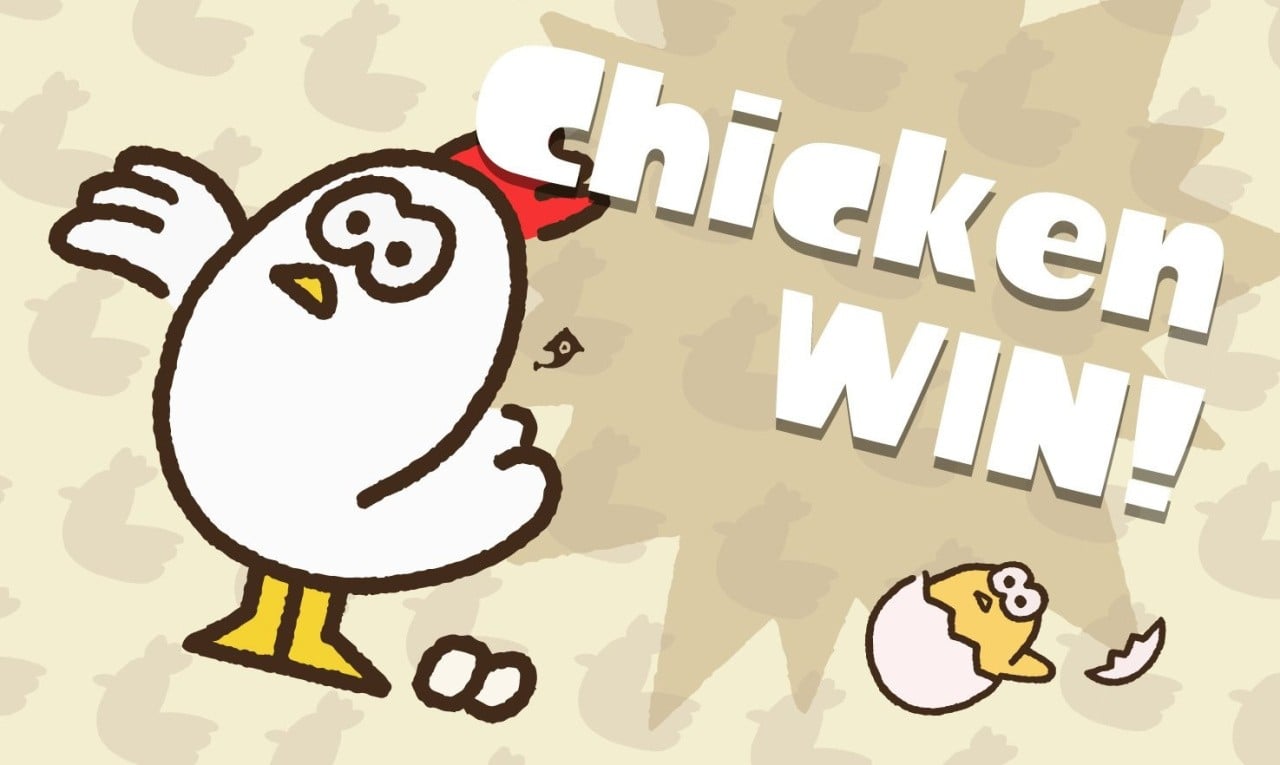
Team Chicken Rules The Roost In Splatoon 2’s Splatfest
Update (Mon 24th Aug, 2020 04:15 BST): Nintendo’s Chicken vs. Egg contest has officially come to close and it seems the chicken came first! It had a 2-1 victory over Team Egg. Here’s the full breakdown courtesy of the Nintendo Versus Twitter:
The #Splatoon2 #Splatfest results are in, and #TeamChicken rules the roost with a 2-1 win! Thanks to everyone who helped solve this age old question, and be sure to claim your Super Sea Snails in Inkopolis Square!
Original article (Sat 22nd Aug, 2020 06:55 BST): Nintendo apparently held its “final” Splatoon 2 Splatfest last July (Pearl won, by the way) and ended major support for the game. Despite this, it has continued to roll out minor updates and in recent times has been hosting additional Splatfests.
This weekend, as you might recall, is the all-time classic: Chicken vs. Egg. So pick a side in Inkopolis Square and join the battle.
The original Chicken vs. Egg Splatfest was held in 2018 and Chicken took out the victory with a 2 – 1 win. It was also apparently the first time a “solid white” colour was used in the game (no, mayo doesn’t count).
When we find out the results of this latest Chicken vs. Egg battle later this weekend, we’ll update this post. In the meantime, tell us in the comments and poll which side you’re fighting for.
September Issue Of Nintendo Dream To Reveal Switch Game “Everyone Will Enjoy”
Japanese video game magazine Nintendo Dream will reportedly reveal a Switch game “that everyone will enjoy” in its upcoming September issue. This information was teased in its latest edition this month.
The source – Nintendo Everything – points out that “while Nintendo Dream’s context indicates that this is a single announcement, Japanese doesn’t easily differentiate between plural and singular”. This is all that’s been teased so far – sowhat could it be? One game, or perhaps more? There also happens to be a certain anniversary taking place in the month of September – right, we’ll stop now!
Apart from this teaser, the magazine has announced it will be publishing an interview with the Japanese voice actor of Claude from Fire Emblem: Three Houses.
We’ve heard magazines hype up announcements in the past like this. One occasion that immediately comes to mind is when Famitsu teased a “revolutionary” scoop tied to Sega that ended up being a Japan-only arcade service/platform known as ‘Fog Gaming’. In other words, try not to get too excited – and for all we know, this reveal may be shared ahead of schedule.
If we hear or see anything else regarding this Switch game Nintendo Dream is teasing, we’ll be sure to let you know. What would you like to see and what do you think it could be? Take a wild guess down below.
Ahead of Serious Sam 4's release next month, GOG is giving away the first game in the over-the-top FPS franchise for free for a limited time. As part of its new Harvest Sale, you can claim Serious Sam: The First Encounter free of charge until August 26, at 6 AM PT / 9 AM ET. Like all games on GOG, this is a DRM-free key that doesn't require activation on a specific client or an active online connection to enjoy.
Serious Sam: The First Encounter originally released in 2001, so Croteam's debut title in the long-running series certainly looks more than a bit dated. That said, it's a classic that's well worth checking out, even if you're just curious about early iterations of the now ubiquitous first-person shooter genre.
This interesting code snippet was brought to my attention by Finxter reader Albrecht.
a, b = 250, 250

for i in range(250, 260): if a is not b: break a += 1 b += 1

print(a)

# What's the output of this code snippet?
You’d guess that the for loop goes from i=250 to i=259, each time incrementing a and b. As Python creates one integer object to which both names refer, the command a is not b should always be False. Thus, the result is a=259, right?
WRONG!!! $%&&%$
Try it yourself in our interactive code shell:
Exercise: Run the code and check the result. Did you expect this?
If you create an integer object that falls into the range of -5 to 256, Python will only return a reference to this object — which is already cached in memory.
“The current implementation keeps an array of integer objects for all integers between -5 and 256, when you create an int in that range you actually just get back a reference to the existing object.”
You can visualize the code execution in this interactive memory visualizer:
Exercise: Click next until you see the result. How many integers are in memory?
Let’s quickly examine the meaning of “is” in Python.
The is operator
The is operator checks if two variable names point to the same object in memory:
>>> a = "hello"

>>> b = "hello"

>>> a is b

True
Both variables a and b point to the string "hello". Python doesn’t store the same string twice but creates it only once in memory. This saves memory and makes Python faster and more efficient. And it’s not a problem because strings are immutable — so one variable cannot “overshadow” a string object of another variable.
Note that we can use the id() function to check an integer representation of the memory address:
>>> a = "hello"

>>> b = "hello"

>>> id(a)

1505840752992

>>> id(b)

1505840752992
They both point to the same location in memory! Therefore, the is operator returns True!
Small Integer Caching
Again, if you create an integer object that falls into the range of -5 to 256, Python will only return a reference to this object — which is already cached in memory. But if we create an integer object that does not fall into this range, Python may return a new integer object with the same value.
If we now check a is not b, Python will give us the correct result True.
In fact, this leads to the strange behavior of the C implementation of Python 3:
>>> a = 256

>>> b = 256

>>> a is b

True

>>> a = 257

>>> b = 257

>>> a is b

False
Therefore, you should always compare integers by using the == operator in Python. This ensures that Python performs a semantic comparison, and not a mere memory address comparison:
>>> a = 256

>>> b = 256

>>> a == b

True

>>> a = 257

>>> b = 257

>>> a == b

True
What can you learn from this? Implementation details matter!
Where to Go From Here?
Enough theory, let’s get some practice!
To become successful in coding, you need to get out there and solve real problems for real people. That’s how you can become a six-figure earner easily. And that’s how you polish the skills you really need in practice. After all, what’s the use of learning theory that nobody ever needs?
Practice projects is how you sharpen your saw in coding!
Do you want to become a code master by focusing on practical code projects that actually earn you money and solve problems for people?
Then become a Python freelance developer! It’s the best way of approaching the task of improving your Python skills—even if you are a complete beginner.
How to Make Online Photo Editing Effects like Blur Image, Sepia, Vintage
Last modified on August 23rd, 2020.
Photo editing effects will turn graphical elements to be expressive. With suitable effects, you can use a simple image and convey an idea. For example, you can bring logo to the foreground by blurring the background image.
The effects like image blur, transparency, shadowing creates attractive visual effects. There are many different image effects available. In fact, hundreds of them are available.
Online photo editing tools use a variety of methods to apply the effects on a target image. For example, either a CSS filter property or a SVG filter primitive can create an image blur effect.
Most of the visual effects are achievable with HTML5 and CSS3 filter properties. We will see how to make photo editing effects to blur, apply sepia, and vintage effect on a target image.
I created a simple image editing tool to apply blur, sepia, and vintage effect on a target image. Following is a live preview of the tool.
I have added a jQuery slider to allow you fiddle with the image editing effects between a min-max range.
What is inside?
Popular photo editing effects
Uses of image editing effects
About this example
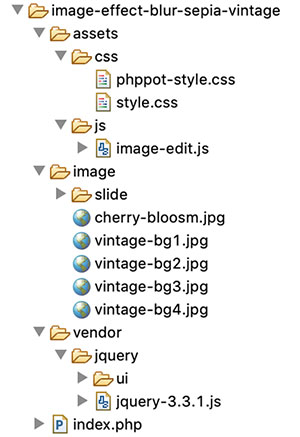
File structure
Online photo editing UI to apply blur sepia effects
Managing image editing effects with jQuery slider
Blur image using CSS and SVG filter
How to apply sepia effect on an image
Applying various tones with vintage effects
Editing tool output with image Blur Sepia and Vintage effects
Popular photo editing effects
You can use photo editing effects and manipulate images in an innovative way. They cause visual conversion on the UI graphics. You can add tones, brightness, shadow, themes, and lot more effects on a photo.
After selecting the action buttons, the slider control will supply the value of the selected editing effect.
The reset button helps revert back to the original state of the rendered image element.
Managing image editing effects with jQuery slider
This jQuery script initializes UI slider on document ready. It applies the selected effects on an image by clicking the blur, sepia, vintage buttons. On dragging the slider handle the value from the ui.value has the effect’s intensity.
On selecting each effect, the slider reset will happen to bring the handle to the min position.
The reset button will clear the applied photo effects on the image. It reverts the target image back to its original.
assets/js/image-edit.js
$(document).ready(function() { $("#slider").slider({ range : "min", min : 0, max : 100, slide : function(event, ui) { var val = ui.value; var action = $('.action.selected').val(); applyEffect(action, val); } }); $('.action').on('click', function() { resetSlider(); $('.btn').removeClass("selected"); $(this).addClass("selected"); }); $('#vintage').on('click', function() { $('.btn').removeClass("selected"); $(this).addClass("selected"); $("#slider").hide(); $("#vintage-slide").show(); vintage(1); }); $('.vintage-effect').on('click', function() { var val = $(this).data("slide") vintage(val); }); $('#reset').on('click', function() { resetSlider(); $('.btn').removeClass("selected"); $('.btn').first().addClass("selected"); }); });

function applyEffect(action, val) { if (action == 'Blur') { blur(val); } else if (action == 'Sepia') { sepia(val); }

}

function blur(val) { $("#image").css("filter", "blur(" + val + "px)");

}

function sepia(val) { $("#image").css("filter", "sepia(" + val + "%)");

}

function vintage(val) { $('.vintage-effect').removeClass("selected") $("#vintage-effect"+val).addClass("selected"); $(".overlay").show(); $(".overlay").css("background", "url('./image/vintage-bg"+val+".jpg')")

}

function resetSlider() { $("#slider").show(); $("#vintage-slide").hide(); $(".overlay").hide(); var options = $("#slider").slider('option'); $("#slider").slider("value", options.min); var action = $('.action.selected').val(); applyEffect(action, options.min);

}
Blur image using CSS and SVG filter
As shown in the above example, blur image action is possible with CSS filter function blur(). It accepts a value as its parameter to apply the blur filter on the target element.
The CSS in the below code will apply the blur effect on the image element of the HTML.
This example has a slider’s drag event-based photo editing effects. So, the jQuery script manages the CSS filter property on dragging the slider handle.
Blur image with SVG filter and CSS url() function
In the below code, it shows yet another way to blur images HTML element. It uses CSS url() function to apply the blur effect.
The url() function accepts a path or a selector string to apply the filter via CSS.
This code has the svg with <fegaussianblur> filter primitive. The blur intensity will vary based on the stdDeviation attribute’s value.
Sepia is one of the photo editing effects used in this example to apply on a HTML image. It gives light reddish or brownish tones to monochromatic photos.
There is yet another CSS filter function sepia() to apply this effect on an image.
The CSS sepia() function may have a number or percentage as a parameter. All the below CSS styles are valid to create the sepia() effect.
The vintage effect on a photograph gives an ancient tone to the photo. It’s an art to giving a flimsy tone to the modern photo output.
In this example, I have used template films to create a vintage effect on an image. It uses four types of films as a background to add different tones to the image element.
There are plugins to convert photos with vintage effects. For getting a basic result, the combination of the basic photo editing effects may help.
Editing tool output with image Blur Sepia and Vintage effects
In the below screenshot, I have shown all the three photo effects in a single output window.
Conclusion
We have seen how to apply three of the popular photo effects blur, sepia and vintage on an image. Though there are more possible effects, this example code is a very good beginning to achieve all.
I hope, applying effects with jQuery slider is more comfortable than any other type of input. I prefer slider whenever required to collect input between ranges.
Applying a creative combinational photo editing effects will give impressive results. Not only beautification but also helps to convey your thoughts via graphical representation. Rock on!
Run, Gun, Eat: A Deep Look at Devouring Enemies in Bite the Bullet
Summary
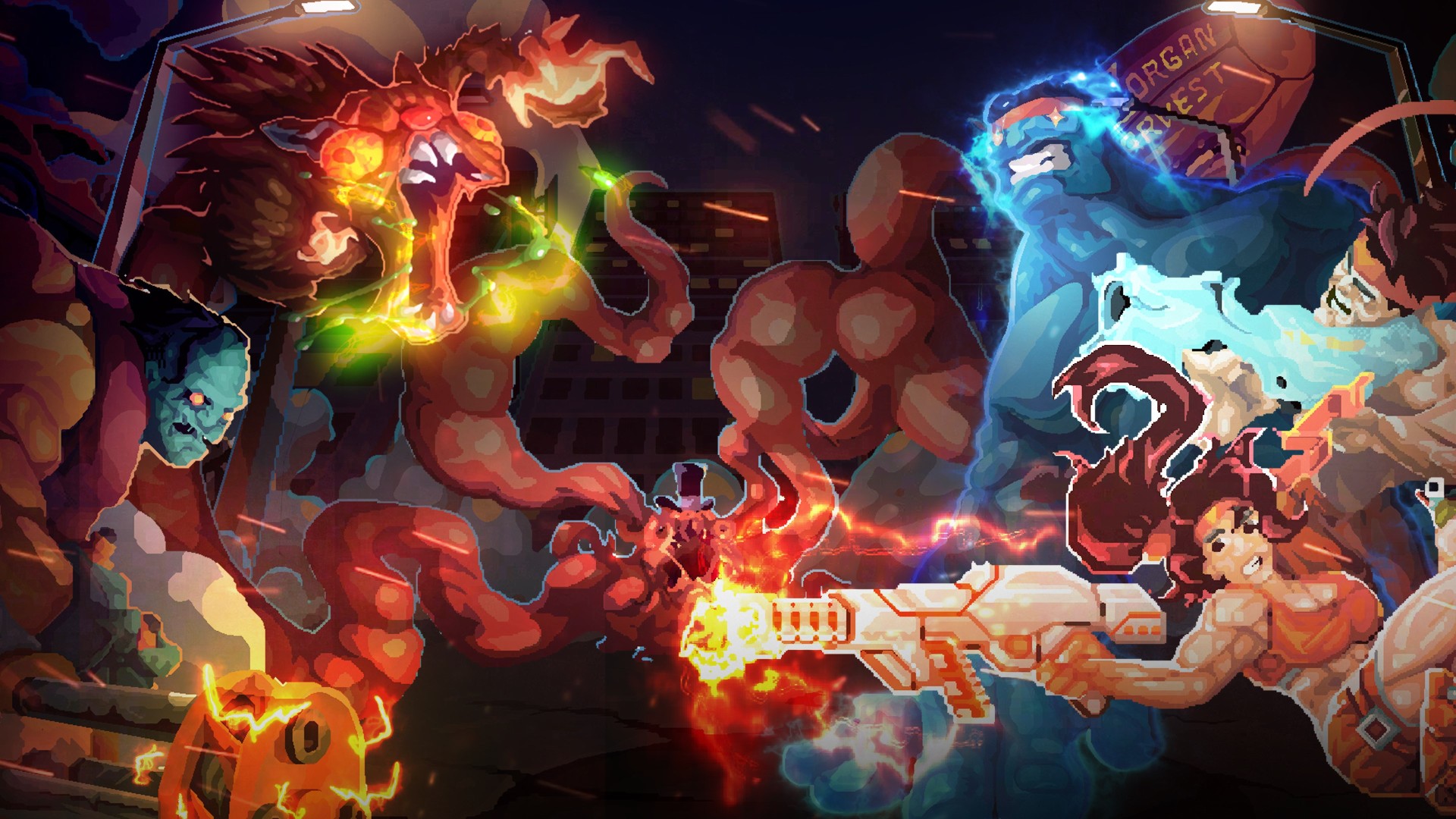
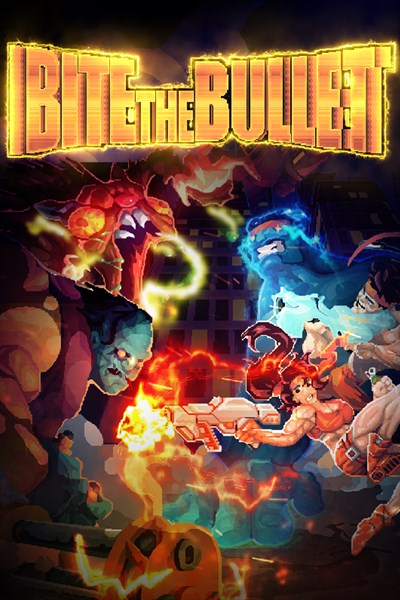
Bite the Bullet is a run and gun featuring a tasty twist: you eat your enemies.
With a sophisticated eating mechanic, your diet directly influences your skill tree, weapon options, and character abilities.
Lock and load and get ready to eat!
Classic run-and-gun platformers are beloved for their fast-paced action and challenging gameplay, but Bite the Bullet offers a tasty twist. The developers at Mega Cat Studios designed Bite the Bullet as a run and gun and eat. In a post-apocalyptic wasteland, you play a human-ghoul hybrid that blasts and eats its way through fields of enemies.
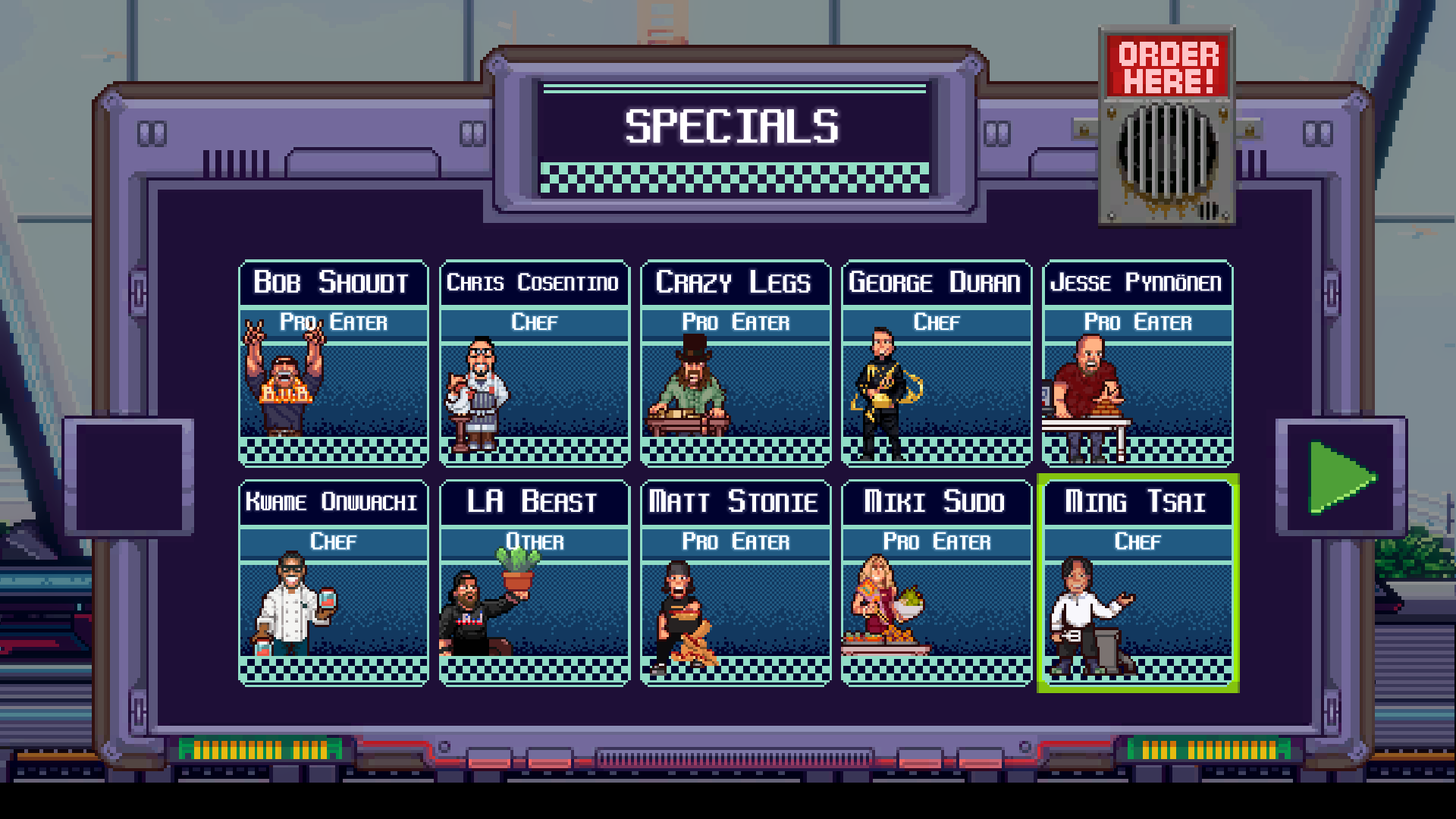
This eating mechanic has an enormous influence over game strategy because every dietary decision influences your skill tree, weapon options, and character abilities. To add even more flavor, Mega Cat Studios included guest appearances from some of the world’s biggest competitive eaters and chefs. These culinary icons offer unique power-ups.
Character Classes and Dietary Decisions
Game developers traditionally use food in video games as character power-ups or health elixirs. In Bite the Bullet, however, your diet influences everything. Pick from four character classes:
Gorivore: Eat robots and metal objects
Slaughterer of the Soil: Eat plants
A Smorgasbord: Eat zombies
I See, I Eat: Eat everything.
Character classes directly influence your abilities throughout the game. When you’re A Smorgasbord, for example, one power-up turns your enemies into explosive corpses after they die to deliver extra damage to nearby enemies.
Eating for Resources
Carbohydrates, fats, calories — they’re all important resources for building weapons. In addition to standard fare like assault rifles and rocket launchers, you can blast away at enemies with Gluten-Free Railguns, Family-Sized Shotguns, and the Critter Cannon (a bazooka that launches explosive critters).
Crafting takes place inside your stomach, which means the only way to use your new weapons is to vomit them up after you’re done modifying. Throwing up leaves you vulnerable to enemy attacks, and it also drains you of valuable resources you’ve gathered. Craft strategically!
Eating also influences your physical abilities. By eating enough of your enemies, you transform into a Zombro, a powerful version of yourself with invulnerability. Eat too much fat, and you’ll grow obese, making you slow and sluggish but also durable. By understanding how diet impacts overall gameplay, you can add Zombro, obesity, and various skill tree perks into your strategy.
Inspiration from the Culinary World
Eating is fast and aggressive, just like in professional eating competitions. Mega Cat Studios was inspired by some of the world’s best professional eaters, some of whom make an appearance in the game.
Miki Sudo won Nathan’s Famous Hot Dog Eating Contest six years in a row. She’s hidden in the game to offer you a pie shield — a swirling buffet of pie slices that protect you from enemies. Fellow athletes like LA Beast (best known for his YouTube channel where he eats things like light bulbs and cacti) and Crazy Legs (who has appeared on “The Tonight Show”) also pop in with gifts.
World-renowned chefs are also tucked inside Bite the Bullet to offer one-of-a-kind power-ups. Look for chefs like Chris Cosentino (famous for winning “Top Chef Masters”), Ming Tsai (a restaurateur and TV personality), and Kwame Onwuachi (a “Top Chef”contestant).
Mega Cat Studios has developed a unique approach to the run and gun genre. The alterations in gameplay ensure the experience feels fresh and fun while honoring run and gun classics. Play Bite the Bullettoday on Xbox One!
Bite the Bullet
Graffiti Games
☆☆☆☆☆4
★★★★★
$14.99$11.99
Bite The Bullet is the world’s first Run & Gun & Eat. In this roguelite RPG shooter you must eat enemies, bullets and more to powerup your character, weapons, and abilities. Gun down zombies, robots and giant mutant bosses with a barrage of bullets before chowing down on their corpses to craft new weapons, unlock new abilities and special attacks, and transform into a powerful Zombro form to smash foes. Explore four character classes and a skill tree based on your diet – and remember, you are what you eat! You Are What You Eat How you play is driven by how you choose to eat. The carnivorous Gorivore or vegan Slaughterer of the Soil that have their own unique abilities and perks, changing how you defeat enemies and navigate levels. Customize your character with every choice and every bite. Maximize your build for your playstyle, run the world again with a different diet for a new challenge, and team up with a friend in co-op to ramp up the bullets and the calories.
Q& A: Making an outer space roadtrip with Night School’s Next Stop Nowhere
Next Stop Nowhere, the new game from Night School Studio and Well Made Entertainment, dropped last week on the Apple Arcade store, continuing the platform’s habit of announcing an array interesting titles a few days before their release.
The adventure game, which jumps beyond the 2D-storytelling of Night School Studios’ Oxenfreeand Afterpartyputs players in the boots of an outer space transport pilot named Beckett. Instead of walking side-to-side across otherworldly environments, players now explore a 3D environment in top-down view, with brief excursions through asteroid belts and while piloting an AI-powered ship.
It’s a neat jump for the small indie developer, pushing the boundaries of what the studio’s known for and trying to expand what can be done with narrative games in the world of Apple Arcade.
For a look at some of the thinking behind Next Stop Nowhere, we chatted with lead writer Adam Hines and creative director Sean Krankel, both co-founders of Night School Studio, about what it was like making a space roadtrip story people can play on their phones.
Next Stop Nowhere kind of sprung up out of the blue, to be announced and launched on Apple Arcade within minutes of each other. How long has Night School Studio been working on this, and what were the origins for what seems to be a new kind of game for the company?
Krankel: Nobody knew we were working on it except for us. It was a very tight-lipped project. We wanted to build this project since even before Oxenfree was finished. We started working on this concept back in 2016, and ended up shelving it briefly at sort of a very high-level story phase because we didn’t know exactly how to bring it to life. We didn’t know exactly how to merge some of the mechanics that we wanted to do.
The idea for Afterparty bubbled up at the same time, and that just seemed like a funnier, easier thing to jump into right now. So we had cool concept art and some basic story, ideas floating around and back then the idea truly was “how can we do a playable roadtrip adventure? How can we do one that that feels like an Odd Couple sort of pairing between two characters that might not necessarily want to be spending a bunch of time together?”
[It was] this kind of Americana roadtrip, Route 66-type of a thing that evolved over the next few months before we ended up going “alright, this team is getting bigger than we think we can handle right now.” In the middle of making Afterparty, we were able to bring it back to life because we pitched it to the folks at Apple.
The idea was really to make not just a roadtrip, but one in space–if you think of most space games, usually they’re epic in scope…ours is much more like, “what if it was a comedic sort of Mad Max version of space? And what if seeing other people was very few and far between, something that feels much more grounded? How can we recreate the feeling of Han and Chewie arguing with each other throwing a wrench at each other and being in the cockpit and make it feel really small as opposed to a big sort of space opera?”
To do that, we just wanted to focus on a small cast. So you play as this character Beckett, who is a courier who has a pretty boring life other than the fact that he’s flying around space. But he is in his ship named Cody and Cody is kind of like if you took the Millennium Falcon, but put Siri in it. Cody is like [Beckett’s] best friend, like a puppy for him. And he gets embroiled in this much-larger-than-him story where this woman Serra that he meets at a a truckstop bar is trying to find and save her son who has double-crossed some organized crime dudes.
Over the course of this game, it’s almost like you’re the sidekick or the helper for Serra. Serra is the one with the larger than life story. You’re just a standard courier and it’s really this relationship between you, Cody, Serra, and all the kind of misadventures along the way.
The last time Night School Studio made a game for phones. It was text message Mr. Robot game where function and form overlapped with story. What did you learn about making games for phones with Next Stop Nowhere?
Hines: Sean has a lot more experience working with games tailored for the phone experience. It was great having that insight. One big change in our thinking is that in our past games Oxenfree and Afterparty, you could get really comfy on the couch, sink in and you’re gonna play for a while and the conversations can flow and mingle and it’s meant to be kind of a very easygoing experience.
But of course, on the phone, it’s people playing on the bus, people playing on the couch…or [waiting for] what they’re cooking to get done. It was really important for us to make these very nicely consumable bite-sized chunks of content, where you could dip your toes in and out of plots with the characters and the gameplay mechanics that can all feed into that.
It was fun trying to come up with these little 10-minute, 15-minute chapter chunks and try to always have a bit of a carrot dangling on the stick to try to…either [drive you] to keep playing the game if you like, but also feel very comfortable to put it away. The game is always telling you, “it’s okay to stop now and take a break if you want.” For me, from the writing angle, that was the biggest, most fun challenge to apply to this new type of game.
Krankel: I think the constraints of touch controls and mobile helped us make this game more unique than what our initial concept was for it. Initially, we thought…this is going to be a console-first thing but what ended up happening was that the sort of sheer focus of the size of the screen and the play session length and the [mobile controls] just helped us make a cleaner better game I think like it impacted our art style in a big way.
Initially our art style was probably veering toward what most people would think a stereotypical space game–rusty ships in black space with white stars, etc. We went “no, let’s do something extremely bold. Let’s make sure it’s got crazy screenshot appeal.” Now the color palettes change on a per-scene basis for the characters so the characters are constantly color swapping. We looked at some of the best-in-class stuff from games like Monument Valley, to other games that really own that screen real estate well.
It was the same thing with the [game controls]. I think it made us really think “let’s not assume that we can have some big inventory and that the player is going to see all this various stuff all over the screen to be able to grok it. Let’s boil it down and make sure that dialogue choices, interactions, puzzles are all really juicy and fun to interact with,” which is not a thing that we’ve really leaned into in the past.
Your last two games featured young characters figuring out who they are both in Oxenfree and Afterparty. This game features a jobber, a working-class kind of person, like someone who got past the “figuring out who they are stages” of life and are now in the “just trying to get by” stage.
They’re both actually pretty atypical fantasies for games. Did that lead anywhere interesting in the design and in your vision for the game?
Hines: It was definitely fun to play in this headspace as opposed to always kind of doing a coming-of-age thing. I think two things definitely led us here: One was the reality that we 100 percent wanted a character that had a kid, and that kid to be adult enough to have gone on his own adventure, stole this thing and gotten into trouble.
That by itself aged up all the characters. They just couldn’t be 18 and 16. So putting that kind of stake in the ground forced us to consider actual adults who have past lives. Just like you said, their priorities are very different. Then you’re kind of just coming out of high school or life is all ahead of you.
Second, the game is set after Earth has failed, so no one has a ton of hope. It makes a lot of sense that the characters here would be adults that are just trying to get by and trying to find inspiration and love and fun in a very kind of hopeless situation. That became a big theme of the game.
Krankel: The other piece of it is, pretty early on when we talked about making this Odd Couple type of dynamic. We wanted to let the player play an adventure that they can turn into a romantic comedy, or one they can turn into just, “alright I guess we’re stuck in this together,” or to not even be remotely friendly with each other.
That dynamic of making the player character be somebody who has lived enough of a life, and like Adam mentioned, Serra already having a kid, meant that we just needed to build out a history for Beckett, that afforded a little bit more mature opportunity to fall in love with somebody, as opposed to “this is my first love.” I think that it was kind of fun to get into a character that frankly, is probably more relatable to those of us in the studio than our other characters.
But the funny thing is, we talk about our other games being coming-of-age games, but I think the further we go through life, it’s always coming-of-age! I don’t know if you’re like 70 and you feel like you’re coming-of-age. So even this one I think still feels like [it’s] a coming-of-age game. It just so happens to be with some early 30-somethings.
There’s an arcade component in this game with flight challenges. It’s a little bit Star Fox and a little bit Rogue Squadron to my millennial eyes. Whenever a studio makes a new gameplay introduction, it means like a pretty significant technology leap somewhere. Do you have any insight on how a small studio was able to add those to its repertoire without breaking itself?
Krankel: One of the biggest leaps for us for this was the fact that this game has full 3D navigation and the flight sequences. We actually partnered with this incredible studio, Well Told Entertainment, and they are folks who we’ve worked with for years to supplement some of the stuff we’ve done in the past. For Next Stop Nowhere, they took on a much more robust role in building the game.
I think what was really helpful was that they really, instead of being afraid of that wanted to push even harder into that territory. So we’ve got full 3D-navigation, which allows our level designs to be a lot more interesting or dynamic-feeling than they have in the past. You get more interesting spatial puzzles that we didn’t do much of in our last two games because we were really restricted to just the X-Y axis.
But on the flight front, it’s funny–we tested it forever and it’s just so difficult to find this balance of like, “how do you make a game that’s challenging enough that feels good and exciting and seat-of-your-pants but also doesn’t betray the rest of the story components?”
A lot of people that play our games are not looking to play the twitchiest, skill-based thing ever. It’s not like we’re going to throw a Dark Souls boss into the middle of Oxenfree, as much as Adam probably wants that.
Hines: *laughs*
Krankel: It was a combination of…not necessarily a ton of technicalchallenges, but certainly designchallenges and finding a balancing act that felt good for that. We had versions of this that were far more complex and more difficult and they just didn’t feel good. So we whittled it down, and our ethos was, “if you are getting dumped into one of these sequences, it should never anger you, it should be a fun version of stress.” And so the gameplay really in those flight sequences is primarily obstacle avoidance and story content at the same time.
I think the other piece for us that that we never want to turn away from is letting stories still sit inside of other mechanics. When you’re flying, you can still have conversations when you’re flying…I feel really good about where we landed, but you know, Well Told really helped push those flying sequences to be what they are.
Another thing just to add to that, is that we want players to make choices not just in dialogue. Choice also should be about spatial choice and where you are going and when. Our flight sequences aren’t just like, “welcome to the arcade crazy sequence. We’ll go back to the story in a minute and a half.”
Those are real roadtrip moments where it’s like, “if my two friends over here are going to investigate something on the southern path, we’re going to go on the northern path, and we are going to completely miss the story content that existed on that other path.” It’s funny you mentioned Star Fox, because obviously there’s some inspiration there. But the branching map of Star Fox was hanging in our office for a while.
I low-key forgot Star Fox had that.
Krankel: Right?! Which is crazy that that had branching levels. It was so unnecessary!
Every interview we do these days has an element of “how are you dealing with COVID-19” in it. Because you can’t not talk about a global pandemic, right? Normally what I’ve been asking developers is “how are you adapting to remote work,” but especially with a mobile game, it’s worth asking if you’ve learned anything about how peoples’ play habits are changing?
Krankel: In terms of like, making Next Stop Nowhere, the interesting thing was because we’ve partnered so closely with Well Told, who were not on site with us. [They] actually primed us in many ways for this. It made our communication as a studio already get better via Zoom and all the tools that and now everybody’s kind of forced to be using. I think we sort of lucked out on that front because we went through our growing pains on that a little bit earlier.
I think there was a very serendipitous thing and that the themes of our game really are things that feel like to me, something I want right now just you know, subjectively like the fact that it is a game about connection and a roadtrip and seeing people when you rarely get to see them and it’s got you know, awesome music, and the story has a lot of heart and warmth. To me it feels like it’s ready for this moment. But that was just luck, just good timing that, “let’s go on a roadtrip, that sounds fun right now” [being relevant].
In terms of the launch that feels super weird just because I imagine every developer launching a game right now feels kind of odd, but it’s just a bummer that we don’t get to see [reporters] in-person, or talk to other people…all the natural stuff that feels like how you launch a game we just haven’t done. I think across the whole team, we’re still like, “oh, is it out? Is it really out?”
It doesn’t feel like we put it out yet because nothing seems different anymore. Everything is the same day over and over again.
Hines: To Sean’s point, it’s definitely been a slow process…of just learning how to work with another team off-site, and thankfully, [the pandemic] hasn’t really changed to too much of that. It’s just kind of our own internal team. We’re really learning and relearning, again, how to make sure that we’re always in communication and making sure that things are getting done.
There’s also the awkwardness of trying to schedule in “happy fun time” because it’s just impossible to naturally bubble up those moments where you go “hey, let’s get a coffee and talk and just hang out for 15 minutes before getting back to work.” To me, it’s still important that those things happen. So remember that we’re humans on the other side of the monitor, but just trying to make that a thing that we still do.
But yeah, and then there’s just the brutal every day bad-news, bummer cycle. It probably would have affected the story and led us to tweak some tonal things and things might have been a bit bleaker and might have been a bit more cynical. But I’m glad in a way that we made a game where the tone of it…because it was written right before the pandemic, and because we’re still so focused on being an ultimately lighthearted roadtrip game…
I like Sean’s point it is the thing that is hopefully a bit of a nightlight in all of this where it’s kind of nice and comforting. Ultimately, there are themes that I don’t think should go completely away and should be [ignored] right now, even if we all might feel like things aren’t looking too great.
The following blog post, unless otherwise noted, was written by a member of Gamasutras community. The thoughts and opinions expressed are those of the writer and not Gamasutra or its parent company.
Disclaimer: Ideas in this work may or may not be the same as my current or previous employers and or colleagues. Most of the ideas here are not my invention and are either widely accepted pieces of knowledge or are part of referenced literature in the end. Major influence on work is from the book by Dougles Hubbart: How to measure anything. I just humbly synthesized these ideas to more condense form in hope that it will help future game creators. I hope that you will have “fun” and if so, please write me your opinions on [email protected], or as a comment here.
Imean, I kinda care, otherwise I would not write about it. Nevertheless, there exist many theories and definitions of fun, and each of them is failing on one or another front. Good news is that we don’t have to know what fun is. How many of you actually know what kilogram really is? It used to be a weight of one liter of water, that times are long gone. Nevertheless, we still use kilogram to weight objects around us. If I tell you that the object’s weight is 500 kg you will probably imagine something of car-size. If I tell you that I lost 20 kilograms, you would see it as a big weight loss. We don’t need to know what exactly something is to use it in measurements. We just need to know how a kilogram (or in our case “fun”) manifests in the world. This is especially true about intangible things like opinion, religion, happiness, love, anger, health and fun. Intangibility never stopped us, why it should in case of fun?
Now, considering not only what fun is, but how it actually manifests in the world; somebody can say “I have fun when I try something several times, before I get it right, I feel challenged that way.” or somebody may frown, grip the controller very tightly while retrying the same passage for several minutes; is any of this fun? I don’t know, but I know that in my game part of fun should be being challenged and this seems like players are being challenged. Things that are happening in the world like players actions or players expressions, that we can observe and therefore measure are called proxies. They are not directly thing that we are interested in but, they show us the right way to it
We don’t need to know precisely what x is to measure it. We need to know how x manifests in the world so we have proxies to measure.
First, a quick detour to school. Why are we going to stand on scale in the first place? We have some internal (folk) theory of how our weight is connected to our physical condition. Kilograms within a specific range means healthy, outside of it means unhealthy.
We as humans have tons of such theories about everything around us. We have internal theories (sometimes called mental model) describing why objects fall to the ground or why our friend behaves a certain way. Thanks to these theories we can predict that will happen if we throw a ball in the air and tell our friend to catch it.
Theories are clusters of hypotheses that should be coherent with each other. A hypothesis is an explanation of how x is connected to y. If x happens then y should always react the same to that event. Hypotheses in theories are interconnected; that means that if we know what is the relationship between x and y and we also know what is the relationship between y and z, then we should be able to deduce the relationship between x and z.
Cases in which we know truly what the relationship between x and y are very rare. In practice more often than not we are not trying to get a true relationship but as close to true as possible. Closer to this case we are, the better hypothesis we have. By getting better hypotheses we are getting better theories. If the hypothesis is not good enough we scratch it and come up with a new one. A hypothesis that does not improve our theory is not good enough. Once our hypothesis is good enough (or better than starting one) we update our theory. Once we have updated theory we can set up a new better hypothesis based on it, and then the whole loop starts again. With internal theories, we do this automatically and unknowingly (simplified base for learning). Once we make it explicit we can do it way more effectively and generally better. That is a very simplified core of the scientific method. When we are inquiring about the connection of our proxies and “fun” we are using very same core principles. We as game creators to this all the time, so I think it is time to take the next step and make it explicit.
How can we do this next step? Well first we have to set up our hypothesis and then we have to measure it! This is the end of the detour, now we can look at proxies that helps us with measuring.
When we stand on a scale, information that we receive is a number. Do we really care for the number or do we care for the idea that this number represents – in case of a scale it is our health. Essentially, Measurement is an approximation of one phenomenon to another, till we get to an approximation that we understand intuitively (or rather something that is already part of our internal theory). That is the power of proxy. Proxy is a phenomena about which we have enough intuitive understanding. Yes, different people can have a different intuitive understanding of the same topic. Junior designers would argue about who is right, experienced designers would set up an experiment for their theories and then measure the outcomes.
A great theory with bad measurements will lead to worse results than a weak theory with great measurements. Bad measurements will improve theory only a bit (if at all) while good measurement can move theory by miles (this is iteration once again, you probably heard of that before). How do we know measurements to choose? Measurements have parameters:
Accuracy – Let stand on a scale once again and weight ourselves. If we weigh ourselves on several different scales, and each show approximately the same number, then we know the number is accurate. Accuracy is the degree of truthlikeness of our measurement
Precision –If you stand on the same scale a few times in a short time. It may happen that you will see bit different numbers. These can show you how precise the scale actually is. Closer together these numbers are more precise the information is.
Granularity of measurement – If you stand on a scale do you really care about grams or kilograms? If your decision is “should I eat cake today” kilograms will be good enough. On the other hand if you are a professional bodybuilder with a very precise diet then yes, grams can be very important for you. When you are weighing your medicine even milligrams may be a line between cure and poison.
For sure you can imagine, that each measurement can have different degrees of each parameter. Imprecise but accurate weight will show +/- 25% of the real value each time you step on it. Scale with rough granularity will show only kilograms and precise but inaccurate weight will show exact numbers each time but it will be exactly 8 kilograms off. In each case you will not know exactly what you wanted to know but you will be closer to the truth than before.
So why not always have as precise, as accurate and as granular measurement as possible? Well, because it is expensive; in terms of money, time and actual know-how. Measuring salt for your home cook dinner will be very different than measuring salt for royal wedding main course by a professional chef. Different situations require very different degree of measurements. This all depends on the decision that you are making.
Design is a sequence of decisions about what to make and what not to make. To make this decision we need to have a theory about how each part of our designed game works and what experience it induces. To have the best possible theory we have to improve it as much as possible, and to improve it we have to have as many as good measurements as it is possible. Best designers are not one, who think they know how things should be, but those who are able to update their theory as fast as possible (and this is basically iteration on design).
Every singular decision is connected to a specific subset of hypotheses in theory. These are usually hypotheses regarding proxies or approximate to the proxies we use. Closer the proxies are to our question stronger connection they have. Therefore to make decision we should measure and explore the closest proxies. For example: What you eat and how much you move is closer to your health than fuel consumption of a bus in your city. Nevertheless, both are part of an energy transformation theory. Hence learning about the combustion system may help us with our diet, learning about calories will help us way more.
As you can see, closer the connection more value we get from our investment. You should never invest more resources into measurements than you will get from it. What value you can get from investing in measurement? Well main candidates would be faster iterations, lowering opportunity cost, evading retroactive fixing, evading out of scope or under scope features, more effective testing.
One of the most dangerous parts of collecting data is over-analyzing and over collecting them. I have seen many developers do this. Do you think you didn’t? When was the last time you went through Reddit or steam reviews and then came back to the office with a whole new idea about what should you change? This is also the case of that. Humans are pattern making machines. We see faces in clouds, moods in yellow circles with dots and patterns where there are none. Sometimes you can have too much data for your own good, especially if data are not accurate or precise. To lower the chance of the noise talking you should always strive to refutability by looking for counter examples and corroborate by employing multiple different kind of measurements.
…and you don’t really need one (but they are extremely useful and I love all of them). It is about properly set parameters of measurement again. Analyst will offer you quite precise and accurate data. No measurement at all will offer you precisely and accurately no data. There is vast space between these two points where you can operate quite cheaply and fast.
Here are some examples of measurements in various degrees. I will always add advanced and minimal variant examples. I doubt that you will use the advanced variant anytime soon, but that is ok. Also take notice that it is just a simple summarization of a few methods, it should serve more as inspiration for additional research than exhaustive list.
Heuristics:
With this method we are looking for rules of thumb. Some very simple rules that may lead to specific consequences. This is domain of “player type” of game creators and seniors who played it all already. Short Heuristic analysis can reveal a lot even before you start the game. Good news is that you probably already do this, just not systematically. For example: Does this platformer have a coyote time and how far? Does healing potion have the same colour as health (probably red)? It is well known approach in service and product design (try to ask your closest UX designer).
Minimal variant: Just play the game. What are things that you expected to happen and didn’t. Show your game to somebody else who likes to play games and listen for what they notice as first.
Advanced variant: Have extremely detailed journal constant of different introspections in various games and cultural artefact. Improve your heuristics by continuous playing all possible games.Make a library of patterns (Like you can find in Art of Game Design by Jesse Schell or Game Mechanics: Advanced Game Design by Ernest W. Adams and Joris Dormans)
Playtest:
Playing games and seeing how it works. What happens in the game. It is basically starting the whole thing and seeing it running. There are a lot of very good articles, Reddit posts and videos on how to playtest for good reason. Playtesting is the cornerstone of any game development. If you are not doing this already then I don’t know what you are doing.
Minimal variant: Play the game on your own or with few people; as soon as possible. Repeat all the time.
Advanced variant: oh boy, so many. Kleenex playtesting, focus group testing, company wide testing. Have a dedicated team of pro players or ex pro players and let them play every new iteration of the game…
Discursive analysis
Discursive analysis is the analysis of language used in context of a specific topic. People are expressing most of their feedback by language (especially on the internet). Trying to look into this language may offer a very interesting picture.
For example: in game Hunt: Showdown (2019) players created a new term “instaburners”, this term is a reference to people who start to burn enemy players once they are downed. Burned players cannot be revived by their teammates. Instaburner is somebody who burns an enemy as soon as possible. Fact that this new term was invented tells us a lot about how often this happens and what kind of connotations this can have in game.
Minimal variant: read feedback on games and think about the kind of language people use. For example: Do they say it is “stupid” or “dumb”? It may have a very different meaning. Maybe try to ask in feedbacks “what kind of dumb it is? Using word clouds to see word representation in feedback forums.
Advanced variant:
Machine learning will collect all feedback on all possible feedback sites, where it will evaluate patterns, semantics and pragmatics of language.
Using Discursive force (hello surprise mechanics) and then measure its impact on text.
Experienced language researcher analyze data with software as atlas.ti.
Somebody will dive deep into the community (community manager for example) and will explain to the team what are players talking about.
Thought experiment/model
Sometimes you don’t have to run the whole game to see how it works. Sometimes it would actually be impractical because you only need to know a portion of the game (like economy). Sometimes you need to cut through complexity or you just don’t have another 10k players to play game 2 two hours a day. Then you are going for models. Don’t forget that map is not territory; by creating a model you are omitting some parts of the whole system. .
Minimal variant: describe all system parts and relationship and then start imagining how it would work together, Simply ask “what if” question; small mathematical model #EveryDayIsSpreadsheetsDay.
Advanced variant: Stochastic machine learning mathematical model predicting most possible outcomes based on system set up. Ask your soon-to-be-very rich friend about this.
Domain analysis
In domain analysis you will go through competitors games in certain domains and look for commonalities and specifics. Domain can be anything from approach to 3rd person camera to genre. At the start of any domain analysis there are questions that you like to answer, things that you want to focus on. For example if you would do domain analysis on battle Royale you may find out that all of them have shrinking level mechanisms in one way or another.
Minimal variant: play some competitors’ games and look how they do stuff. Look at videos of playthroughs. Write down how they handle specific cases.
Advanced variant: Make in-depth analysis on specific mechanics including data mining. Frame per frame description of actions. Look into interviews with creators. Plate all the games in genre and list all of the parts and relationships in them.
Quantitative analysis
You are measuring numbers and then using statistical analysis to get new knowledge. In this approach, more is usually more. This is the world of KPI and the F2P market and there is a lot of great material on this even on Gamasutra. No need for me to go into detail.
Minimal variant: play game and note every time you die in specific level; Performing simple student tests on your marks per death in level; put simple scale (1 – 5) in feedback form and then look at average.
Advanced variant: full blown analytics, buying data from big brothers. (I am leaving legality and morality out of it for now). There are plenty of companies who make their living just by this just for games. Don’t be afraid of them.
Interview/discussion
You can actually ask for people’s opinion. There are a bunch of problems here that are connected to all qualitative analyses. Question form, tone of your voice, even time since playthrough can change outcome. Neverthless, you may find out very specific new information about your game.
Minimal variant: Let somebody play your game and ask them “what do you think about it?”, just let them talk. Don’t comment it, don’t defend your game, just ask and let them talk.
Advanced variant: Have full on randomized research with a preset of meticulously chosen questions and trained interviewers.
You don’t need to know what x, just how it manifests in the world
Don’t be afraid of measurement, it is simple, just follow the major steps.
Define what is your decision
Build your theory
Define your best possible hypothesis
Define what are the best possible proxies
Measure it!
Improve your theory, adjust hypothesis
Repeat b) – f) until you have good enough information to make a decision.
Beware the noise! Corroborate and try to refute your hypothesis. Combining different types of measurements and repeated measurements will help a lot.
Low quality measurement is better than non:
We don’t need to know what something is, we just have to know more about it than before.
We don’t need perfect measurement, just better than before.
We don’t need perfect theory, just better than before.
Measure with why (decision) in mind to prevent wasting resources.
Hubbard, Douglas W., How to measure anything: Finding the value of intangible in Business. 3rd edition. Wiley: 2014. (Main inspiration for this blog and major inspiration in my work)
Popper, Karl: The logic of Scientific Discovery. Routledge: 2002 (oh yeah, I am going there. Only for intellectually brave)
Kuhn, Thomas. The structure of scientific revolution. University of Chicago Press : 2012. (scientists are people too)
Whelan, charles. Naked statistics: Stripping the Dread from the Data. W. W. Norton Company: 2014.
Seidman, I. Interviewing as qualitative research: A guide for researchers in education and the social sciences. Teachers College Press: 2006.
Woodward, Matt. Balancing the Economy for Albion Online. https://youtu.be/aX8f1lE09uY (GDC talk on albion online economy, great primer into economy and how to model it.)
Ruskin, Elan. Three Statistical Tests Every Game Developer Should Know. https://youtu.be/fl9V0U2SGeI (quick primer into statistics for game dev)
Collins, Steven. A/B Testing for Game Design Iteration: A Bayesian Approach https://youtu.be/-OfmPhYXrxY (You probably didn’t learn anything new from blog above, and that is ok. You still can leave comments about hating frequentism or smtg and then watch this video.)
Silver, Nate. Signal and the Noise: Why So Many Predictions Fail – but Some Don’t. Penguin group: 2012.
Sasassovici, Alex and Miravete, Beatriz. How to Use Machine Learning, Live Telemetry Analysis, and Computer Vision to Manage Communities. https://youtu.be/pdJ-1i3cbng (oh yes, you can improve every facet of the game by measurement, even community management)
…and many many more! go and explore, don’t forget to measure your progress ?