Posted by: xSicKxBot - 06-13-2020, 10:49 AM - Forum: Minecraft
- No Replies
Java Edition: 1.16 Pre-Release 1
Its a fabulous time as we grow ever closer to the Nether Update to be officially released! Most of this pre-release contains changes in Creative Mode with how you interact with items with entities and blocks. Remember to report any bugs you find to Mojang so they can squash them!
Added new “Fabulous” graphics option – uses per-pixel blending layers for some transparent elements
You can now milk Cows and Mooshrooms in creative mode
You can now get stew from Mooshrooms in creative mode
When you use an empty bucket on water in creative mode, you now get a bucket of water. If you have a bucket of water in your inventory already, no additional water buckets will be added when you use your empty bucket on water.
When any villager is struck by lightning, the witch it is converted to will no longer despawn
Added gamerule universalAnger (disabled by default), which makes angered neutral mobs attack any nearby player, not just the player that angered them. Works best if you disable forgiveDeadPlayers.
Added gamerule forgiveDeadPlayers (enabled by default), which makes angered neutral mobs stop being angry when the targeted player dies nearby.
Zombified piglins no longer attack innocent bystanders (unless you enable gamerule universalAnger)
Zombified piglins stop being angry if the targeted player dies nearby (unless you disable gamerule forgiveDeadPlayers)
Smithing recipes can now be added or changed through data packs
Game will now detect critical datapack issues, like missing required tags and prevent world from being loaded
DATA PACK SELECTION
Data packs can now be selected before world is created
“Copy world” option will also copy data packs present in source world
PACK SELECTION SCREEN
Packs can now be dropped directly on data and resource pack selection screens
Dropped files and directories will be copied to appropriate places
SMITHING RECIPES
There’s now a smithing recipe type. Recipes of this type are used in the smithing table to upgrade one item type into another type, maintaining tags.
base – Ingredient specifying an item to be upgraded.
addition – Ingredient specifying valid items to trigger the upgrade.
result – Item specifying the resulting type of the upgraded item.
MC-4520 – Aggressive neutral mobs become neutral when the world is reloaded
MC-9856 – you cannot pick up buckets of water/lava in creative mode
MC-175911 – Soul Speed lasts after leaving soul blocks
MC-176041 – Using a spawn egg on a strider while aiming at lava spawns both a baby and an adult strider
MC-176188 – Striders are not damaged by splash or lingering water bottles
MC-176225 – Accelerating a baby strider’s growth does not display hand animation
MC-176470 – Respawning in the nether does not de-aggro zombified piglins
MC-176637 – Closing game during Mojang load screen causes NullPointerException
MC-176640 – You can set your spawn point inside dangerous blocks
MC-178567 – Shearing sheep does not display hand animation again
MC-178618 – Feeding a flower to a brown mooshroom does not perform hand animation
MC-178961 – /loot … fish … command no longer has any functionality
MC-179561 – Retreating baby hoglins sometimes won’t pathfind to the opposite direction of the player
MC-180111 – Hoglins angered for reasons other than being attacked by the player ignore placed repellents.
MC-180922 – Right clicking a mob with a spawn egg to spawn the baby variant doesn’t play the hand swing animation when not aiming at a block through the mob
Xbox Insider Release Notes –Alpha Ring (2006.200601-2000)
Hey Alpha ring users! Today’s Xbox Insider Release Notes highlight the latest fixes, known issues, and features coming to your console. Starting at 2 p.m. PT today, users will receive the latest 2006 Xbox One system update (build: RS_XBOX_RELEASE_2006\19041.3025.200601-2000). Keep reading for more details.
System Update Details:
OS version released: RS_XBOX_RELEASE_2006\19041.3025.200601-2000
Available: 2 p.m. PT – June 3, 2020
Mandatory: 3 a.m. PT – June 4, 2020
Fixes for Alpha
We’ve heard your feedback, and we’re happy to announce the following fixes have been implemented for this 2006 build:
Disney+
Fixed an issue where playback would freeze when trying to fast forward/rewind near the end of an episode.
Guide
Fixed an issue where Guide would not load when Xbox button was pressed.
System
Various updates to properly reflect local languages across the console.
Note: Users participating in Preview may see “odd” text across the console, for more information go here.
Known Issues for Alpha
We understand some issues have been listed in previous Xbox Insider Release Notes. These issues aren’t being ignored, but it will take Xbox engineers more time to find a solution. We appreciate your patience at this time!
Audio
Users who have Dolby Atmos enabled and console display settings set to 120hz with 36 bits per pixel (12-bit) are experiencing loss of Dolby Atmos audio in some situations.
Workaround: Disable 120hz or set Video Fidelity to 30 bits per pixel (10-bit) or lower.
Some users have reported that Dolby Atmos for Headphones audio setting changes when the console is rebooted/updated.
Note: If you attempt to set the audio to Dolby Atmos for Headphones and see a message advising you to launch the Dolby Access App, please file feedback before launching the app.
Game DVR
We are aware some users are unable to record game clips in 1080p with recent updates. We are investigating.
Guide
When installing or updating a game/app, the installation progress bar may not show progress. The issue is known and being investigated.
We’ve received reports that the Friends tab is not showing the correct status of online/offline friends.
Some users may notice that the Guide has changed appearance and functionality, this is expected behavior as there are certain experiences being flighted among a random subset of users in Preview.
Messages
Users are reporting that Message notifications that have been marked as read are re-appearing as new. We are aware and investigating the behavior.
My Games & Apps
Users have reported seeing black tiles instead of game artwork when browsing their collection.
Note: We are still investigating the issue, please report the issue again from the console if you have done so with a prior update and are still seeing this behavior.
Some titles in collection may appear with a “trial” tag incorrectly in collection.
Profile Color
Sometimes users may encounter the incorrect Profile color when powering on the console.
Are you not seeing your issue listed above? Make sure to use Report a problem to keep us informed of your issue. We may not be able to respond to everyone, but the data we’ll gather is crucial to finding a resolution.
Learn more about feedback and how each ring is differentiated in the following links:
For more information regarding the Xbox Insider Program follow us on Twitter and join the community subreddit for support and updates. Keep an eye on future Xbox Insider Release Notes for more information regarding your Xbox One Update Preview ring!
Posted by: xSicKxBot - 06-13-2020, 10:49 AM - Forum: Lounge
- No Replies
Don’t Miss: Creating the ‘hidden horror’ of Observer
Observer is a cyberpunk horror game from Polish studio Bloober Team, who also developed Layers of Fear. They take pains to say that their latest title it isn’t a survival horror experience–they prefer to call it “hidden horror” or “catharsis 2.0.”
Gamasutra had the pleasure of talking to Bloober’s Rafal Basaj about making the game in a recent Twitch stream. He discussed how the team wrestled with whether or not to incorporate distinctly Polish trappings and locales in the game, how they sold its unique brand of scares to the public, and how they settled on pricing.
We’ve transcribed some of the more interesting passages of the conversation below.
You can watch the stream embedded above, or click here to see it. And for more developer insights, editor roundtables, and gameplay commentary, be sure to follow the Gamasutra Twitch channel.
STREAM PARTICIPANTS:
Alex Wawro, editor at Gamasutra
Kris Graft, editor in chief of Gamasutra
Rafal Basaj, brand manager at Bloober Team
Graft: What was the inspiration behind Observer? Obviously, there are cyberpunk vibes going on here, can you talk a little bit about the idea came to be?
“The main writer of Layers of Fear, Andrzej Madrzak, came to us with two page-and-a-half story outlines. I don’t remember the other one but the first one was cyberpunk-horror. We loved the idea.”
Basaj: When we were finishing Layers of Fear, going from early access to the full release, we were thinking about our next project, and one of our ideas was to change the setting as much as we can, to do something else unconnected with horror, we wanted to explore some other environments. So we asked the main writer of Layers of Fear, whose name is Andrzej Madrzak, whose name is a pain to pronounce for anyone outside of Poland. (laughs)
So the guy said, “Okay, I’m going to write a few things up and see where it leads.” He came back to the office around a week later, I believe it was around December 2015 or so, and he was like, “I have two scripts. They’re completely different.” There was like a page-and-a-half for each story, it was a very small gist of an idea. I don’t remember the other one but the first one was basically cyberpunk-horror. And a lot of that idea stuck in the game.
The plot was meant to be in that old tenement building. He gave us the script when we were in a meeting of a few people who were running the projects in the company. They went for it: “Okay, we’re doing this.” We love the idea. Cyberpunk/horror? Let’s do it!
“It was a no-brainer for us to bring it to central Europe, thinking about how our world looked like in the 80s and early 90s when cyberpunk was huge. We added Soviet-style propaganda that was close to our history.”
No one has done it to the extent that we were thinking about it, focusing more on that horror but leaving cyberpunk in it as a huge part of the game. That was the moment where we started conceptualizing everything, very slowly at first, because we were still finishing up Layers of Fear obviously, but we needed to get work started, so we start picking up on what we could do, what we could be inspired by in the game.
It was really cool and, going into the project, watching the first Blade Runner, playing some pen-and-paper RPG Cyberpunk 2020, going through a shitload of comic books, everything connected to cyberpunk basically. It was a really cool ride for us. One of the ideas we had at the very beginning of that game was how we wanted to establish our world, how we were going to be different from the American or Japanese cyberpunk.
It was a no-brainer for us to bring it to the central part of Europe, thinking about how our world looked like in the 80s, the beginning of the 90s, when cyberpunk was huge around the world. We figured out that cyberpunk was about huge corporations. We added Soviet-style propaganda that was close to our history. Also, that was a moment where we could figure out if we wanted to do something more retro, to make a huge homage to the golden times of cyberpunk. I believe it worked out well.
Graft: Yes, and it’s interesting to hear you talk about, you immerse yourself in the American and Japanese cyberpunk aesthetic, the tropes in those genres, but that has me thinking, are there really that many Polish cyberpunk stories out there? You’ve injected your culture into the genre.
“We were thinking about how we could incorporate our culture, our pop-culture, and our history as small ideas that will make the game whole, in a sense.”
Basaj: There are at least a few good books on the verge of cyberpunk and science fiction from Polish authors, but most of all what we were thinking about how we could incorporate our culture, our pop-culture, and our history as small ideas that will make the game whole, in a sense.
I remember at one point when we were discussing whether including local influences in the game would make it less understandable for a Western audience. Basically, that was also the moment where I figured out that for a lot of people it will be aesthetics, that they won’t see those things, but it will be different for them. It will feel different, like, in the sequence we’re streaming right now, you see all this kitchen furniture. That was the furniture that almost every household had in Poland. So, now even, when we go to our grandparents, you might find in their homes the same furniture that we have here in the game.
There’s a lot of these small things that a Western audience doesn’t know that are references to culture and history. But that was part of the idea, we wanted people from to find all of those easter eggs of world-building elements. And for all other people who don’t want to delve into to figure out how level design is made or how everything worked out, they just wanted to play the game… it’s something they know is similar to their world, just a little bit different. So, that was our aim when it came to Observer.
Graft: You worked on, at least with this project, the marketing and a little on the business side. So selling a game like this, you’re coming up with some terms that can be used to market the game: “catharsis 2.0,” “hidden horror.” Those are some terms that you can turn into talking points when you’re talking to people like us. What’s the toughest part about marketing a game like this, though?
“How come in the film industry you have slasher pics, body horror, psychological horror, all those subgenres, while in the video game industry everything is put into this one bag that is survival horror?”
Basaj: That’s a tough one to answer in a straight sentence. Definitely, you want to have the hardest things to portray in this kind of games, to make someone understand what is our part of it beyond horror. We are announcing that we are doing psychological horror, recently we’re evolving to hidden horror, and we’ve been very blunt about it, we’ve been talking to people around that, we’ve been communicating it around the world.
I read a lot of articles that say that it is a survival horror game, and I think that is the biggest challenge for us because the market right now is so very dense when it comes to thinking about horror, that it’s something different. I’ve done a little studying at one point, and I went to Wikipedia and I Googled “horror,” and no game is labeled as horror. Most of the recent games, all of them basically, are called “survival horror” games, and some of them fall into the adventure horror category. That would probably be fictional games.
So that kind of had us thinking at one point, how come in the film industry you have slashers, body horror, psychological horror, you have all those genres that work together, and basically every fan of horror can find something that suits them, while in the video game industry everything is put down into this one bag that is survival horror.
“We’re not scaring the people with a monster that pops up, but the aura and atmosphere that we had, and the vision of the future that we had. We’re conveying that.”
So we’re trying to combat that message with talking to people, and yes, all these people said yeah, they’re doing psychological horror games, and we were super happy about it when people started noticing that we definitely were doing something different, and that was very cool. And now more and more people are starting to talk about hidden horror as a genre, which makes us extremely happy because I think after Observer people started noticing that horror could be a little different.
So not to spoil the stream right now and tell too much, but I’m gonna say this one thing, I’ve heard of people that were very happy that somebody’s doing a not-straight-in-your-face horror. Observer is about the Gray Wall, the tensions, social and political, in the game. There’s very hard life, and the regular life of people exist in the game and telling their stories, and that’s the place where the real horror comes out. We as people nowadays can imagine the world like in 50 or 60 years. We can imagine the problems that humanity can face in recent years and how we can end up. And that’s what’ really scary about Observer.
We’re making mind-supporting games. We’re not scaring the people with a monster that pops up in their head, but the aura and atmosphere that we had, and the vision of the future that we had. We’re conveying that. The hardest pull of what we wanted to do with marketing.
Graft: So, back to some business stuff. How many people are at Bloober, was it 12 you said?
Basaj: No, in production we have more than, I believe, 30 people right now. We’re working on more than a single project at one time, although at some points, with Observer, we’ve had most everyone working on it. We’re doing more than that. We can extend it, after Layers of Fear a few new people came to the company. We are growing, we’re not growing fast and we don’t want to overgrow.
We believe it wouldn’t help us, to be honest, so for most of the time we have around 20-ish people working on a single project, and we swap people whenever they are needed to fill in the gaps with experience. These are the easiest things to swap around, the people doing 3DS for instance. Observer is a huge project and at some points, more than 30 people worked on it at the same time.
Graft: Wow. Speaking of scary things, there’s a lot of fear and doubt, among other game developers particularly, like Bloober Team, that go from game to game to game, hoping that one success can build onto the next, and maybe accommodate for a not-so-much-of-a-success, and then keep on. What is the biggest concern about the game industry right now? For Bloober, and you, as somebody who works on the biz-dev side sometimes?
“The trend right now is that if you have a game that lasts eight hours, people say, ‘If you sell it for more than ten bucks I won’t buy it.'”
Basaj: There’s a lot of concern, one of the huge concerns that I see right now is the huge impact that the gameplay hours have in people’s perspective of what is a good game or not? We also at one point had 40 hours a week to play video games, a lifetime ago. So we’ve corresponded well to horror for us. So we are basically what we are doing horror games, but more impactful in a way, that’s the philosophy.
The trend right now is, you have the game for eight hours, “If you sold it for more than ten bucks I won’t buy it.” Because it’s too much, because nine hours is not enough for us. So that’s a concern for us, definitely, the perspective has shifted from graphical fidelity as the main symbol of what a good game is, the better the graphics you had the more Triple-A you were. I think it’s shifted to gameplay time.
When doing shorter games, we have to go back to that older audience, I guess? People who work? But that again is not such a huge concern for us, as some companies, as our main audience is more mature, as we do horror games. However, that’s an interesting trend that a lot of developers have to have in mind, while developing games, right now.
“Some developers are afraid. Why would I play a single-player game when I’ve seen it on YouTube?”
The other thing is, there’s a lot going on right now. Some developers are afraid. Why would I play a single-player game when I’ve seen it on YouTube? That’s a concern for a lot of people. We were concerned about it as well, but we decided to be very open-minded about it.
When we started promoting Layers of Fear we were a company that wasn’t too well-known. What we did was basically we reached out to streamers, the smaller ones, the larger ones didn’t necessarily want to talk to us, also the larger the YouTuber the more requests for playing games he gets. I think it’s understandable. So we started small, but the community grew very fast, from the smallest of YouTubers, that had five people following, who started playing our games from the very beginning.
At one point PewDiePie played the game, Markliplier played the game. That was very cool for us. But we started smaller, humble, and just grew to that, to get to that intention, from people who got 500 requests a day to play their game. It worked for us as a marketing source, but for a lot of people, it just won’t work that way. They will be afraid that someone’s going to see their game so why should they buy it?
Graft: If I could ask real quick, sorry to interrupt, for Layers of Fear and for Observer, did you actually see a sales bump when a big YouTuber picks it up? Because I’ve heard different things.
Basaj: I think there were small spikes, but it also depended on the streamer himself, or the audience of the streamer to be precise. Those streamers that are well known, that have a specific audience, they are not having a laugh on their streams but want to say something through their stream, for instance, being more educating or whatnot, I think that we had more spikes when those people played the game. Other big names also gave us a spike, I don’t remember the numbers right now but it wasn’t huge, we didn’t sell a 100K copies because PewDiePie played the game.
However we’ve seen the spikes and they were satisfactory for us, but then again it is very hard to distinguish, from time to time, who actually made a difference? We’ve been sending out review keys, we’ve been giving them out to a lot of people at the same time, so some of them started playing at the same time. So we are obviously seeing an increase in people buying the game, but we couldn’t distinguish between from whom the spikes went up.
But I think working with streamers is a reality that we live in right now, and I think that both developers and streamers have to keep working to find out a good spot to work with each other, and not to feel that there are only business partners. A lot of people who we’ve been giving out keys and talking, we still talk to them, it’s not, we’re going to give you a key and you played the game, and you’ll be happy and we’ll be happy, and that cool.
There are a few streamers that I’ve personally kept contact with, and from time to time we just chat with each other. I’ve had a few ongoing invitations to just jump into a Discord channel of a streamer whenever I want because it’s always cool to have developer around. And it’s cool for a developer to talk to someone in his community and say, while we’re here we can talk to you through those people, but we can talk to you. So let’s have an AMA right here, right now.
It has its ups and downs. I think that the most important thing right now in the industry who can help you, and why can he help you, but also how can you help them. Because if you don’t work with each other, it won’t work, probably, at some point. I think that we need to be knowledgeable about what we do, and how can everyone gain. And I think the people who earn from this the most are the players, who get really cool products, and they can talk to people who make games which they really love.
As Java Software Developer, you work closely with our game teams to shape the foundation of our next big hits and contribute as a productive member of an agile development team in all phases of the development lifecycle.
Your mission:
Develop features shared across our game backends
Improve performance-critical components, increase the robustness and scalability of our software
Improve our libraries and backend services with your knowledge of software architecture and high-quality code
Maintain and extend our development tools and environment
Your profile:
Degree in Computer Sciences, Business Information Systems or equivalent training and experience as IT specialist
Several years of experience in object-oriented programming in Java with Spring Boot and optimally the Akka framework
Software development with Spring, the UNIX command line and profound knowledge of SQL, GIT, and Continuous Delivery
You love to dive deep into other people’s code which is reflected in your Github profile.
Solid experience in using various methods in software design and a strong belief in automated testing to guarantee and improve code quality in compliance with the company standards
Being a backend geek, you also like to switch to the frontend side with Angular, C# and Unity
Good English language and overall communication skills
Proactive and motivated individual with a willingness to learn
Why join us?
Be part of a great international team in a healthy and stable growing company
Your working device is the latest MacBook Pro with high end hardware
We actively support your further development and give you all needed resources to evaluate new technologies and participate in open source communities
We provide additional training budget to spend on attending conferences, taking hard skill courses or improve your soft skills as well as purchasing books
Our career model is set up equally for an expert in a technical career or a management path
Use opportunities to make your code open source and show your achievements at international conferences
We offer competitive compensation with benefits like relocation support, company gym, smartphone or tablet, company bikes, rooftop terrace with BBQ and much more
Excited to start your journey with InnoGames and join our dynamic team as a Java Software Developer? We look forward to receiving your application as well as your salary expectations and earliest possible start date through our online application form. Cristal Ledesma would be happy to answer any questions you may have.
Apply and #stayhome! Due to the coronavirus outbreak, we switched our operations company-wide to home office and turned our hiring process into a fully virtual one. When hiring, we are also open for our new team members starting their work remotely at the time being or adjusting contract start dates accordingly. Stay home and safe!
InnoGames is Germany’s leading developer and publisher of mobile and online games. The company based in Hamburg is best known for Forge of Empires, Elvenar and Tribal Wars. InnoGames’ complete portfolio encompasses seven live games and several mobile titles in production.
Born as a hobby, InnoGames today has a team of 400 employees from more than 30 nations who share the passion of creating unique games that players across the globe enjoy for years. In order to further expand our success and to realize new projects, we are constantly looking for young talents, experienced professionals, and creative thinkers.
Whether you’re just starting out, looking for something new, or just seeing what’s out there, the Gamasutra Job Board is the place where game developers move ahead in their careers.
Gamasutra’s Job Board is the most diverse, most active, and most established board of its kind in the video game industry, serving companies of all sizes, from indie to triple-A.
Yesterday, Sony finally lifted the lid on its PlayStation 5 console, showing off not one but two different versions of the forthcoming system.
The base model has the traditional disc drive in place, but Sony is also releasing a cheaper digital-only variant which lacks any kind of optical media drive – something which Microsoft also did a while back with its Xbox One S All-Digital Edition.
While the big players aren’t quite at the point of abandoning physical media just yet, Sony and Microsoft’s actions hint a digital-only future where all of the games we consume are downloaded directly to our consoles, rather than delivered on game cards or discs.
In fact, a digital future isn’t really a ‘future’ for many players in 2020 – it’s the present. For those who are solely smartphone gamers, the concept of physical games will have been alien for the past decade. On PC, digital downloads are the norm, while on consoles, we’re seeing digital stores like the eShop gain more and more custom as people turn to digital for convenience and the occasional mammoth sale.
A digital future isn’t without its drawbacks, of course. Do don’t ‘own’ the games you download – you only own the licence to play them, and this can be revoked at any point. Games can be de-listed from digital stores due to licensing agreements ending, legal problems or a publisher going bust, and every digital storefront has a finite lifespan – the Wii’s was recently turned off, so purchases can no longer be made. That means games like The Castlevania Adventure ReBirth, Alien Crush Returns and Blaster Master: Overdrive are now lost to the mists of time – unless you were savvy enough to purchase them prior to the store being shuttered, of course.
Game cards are lovely collectable items, but few would deny they’re quite fiddly when you’re on the road
A digital future is actually quite scary in many ways, as games no longer become a physical commodity that we can own and treasure. Going all-digital on a hardware level also means that players could potentially miss out on Switch titles that currently have no digital option, such as Nintendo’s Labo range and Ring Fit Adventure. Even if you’re a religious supporter of physical games in 2020, you often find that the game which ships on the card or disc is actually very different to the one you play due to ongoing software patches and new content being added (some Switch games, lest we forget, don’t even fit on the game card you buy and require additional downloads for the full experience).
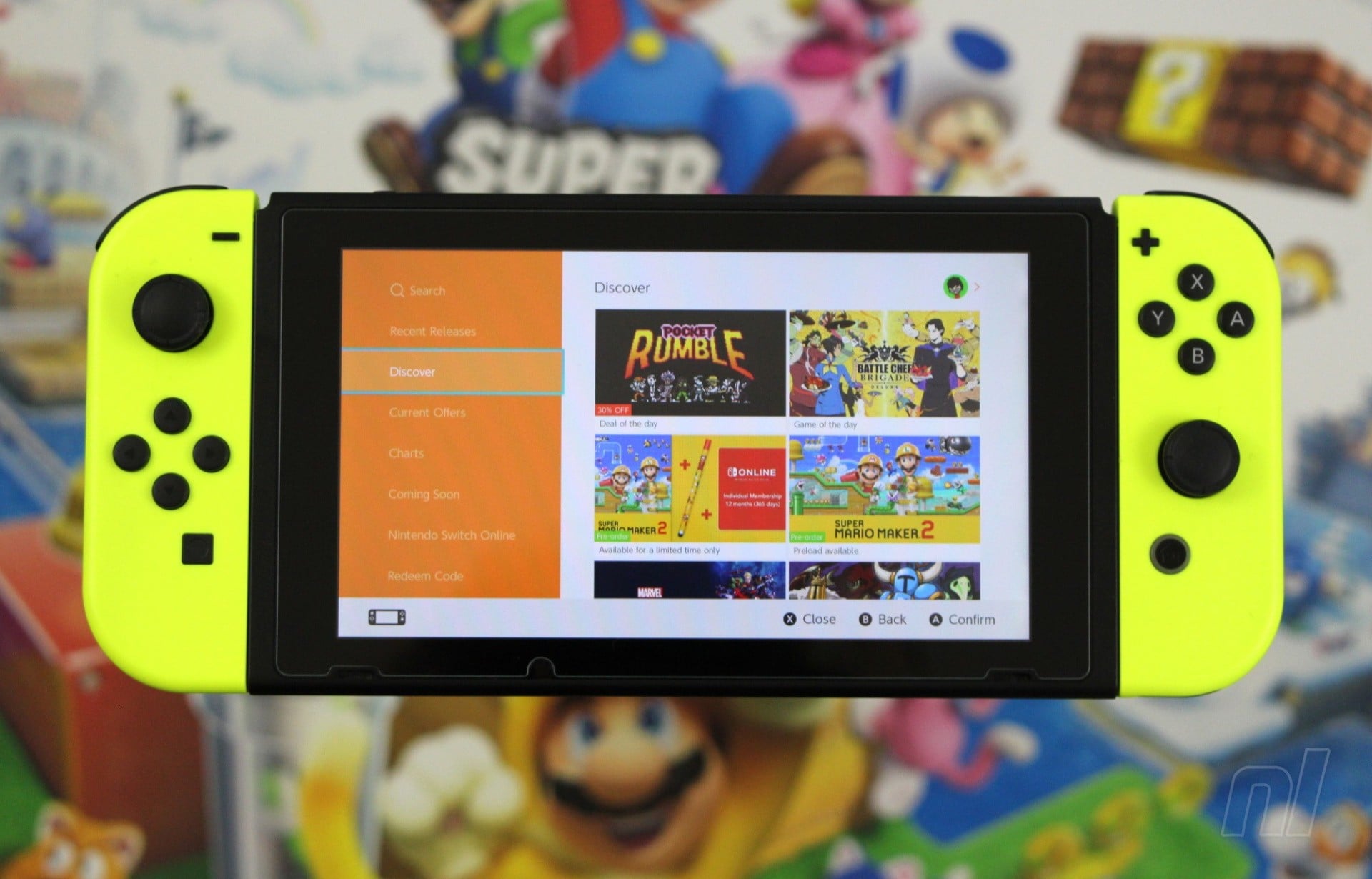
Having said all of that, removing physical media from the Switch would allow Nintendo to lower the price and make the system even more appealing than it already is to the mass-market, and that could prove to be of vital importance as the next-gen war kicks off later this year. Nintendo could release digital-only versions of both the base Switch and the Switch Lite, which would potentially ease the strain on production lines as fewer components would be involved in manufacturing the machines. It would also allow Nintendo to shave dollars off the cost of the Switch Lite, which would open up the console’s potential market even further.
While Nintendo fans who love the idea of collecting physical games will no doubt be aghast at such a proposition, there are a large proportion of Switch owners who predominantly go digital when it comes to software; there’s no denying that Switch game cards are quite small and easy to lose, and the notion of having to swap out your game on a portable console does seem rather old-fashioned – especially to a generation raised on playing games on smartphones and tablets. Critics of this approach will no doubt cite the ill-fated PSP Go as a sign that such an approach is doomed to fail, but that was a console released a decade ago in a very different environment to today.
While everyone is waiting for the long-rumoured Switch Pro to appear, could a digital-only variant be a more sensible step for Nintendo? Vote in the poll below and be sure to share your thoughts with a comment, too.
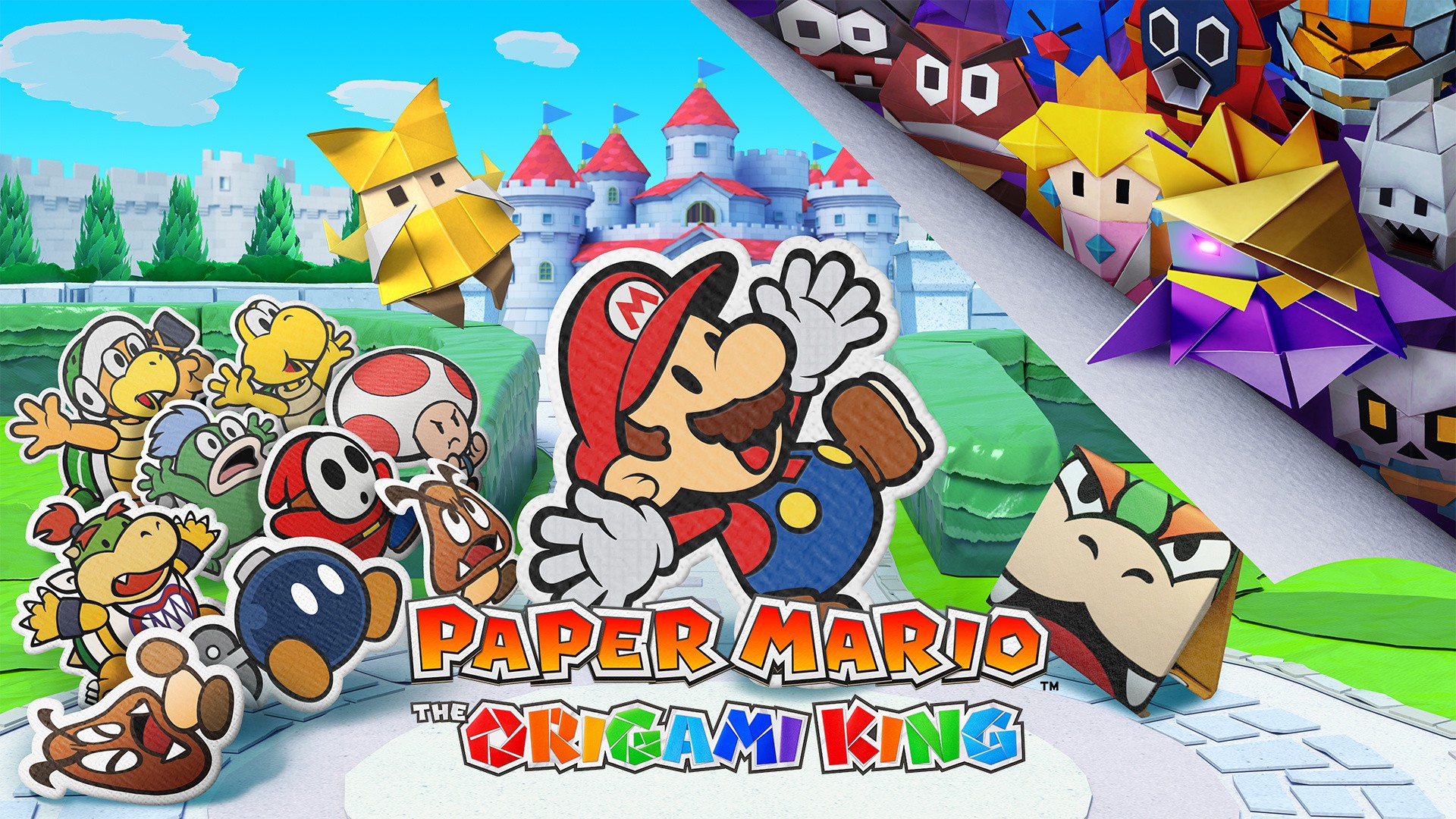
Paper Mario: The Origami King Combat And Companion Details Revealed
Nintendo has shared a brand new trailer for the upcoming Paper Mario: The Origami King, set to launch on Switch next month. It gives us a closer look at some of the characters and exciting discoveries we’ll come across when we get stuck in for ourselves.
It’s a little lengthier than your average trailer at almost six minutes, but you’ll want to watch it in its entirety if you’re thinking about picking up the game. We’ve also got more detailed info for you below regarding both the game’s characters, and it’s all-important combat. Check it out:
Characters
King Olly has moved Peach’s Castle in his devious plot to fold the world! Luckily, Mario’s ability to wield mighty paper techniques will put a crinkle in those plans. Mario’s journey to untie the massive streamers binding the castle will lead him through vast regions full of surprises. He’ll visit underground sewers, raging rapids, an ancient ruin, a ninja-filled mansion and a lively desert oasis that will quench anyone’s thirst for excitement.
A cast of off-the-wall characters adds an extra dimension to the expedition, too. There’s a Bob-omb who’s lost his memory, the Toad professor of ancient history, and Kamek, the Magikoopa who’s always got something up his sleeve. Mario will find assistance along the way from friends like Olivia, the good-natured sister of King Olly, and even Bowser himself. Some of these unlikely allies might help out in a battle when needed!
Combat
Paper Mario: The Origami King delivers new ring-based battles that require strategy and quick thinking to line up enemies and execute well-timed attacks to maximize damage. It’ll take a sharp mind to determine when to stomp enemies with Mario’s boots, when to whack ‘em with a hammer and when to strategically use items to heal or attack.
An audience of cheering Toads are ready to pitch in with a variety of helpful battle aids, just in case Mario starts to fold under pressure. Mario will also face some of his most intimidating foes in showdowns against the Legion of Stationery, bosses themed around stationery like colored pencils, sticky tape and rubber bands. These enemies may look innocent, but take note: They can really supply a challenge, so be sure to take care of business!
When Mario’s not duking it out in the ring, he can investigate suspicious spots to uncover hidden items, toss confetti to repair holes in the landscape, discover loads of Toads hiding in the scenery, play mini-games to earn in-game rewards, and revel in an abundance of secrets and treasures.
The game launches on 17th July. If you haven’t already ordered your copy, you can do so right here.
Make sure to let us know if you’re planning on buying the game with a comment below.
Posted by: xSicKxBot - 06-13-2020, 09:06 AM - Forum: Lounge
- No Replies
Despite Confusion, PS5's Spider-Man: Miles Morales Is A Standalone Game
Update: The exact nature and scope of PS5's Spider-Man: Miles Morales remains unclear, but one thing has been straightened out--it is a standalone game, as confirmed by Insomniac's James Stevenson. This is despite the suggestion from a Sony exec that it would be an "expansion" of sorts to the existing Marvel's Spider-Man game. You can read those original comments below.
Sony introduced its new PS5 titles during its latest event with what looked like a sequel to Insomniac's Spider-Man, which launched in 2018. But in statements made after the stream, Sony has clarified that it's in fact an expansion to the original title.
Spider-Man: Miles Morales will reportedly be a substantial expansion to the original game, which is being enhanced for the PS5 with the new console's hardware in mind. In an interview with The Telegram (and reposted by Twitter user Nibel), Sony's EVP head of European Business, Simon Rutter likened it to an expansion that uses an upgraded version of the original.
Posted by: xSicKxBot - 06-13-2020, 02:49 AM - Forum: Python
- No Replies
How to Merge Lists into a List of Tuples? [6 Pythonic Ways]
The most Pythonic way to merge multiple lists l0, l1, ..., ln into a list of tuples (grouping together the i-th elements) is to use the zip() function zip(l0, l1, ..., ln). If you store your lists in a list of lists lst, write zip(*lst) to unpack all inner lists into the zip function.
The proficient use of Python’s built-in data structures is an integral part of your Python education. This tutorial shows you how you can merge multiple lists into the “column” representation—a list of tuples. By studying these six different ways, you’ll not only understand how to solve this particular problem, you’ll also become a better coder overall.
Problem: Given a number of lists l1, l2, …, ln. How to merge them into a list of tuples (column-wise)?
Example: Say, you want to merge the following lists
This tutorial shows you different ways to merge multiple lists into a list of tuples in Python 3. You can get a quick overview in our interactive Python shell:
Exercise: Which method needs the least number of characters?
Method 1: Zip Function
The most Pythonic way that merges multiple lists into a list of tuples is the zip function. It accomplishes this in a single line of code—while being readable, concise, and efficient.
The zip() function takes one or more iterables and aggregates them to a single one by combining the i-th values of each iterable into a tuple. For example, zip together lists [1, 2, 3] and [4, 5, 6] to [(1,4), (2,5), (3,6)].
Note that the return value of the zip() function is a zip object. You need to convert it to a list using the list(...) constructor to create a list of tuples.
If you have stored the input lists in a single list of lists, the following method is best for you!
Method 2: Zip Function with Unpacking
You can use the asterisk operator*lst to unpack all inner elements from a given list lst. Especially if you want to merge many different lists, this can significantly reduce the length of your code. Instead of writing zip(lst[0], lst[1], ..., lst[n]), simplify to zip(*lst) to unpack all inner lists into the zip function and accomplish the same thing!
You can use a straightforward list comprehension statement [(l0[i], l1[i], l2[i]) for i in range(len(l0))] to merge multiple lists into a list of tuples:
l0 = [0, 'Alice', 4500.00]

l1 = [1, 'Bob', 6666.66]

l2 = [2, 'Liz', 9999.99] print([(l0[i], l1[i], l2[i]) for i in range(len(l0))])
This method is short and efficient. It may not be too readable for you if you’re a beginner coder—but advanced coders usually have no problems understanding this one-liner. If you love to learn everything there is about one-liner Python code snippets, check out my new book “Python One-Liners” (published with San Francisco Publisher NoStarch in 2020).
Method 4: Simple Loop
Sure, you can skip all the fancy Python and just use a simple loop as well! Here’s how this works:
l0 = [0, 'Alice', 4500.00]

l1 = [1, 'Bob', 6666.66]

l2 = [2, 'Liz', 9999.99] lst = []

for i in range(len(l0)): lst.append((l0[i], l1[i], l2[i]))

print(lst)
Especially coders who come to Python from another programming language such as Go, C++, or Java like this approach. They’re used to writing loops and they can quickly grasp what’s going on in this code snippet.
You can visualize the execution of this code snippet in the interactive widget:
Exercise: Click “Next” to see how the memory usage unfolds when running the code.
Method 5: Enumerate
The enumerate() method is considered to be better Python style in many scenarios—for example, if you want to iterate over all indices of a list. In my opinion, it’s slightly better than using range(len(l)). Here’s how you can use enumerate() in your code to merge multiple lists into a single list of tuples:
With Python’s map() function, you can apply a specific function to each element of an iterable. It takes two arguments:
Function: In most cases, this is a lambda function you define on the fly. This is the function which you are going to apply to each element of an…
Iterable: This is an iterable that you convert into a new iterable where each element is the result of the applied map() function.
The result is a map object. What many coders don’t know is that the map() function also allows multiple iterables. In this case, the lambda function takes multiple arguments—one for each iterable. It then creates an iterable of tuples and returns this as a result.
Here’s how you can create a list of tuples from a few given lists:
This is both an efficient and readable way to merge multiple lists into a list of tuples. The fact that it isn’t well-known to use the map() function with multiple arguments doesn’t make this less beautiful.
Where to Go From Here?
Enough theory, let’s get some practice!
To become successful in coding, you need to get out there and solve real problems for real people. That’s how you can become a six-figure earner easily. And that’s how you polish the skills you really need in practice. After all, what’s the use of learning theory that nobody ever needs?
Practice projects is how you sharpen your saw in coding!
Do you want to become a code master by focusing on practical code projects that actually earn you money and solve problems for people?
Then become a Python freelance developer! It’s the best way of approaching the task of improving your Python skills—even if you are a complete beginner.
The 188th GalaQuiz will be LIVE soon, win up to $50 in GalaCredit!
[www.indiegala.com] The GalaQuiz will take place in less than 15 minutes from this announcement Today's GalaQuiz[www.indiegala.com] hints are up. The theme will be Ernest Hemingway









 in GalaCredit!