Konami Abruptly Cancels Development On Nintendo Switch Sports Game Exclusive
Developer Konami has stopped working on Hyper Sports R, which was slated to hit Nintendo Switch exclusively at an undisclosed date.
"As of today, we have decided to discontinue development on Hyper Sports R for the Nintendo Switch," Konami wrote on the game's official website. "The team had been continually working on the game since its initial reveal in June 2018. However, after much consideration, we have decided to cancel its development due to various circumstances.
"We deeply apologize to all our valued customers who have been patiently anticipating the release of this game for this significant inconvenience. We hope that you will continually enjoy our products and services."
[www.indiegala.com] Season your library with some explosive indie action. https://youtu.be/1qHHa7VF5gI Award-winning space exploration, unusual fungal warfare, magical demon battles, a bullet time twist and a lot more of action-packed indie experiences await!
Bomberman-Inspired Duck Destruction Game Ponpu Blasts Onto Switch This Fall
Some games only need to use a handful of words to grab your attention, and Ponpu manages to do just that with ‘Bomberman-inspired duck-on-duck destruction game’. You’re sold already, right?
We first heard about this towards the end of last year, but it’s now been confirmed that the game will be exploding onto a Switch near you this fall. It’s also coming to PS4, Steam, and Xbox One, and has received a brand new trailer (which you can check out above).
That’s not all, though, as today’s announcement also reveals that the game will feature online multiplayer, which comes in addition to the local multiplayer mode that had already been confirmed. Developer Purple Tree Studio and publisher Zordix say that the new addition has been implemented thanks to “overwhelming fan demand”.
Here’s an official description:
The all-seeing Duck God has had enough and the world has run out of time. Every 2 billion years the world must be refreshed through divine destruction and he has sent you, a Ponpu, as his herald. But, a nasty bump on the head during a crash landing took your memory and now you find yourself working against the Duck God in a carnage-fueled battle against other Ponpu to save the very world you were sent to destroy.
Across an expansive single-player campaign, your Ponpu will battle its way through 10 challenging worlds, while fighting off rival Ponpu and enormous, deadly and grotesque bosses. In the newly announced online multiplayer support, up to four Ponpu anywhere in the real-world can duke it out across three frenetic modes, including Coin Chase (get those coins before the competition!), Color Fight (your attack spread paint through the level, cover the most real estate with your colour to win!), and good old-fashioned team deathmatch (kill, kill, kill!), with each win, kill and stat tracked via a handy new global ranking system.
A playable demo of the game is set to go live on Steam from 16th to 22nd June. If you’d rather wait for it to launch properly on Switch, make sure to keep an eye out for more release date news in the coming weeks.
Do you like the look of this one? Will you be adding it to your Switch wishlist? Tell us below.
Review: Synaptic Drive – A Fun But Bare-Bones Custom Robo Successor
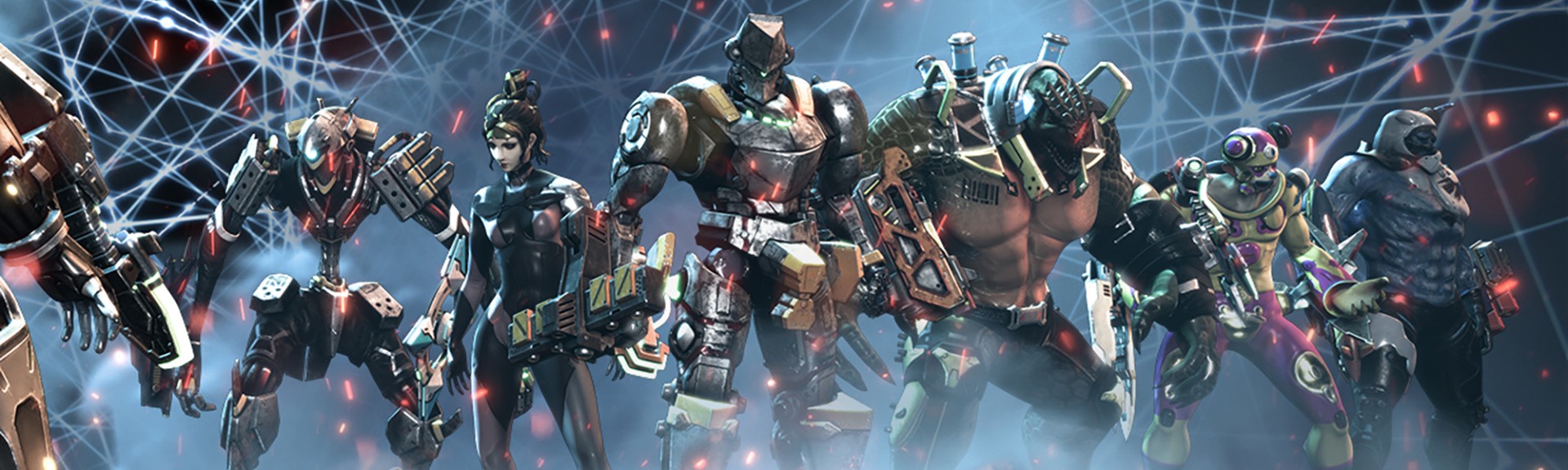
Delve in the uncomfortably long list of Nintendo game series published in Japan that never really had a chance to shine in the West, and you will undoubtedly stumble upon Custom Robo. This game series developed by NOISE began on Nintendo 64, offering tight solo and multiplayer arena fighting action with customizable robots. The fantastic GameCube entry was actually localized and released in America, while the follow-up Nintendo DS title Custom Robot Arena was the first and only title to receive a worldwide release, adding online battles to an already proven formula. After 2007, the franchise was quietly shelved.
Fast forward to the present day, and with very little fanfare, Synaptic Drive has secured a release on the Nintendo eShop. Developed by the original Custom Robo producer Kouji Kenjou, it promises to deliver the same compelling arena-based action that players of the original series love – but does this spiritual sequel live up to the addictive and engaging gameplay of the source material?
After a brief text-only plot exposure, the game offers up a tutorial that highlights all the basics of arena brawling. Moving and shooting will be your two main disciplines here since there is no blocking. The combat arenas are relatively small and confined spaces that provide ample opportunity to both dish-out and receive copious amounts of firepower. Do more of the dishing than receiving and you’ll win the round. The setup is simple and straightforward enough at first glance, but in true Custom Robo fashion, the devil is in the detail.
Before you start darting around the arenas, you need to assemble your character. There are body types with varying stats for speed, weight, knockdown resistance, jump capability, melee attack strength and a unique super special move. Once you settle for a body befitting your play style, you complement it with three distinct weapon types (Gun, Wire and Tracker) along with two bonus boosts.
Guns are your primary weapon; these are held on your right forearm and mostly providing rapid-fire damage along with a secondary charged shot in a variety of shapes and sizes. Wire fits in your left forearm and is a weapon designed for finesse, being fired and controlled with the right analogue stick before being detonated on-demand by default with the “R” button (a word of caution: try not to blow yourself up while using it). Last but not least, the Tracker missiles go on your character’s back and, as the name implies, will slowly but surely home onto your opponent’s position.
It is not unusual to spend more time customizing your fighter than in an actual match, and most of the proper fighting is usually decided in under a single minute. The more you play and rank up, the more body types, weapons and enhancements will unlock, which expands your customization opportunities further.
Simply put, the core gameplay is superb. The action is responsive, fast and offers plenty of chances for you to ambush your opponent in the small confined arenas. All of this is helped by excellent performance, in both handheld and docked modes. If you’ve ever played a Custom Robo title before, you will feel right at home here; if not for the more sober and mature art direction, this could easily pass as a new entry in the series. Yet, just as the lighting fast battles come to their explosive conclusion, Synaptic Drive’s shortcomings begin to rise to the surface.
One of the best features of the Custom Robo series was the single-player RPG portion of the game that introduced a Pokémon-style adventure where you had to gather parts for your robot and enter competitions. Sadly, there is nothing like that here, with single-player content limited to an Arcade mode with four different variants to keep you entertained. At least, after the day one patch, the experience bonus has increased so it is far easier to level-up by your lone self than it was originally planned.
Of course, multiplayer remains the main focus, but despite having a four-player mode, the combat is always limited to just two characters on-screen, which seems like a wasted opportunity. Online multiplayer competition is present, but at the time of writing, our experience was not a smooth one. Without any regional matchmaking options, all we found were Japanese players that quickly destroyed us in lag-heavy matches (even with the Ethernet adaptor).
Conclusion
Synaptic Drive feels slightly too expensive and bare-bones and feels almost ‘early-access’ quality in some regards. That’s a real shame, since the core gameplay is solid and lots of fun if you have friends to make the most out of it. The game will most likely improve over time, with ongoing updates and new content downloads promised, but since we can only review what is currently on offer, we’re only able to recommend this to the most die-hard fans of Custom Robo who find themselves constantly longing for a new entry in this niche franchise. This isn’t quite on the same level yet, but it should scratch the itch nonetheless.
Xbox Game Pass Ultimate 3-Month Subscriptions On Sale For $23
Xbox Game Pass is one of the best deals in gaming today, and Game Pass Ultimate is, well, the ultimate package if you're a dedicated Xbox One player and interested in playing a lot of different games. Game Pass Ultimate, which packages regular Game Pass for console and PC with Xbox Live Gold, normally costs $15 a month, but right now, you can get three months for roughly half the price with a new deal at multiple retailers.
Amazon and Best Buy are currently offering 3-month Xbox Game Pass Ultimate subscriptions for $23 each, down from their usual $45 list price. This is a Best Buy deal of the day, and Amazon appears to be price-matching. Other major retailers are selling the 3-month subscriptions for $25.
Notice how the first and the last dictionaries carry the same key 'a'.
How do you merge all those dictionaries into a single dictionary to obtain the following one?
{'a': 4, 'b': 1, 'c': 2, 'd': 3, 'e': 4}
Notice how the value of the duplicate key 'a' is the value of the last and not the first dict in the list of dicts.
To merge multiple dictionaries, the most Pythonic way is to use dictionary comprehension {k:v for x in l for k,v in x.items()} to first iterate over all dictionaries in the list l and then iterate over all (key, value) pairs in each dictionary.
Let’s explore all the available options in the remaining article:
Exercise: Run the code—which method generates a different output than all the other methods?
Method 1: Dictionary Comprehension With Nested Context
You can use dictionary comprehension {k:v for x in l for k,v in x.items()} to first iterate over all dictionaries in the list l and then iterate over all (key, value) pairs in each dictionary.
Create a new dictionary using the {...} notation.
Go over all dictionaries in the list of dictionaries l by using the outer loop for x in l.
Go over all (key, value) pairs in the current dictionary x by using the x.items() method that returns an iterable of (key, value) pairs.
Fill the new dictionary with (key, value) pairs k:v using the general dictionary comprehension syntax {k:v for ...}.
l = [{'a': 0}, {'b': 1}, {'c': 2}, {'d': 3}, {'e': 4, 'a': 4}] d = {k:v for x in l for k,v in x.items()}

print(d)

# {'a': 4, 'b': 1, 'c': 2, 'd': 3, 'e': 4}
This is the most Pythonic way to merge multiple dictionaries into a single one and it works for an arbitrary number of dictionaries.
Method 2: Simple Nested Loop
Use a simple nested loop to add each (key, value) pair separately to a newly created dictionary:
Create a new, empty dictionary.
Go over each dictionary in the list of dictionaries.
Go over each (key, value) pair in the current dictionary.
Add the (key, value) pair to the new dictionary—possibly overwriting “older” keys with the current one.
l = [{'a': 0}, {'b': 1}, {'c': 2}, {'d': 3}, {'e': 4, 'a': 4}] d = {}

for dictionary in l: for k, v in dictionary.items(): d[k] = v print(d)

{'a': 4, 'b': 1, 'c': 2, 'd': 3, 'e': 4}
You can visualize the execution flow of this code here:
This is the easiest to read for many beginner coders—but it’s much less concise and less Pythonic.
Method 3: Use the update() Method
The dict.update(x) method updates the dictionary on which it is called with a bunch of new (key, value) pairs given in the dictionary argument x. The method to merge multiple dictionaries is simple:
Create a new, empty dictionary.
Go over each dictionary in the list of dictionaries.
Update the new dictionary with the values in the current dictionary.
l = [{'a': 0}, {'b': 1}, {'c': 2}, {'d': 3}, {'e': 4, 'a': 4}] d = {}

for dictionary in l: d.update(dictionary) print(d)

# {'a': 4, 'b': 1, 'c': 2, 'd': 3, 'e': 4}
This is a very readable and efficient way and it’s shorter than method 2.
Method 4: Dictionary Unpacking
When applied to a dictionary d, the double asterisk operator **d unpacks all elements in d into the outer dictionary. You can only use this “dictionary unpacking” method within an environment (in our case a dictionary) that’s capable of handling the (key, value) pairs.
This is a concise, efficient, and Pythonic way to merge multiple dictionaries. However, it’s not optimal because you must manually type each unpacking operation. If the dictionary has 100 elements, this wouldn’t be feasible.
Note: you cannot use dictionary unpacking in dictionary comprehension to alleviate this problem—Python will throw a SyntaxError!
Method 5: Use ChainMap With Unpacking
If you’re not happy with either of those methods, you can also use the ChainMap data structure from the collections library.
However, this does not exactly meet our specifications: the fifth dictionary in our collection does not overwrite the (key, value) pairs of the first dictionary. Other than that, it’s a fast way to merge multiple dictionaries and I wanted to include it here for comprehensibility.
Where to Go From Here?
Enough theory, let’s get some practice!
To become successful in coding, you need to get out there and solve real problems for real people. That’s how you can become a six-figure earner easily. And that’s how you polish the skills you really need in practice. After all, what’s the use of learning theory that nobody ever needs?
Practice projects is how you sharpen your saw in coding!
Do you want to become a code master by focusing on practical code projects that actually earn you money and solve problems for people?
Then become a Python freelance developer! It’s the best way of approaching the task of improving your Python skills—even if you are a complete beginner.
Feature: 2020’s Breakout Star? It Has To Be Animal Crossing’s K.K. Slider
Forget the Billboard charts and the most popular celebrities on them – there’s a new breakout star in town, and most Nintendo fans have heard his music for weeks through remixes, social media videos and trendy TikToks (as well as in Animal Crossing: New Horizons, of course).
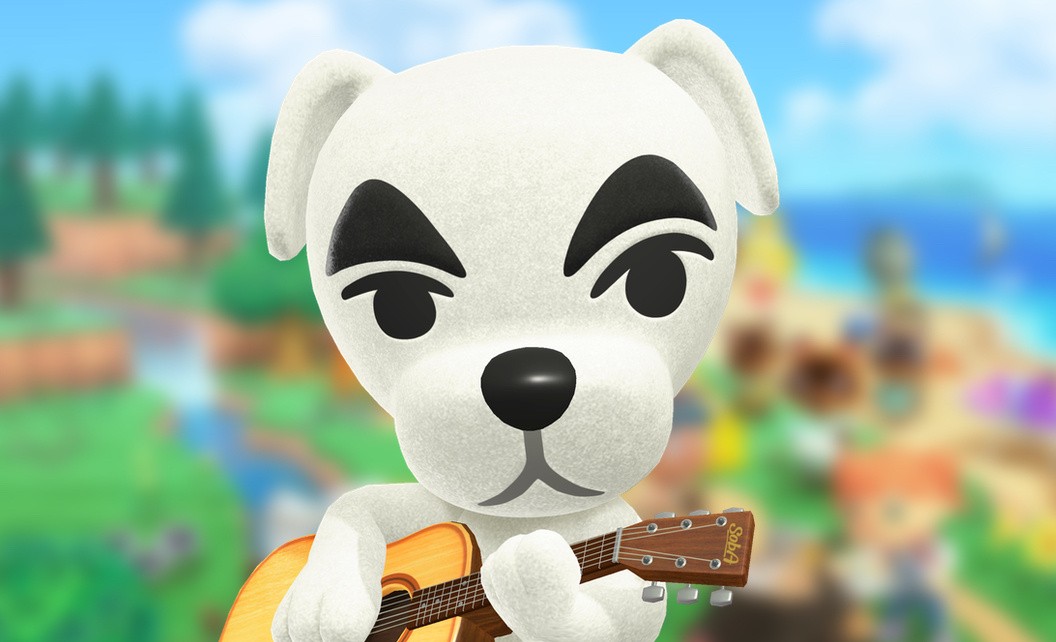
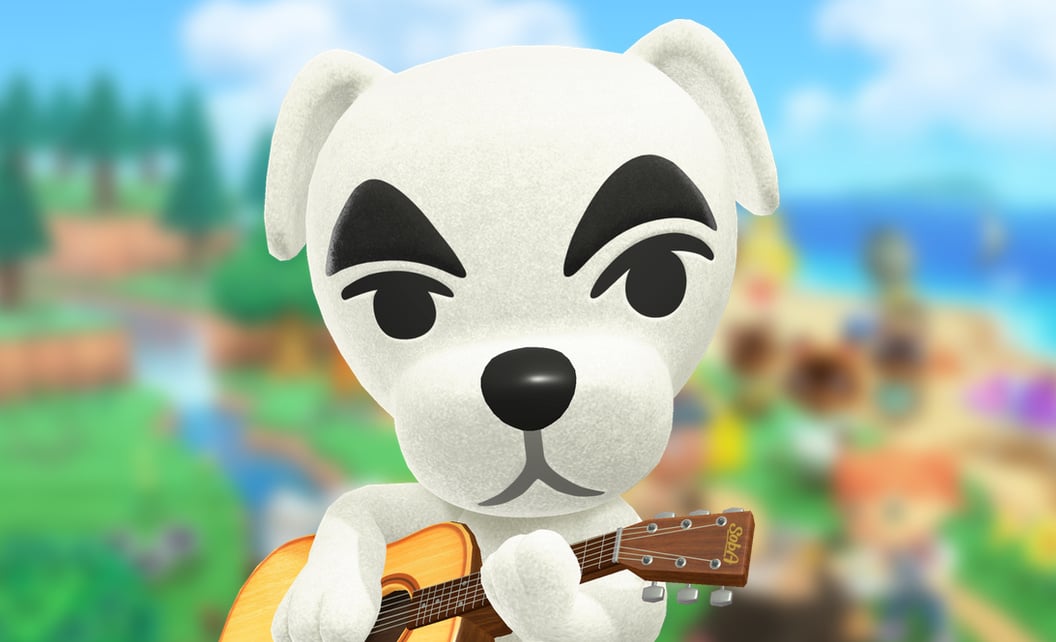
K.K. Slider is an acoustic-guitar-playing white dog most famous for his appearances in all the Animal Crossing titles to date. The NPC visits towns (and now islands) to give regular concerts, and in previous versions of the game was known by his alter-ego DJ KK. But K.K.’s music is no longer just for Animal Crossing players; since the release of New Horizons, his music has found new life and thousands of new fans, with artists and musicians posting viral videos and covers on YouTube, TikTok and Instagram.
YouTube has consistently been a popular platform for K.K. remixes, like the K.K. Bubblegum remix by Qumu shown below. K.K. Bubblegum has been one of the more popular songs across platforms, and Qumu, an anonymous internet musician, created their first K.K. remix after Patreon subscribers encouraged the choice in a poll. They later decided to do Bubblegum, too, which has turned into their most popular K.K. song.
Qumu said they owe a lot of their recent YouTube growth to New Horizons release, which boosted views on previous K.K. remixes released years ago.
“Just after the release of New Horizons, [previous Animal Crossing videos] were getting around 5 to 10 times the amount of plays per day,” Qumu said in an interview with Nintendo Life. “Bubblegum K.K. has been my fastest-growing cover ever, even becoming my second-most popular track. I couldn’t have predicted or even hoped for anything like this.”
To date, Qumu, with more than 144,000 YouTube subscribers, has created three K.K remixes and one other Animal Crossing remix video. The Bubblegum remix has been the most popular, clocking more than 1 million views, but the others are also a hit, with none under 100,000. A single YouTube search for “K.K. Bubblegum” returns thousands of videos – some of them covers, some of them gameplay – but the song is a real hit for many.
Qumu, who was inspired to become a musician after playing games like Guitar Hero back in 2009, said they didn’t expect Slider’s popularity to be so viral. The artist said the cute dog’s music is diverse and covers many genres, which could be a reason why so many people love it.
“I had no idea that K.K. Slider as a character, and as a music phenomenon would blow up to such a degree, so I’m absolutely surprised by just how popular he and his music became,” Qumu said. “I think K.K Slider’s music has a broad appeal.”
If K.K. Bubblegum is popular on YouTube, it’s nothing in comparison to the song’s prevalence on TikTok. Teens and adults alike love the track, posting videos of their villagers singing along, using it as background music for cosplays and even creating their own covers. Like the YouTube search, a TikTok search for the song brings up thousands of videos, most with thousands of views and comments.
Another artist who jumped on the K.K. trend on TikTok said they’re glad their video of a villager singing along to Bubblegum could distract and provide some smiles to people stuck inside during quarantine, calling it a “serotonin video.” The clip is a hand-drawn animation of Lolly, a cat villager, sitting underneath a blooming cherry tree and has nearly 50,000 likes. It also features the English lyrics, which Bun, the artist, said are a compilation of several fan-made lyric covers.
Most K.K. songs are nearly uninterpretable, full of the typical Animal Crossing gibberish-language speak. This cover, however, includes the lyrics as translated by fans, and even if they aren’t perfect, they’re cute and uplifting. “When the bubblegum pops, I want you to smile. And remember every good time, when skies are grey,” the lyrics read.
Bun has put nearly 300 hours into New Horizons and perhaps as many into previous Animal Crossing titles like Wild World, City Folk and New Leaf. They started an Instagram art account a few weeks after New Horizons released, but quickly archived original posts. After a short video of two villagers got attention on TikTok, Bun decided it was time to continue making new content.
“I realized how much I enjoyed sharing this kind of art, and so did anyone who came across those videos,” Bun said in an interview with Nintendo Life. “From that point on, I continued to draw and animate silly little videos just to bring people some happiness.”
Other artists on TikTok have taken K.K. trends and layered them with other ones, including a video in which artist Emma Elise Gamboa, a storyboard artist and illustrator, transformed a popular TikTok musician’s album cover into a K.K. Slider album cover.
In the video, Gamboa shows a time-lapse of redesigning Mxmtoom’s recent “Masquerade” album, exchanging the TikTok star with K.K., giving the dog character Mxmtoon’s crown, dress, and shy posture. Mxmtoon launched her musical career on TikTok, and the video, unsurprisingly, is set to her cover of K.K. Bubblegum. On TikTok, it’s common for multiple trends and memes to overlap this way, often feeling like deep cuts from internet culture that aren’t as funny or understood on other platforms.
Gamboa said she is usually “behind” on internet trends, but saw other artists creating K.K. Slider album cover remixes and had to join in. She said it was initially difficult to think of one she could do adequate justice, but finally settled on the “Masquerade” album and got to work. Gamboa also said this is among her most popular videos, and that using the K.K. trend brought a lot more attention to her work.
“I was really surprised by how popular my video and post had gotten. Most of my posts get at most 500 likes, which I am very grateful for, but this was something else,” Gamboa said in an interview with Nintendo Life. “I kept checking my notifications every so often and the numbers kept rising. It really boosted my motivation at a time where I wasn’t sure I was doing things right art-wise.”
Gamboa said she’s been an artist as long as she can remember, and echoed Qumu’s thoughts about the diversity of K.K. Slider’s music. “I love that K.K. Slider’s music is not just one thing,” Gamboa said. “Not many artists can say they can play it all. Also, since the game is kid-friendly, it’s a good way for a younger audience to get introduced to different types of music.”
Of course, the K.K. songs are really a product of the Animal Crossing development team, as he is, after all, only a video game dog. Still, people love the game’s soundtracks, and in a recent video, the team behind New Horizons’ main theme performed a socially distant, virtual concert.
K.K.’s music is bringing happiness and smiles to people all over the world through original tracks, remixes and covers. Qumu, Bun and Gamboa are only three of the thousands hopping on the trends. And whether they’re playing Bubblegum or another track, with a setlist that includes dance, reggae, salsa, pop, traditional Japanese festival songs and more, it’s no wonder so many people are boosting Slider’s pop star status.
“It’s truly heartwarming to hear how a piece of music might’ve affected someone’s life in a good way,” Qumju said. “There’s definitely a K.K. Slider song out there for everyone.”
Pokémon-Like Nexomon: Extinction Reveals All Nine Starter Monsters
Just last month, it was confirmed that Nexomon: Extinction – a new monster-catching RPG that bears a striking resemblance to Pokémon – would be arriving on Switch this summer. Now, we can take our first look at the game’s starter monsters.
If you’ve played a Pokémon game before, you’ll understand the concept immediately. Your Nexomon journey will begin with a simple but important question, with players having to choose which monster they’d like to become their first companion. Unlike Pokémon’s formula of three starters, however, you’ll be able to choose from a grand total of nine.
So, let’s check them out, shall we?
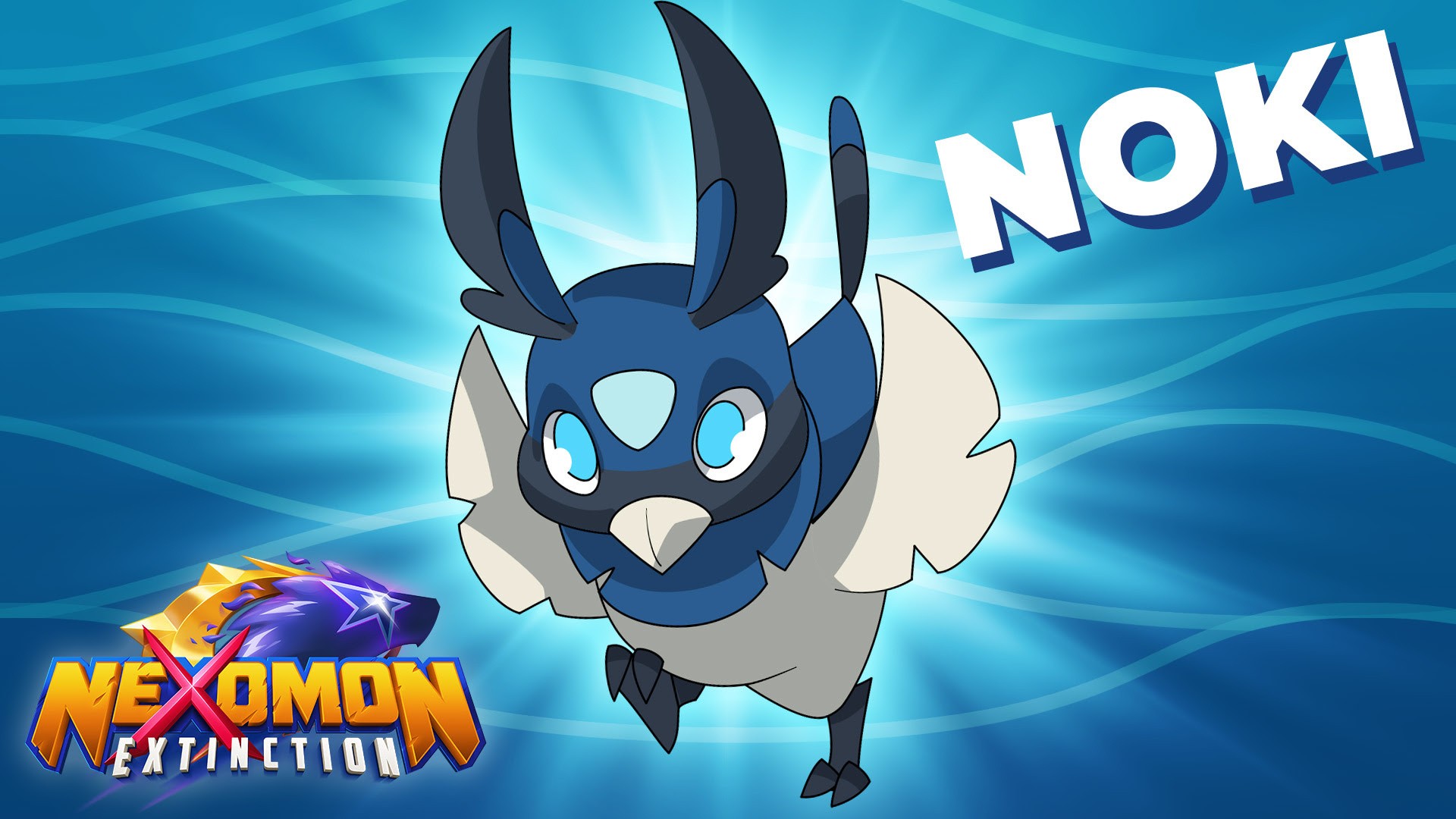
Noki
Element: Water An amphibious flying Nexomon with heroic spirit. Its main characteristic is self-confidence and loyalty.
Gekoko
Element: Electric A very curious Nexomon with the ability to walk on any surface with its sticky feet. They love to hide and stay hidden from others for long periods of time.
Behilda
Element: Ghost A ghost Nexomon that can be found in the darkness. They tend to detach their heads to scare their opponents.
Lume
Element: Fire Not for those who love to hug their Nexomon. Lume’s head, paws and tail are completely engulfed in flames.
Masquiti
Element: Psychic People often confuse them as a ghost type Nexomon. Truth said, they are psychic Nexomon and have a somewhat obscure sense of humor.
Mearn
Element: Wind Mearns are not as friendly as they look. They are actually wild Nexomon that inhabit the prairies and mountain skirts. Their entangled tails can use wind to their advantage while hunting.
Trebly
Element: Mineral They are always eager to prove the durability of their horns, they love to do headbutting competitions.
Mara
Element: Plant Maras are adorable and intelligent Nexomon who know how to use their charm in their favor during battles with tamers. Loves to be pet.
Dinja
Element: Normal Dinja features short legs, adorable big ears and a huge fluffy tail. Since they aren’t good runners, they prefer to move by hopping their way.
So, are you won over by any of these designs? Let us know if you’re tempted to give the game a go when it launches this summer with a comment below.
Posted by: xSicKxBot - 06-10-2020, 09:27 AM - Forum: Lounge
- No Replies
A BUNKER BUILT FOR TWO
Steps disappear into the darkness below. Bulbs begin to buzz and flicker to life, revealing the shape of the room. A low platform extends through the center, flanked on both sides by hastily abandoned desks and consoles. Soft mechanical clicking and whirring sounds fill the air as data storage bays awaken under a blanket of dust.
Code begins to scroll across a massive collection of monitors hanging in a circular pattern in the center of the room. Random at first, the text begins to coalesce and take shape – growing to fill several of the screens with a bright golden orb that quickly scans the room before setting its gaze on the entrance. The eye of Rasputin waits.
And wait he must. The image of the Rasputin’s bunker vanishes from Dima Goryainov’s monitor as Bungie’s senior concept artist alt-tabs into a conference call. It’s 3:30 PM and that means it’s time for his team’s daily coffee break. “It’s our time to chat,” he says. “Usually we’re pretty heads down, so we try to hang out and talk about whatever’s exciting us – things that inspire our creativity.”
Finding inspiration in his peers and outside of games is something Dima is no stranger to. It’s an approach that has served him well while working on Destiny – particularly when he was tasked with designing a space in Season of the Worthy that would help players grow closer to a legendary character not known for his interpersonal skills: Rasputin, the Warmind.
A tall order, considering that at this point in Destiny’s story, Rasputin’s relationship with the Vanguard was tenuous at best. But when a new threat appeared in the skies above the Last City, a choice presented itself to both parties: work together and survive or perish alone. For Guardians, surviving meant partnering with Rasputin in a way they never have before.
The team at Bungie knew that Rasputin being open to an alliance was only half the equation – the easy half. Getting Guardians to trust him with their lives would be much harder. It required heavy lifting from writers, designers, engineers, and artists like Dima. And so, the task of making the most powerful military intelligence ever created a little more personable began.
A DIFFERENT APPROACH
Dima has a unique style – a blend of graphic design and concept art that can be found throughout Destiny 2. From signage hanging on walls to the logos and iconography representing fictional organizations and foundries, it’s an aesthetic that has become inextricably linked with Destiny’s world building.
He explained that entering the game industry from a different direction began with the choice to major in graphic design and digital media instead of game art at the University of Advanced Technology. “The game art program was focused on taking direct inspiration from games and translating that into assignments. That seemed totally legitimate, but I felt that doing a program like graphic design would give me a more unique skillset. I was always interested in graphic design, industrial design, architecture, and comic books – things outside of games that I wanted to bring into concept art.”
Among the areas outside of games he draws inspiration from, he finds the dark and mysterious style of medieval design appropriate for Destiny. “A lot of it has this occult feeling to it,” Dima said. “The way it’s drawn is naive, like they’re not paying attention to anatomy, but it still works. I feel like that fits in a dark fantasy space opera.”
He also admitted a few personal influences he tries to not overuse. “I’m from Russia and I like to use things from my childhood that inspire me. Old Russian fairytales like Koschei the Deathless, Ilya Muromets, Baba Yaga, and many others. The summers I spent exploring the forest and the countryside in my great grandma’s village were a huge influence. I think I’m constantly trying to get back to that feeling I had when I was a kid.”
It’s the kind of goal that often results in work that feels tangible.
“Maybe it sounds cheesy,” Dima said. “But I credit that time with having an interest in stories about searching for adventure and mystery in different worlds. It’s why I became so interested in the world of Destiny and why I can’t believe I get to contribute to its development.”
A KINDER, FRIENDLIER WARMIND
When it came time to create the look of Rasputin’s bunkers, the request from the Design team was straight forward. They already had the gameplay systems in place and needed an area where players could communicate with Rasputin – a space that could evolve over time.
Dima had a very specific mood in mind. “On my reference board, I have a photo of Deckard’s apartment from Blade Runner,” he said. “I knew that was the feeling I wanted. It’s a dark-lit, super intimate, quiet place where players could go and hang out. I like moments in our game where you have silence. Where you’re not being shot at and you have a moment to relax and take a breath. I wanted it to be a space that you would like to be in even if you weren’t doing the mission or grinding the content.”
He thought back to one of his favorite games that had a similar vibe. “Deus Ex: Human Revolution is one of my favorite games of all time,” he said. “If I was in between missions, I could go back to Adam’s apartment and just sit and listen to the music and absorb the ambience – I wanted the Destiny version of that space.”
As pleasant as that sounded, it presented an interesting puzzle since the story called for Rasputin to be in this room with the player. And it’s one thing to make a space feel safe and inviting. It’s an entirely different thing to make that space feel comfortable when there’s a huge digital eyeball tracking you from the center of the room. Dima and his team worked to try and find subtle ways to make Rasputin less intimidating.
“Usually when you see Rasputin, he’s really far away in that massive chamber,” said Dima. “But in Season of the Worthy, the small bunker is a new place where you can be one-on-one with him as he slowly opens up to you while you learn more about him.”
Dima credits Bungie Senior Art Lead, Rob Adams with the idea to bring players physically closer to Rasputin. “It was Rob’s idea to bring Rasputin so low to the ground that you could come up to the screens and be face-to-face with him. Even a lot of the lighting decisions came from how close you’re able to stand to him. Drawing parallels between your physical and emotional distance was intentional.” Form followed function.
RASPUTIN GOES RETRO
Beyond resonating emotionally with the player, there needed to be an in-universe reason for the design of the room. So before putting pen to paper, Dima asked the question: Why did this bunker exist before players found it?
“As soon as you walk in, you understand that place was used for something,” Dima said. “This room had a purpose and a function – it wasn’t just made for gameplay. I had the idea that these bunkers were where Seraph researchers would speak with Rasputin and decode his communications.”
The relationship with the Narrative team immediately became apparent. “We work together as much as possible,” Dima said. “Sometimes Narrative will come up with ideas for a design or how a graphic should speak to specific elements. Other times, I’ll pitch something visual and it’ll end up working into the fiction.”
In this case, the fiction spoke directly to what excited Dima’s about Destiny. “Since these bunkers were from earlier versions of Rasputin, I knew that they were going to feel older technologically and that’s a big part of what Destiny is to me. Obviously we have holograms, but it’s not really super sleek Iron Man stuff – everything is tactile. Everything in Destiny feels like it has a history behind it and that it’s been touched. That’s way easier to do with physical things like screens and buttons.”
Dima leaned into the look of this older age and drew from his interest in industrial design. “There’s a single speaker in the room that Rasputin used to talk to the researchers,” he said. “The big cluster on the ceiling has all these cables, sensors, and cameras that point to the center of the room allowing Rasputin to see the person speaking to him. And as they’re speaking, there are people sitting at consoles recording everything that Rasputin is saying – decoding and storing it. So when you walk into a bunker, you start to understand the background of the Seraph researchers that made Rasputin.”
TURNING ON THE LIGHTS
The bunker is filled with elements that contribute to the atmosphere of the room while also adding to the story. Some flourishes, Dima admits, were added simply because he was looking for an excuse to design them. “I really wanted to have this analog map with physical bolts that light up,” he said. “But I kind of did that for me, because I really wanted it.” And why not? After all, who hasn’t fantasized about playing with a giant Lite-Brite?
“I didn’t really think that the map was going to get much of a reaction or that anyone was going to pay much attention to it. But from what I’ve seen, a lot of people have gravitated towards it and started speculating on what it might mean. People have messaged me and told me that it’s their favorite part of the bunker, so that was kind of cool.”
Inspiring elements continued to come from peers across the studio. One from Senior Artist, Eve Campbell and the Environment team instantly became one of Dima’s favorite things in the bunker.
“They made the screen effects look really cool when you’re talking to Rasputin,” he said. “The way he moves on the screens and tracks you across the room. It’s meant to be this intimate space that’s really comfortable but there’s this degree of uneasiness with him silently and constantly watching you. Even if you jump up and down his eye moves up and down with you.”
Instances like this, where creative partnerships resulted in something unexpected, kept surfacing. “Over time, we’ve evolved the collaboration process and it feels really organic,” Dima said.
Throughout his five years at Bungie, Dima has worked alongside peers invested in building living breathing worlds. Speaking with him leaves the impression that if you work with passionate people, a good idea – like a warmly lit bunker with a giant glowing eyeball – never stays hidden forever.