The GCX fundraising marathon to benefit St. Jude Hospital is in full swing. You can go visit their Twitch channel right now and check out who’s playing games to help kids along on their path to wellness. As strong believers in the power of community to make the world a better place, we wouldn’t miss it.
This Thursday, it will be our turn.
GCX Fundraiser Marathon – Bungie’s Block
June 18, 9AM – 1PM Pacific
This year, we’re hosting a celebration of Bungie art and Bungie artists. Come and check out some of the talented hands that help shape the world you explore and defend or create the imagery you see right here on Bungie.net. If you’re a fan of the game, you’ll be able to see some familiar faces come to life in real time. If you are an aspiring artist or designer, you’ll find some inspiration for how to create art in different electronic mediums.
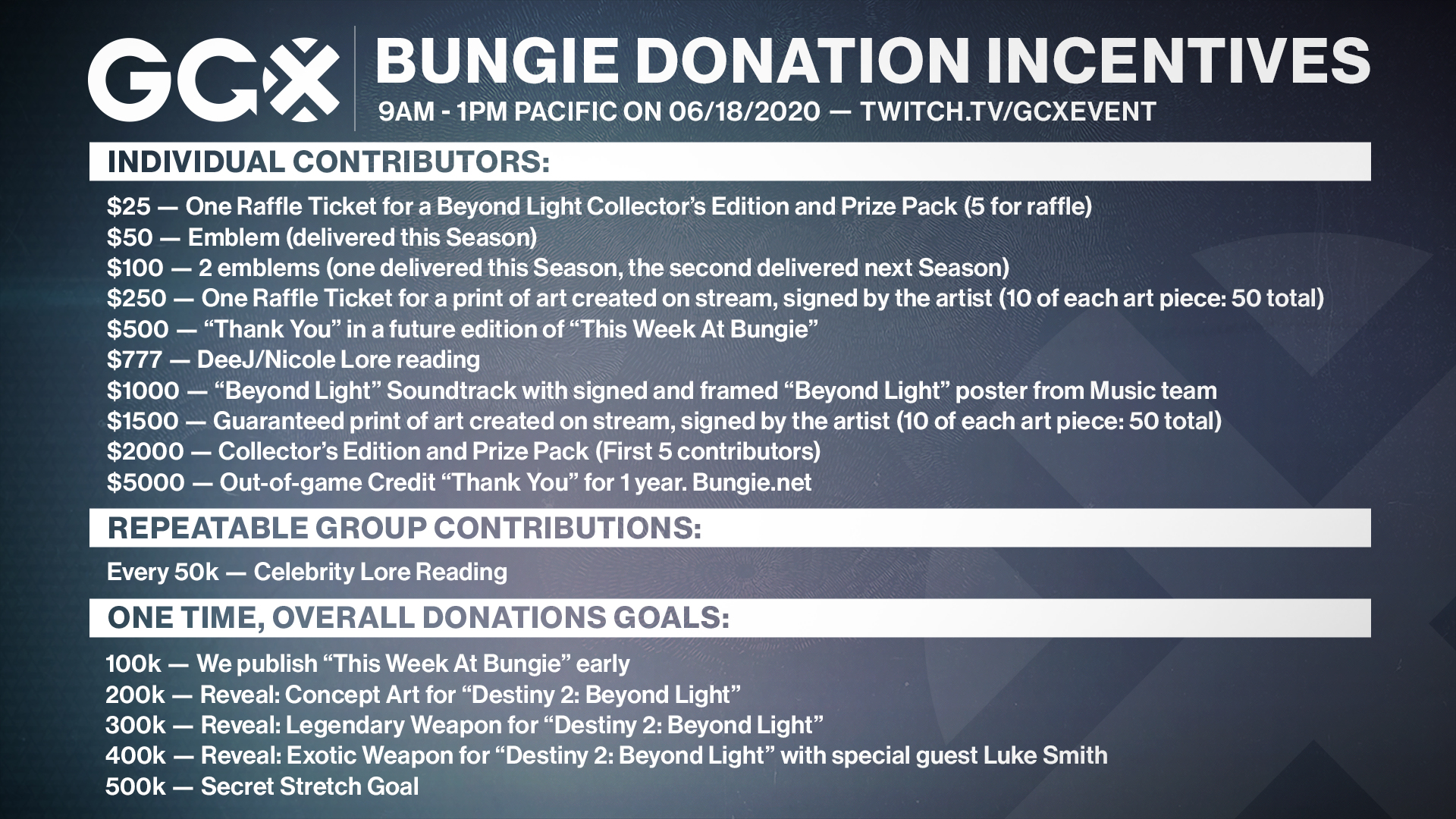
All the while, we’ll be tabulating your donations. In keeping with the ritual, here are some incentives to inspire you to take action.
$50 Emblem delivered this Season.
Please Note:
All donations must be made during our stream between 9AM and 1PM Pacific on June 18 to qualify for incentives.
Each donor will earn one emblem or set of emblems.
Donations of more than $50 or $100 are welcome, but do not grant more emblems.
Additional donations made using the same email will not grant more emblems.
Donations must be made in the exact amount required to qualify for the incentive.
We’ve known for some time that Xbox One owners would eventually receive a souped up version of the title for the Xbox Series X via Microsoft’s cross-generation Smart Delivery initiative, but until now it was unclear how any potential PlayStation 5 upgrade would be handled.
Going into more detail on Twitter, the studio explained that “Cyberpunk 2077 will be backwards compatible with both next-gen consoles. Your PS4 copy of the game will work on PS5 on launch day. Anyone who buys the game on Xbox One will be able to play their copy on the Xbox Series X when the console launches.”
The Polish developer added that a free next-gen hardware upgrade that allows Cyberpunk to “take full advantage” of both consoles extra firepower will be released at a later date, but confirmed the game will run better on next-gen machines from day one.
Sony has yet to announce a universal upgrade plan for titles that’ll be available on both the PlayStation 4 and PlayStation 5. Microsoft, by contrast, has shared plenty of details about its Smart Delivery program, which will also enable players to carry game progress from one console to another.
Review: Warborn – Solid But Unspectacular Advance Wars-Style Action
Raredrop Games’ Warborn is a traditional turn-based tactics affair that takes the thoroughly tried and tested gameplay of the likes of Advance Wars – and, more recently, Wargroove – and adds great big sexy Gundam-esque mechanised robots and a generous dollop of ’90s-style overwrought anime backstory to the mix.
Fans of the genre will find absolutely zero surprises with this one; it plays it safe and straight down the line in terms of how its tactical warfare evolves over the course of a hefty 20-hour campaign and, although ma-hoo-sive robots are always undoubtedly awesome and the game competently covers all the expected bases, in the end, the whole thing comes off as feeling just a little bit too safe and sterilized.
In Warborn you assume the role of four different faction commanders – Luella, Vincent, Aurielle and Izol – each in charge of their very own strike forces of Variable Armour mechs, who have been caught up in a war that’s engulfed the Auros system in political strife and turmoil. Each commander controls the same ten mech unit types, but brings to the table their own set of (rather underwhelming) special skills and buffs that imbue troops with a variety of perks on the battlefield and are unlocked as you play through the ten missions that make up each commander’s contributions to the interweaving storyline.
Battles here play out on hexagonal tiled maps littered with various terrain types that you can make use of to protect your troops from enemy fire. Sticking a unit into a city block, dense foliage or rocky ground, for example, will give them a defensive boost, and there are also a number of resource outposts to capture in order to gain CP – the in-game currency that allows you to deploy one new mech per turn from any bases you capture along the way.
Movement around the map is straightforward stuff and each unit can move a set number of squares per turn in any direction that isn’t impeded by terrain or an obstacle. Your lumbering Farside artillery mechs make slow progress at just two tiles at a time, while dual sword-wielding Pathfinder scouts can dash six squares per go, making them perfect for moving rapidly around the map and using their radar to search for hidden enemy mines.
Each of the different units you take control of has their own set of special abilities that give things a welcome boost in terms of strategic choices. As mentioned, Pathfinders can search out and destroy landmines, snipers have great range in their shots but can also grant nearby allies an accuracy boost and those Farside artillery mechs can pound distant areas with heavy ordinance – perfect for keeping your enemy’s production of dangerous units under assault as you move around the map taking over resource points to ensure you’ve got the upper hand when it comes to troop numbers. Vanguards excel at close quarters combat with their huge plasma swords, Prospects can lay hidden mines and fire off excavator rockets and Aegis units provide vital medical and repair powers; it’s wise to keep at least one of these close to your most valued mechs in order to patch them up as and when it’s needed.
Alongside all of these various mech types, your commander has their very own specialised Variable Armour that can be deployed once your CP bar maxes out and, as expected, this particular mech can absolutely turn the tide of battle once they’re on the field with quick movement across the map and a bevvy of powerful attacks at their disposal.
As each of the four campaign chapters play out, however, the game does interfere quite annoyingly with your access to this specialised mech. In the first commander campaign, Luella may sometimes be deployed in her mech from the start of the mission, saving you the hassle of waiting for CP to build up, but other times she’ll be suffering from illness and unable to take to the battlefield at all. It’s obviously an attempt to force you to switch up your tactics and introduce some variety, but we’d much rather the game tried something a little more clever or stuck to its own rules and allowed you to access the commander mech at all times.
And really, that’s all there is to say about the combat in Warborn; it’s almost stiflingly straightforward stuff at times and doesn’t pull out any big surprises over the course of its campaign, never managing to feel gritty, desperate or exciting no matter the dire situation described in certain pre-mission cutscenes. Mission objectives are always either simply ‘destroy all enemies’ or ‘capture all bases’, there are no major switch-ups to keep you on your toes; once you’ve played the first handful of hours, you’ve really seen all Warborn has to offer mechanically.
It’s also perfectly competent, performs without a bug or a hiccup and is a good fit for dipping into for sessions in portable play. We happily blasted our way through the whole campaign and the relatively uninspired and unsurprising nature of the flow of combat actually adds an almost relaxing quality to jumping into this one for some handheld couch time.
The slightly uninspired blandness of the gameplay also carries over to the game’s chosen art-style. There’s definitely an attempt to inject proceedings with an exciting ’90s Gundam-esque vibe here and the overly-dramatic story cutscenes that top and tail missions certainly nail the OTT angst of a lot of these old TV shows, but the graphics themselves just feel far too sterile during actual missions.
Maps and mechs all look like they’ve just been shipped in fresh from the production line, there’s not a scrape, bump or sign or action to be seen anywhere, and it just adds to that sterile feeling that we get from how the core gameplay avoids taking any risks whatsoever. Even battle animations, which play out as you attack and destroy enemy units, feel oddly limp, perhaps on account of the fact there’s only actually one attack animation and one death animation, no matter what weapon you’ve used or how a unit dies. In fact, we pretty quickly hit the settings menu and turned these animations off completely, and the game flowed much better as a result.
Overall then, Warborn certainly doesn’t do anything wrong; if you’re a fan of turn-based combat games in the vein of Advance Wars and most especially if you like great big shiny anime Mechs, you’ll definitely find plenty of content to enjoy here, with the lengthy campaign accompanied by a skirmish mode which can be taken online to play against other humans as well as a map editor which – while quite basic – is a fun enough diversion that allows you to create your own battlefields and use them in online face-offs. It may not be the most exciting game of its type we’ve ever played and it does absolutely nothing to move the genre forward in any way whatsoever, but Warborn does what it does well enough, and is a safe and solid addition to the Switch’s current selection of turn-based titles.
Conclusion
Warborn takes the tried and tested Advance Wars formula, adds a bunch of huge Mechs, some overwrought ’90s anime-inspired cutscenes and a story that sees you take control of four different commanders as you seek to restore order to the Auros system. There’s nothing inspired or unique here; Raredrop Games is playing it safe and straight down the line, but fans of the genre, and most especially fans of massive Gundam-esque robots, will get a solid (if unspectacular) experience out of what’s on offer with this one. Just don’t expect any surprises.
Answer: The simplest, most straightforward, and most readable way to convert a list to a tuple is Python’s built-in tuple(list) function. You can pass any iterable (such as a list, another tuple, or a set) as an argument into this so-called constructor function and it returns a new tuple data structure that contains all elements of the iterable.
Converting a list to a tuple seems trivial, I know. But keep reading and I’ll show you surprising ways of handling this problem. I guarantee that you’ll learn a lot of valuable things from the 3-5 minutes you’ll spend reading this tutorial!
Problem: Given a list of elements. Create a new tuple with the same elements—thereby converting the list to a tuple.
Example: You have the following list.
lst = [1, 2, 3]
You want to create a new tuple data structure that contains the same integer elements:
(1, 2, 3)
Let’s have a look at the different ways to convert a list to a tuple—and discuss which is the most Pythonic way in which circumstance.
You can get a quick overview in the following interactive code shell. Explanations for each method follow after that:
Exercise: Run the code. Skim over each method—does any of them confuse you?
Method 1: Tuple Constructor
The simplest, most straightforward, and most readable way to convert a list to a tuple is Python’s built-in tuple(iterable) function. You can pass any iterable (such as a list, another tuple, or a set) as an argument into this so-called constructor function and it returns a new tuple data structure that contains all elements of the iterable.
Here’s an example:
lst = [1, 2, 3]

t = tuple(lst)
The result is the following tuple:
print(t)

# (1, 2, 3)
This is the most Pythonic way if a flat conversion of a single list to a tuple is all you need. But what if you want to convert multiple lists to a tuple?
Method 2: Unpacking
There’s an alternative that works for one or more lists. In other words, you can use this general method to convert one or more lists into a tuple. This method is equally efficient and it takes less characters than Method 1 (at the costs of readability for beginner coders). Sounds interesting? Let’s dive into unpacking and the asterisk operator!
The asterisk operator * is also called “star operator” and you can use it as a prefix on any list. The operator will “unpack” all elements of the list into the outer structure—so make sure you call it only within argument lists or within an enclosing container type such as a list or a tuple.
Here’s how it works to unpack all elements of a list into an enclosing tuple—thereby converting the original list to a new tuple.
t = (*lst,)

print(t)

# (1, 2, 3)
You unpack all elements in the lst into the outer structure (*lst,). The outer parentheses with the comma indicate that it’s a tuple and not the parentheses of a simple expression. If you’d forget to add the comma, Python would interpret the expression (*lst) as being a simple precedence relation and it would throw an error because there’s no outer container data structure that “catches” the unpacked elements.
The strength of this approach is—despite being even conciser than the standard tuple(...) function—that you can unpack multiple values into it!
Method 3: Unpacking to Convert Multiple Lists to a Single Tuple
Let’s have a look at how you’d create a tuple from multiple lists:
The expression (*lst_1, *lst_2) unpacks all elements in lst_1 and lst_2 into the outer tuple structure. This allows you to convert multiple lists to a single tuple.
Method 4: Generator Expression to Convert Multiple Lists to Tuple
If you have multiple lists stored in a list of lists and you want to convert them to a single tuple, you can use a short generator expression statement to go over all inner lists and over all elements of each inner list. Then, you place each of those elements into the tuple structure:
lst = [[1, 2], [3, 4], [5, 6, 7]]

t = tuple(x for l in lst for x in l)

print(t)

# (1, 2, 3, 4, 5, 6, 7)
This is the most Pythonic way to convert a list of lists to a tuple. It’s short and efficient and readable. You don’t create any helper data structure that takes space in memory.
But what if you want to save a few more characters?
Method 5: Generator Expression + Unpacking
Okay, you shouldn’t do this last method using the asterisk operator—it’s unreadable—but I couldn’t help including it here:
lst = [[1, 2], [3, 4], [5, 6, 7]]

t = (*(x for l in lst for x in l),)

print(t)

# (1, 2, 3, 4, 5, 6, 7)
Rather than using the tuple(...) function to convert the generator expression to a tuple, you use the (...,) helper structure to indicate that it’s a tuple you want—and unpack all elements from the generator expression into the tuple. Sure, it’s not very readable—but you could see such a thing in practice (if pro coders want to show off their skills ;)).
To become successful in coding, you need to get out there and solve real problems for real people. That’s how you can become a six-figure earner easily. And that’s how you polish the skills you really need in practice. After all, what’s the use of learning theory that nobody ever needs?
Practice projects is how you sharpen your saw in coding!
Do you want to become a code master by focusing on practical code projects that actually earn you money and solve problems for people?
Then become a Python freelance developer! It’s the best way of approaching the task of improving your Python skills—even if you are a complete beginner.
Very similar in scope and purpose to the recently covered Gravity language, today we are looking at wren. wren is a class based programming language that aims to bring Smalltalk like programming to a Lua sized footprint, with the intention of being embedded in application code. Highlights of wren include:
Wren is small. The VM implementation is under 4,000 semicolons. You can skim the whole thing in an afternoon. It’s small, but not dense. It is readable and lovingly-commented.
Wren is fast. A fast single-pass compiler to tight bytecode, and a compact object representation help Wren compete with other dynamic languages.
Wren is class-based. There are lots of scripting languages out there, but many have unusual or non-existent object models. Wren places classes front and center.
Wren is concurrent. Lightweight fibers are core to the execution model and let you organize your program into an army of communicating coroutines.
Wren is a scripting language. Wren is intended for embedding in applications. It has no dependencies, a small standard library, and an easy-to-use C API. It compiles cleanly as C99, C++98 or anything later.
Wren is open source under the MIT license with the source available on GitHub. You can also try out the wren language in your browser using this handy site. You can learn more about wren in the video below.
Apple CEO Tim Cook pushes social responsibility in interview
The full pre-WWDC interview with Apple CEO Tim Cook has aired, with the corporate chief offering few clues about what to expect as well as discussing the need for the iPhone maker to be socially aware, the impact of COVID-19, and tax payments.
Following an initial tease of the full-length interview with CBS Sunday Morning on Saturday, Sunday’s eight-minute video with Tim Cook covers a few subject areas that are both important and timely to the company.
The interview starts off by discussing the more immediate future, with talk about Monday’s WWDC 2020 keynote. “I’m full of secrets and it’s hard not to overflow right now. But I’ve been trained well!” Cook joked in the social distancing-compliant interview setup.
[embedded content]
Briefly explaining that WWDC is beneficial to both consumers and developers, Cook suggests how he benefits from the event. “If you’re somebody like me that sort of steps back and looks at it all, you see the intersection of technology and the liberal arts, and it really makes your heart sing.”
Turning to the giant size of Apple and its $1.4 trillion market capitalization, Cook was asked what the role of the CEO is in a large-scale socially-responsible company. Cook admits to never subscribing to the idea of a CEO focusing just on profits, and instead looking towards the “constituencies.”
Social Responsibility
On the sensitive topic of the George Floyd incident, which was captured on a smartphone camera and led to global protests, Cook is asked if he reflected on the role the iPhone played in the ability for citizens to record historic moments like that.
“We are humbled by it,” Cook started, pointing out how “some of the most dramatic societal changes have occurred because someone captured video,” such as with events in Birmingham and Selma. “The thing that has changed though, and we’re very proud of this, is that we put a camera in everybody’s pocket,” he continued, “and so it becomes much tougher as a society, I believe, to convince themselves that it didn’t happen, or that it happened in a different manner or whatever it might be.”
Moving to Cook’s upbringing in Robertsdale, Alabama, he talks about his first experience with racism, which he remembers “as if it were yesterday.” It was seeing doors marked “whites only,” and failing to understand “how people could convince themselves that this was right.”
“I do believe, optimistically, this is one of those moments that we could make significant progress,” Cook continued. “For so many things it seems like there’s such slow progress, and then all of the sudden, there’s a giant leap.” When asked if he wants to make the leap bigger, Cook agrees stating “That’s exactly right.”
Speaking about the recent Supreme Court decision stating there should not be any discrimination against people based on their gender or orientation, Cook admits he is “incredibly grateful for their opinion,” and he applauds the justices “who stood up and did that.”
Cook’s discussions with President Donald Trump was also raised, and was revealed on Saturday as part of promotion for the interview.
Taxes and COVID-19
When the interviewer brought up the need for social responsibility and Cook’s fiduciary duty for Apple to pay as little tax as possible, Cook offers the usual response of “our responsibility is to pay what we owe, just plain and simple.”
Pressed further, with the suggestion that paying what’s owed is the standard, Cook is asked if there is a way in how the value proposition operates in relation to paying taxes. Cook answers by stating “we do a lot more than pay taxes.”
“We turned the company upside-down to help the world on COVID, and donated all of that, hundreds of millions of dollars,” Cook advises. “And so, I think my own view is, you pay what you owe in taxes, and then you give back to society. And Apple is clearly doing that.”
COVID-19’s effect on working life has become Cook’s biggest challenge at the moment, in that many employees are working from home instead of working at Apple Park. “The thing that I worry that we’ll be missing is the serendipity that we all count on. And for that reason I can’t wait until we’re all back together,” Cook admits.
In dealing with the virus and the issues it throws up, Cook is asked what it’s like to manage products and employees in such an uncertain world. Pointing out people generally disliking uncertainty “as a general rule,” Cook suggests he knows “very few people that thrive on uncertainty,” and that they try to make things more certain by estimating where things are going.
“And we have done all of those things, I would tell you,” Cook concludes. “But the most important thing for us is, we viewed it as a challenge to overcome.”
New Video Shows Yoshi In Action At Super Nintendo World
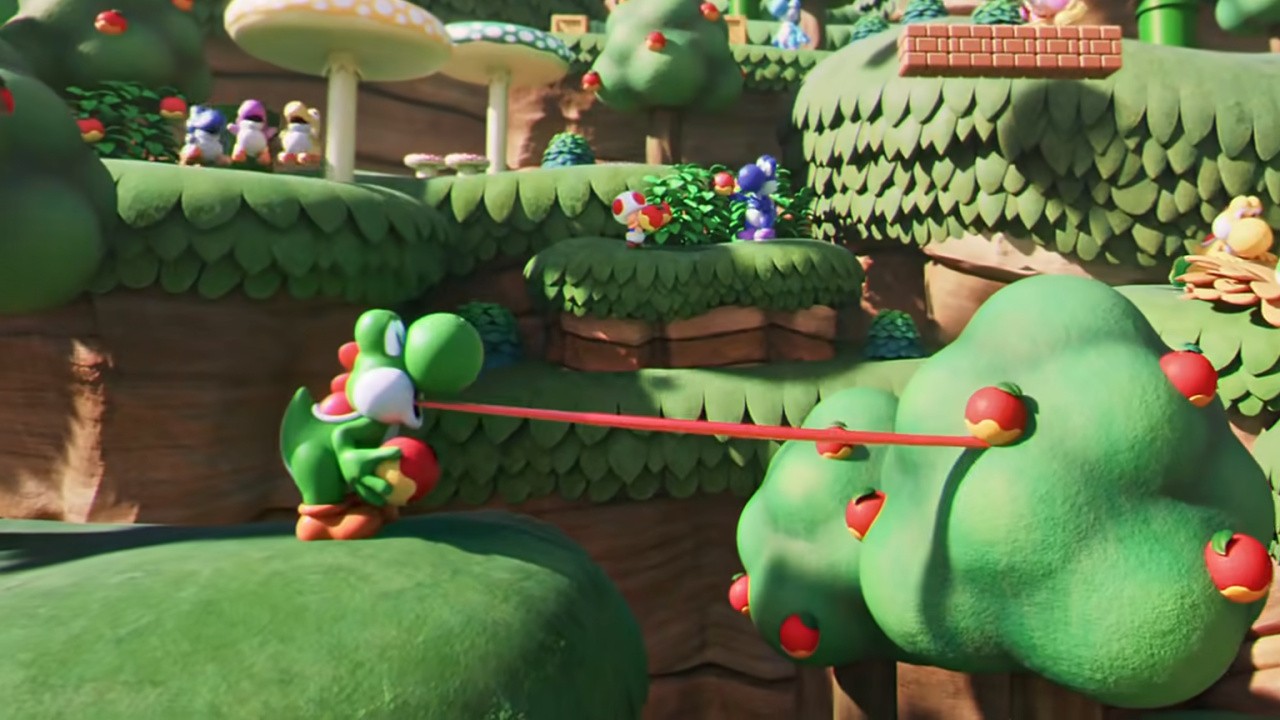
Super Nintendo World in Japan appears to be coming along nicely. Just last week, we got our first look at spinning coins, and now we’ve got an even more exciting tease of Mario’s sidekick Yoshi.
The following clip has been uploaded by Twitter user @ywki_woo. It shows a life-size Yoshi model walking around a tree and then slowly zooms out until you see a flagpole. Update: Below this is a higher quality video that’s been uploaded to YouTube.
As you can see, there’s also a Thwomp, Goomba and Koopa Troopa on display along with some trademark Mario blocks. The whole park seems to be making good progress, so we can’t wait to see more glimpses of it like this in the future.
Posted by: xSicKxBot - 06-22-2020, 06:56 AM - Forum: Lounge
- No Replies
The Last Of Us 2 Accessibility / Difficulty Options: A Detailed Overview
The Last Of Us Part 2 is the latest big AAA blockbuster video game from the team at Naughty Dog for the PlayStation 4. So naturally, a lot of different people are probably quite interested in playing it and seeing what the big deal is. Common sense suggests that not all of those people are going to be on the same level when it comes to their experience with stealth and actions games, or video games in general. Not all of those people are going to have the same level of facilities that might help them hear or see an enemy, and some people might need some assistance in manipulating a controller.
Thankfully, The Last Of Us Part 2 features a ton of different accessibility options that will let you adjust things like the granular difficulty of the game, how enemies work, how different game mechanics function, and how the game looks, feels, and control. It's all in the service of hopefully making the game comfortable to play no matter what your situation is, at least, as comfortable as a tense, violent, and sometimes horrific thriller can be. Compared to other AAA games, the accessibility options here are much more robust and should let many more people enjoy the story and combat.
In this article, we've highlighted the more notable accessibility options in The Last Of Us Part 2, with some explanations on what some of them do. If you're interested in playing the Last of Us Part 2 but want to know whether you can change the game to suit your particular needs, hopefully this article will be of some help.