Posted by: xSicKxBot - 04-16-2020, 05:46 AM - Forum: Minecraft
- No Replies
Bedrock: 1.14.60
This week we are seeing some bug fixes for those who are not testing out the new features in Beta. If you find any additional bugs please check https://bugs.mojang.com/ and report any issues you find that haven’t been reported previously for this version.
Crashes / Performance
Fixed an issue that could cause Minecraft not to launch past the loading screen after updating (MCPE-58897)
Fixed a crash that could occur when exiting a world
Fixed a crash that could occur when a split-screen player left the game
Fixed a crash that could occur during gameplay on Nintendo Switch
General
Fixed an issue that showed a false prompt that a device was out of storage space (MCPE-32501)
Fixed an issue with the Marketplace not loading when not signed into a Microsoft account
Fixed issues with content not transferring to a Microsoft account if the content was purchased without being signed in
Gameplay
Fixed some special characters not appearing on Signs or Book & Quill
Add-Ons
Animation Controllers in Behavior Packs can now run commands on Realms (MCPE-59881)
Xbox Insider Release Notes – Alpha Ring (2004.200404-0000)
Hey Alpha ring users! Today’s Xbox Insider Release Notes highlight the latest fixes, known issues, and features coming to your console. Starting at 2 p.m. PT today, users will receive the latest 2004 Xbox One system update (build: RS_XBOX_RELEASE_2004\19041.1873.200404-0000). Keep reading for more details.
System Update Details:
OS version released: RS_XBOX_RELEASE_2004\19041.1873.200404-0000
Available: 2 p.m. PT – April 6, 2020
Mandatory: 3 a.m. PT – April 7, 2020
Fixes for Alpha
We’ve heard your feedback, and we’re happy to announce the following fixes have been implemented for this 2004 build:
Party Chat
Fixed an issue where some users could not hear or be heard in party chat.
Sign-In
Fixed an issue where some users were unable to login to profile with error 0x80a30204.
System
Various updates to properly reflect local languages across the console.
Known Issues for Alpha
We understand some issues have been listed in previous Xbox Insider Release Notes. These issues aren’t being ignored, but it will take Xbox engineers more time to find a solution. We appreciate your patience at this time!
Audio
Users who have Dolby Atmos enabled and console display settings set to 120hz with 36 bits per pixel (12-bit) are experiencing loss of Dolby Atmos audio in some situations.
Workaround: Disable 120hz or set Video Fidelity to 30 bits per pixel (10-bit) or lower.
Guide
Some users are reporting that they are not seeing Gamerpics or Profile information in the Friends tab. We are aware of the issue and investigating.
We’ve received reports that the Friends tab is not showing the correct status of online/offline friends.
Home
Users who use Energy-saving power mode may see the dashboard showing no network connection on boot. We are aware of the issue and investigating.
Note: The dashboard will refresh once the network connection is established, but may take up to a minute.
My Games & Apps
Users have reported seeing black tiles instead of game artwork when browsing their collection.
Note: We are still investigating the issue, please report the issue again from the console if you have done so with a prior update and are still seeing this behavior.
Some titles in collection may appear with a “trial” tag incorrectly in collection.
Profile Color
Sometimes users may encounter the incorrect Profile color when powering on the console.
Are you not seeing your issue listed above? Make sure to use Report a problem to keep us informed of your issue. We may not be able to respond to everyone, but the data we’ll gather is crucial to finding a resolution.
Learn more about feedback and how each ring is differentiated in the following links:
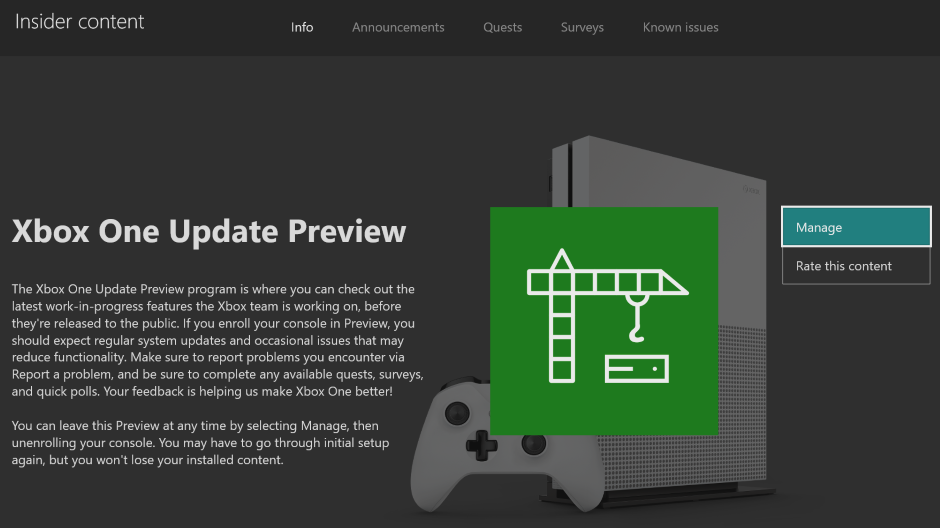
For more information regarding the Xbox Insider Program follow us on Twitter and join the community subreddit for support and updates. Keep an eye on future Xbox Insider Release Notes for more information regarding your Xbox One Update Preview ring!
Posted by: xSicKxBot - 04-16-2020, 05:46 AM - Forum: Lounge
- No Replies
Blog: The making of Warcraft II
The following blog post, unless otherwise noted, was written by a member of Gamasutras community. The thoughts and opinions expressed are those of the writer and not Gamasutra or its parent company.
Author’s note: The following chapter comes from Stay Awhile and Listen: Book I, now available along with Stay Awhile and Listen: Book II as part of StoryBundle’s “Boss Battle” Game Bundle. The promotion features 10 DRM-free digital books for $15 and runs through the end of April; a portion of all proceeds will go toward Doctors Without Borders to aid medical professionals as they battle the novel coronavirus.
It wasn’t the numbers we sold that made us realize we had done something special with WarCraft. I think it was the play experience. WarCraft was really fun to play. It had a different look and feel from the other games out there. It was more like a cartoon. I hadn’t seen anything like it before. It was amazing and just so damn fun.
-Frank Pearce, co-founder, Blizzard Entertainment
If you look at the title credits for our early games, they say “Design by Blizzard Entertainment,” and that was a conscious decision. A lot of people were deeply involved in the design process, and it’s hard to single out all of those folks.
-Pat Wyatt, vice president of R&D, Blizzard Entertainment
We definitely make games that we want to play. By making games that we want to play first, we’re able to make better games.
-Samwise Didier, artist, Blizzard Entertainment
BLIZZARD ENTERTAINMENT’S PUSH TO GET WarCraft: Orcs & Humans on shelves in time for Christmas 1994 left Allen Adham’s team weary yet satisfied. Like the proverbial snowball rolling downhill, sales started off slow then picked up through January as critics took notice. PC Gamer magazine gave the game an Editor’s Choice award and named it runner-up for Strategy Game of the Year. Computer Gaming World magazine and the Academy of Interactive Arts & Sciences chimed in, granting Blizzard’s maiden PC title Best Strategy Finalist status.
Bob and Jan Davidson gave Blizzard’s boys little time to recoup. The Davidsons wanted a sequel, and they wanted it by Christmas—only eleven months away. Allen and his team saw the wisdom in following up WarCraft sooner rather than later, but they also saw the value in tempering haste with careful consideration. Every developer had suggestions to make WarCraft II bigger and better.
One school of thought was more modern era stuff where humans had fighter jets and modern technology, and Orcs rode around on dinosaurs and cast magic spells. A lot of people in the office thought, That’s a cool idea. Let’s not just do the same thing over again. Let’s go somewhere different.
It was probably best [that WarCraft II retained its fantasy theme] because we didn’t know that Command & Conquer was in development [at Westwood Studios], which meant our game would have been too close to C&C‘s modern warfare-themed units.
-Pat Wyatt
That was a huge fight between me and Allen. Allen wanted to take WarCraft II into space, and I was like, “No, that will destroy the title. That will kill it.” Allen and I went back and forth, back and forth on this. At one point, a Calvin & Hobbes comic strip [printed 1-1-1995] had come out showing Calvin playing with a dinosaur toy, and he made the dinosaur [pilot] jet fighters. The last frame of the comic showed Calvin playing and saying something like, “This is so cool!” And Hobbes was saying, “This is so stupid.”
Someone pasted that comic on the doorway with “Stu” written under Hobbes and “Allen” written under Calvin. Allen saw the comic. I saw his shoulders kind of slump, and he said, “Okay. I get it.”
-Stu Rose, artist, Blizzard Entertainment
Blizzard’s team had no intention of phoning in a quickie sequel. They wanted to add more units, more strategies, more maps, more players able to mix it up in multiplayer—more everything.
The WarCraft design document I wrote is probably the furthest we got with design documents. I don’t remember if there even was a design document for WarCraftII. We knew we needed barracks, we needed town halls, and we already knew what their functions were.
-Stu Rose
Early photo of the Silicon & Synapse/Blizzard Entertainment team. Top: Patrick Wyatt. Below Pat, in the center: Joeyray Hall. Far right: Michael Morhaime, and Stu Rose to his left. Middle row and far left: Frank Pearce. Front, from left: Samwise Didier and Allen Adham.
To add new layers of strategy to the familiar “gather resources, raise an army, and destroy opponents” gameplay, the developers added island maps to the mix of forest and grassland battlegrounds. Traveling between islands required players to build shipyards and send oil tankers out to install refineries overtop oil patches. Combined with gold and lumber, a steady supply of tankers sucking up oil from the seafloor enabled players to construct warships to patrol the high seas and transports to ferry troops between islands.
Oil originally worked much differently. The way it worked was you’d send out a ship into water, and you’d press a button for that ship that would start this radar-like ping. And you’d see, on the minimap, “This area’s dark so it has lots of oil” or “This area’s light so it has no oil.”
I argued vociferously against that idea. We implemented it [to experiment], but I hated it because it involved a lot of micromanagement, and that was antithetical to the spirit of WarCraft II, which used a much faster play style to that of WarCraft.
-Pat Wyatt
Blizzard refreshed the Orc and Human rosters to give veteran players new tactics to try. Footmen, Grunts, and Archers returned, but the Orc Spearman was replaced by the Troll Axethrower. Both sides received updated long-distance, heavy-damage units in the Human Ballista and Catapult, Gryphons and Dragons sprayed magic and fire across the skies, and Dwarven Demolition Squads and Goblin Sappers exploded when they collided with buildings, units, and even solid rock.
A version of the game leaked, which we called WarCraft II Alpha. A German magazine we’d given a preview copy to let it leak out. We were super pissed off about it, but it gave players an opportunity to see an early version of the game.
The resources were gold, lumber, rock, and oil. At some point after that, we decided that there were too many resources; it made the game too complicated. So we cut rock as a resource, but you could go around with Goblin Sappers and Dwarven Demolition teams and blow holes through mountains to get to somebody’s base that might otherwise only be accessible by water.
I’m glad we were able to use that because I didn’t want to see harvesting rocks go to waste.
-Pat Wyatt
As in the first game, WarCraft II‘s factions largely mirrored one another. The Human Mage had 60 health points and cost 1200 gold to build, the same stats as the Death Knight on the Orc side. Human Knights galloped around on horseback but did the same damage as the two-headed Ogre that lumbered about on foot. Where the Orcs and Humans differed was in tactics and abilities that opened up after players had constructed advanced buildings. After building certain prerequisite structures, players gained the option to convert Knights into Paladins that healed friendly units on command. Ogres transcended into fearsome Ogre Mages able to cast Bloodlust, a spell that enhanced a unit’s speed and strength.
It’s much easier to differentiate [factions] in the late game because you have less risk of one side being unbalanced compared to the other than you do in the early game, where differences are critical. Really what you want is for both sides to build up and then have tactical options that split in different directions [in the late-game stage].
Now, interestingly, we still made a mistake. Paladins are really underpowered compared to the ogre mages. From a micromanagement standpoint, Ogre Mages are much more powerful because you can cast bloodlust on all your guys then go attack, and your troops will go about their business. With the Paladin’s healing, you have to wait until the unit takes damage then heal [manually].
The Paladin required a lot more micromanagement, and that was something the design team didn’t perceive as being a balance issue at that point, but it ended up being a big deal. Orcs were a much better race to choose in WarCraft II.
-Pat Wyatt
Outside of new units and faster gameplay, WarCraft II underwent numerous under-the-hood changes. In August 1995, Westwood Studios released Command & Conquer, the spiritual successor to the studio’s Dune II RTS that had influenced WarCraft. Blizzard’s developers played Command & Conquer extensively and applauded some of the adjustments Westwood had made to the RTS genre’s gameplay. Notably, Command & Conquer eliminated the need to click command buttons like Attack and Move by implementing an intelligent interface driven by the left mouse button. After selecting units, players simply left-clicked on the ground to move, left-clicked on enemy units to attack, and left-clicked on buildings to select them.
Blizzard’s programmers appreciated Command & Conquer‘s streamlined controls but encountered a common problem: because every action was mapped to the left mouse button, players sometimes performed actions they did not mean to, such as sending a pack of troops charging forward when they had intended to move their cursor up a smidge more to click on a building and peruse its upgrade options. Jesse McReynolds came up with a way to reduce such user errors in WarCraft II. Pulling up the game code, he divided functions between both mouse buttons. Left-clicking selected units and buildings, while right-clicking carried out context-sensitive actions like moving and attacking.
Another improvement was the fog of war, a black shroud that covered all terrain at the start of each game except for the player’s starting location. As in WarCraft and Dune II, the darkness peeled back as the player sent units roving across the map, revealing terrain, gold mines, forests, and enemy bases. WarCraft II one-upped the fog mechanic by adding a new layer of strategic possibilities: Terrain and enemy structures remained visible after the player’s units moved away or were killed, but in the state the player had last seen them, as if frozen in time.
What ended up being really challenging was [drawing] the knowledge of what the player had seen in an area. Mike Morhaime might have written code for this: You go to explore an area, and you happen to see a building, maybe a barracks. Then you go away.
Well, is that building still there, or not? What if that building gets destroyed or more buildings appear around it [before the player returns to that area]? I can’t just show all the buildings that are there in the fog; I need exact information about what the player saw. You don’t want to give away information like a building that signifies the [opponent’s] production of Ogre Mages.
We did that by making shadow buildings. Each player sees what he saw, and shadow buildings represent the buildings that were there when he scouted the area, but might not be there now.
-Pat Wyatt
Crafty WarCraft II players used the fog of war to their advantage.
The idea of roads [in WarCraft] was taken directly from Dune II. In that game, you could only build buildings next to roads, and roads had to connect to other roads. So the designers were able to control where you could build buildings, or not build them, by laying out roads on the map.
We argued about that quite a lot in the early design process [for WarCraft]. Allen was one of the chief proponents of roads. He pointed out, “What if someone builds a barracks right next to your base?”
-Pat Wyatt
With roads out of the way, WarCraft II players could initiate construction on any patch of clear land. Devious generals made a habit of sneaking a worker unit just outside an enemy’s base and walling them in with watchtowers, constructing farms in a line that blocked access to gold mines and forests, and building a barracks that pumped fighters right into the base.
Another improvement offered in WarCraft II was as technical as it was cosmetic.
Super VGA graphics were not very popular for games yet. Windows 95 was coming out, and Allen said, “We need to do a hi-resolution Windows game.”
Having worked on one of those—that was MPC Battle Chess—I said, “To do [high-res graphics] for a real-time strategy game is not possible.”
-Pat Wyatt
Pat argued to Allen that rendering high-resolution graphics on the screen would prove too taxing on contemporary computers. Video games had to refresh the screen every time players performed any action like scrolling and moving a unit around. Refreshing super-detailed images every few seconds would slow WarCraft II to a crawl. As was standard at Blizzard, the push-pull argument turned into a raging debate that swept up the whole office.
Allen would say, “We have to do this,” and I’d say, “No.” Lots of other people were saying “No.” We had a meeting where he railed on a whole group of us. He said, “You say ‘no’ to this, and this, and this. I want to do something, and I can’t do anything around here.”
So I gave up and said, “Okay, we’ll do Super VGA,” and it was really hard, but we were able to pull it off for WarCraft II.
Allen was right. Sometimes we just had to try to do impossible things and succeed or fail. Fortunately we succeeded more often than we failed, but those kinds of arguments really wore him out.
-Pat Wyatt
WarCraft II‘s resolution doubled in size, enabling the artists to create maps, buildings, units, and special effects that were sharper, crisper, and more detailed than WarCraft‘s already-dated graphics. Although the resolution changed, WarCraft‘s cartoony graphics and humor remained intact.
We doubled the resolution of the game so we could insert all these details we didn’t see before, and I did a test with some realistic Orcs running around. They were just rendered sprites, but they were rendered in 3D with armor and skin tone and everything.
I really liked it, and a lot of people really liked it. It was a totally different look. But then some of the other designers came in and said, “No, it’s got to look more cartoony. It’s got to look more goofy.”
As a petulant kind of “Fuck you,” I turned the shaders all the way up on the characters so they were 100 percent saturated, like obscene neon and glowing green, just to show them how ridiculous it would look. And they said, “Yeah, that’s it. That’s what we want.”
Shot myself in the foot on that one. We dialed it back maybe 10, but that’s what the game ended up looking like.
-Duane Stinnett, artist, Blizzard Entertainment
Honestly, I think it [the WarCraft series’ color palette] was more an effect of doing so many Super Nintendo games. If you look at Blackthorne, [vibrant] colors was just the style we used at Blizzard, and we carried it over into WarCraft. Blackthorne, Justice League, Rock ‘n Roll Racing–that was just the style of the art we made.
-Stu Rose
Without a story beyond “Orcs and Humans fighting each other,” Bill Roper had made up WarCraft‘s dramatic plot and history on-the-fly in sound booth recording sessions. For WarCraft II, Blizzard handed over world-building duties to an enthusiastic new artist.
I was singing in a few bands and just having a blast at that. […] We were playing a gig at a club one night, and I guess I had drawn a little dragon on a cocktail napkin, just screwing around. And this guy walked by who knew a friend of a friend of a friend and went, “Hey, that’s pretty good! […] I know this one place that’s hiring artists.” And he handed me a card that said “Chaos Studios.”
[…] I walk in the door and there’s radio-controlled cars and superhero posters and Iron Maiden posters all over the walls. I didn’t even know what they did. All I knew is that whatever this is, I want a piece of this.
-Chris Metzen, artist, Blizzard Entertainment
Metzen had started out animating Batman on the Super Nintendo version of Justice League Task Force. Eager for more work, he pitched in on the text and detailed illustrations that made up WarCraft‘s instruction booklet. When the team started in on design idea for WarCraft II, Metzen let his imagination run wild.
By the time we began WarCraft II, I stayed late and wrote up a few paragraphs of what might have happened between the games that would set up a sequel, or begin to set up the scope or anticipation of the sequel. I didn’t plan to show it to anybody, and I guess one of the other designers showed it to the boss one night, unbeknownst to me.
A couple of days of later, we’re at a meeting, and the boss says, “Oh, and, by the way, Chris is our new designer on WarCraft II.”
I’m like, “Holy crap! Really?! Why?” But he knew. He knew that while I loved drawing […] ultimately he knew I just wanted to make stuff up.
-Chris Metzen
Metzen submerged himself in the fiction that defined Azeroth and its surrounding lands. Picking up where Bill Roper’s off-the-cuff construction of the lore had left off, he decided that the Orcs had won the first war, leaving Azeroth in a state of desolation and panic. All surviving humans retreated to the kingdom of Lordaeron. Eyeing another conquest, the Orcs set off in pursuit.
To expand the scope of the game, Metzen and the other designers brought other races into the Orcs-versus-Humans conflict. Elves and Dwarves sided with humanity to form the Alliance, and the Orcs rolled trolls, ogres, and goblins into their ranks. Metzen’s yarn of conquest and bloodshed unfolded over the game’s two campaigns. Players who took command of the battered and bruised Alliance explored, built, and fought their way to a final showdown at the Dark Portal from which the Orcs had invaded. Those who threw in with the Orcs set off on a string of plundering and pillaging that culminated in an all-out assault on Lordaeron.
Chris Metzen used to be this kid who had a lot of brilliant ideas about story. He wrote the story for WarCraft II and beyond. He didn’t do a good job of expressing how cool things were going to be in meetings, but when he delivered the goods, they were always epic.
The terms he used to describe what our games should be were, “[The game] needs to be epic. Bold, epic, and rock balls.” We all just sort of knew what that meant even though it sounds really wacky. It had to be bold and epic, and it had to “rock balls.” So that’s what we did. We made games that rocked balls.
-Pat Wyatt
Alongside Sammy Didier, Metzen also helped evolve the cartoony visuals used in WarCraft.
I think the cartoony look definitely works. Compared to other games out there, which have a main character who is a normal guy, [WarCraft: Orcs and Humans had] this giant massive green Orc riding a wolf, with an axe that is too huge to carry in one hand, yet he’s got two of them, one in each hand.
Everything is just over the top.
-Sammy Didier, artist, Blizzard Entertainment
Sammy Didier was very much the driving force behind the look of WarCraft [series], and he always has been. Between him and Metzen, they had this “it’s goofy and cartoony, but it’s badass at the same time” style.
-Duane Stinnett
Saving or decimating Azeroth for a second time offered plenty of action and drama, but Blizzard’s developers knew multiplayer was the reason players continued to play WarCraft long after they had finished the game’s story. Just like the artwork, gameplay, and storyline, multiplayer offerings in WarCraft II needed to be exponentially better. WarCraft had permitted only two players to engage in epic, rock-balls clashes. WarCraft II quadrupled that limit, offering dozens of maps set in forests, islands, and winter wonderlands—complete with twinkling Christmas lights that fit in perfectly with WarCraft‘s jocular personality—for up to eight players.
Even more important to WarCraft II‘s success was its multiplayer play. Although it lacked the free Battle.net connectivity of later Blizzard products, it did feature eight-player local network play and supported two-player modem gaming. It was also another early beneficiary of Kali, a gaming community tool that allowed primitive TCP/IP gaming connections across the nascent Internet.
-Jason Bates, PC Retroview, IGN.com
Blizzard Entertainment released WarCraft II: Tides of Darkness in early December 1995, right on schedule. One year earlier, the original WarCraft had been just another box amid dozens of other games at retail. From the moment the sequel dropped, hype for the game swelled from a snowball rolling downhill to a full-on avalanche.
Cool is one word for it, but blockbuster hit is another way to describe WarCraft II. It became Blizzard’s first game to hit the million-unit-seller mark. […] Up until that point only games like Myst and The 7th Guest could claim such a distinction.
-Geoff Keighley, “Eye of the Storm,“ GameSpot.com
Critics and gamers responded to WarCraft II right away. PC Gamer piled on the praise, bestowing an Editor’s Choice Award and crowning it Best Strategy Game of the Year and Best Game of the Year overall for 1995. Years later, GameSpot.com, Computer Gaming World, and other venerable media outlets inducted the game into their respective Hall of Fames.
Once you had learned the nuances and intricacies of multiplayer WarCraft II, you’d find yourself hopelessly addicted to fine-tuning your build orders in an effort to find the most efficient play style possible.
Team games could involve certain team members getting extremely specialized—for instance, one team member would try to get dragons or demolition crews as quickly as possible while the other team members would protect him or her. Water maps with battleships and ship transports added yet another wrinkle to the game strategy.
-Bob Colayco, “The Greatest Games of All Time,“ GameSpot.com
Critics also expressed satisfaction with the game’s accessibility and personality.
In WarCraft: Orcs and Humans, I always took umbrage at having to tell a unit what to do when, in many cases, it should be obvious: if you tell a peon to go to a gold mine, you want him to harvest gold.
WarCraft 2 lets you right-click to quickly dispatch your units. Click on clear ground and you move there. Click on an enemy unit and you will attack him. If you’ve been playing a lot of Command & Conquer lately, you’ll welcome this feature.
-Tim Keating, Computer Games Magazine
Although no reviewer ever put it in Metzen’s words, Blizzard’s developers knew WarCraft II rocked balls. Other developers thought so, too. Caught up in the excitement over the growing popularity of the RTS genre, competitors littered store shelves with imitators that tried but failed to pry loose the grip that Blizzard and Westwood had on think-on-your-feet strategy gaming.
Just as importantly as ushering in waves of real-time warfare games, WarCraft II proved that Blizzard was no one-hit wonder. Never again would a Blizzard Entertainment-branded game get lost in the shuffle of other boxes. For gamers and critics, the next great PC game developer had arrived.
Author’s note: This chapter chapter comes from Stay Awhile and Listen: Book I, now available along with Stay Awhile and Listen: Book II as part of StoryBundle’s “Boss Battle” Game Bundle. The promotion features 10 DRM-free digital books for $15 and runs through the end of April; a portion of all proceeds will go toward Doctors Without Borders to aid medical professionals as they battle the novel coronavirus.
Bibliography
The Stay Awhile and Listen series is written based on extensive research and firsthand interviews. This chapter came from interviews with Patrick “Pat” Wyatt, Stuart “Stu” Rose, and Duane Stinnett. Additional sources of information include:
Once you had learned the nuances and intricacies: Colayco, Bob. “GameSpot Presents: The Greatest Games of All Time – WarCraft II: Tides of Darkness.” 3 April 2013. http://uk.gamespot.com/features/the-grea...s-6144203/.
Posted by: xSicKxBot - 04-16-2020, 05:46 AM - Forum: Lounge
- No Replies
Obituary: Mathematician and Game of Life creator John Conway has passed away
British mathematician John Horton Conway, the inventor of the Game of Life, has passed away from complications related to COVID-19.
Princeton, where Conway has worked as a professor since 1987, shared the news, and celebrated his achievements in mathematics along with his “unbounded curiosity and enthusiasm” for other subjects.
Conway was perhaps best known for his work in the theory of finite groups, knot theory, number theory, combinational game theory, and coding theory, and for the invention of the cellular automation called the Game of Life.
He devised the zero-player game in 1970, and posited that the title belonged to a “growing class of what are called ‘simulation games'” because of its “analogies with the rise, fall, and alterations of a sociality of living organisms.”
The game is ‘played’ on a two-dimensional orthogonal grid of square cells, each of which interacts with its neighbors and can live, die, and multiply depending on initial conditions.
It’s a passive experience that asks players to create an initial configuration before sitting back and watching how it evolves as that rule is repeatedly applied to future generations.
Friends, colleagues, and students have been paying tribute to the late mathematical on the Princeton website and social media.
“John Conway was an amazing mathematician, game wizard, polymath and storyteller who left an indelible mark on everyone he encountered — colleagues, students and beyond — inspiring the popular imagination just as he unraveled some of the deepest mathematical mysteries,” said Igor Rodnianski, professor of mathematics and chair of the Department of Mathematics.
“His childlike curiosity was perfectly complemented by his scientific originality and the depth of his thinking. It is a great loss for us and for the entire mathematical world.”
Sonic The Hedgehog Is Getting An Official ‘DJ Style Party’ Album
Firmly securing itself a spot on our list of things we never knew we needed is this brand new, upcoming Sonic the Hedgehog album from Sega.
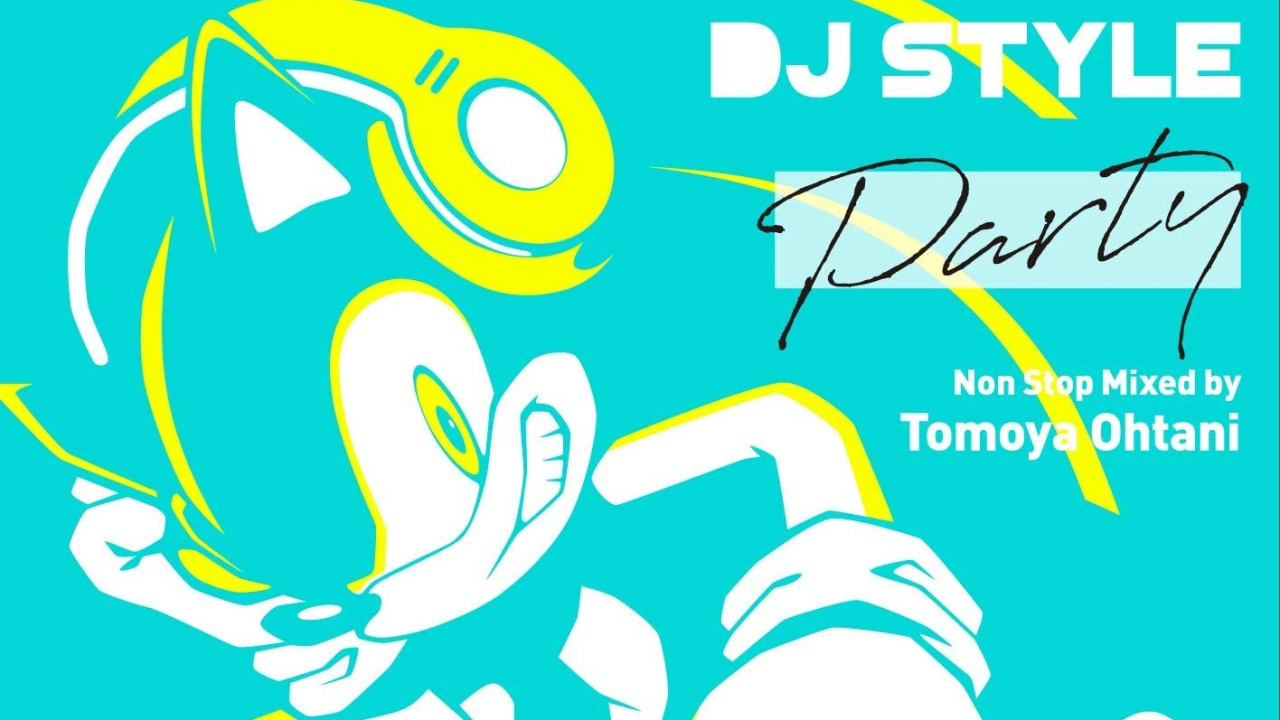
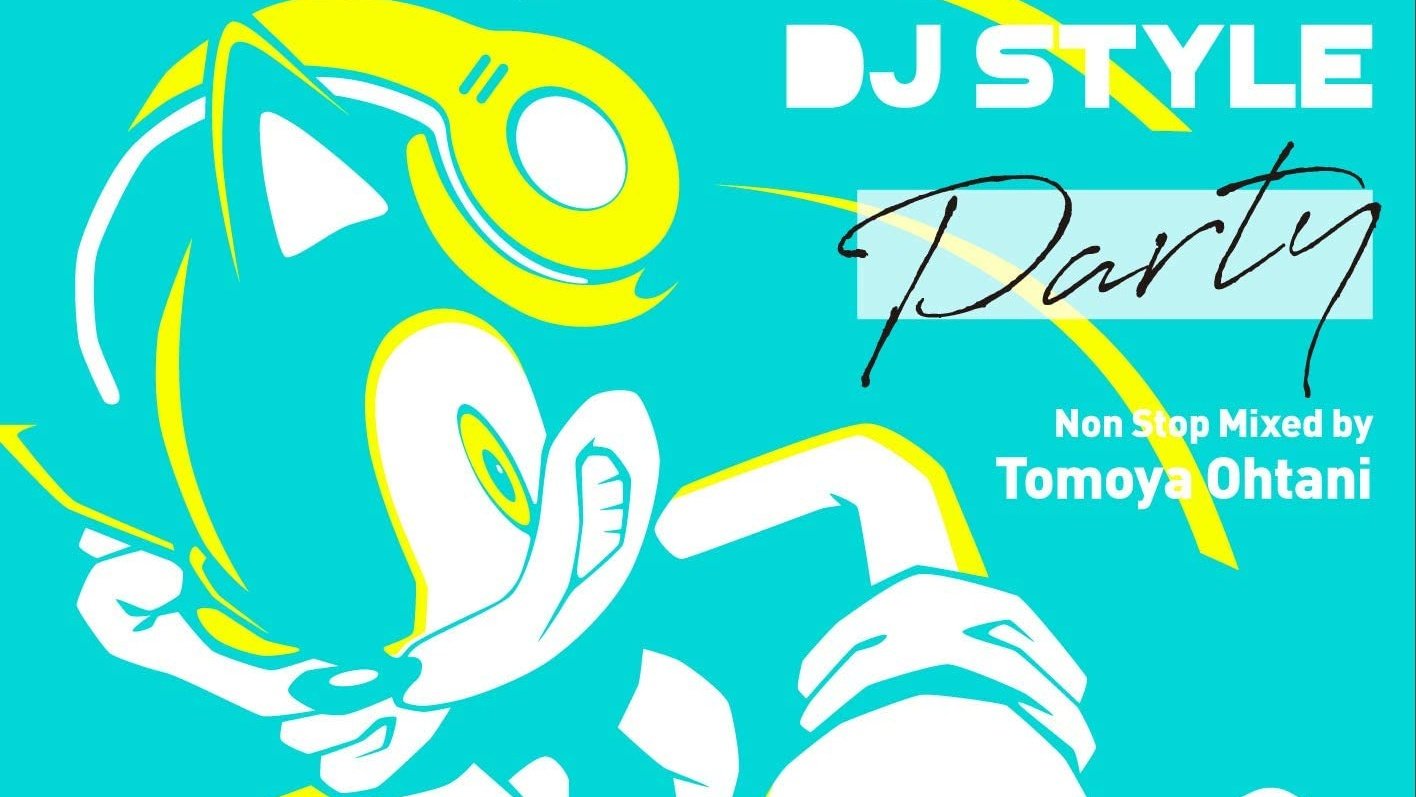
Called ‘Sonic the Hedgehog DJ Style Party’ – we imagine you’re sold already – the album will contain a number of pieces remixed by Sonic series sound director, Tomoya Ohtani. It has a pretty striking cover, which we genuinely wouldn’t mind putting on our office shelves.
As spotted by Sonic Stadium, a hasty Google translation of the product’s description suggests that the album is based on the SONIC DJ project which took place at SEGA FES 2018. It seems that you’ll be able to listen to songs from a number of different Sonic games, from different styles and genres, all remixed into a non-stop stream of party anthems. What a concept.
Posted by: xSicKxBot - 04-16-2020, 04:32 AM - Forum: Lounge
- No Replies
Animal Crossing: New Horizons' Next Event Is Earth Day
Animal Crossing: New Horizons' Bunny Day event has ended (much to the relief of players everywhere), but as Nintendo had previously teased, an Earth Day event is also slated to take place in the game soon. This year's Earth Day falls on April 22, which is presumably around when New Horizons' event will be held given that the series typically matches up with the real-world calendar.
As was the case with Bunny Day, the Earth Day event will be added as part of a free update, although Nintendo has not yet announced when that will be released. The company also hasn't yet shared any details about what the event will entail, but it seems it will be hosted by Leif--the flower-loving sloth who runs the gardening store in New Leaf.
That may not be all that's coming to New Horizons this month. During March's Nintendo Direct Mini, Nintendo teased that the game's upcoming update will "usher in some newly added features, including the Earth Day event," suggesting that some other things will be added as well. However, the company didn't share any further information beyond that.
In the aftermath of Microsoft purchasing GitHub there have been several changes for the better with the popular code repository. The first major update was creation of a free tier with unlimited private repositories, with the limit of 3 users per private repo. Today, that limitation has been removed, officially making all major GitHub features available for free to all users. At the same time, GitHub also announced price changes for existing customers.
We’re happy to announce we’re making private repositories with unlimited collaborators available to all GitHub accounts. All of the core GitHub features are now free for everyone.
Until now, if your organization wanted to use GitHub for private development, you had to subscribe to one of our paid plans. But every developer on earth should have access to GitHub. Price shouldn’t be a barrier.
This means teams can now manage their work together in one place: CI/CD, project management, code review, packages, and more. We want everyone to be able to ship great software on the platform developers love.
Teams who need advanced features (like code owners), enterprise features (like SAML), or personalized support can upgrade to one of our paid plans.
We’re also reducing the price of our paid Team plan from $9 per user/month to $4 per user/month, effective immediately. Existing customers will have their bills automatically reduced going forward.
Learn more in the FAQ, or compare plans on our pricing page.
The pricing now breaks down as follows:
You can learn more about the changes in the video below.
Posted by: xSicKxBot - 04-15-2020, 09:46 PM - Forum: Windows
- No Replies
It bid high and lost. Should Amazon be allowed a do-over on JEDI?
Today the Inspector General for the Department of Defense released a report into the DoD’s handling of the JEDI contract. With this report and some legal milestones around the corner it is a good time to reflect on where we are in litigation on the award of the contract, and how we got here.
For all of the heat and noise around this case, there is a very specific issue before the court at the moment. It may seem arcane and procedural, but the back-and-forth arguments between Amazon and the government raise a key question of principle and fairness that should matter to us all. Namely, should a company—like Amazon—that bid high and lost, now get a do-over, especially now—as the IG’s report makes clear—Amazon received additional proprietary information about Microsoft’s bid that it should never have had. That’s what Amazon wants. The government rightly says no.
A central premise of the federal procurement system is that “full and fair competition“ on a “level playing field“ means that competitors are asked to make their best bids without knowing what the other has bid or will bid. That principle ensures that companies seeking to do business with the federal government offer their best price from the beginning. They can’t offer a higher price in the hope they’ll win the bid anyway, and then turn around and ask to bid again if they lose. Amazon is not asking to be on a level playing field. It’s arguing that the field be tilted in its favor.
Microsoft won the JEDI contract because the Department of Defense found that we offered “significantly superior” technology at a better price. Four months later, the Court stopped work on the contract based on an error the judge found in one part of the DoD’s procurement process. The DoD then filed a motion to suspend the litigation for 120 days so it can very specifically address the judge’s concern—but without allowing Amazon and Microsoft to revise their original pricing.
That brings us to where we are today. The DoD is seeking to be responsive to the issue the Court raised in issuing the preliminary injunction. But that’s not good enough for Amazon. Amazon doesn’t want a solution that addresses the Court’s concerns and sticks to the original pricing in the competitors’ bids. According to its brief, it wants no “constraint on the offerors’ ability to revise their pricing.”
This, according to the government, is a “a transparent effort to undercut Microsoft on price, now that [Amazon] has a target at which to aim.” Amazon dresses its argument in the language of fairness and level playing fields, but the government’s brief looks right through it: “That AWS now regrets its pricing strategy is no reason to allow AWS a do-over, after it gained significant information about its competitor’s pricing, enabling it to use the currently prevailing information asymmetry to underbid its competitor in an effort to secure the contract.”
But Amazon does not just want to re-do its pricing now that it has information about Microsoft’s pricing. It wants the DoD to go back and broadly re-do its evaluation of many issues, hoping to rescue its losing proposal. Amazon, as an unsuccessful bidder, lawfully received some information about Microsoft’s winning price. The Inspector General’s report now reveals that Amazon also received Microsoft proprietary information it should not have received or used —information that the IG states could potentially give it “an unfair advantage in the cloud services marketplace.” Now that Amazon has this retained knowledge of Microsoft’s proprietary information, a complete re-do can only hurt Microsoft and benefit Amazon.
We can all agree that bid protest cases, and the judges that preside over them, serve an important function in helping to ensure fair procurements. But Amazon’s suggested approach – bid high, lose, try again – isn’t fair. It’s the opposite.
The JEDI procurement has lasted more than two years. The DoD reviewed our bid against eight distinct evaluation factors and 55 individual sub-factors. The department subjected our products and services to four individual test scenarios, which were composed of more than 78 individual steps. The result? We were rated equal or superior to Amazon in every evaluation factor.
There is a simple explanation for Microsoft’s victory – the strength of our technology, and our willingness to listen to and respond to our potential customers. More than 95 percent of Fortune 500 companies run Microsoft Azure. More than 10,000 government organizations are our customers. Much of the $1 billion (USD) we spend on security each year goes toward Azure. Even if you believe that Amazon may have started as the front runner, it’s clear our team worked hard to catch up and surpass them by investing in our technology and listening to the DoD.
What we learned and developed during the months leading up to the final proposal enabled us to better grasp the DoD’s requirements and what they were looking for so we could adapt our approach to best meet the DoD’s needs. Through the procurement process, we invested significant time and engineering resources into our products, we delivered new innovations including native edge devices that can withstand the challenging environments in which the DoD operates, and we demonstrated that we are capable of meeting their criteria at the best price point.
Our commitment to the DoD runs deep, and we believe our nation’s men and women in uniform deserve this technology now. As Microsoft President Brad Smith wrote in October 2018, “we believe in the strong defense of the United States and we want the people who defend it to have access to the nation’s best technology, including from Microsoft.” That guiding principle remains true today.
We are ready to help the DoD fulfill its important mission. Since we were awarded this contract, we’ve met every deadline established by the DoD. We were ready to move the first DoD early adopter units to the cloud on schedule on February 14. We’ll remain ready to serve the DoD as this process continues to move forward.
Amazon would have you believe that it lost the award because of bias at the highest levels of government. But Amazon, alone, is responsible for the pricing it offered. As the government explained in its brief: “AWS and Microsoft each had a fair chance to build pricing for the entire procurement, based on their overall business pricing.” Amazon did build its pricing for the entire procurement, and it wasn’t good enough to win. And now it wants a re-do. That’s not good for our war-fighters. That’s not good for confidence in public procurement. That’s not good for anybody but Amazon.
Editor’s comment: The format of this article is different from the usual article that Fedora Magazine has published: a Fedora origins story told from the point of view of a Fedora user. The author has chosen to tell a story, since to simply present the bare facts is akin to just reading the wiki page about it.
Hello World!
Hello, I am… no, I’m not going to give my real name. Let’s say I’m female, probably shorter and older than you. I used to go by the nick of Isadora, more on that later.
Here you have one of the old RH boxes
Now some context. Back in the late ’90s, internet became popular and PCs started to be a thing. However, most people didn’t have either because it was very expensive and often you could do better with the traditional methods. Yes, computers were very basic back then. I used to play with these pocket games that were fascinating at the time, but totally lame now. Monochrome screens with pixelated flat animations. Not going to dive there, just giving an idea how it was.
In the mid-90s a company named Red Hat emerged and slowly started to make a profit of its own by selling its own business-oriented distribution and software utilities. The name comes from one of its founders, Marc Ewing, who used to wear a red lacrosse in university so other students could spot him easily and ask him questions. Of course, as it was a business-oriented distribution, and I was busy with multiple other things, I didn’t pay much attention to it. It lacked the software I needed and since I wasn’t a customer, I was nobody to ask for additions. However, it was Linux and as such Open Source. People started to package stuff for RHL and put it in repositories. I was invited to join the community project, Fedora.us. I promptly declined, misunderstanding the name. It was the second time I got invited that I asked ‘what is with the “US” there (in the name)?` Another user explained it was ‘us’ as in ‘we’ not as in the ‘United States.’ They explained a bit about how the community worked and I decided to give it a go.
Then my studies got in the way, and I had to shelve it.
Login Screen in Fedora Core
Press Return
By the time I came back to Fedora.us it had changed its name to Fedora Project and was actively being worked on from within Red Hat. Now, I wasn’t there so my direct knowledge of how this happened is a bit foggy. Some say that Fedora existed separately and Red Hat added/invited them, some say that Fedora was completely RH’s idea, some say they existed independently and at some point met or joined. Choose the version you like, I’ll put some links down there so you can know more details and decide for yourself. As far as I’m concerned, they worked together.
Well, as usual someone dropped some CDs with ISOs for me. If I had an euro for every ISO I’ve been offered, or had tossed at my desk, for me to try it, I would be rich. As a matter of fact, I’m not rich but I do have a big rack full of old distros.
Anyways…
Now it’s the early 2000s and things have changed dramatically. Computers’ prices have dropped and internet speed is increasing, plus a set of new technologies make it cheaper and more reliable. Computers now can do so much more than just a decade ago, and they’re smaller too. Screens are bigger, with better colors and resolution. Laptops are starting to become popular though still expensive and less powerful than desktop PCs.
During this time, I tried both Fedora and Red Hat. Now, as has been said before, Red Hat focuses on businesses and companies. Their main concern is having exactly the software their customers need, with the features their customers need, delivered as rock solid stability and a reliable update & support cycle. A lot of customization, variety of options and many cool new features are not their main core. More software means more testing and development work and bigger chances of things failing. Yet the technology industry is constantly changing and innovating. Sticking too much to older versions or proven formulas can be fatal for a company.
So what to do? Well, they solved it with Fedora. Fedora Project would be the innovative, looking ahead test bed, and Red Hat Enterprise Linux was the more conservative, rock solid operating system for businesses. Yes, they changed the name from Red Hat Linux to Red Hat Enterprise Linux. Sounds better, doesn’t it?
Unsurprisingly, Fedora had a fame of being difficult, unstable and for “hackers only”. Whenever I said I was using Fedora, they would give me odd looks or say something like “I want something stable” or “I’m not into that” (meaning they didn’t fancy programming/hacking activities). Countless individuals suggested I might want to use one of the other, beginner-friendly distributions, without themselves even giving Fedora a try! Many would disregard Linux as a whole as an amateur thing, only valid for playing but not good for serious work and companies. To each their own, I suppose.
Note the F and the bubble already there
Yes, but why?
Those early versions were called Fedora Core and had a very uncertain release pattern. The six months cycle came much later. Fedora Core got its name because there were two repositories, Core and Extras. Core had the essentials, so to speak, and was maintained by Red Hat. Extras was, well, everything else. Any software that most users would want or need was included there, and it was maintained by a wide range of contributors.
From the beginning, one of the most powerful reasons for me to use it was the community and its core values. The Four Foundations of Fedora, Freedom, Features, First & Friends were lived and breathed and not just a catchy line on a website or a leaflet. Fedora Project strove (and still does) to deliver the newest features first, caring for freedom (of choice and software) and keeping a good open community, making friends as we contribute to the project.
I also liked the fact that Fedora, as its purpose was testing for Red Hat, delivered a lot of new software and technologies; it was like opening the window to see the future today.
The downside was its unreliable upgrade cycle. You could get a new version in a few months or next year… nobody knew, there was no agreed schedule.
Note how, despite being Fedora, RH’s logo and signature is omnipresent
What was in the box
Fedora Core kept this name up to the sixth version. From the start, it was meant to be a distribution you could use right after installing it, so it came with Gnome 2, KDE 3, OpenOffice and some browser I forgot, possibly Firefox.
I remember it being the first to introduce SELinux and SystemD by default, and to replace LILO with GRUB. I also remember the hardware requirements were something at the time, although they now sound laughable: Pentium II 400MHz, 256MB RAM (yes, you read it right) and 2GB of space in disk. It even had an option for terminal only! This would require only 64MB RAM and Pentium II 200MHz. Amazing, isn’t it?
It had codenames. Not publicly, but it had, and they were quite peculiar. Fedora Core 1 was code named «Yarrow» which is a medium size plant with yellow or white crown-like flowers. Core 2 was Tettnang which is a small town in Baden-Württemberg, Germany. Not sure about Core 3, I think it was Heidelberg, but maybe I’m mixing with later releases. Core 4 was Stentz, if I recall correctly (no idea what it means), Core 5 was a colour, I think Bordeaux, and Core 6 was Zod that I think it was a comic character but I could be wrong. If there was a method in their madness I have no idea. I thought the names amusing but didn’t give a second thought to it as they didn’t affect anything, not even the design of each release.
Ah… good ol` genetic helix
So what now?
Well, of course, Fedora Project has evolved from where we have stopped. But that’s for later articles or this one will be too long. For now, I leave you with an extract of an interview with Matthew Miller, current Project Leader and some links in case you want to know more.
Extracts to interview with Matthew Miller, Project Leader.
Matthew Miller tells about the beginnings in Eduard Lucena’s podcast (transcription here): “Fedora started about 15 years ago, really. It actually started as a thing called Fedora.us.” Back in those days, there was Red Hat Linux.” “Meanwhile, there was this thing called Fedora.us which was basically a project to make additional software available to users of Red Hat Linux. Find things that weren’t part of Red Hat Linux, and package them up, and make them available to everybody. That was started as a community project.”
“Red Hat (then) merged with this Fedora.us project to form Fedora Project that produces an upstream operating system that Red Hat Enterprise Linux is derived from but then moves on a slower pace.”
“We were then two parts, Fedora Core, which was basically inherited from the old Red Hat Linux and only Red Hat employees could do anything with and then Fedora Extras, where community could come together to add things on top of that Fedora Core. It took a little while to get off the ground but it was fairly successful”
“Around the time of Fedora Core 6, those were actually merged together into one big Fedora where all of the packages were all part of the same thing. There was no more distinction of Core and Extras, and everything was all together and, more importantly, all the community was all together.
They invited the community to take ownership of the whole thing and for Red Hat to become part of the community rather than separate. That was a huge success.”
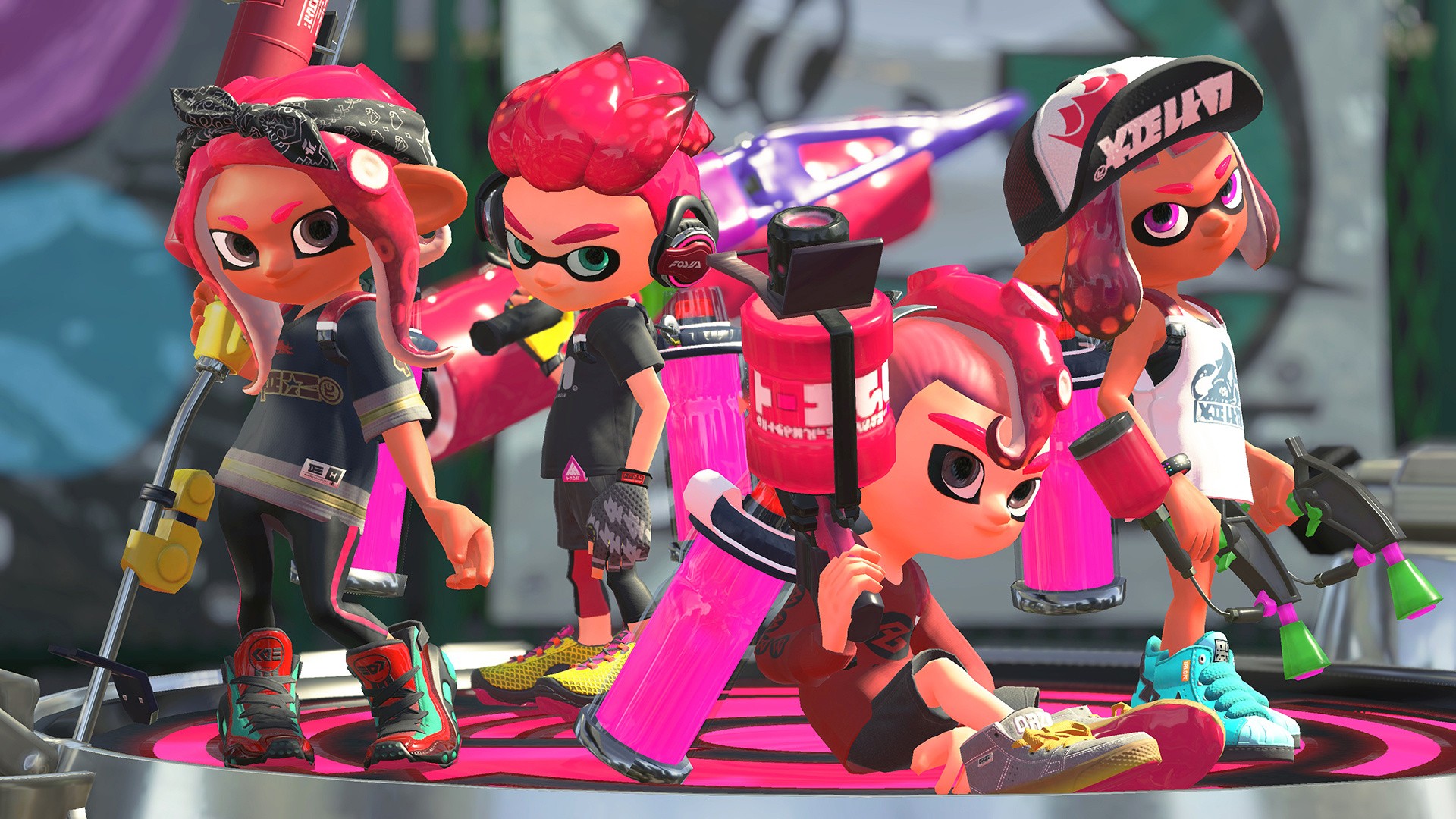
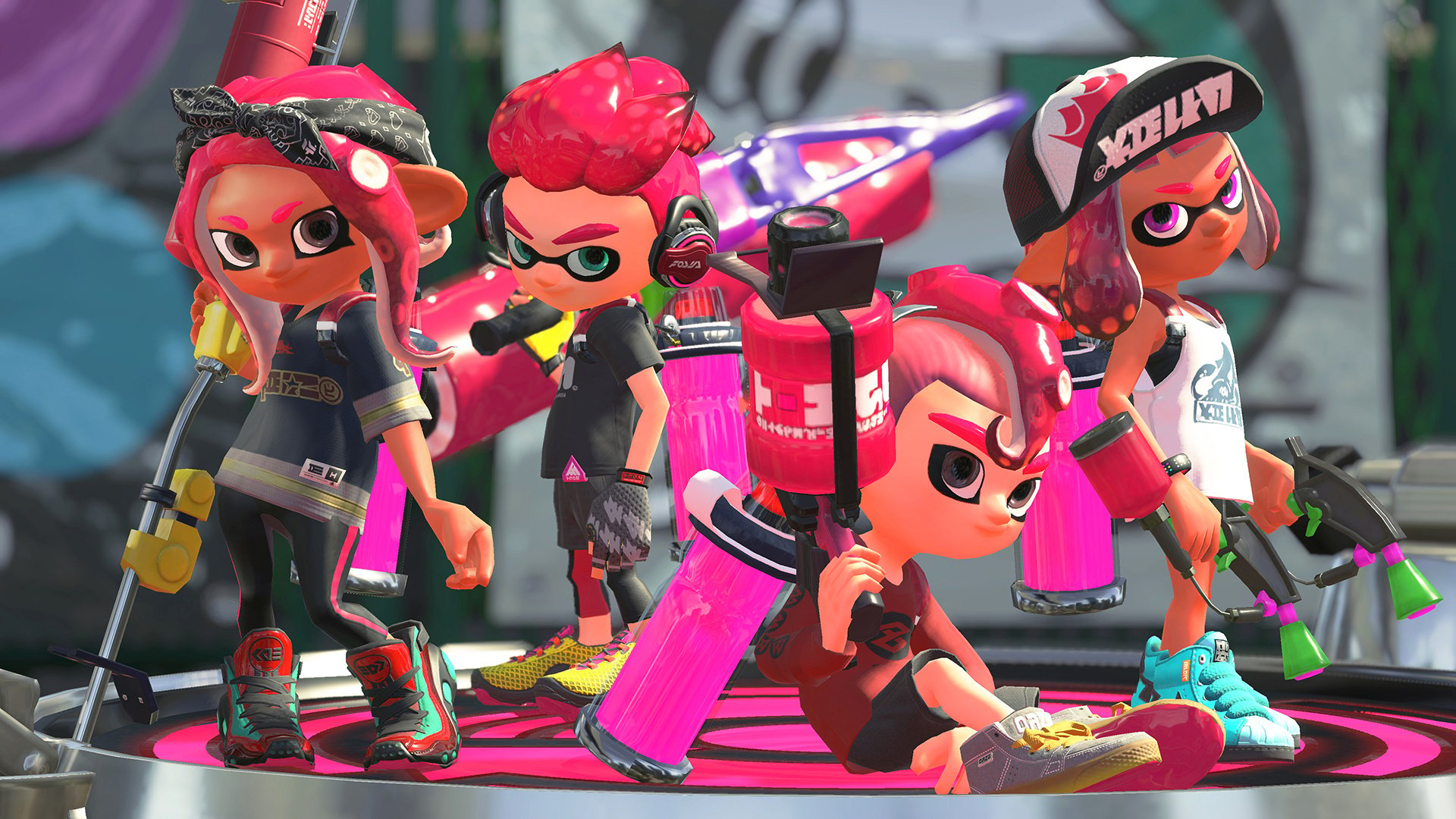
Splatoon 2 Version 5.2.0 Update Arrives On Switch Next Week
Nintendo has revealed that Splatoon 2‘s next update will arrive next week, with changes set to go live from 22nd April.
The update, which was seemingly accidentally mentioned by Nintendo on social media ahead of time last week, will be distributed at 10am on on 22nd April in Japan (so that’s 2am BST / 3am CEST in Europe, and 6pm PDT / 9pm EDT the day before in North America).
Patch notes for this update haven’t been released in English at the time of writing, although the official Japanese notes mention a number of minor adjustments to main, sub and special weapons. The update before this – Version 5.1.0 – arrived in January, also making a number of weapon adjustments.
Do you still find time to play regular matches of Splatoon 2? Tell us below.





 We doubled the resolution of the game so we could insert all these details we didn’t see before, and I did a test with some realistic Orcs running around. They were just rendered sprites, but they were rendered in 3D with armor and skin tone and everything.
 By the time we began WarCraft II, I stayed late and wrote up a few paragraphs of what might have happened between the games that would set up a sequel, or begin to set up the scope or anticipation of the sequel. I didn’t plan to show it to anybody, and I guess one of the other designers showed it to the boss one night, unbeknownst to me.