Pokémon GO To Throw Out The Rule Book By Offering Stay-At-Home Raid Battles
The latest in a string of new updates for Pokémon GO will see a hugely significant change to the game’s signature Raid Battles, as developer Niantic does its bit to help players stay safe at home during the coronavirus (COVID-19) pandemic.
In a blog post, Niantic founder John Hanke has shared the company’s vision for transforming its real-world, outdoors-focused games into titles that can also be enjoyed – and be just as innovative – indoors. He says, “you’ll soon be able to team up with friends and take on Raid Battles together in Pokémon GO from the comfort of home,” a change that is designed to help players stay in touch when they’re unable to meet in real life.
Raid Battles have become one of the app’s key features over the years, with players flocking to real-life locations to team up and defeat powerful Pokémon in the wild. Needing to get out there and find other players to mix with has been one of the game’s key ingredients, so this is arguably the biggest change we’ve seen for the game yet.
In the same blog post, Hanke also notes that improvements are planned for the game’s Adventure Sync feature – which should help it to more accurately track indoor movement and activities – and that Niantic is “re-imagining what it means” to participate in live events, with “an entirely new way to enjoy Pokémon GO Fest” in the works.
Posted by: xSicKxBot - 04-01-2020, 08:40 AM - Forum: Lounge
- No Replies
Christopher Meloni Returning To Law And Order For A Limited Series
There's a shortage of good news to go around these days, thanks to the global COVID-19 (coronavirus) pandemic, but thankfully, there's still stuff to look forward to--namely Elliot Stabler himself, Christopher Meloni, making a triumphant return to the world of Law & Order for a limited series. THR reports that Meloni will bring Stabler back to the L&O fold with a 13-episode straight-to-series order.
Stabler was a main character for 12 seasons of Law & Order: Special Victims Unit, rapidly becoming a fan favorite and cornerstone for procedural television. Unfortunately, thanks to failed contract negotiations, his reign came to an abrupt and unceremonious end when he was "retired" from the police force off-screen during the Season 13 premiere back in 2011. The sudden departure left Stabler's many fans adrift and suffering a distinct lack of closure.
Posted by: xSicKxBot - 03-31-2020, 11:27 PM - Forum: Windows
- No Replies
Meet the winners of the 2020 Imagine Cup Americas Regional Final
Ten student teams from countries across the Americasvirtually pitched their tech solutions at the 2020 Imagine Cup Americas Regional Final this week. Driven by purpose and developed with passion, each team presented a unique project leveraging Microsoft Azure to make a difference. The event culminated with the selection of the final two teams to move forward to this year’s World Championship during Microsoft Build. Congratulations to our Americas World Finalists, Team Deeptector and Team Tremor Vision from the United States!
The Imagine Cup aims to empower student developersto create innovative and inclusive projects that tackle pressing global and societal issues. Our winning teams both developed solutions to make an impact within their communities and beyond.Deeptector created an intelligent tool that uses state-of-the-art deep learning technologies to detect “Deepfake” videos and protect journalists, and Team Tremor Visioncreated a web-based tool using Azure custom vision that enables physicians to detect early onset Parkinson’s and quantitatively track patient progress throughout a prescribed treatment plan.
Out of hundreds of Americas submissions, the ten regional finalist teams virtually showcased their innovations to a panel of judges to compete for prizes totaling USD20,000, Azure credits, and two spots in the 2020 World Championship. With ideas encompassing solutions in environmental conservation, communication, accessibility, healthcare detection and prevention tools, and more, judges had a difficult task selecting which teams to advance.
Congratulations to all our winners this year and thank you to everyone who participated in bringing your passion to life. We can’t wait to see how students continue to develop their projects. We’d also like to give a special thank you to our judges for lending their expertise to the competition.
Meet the winning teams:
World Finalist – Deeptector, United States
University of Missouri
The team created Deeptector.io, a web app that detects DeepFakes using the same Artificial Intelligence methods that generate state-of-the-art DeepFake. These algorithms are commonly known as deep neural networks and they train themselves to differentiate between real videos and fake ones by looking at thousands of examples of each. DeepFakes are an emerging method for propagating misinformation in the media and Deeptector aims to protect journalists and the public from the damage that DeepFakes can cause.
Prizes: USD8,000, Azure credits, a spot in the 2020 Imagine Cup World Championship
World Finalist – Tremor Vision, United States
University of Washington
Tremor Vision is a web-based tool that enables physicians to detect early onset Parkinson’s and quantitatively track patient progress throughout a prescribed treatment plan. By simply using a touchscreen device connected to the internet, the user sends clinical results to their physician. The platform empowers patients to save time and money required by routine clinical visits and increases physician’s reach in screening for early signs of Parkinson’s.
Prizes: USD8,000, Azure credits, a spot in the 2020 Imagine Cup World Championship
Runner-up – Pink AI, United States
University of Illinois Urbana-Champaign, University of California, Berkeley
Pink AI’s project is a web platform that uses a Deep Learning model to provide accurate, efficient, and affordable detection for 4 different types of breast cancer in 10 seconds with an accuracy of 99%.
Prizes: USD2,500 and Azure credits
Runner-up – Synbiolic, Canada
Harbord Collegiate Institute, AY Jackson Secondary School, Port Credit Secondary School
Synbiolic is an AI-powered end-to-end rational drug design platform with a mission of making medicine more accessible worldwide. Researchers are able to choose their targets, the small molecule’s property they wish to optimize and get a tailored list of molecules that could work as a drug, as well as instructions on how to synthesize that molecule.
Prizes: USD2,500 and Azure credits
Runner-up – TuringCerts , United States
Hong Kong University of Science and Technology, University of California, Berkeley
TuringCerts is a privacy-first certificate validation solution on the blockchain, which guarantees the integrity of records and makes verifying and transferring much more efficient than conventional hiring process.
Prizes: USD2,500 and Azure credits
Follow the journeys of our winning teams on Instagram and Twitter as they prepare for the 2020 World Championship! They’ll be competing against our Asia World Finalists, team Syrinx and team Hollo, and EMEA World Finalists, team the Knights and team RedWalls.
Modder Shrinks The N64 Down To The Size Of A Game Boy Advance SP
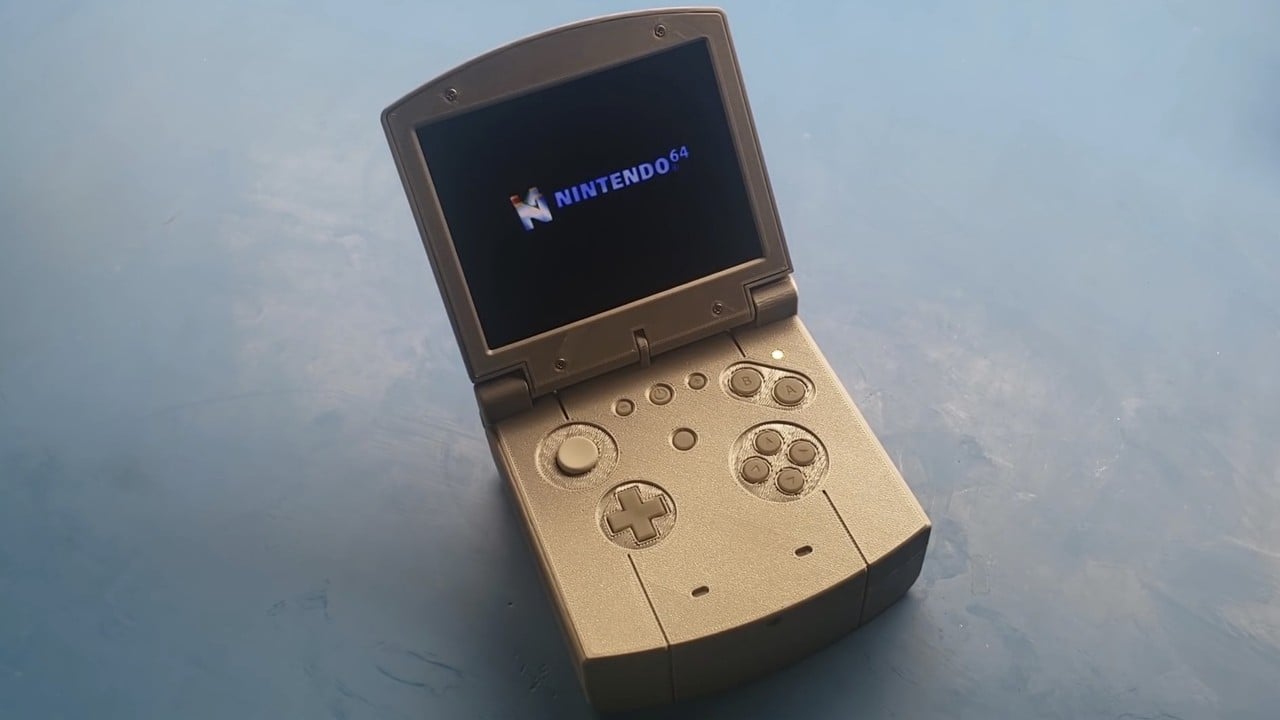
Portable N64 mods – where the console’s internals are placed in a handheld shell complete with an LCD screen and battery so you can play Super Mario 64 on the road – have been around for years, but this latest effort has to rank as one of the most impressive yet.
GmanModz has taken the guts of the N64 and placed them in a 3D-printed case not that much larger than a Game Boy Advance SP, creating what must surely qualify as the most pocket-friendly N64 mod yet.
The mod is possible thanks to recent discoveries in the modding community surrounding the N64’s interface controller board, the location of which has traditionally forced mods to be larger than they should be. With the board safely relocated and rewired, GmanModz has been able to decrease the footprint of the system and fit it into a much smaller clamshell case – yet you can still use your original cartridges. And because this uses the original hardware and not emulation, it has 100% compatibility with the entire N64 library.
It’s a really cool mod – and while we can’t see Nintendo taking the same approach, it does make us wonder exactly when we’re going to get that elusive N64 Classic Edition.
Destiny 2 Patch Notes: New Update Fixes Trials Of Osiris Loot Bug
It's Tuesday, which means Destiny 2's weekly reset is now in full effect. Aside from rotating in a couple of Crucible game modes and giving you the chance to earn extra Infamy in Gambit, there's also a new hotfix update to download.
The headline change in Hotfix 2.8.0.2 fixes an issue in Trials of Osiris where challenges were not being reset properly. Now everyone should receive their rewards as intended, allowing you to hop back into the hardcore PvP event without worrying about your hard-earned loot not dropping.
Bungie's patch notes list other changes, ranging from fixing an issue where players weren't getting the correct amount of planetary materials from Seraph Bunker upgrades, to fixing an issue with Raiju's Harness that allowed players to hold Whirlwind Guard indefinitely. Due to an issue, however, there are two fixes that aren't included in today's hotfix and have instead been pushed back: a fix where bunker upgrades on the Season Pass are only unlocked on one character, and a fix where the first weekly clear of a Legendary Lost Sector won't award a powerful drop.
The 167th GalaQuiz will be LIVE soon, win up to $50 in GalaCredit!
[www.indiegala.com] The GalaQuiz will take place in less than 10 minutes from this announcement Today's GalaQuiz[www.indiegala.com] hints are up. The theme will be Animals Redux #2.
Guardians can count on Zavala. The stoic commander of the Vanguard is always on hand for an encouraging word (and some fresh bounties) each time they visit the Tower. With Season of the Worthy, Zavala has his hands full, fighting alongside Ana Bray to save the Last City from the Almighty’s deadly collision course.
It begs the question: With all of this turmoil going on, how does Zavala relax? We already know that (according to Destiny lore) he likes his knitting and crocheting. But this week, with the introduction of the Fourth Horseman Exotic quest, Guardians learned about a new personal passion for Zavala: slinging iron and getting a good cardio burn, accompanied by sick beats and a most unusual trainer.
This is the story of the Shaxxercise mixtape.
[Fitness-related spoilers ahead! You’ve been warned, Guardian!]
The first step in the Fourth Horseman Exotic quest is to visit Zavala’s office, located in a lower level of the Tower Wall. Once you gain access to his office, continue through the back labyrinth of rooms and hallways, make your way into the Vanguard Vault, and continue your search for the famous Exotic shotgun. However, those Guardians who spent time rummaging through Zavala’s office this week eventually found a secret sitting high on one of the shelves – a mixtape of workout music, complete with motivational encouragement from everyone’s favorite Crucible host: Lord Shaxx himself.
So how did this mixtape come about in Season of the Worthy? Like many things, it started as a conversation between friends…
A Passion for Hard Work, I Like That
Bungie’s Kareem Shuman loves his job. As a technical dialogue designer, Kareem works on the Audio team and his job is to help make sure that the dialogue that is written, performed, and recorded sounds as good as possible in the final game. Think of Kareem as a shepherd for the content that makes up the dialogue audio experience. “Music and sound design and dialogue all have to share the same space,” Kareem said. “It’s my job to get [dialogue] across the finish line, sounding good, and delivering on the fiction and the experience.”
While hanging out one night during a Destiny 2 Crucible session, one of Kareem’s friends commented on how supportive and enthusiastic Shaxx is. She wished she had someone like Shaxx yelling at her when she was trying to stay motivated at the gym.
They laughed about it for a few minutes, but when Kareem came into work the next day, he couldn’t stop the idea from knocking around in his head. He wondered if he could turn the joke into something real in the game.
How would you make a workout mixtape real in Destiny 2?
One thing was for sure: a project like this would require work from across the studio. Like all other aspects of Destiny’s development, this would be a team effort, with input and creative ideas from every department, even down to figuring out if a “Shaxx mixtape” was something that Destiny lore could even support.
“I had to talk to [the] Narrative team and make sure they were okay with Zavala having a Shaxx mixtape,” Shuman said. “I didn’t want to step on anyone’s fictional toes.”
Narrative was fully behind the idea, which meant it wasn’t as crazy as he’d originally thought. Still, to bring this project home, it would take creativity, it would take communication, and it would take teamwork.
But first, it would take some music.
This Is It, Show Me What You’ve Got
The next step was to bring the idea to Bungie music director and composer Skye Lewin, who was immediately onboard. “My first reaction was [that] I laughed out loud and said, ‘Of course we can, let’s do it,’” said Lewin. He brought in Bungie composer Josh Mosser, and the two began discussing which music they could use for the mixtape. They were looking for the kind of tunes that, as Mosser said, would get Guardians in that “I want to get pumped up and run around in Destiny” mindset.
Shuman also provided the music team with a handful of previously recorded Shaxx voice lines that could be used as motivational inserts while the music was playing. He had spent a good deal of time querying the content stores, looking for Shaxx dialogue (many of which Guardians might recognize from the Crucible) that would work and were funny to boot. It didn’t take long for Mosser to get inspired.
“I literally sat there and imagined, ‘What would Zavala do at that point?’” Mosser said. “How would he go through a workout? Would he be high intensity the whole time, or [would] he need a moment to take a break?” After carefully editing the music selections and strategic voice drop-ins, Mosser came back to Shuman with the roughly eight-minute mix that ran the gamut from pounding beats to more contemplative moments (perfect for a brief mid-workout cooldown), all perfectly complemented by Shaxx’s intense vocal stylings. The mixtape consists of numerous separate bits of music, all carefully edited together to tell the “story” of the tape.
“One of those pieces could have been 14 minutes by itself,” Lewin said. “So we’re taking musical excerpts, making sure they flow from one piece to the next and then timing the dialogue around the music so the two work well and they tell the story in a way that’s funny.”
Lewin was especially pleased by Mosser’s choice to use the theme from the Ghaul fight for the heart-pounding climax of the mix. “It’s like the big payoff for your workout,” Lewin said.
If you ask the team which Shaxx line is their favorite, the vote is almost unanimous – Shaxx furiously demanding for the listener to calm down (“Relax more. I SAID RELAX!”); a moment that is perfectly accompanied by a momentary easing of the musical intensity.
With the music and voice lines in a good place, there was still the matter of getting it all to work in the game.
You’re Halfway, Hold Strong!
At this point, Shuman had what amounted to a big audio file, complete with the various tunes and Shaxx voice lines edited into place. A single audio file worked in theory, but there were drawbacks to implementing it in the game, including the need to create separate audio versions for all the languages supported by Destiny 2, as well as making it difficult to integrate with the game’s subtitles system.
The solution was to tie the music to a system called a “dialogue table” which contained all of the selected lines of Shaxx dialogue. Once the player interacted with the mixtape object in the game, the music would kick off and a timer would start, essentially sequencing Shaxx’s voice lines based on timing determined by Shuman in the dialogue table. Now, you could have the music and the voice lines play in perfect synchronization, plus it could be more easily localized and subtitled.
Now, how were Guardians going to find this mixtape?
One Final Push, Guardian
Eve Campbell, Bungie senior world artist, loves surprises in game worlds. “My favorite thing with any video game is finding secrets. If I play any game that, when I swing a sword and I accidentally hit a wall and the wall disappears and there’s a chest, I freak out and I have to hit every wall for the rest of the game.”
That love of surprise has served Campbell well when creating Zavala’s office and the labyrinth that lead to the Vanguard Vault. Having also worked on missions like Zero Hour and the Banshee-44 workshop pathway for the Leviathan’s Breath quest, this was comfortable territory for her. Designing Zavala’s office was also a chance to expand on the character a bit more. After all, how someone decorates their private spaces can say a lot about them as people.
Remember how Zavala likes to knit? Look around his office and you’ll see a small knitting kit tucked away on a corner table. Or a set of trophies presented to the commander for his many heroic efforts over the years. Or the set of barbells perched improbably high on the shelf next to the mixtape. And what executive suite wouldn’t be complete with a peaceful (and interactive!) Newton’s Cradle on the desk?
“For the mixtape specifically, we wanted that to be a thing that players discover,” Campbell said about the decision to place it high on a shelf near the office entrance. “We wanted it kind of hidden away a little bit. So we ended up with a jump puzzle to discover it, just so players could have that discovery of it. It feels a little earned.”
Even Steel Needs Sharpening
It’s no surprise that Destiny players found this musical Easter Egg in quick fashion with the weekly reset. The development team has enjoyed seeing the reaction from fans – and the inevitable mixtape remixes that are surely still to come.
Those Guardians who, in their haste to finish the Fourth Horseman quest, missed it at first can take solace and know that the musical treat is still there, waiting to be found, tucked high away on the upper shelf of Zavala’s office.
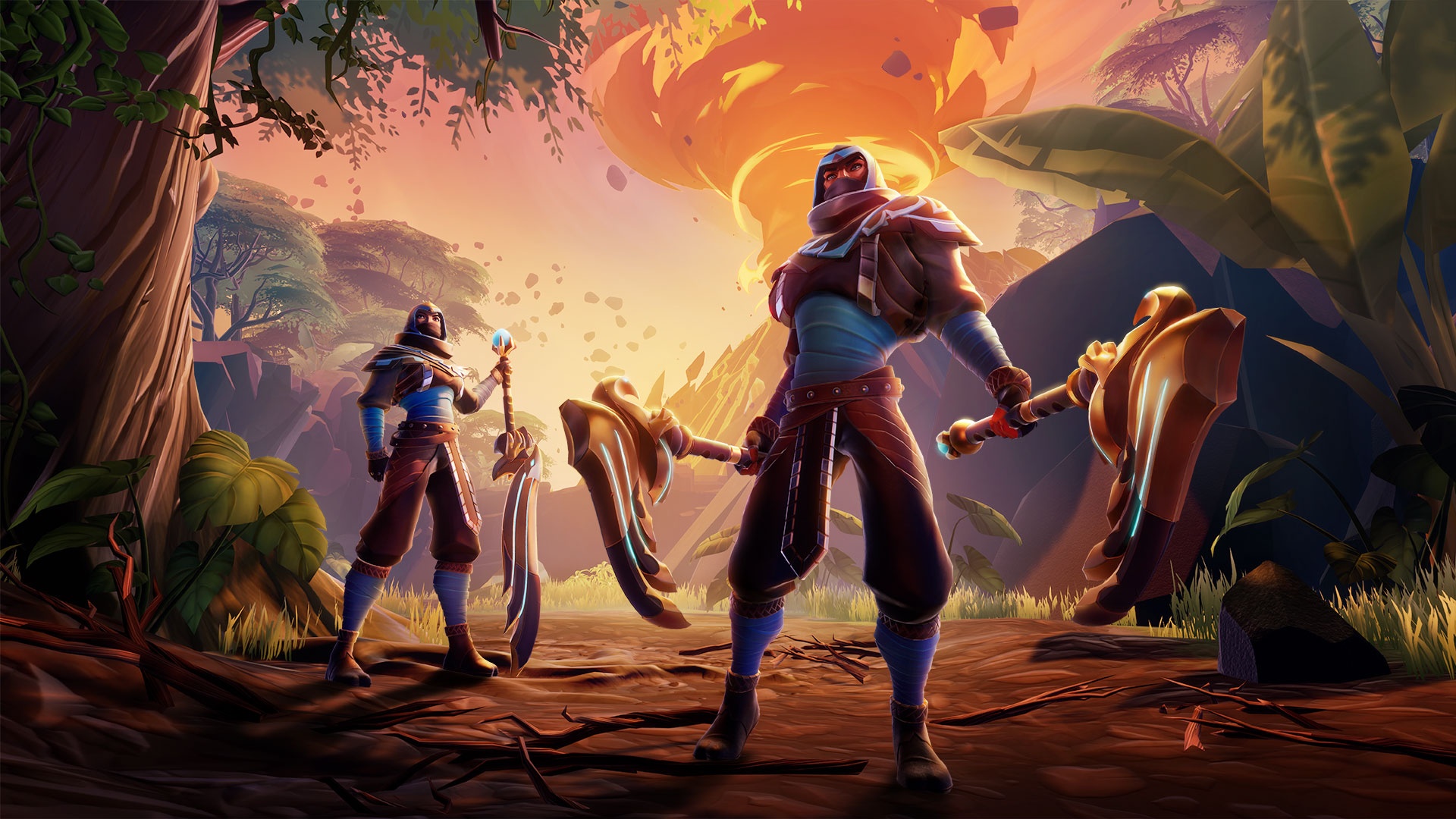
Escalation, a new way to slay Behemoths in Phoenix Lab’s Dauntless, was introduced in December. Players were challenged with a modified roster of Behemoths, each one deadlier than the last, even battling two at a time. Slayers fought tooth and nail to get to the ferocious Malkarion at the heart of the Maelstrom. They rallied. They fought. They won.
Now they face a new challenge. With the launch
of Scorched Earth, a new Escalation is here: Blaze.
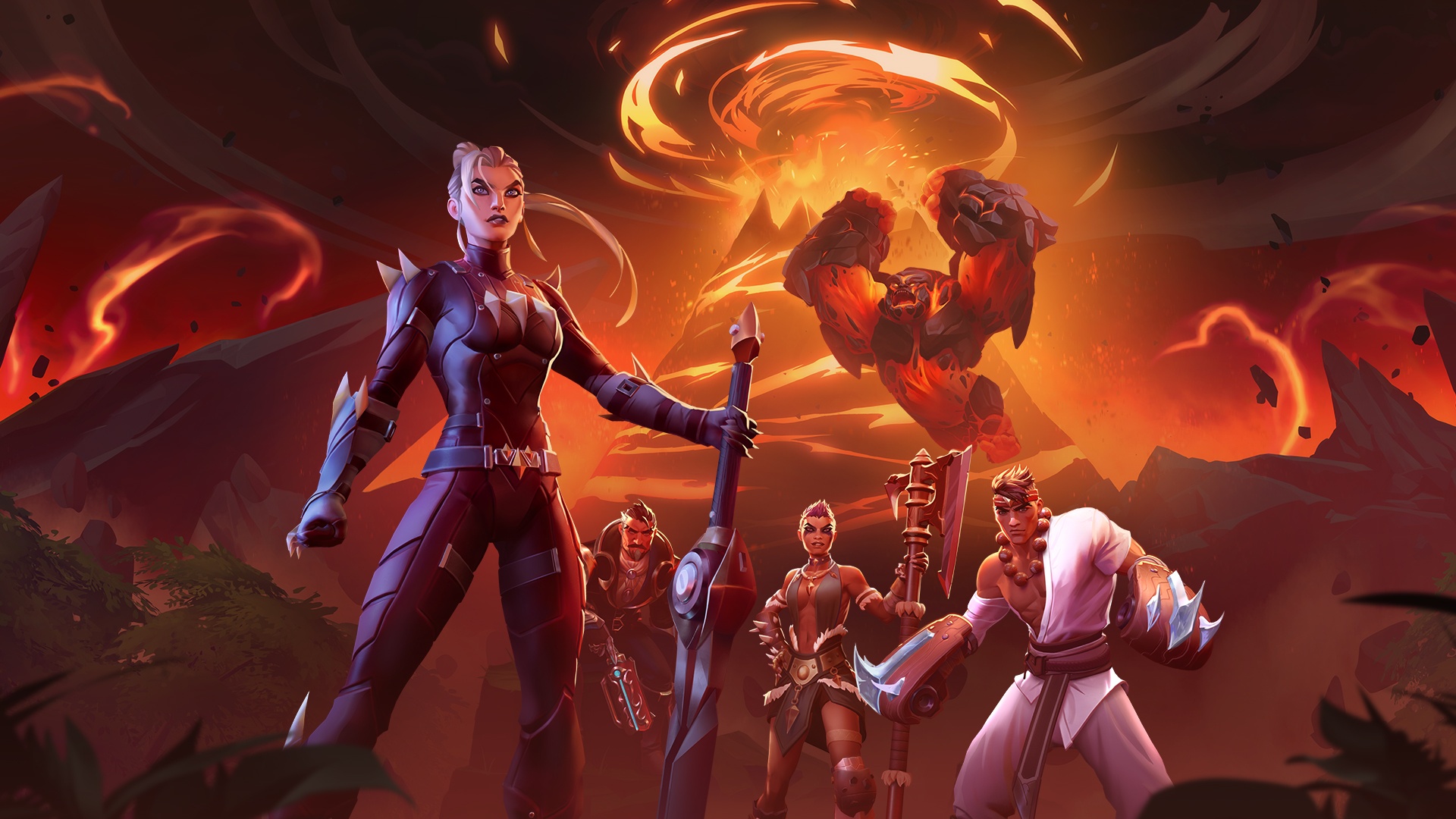
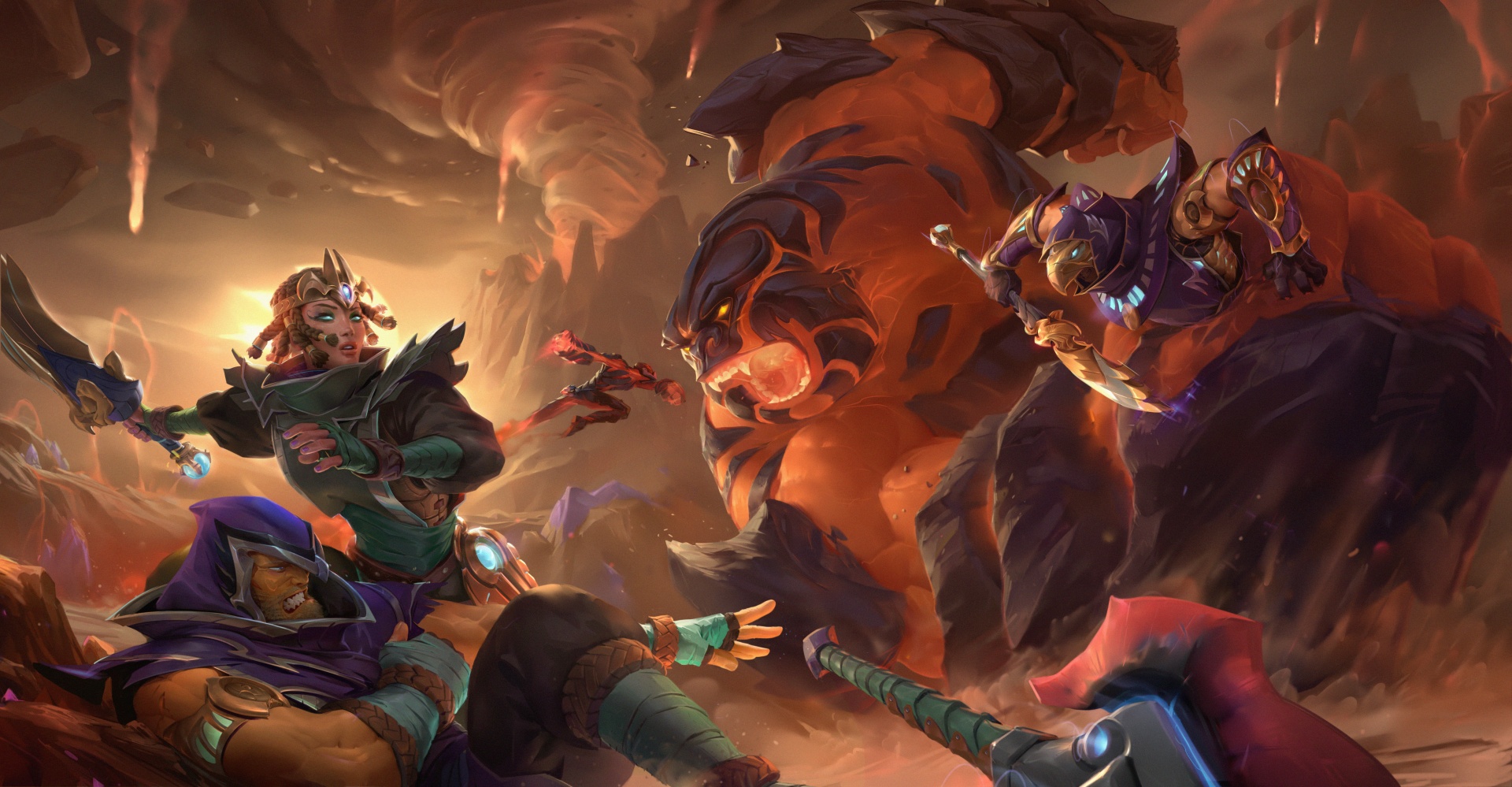
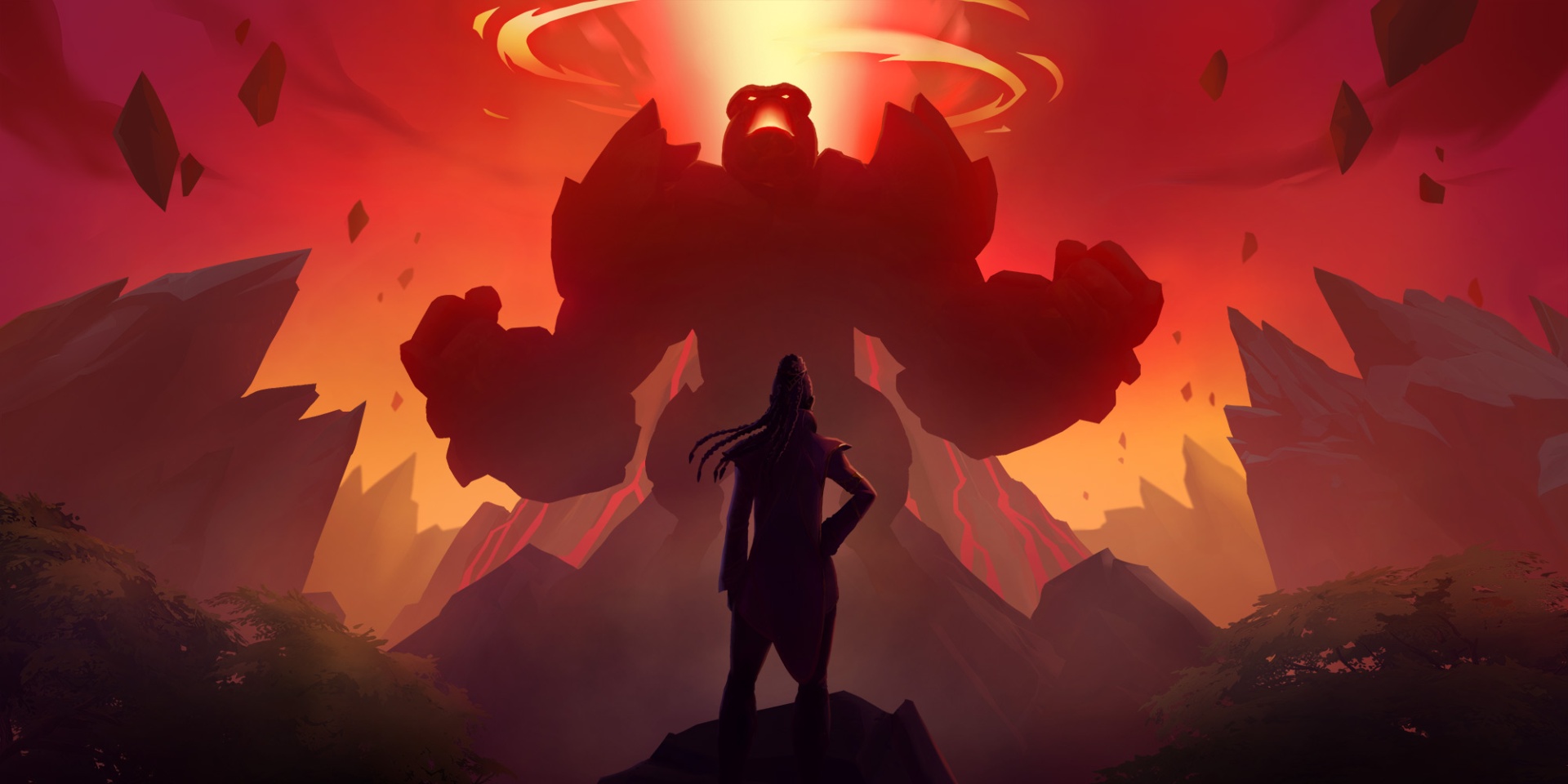
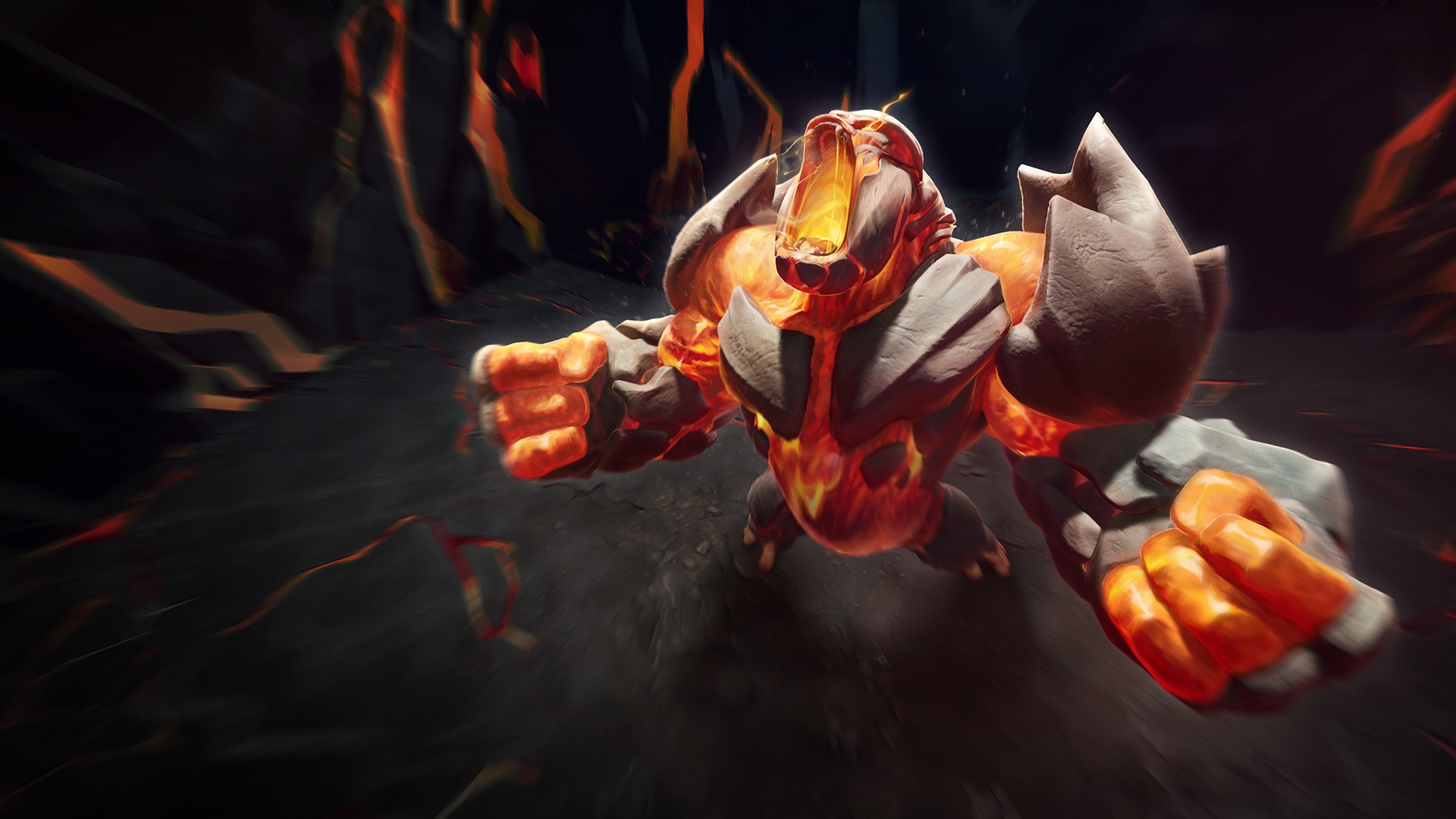
Slayers will brave a lush jungle, ascend to a violent volcano, and battle their way to the Torgadoro, a primal Behemoth that dwells within. It’s an environment completely new to the Shattered Isles, and the Torgadoro may be the largest Behemoth yet. A lot has changed with this new Escalation, so let’s dive into it, shall we?
Unlock New Powers and Battle Reimagined Foes
“We learned a ton from Shock Escalation,” says
Reid Buckmaster, designer on the creature team. “We saw that some of the most
unexpected combinations made for the best fights, which led us to adding Blaze
variant Behemoths this time around. We wanted to further push the feeling of
truly being able to run into anything.”
Blaze-infused versions of Rezakiri, Gnasher, and Quillshot were all
added to the game, providing new, fiery twists to the gameplay and shattering the players’ tried and true
techniques. “We want to challenge them,” explains Buckmaster.
The variety doesn’t end there, though.
The decision to add a wider range of amps—special buffs that carry through entire Escalation runs—was made early on in development. “We found out which types of mods and amps players like to use and why. We used that information to try to bolster those good experiences and reduce the less impactful ones.” Amps and mods allow players to increase their hunting potential in future sessions by raising their Blaze Escalation level. “Blaze has a bigger suite of mods and amps to choose from, many of which are brand new and exclusive to this Escalation,” says Buckmaster. “We wanted to equip the player with a large toolset to tackle these new challenges.”
Go Toe to Toe with the King of Blaze
Mods, amps, and Blaze variants mix up the
experience for Blaze Escalation, but the true star is the new capstone
Behemoth. “Early stages of concepts had tons of different body types. All the
way from worms to scorpions to really abstract creatures,” explains Kyle
Disanjh, senior animator on the creature team. “The gorilla body type resonated
with a lot of folks around the studio. It was something we hadn’t explored yet.
This would be the first upright, bipedal Behemoth we made.” After weeks of
exploration, the cocktail of ideas distilled down to the final result, and
Torgadoro was born.
Like all Behemoths, Torgadoros’ emotions live
in their animations, and the team worked hard to express this unique
personality through their move set. “Generally for Behemoths,” continues
Disanjh, “we have what’s called ‘personality animations’ that play throughout
the fight. These are the moments where players see what these creatures are
like. With Torgadoro we tried to embed some of these moments into their
attacks, moves, and staggers, to show who they really are. For example, when
staggered, Torgadoro has a brief window where the player can get some damage
in, but unlike other Behemoths, they will immediately smash back in that same
animation. This shows how relentless they truly are.” Another animation has
Torgadoro throwing a tantrum. The beast will howl, pulling on and hitting their
own face in a blind rage. Moments like these help convey the emotional range of
a Behemoth, and this may be the most expressive one yet.
Another unique aspect of Torgadoro is its ability to use its surroundings. “One thing we got in that I’m excited about is environment-based animations. Previously, Behemoths haven’t interacted with their environment, but this time around there are some things we did that I hope will make memorable moments for players,” concludes Disanjh. Just a tip: If you lose track of Torgadoro, look up to the cliffs.
Explore a Never Before Seen Environment
Torgadoro’s lair is part of a unique set of
islands. They’re brand-new to the Shattered Isles. “When
looking at the concepts for Torgadoro and thinking about a home for it, I
immediately gravitated towards a volcano caldera,” says Jen Morgan, world artist.
Torgadoro’s home with its jagged rock walls and flowing lava fits its
personality, while the pathway there hints at the deeper lore. “In Escalation,
we really want to have the player feel a sense of progression as they get
closer to their goal.” As players approach the volcano, the environment becomes
more barren, foliage burned away by the lava and fire. “I thought that a jungle
setting with vibrant greens would nicely contrast the bright red hues of a
blaze-infused final arena. I’m happy we achieved something that feels lush and
alive in contrast to the hellish volcano battle at the end. I think that
contrast inherently tells the story of what’s at stake if powerful Behemoths
are left unchecked.”
Each Escalation provides us with valuable lessons. As we go forward, we’re dedicated to pushing the experience forward. “We’re building on our foundations with each season,” says Buckmaster. “We’re looking to improve the feeling of the islands, the intensity of the encounters, the spectacle of the capstone Behemoths, and to do more to tie it all into Dauntless lore.”
The future isn’t just bright for Escalation, it’s bright for the entirety of Dauntless. We can’t wait to show the world what we’re working on next.
Until then, see you in the Shattered Isles,
Slayers.
Dauntless
Epic Games Inc.
☆☆☆☆☆488
★★★★★
Xbox One X Enhanced
As a Slayer, you are all that stands between your world and the Behemoths that seek to devour it. Take on boss-sized monsters, forge powerful weapons, and craft armour from the very creatures you slay — all in a massive, free-to-play online world.
Alt.Ctrl.GDC is dedicated to games that use alternative control schemes and interactions. Gamasutra will be talking to the developers of each of the games that have been selected for the showcase
The Unfathomed Voyagerputs three players in charge of controlling a malfunctioning submarine, using a variety of wild, wacky inputs to keep it moving.
Gamasutra sat down with the team behind the game to learn about the difficulties that came with creating so many unique inputs, how they worked to encourage chaotic communication, and the work the team put into embracing and encouraging the game to feel silly.
My name is Matthew Bofenkamp, and I am the programmer for The Unfathomed Voyager. My teammates are artists Boyi Liu and Ruoxi Li, as well as our sound designer/producer, Chenchen Ava Tan. The team worked together to answer these questions.
We’re all currently masters students in our final semester at Carnegie Mellon University’s Entertainment Technology Center, and thus have been making games for classes for years. We’ve also all had professional experience working at companies including Autodesk, Tencent, Universal Creative, and Alchemie Solutions.
The Unfathomed Voyager is a game about piloting a submarine that is very dysfunctional and actively crashing. Each of the three players gets a control panel with several unique controls that range from buttons and switches to rotating boxes and wheels to spin. Each control represents a part of the submarine, some of which are more technical like the piezogauge or the oxyextrapolator, while others are more humorous like the paint color or the ‘spinning thing.’ Players have to follow instructions as a team to operate the controls correctly and quickly.
The game was built using the Unity Engine, using the Phidgets plugin for Unity. For the controls, we used wood and acrylic boards and used laser cutting machines to cut them into pieces. We also used glue guns to assemble them. For physical decorations, we also laser cut some pieces of cardboard and painted them.
It started with the fact that our team was rather short-staffed in the programming department, and we didn’t want to make it too overly ambitious in that regard. We heard from other people that Phidgets (individual buttons and dials and such that can be plugged into a computer to receive input) were relatively quick and easy to program, so we decided to use those. However, we also wanted to make something that felt very out of the box and ridiculous and fun, so we decided to use LOTS of Phidgets. This, ironically, undid our decision to make things easy for one person to program in three weeks, but we were really excited to make something extravagant.
We considered lots of different applications for the Phidgets and spent a lot of time googling “cool jobs to have” to find a good fantasy. In the end, it was between a chaotic submarine and running an absurd coffee shop, but we felt that a submarine seemed the most suited to an environment where one would have to operate lots of controls under time pressure. Plus, we all really liked the idea of an underwater setting. In terms of the number of players, we think that 3-4 people are a decent size of a group to trigger chaos. Lastly, we decided to do 3 panels for 3 players because of the limited number of Phidgets we could get within that timeframe.
We always wanted to make a game that encouraged people to talk to each other, but in the early stages of the project, we structured the game such that players would be able to either see instructions or operate controls, but not both. We found that many players had a strong preference for one role over another, and wouldn’t know until after the game had started that the role they chose wouldn’t excite them as much as we hoped it would. It became very clear to us that if this game was going to be successful, we needed to keep the players busy, and giving them the task of communicating as well as operating controls solved this quite well.
The controls themselves were definitely chosen based on both player enjoyment observed from playtesting and how easy they were to operate, while still making all the control panels feel different from each other. We also chose an aesthetic for naming them that was split between things that sounded technical and machine-related and things that were completely ridiculous. We realized early on that players often laughed at themselves operating these controls, and wanted to embrace that feeling of “this is ridiculous, I can’t believe I’m doing this” by including controls that could result in commands like, “change attitude to freaking out!” or “spin the spinning thing!” or “set air freshness to zero!”
For the panels, we wanted them to look as real as possible, although none of us knew what a panel for a submarine looked like, or what it should be like for symbols for “air freshness” or “robothruster”. We just imagined what it would look like. For example, for the command “push yourself” we made a person and embedded the Phidget into the person – so you are pushing a person.
Effectively communicating to the players that they’d have to talk to each other was very important to us. Making sure every player understood that every instruction and every control was unique to them was vital to the game’s success; failing to understand that would often result in them doing absolutely nothing, unaware that their teammates didn’t know what to do and that many tasks could only be accomplished by them. We also wanted to make the tasks themselves have cooperative elements, which is why the autopilot, which marks the halfway point and the last task before winning the game, requires the same input from every player.
We also found that the mid-game control swap resulted in greater teamwork, since players would often get instructions for controls they used to have at their previous station, so they knew exactly who was in charge of fulfilling that command. In the end, we found that all the most successful teams are made of three people screaming at each other endlessly, which we consider a success.
Lack of knowledge of electrical engineering! Hooking up the controls to the computer required a lot of that, and nobody on the team had any experience in electrical engineering whatsoever, which resulted in a lot of required self-study and reading through documentation.
Also, existing documentation and tutorials about Phidgets was not targeted at people aiming to use 14 Phidgets at once. This was especially troubling when the Phidget count exceeded six, since Phidgets have to be connected to a hub, which is then connected to the computer, and the hubs can only handle input from six Phidgets at once. Documentation about how to distinguish between so many Phidgets was very sparse since all the tutorials referring to multiple Phidgets referred to how to use two or maybe three if the person was extremely ambitious.
In school, we have done extensive projects in VR and AR. Those are all 3D arts. When we planned to make a PC game using Phidgets, we immediately decided to create something different in 2D arts.
Visual style (or UI) is a bridge between our game and players. Because our game is fun and chaotic with a lot of text instructions, a cute alien art style can give them a special impression of our game and set the tone of grotesque feeling. Also, the acute and clean interface can help players understand what is going on inside the game visually, as well as bringing joy to the players while watching the funny animations.
Google Stadia, ‘beefy laptops’ drive Bungie’s remote work success
Three weeks ago Bungie, which sits at the heart of America’s COVID-19 outbreak in Washington State, took the initiative to move its studio to a remote work setup. Now, it’s taken the time to share some of its lessons with the folks at IGN to help other developers out.
Bungie’s COO Patrick Kelley told IGN that the studio’s had to anticipate several work-from-home scenarios for some time. Washington experiences some heavy snowstorms in the winter and sits in a major earthquake zone that could hypothetically impact developers’ ability to get to work.
Kelley said that one of the company’s priorities has been to acquire and distribute high-end laptops for its development team to reduce the need for virtual desktops and relying on employees’ home setups. In addition, the company has worked closely with Google to use Stadia as a new playtesting tool. “Getting playtests at scale is a hard thing to do,” he explained. “So they’ve been collaborating with us to set that up and that looks like it’s going to be a really amazing solution for us.”
“It’s not something we necessarily thought about initially but it looks like it’s going to be a great way for us to keep getting regular playtests and do it pretty easily.”
Bungie apparently also had some early warning for how COVID-19 lockdowns would impact its business thanks to its partnership with Chinese developer NetEase. “I was looking at what was happening in other countries; what was happening in the early stages in Italy,” said Kelley.
“I knew that we’d had an early case in Washington state, and I started to read a lot: CDC, other places, about how this might unfold. Part of the role in operations is you’re always doing this kind of scenario planning and the risks seemed pretty significant that we would be in a position that we would follow the path of one of these other countries.”
If you’re in need of more resources for remote work, Gamasutra blogger David Logan has a short guide that can help.








 in GalaCredit!