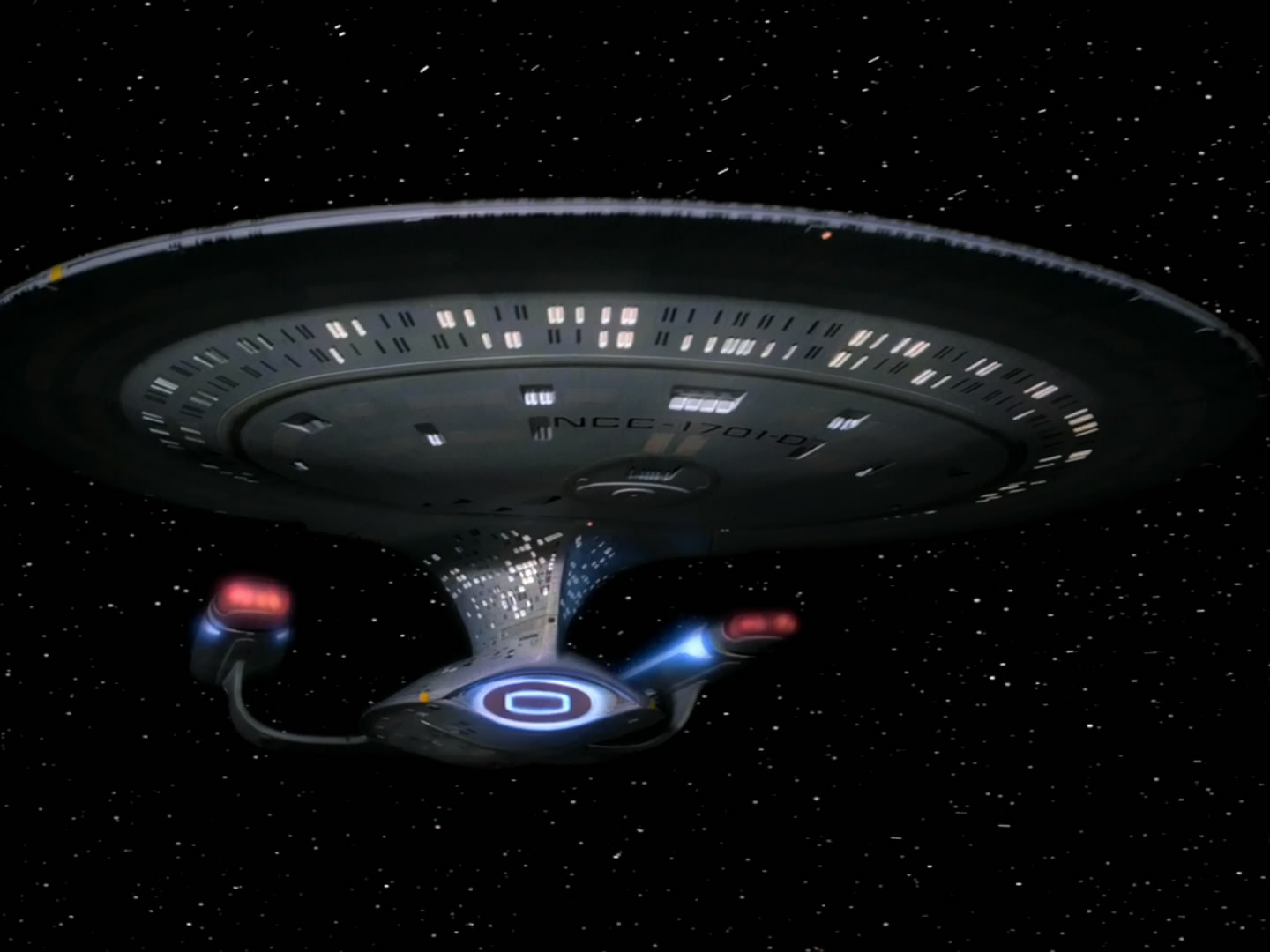
Whether you’re a final frontier fan or not, you’ve probably noticed the onslaught of advertising for the latest entry in CBS’ ever-growing catalogue of Star Trek series. The impending return of Jean-Luc Picard to television screens this week is a massive media event and seeing the iconic captain once again going boldly in the imaginatively-named Star Trek: Picard will be emotional for fans who have missed his uncompromising integrity and moral fibre.
The media fanfare surrounding the new show is down to the fact that Patrick Stewart’s character is up there alongside pointy-eared Mr. Spock as a pop culture icon, instantly recognisable whether you’ve followed his exploits on the USS Enterprise or only know him as ‘facepalm guy’. We thought we would never see him again, but here he is; nostalgia for beloved characters burns even bolder and brighter in space, it seems. The recent Star Wars trilogy proved as much when Mark Hamill, Harrison Ford and Carrie Fisher returned once more to a galaxy we believed they had left behind a long time ago.
Despite sharing 50% of their titles, Star Wars and Star Trek have little in common beyond their cosmic settings and a theatrical, Shakespearean quality to their drama. Both properties have had their ups and downs over the years, but one area where Star Wars fans have Trekkies trumped is video games. There are a great many more console games from a galaxy far far away and – inevitable disappointments aside – the high points are significantly higher than virtually any Trek game.
In all honesty, it’s been slim pickings for Trek fans over the years. We’re going to take a look specifically at the games on Nintendo platforms, but even the most die-hard Trekker would be out of their Vulcan mind to suggest the cross-platform Star Trek catalogue comes anywhere near the quality of the ‘Wars library. There are highlights but arguably no equivalents to classics like Rogue Squadron II or Knights of the Old Republic. There are multiple reasons for this which we’ll explore below, but let’s start by revisiting the first Star Trek game on a Nintendo system. Set course for the NES…
Interplay’s Star Trek: 25th Anniversary was the first Star Trek game to beam to Nintendo consoles in 1991. Its Game Boy counterpart arrived the following year, but despite sharing a title these are two different games. The former was a take on the developer’s computer game of the same name while the latter was developed by Visual Concepts, although both were published by Konami’s shell company Ultra (or Palcom in Europe).
The NES version features top-down exploration of various locations as you planet-hop through an adventure solving puzzles and finding life forms before beaming back to the bridge and warping to the next planet. For a licensed NES title, the visuals are pleasingly accurate when it comes to depicting the characters and ship, although its lacklustre gameplay doesn’t hold up so well.
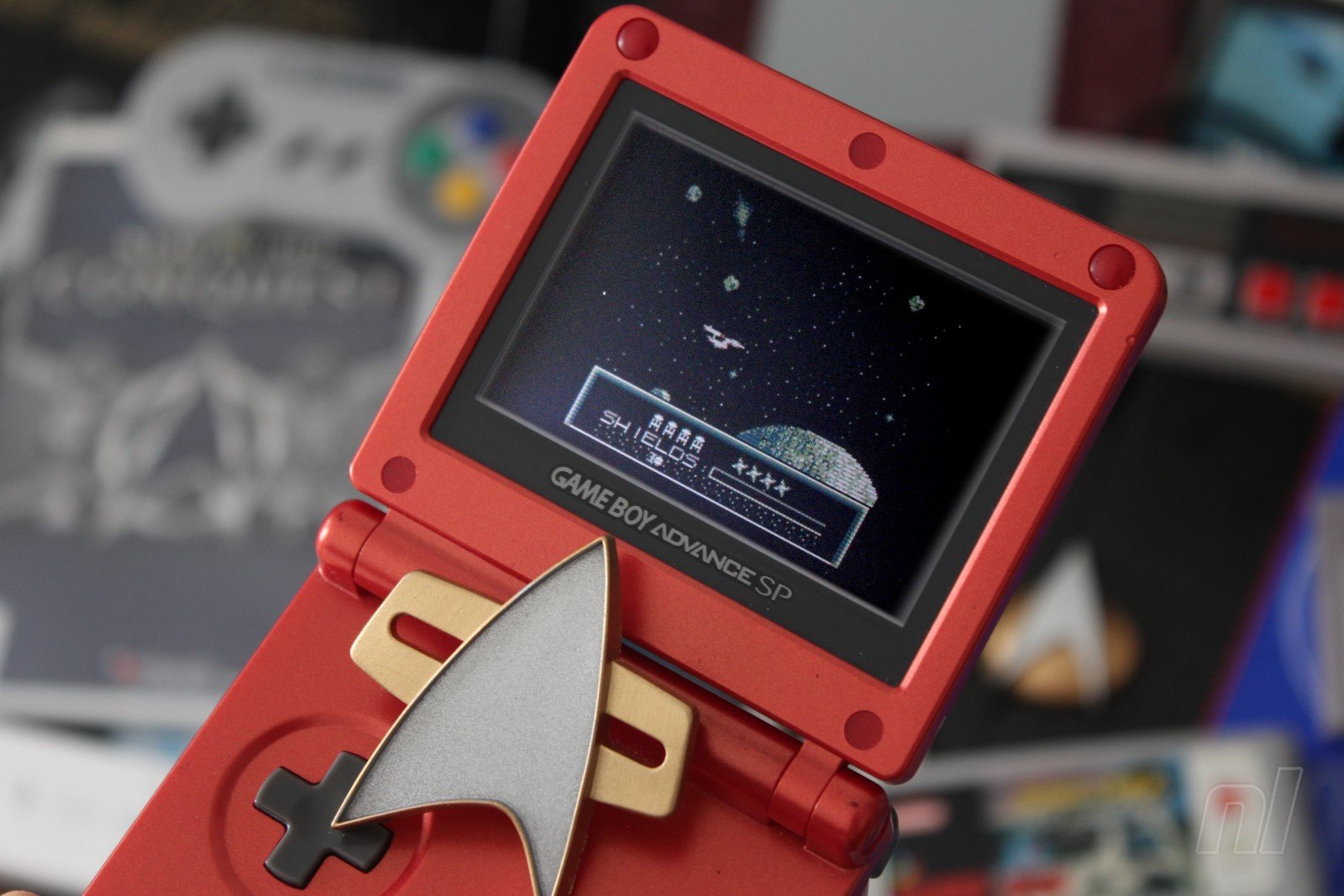
The Game Boy version intersperses top-down away missions to find weapon parts with side-on shmup-like action sections where you take direct control of the Enterprise and negotiate incoming asteroids and other debris. Firing phasers and photon torpedos soon gets monotonous, although the ability to divert power between shields, ‘speed’ or phasers adds an element of personal strategy to these gauntlets. You can push right to go faster or hang back and steadily avoid gravity wells and obstacles. It’s tough, as many 8-bit games are, although a password (stardate) system lets you skip to where you lost your ship. Scintillating it isn’t, but we’ve played much worse.
Developer Imagineering Inc. turned in both versions of 1993’s Star Trek: The Next Generation for NES and Game Boy and the two games offer largely similar experiences. This involves juggling menus and ship systems as you warp between locations on an ‘adventure’, of sorts, although it has all the excitement of boldly filling in a spreadsheet. For fans there is some pleasure to be wrung from them, but the games suffer from a distinct lack of intrigue or wonder, taking the least interesting part of Star Trek – the menial functions and inputs required to operate a starship – and building a management game around that. On PC this works better thanks to the interface and power of the platform. The 8-bit consoles simply weren’t suited to this genre, though. Who knew piloting the Federation flagship could be quite so dull?
This style of game didn’t fare much better on 16-bit consoles. Spectrum Holobyte’s Star Trek: The Next Generation: Future’s Past released on Super Nintendo (and Genesis) in 1994. It certainly looked better than its 8-bit predecessors and featured a similar mix of ship-based management and on-foot away missions, but gameplay was much the same; clunky and interminably sluggish to the point that it’s hard to maintain enthusiasm. Perseverance (and perhaps a lack of other games to play) may have endeared Future’s Past to some players, but compared to the countless fun and accessible games in the SNES library, it’s desperately pedestrian. With such a broad universe of ideas and wonder to draw upon, it was disappointing to see such humdrum efforts to catch Star Trek’s lightning in a cartridge-shaped bottle.
These are the voyages…
The snappily titled Star Trek: Starfleet Academy Starship Bridge Simulator
PC games like Star Trek: The Next Generation – A Final Unity demonstrated that this style of management-adventure was better suited to that platform thanks to its mouse and keyboard interface and improved visual and audio fidelity. On console we’d continue to see limited takes on the same premise like 1994’s Star Trek Generations: Beyond the Nexus, a tired movie tie-in for Game Boy from Absolute Entertainment. Interplay’s Star Trek: Starfleet Academy Starship Bridge Simulator on Super NES took the bridge-based gameplay from previous Original Series titles and put it front and centre, enabling you to reenact key battles from the show and movies. Once again, though, the static view from the captain’s chair and the menu-based interface simply didn’t translate well to console gaming and tedium triumphed over tension.
Perhaps we expected too much. We were pining for a Star Trek game which captured the essence of the show, which is certainly not navigating soupy menus to engage the warp drive or reroute auxiliary power to the inertial dampeners. Star Trek is about exploring the unknown – boldly charting the stars to better understand ourselves – but the real beauty of the show is its almost infinite diversity in form and content.
Star Trek can be almost anything. Some of the best-loved episodes feature almost no visual effects: The Measure of a Man is one of several courtroom dramas; Lower Decks concentrates on non-principal characters and their unique impressions of the main crew; Family doesn’t once show the bridge of the Enterprise. For all its operatic space faring, playing Netflix roulette with the series is just as likely to turn up an episode with Data painting or replicating cat food as it is some grand confrontation with the Borg. With that in mind, a Star Trek game could take almost any form at all, big or small, so why had most been so turgid and unimaginative to this point?
Looking to that other ‘Star’ franchise, games like Super Star Wars may have strayed from the source material considerably, but they captured the movies’ swashbuckling spirit and gave you the opportunity to fire blasters and swing lightsabers along to 16-bit renditions of John Williams’ thrilling tunes. Console-owning Trekkies could be forgiven for wanting a simple Star Trek-branded 2D platformer in a similar vein.
Enter Star Trek: Deep Space Nine – Crossroads of Time. Made by Novotrade International, developers of Ecco the Dolphin among others, this DS9 game captures the look of the show relatively well, but the platforming itself is stodgy and awkward – Super Star Wars it ain’t. In fairness, it’s more along the lines of Flashback or Another World, but it lacks the charm of those cinematic platformers. Wandering the Promenade talking to NPCs soon becomes dreary and the controls are too unwieldy to be fun in the more action-oriented sections.
So, back to space combat, then.
Its continuing mission…
Developers would continue to grope around for a hook on which to hang a Star Trek game, to varying degrees of success. There are several reasons that Star Trek doesn’t have a truly great video game to its name. One factor is that it’s really about people and their relationships, nuanced things that video games have only recently begun to explore with any sophistication. The Roddenberry ethos at the heart of Trek – that by the 23rd Century humanity will no longer quarrel amongst themselves – is something writers on the various shows have struggled to reconcile for years because without conflict, drama is very difficult to create. And video games are near impossible.
Games have been built on the act of shooting things from the very beginning – Spacewar! was essentially the first computer game, and it didn’t have you sitting down in the Observation Lounge debating the Prime Directive. At its core, Star Trek’s grey areas and moral quandaries don’t lend themselves to the action-packed, binary scenarios that video games traditionally excel in. Perhaps an old-school text adventure, but not a sexy shootout.
Conversely, Star Wars carries conflict in its very name and epic, thematic battles between the light and dark sides play to gaming’s strengths. The new era of Trek, as instigated (stylistically) by JJ Abrams in his 2009 ‘reboot’ movie, has shifted the franchise into a more mainstream, action-packed lane – a point which old-school fans often find hard to swallow. Advancements in CG technology play a large part, too – epic space battles are now much simpler (and cheaper) to create without building and photographing hulking great physical models. Far easier to cut to a snazzy VFX shot than write your way around a budget-busting battle with a clever, entertaining conversation. Star Trek: Discovery certainly looks better than any previous iteration of the show, although we sometimes wish they’d taken another pass at the dialogue.
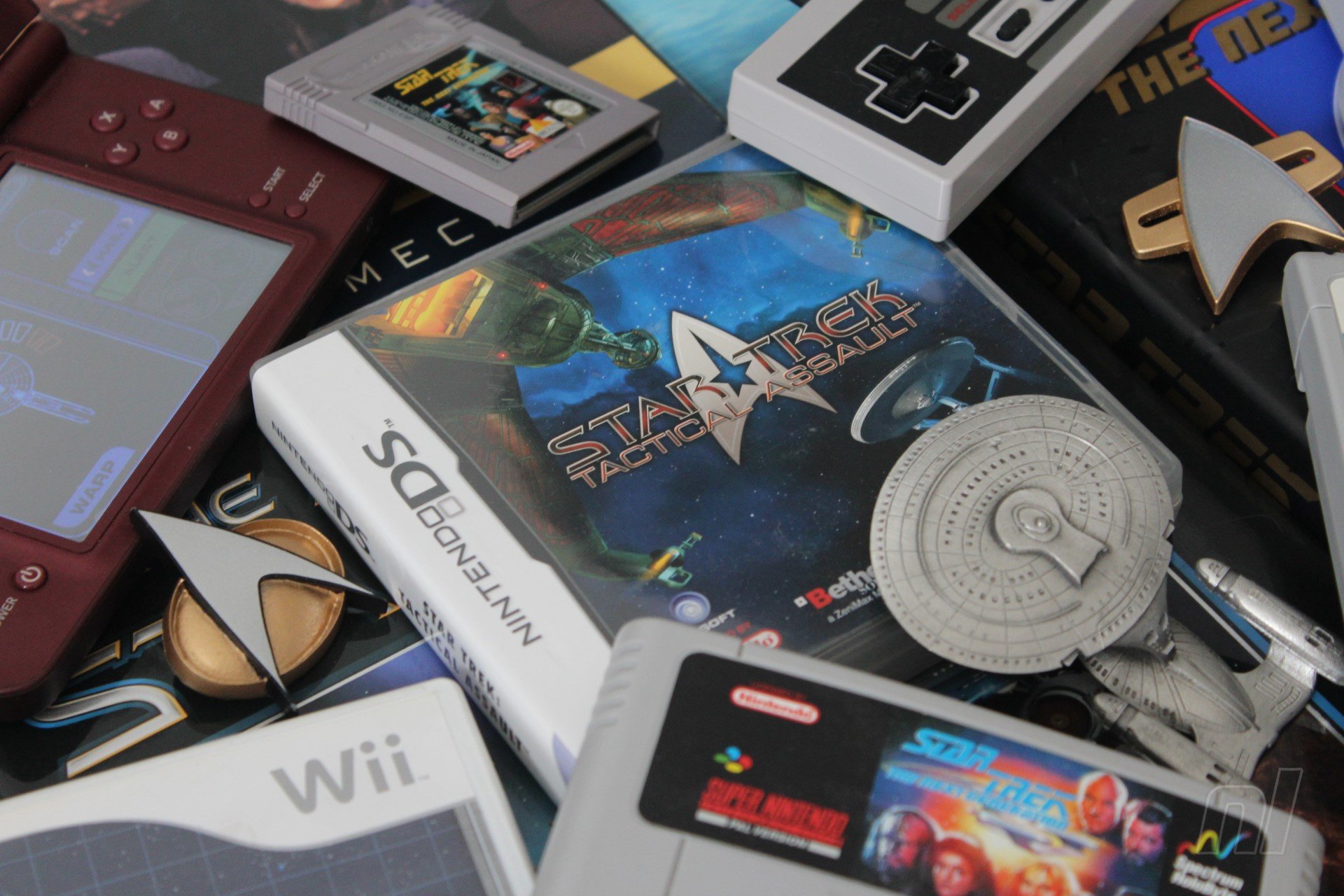
Still, firing phasers in Star Trek is generally a sign of failure. This hasn’t prevented a handful of first-person shooters (including the surprisingly not-abominable Star Trek: Elite Force) and a large number of space combat and strategy sims appearing across all platforms, though. Nintendo-wise, we’ve had both Quicksilver Software’s Star Trek: Tactical Assault on DS (and PSP) in 2006 and 4J Studios’ Star Trek: Conquest for Wii (and PS2) the following year. Both titles were published by Bethesda, with the DS game giving you more direct control over your ship and the Wii title taking a turn-based approach to battle.
Tactical Assault, while showing promise with its touch interface and a welcome lighthearted approach with cartoon-y character portraits and humorous writing, ultimately fails to iron out gameplay kinks and ends up more frustrating than fun. Sound familiar? It scored poorly in our review and Conquest fared little better. The combination of Star Trek and Risk-style strategy sounds with a winner, but it reeked of a product put together on a shoestring budget and much older PC games offered a far deeper and more rewarding strategy experience.
Strange new worlds
Nintendo gamers dodged this phaser blast.
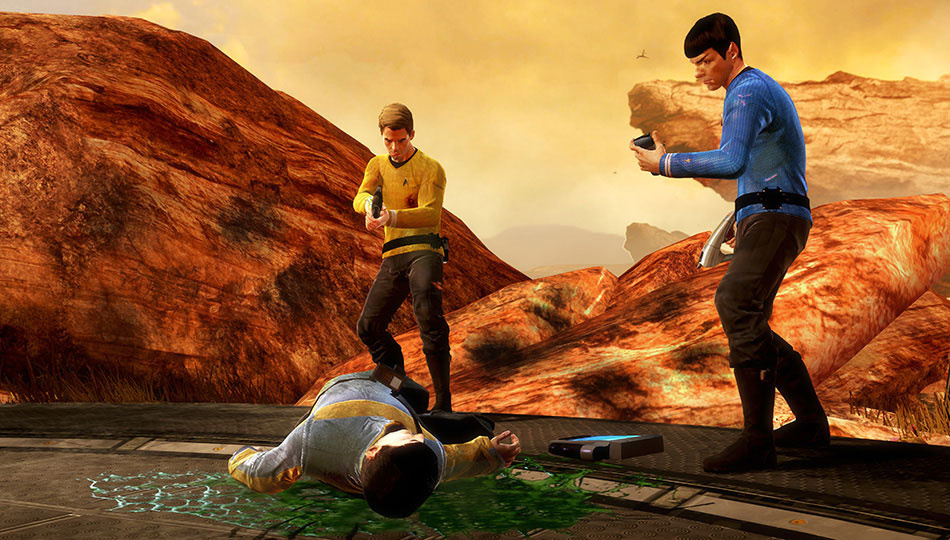
And that’s it for Star Trek on Nintendo platforms. With the exception of the pinball table available as part of Stern Pinball Arcade, it’s been 13 long years since Star Trek has graced a Nintendo system. Perhaps that’s a blessing in disguise – at least we dodged the excretable Star Trek, an attempt to squeeze Kirk and Spock into an ill-fitting third-person co-op shooter that even JJ Abrams vocally disliked.
There have been some good ones we’ve missed out on, though. Star Trek Online will be celebrating its 10th anniversary in February, and in spite of some MMORPG clunk, the fact that it’s still going after a decade says something. Mobile game Star Trek: Timelines has its fans. Without doubt, though, the finest Star Trek game of recent times (and perhaps all time) is Ubisoft’s Star Trek: Bridge Crew, a co-operative VR game where four players take different bridge stations and work together to overcome the challenges inherent to commanding a starship on the final frontier.
For arguably the first time, Bridge Crew gives players a taste of the feeling they’ve sought from static bridge sims and strategy games over the years. No, not navigating dreary menus or balancing power reserves, but co-operating intelligently as a crew, reporting to each other, living out starship fantasies and actually saying the words. You’re not simply speaking for the fun of it – clear communication of all that delicious Treknobabble is vital to success. Therefore you assume the role and channel all the procedural knowledge you’ve soaked up through decades of watching the show. Hail them. No response, Captain. They’re firing!Shields up, red alert!
The realm of VR brings the bridge to life in a way static 16-bit screens never could, and framed as a co-op adventure it’s arguably the first game to tap into the most potent part of Star Trek’s formula – the sense of comradeship and family that develops in each and every crew. It’s a real shame that VR still represents a barrier to entry preventing more players from taking their bridge stations.
New life and new civilisations…
Perhaps unlike previous developers, Ubisoft has the resources and the budget to make good on the promise of the premise, which may explain why Bridge Crew succeeds where so many others have failed. For all the grandeur of the setting, the show itself has traditionally been produced on a very tight budget, and that’s reflected in the games as well. A galaxy-sized canvas needs galaxy-sized talent, which takes time and money to foster.
Other games exist that don’t carry the Star Trek name but capture its spirit incredibly well. The narrative of the Mass Effect trilogy gets into some grey areas and its focus on building a crew and examining their relationships is something we’ve yet to see explored effectively in a Star Trek game. Mass Effect Andromeda arguably drove that franchise off a cliff, but the original games still have plenty to offer and were certainly influenced by the show.
However, a multi-million dollar budget isn’t necessary to create a unique and engaging (pun intended) experience. Subset Games, indie developer of Into The Breach, absolutely nailed the shipboard resource management angle with FTL: Faster Than Light, a brilliantly addictive top-down roguelike strategy game that secretes Star Trek from every pore (in a good way). We’ve lost countless hours to it on PC, so it’s probably a good thing that it never came to Switch.
There’s Klingons on the starboard bow…
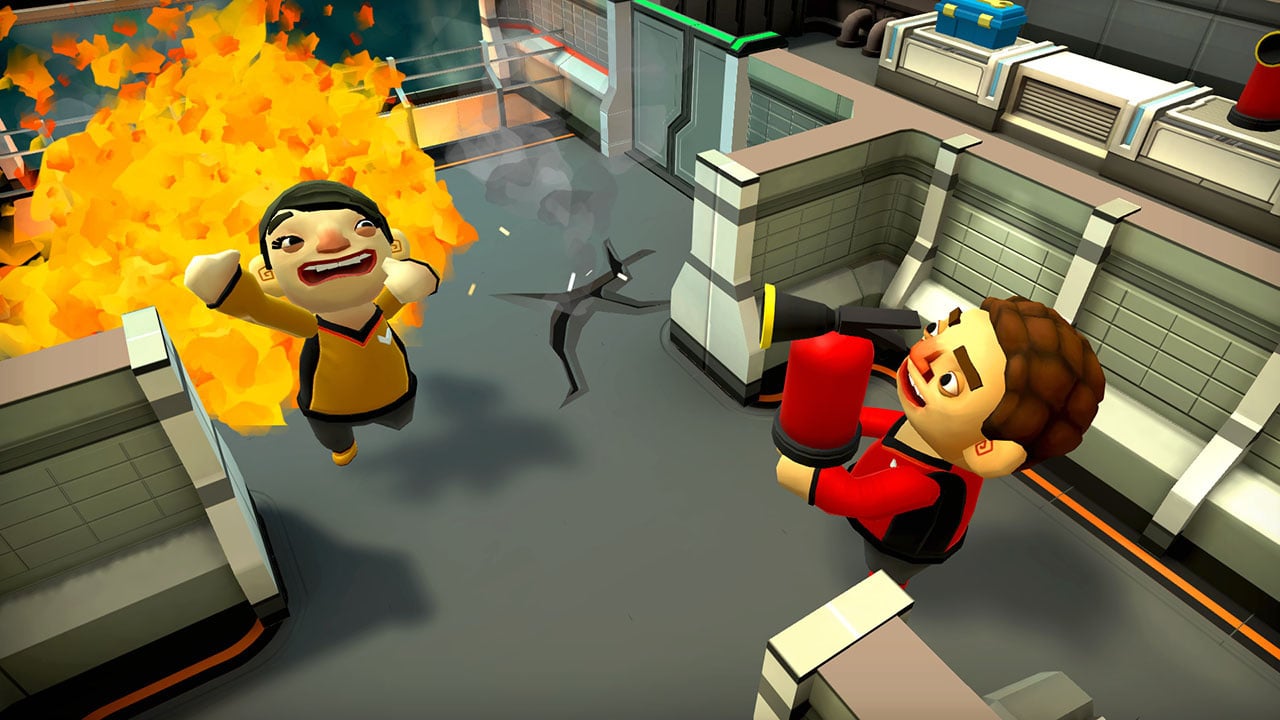
We’ve also got a soft spot for Switch eShop minnow Catastronauts. It’s essentially Overcooked in space, and the Trek influence is obvious. Far from original, then, but by tapping into communication and cooperation, it hits on the Trek fundamentals far more successfully than many of the official games. We can’t help but like it.
Where no one has gone before…
So, we still await a Star Trek game (great or otherwise) on Switch. If there’s one thing above all else that the series offers, it’s hope for the future. Perhaps Star Trek: Picard and the new fleet of shows will spark interest and investment in a gaming experience that truly showcases what Trek is all about. Regardless of budget, there is so much potential for games in this universe, and we don’t just mean 3D chess. We’re all for jumping into X-Wings, blasting TIE Fighters and slicing things in half with laser swords, but with the infinite diversity and combinations of game genres today – both epic and personal in scope – surely there’s space to boldly go somewhere, too? As an erstwhile captain of the Enterprise often said: somebody, please, make it so.
Picard only said the last bit, of course; Jean-Luc rarely grovels. What have been your favourite Trektacular gaming experiences, on Nintendo platforms or otherwise? Are you looking forward to the new Picard show? Sick to death of all the posters and TV spots? How many lights are there? Feel free to open hailing frequencies below. NL out.
Review: Puzzle & Dragons Gold – Sadly, Not Everything That Glitters Is Gold
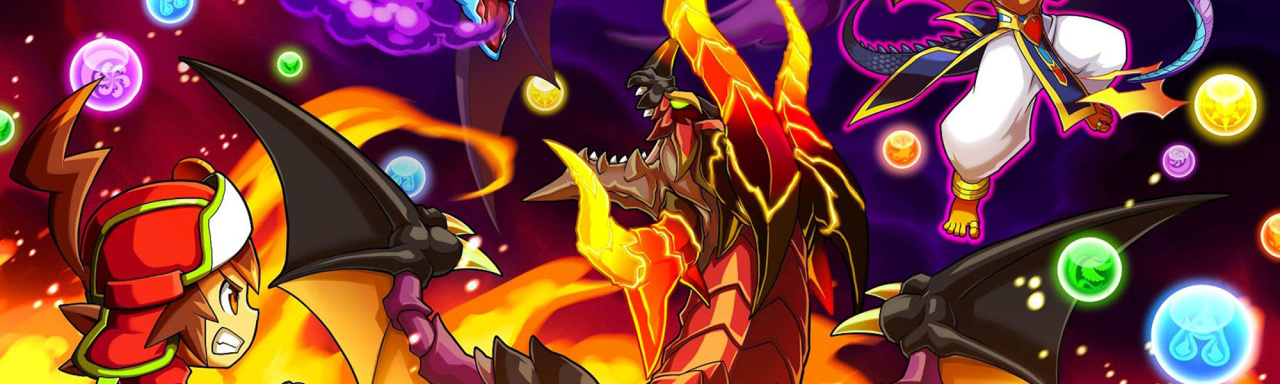
The Puzzle & Dragons series has been a juggernaut in the mobile gaming space for close to a decade now, due in no small part to its distinctly satisfying blend of RPG elements with match-3 puzzle action. Even today, the series still routinely pulls grosses well into the billions, which has naturally led to a whole slew of spinoffs and other multimedia elements popping up to grow the franchise’s reach. Most notably for Nintendo fans, this expansive reach led to the creation of the excellent Puzzle & Dragons Z + Puzzle & Dragons: Super Mario Bros. Edition for the 3DS a few years ago, showing off what the series could look like as a more fleshed-out and traditional affair.
Now, it seems that GungHo wanted to repeat its past success via the release of Puzzle & Dragons Gold, a brand new entry in the series that was designed from the ground up with the Switch in mind. It’s the sort of thing that could’ve been a slam dunk, but unfortunately, Puzzle & Dragons Gold just isn’t all that good. What we’ve been given is not a sprawling and addicting RPG to keep you hooked for hours on end, but rather a stripped-down and disappointing take on the beloved gameplay that made the original release such a hit.
The story of Puzzle & Dragons Gold is kept to almost a complete minimum, while borrowing heavily from the anime series that has sprung up in the wake of the franchise’s success. The narrative mostly focuses around the similar tales of either Taiga or Ryuji, two hopeful, competitive Puzzle & Dragons players that are looking to win big in a sweeping competition that bears more than a passing resemblance to the Pokémon league. The storyline essentially just assumes that you’re intimately familiar with the anime, and if you happen not to be, very little effort is put into giving you any context to character relationships or conflicts. This is about as surface-level and shallow a story as we’ve ever seen in an ‘RPG’ before, and it’s no exaggeration to say that about three hours is all it will take to see all that this paltry single-player offering has to give.
What’s perhaps the most disappointing and baffling thing about this single player is how cheap it feels. There’s no overworld to roam around, no NPCs to talk to, no dungeons to explore, and any sense of RPG level progression has almost entirely been removed. Your experience will consist of going through a handful of battles with premade teams, mashing ‘A’ through some confusing and poorly written cutscenes, then reaching the quick end and wondering why you wasted your time. It’s generous to even call this mode a tutorial because you have virtually no control over your odds of winning given that you can’t pick a team that could be more effective against whichever foe you happen to be fighting. It may be that Puzzle & Dragons Gold was always pitched as a “multiplayer-first” sort of take on the series, but the utterly pathetic attempt at a single-player experience is an insult to the series’ legacy.
The core gameplay in battles has been kept relatively intact, consisting of two phases for each turn. Phase one allows you to pick which skills to trigger from the dragons on your team and phase two begins after all skills for both you and your opponent have taken effect. This latter phase is where the real action happens, as you have ten seconds to make as many matches as possible on a simple 6×6 grid filled with myriad colours of orbs. The catch here is that you can only move one orb around for the entire turn, dragging it to and fro in an attempt to rearrange all the other orbs into lines of three or more before you finally put it down and lock in your ‘attack’. Puzzle & Dragons Gold doesn’t do a very good job of explaining the mechanics of these fights to you, but a little trial and error is all it takes to see the interesting pace and flow of a battle.
Win or lose, you’re sure to gain at least a little bit of progress towards your overall character level, and hitting different level milestones will net you rainbow orbs to pitch into the gacha. No, Puzzle & Dragons Gold mercifully does not have any microtransactions, but you’re still extremely limited in terms of team compositions when the only path to progression is gated by a seemingly endless, randomized loot box grab.
Even if you do get the pulls that you want, there’s no such thing as training or building up your dragons here; the extent of ‘training’ them is the simple act of unlocking two new skills for them by using them in battle enough. Even this, however, is limited to the scant twenty Leader dragons that you use to anchor any team you arrange for multiplayer use. The other 500+ ‘follower’ dragons you could potentially use to pad out the remaining five spots on your team amount to little more than glorified pictures that come with fixed skills and stats. Mixing them around for your multiplayer teams is a little bit of fun at first, but with there being no real progression possible for them, it’s tough to stay very invested in team compositions or overall gameplay.
One notable area where Puzzle & Dragons Gold doesn’t disappoint, however, is in the surprisingly high-quality of its visuals. Although only those twenty Leader dragons get HD models that show up in the arena, each is excessively detailed and well-animated. Powerful attacks shake the screen with showy and bombastic flair that injects some much-needed excitement into the otherwise ho-hum experience, making for a game that often looks fantastic on the Switch’s portable screen. In many ways, it feels bizarre that Puzzle & Dragons Gold looks this good, as virtually every other aspect of the experience is an incredible letdown.
Conclusion
When one takes a step back to look at all that Puzzle & Dragons Gold has to offer, it’s rather difficult to say exactly who it’s for. Longtime fans of the series will no doubt decry the laundry list of cutbacks that the core gameplay suffers from, while newcomers will be paying cash to get a massive misrepresentation of what the series is actually all about. Sure, multiplayer proves to be mildly amusing for a time, but it lacks the kind of depth or longevity that previous releases in the series have had in spades, and the less said about the single-player content, the better. Puzzle & Dragons Gold feels in many ways like a free demo of a much better game that you could potentially buy, except no such game exists because this is it. Don’t waste your time or money on this poor approximation; go download Puzzle & Dragons for free on your phone for a much more enjoyable experience and save your money for much more worthwhile releases for the Switch.
Java Magazine New Edition: Java Present and Future
There is a lot happening in Java, and in this issue we do our best to make the state of Java as clear as possible. We begin with a survey (page 15) of Java developers. The survey covers JDK, tools in use, processes, and finally a profile of Java developers.
We follow that up with a look at Java 11 (page 39), which was released in September: what’s in this release that you need to know about—such as changes to lambda syntax, a new HTTP client, and the updated WebSocket interface. The Java 11 release was the first in several years not to include JavaFX, which has been spun out from the JDK. This means that JavaFX can evolve on its own timeline, which is discussed (page 62) by Johan Vos, one of its principal developers.
We also examine upcoming technology from the Valhalla project (page 56), which promises to make it far easier and faster to access primitive data types. This performance enhancement will be particularly welcome when accessing objects in arrays, as Ben Evans explains in his deep look inside the JVM.
Finally, the product management team for Java explains recent changes (page 52) to the licensing model. In addition, we have a deep dive into the
decorator design pattern (page 67), our quiz (page 78), and our book review (page 8), as well as our calendar of upcoming developer conferences and
Pokémon GO 2020 Global Events Revealed, Safari Zones To Be Held In US And UK
Pokémon GO developer Niantic has announced a handful of large-scale community events set to take place throughout the first half of the year.
Four events have been detailed so far, all taking place between February and May of 2020. The majority of these are Pokémon GO Safari Zone events, which have traditionally allowed attendees to snag region-exclusive Pokémon not usually available in their area. Here’s the full list so far:
Taiwan Lantern Festival in Taichung – February 6-9
Pokémon GO Safari Zone St. Louis – March 27-29 (Tickets will go live starting January 24 at 8:00 AM CT)
Pokémon GO Safari Zone Liverpool – April 17-19 (More information about tickets will be announced soon)
Pokémon GO Safari Zone Philadelphia – May 8-10 (More information about tickets will be announced soon)
Niantic has also revealed that similar events held across 2019, including Pokémon GO Fest Chicago, helped to drive an estimated $249 million in tourism revenue for the cities in which they appeared. These events have regularly attracted tens of thousands of Pokémon fans, many of whom travelled across the globe to take part.
Do you happen to live near any of these events? Will you try to attend? Let us know in the comments below.
Pokémon Clone Temtem Is So Successful Its Servers Are Crumbling Under Demand
Crema Games has just released its monster-collecting MMO Temtem on Steam early access, and it’s proven to be so successful that players have had trouble getting online with the game. Thankfully, it would seem that things are now settling down after some updates, but people are still having trouble getting the game up and running smoothly – but then, isn’t that why ‘early access’ is much fun?
As you can see from the game’s launch trailer above, it’s all very “Pocket Monster”, complete with an anime-style aesthetic, catchy theme tune and a cast of cute beasts to collect. The key difference is that this is an MMO, which could take the whole ‘gotta catch ’em all’ concept to an entirely new level.
Funded by Kickstarter to the tune of $573,939 (the initial goal was $70,000), Temtem is published by Humble Bundle. It’s coming to Switch in the fullness of time, as well as PS4 and Xbox One.
Will you be picking this one up on Switch, or have you already downloaded the Steam version? Let us know with a comment.
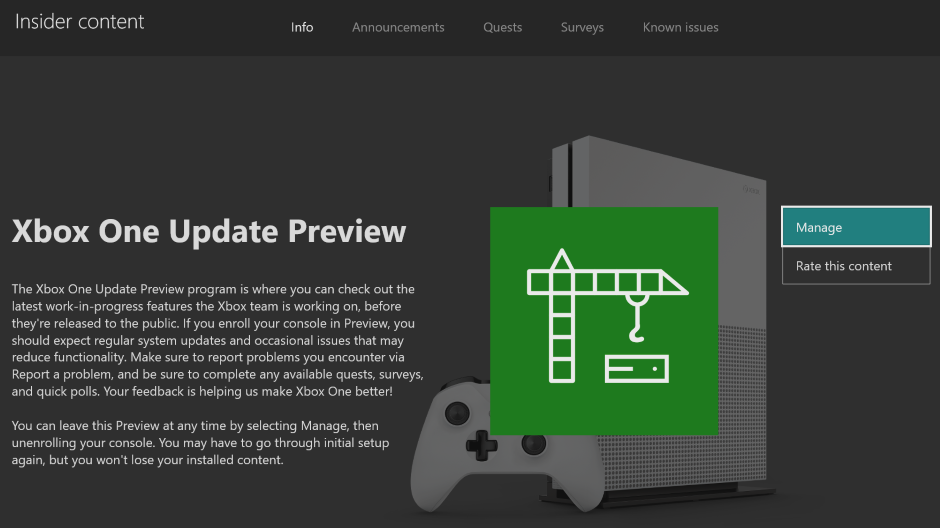
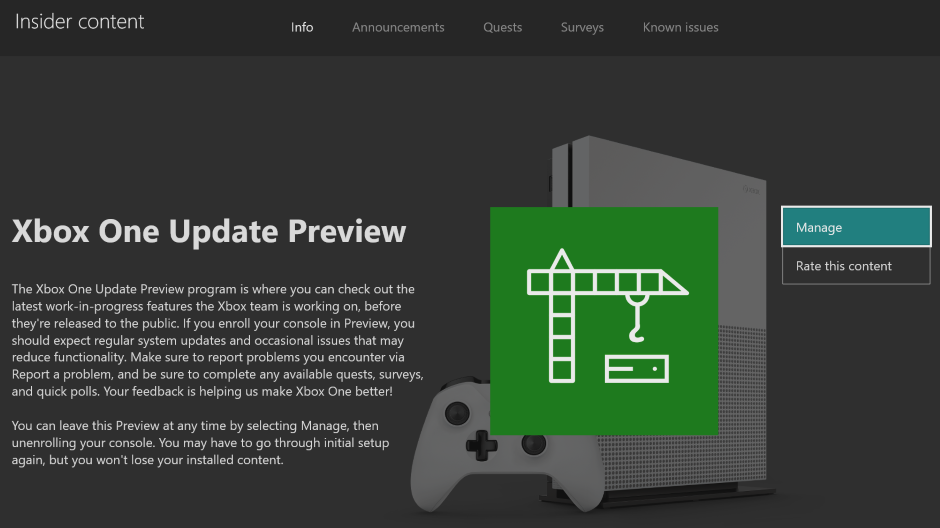
Xbox Insider Release Notes – Beta Ring (2002.200107-2102)
Hey Beta ring users! Today’s Xbox Insider Release Notes highlight the latest fixes, known issues, and features coming to your console. Starting at 2:00 p.m. PT today, users will receive the latest 2002 Xbox One system update (build: 19H1_RELEASE_XBOX_DEV_2002\18363.9100.200107-2102). Keep reading for more details.
System Update Details:
OS version released: 19H1_RELEASE_XBOX_DEV_2002\18363.9100.200107-2102
Available: 2:00 p.m. PT – January 13, 2020
Mandatory: 3:00 a.m. PT – January 14, 2019
Fixes for Beta
We’ve heard your feedback, and we’re happy to announce the following fixes have been implemented for this 2002 build:
Home
Users should no longer see seeing a “Something went wrong” error message with code 0x80070002 on console boot.
Fixed an issue where some users were reporting the dashboard would fail to load or crash when exiting a game/app.
System
Various updates to properly reflect local languages across the console.
Known Issues for Beta
We understand some issues have been listed in previous Xbox Insider Release Notes. These issues aren’t being ignored, but it will take Xbox engineers more time to find a solution. We appreciate your patience at this time!
Audio
Users who have Dolby Atmos enabled and console display settings set to 120hz with 36 bits per pixel (12-bit) are experiencing loss of Dolby Atmos audio in some situations.
Workaround: Disable 120hz or set Video Fidelity to 30 bits per pixel (10-bit) or lower.
Messaging
Users are unable to send a voice message while in Parties.
Workaround: Send the message while not currently in party chat.
Profile Color
Sometimes users may encounter the incorrect Profile color when powering on the console.
Are you not seeing your issue listed above? Make sure to use Report a problem to keep us informed of your issue. We may not be able to respond to everyone, but the data we’ll gather is crucial to finding a resolution.
Learn more about feedback and how each ring is differentiated in the following links:
For more information regarding the Xbox Insider Program follow us on Twitter and join the community subreddit for support and updates. Keep an eye on future Xbox Insider Release Notes for more information regarding your Xbox One Update Preview ring!
Half-Life: Alyx is coming in March, and we are celebrating early by making all games in the Half-Life Series FREE to play for Steam users, from now until the day it launches!
If you don’t have Steam, you can download it here.
Half-Life: Alyx is set before the events of Half-Life 2 and the episodes, but the games share characters and story elements. The Half-Life: Alyx team believes that the best way to enjoy the new game is to play through the old ones, especially Half-Life 2 and the episodes, so we want to make that as easy as possible.
YouTube TV comes to PS4, replacing PlayStation’s own doomed TV service PS Vue
YouTube has announced that its live TV service YouTube TV has officially launched on PlayStation 4, a debut that heralds the end of Sony’s own ambitions in the live TV streaming space.
The launch comes just one week before Sony’s ill-fated PlayStation Vue goes offline for good on January 30, 2020. The service got its start in 2015, but Sony says a highly competitive industry and expansive complications with licensing deals ultimately made Vue a losing battle.
“Unfortunately, the highly competitive Pay TV industry, with expensive content and network deals, has been slower to change than we expected,” said a previous statement from Sony Interactive Entertainment deputy president John Kodera. “Because of this, we have decided to remain focused on our core gaming business.”
Sony had reportedly been on the hunt for a buyer prior to announcing PlayStation Vue’s shutdown in late 2019, but instead opted to shutter the service altogether after a little under 5 years of support.
Disney+ continues to deliver new original content on a weekly basis, from new episodes of The Mandalorian and The Clone Wars to short films featuring characters from the world of Toy Story. And the streaming service has revealed an upcoming short about what happened to Bo Peep prior to the events of Toy Story 4.
Titled Lamp Life, the original short will come to Disney+ on January 31, as Peep tells Woody the tale of how she ended up in the small town with the infamous antique store. Check out the trailer for the short below.
This isn't the first Toy Story short film on Disney+. The streaming service's original series Forky Asks A Question features the titular character, voiced by Tony Hale, asking other characters from the Toy Story universe questions about life, food, and emotions. Of course, all of these episodes get sidetracked when Forky can't comprehend the answers he's been given.
Additionally, there are other Toy Story shorts on the service as well, called Toy Story Toons. These were shown during theatrical releases of Disney movies, then later aired on the Disney channel.



 Win Steam Keys by beating the Gameplay Challenge.