What's New To Netflix This Week: Movies, TV, And Originals (US)
It's a brand-new week, and that means some more movies and TV shows are headed to Netflix this week. There is plenty coming to the service you'll want to check out, including a mockumentary starring a Stranger Things star.
You're going to want to keep the Netflix original Frankenstein's Monster's Monster, Frankenstein on your radar this week. The mockumentary follows David Harbour as he dives into his father's legacy, which involved a poor stage production of Frankenstein that was made for television. Throughout his travels, he discovers his father's troubled past, including a rivalry with a younger actor. It's obvious aspects of this Netflix original ape the final years of director Orson Welles, who had an interesting fall from grace. Overall, Frankenstein's Monster's Monster, Frankenstein looks pretty hilarious, and you'll want to check it out this week. To get a closer look, check out the trailer.
Speaking of comedy, there's a whole new batch of Comedians in Cars Getting Coffee where Jerry Seinfeld takes comedians, puts them in his car, and they get coffee together. The title couldn't be more self-explanatory. It may be a simple show, but Seinfeld's interview series has been an a ton of fun since its online debut years ago.
Also headed to Netflix on Friday is Season 4 of Queer Eye. Once again, the guys will take the time to help someone in need by making their lives better by giving them the tools they need to succeed in their personal lives. It will undoubtedly be uplifting and emotional throughout the new season.
Below, you'll find the full list for everything coming to Netflix this week.
Tuesday, July 16
The Break-Up
Disney's The Princess and the Frog
Frankenstein's Monster's Monster, Frankenstein -- NETFLIX ORIGINAL
Wynonna Earp: Season 3
Wednesday, July 17
Pinky Malinky: Part 3 -- NETFLIX FAMILY
Thursday, July 18
Secret Obsession -- NETFLIX FILM
Friday, July 19
Comedians in Cars Getting Coffee: New 2019: Freshly Brewed -- NETFLIX ORIGINAL
The Epic Tales of Captain Underpants: Season 3 -- NETFLIX FAMILY
La casa de papel: Part 3 -- NETFLIX ORIGINAL
Last Chance U: INDY: Part 2 -- NETFLIX ORIGINAL
Queer Eye: Season 4 -- NETFLIX ORIGINAL
SAINT SEIYA: Knights of the Zodiac -- NETFLIX ANIME
Posted by: xSicKxBot - 07-16-2019, 01:47 PM - Forum: Windows
- No Replies
How the quest for a scalable quantum computer is helping fight cancer
Microsoft’s quantum-inspired algorithms are particularly useful for optimization problems — which involve sifting through a vast number of possibilities to find an optimal or efficient solution — that are so complex and require so much computing power that current technologies struggle to solve them.
Typical examples might include ensuring traffic flows smoothly across an entire metropolitan area, allocating gate and tarmac space at a busy international airport or determining how to best sequence complicated manufacturing processes across many different pieces of equipment.
In addition to enhancing Case Western Reserve’s work to more quickly and reliably detect cancer and other diseases, Microsoft’s quantum team is also partnering with the Dubai Electricity and Water Authority, which is using quantum-inspired algorithms to figure out how to ideally balance resources from different energy sources across its entire electric grid.
Willis Towers Watson, a global advisory, brokerage and solutions company, is also exploring how Microsoft’s quantum-inspired algorithms might improve the complex mathematical models the company uses to quantify risk and inform investment strategies.
Microsoft researchers developed the algorithms as part of a larger effort to create the industry’s most stable and scalable quantum computer using quantum information particles called topological qubits. Once it’s built, the researchers say the quantum computing platform could allow scientists to do computations in minutes that would take current computers billions of years.
The quantum-inspired algorithms simulate how those systems work but can be run on existing computers. As development of a general-purpose quantum computer continues to progress, companies today can join the Microsoft Quantum Network to access new quantum-inspired services that work with Microsoft Azure and classical computer hardware like central processing units (CPUs), graphics processing units (GPUs) and field programmable gate arrays (FPGAs).
“It turns out that quantum thinking and lessons we’ve learned from programming the computer have led us to a breakthrough that we can run today classically,” said Julie Love, Microsoft’s director of quantum business development.
That’s allowing the Microsoft team to develop and accelerate customer solutions in healthcare, financial management, oil and gas and automotive industries, she said.
“More powerful hardware is coming, but these quantum advances are happening now,” Love said.
Julie Love, Microsoft director of quantum business development. Photo by Mark Malijan.
‘Results we just haven’t been able to see with anything else’
As any parent knows, it’s possible to put your hand on a child’s forehead and get a useful sense of whether he or she might be running a fever.
But without a thermometer to measure the temperature, it’s harder to make an informed decision about what to do — whether to wait and see, treat with medicine or rush to the hospital.
Magnetic resonance fingerprinting is a technique to give doctors interpreting an MRI that same degree of quantitative precision across a range of tissue properties, rather than relying on experience to subjectively decide whether the brightness or color of a particular area indicates the tissue is diseased or healthy. It’s currently in use at a dozen academic medical centers, and more widespread adoption is expected in coming years, researchers said.
“Millions and millions of people have been saved or had their lives improved by MRI, but largely what we’ve done so far is the equivalent of putting our hand on someone’s head,” said Griswold. “The big change that fingerprinting allows is that we can get the numbers, like a temperature reading, that allow you to directly make a diagnosis.”
Magnetic resonance fingerprinting, which has been shown to outperform comparable quantitative MRI protocols by a factor of 1.8, produces numerical measurements of tissue properties for each and every pixel of an image. It accomplishes this by using far more intricate pulse sequences — harmless radio waves that combine with magnetic fields to generate distinctive signals from different types of fat, tissue or tumors within a patient’s body.
Those data-intensive patterns are then compared to a vast library of tissues with a known magnetic resonance “fingerprint” that can be calculated directly from physics simulations. With sufficient precision, a pattern match alone could be used to diagnose colon or brain cancer, sparing patients from painful or invasive diagnostic procedures.
Stephen Jordan, Microsoft senior researcher. Photo by Mark Malijan.
And in conditions like multiple sclerosis and epilepsy, the fingerprint scans can pick up changes in the brain that are invisible with conventional methods yet are more clinically meaningful than the ones doctors can see today. That could help better predict how the disease will progress in a patient or determine whether new drugs are effective at combating diseases for which there’s currently no good measure of success.
The trick with magnetic resonance fingerprinting is figuring out which out of the exponentially vast universe of possible pulse sequences will produce scans quickly and with enough accuracy to distinguish between healthy tissue and different manifestations of disease. Because each sequence is made up of many individual pulses that can each vary by angle, intensity or duration, the number of potential sequences for complex acquisitions is immense — rivaling the number of atoms in the visible universe.
“Very quickly this becomes a problem with so many possibilities that are all coupled to each other that traditional optimization methods really struggle to solve it in any realistic way,” Griswold said. “There are unique advantages with the quantum-inspired algorithms that are allowing us to get results that we just haven’t been able to see with anything else.”
The pulse sequences picked by Microsoft’s optimization algorithms have provided scans up to three times faster than previous ones — which would increase throughput, drive down costs and improve access to a potentially lifesaving diagnosis, particularly in areas that have months-long waits for MRIs.
And the approximately 30 percent boost in precision for T2 measurements, which can be an important identifier of disease, could mean the difference between catching a tumor early and not seeing it until promising treatment options are limited.
“We have been able to show really significant gains that go way beyond just tweaking the system a little bit,” said Griswold, who also serves as the faculty director for Case Western Reserve’s Interactive Commons. “I feel like the quantum-inspired algorithms and the quantum computer are literally going to give us the next quantum leap. You’re never going to get those massive changes in your business by doing things the same old way.”
Discovering quantum-inspired algorithms
In a quantum computer, the unique properties of qubits — in particular, their ability to hold a value of 0 and 1 at the same time — allow them to process information exponentially faster and potentially find solutions to problems around climate change and world hunger that are simply not possible today. But because the quantum particles are notoriously finicky and unstable, Microsoft is working to develop more reliable and scalable qubits that can support a full quantum computing platform.
A different type of machine called a quantum annealer uses other mind-bending properties of quantum particles to perform a single task: solving optimization problems with lots of complicated variables and constraints.
“As I talk to enterprise customers, these hard optimization problems come up again and again and again,” said Microsoft’s Love. “I may have a room full of people in financial services, pharma, oil and gas, automotive, industrials or chemical companies and you will hear everyone saying, ‘Oh my god, yes, yes, I have these.’”
Originally researchers were just investigating how quantum annealers worked, so they developed algorithms to simulate what was going on inside. By chance, they decided to test their classical but quantum-inspired algorithms on a popular optimization test and discovered that they blew other solutions away.
“It was one of those things where you think you’re doing a science project on one topic and you discover something off to the side and realize that’s much more exciting,” said Stephen Jordan, a Microsoft senior researcher who is now working to apply quantum-inspired algorithms to real-world business and research problems.
Matthias Troyer, Microsoft principal researcher. Photo by Mark Malijan
“It made a big stir among optimization people who were like, ‘Who are these guys out of nowhere? They’re not even computer scientists! They are quantum physicists who have these wacky algorithms that are way better,’” he said.
To solve optimization problems, computers look for a solution that requires the lowest amount of effort or cost. In some cases, though, that’s like a mountain climber who’s trying to find the absolute lowest point in an unfamiliar, highly irregular, mountainous landscape.
Once he or she reaches a particular valley, there’s no way of knowing whether there’s a lower point over the next mountain. And finding out requires a huge amount of energy to climb up and over the next steep hill. So they may decide it’s not worth it and get stuck there — never finding the lowest point or better solution.
Quantum particles have a unique property that, in this example, allows them to easily tunnel through the mountain to discover what’s on the other side. By mimicking this tunneling ability, Microsoft’s quantum-inspired algorithms are able to solve optimization problems in entirely new ways — using hardware that’s widely available.
And when a fully-fledged quantum computer built on stable topological qubits becomes available, the same algorithms will become even more powerful, said Matthias Troyer, Microsoft’s principal researcher on the quantum computing team.
“Any of the quantum-inspired algorithms can be further accelerated on quantum hardware. By running them on classical hardware, we don’t get all the advantages yet,” Troyer said. “This isn’t just a classical one-off. It’s fully on the way to quantum computing.”
Related to quantum-inspired algorithms:
Jennifer Langston writes about Microsoft research and innovation. Follow her on Twitter.
Top image: Mark Griswold, Case Western Reserve University professor of radiology, is using Microsoft’s quantum-inspired algorithms to boost the speed and accuracy of MRI scans using an innovative approach called magnetic resonance fingerprinting. Photo by Microsoft.
Get a glimpse at Minecraft Earth in action, and then sign up for the beta
By Joe Robinson15 Jul 2019
I’ll be honest, even though it’s been fun playing around with Wizard’s Unite with my wife, Minecraft Earth is the one I’ve been really looking forward to. I still am, as there are things about Harry Potter that could definitely be better and really, the IP doesn’t have a strong a pull to it in my eyes.
If you’re like me who’s also waiting for Microsoft’s answer to Pokemon GO, you’ll be pleased to know that not only can you now sign-up for the beta, you can also watch a short trailer with some gameplay in action:
Tappables? Really? Who names these things? Anyway…
That small slice shows off everything from what the main map will look like, to what resources you can collect, to how building and sharing works. There are few other things we know about that weren’t shown, like Dungeons, but I’m sure it won’t be long.
The Closed Beta will be iOS only for the moment, and it’ll be limited in terms of the locations and number of people that they will be bringing on board. You can sign up here, although you need to be over 18 to sign up, and need either a Microsoft or an Xbox Live account.
You’ll need an iOS 10 or later device (and Android 7 or later when it rolls out there) and be warned as progress etc… is likely to reset as they make changes and improvements. Check out the FAQ for more details.
…support game developers, enterprise professionals, media and entertainment creators, students, educators, and tool developers doing amazing things with Unreal Engine or enhancing open-source capabilities for the 3D graphics community.
Of course “open source capabilities for the 3D graphics community” sounds like a very specific application doesn’t it? Therefore today’s news should come as no surprise, the Blender Foundation is receiving $1.2M USD as part of the megagrant program.
Epic Games, as part of the company’s $100 million Epic MegaGrants program, is awarding the Blender Foundation $1.2 million in cash to further the success of Blender, the free and open source 3D creation suite that supports the full range of tools empowering artists to create 3D graphics, animation, special effects or games.
The Epic MegaGrants initiative is designed to assist game developers, enterprise professionals, media and entertainment creators, students, educators, and tool developers doing outstanding work with Unreal Engine or enhancing open-source capabilities for the 3D graphics community.
The Epic MegaGrant will be delivered incrementally over the next three years and will contribute to Blender’s Professionalizing Blender Development Initiative.
“Having Epic Games on board is a major milestone for Blender,” said Blender Foundation founder and chairman Ton Roosendaal. “Thanks to the grant we will make a significant investment in our project organization to improve on-boarding, coordination and best practices for code quality. As a result, we expect more contributors from the industry to join our projects.”
“Open tools, libraries and platforms are critical to the future of the digital content ecosystem,” said Tim Sweeney, founder and CEO of Epic Games. “Blender is an enduring resource within the artistic community, and we aim to ensure its advancement to the benefit of all creators.”
Epic Games Awards Open Source 3D Creation Tool Blender With $1.2 Million
Epic Games has announced that they have donated $1.2 million in cash towards the Blender Project, an open source tool to create 3D graphics animation and even entire games. This award is part of the Epic MegaGrants Initiative which Epic Games has committed $100 million. This program was created to help game developers, students, professionals, and creators. [Source: TheOuterHaven]
Posted by: xSicKxBot - 07-16-2019, 07:29 AM - Forum: Lounge
- No Replies
Prime Day 2019: Sekiro Price Gets Sliced (US)
Sekiro: Shadow's Die Twice is one of 2019's best games. It takes From Software's distinct brand of challenging gameplay and adds new dimensions, requiring a new brand of skill in order to succeed. Admittedly, like all of From's games, Sekiro is the type that isn't for everyone--you'll need to undertake an uphill struggle to earn those moments of unparalleled satisfaction, so perhaps not one for a chill evening of gaming. But if working hard for your sweet victory sounds like the kind of thing you're up for, Amazon's Prime Day sale has a deal on Sekiro.
The PS4 and Xbox One versions of Sekiro: Shadows Die Twice are available for $48, which is around $12 cheaper than the normal retail price. Admittedly, it's not a massive discount, but it's a very fair asking price for one of the most acclaimed video games of the year so far. It's sure to appear in more than a few Game of the Year lists towards the end of 2019.
In GameSpot's Sekiro: Shadows Die Twice review the game was awarded a 9/10. "The orchestration of intense one-on-one boss encounters that truly test your mettle, and slower-paced stealth sections that let you take on battles at your own pace, is masterful," reads the review.
"More so than in previous games, From Software has honed in on the inherent tension found in the challenging nature of its games, and uses it to incredible effect. Sekiro marries the developer's unique brand of gameplay with stealth action to deliver an experience that is as challenging as it is gratifying."
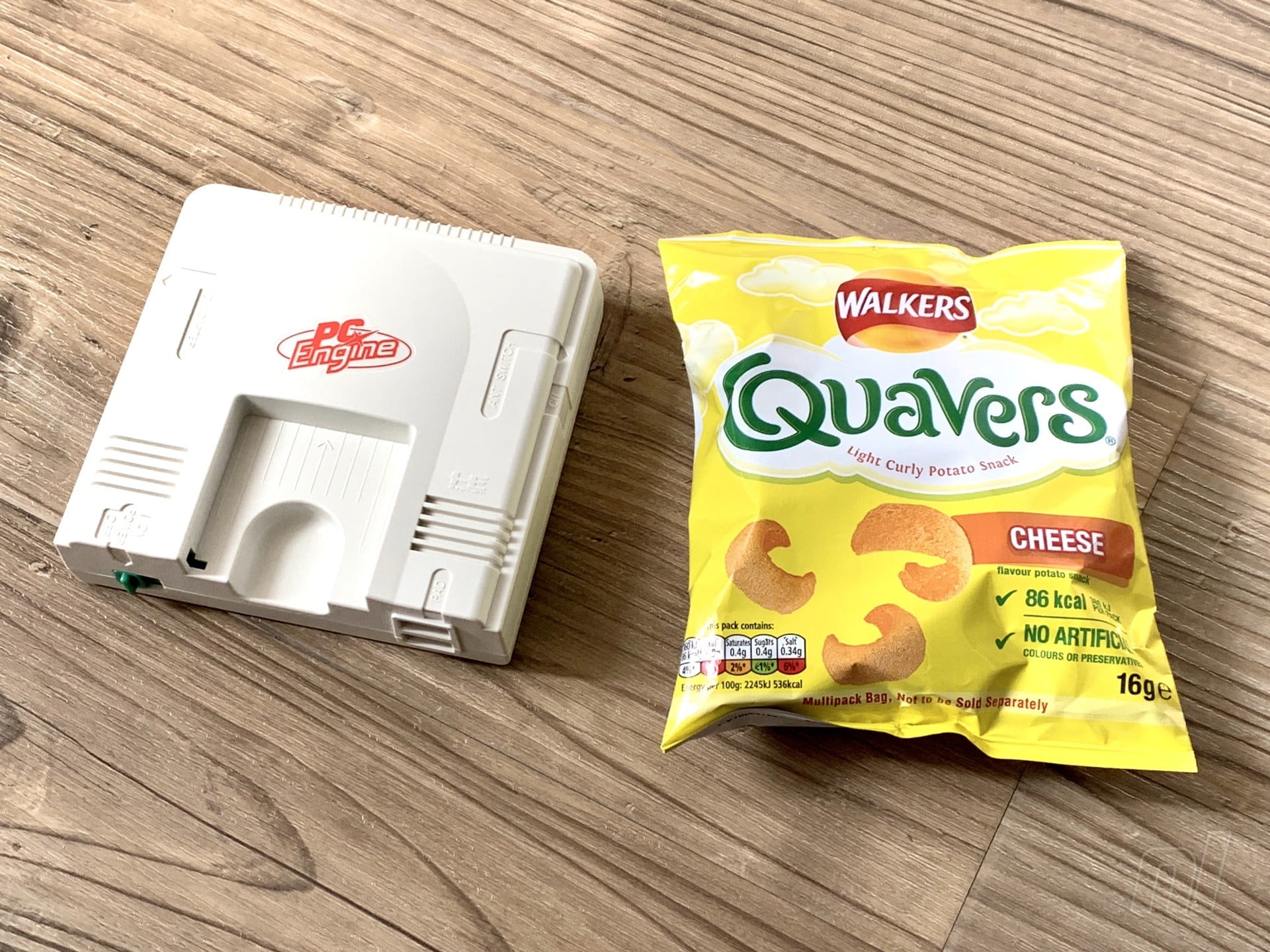
Deals: PC Engine / TurboGrafx-16 Mini Pre-orders Are Now Live
Following the shock news that Konami are planning to release a PC Engine Mini console (TurboGrafx-16 for our US readers) we have been eagerly waiting to slam down a pre-order as we’re sure that these will sell out quicker than the original NES Mini due to limited supply at launch.
Amazon UK is now listing the pre-order for the PC Engine CoreGrafx Mini priced at £99.99 and it is currently set to ship on 19th March 2020. The more attractive white PC Engine version can also be pre-ordered, if you can get your head around how to place an order on Amazon Japan. The US TurboGrafx-16 Mini can also be pre-ordered from Amazon Japan too – strangely it’s not on Amazon in the US yet, but we’re sure it’s just a matter of time.
Please note that some of the links on this page are affiliate links. If you click them and make a purchase we may receive a small percentage of the sale which helps support the site. Please read our FTC Disclosure for more information.
Let us know if you plan to pick up one of these lovely retro delights with a comment below.
Random: ‘Princess’ And ‘Zelda’ Mentioned On US Game Show Years Before The Game
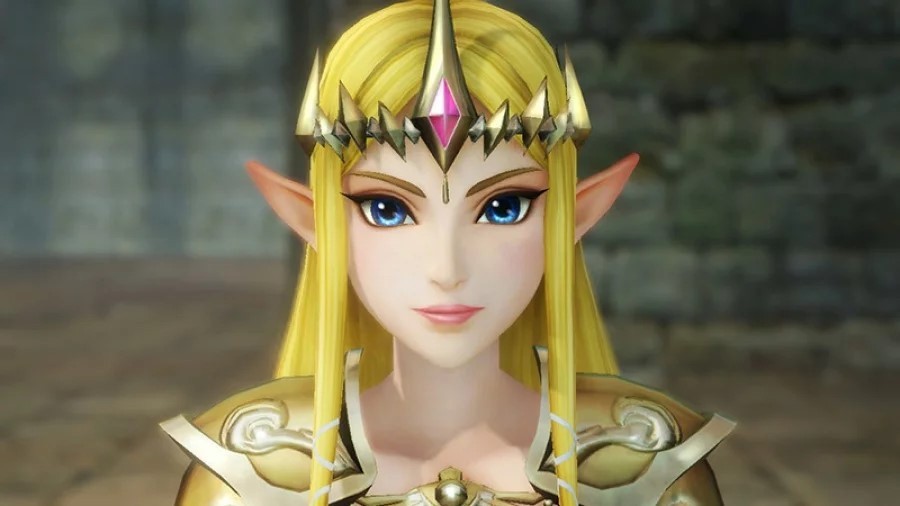
Here’s a funny little thing. A clip from an episode of Password Plus – a US game show where celebrities would team with members of the public to guess ‘passwords’ from single-word clues – shows a contestant referring to a ‘Princess Zelda’ years before the world ever met Nintendo’s princess.
Mention the name ‘Zelda’ these days and arguably most people will assume you’re referring to the princess from Nintendo’s eponymous legendary series – the franchise has become famous enough to seep into wider popular culture outside the realm of video games. On the other hand, some people might think of Zelda Fitzgerald, novelist and wife of author F. Scott Fitzgerald (after whom Shigeru Miyamoto named his princess), or perhaps Zelda Spellman, one of the aunts of Sabrina the Teenage Witch.
This particular 1982 episode of Password Plus comes from a good few years before Nintendo’s The Legend of Zelda launched in February 1986 alongside the Famicom Disk System. Not only can you enjoy a hit of nostalgia from its early ’80s style in all its glory, but you can also witness contestant ‘R.J.’ unwittingly predicting Nintendo’s second-most famous royal as he says the word ‘princess’ while trying to elicit the word ‘Zelda’ in the video below. The exact moment is at 9 minutes 12 seconds:
Oddly, earlier in the episode we learn that he’s a computer programmer for a medical laboratory that also enjoys writing ‘computer video games’. Well done, R.J. – you unknowingly conjured the name of a gaming icon years before the rest of the world would meet her!
Aqua Security Launches Microsoft Azure Marketplace Private Offers
Aqua Security has announced a new Private Offer for software licensing and procurement directly through Microsoft Azure Marketplace. Software purchased directly from Aqua can easily be installed on Azure while still taking advantage of streamlined deployment through the Azure Marketplace. The Aqua Cloud-Native Security Platform (CSP) now offers full support for the widest range of Microsoft cloud-native technologies including Azure Kubernetes Service (AKS), Azure Container Instances (ACI) and the Azure Functions serverless compute service. [Source: Aqua Security]
Posted by: xSicKxBot - 07-16-2019, 12:55 AM - Forum: Lounge
- No Replies
Top 10 UK Games Chart: Racing Games Can't Keep Up With Super Mario Maker 2
Super Mario Maker 2 has kept its place atop the UK all-format physical sales chart, according to sales monitor Chart-Track. The Nintendo Switch exclusive has now been at No.1 for three consecutive weeks, and it stays ahead of an otherwise largely unchanged top 10.
Three racing games follow Super Mario Maker 2, with Crash Team Racing: Nitro-Fueled at No.2, F1 2019 at No.3, and Mario Kart 8 Deluxe. The week ending July 13 did see one new release enter the top 10, as Dragon Quest Builders 2 debuts at No.5. That did, however, launch on Friday, July 12, so had less time to make an impact than games already available. The only other new entry anywhere in the chart is the physical launch of Hollow Knight on PS4 and Switch, which finishes at No.34.
Super Mario Maker 2 is another great addition to the Switch's library of exclusive games, according to our critic, Peter Brown. "The Mario series is worth all the admiration it gets, and Super Mario Maker 2 is an excellent tool for picking it apart by pushing its enemies, mechanisms, and Mario, to their limit," he said. "I've yet to make a stage of my own that I think is worthy of sending out to other players, but I'm committed to getting there. Whether exploring the full potential of a single element or throwing things at the wall to see what sticks, I've got the itch to join the creator's club.
"Mario Maker 2 makes the learning process intuitive and enjoyable. Most importantly, it's enabled designers amateur and professional alike to share their creativity with the world. The community is off to a great start, and thankfully, the fun has only just begun." You can read more in our full Super Mario Maker 2 review.
You can read the full top 10 sales chart for this week below, courtesy of UKIE and GfK Chart-Track. Note this table does not include digital sales data, and so should not be considered representative of all UK game sales.