Another day, another Metroidvania. It feels like the Switch is getting a new one every week at the moment, and whether that’s a good thing or a bad thing will no doubt depend on your affinity with the genre. Whilst the Switch has become home to some of the finest examples of the genre in recent memory, such as Axiom Verge and Hollow Knight, it has also played host to a few less-than-stellar titles. And that, sadly, is where Paradox Soul comes in.
Paradox Soul sees you take on the role of Dr. Allie Rose, who must navigate a mysterious, deadly test facility filled with roaming beasts and monstrous bosses. Since this is a Metroidvania title, very little is handed to you on a plate. Right from the start, you’re given nothing to work with – no backstory or weaponry – just you and your spindly, pixelated legs.
Eventually of course, you’ll come to find new gear, such as an automatic machine gun that you can gradually upgrade, and a handy suit that allows Dr. Rose to morph herself into a ball when sliding and jumping… hmm, that sounds very familiar. But what sets Paradox Soul apart from other Metroidvanias is its cover-based shooting gameplay. Dr. Rose isn’t the most resilient of protagonists, and it only takes a few hits to take her down, so you’ll need to take on more defensive tactics when dealing with foes. If you happen to come across an enemy that can fire back at you, chances are there will be an obstacle nearby that you can take cover behind. From here, you can hide in wait until the enemy needs to reload, then pop out and take them down.
It sounds pretty compelling in theory, but Paradox Soul really struggles to make it feel exciting. Each encounter boils down to simply rolling into cover, wait for the enemy to reload, then fire back. Rinse and repeat. Of course, you don’t have to roll into cover if you don’t want to, but thanks to Dr. Rose’s poor health meter, it almost becomes a necessity as you struggle to survive. Additionally, those who like to navigate the environment quickly will use the roll ability frequently to gain extra momentum – what this means is that if there’s a crate lying around, chances are you’ll accidentally roll into it. It’s not a massive issue, but it does break your flow quite a lot.
Thankfully, other enemy encounters are a bit more hands-on. You’ll come across zombies, rabid dogs, surveillance drones, and more. These don’t require you to jump into cover, and a good mix of jumping, rolling, dropping bombs and firing is enough to take these enemies down. Then of course, there are the boss battles. These can be extremely difficult at the best of times, particularly since you have such finite health. Learning their attack patterns is absolutely crucial to survival, but even then it’s a bit hit-and-miss. The ability to alter the difficult at any time from the main menu seems like a very deliberate decision, so don’t be surprised if you find you need to take it down a notch if you’re struggling.
Metroidvanias are perhaps most famous for their ingenious use of environments. Everyone remembers the claustrophobic caves of Super Metroid’s planet Zebes, and the famous inverted castle of Castlevania: Symphony of the Night. This is unfortunately where Paradox Soul really fails to stand out from the crowd. Taking place within a test facility, the map looks very much looks like a lab you might find in the latter half of a Resident Evil game. Blood coats the doorways, crates lie around in all sorts of places, and zombies burst out of test chambers in nearly every room. The problem is there’s a severe lack of variety; every new room looks incredibly similar to the last one, and this causes repetition to set in very quickly.
To exacerbate this issue, the map is set up in a grid format, with doorways either taking you up, down, left or right within the grid. Whilst the map itself is easy enough to analyse once you’ve gotten the hang of it, you’ll often feel forced to rely on its presence, as it can be incredibly difficult to remember exactly where you’ve been previously, or where you need to go next. Don’t be surprised if you find yourself visiting the same rooms over and over again.
Like so many indie games hitting the market these days, Paradox Soul displays self-proclaimed ‘retro’ graphics consisting of blocky, pixelated characters and environments. A lot of people may be getting a bit fed up of this particular aesthetic in modern games, but we think the graphics suit the nature of the game quite well. A lot more effort could have gone into the aforementioned repetitive room design, but for the most part, it looks decent enough. On the flip side, however, the music is particularly impressive, invoking a sense of horror, sci-fi and mystery all in one go, whilst ramping up suitably during boss battles. All in all, Paradox Soul is a decent enough Metroidvania that suits its low price point, but we think a bit more TLC within certain areas would have gone a long way.
Conclusion
On its own, Paradox Soul is an average Metroidvania that will keep you reasonably entertained throughout its fairly short duration thanks to its creepy art direction and atmospheric soundtrack. But when you look at it next to some of the more accomplished examples of the genre on Switch, its repetitive nature and uninspired cover-shooting mechanics hold it back from being truly recommendable.
The DLC Packs For Marvel Ultimate Alliance 3 Won’t Be Sold Individually
During Nintendo’s E3 2019 Direct presentation, we got another look at the upcoming title Marvel Ultimate Alliance 3: The Black Order. It was also revealed how players would be able to expand their experience with a paid Expansion Pass – including three DLC packs for Fantastic Four, X-Men and Marvel Knights.
Unfortunately, if you were only wanting a few additional characters or one specific DLC pack, you’ll still be required to purchase the Expansion Pass. A description on Nintendo’s official website states the following:
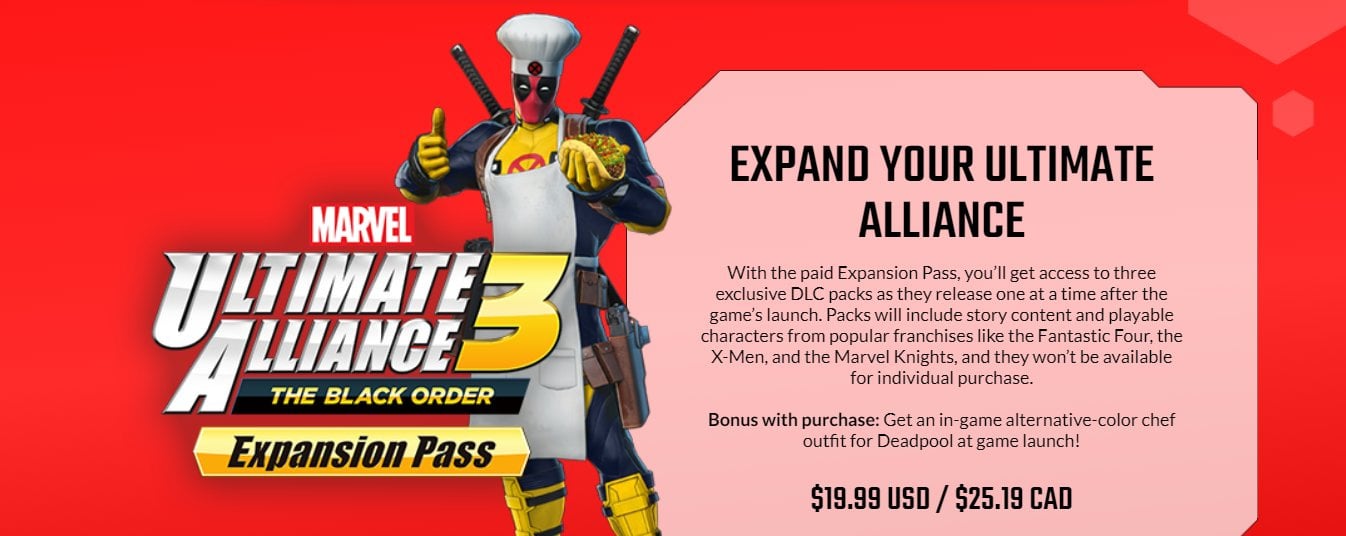
This paid Expansion Pass includes 3 DLC packs, which will become available as they release one at a time after the launch of Marvel Ultimate Alliance 3: The Black Order and will not be sold individually.”
There’s also a new image on the Marvel Ultimate Alliance 3 website reinforcing the fact the DLC won’t be sold individually:
The first pack is scheduled to arrive in Fall 2019, the second is expected to show up later in the year and the third one is due out next year.
Were you hoping to buy one DLC pack at a time or were you always planning to buy the Expansion Pass? Leave a comment below.
Amazon Prime Day 2019: the best tech deals with live updates
By Christine McKee Monday, July 15, 2019, 12:11 am PT (03:11 am ET)
Amazon Prime Day 2019 is officially here, and we’re compiling the best deals on Apple products, accessories, Amazon hardware and much more. Check back throughout July 15 and July 16 for live updates as new deals launch.
Amazon’s Prime Day sale has begun, and we’re rounding up the best deals on tech gadgets, including deals on Apple products with a Prime membership. Continue to check back throughout the 48-hour sale as we’ll be bringing you the best deals from Amazon and third-party sellers.
As in years past, Amazon has issued extensive markdowns on its own line of Fire, Kindle and Echo devices for Prime Day. Save up to 64% instantly on individual systems and bundles, with all of the deals view-able here. New to Prime Day 2019, Amazon is also knocking up to 30% off Apple Watches and iPads.
Apple Watch deals
iPad deals
Fire TV deals
Fire TV Stick deals
Echo deals
Fire Tablets
Ring Doorbell deals
Exclusive deals on MacBook Pros and iMacs
Exclusive savings on MacBook Pros and iMacs are in effect.
Shoppers on Prime Day can also save up to $2,500 instantly on iMac and MacBook Pro computers. Plus, grab exclusive savings on closeout iPad Pros with high-end 12.9-inch models available for just $699. Please note, these deals must be activated via the special pricing links in this post. Promo code APINSIDER will also need to be entered for the Adorama deals. See the footnotes in each section for additional instructions.
Need help? Send us a note at [email protected] and we will do our best to assist.
Grab the lowest price ever on Apple’s upgraded 2014 Mac mini.
B&H has also launched new deals on closeout Mac mini systems, with prices as low as $489. This represents an additional $50 price drop for Prime Day compared to last week’s cost.
Upgraded Mac mini now $489
Apple accessory deals
Nomad Battery Cable
Prime Day deals are also going on now with discounts of up to 80% off everything from AirPods to back-to-school covers and stands from Twelve South.
AirPods 2 deals
Twelve South accessories
Satechi accessories
Nomad Battery cable $19.98 with coupon
Software
The Mighty Mac Bundle
Shoppers can also save on VPN subscriptions and photo editing tools with Prime Day 2019 markdowns.
Prime Day software deals
More Apple deals
AppleInsider has partnered with top Apple Authorized Resellers to bring you even more Apple markdowns, many of which are available only at AI. Top offers on a variety of Macs, iPads and Apple Watches can be found below, with the lowest prices available every day in our Apple Price Guide.
Travel back in time to change fate itself in this beautifully crafted story-driven adventure, inspired by classic 90s action-platformers. Join timekeeper Lunais on her quest for revenge against the empire that killed her family, using time-bending powers to explore a vast, connected world.
Posted by: xSicKxBot - 07-15-2019, 12:13 AM - Forum: Lounge
- No Replies
How GoldenEye 007 set a new standard for video game AI
The following blog post, unless otherwise noted, was written by a member of Gamasutras community. The thoughts and opinions expressed are those of the writer and not Gamasutra or its parent company.
[embedded content]
AI and Games is a crowdfunded series about research and applications of artificial intelligence in video games. If you like my work please consider supporting the show over on Patreon for early-access and behind-the-scenes updates.
GoldenEye 007: one of the most influential games of all time. A title that defined a generation of console gaming and paved the way forward for first-person shooters in the console market. In this article I’m winding the clock back over 20 years to learn the secrets of how one of the Nintendo 64’s most beloved titles built friendly and enemy AI that is still held in high regard today.
Upon its release in 1997, GoldenEye 007 not only defined a generation, but defied all expectations. A game that Rare, Nintendo and even the Bond franchise holders MGM had little faith in. Released two years after the launch of the film it’s based on and one year after the consoles release to market, it seemed doomed to failure, only to become the third best-selling game of all time on the platform behind only Super Mario 64 and Mario Kart 64, selling over eight million copies. Not to mention earning Rare a BAFTA award for developer of the year in 1998.
It’s a game that carries a tremendous legacy: defining the standards of what we would come to expect from first-person shooters for generations to come, specifically in AI behaviour. AI characters with patrol patterns, enemies that call for reinforcements, civilians that run scared, smooth navigation and pathfinding, a rich collection of animations, emergent dynamic properties of play and so much more. It not only defined a generation, but also influenced the games that succeeded it, from Half Life to Crysis, Far Cry and more.
I’m interested not just in how the AI was designed, but how the hell they even got it to work? If you consider many of the AI techniques I’ve explored such as finite state machines, navigation meshes, behaviour trees, planning technologies and machine learning, none of these were established practices in the games industry when GoldenEye was released. Not to mention the fact the Nintendo 64 is pushing 25 years old and when compared to modern machines had minimal CPU and memory resources. How do you build AI and gameplay systems to run so effectively on hardware that was so tightly constrained?
To find out the truth, I reached out to the ultimate undercover informant: Dr David Doak. David was a pivotal member of the development team for both GoldenEye007 and – perhaps fittingly for this series – is immortalised as the non-player character players must meet in Facility: the 2nd level of the game. During our interview we explored NPC AI, alert behaviours, sensor systems, navigation tools, performance balancing and much more. So let’s get started in finding out how it works.
Winding back to the beginning, much of what GoldenEye became was devised by two people: Martin Hollis – the producer and director of the game – and Mark Edmonds who was the gameplay and engine programmer. Hollis had originally been inspired by the likes of Virtua Cop, where enemies would jump into frame, take shots at the player and then back off or hide or react to being shot in a dynamic fashion. However, Hollis sought for the AI to be more engaging and reactive, transcending the standard set by DOOM in 1993.
“The important thing is to show the player the AI. There’s no point having sophisticated AI that the player doesn’t notice. Your NPC’s can be insightfully discussing the meaning of life, but the player won’t notice if the game requires that they swing around a corner and fill the bad guys with bullets. So the intelligence has to be evident. The game mechanics have to showcase the AI. The level setup has to showcase the AI. And it all has to make an actual difference in actual gameplay.” [Martin Hollis, 2004 European Developers Forum.]
This resulted in guards and patrolling enemies – forcing a more tactical consideration for entering environments. Vision and audio sensors that enabled AI to react to player behaviour – or remain unaware if stealth was employed. Plus friendly and civilian characters that would react to the players presence and either cooperate or run away.
When David Doak joined the project, a lot of the core engine components for 3D movement, rendering and simple AI behaviours were already established by Edmonds. However, over the course of the final two years of the projects character movement, much of the AI behaviour and other core gameplay systems were established, with a lot of moving away from being player-centric, establishing patrol patterns, moving into alarm states, using control terminals, urinals and much more.
To achieve this, Mark Edmonds built an entire scripting system within the C-written codebase, which was constantly being added to and updated as Doak and other members of the team experimented with ideas. Quite often a new idea would be proposed to Edmonds who would ponder the feasibility of it all, then go away and have a working version of it in-engine a day later. This scripting system allowed for developers to link together numerous precompiled actions into sequences of intelligent behaviour based on very specific contexts. These behaviours would spool off their own threads for execution and release resource as soon as possible once the next atomic behaviour was executed, then wait until it’s possible to update once more. These scripted behaviours are not just for the friendly and enemy characters, but even systems such as timed doors and gates and the opening and closing cinematics for each level that take control of the player and other characters in the world.
If you dig into the GoldenEye Editor originally developed by modder Mitchell “SubDrag” Kleiman, these AI behaviours have been reversed engineered into editable Action Blocks for you to build your own behaviours. Enemy guards can react to a variety of different sensory inputs, ranging from being shot, to spotting the player or another guard being shot while in line of sight, as well as whether the guard can hear gunshots happening nearby. In addition NPCs can opt to surrender based on probability but more critically on whether the player is aiming at them, with behaviours shifting in the event the AI knows the player isn’t targeting them anymore. As I’ll explain in a minute, the visual and audio tests required for these behaviours run on tightly constrained and stripped down processes that still achieve impressive results, while running on the N64’s limited hardware.
Based on these conditions, guards can execute a variety of different behaviours, including side steps, rolling to the side, fire on one knee, while walking, while running and even throwing grenades. Much of the rationale for these actions is driven by where the player is relative to them and their current behaviour.
It is for all intents and purposes a rather simple Finite State Machine, whereby the AI exists in a given state of execution into a behaviour until an event in-game forces a transition to another one. This same principle was later employed in Half-Life, which came out the year after GoldenEye in 1998 and the team at Rare were aware of the impact their game had on Valve’s critically acclaimed shooter. Given Valve told them so themselves:
“My favourite moment was meeting the original Valve guys at ECTS, a UK trade show, in 1998 and them joking that GoldenEye had forced them to redo a bunch of stuff on Half-Life. They went on to do all right.” – David Doak, GamesRadar, 2018.
Now the two most critical elements of the Goldeneye engine for controlling the AI is the camera, as well as what’s known as the STAN system. For ease of rendering, levels are broken up into what are known as ‘rooms’, with even large open levels such as the Severnaya surface broken up into smaller chunks. This helped maintain performance as a form of occlusion culling, whereby only rooms in the cameras view frustum would be rendered. But in turn, AI – for the most part – would not execute their primary behaviours unless they’ve been rendered by the camera at some point. This helps execution costs down, but also lends itself to some interesting opportunities which I’ll come back to later.
But the key system that intersects with the room and rendering behaviour is what was known as the STANs – which is just a four-letter abbreviation of ‘Stand’. Developed by Martin Hollis, STANs are polygonal meshes in given room that would be flagged for use as a STAN and would know which room or hall it is placed within. If an AI character was standing on top of a given STAN, it would only be able to see the player if the STAN the player was standing on was in the current or adjacent room and ran a simple validator that checked whether two STANs could ‘see’ each other. This allowed for a more cost-efficient way to run sight tests, rather than running 3D ray traces that would prove a lot more expensive to run on the hardware. This works remarkably well, but does break in some specific certain circumstances, a notable example is the guards on the dam which can’t see you until you approach their walkways and this is because the STANs at the top of the ladder can only see those at the bottom, meaning you can mess around as much as you like in proximity, but they won’t notice. The second noticeable instance is the spiral path in the caverns, where the NPCs see the path in front of them rather than what’s on the other side of the chasm.
Now with these STANs placed all across each map, there is the opportunity to build atop these polygons that are darted across the map to build a navigation system. In modern games we typically use navigation meshes, which provide a full polygonal surface that dictates where characters can move across a map. Nav meshes didn’t exist in their current form back in 1997, so for GoldenEye the team took the STAN system and added atop it what was referred to as PADs. PADs would sit atop STANs but also be linked to one another, effectively creating a navigation graph through the map. Characters know what room they’re in and can then run a search for a PAD in a destination room if they’re reacting to a nearby commotion, or move across the STANs while in their current room to items of interest.
This is topped off by the audio sensors. These run a simple proximity check to based on characters being within a certain radius of a sound occurring. But it’s also reliant on the type of weapon and the rate it’s being fired. While a silenced PP7 doesn’t attract attention, a standard PP7 is loud, but the KF7 Soviet is even louder, with continuous fire leading to the activation radius reaching maximum level, with only the rocket launcher and the tank cannon being deemed louder.
All of these AI tools and systems are very impressive, it shows a intentionality of design that sought clever and effective means to address specific elements the team wanted to see in the game. But there are still many other elements of how GoldenEye works that required individual bespoke behaviours to be crafted, almost on a per level basis. NPCs did not actively hide behind cover, so levels such as the Silo and the Train required unique scripts to be created for them to stand near specific PADs on the map and react differently depending on whether it was a half or full sized object.
The NPCs are not aware of one another in the map, hence levels where you have to protect Natalya Simonova not only had to ensure that she could move around the level, but custom behaviours were built to ensure enemies don’t shoot at her en masse and also aim at the player. Having characters like the scientists freeze at gunpoint and then run away or even Boris Grishenko who would do as he’s instructed until you stopped pointing the gun at him are more bespoke behaviours that needed to be built for that specific context. This means that many of the principal characters from the story have different custom AI behaviours written to solve specific elements of a given level, with Alec Trevelyan having unique behaviours built for him in all six levels he appears in: Facility, Statue, Train, Control, Caverns and Cradle.
Plus there were issues of level design and pacing that needed to be addressed. The Severnaya exterior levels proved problematic for balancing the AI positioning, so custom level scripts spawn in enemies beyond the fog range that run straight towards the player. But also if enemies are too far away, they simply disable themselves and may later reactive once more.
Arguably my favourite feature, is how GoldenEye is built to punish louder and more aggressive gunplay if the player isn’t progressing through the level fast enough. Remember how I said earlier that NPCs don’t activate their AI behaviour if they haven’t been rendered yet? Well, in the event a NPC can hear a sound, but it’s not been rendered, it will spawn a clone of itself to investigate the source and will continue to do so until either the disturbance has ceased or the camera has finally rendered the character. This is particularly noticeable in levels such as the Archives, where you can easily get trapped in the interrogation room at the start of the level by continually spawning clones.
In order to better pace the overall experience – as well as accommodate for the lack of aiming fidelity in using the Nintendo 64 controller – the transitions and durations of animations were tweaked heavily throughout testing to allow players a better chance of prioritising targets either using auto or precision aim mechanics.
With GoldenEye released, this rendering and AI toolchain was put to good use in later titles, with Rare’s spiritual successor Perfect Dark employing the same systems but included new additions. As mentioned before, GoldenEye NPCs only go into cover a custom behaviour was created for them to do so, but in Perfect Dark enemies are capable of calculating cover positions – including dynamic ones created by anti-grav props. Plus having experimented with vertex shading lighting, vision sensors are impeded by the lower visibility. This same process was later adopted at Free Radical Design for the Timesplitters franchise – given the studio was founded by several of the GoldenEye development team – and required the STAN/PAD system to be built to better support verticality in level design.
While over 20 years old, GoldenEye set the standard that Half-Life any many other shooter franchises have sought to replicate to this day. I hope having watched this video you can appreciate the depth of the underlying systems and the level of dedication and craft required to elevate the project to what it became in the end.
The ‘Rokit Games Limited’ fund will act as both an angel investor and gap investor for startup game devs working on mobile and console projects. It will ask for equity in exchange for financing, and will grant successful applicants up to $500,000 in funding.
Beyond dishing out dollars, Rokit claims it will be able to provide a platform for any mobile games it finances by uploading them onto its range of smartphones, and promoting them through its content network.
Those looking to make use of the program will need to approach Rokit with a business plan that’ll be reviewed by the Rokit board, or attend one of the ‘pitchfests’ being organized by the company in order to unearth “outstanding games.”
Best Nintendo Switch Deals For Prime Day 2019 (US)
As Nintendo fans, we're used to shelling out more than average for our games and accessories, but luckily, Amazon Prime Day is nearly here to save us some cash while giving us an excuse to spend even more money on Nintendo products. Whether you're looking to pick up your first Nintendo Switch, have a specific game in mind, or are just curious what kind of discounts will actually be available, you've come to the right place.
While Amazon Prime Day doesn't officially kick off until Monday, July 15, the retail giant is already starting to discount many products in preparation for Prime Day. Plus, Amazon's biggest competitors are getting in on the deals action by throwing their own anti-Prime Day sales, including Walmart, Target, and GameStop, to name just a few. All that competition can only benefit shoppers, as Prime Day has gradually become the equivalent of Black Friday in the summer with record-low discounts on high-cost items (like game consoles). Even though the Nintendo Switch sells for $300, a lower price point than the Xbox One or PS4, its games and accessories get quite pricey, with Switch Pro controllers selling for $70 and first-party titles often remaining at $60 long after launch. That's why finding good deals on Switch products is even more exciting, and Prime Day is likely your best chance to find a ton of Switch discounts until Black Friday.
Prime Day comes with an overwhelming amount of deals shoved in your face, so we're here to help make the experience a bit less stressful. Here are the best Nintendo Switch deals for Prime Day available now (and note that this story will continue to be updated as Prime Day really gets started next week).
Mario + Rabbids Kingdom Battle - on sale for $20 at Amazon
Best Nintendo Switch game deals
From GameStop's huge Summer Sale to Ebay's Hot Deals for Hot Days, there are plenty of discounts floating around already in anticipation of Prime Day; plus, Amazon itself already has some pretty notable price cuts available. Check out some of the great game deals you can snag already below.
Nintendo Switch + game + bonus accessory - on sale for $329 at Walmart
Best Nintendo Switch console deals
Everyone's still buzzing about the announcement of a new $200 Switch model, the Switch Lite, but with it releasing in September, we wouldn't count on it getting discounted any time soon. If you're in the market for a Switch, your best bet is to grab the OG model during Prime Day. While listed at $300 normally, we've seen the Switch as low as $240 in the past, and we're willing to bet it drops steeply again over the next week.
Of course, if you're willing to get a slightly used or refurbished model, you can already find the Switch cheaper at some retailers. But if you're holding out for a brand-new Switch to drop below $300, you may have to wait until Prime Day. There are some solid console bundles available, however, and the best option is currently at Walmart, where you can get a Nintendo Switch, first-party Nintendo game, and bonus accessory of your choice for $329. The games to choose from include Mario Kart 8 Deluxe, Super Mario Odyssey, Super Mario Party, The Legend of Zelda: Breath of the Wild, and Splatoon 2. There are a few accessories to choose from, including a portable power bank for the Switch.
There's a small perk for getting the console at GameStop, and that's a free Starlink: Battle for Atlas starter pack. Plus, you can get a bundle with the console, Crash Team Racing, and a Switch steering wheel two-pack for $300 at Ebay, if that's something you're into.
FastSnail Grips, 2-pack - on sale for $10.95 at Amazon
Best Nintendo Switch accessory deals
As we said earlier, Switch accessories are almost as notoriously expensive as the games themselves. But if the Switch is your primary gaming system, it definitely doesn't hurt to invest in at least a few essentials: a Pro controller, a hard-shell travel case, a microSD memory card, etc. More deals will start going live as Prime Day starts, but here are some of the best accessory deals available now.
Talking Point: What Are You Playing This Weekend? (July 13th)
Welcome folks to yet another weekend – and what a week we’ve had! The official reveal (finally) of the Nintendo Switch Lite kept the NL team super busy this week – you can catch up on everything you need to know right here – but now it’s time for us to talk about our weekend plans. Which games will you be playing? Check out our plans and submit your own via the poll and comments below. Enjoy!
Dom Reseigh-Lincoln, reviewer
I’m really struggling to put Red Faction: Guerrilla Re-Mars-tered down at the moment. What can I say, I just love blowing up Martian masonry. I’m also really enjoying Attack on Titan 2: Final Battle as well. Honing my titan takedown skills becomes so addictive after a while.
In terms of new stuff, I’ll be strapping on my spandex in preparation for Marvel Ultimate Alliance 3: The Black Order. I loved the first two games, so I’m really excited to give this superheroic Switch-exclusive a proper extended play. Look out for my official NL review on the site soon.
Gavin Lane, staff writer
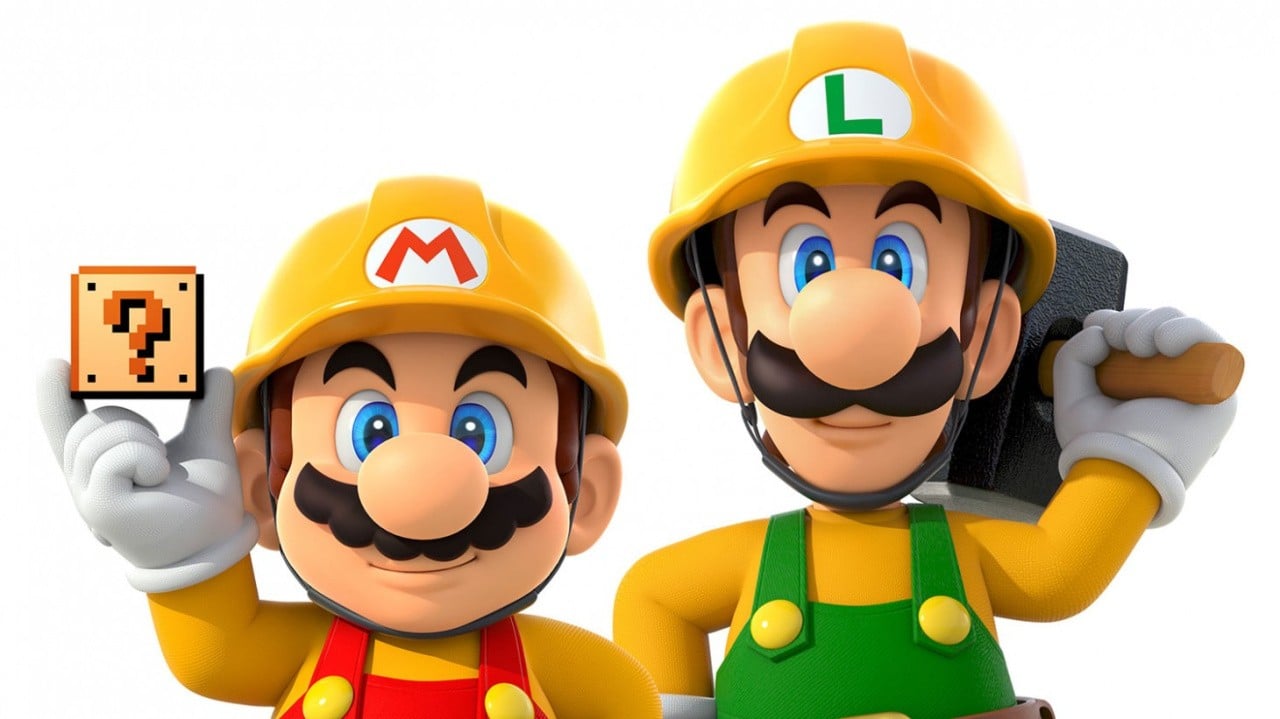
After a few days off this week (did I miss anything?), I’ve managed to play very few video games due to Other Life Stuff™, but I did dig out the Wii U for a visiting family member – a huge Splatoon 2 fan desperate to play the original. While it’s still set up I plan to fire up the first Super Mario Maker so I can ‘copy’ a couple of my old courses into the sequel and tweak them with some new elements.
Still trying to finish Gris, too, but I downloaded Sega Mega Drive Classics in the eShop sale last night and Bare Knuckle 3 is calling…
Austin Voigt, contributing writer
I’ve only spent a few hours so far exploring What Remains of Edith Finch – but this weekend, I plan to finish the game if I can. It’s so beautifully designed, and its gameplay is so unique; I’m incredibly impressed. I also plan to play Dragon Quest Builders 2, of course – I checked out the demo and loved it, so I’ll be purchasing the full version and building my little heart out with it this weekend.
Gonçalo Lopes, contributing writer
Summer of Switch hits full throttle with spiritual sequels of ActRaiser and Contra out on the eShop! I shall be getting down to some serious hardcore play sessions of Bloodstained: Ritual of the Night, SolSeraph, Super Mario Maker 2, Tetris 99 and the social-life erasing Dragon Quest Builders 2. Lest I forget: releasing a free expansion to one of my favourite games of all time will net you my attention – just exactly how many more shopkeeper zingers can they possibly fit in The Messenger‘s Picnic Panic DLC?
My game of the week goes to Blazing Chrome. It was a true privilege to see this one take shape and form over the past years and it perfectly showcases the exact kind of games I want to be playing this summer: brand new, fast-paced 16-bit arcade games from a time when we didn’t have a care in the world.
Ryan Craddock, staff writer
I’m actually moving house this weekend (wish me luck!) so I definitely won’t have any time for traditional gaming, but I wanted to join in with the chat regardless as I’ll likely be playing with a very different approach.
I finally got around to picking up Super Mario Maker 2 this week, and after playing some courses and making my way through the early stages of the Story mode, I’m feeling inspired to make my own course for the very first time. I’m sure when I do get around to it it’ll take a lot of trial and error, but I’ve just begun sketching out ideas on a piece of paper like the good ol’ days. I’ll probably keep this on me over the next few days – drawing up any grand ideas ready to build in the game when things are settled. Hopefully it won’t be a total disaster!
Which games are you playing this weekend? (128 votes)
Dr. Mario World Racks Up Two Million Downloads In Its First 72 Hours
Early this week, Nintendo released its fifth mobile game, Dr. Mario World. The game modernises the classic action puzzle formula with a unique touchscreen twist and online multiplayer. So, how has it been received by the general public?
According to Sensor Tower Store Intelligence data, there were more than two million installs within the first 72 hours. In contrast, Animal Crossing: Pocket Camp had 6 million downloads in the same period, Fire Emblem Heroes had 4.9 million downloads and Super Mario Run had just over 4 million downloads. Dr. Mario, however, did rack up seven times as many installs as the brand-new IP, Dragalia Lost. In saying this, the Cygames-developed title had a rather limited launch.
In terms of in-app transactions, players have already spent an estimated $100,000 on Dr. Mario World since it launched. This makes it Nintendo’s lowest grossing mobile game release so far. In contrast, Fire Emblem banked a cool $11.6 million over the same period of time, and even Dragalia Lost managed to pull an extra $150,000. Still, Dr. Mario World has done quite well when considering the series it is based on and the limited amount of marketing it received leading into its release.
Were you one of the people who downloaded Dr. Mario World in the first 72 hours? Have you made any in-app purchases yet? Leave a comment below.
Prime Day Switch Deals: Best Nintendo Switch Deals Available Now (US)
As Nintendo fans, we're used to shelling out more than average for our games and accessories, but luckily, Amazon Prime Day is nearly here to save us some cash while giving us an excuse to spend even more money on Nintendo products. Whether you're looking to pick up your first Nintendo Switch, have a specific game in mind, or are just curious what kind of discounts will actually be available, you've come to the right place.
While Amazon Prime Day doesn't officially kick off until Monday, July 15, the retail giant is already starting to discount many products in preparation for Prime Day. Plus, Amazon's biggest competitors are getting in on the deals action by throwing their own anti-Prime Day sales, including Walmart, Target, and GameStop, to name just a few. All that competition can only benefit shoppers, as Prime Day has gradually become the equivalent of Black Friday in the summer with record-low discounts on high-cost items (like game consoles). Even though the Nintendo Switch sells for $300, a lower price point than the Xbox One or PS4, its games and accessories get quite pricey, with Switch Pro controllers selling for $70 and first-party titles often remaining at $60 long after launch. That's why finding good deals on Switch products is even more exciting, and Prime Day is likely your best chance to find a ton of Switch discounts until Black Friday.
Prime Day comes with an overwhelming amount of deals shoved in your face, so we're here to help make the experience a bit less stressful. Here are the best Nintendo Switch deals for Prime Day available now (and note that this story will continue to be updated as Prime Day really gets started next week).
Mario + Rabbids Kingdom Battle - on sale for $20 at Amazon
Best Nintendo Switch game deals
From GameStop's huge Summer Sale to Ebay's Hot Deals for Hot Days, there are plenty of discounts floating around already in anticipation of Prime Day; plus, Amazon itself already has some pretty notable price cuts available. Check out some of the great game deals you can snag already below.
Everyone's still buzzing about the announcement of a new $200 Switch model, the Switch Lite, but with it releasing in September, we wouldn't count on it getting discounted any time soon. If you're in the market for a Switch, your best bet is to grab the OG model during Prime Day. While listed at $300 normally, we've seen the Switch as low as $240 in the past, and we're willing to bet it drops steeply again over the next week.
Of course, if you're willing to get a slightly used or refurbished model, you can already find the Switch cheaper at some retailers. But if you're holding out for a brand-new Switch to drop below $300, you may have to wait until Prime Day. When we start spotting deals, we'll include those here. It's worth mentioning there is a small perk for getting the console at GameStop right now, and that's a free Starlink: Battle for Atlas starter pack. Plus, you can get a bundle with the console, Crash Team Racing, and a Switch steering wheel two-pack for $300 at Ebay, if that's something you're into.
FastSnail Grips, 2-pack - on sale for $10.95 at Amazon
Best Nintendo Switch accessory deals
As we said earlier, Switch accessories are almost as notoriously expensive as the games themselves. But if the Switch is your primary gaming system, it definitely doesn't hurt to invest in at least a few essentials: a Pro controller, a hard-shell travel case, a microSD memory card, etc. More deals will start going live as Prime Day starts, but here are some of the best accessory deals available now.