Random: Have We Been Missing A Zelda Easter Egg In Mario 64 All These Years?
Easter eggs in video games aren’t a new thing, but it’s rare to spot one decades after the event – but that’s what Twitter user Hitei he’s found in Super Mario 64.
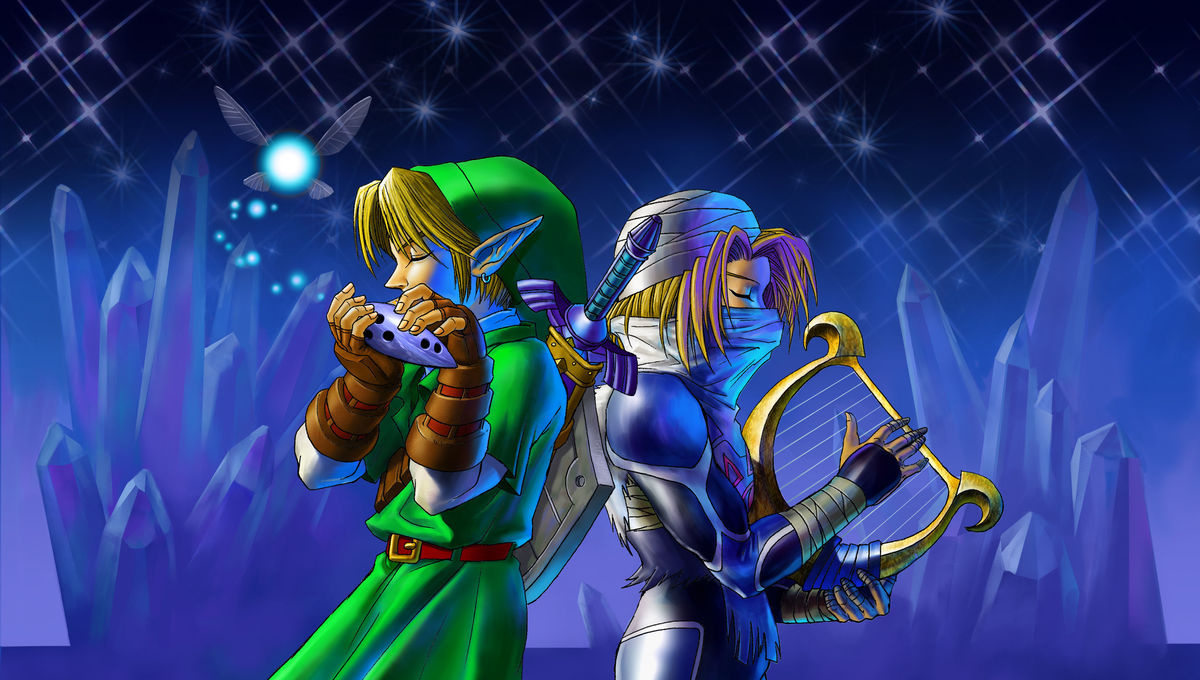
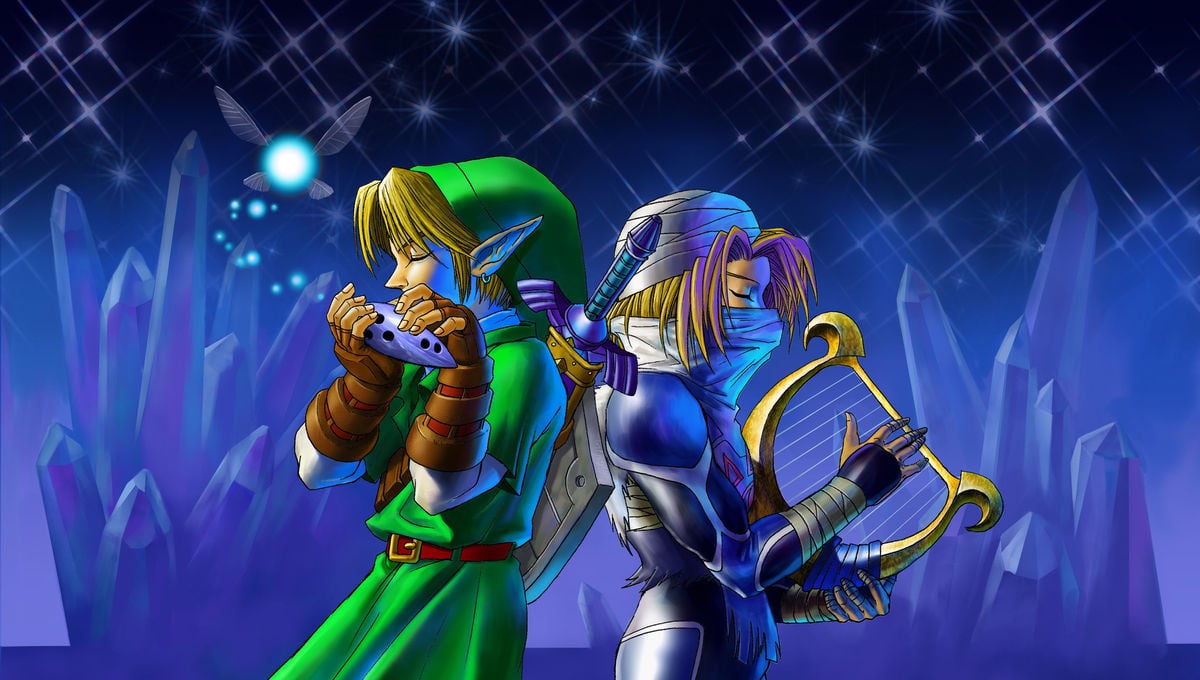
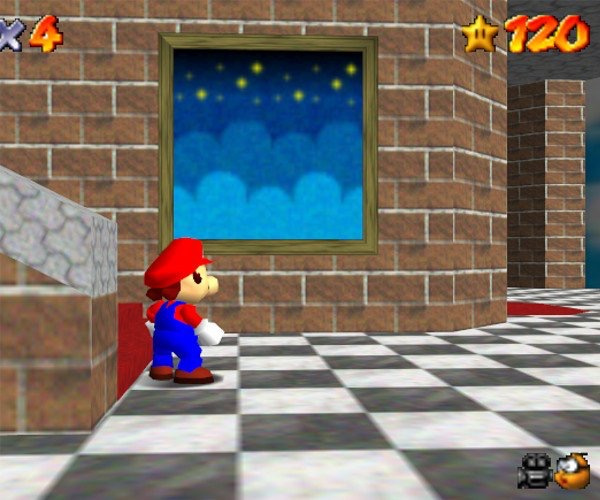
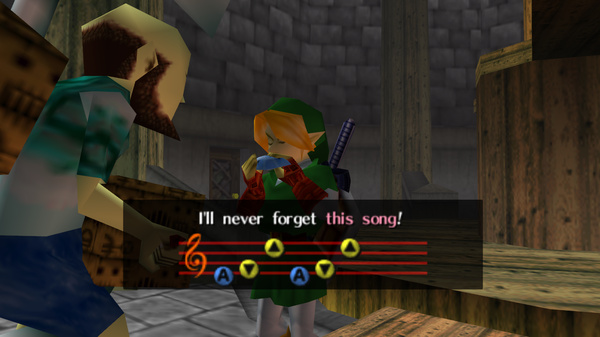
There’s a picture in Peach’s castle which we’ll all have dashed past many, many times over the years, and Hitei thinks this image has been hiding a reference to The Legend of Zelda: Ocarina of Time. Look at the image below and compare the stars at the top to the sequence of button presses needed to play the iconic Song of Storms in Ocarina of Time.
Now, this might seem like a bit of a stretch, especially when you consider that Super Mario 64 was a launch title for the N64 and Zelda didn’t come out until a while later, but we know that both were in development at the same time, as Zelda was shown off (in a rather different form) before the console hit the market.
Therefore, it’s not beyond the realms of possibility that the designers could have snuck in a reference to the song, as the music element of the game could have been locked down early in production. Alternatively, the reverse could be true, and the pattern for the song could be taken from the painting in Super Mario 64.
Of course, there’s also the chance that it could just be a massive coincidence, especially when you look at the small gap between the two sets of stars and the relatively basic nature of the pattern itself. We’ll let you decide, but if this does turn out to be a direct reference, then it’s surely a case of god-tier Easter egg placement by Nintendo.
Do you think this is a deliberate Easter egg? (642 votes)
Feature: The Making Of The PC Engine, The 8-Bit Wonder That Took On Nintendo
This piece was originally published in 2012. With the news that Konami is producing a PC Engine Mini, we thought you might like a fresh look. Enjoy!
Western gamers tend to consider Nintendo and Sega as the two major players in the 16-bit war. On European and American soil this was certainly the case – the Super Nintendo and Mega Drive (Genesis to North American players) battled it out for supremacy, selling millions of units and making their creators household names in the process. The story was ever so slightly different in Japan, however. Nintendo remained amazingly successful but it was NEC’s PC Engine that emerged as their main rival, leaving the unfortunate Sega to make do with a disappointing third. Remarkably, this popular Japanese console struggled in the US and bypassed Europe altogether. Unravelling the complex lineage of this intriguing system isn’t straightforward thanks to numerous hardware amendments, name changes and add-on enhancements – not to mention the involvement of three different parent companies – but by thunder, we’re going to try.
This highly promising union would result in one of the most successful and influential Japanese consoles of all time
Back in the late ‘80s many companies – both inside and outside the video game industry – observed the runaway success of Nintendo’s NES/Famicom with mounting envy. One such corporation was Japanese electronics giant Nippon Electric Company, more commonly known as ‘NEC’. Established at the turn of the 20th century to produce telephone components, NEC had gone on to become one of the world’s leading computer manufacturers. A new conquest was beckoning in the form of the lucrative console market and while NEC undoubtedly had the financial clout to enter this arena, it lacked vital industry experience. Approaches were made to several leading video game studios for support and it was soon discovered that Hudson Soft – the first developer to obtain a license to develop for the Nintendo Famicom – also happened to be tentatively exploring the possibilities of producing its own system.
Founded by brothers Yuji and Hiroshi Kudo in 1973, Hudson didn’t start out in the field of interactive entertainment. “They originally began by selling telecommunication devices and some art photographs,” comments John Greiner, former President of Hudson Entertainment in the US and now the head man at MonkeyPaw Games. “Within two years they began selling computer related products and soon afterwards, the company started to make games. In fact, they were the first to publish a PC game in Japan.” Hudson had created the high-powered ‘LSI’ chipset but didn’t possess the necessary cash to enter the console race alone. “They realized they needed a partner to manufacture and market to a large base,” explains Greiner. “Fortuitous timing landed NEC as a company that was interested in entering the console market.” This highly promising union would result in one of the most successful and influential Japanese consoles of all time.
Small is Beautiful
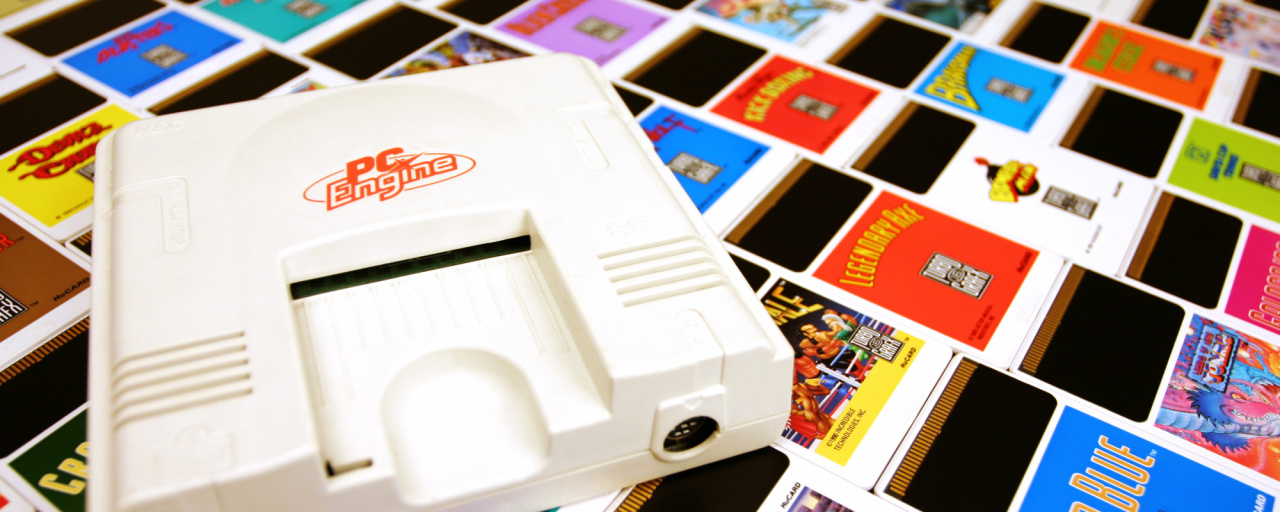
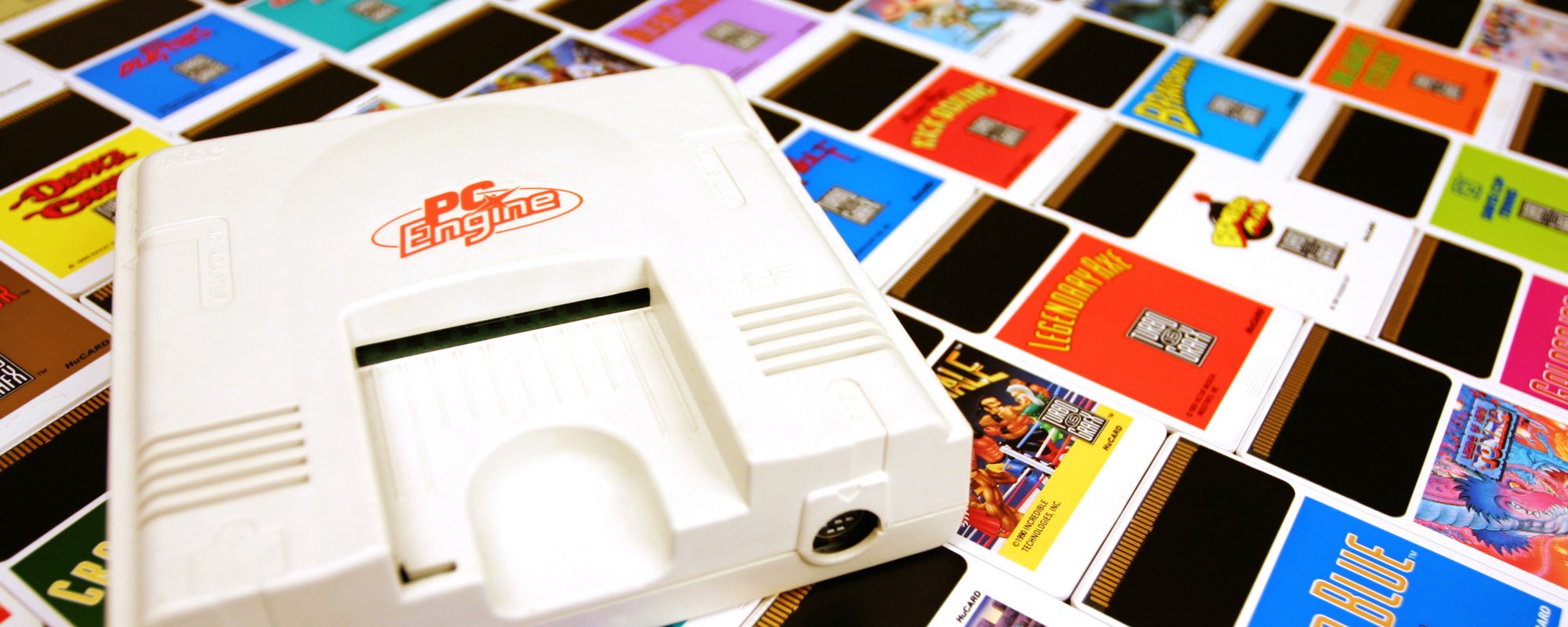
In terms of pure aesthetics, the PC Engine must surely rank as one of the most iconic designs in the history of electronic entertainment. The original white system was petite and attractive, making rival consoles look positively ugly in comparison. “Hudson and NEC wanted to create a system that was appealing in design,” Greiner says. “The previous generation of consoles felt more like toys, so they wanted to create a system that was sleek yet powerful.” With dimensions of 135 x 130 x 35mm, it remains the smallest home console ever made. This appeal was further augmented by the unique delivery system for software, as Greiner recalls: “The PC Engine used a unique chip-on-board media instead of cartridges. These credit card sized ‘HuCards’, or ‘Turbochips’ as they were called in America, were marvels in design. They were extremely durable, portable and cool.”
The slender size of the machine belied the impressive technical specifications contained within. The custom-built dual 16-bit graphics processors (HuC6260 and HuC6270A) allowed the PC Engine to display stunning arcade-quality visuals. Remarkably, the unique HuC6280A CPU that powered this minuscule wonder was 8-bit – a fact that would provoke many playground arguments about whether or not the machine should be classed in the same league as ‘true’ 16-but consoles like the SNES and Mega Drive.
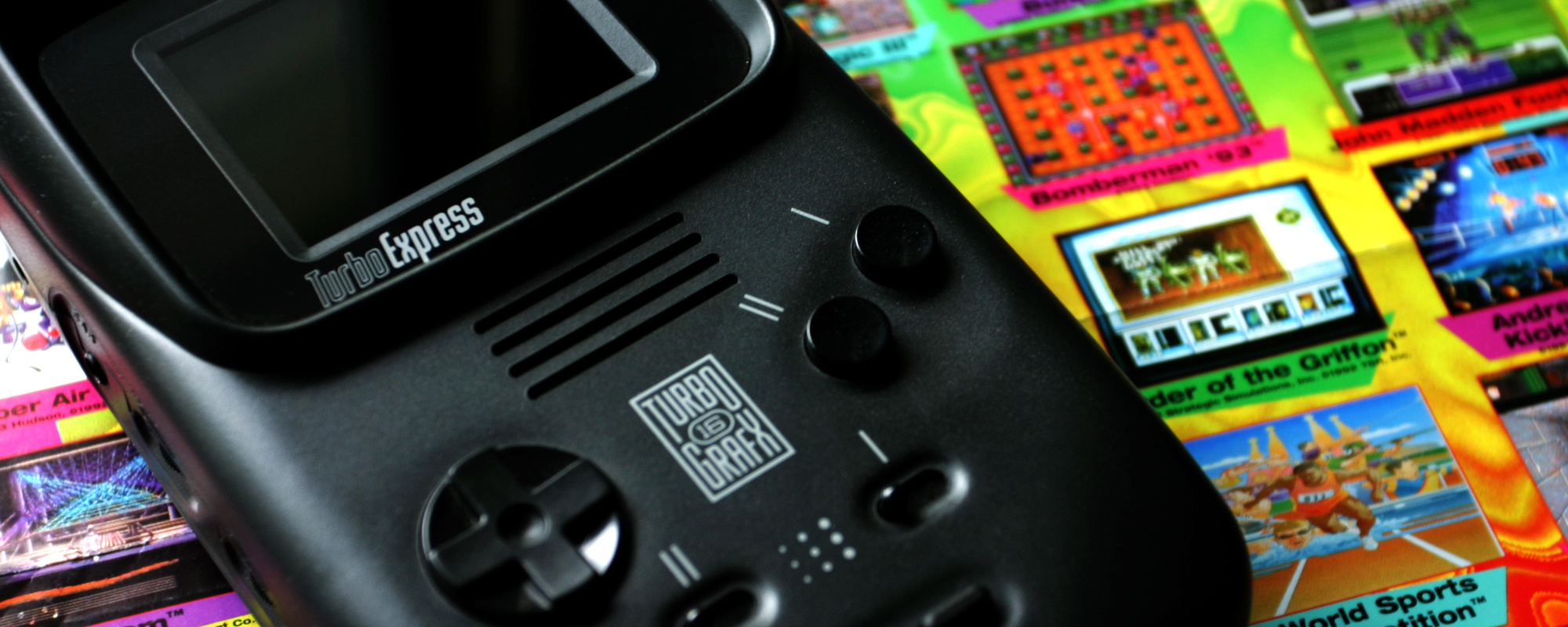
The PC Engine was released as a portable system, too
NEC launched the PC Engine in Japan on October 30th 1987 and by the end of the subsequent year, it was the best selling console in the country, dethroning the Famicom in spectacular fashion. One of the key reasons for this triumph was impressive third-party support, which previous consoles like Sega’s Mark III (known as the Master System in the West) had struggled with, largely thanks to Nintendo’s stranglehold over software developers. Striking technical specifications combined with the rampant enthusiasm shown by NEC and Hudson – two highly respected companies in Japan – encouraged many developers to support the console. Namco, Irem, Masaya, Konami and Human all flocked to the PC Engine banner, bringing some of their most treasured franchises with them. Amazingly, permission was also secured to port several highly esteemed Sega coin-ops, including Afterburner 2, Power Drift, Space Harrier, Outrun, Wonderboy III and Fantasy Zone. These were proficiently reprogrammed by internal studio NEC Avenue (later known as ‘NEC Interchannel’, and more recently ‘Interchannel-Holon’, as the company is no longer affiliated with NEC) and ironically they frequently outclassed Sega’s own efforts on the Mega Drive.
NEC and Hudson were driven by what a CD could bring to gaming: amazing sounds, robust animation, and seemingly unlimited storage space
With a successful launch out of the way, NEC soon set about creating what would be the first of many hardware updates – the ‘CD-ROM2’ add-on. “At the time, publishers were constrained by the cost and memory of carts,” Greiner remembers. Released in 1988, it came with a fetching briefcase-style set-up and remains one of the most desirable pieces of PC Engine paraphernalia. Early CD software was hampered by lack of RAM but this was thankfully rectified via a series of ‘System Card’ updates (which came in HuCard form and granted more usable memory). This, in turn, gave birth to the renowned ‘Super CD’ criterion, which allowed programmers to be more flamboyant and really put that additional CD storage space to meaningful use. “NEC and Hudson were driven by what a CD could bring to gaming: amazing sounds, robust animation, and seemingly unlimited storage space,” confirms Greiner.
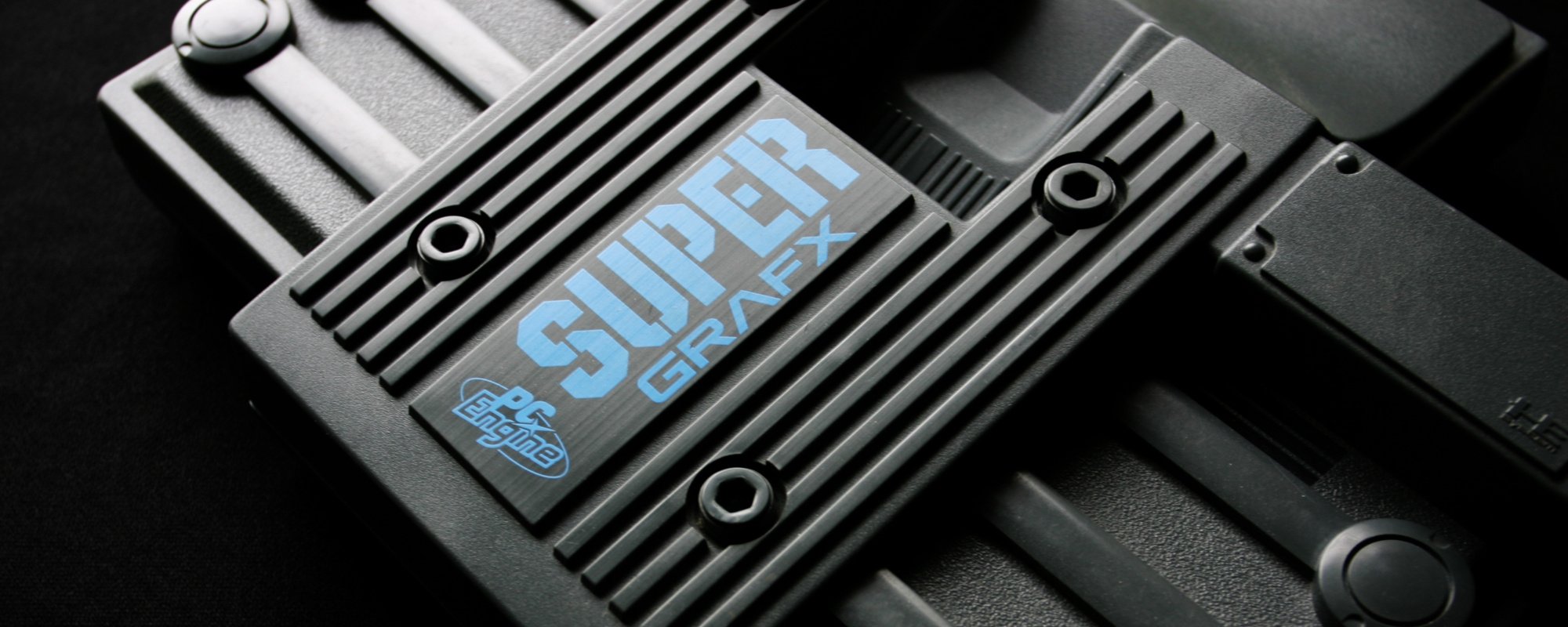
Commitment to largely unproven CD-ROM technology showed that NEC intended to remain on the cutting edge, but in 1989 this burning desire to innovate resulted in a near-fatal error of judgement. Despite the runaway success of the PC Engine, Nintendo’s Famicom remained the console to beat and when solid information regarding the specifications of its successor began to surface in the Japanese press, NEC panicked. They rashly decided to launch a new console and the SuperGrafx was born. Essentially a PC Engine with additional graphics chips and four times as much RAM, this bulky machine was handicapped by the fact that it utilized the same 8-bit CPU as its older stablemate. Coordinating the extra chips created a massive drain on processing power and developers struggled to achieve satisfying results.
The SuperGrafx was a commercial disaster for NEC and Hudson
Incredibly, only five dedicated games ever saw the light of day (a ‘hybrid’ version of Darius Plus was also released that would also play on a standard PC Engine). Thanks to an impressive conversion of Capcom’s Daimakaimura (Ghouls ‘n’ Ghosts) and excellent overall compatibility (it is able to play HuCard games and can be connected to the CD-ROM drive, making it the only machine in the PC Engine dynasty with the potential to play all available software), the SuperGrafx remains a highly sought-after collector’s item, regardless of its abject commercial failure.
Go West
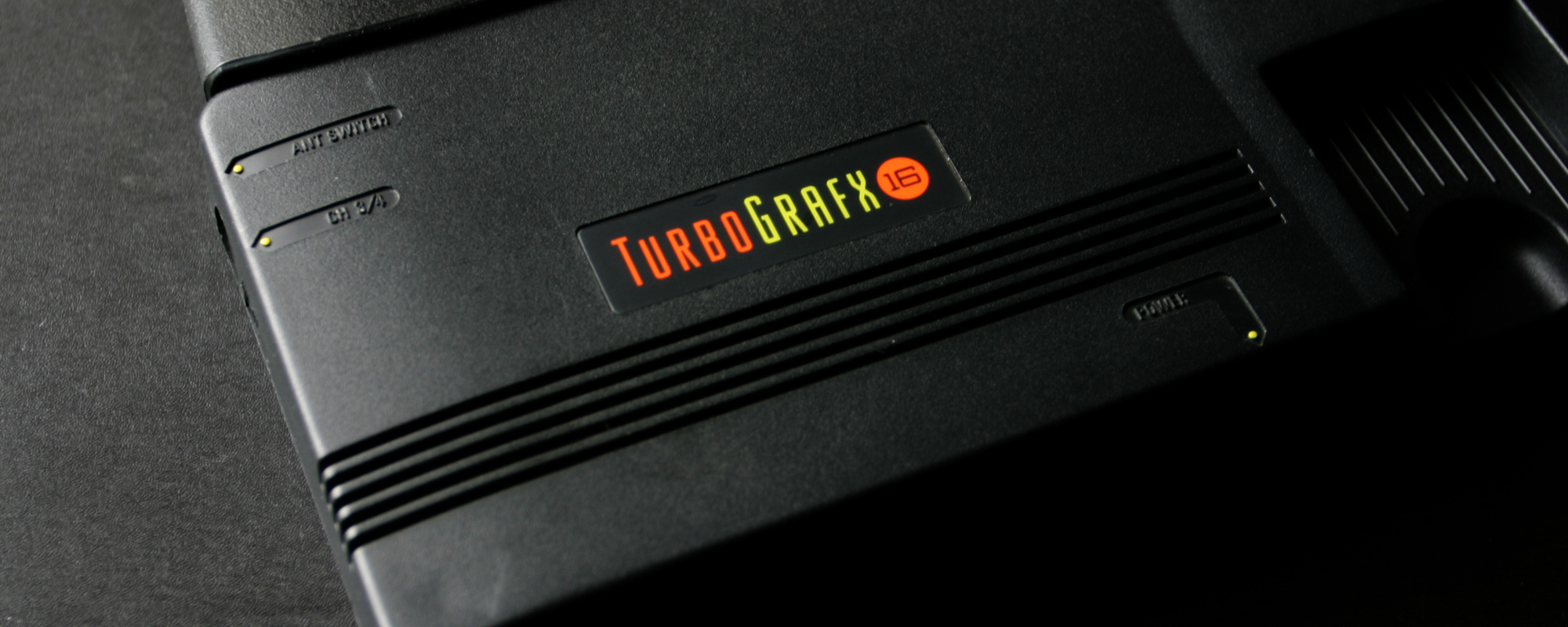
In spite of this slight hiccup, success was virtually assured on home soil. With proven technology and a library of excellent games, it made perfect sense to unleash the console Stateside, as Greiner recalls: “The US market was stirred into a fevered state by fans wanting a true gaming upgrade from the 8-bit era.” NEC’s American arm rechristened it ‘TurboGrafx-16’ and the external casing of diminutive console was retooled in order to make it look more substantial and imposing. Nevertheless, the fortunes of the TurboGrafx-16 stood in stark contrast to that of its Japanese sibling. “The success of the PC Engine was undeniable in Japan, where at one point it captured nearly a third of the market,” states Greiner. “In the US however, it was a different story.” Sega released the Mega Drive (Genesis) in North America at almost exactly the same time and began relentlessly and ruthlessly marketing their new console. “Sega were hard-hitting, gaining an irreverent edge which best suited the US demographics,” explains Greiner. The early promotions were extraordinarily successful and the selection of available software – which not only included some of Sega’s key arcade titles but was also more tailored to a Western audience – gave it the edge. NEC’s machine was lumbered with a very ‘Eastern’ assortment of games and Hudson struggled to craft titles that would appeal to US players. “It was a tremendous challenge launching so many games in such a short time frame,” remembers Greiner. “That is why you initially saw so many games that were ported from Japan and from genres that were most popular in that country, like shooters.”
Marketing and understanding the US gamer mentality was always a challenge for NEC
Nintendo’s dominance over third-party developers became apparent once again with American software companies being just as fearful of Nintendo’s wrath as their Japanese counterparts. “Unfortunately, while Hudson created many great games for the system initially, it still wasn’t enough. Many of the big name brands from other publishers simply couldn’t be published,” states Greiner. In a similar situation to that witnessed in Japan, Nintendo stipulated that if a third party game was produced for the NES, it couldn’t be released on a rival console. “That became a challenge that was not easily overcome,” Greiner reflects, mournfully. Nintendo’s bullying tactics were later found to be illegitimate but by then it was too late. To make matters worse, NEC vastly over-produced their hardware. “They listened closely to retailers, who were very aggressive in their belief that 16-bit gaming was going to be a big success,” explains Greiner. “NEC therefore over-ordered units and this proved fatal in the long run as they committed tremendous financial resources to create the hardware, which ultimately handcuffed them in marketing spend. Sega were able to successfully steal market share away with a ‘bad-ass’ image and an unfettered marketing bankroll.” The seemingly unbridled success experienced in Japan had sadly eluded NEC in America. “Arguably, the TurboGrafx-16 had better games, but a number of missteps took place when it came to hardware styling, box art, pack-in and release schedule,” comments Greiner. “Marketing and understanding the US gamer mentality was always a challenge for NEC.”
The PC Engine was re-branded as the TurboGrafx-16 in the US
Around this time there were faint rumblings of a European release. Early in 1990 it was revealed that a UK company called ‘Mention’ were intending to sell specially modified machines that would circumvent the various problems UK importers were experiencing. Known as the ‘PC Engine Plus’, this slightly altered system did not have the official blessing of NEC and unsurprisingly never took off. Despite several magazines reporting that NEC themselves were ‘literally months away’ from officially launching the console in the UK for ‘under £100’, it never happened. “Europe was neglected as this was NEC’s first foray into the console market,” comments Greiner. “However, there was considerable grey market penetration as Europeans also wanted to participate in the new gaming revolution”.
The Dynamic Duo
Back in Japan, the amazing success of the freshly-released Super Famicom provoked NEC to consolidate the existing PC Engine hardware in the form of the ‘Duo’ system. As you might expect from the snappy moniker, this was a PC Engine and CD-ROM drive combined. The need for (easily misplaced) System Cards was also negated as the Duo had the necessary RAM built in. Launched in 1991, the machine arguably represented the zenith of the PC Engine brand. A US release followed via the newly founded Hudson/NEC venture ‘Turbo Technologies Incorporated’ (TTI for short), but the re-branded TurboDuo suffered the same ignominious fate as the TurboGrafx-16 before it – despite having some excellent software, it failed to gain a significant market share and faded quickly. Incredibly, it’s since been confirmed by a former TTI employee that the company was offered exclusive home console rights to Midway’s arcade hit Mortal Kombat, but the head office in Japan decreed that fighting games were oversubscribed in the US and neglected the offer.
The success of the Japanese Duo allowed NEC to further strengthen their position, applying intense pressure on Nintendo with a series of excellent titles whilst keeping poor old Sega firmly in third place. Classic games like Dracula X: Rondo of Blood, Gate of Thunder, Star Parodier and Ys proved that even in the relative infancy of the CD-ROM age, the extra space afforded by the format could be put to sterling use. Fortunately, the humble HuCard was not forgotten and a noteworthy conversion of Capcom’s Street Fighter II: Champion Edition pushed the maximum capacity of the credit card-sized format up to a muscular 20 megabits.
NEC and Hudson backed the wrong horse with the 32-bit PC-FX, believing that FMV was the future of gaming
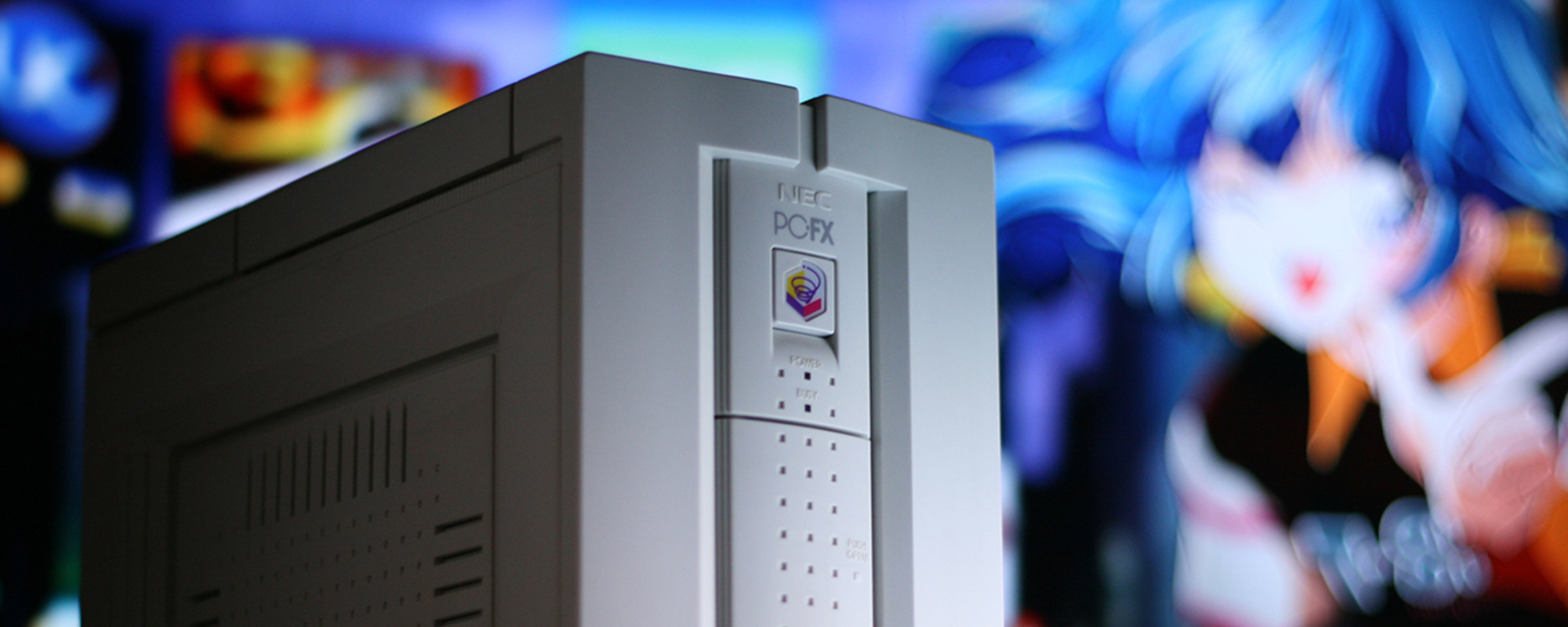
1994 saw the introduction of the Japanese-only ‘Arcade Card’, which increased the PC Engine’s power to previously unimaginable levels. Slick coin-op conversions of Fatal Fury Special, World Heroes 2 and Art of Fighting soon appeared and while these incredibly faithful ports won the console a whole new group of admirers, they came too late to make a truly telling impact. The 16-bit party, which the 8-bit PC Engine had skilfully managed to gatecrash, was beginning to wind down and a new wave of powerful 32-bit behemoths loomed ominously on the horizon. Sales started to dwindle, forcing NEC and Hudson to develop a successor – the ill-fated 32-bit PC-FX. Built around the rather misguided belief that FMV-style games represented the future of the console industry, it unsurprisingly flopped at retail.
After nearly a decade of unwavering commitment to one another, NEC and Hudson finally parted company in the middle of the nineties. The former went on to supply the graphical muscle behind Sega’s Dreamcast while the latter continued to produce games for a wide range of consoles, before eventually being purchased by Konami in 2011. A year later – following the closure of the US-based Hudson Entertainment – the Hudson Soft name ceased to exist as the company was absorbed entirely into Konami.
That’s not the end of the PC Engine story, however; at E3 this year, it was confirmed that Konami is bringing the brand back from the dead. An entirely new generation of players will get to see what the fuss is all about, and that makes us very happy indeed.
This feature was originally printed in its entirety in Retro Gamer magazine, and is reproduced here with kind permission. Special thanks to Aaron Nanto for providing exclusive hardware photos.
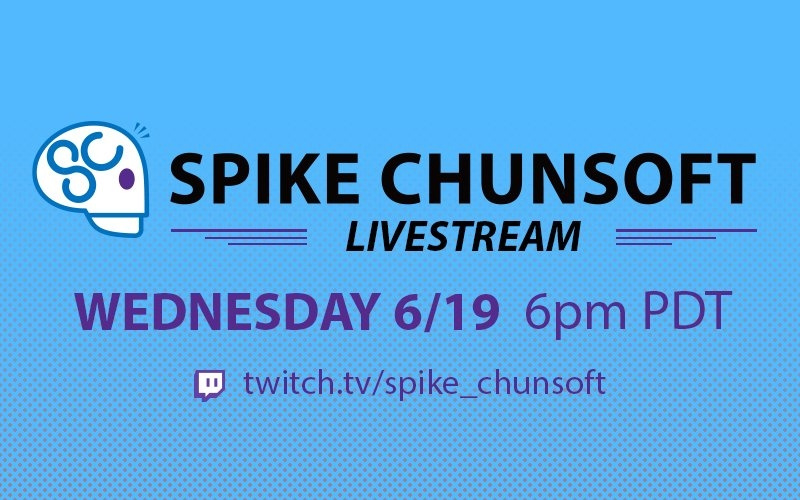
You normally wouldn’t expect a live stream the week after E3, but that’s exactly what Spike Chunsoft has planned. The Japanese developer will be sharing some “exciting news” via Twitch.tv on 19th June.
The company has previously worked on the Pokémon Mystery Dungeon series, is known for the Danganronpa series and will be publishing the Switch retail version of The Witcher 3: Wild Hunt – Complete Edition in Japan. It also published Crypt of the NecroDancer in Japan and most recently helped out with the spiritual follow-up, Cadence of Hyrule.
As you can probably imagine, its rich history has resulted in plenty of wild speculation on social media – with many fans of the company hoping to hear a Mystery Dungeon or Danganronpa announcement for Switch, and even some much crazier requests for a Mystery Dungeon crossover with Crypt of the NecroDancer.
Do you think we could hear a possible announcement tied to the Switch? Share your thoughts below.
Talking Point: What Are You Playing This Weekend? (June 15th)
What a busy, busy week it’s been in the Nintendo world. E3 has now come to an end, and a good 90% of the Nintendo Life team is feeling ready to retire to our beds forlong, well-deserved naps. Before that, though, it’s time once again to share with you our weekend gaming plans.As always, we invite you to join in via our poll and comment sections below. Enjoy!
Ollie Reynolds, reviewer
I tend to get overly excited when it comes to new game announcements, so naturally when the sequel to Breath of the Wild was announced during Nintendo’s E3 Direct, I went right back to the original and started my quest all over again. And you know what… It’s just as good second time through.
I’ve also taken advantage of the recent eShop sales and downloaded South Park: The Stick of Truth. I don’t think I’ve ever laughed at a game so much in my life – there’s just something inherently amusing about flatulence that I don’t think anyone grows out of!
Gavin Lane, staff writer
Following the announcement on Tuesday of Banjo (and Kazooie) as Challenger #3, I went to the eShop before bed, picked up a pair of Game Vouchers and immediately redeemed one for Super Smash Bros. Ultimate. I’ve tried to get into Smash several times before, but as I said in my Soapbox on the topic, it would take a Banjo-like announcement to push me over the edge. Obviously that came and launched me off the cliff into Smash. I’m hoping the promise of playing as Banjo on a modern Nintendo platform will keep me motivated. I’ll be picking the brains of resident Smash guru Alex Olney, for sure. I hear spamming Fox’s laser is frowned upon? Alex won’t be calling me ‘lovely’ after I’ve pestered him for tips eight hours straight over Slack…
Following my review, I’d also like to go back and complete Cadence of Hyrule: The Longest Title of a Video Game In The World, Ever again using Link. Zelda was my main (see, I’ve already got the lingo Alex!) when I reviewed it and I only spent half an hour or so with the Hero of Hyrule. Cracking little game, that.
Stephanie Woor, reviewer
Three months ago I was all geared up to lose myself in Valkyria Chronicles 4 – it was to be my next big game, something that was going to keep my mind off of whatever choppy waters were ahead, now that I’d just handed my notice in…
Inevitably, I played the tutorial mission and just stopped playing. Not that I didn’t like the game, with its comfy visuals and overall similarity to the original. Sometimes you just pick something up and know you’re going to regret playing it now, because now sucks. So I guess it’s probably a good sign that I’m back on the bizarro anime western front…
Lewis White, reviewer
I wish I didn’t spend my week toiling through the low-budget irradiated city of Pripyat, but that’s exactly what I went and did. This week, I spent hours in Radiation City but, to be honest, I did ask for this… literally!
Thankfully, in between the pain, my old friend Tetris 99 was always there to comfort me. Like a chilled glass of lemonade on a hot day, or an Ice Cream Tub + Bridgett Jones combo after a bad breakup, Tetris 99 always makes the hard times better. Now if only I could actually win for once
Austin Voigt, contributing writer
This sounds silly – but after E3 got me all hyped for the new games we have coming our way these next few months, I’m likely going to spend my weekend playing the originals/previous titles in sheer anticipation. Animal Crossing, Zelda, Luigi’s Mansion, Pokémon, Ni no Kuni… Let’s be honest – these are the games I spend most of my time playing anyway, while ignoring my growing backlog.
I’ll also likely be rewatching the new trailers/gameplay footage on my Switch so that I can pretend I’m already playing them. Wow, I’m lame.
Gonçalo Lopes, contributing writer
E3 is over! Life slowly goes back to normal yet retro gaming is here to stay. Been spending a lot of time with Contra Anniversary Collection and Collection of Mana as of late and will continue to do so over the weekend. After two long years it has come to this: Ninjara versus Min Min for ARMS supremacy. I shall use my unstoppable ninja skills to bring home the gold. It will be much harder to pick a side for this next to last Splatoon 2 Splatfest: I am a full grown adult who has yet to kill his inner child.
Obvious game of the week is Cadence of Hyrule. The game will fool you with its cutesy 2D graphics and earworm friendly stellar soundtrack and then you notice its 3am and you’re still screaming to the beat.
PJ O’Reilly, reviewer
This week I’ve been indulging in some of the hot drops from E3 week, namely the Contra Collection and Cadence of Hyrule, both of which are absolutely superb. Playing Contra again is bringing me right back to the good old days of pumping ten pence pieces into the Contra cabinet which we had in our local chippy (truly halcyon days!) then busting out my SNES copy of Super Probotector when it was time for home.
I’m also a big fan of Crypt of the Necrodancer so it’s no surprise to me how much I’m enjoying Cadence of Hyrule; the gameplay of Crypt slotted into the world of Zelda, it turns out, is a perfect match-up, it might even be the best Zelda spin-off I’ve played!
Ryan Craddock, staff writer
To be honest, now that the madness of E3’s over I’m looking forward to playing a game of ‘sleep all weekend and possibly for the rest of time’. Failing that, though, I’ll likely be continuing my current playthroughs of Banjo-Kazooie and GoldenEye 007 on N64.
I did start up DOOM again in the middle of the week (I gave up on my first playthrough for some reason, so wanted to give it another chance) and have been eyeing up Cadence of Hyrule for the last few days, so one of those could make a sneak appearance.
Which games are you playing this weekend? (37 votes)
The Legend of Zelda: Breath of the Wild
16%
South Park: The Stick of Truth
0%
Super Smash Bros. Ultimate
11%
Cadence of Hyrule: Crypt of the NecroDancer Featuring The Legend of Zelda
The Haxe programming language just released Haxe 4.0.0-rc3. With this release the versatile Haxe programming language just got an additional compilation target, the Java Virtual Machine (JVM).
On behalf of the Haxe Foundation, we are proud to announce the official release of the Haxe 4.0.0-rc.3! It is available along with the changelog at https://haxe.org/download.
The new Java Virtual Machine target is available! Generate JVM byte code directly from Haxe bypassing Java compilation step by adding -D jvm to your project targeting Java.
Unicode support was greatly improved across all targets.
Other than that, we fixed a lot of bugs and improved the quality of IDE services (compilation and completion server).
Be sure the check the link for the full change log. With the new ability to target JVM, this means you can now create Java based Android applications. For more details on this process, check this Github project. If you are looking for a Haxe game engine be sure to check out our list available here. We have also done a Haxe + HaxeFlixel and Haxe + Heaps tutorial series.
Posted by: xSicKxBot - 06-16-2019, 04:00 AM - Forum: Lounge
- No Replies
Beat Saber Unplugged: How One Of The Best VR Games Handles On Oculus Quest
It's an old cliché that fighting someone with one hand tied behind your back is either the ultimate in badass moves, or an act of genuine stupidity. Either way, the assumption is always that having full freedom will change the game entirely. Beat Saber has always felt like a discipline to begin with. The inherent coolness and fun of slicing stuff up to EDM and electronic pop very quickly gives way after a while to the realization that some legitimate flexibility, improvisation, speed, and skill are gonna have to be employed to hit some of the game's goals. It was always doable, but bound by some hard limits on other platforms. We've all been playing the game with one arm tied behind our backs. Playing Beat Saber on the Oculus Quest, however, gives you the arm back.
For the uninitiated, Beat Saber is a music/rhythm game, with a unique twist: the beats of every song you play are represented in VR as boxes that need to be sliced in the displayed direction by your two weapons of choice: a pair of red and blue lightsabers. It's a magnificent, even athletic game on any platform, but held back by the limited range of the platform. You always had to work in range of the camera, and the thick wire leading from any given headset to your computer or Playstation was a constant consideration.
These considerations are no longer in play on the Oculus Quest. It's a system that can be played in any room in any space big enough to support it. The Quest's cameras being built into the unit itself means it's so much easier to make strikes as broad or precise as you need them to be, no longer worrying about dragging a cord along with it, or losing tracking, as long as your hands are in view.
But most importantly, this is a port that encourages movement like nothing else. If a difficult swing puts you in a different position in the room in a hectic section, you're not stumbling to get back in starting position. That's just where you are, and you continue on. Playing Beat Saber on Quest feels less like the focused horse-blinder focus of playing a Dance Dance Revolution, and more like a coordinated kata of swordplay, ready and able to demolish obstacles however you deem necessary.
The result is incredibly freeing. Playing through five, ten, or fifteen tracks in one go isn't out of the question, with the only limit being your own stamina and flexibility. Make no mistake, Beat Saber is a workout. The difference now is that it's a workout without limits, one that lets players stretch and improvise and explore their space, to both dance and feel dangerous, something that makes it far more likely to turn the game into an aerobic workout staple for many. That's an amazing thing to factor into an already awesome game, which makes this the hands-down best version of the game.
Posted by: xSicKxBot - 06-16-2019, 04:00 AM - Forum: Lounge
- No Replies
EA pledges new reporting tools, periodic Community Reports to combat toxicity
Electronic Arts has outlined some community-facing plans for dealing with toxicity and misbehavior in the communities for its games, taking the time at its EA Play event this past weekend to discuss its current and future efforts on that front.
What’s notable about EA’s approach is that the company is taking deliberate steps to keep the community involved in that process, with this year’s plans including quarterly reports on anti-toxicity efforts and a community-led panel to offer feedback on policies.
The company held what it calls the Building Healthy Communities Summit at EA Play, calling in 200 members of its community leadership ‘game changers’ program to have open discussions about toxic behavior and bullying in game communities.
The summit included several discussions of the issue as a whole, something detailed on EA’s blog post about the event, in addition to an outline of the steps EA has planned further positive community growth in mind. Part of those plans is the formation of a player-led council to give EA direct and ongoing feedback on programs, policies, and platforms and the company’s own pledge to explore new anti-toxicity tools and in-game features to “more easily manage and effectively report disruptive behavior.”
On top of those efforts, EA says it plans to release a quarterly report about its efforts on the community front and to keep its players informed about the progress it’s making on existing programs and the new initiatives it kicks off to better mitigate toxic communities.
Whether you’re just starting out, looking for something new, or just seeing what’s out there, the Gamasutra Job Board is the place where game developers move ahead in their careers.
Gamasutra’s Job Board is the most diverse, most active, and most established board of its kind in the video game industry, serving companies of all sizes, from indie to triple-A.
June 7th : New Preview Beta Ring 1906 Update (1906.190605-1940)
Starting at 6:00 p.m. PST today, members of the Xbox One Preview Beta Ring will begin receiving the latest 1906 Xbox One system update (Build: 19H1_RELEASE_XBOX_DEV_1906\18362.4048.190605-1940).
DETAILS:
OS version released: 19H1_RELEASE_XBOX_DEV_1906\18362.4048.190605-1940
Available: 6:00PM PDT 6/7/19
Mandatory Date/Time: 3:00 AM PDT 6/8/19
Fixes:
My Games and Apps
We have fixed the issue in which My Games and apps is blank after deleting a title from collection.
System
Various Narrator fixes.
Various Localization fixes.
Known Issues:
Audio
Headsets are not being assigned to the users profiles and not working correctly.
Profile Color
Sometimes users may encounter the incorrect Profile color when powering on the console.
Eiji Aonuma And Multiple Others Have Been Promoted At Nintendo
There are a lot of employees at Nintendo who have spent their entire adulthood at the company. As many of these individuals grow in experience and age, they help create more games and rise up the ranks. Recently, a number of these well-known individuals have been promoted. Nintendo’s E3 2019 press website reveals new positions for Eiji Aonuma, Hisashi Nogami, Aya Kyogoku and Yoshihito Ikebata.
Aonuma will keep his role as the producer of The Legend of Zelda series but is now also a Deputy General Manager. Nogami – best known in recent times as the producer of Splatoon – moves into the same position, Kyogoku – the face of the Animal Crossing series – has taken on the “Manager of Production Group No. 5” role (Splatoon & Animal Crossing) and Yoshihito Ikebata is now with “Production Group No. 6” (responsible for the Metroid Prime and Luigi’s Mansion series).
It’s great to see such a talented group of individuals working their way up the company ladder while making Nintendo’s beloved series better and better at the same time.