PSN Is Down, Causing PS4 Server Issues And Errors For Games During E3 [Update]
E3 2019 is winding down, with Thursday marking its final day. Even without Sony at the show, there has been a lot of games for PS4 fans to check out. But those at home looking to boot up their PS4 (or other PlayStation Network-reliant device or service) might find themselves running into server issues. Sony has confirmed PSN is down, with many users reporting the error code WS-37403-7. [Update: The status page says PSN servers are back online, so you shouldn't have any further issues for the time being.]
Sony shared the news in a tweet on its PlayStation Support account, writing, "We’re aware that some users are experiencing issues logging into PSN." The PSN status page further reaffirms this, listing all areas of PSN as impacted. That includes account management, gaming and social, PlayStation Now, the PlayStation Store, PlayStation Vue, and more. No further tweets have been shared, but the most recent update on the PSN status page came at 2:26 PM PT and reiterates that Sony's "engineers are working to resolve the issue as soon as possible."
We’re aware that some users are experiencing issues logging into PSN. Thank you for your patience as we investigate: https://t.co/s026QGzJZr
With these widespread issues, you may not be able to sign in on your PS4, which could mean you're locked out of not just online play, but also some of your games. There's no word on how long this may last or when servers will come back online.
When things do come back up, Sony's E3 sale is ongoing and offers some very nice deals on PS4 games and hardware.
Nicalis Reveals Ikaruga Physical Release For Switch
If you love the juicy, vertically-scrolling shoot ’em up action of Ikaruga on your Nintendo Switch, or if you’ve been holding out on picking it up all this time, you’ll probably be pretty pleased to know that a physical release is on the horizon.
There are no concrete details just yet on when it’ll be launching or where you can expect to find it, but it’s absolutely on the way. It has been teased by Nicalis on the studio’s official Twitter account (and you can be pretty sure that the game will appear on Nicalis’ store in the near future).
Of course, back in August last year Nicalis showed off the “world’s largest Switch game case” for the much-loved shmup, sending fans into a frenzy by making them think a physical release was on the way. We’re still not entirely convinced it was a real tease ourselves, but at least it’s definitely coming now.
If you’re not clued up on this one, feel free to check out our full review.
Are you a fan of Ikaruga? Does this physical release have your name all over it? Fire away in the comments below.
E3 2019: GTA 5's Grand Theft Auto Online Adding A Luxury Casino
Grand Theft Auto Online, the online mode for GTA 5, has turned into a sprawling mix of activities--some more legal than others--and Rockstar has announced one more vice that you can live out in the game soon: casino gambling.
A tweet from Rockstar teased "a luxury casino in the heart of Vinewood." It also showed some stylized neon lights to evoke the casino look, but was otherwise short on details.
GTA Online updates come frequently and when something is announced it tends to follow in the game shortly after. Rockstar has not announced release plans for its casino or how exactly it will operate.
The online mode is technically a part of Grand Theft Auto 5, the latest in the action crime series from Rockstar. It has grown far beyond its original incarnations, though, and is largely responsible for GTA5 continuing to sell incredibly well even six years after launch.
Recently Rockstar was on a confirmed list of developers for Google Stadia, but it was one of only a handful of studios named without specific games attached. GTA 5 with GTA Online would be one possibility, since it already has a successful PC version up and running.
E3 2019 was a pretty wild time for Nintendo fans yet again; with Switch riding high and a decent number of top-name games on the horizon, there was plenty for the Japanese giant to shout about this year.
But what about next year? If there’s one thing we’ve learned in the 13 or so years of running this very site, it’s that people are always looking ahead to the next big thing – we’re not sure when it became the norm to class something that happened just 24 hours ago as “old news”, but here we are.
Well, the dates for E3 2020 have now been firmly locked in. You can expect to enjoy watching the madness unfold from 9th – 11th June (so yep, it’s pretty much the same as it always is) and likely the day or two just before that, too. Will Sony return with its new console? Will Microsoft finally announce that Game Pass is coming to Switch? Will we get our first glimpse at Metroid Prime 4? Who knows?
We’ve shared plenty of round-ups and hands-on articles over the last few days, highlighting the best of this year’s event. We’ll leave just a few of these for you below should you want to relive your favourite moments.
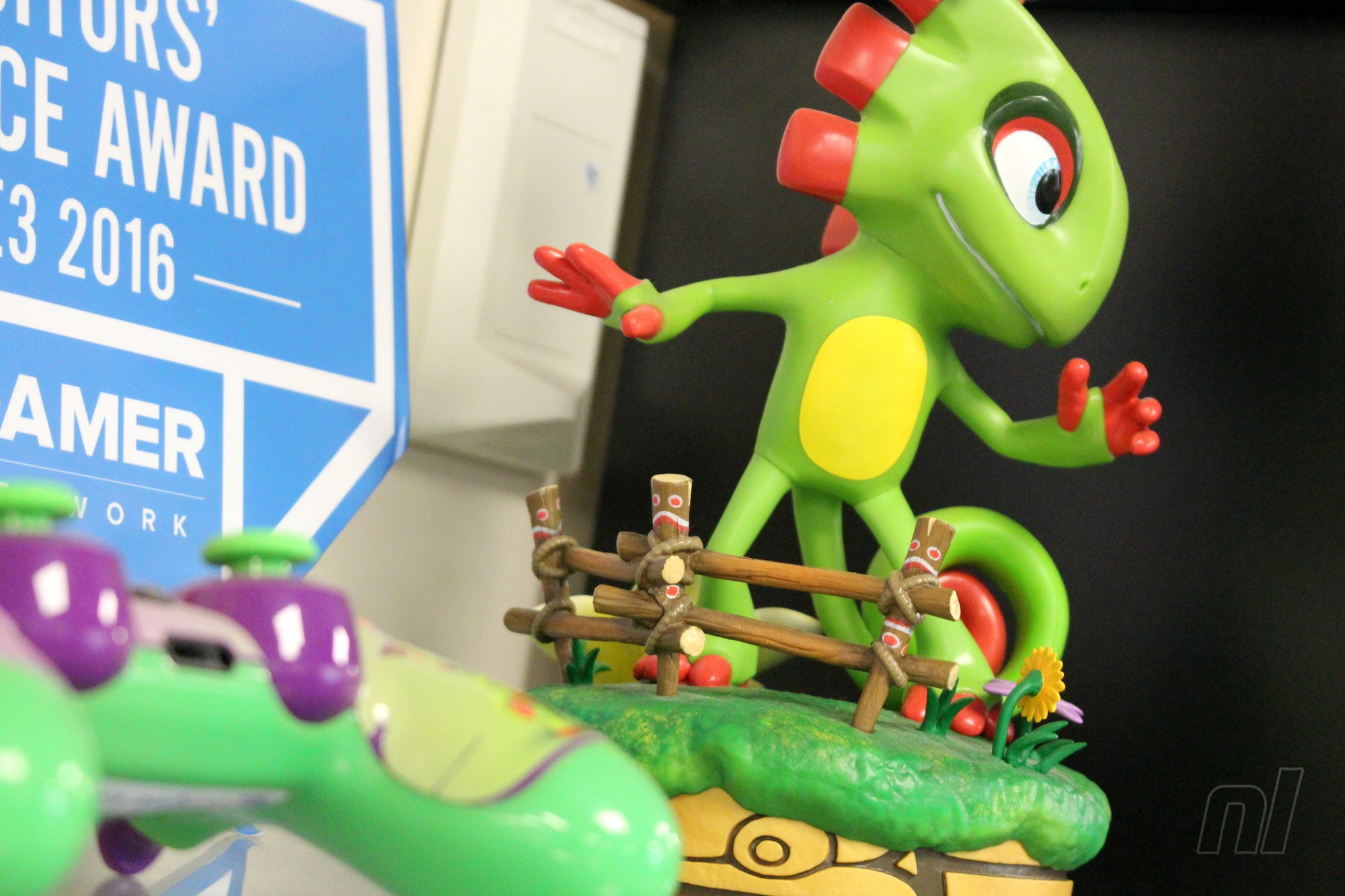
Feature: Playtonic On Switch, Yooka-Laylee And Standing On Its Own Two Feet
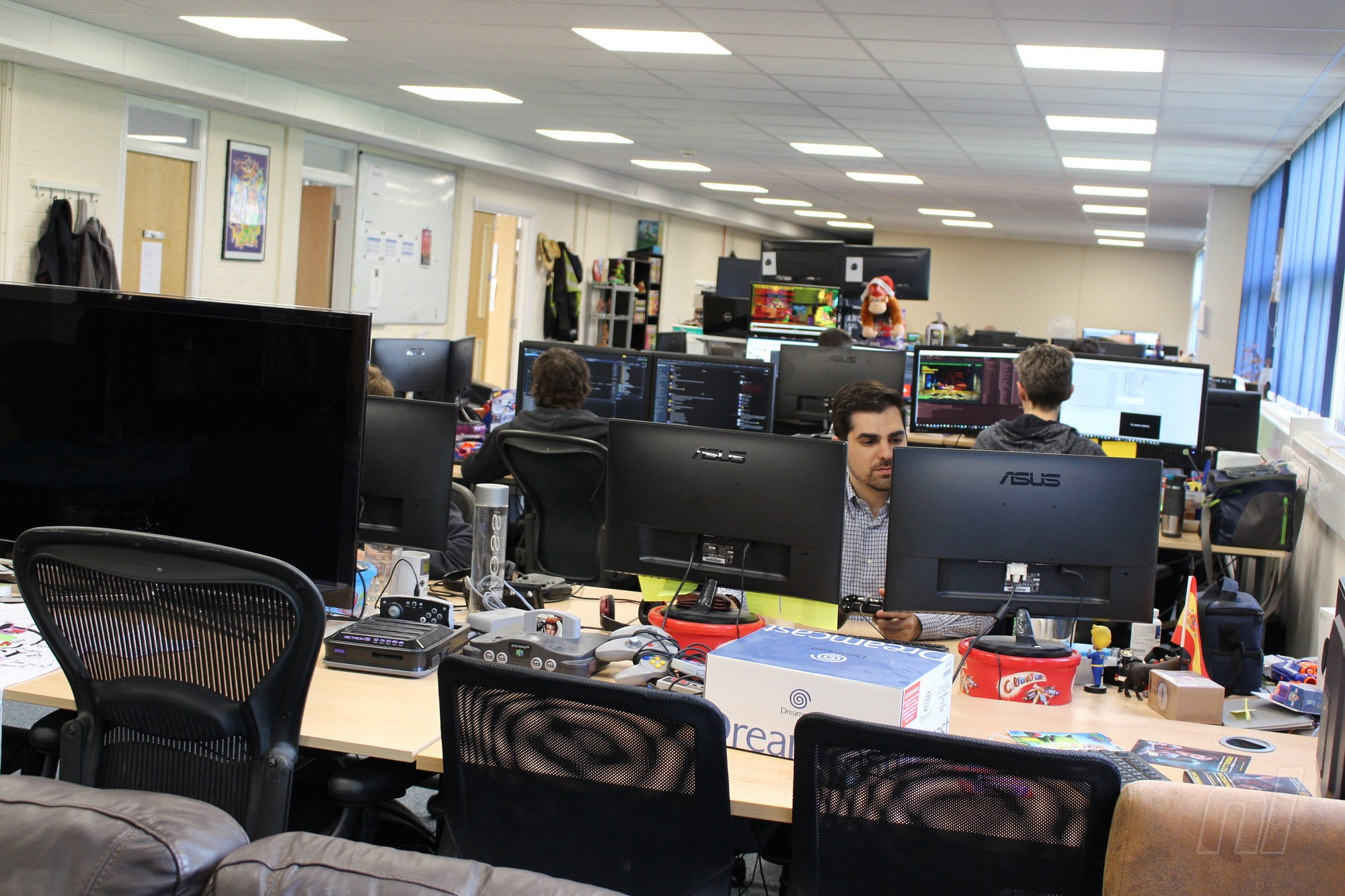
A lot has happened since we last had the good fortune to visit Playtonic Games. The previous time we popped by the studio’s offices outside the rural English town of Burton-on-Trent (acclaimed actor Paddy Considine was born and still lives there, fact fans), the team was still in single-digits and occupied a tiny, room. Now, a few years (and one game release) later, and Playtonic has moved to much larger premises on the same industrial park; a sign that the company has grown dramatically since the early days of the Yooka-Laylee Kickstarter.
“We’ve taken another step away from being this really small, niche studio to being a studio which can have grander ambitions and take its time a bit more,” says Gavin Price, Playtonic’s Managing Director and studio Creative Lead. It’s a statement of pride – Playtonic has certainly grown in size and stature, and its team is packed to bursting point with a combination of ex-Rare staffers and talented people from other companies.
However, it could also be seen as an admission that Yooka-Laylee, as beloved as it was and still is, wasn’t the product of a studio working at its full capacity. The game was, lest we forget, produced by tiny team compared to the one currently seen occupying Playtonic’s new and rather spacious offices, and it’s perhaps not fair to take it as the definitive example of what the company can offer; that product is likely to be Yooka-Laylee and the Impossible Lair, Playtonic’s next game and one which demonstrates a team at the very height of its creative powers.
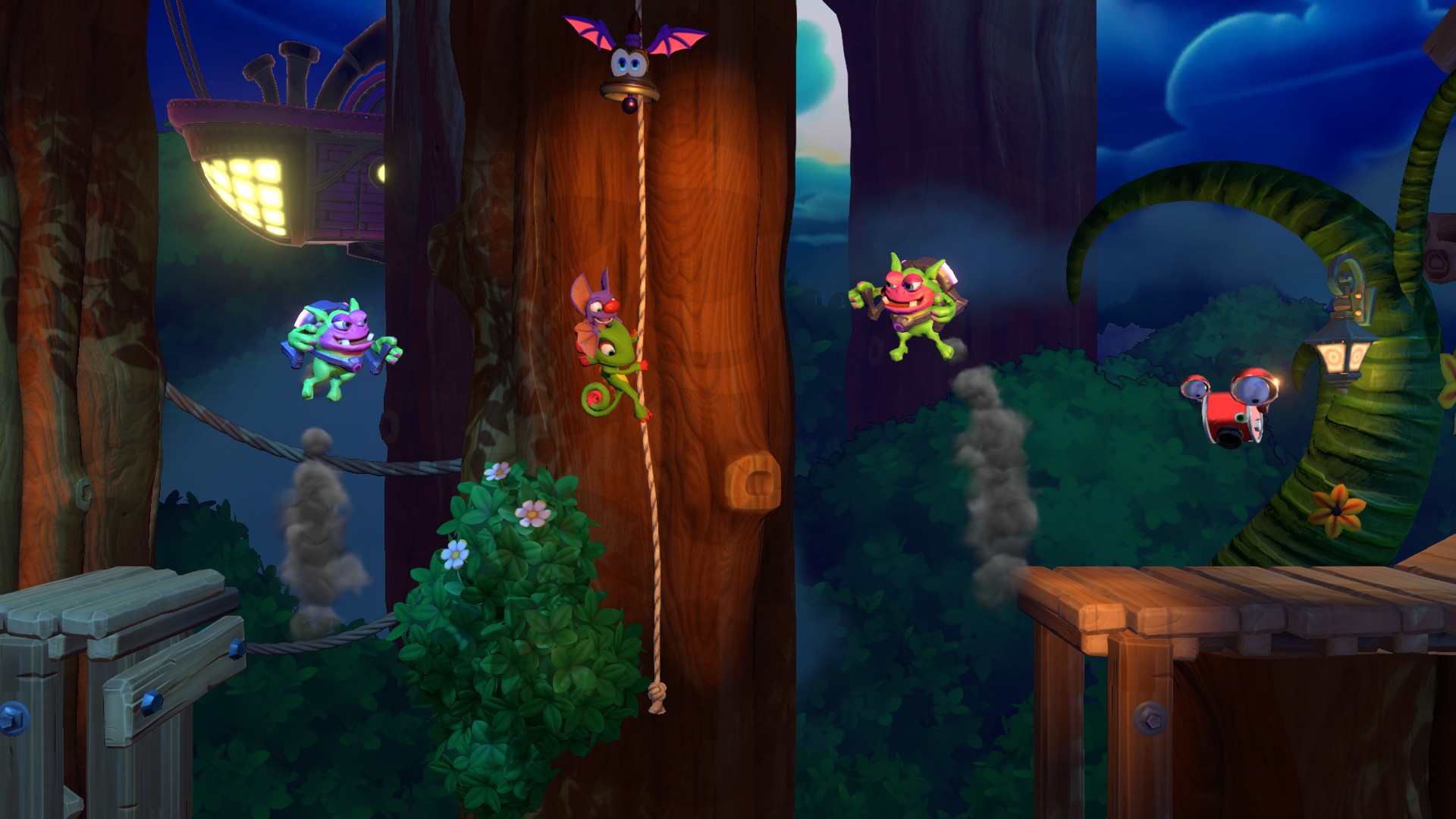
Yooka-Laylee and the Impossible Lair sees the evil Capital B – thought to have been banished inside a mysterious book at the end of the last game – rising up to cause more mischief. Unlike the first title, this isn’t a 3D platformer in the style of Super Mario 64 and Banjo-Kazooie; instead, it’s a hybrid which skillfully mixes Donkey Kong Country-style 2.5D platforming with an expansive Zelda-like overworld, the latter of which also serves as the ‘hub’ from which you enter the aforementioned side-scrolling stages.
The visuals are absolutely stunning – we’re talking Nintendo-levels of quality here
The aim is to conquer Capital B’s titular Impossible Lair, and as Lane reveals, this can actually be taken on from the beginning of the game. However, doing so is brutally difficult and you’ll want to instead explore the 2D levels to unlock ‘Bee Shields’ which allow you to withstand more punishment in the Impossible Lair (think TV’s The Crystal Maze, but instead of crystals buying you time, they’re buying you stamina).
While many fans may be disappointed that Playtonic has decided to take a step back from the kind of full-3D adventure many of the team was famous for at Rare, there’s a definite feeling that Yooka-Laylee and the Impossible Lair feels more polished and playable than its forerunner. The visuals are absolutely stunning – we’re talking Nintendo-levels of quality here – and the controls are tight and responsive. Price tells us that the shift to 2D wasn’t as easy as some might assume, as everything needs to be tighter and more accurate as a result; there’s no margin for error here, he insists.
However, as good as the platforming levels are, it could be the massive overworld which steals the show. While it’s tempting to compare it to the map in Super Mario 3D World, it’s far more interactive; you can pick up objects, talk with NPCs and solve puzzles to unlock new routes. Perhaps the most tantalising feature is the ability for events in the overworld to directly impact the layouts of the 2D stages; for example, if you unblock a river in one part of the map, it will flow into one of the 2D stages and change the way it looks. If you’re old enough to recall the Block Palaces in Super Mario World on the SNES, this is a similar mechanic – but far bolder.
Had we shipped simultaneously on Switch with the first Yooka-Laylee game, the ratio between the platforms would have been even more in favour of the Switch
Yooka-Laylee and the Impossible Lair is shaping up to be quite the game, but for Switch owners, the fact they had to wait for the previous title might cause some concern. Price is quick to point out that it won’t happen again. “There’s been tons of effort, under the hood, put in to make sure that, day one, the Switch version – and all the versions – launch simultaneously and there’s parity across them all,” he says.
Despite shipping much later than the PS4 and Xbox editions, it turns out that the Switch version of the original Yooka-Laylee did very well for Playtonic and publisher Team17. “We’re so pleased with how we were received on Switch,” Price says. “I think, had we shipped simultaneously on Switch with the first Yooka-Laylee game, the ratio between the platforms would have been even more in favour of the Switch.” It’s clear from his explanation that the first Yooka-Laylee shipping later on Switch wasn’t something Playtonic could control itself; a lot of “external factors” were to blame, although Price is too much of a gentleman to go into more detail.
The bottom line is that Playtonic knows it has a receptive audience on Nintendo platforms, and Price is aware that a strong affinity between the studio and Nintendo fans exists. “There’s more of a natural fit between our games and fans of Nintendo,” he explains. “Even though the Switch [version of Yooka-Laylee] came later down the line, it did incredible for us.” It’s encouraging then that with this sequel, Switch owners won’t need to feel like second-class citizens. In fact, Price says that Switch has arguably been the studio’s target platform this time around, even though it’s less powerful than Sony and Microsoft’s hardware.
Playtonic as a studio, as a brand, has got to be its own machine, its own beast
With the strong connection to Rare – which, it should be noted, is a short drive away from Playtonic’s offices – it’s unsurprising that so many fans compare the studio’s output to what many of its staffers have done before on the SNES, N64, GameCube, Xbox and Xbox 360. However, Price insists that Playtonic as a company needs to carve its own niche, and that means stepping away from the past to a degree.
“We do want to do games in styles to what we’ve done in our past, but we’ve also got to stand up on our own two feet,” he adds. “Playtonic as a studio, as a brand, has got to be its own machine, its own beast. So we’ll be looking to try and do a bit of both in a way that makes sense; no more are we going to say ‘we’re doing a spiritual successor to this game we’ve previously done’; everything we do from this point on is a brand-new concept for us, unshackled. But hopefully, there’s plenty of crossover – without us having to say it or try to achieve it – with stuff we’ve done in the past, as well.”
Take On An Isometric Survival Adventure When Distrust Crash-Lands On Switch
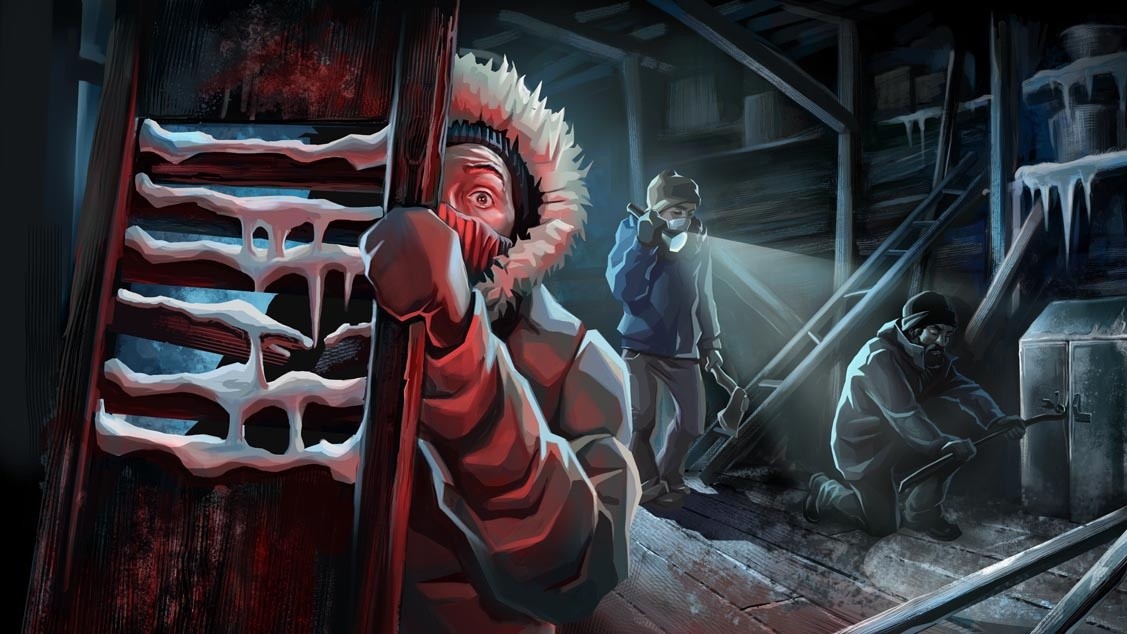
Heading to Nintendo Switch next month is Distrust, an isometric survival adventure which looks set to bring a frosty chill to proceedings this summer.
The game follows a group of explorers stranded near an Arctic research station after their helicopter crashes; the team must escape the dangers of the long polar night and find their way to shelter. When they fall asleep, however, they attract a terrifying force that sucks the life out of their bodies, so things aren’t as easy as they might initially seem.
The game makes use of procedural generation, so you’ll never know what’s coming next as you explore, and is said to feature multiple endings for you to uncover. We’ve got a pretty lengthy feature list for you to check out below.
MYSTERIOUS ANOMALIES WAITING IN THE WINGS They come out of nowhere and disappear instantly. They may be faster than light or may crawl slowly till they get near enough to strike. What are they? What do they want?
HE ENDLESS NIGHT AND EXTREME CLIMATE Explore and research the abandoned station, gather and craft the tools and open the supply boxes so you don’t starve from hunger and cold.
PROCEDURAL GENERATION No matter if you stick to a singleplayer or play with a friend in a co-op mode, a randomly generated base turns every new playthrough into a unique adventure.
15 SURVIVORS TO CHOOSE FROM Every character has unique skills and abilities to fit any survival strategy of yours.
AN ABSORBING NARRATION WITH TONS OF PLOT TWISTS AND QUESTS TO COMPLETE What is that force that inhabits the station? Is that an alien from the outer space or a mythical ancient creature from the from the depths of the centuries? Or is that a result of a failed scientific experiment? Survive to learn the answer!
ALTERED PERCEPTION OF REALITY As the explorers try to sleep just enough to stay alive, they slowly go mad and eventually reach the point where they can no longer trust their senses and tell the difference between reality and a hallucination.
The game is set to launch on Switch on 16th July for $11.99.
Do you like the sound of this one? Will you be adding it to your Switch wishlist? Tell us below in the usual place.
Review: Collection of Mana – Expensive, But Ultimately Worth Every Penny
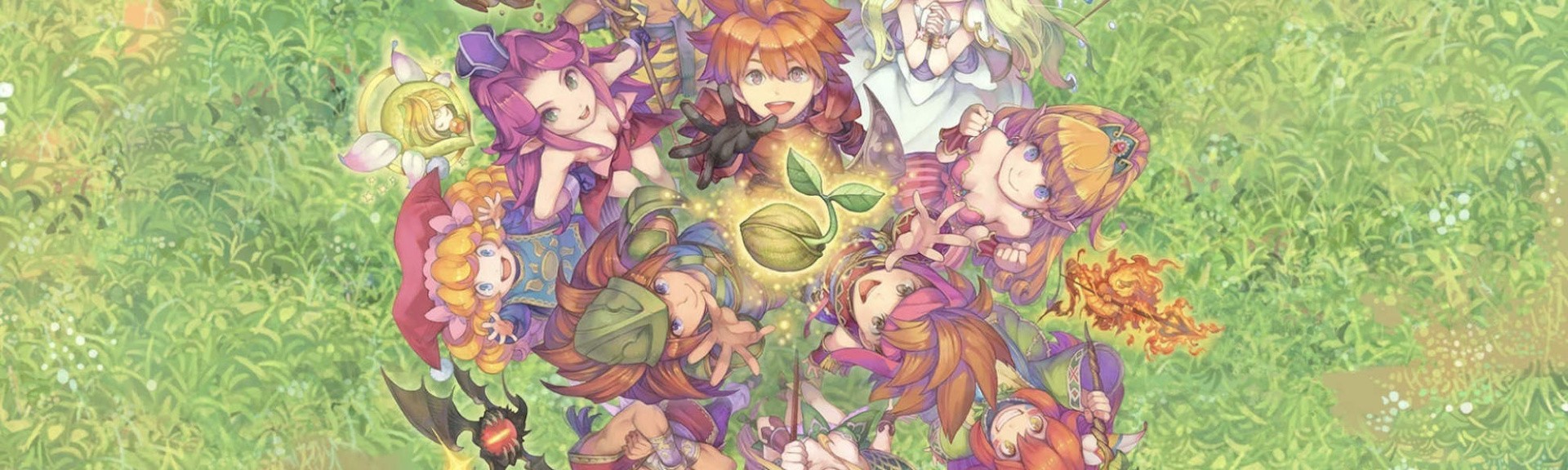
While Square’s Seiken Densetsu series continues to this very day, it’s the two SNES / Super Famicom outings on which the franchise arguably built its enviable reputation. Seiken Densetsu 2 – better known in the west as Secret of Mana – is one of the finest RPGs ever made, while its sequel has only been held back from global acclaim by the fact that it was sadly never localised outside of Japan. That changes with the release of Collection of Mana, the western localisation of the Seiken Densetsu Collection which launched on Switch in 2017 in Japan.
This pack includes the first three titles in the franchise – the 1991 Game Boy original and the aforementioned 16-bit outings – as emulated by the experts at M2, the studio responsible for the Sega Ages 3D series on Switch as well as Konami’s recent Castlevania and Contra Anniversary Collections. The involvement of M2 should be enough to put to rest any fears that this might be a hack-job on Square Enix’s part; the emulation is utterly flawless throughout. Each title includes a music test which allows you to appreciate the gorgeous soundtracks outside of the games themselves, as well as screen filters to ensure you get the best view, either on the Switch’s screen or your television. Save states are also included for those times when you can’t reach an in-game save point, and multiplayer is possible on the second game thanks to those lovely detachable Joy-Con controllers.
The franchise debut – known as Seiken Densetsu in Japan, Final Fantasy Adventure in North America and Mystic Quest in Europe – arrived early in the Game Boy’s life and features enjoyable (if rather lightweight) action RPG mechanics which actually pre-date the likes of Zelda: Link’s Awakening. The visuals are quite basic and the storyline is threadbare – even by early Game Boy standards – but the mixture of real-time action and role-playing stats still clicks, even after all these years. It’s a gentle introduction to the core mechanics of the Mana series, and despite its obvious simplicity compared to what would follow, it certainly has plenty of charm.
Surprisingly, out of the three games presented here, the Game Boy entry is the one with the most screen options; you can play in black and white, with fullscreen and windowed variants, and there’s also a Game Boy Color filter which adds a spot of vibrancy to the visuals. However, the best screen filter, in our opinion, is the one which replicates the lurid green display of the original Game Boy, complete with visible pixels. It’s so convincing we were immediately hit with a strong sense of nostalgia; the only thing missing is the blurriness when objects are moving. Toggling through these screen modes is a simple case of tapping the ZR shoulder trigger, but you can’t change the border artwork or opt for a black surround, which some may find disappointing.
Released in 1993, Secret of Mana is arguably the most famous entry in the franchise, at least outside of Japan; heck, it’s probably the reason you’re so keenly reading this review – if you haven’t already excitedly downloaded the collection, of course. Even today it remains a true 2D masterpiece, with gorgeous visuals and one of the best 16-bit soundtracks ever committed to silicon, courtesy of Hiroki Kikuta. Offering hours of gameplay and some of the most memorable moments in the history of the SNES, it’s a game which surely needs no introduction; it has been re-released numerous times since 1993 (including a smartphone port and a rather divisive remake on PS4) and is one of the games you can play on your Super NES Classic Edition.
While the storyline in Secret of Mana is still pretty basic and there plenty of silly moments (such as your character’s ability to travel over the map by being fired from a cannon), there’s no denying the classic status of this game. Even the rather ropey combat – which is an odd mix of real-time and turn-based mechanics – can’t dent its appeal. During battle, you’re free to move around and swipe at enemies, Zelda-style, but you’ll often find that your attacks don’t register because your enemy is executing their recovery animation. Other times, your attack seems delayed because it has stacked on top of another attack from one of your AI-controlled companions. Add to this the fact that your actions are bound by a recharging gauge (you can attack at any time, but your blows will be weaker without a full charge), and it feels even further away from Zelda’s more immediate gameplay; it’s really not what you could call an elegant combat engine, but it’s not enough to totally sink the game, and the innovative ‘ring’ based menu system still feels fresh, at least.
Speaking of AI companions, one of the big selling points of Secret of Mana was that you could enrol a pair of friends to aid you in your quest. Using a second controller (or, if you had one, a SNES Multitap), up to three people can control the main trio of heroes. This element is neatly replicated here thanks to the Switch’s Joy-Con controllers; no matter where you are in the world, that second Joy-Con can be detached and handed to a pal for some welcome local co-op gameplay. With a massive quest to undertake packed with memorable locations, gorgeous music and a really nice sense of progression via level-ups and enhanced items, Secret of Mana remains a solid-gold classic.
Finally, we have Seiken Densetsu 3 – or, as it now officially titled in the west, Trials of Mana – the 1995 epic which would surely have followed in the esteemed footsteps of its predecessor in terms of global acclaim had it seen release on the SNES back in the day. With improved visuals, multiple playable characters and three different storylines to explore, it’s a truly stunning piece of work – which makes us insanely pleased that it’s finally available in the west in an official capacity. The localisation is great, too – so much so that it makes the English script for the other two games included here look rather poor in comparison.
The impressive ‘Triangle Story’ system means that this positively dwarfs Secret of Mana in terms of sheer scope, and elsewhere Square has improved the game in practically every single way you could imagine. Combat, while similar, has been enhanced dramatically and now flows a lot more smoothly than it did before; instead of waiting for your weapon to recharge after an attack, your blows (which have a degree of auto-targeting) always have the same power; the key difference here is that subsequent attacks fill up a separate gauge which, when full, allows you to execute a more powerful special move. Furthermore, your AI allies are smarter and less inclined to get stuck behind scenery or wander off in the middle of a tense fight.
Visually, this is perhaps one of the finest games to ever grace Nintendo’s 16-bit system, with detailed characters and backgrounds which look like genuine works of art. Kikuta’s soundtrack, too, is sumptuous; while it will naturally lack that all-important pang of nostalgia for those of us who only knew the previous game, there’s no denying that this is top-tier musical artistry; it’s incredible to think this is the work of non-CD console, too. Oddly, there are only two screen options available for Secret of Mana and Trials of Mana – fullscreen and windowed – with the former stretching the image out to give the best view. Personally, we prefer the windowed option. It’s a shame that a CRT scanline option wasn’t included here, especially as it exists in M2’s Konami retro collections.
Conclusion
When you consider how many titles Konami is packing into its Anniversary Collection packages – and that their retail price is almost half what Square Enix is demanding for the three games included here – it’s impossible to not question the value of Collection of Mana. However, there’s no denying the fact that Secret of Mana is one of the finest console RPGs of all time, and even though it’s readily available elsewhere, playing it on Switch is like wrapping yourself up in a warm and familiar blanket; it’s just right somehow. We could argue that Secret of Mana is merely the appetizer for the real star of this collection: Trials of Mana. It’s nothing short of a masterpiece and finally getting the chance to play it officially in English is a landmark moment for SNES and RPG fans alike. Sure, there’s the temptation to wait for the upcoming 3D remake – also confirmed for Switch – but if you’re serious about this genre then it shouldn’t take our recommendation to convince you to part with your hard-earned cash. What you’ve got here are two of the finest examples of the genre, accompanied by a third likeable entry which is also well worth a look. When you consider the many hours of top-notch entertainment on offer, the price is very nearly a steal.
Looking for an open source personal assistant ? Mycroft is allowing you to run an open source service which gives you better control of your data.
Install Mycroft on Fedora
Mycroft is currently not available in the official package collection, but it can be easily installed from the project source. The first step is to download the source from Mycroft’s GitHub repository.
Mycroft is a Python application and the project provides a script that takes care of creating a virtual environment before installing Mycroft and its dependencies.
$ cd mycroft-core
$ ./dev_setup.sh
The installation script prompts the user to help him with the installation process. It is recommended to run the stable version and get automatic updates.
When prompted to install locally the Mimic text-to-speech engine, answer No. Since as described in the installation process this can take a long time and Mimic is available as an rpm package in Fedora so it can be installed using dnf.
$ sudo dnf install mimic
Starting Mycroft
After the installation is complete, the Mycroft services can be started using the following script.
$ ./start-mycroft.sh all
In order to start using Mycroft the device running the service needs to be registered. To do that an account is needed and can be created at https://home.mycroft.ai/.
Once the account created, it is possible to add a new device at the following address https://account.mycroft.ai/devices. Adding a new device requires a pairing code that will be spoken to you by your device after starting all the services.
The device is now ready to be used.
Using Mycroft
Mycroft provides a set of skills that are enabled by default or can be downloaded from the Marketplace. To start you can simply ask Mycroft how is doing, or what the weather is.
Hey Mycroft, how are you ?

Hey Mycroft, what's the weather like ?
If you are interested in how things works, the start-mycroft.sh script provides a cli option that lets you interact with the services using the command line. It is also displaying logs which is really useful for debugging.
Mycroft is always trying to learn new skills, and there are many way to help by contributing the Mycroft community.
Apple’s iOS soft keyboard target of new patent lawsuit
Apple’s vaunted iOS keyboard, a piece of user interface technology that helped usher in the smartphone revolution, is in infringement of a nearly 20-year-old patent covering similar input solutions, according to a new lawsuit.
Illustration of Higginson’s “Universal keyboard.” | Source: USPTO
Filed with the U.S. District Court for the District of Delaware, a patent suit from Princeps Interface Technologies alleges Apple’s keyboard infringes on the work of Timothy Higginson, a technology industry lawyer and inventor.
At issue is Higginson’s U.S. Patent No. 6,703,963 for a “Universal keyboard.”
Filed in 2002 and granted in 2004, the intellectual property covers a multifunctional input device in which a set of static keys are programmed to output command signals based on a plurality of functional modes. An example provided presents functional sets, or modes, relating to email, PDA, fax and internet inputs.
These modes are further divided into multi-level domains which, when selected, dynamically change the output model of the device’s keys. For example, alphanumeric mode domains might display different sets of words, symbols or numbers, while domains in an internet navigator mode display URLs. Users can access more than one mode at any given time.
Other keys on the device are dedicated to traditional controls found on QWERTY keyboards. Patent language describes these keys as covering Esc, Alt, Ctrl, Shift, Caps Lock, Tab, Enter, Backspace and other typical inputs. A cursor control, in this case a joystick, is also offered.
According to the lawsuit, the ‘963 patent resolves “technical problems related to data input devices, and particularly, to problems related to the utilization of small profile data input devices.” More specifically, the input device adapts the QWERTY keyboard for one-handed or two-thumb use.
Apple debuted its first onscreen keyboard for a portable device with iPhone in 2007. Offering basic functionality at launch, the UI has been refined over more than a decade to include advanced features like AI-powered predictive text, multi-function key support, gesture integration and more. Apple is slated to introduce a new swipe-to-type keyboard called QuickPath when iOS 13 and iPadOS see release this fall.
Princeps appears to be a non-practicing entity created for the sole purpose of leveraging Higginson’s patents in court actions. The firm owns six properties invented by Higginson that were previously assigned to Yuvee, a tech consultancy and UI development firm he founded in 2004. While Yuvee holds active status in some third-party corporate databases, the company seemingly shuttered in 2016.
Princeps in its suit seeks damages and legal fees from Apple.
Another year, another E3 down. There was a bit more mobile love than I was expecting, all things considered, but still not so much that it prevented this week from being a bit on the slow side. Hopefully things will pick up again now that the madness is over. Make sure you check up our round-up of interesting tid-bits from yesterday because, one way or another, we’ve got some exciting things coming to mobile over the rest of the year!
Meanwhile, in the world of mobile gaming…
Out Now
We appear to be in a bit of a draught right now In terms of new releases that have really grabbed our attention. For once there isn’t a new rogue-like card game hitting the market, but neither is there anything else we like to see either.
However, there have been a couple of RPG releases that warrant further inspection, which we’ll summarise below:
This is another Crescent Moon Games release that harks back to the nostalgic days of 8-bit consoles and classic RPGs. It’s a bit on the pricey side, but it’s supposed to feature an vast open world, challenging puzzles and boss fights.
A more tactical-based RPG along the lines we’re used to, this game is inspired by Hero Quest and has been out on PC and Consoles for a while. It features a vast single-player campaign, party-based gameplay and the usual trappings of a game of this nature. There’s some question as to how stable it is right now, so we’ll try and investigate as soon as we can.
As a final note, it seems Call of Duty: Mobile has soft-launched on iOS in Australia, if anyone was interested in checking it out and knows their way around a VPN (or is Australian). It’s also out on Android in certain parts of the world as well.
Updates
Nothing much to ‘headline’ this section this week, but there has been a round of updates from usual suspects. Star Traders: Frontiers continues to put all other devs to shame with a couple of minor content drops, AutoChess has made improvements to its Chess Pass along with some tweaks, and Evolution has updated again, although the description reads exactly like it did last time, so not sure what’s going on there. There’s a Reigns: Her Majesty update as well, but we don’t know what it’s done as of yet.
Deals
A few deals worth nothing this week:
Seen anything else you liked? Played any of the above? Let us know in the comments!